Results by title
4127 books match the query 'Science' and 980 start with t
The British Journal for the Philosophy of Science, volume 73 number 3 (September 2022)
The University of Chicago Press
University of Chicago Press Journals, 2022
The British Journal for the Philosophy of Science, volume 73 number 4 (December 2022)
The University of Chicago Press
University of Chicago Press Journals, 2022
The British Journal for the Philosophy of Science, volume 74 number 2 (June 2023)
The University of Chicago Press
University of Chicago Press Journals, 2023
The British Journal for the Philosophy of Science, volume 74 number 3 (September 2023)
The University of Chicago Press
University of Chicago Press Journals, 2023
The British Journal for the Philosophy of Science, volume 74 number 4 (December 2023)
The University of Chicago Press
University of Chicago Press Journals, 2023
The British Journal for the Philosophy of Science, volume 75 number 1 (March 2024)
The University of Chicago Press
University of Chicago Press Journals, 2024
The British Journal for the Philosophy of Science, volume 75 number 2 (June 2024)
The University of Chicago Press
University of Chicago Press Journals, 2024
The British Journal for the Philosophy of Science, volume 75 number 3 (September 2024)
The University of Chicago Press
University of Chicago Press Journals, 2024
The British Journal for the Philosophy of Science, volume 75 number 4 (December 2024)
The University of Chicago Press
University of Chicago Press Journals, 2024
The British Journal for the Philosophy of Science, volume 76 number 1 (March 2025)
The University of Chicago Press
University of Chicago Press Journals, 2025
The British Journal for the Philosophy of Science, volume 76 number 2 (June 2025)
The University of Chicago Press
University of Chicago Press Journals, 2025
The British Journal for the Philosophy of Science, volume 76 number 3 (September 2025)
The University of Chicago Press
University of Chicago Press Journals, 2025
The British Journal for the Philosophy of Science, volume 76 number 4 (December 2025)
The University of Chicago Press
University of Chicago Press Journals, 2025
The British Journal for the Philosophy of Science, volume 77 number 1 (March 2026)
The University of Chicago Press
University of Chicago Press Journals, 2026
The British Journal for the Philosophy of Science, volume 77 number 2 (June 2026)
The University of Chicago Press
University of Chicago Press Journals, 2026
The British Journal for the Philosophy of Science, volume 77 number 3 (September 2026)
The University of Chicago Press
University of Chicago Press Journals, 2026
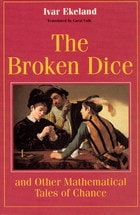
The Broken Dice, and Other Mathematical Tales of Chance
Ivar Ekeland
University of Chicago Press, 1993
"Ivar Ekeland gained a large and enthusiastic following with Mathematics and the Unexpected, a brilliant and charming exposition of fundamental new discoveries in the theory of dynamical systems. The Broken Dice continues the same theme, and in the same elegant, seemingly effortless style, but focuses more closely on the implications of those discoveries for the rest of human culture. What are chance and probability? How has our thinking about them been changed by the discovery of chaos? What are all of these concepts good for? . . . Ah, but, I mustn't give the game away, any more than I should if I were reviewing a detective novel. And this is just as gripping a tale. . . . Beg, borrow, or preferably buy a copy. . . . I guarantee you won't be disappointed."—Ian Stewart, Science
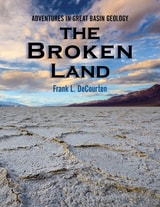
The Broken Land
Adventures in Great Basin GeologyFrank DeCourten
University of Utah Press, 2003
"The desert may seem timeless from within the Yellow Circle tonight, but the permanence of the surrounding landscape is only an illusion. Even the land is alive here, constantly changing and evolving as do all living things. Nothing here is 'finished.' Everything around us—the plants, the animals, the rocks, and the terrain itself—is in the process of becoming something else. And, of course, so are we. None of us around the campfire tonight are the same people we were yesterday, or will be tomorrow."—from the book
The Broken Land surveys the geological phenomena of the magnificent Great Basin landscape of western Utah, Nevada, eastern California, and adjacent regions. Each chapter focuses on a locality or area that provides insight into the deep history of one of North America's most remote regions—one of its continental margins. It is the only book available covering the geology of the entire Great Basin. Written for anyone with a casual to serious interest in natural history, The Broken Land conveys Frank DeCourten's awe at the story written in the rock of the basin.
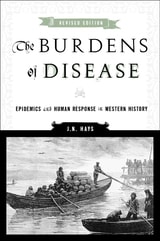
The Burdens of Disease
Epidemics and Human Response in Western HistoryJ.N. Hays
Rutgers University Press, 2009
In this updated volume, with revisions and additions to the original content, including the evolution of drug-resistant diseases and expanded coverage of HIV/AIDS, along with recent data on mortality figures and other relevant statistics, J. N. Hays chronicles perceptions and responses to plague and pestilence over two thousand years of western history. Disease is framed as a multidimensional construct, situated at the intersection of history, politics, culture, and medicine, and rooted in mentalities and social relations as much as in biological conditions of pathology. This revised edition of The Burdens of Disease also studies the victims of epidemics, paying close attention to the relationships among poverty, power, and disease.
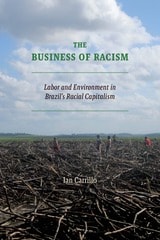
The Business of Racism
Labor and Environment in Brazil's Racial CapitalismIan Carrillo
Duke University Press, 2026

The Busy Librarians Guide To Information Literacy In
Jeanne Davidson
Assoc of College & Research Libraries, 2012
The Busy Librarian’s Guide to Information Literacy in Science and Engineering
Katherine O'Clair
Assoc of College & Research Libraries, 2012
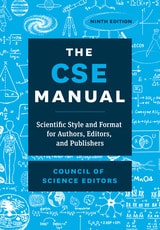
The CSE Manual, Ninth Edition
Scientific Style and Format for Authors, Editors, and PublishersCouncil of Science Editors
University of Chicago Press, 2024
The CSE Manual: Scientific Style and Format for Authors, Editors, and Publishers delivers complete coverage of rules and best practices in scientific publishing. Since 1960, the esteemed Council of Science Editors has offered authoritative guidance on presenting scientific writing more clearly and effectively. In the ninth edition of The CSE Manual, this leading international association offers its most comprehensive recommendations yet, continuing to guide writers and editors through the ever-evolving world of scientific publishing. Available in print and by subscription online.
The Cacti of Arizona
Lyman Benson
University of Arizona Press, 1969
"Of tremendous value to the professional botanist and ecologist, and with layman English and careful instructions, the work provides the amateur botanist insight into a fascinating family."—Garden Journal
"For the general desert lover as well as the botanist."—Books of the Southwest
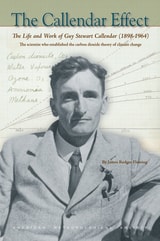
The Callendar Effect
The Life and Work of Guy Stewart Callendar (1898-1964)James Rodger Fleming
American Meteorological Society, 2007
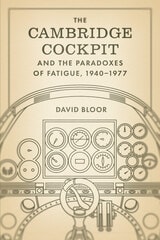
The Cambridge Cockpit and the Paradoxes of Fatigue, 1940–1977
David Bloor
University of Chicago Press, 2025
During World War II, members of the Cambridge Psychology Laboratory were commissioned to study pilot fatigue. They set up a Spitfire cockpit in the laboratory, turned it into a piece of laboratory apparatus, and carried out a series of important experiments that appeared to dramatically confirm the dangers of fatigue. Historians of psychology are aware of this episode, but the experiments, the events surrounding them, and the scientific reasoning involved have never been studied in detail. By going into the episode in depth, and by looking behind the scenes at archival material, David Bloor offers an analysis that is both original and more penetrating than anything that has been said before on the topic.
Bloor describes the Cockpit experiments themselves before turning to the theoretical interpretation of the results and the intellectual resources that informed how they were viewed. Bloor then explains a major empirical and theoretical challenge to the Cambridge Cockpit work drawn from a field study of landing accidents apparently showing that fatigue-effects were operationally negligible. Bloor delves into the consequences of this challenge, and the Cambridge reaction to it, in the post-war years. The analysis is deepened by comparison with the corresponding wartime work on fatigue carried out both in Germany and the United States. As the author demonstrates, even today the Cambridge Cockpit experiments pose a challenge to the current understanding of pilot fatigue.
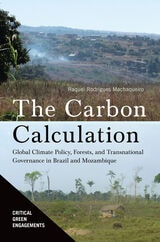
The Carbon Calculation
Global Climate Policy, Forests, and Transnational Governance in Brazil and MozambiqueRaquel Rodrigues Machaqueiro
University of Arizona Press, 2023
Focusing on REDD+ (Reducing Emissions from Deforestation and Forest Degradation), the book demonstrates how industrialized countries are able to maintain their socioeconomic models largely unaltered while claiming to address global warming using forests in the Global South to offset their pollution. By examining the creation and implementation of REDD+ historically and ethnographically, the book traces the social life of this mechanism as it travels across a complex network spanning several interacting levels: international, national, and local. Through cases in the Brazilian state of Acre and the Zambézia province in Mozambique, the author demonstrates how global climate policy has created new opportunities and rationales for unprecedented levels of intervention in the Global South—all under the guise of saving the planet.
The Carbon Calculation critically highlights the ways in which politics has reinforced a scientific focus on one possible solution to the problem of climate change—namely those that largely absolve the industrialized world from undertaking politically painful transformations in its own economic model.
The Cattell Controversy
Race, Science, and IdeologyWilliam H. Tucker
University of Illinois Press, 2008
In addition to his mainstream research, Cattell had also authored a series of publications that posited evolutionary progress as the ultimate goal of human existence and argued that scientifically measurable criteria should be used to distinguish "successful" from "failing" racial groups so that the latter might be gradually "phased out" by non-violent methods such as regulation of birth control. Derived from science, Cattell's evolutionary philosophy was intended to be the basis of a full-blown religion. Although the earliest of these works had been published in the 1930s, near the end of an era in which eugenically based policies for human improvement were much more acceptable, Cattell promoted similar ideas well into the 1980s and '90s.
The Cattell Controversy describes Cattell's socio-religious beliefs in detail and analyzes their relationship to his scientific contributions. William H. Tucker discusses the controversy that arose within the field in response to the award's postponement, after which Cattell withdrew his name from consideration for the award but insisted that his position had been distorted by taking statements out of context. Reflecting on these events, Tucker concludes with a discussion of the complex question of whether and how a scientist's ideological views should ever be a relevant factor in determining the value of his or her contributions to the field.
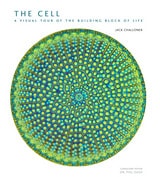
The Cell
A Visual Tour of the Building Block of LifeJack Challoner
University of Chicago Press, 2015
With The Cell: A Visual Tour of the Building Block of Life, Jack Challoner treats readers to a visually stunning tour of these remarkable molecular machines. Most of the living things we’re familiar with—the plants in our gardens, the animals we eat—are composed of billions or trillions of cells. Most multicellular organisms consist of many different types of cells, each highly specialized to play a particular role—from building bones or producing the pigment in flower petals to fighting disease or sensing environmental cues. But the great majority of living things on our planet exist as single cell. These cellular singletons are every bit as successful and diverse as multicellular organisms, and our very existence relies on them.
The book is an authoritative yet accessible account of what goes on inside every living cell—from building proteins and producing energy to making identical copies of themselves—and the importance of these chemical reactions both on the familiar everyday scale and on the global scale. Along the way, Challoner sheds light on many of the most intriguing questions guiding current scientific research: What special properties make stem cells so promising in the treatment of injury and disease? How and when did single-celled organisms first come together to form multicellular ones? And how might scientists soon be prepared to build on the basic principles of cell biology to build similar living cells from scratch.
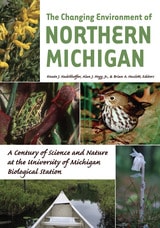
The Changing Environment of Northern Michigan
A Century of Science and Nature at the University of Michigan Biological StationKnute J. Nadelhoffer, Alan J. Hogg, Jr., Brian A. Hazlett, editors
University of Michigan Press, 2009
Northern Michigan is undergoing unprecedented changes in land use, climate, resource extraction, and species distributions. For the last hundred years, the University of Michigan Biological Station has monitored these environmental transformations. Stretching 10,000 acres along Burt and Douglas Lakes in the northern Lower Peninsula and 3,200 acres on Sugar Island near Sault Ste. Marie, Michigan, the station has played host to nearly 10,000 students and a steady stream of top scientists in the fields of biology, ecology, geology, archeology, and climatology.
The Changing Environment of Northern Michigan collects essays by some of these scientists, who lead readers on virtual field trips exploring the history of people and science at the station itself, the relations of indigenous people to the land, the geophysical history of the region, characteristics of terrestrial and aquatic ecosystems, key groups of organisms and their relations to local habitats, and perspectives on critical environmental challenges of today and their effects on the region. Accompanying the chapters are color illustrations and photographs that bring the station's pristine setting to life.
Like the station itself, the book provides a solid background for better appreciating the relationships among living and nonliving parts of northern Michigan, for anyone interested in exploring the region's forests, fields, and wetlands; wading or paddling down its rivers; or swimming or floating across its lakes.
Knute J. Nadelhoffer is Director of the University of Michigan Biological Station and Professor of Ecology and Evolutionary Biology at the University of Michigan.
Alan J. Hogg, Jr., teaches science writing at the University of Michigan as a faculty member of the Sweetland Writing Center. His Ph.D. research explored the effects of ozone and nitrogen oxides on University of Michigan Biological Station forests.
Brian A. Hazlett is Professor Emeritus of Zoology at the University of Michigan.
The Changing Mile
James Rodney Hastings, Raymond M. Turner
University of Arizona Press, 1965
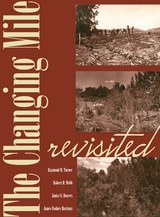
The Changing Mile Revisited
An Ecological Study of Vegetation Change with Time in the Lower Mile of an Arid and Semiarid RegionRaymond M. Turner, Robert H. Webb, Janice E. Bowers, and James Rodney Hastings
University of Arizona Press, 2003
Using nearly two hundred additional triplicate sets of unpublished photographs, The Changing Mile Revisited utilizes repeat photographs selected from almost three hundred stations located in southern Arizona, in the Pinacate region of Mexico, and along the coast of the Gulf of California. Coarse photogrammetric analysis of this enlarged photographic set shows the varied response of the region's major plant species to the forces of change. The images show vegetation across the entire region at sites ranging in elevation from sea level to a mile above sea level. Some sites are truly arid, while others are located above the desert in grassland and woodland. Common names are used for most plants and animals (with Latin equivalents in endnotes) to make the book more accessible to non-technical readers.
The original Changing Mile was based upon a unique set of data that allowed the authors to evaluate the extent and magnitude of vegetation change in a large geographic region. By extending the original landmark study, The Changing Mile Revisited will remain an indispensable reference for all concerned with the fragile desert environment.
The Changing Nature of the Maine Woods
Andrew M. Barton
University of New Hampshire Press, 2012
The Changing Nature of the Maine Woods is both a fascinating introduction to the forests of Maine and a detailed but accessible narrative of the dynamism of these ecosystems. This is natural history with a long view, starting with an overview of the state's geological history, the reemergence of the forest after glacial retreat, and the surprising changes right up to European arrival. The authors create a vivid picture of Maine forests just before the impact of Euro-Americans and trace the profound transformations since settlement.
Ambitious in its geographic range, this book explores how and why Maine forests differ across the state, from the top of Mount Katahdin to the coast. Through groundbreaking research and engaging narratives, the authors assess key ecological forces such as climate change, insects and disease, nonnative organisms, natural disturbance, and changing land use to create a dramatic portrait of Maine forests—past, present, and future.
This book both synthesizes the latest scientific discoveries regarding the changing forest and relates the findings to an educated lay and academic audience.
The Chemical Age
How Chemists Fought Famine and Disease, Killed Millions, and Changed Our Relationship with the EarthFrank A. von Hippel
University of Chicago Press, 2020
For thousands of years, we’ve found ways to scorch, scour, and sterilize our surroundings to make them safer. Sometimes these methods are wonderfully effective. Often, however, they come with catastrophic consequences—consequences that aren’t typically understood for generations.
The Chemical Age tells the captivating story of the scientists who waged war on famine and disease with chemistry. With depth and verve, Frank A. von Hippel explores humanity’s uneasy coexistence with pests, and how their existence, and the battles to exterminate them, have shaped our modern world. Beginning with the potato blight tragedy of the 1840s, which led scientists on an urgent mission to prevent famine using pesticides, von Hippel traces the history of pesticide use to the 1960s, when Rachel Carson’s Silent Spring revealed that those same chemicals were insidiously damaging our health and driving species toward extinction. Telling the story of these pesticides in vivid detail, von Hippel showcases the thrills and complex consequences of scientific discovery. He describes the invention of substances that could protect crops, the emergence of our understanding of the way diseases spread, the creation of chemicals used to kill pests and people, and, finally, how scientists turned those wartime chemicals on the landscape at a massive scale, prompting the vital environmental movement that continues today.
The Chemical Age is a dynamic, sweeping history that exposes how humankind’s affinity for pesticides made the modern world possible—while also threatening its essential fabric.
The Chicago Guide to College Science Teaching
Terry McGlynn
University of Chicago Press, 2020
For years, McGlynn has been addressing the need for practical and accessible advice for college science teachers through his popular blog Small Pond Science. Now he has gathered this advice as an easy read—one that can be ingested and put to use on short deadline. Readers will learn about topics ranging from creating a syllabus and developing grading rubrics to mastering online teaching and ensuring safety during lab and fieldwork. The book also offers advice on cultivating productive relationships with students, teaching assistants, and colleagues.
The Chicago Guide to Communicating Science
Scott L. Montgomery
University of Chicago Press, 2002
He also traces the evolution of scientific expression over time, providing a context crucial for understanding the nature of technical communication today. Other chapters take up the topics of writing creatively in science; how to design and use graphics; and how to talk to the public about science. Written with humor and eloquence, this book provides a unique and realistic guide for anyone in the sciences wishing to improve his or her communication skills.
Practical and concise, The Chicago Guide to Communicating Science covers:
*Writing scientific papers, abstracts, grant proposals, technical reports, and articles for the general public
*Using graphics effectively
*Surviving and profiting from the review process
*Preparing oral presentations
*Dealing with the press and the public
*Publishing and the Internet
*Writing in English as a foreign language
The Chicago Guide to Communicating Science
Second EditionScott L. Montgomery
University of Chicago Press, 2017
For more than a decade, The Chicago Guide to Communicating Science has been the go-to reference for anyone who needs to write or speak about their research. Whether a student writing a thesis, a faculty member composing a grant proposal, or a public information officer crafting a press release, Scott Montgomery’s advice is perfectly adaptable to any scientific writer’s needs.
This new edition has been thoroughly revised to address crucial issues in the changing landscape of scientific communication, with an increased focus on those writers working in corporate settings, government, and nonprofit organizations as well as academia. Half a dozen new chapters tackle the evolving needs and paths of scientific writers. These sections address plagiarism and fraud, writing graduate theses, translating scientific material, communicating science to the public, and the increasing globalization of research.
The Chicago Guide to Communicating Science recognizes that writers come to the table with different needs and audiences. Through solid examples and concrete advice, Montgomery sets out to help scientists develop their own voice and become stronger communicators. He also teaches readers to think about their work in the larger context of communication about science, addressing the roles of media and the public in scientific attitudes as well as offering advice for those whose research concerns controversial issues such as climate change or emerging viruses.
More than ever, communicators need to be able to move seamlessly among platforms and styles. The Chicago Guide to Communicating Science’s comprehensive coverage means that scientists and researchers will be able to expertly connect with their audiences, no matter the medium.
The Chicago Guide to Landing a Job in Academic Biology
C. Ray Chandler, Lorne M. Wolfe, and Daniel E. L. Promislow
University of Chicago Press, 2007
An academic career in the biological sciences typically demands well over a decade of technical training. So it’s ironic that when a scholar reaches the most critical stage in that career—the search for a job following graduate work—he or she receives little or no formal preparation. Instead, students are thrown into the job market with only cursory guidance on how to search for and land a position.
Now there’s help. Carefully, clearly, and with a welcome sense of humor, The Chicago Guide to Landing a Job in Academic Biology leads graduate students and postdoctoral fellows through the perils and rewards of their first job search. The authors—who collectively have for decades mentored students and served on hiring committees—have honed their advice in workshops at biology meetings across the country. The resulting guide covers everything from how to pack an overnight bag without wrinkling a suit to selecting the right job to apply for in the first place. The authors have taken care to make their advice useful to all areas of academic biology—from cell biology and molecular genetics to evolution and ecology—and they give tips on how applicants can tailor their approaches to different institutions from major research universities to small private colleges.
With jobs in the sciences ever more difficult to come by, The Chicago Guide to Landing a Job in Academic Biology is designed to help students and post-docs navigate the tricky terrain of an academic job search—from the first year of a graduate program to the final negotiations of a job offer.
The Chicago Guide to Writing about Multivariate Analysis, Second Edition
Jane E. Miller
University of Chicago Press, 2013
The Chicago Guide to Writing about Multivariate Analysis is the book researchers turn to when looking for guidance on how to clearly present statistical results and break through the jargon that often clouds writing about applications of statistical analysis. This new edition features even more topics and real-world examples, making it the must-have resource for anyone who needs to communicate complex research results.
For this second edition, Jane E. Miller includes four new chapters that cover writing about interactions, writing about event history analysis, writing about multilevel models, and the “Goldilocks principle” for choosing the right size contrast for interpreting results for different variables. In addition, she has updated or added numerous examples, while retaining her clear voice and focus on writers thinking critically about their intended audience and objective. Online podcasts, templates, and an updated study guide will help readers apply skills from the book to their own projects and courses.
This continues to be the only book that brings together all of the steps involved in communicating findings based on multivariate analysis—finding data, creating variables, estimating statistical models, calculating overall effects, organizing ideas, designing tables and charts, and writing prose—in a single volume. When aligned with Miller’s twelve fundamental principles for quantitative writing, this approach will empower readers—whether students or experienced researchers—to communicate their findings clearly and effectively.
The Chicago Guide to Your Career in Science
A Toolkit for Students and PostdocsVictor A. Bloomfield and Esam E. El-Fakahany
University of Chicago Press, 2008
Victor A. Bloomfield and Esam E. El-Fakahany, both well-known scientists with extensive experience as teachers, mentors, and administrators, have combined their knowledge to create a guidebook that addresses all of the challenges that today’s scientists-in-training face. They begin by considering the early stages of a career in science: deciding whether or not to pursue a PhD, choosing advisors and mentors, and learning how to teach effectively. Bloomfield and El-Fakahany then explore the skills essential to conducting and presenting research. The Chicago Guide to Your Career in Science offers detailed advice on how to pursue research ethically, manage time, and communicate effectively, especially at academic conferences and with students and peers. Bloomfield and El-Fakahany write in accessible, straightforward language and include a synopsis of key points at the end of each chapter, so that readers can dip into relevant sections with ease.
From students prepping for the GRE to postdocs developing professional contacts to faculty advisors and managers of corporate labs, scientists at every level will find The Chicago Guide to Your Career in Science an unparalleled resource.
The Chora of Metaponto 2
Archaeozoology at Pantanello and Five Other SitesStudies by Sándor Bökönyi and Erika Gál
University of Texas Press, 2010
From 1974 to the present, the Institute of Classical Archaeology at the University of Texas at Austin has carried out archaeological excavations in the ancient territory (chora) of Metaponto, now located in the modern province of Basilicata on the southern coast of Italy. This wide-ranging investigation, which covers a number of sites and a time period ranging from prehistory to the Roman Empire, has unearthed a wealth of new information about the ancient rural economy in southern Italy. These discoveries will be published in a multi-volume series titled The Chora of Metaponto. This volume on archaeozoology—the study of animal remains from archaeological sites—is the second in the series, following The Chora of Metaponto: The Necropoleis (1998).
Archaeozoology at Pantanello and Five Other Sites describes the animal remains found throughout Metaponto and discusses what they reveal about ancient practices of hunting and herding, domestication and importation of new breeds, people's attitudes toward animals, and what animal remains indicate about past environments. A chapter devoted to bird bones, which are a relatively rare find because of their fragility, provides high quality information on the environment and methods of fowling, as well as on the beliefs and symbolism associated with birds. The final chapter covers tools—some simple, others sophisticated and richly decorated—made from animal bones.

The Christian Philosopher
Cotton MatherEdited, with an Introduction and Notes, by Winton U. Solberg
University of Illinois Press, 1994
Published in 1721 by the prominent Puritan clergyman Cotton Mather, The Christian Philosopher was the first comprehensive book on science to be written by an American. Building on natural theology, Mather demonstrated the harmony between religion and the new science associated with Sir Isaac Newton. His survey of all the known sciences from astronomy and physics to human anatomy presented evidence that both celestial and terrestrial phenomema imply an intelligent designer.
Winton Solberg's introduction places Mather's treatise in its widest historical context. In addition to tracing the origins and sources of Mather's work, Solberg analyzes the book's contents, its reception, and its significance in American intellectual and cultural history. This edition affirms Mather's importance to American thought as a deeply religious intellectual who introduced the Enlightenment to America.
The Cinematic Life of the Gene
Jackie Stacey
Duke University Press, 2010
Stacey examines the body-horror movies Alien: Resurrection and Species in light of Jean Baudrillard’s apocalyptic proclamations about cloning and “the hell of the same,” and she considers the art-house thrillers Gattaca and Code 46 in relation to ideas about imitation, including feminist theories of masquerade, postcolonial conceptualizations of mimicry, and queer notions of impersonation. Turning to Teknolust and Genetic Admiration, independent films by feminist directors, she extends Walter Benjamin’s theory of aura to draw an analogy between the replication of biological information and the reproducibility of the art object. Stacey suggests new ways to think about those who are not what they appear to be, the problem of determining identity in a world of artificiality, and the loss of singularity amid unchecked replication.
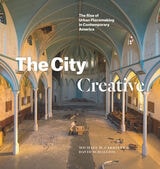
The City Creative
The Rise of Urban Placemaking in Contemporary AmericaMichael H. Carriere and David Schalliol
University of Chicago Press, 2021
Spanning the 1950s to the post-recession 2010s, The City Creative highlights the roles of such prominent individuals and organizations as Jane Jacobs, Christopher Alexander, Richard Sennett, Project for Public Spaces, and the National Endowment for the Arts in the development of urban placemaking, both in the abstract and on the ground. But that’s only half the story. Bringing the narrative to the present, Michael H. Carriere and David Schalliol also detail placemaking interventions at more than 200 sites in more than 40 cities, combining archival research, interviews, participant observation, and Schalliol’s powerful documentary photography. Carriere and Schalliol find that while these formal and informal placemaking interventions can bridge local community development and regional economic plans, more often than not, they push the boundaries of mainstream placemaking. Rather than simply stressing sociability or market-driven economic development, these initiatives offer an alternative model of community-led progress with the potential to redistribute valuable resources while producing tangible and intangible benefits for their communities. The City Creative provides a kaleidoscopic overview of how these initiatives grow, and sometimes collapse, illustrating the centrality of placemaking in the evolution of the American city and how it can be reoriented to meet demands for a more equitable future.
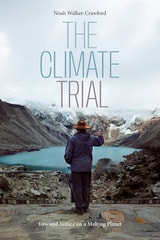
The Climate Trial
Law and Justice on a Melting PlanetNoah Walker-Crawford
Duke University Press, 2026
The Climate of History in a Planetary Age
Dipesh Chakrabarty
University of Chicago Press, 2021
Chakrabarty argues that we must see ourselves from two perspectives at once: the planetary and the global. This distinction is central to Chakrabarty’s work—the globe is a human-centric construction, while a planetary perspective intentionally decenters the human. Featuring wide-ranging excursions into historical and philosophical literatures, The Climate of History in a Planetary Age boldly considers how to frame the human condition in troubled times. As we open ourselves to the implications of the Anthropocene, few writers are as likely as Chakrabarty to shape our understanding of the best way forward.
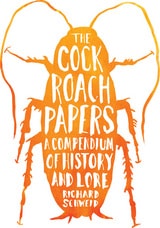
The Cockroach Papers
A Compendium of History and LoreRichard Schweid
University of Chicago Press, 2015
Traveling from New York City to Louisiana, Mexico, Nicaragua, and Morocco, Schweid blends stories of his own squirm-inducing roach encounters with meticulous research to spin a tale both humorous and harrowing. As he investigates roaches’ more nefarious interactions with our species—particularly with those of us living at the margins of society—Schweid also explores their astonishing diversity, how they mate, what they’ll eat, and what we’ve written about them (from Kafka and Nelson Algren to archy and mehitabel). Knowledge soon turns into respect, and Schweid looks beyond his own fears to arrive at an uncomfortable truth: We humans are no more peaceful, tidy, or responsible about taking care of the Earth or each other than these tiny creatures that swarm in the dark corners of our minds, homes, and cereal boxes.
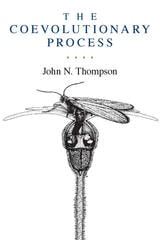
The Coevolutionary Process
John N. Thompson
University of Chicago Press, 1994
Using examples of species interactions from an enormous range of taxa, Thompson examines how and when extreme specialization evolves in interdependent species and how geographic differences in specialization, adaptation, and the outcomes of interactions shape coevolution. Through the geographic mosaic theory, Thompson bridges the gap between the study of specialization and coevolution in local communities and the study of broader patterns seen in comparisons of the phylogenies of interacting species.

The Cognitive Paradigm
Marc De Mey
University of Chicago Press, 1992
"A most stimulating, and intellectually delightful book."—John Goldsmith
"[De Mey] has brought together an unusually wide range of material, and suggested some interesting lines of thought, about what should be an important application of cognitive science: The understanding of science itself."—Cognition and Brain Theory
"It ought to be on the shelf of every teacher and researcher in the field and on the reading list of any student or practitioner seriously interested in how those they serve are likely to set about knowing."—ISIS
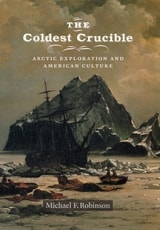
The Coldest Crucible
Arctic Exploration and American CultureMichael F. Robinson
University of Chicago Press, 2006
With chronological chapters featuring emblematic Arctic explorers—including Elisha Kent Kane, Charles Hall, and Robert Peary—The Coldest Crucible reveals why the North Pole, a region so geographically removed from Americans, became an iconic destination for discovery.