Results by title
28167 books match the query 'History' and 6372 start with t
The Holocaust Averted
An Alternate History of American Jewry, 1938-1967Gurock, Jeffrey S
Rutgers University Press, 2015
This alternate history—where, among many scenarios, Hitler is assassinated, Japan does not bomb Pearl Harbor, and Franklin Delano Roosevelt is succeeded after two terms by Robert A. Taft—does cause us to review and better appreciate history. As Gurock tells his tale, he concludes every chapter with a short section that describes what actually happened and, thus, further educates the reader.
The Holocaust Odyssey of Daniel Bennahmias, Sonderkommando
Rebecca Fromer
University of Alabama Press, 1993
A poignant reminder of the ways enslaved Jews and others were forced to destroy their families and fellow prisoners.
The Holocaust Odyssey of Daniel Bennahmias, Sonderkommando presents the extraordinary testimony of Daniel Bennahmias, a Greek Jew whose life was forever altered by the Holocaust. Deported to Auschwitz-Birkenau as a teenager, Bennahmias was separated from his family and forced into the Sonderkommando, the prisoner unit compelled to work in the crematoria and gas chamber complex. Through painstaking collaboration with survivor and author Rebecca Fromer, this powerful narrative documents his struggle to endure unimaginable brutality while preserving his humanity. Bennahmias's account sheds rare light on the inner workings of Auschwitz, the Sonderkommando revolt, the death marches, and the difficult path toward liberation and recovery. More than a historical record, the book is a testament to courage, memory, and resilience in the face of systematic dehumanization. An essential contribution to Holocaust literature, it preserves the voice of a survivor whose experiences deepen our understanding of one of history's darkest chapters.

The Holocaust and Other Genocides
History, Representation, EthicsHelmut Walser Smith
Vanderbilt University Press, 2002
The book consists of five parts: introduction; history of the Holocaust; representations of the Holocaust in literature, film, and the arts; other genocides; and ethics. The curriculum, shaped with feedback from those who teach Holocaust studies, consists mainly of primary documents and their analysis. Each section includes a general introduction to a body of knowledge that reflects current research and detailed introductions to particular documents. Throughout the book, there are provocative discussion questions and suggestions for further reading and other resources. Each section features "links" to other parts to encourage interdisciplinary reflection. The final section on ethics addresses the difficult questions raised by genocide.
The Holocaust and Other Genocides is designed as a model for flexible, innovative teaching about this complex subject. It is also a sophisticated, interdisciplinary effort to create the conditions for discussing and understanding the genocides of the twentieth century.
The Holocaust and the Book
Destruction and PreservationJonathan Rose
University of Massachusetts Press, 2001
Between 1933 and 1945, Nazi Germany systematically destroyed an estimated 100 million books throughout occupied Europe, an act that was inextricably bound up with the murder of 6 million Jews. By burning and looting libraries and censoring “un-German” publications, the Nazis aimed to eradicate all traces of Jewish culture along with the Jewish people themselves.
The Holocaust and the Book examines this bleak chapter in the history of printing, reading, censorship, and libraries. Topics include the development of Nazi censorship policies, the celebrated library of the Vilna ghetto, the confiscation of books from the Sephardic communities in Rome and Salonika, the experience of reading in the ghettos and concentration camps, the rescue of Polish incunabula, the uses of fine printing by the Dutch underground, and the suppression of Jewish books and authors in the Soviet Union. Several authors discuss the continuing relevance of Nazi book burnings to the present day, with essays on German responses to Friedrich Nietzsche and the destruction of Bosnian libraries in the 1990s.
The collection also includes eyewitness accounts by Holocaust survivors and a translation of Herman Kruk's report on the Vilna ghetto library. An annotated bibliography offers readers a concise guide to research in this growing field.
The Holocaust and the West German Historians
Historical Interpretation and Autobiographical MemoryNicolas Berg, Translated and edited by Joel Golb
University of Wisconsin Press, 2015
This English-language translation is also a shortened and reorganized edition, which includes a new introduction by Berg reviewing and commenting on the response to the German editions. Notably, in this American edition, discussion of historian Joseph Wulf and his colleague and fellow Holocaust survivor Léon Poliakov has been united in one chapter. And special care has been taken to make clear to English speakers the questions raised about German historiographical writing. Translator Joel Golb comments, "From 1945 to the present, the way historians have approached the Holocaust has posed deep-reaching problems regarding choice of language. . . . This book is consequently as much about language as it is about facts."
The Holocaust as Culture
Imre Kertész
Seagull Books, 2011
The Holocaust in Hungary
Seventy Years LaterRandolph L. Braham
Central European University Press, 2016
The Holocaust of Texts
Genocide, Literature, and PersonificationAmy Hungerford
University of Chicago Press, 2002
Hungerford examines the implications of conflating texts with people in a broad range of texts: Art Spiegelman's Maus; Ray Bradbury's Fahrenheit 451; the poetry of Sylvia Plath; Binjamin Wilkomirski's fake Holocaust memoir Fragments; and the fiction of Saul Bellow, Philip Roth, and Don DeLillo. She considers the ethical consequences of this trend in the work of recent and contemporary theorists and literary critics as well, including Cathy Caruth, Jacqueline Rose, Jacques Derrida, and Paul de Man. What she uncovers are fundamentally flawed ideas about representation that underwrite and thus undermine powerful and commonly accepted claims about literature and identity. According to Hungerford, the personification of texts is ethically corrosive and theoretically unsound. When we exalt the literary as personal and construe genocide as less a destruction of human life than of culture, we esteem memory over learning, short-circuit debates about cultural change, lend credence to the illusion or metaphysics of presence, and limit our conception of literature and its purpose.
Ultimately, The Holocaust of Texts asks us to think more deeply about the relationship between reading, experience, and memorialization. Why, for instance, is it more important to remember acts of genocide than simply to learn about them? If literary works are truly the bearers of ontology, then what must be our conduct toward them? Considering difficult questions such as these with fresh logic, Hungerford offers us an invigorating work, one that will not only interest scholars of American and postwar literature, but students of the Holocaust and critical theory as well.
The Holocaust, Corporations, and the Law
Unfinished BusinessLeora Bilsky
University of Michigan Press, 2017
Leora Bilsky argues class action litigation and settlement offer a mode of accountability well suited to addressing the bureaucratic nature of business involvement in atrocities. Prior to these lawsuits, legal treatment of the Holocaust was dominated by criminal law and its individualistic assumptions, consistently failing to relate to the structural aspects of Nazi crimes. Engaging critically with contemporary debates about corporate responsibility for human rights violations and assumptions about “law,” she argues for the need to design processes that make multinational corporations accountable, and examines the implications for transitional justice, the relationship between law and history, and for community and representation in a post-national world. Her novel interpretation of the restitution lawsuits not only adds an important dimension to the study of Holocaust trials, but also makes an innovative contribution to broader and pressing contemporary legal and political debates. In an era when corporations are ever more powerful and international, Bilsky’s arguments will attract attention beyond those interested in the Holocaust and its long shadow.
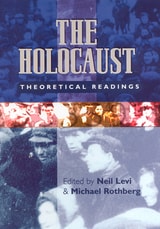
The Holocaust
Theoretical ReadingsLevi, Neil
Rutgers University Press, 2003
This agenda-setting reader brings together both classic and new writings to demonstrate how concerns arising from the Nazi genocide shaped contemporary literary and cultural theory. Wide in its thematic scope, it covers such vital questions as:
- Authenticity and experience
- Memory and trauma
- Historiography and the philosophy of history
- Fascism and Nazi anti-Semitism
- Representation and identity formation
- Race, gender, and genocide
- Implications of the Holocaust for theories of the unconscious, ethics, politics, and aesthetics
The readings, which are fully contextualized by a general introduction, section introductions, and bibliographical notes, represent the work of many influential writers and theorists, including Theodor Adorno, Giorgio Agamben, Hannah Arendt, Jean Baudrillard, Zygmunt Bauman, Walter Benjamin, Cathy Caruth, Jacques Derrida, Shoshana Felman, Saul Friedlander, Paul Gilroy, Lawrence Langer, Emmanuel Levinas, Primo Levi, Jean-François Lyotard, Hayden White, and James E. Young. This multidisciplinary anthology will be welcomed by students and scholars of the Holocaust.
The Holy Mass
Mike Aquilia
Catholic University of America Press, 2021
The Holy Spirit in Puritan Faith and Experience
Geoffrey F. Nuttall
University of Chicago Press, 1992
In a new Introduction, Peter Lake discusses the relevance of Nuttall's book to, and its influence on, major works in seventeenth-century English history written since 1946.
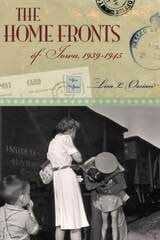
The Home Fronts of Iowa, 1939-1945
Lisa L. Ossian
University of Missouri Press, 2018
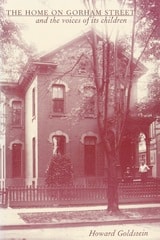
The Home on Gorham Street and the Voices of Its Children
Howard Goldstein
University of Alabama Press, 1996
Giving voice to childhood, memory, and resilience within a shared home.
The Home on Gorham Street looks back to an earlier era of care for orphaned and dependent children of Eastern European Jewish immigrants. Within this social history and ethnography, the voices of elders once wards of the home in the 1930s and 1940s tell us in sometimes poetic, often comic, usually ironic, and always poignant words what it was really like to grow up in an orphanage. Emerging from this penetrating adventure are principles for the future of effective group care in meeting the needs of the rapidly growing number of abused, forsaken, and orphaned children.
Goldstein's ethnography demonstrates amply that children who spend years in an institution can go on to lead productive lives under certain conditions. Such conditions may never have been met in any other children's institution. That they did exist one time, however, is cause not only to rejoice but also to understand that recreating these conditions is difficult and possibly impossible.
The Homesick Phone Book
Addressing Rhetorics in the Age of Perpetual ConflictCynthia Haynes
Southern Illinois University Press, 2016
Terrorist attacks, war, and mass shootings by individuals occur on a daily basis all over the world. In The Homesick Phone Book, author Cynthia Haynes examines the relationship of rhetoric to such atrocities. Aiming to disrupt conventional modes of rhetoric, logic, argument, and the teaching of writing, Haynes illuminates rhetoric’s ties to horrific acts of violence and the state of perpetual conflict around the world, both in the Holocaust era and more recently.
Each chapter, marked by a physical address, functions as a kind of expanded phone book entry, with a discussion of violent events at a particular location giving way to explorations of larger questions related to rhetoric and violence. At the core of the work is Haynes’s call for a writing pedagogy based on abstraction that would allow students to appeal to emotional and ethical grounds in composing arguments. Written in a lyrical style, the book weaves rhetorical theories, poetics, philosophy, works of art, and personal experience into a complex, compelling, and innovative mode of writing.
Ultimately, The Homesick Phone Book demonstrates how scholars of rhetoric and writing studies can break their dependence on conventional argument and logic to discover what might be possible if we dive into and become lost within the very concepts and events that frighten and terrorize us.
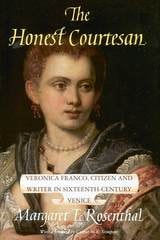
The Honest Courtesan
Veronica Franco, Citizen and Writer in Sixteenth-Century VeniceMargaret F. Rosenthal
University of Chicago Press, 1992
Margaret F. Rosenthal draws a compelling portrait of Veronica Franco in her cultural social, and economic world. Rosenthal reveals in Franco's writing a passionate support of defenseless women, strong convictions about inequality, and, in the eroticized language of her epistolary verses, the seductive political nature of all poetic contests. It is Veronica Franco's insight into the power conflicts between men and women—and her awareness of the threat she posed to her male contemporaries—that makes her literary works and her dealings with Venetian intellectuals so pertinent today.
Combining the resources of biography, history, literary theory, and cultural criticism, this sophisticated interdisciplinary work presents an eloquent and often moving account of one woman's life as an act of self-creation and as a complex response to social forces and cultural conditions.
"A book . . . pleasurably redolent of Venice in the 16th-century. Rosenthal gives a vivid sense of a world of salons and coteries, of intricate networks of family and patronage, and of literary exchanges both intellectual and erotic."—Helen Hackett, Times Higher Education Supplement
The Honest Courtesan is the basis for the film Dangerous Beauty (1998) directed by Marshall Herskovitz. (The film was re-titled The Honest Courtesan for release in the UK and Europe in 1999.)
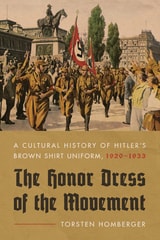
The Honor Dress of the Movement
A Cultural History of Hitler’s Brown Shirt Uniform, 1920–1933Torsten Homberger
University of Massachusetts Press, 2021
In The Honor Dress of the Movement, Torsten Homberger contends that the brown-shirted Stormtrooper uniform was central to Hitler's rise to power. By analyzing its design and marketing, he investigates how Nazi leaders used it to project a distinct political and military persona that was simultaneously violent and orderly, retrograde and modern—a dual image that proved popular with the German people and was key to the Nazis' political success. Based on a wealth of sources that includes literature, films, and newspapers of the era, Homberger exhibits how the Nazis shaped and used material culture to destroy democracy.
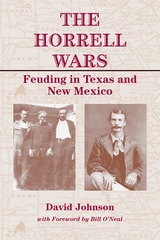
The Horrell Wars
Feuding in Texas and New MexicoDavid Johnson
University of North Texas Press, 2014
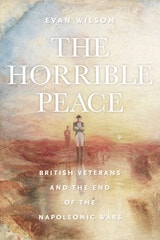
The Horrible Peace
British Veterans and the End of the Napoleonic WarsEvan Wilson
University of Massachusetts Press, 2023
Few battles in world history provide a cleaner dividing line than Waterloo: before, there was Napoleon; after, there was the Pax Britannica. While Waterloo marked France’s defeat and Britain’s ascendance as an imperial power, the war was far from over for many soldiers and sailors, who were forced to contend with the lasting effects of battlefield trauma, the realities of an impossibly tight labor market, and growing social unrest. The Horrible Peace details a story of distress and discontent, of victory complicated by volcanism, and of the challenges facing Britain at the beginning of its victorious century.
Examining the process of demobilization and its consequences for British society, Evan Wilson draws on archival research and veterans’ memoirs to tell the story of this period through the experiences of veterans who struggled to reintegrate and soldiers and sailors who remained in service as Britain attempted to defend and expand the empire. Veterans were indeed central to Britain’s experience of peace, as they took to the streets to protest the government’s indifference to widespread unemployment and misery. The fighting did not stop at Waterloo.
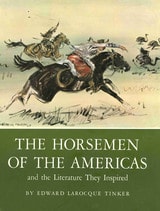
The Horsemen of the Americas and the Literature They Inspired
Edward Larocque Tinker
University of Texas Press, 1967
Wherever cattle have been raised on a large scale horsemen have been there to handle them; and wherever these horsemen have existed they have left an indelible mark upon the history of the land. Frequently they have been ignorant, violent, and brutal. Always they have been vigorous and individualistic. They have taken their herds into frontier areas, opened new country, fought and driven off earlier inhabitants, participated in revolutions, battled among themselves, and generally lived lives which, colorful and somewhat frightening to their contemporaries, have become robust legends to those who followed them.
Edward Larocque Tinker portrays the life of these people in the two Americas, the conditions which created them, and those that ultimately destroyed or transformed them.
"Ever since I was a small boy, when my parents returned from Mexico bringing me a charro outfit complete with saddle and bridle, Latin America has beckoned with the finger of romance," Mr. Tinker recalls. "As soon as I was old enough, I made many trips to Mexico and, in the days of Porfirio Díaz, learned to know it from the border to the Isthmus of Tehuantepec. During the Revolution I was with General Álvaro Obregón when he was a Teniente Coronel in his Sonora Campaign, and, although I was only a lawyer on a holiday, took care of his wounded in the battel of San Joaquín. Later, in Pancho Villa's train, I was present at Celaya when he was defeated by Obregón.
"Always an ardent horseman, I worked many a roundup with the vaqueros of Sonora and Chihuahua, and with the cowboys of our Southwest. . . .
"I saw the similarity between the American cowboy, the Argentine Gaucho, and the Vaquero of Mexico. They all received their gear and technique of cattle handling from Spain, and developed the same independence, courage, and hardihood. I thought if these qualities were better known they might serve as a bridge to closer understanding throughout the Americas."
From his study of the lives of these horsemen, Tinker proceeds to an examination of the literature that evolved among and then about them.
The first and largest part of the book deals with the gaucho of Argentina and Uruguay. The second and third sections examine the charro of Mexico and the cowboy of the United States.
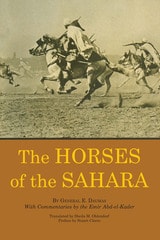
The Horses of the Sahara
By General E. Daumas
University of Texas Press, 1968
The Arabs created one of the world's finest breeds of saddle horses, the Arabian, and they have long possessed an immense store of knowledge regarding the care, training, and breeding of this splendid horse. In the nineteenth century, General Melchior Joseph Eugene Daumas had access to their knowledge even though, as he pointed out, "it requires a great deal of patience and tact for a Christian to obtain from the Mohammedans even the most insignificant of details . . ." General Daumas was, because of his unique relationship with the Arabs, probably the first European to produce a comprehensive study of Arabian horses. And to add even greater value to The Horses of the Sahara, he was able to secure for the ninth edition, here translated, extended commentaries on all aspects of Arabian horsemanship by the Emir Abd-el-Kadar, one of the most important nineteenth-century Arab leaders and certainly one of the foremost authorities on the subject.
The Horses of the Sahara will be of interest not only to equestrians but also to historians and other scholars interested in the customs of the North African desert tribes and in the complex backgrounds of European–North African relations. General Daumas took part in the conquest of Algeria by France, so distinguishing himself that he was named Director of the Bureau of Algerian Affairs in the French Ministry of War. During the campaigns and the occupation that followed, he studied and attempted to understand the native peoples, with an objectivity and sympathy unusual among the colonialists of the period. His book provides fascinating sidelights on many aspects of Arab life, including customs, superstitions, religion, and family life.
Sheila M. Ohlendorf was uniquely suited to translate The Horses of the Sahara. An excellent rider herself, thoroughly experienced with the animals and the techniques being discussed, she also spoke fluent French, having received her B.A. degree in languages from Texas Western University (now the University of Texas at El Paso). As curator of the Hall of the Horsemen, the large collection at the University of Texas at Austin, she had access to a wide variety of supplementary authorities, which enriched both her translation and the notes that accompany the book.

The Hot 'Cold War'
The USSR in Southern AfricaVladimir Shubin
Pluto Press, 2008
This book analyses the causes of armed conflicts in Southern Africa during the Cold War. It examines the influence of the various external forces in the region during this period and their relationship to local movements and governments.
The book focuses on states experiencing violent internal conflict and foreign intervention, that is Angola, Mozambique, Namibia , South Africa and Zimbabwe.
The author provides an unique history of the key part that the Soviet Union played in these developments. Spanning 30 years, the book explores how each country struggled for genuine independence against colonialism and apartheid and their place in the wider conflicts encompassed by the Cold War.
The House Cross of the Mayo Indians of Sonora, Mexico
N. Ross Crumrine
University of Arizona Press, 1965
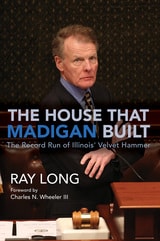
The House That Madigan Built
The Record Run of Illinois' Velvet HammerRay Long. Foreword by Charles N. Wheeler III
University of Illinois Press, 2022
Veteran reporter Ray Long draws on four decades of observing state government to provide the definitive political analysis of Michael Madigan. Secretive, intimidating, shrewd, power-hungry--Madigan mesmerized his admirers and often left his opponents too beaten down to oppose him. Long vividly recreates the battles that defined the Madigan era, from stunning James Thompson with a lightning-strike tax increase, to pressing for a pension overhaul that ultimately failed in the courts, to steering the House toward the Rod Blagojevich impeachment. Long also shines a light on the machinery that kept the Speaker in power. Head of a patronage army, Madigan ruthlessly used his influence and fundraising prowess to reward loyalists and aid his daughter’s electoral fortunes. At the same time, he reshaped bills to guarantee he and his Democratic troops shared in the partisan spoils of his legislative victories. Yet Madigan’s position as the state’s seemingly invulnerable power broker could not survive scandals among his close associates and the widespread belief that his time as Speaker had finally reached its end.
Unsparing and authoritative, The House That Madigan Built is the page-turning account of one the most powerful politicians in Illinois history.

The House Will Come To Order
How the Texas Speaker Became a Power in State and National PoliticsBy Patrick L. Cox and Michael Phillips
University of Texas Press, 2010
In a state assumed to have a constitutionally weak governor, the Speaker of the Texas House wields enormous power, with the ability to almost single-handedly dictate the legislative agenda. The House Will Come to Order charts the evolution of the Speaker's role from a relatively obscure office to one of the most powerful in the state. This fascinating account, drawn from the Briscoe Center's oral history project on the former Speakers, is the story of transition, modernization, and power struggles.
Weaving a compelling story of scandal, service, and opportunity, Patrick Cox and Michael Phillips describe the divisions within the traditional Democratic Party, the ascendance of Republicans, and how Texas business, agriculture, and media shaped perceptions of officeholders. While the governor and lieutenant governor wielded their power, the authors show how the modern Texas House Speaker built an office of equal power as the state became more complex and diverse. The authors also explore how race, class, and gender affected this transition as they explain the importance of the office in Texas and the impact the state's Speakers have had on national politics.
At the apex of its power, the Texas House Speaker's role at last receives the critical consideration it deserves.

The House and Senate in the 1790s
Petitioning, Lobbying, and Institutional DevelopmentKenneth R. Bowling
Ohio University Press, 2002
Amid the turbulent swirl of foreign intrigue, external and internal threats to the young nation’s existence, and the domestic partisan wrangling of the 1790s, the United States Congress solidified its role as the national legislature. The ten essays in The House and Senate in the 1790s demonstrate the mechanisms by which this bicameral legislature developed its institutional identity. The first essay sets the scene for the institutional development of Congress by examining its constitutional origins and the efforts of the Founders to empower the new national legislature. The five following essays focus on two related mechanisms—petitioning and lobbying—by which citizens and private interests communicated with national lawmakers.
Although scholars tend to see lobbying as a later nineteenth-century development, the papers presented here clearly demonstrate the existence of lobbyists and lobbying in the 1790s. The final four papers examine other aspects of the institutional development of the House and the Senate, including the evolution of political parties and congressional leadership.
The essays in this collection, the third volume in the series Perspectives on the History of Congress, 1789-1801, originated in a series of conferences held by the United States Capitol Historical Society from 1994 to 2001.
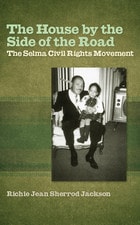
The House by the Side of the Road
The Selma Civil Rights MovementRichie Jean Sherrod Jackson
University of Alabama Press, 2011
King’s informal headquarters in Selma was the home of Dr. Sullivan and Richie Jean Sherrod Jackson and their young daughter, Jawana. The House by the Side of the Road is Richie Jean’s firsthand account of the private meetings King and his lieutenants, including Ralph David Abernathy and John Lewis, held in the haven of the Jackson home.
Sullivan Jackson was an African American dentist in Selma and a prominent supporter of the civil rights movement. Richie Jean was a close childhood friend of King’s wife, Coretta Scott King, a native of nearby Marion, Alabama. Richie Jean’s fascinating account narrates how, in the fraught months of 1965 that preceded the Voting Rights March, King and his inner circle held planning sessions and met with Assistant Attorney General John Doar to negotiate strategies for the event.
Just eight days after Bloody Sunday, President Lyndon Johnson made a televised addressed to a joint session of Congress on Monday, March 15. Jackson relates the intimate scene of King and his lieutenants watching as Johnson called the nation to dedicate itself to equal rights for all and ending his address with the words: “We shall overcome.” Five months later, Congress passed the 1965 Voting Rights Act on August 6.
The major motion picture Selma now commemorates the fiftieth anniversary of Bloody Sunday and the 1965 Voting Rights Act. In it, Niecy Nash and Kent Faulcon star as Sullivan and Richie Jean Jackson among a cast including Oprah Winfrey, Tom Wilkinson, and Cuba Gooding Jr. A gripping primary source, The House by the Side of the Road illuminates the private story whose public outcomes electrified the world and changed the course of American history.
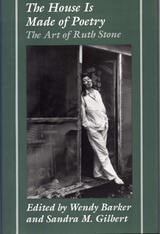
The House is Made of Poetry
The Art of Ruth StoneEdited by Wendy Barker and Sandra M. Gilbert
Southern Illinois University Press, 1996
Ruth Stone has always eschewed self-promotion and, in the words of Leslie Fiedler, "has never been a member of any school or clique or gaggle of mutual admirers." But her poems speak so vibrantly for her that she cannot be ignored.
In her preface to this volume, Sandra M. Gilbert declares that Stone’s "intense attention to the ordinary transforms it into (or reveals it as) the extraordinary. Her passionate verses evoke impassioned responses." At the same time, Gilbert continues, the essays collected here "consistently testify to Stone’s radical unworldliness, in particular her insouciant contempt for the ‘floor walkers and straw bosses’ who sometimes seem to control the poetry ‘factory’ both inside and outside the university."
Wendy Barker and Sandra Gilbert have organized the book into three sections: "Knowing Ruth Stone," "A Life of Art," and "Reading Ruth Stone." In "Knowing Ruth Stone," writers of different generations who have known the poet over the years provide memoirs. Noting Stone’s singularity, Fiedler points out that "she resists all labels" and is "one of the few contemporaries whom it is possible to think of simply as a ‘poet.’" Sharon Olds defines her vitality ("A Ruth Stone poem feels alive in the hands"), and Jan Freeman praises her aesthetic intensity ("Everything in the life of Ruth Stone is integrated with poetry").
"A Life of Art" sketches the outlines of Stone’s career and traces her evolution as a poet. Barker and Norman Friedman, for example, trace her development from the "high spirits and elegant craft" of her first volume—Inan Iridescent Time— through the "deepening shadows," "poignant wit," and "bittersweet meditations" of her later work. In interviews separated by decades (one in the 1970s and one in the 1990s), Sandra Gilbert and Robert Bradley discuss with Stone her own sense of her aesthetic origins and literary growth.
"Reading Ruth Stone" is an examination of Stone’s key themes and modes. Diane Wakoski and Diana O’Hehir focus on the tragicomic vision that colors much of her work; Kevin Clark and Elyse Blankley explore the political aspects of her poetry; Roger Gilbert analyzes her "often uncannily astute insights into the ‘otherness’ of other lives"; Janet Lowery and Kandace Brill Lombart draw on the biographical background of Stone’s "grief work"; and Sandra Gilbert studies her caritas, her empathic love that redeems pain.
The House of the Singing Winds
The Life and Work of T. C. SteeleRachel Berenson Perry
Indiana Historical Society Press, 2016
The House on Lemon Street
Japanese Pioneers and the American DreamMark Rawitsch
University Press of Colorado, 2013
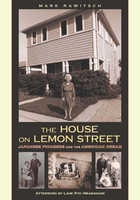
Bringing this little-known story to light, The House on Lemon Street details the Haradas' decision to fight for the American dream. Chronicling their experiences from their immigration to the United States through their legal battle over their home, their incarceration during World War II, and their lives after the war, this book tells the story of the family's participation in the struggle for human and civil rights, social justice, property and legal rights, and fair treatment of immigrants in the United States.
The Harada family's quest for acceptance illuminates the deep underpinnings of anti-Asian animus, which set the stage for Executive Order 9066, and recognizes fundamental elements of our nation's anti-immigrant history that continue to shape the American story. It will be worthwhile for anyone interested in the Japanese American experience in the twentieth century, immigration history, public history, and law.
This publication was made possible with the support of Naomi, Kathleen, Ken, and Paul Harada, who donated funds in memory of their father, Harold Shigetaka Harada, honoring his quest for justice and civil rights. Additional support for this publication was also provided, in part, by UCLA's Aratani Endowed Chair as well as Wallace T. Kido, Joel B. Klein, Elizabeth A. Uno, and Rosalind K. Uno.
The House on Rondo
Debra J Stone
University of Minnesota Press, 2025
A young girl reckons with the demolition of a Black Saint Paul neighborhood to make way for the Interstate in the early 1960s
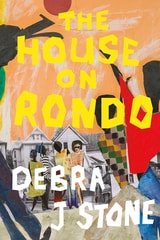
When thirteen-year-old Zenobia has to leave her friends and spend the summer at Grandma’s while Mama recovers from a stroke, life seems so unfair. But then the eviction letters start arriving throughout her grandparents’ neighborhood, and white men chalk arrows to mark the gas and water lines, and a new world of unfairness unfolds before her. It’s 1963, and Zenobia’s grandparents’ house on Rondo Avenue in Saint Paul—like all the homes in this thriving Black community—is targeted for demolition to make way for the new Interstate Highway 94.
As Zenobia gradually learns about what’s planned for the Rondo neighborhood and what this means for everyone who lives there, she discovers how her story is intertwined with the history of her family, all the way back to Great Grandma Zenobia and the secrets Grandma Essie held close about the reason for her light skin. With the destruction of the neighborhood looming, Zenobia takes a stand on behalf of her community, joining her no-nonsense neighbor, onetime cowgirl Mrs. Ruby Pearl, in a protest and ultimately getting arrested. Though Zenobia is grounded for a month, her punishment seems of little consequence in comparison to what is happening all around her. Even though the demolition continues, she is proud to discover the power and connection in protesting injustice.
The House on Rondo captures the heartbreak, resistance, and resilience that marks a community sacrificed in the name of progress—a “progress” that never seems to favor Black families and neighborhoods and that haunts cities like Saint Paul to this day. As Zenobia learns what can be destroyed and what cannot, her story teaches us that joy, community, and love persist, even amid violence and loss.
The Huarochiri Manuscript
A Testament of Ancient and Colonial Andean ReligionTranslation from the Quechua by Frank Salomon and George L. Urioste
University of Texas Press, 1991
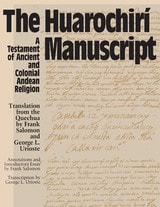
One of the great repositories of a people's world view and religious beliefs, the Huarochirí Manuscript may bear comparison with such civilization-defining works as Gilgamesh, the Popul Vuh, and the Sagas. This translation by Frank Salomon and George L. Urioste marks the first time the Huarochirí Manuscript has been translated into English, making it available to English-speaking students of Andean culture and world mythology and religions.
The Huarochirí Manuscript holds a summation of native Andean religious tradition and an image of the superhuman and human world as imagined around A.D. 1600. The tellers were provincial Indians dwelling on the west Andean slopes near Lima, Peru, aware of the Incas but rooted in peasant, rather than imperial, culture. The manuscript is thought to have been compiled at the behest of Father Francisco de Avila, the notorious "extirpator of idolatries." Yet it expresses Andean religious ideas largely from within Andean categories of thought, making it an unparalleled source for the prehispanic and early colonial myths, ritual practices, and historic self-image of the native Andeans.
Prepared especially for the general reader, this edition of the Huarochirí Manuscript contains an introduction, index, and notes designed to help the novice understand the culture and history of the Huarochirí-area society. For the benefit of specialist readers, the Quechua text is also supplied.
The Huawei Model
The Rise of China's Technology GiantYun Wen
University of Illinois Press, 2020
Yun Wen uses the Huawei story as a microcosm to understand China's evolving digital economy and the global rise of the nation's corporate power. Rejecting the idea of the transnational corporation as a static institution, she explains Huawei's formation and restructuring as a historical process replete with contradictions and complex consequences. She places Huawei within the international political economic framework to capture the dynamics of power structure and social relations underlying corporate China's globalization. As she explores the contradictions of Huawei's development, she also shows the ICT firm's complicated interactions with other political-economic forces.
Comprehensive and timely, The Huawei Model offers an essential analysis of China's dynamic development of digital economy and the global technology powerhouse at its core.
The Hudson
An Illustrated Guide to the Living RiverStanne, Stephen P
Rutgers University Press, 2007
The Hudson River is one of the great rivers of the world. Not long ago, it was deeply threatened by pollution. Now it is coming back to life, a river where fish and birds can thrive again, a river valued once more by communities along its shores.
The unique environmental education program on board the sloop, Clearwater, founded by folksinger Pete Seeger, has taught thousands of children and adults to love the river. With this guidebook, Clearwater teachers bring their wealth of knowledge about the river to a wider audience.
This book covers, for the first time, the full sweep of the river's natural history and human heritage. It introduces you to the Hudson's diversity of plants and wildlife, to the geological forces that created the river, to the people who explored and settled its banks, to the river's enduring place in American history and art, and to the battles waged over its environmental preservation. Its engaging illustrations, maps, and text––distilled from the best research on the Hudson's habitat and history––invite you to explore the river yourself.
Royalties from the sale of this book will support the continued restoration of the river's ecological well-being through the programs of the Hudson River Sloop Clearwater, Inc., a nonprofit education and advocacy organization based in Poughkeepsie, New York.
The Hudson
An Illustrated Guide to the Living RiverStephen P. Stanne
Rutgers University Press, 2021
This volume gives a detailed account of the Hudson River’s history, including the geological forces that created it, the various peoples who have lived on its banks, and the great works of art it has inspired. It also showcases the many species making a home on this waterway, including the Atlantic sturgeon, the bald eagle, the invasive zebra mussel, and the herons of New York Harbor. Combining both scientific and historical perspectives, this book demonstrates why the Hudson and its valley have been so central to the environmental movement.
As it charts the progress made towards restoring the river ecosystem and the effects of emerging threats like climate change, The Hudson identifies concrete ways that readers can help. To that end, royalties from the sale of this book will go to the non-profit environmental advocacy group Hudson River Sloop Clearwater, Inc.
The Human Animal in Western Art and Science
Martin Kemp
University of Chicago Press, 2007
From the lazy, fiddling grasshopper to the sneaky Big Bad Wolf, children’s stories and fables enchant us with their portrayals of animals who act like people. But the comparisons run both ways, as metaphors, stories, and images—as well as scientific theories—throughout history remind us that humans often act like animals, and that the line separating them is not as clear as we’d like to pretend.
Here Martin Kemp explores a stunning range of images and ideas to demonstrate just how deeply these underappreciated links between humans and other fauna are embedded in our culture. Tracing those interconnections among art, science, and literature, Kemp leads us on a dazzling tour of Western thought, from Aristotelian physiognomy and its influence on phrenology to the Great Chain of Being and Darwinian evolution. We learn about the racist anthropology underlying a familiar Degas sculpture, see paintings of a remarkably simian Judas, and watch Mowgli, the man-child from Kipling’s The Jungle Book, exhibit the behaviors of the beasts who raised him. Like a kaleidoscope, Kemp uses these stories to refract, reconfigure, and echo the essential truth that the way we think about animals inevitably inflects how we think about people, and vice versa.
Loaded with vivid illustrations and drawing on sources from Hesiod to La Fontaine, Leonardo to P. T. Barnum, The Human Animal in Western Art and Science is a fascinating, eye-opening reminder of our deep affinities with our fellow members of the animal kingdom.
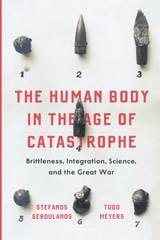
The Human Body in the Age of Catastrophe
Brittleness, Integration, Science, and the Great WarStefanos Geroulanos and Todd Meyers
University of Chicago Press, 2018
In The Human Body in the Age of Catastrophe, Stefanos Geroulanos and Todd Meyers uncover a fascinating story of how medical scientists came to conceptualize the body as an integrated yet brittle whole. Responding to the harrowing experience of the Great War, the medical community sought conceptual frameworks to understand bodily shock, brain injury, and the vast differences in patient responses they occasioned. Geroulanos and Meyers carefully trace how this emerging constellation of ideas became essential for thinking about integration, individuality, fragility, and collapse far beyond medicine: in fields as diverse as anthropology, political economy, psychoanalysis, and cybernetics.
Moving effortlessly between the history of medicine and intellectual history, The Human Body in the Age of Catastrophe is an intriguing look into the conceptual underpinnings of the world the Great War ushered in.
The Human Race
Robert Antelme
Northwestern University Press, 1998
The Human Rights Paradox
Universality and Its DiscontentsEdited by Steve J. Stern and Scott Straus
University of Wisconsin Press, 2014
The Human Rights Paradox is the first book to fully embrace this contradiction and reframe human rights as history, contemporary social advocacy, and future prospect. In case studies that span Africa, Latin America, South and Southeast Asia, and the United States, contributors carefully illuminate how social actors create the imperative of human rights through relationships whose entanglements of the global and the local are so profound that one cannot exist apart from the other. These chapters provocatively analyze emerging twenty-first-century horizons of human rights—on one hand, the simultaneous promise and peril of global rights activism through social media, and on the other, the force of intergenerational rights linked to environmental concerns that are both local and global. Taken together, they demonstrate how local struggles and realities transform classic human rights concepts, including “victim,” “truth,” and “justice.”
Edited by Steve J. Stern and Scott Straus, The Human Rights Paradox enables us to consider the consequences—for history, social analysis, politics, and advocacy—of understanding that human rights belong both to “humanity” as abstraction as well as to specific people rooted in particular locales.
The Human Shore
Seacoasts in HistoryJohn R. Gillis
University of Chicago Press, 2012
Since before recorded history, people have congregated near water. But as growing populations around the globe continue to flow toward the coasts on an unprecedented scale and climate change raises water levels, our relationship to the sea has begun to take on new and potentially catastrophic dimensions. The latest generation of coastal dwellers lives largely in ignorance of the history of those who came before them, the natural environment, and the need to live sustainably on the world’s shores. Humanity has forgotten how to live with the oceans.
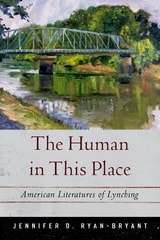
The Human in This Place
American Literatures of LynchingJennifer D. Ryan-Bryant
University of Massachusetts Press, 2027
Tracing how resistance to lynching violence generated some of the most innovative writing in American literature
On March 9, 1892, three Black men were murdered in Memphis. The violence moved Ida B. Wells to begin writing against lynching; in doing so, she helped ignite a literary tradition that would transform American literature. The dual presence of lynching violence and activist resistance gave rise to a dynamic body of African American writing that grapples with the contradictions inherent to a democracy whose citizens enslaved others.
In The Human in This Place, Jennifer Ryan-Bryant ties central moments in the history of American lynching to the emergence of new literary genres. Focusing on Jim Crow segregation, anti-lynching activism, the murder of Emmett Till, Civil Rights and Black Power organizing, and modern police brutality, Ryan-Bryant identifies the unique formal elements and themes that characterize literary responses to sustained social violence and political resistance. The new genres she identifies—including the socialist novel, the Emmett Till poem, and the anti-epic catalogue—reveal art's resistance and response to unchecked mob violence.
The Human in This Place recognizes that lynchings occupy a uniquely disturbing space in American life: simultaneously legal and extralegal, public and private, individual and communal. The literatures of lynching investigate the ethical slippage endemic to American national identity and articulate the joyous expression that resistance makes possible.
The Humana Festival
The History of New Plays at Actors Theatre of LouisvilleJeffrey Ullom
Southern Illinois University Press, 2008
Far from the glittering lights of Broadway, in a city known more for its horse racing than its artistic endeavors, an annual festival in Louisville, Kentucky, has transformed the landscape of the American theater. The Actors Theatre of Louisville—the Tony Award–winning state theater of Kentucky—in 1976 successfully created what became the nation's most respected new-play festival, the Humana Festival of New American Plays.
The Humana Festival: The History of New Plays at Actors Theatre of Louisville examines the success of the festival and theater’s Pulitzer Prize–winning productions that for decades have reflected new-play trends in regional theaters and on Broadway—the result of the calculated decisions, dogged determination, and good luck of its producing director, Jon Jory.
The volume details how Actors Theatre of Louisville was established, why the Humana Festival became successful in a short time, and how the event’s success has been maintained by the Louisville venue that has drawn theater critics from around the world for more than thirty years.
Author Jeffrey Ullom charts the theater’s early struggles to survive, the battles between troupe leaders, and the desperate measures to secure financial support from the Louisville community. He examines how Jory established and expanded the festival to garner extraordinary local support, attract international attention, and entice preeminent American playwrights to premier their works in the Kentucky city.
In The Humana Festival, Ullom provides a broad view of new-play development within artistic, administrative, and financial contexts. He analyzes the relationship between Broadway and regional theaters, outlining how the Humana Festival has changed the process of new-play development and even Broadway’s approach to discovering new work, and also highlights the struggles facing regional theaters across the country as they strive to balance artistic ingenuity and economic viability.
Offering a rare look at the annual event, The Humana Festival provides the first insider’s view of the extraordinary efforts that produced the nation’s most successful new-play festival.

The Humane Economy
Populism, Capitalism, and DemocracyPollack, Norman
Rutgers University Press, 1990
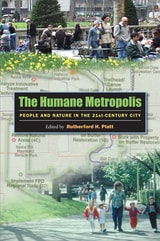
The Humane Metropolis
People and Nature in the 21st-Century CityRutherford H. Platt
University of Massachusetts Press, 2006
Four-fifths of Americans now live in the nation's sprawling metropolitan areas, and half of the world's population is now classified as “urban.” As cities become the dominant living environment for humans, there is growing concern about how to make such places more habitable, more healthy and safe, more ecological, and more equitable—in short, more “humane.”
This book explores the prospects for a more humane metropolis through a series of essays and case studies that consider why and how urban places can be made greener and more amenable. Its point of departure is the legacy of William H. Whyte (1917-1999), one of America's most admired urban thinkers. From his eyrie high above Manhattan in the offices of the Rockefeller Brothers Fund, Whyte laid the foundation for today's “smart growth” and “new urbanist” movements with books such as The Last Landscape (1968). His passion for improving the habitability of cities and suburbs is reflected in the diverse grassroots urban design and regreening strategies discussed in this volume.
Topics examined in this book include urban and regional greenspaces, urban ecological restoration, social equity, and green design. Some of the contributors are recognized academic experts, while others offer direct practical knowledge of particular problems and initiatives. The editor's introduction and epilogue set the individual chapters in a broader context and suggest how the strategies described, if widely replicated, may help create more humane urban environments.
In addition to Rutherford H. Platt, contributors to the volume include Carl Anthony, Thomas Balsley, Timothy Beatley, Eugenie L. Birch, Edward J. Blakely, Colin M. Cathcart, Steven E. Clemants, Christopher A. De Sousa, Steven N. Handel, Peter Harnik, Michael C. Houck, Jerold S. Kayden, Albert LaFarge, Andrew Light, Charles E. Little, Anne C. Lusk, Thalya Parilla, Deborah E. Popper, Frank J. Popper, Mary V. Rickel, Cynthia Rosenzweig, Robert L. Ryan, Laurin N. Sievert, Andrew G. Wiley-Schwartz, and Ann Louise Strong.
Included in the back of the book is a DVD of a 22-minute film created by Ted White, which serves as a companion to the text.
The Humanities and the Dream of America
Geoffrey Galt Harpham
University of Chicago Press, 2011
In this bracing and original book, Geoffrey Galt Harpham argues that today’s humanities are an invention of the American academy in the years following World War II, when they were first conceived as an expression of American culture and an instrument of American national interests. The humanities portray a “dream of America” in two senses: they represent an aspiration of Americans since the first days of the Republic for a state so secure and prosperous that people could enjoy and appreciate culture for its own sake; and they embody in academic terms an idealized conception of the American national character. Although they are struggling to retain their status in America, the concept of the humanities has spread to other parts of the world and remains one of America's most distinctive and valuable contributions to higher education.
The Humanities and the Dream of America explores a number of linked problems that have emerged in recent years: the role, at once inspiring and disturbing, played by philology in the formation of the humanities; the reasons for the humanities’ perpetual state of “crisis”; the shaping role of philanthropy in the humanities; and the new possibilities for literary study offered by the subject of pleasure. Framed by essays that draw on Harpham’s pedagogical experiences abroad and as a lecturer at the U.S. Air Force Academy, as well as his vantage as director of the National Humanities Center, this book provides an essential perspective on the history, ideology, and future of this important topic.
The Humblest Sparrow
The Poetry of Venantius FortunatusMichael Roberts
University of Michigan Press, 2010
In The Humblest Sparrow, Michael Roberts illuminates the poetry of the sixth-century bishop and poet Venantius Fortunatus. Often regarded as an important transitional figure, Fortunatus wrote poetry that is seen to bridge the late classical and earlier medieval periods. Written in Latin, his poems combined the influences of classical Latin poets with a medieval tone, giving him a special place in literary history. Yet while interest has been growing in the early Merovingian period, and while the writing of Fortunatus' patron Gregory of Tours has been well studied, Fortunatus himself has often been neglected. This neglect is remedied by this in-depth study, which will appeal to scholars of late antique, early Christian, and medieval Latin poetry. Roberts divides Fortunatus' poetry into three main groups: poetry of praise, hagiographical poetry, and personal poetry. In addition to providing a general survey, Roberts discusses in detail many individual poems and proposes a number of theses on the nature, function, relation to social and linguistic context, and survival of Fortunatus' poetry, as well as the image of the poet created by his work.

The Humours of Parliament
Harry Furniss's View of Late-Victorian Political CultureEdited and with an Introduction by Gareth Cordery and Joseph S. Meisel
The Ohio State University Press, 2014
Reproducing some 150 images drawn from Furniss’s extensive graphic work, The Humours of Parliament: Harry Furniss’s View of Late-Victorian Political Culture, edited and with an introduction by Gareth Cordery and Joseph S. Meisel, presents Furniss’s unpublished lecture text for the first time. The extensive introduction places the show in its biographical, political, and performative contexts. Cordery and Meisel’s volume therefore both documents a pivotal moment in British political and social history and provides a rare case study of an important yet little studied nineteenth-century performance genre: the illustrated platform lecture.
The Hungarian Patient
Social Opposition to an Illiberal DemocracyJon Van Til
Central European University Press, 2015
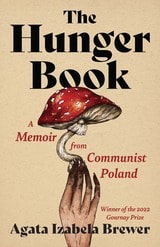
The Hunger Book
A Memoir from Communist PolandAgata Izabela Brewer
The Ohio State University Press, 2023
“A searing memoir about growing up behind the Iron Curtain, motherhood, addiction, and finding sustenance in the natural world.” —Kirkus
In The Hunger Book, Agata Izabela Brewer evokes her Polish childhood under Communism, where the warmth of her grandparents’ love and the scent of mushrooms drying in a tiny apartment are as potent as the deprivations and traumas of life with a terrifyingly unstable, alcoholic single mother. Brewer indelibly renders stories of foraging for food, homemade potato vodka (one of the Eastern Bloc’s more viable currencies), blood sausage, sparrows plucked and fried with linseed oil, and the respite of a country garden plot, all amid Stalinist-era apartment buildings, food shortages, martial law, and nuclear disaster in nearby Ukraine.
Brewer reflects on all of this from her immigrant’s vantage point, as she wryly tries to convince her children to enjoy the mushrooms she gathers from a roadside and grieves when they choose to go by Americanized versions of their Polish names. Hunting mushrooms, like her childhood, carried both reward and mortal peril. The Hunger Book, which includes recipes, is an unforgettable meditation on motherhood and addiction, resilience and love.
The Huns Have Got my Gramophone!
Advertisements from the Great WarAmanda Jane Doran and Andrew McCarthy
Bodleian Library Publishing, 2014
Ladies! Learn to Drive! Your Country Needs Women Drivers!
Do you drink German water?
When Britain declared war on Germany in 1914, industrious companies wasted no time in seizing the commercial opportunities presented by the conflict. Without TV or radio, newspapers provided one of the few ways in which the British public could get reliable news of the war. To cater to their rising readerships, advertising emerged as the new science of sales, growing increasingly sophisticated throughout the war years in both visual presentation and psychological appeal.
The Huns Have Got my Gramophone! collects some of the most compelling and cleverly worded original advertisements created between 1914 and 1918. Many of the advertisements are aimed at women, from fearless guard dogs promising protection while husbands are away to soaps and skin creams for “beauty on duty.” Others use the power of patriotism to push new products for men, including “officers’ waterproof trench coats,” and one young officer writing in the Times attests to the coats’ superior weather resistance by boldly asserting that he’d leave his sword behind before he left his Burberry. Together, the advertisements collected in the book reveal how advertisers sought to create new markets for products that took into account social change throughout the course of the conflict.
Featuring a range of products, from clothing, cigarettes, and invalid carriages to motorcycles and portable Decca phonographs—the “ideal gramophone for active service”—the book offers a new and unexpected source of historical information and an intimate glimpse of a nation at war.