Results by title
28167 books match the query 'History' and 6372 start with t

The Insane Chicago Way
The Daring Plan by Chicago Gangs to Create a Spanish MafiaJohn M. Hagedorn
University of Chicago Press, 2015
The book centers on the secret history of Spanish Growth & Development (SGD)—an organization of Latino gangs founded in 1989 and modeled on the Mafia’s nationwide Commission. It also tells a story within a story of the criminal exploits of the C-Note$, the “minor league” team of the Chicago’s Mafia (called the “Outfit”), which influenced the direction of SGD. Hagedorn’s tale is based on three years of interviews with an Outfit soldier as well as access to SGD’s constitution and other secret documents, which he supplements with interviews of key SGD leaders, court records, and newspaper accounts. The result is a stunning, heretofore unknown history of the grand ambitions of Chicago gang leaders that ultimately led to SGD’s shocking collapse in a pool of blood on the steps of a gang-organized peace conference.
The Insane Chicago Way is a compelling history of the lives and deaths of Chicago gang leaders. At the same time it is a sociological tour de force that warns of the dangers of organized crime while arguing that today’s relative disorganization of gangs presents opportunities for intervention and reductions in violence.

The Insanity File
The Case of Mary Todd LincolnMark E. Neely Jr. and R. Gerald McMurtry
Southern Illinois University Press, 1993
In 1875 Robert Todd Lincoln caused his mother, Mary Todd Lincoln, to be committed to an insane asylum. Based on newly discovered manuscript materials, this book seeks to explain how and why.
In these documents—marked by Robert Todd Lincoln as the "MTL Insanity File"—exists the only definitive record of the tragic story of Mary Todd Lincoln’s insanity trial. The book that results from these letters and documents addresses several areas of controversy in the life of the widow of Abraham Lincoln: the extent of her illness, the fairness of her trial, and the motives of those who had her committed for treatment. Related issues include the status of women under the law as well as the legal and medical treatment of insanity.
Speculating on the reasons for her mental condition, the authors note that Mrs. Lincoln suffered an extraordinary amount of tragedy in a relatively few years. Three of her four sons died very young, and Abraham Lincoln was assassinated. After the death of her son Willie she maintained a darkly rigorous mourning for nearly three years, prompting the president to warn her that excessive woe might force him to send her to "that large white house on the hill yonder," the government hospital for the insane.
Mrs. Lincoln also suffered anxiety about money, charting an exceptionally erratic financial course. She had spent lavishly during her husband’s presidency and at his death found herself deeply in debt. She had purchased trunkfuls of drapes to hang over phantom windows. 84 pairs of kid gloves in less than a month, and $3,200 worth of jewelry in the three months preceding Lincoln’s assassination. She followed the same erratic course for the rest of her life, creating in herself a tremendous anxiety. She occasionally feared that people were trying to kill her, and in 1873 she told her doctor that an Indian spirit was removing wires from her eyes and bones from her cheeks.
Her son assembled an army of lawyers and medical experts who would swear in court that Mrs. Lincoln was insane. The jury found her insane and in need of treatment in an asylum. Whether the verdict was correct or not, the trial made Mary Lincoln desperate. Within hours of the verdict she would attempt suicide. In a few months she would contemplate murder. Since then every aspect of the trial has been criticized—from the defense attorney to the laws in force at the time. Neely and McMurtry deal with the trial, the commitment of Mary Todd Lincoln, her release, and her second trial. An appendix features letters and fragments by Mrs. Lincoln from the "Insanity File." The book is illustrated by 25 photographs.
The Inscriptions of Calakmul
Royal Marriage at a Maya City in Campeche, MexicoJoyce Marcus
University of Michigan Press, 1987

The Insect and the Image
Visualizing Nature in Early Modern Europe, 1500-1700Janice Neri
University of Minnesota Press, 2011
Once considered marginal members of the animal world (at best) or vile and offensive creatures (at worst), insects saw a remarkable uptick in their status during the early Renaissance. This quickened interest was primarily manifested in visual images—in illuminated manuscripts, still life paintings, the decorative arts, embroidery, textile design, and cabinets of curiosity. In The Insect and the Image, Janice Neri explores the ways in which such imagery defined the insect as a proper subject of study for Europeans of the early modern period.
It was not until the sixteenth century that insects began to appear as the sole focus of paintings and drawings—as isolated objects, or specimens, against a blank background. The artists and other image makers Neri discusses deployed this “specimen logic” and so associated themselves with a mode of picturing in which the ability to create a highly detailed image was a sign of artistic talent and a keenly observant eye. The Insect and the Image shows how specimen logic both reflected and advanced a particular understanding of the natural world—an understanding that, in turn, supported the commodification of nature that was central to global trade and commerce during the early modern era.
Revealing how sixteenth- and seventeenth-century artists and image makers shaped ideas of the natural world, Neri’s work enhances our knowledge of the convergence of art, science, and commerce today.

The Insecure City
Space, Power, and Mobility in BeirutMonroe, Kristin V
Rutgers University Press, 2016
Download open access ebook here.
The Insider
How the Kiplinger Newsletter Bridged Washington and Wall StreetRob Wells
University of Massachusetts Press, 2022
When Willard M. Kiplinger launched the groundbreaking Kiplinger Washington Letter in 1923, he left the sidelines of traditional journalism to strike out on his own. With a specialized knowledge of finance and close connections to top Washington officials, Kiplinger was uniquely positioned to tell deeper truths about the intersections between government and business. With careful reporting and insider access, he delivered perceptive analysis and forecasts of business, economic, and political news to busy business executives, and the newsletter’s readership grew exponentially over the coming decades.
More than just a pioneering business journalist, Kiplinger emerged as a quiet but powerful link between the worlds of Presidents Hoover and Roosevelt, and used his Letter to play a little-known but influential role in the New Deal. Part journalism history, part biography, and part democratic chronicle, The Insider offers a well-written and deeply researched portrayal of how Kiplinger not only developed a widely read newsletter that launched a business publishing empire but also how he forged a new role for the journalist as political actor.
The Insistent Call
Rhetorical Moments in Black Anticolonialism, 1929-1937Aric Putnam
University of Massachusetts Press, 2012
Throughout the nineteenth century, African heritage played an important role in black America, as personal memories and cultural practices continued to shape the everyday experience of people of African descent living under the shadow of slavery. Resisting efforts to de-Africanize their values, customs, and beliefs, Black Americans invoked their African roots in public arguments about their identity and place in the “new” world. At the outset of the twentieth century many still saw Africa primarily as the source of a common cultural and spiritual past. But after the 1920s, the meaning of African heritage changed as people of African descent expressed new relationships between themselves, the United States, and the African Diaspora.
In The Insistent Call, Aric Putnam studies the rhetoric of newspapers, literature, and political pamphlets that expressed this shift. He demonstrates that as people of African descent debated the United States' occupation of Haiti, the Liberian labor crisis, and the Italian invasion of Ethiopia, they formed a new collective identity, one that understood the African Diaspora in primarily political rather than cultural terms. In addition to uncovering a neglected period in the history of Black rhetoric, Putnam shows how rhetoric that articulates the interests of a population not defined by the boundaries of a state can still motivate collective action and influence policies.

The Inspiration and Truth of Scripture
Testing the Ratzinger ParadigmAaron Pidel, SJ
Catholic University of America Press, 2023
The Institutional Revolution
Measurement and the Economic Emergence of the Modern WorldDouglas W. Allen
University of Chicago Press, 2011
Few events in the history of humanity rival the Industrial Revolution. Following its onset in eighteenth-century Britain, sweeping changes in agriculture, manufacturing, transportation, and technology began to gain unstoppable momentum throughout Europe, North America, and eventually much of the world—with profound effects on socioeconomic and cultural conditions.

The Institutionalization of Islam in Southern Senegal
Intermarriage, Qur'anic Education, and JihadAly Dramé
University of Michigan Press, 2025
Drawing on archival documents, oral history and traditions, travelers’ accounts, the Arabic text Pakao al-Qurano (Holy Book of Pakao), and original ethnography, The Institutionalization of Islam in Southern Senegal demonstrates how these communities reframe the debates about the institutionalization of Islam in Senegambia geographically, chronologically, and thematically.
The Institutions of France under the Absolute Monarchy, 1598-1789, Volume 1
Society and the StateRoland Mousnier
University of Chicago Press, 1979
In a society divided by hierarchical social groups, conflicts among lineages, communities, and districts became inevitable. Aristocratic disdain, ancestral attachment to privileges, and autonomous powers looked upon as rights, made civil unrest, dislocation, and anarchy endemic. Mousnier examines this contention between classes as they faced each other across the institutional barriers of education, religion, economic resources, technology, means of defense and communication, and territorial and family ties. He shows why a monarchical state was necessary to preserve order within this fragmented society.
Though it was intent on ensuring the survival of French society and the public good, the Absolute Monarchy was unable to maintain security, equilibrium, and cooperation among rival social groups. Discussing the feeble technology at its disposal and its weak means of governing, Mousnier points to the causes that brought the state to the limits of its resources. His comprehensive analysis will greatly interest students of the ancien régime and comparativists in political science and sociology as well.

The Institutions of France under the Absolute Monarchy, 1598-1789, Volume 2
The Origins of State and SocietyRoland Mousnier
University of Chicago Press, 1984

The Insubordination of Signs
Political Change, Cultural Transformation, and Poetics of the CrisisNelly Richard
Duke University Press, 2004
In The Insubordination of Signs Richard theorizes the cultural reactions—particularly within the realms of visual arts, literature, and the social sciences—to the oppression of the Chilean dictatorship. She reflects on the role of memory in the historical shadow of the military regime and on the strategies offered by marginal discourses for critiquing institutional systems of power. She considers the importance of Walter Benjamin for the theoretical self-understanding of the Latin American intellectual left, and she offers revisionary interpretations of the Chilean neo-avantgarde in terms of its relationships with the traditional left and postmodernism. Exploring the gap between Chile’s new left social sciences and its “new scene” aesthetic and critical practices, Richard discusses how, with the return of democracy, the energies that had set in motion the democratizing process seemed to exhaust themselves as cultural debate was attenuated in order to reduce any risk of a return to authoritarianism.
The Intellectual Adventure of Ancient Man
An Essay of Speculative Thought in the Ancient Near EastHenri Frankfort, H. A. Frankfort, John A. Wilson, Thorkild Jacobsen, and William A. Irwin
University of Chicago Press, 1946
The authors describe and analyze the spiritual life of three ancient civilizations: the Egyptians, whose thinking was profoundly influenced by the daily rebirth of the sun and the annual rebirth of the Nile; the Mesopotamians, who believed the stars, moon, and stones were all citizens of a cosmic state; and the Hebrews, who transcended prevailing mythopoeic thought with their cosmogony of the will of God. In the concluding chapter the Frankforts show that the Greeks, with their intellectual courage, were the first culture to discover a realm of speculative thought in which myth was overcome.

The Intellectual Crisis in American Public Administration
Vincent Ostrom
University of Alabama Press, 1989
The Intellectual Crisis in American Public Administration
Vincent Ostrom
University of Alabama Press, 2007
Rethinking governance: Where democracy meets administration.
This revised and expanded third edition extends Ostrom’s analysis to account for the most resent developments in American politics, including those of the Clinton and Bush administrations.
First published in 1973, The Intellectual Crisis in American Public Administration remains one of the most influential critiques of the administrative state. Vincent Ostrom examines the intellectual roots of American public administration, questioning whether centralized bureaucratic systems align with the constitutional principles of self-governance. Through a rigorous analysis of institutional design, federalism, and public choice theory, Ostrom advocates for polycentric governance—an approach that empowers citizens and decentralizes authority. This seminal work continues to inspire debates on accountability, legitimacy, and the future of democratic administration.
The Intellectual Earthquake
How Pragmatism Leveled Philosophy, Caused French Theory, and Reinvented SelfhoodJames Livingston
University of Chicago Press, 0
A look at how pragmatism—a quintessentially “American” philosophy—was the vanguard of a cultural revolution that altered the entire world.
As shaped by William James, John Dewey, Jane Addams, and others, pragmatism is considered the most American of philosophical currents, brashly privileging action, experience, embodiment, contingency, and real-world impact. In The Intellectual Earthquake, James Livingston recaptures pragmatism’s initial scandalous vitality and its worldwide influence. Livingston ambitiously covers more than a century, showing pragmatist roots in countless strains of thought, and connecting seemingly far-flung and disparate thinkers. He also aims to explain how pragmatism has been steadily maligned and misunderstood, and he makes the case for fresh attention to its lineal influence on “French Theory.”

The Intellectual Legacy of Herman Dooyeweerd (1894-1977)
A Hopeful Philosophy for our TimeMaarten Verkerk
Amsterdam University Press, 2025
The work of Herman Dooyeweerd is currently attracting global interest. From the United States to Korea, from New Zealand to Brazil, and from the United Kingdom to South Africa, professionals across various disciplines—philosophers, engineers, politicians, economists, and others—are expanding upon his ideas within their respective fields. At the same time, his work is becoming increasingly relevant as contemporary society displays characteristics reminiscent of those observed in European culture a century ago. The Intellectual Legacy of Herman Dooyeweerd (1894-1977): A Hopeful Philosophy for our Time introduces his most significant concepts and numerous examples of their contemporary applications.

The Intellectual Legacy of Herman Dooyeweerd (1894-1977)
A Hopeful Philosophy for our TimeMaarten Verkerk
Amsterdam University Press, 2025
The work of Herman Dooyeweerd is currently attracting global interest. From the United States to Korea, from New Zealand to Brazil, and from the United Kingdom to South Africa, professionals across various disciplines—philosophers, engineers, politicians, economists, and others—are expanding upon his ideas within their respective fields. At the same time, his work is becoming increasingly relevant as contemporary society displays characteristics reminiscent of those observed in European culture a century ago. The Intellectual Legacy of Herman Dooyeweerd (1894-1977): A Hopeful Philosophy for our Time introduces his most significant concepts and numerous examples of their contemporary applications.
The Intellectual Properties of Learning
A Prehistory from Saint Jerome to John LockeJohn Willinsky
University of Chicago Press, 2017
Willinsky begins with Saint Jerome in the fifth century, then traces the evolution of reading, writing, and editing practices in monasteries, schools, universities, and among independent scholars through the medieval period and into the Renaissance. He delves into the influx of Islamic learning and the rediscovery of classical texts, the dissolution of the monasteries, and the founding of the Bodleian Library before finally arriving at John Locke, whose influential lobbying helped bring about the first copyright law, the Statute of Anne of 1710. Willinsky’s bravura tour through this history shows that learning gave rise to our idea of intellectual property while remaining distinct from, if not wholly uncompromised by, the commercial economy that this concept inspired, making it clear that today’s push for marketable intellectual property threatens the very nature of the quest for learning on which it rests.

The Intelligibility of Nature
How Science Makes Sense of the WorldPeter Dear
University of Chicago Press, 2006
In The Intelligibility of Nature, Peter Dear considers how science as such has evolved and how it has marshaled itself to make sense of the world. His intellectual journey begins with a crucial observation: that the enterprise of science is, and has been, directed toward two distinct but frequently conflated ends—doing and knowing. The ancient Greeks developed this distinction of value between craft on the one hand and understanding on the other, and according to Dear, that distinction has survived to shape attitudes toward science ever since.
Teasing out this tension between doing and knowing during key episodes in the history of science—mechanical philosophy and Newtonian gravitation, elective affinities and the chemical revolution, enlightened natural history and taxonomy, evolutionary biology, the dynamical theory of electromagnetism, and quantum theory—Dear reveals how the two principles became formalized into a single enterprise, science, that would be carried out by a new kind of person, the scientist.
Finely nuanced and elegantly conceived, The Intelligibility of Nature will be essential reading for aficionados and historians of science alike.

The Inter American Press Association
Its Fight for Freedom of the Press, 1926–1960By Mary A. Gardner
University of Texas Press, 1967
The Inter American Press Association (IAPA) has been a pioneer in the concept of an inter-American professional, independent, and self-sufficient pressure group that acts on its own initiative and subsists on its own resources. This study first traces the development of IAPA from the initial meeting in 1926 through the mid-1940’s, when a small group of dedicated Latin American and United States journalists began the fight to wrest the IAPA from the control of government lackeys and Communist agents. Previously scarce accounts of the early annual meetings, often noisy and disorganized and sometimes violent, give the reader an insight into the problems and animosities faced by the democratically oriented members.
Mary A. Gardner then describes a reorganization in 1950, after which IAPA actively fought for the freedom of newspaper workers tyrannized by Latin American dictators, such as Argentina’s Perón, Colombia’s Rojas Pinilla, Cuba’s Batista, and the Dominican Republic’s Trujillo. Even while IAPA was fighting for freedom of the press it began several services for its member newspapers: It set up a circulation auditing service, created a scholarship fund, undertook a newsprint study, and established a technical center. It also began the administration of the Mergenthaler Awards—prizes awarded yearly to outstanding Latin American journalists.
Gardner also analyzes the merits of IAPA, basing her conclusions on data obtained from her own observations, from letters written by others long associated with operations of the organization, and from interviews with Latin American and North American journalists. She concludes that IAPA apparently surmounted the barriers of nationalism, of cultural and political differences, and of personal prejudices, thus succeeding in its attempt to unite its members in the fight for freedom of the press and for the propagation of democracy in the hemisphere.

The Interface Experience
A User's GuideKimon Keramidas
Bard Graduate Center, 2015
The Interface Experience surveys some of the landmark devices in the history of personal computing—including the Commodore 64, Apple Macintosh Plus, Palm Pilot Professional, and Microsoft Kinect—and helps us to better understand the historical shifts that have occurred with the design and material experience of each machine. With its spiral-bound design reminiscent of early computer user manuals and thorough consideration of the cultural moment represented by each device, The Interface Experience is a one-of-a-kind tour of modern computing technology.

The Interface
IBM and the Transformation of Corporate Design, 1945–1976John Harwood
University of Minnesota Press, 2016
In February 1956 the president of IBM, Thomas Watson Jr., hired the industrial designer and architect Eliot F. Noyes, charging him with reinventing IBM’s corporate image, from stationery and curtains to products such as typewriters and computers and to laboratory and administration buildings. What followed—a story told in full for the first time in John Harwood’s The Interface—remade IBM in a way that would also transform the relationships between design, computer science, and corporate culture.
IBM’s program assembled a cast of leading figures in American design: Noyes, Charles Eames, Paul Rand, George Nelson, and Edgar Kaufmann Jr. The Interface offers a detailed account of the key role these designers played in shaping both the computer and the multinational corporation. Harwood describes a surprising inverse effect: the influence of computer and corporation on the theory and practice of design. Here we see how, in the period stretching from the “invention” of the computer during World War II to the appearance of the personal computer in the mid-1970s, disciplines once well outside the realm of architectural design—information and management theory, cybernetics, ergonomics, computer science—became integral aspects of design.
As the first critical history of the industrial design of the computer, of Eliot Noyes’s career, and of some of the most important work of the Office of Charles and Ray Eames, The Interface supplies a crucial chapter in the story of architecture and design in postwar America—and an invaluable perspective on the computer and corporate cultures of today.

The Interior Castle
The Art and Life of Jean StaffordHulbert Ann
University of Massachusetts Press, 1993

The Interior West
A Fire SurveyStephen J. Pyne
University of Arizona Press, 2018
In this collection of essays, fire historian Stephen J. Pyne explains the relevance of the Interior West to the national fire scene. This region offered the first scientific inquiry into landscape fire in the United States, including a map of Utah burns published in 1878 as part of John Wesley Powell’s Arid Lands report. Then its significance faded, and for most of the 20th century, the Interior West was the hole in the national donut of fire management. Recently the region has returned to prominence due to fires along its front ranges; invasive species, both exotics like cheatgrass and unleashed natives like mountain pine beetle; and fatality fires, notably at South Canyon in 1994.
The Interior West has long been passed over in national fire narratives. Here it reclaims its rightful place.
Included in this volume:
- A summary of 19th- and 20th-century fire history in the Interior West
- How this important region inspired U.S. studies of landscape fire
- Why the region disappeared from national fire management discussions
- How the expansion of invasive species and loss of native species has affected the region’s fire ecology
- The national significance of fire in the Interior West

The Interior
Recentering Brazilian HistoryFrederico Freitas and Jacob Blanc
University of Texas Press, 2024
A new history of Brazil told through the lens of the often-overlooked interior regions.
In colonial Brazil, observers frequently complained that Portuguese settlers appeared content to remain “clinging to the coastline, like crabs.” From their perspective, the vast Brazilian interior seemed like an untapped expanse waiting to be explored and colonized. This divide between a thriving coastal area and a less-developed hinterland has become deeply ingrained in the nation’s collective imagination, perpetuating the notion of the interior as a homogeneous, stagnant periphery awaiting the dynamic influence of coastal Brazil.
The Interior challenges these narratives and reexamines the history of Brazil using an “interior history” perspective. This approach aims to reverse the conventional conceptual and geographical boundaries often employed to study Brazilian history, and, by extension, Latin America as a whole. Through the work of twelve leading scholars, the volume highlights how the people and spaces within the interior have played a pivotal role in shaping national identities, politics, the economy, and culture. The Interior goes beyond the traditional boundaries of borderland and frontier history, expands on the current wave of scholarship on regionalism in Brazil, and, by asking new questions about space and nation, provides a fresh perspective on Brazil’s history.

The Internal Colony
Race and the American Politics of Global DecolonizationSam Klug
University of Chicago Press, 2025
In The Internal Colony, Sam Klug reveals the central but underappreciated importance of global decolonization to the divergence between mainstream liberalism and the Black freedom movement in postwar America. Klug reconsiders what has long been seen as a matter of primarily domestic policy in light of a series of debates concerning self-determination, postcolonial economic development, and the meanings of colonialism and decolonization. These debates deeply influenced the discord between Black activists and state policymakers and formed a crucial dividing line in national politics in the 1960s and 1970s.
The result is a history that broadens our understanding of ideological formation—particularly how Americans conceptualized racial power and political economy—by revealing a much wider and more dynamic network of influences. Linking intellectual, political, and social movement history, The Internal Colony illuminates how global decolonization transformed the terms of debate over race and social class in the twentieth-century United States.
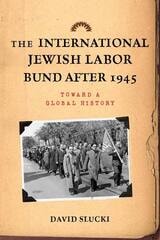
The International Jewish Labor Bund after 1945
Toward a Global HistorySlucki, David
Rutgers University Press, 2012
The Jewish Labor Bund was one of the major political forces in early twentieth-century Eastern Europe. But the decades after the Second World War were years of enormous difficulty for Bundists. Like millions of other European Jews, they faced the challenge of resurrecting their lives, so gravely disrupted by the Holocaust. Not only had the organization lost many members, but its adherents were also scattered across many continents. In this book, David Slucki charts the efforts of the surviving remnants of the movement to salvage something from the wreckage.
Covering both the Bundists who remained in communist Eastern Europe and those who emigrated to the United States, France, Australia, and Israel, the book explores the common challenges they faced—building transnational networks of friends, family, and fellow Holocaust survivors, while rebuilding a once-local movement under a global umbrella. This is a story of resilience and passion—passion for an idea that only barely survived Auschwitz.

The International Monetary Fund and Latin America
The Argentine Puzzle in ContextClaudia Kedar
Temple University Press, 2013
The International Monetary Fund (IMF) has played a critical role in the global economy since the postwar era. But, claims Claudia Kedar, behind the strictly economic aspects of the IMF’s intervention, there are influential interactions between IMF technocrats and local economists—even when countries are not borrowing money.
In The International Monetary Fund and Latin America, Kedar seeks to expose the motivations and constraints of the operations of both the IMF and borrowers. With access to never-before-seen archive materials, Kedar reveals both the routine and behind-the-scenes practices that have depicted International Monetary Fund–Latin American relations in general and the asymmetrical IMF-Argentina relations in particular.
Kedar also analyzes the “routine of dependency” that characterizes IMF-borrower relations with several Latin American countries such as Chile, Peru, and Brazil. The International Monetary Fund and Latin America shows how debtor countries have adopted IMF’s policies during past decades and why Latin American leaders today largely refrain from knocking at the IMF’s doors again.

The International Movie Industry
Edited by Gorham Kindem
Southern Illinois University Press, 2000
Movies are both art and commerce, creative expressions of national/cultural interests and preoccupations and part of a global entertainment market. The past century has witnessed a transformation of the movies from popular novelties into highly valued cultural icons and commodities that have promoted national identity and specific political agendas, while also affecting international trade.
This comprehensive history of the international movie industry from its inception in 1895 to the present features nineteen original essays by international scholars who examine the film industries of nineteen countries and six continents. Each chapter in The International Movie Industry focuses on a specific national movie industry’s economic and related social, aesthetic, technological, and political/ideological development within an international context during the last century. The result is a global history of the movie industry over the last one hundred years.

The Internationalization of Palace Wars
Lawyers, Economists, and the Contest to Transform Latin American StatesYves Dezalay and Bryant G. Garth
University of Chicago Press, 2002
Based on more than 300 extensive interviews with major players in governments, foundations, law firms, universities, and think tanks, Dezalay and Garth examine both the production of northern exports such as neoliberal economics and international human rights law and the ways they are received south of the United States. They find that the content of what is exported and how it fares are profoundly shaped by domestic struggles for power and influence—"palace wars"—in the nations involved. For instance, challenges to the eastern intellectual establishment influenced the Reagan-era export of University of Chicago-style neoliberal economics to Chile, where it enjoyed a warm reception from Pinochet and his allies because they could use it to discredit the previous regime.
Innovative and sophisticated, The Internationalization of Palace Wars offers much needed concrete information about the transnational processes that shape our world.

The Internet Myth
From the Internet Imaginary to Network IdeologiesPaolo Bory
University of Westminster Press, 2020
‘The Internet is broken and Paolo Bory knows how we got here. In a powerful book based on original research, Bory carefully documents the myths, imaginaries, and ideologies that shaped the material and cultural history of the Internet. As important as this book is to understand our shattered digital world, it is essential for those who would fix it.’ — Vincent Mosco, author of The Smart City in a Digital World
The Internet Myth retraces and challenges the myth laying at the foundations of the network ideologies – the idea that networks, by themselves, are the main agents of social, economic, political and cultural change. By comparing and integrating different sources related to network histories, this book emphasizes how a dominant narrative has extensively contributed to the construction of the Internet myth while other visions of the networked society have been erased from the collective imaginary. The book decodes, analyzes and challenges the foundations of the network ideologies looking at how networks have been imagined, designed and promoted during the crucial phase of the 1990s.
Three case studies are scrutinized so as to reveal the complexity of network imaginaries in this decade: the birth of the Web and the mythopoesis of its inventor; and the histories of two Italian networking projects, the infrastructural plan Socrate and the civic network Iperbole, the first to give free Internet access to citizens.
The Internet Myth thereby provides a compelling and hidden sociohistorical narrative in order to challenge one of the most powerful myths of our time.
This title has been published with the financial assistance of the Fondazione Hilda e Felice Vitali, Lugano, Switzerland.

The Interpreter
Alice Kaplan
University of Chicago Press, 2007
No story of World War II is more triumphant than the liberation of France, made famous in countless photos of Parisians waving American flags and kissing GIs as columns of troops paraded down the Champs Élysées. But one of the least-known stories from that era is also one of the ugliest chapters in the history of Jim Crow. In The Interpreter, celebrated author Alice Kaplan recovers this story both as eyewitnesses first saw it, and as it still haunts us today.
The American Army executed 70 of its own soldiers between 1943 and 1946—almost all of them black, in an army that was overwhelmingly white. Through the French interpreter Louis Guilloux’s eyes, Kaplan narrates two different trials: one of a white officer, one of a black soldier, both accused of murder. Both were court-martialed in the same room, yet the outcomes could not have been more different.
Kaplan’s insight into character and setting creates an indelible portrait of war, race relations, and the dangers of capital punishment.
“A nuanced historical account that resonates with today’s controversies over race and capital punishment.” Publishers Weekly
“American racism could become deadly for black soldiers on the front. The Interpreter reminds us of this sad component of a heroic chapter in American military history.” Los Angeles Times
“With elegance and lucidity, Kaplan revisits these two trials and reveals an appallingly separate and unequal wartime U.S. military justice system.” Minneapolis Star Tribune
“Kaplan has produced a compelling look at the racial disparities as they were played out…She explores both cases in considerable and vivid detail.” Sacramento Bee

The Intestines of the State
Youth, Violence, and Belated Histories in the Cameroon GrassfieldsNicolas Argenti
University of Chicago Press, 2007
Beginning his study with a political analysis of youth in the Grassfields from the eighteenth century to the present, Argenti pays special attention to the repeated violent revolts staged by young victims of political oppression. He then combines this history with extensive ethnographic fieldwork in the Oku chiefdom, discovering that the specter of past violence lives on in the masked dance performances that have earned intense devotion from today’s youth. Argenti contends that by evoking the imagery of past cataclysmic events, these masquerades allow young Oku men and women to address the inequities they face in their relations with elders and state authorities today.

The Intimacies of Four Continents
Lisa Lowe
Duke University Press, 2015
The Intimacy of Paper in Early and Nineteenth-Century American Literature
Jonathan Senchyne
University of Massachusetts Press, 2020
The Intimacy of Paper in Early and Nineteenth-Century American Literature reveals that book history and literary studies are mutually constitutive and proposes a new literary periodization based on materiality and paper production. In unpacking this history and connecting it to cultural and literary representations, Senchyne also explores how the textuality of paper has been used to make social and political claims about gender, labor, and race.

The Intimate Frontier
Friendship and Civil Society in Northern New SpainIgnacio Martínez
University of Arizona Press, 2019
Spaniards living in the isolated borderlands region of colonial Sonora were keen to develop an ideologically relevant and socially acceptable form of friendship with Indigenous people that could act as a functional substitute for civil law and governance, thereby regulating Native behavior. But as frontier society grew in complexity and sophistication, Indigenous and mixed-raced people also used the language of friendship and the performance of emotion for their respective purposes, in the process becoming skilled negotiators to meet their own best interests.
In northern New Spain, friendships were sincere and authentic when they had to be and cunningly malleable when the circumstances demanded it. The tenuous origins of civil society thus developed within this highly contentious social laboratory in which friendships (authentic and feigned) set the social and ideological parameters for conflict and cooperation. Far from the coffee houses of Restoration London or the lecture halls of the Republic of Letters, the civil society illuminated by Martínez stumbled forward amid the ambiguities and contradictions of colonialism and the obstacles posed by the isolation and violence of the Sonoran Desert.

The Intimate Life of Computers
Digitizing Domesticity in the 1980sReem Hilu
University of Minnesota Press, 2024
A feminist perspective on the early history of personal computing, revealing how computers were integrated into the most intimate aspects of family life
The Intimate Life of Computers shows how the widespread introduction of home computers in the 1980s was purposefully geared toward helping sustain heteronormative middle-class families by shaping relationships between users. Moving beyond the story of male-dominated computer culture, this book emphasizes the neglected history of the influence of women’s culture and feminist critique on the development of personal computing despite women’s underrepresentation in the industry.
Proposing the notion of “companionate computing,” Reem Hilu reimagines the spread of computers into American homes as the history of an interpersonal, romantic, and familial medium. She details the integration of computing into family relationships—from helping couples have better sex and offering thoughtful simulations of masculine seduction to animating cute robot companions and giving voice to dolls that could talk to lonely children—underscoring how these computer applications directly responded to the companionate needs of their users as a way to ease growing pressures on home life.
The Intimate Life of Computers is a vital contribution to feminist media history, highlighting how the emergence of personal computing dovetailed with changing gender roles and other social and cultural shifts. Eschewing the emphasis on technologies and institutions typically foregrounded in personal-computer histories, Hilu uncovers the surprising ways that domesticity and family life guided the earlier stages of our all-pervasive digital culture.

The Intruders
Unreasonable Searches and Seizures from King John to John AshcroftDash, Samuel
Rutgers University Press, 2004
What led to the Fourth Amendment’s protection of the people against unreasonable searches and seizures, codified in written law for the first time in history, and are we in danger of losing that protection? Celebrated lawyer Samuel Dash, known for his role as Chief Counsel of the Watergate Committee, explores the struggle for privacy. He does so by telling the dramatic tales of the people who were involved in influential legal battles, including landmark Supreme Court cases.
Covering almost eight-hundred years of history, Dash begins with the time of King John of England and the Magna Carta, then moves to colonial America as colonists resisted searches mandated under King George. These tensions contributed to the birth of the United States and the adoption of our Bill of Rights with its Fourth Amendment, protecting people against unreasonable searches and seizures.
How effective that protection has been is the story of the next two centuries. Dash explores U.S. Supreme Court cases through the sometimes humorous experiences of the people involved, including the unlucky gambler with a shoplifting wife and the police lieutenant turned king of bootleggers. To some extent, judicial safeguarding of Fourth Amendment protections depended on who made up the majority of the Court at any given time.
By 2001 a conservative majority of the Court had given law enforcement agents greater search powers than ever before. Dash challenges the legal justification of the Bush Administration’s grab for greater search, seizure, and wiretap powers after the 9/11 terrorists’ attacks. He reminds us of government abuses of power in prior emergencies in American history. For Dash, the best security is our belief in individual liberty and the enforcement of our Bill of Rights.

The Invasion of Virginia, 1781
Michael Cecere
Westholme Publishing, 2017
The American War for Independence was fought in nearly every colony, but some colonies witnessed far more conflict than others. In the first half of the war, the bulk of military operations were concentrated in Massachusetts, New York, New Jersey, and Pennsylvania. A shift in British strategy southward after the Battle of Monmouth in 1778 triggered numerous military engagements in 1779 and 1780 in Georgia and the Carolinas.Surprisingly, Virginia, the largest of the original thirteen colonies, saw relatively little fighting for the first six years of the Revolutionary War. This changed in 1781 when British and American forces converged on Virginia. The war’s arrival did not result from one particular decision or event, but rather, a series of incidents and battles beginning in the fall of 1780 at Kings Mountain, South Carolina.
Benedict Arnold’s sudden appearance in Virginia in early 1781 with 1,600 seasoned British troops and his successful raid up the James River to Richmond and subsequent occupation of Portsmouth, demonstrated Virginia’s vulnerability to attack and the possibility that the colonies could be divided and subdued piecemeal, a strategy Britain had attempted to deploy several times earlier in the war. British General Henry Clinton’s decision to reinforce Arnold in Virginia expanded Britain’s hold on the colony while events in North Carolina, including the battle of Guilford Court House, led British General Charles Cornwallis to conclude that defeating the Patriots in Virginia was the key to ending the war. As a result, Cornwallis marched his army north in May 1781 to assume command of what was now a very powerful British force of over 7,000 troops. The war had returned to Virginia with a vengeance, and how it did so and what happened as a result is the focus of The Invasion of Virginia 1781.
The Invention and Gendering of Epicurus
Pamela Gordon
University of Michigan Press, 2012
The school of Greek philosopher Epicurus, which became known as the Garden, famously put great stock in happiness and pleasure. As a philosophical community, and a way of seeing the world, Epicureanism had a centuries-long life in Athens and Rome, as well as across the Mediterranean.
The Invention and Gendering of Epicurusstudies how the Garden's outlook on pleasure captured Greek and Roman imaginations---particularly among non-Epicureans---for generations after its legendary founding. Unsympathetic sources from disparate eras generally focus not on historic personages but on the symbolic Epicurean. And yet the traditions of this imagined Garden, with its disreputable women and unmanly men, give us intermittent glimpses of historical Epicureans and their conceptions of the Epicurean life.
Pamela Gordon suggests how a close hearing and contextualization of anti-Epicurean discourse leads us to a better understanding of the cultural history of Epicureanism. Her primary focus is on sources hostile to the Garden, but her Epicurean-friendly perspective is apparent throughout. Her engagement with ancient anti-Epicurean texts makes more palpable their impact on modern responses to the Garden.
Intended both for students and for scholars of Epicureanism and its response, the volume is organized primarily according to the themes common among Epicurus' detractors. It considers the place of women in Epicurean circles, as well as the role of Epicurean philosophy in Homer and other writers.
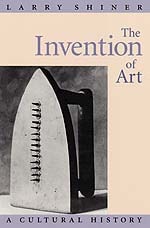
The Invention of Art
A Cultural HistoryLarry Shiner
University of Chicago Press, 2001
With The Invention of Art, Larry Shiner challenges our conventional understandings of art and asks us to reconsider its history entirely, arguing that the category of fine art is a modern invention—that the lines drawn between art and craft resulted from key social transformations in Europe during the long eighteenth century.
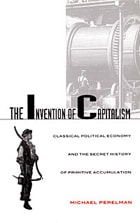
The Invention of Capitalism
Classical Political Economy and the Secret History of Primitive AccumulationMichael Perelman
Duke University Press, 2000
Clearly, they did not go willingly. As Michael Perelman shows, they were forced into the factories with the active support of the same economists who were making theoretical claims for capitalism as a self-correcting mechanism that thrived without needing government intervention. Directly contradicting the laissez-faire principles they claimed to espouse, these men advocated government policies that deprived the peasantry of the means for self-provision in order to coerce these small farmers into wage labor. To show how Adam Smith and the other classical economists appear to have deliberately obscured the nature of the control of labor and how policies attacking the economic independence of the rural peasantry were essentially conceived to foster primitive accumulation, Perelman examines diaries, letters, and the more practical writings of the classical economists. He argues that these private and practical writings reveal the real intentions and goals of classical political economy—to separate a rural peasantry from their access to land.
This rereading of the history of classical political economy sheds important light on the rise of capitalism to its present state of world dominance. Historians of political economy and Marxist thought will find that this book broadens their understanding of how capitalism took hold in the industrial age.
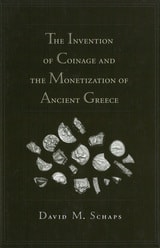
The Invention of Coinage and the Monetization of Ancient Greece
David M. Schaps
University of Michigan Press, 2015
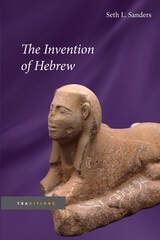
The Invention of Hebrew
Seth L. Sanders
University of Illinois Press, 2011
Seth L. Sanders connects the Bible's distinctive linguistic form--writing down a local spoken language--to a cultural desire to speak directly to people, summoning them to join a new community that the text itself helped call into being. Addressing the people of Israel through a vernacular literature, Hebrew texts reimagined their audience as a public. By comparing Biblical documents with related ancient texts in Hebrew, Ugaritic, and Babylonian, this book shows Hebrew's distinctiveness as a self-conscious political language. Illuminating the enduring stakes of Biblical writing, Sanders demonstrates how Hebrew assumed and promoted a source of power previously unknown in written literature: "the people" as the protagonist of religion and politics.

The Invention of Heterosexuality
Jonathan Ned Katz
University of Chicago Press, 2007
“Heterosexuality,” assumed to denote a universal sexual and cultural norm, has been largely exempt from critical scrutiny. In this boldly original work, Jonathan Ned Katz challenges the common notion that the distinction between heterosexuality and homosexuality has been a timeless one. Building on the history of medical terminology, he reveals that as late as 1923, the term “heterosexuality” referred to a "morbid sexual passion," and that its current usage emerged to legitimate men and women having sex for pleasure. Drawing on the works of Sigmund Freud, James Baldwin, Betty Friedan, and Michel Foucault, The Invention of Heterosexuality considers the effects of heterosexuality’s recently forged primacy on both scientific literature and popular culture.
“Lively and provocative.”—Carol Tavris, New York Times Book Review
“A valuable primer . . . misses no significant twists in sexual politics.”—Gary Indiana, Village Voice Literary Supplement
“One of the most important—if not outright subversive—works to emerge from gay and lesbian studies in years.”—Mark Thompson, The Advocate
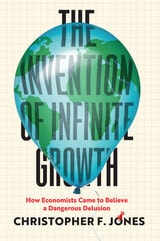
The Invention of Infinite Growth
How Economists Came to Believe a Dangerous DelusionChristopher F. Jones
University of Chicago Press, 2025
Most economists believe that growth is the surest path to better lives. This has proven to be one of humanity’s most powerful and dangerous ideas. It shapes policy across the globe, but it fatally undermines the natural ecosystems necessary to sustain human life. How did we get here? In The Invention of Infinite Growth, environmental historian Christopher F. Jones takes us through two hundred and fifty years of economic thinking to examine the ideal of growth, its powerful influence, and the crippling burdens many decisions made in its name have placed on us all. Jones argues that the pursuit of growth has never reflected its costs, because economists downplay environmental degradation. What’s worse, skyrocketing inequality and diminishing improvements in most people’s well-being mean growth too often delivers too little for too many. Jones urges economists to engage more broadly with other ways of thinking, as well as with citizens and governments to recognize and slow infinite growth’s impact on the real world.
Both accessible and eye-opening, The Invention of Infinite Growth offers hope for the future. Humans have not always believed that economic growth could or should continue, and so it is possible for us to change course. We can still create new ideas about how to promote environmental sustainability, human welfare, and even responsible growth, without killing the planet and ourselves.
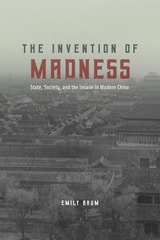
The Invention of Madness
State, Society, and the Insane in Modern ChinaEmily Baum
University of Chicago Press, 2018
Focusing on typically marginalized historical actors, including municipal functionaries and the urban poor, The Invention of Madness shifts our attention from the elite desire for modern medical care to the ways in which psychiatric discourses were implemented and redeployed in the midst of everyday life. New meanings and practices of madness, Baum argues, were not just imposed on the Beijing public but continuously invented by a range of people in ways that reflected their own needs and interests. Exhaustively researched and theoretically informed, The Invention of Madness is an innovative contribution to medical history, urban studies, and the social history of twentieth-century China.

The Invention of Religion in Japan
Jason Ananda Josephson Storm
University of Chicago Press, 2012