Results by title
18284 books match the query 'United States' and 3764 start with t
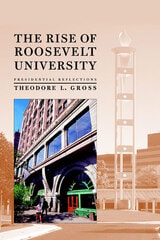
The Rise of Roosevelt University
Presidential ReflectionsTheodore L. Gross
Southern Illinois University Press, 2005
Underscoring professional and educational issues pertinent to higher learning at universities across the country, Theodore L. Gross’s memoir of his years in academia chronicles his successful fourteen-year presidency at Chicago’s Roosevelt University, a period of leadership that resulted in an upsurge of fund-raising, sharp increases in enrollment and endowment, and the transformation of an urban campus into a metropolitan university.
Beginning with a description of his childhood and adolescent education and experiences, Gross recalls his years as a faculty member and academic administrator at the City College of New York from 1958 to 1978, when the college was moving from selective admissions to open enrollment. He also served in administrative positions at Penn State University and SUNY Purchase before accepting the Roosevelt presidency in 1988. Focusing on the tension between the promise of open admissions and aspirations of academic excellence, The Rise of Roosevelt University: Presidential Reflections relates Gross’s perceptions of the failure of open admissions at CCNY and his resolution to learn from those mistakes while at Roosevelt.
Drawing on private correspondence and conversations, essays, university documents, and other archival materials and research, Gross re-creates the highs and lows of his quest to make Roosevelt distinctive. His strategic plan included the appointment of senior executives and deans, the creation of a performing arts conservatory, the development of an educational alliance with other universities, online instruction, an honors program, a Chicago School of Real Estate, an MBA for Chinese students, the Partners in Corporate Education program, and the implementation of a second comprehensive campus. He describes the creation of the Albert A. Robin campus in Schaumburg and the realization of Roosevelt as a metropolitan university, creating a vivid portrait of the suburban culture, the educational context of large community colleges throughout the northwest suburbs, the development of a community advisory board that helped secure funds, and the improved morale of faculty and administration.
Gross’s fund-raising efforts increased the endowment from $3 million to $33 million, and a capital campaign surpassed the goal of $45 million. In this volume, he describes meetings with major donors, the successes and failures of contributions, and the development of greater alumni support in the context of fund-raising throughout Chicago. He also analyzes the highly publicized legal dispute between the Auditorium Theatre Council and Roosevelt University over ownership of the world renowned theatre, pointing out how the case epitomizes issues that all universities confront: the university’s need to control its entities, detrimental publicity, sectional and regional conflicts, and a split in the arts community. Throughout this narrative, Gross juxtaposes his personal life and professional career, dramatizing how the two are related.
More than a retelling of anecdotes and statistics, the volume provides a rare perspective on the intersection of higher education and politics in Chicago. Gross analyzes the different public and private universities in the city and in surrounding Cook County to describe their relationships with ethnicity, religion, class, and with city hall. He also covers the Daley political machine’s influence on higher education, the politics of university governance, the spectacular growth of the western suburbs, and city versus suburban identities.
A personal road map of the development of higher education through the post–World War II decades, The Rise of Roosevelt University: Presidential Reflections mirrors the social climate that affected the country’s universities at large, from the open admissions policies and student rebellions of the ’60s and ’70s, to the urban blight and suburban sprawl of the ’80s, to the strategic planning and expansion of the ’90s and the new century. The result is a captivating account of the issues involved in presidential transition and leadership, the strategic development of metropolitan universities, and the future role of Roosevelt and similar institutions.
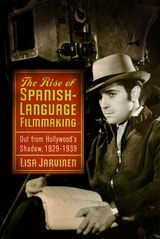
The Rise of Spanish-Language Filmmaking
Out from Hollywood's Shadow, 1929-1939Jarvinen, Lisa
Rutgers University Press, 2012
Silent film was universally understood and could be exported anywhere. But when “talkies” arrived, the industry began experimenting with dubbing, subtitling, and dual track productions in more than one language. Where language fractured the European film market, for Spanish-speaking countries and communities, it created new opportunities. In The Rise of Spanish-Language Filmmaking, Lisa Jarvinen focuses specifically on how Hollywood lost ground in the lucrative international Spanish-speaking audience between 1929 and 1939.
Hollywood studios initially trained cadres of Spanish-speaking film professionals, created networks among them, and demonstrated the viability of a broadly conceived, transnational, Spanish-speaking film market in an attempt to forestall the competition from other national film industries. By the late 1930s, these efforts led to unintended consequences and helped to foster the growth of remarkably robust film industries in Mexico, Spain, and Argentina. Using studio records, Jarvinen examines the lasting effects of the transition to sound on both Hollywood practices and cultural politics in the Spanish-speaking world. She shows through case studies based on archival research in the United States, Spain, and Mexico how language, as a key marker of cultural identity, led to new expectations from audiences and new possibilities for film producers.
The Rise of Trump
America's Authoritarian SpringMatthew C. MacWilliams
Amherst College Press, 2016

The Rise of West Coast Philanthropy
A History of the Hewlett and Packard FoundationsAsher Orkaby and Tim Mueller
University of Chicago Press, 0
The first full-length history of the Hewlett and Packard foundations and how they were at the forefront of the emergence of a distinctive West Coast approach toward giving.
A new generation of mega-wealthy tech tycoons purported to upend the twenty-first-century practice of philanthropy, but pioneering tech entrepreneurs William Hewlett and David Packard, the co-founders of the Hewlett-Packard Company, had already begun the process four decades earlier. The Rise of West Coast Philanthropy follows Silicon Valley’s first generation of philanthropists and how their work helped establish West Coast philanthropy as a major global force.
Drawing on unprecedented access to archival records and interviews with over 115 philanthropy leaders and insiders around the world, authors Asher Orkaby and Tim Mueller uncover the previously untold histories of the foundations established by William and Flora Hewlett and David and Lucile Packard, two of America’s most famous power couples. Through their foundations, these two families introduced philanthropic trends later echoed by philanthropies on both the West and East Coasts, demonstrating a successful adaptation of the management principles that first made HP a model company. The Rise of West Coast Philanthropy explores more than sixty years of Hewlett and Packard grant-making, from early family enterprises with local ambitions to major regional, national, and international powerhouses.
In telling this story, Orkaby and Mueller offer a fresh perspective on the distinctive model of West Coast philanthropy, which has been crucial in shaping the twenty-first-century global philanthropic landscape.
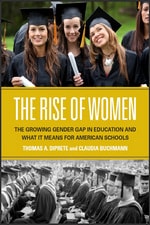
The Rise of Women
The Growing Gender Gap in Education and What it Means for American SchoolsThomas A. DiPrete
Russell Sage Foundation, 2013
The Rise of the American Conservation Movement
Power, Privilege, and Environmental ProtectionDorceta E. Taylor
Duke University Press, 2016
The Rise of the Centennial State
Colorado Territory, 1861-76Eugene H. Berwanger
University of Illinois Press, 2006
A vivid description of Colorado’s beginnings
This is the first single-volume history of the Colorado territory, encompassing the entire territorial period from the beginning of the Civil War to 1876, when Colorado became a state. The Rise of the Centennial State traces the growth of the territory as new technologies increased mining profits and as new modes of transportation--especially the Union Pacific and Kansas Pacific railroads--opened the territory to eastern markets, bringing waves of settlers to farm, ranch, and establish new communities.
Eugene H. Berwanger's history is packed with colorful characters and portraits of sprawling, brawling frontier and mining towns from Denver to Central City. He presents a multifaceted discussion of Colorado's resurgence after the war, with rich discussions of the role of minorities in the territory’s development: Indian-white relations (including discussions of now forgotten battles of Beecher’s Island and Summit Springs, which destroyed the Indians’ hold on the Colorado Plains); the social segregation of blacks in Denver; and Mexican Americans’ displeasure at being separated from the Hispano culture of New Mexico. Berwanger also demonstrates the decisive role of Colorado’s admission to statehood in swinging the disputed presidential election of 1876 to the Republican candidate, Rutherford B. Hayes.
The Rise of the Chicago Police Department
Class and Conflict, 1850-1894Sam Mitrani
University of Illinois Press, 2013
In this book, Sam Mitrani cogently examines the making of the police department in Chicago, which by the late 1800s had grown into the most violent, turbulent city in America. Chicago was roiling with political and economic conflict, much of it rooted in class tensions, and the city's lawmakers and business elite fostered the growth of a professional municipal police force to protect capitalism, its assets, and their own positions in society. Together with city policymakers, the business elite united behind an ideology of order that would simultaneously justify the police force's existence and dictate its functions.
Tracing the Chicago police department's growth through events such as the 1855 Lager Beer riot, the Civil War, the May Day strikes, the 1877 railroad workers strike and riot, and the Haymarket violence in 1886, Mitrani demonstrates that this ideology of order both succeeded and failed in its aims. Recasting late nineteenth-century Chicago in terms of the struggle over order, this insightful history uncovers the modern police department's role in reconciling democracy with industrial capitalism.
The Rise of the City, 1878–1898
Arthur Meier Schlesinger
The Ohio State University Press, 1999
The Rise of the Entrepreneurial State
State and Local Economic Development Policy in the United StatesPeter K. Eisinger
University of Wisconsin Press, 1989
Eisinger’s meticulous research uncovers state and local governments’ transition from supply-side to demand-side strategies of market creation. He shows that, instead of relying solely on the supply-side strategies of tax breaks and other incentives to encourage business relocation, some governments promoted innovation and the creation of new business approaches.
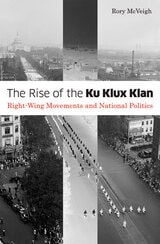
The Rise of the Ku Klux Klan
Right-Wing Movements and National PoliticsRory McVeigh
University of Minnesota Press, 2009
The Rise of the New York Intellectuals
Partisan Review and Its Circle, 1934–1945Terry A. Cooney
University of Wisconsin Press, 1986
Cosmopolitan visions
Terry A. Cooney traces the evolution of the Partisan Review—often considered to be the most influential little magazine ever published in America—during its formative years, giving a lucid and dispassionate view of the magazine and its luminaries who played a leading role in shaping the public discourse of American intellectuals. Included are Lionel Trilling, Philip Rahv, William Phillips, Dwight Macdonald, F. W. Dupee, Mary McCarthy, Sidney Hook, Harold Rosenberg, and Delmore Schwartz, among others.
“An excellent book, which works at each level on which it operates. It succeeds as a straightforward narrative account of the Partisan Review in the 1930s and 1940s. The magazine’s leading voices—William Phillips, Philip Rahv, Dwight MacDonald, Lionel Trilling, and all the rest—receive their due. . . . Among the themes that engage Cooney. . . . are: how they dealt with ‘modernism’ in culture and radicalism in politics, each on its own and in combination; how Jewishness played a complex and fascinating role in many of the thinkers’ lives; and, especially, how ‘cosmopolitanism’ best explains what the Partisan Review was all about.”—Robert Booth Fowler, Journal of American History
The Rise of the Public Authority
Statebuilding and Economic Development in Twentieth-Century AmericaGail Radford
University of Chicago Press, 2013
The Rise of the Representative
Lawmakers and Constituents in Colonial AmericaPeverill Squire
University of Michigan Press, 2017
The Rise of the Research University
A SourcebookEdited by Louis Menand, Paul Reitter, and Chad Wellmon
University of Chicago Press, 2017
The editors focus on the development of American universities such as Cornell, Johns Hopkins, Harvard, and the Universities of Chicago, California, and Michigan. Looking to Germany, they translate a number of seminal sources that formulate the shape and purpose of the university and place them next to hard-to-find English-language texts that took the German university as their inspiration, one that they creatively adapted, often against stiff resistance. Enriching these texts with short but insightful essays that contextualize their importance, the editors offer an accessible portrait of the early research university, one that provides invaluable insights not only into the historical development of higher learning but also its role in modern society.
The Rise of the West in Presidential Elections
Jennifer L Robinson
University of Utah Press, 2010
The Rise of the West in Presidential Elections explores the changing role of the region in national elections. The prominence of Nevada as an early caucus state and Denver acting as the host city of the 2008 Democratic National Convention, as well as increased candidate visitation and media expenditure, point to the rising importance of the region, an importance that political candidates will increasingly need to recognize. The book examines the political advantages and barriers to the creation of a regional primary for western states, a move that could further change the influence of the West on the national agenda and highlight western issues and values.
The contributors to The Rise of the West in Presidential Elections analyze the process of nominating presidential candidates, review the issues that make western states a united region unique in the political process, and explore the changing political dynamics in the nation that enable these changes. The book will be of interest to every citizen looking to learn more about the primary process, as well as to the political junkie more focused on the nuances of political maneuvering between states jockeying for position at the front of the election process.
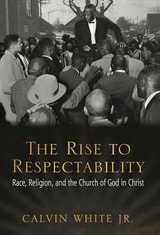
The Rise to Respectability
Race, Religion, and the Church of God in ChristCalvin White
University of Arkansas Press, 2015
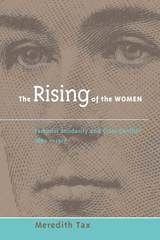
The Rising of Women
Feminist Solidarity and Class Conflict, 1880-1917Meredith Tax
University of Illinois Press, 2001
Through detailed studies of the Woman's Trade Union League, the Illinois Women's Alliance, the New York shirtwaist makers strike of 1909-10, and the 1912 textile workers strike in Lawrence, Massachusetts, Meredith Tax uncovers the circumstances that helped and hindered cross-class and cross-gender cooperation on behalf of women of the working class. In a new introduction to this first Illinois paperback edition, Tax assesses the progress of women's solidarity since the book's original publication.
The Risk Professionals
Thomas Dietz
Russell Sage Foundation, 1987
The Risk of Economic Crisis
Edited by Martin Feldstein
University of Chicago Press, 1991
In this accessible and thought-provoking volume, Benjamin M. Friedman investigates the origins of financial crisis in domestic capital markets, Paul Krugman examines the international origins and transmission of financial and economic crises, and Lawrence H. Summers explores the transition from financial crisis to economic collapse. In the introductory essay, Martin Feldstein reviews the major financial problems of the 1980s and discusses lessons to be learned from this experience. The book also contains provocative observations by senior academics and others who have played leading roles in business and government.
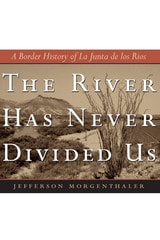
The River Has Never Divided Us
A Border History of La Junta de los RiosBy Jefferson Morgenthaler
University of Texas Press, 2004
Winner, William P. Clements Prize, Best Non-Fiction Book on Southwestern America, 2004
Not quite the United States and not quite Mexico, La Junta de los Rios straddles the border between Texas and Chihuahua, occupying the basin formed by the conjunction of the Rio Grande and the Rio Conchos. It is one of the oldest continuously inhabited settlements in the Chihuahuan Desert, ranking in age and dignity with the Anasazi pueblos of New Mexico.
In the first comprehensive history of the region, Jefferson Morgenthaler traces the history of La Junta de los Rios from the formation of the Mexico-Texas border in the mid-19th century to the 1997 ambush shooting of teenage goatherd Esquiel Hernandez by U.S. Marines performing drug interdiction in El Polvo, Texas. "Though it is scores of miles from a major highway, I found natives, soldiers, rebels, bandidos, heroes, scoundrels, drug lords, scalp hunters, medal winners, and mystics," writes Morgenthaler. "I found love, tragedy, struggle, and stories that have never been told." In telling the turbulent history of this remote valley oasis, he examines the consequences of a national border running through a community older than the invisible line that divides it.
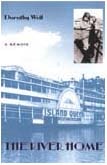
The River Home
A MemoirDorothy Weil
Ohio University Press, 2001
The death of her father begins Dorothy Weil’s search for what causes the family’s “spinning of in all directions like the pieces of Chaos.” She embarks on a river odyssey, traveling the Ohio, Missouri, and Mississippi Rivers by steamboat, towboat, and even an old-fashioned flatboat. The river brings her family back, as she records the stories of her fellow “river rats”: steamboat veterans, deckhands, captains, and cooks.
The River Home takes the reader into a world few ever glimpse, that of America’s riverboats. In the fast-paced narrative, with incisive characterizations and dialogue, the author introduces us to this vivid milieu and a gallery of fascinating people. We meet her father, a “wild river man from the Kentucky hills,” her mother, “a proper girl from a Cincinnati Dutch clan,” and her brother, a fourth-generation river man, as well as the artists and academics she meets in her adult life.
Weil’s voice is clear and wry, as well as poetic, bringing out both the sadness and joys of a family torn by mismatched backgrounds. Her themes speak to all: the confusion brought by family conflict, the strength of family love no matter how troubled the relationships, the mortality we all face, the importance of where we come from and where we go.
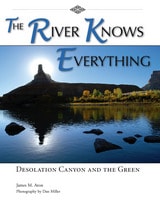
The River Knows Everything
Desolation Canyon and the GreenJames M Aton
Utah State University Press, 2009
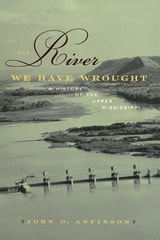
The River We Have Wrought
A History of the Upper MississippiJohn O. Anfinson
University of Minnesota Press, 2005
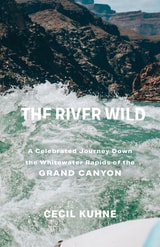
The River Wild
A Celebrated Journey Down the Whitewater Rapids of the Grand CanyonCecil Kuhne
University of Utah Press, 2026
Embark on an unforgettable adventure down the mighty Colorado River in The River Wild: A Celebrated Journey down the Whitewater Rapids of the Grand Canyon. Former professional river guide Cecil Kuhne takes readers through 225 miles of towering canyon walls, surging currents, and legendary rapids that have challenged explorers for over 150 years. From the historic first descent of John Wesley Powell’s expedition to the modern thrill-seekers navigating Lava Falls, Crystal, and Hance, this book captures the heart-pounding excitement of whitewater rafting.
With vivid descriptions of the canyon’s breathtaking geology, lush flora, and abundant wildlife, Kuhne blends history, adventure, and natural beauty into an immersive journey. Whether you’re a seasoned river runner or an armchair explorer, The River Wild offers a front-row seat to one of the world’s most exhilarating river expeditions.
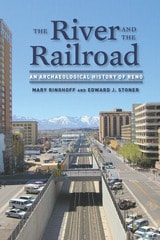
The River and the Railroad
An Archaeological History of RenoMary Ringhoff
University of Nevada Press, 2011
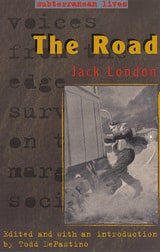
The Road
DePastino, Todd
Rutgers University Press, 2006
In 1894, an eighteen-year-old Jack London quit his job shoveling coal, hopped a freight train, and left California on the first leg of a ten thousand-mile odyssey. His adventure was an exaggerated version of the unemployed migrations made by millions of boys, men, and a few women during the original "great depression of the 1890s. By taking to the road, young wayfarers like London forged a vast hobo subculture that was both a product of the new urban industrial order and a challenge to it. As London's experience suggests, this hobo world was born of equal parts desperation and fascination. "I went on 'The Road,'" he writes, "because I couldn't keep away from it . . . Because I was so made that I couldn't work all my life on 'one same shift'; because-well, just because it was easier to than not to."
The best stories that London told about his hoboing days can be found in The Road, a collection of nine essays with accompanying illustrations, most of which originally appeared in Cosmopolitan magazine between 1907 and 1908. His virile persona spoke to white middle-class readers who vicariously escaped their desk-bound lives and followed London down the hobo trail. The zest and humor of his tales, as Todd DePastino explains in his lucid introduction, often obscure their depth and complexity. The Road is as much a commentary on London's disillusionment with wealth, celebrity, and the literary marketplace as it is a picaresque memoir of his youth.
The Road Half Traveled
University Engagement at a CrossroadsRita Axelroth Hodges
Michigan State University Press, 2012
A growing number of universities are dedicating resources to support their surrounding communities, but much potential for advancement remains. A university’s mission as an “anchor institution,” as defined by the authors, is to consciously and strategically apply the institution’s long-term, place-based economic power, in combination with its human and intellectual resources, to better the welfare of the community in which it resides. Drawing on ten diverse universities as case studies, this eye-opening book explores practices and strategies that can be employed to improve conditions in low-income communities and emphasizes the critical roles of university leaders, philanthropy, and policy in this process. To date the most comprehensive account of the range of roles played by universities as anchors in their communities, The Road Half Traveled provides a forward-thinking perspective on new horizons in university and community partnership.
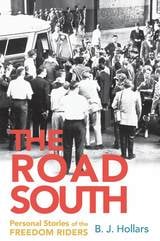
The Road South
Personal Stories of the Freedom RidersB. J. Hollars
University of Alabama Press, 2018
Revisits the inspiring and heroic stories of the Freedom Riders, through their own words.
In May 1961, despite multiple Supreme Court rulings, segregation remained alive and well within the system of interstate travel. All across the American South, interstate buses as well as their travel facilities were divided racially. This blatant disregard for law and morality spurred the Congress of Racial Equality to send thirteen individuals—seven black, six white—on a harrowing bus trip throughout the South as a sign of protest.
These original riders were met with disapproval, arrests and violence along the way, but that did not stop the movement. That summer, more than four hundred Freedom Riders continued their journey—many of them concluding their ride at Mississippi’s notorious Parchman Farm, where they endured further abuses and indignities. As a result of the riders sacrifice, by November of 1961, the Interstate Commerce Commission finally put an end to interstate commerce segregation, and in the process, elevated the riders to become a source of inspiration for other civil rights campaigns such as voter registration rights and school desegregation.
While much has been written on the Freedom Rides, far less has been published about the individual riders. Join award-winning author B. J. Hollars as he sets out on his own journey to meet them, retracing the historic route and learning the stories of as many surviving riders as he could. The Road South: Personal Stories of the Freedom Riders offers an intimate look into the lives and legacies of the riders. Throughout the book these civil rights veterans’ poignant, personal stories offer timely insights into America’s racial past and hopeful future.
Weaving the past with the present, Hollars aims to demystify the legendary journey, while also confronting more modern concerns related to race in America. The Road South is part memoir and part research-based journalism. It transcends the traditional textbook version of this historical journey to highlight the fascinating stories of the many riders—both black and white—who risked their lives to move the country forward.
The Road to Blair Mountain
Saving a Mine Wars Battlefield from King CoalCharles B. Keeney
West Virginia University Press, 2021
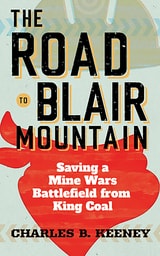
In 1921 Blair Mountain in southern West Virginia was the site of the country’s bloodiest armed insurrection since the Civil War, a battle pitting miners led by Frank Keeney against agents of the coal barons intent on quashing organized labor. It was the largest labor uprising in US history. Ninety years later, the site became embroiled in a second struggle, as activists came together to fight the coal industry, state government, and the military- industrial complex in a successful effort to save the battlefield—sometimes dubbed “labor’s Gettysburg”—from destruction by mountaintop removal mining.
The Road to Blair Mountain is the moving and sometimes harrowing story of Charles Keeney’s fight to save this irreplaceable landscape. Beginning in 2011, Keeney—a historian and great-grandson of Frank Keeney—led a nine-year legal battle to secure the site’s placement on the National Register of Historic Places. His book tells a David-and-Goliath tale worthy of its own place in West Virginia history. A success story for historic preservation and environmentalism, it serves as an example of how rural, grassroots organizations can defeat the fossil fuel industry.

The Road to Citizenship
What Naturalization Means for Immigrants and the United StatesAptekar, Sofya
Rutgers University Press, 2015
The Road to Concord
How Four Stolen Cannon Ignited the Revolutionary WarJ. L. Bell
Westholme Publishing, 2016
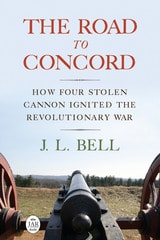
In the early spring of 1775, on a farm in Concord, Massachusetts, British army spies located four brass cannon belonging to Boston’s colonial militia that had gone missing months before. British general Thomas Gage had been searching for them, both to stymie New England’s growing rebellion and to erase the embarrassment of having let cannon disappear from armories under redcoat guard. Anxious to regain those weapons, he drew up plans for his troops to march nineteen miles into unfriendly territory. The Massachusetts Patriots, meanwhile, prepared to thwart the general’s mission. There was one goal Gage and his enemies shared: for different reasons, they all wanted to keep the stolen cannon as secret as possible. Both sides succeeded well enough that the full story has never appeared until now.
The Road to Concord: How Four Stolen Cannon Ignited the Revolutionary War by historian J. L. Bell reveals a new dimension to the start of America’s War for Independence by tracing the spark of its first battle back to little-known events beginning in September 1774. The author relates how radical Patriots secured those four cannon and smuggled them out of Boston, and how Gage sent out spies and search parties to track them down. Drawing on archives in the United States, United Kingdom, and Canada, the book creates a lively, original, and deeply documented picture of a society perched on the brink of war.

The Road to Love Canal
Managing Industrial Waste before EPABy Craig E. Colten and Peter N. Skinner
University of Texas Press, 1995
The toxic legacy of Love Canal vividly brought the crisis in industrial waste disposal to public awareness across the United States and led to the passage of the Superfund legislation in 1980. To discover why disasters like Love Canal have occurred and whether they could have been averted with knowledge available to waste managers of the time, this book examines industrial waste disposal before the formation of the Environmental Protection Agency in 1970.
Colten and Skinner build their study around three key questions. First, what was known before 1970 about the hazards of certain industrial wastes and their potential for causing public health problems? Second, what were the technical capabilities for treating or containing wastes during that time? And third, what factors other than technical knowledge guided the actions of waste managers before the enactment of explicit federal laws?
The authors find that significant information about the hazards of industrial wastes existed before 1970. Their explanations of why this knowledge did not prevent the toxic legacy now facing us will be essential reading for environmental historians and lawyers, public health personnel, and concerned citizens.
The Road to Marion Town
The Settlement of Osceola County, State of MichiganJ. August Lithen
Parkhurst Brothers, Inc., 2018
The Road to Mount Lemmon
A Father, A Family, and the Making of SummerhavenMary Ellen Barnes
University of Arizona Press, 2009
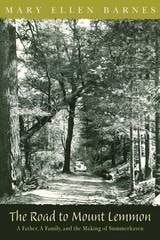
The Santa Catalina Mountains first captivated Tony Zimmerman on a 1937 hunting trip. Regard for the alpine beauty must have been in his genes—he was the son of Swiss German immigrants—and by 1940 the Tucson schoolteacher had begun taking his family to Mount Lemmon to spend the summer. Back then, the road up the mountain was a rough two-track dirt road from Oracle, and Summerhaven was nothing but a sleepy cluster of summer cabins. But Tony Zimmerman was to help change all of that.
The Road to Mount Lemmon is a beguiling memoir of the Catalina Mountains told by the daughter of one of the pioneers in the life and development of Mount Lemmon’s communities. Mary Ellen Barnes tells how her father Tony resigned from teaching in 1943 to devote his career to the development of this mountain oasis. He not only sold real estate for long time landowner Randolph Jenks, he even bought the village’s tiny two-room store, installing a sawmill to build a larger store, and built the Mount Lemmon Inn. And as she spins Tony’s personal saga, she also gives readers a glimpse of the Catalinas before Tucson became a boom town, recalling idyllic adventures in wild country and the cowboys, rangers, ranchers, and loggers who worked there.
Barnes tells Tony’s story as if sharing it with family, evoking her father’s personality on every page. The Road to Mount Lemmon is an intimate view of a mountain community over the course of nearly sixty years—a view that few people have shared but one all can appreciate.
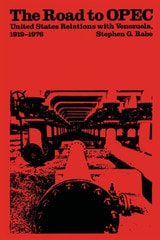
The Road to OPEC
United States Relations with Venezuela, 1919-1976By Stephen G. Rabe
University of Texas Press, 1982
On September 10, 1960, Venezuela spearheaded the formation of the Organization of Petroleum Exporting Countries (other original members included Saudi Arabia, Iran, Iraq, and Kuwait). However, in a world abundantly supplied with oil, the United States could and did ignore Venezuelan suggestions that OPEC and the consuming nations work together to control production and to increase prices. Then, in late 1973, OPEC sent shudders throughout the world economy, and an energy crisis struck with full force. Emboldened by the power of their oil cartel, Venezuelan leaders denounced the old economic relationship with the United States, nationalized U.S. oil and steel holdings, and fashioned a foreign economic policy that differed sharply from Washington's.
The Road to OPEC is the story of the fiery debates among U.S. oil companies, the Department of State, and the Venezuelan government over oil policies—clashes that led Venezuela to establish OPEC and to nationalize U.S.-owned properties. In addition, this is the first study of twentieth-century Venezuelan-U.S. relations. Its focus on oil diplomacy is placed within the context of key U.S. policies toward Latin America and such programs as the Open Door, the Good Neighbor, and the Alliance for Progress. The author also provides insight into both the politics of the contemporary energy crisis and the growing split between raw-material producers and their industrial customers.
The Road to OPEC is based on extensive archival research, as well as the author's successful use of the Freedom of Information Act to declassify files of such agencies as the National Security Council and the CIA.
The Road to Rebellion
Class Formation and Kansas Populism, 1865-1900Scott G. McNall
University of Chicago Press, 1988
McNall rejects the traditional view that blames the failure of the Alliance on a turn to mass-based electoral politics, but rather sees the move into national politics by the Farmer's Alliance as part of a rational strategy to better wage their fight for economic justice. The Kansas populists failed, he argues, because of their inability to embrace a broad, working-class base, to provide an effective alternative vision, and ultimately to create a distinct class organization. Debates about how classes come into being, or how democracy is to be realized, cannot be settled in the abstract. McNall's recreation of this heroic struggle is a model in the analysis of class formation. At the same time, The Road to Rebellion is dynamic social history, which holds vital lessons for structuring and realizing alternative political agendas today.
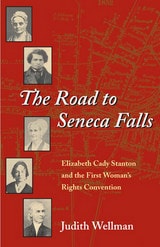
The Road to Seneca Falls
Elizabeth Cady Stanton and the First Woman's Rights ConventionJudith Wellman
University of Illinois Press, 2004
The convention succeeded by uniting powerful elements of the antislavery movement, radical Quakers, and the campaign for legal reform under a common cause. Wellman shows that these three strands converged not only in Seneca Falls, but also in the life of women's rights pioneer Elizabeth Cady Stanton. It is this convergence, she argues, that foments one of the greatest rebellions of modern times.
Rather than working heavy-handedly downward from their official "Declaration of Sentiments," Wellman works upward from richly detailed documentary evidence to construct a complex tapestry of causes that lay behind the convention, bringing the struggle to life. Her approach results in a satisfying combination of social, community, and reform history with individual and collective biographical elements.
The Road to Seneca Falls challenges all of us to reflect on what it means to be an American trying to implement the belief that "all men and women are created equal," both then and now. A fascinating story in its own right, it is also a seminal piece of scholarship for anyone interested in history, politics, or gender.

The Road to Spindletop
Economic Change in Texas, 1875–1901By John Stricklin Spratt; drawings by Ed Bearden
University of Texas Press, 1955
This book is an economic history of Texas at the end of the nineteenth century. In 1875, Texas was an agrarian state with limited industry. A generation later, agriculture was heavily commercialized, thousands of miles of railroads carried people and goods around the state, and urban populations increased rapidly. Even before the Spindletop gusher that irrevocably changed the state’s future, Texas had already moved far from its days as a Mexican and American frontier.
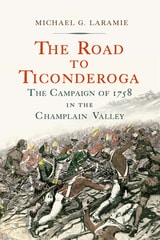
The Road to Ticonderoga
The Campaign of 1758 in the Champlain ValleyMichael G. Laramie
Westholme Publishing, 2027
Based on journals, letters, and accounts of the participants on both sides, The Road to Ticonderoga: The Campaign of 1758 in the Champlain Valley by Michael G. Laramie recounts this unexpected tale of victory and defeat on the North American frontier. Here we learn how the unexpected death of a dynamic leader, George Howe, elder brother of Richard and William, nearly crushed “the soul of General Abercrombie’s army,” leading to misinterpreted orders and hesitation on the part of the British. At the same time, the French commander perilously underestimated the ability of his own forces while overestimating his enemy’s before his fateful and unexpected decision to make his stand at Ticonderoga. With lessons and repercussions for future warfare in North America, The Road to Ticonderoga shows how a series of small mistakes can cascade into a catastrophe under weak leadership—or be exploited by a strong one.
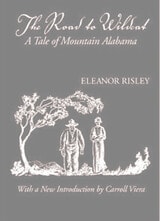
The Road to Wildcat
A Tale of Mountain AlabamaEleanor Risley
University of Alabama Press, 2004
A remarkable chronicle of southern mountain life in the early 20th century
The Road to Wildcat recounts the travels in North Alabama in the mid-1920s of Eleanor Risley (suffering from diabetes), her asthmatic husband, Pierre, their dog, John, and a Chinese wheelbarrow named Sisyphus that held their travel goods. Advised to make the walking tour for improvement of their health, the group left Fairhope in south Alabama and walked hundreds of miles in the southern Appalachians for months, sleeping out under the stars at night, or in a canvas tent or an abandoned building, cooking their fresh-caught foods over campfires, and accepting the generosity and advice of the mountain people they met, some of them moonshiners and outlaws.
During their sojourn across the rural wilderness, they enjoyed fiddlin’ dances in rickety halls, joined Sacred Harp singers, learned about the grapevine telegraph, saw the dreadful effects of inbreeding, and attended “Snake Night” at Posey Holler (a religious revival that included snake handling). Published in segments in the Atlantic Monthly in 1928 and 1929 and then reorganized into book form, the travelogue is a colorful record of the culture, customs, and dialect of the southern mountaineers of that era.
The Roar and the Silence
A History of Virginia City and the Comstock LodeRonald M. James
University of Nevada Press, 1998
The Roaring Nineties
Can Full Employment Be Sustained?Alan B. Krueger
Russell Sage Foundation, 2001
The Rob Roy Kelly American Wood Type Collection
A History and CatalogDavid Shields
University of Texas Press, 2022
2023 50 Books | 50 Covers Award, The American Institute of Graphic Arts (AIGA)
2024 Honorable Mention, Design Awards, Graphis
2024 Finalist, Typography Competition, Communication Arts Magazine
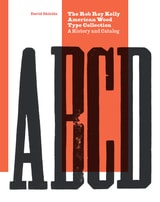
A beautifully illustrated exploration of the Rob Roy Kelly American Wood Type Collection.
The Rob Roy Kelly Wood Type Collection is a comprehensive collection of wood type manufactured and used for printing in nineteenth-century America. Comprising nearly 150 typefaces of various sizes and styles, it was amassed by noted design educator and historian Rob Roy Kelly starting in 1957 and is now held by the University of Texas. Although Kelly himself published a 1969 book on wood type and nineteenth-century typographic history, there has been little written about the creation of the wood type forms, the collection, or Kelly.
In this book, David Shields rigorously updates and expands upon Kelly’s historical information about the types, clarifying the collection’s exact composition and providing a better understanding of the stylistic development of wood type forms during the nineteenth century. Using rich materials from the period, Shields provides a stunning visual context that complements the textual history of each typeface. He also highlights the non-typographic material in the collection—such as borders, rules, ornaments, and image cuts—that have not been previously examined. Featuring over 300 color illustrations, this written history and catalog is bound to spark renewed interest in the collection and its broader typographic period.

The Robert Bellah Reader
Robert N. Bellah
Duke University Press, 2006
The Reader is organized around four central concerns. It seeks to place modernity in theoretical and historical perspective, drawing from major figures in social science, historical and contemporary, from Aristotle and Rousseau through Durkheim and Weber to Habermas and Mary Douglas. It takes the United States to be in some respects the type-case of modernity and in others the most atypical of modern societies, analyzing its common faith in individual freedom and democratic self-government, and its persistent paradoxes of inequality, exclusion, and empire. The Reader is also concerned to test the axiomatic modern assumption that rational cognition and moral evaluation, fact and value, are absolutely divided, arguing instead that they overlap and interact much more than conventional wisdom in the university today usually admits. Finally, it criticizes modernity’s affirmation that faith and knowledge stand even more utterly at odds, arguing instead that their overlap and interaction, obvious in every premodern society, animate the modern world as well.
Through such critical and constructive inquiry this Reader probes many of our deepest social and cultural quandaries, quandaries that put modernity itself, with all its immense achievements, at mortal risk. Through the practical self-understanding such inquiry spurs, Bellah shows how we may share responsibility for the world we have made and seek to heal it.
The Role of the Educational Interpreter
Perceptions of Administrators and TeachersStephen B. Fitzmaurice
Gallaudet University Press, 2021
Through a series of qualitative interviews and quantitative questionnaires with district administrators, school administrators, general education teachers, and teachers of the deaf, Fitzmaurice documents their perceptions of educational interpreters. Findings from the data reveal the perceptions of administrators and teachers set the stage for role ambiguity, role conflicts, and subsequent role overload for educational interpreters. Fitzmaurice elaborates on the implications of the research, and also provides concrete recommendations for researchers and practitioners, including an emphasis on the importance of involving the Deaf community in this work. This volume aims to offer clarity on the role of the educational interpreter, and dispel the confusion and conflicts created by divergent perspectives. A shared understanding of the role of the educational interpreter will allow administrators, teachers, and interpreters to work collaboratively to improve educational outcomes for deaf students.
The Roles of Immigrants and Foreign Students in US Science, Innovation, and Entrepreneurship
Edited by Ina Ganguli, Shulamit Kahn, and Megan MacGarvie
University of Chicago Press, 2020
The Romance of Race
Incest, Miscegenation, and Multiculturalism in the United States, 1880-1930Sheffer, Jolie A.
Rutgers University Press, 2013
In the United States miscegenation is not merely a subject of literature and popular culture. It is in many ways the foundation of contemporary imaginary community. The Romance of Race examines the role of minority women writers and reformers in the creation of our modern American multiculturalism.
The national identity of the United States was transformed between 1880 and 1930 due to mass immigration, imperial expansion, the rise of Jim Crow, and the beginning of the suffrage movement. A generation of women writers and reformers—particularly women of color—contributed to these debates by imagining new national narratives that put minorities at the center of American identity. Jane Addams, Pauline Hopkins, Onoto Watanna (Winnifred Eaton), María Cristina Mena, and Mourning Dove (Christine Quintasket) embraced the images of the United States—and increasingly the world—as an interracial nuclear family. They also reframed public debates through narratives depicting interracial encounters as longstanding, unacknowledged liaisons between white men and racialized women that produced an incestuous, mixed-race nation.
By mobilizing the sexual taboos of incest and miscegenation, these women writers created political allegories of kinship and community. Through their criticisms of the nation’s history of exploitation and colonization, they also imagined a more inclusive future. As Jolie A. Sheffer identifies the contemporary template for American multiculturalism in the works of turn-of-the century minority writers, she uncovers a much more radical history than has previously been considered.
The Romance of Wisconsin Place Names
Robert E. Gard
Wisconsin Historical Society Press, 2015
Fifty years ago, educator and writer Robert E. Gard traveled across Wisconsin, learning the trivial, controversial, and landmark stories behind how cities, counties, and local places got their names. This volume records the fruits of Gard’s labors in an alphabetical listing of places from every corner of Wisconsin, and the stories behind their often-unusual names. Gard’s work provides an important snapshot of how Wisconsin residents of a bygone era came to understand the names of their towns and home places, many of which can no
longer be found on any map.
Celebrated rural historian Jerry Apps introduces this reprint of Gard’s work,
saying that in “some ways The Romance of Wisconsin Place Names is a reference book, a place where you can go to learn a little more about your home town. But in many ways it is much more than that, for it includes the stories of places throughout the state, submitted by the people who knew them. It is a book where story, people, and place all come together.”
The Romare Bearden Reader
Robert G. O'Meally, editor
Duke University Press, 2019
Contributors. Elizabeth Alexander, Romare Bearden, Mary Lee Corlett, Rachel DeLue, David C. Driskell, Brent Hayes Edwards, Ralph Ellison, Henri Ghent, Farah Jasmine Griffin, Harry Henderson, Kobena Mercer, Toni Morrison, Albert Murray, Robert G. O’Meally, Richard Powell, Richard Price, Sally Price, Myron Schwartzman, Robert Burns Stepto, Calvin Tomkins, John Edgar Wideman, August Wilson