Results by title
2728 books match the query 'Education' and 609 start with t
The English Language Common Law Workbook
A Resource for Students Studying English-medium Law DegreesIan Collins and David Brody
University of Michigan Press, 2025
The English Language Common Law Workbook is designed to support students in developing the core competencies necessary for studying in a common law context. It provides readings and exercises based on authentic legal materials for practicing critical reading and writing skills. In particular, it includes an extensive number of statutes and cases and accompanying exercises that give students an opportunity to work with the type of sources they will encounter in English-medium law degree programs. By emphasizing common law principles throughout, the book helps international students coming from non–common law jurisdictions familiarize themselves with how statutes and cases in common law countries are written and structured. Students are supported in critically reading statutes and cases by focusing on key terminology and language structures. Finally, the book supports students in applying the skills they learn to construct basic case briefs and answer hypothetical legal questions using the IRAC structure.
CEFR Levels: B2–C2
The Enigmatic Academy
Class, Bureaucracy, and Religion in American EducationChristian J. Churchill
Temple University Press, 2012
The Enigmatic Academy is a provocative look at the purpose and practice of education in America. Authors Christian Churchill and Gerald Levy use three case studies—a liberal arts college, a boarding school, and a Job Corps center—to illustrate how class, bureaucratic, and secular-religious dimensions of education prepare youth for participation in American foreign and domestic policy at all levels.
The authors describe how schools contribute to the formation of a bureaucratic character; how middle and upper class students are trained for leadership positions in corporations, government, and the military; and how the education of lower class students often serves more powerful classes and institutions.
Exploring how youth and their educators encounter the complexities of ideology and bureaucracy in school, The Enigmatic Academy deepens our understanding of the flawed redemptive relationship between education and society in the United States. Paradoxically, these three studied schools all prepare students to participate in a society whose values they oppose.
The Equity/Excellence Imperative
A 2030 Blueprint for Undergraduate Education at U.S. Research UniversitiesThe Boyer 2030 Commission
University Press of Colorado, 2022
In 2021, The Association for Undergraduate Education at Research Universities (UERU)—with over 100 research university members and hosted at Colorado State University since 2013—recruited The Boyer 2030 Commission. This group was co-chaired by AAU’s Barbara R. Snyder and APLU’s Peter McPherson and included 14 additional distinguished higher ed leaders. The Boyer 2030 Commission sought to update the1998 Boyer Report, the landmark publication that inspired UERU’s founding in 2000 and helped spur nearly a quarter century of progress. Upon a year of research and reflection, the Boyer 2030 Commission issued The Equity/Excellence Imperative: A Blueprint for Undergraduate Education at U.S. Research Universities, reiterating the vital importance of undergraduate education at research universities and the need to invest in meeting what they name as the equity/excellence imperative.
From the Report:
"Research university presidents/chancellors, provosts, and their senior colleagues are today called upon to lead in a challenging world of deeply entrenched inequities laid bare by a deadly pandemic; a long-overdue racial reckoning; fractured democratic institutions and frayed democratic norms; an existential planetary climate emergency; a mental health crisis affecting all ages, including and especially traditional-aged undergraduate students; and growing public disaffection with and distrust of higher education. College-going and the prestige of a college degree are in decline, and, despite efforts to recruit and retain low-income undergraduate students, new data show that research universities were serving even fewer of them prior to the pandemic, let alone as a result. The Boyer 2030 Commission Report is organized around what the Commission has termed the ‘equity/excellence imperative,’ a belief that excellence and equity are inextricably entwined, such that excellence without equity (privilege reproducing privilege) is not true excellence, and equity (mere access) without excellence is unfulfilled promise. At this pivotal moment, the Boyer 2030 Commission poses these fundamental questions:
- How can US research universities embrace the equity/excellence imperative?
- Can we commit to equity as a necessary and defining precondition of excellence?
- Can we conceive, prioritize, and invest in equitable undergraduate achievement?
- Can we educate and support undergraduates for 21st-century world readiness?
Meeting the equity/excellence imperative offers a leadership opportunity. Recognizing that diversity of mission, identity, organization, and culture is a long-standing strength of U.S. higher education, the Boyer 2030 Commission offers 11 provocations to catalyze the multiple actions needed for a research university to realize the equity/excellence imperative. This report will aid leaders as they work to meet this imperative, and millions of undergraduate students, their alma maters and broader human society will meaningfully and measurably benefit as a result."
This book is also available as an open access ebook through the UERU.
Co-Chairs: Barbara R. Snyder, President, AAU and Peter McPherson, President Emeritus, APLU Commission
Members: Michael Crow, President, Arizona State University; Andrew Delbanco, President, Teagle Foundation; Roger Ferguson, former President, TIAA-CREF; Kathleen Fitzpatrick, Director of Digital Humanities, Michigan State University; Kevin Kruger, President and CEO, NASPA–Student Affairs Administrators in Higher Education; Gary May, Chancellor, University of California, Davis; Sarah Newman, Director of Art and Education at metaLAB, Harvard University; Lynn Pasquerella, President, American Association of Colleges & Universities; Deborah Santiago, Co-Founder and CEO, Excelencia in Education; Claude Steele, Lucie Stern Professor in the Social Sciences, Emeritus, Stanford University; Holden Thorp, Editor-in-Chief, Science; Eric Waldo, Founding Executive Director of Michelle Obama’s Reach Higher; Mary Wright, Associate Provost for Teaching and Learning, Brown University; Ex officio: Elizabeth Loizeaux, Boston University; Former President, UERU
Staff: Liz Bennett, Associate Director, UERU; Steven Dandaneau, Executive Director, UERU; Howard Gobstein, Senior Vice President, APLU; Ken Goldstein, Senior Vice President, AAU; Tara King, Education Program and Evaluation Manager, AAU; Emily Miller, Deputy Vice President, AAU; Mariah Pursley, Senior Coordinator, UERU; Kacy Redd, Associate Vice President, APLU; Liz Wasden, Research Assistant, University of Maryland, College Park
The Era of Education
The Presidents and the Schools, 1965-2001Lawrence J. McAndrews
University of Illinois Press, 2005
The Ethics and Politics of Speech
Communication and Rhetoric in the Twentieth CenturyPat J. Gehrke
Southern Illinois University Press, 2009
In The Ethics and Politics of Speech, Pat J. Gehrke provides an accessible yet intensive history of the speech communication discipline during the twentieth century. Drawing on several previously unpublished or unexamined sources—including essays, conference proceedings, and archival documents—Gehrke traces the evolution of communication studies and the dilemmas that often have faced academics in this field. In his examination, Gehrke not only provides fresh perspectives on old models of thinking; he reveals new methods for approaching future studies of ethical and political communication.
Gehrke begins his history with the first half of the twentieth century, discussing the development of a social psychology of speech and an ethics based on scientific principles, and showing the importance of democracy to teaching and scholarship at this time. He then investigates the shift toward philosophical—especially existential—ways of thinking about communication and ethics starting in the 1950s and continuing through the mid-1970s, a period associated with the rise of rhetoric in the discipline. In the chapters covering the last decades of the twentieth century, Gehrke demonstrates how the ethics and politics of communication were directed back onto the practices of scholarship within the discipline, examining the increased use of postmodern and poststructuralist theories, as well as the new trend toward writing original theory, rather than reinterpreting the past. In offering a thorough history of rhetoric studies, Gehrke sets the stage for new questions and arguments, ultimately emphasizing the deeply moral and political implications that by nature embed themselves in the field of communication.
More than simply a history of the discipline's major developments, The Ethics and Politics of Speech is an account of the philosophical and moral struggles that have faced communication scholars throughout the last century. As Gehrke explores the themes and movements within rhetoric and speech studies of the past, he also provides a better understanding of the powerful forces behind the forging of the field. In doing so, he reveals history’s potential to act as a vehicle for further academic innovation in the future.
The Evidence Is Life
Deaf Pilgrimages to Language and Community in Mexico CityAnne E. Pfister
Gallaudet University Press, 2025
The Evolution of Investing at the University of Michigan
1817–2016Rafael E. Castilla and William P. Hodgeson
Michigan Publishing Services, 2017
The Exhaustion of Difference
The Politics of Latin American Cultural StudiesAlberto Moreiras
Duke University Press, 2001
What, asks Moreiras, is the function of critical reason in the present moment? What is regionalistic knowledge in the face of globalization? Can regionalistic knowledge be an effective tool for a critique of contemporary reason? What is the specificity of Latin Americanist reflection and how is it situated to deal with these questions? Through examinations of critical regionalism, restitutional excess, the historical genealogy of Latin American subalternism, testimonio literature, and the cultural politics of magical realism, Moreiras argues that while cultural studies is increasingly institutionalized and in danger of reproducing the dominant ideologies of late capitalism, it is also ripe for giving way to projects of theoretical reformulation. Ultimately, he claims, critical reason must abandon its allegiance to aesthetic-historicist projects and the destructive binaries upon which all cultural theories of modernity have been constructed.
The Exhaustion of Difference makes a significant contribution to the rethinking of Latin American cultural studies.
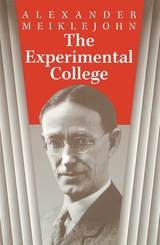
The Experimental College
Alexander Meiklejohn
University of Wisconsin Press, 2001
First published in 1932, The Experimental College is the record of a radical experiment in university education. Established at the University of Wisconsin in Madison in 1927 by innovative educational theorist Alexander Meiklejohn, the "Experimental College" itself was to be a small, intensive, residence-based program within the larger university that provided a core curriculum of liberal education for the first two years of college.
Aimed at finding a method of teaching whereby students would gain "intelligence in the conduct of their own lives," the Experimental College gave students unprecedented freedom. Discarding major requirements, exams, lectures, and mandatory attendance, the program reshaped the student-professor relationship, abolished conventional subject divisions, and attempted to find a new curriculum that moved away from training students in crafts, trades, professions, and traditional scholarship. Meiklejohn and his colleagues attempted instead to broadly connect the democratic ideals and thinking of classical Athens with the dilemmas of daily life in modern industrial America.
The experiment became increasingly controversial within the university, perhaps for reasons related less to pedagogy than to personalities, money, and the bureaucratic realities of a large state university. Meiklejohn’s program closed its doors after only five years, but this book, his final report on the experiment, examines both its failures and its triumphs. This edition brings back into print Meiklejohn’s original, unabridged text, supplemented with a new introduction by Roland L. Guyotte. In an age of increasing fragmentation and specialization of academic studies, The Experimental College remains a useful tool in any examination of the purposes of higher education.
"Alexander Meiklejohn’s significance in the history of American education stems largely from his willingness to put ideas into action. He tested abstract philosophical theories in concrete institutional practice. The Experimental College reveals the dreams as well as the defeats of a deeply idealistic reformer. By asking sharp questions about enduring purposes of liberal democratic education, Meiklejohn presents a message that is meaningful and useful in any age."—Adam Nelson author of Education and Democracy: The Meaning of Alexander Meiklejohn
o A reprint of the unabridged, original 1932 edition
o Published in partnership with the University of Wisconsin–Madison Libraries
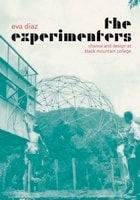
The Experimenters
Chance and Design at Black Mountain CollegeEva Díaz
University of Chicago Press, 2014
Díaz’s focus is on experimentation. Albers, Cage, and Fuller, she shows, taught new models of art making that favored testing procedures rather than personal expression. These methodologies represented incipient directions for postwar art practice, elements of which would be sampled, and often wholly adopted, by Black Mountain students and subsequent practitioners. The resulting works, which interrelate art and life in a way that imbues these projects with crucial relevance, not only reconfigured the relationships among chance, order, and design—they helped redefine what artistic practice was, and could be, for future generations.
Offering a bold, compelling new angle on some of the most widely studied creative figures of modern times, The Experimenters does nothing less than rewrite the story of art in the mid-twentieth century.

The Family Track
Keeping Your Faculties while You Mentor, Nurture, Teach, and ServeEdited by Constance Coiner and Diana Hume George
University of Illinois Press, 1998
research and teaching in higher education? What have universities done
to recognize the difficulties facing academic parents, single mothers
and fathers, graduate students, lesbian and gay couples? What pro-family
policies can be enacted during institutional budget crises?
At a time when the academy is an ever more demanding arbiter and shaper
of the lives of those it employs, The Family Track: Keeping Your Faculties
While You Mentor, Nurture, Teach, and Serve discusses the challenges
and benefits of balancing a rewarding professional life with the competing
needs to nurture children, care for aging parents, and engage in other
personal relationships. Here academic women and men explore issues that
include biological and tenure clocks, childcare and eldercare, surrogate
parenting of students, and increasing job demands. In telling stories
about the quality of their lives, they express their hopes, anxieties,
difficulties, and personal strategies for maintaining a delicate but achievable
balance.
"Lively, well-written, useful, and persuasive … The Family
Track reveals much on family roles within the academy and suggests
many specific projects and guidelines for Institutional change."
-- Judith Kegan Gardiner, editor of Provoking Agents: Gender and Agency
in Theory and Practice
The Fantasy Economy
Neoliberalism, Inequality, and the Education Reform MovementKraus, Neil
Temple University Press, 2023
The Fantasy Economy challenges the basic assumptions of the education reform movement of the last few decades. Kraus insists that education cannot control the labor market and unreliable corporate narratives fuel this misinformation. Moreover, misguided public policies, such as accountability and school choice, along with an emphasis on workforce development and STEM over broad-based liberal arts education, have only produced greater inequality.
Ultimately, The Fantasy Economy argues that education should be understood as a social necessity, not an engine of the neoliberal agenda. Kraus’ book advocates for a change in conventional thinking about economic opportunity and the purpose of education in a democracy.
The Feeling Intellect
Selected WritingsPhilip Rieff
University of Chicago Press, 1989
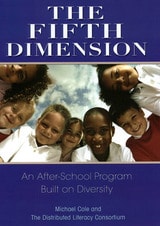
The Fifth Dimension
An After-School Program Built on DiversityMichael Cole
Russell Sage Foundation, 2006

The First 50 Years of the Department of Industrial and Operations Engineering at the University of Michigan
1955–2005Don Chaffin
Michigan Publishing Services, 2016
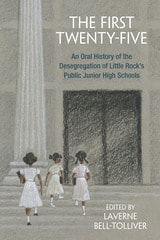
The First Twenty-Five
An Oral History of the Desegregation of Little Rock’s Public Junior High SchoolsLaVerne Bell-Tolliver
University of Arkansas Press, 2018
“It was one of those periods that you got through, as opposed to enjoyed. It wasn’t an environment that . . . was nurturing, so you shut it out. You just got through it. You just took it a day at a time. You excelled if you could. You did your best. You felt as though the eyes of the community were on you.”—Glenda Wilson, East Side Junior High
Much has been written about the historical desegregation of Little Rock Central High School by nine African American students in 1957. History has been silent, however, about the students who desegregated Little Rock’s five public junior high schools—East Side, Forest Heights, Pulaski Heights, Southwest, and West Side—in 1961 and 1962.
The First Twenty-Five gathers the personal stories of these students some fifty years later. They recall what it was like to break down long-standing racial barriers while in their early teens—a developmental stage that often brings emotional vulnerability. In their own words, these individuals share what they saw, heard, and felt as children on the front lines of the civil rights movement, providing insight about this important time in Little Rock, and how these often painful events from their childhoods affected the rest of their lives.

The First Year Out
Understanding American Teens after High SchoolTim Clydesdale
University of Chicago Press, 2007
Wild parties, late nights, and lots of sex, drugs, and alcohol. Many assume these are the things that define an American teenager’s first year after high school. But the reality is really quite different. As Tim Clydesdale reports in The First Year Out, teenagers generally manage the increased responsibilities of everyday life immediately after graduation effectively. But, like many good things, this comes at a cost.
Tracking the daily lives of fifty young people making the transition to life after high school, Clydesdale reveals how teens settle into manageable patterns of substance use and sexual activity; how they meet the requirements of postsecondary education; and how they cope with new financial expectations. Most of them, we learn, handle the changes well because they make a priority of everyday life. But Clydesdale finds that teens also stow away their identities—religious, racial, political, or otherwise—during this period in exchange for acceptance into mainstream culture. This results in the absence of a long-range purpose for their lives and imposes limits on their desire to understand national politics and global issues, sometimes even affecting the ability to reconstruct their lives when tragedies occur.
The First Year Out is an invaluable resource for anyone caught up in the storm and stress of working with these young adults.
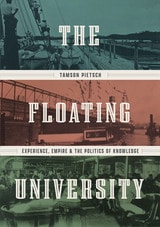
The Floating University
Experience, Empire, and the Politics of KnowledgeTamson Pietsch
University of Chicago Press, 2023
In 1926, New York University professor James E. Lough—an educational reformer with big dreams—embarked on a bold experiment he called the Floating University. Lough believed that taking five hundred American college students around the globe by ship would not only make them better citizens of the world but would demonstrate a model for responsible and productive education amid the unprecedented dangers, new technologies, and social upheavals of the post–World War I world. But the Floating University’s maiden voyage was also its last: when the ship and its passengers returned home, the project was branded a failure—the antics of students in hotel bars and port city back alleys that received worldwide press coverage were judged incompatible with educational attainment, and Lough was fired and even put under investigation by the State Department.
In her new book, Tamson Pietsch excavates a rich and meaningful picture of Lough’s grand ambition, its origins, and how it reveals an early-twentieth-century America increasingly defined both by its imperialism and the professionalization of its higher education system. As Pietsch argues, this voyage—powered by an internationalist worldview—traced the expanding tentacles of US power, even as it tried to model a new kind of experiential education. She shows that this apparent educational failure actually exposes a much larger contest over what kind of knowledge should underpin university authority, one in which direct personal experience came into conflict with academic expertise. After a journey that included stops at nearly fifty international ports and visits with figures ranging from Mussolini to Gandhi, what the students aboard the Floating University brought home was not so much knowledge of the greater world as a demonstration of their nation’s rapidly growing imperial power.
The Floating University
Experience, Empire, and the Politics of KnowledgeTamson Pietsch
University of Chicago Press, 2023
This is an auto-narrated audiobook edition of this book.
The Floating University sheds light on a story of optimism and imperialist ambition in the 1920s.In 1926, New York University professor James E. Lough—an educational reformer with big dreams—embarked on a bold experiment he called the Floating University. Lough believed that taking five hundred American college students around the globe by ship would not only make them better citizens of the world but would demonstrate a model for responsible and productive education amid the unprecedented dangers, new technologies, and social upheavals of the post–World War I world. But the Floating University’s maiden voyage was also its last: when the ship and its passengers returned home, the project was branded a failure—the antics of students in hotel bars and port city back alleys that received worldwide press coverage were judged incompatible with educational attainment, and Lough was fired and even put under investigation by the State Department.
In her new book, Tamson Pietsch excavates a rich and meaningful picture of Lough’s grand ambition, its origins, and how it reveals an early-twentieth-century America increasingly defined both by its imperialism and the professionalization of its higher education system. As Pietsch argues, this voyage—powered by an internationalist worldview—traced the expanding tentacles of US power, even as it tried to model a new kind of experiential education. She shows that this apparent educational failure actually exposes a much larger contest over what kind of knowledge should underpin university authority, one in which direct personal experience came into conflict with academic expertise. After a journey that included stops at nearly fifty international ports and visits with figures ranging from Mussolini to Gandhi, what the students aboard the Floating University brought home was not so much knowledge of the greater world as a demonstration of their nation’s rapidly growing imperial power.
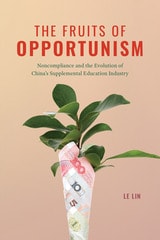
The Fruits of Opportunism
Noncompliance and the Evolution of China's Supplemental Education IndustryLe Lin
University of Chicago Press, 2022
An in-depth examination of the regulatory, entrepreneurial, and organizational factors contributing to the expansion and transformation of China’s supplemental education industry.
Like many parents in the United States, parents in China, increasingly concerned with their children’s academic performance, are turning to for-profit tutoring businesses to help their children get ahead in school. China’s supplemental education industry is now the world’s largest and most vibrant for-profit education market, and we can see its influence on the US higher education system: more than 70% of Chinese students studying in American universities have taken test preparation classes for overseas standardized tests. The Fruits of Opportunism offers a much-needed thorough investigation into this industry. This book examines how opportunistic organizations thrived in an ambiguous policy environment and how they catalyzed organizational and institutional changes in this industry.
A former insider in China’s Education Industry, sociologist Le Lin shows how and why this industry evolved to become a for-profit one dominated by private, formal, nationally operating, and globally financed corporations, despite restrictions the Chinese state placed on the industry. Looking closely at the opportunistic organizations that were founded by marginal entrepreneurs and quickly came to dominate the market, Lin finds that as their non-compliant practices spread across the industry, these opportunistic organizations pushed privatization and marketization from below. The case of China’s Education Industry laid out in The Fruits of Opportunism illustrates that while opportunism leaves destruction in its wake, it can also drive the formation and evolution of a market.
The Future of Academic Freedom
Edited by Louis Menand
University of Chicago Press, 1996
"Louis Menand has assembled The Future of Academic Freedom to better define and delineate what should and should not happen within our colleges and universities. . . . The whole extremely learned yet accessible debate exploits the freedoms it extols, tackling sensitive subjects such as ethnicity and ethics head-on."—Publishers Weekly
"The essays are not only sharp, elegant and lucid, but extremely well-informed about the history of American battles over academic freedom."—Alan Ryan, Times Higher Education Supplement
"[A] superb inquiry into some of the most vexing and significant issues in higher education today."—Zachary Karabell, Boston Book Review
The Future of Black Studies
Abdul
Pluto Press, 2022
'A timely, future-oriented and necessary contribution which provides clarity to the multivalent tendencies in this field' - Carole Boyce Davies
The marginalization of Black voices from the academy is a problem in the Western world. But Black Studies, where it exists, is a powerful, boundary-pushing discipline, grown out of struggle and community action. Here, Abdul Alkalimat, one of the founders of Black Studies in the US, presents a reimagining of the future trends in the study of the Black experience.
Taking Marxism and Black Experientialism, Afro-Futurist and Diaspora frameworks, he projects a radical future for the discipline at this time of social crisis. Choosing cornerstones of culture, such as the music of Sun Ra, the movie Black Panther and the writer Octavia Butler, he looks at the trajectory of Black liberation thought since slavery, including new research on the rise in the comparative study of Black people all over the world.
Turning to look at how digital tools enhance the study of the discipline, this book is a powerful read that will inform and inspire students and activists.

The Future of Black Studies
Abdul Alkalimat
Pluto Press, 2022
At a turning point for the growing field of Black Studies, one of its founders looks to its future
'A timely, future-oriented and necessary contribution which provides clarity to the multivalent tendencies in this field' - Carole Boyce Davies
The marginalization of Black voices from the academy is a problem in the Western world. But Black Studies, where it exists, is a powerful, boundary-pushing discipline, grown out of struggle and community action. Here, Abdul Alkalimat, one of the founders of Black Studies in the US, presents a reimagining of the future trends in the study of the Black experience.
Taking Marxism and Black Experientialism, Afro-Futurist and Diaspora frameworks, he projects a radical future for the discipline at this time of social crisis. Choosing cornerstones of culture, such as the music of Sun Ra, the movie Black Panther and the writer Octavia Butler, he looks at the trajectory of Black liberation thought since slavery, including new research on the rise in the comparative study of Black people all over the world.
Turning to look at how digital tools enhance the study of the discipline, this book is a powerful read that will inform and inspire students and activists.
The Futures of American Studies
Donald E. Pease and Robyn Wiegman, eds.
Duke University Press, 2002
Contributors. Lindon Barrett, Nancy Bentley, Gillian Brown, Russ Castronovo, Eric Cheyfitz, Michael Denning, Winfried Fluck, Carl Gutierrez-Jones, Dana Heller, Amy Kaplan, Paul Lauter, Günter H. Lenz, George Lipsitz, Lisa Lowe, Walter Benn Michaels, José Estaban Muñoz, Dana D. Nelson, Ricardo L. Ortiz, Janice Radway, John Carlos Rowe, William V. Spanos
The Gee Years, 1990-1997
HISTORY OF THE OHIO STATE UNIVERSITYMalcolm S. Baroway
The Ohio State University Press, 2003
When Gee lost his beloved wife, Elizabeth, to cancer in 1991 and became a single parent, he not only carried on, he carried the university through some of its most exhilarating but contentious times. By 1996, he was so popular, private polls said he could run for Ohio governor—and win—on either ticket. When he, and his new bride Constance Bumgarner Gee, left instead for Brown University in January 1998, they left behind a stronger Ohio State and a string of stories about power brokers, politicians, and just plain Buckeyes. Populated by such figures as Les Wexner and George Voinovich, Andy Geiger and John Cooper, Bernadine Healy and John Glenn, The Gee Years is “inside baseball,” written by a member of Gee’s inner circle, his communications director. From the board room to the press box, from fundraisers to sit-ins, this is the story of a singular academic leader and more than seven years in the history of the complex university he headed.
The Gee Years, 2007–2013
Herbert B. Asher
The Ohio State University Press, 2022
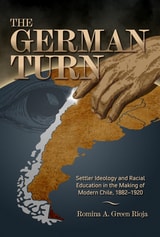
The German Turn
Settler Ideology and Racial Education in the Making of Modern Chile, 1882–1920Romina A. Green Rioja
University of Alabama Press, 2026
How a nation took shape through two classrooms, educating European immigrants in one while assimilating Indigenous peoples in the other, hardwiring race, class, and identity into modern Chile
The German Turn is the history of Chile’s settler ideological project of the 1880s exemplified in education. Romina A. Green Rioja’s big-picture interdisciplinary analysis boasts four historiographies in conversation within the Chilean context. She examines the histories of education, settler colonialism and immigration, Native mission schools, and Mapuche studies at the state and local levels. Chile’s state-building goal was to position the country in the global capitalist economy. Education was seen as a civilizing force for the Mapuche, and the overall goals were to unite the country; teach Chilean students to adhere to class, race, and gender structures; and prepare them for occupations according to these configurations.
Green Rioja finds that Chilean society and state policies demarcated the lines of ethnic, national, and racial preference and exclusion, offering inclusion for those of European ancestry and distance for those of Indigenous descent. Education’s dual role as a tool for inclusion and exclusion ultimately shaped former pupils’ class trajectories and racial belonging. The degrees of belonging depended on community connections, family wealth, and government scholarships that facilitated integration, assimilation, separatism, or the compartmentalization of group identity with the Chilean national identity. The book further considers global-transnational studies on immigration, settler colonialism, and education, showing Chilean policies that appear insular actually align with global patterns and shared policies by other forming nations. This work is a must-read for historians and Latin Americanists to understand Chile’s modernization and its impacts on social structures.
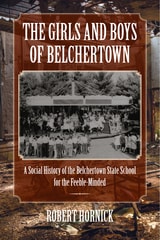
The Girls and Boys of Belchertown
A Social History of the Belchertown State School for the Feeble-MindedRobert Hornick
University of Massachusetts Press, 2012
During much of the twentieth century, people labeled “feeble-minded,” “mentally deficient,” and “mentally retarded” were often confined in large, publicly funded, residential institutions located on the edges of small towns and villages some distance from major population centers. At the peak of their development in the late 1960s, these institutions—frequently called “schools” or “homes”—housed 190,000 men, women, and children in the United States.
The Girls and Boys of Belchertown offers the first detailed history of an American public institution for intellectually disabled persons. Robert Hornick recounts the story of the Belchertown State School in Belchertown, Massachusetts, from its beginnings in the 1920s to its closure in the 1990s following a scandalous exposé and unprecedented court case that put the institution under direct supervision of a federal judge. He draws on personal interviews, private letters, and other unpublished sources as well as local newspapers, long out-of-print materials, and government reports to re-create what it was like to live and work at the school. More broadly, he gauges the impact of changing social attitudes toward intellectual disability and examines the relationship that developed over time between the school and the town where it was located.
What emerges is a candid and complex portrait of the Belchertown State School that neither vilifies those in charge nor excuses the injustices perpetrated on its residents, but makes clear that despite the court-ordered reforms of its final decades, the institution needed to be closed.
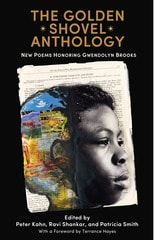
The Golden Shovel Anthology
New Poems Honoring Gwendolyn BrooksPeter Kahn
University of Arkansas Press, 2019
—Claudia Rankine in the New York Times
The Golden Shovel Anthology celebrates the life and work of poet and civil rights icon Gwendolyn Brooks through a dynamic new poetic form, the Golden Shovel, created by National Book Award–winner Terrance Hayes.
An array of writers—including winners of the Pulitzer Prize, the T. S. Eliot Prize, and the National Book Award, as well as a couple of National Poets Laureate—have written poems for this exciting new anthology: Rita Dove, Billy Collins, Danez Smith, Nikki Giovanni, Sharon Olds, Tracy K. Smith, Mark Doty, Sharon Draper, Richard Powers, and Julia Glass are just a few of the contributing poets.
This second edition includes Golden Shovel poems by two winners and six runners-up from an international student poetry competition judged by Nora Brooks Blakely, Gwendolyn Brooks’s daughter. The poems by these eight talented high school students add to Ms. Brooks’s legacy and contribute to the depth and breadth of this anthology.
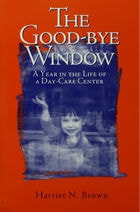
The Good-bye Window
A Year in the Life of a Day-Care CenterHarriet Brown
University of Wisconsin Press, 1998
Have you ever wondered what really goes on at your child’s day-care center after you say good-bye? Harriet Brown did. To satisfy her curiosity, she spent an entire year observing Red Caboose, a center in Madison, Wisconsin. This engaging and thought-provoking book is the story of that year.
In her beautifully written personal account, journalist and mother Brown takes us behind the scenes at a day-care center that works. At Red Caboose, one of the oldest independent centers in the country, we meet teachers who have worked with young children for more than twenty years. We watch the child-care union and parents struggle to negotiate a contract without ripping apart the fabric of trust and love that holds the Red Caboose community together.
We look at the center’s finances, to see what keeps Red Caboose going at a time when other good centers are disappearing. Best of all, we get to know the children, families, and teachers of Red Caboose—their struggles, their sorrows, their triumphs.
Started twenty-five years ago by a group of idealistic parents, the center has not only survived but thrived through some pretty tough times. In the world of day care, Red Caboose is a special place, a model for what child care in this country could and should be: not just babysitting, not just a service to working parents, but a benefit for children, families, teachers, and the community at large.
Brown sets her rich and engaging stories in the greater political and social context of our time. Why is so much child care bad? Why should working Americans worry about the link between welfare reform and child care? What can we learn from the history of child care?
This book is a must-read for parents, educators, and anyone who enjoys first-rate writing and dead-on insight into the lives of our youngest children and those who care for them.
“[Brown’s] writing is beautiful and her scholarship sound. Students considering day-care careers, day-care professionals, and concerned parents will gain insight by reading this provocative book, as will anyone who cares about the future of young children in this country.”—Choice
“I admire enormously the ambition of this book—its eagle-eyed witness and engrossing detail, plus the social importance of the project. I wish there were in the world more books like it.”—Lorrie Moore, author of Who Will Run the Frog Hospital?
“The Good-bye Window is a fascinating peek into the secret world of children. With the poignancy of Anne LaMott, and the reportorial grace of Tracy Kidder, Harriet Brown has written a terrific and worthwhile book.”—Meg Wolitzer, author of This Is Your Life
“Harriet Brown’s well-told story of the Red Caboose child-care center should be read by teachers and parents, but also by every legislator and politician in the land. Only a writer as good as Ms. Brown could display the dramatic complexities of a school community in which the youngest members enter crawling and emerge a few years later as articulate, empathetic, and well-socialized individuals, ready for the ‘real world.’”—Vivian Gussin Paley, author of The Boy Who Would Be a Helicopter
The Graduate Advisor Handbook
A Student-Centered ApproachBruce M. Shore
University of Chicago Press, 2014
One of the first books to approach advising from the advisor’s point of view, the handbook highlights the importance of a partnership in which both parties need to be invested. Shore emphasizes the interpersonal relationships at the heart of advising and reveals how advisors can draw on their own strengths to create a rewarding rapport.
The Graduate Advisor Handbook moves chronologically through the advising process, from the first knock on the door to the last reference letter. Along the way it covers transparent communication, effective motivation, and cooperative troubleshooting. Its clear-eyed approach also tackles touchy subjects, including what to do when personal boundaries are crossed and how to deliver difficult news. Sample scripts help advisors find the right words for even the toughest situations.
With resources dwindling and student and advising loads increasing, graduate advisors need all the resources they can find to give their students the help they need. The Graduate Advisor Handbook has the cool-headed advice and comprehensive coverage that advisors need to make the advising relationship not just effective but also enjoyable.
The Great University Gamble
Money, Markets and the Future of Higher EducationAndrew McGettigan
Pluto Press, 2013
Displaying a stunning grasp of the financial and policy details, Andrew McGettigan surveys the emerging brave new world of higher education. He looks at the big questions: What will be the role of universities within society? How will they be funded? What kind of experiences will they offer students? Where does the public interest lie?
Written in a clear and accessible style, The Great University Gamble outlines the architecture of the new policy regime and tracks the developments on the ground. It is an urgent warning that our universities and colleges are now open to commercial pressures, which threaten to transform education from a public good into a private, individual financial investment.
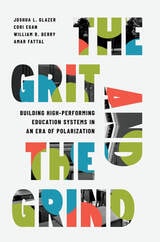
The Grit and the Grind
Building High-Performing Education Systems in an Era of PolarizationJoshua L. Glazer, Cori Egan, William R. Berry, and Amar Fattal
University of Chicago Press, 2026
Offers a much-needed perspective on the connections between community, policymaking, and the improvement of underperforming schools.
School reform remains a fraught issue in the United States as educators, policymakers, and communities strive to improve outcomes for all students. In The Grit and the Grind, Joshua L. Glazer, Cori Egan, William R. Berry, and Amar Fattal examine two ambitious efforts to improve the lowest-performing schools in Memphis, Tennessee. The book offers a rare inside look at the political, organizational, and educational challenges of improving schools at scale.
The two initiatives, the Achievement School District (ASD) and the Shelby County Innovation Zone (iZone), shared a common goal but pursued it through fundamentally different approaches. The ASD was a state-run turnaround district that removed schools from local control and placed them under the management of charter organizations. By contrast, the iZone operated through existing district institutions, relying on local educators and leaders to drive improvement. Despite common goals and substantial resources, the reforms developed in strikingly different ways. Drawing on years of research in Memphis, the authors move beyond familiar debates about charter schools and district reform to explore a deeper question: What does it take to improve schools in complex, pluralistic, and contested democratic societies? Their analysis reveals that educational improvement is simultaneously professional, organizational, and political. Efforts to enhance educational opportunities depend not only on curriculum, leadership, and expertise, but also on the legitimacy, trust, and community support that allow educational systems to learn from experience and sustain improvement.
At once a study of reform, organizations, and politics, The Grit and the Grind challenges simple explanations of success and failure, showing that meaningful improvement is forged through the slow, uncertain work of building systems capable of earning community trust while continuously strengthening teaching and learning.
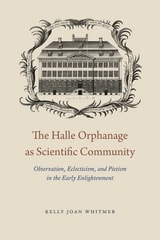
The Halle Orphanage as Scientific Community
Observation, Eclecticism, and Pietism in the Early EnlightenmentKelly Joan Whitmer
University of Chicago Press, 2015
The Halle Orphanage as Scientific Community calls into question a long-standing tendency to view German Pietists as anti-science and anti-Enlightenment, arguing that these tendencies have drawn attention away from what was actually going on inside the orphanage. Whitmer shows how the orphanage’s identity as a scientific community hinged on its promotion of philosophical eclecticism as a tool for assimilating perspectives and observations and working to perfect one’s abilities to observe methodically. Because of the link between eclecticism and observation, Whitmer reveals, those teaching and training in Halle’s Orphanage contributed to the transformation of scientific observation and its related activities in this period.
The Handbook of Broader Impacts
Strategies for Enhancing the Societal Impacts of ResearchLaurie A. Van Egeren
Michigan State University Press, 2026
The Handbook of Broader Impacts is an essential resource for researchers, administrators, policymakers, and anyone interested in the societal benefits of research. The volume brings together experts who trace the history of broader impacts as a U.S. National Science Foundation policy, explore its relationship to engaged scholarship, and provide models for institutional infrastructure and support. The book equips readers with tools to build the institutional capacity to advance the societal impacts of research, from developing researcher identities and competencies to navigating promotion and tenure. The Handbook of Broader Impacts explores a wide range of initiatives—open science, science communication, citizen science, informal STEM learning, K–12 partnerships, undergraduate research, teacher development, international collaborations, and more. By blending policy context, practical strategies, and real-world examples, the handbook spells out the value of broader impacts and demonstrates how research can contribute to direct and meaningful change.
The Handbook of Research on Black Males
Quantitative, Qualitative, and MultidisciplinaryTheodore S. Ransaw
Michigan State University Press, 2018
The Heller Social Impact Case Collection
Reimagining Capitalism through Case-Based LearningEdited by Carole Carlson, Matthew Kriegsman, and Joel Cutcher-Gershenfeld
Brandeis University Press, 2023
At a time of deep and pervasive global challenges, future CEOs and administrators need to apply management principles to social impact cases. Today, top business schools across the country are meeting the moment, teaching courses about socially responsible investing and debating ways companies can stem the effects of climate change.
The case studies collected here are an invaluable resource for today’s students and tomorrow’s leaders. Chapters address an array of business sectors, including consumer goods, finance, health care, higher education, manufacturing, nongovernmental organizations, social services, and transportation. A teacher’s guide is available online to educators.
The Hidden Curriculum in Health Professional Education
Edited by Frederic W. Hafferty
Dartmouth College Press, 2015
The High School
Sports, Spirit, and Citizens, 1903-2024Michael A. Messner
Rutgers University Press, 2025
In The High School, acclaimed sociologist Michael A. Messner reads through 120 years of El Gabilan, the yearbook from his own alma mater, Salinas High School in California, where his father taught and coached. Treating the yearbooks as a historical archive, Messner makes surprising discoveries about the school he thought he knew so well. For example, over fifty years before Title IX, the earliest yearbooks gave equal spotlights to boys’ and girls’ athletics, while the cheerleaders were all boys.
Tracing American life and culture from 1903 to 2024, Messner illuminates shifts in social practices at his high school that reflect broader changes in American culture across the twentieth century. The High School spotlights how the meanings and iconography of certain activities have changed radically over the decades, even as the “sports spirit complex”—involving athletes, cheerleaders, band members, and community boosters—has remained a central part of the high school experience. By exploring evolving sports cultures, socioeconomic conditions, racial demographics, and gender norms, Messner offers a fresh perspective on a defining feature of American teenage life.
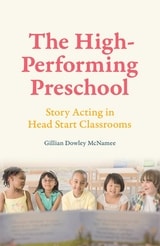
The High-Performing Preschool
Story Acting in Head Start ClassroomsGillian Dowley McNamee
University of Chicago Press, 2015
McNamee outlines how story acting cultivates children’s oral and written language skills. She shows how it creates a crucial opportunity for teachers to guide children inside the interior logic and premises of an idea, and how it fosters the creation of a literary community. Starting with Vygotsky and Paley, McNamee paints a detailed portrait of high-quality preschool teaching, showing how educators can deliver on the promise of Head Start and provide a setting for all young children to become articulate, thoughtful, and literate learners.
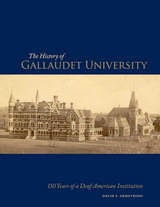
The History of Gallaudet University
150 Years of a Deaf American InstitutionDavid F. Armstrong
Gallaudet University Press, 2014
At first a tiny college of fewer than 200 students, Gallaudet’s growth paralleled the emergence of the American Deaf Community and the history of the nation in general. In the same way that the country’s land-grant universities brought higher education to more American students than ever before, Gallaudet offered the same opportunities to deaf students for the first time. Gallaudet mirrored other institutions in addressing major issues of the time, from legislated segregation to the Civil Rights movement that inspired the struggle by deaf people to gain control of the governance of their university. Most critically, this volume details poignantly the evolution of American Sign Language as a language of scholarship at Gallaudet during a time when its use in educational institutions was largely discouraged or prohibited. Through story and image, it traces the historic path that Gallaudet traveled to be recognized as the finest institution of higher education for deaf people in the world.
The History of Inclusion in the United States
Robert L. Osgood
Gallaudet University Press, 2005
As a significant term, inclusion came into use relatively recently in the long history of special education in the United States. Since the 1800s, when children with disabilities first were segregated for instruction in public schools, professionals and parents have called for more equitable, “normal” treatment of these students, and for closer contact with their nondisabled peers. Through the years, the central issues of the discussions between educators and parents have focused on who should be considered disabled and who should bear responsibility for planning and providing for their education. The History of Inclusion in the United States traces the antecedents of this ongoing debate to answer questions about what inclusion is, how it came to be, and where it might go.
In this comprehensive study, author Robert L. Osgood reveals how the idea of inclusion has evolved into broader realms of thought and practice. In its earliest manifestations, educators dwelled upon the classroom setting itself, wondering whether “disabled” children belonged there; if not, why not; and if so, how this could be accomplished? By the late 1960s, the scope of the discussion had shifted to assess the comprehensive structures of special education and its relationship with general education. The History of Inclusion seamlessly follows this progression into the present decade, in which current educational policy questions the need for any sort of separate “special education” in principle and structure.
The History of Modern Japanese Education
Constructing the National School System, 1872-1890Duke, Benjamin
Rutgers University Press, 2014
The History of Special Education
From Isolation to IntegrationMargret A. Winzer
Gallaudet University Press, 1993
The History of Temple University Japan
An Experiment in International EducationRichard Joslyn and Bruce Stronach
Temple University Press, 2023
The authors recount the development of the academic program, the recruitment of students, and the support from Temple that enabled curricular and pedagogical improvement.
They also address the university’s relationships with three Japanese partners, and the financial threats and crises TUJ faced over the decades.
The History of Temple University Japan is not only an important documentation of TUJ, but also a history of U.S.-Japanese relations. What emerges is the significant impact TUJ has had on the thousands of students, faculty, and staff who have been a part of this international academic institution.
The Holbrook Years
2002–2007Christian Zacher
The Ohio State University Press, 2012
The OSU Board of Trustees and its presidential search committee found in Holbrook’s experience many reasons to invite her to lead Ohio’s flagship institution of higher education. Foremost among them was her familiarity with academic medicine, which they thought would give her a special understanding of OSU’s growing medical center. She was particularly interested in fostering multi-disciplinary programs and emphasizing outreach via pre-collegiate programs to broaden the pipeline for students who saw The Ohio State University as a goal.
The Human Right to Language
Communication Access for Deaf ChildrenLawrence Siegel
Gallaudet University Press, 2008
In 1982, the United States Supreme Court ruled that Amy Rowley, a deaf six-year-old, was not entitled to have a sign language interpreter in her public school classroom. Lawrence Siegel wholeheartedly disagrees with this decision in his new book The Human Right to Language: Communication Access for Deaf Children. Instead, he contends that the United States Constitution should protect every deaf and hard of hearing child’s right to communication and language as part of an individual’s right to liberty. Siegel argues that when a deaf or hard of hearing child sits alone in a crowded classroom and is unable to access the rich and varied communication around her, the child is denied any chance of success in life.
In The Human Right to Language, Siegel proposes that the First and Fourteenth Amendments of the Constitution be enforced so that Amy Rowley and her peers can possess that which virtually every other American child takes for granted – the right to receive and express thought in school. He asserts that the common notion of a right to “speech” is too infrequently interpreted in the narrowest sense as the right to “speak” rather than the broader right to receive and transmit information in all ways. Siegel reveals that there are no judicial decisions or laws that recognize this missing right, and offers here a legal and constitutional strategy for change. His well-reasoned hypothesis and many examples of deaf children with inadequate communication access in school combine to make a compelling case for changing the status quo.

The Humanities in Precollegiate Education
Edited by Benjamin Ladner
University of Chicago Press, 1984
The Humanities in the Age of Information and Post-Truth
Edited by Ignacio López-Calvo and Christina Lux
Northwestern University Press, 2019
While the reader may suspect that these types of lucubration are a desperate reaction to decreased public funding for the humanities worldwide, a decreased enrollment of students, or anxiety over the future of our profession, there is in this volume a coherent argument for the continued need, perhaps more now than ever, to invest in humanities education if we are to have informed and socially conscious citizens rather than just willing consumers and obedient workers. Furthermore, the essays prove that the humanities and the arts are, after all, not a luxury but an integral part of a complete scholarly education.
The IQ Mythology
Class, Race, Gender, and InequalityElaine Mensh and Harry Mensh
Southern Illinois University Press, 1991
Ever since Alfred Binet carried out a 1904 commission from France’s minister of public instruction to devise a means for deciding which pupils should be sent to what would now be called special education classes, IQ scores have been used to label and track children. Those same scores have been cited as "proof" that different races, classes, and genders are of superior and inferior intelligence.
The Menshes make clear that from the beginning IQ tests have been fundamentally biased. Offered as a means for seeking solutions to social problems, the actual measurements have been used to maintain the status quo. Often the most telling comments are from the test-makers themselves, whether Binet ("little girls weak in orthography are strong in sewing and capable in the instruction concerning housekeeping; and, all things considered, this is more important for their future") or Wigdor and Garner ("naive use of intelligence tests . . . to place children of linguistic or racial minority status in special education programs will not be defensible in court").
Among the disturbing facts that the authors share is that there is mounting political pressure for more tests and testing despite a court trial in which the judge stated that "defendants’ expert witnesses, even those clearly affiliated with the companies that devise and distribute the standardized intelligence tests, agreed, with one exception, that we cannot truly define, much less measure, intelligence." The testing firms have responded to this carefully orchestrated need with new products that extend even to the IQ testing of three-month-old infants. The authors stress that, if the testers prevail, there is little doubt that these and similar tests would be used "ad infinitum to justify superior and inferior education along class and racial lines."