Results by title
3390 books match the query 'Fiction' and 1041 start with t
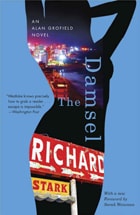
The Damsel
An Alan Grofield NovelRichard Stark
University of Chicago Press, 2012
Donald E. Westlake is one of the greats of crime fiction. Under the pseudonym Richard Stark, he wrote twenty-four fast-paced, hardboiled novels featuring Parker, a shrewd career criminal with a talent for heists. Using the same nom de plume, Westlake also completed a separate series in the Parker universe, starring Alan Grofield, an occasional colleague of Parker. While he shares events and characters with several Parker novels, Grofield is less calculating and more hot-blooded than Parker; think fewer guns, more dames.
Not that there isn’t violence and adventure aplenty. The Damsel begins directly after the Parker novel The Handle. Following a wounded Grofield and his damsel on a scenic, action-packed road trip from Mexico City to Acapulco, The Damsel is full of wit, adrenaline, and political intrigue.
With a new foreword by Sarah Weinman that situates the Grofield series within Westlake’s work as a whole, these novels are an exciting addition to any crime fiction fan’s library.
The Dance of the Deep-Blue Scorpion
Akram Musallam
Seagull Books, 2021
On a plastic chair in a parking lot in Ramallah sits a young man writing a novel, reflecting on his life: working in a dance club on the Israeli side of the border, scratching his father’s amputated leg, dreaming nightly of a haunting scorpion, witnessing the powerful aura of his mountain-lodging aunt. His work in progress is a meditation on absence, loss, and emptiness. He poses deep questions: What does it mean to exist? How can you confirm the existence of a place, a person, a limb? How do we engage with what is no longer there? Absurd at times, raw at others, The Dance of the Deep-Blue Scorpion explores Palestinian identity through Akram Musallam’s extended metaphors in the hope of transcending the loss of territory and erasure of history.
The Dancing Other
Suzanne Dracius
Seagull Books, 0
The Dangerous Lover
Gothic Villains, Byronism, and the Nineteenth-Century Seduction NarrativeDeborah Lutz
The Ohio State University Press, 2006
The dangerous lover has haunted our culture for over two hundred years; English, American, and European literature is permeated with his erotic presence. The Dangerous Lover takes seriously the ubiquity of the brooding romantic hero—his dark past, his remorseful and rebellious exile from comfortable everyday living. Deborah Lutz traces the recent history of this figure, through the melancholy iconoclasm of the Romantics, the lost soul redeemed by love of the Brontës, and the tormented individualism of twentieth-century love narratives. Arguing for this character’s central influence not only in literature but also in the history of ideas, this book places the dangerous lover firmly within the philosophy of Martin Heidegger, the Modernism of Georg Lukács, and Roland Barthes’s theories on love and longing. Working with canonical authors such as Ann Radcliffe, Charles Maturin, Lord Byron, Charles Dickens, George Eliot, and Oscar Wilde, and also with non-canonical texts such as contemporary romance, The Dangerous Lover combines a lyrical, essayistic style with a depth of inquiry that raises questions about the mysteries of desire, death, and eroticism.
The Dangerous Lover is the first book-length study of this pervasive literary hero; it also challenges the tendency of sophisticated philosophical readings of popular narratives and culture to focus on male-coded genres. In its conjunction of high and low literary forms, this volume explores new historical and cultural framings for female-coded popular narratives.
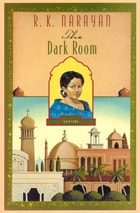
The Dark Room
R. K. Narayan
University of Chicago Press, 1981
Offering rare insight into the complexities of Indian middle-class society, R. K. Narayan traces life in the fictional town of Malgudi. The Dark Room is a searching look at a difficult marriage and a woman who eventually rebels against the demands of being a good and obedient wife. In Mr. Sampath, a newspaper man tries to keep his paper afloat in the face of social and economic changes sweeping India. Narayan writes of youth and young adulthood in the semiautobiographical Swami and Friends and The Bachelor of Arts. Although the ordinary tensions of maturing are heightened by the particular circumstances of pre-partition India, Narayan provides a universal vision of childhood, early love and grief.
"The experience of reading one of his novels is . . . comparable to one's first reaction to the great Russian novels: the fresh realization of the common humanity of all peoples, underlain by a simultaneous sense of strangeness—like one's own reflection seen in a green twilight."—Margaret Parton, New York Herald Tribune
The Dark Ship
Sherko Fatah
Seagull Books, 2020
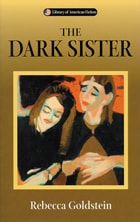
The Dark Sister
Rebecca Goldstein
University of Wisconsin Press, 2004
If you like the fiction of Henry James, the psychology of his brother William, and have a taste for Gothic mysteries you will enjoy The Dark Sister. The novel is a curious mixture of the Victorian repressiveness about sex, intricate stories within stories, and Jewish humor.
With a new afterword
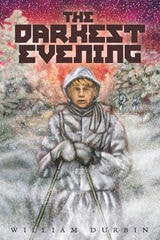
The Darkest Evening
William Durbin
University of Minnesota Press, 2011
Instead of finding the utopia they were promised, Jake and his family encounter only disappointment and hardship. When Stalin’s secret police begin targeting Americans for arrest, his worst fears are confirmed, and Jake leads his family on a daring midwinter escape attempt on cross-country skis, fleeing toward the Finnish border.
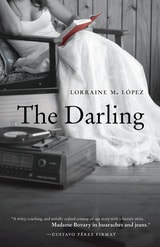
The Darling
Lorraine M. López
University of Arizona Press, 2015
Though set in Los Angeles from the mid-1970s to the mid-1980s, the narrative reinscribes Anton Chekhov’s short story, “The Darling,” first published in 1899. Like Chekhov’s protagonist, Caridad engages in various relationships in her search for love and fulfillment. Rather than absorbing beliefs held by the men in her life, as does Chekhov’s heroine, Caridad instead draws on her lovers’ resources in attempting to improve and educate herself. Apart from Chekhov, various authors of classic literature further guide Caridad’s quest to find herself and to find love, inspiring her longing for love, while also enabling her to disentangle herself from unsatisfying to disastrous relationships by encouraging her to strive for an ideal.
In a moment of clarity, Caridad compares herself to a trapeze artist near the top of a striped tent as she flies from one man to the next, expecting to be caught and held until she is ready to leap again. Flying, she wonders—or is she falling?
The Daughters
A NovelBen Rogers
University of Nevada Press, 2025
IndieReader Approved!
Renowned—albeit washed-up—author Peter Zemeckis (“Z”) is relishing the sunset of a life spent single when Dr. Nancy Chu crash-lands in the bungalow next door. As Nancy’s family drags him into deeper water, Z must rethink the ending to his own story.
Spanning from Amarillo, Texas, in 1977 to La Jolla, California, in 2012, The Daughters is a kaleidoscopic meditation on family, memory, and the invisible forces that bind us. Z’s narrative interweaves small-town rodeos with amateur radios, teen angst with parental love. Shard by shard, he pieces together the story of a fractured family struggling to reassemble itself.
Like particles, Z’s characters (and neighbors) are both small and singular, but their stories ripple like waves—colliding, refracting, and reshaping one another across generations. Elegant, intricate, and deeply moving, The Daughters reverberates long after its final page is turned.
The Day I Wasn't There
Helene Cixous
Northwestern University Press, 2006
Cixous's elusive writing bears all the trademarks of her poetic, provocative style, vivid with word play, intense feeling and a stream-of-consciousness that moves freely over time and place. The narrator's mother claims not to remember what happened, and the brother tries to fill in some gaps in the story. By the end of the book we understand the significance of the title: one day Cixous's mother returned to the clinic to find the baby on the brink of death. Rather than attempt to save him she chose to end his suffering.
By closing the door to the imaginary clinic at the end, the narrator at last resolves the feelings of guilt and realizes that each human being has a fate they must endure. Informed by psychoanalytical theory, and always brutally honest, The Day I Wasn't There is above all an intimate study of a woman's inner landscape.
The Dead Letter and The Figure Eight
Metta Fuller Victor
Duke University Press, 2003
In The Dead Letter, Henry Moreland is killed by a single stab to the back. Against a background of post–Civil War politics, Richard Redfield, a young attorney, helps Burton, a legendary New York City detective, unravel the crime. In The Figure Eight, Joe Meredith undertakes a series of adventures and assumes a number of disguises to solve the mystery of the murder of his uncle and regain the lost fortune of his angelic cousin.
The Dead of Achill Island
Betsy Draine and Michael Hinden
University of Wisconsin Press, 2019
The Deaf Heart
A NovelWilly Conley
Gallaudet University Press, 2015
At the hospital, Max has to contend with hearing doctors, nurses, scientists, and teachers. While struggling through the rigors of his residency and running into bad luck in meeting women, Max discovers an ally in his hearing housemate Zag, a fellow resident who is also vying for certification. Toward the end of his residency, Max meets Maddy, a Deaf woman who helps bring balance to his life.
Author Willy Conley’s stories, some humorous, some poignant, reveal Max’s struggles and triumphs as he attempts to succeed in the hearing world while at the same time navigating the multicultural and linguistic diversity within the Deaf world.
The Deaf Way II Anthology
A Literary Collection by Deaf and Hard of Hearing WritersTonya M. Stremlau
Gallaudet University Press, 2002
In July 2002, the second Deaf Way Conference and Festival took place at Gallaudet University in Washington, D.C., attracting more than 5,000 people worldwide. Researchers, artists, performers, and others converged to create a singular blend of scholarship and social interaction, which inspired The Deaf Way II Anthology.
The Deaf Way II Anthology brings together stellar contributions by 16 international writers who are deaf or hard of hearing. This remarkable collection features poetry, essays, short stories, and one play, all of which offer thought-provoking perspectives on elements from the personal universes of these gifted authors. Many are American writers well-known for their past publications, such as Douglas Bullard, Willy Conley, Christopher Heuer, and Raymond Luczak, while the outstanding work of John Lee Clark, volume editor Tonya Stremlau, Melissa Whalen, and several others have been collected for the first time in this volume. The international contributions further distinguish this anthology, ranging from poetry by Romanian Carmen Cristiu, verse by Sibylle Gurtner May from Switzerland, to a play by Nigerian Sotonwa Opeoluwa.
All of the writers showcased in The Deaf Way II Anthology portray the Deaf experience with unmatched authenticity, presenting a perfect introduction to the Deaf world. Simultaneously, their work demonstrates that deaf and hard of hearing people can write at the highest aesthetic level and offer invaluable insights on the complete human spectrum.
The Deaf-Mute Boy
Joseph Geraci
University of Wisconsin Press, 2006
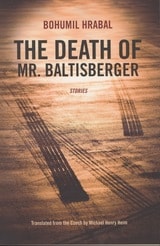
The Death of Mr. Baltisberger
Bohumil Hrabal
Northwestern University Press, 2010
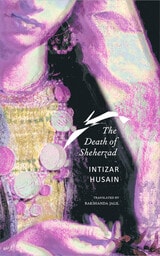
The Death of Sheherzad
Intizar Husain
Seagull Books, 2016
The fifteen stories in The Death of Sheherzad ably represent Intizar Husain’s oeuvre, defying narrative tradition and exploring the past, specifically the Partition of India, as a means of unraveling the present. He imaginatively revisits a syncretic, tolerant, pluralistic past to analyze why the tide turned so irreversibly. Questioning everything—faith, violence, society—Husain probes the horrors of Partition in a manner as oblique as it is trenchant. Imbued with dark wit and literary brilliance, these stories at once shock, agitate, and entertain.
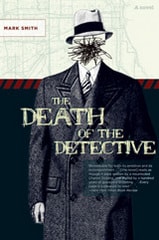
The Death of the Detective
A NovelMark Smith
Northwestern University Press, 2007
The Death of the Detective is a quest novel in the tradition of Don Quixote, Moby-Dick, and Dead Souls. During his frenetic and blood-soaked odyssey, Mark Smith's detective moves through the city on highways, boulevards, side streets, and alleys. He tracks "the death-maker" from a mansion in Lake Forest to the underbelly of the South Side, from a glass high-rise on the Gold Coast to a run-down tavern in the northwestern suburbs, and everywhere in between. In this New York Times best seller and finalist for the 1974 National Book Award, Smith takes hold of the reader and doesn't let go until the last page of his relentless journey into the dark recesses of the American soul.
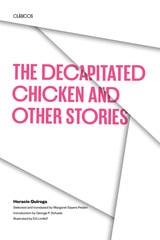
The Decapitated Chicken and Other Stories
By Horacio Quiroga
University of Texas Press, 1976
Tales of horror, madness, and death, tales of fantasy and morality: these are the works of South American master storyteller Horacio Quiroga. Author of some 200 pieces of fiction that have been compared to the works of Poe, Kipling, and Jack London, Quiroga experienced a life that surpassed in morbidity and horror many of the inventions of his fevered mind. As a young man, he suffered his father's accidental death and the suicide of his beloved stepfather. As a teenager, he shot and accidentally killed one of his closest friends. Seemingly cursed in love, he lost his first wife to suicide by poison. In the end, Quiroga himself downed cyanide to end his own life when he learned he was suffering from an incurable cancer.
In life Quiroga was obsessed with death, a legacy of the violence he had experienced. His stories are infused with death, too, but they span a wide range of short fiction genres: jungle tale, Gothic horror story, morality tale, psychological study. Many of his stories are set in the steaming jungle of the Misiones district of northern Argentina, where he spent much of his life, but his tales possess a universality that elevates them far above the work of a regional writer.
The first representative collection of his work in English, The Decapitated Chicken and Other Stories provides a valuable overview of the scope of Quiroga's fiction and the versatility and skill that have made him a classic Latin American writer.

The Decision
Britta Böhler
Haus Publishing, 2015
Britta Böhler shows us one of the twentieth century’s greatest writers as a family man, a father, a writer, and a man with moral doubts. We see a human soul trapped in a historical setting that forces him to make a seemingly impossible choice. A convincing depiction of a dilemma addressed only sparsely in Mann’s own writings, The Decision eloquently explores the all-too-human price of confronting totalitarianism.
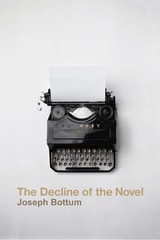
The Decline of the Novel
Joseph Bottum
St. Augustine's Press, 2019
The novel has lost its purpose, Joseph Bottum argues in this fascinating new look at the history of fiction. We have not transcended our need for what novels provide, but we have grown to distrust the culture that allowed novels to flourish. “For almost three hundred years,” Bottum writes, “the novel was a major art form, perhaps the major art form, of the modern world—the device by which, more than any other, we tried to explain ourselves to ourselves.” But now we no longer “read novels the way we used to.”
In a historical tour de force—the kind of sweeping analysis almost lost to contemporary literary criticism—Bottum traces the emergence of the novel from the modern religious crisis of the individual soul and the atomized self. In chapters on such figures as Sir Walter Scott, Charles Dickens, and Thomas Mann, he examines the enormous ambitions once possessed by novels and finds in these older works a rebuke of our current failure of nerve.
“We walk with our heads down,” Bottum writes. “Without a sense of the old goals and reasons––a sense of the good achieved, understood as progress––all that remains are the crimes the culture committed in the past to get where it is now. uncompensated by achievement, unexplained by purpose, these unameliorated sins must now seem overwhelming: the very definition of a failed culture.” In readings of everything from genre fiction to children’s books, Bottum finds a lack of faith in the ability of art to respond to the deep problems of existence. “the decline of the novel’s prestige reflects and confirms a genuine cultural crisis,” he writes.
Linking the novel to its religious origins, Bottum describes the urgent search for meaning in the new conditions of the modern age: “If the natural world is imagined by modernity as empty of purpose, then the hunt for nature’s importance is supernatural, by definition.” the novel became a fundamental device by which culture pursued the supernatural—facilitated by modernity’s confidence in science and cultural progress. Losing that confidence, Bottum says, we lost the purpose of the art: “the novel didn’t fail us. We failed the novel.”
Told in fast-paced, wide-ranging prose, Bottum’s The Decline of the Novel is a succinct critique of classical and contemporary fiction, providing guidelines for navigating the vast genre. this book is a must-read for those who hunger for grand accounts of literature, students of literary form, critics of contemporary art, and general readers who wish to learn, finally, what we all used to know: the deep moral purpose of reading novels.
The Deep Blue Memory
Monique Laxalt Urza
University of Nevada Press, 1993
The Deer in the Mirror
Cary Holladay
The Ohio State University Press, 2013
The Deposition
Pete Duval
University of Massachusetts Press, 2021
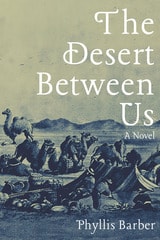
The Desert Between Us
A NovelPhyllis Barber
University of Nevada Press, 2020
2020 Reading the West Book Awards, Longlist for Fiction
2020 Association for Morman Letters Finalist, Fiction
The Desert Between Us is a sweeping, multi-layered novel based on the U.S. government’s decision to open more routes to California during the Gold Rush. To help navigate this waterless, largely unexplored territory, the War Department imported seventy-five camels from the Middle East to help traverse the brutal terrain that was murderous on other livestock.
Geoffrey Scott, one of the roadbuilders, decides to venture north to discover new opportunities in the opening of the American West when he—and the camels—are no longer needed. Geoffrey arrives in St. Thomas, Nevada, a polygamous settlement caught up in territorial fights over boundaries and new taxation. There, he falls in love with Sophia Hughes, a hatmaker obsessed with beauty and the third wife of a polygamist. Geoffrey believes Sophia wants to be free of polygamy and go away with him to a better life, but Sophia’s motivations are not so easily understood. She had become committed to Mormon beliefs in England and had moved to Utah Territory to assuage her spiritual needs.
The death of Sophia’s child and her illicit relationship with Geoffrey generate a complex nexus where her new love for Geoffrey competes with societal expectations and a rugged West seeking domesticity. When faced with the opportunity to move away from her polygamist husband and her tumultuous life in St. Thomas, Sophia becomes tormented by a life-changing decision she must face alone.
The Desert Between Us
A NovelPhyllis Barber
University of Nevada Press, 2020
2020 Reading the West Book Awards, Longlist for Fiction
2020 Association for Morman Letters Finalist, Fiction
The Desert Between Us is a sweeping, multi-layered novel based on the U.S. government’s decision to open more routes to California during the Gold Rush. To help navigate this waterless, largely unexplored territory, the War Department imported seventy-five camels from the Middle East to help traverse the brutal terrain that was murderous on other livestock.
Geoffrey Scott, one of the roadbuilders, decides to venture north to discover new opportunities in the opening of the American West when he—and the camels—are no longer needed. Geoffrey arrives in St. Thomas, Nevada, a polygamous settlement caught up in territorial fights over boundaries and new taxation. There, he falls in love with Sophia Hughes, a hatmaker obsessed with beauty and the third wife of a polygamist. Geoffrey believes Sophia wants to be free of polygamy and go away with him to a better life, but Sophia’s motivations are not so easily understood. She had become committed to Mormon beliefs in England and had moved to Utah Territory to assuage her spiritual needs.
The death of Sophia’s child and her illicit relationship with Geoffrey generate a complex nexus where her new love for Geoffrey competes with societal expectations and a rugged West seeking domesticity. When faced with the opportunity to move away from her polygamist husband and her tumultuous life in St. Thomas, Sophia becomes tormented by a life-changing decision she must face alone.
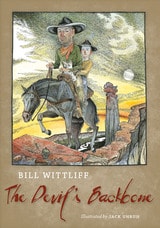
The Devil's Backbone
By Bill Wittliff, illustrated by Jack Unruh
University of Texas Press, 2014
The last the boy Papa saw of his Momma, she was galloping away on her horse Precious in the saddle her father took from a dead Mexican officer after the Battle of San Jacinto, fleeing from his Daddy, Old Karl, a vicious, tight-fisted horse trader. Momma’s flight sets Papa on a relentless quest to find her that thrusts him and his scrappy little dog Fritz into adventures all across the wild and woolly Hill Country of Central Texas, down to Mexico, and even into the realm of the ghostly “Shimmery People.” In The Devil’s Backbone, master storyteller Bill Wittliff takes readers on an exciting journey through a rough 1880s frontier as full of colorful characters and unexpected turns of events as the great American quest novel Adventures of Huckleberry Finn.
Wittliff grew up listening to stories and memories like these in his own family, and in this imaginative novel, they come to vivid life, creating an engrossing story of a Texas Huck Finn that brims with folk wisdom and sly humor. A rogue’s gallery of characters thwart and aid Papa’s path—Old Karl, hell-bent on bringing the boy back to servitude on his farm, and Herman, Papa’s brother who’s got Old Karl’s horse-trading instincts and greed; Calley Pearsall, an enigmatic cowboy with “other Fish to Fry” who might be an outlaw or a trustworthy “o’Amigo”; o’Jeffey, a black seer who talks to the spirits but won’t tell Papa what she has divined about his Momma; Mister Pegleg, a three-legged coyote with whom Papa forms a poignant, nearly tragic friendship; the “Mexkins” Pepe and Peto and their father Old Crecencio, whose longing for his lost family is as strong as Papa’s; and blind Bird, a magical “blue baby” who can’t see with his eyes but who helps other people see what they hold in their hearts. Papa’s adventures draw him ever nearer to a mysterious cave that haunts his dreams—an actual cave that he discovers at last in the canyons of the Devil’s Backbone—but will he find Momma before Old Karl finds him?
The Devil's Church and Other Stories
By Joaquim Maria Machado de Assis
University of Texas Press, 1977
The modem Brazilian short story begins with the mature work of Joaquim Maria Machado de Assis (1839-1908), acclaimed almost unanimously as Brazil's greatest writer. Collectively, these nineteen stories are representative of Machado's unique style and world view, and this translation doubles the number of his stories previously available in English.
The stories in this volume reflect Machado's post-1880 emphasis on social satire and experimentation in psychological realism. If he had continued to produce the moralistic love stories and parlor intrigues of his earlier fiction, Machado's legacy would have been an entertaining but inconsequent body of work. However, by 1880 he had begun a devastating satirical assault on society through his fiction. In spite of his ruthlessness, Machado does at times reveal an ironic sympathy for his characters. He is not indifferent to human conflict but uses humor and irony to stress the absurdity of these conflicts, acted out against the backdrop of an indifferent universe. Such a spectacle creates a sense of helplessness that can only inspire wistful amusement.
In his technical mastery of the short story. Machado was decades ahead of his contemporaries and can still be considered more modern than most of the modernists themselves. That his stories elicit such strong and diverse reactions today is a tribute to their richness, complexity, and significance.
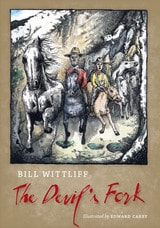
The Devil's Fork
By Bill Wittliff
University of Texas Press, 2018
The Devil’s Fork opens with the boy Papa exclaiming, “They was gonna hang my o’Amigo Calley Pearsall out there in front a’the Alamo down in San Antoneya come Saturday Noon and if I was gonna stop it I better Light a Shuck and Get on with it. And I mean Right Now.” And so Papa and his sweetheart Annie Oster set off to rescue Calley, thereby launching themselves into another series of hair-raising adventures.
The Devil’s Fork concludes the enthralling journey through wild and woolly Central Texas in the 1880s that began in The Devil’s Backbone and The Devil’s Sinkhole. Papa springs Calley from jail, but their troubles are far from over. Framed for murder, the two amigos have to flee for their lives. Joining their flight this time is o’Johnny, the evil Sheriff Pugh’s disabled little brother, who has uncanny abilities. Escaping danger for a while, Papa and Calley try to start a new life as horse traders, only to find themselves branded as horse thieves when o’Johnny and a mysterious white ghost horse begin rescuing abused horses from their masters. Can Papa and Calley escape the noose and save all the horses that Johnny and the White Horse liberate? Or will their own hot tempers send them down the Devil’s Fork, from which no one ever returns?
Proving himself a master storyteller once again, Bill Wittliff spins a yarn as engrossing as the stories his own Papa told him long ago, stories that inspired The Devil’s Backbone, The Devil’s Sinkhole, and The Devil’s Fork.
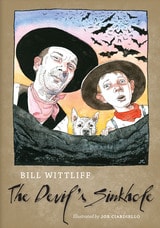
The Devil's Sinkhole
By Bill Wittliff; illustrated by Joe Ciardiello
University of Texas Press, 2016
When last we saw the boy Papa in The Devil’s Backbone, he had finally learned the fate of his missing Momma and his vicious daddy, Old Karl. But hardly has he concluded that quest before another one is upon him. Now a white-haired man with a hangman’s noose around his neck and death in his eye—o’Pelo Blanco—is coming. And he means to hang Papa.
In The Devil’s Sinkhole, the master storyteller Bill Wittliff takes us on another enthralling journey through wild and woolly Central Texas in the 1880s. When Papa and his o’amigo Calley Pearsall confront Pelo Blanco before he can ambush Papa, the encounter sets them on a pursuit with a promise of true love at the end, if only they can stay alive long enough for Calley to win the beautiful Pela Rosa, the captive/companion of Pelo Blanco. But before they can even hope to be united with Pela and Annie Oster, Papa’s plucky sweetheart, Papa and Calley have to defeat not only Pelo Blanco but also the evil, murdering Arlon Clavic and deliver Little Missey, the mysterious Wild Woman a’the Navidad, to the safe haven of the Choat farm. With dangers and emergencies around every bend, it’s a rough ride to the Devil’s Sinkhole, where this world and the next come together, bringing Papa and Calley, Pelo Blanco and Arlon to a climax that will leave readers clamoring for the next adventure.

The Devil’s Own Luck
From Hell to HappinessLadislav Grosman
Karolinum Press, 2026
Ladislav Grosman's powerful story of a twelve-year-old Jewish boy in wartime Slovakia smuggled into Hungary to escape deportation.
In The Devil's Own Luck, readers experience the horrors of war and the Holocaust through the lens of the young boy's obsessive reading of pulp fiction, imposing a layer of adventure on the bleak landscape of his experience. This simultaneously tragic, humorous, and poetic novel by Ladislav Grosman was published posthumously.

The Devourer of Gods
Viking Magic in the New WorldThomas Benjamin De Mayo
Arizona Center for Medieval and Renaissance Studies, 2000
The Dialogic Imagination
Four EssaysBy M. M. Bakhtin
University of Texas Press, 1982
These essays reveal Mikhail Bakhtin (1895-1975)—known in the West largely through his studies of Rabelais and Dostoevsky—as a philosopher of language, a cultural historian, and a major theoretician of the novel. The Dialogic Imagination presents, in superb English translation, four selections from Voprosy literatury i estetiki (Problems of literature and esthetics), published in Moscow in 1975. The volume also contains a lengthy introduction to Bakhtin and his thought and a glossary of terminology.
Bakhtin uses the category "novel" in a highly idiosyncratic way, claiming for it vastly larger territory than has been traditionally accepted. For him, the novel is not so much a genre as it is a force, "novelness," which he discusses in "From the Prehistory of Novelistic Discourse." Two essays, "Epic and Novel" and "Forms of Time and of the Chronotope in the Novel," deal with literary history in Bakhtin's own unorthodox way. In the final essay, he discusses literature and language in general, which he sees as stratified, constantly changing systems of subgenres, dialects, and fragmented "languages" in battle with one another.
The Diaries of Carol Lynn Pearson—Mormon Author, Feminist, and Activist
Volume 1: 1956–1990Pearson, Carol Lynn
Signature Books, 2025
“I feel somehow that of all the writing I am doing, my diary is the most important.” So wrote the beloved and bestselling author, poet, and playwright Carol Lynn Pearson in her 1979 diary. Several years before, she recorded, “I feel the imperative of history. . . . Add that to my being a household word to many and I cannot escape the feeling that in many years there might be a number of people interested in these pages.” That time has now come.
Unbeknownst to almost everyone but herself, Pearson kept a near-daily diary since she was a teenager, recording her remarkable story in the context of twentieth- and twenty-first-century Mormon America. In this first of a four-volume series, Pearson chronicles her love for her church but also her troubling experiences and concerns with its patriarchy, historic doctrine of polygamy, omission of a feminine divine, and homophobia. Readers will rejoice with her as her first book of poetry, Beginnings, sells an astonishing 150,000+ copies and puts her on the map in the 1960s, empathize with her as she watches her church help kill the Equal Rights Amendment in the 1970s, and mourn with her as her mixed-orientation marriage ends and she cares for her former husband in her home as he dies of AIDS in the 1980s. The sensitive-girl-turned-strong-woman who emerges in these diaries insists that we move from patriarchy into partnership, change our destructive policies towards Queer people, and invite God the Mother back into our heavenly family.

The Director and Other Stories from Morocco
By Leila Abouzeid
University of Texas Press, 2006
New stories by Leila Abouzeid, the noted Moroccan writer, constitute an event for both East and West, for, as in her critically acclaimed novel, Year of the Elephant, the author cuts across cultural and national boundaries to offer fiction that has meaning for both Western and Middle Eastern readers. The stories in this volume deal with issues both traditional and modern-relations between parents and children, between husbands and wives, and between citizens of newly independent Morocco and its new nationalist representative government.
Independence from French colonial rule has brought many changes to Morocco—some more beneficial than others. Women have entered the work force in great numbers, a development which has brought them new freedoms, but which has also caused problems within the traditional family. Abouzeid shows us how these changes have affected ordinary men and women, how small everyday events loom large in individual lives. To her crisp style, reminiscent of some Western realist novelists, she adds elements of Arabic fiction—the oral story-telling technique, for example.
Abouzeid writes first in Arabic, which she has stated is a political choice. This makes her a literary pioneer in North Africa, where, until recently, most authors wrote in French. Elizabeth Warnock Fernea has written an introduction for this book, setting the stories in historical context.
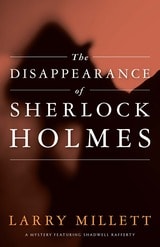
The Disappearance of Sherlock Holmes
Larry Millett
University of Minnesota Press, 2012
SHERLOCK HOLMES DISAPPEARS, POLICE SUSPECT FAMED DETECTIVE IN KIDNAPPING AND MURDER reads a New York headline. So begins the fifth mystery in Larry Millett’s series.
A letter, written in a secret cipher he recognizes all too well, reveals that an old foe of Holmes—a murderer he once captured after an incredible duel of wits—is back, has kidnapped his previous victim’s widow, and is now impersonating Holmes himself. Holmes must once again match wits with a particularly cunning adversary, one whose hatred of Holmes has seemingly become the killer’s single greatest obsession.
Chasing the kidnapper from London to New York to Chicago, Holmes and Watson race to keep up. Every move Holmes makes is expected; every trap proves elusive. Only with the assistance of his American cohort, the saloonkeeper Shadwell Rafferty, can Holmes hope to settle the score once and for all—or be framed for the crime himself.
The Disappearance
A Novella and StoriesIlan Stavans
Northwestern University Press, 2008
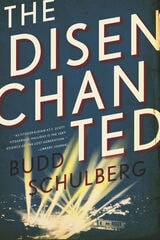
The Disenchanted
Budd Schulberg
University of Minnesota Press, 2012
Considered by some to be Budd Schulberg’s masterpiece, The Disenchanted tells the tragic story of Manley Halliday, a fabulously successful writer during the 1920s—a golden figure in a golden age—who by the late 1930s is forgotten by the literary establishment, living in Hollywood and writing for the film industry. Halliday is hired to work on a screenplay with a young writer in his twenties named Shep, who is desperate for success and idolizes Halliday. The two are sent to New York City, where a few drinks on the plane begin an epic disintegration on the part of Halliday due to the forces of alcoholism he is heroically fighting against and the powerful draw of memory and happier times. Based in part on a real-life and ill-fated writing assignment between the author and F. Scott Fitzgerald in 1939, Schulberg’s novel is at its heart a masterful depiction of Manley Halliday—at times bitter, at others sympathetic and utterly sorrowful—and The Disenchanted stands as one of the most compelling and emotional evocations of generational disillusionment and fallen American stardom.
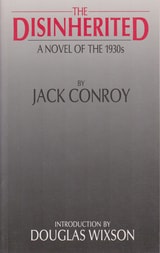
The Disinherited
A Novel of the 1930s by Jack ConroyJack Conroy & Intro by Douglas Wixson
University of Missouri Press, 1991
Douglas Wixson's introduction to this new edition of Conroy's classic provides biographical information on the aspects of Conroy's life that influenced his writings, explores the socialist movement of the 1930s, and examines the critical reaction to the novel, showing why The Disinherited has endured both as historical document and as fiction.
The Disintegrations
A NovelAlistair McCartney
University of Wisconsin Press, 2019
Within this dizzying investigation into the mystery of death is another mystery: who is the companion igniting these memories? This enigmatic novel blurs the line between fiction and nonfiction, story and eulogy, poetry and obituary. Wry yet somber, astringent yet tender, The Disintegrations confronts both the impossibility of understanding death and the timeless longing for immortality.
The Distance Between Us
A NovelValerie Sayers
Northwestern University Press, 2013
The Diver
Samsun Knight
University of Iowa Press, 2023
Peter is a young paralegal at the firm hired to investigate Marta’s role in her husband’s death, who is grappling with the recent suicide of his brother and the subsequent distance that seems to have opened between himself and the rest of the world. After learning about Marta’s case, he finds himself haunted by her story and enthralled by her. On an outing to interview her neighbors, he instead warns her that a company of private detectives is preparing to make trouble. Marta slams the door on him, but later sets up a time to hear him out. Neither Marta nor Peter could predict the consequences of their meeting.
A genre-bending story of heartache and devotion that questions where the boundaries begin and end in our closest relationships, The Diver explores the risks and rewards of intimacy, and offers a portrait of love as a catastrophic event.
The Diviners
Margaret Laurence
University of Chicago Press, 1993
"Mrs. Laurence's [novel] is both poetic and muscular, and her heroine is certainly one of the more humane, unglorified, unpolemical, believable women to have appeared in recent fiction."—The New Yorker

The Doll
Boleslaw Prus
Central European University Press, 1997
The city of Warsaw, under Russian rule in the late 1870s, is the setting for this story. The middle-aged hero, Wokulski, bold and successful in business, is being destroyed by his obsessive love for the frigid, aristocratic society ‘doll’ Izabela. The embattled aristocracy, the new men of finance, Dickensian tradesmen and the urban poor all come vividly to life on the vast, superbly detailed canvas.
The Doom of the Great City; Being the Narrative of a Survivor, Written A.D. 1942
William Delisle Hay
West Virginia University Press, 2025
The Doomscroller's Companion
Wendy Wimmer
University of Wisconsin Press, 2026
Jane, aka @erejane, a thirtysomething professional web influencer, lives in her aunt’s spare bedroom in Green Bay, Wisconsin. Her only confidant is Brian, a potter who is thrilled that the internet allows him to connect without having to leave his nearby home and studio. With limited options and a dwindling bank account, Jane lands a high-paying gig that requires her to travel to a wildlife refuge on a remote island near San Francisco to publicize a marine biologist’s shark study.
However, when a global pandemic strikes with astonishing speed, the scientists surrounding Jane succumb one by one; meanwhile, Brian grapples with neighbors living out their apocalyptic movie fantasies. When real-world events force them to set aside their online personas, Jane and Brian are forced to decide what—or whom—they care for the most.
Told through traditional narrative and imagined social media posts—which often appear, as they do in life, out of chronological order—The Doomscroller’s Companion is as engaging as it is unexpected.
The Dry Wood
Caryll Houselander
Catholic University of America Press, 2021
The Duke's Man
A NovelDavid R. Slavitt
Northwestern University Press, 2011
Focusing on one aspect of Dumas’ novel—the doomed love story of Bussy d’Amboise and Diana de Monsoreau—Slavitt excerpts key passages, which are extended and undercut by the narrator’s comments. The result is a radically abridged book with its own life and verve. The first of the quoted scenes, in which the names of Bussy’s assailants are replaced with those of French cheeses, sets the irreverent tone for all that follows. The book pokes fun at Dumas’ exclamatory style and flamboyant archaisms (“morbleu!” “pardieu!”), the implausibility of the swordfights, the unnecessary contortions of the political plot, the conventional passivity of the heroine, and the coyness of his love scenes. Residing somewhere between Nabokov’s Pale Fire and Quirk Books’ mash-ups (Pride and Prejudice and Zombies, etc.), The Duke’s Man’s blend of quotation, commentary, and fiction raises searching questions about realism and truth.

The Dust Within the Rock
A NovelFrank Waters
Ohio University Press, 2002
Based on one of the most significant periods in Frank Waters’s own life, Pike’s Peak is perhaps the most complete expression of all the archetypal themes he explored in both fiction and nonfiction.
In The Dust within the Rock, the third book in the Pike’s Peak saga, an aging Joseph Rogier clings to his vision of finding gold in the great mountain and his grandson Marsh comes of age in the Rogier household. It is the early part of the twentieth century, in Colorado Springs, and the schoolhouse, the newsstand, the railroad, the mines, all become part of the younger man’s emergence into adulthood and self-discovery.
Waters’s powerful and intuitive style transforms the tale into a mythic journey, a search for meaning played out in the drama of everyday living on the vast American frontier.
Pike’s Peak (1971) is composed of three condensed novels: The Wild Earth’s Nobility, Below Grass Roots, and The Dust within the Rock. Some years after its publication, an interviewer asked Frank Waters whether it was autobiographical. “Yes,” he replied, “and no.”