Results by title
1445 books match the query 'Life Sciences' and 386 start with t
The Myth of Human Races
Alain F. Corcos
Michigan State University Press, 1997
The idea that human races exist is a socially constructed myth that has no grounding in science. Regardless of skin, hair, or eye color, stature or physiognomy, we are all of one species. Nonetheless, scientists, social scientists, and pseudo-scientists have, for three centuries, tried vainly to prove that distinctive and separate "races" of humanity exist. These protagonists of race theory have based their flawed research on one or more of five specious assumptions:
- humanity can be classified into groups using identifiable physical characteristics,
- human characteristics are transmitted "through the blood,"
- distinct human physical characteristics are inherited together,
- physical features can be linked to human behavior,
- human groups or "races" are by their very nature unequal and, therefore, they can be ranked in order of intellectual, moral, and cultural superiority.
The Myth of Human Races systematically dispels these fallacies and unravels the web of flawed research that has been woven to demonstrate the superiority of one group of people over another.
The Myth of Progress
Toward a Sustainable FutureTom Wessels
University Press of New England, 2013
The Myth of Progress
Toward a Sustainable FutureTom Wessels
Brandeis University Press, 2023
In this compelling, cogently argued, and acclaimed book, Tom Wessels demonstrates how our current path toward progress, based on continual economic expansion and inefficient use of resources, runs contrary to three foundational scientific laws that govern all complex natural systems. It is a myth, he contends, that progress depends on a growing economy. Wessels explains his theory with his three laws of sustainability: the law of limits to growth; the second law of thermodynamics, which exposes the dangers of increased energy consumption; and the law of self-organization, which results in the marvelous diversity of such highly evolved systems as the human body and complex ecosystems. Wessels argues that these laws, scientifically proven to sustain life in its myriad forms, have been cast aside since the eighteenth century, first by Western economists, political pragmatists, and governments attracted by the idea of unlimited growth, and more recently by a global economy dominated by large corporations, in which consolidation and oversimplification have created large-scale inefficiencies in both material and energy usage.
Wessels makes scientific theory readily accessible by offering examples of how the laws of sustainability function in the complex systems we can observe in the natural world around us. Demonstrating that all environmental problems have their source in a disregard for the laws of sustainability, he concludes with an impassioned argument for cultural change. This new edition has a new preface wherein the author regards The Myth of Progress as his most important work. It has been in constant demand since it was first published in 2006.
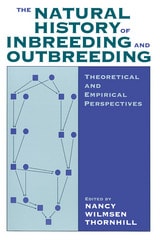
The Natural History of Inbreeding and Outbreeding
Theoretical and Empirical PerspectivesEdited by Nancy Wilmsen Thornhill
University of Chicago Press, 1993
The authors ask whether inbreeding is as problematic as biologists have thought, under what ecological conditions inbreeding occurs, and whether organisms that inbreed have mechanisms to dampen the anticipated problems of reduced genetic variation. The studies, including theoretical and empirical work on wild and captive populations, demonstrate that many plants and animals inbreed to a greater extent than biologists have thought, with variable effects on individual fitness. Graduate students and researchers in evolutionary biology, animal behavior, ecology, and conservation biology will welcome this wide-ranging collection.
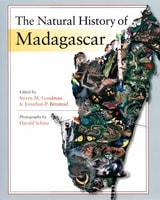
The Natural History of Madagascar
Edited by Steven M. Goodman and Jonathan P. Benstead
University of Chicago Press, 2003
The Natural History of Madagascar provides the most comprehensive, up-to-date synthesis available of this island nation's priceless biological treasures. Contributions by nearly three hundred world-renowned experts cover the history of scientific exploration in Madagascar, its geology and soils, climate, forest ecology, human ecology, marine and coastal ecosystems, plants, invertebrates, fishes, amphibians, reptiles, birds, and mammals. Detailed discussions of conservation efforts in Madagascar highlight several successful park reserve programs that could serve as models for other areas. Beautifully illustrated throughout, the book includes over one hundred color illustrations, with fifty color photos by nature photographer Harald Schütz, as well as more than three hundred black-and-white photographs and line drawings.
The Natural History of Madagascar will be the invaluable reference for anyone interested in the Malagasy environment, from biologists and conservationists to policymakers and ecotourists.
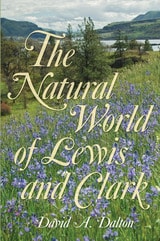
The Natural World of Lewis and Clark
David A. Dalton
University of Missouri Press, 2007
On their journey westward, Lewis and Clark demonstrated an amazing ability to identify the new plants and animals they encountered, and their observations enriched science’s understanding of the trans-Mississippi West. Others have written about their discoveries and have faithfully cataloged their findings; now a twenty-first-century biologist reexamines some of those discoveries in the light of modern science to show for the first time their lasting biological significance.
The Natural World of Lewis and Clark interprets the expedition’s findings from a modern perspective to show how advances such as DNA research, modern understanding of proteins, and the latest laboratory methods shed new light on them. David Dalton recounts the expedition’s observations and, in clear, readily accessible terms, relates them to principles of ecology, genetics, physiology, and even animal behavior.
Writing in informal language with a bit of wry humor, Dalton invites readers to imagine the West that Lewis and Clark found, revealing the dynamic features of nature and the dramatic changes that earlier peoples brought about. He explains surprising facts, ranging from why Indians used cottonwood bark as winter feed for horses to why the explorers experienced gastric distress with some foods, and even why the Expedition’s dog would have been well-advised to avoid a diet of salmon.
Dalton introduces the tools and techniques of today’s science in a way that won’t intimidate nonspecialist readers. Throughout the book he expertly balances botanical and zoological information, with coverage ranging from the extinction of large animals in North America a few thousand years ago to the expected effects of invasive species and climate change in the coming centuries.
Enhanced with unusual and informative illustrations—not only nature photography but also historical images—this book will fascinate any reader with an interest in the natural history of the American West as well as broader issues in conservation and ecology. The Natural World of Lewis and Clark tells the story behind the story of this remarkable expedition and shows that its legacy extended not only across a continent but also into our own time.
The Nature and Nurture of Love
From Imprinting to Attachment in Cold War AmericaMarga Vicedo
University of Chicago Press, 2013
The Nature of Diversity
An Evolutionary Voyage of DiscoveryDaniel R. Brooks and Deborah A. McLennan
University of Chicago Press, 2002
Daniel R. Brooks and Deborah A. McLennan argue that it is impossible to comprehend the nature of life on earth unless evolution—the history of organisms—is restored to a central position in research. They demonstrate how the phylogenetic approach can be integrated with ecological and behavioral studies to produce a richer and more complete picture of evolution. Clearly setting out the conceptual, methodological, and empirical foundations of their research program, Brooks and McLennan show how scientists can use it to unravel the evolutionary history of virtually any characteristic of any living thing, from behaviors to ecosystems. They illustrate and test their approach with examples drawn from a wide variety of species and habitats.
The Nature of Diversity provides a powerful new tool for understanding, documenting, and preserving the world's biodiversity. It is an essential book for biologists working in evolution, ecology, behavior, conservation, and systematics. The argument in The Nature of Diversity greatly expands upon and refines the arguments made in the authors' previous book Phylogeny, Ecology, and Behavior.
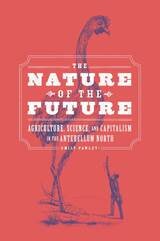
The Nature of the Future
Agriculture, Science, and Capitalism in the Antebellum NorthEmily Pawley
University of Chicago Press, 2020
The nostalgic mist surrounding farms can make it hard to write their history, encrusting them with stereotypical rural virtues and unrealistically separating them from markets, capitalism, and urban influences. The Nature of the Future dispels this mist, focusing on a place and period of enormous agricultural vitality—antebellum New York State—to examine the largest, most diverse, and most active scientific community in nineteenth-century America. Emily Pawley shows how “improving” farmers practiced a science where conflicting visions of the future landscape appeared and evaporated in quick succession. Drawing from US history, environmental history, and the history of science, and extensively mining a wealth of antebellum agricultural publications, The Nature of the Future reveals how improvers transformed American landscapes and American ideas of expertise, success, and exploitation from the ground up.

The Nazi Symbiosis
Human Genetics and Politics in the Third ReichSheila Faith Weiss
University of Chicago Press, 2010
The Faustian bargain—in which an individual or group collaborates with an evil entity in order to obtain knowledge, power, or material gain—is perhaps best exemplified by the alliance between world-renowned human geneticists and the Nazi state. Under the swastika, German scientists descended into the moral abyss, perpetrating heinous medical crimes at Auschwitz and at euthanasia hospitals. But why did biomedical researchers accept such a bargain?
The Nazi Symbiosis offers a nuanced account of the myriad ways human heredity and Nazi politics reinforced each other before and during the Third Reich. Exploring the ethical and professional consequences for the scientists involved as well as the political ramifications for Nazi racial policies, Sheila Faith Weiss places genetics and eugenics in their larger international context. In questioning whether the motives that propelled German geneticists were different from the compromises that researchers from other countries and eras face, Weiss extends her argument into our modern moment, as we confront the promises and perils of genomic medicine today.
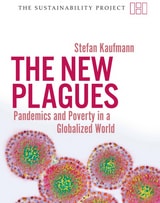
The New Plagues
Pandemics and Poverty in a Globalized WorldStefan Kaufmann
Haus Publishing, 2009
The Nick of Time
Politics, Evolution, and the UntimelyElizabeth Grosz
Duke University Press, 2004
Grosz develops her argument by juxtaposing the work of three major figures in Western thought: Charles Darwin, Friedrich Nietzsche, and Henri Bergson. She reveals that in theorizing time as an active, positive phenomenon with its own characteristics and specific effects, each of these thinkers had a profound effect on contemporary understandings of the body in relation to time. She shows how their allied concepts of life, evolution, and becoming are manifest in the work of Gilles Deleuze and Luce Irigaray. Throughout The Nick of Time, Grosz emphasizes the political and cultural imperative to fundamentally rethink time: the more clearly we understand our temporal location as beings straddling the past and the future without the security of a stable and abiding present, the more transformation becomes conceivable.

The Northeast
A Fire SurveyStephen J. Pyne
University of Arizona Press, 2019
The Northeast has its roster of great fires, beginning with dark days in the late 18th century, followed by a chronicle of conflagrations continuing as late as 1903 and 1908, with a shocking after-tremor in 1947. It hosted the nation’s first forestry schools. It organized the first interstate (and international) fire compact. And it was the Northeast that pioneered the transition to the true Big Burn—industrial combustion—as America went from burning living landscapes to burning lithic ones.
In this new book in the To the Last Smoke series, renowned fire expert Stephen J. Pyne narrates this history and explains how fire is returning to a place not usually thought of in America’s fire scene. He examines what changes in climate and land use mean for wildfire, what fire ecology means for cultural landscapes, and what experiments are underway to reintroduce fire to habitats that need it. The region’s great fires have gone; its influence on the national scene has not.
The Northeast: A Fire Survey samples the historic and contemporary significance of the region and explains how it fits into a national cartography and narrative of fire.
Included in this volume:
How the region shaped America’s understanding and policy toward fire
How fire fits into the region today and what that means for the country overall
What changes in climate, land use, and institutions may mean for northeastern fire, both wild and tame
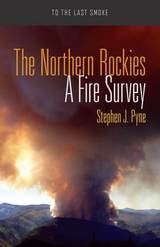
The Northern Rockies
A Fire SurveyStephen J. Pyne
University of Arizona Press, 2016
The Northern Rockies remain one of three major hearths for America’s fire culture. They hold a major fire laboratory, an equipment development center, an aerial fire depot, and a social engagement with fire—even a literature. Missoula is to fire in the big backcountry what Tallahassee is to prescribed burning and what Southern California is to urban-wildland hybrids. On its margins, Boise hosts the National Interagency Fire Center. In this structured collection of essays on the region, Stephen J. Pyne explores what makes the Northern Rockies distinctive and what sets it apart from other regions of the country. Surprisingly, perhaps, the story is equally one of big bureaucracies and of generations that encounter the region’s majestic landscapes through flame.
The Northern Rockies is part of a multivolume series describing the nation’s fire scene region by region. The volumes in To the Last Smoke also cover Florida, the Northern Rockies, the Great Plains, the Southwest, and several other critical fire regions. The series serves as an important punctuation point to Pyne’s 50-year career with wildland fire—both as a firefighter and a fire scholar. These unique surveys of regional pyrogeography are Pyne’s way of “keeping with it to the end,” encompassing the directive from his rookie season to stay with every fire “to the last smoke.”
The Oldest Living Things in the World
Rachel Sussman
University of Chicago Press, 2014
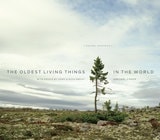
Her work is both timeless and timely, and spans disciplines, continents, and millennia. It is underscored by an innate environmentalism and driven by Sussman’s relentless curiosity. She begins at “year zero,” and looks back from there, photographing the past in the present. These ancient individuals live on every continent and range from Greenlandic lichens that grow only one centimeter a century, to unique desert shrubs in Africa and South America, a predatory fungus in Oregon, Caribbean brain coral, to an 80,000-year-old colony of aspen in Utah. Sussman journeyed to Antarctica to photograph 5,500-year-old moss; Australia for stromatolites, primeval organisms tied to the oxygenation of the planet and the beginnings of life on Earth; and to Tasmania to capture a 43,600-year-old self-propagating shrub that’s the last individual of its kind. Her portraits reveal the living history of our planet—and what we stand to lose in the future. These ancient survivors have weathered millennia in some of the world’s most extreme environments, yet climate change and human encroachment have put many of them in danger. Two of her subjects have already met with untimely deaths by human hands.
Alongside the photographs, Sussman relays fascinating – and sometimes harrowing – tales of her global adventures tracking down her subjects and shares insights from the scientists who research them. The oldest living things in the world are a record and celebration of the past, a call to action in the present, and a barometer of our future.
The Ontogeny of Information
Developmental Systems and EvolutionSusan Oyama
Duke University Press, 2000
Information, says Oyama, is thought to reside in molecules, cells, tissues, and the environment. When something wondrous occurs in the world, we tend to question whether the information guiding the transformation was pre-encoded in the organism or installed through experience or instruction. Oyama looks beyond this either-or question to focus on the history of such developments. She shows that what developmental “information” does depends on what is already in place and what alternatives are available. She terms this process “constructive interactionism,” whereby each combination of genes and environmental influences simultaneously interacts to produce a unique result. Ontogeny, then, is the result of dynamic and complex interactions in multileveled developmental systems.
The Ontogeny of Information challenges specialists in the fields of developmental biology, philosophy of biology, psychology, and sociology, and even nonspecialists, to reexamine the existing nature-nurture dichotomy as it relates to the history and formation of organisms.
The Origin and Distribution of Birds in Coastal Alaska and British Columbia
The Lost Manuscript of Ornithologist Harry S. SwarthChristopher W. Swarth
Oregon State University Press, 2022
In 2019, Christopher Swarth, Harry’s grandson and a scientist in his own right, discovered the forgotten manuscript. This book includes the original unpublished manuscript, accompanied by contextual essays from contemporary ornithologists who examine the impact and relevance of Swarth’s research on coastal bird diversity, fox sparrow migration, and the systematic puzzle of the timberline sparrow. Expedition maps display field camps and exploration routes, and species checklists illustrate the variety of birds observed at key field sites. To bring additional color and insight, The Origin and Distribution of Birds in Coastal Alaska and British Columbia also includes excerpts from Harry Swarth’s field notes, a comprehensive list of Harry Swarth’s publications, and a glossary with historic and contemporary bird names. Naturalists, ornithologists, birders, and all those who want to learn more about the natural history of the region will delight in the rediscovery of this long-lost treasure.
The Origin of Higher Taxa
Palaeobiological, Developmental, and Ecological PerspectivesT. S. Kemp
University of Chicago Press, 2015
Looking beyond the microevolutionary force of Darwinian natural selection, Kemp enters the realm of macroevolution, or evolution above the species level. From the origin of mammals to the radiation of flowering plants, these large-scale patterns—such as the rise of novel organismal design, adaptive radiations, and lineage extinctions—encompass the most significant trends and transformations in evolution. As macroevolution cannot be studied by direct observation and experiment, scientists have to rely on the outcome of evolution as evidence for the processes at work, in the form of patterns of species appearances and extinctions in a spotty fossil record, and through the nature of species extant today. Marshalling a wealth of new fossil and molecular evidence and increasingly sophisticated techniques for their study, Kemp here offers a timely and original reinterpretation of how higher taxa such as arthropods, mollusks, mammals, birds, and whales evolved—a bold new take on the history of life.
The Origins of Theoretical Population Genetics
With a New AfterwordWilliam B. Provine
University of Chicago Press, 2001
The Ornaments of Life
Coevolution and Conservation in the TropicsTheodore H. Fleming and W. John Kress
University of Chicago Press, 2013

The Ovary of Eve
Egg and Sperm and PreformationClara Pinto-Correia
University of Chicago Press, 1997
"The most wonderfully eye-opening, or imagination-opening book, as amusing as it is instructive."—Mary Warnock, London Observer
"[A] fascinating and often humorous study of a reproductive theory that flourished from the mid-17th century to the mid-18th century."—Nina C. Ayoub, Chronicle of Higher Education
"More than just a good story, The Ovary of Eve is an object lesson about the history of science: Don't trust it. . . . Pinto-Correia says she wants to tell the story of history's losers. In doing so, she makes defeat sound more appealing than victory."—Emily Eakin, Nation.
"A sparkling history of preformation as it once affected every facet of European culture."—Robert Taylor, Boston Globe
The Pale Blue Data Point
An Earth-Based Perspective on the Search for Alien LifeJon Willis
University of Chicago Press, 2025
“Here is Willis’s fundamental argument: The more we learn about Earth—our one ‘pale blue data point’ for a planet on which life has definitively arisen—the more qualified we will be to recognize signs of life elsewhere. . . . [A] joyful account.”—Steven Poole, The Wall Street Journal
A thrilling tour of Earth that shows the search for extraterrestrial life starts in our own backyard.
Is there life off Earth? Bound by the limitations of spaceflight, a growing number of astrobiologists investigate the question by studying life on our planet. Astronomer and author Jon Willis shows us how it’s done, allowing readers to envision extraterrestrial landscapes by exploring their closest Earth analogs. With Willis, we dive into the Pacific Ocean from the submersible-equipped E/V Nautilus to ponder the uncharted seas of Saturn’s and Jupiter’s moons; search the Australian desert for some of Earth’s oldest fossils and consider the prospects for a Martian fossil hunt; visit mountaintop observatories in Chile to search for the telltale twinkle of extrasolar planets; and eavesdrop on dolphins in the Bahamas to imagine alien minds.
With investigations ranging from meteorite hunting to exoplanet detection, Willis conjures up alien worlds and unthought-of biological possibilities, speculating what life might look like on other planets by extrapolating from what we can see on Earth, our single “pale blue dot”—as Carl Sagan famously called it—or, in Willis’s reframing, scientists’ “pale blue data point.”
The Paleobiological Revolution
Essays on the Growth of Modern PaleontologyEdited by David Sepkoski and Michael Ruse
University of Chicago Press, 2009
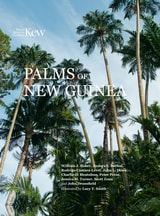
The Palms of New Guinea
William J. Baker, Anders S. Barfod, Rodrigo Camara-Leret, John L. Dowe, John Dransfield, Charlie D. Heatubun, Peter Petoe, Jessica H. Turner, and Scott Zona
Royal Botanic Gardens, Kew, 2024
From exquisite palmlets to graceful canopy giants, palms dominate the rainforests of New Guinea, one of the last tropical wilderness areas on the planet. New Guinea is the world’s largest tropical island and a globally significant biodiversity hotspot. Its extraordinary flora and remarkable 250 species of palm are vital for the people of New Guinea, who depend on them for their survival.
Palms of New Guinea is the first comprehensive account of these immensely important plants, covering their taxonomy, identification, distribution, habitat, conservation status, and much more. Alongside over 650 photographs and 250 detailed maps, botanical artist Lucy T. Smith has illustrated all species featured in Palms of New Guinea. Written by nine scientific experts, this is an essential companion for anyone studying or working in the region.
The Peregrine Returns
The Art and Architecture of an Urban Raptor RecoveryMary Hennen with Peggy Macnamara
University of Chicago Press, 2017
In The Peregrine Returns, Mary Hennen gives wings to this extraordinary conservation success story. Drawing on the beautiful watercolors of Field Museum artist-in-residence Peggy Macnamara and photos by Field Museum research assistant Stephanie Ware, as well as her own decades of work with peregrines, Hennen uses a program in Chicago as a case study for the peregrines’ journey from their devastating decline to the discovery of its cause (a thinning of eggshells caused by a by-product of DDT), through to recovery, revealing how the urban landscape has played an essential role in enabling falcons to return to the wild—and how people are now learning to live in close proximity to these captivating raptors.
Both a model for conservation programs across the country and an eye-opening look at the many creatures with which we share our homes, this richly illustrated story is an inspiring example of how urban architecture can serve not only our cities’ human inhabitants, but also their wild ones.
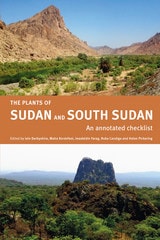
The Plants of Sudan and South Sudan
An Annotated ChecklistEdited by Iain Darbyshire, Maha Kordofani, Imadeldin Farag, Ruba Candiga, and Helen Pickering
Royal Botanic Gardens, Kew, 2014
The Plants of Sudan and South Sudan is the first comprehensive look at the plants of this region and includes nearly every known species. Each entry includes accepted scientific names, relevant synonymy, and brief habitat notes, as well as both global and regional distribution data. Also featured is a list of globally threatened plant species, their habitats, and their distribution within the region, which offers conservationists, land management agencies, and governmental departments key information on potential conservation priorities. This book will be the baseline reference for all future botanical and conservation work in the Sudan region.
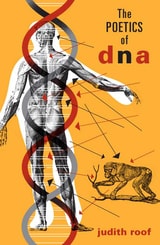
The Poetics of DNA
Judith Roof
University of Minnesota Press, 2007
How has DNA come to be seen as a cosmic truth, representative of all life, potential for all cures, repository for all identity, and end to all stories? In The Poetics of DNA, Judith Roof examines the rise of this powerful symbol and the implications of its ascendancy for the ways we think—about ourselves, about one another, and about the universe.
Descriptions of DNA, Roof argues, have distorted ideas and transformed nucleic acid into the answer to all questions of life. This hyperbolized notion of DNA, inevitably confused or conflated with the “gene,” has become a vector through which older ways of thinking can merge with the new, advancing long-discredited and insidious ideas about such things as eugenics and racial selection and influencing contemporary debates, particularly the popular press obsession with the “gay gene.” Through metaphors of DNA, she contends, racist and homophobic ideology is masked as progressive science.
Grappling with twentieth-century intellectual movements as well as contemporary societal anxieties, The Poetics of DNA reveals how descriptions of DNA and genes typify a larger set of epistemological battles that play out not only through the assumptions associated with DNA but also through less evident methods of magical thinking, reductionism, and pseudoscience.
For the first time, Roof exposes the ideology and cultural consequences of DNA and gene metaphors to uncover how, ultimately, they are paradigms used to recreate prejudices.
Judith Roof is professor of English and film studies at Michigan State University. She is the author of several books, including All about Thelma and Eve: Sidekicks and Third Wheels.
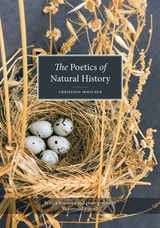
The Poetics of Natural History
Christoph Irmscher
Rutgers University Press, 2019
Early American naturalists assembled dazzling collections of native flora and fauna, from John Bartram’s botanical garden in Philadelphia and the artful display of animals in Charles Willson Peale’s museum to P. T. Barnum’s American Museum, infamously characterized by Henry James as “halls of humbug.” Yet physical collections were only one of the myriad ways that these naturalists captured, catalogued, and commemorated America’s rich biodiversity. They also turned to writing and art, from John Edward Holbrook’s forays into the fascinating world of herpetology to John James Audubon’s masterful portraits of American birds.
In this groundbreaking, now classic book, Christoph Irmscher argues that early American natural historians developed a distinctly poetic sensibility that allowed them to imagine themselves as part of, and not apart from, their environment. He also demonstrates what happens to such inclusiveness in the hands of Harvard scientist-turned Amazonian explorer Louis Agassiz, whose racist pseudoscience appalled his student William James.
This expanded, full-color edition of The Poetics of Natural History features a preface and art from award-winning artist Rosamond Purcell and invites the reader to be fully immersed in an era when the boundaries between literature, art, and science became fluid.
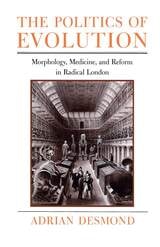
The Politics of Evolution
Morphology, Medicine, and Reform in Radical LondonAdrian Desmond
University of Chicago Press, 1990
"The Politics of Evolution is intellectual dynamite, and certainly one of the most important books in the history of science published during the past decade."—Jim Secord, Times Literary Supplement
"One of those rare books that not only stakes out new territory but demands a radical overhaul of conventional wisdom."—John Hedley Brooke, Times Higher Education Supplement

The Politics of Hazardous Waste Management
James P. Lester and Ann O M. Bowman, eds.
Duke University Press, 1983
The Politics of Women's Biology
Hubbard, Ruth
Rutgers University Press, 1990
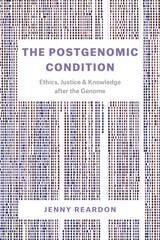
The Postgenomic Condition
Ethics, Justice, and Knowledge after the GenomeJenny Reardon
University of Chicago Press, 2017
Drawing on more than a decade of research—in molecular biology labs, commercial startups, governmental agencies, and civic spaces—Reardon demonstrates how the extensive efforts to transform genomics from high tech informatics practiced by a few to meaningful knowledge beneficial to all exposed the limits of long-cherished liberal modes of knowing and governing life. Those in the American South challenged the value of being included in genomics when no hospital served their community. Ethicists and lawyers charged with overseeing Scottish DNA and data questioned how to develop a system of ownership for these resources when their capacity to create things of value—new personalized treatments—remained largely unrealized. Molecular biologists who pioneered genomics asked whether their practices of thinking could survive the deluge of data produced by the growing power of sequencing machines. While the media is filled with grand visions of precision medicine, The Postgenomic Condition shares these actual challenges of the scientists, entrepreneurs, policy makers, bioethicists, lawyers, and patient advocates who sought to leverage liberal democratic practices to render genomic data a new source of meaning and value for interpreting and caring for life. It brings into rich empirical focus the resulting hard on-the-ground questions about how to know and live on a depleted but data-rich, interconnected yet fractured planet, where technoscience garners significant resources, but deeper questions of knowledge and justice urgently demand attention.
The Powers That Be
Global Energy for the Twenty-first Century and BeyondScott L. Montgomery
University of Chicago Press, 2010
Thirty years ago, our global energy landscape did not look remarkably different from what it does today. Three or four decades from now, it certainly will: dwindling oil reserves will clash with skyrocketing demand, as developing nations around the world lead their citizens into the modern energy economy, and all the while, the grave threat of catastrophic climate change looms ever larger. Energy worries are at an all-time high—just how will we power our future?
With The Powers That Be, Scott L. Montgomery cuts through the hype, alarmism, and confusion to give us a straightforward, informed account of where we are now, and a map of where we’re going. Starting with the inescapable fact of our current dependence on fossil fuels—which supply 80% of all our energy needs today—Montgomery clearly and carefully lays out the many alternative energy options available, ranging from the familiar, like water and solar, to such nascent but promising sources as hydrogen and geothermal power. What is crucial, Montgomery explains, is understanding that our future will depend not on some single, wondrous breakthrough; instead, we should focus on developing a more diverse, adaptable energy future, one that draws on a variety of sources—and is thus less vulnerable to disruption or failure.
An admirably evenhanded and always realistic guide, Montgomery enables readers to understand the implications of energy funding, research, and politics at a global scale. At the same time, he doesn’t neglect the ultimate connection between those decisions and the average citizen flipping a light switch or sliding behind the wheel of a car, making The Powers That Be indispensible for our ever-more energy conscious age.
The Prairie Garden
Seventy Native Plants You Can Grow in Town or CountryJ. Robert Smith with Beatrice S. Smith
University of Wisconsin Press, 1980
Prairie plants are among the toughest of all ornamentals. While they fascinate gardeners with their beauty and versatility, they require little maintenance. They are highly resistant to insect and disease damage, and they need not be replanted every year.
In recent years, the idea of growing prairie plants has gained increasing appeal among gardeners. Bob and Beatrice Smith have prepared this practical growing guide—based on their more than fourteen years of experience and experimentation—for all people who wish to grow prairie plants. The Smiths, who have grown all the plants they discuss here, share their wealth of experience with the reader. They recommend the best sites, tell how to plan and prepare the site and how to treat and plant seeds, and share important tips on propagation, transplanting, and managing the prairie garden or landscape. To aid in both planning and identification, the book includes full-color illustrations of all seventy plants.
The Prehispanic Ethnobotany of Paquimé and Its Neighbors
Paul E. Minnis and Michael E. Whalen
University of Arizona Press, 2020
This volume is the first large-scale investigation of the prehispanic ethnobotany of this important ancient site and its neighbors. The authors examine ethnobotanical relationships during Medio Period, AD 1200–1450, when Paquimé was at its most influential. Based on two decades of archaeological research, this book examines uses of plants for food, farming strategies, wood use, and anthropogenic ecology. The authors show that the relationships between plants and people are complex, interdependent, and reciprocal. This volume documents ethnobotanical relationships and shows their importance to the development of the Paquimé polity.
How ancient farmers made a living in an arid to semi-arid region and the effects their livelihood had on the local biota, their relations with plants, and their connection with other peoples is worthy of serious study. The story of the Casas Grandes tradition holds valuable lessons for humanity.
The Probiotic Planet
Using Life to Manage LifeJamie Lorimer
University of Minnesota Press, 2020
Assesses a promising new approach to restoring the health of our bodies and our planet
Most of us are familiar with probiotics added to milk or yogurt to improve gastrointestinal health. In fact, the term refers to any intervention in which life is used to manage life—from the microscopic, like consuming fermented food to improve gut health, to macro approaches such as biological pest control and natural flood management. In this ambitious and original work, Jamie Lorimer offers a sweeping overview of diverse probiotic approaches and an insightful critique of their promise and limitations.
During our current epoch—the Anthropocene—human activity has been the dominant influence on climate and the environment, leading to the loss of ecological abundance, diversity, and functionality. Lorimer describes cases in which scientists and managers are working with biological processes to improve human, environmental, and even planetary health, pursuing strategies that stand in contrast to the “antibiotic approach”: Big Pharma, extreme hygiene, and industrial agriculture. The Probiotic Planet focuses on two forms of “rewilding” occurring on vastly different scales. The first is the use of keystone species like wolves and beavers as part of landscape restoration. The second is the introduction of hookworms into human hosts to treat autoimmune disorders. In both cases, the goal is to improve environmental health, whether the environment being managed is planetary or human. Lorimer argues that, all too often, such interventions are viewed in isolation, and he calls for a rethinking of artificial barriers between science and policy. He also describes the stark and unequal geographies of the use of probiotic approaches and examines why these patterns exist.
The author’s preface provides a thoughtful discussion of the COVID-19 pandemic as it relates to the probiotic approach. Informed by deep engagement with microbiology, immunology, ecology, and conservation biology as well as food, agriculture, and waste management, The Probiotic Planet offers nothing less than a new paradigm for collaboration between the policy realm and the natural sciences.
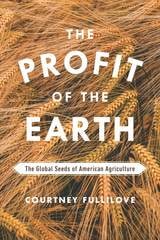
The Profit of the Earth
The Global Seeds of American AgricultureCourtney Fullilove
University of Chicago Press, 2017
Organized into three thematic parts, The Profit of the Earth is a narrative history of the collection, circulation, and preservation of seeds. Fullilove begins with the political economy of agricultural improvement, recovering the efforts of the US Patent Office and the nascent US Department of Agriculture to import seeds and cuttings for free distribution to American farmers. She then turns to immigrant agricultural knowledge, exploring how public and private institutions attempting to boost midwestern wheat yields drew on the resources of willing and unwilling settlers. Last, she explores the impact of these cereal monocultures on biocultural diversity, chronicling a fin-de-siècle Ohio pharmacist’s attempt to source Purple Coneflower from the diminishing prairie. Through these captivating narratives of improvisation, appropriation, and loss, Fullilove explores contradictions between ideologies of property rights and common use that persist in national and international development—ultimately challenging readers to rethink fantasies of global agriculture’s past and future.
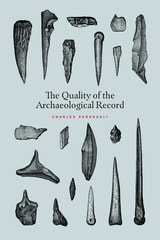
The Quality of the Archaeological Record
Charles Perreault
University of Chicago Press, 2019
In The Quality of the Archaeological Record, Charles Perreault shows that archaeology not only faces a parallel problem, but may also find a model in the rise of paleobiology for a shift in the science and theory of the field. To get there, he proposes a more macroscale approach to making sense of the archaeological record, an approach that reveals patterns and processes not visible within the span of a human lifetime, but rather across an observation window thousands of years long and thousands of kilometers wide. Just as with the fossil record, the archaeological record has the scope necessary to detect macroscale cultural phenomena because it can provide samples that are large enough to cancel out the noise generated by micro-scale events. By recalibrating their research to the quality of the archaeological record and developing a true macroarchaeology program, Perreault argues, archaeologists can finally unleash the full contributive value of their discipline.
The Quarterly Review of Biology, volume 100 number 1 (March 2025)
The University of Chicago Press
University of Chicago Press Journals, 2025
The Quarterly Review of Biology, volume 100 number 2 (June 2025)
The University of Chicago Press
University of Chicago Press Journals, 2025
The Quarterly Review of Biology, volume 100 number 3 (September 2025)
The University of Chicago Press
University of Chicago Press Journals, 2025
The Quarterly Review of Biology, volume 100 number 4 (December 2025)
The University of Chicago Press
University of Chicago Press Journals, 2025
The Quarterly Review of Biology, volume 101 number 1 (March 2026)
The University of Chicago Press
University of Chicago Press Journals, 2026
The Quarterly Review of Biology, volume 101 number 2 (June 2026)
The University of Chicago Press
University of Chicago Press Journals, 2026
The Quarterly Review of Biology, volume 101 number 3 (September 2026)
The University of Chicago Press
University of Chicago Press Journals, 2026
The Quarterly Review of Biology, volume 96 number 3 (September 2021)
The University of Chicago Press
University of Chicago Press Journals, 2021
The Quarterly Review of Biology, volume 96 number 4 (December 2021)
The University of Chicago Press
University of Chicago Press Journals, 2021
The Quarterly Review of Biology, volume 97 number 1 (March 2022)
The University of Chicago Press
University of Chicago Press Journals, 2022
The Quarterly Review of Biology, volume 97 number 2 (June 2022)
The University of Chicago Press
University of Chicago Press Journals, 2022
The Quarterly Review of Biology, volume 97 number 3 (September 2022)
The University of Chicago Press
University of Chicago Press Journals, 2022