Results by title
905 books match the query 'Literary' and 299 start with t
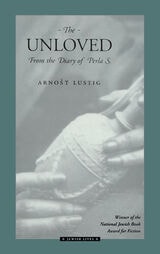
The Unloved
From the Diary of Perla S.Arnost Lustig
Northwestern University Press, 1996
Perla S. is a beautiful seventeen-year-old girl who, while interred in the Theresienstadt concentration camp, becomes a prostitute. Capturing Perla's voice through a series of diary entries, Arnost Lustig shows how she maintains her integrity, honesty, and hope amidst lies and horror. This first paperback edition has been extensively revised and expanded by the author.
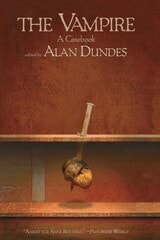
The Vampire
A CasebookEdited by Alan Dundes
University of Wisconsin Press, 1998
Vampires are the most fearsome and fascinating of all creatures of folklore. For the first time, detailed accounts of the vampire and how its tradition developed in different cultures are gathered in one volume by eminent folklorist Alan Dundes. Eleven leading scholars from the fields of Slavic studies, history, anthropology, and psychiatry unearth the true nature of the vampire from its birth in graveyard lore to the modern-day psychiatric patient with a penchant for drinking blood.
The Vampire: A Casebook takes this legend out of the realm of literature and film and back to its dark beginnings in folk traditions. The essays examine the history of the word “vampire;” Romanian vampires; Greek vampires; Serbian vampires; the physical attributes of vampires; the killing of vampires; and the possible psychoanalytic underpinnings of vampires. Much more than simply a scary creature of the human imagination, the vampire has been and continues to haunt the lives of all those who encounter it—in reality or in fiction.
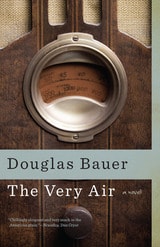
The Very Air
A NovelDouglas Bauer
University of Iowa Press, 2014
The Very Air is a compelling exploration of human motives and hidden meanings. It is a detailed picture of America’s myth of the rugged individual in the psychological and narrative tradition of The Great Gatsby and Citizen Kane. With a resonant sense of the period and culture, Douglas Bauer evokes the freewheeling feel of the old Southwest in the charlatans of our own era. The Very Air shows, through storytelling both exhilarating and chilling, that the past is prologue and that our personal histories indeed shape the course of our individual futures.
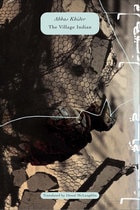
The Village Indian
Abbas Khider
Seagull Books, 2019
From Iraq via Northern Africa through Europe and back again, Abbas Khider deftly blends the tragic with the comic, and the grotesque with the ordinary, in order to tell the story of suffering the real and brutal dangers of life as a refugee—and to remember the haunting faces of those who did not survive the journey. This is a stunning piece of storytelling, a novel of unusual scope that brings to life the endless cycle of illegal entry and deportation that defines life for a vulnerable population living on the margins of legitimate society. Translated by Donal McLaughlin, The Village Indian provides what every good translation should: a literary looking glass between two cultures, between two places, between East and West.
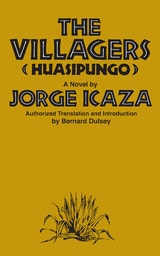
The Villagers
Jorge Icaza
Southern Illinois University Press, 1973
The Villagers is a story of the ruthless exploitation and extermination of an Indian village of Ecuador by its greedy landlord. First published in 1934, itis here available for the first time in an authorized English translation.
A realistic tale in the best tradition of the novels of social protest of Zola, Dostoevsky, José Eustasio Rivera, and the Mexican novels of the Revolution, The Villagers (Huasipungo) shocked and horrified its readers, and brought its author mingled censure and acclaim, when itwas first published in 1934.
Deeply moving in the dramatic intensity of its relentless evolution and stark human suffering, Icaza’s novel has been translated into eleven foreign languages, including Russian and Chinese, and has gone through numerous editions in Spanish, including a revised and enlarged edition in 1953,on which this translation is based, but ithas never before been authorized for translation into English. His first novel, but not his first published work, The Villagers is still considered by most critics as Icaza’s best, and itis widely acclaimed as one of the most significant works in contemporary Latin American literature.
Thirty years after its original publication in Ecuador, The Villagers still carries a powerful message for the contemporary world and an urgent warning. The conditions here portrayed prevail in these areas, even today. The Villagers is an indictment of the latifundista system and a caustic picture of the native worker who, with little expectation from life, finds himself a victim of an antiquated feudal system aided and abetted by a grasping clergy and an indifferent government.
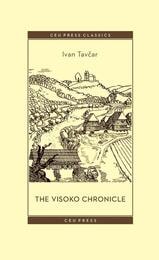
The Visoko Chronicle
Ivan Tavcar
Central European University Press, 2022
This historical novel—Visoška kronika in the Slovene original—is about two generations of the owners of the Visoko estate in the Duchy of Carniola, a predominantly Slovene province of the Habsburg Empire, in the seventeenth century. The events of the estate and the fate of its owners are affected by witchcraft persecutions, the mistreatment of Protestants, and the Thirty Years’ War. These themes are key to the construction of a Slovene national identity, which was going through a decisive phase as Tavčar was writing. By the time the novel was released in 1919, his nation had left the Habsburg Crown for the new Kingdom of Serbs, Croats, and Slovenes.
The work is both romantic and realistic. The deeply romantic motive of crime, repentance, and punishment intertwines the lives of father and son. The very acquisition of the estate is connected to a murder, which casts a long shadow over the next generation. Tavčar insists on the principle of man’s full responsibility for his acts, which can be repaired with action and determination. The author’s bleak realistic description of the farm life at Visoko reflects his polemical view of the Slovene farmer of his time.
The Vortex
A NovelJosé Eustasio Rivera
Duke University Press, 2018
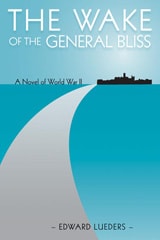
The Wake of the General Bliss
A Novel of World War IIEdward Lueders
University of Utah Press, 2008
The ship becomes a complex metaphor for the thousands of men aboard and, by extension, for all of us who exist both as individuals and as parts of the human community. These motifs are developed through the interplay of three men aboard ship, Staff Sgt. LeRoy Warner, Sgt. Mark Reiter, and Sgt. Stanley Norman, who entertain troops as a jazz trio. These GI musicians improvise through solo sections in which each reflects hauntingly on his past and dreams of his future. As they search for meaning beyond subjectivism, beyond suffering and randomness, their music is about the possibilities for harmony.
Although miscues, counterbeats, and dissonance apparently mock our efforts to break out of ourselves, sometimes, however fleetingly, everything falls into place. Then the prose of our lives turns unexpectedly to poetry and we experience an exhilarating unity.
The Wall Jumper
A Berlin StoryPeter Schneider
University of Chicago Press, 1998
When the Berlin Wall was still the most tangible representation of the Cold War, Peter Schneider made this political and ideological symbol into something personal, that could be perceived on a human level, from more than one side. In Schneider's Berlin, real people cross the Wall not to defect but to quarrel with their lovers, see Hollywood movies, and sometimes just because they can't help themselves—the Wall has divided their emotions as much as it has their country. This unforgettable novel, originally published in 1982, takes us back to a time when the Cold War seemed to have no end in sight and the Wall loomed over everyday life on both sides of Berlin.
The Wandering Jew
Stefan Heym
Northwestern University Press, 1999
Heym introduces both Ahasverus and Lucifer as angels cast out of heaven for their opinions on God's order. Their respective oppositions continue throughout the rest of time: Ahasverus remains defiant through protest rooted in love and a faith in progress, while Lucifer is rebellious by means of his old, familiar methods. In a funny eternity of run-ins, debates, and meddling with characters such as Christ, a disciple of Luther, and a Marxist professor in East Germany, Ahasverus and Lucifer struggle on, awaiting the Second Coming.
The Waters of Star Lake
A NovelSara Rath
University of Wisconsin Press, 2012
Newly widowed Natalie Waters expects only nostalgia and solitude at her quiet, rustic cabin. But the wilderness conceals more than one perilous mystery. Where in Wisconsin’s Northwoods did the notorious gangster John Dillinger hide $210,000 following a violent FBI shootout? And why do the local timberwolves incite so much rage among Natalie’s neighbors?
As predators circle and howl in the dark, Ginger, the bartender at the nearby Star Lake Saloon, draws Natalie deep into the secrets not only of Dillinger but of the ecologies of family, forest, and heart. With the reluctant support of her granddaughter and advice from a handsome wolf biologist, Natalie is forced to choose between adversity and adventure.
Sara Rath continues her popular Northwoods saga in this affirming and often humorous tale of romance, betrayal, and danger.
The Whole of the Moon
A NovelBrian Rogers
University of Nevada Press, 2017
An actor sits poolside waiting to hear whether he has been cast in a television pilot. Two kids ditch school in 1964 and go for a hike in the woods that turns dangerous. A woman named Dot remembers her husband who spent years working on a musical adaptation of The Great Gatsby. A young woman Felicity deals with the consequences of an unexpected pregnancy. Mike, a former high school star, attends an open tryout for the California Angels baseball team. And a boarding school teacher tells the story of his cousin, a social climber who has disappeared in the wake of a murder. These are the characters that populate The Whole of the Moon. Brian Rogers’ novel is about determination and failure and life in Southern California away from the red carpet.
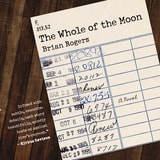
The Whole of the Moon
A NovelBrian Rogers
University of Nevada Press, 2017
An actor sits poolside waiting to hear whether he has been cast in a television pilot. Two kids ditch school in 1964 and go for a hike in the woods that turns dangerous. A woman named Dot remembers her husband who spent years working on a musical adaptation of The Great Gatsby. A young woman Felicity deals with the consequences of an unexpected pregnancy. Mike, a former high school star, attends an open tryout for the California Angels baseball team. And a boarding school teacher tells the story of his cousin, a social climber who has disappeared in the wake of a murder. These are the characters that populate The Whole of the Moon. Brian Rogers’ novel is about determination and failure and life in Southern California away from the red carpet.
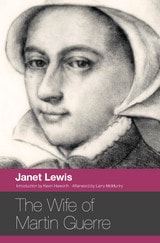
The Wife of Martin Guerre
Janet Lewis
Ohio University Press, 2013
In this new edition of Janet Lewis’s classic short novel, The Wife of Martin Guerre, Swallow Press executive editor Kevin Haworth writes that Lewis’s story is “a short novel of astonishing depth and resonance, a sharply drawn historical tale that asks contemporary questions about identity and belonging, about men and women, and about an individual’s capacity to act within an inflexible system.” Originally published in 1941, The Wife of Martin Guerre has earned the respect and admiration of critics and readers for over sixty years.
Based on a notorious trial in sixteenth-century France, this story of Bertrande de Rols is the first of three novels making up Lewis’s Cases of Circumstantial Evidence suite (the other two are The Trial of Sören Qvist and The Ghost of Monsieur Scarron).
Swallow Press is delighted and honored to offer readers beautiful new editions of all three Cases of Circumstantial Evidence novels, each featuring a new introduction by Kevin Haworth.
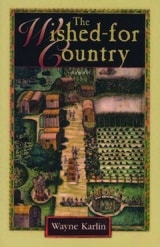
The Wished For Country
Wayne Karlin
Northwestern University Press, 2002
The stories of these three men, the women who love them, and the community they form, bring to vivid life the experiences of those who came to America pulled by a dream of what could be shaped from an emptiness that embodied promise, of those who were unwillingly brought to be the instruments of that dream, and of those who saw the shape of their world forever changed by the coming of the Europeans.
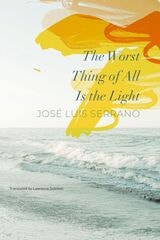
The Worst Thing of All Is the Light
José Luis Serrano
Seagull Books, 2023
The Worst Thing of All Is the Light tells two stories. First, that of the friendship of two heterosexual men, Koldo and Edorta, through the decades of the late twentieth century in Spain’s Basque Country. In the book Edorta writes in order to try and save from oblivion his relationship with Koldo—a bond for which the word “friendship” falls short yet for which he is too afraid to use the word “love.” It is the story of two men who are in love and don’t know it, or don’t want to know it. The second story is that of its author, José Luis Serrano, in the present day as he enjoys his summer holiday in the same Basque Country and talks with his husband at length about many different things, but mostly about how to narrate the relationship of Koldo and Edorta, two men who did not allow themselves to construct the domestic life that their counterparts enjoy today. Together these stories show a love that the lovers hope will outlive them, a love that is the same even if we give it different labels.
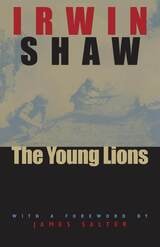
The Young Lions
Irwin Shaw
University of Chicago Press, 2000
In the immediate aftermath of World War II, countless American writers attempted to use fiction to convey the complicated experience they'd just undergone. Few of the novels that emerged from that period were as ambitious and powerful as The Young Lions, a sweeping, dramatic account of war from the point of view of ordinary solders that depicts the danger, excitement, trauma, and loss of a no-holds-barred global war.
When Irwin Shaw published The Young Lions, he was known solely as a writer of short stories, and his panoramic, detailed, unforgettable account of the war was met with nothing short of awe. Shaw tells his story from the points of view of a perceptive young Nazi, a jaded American film producer, and a shy Jewish boy just married to the love of his life. Together they enable us to see, decades lateer, as no other novelist has since, the scope, confusion, and complexity of war.
This is a landmark novel that Washington Post critic Jonathan Yardley ranked with wartime classics like From Here to Eternity, The Naked and the Dead, and The Caine Mutiny. As James Salter writes in his foreword, "The Second World War was the central event of Shaw’s generation. The writers who stand in some glory about its forgotten battlefields and whose novels came from firsthand knowledge—Mailer, heller, James Jones, Michener—include, indomitable in their midst. Irwin Shaw. He need not to have bowed to any of them then, or, if he were still alive, now."
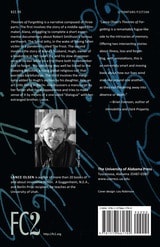
Theories of Forgetting
Lance Olsen
University of Alabama Press, 2014
Theories of Forgetting is a narrative in three parts. The first is the story of Alana, a filmmaker struggling to complete a short documentary about Robert Smithson’s famous earthwork, The Spiral Jetty, located where the Great Salt Lake meets the desert. Alana falls victim to a pandemic called The Frost, whose symptoms include an increasing sensation of coldness and growing amnesia. The second involves Alana’s husband, Hugh, owner of a rare-and-used bookstore in Salt Lake City, and his slow disappearance across Jordan while on a trip both to remember and to forget Alana’s death. The third involves marginalia added to Hugh’s section by his daughter, Aila, an art critic living in Berlin. Aila discovers a manuscript by her father after his disappearance and tries to make sense of it by means of a one-sided “dialogue” with her brother, Lance.
Each page of the novel is divided in half. Alana’s narrative runs across the top of the page, from back to front, while Hugh’s and his daughter’s tale runs “upside down” across the bottom of the page, from front to back. How a reader initially happens to pick up Theories of Forgetting determines which narrative is read first, and thereby establishing the reader’s meaning-making of the novel.
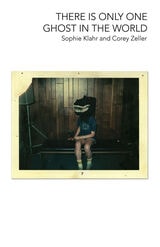
There Is Only One Ghost in the World
Sophie Klahr and Corey Zeller
University of Alabama Press, 2023
One ghost, infinite echoes—where memory, myth, and identity collide.
There Is Only One Ghost in the World follows the fragmented meditations of a multilayered voice, an intimate witness to our times that delicately and bluntly reveals the best and the worst in all of us. It is a kaleidoscopic investigation into the loneliness of modern American life as well as family relationships, exploring the truths and lies that families tell one another, and why, with empathy, sorrow, and humility. We travel from the oil-slicked beaches of California and the alleys of New Orleans to the steps of the Capitol. Here: the raw nerves of gender and identity. Here: the lessons of heartbreak. Here: true myths, fake news, and old rumors. Here: the legacies of art and incisors of seasons. Incompletable Venn diagrams, sibling porn stars, addiction and climate change, shootings and stolen x-rays, the lyrics of disco and the taxonomy of slot machines, steel monoliths and 99-cent stores, last meals and unearthed mummies. There Is Only One Ghost in the World is a book about what happened just before you woke up, and what happened just after. And what happened next.
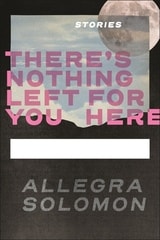
There's Nothing Left for You Here
Allegra Solomon
Four Way Books, 2025
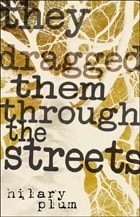
They Dragged Them through the Streets
A NovelHilary Plum
University of Alabama Press, 2013
They Dragged Them Through the Streets is a bold meditation on idealism, anger, and the American home front’s experience of today’s wars. This is an innovative work in the great tradition of war literature and a singular chronicle of one generation’s conflicts.
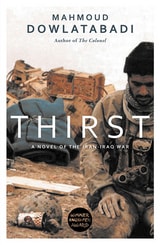
Thirst
Mahmoud Dowlatabadi
Haus Publishing, 2014
At the same time, on the other side of the border, an Iranian author writes the story of the same troop of soldiers but from an Iranian perspective. He, likewise, is interrupted, not by external forces, but by memories of his first encounter with a gun.
Told in a kaleidoscopic style that weaves between the ongoing battle and the struggles of the writers, Thirst is rich with dark humour and surreal images. The emphasis on maintaining humanity and individual identity during war shows, once again, why Mahmoud Dowlatabadi is the most important Iranian writer of the last century.
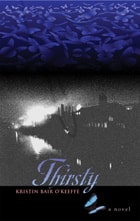
Thirsty
A NovelKristin Bair O’Keeffe
Ohio University Press, 2009
It is 1883, and all of Klara Bozic’s girlish dreams have come crashing down as she arrives in Thirsty, a gritty steel town carved into the slopes above the Monongahela River just outside of Pittsburgh. She has made a heartbreaking discovery. Her new husband Drago is as abusive as the father she left behind in Croatia.
In Kristin Bair O’Keeffe’s debut novel, Klara’s life unfolds over forty years as she struggles to find her place in a new country where her survival depends on the friends who nurture her: gutsy, funny Katherine Zupanovic, who isn‘t afraid of Drago’s fist; BenJo, the only black man in Thirsty to have his own shop; and strangely enough, Old Man Rupert, the town drunk.
Thirsty follows a chain of unlikely events that keep Klara’s spirit aloft: a flock of angelic butterflies descends on Thirsty; Klara gives birth to her first child in Old Man Rupert’s pumpkin patch; and BenJo gives her a talking bird. When Klara’s daughter marries a man even more brutal than Drago, Klara is forced to act. If she doesn’t finally break the cycle of violence in her family, her granddaughters will one day walk the same road, broken and bruised. As the threads that hold her family together fray and come undone, Klara has to decide if she has the courage to carve out a peaceful spot in the world for herself and her girls.
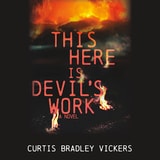
This Here Is Devil's Work
A NovelCurtis Bradley Vickers
University of Nevada Press, 2021
A twelve-year veteran of the fireline, Morgan believes he knows what his teenage half-brother (Jeremy) needs to do to shrug off boyhood: spend a single season fighting forest fires to earn money for auto mechanic school. But when Jeremy joins the Ruby Mountain Hotshots and earns the respect and admiration of their fire boss (Bailey), Morgan must battle his own demons before they destroy him.
Meanwhile, life hasn’t been easy on Jacklynn—she longs to escape the small town in Montana where she has lived her whole life and reunite with her daughter and grandson in Tucson. Jacklynn wants to make up for a lifetime of missteps by protecting the boy and making sure her daughter stays on course. On the same day that an attractive stranger waltzes into her life, an opportunity for life-changing money presents itself in the form of a dozen pregnant heifers. The only trouble is, they aren’t hers—not yet, anyway.
Morgan and Jacklynn’s paths cross when lightning ignites a blaze in the untamed Montana wilderness, and their choices force each other into
the fury.
Set against the backdrop of wildfires raging across the West and the firefighters who continue to put their lives on the line, This Here Is Devil’s Work explores how love and loneliness can sour, and how they can eventually lead to desperate and self-destructive acts even for those people we consider heroic.
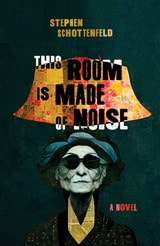
This Room Is Made of Noise
Stephen Schottenfeld
University of Wisconsin Press, 2023
Feeling both delighted by and guilty about his good fortune, Don returns most of the money to the original owner, Millie Prall. He also offers to make a few repairs around her deteriorating house—making it easier and safer for her to navigate the space in the wake of her husband's death. As Millie’s dementia worsens, Don finds his life more and more enmeshed with hers, driving her to medical appointments, shopping for her groceries, cooking her meals, handling her finances, and increasingly overseeing her care—while simultaneously trying to repair his relationships with his father, his ex-wife, and his stepkids.
In this quietly mesmerizing novel, no one, including the protagonist, is ever entirely sure of their motivations. Existing in the liminal spaces between altruism and greed, This Room Is Made of Noise deftly explores the shades of gray that lie between our desires and our demons.
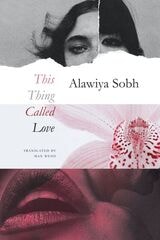
This Thing Called Love
Alawiya Sobh
Seagull Books, 2023
Just before the outbreak of the July 2006 war in Lebanon, a middle-aged woman named Nahla has gone missing. Distraught, besieged, and without any leads, Nahla’s dearest friends—Suad, Azizeh, Hoda, Nadine, and the narrator Alawiya—band together to console one another. They reminisce about the better days of their youth, lifetimes of romantic turmoil, the trouble with love, and their inescapable confrontation with death. Unsure whether Nahla has been killed in the fighting, fled the country, or disappeared into the oblivion of Alzheimer’s, Alawiya pieces together Nahla’s intimate past, simultaneously illuminating the jagged history of modern Lebanon. Through searching discussions with Nahla’s closest confidante Suad, tenacious investigation, and an imaginative effort to reconstruct the life of another, Alawiya might just find a way to bring Nahla back.
In This Thing Called Love, celebrated Lebanese novelist Alawiya Sobh takes the war between Israel and Hizballah as the backdrop for a heart-wrenching story about love, loss, sex, friendship between women, and the universal struggle to come to terms with mortality.
Three Chestnut Horses
Margita Figuli
Central European University Press, 2014
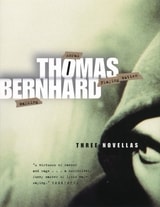
Three Novellas
Thomas Bernhard
University of Chicago Press, 2003
Uninitiated readers should consider Three Novellas a passport to the absurd, dark, and uncommonly comic world of Bernhard. Two of the three novellas here have never before been published in English, and all of them show an early preoccupation with the themes of illness and madness, isolation, and tragic friendships that would obsess Bernhard throughout his career. Amras, one of his earliest works, tells the story of two brothers, one epileptic, who have survived a family suicide pact and are now living in a ruined tower, struggling with madness, trying either to come fully back to life or finally to die. In Playing Watten, the narrator, a doctor who lost his practice due to morphine abuse, describes a visit paid him by a truck driver who wanted the doctor to return to his habit of playing a game of cards (watten) every Wednesday—a habit that the doctor had interrupted when one of the players killed himself. The last novella, Walking, records the conversations of the narrator and his friend Oehler while they walk, discussing anything that comes to mind but always circling back to their mutual friend Karrer, who has gone irrevocably mad. Perhaps the most overtly philosophical work in Bernhard's highly philosophical oeuvre, Walking provides a penetrating meditation on the impossibility of truly thinking.
Three Novellas offers a superb introduction to the fiction of perhaps the greatest unsung hero of twentieth-century literature. Rarely have the words suffocating, intense, and obsessive been meant so positively.
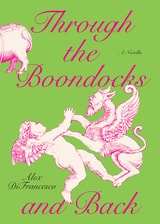
Through the Boondocks and Back
A NovellaAlex DiFrancesco
Northwestern University Press, 2027
A queer, rollicking retelling of The Odyssey
Zane Viaggio’s life has been fraught since leaving New York City for Cleveland. Uprooted and missing his life in the city, he escapes into parties and pills. When he wakes up vomiting several days in a row, he’s convinced by his three drag queen roommates and his best trans-femme friend to get a pregnancy test, learning that not only is he pregnant, but pregnant in an Ohio that has just outlawed abortion. Zane must then embark on an epic journey around Lake Erie and its surrounding towns on a stolen jet ski to find the man who impregnated him, get the money to go back to New York City for an abortion, and get his life back to normal. In this queer and trans retelling of The Odyssey, Zane encounters all sorts of strange and challenging characters—including one-eyed cats, force-femmed prophets, and his own chosen family—who help him discover that, perhaps, finding home is the greatest journey of all.
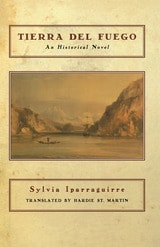
Tierra del Fuego
Sylvia Iparraguirre
Northwestern University Press, 2000
Tierra del Fuego has already won two major awards for the Spanish edition: The Sor Juana Inés de la Cruz Award for the best work of fiction written by a woman and The Best Book of the Year Award at the Buenos Aires Book Fair.
Time Commences in Xibalbá
Luis de Lión; Translated by Nathan C. Henne
University of Arizona Press, 2012

Time Gifts
Zoran Zivkovic
Northwestern University Press, 2000
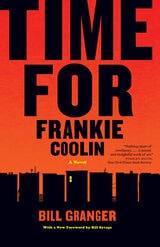
Time for Frankie Coolin
A NovelBill Granger
University of Chicago Press, 2014
Time for Frankie Coolin tells the story of a plasterer turned landlord in Chicago who, in the late 1970s, buys abandoned buildings and makes them just habitable enough that he can charge minimal rent to his mostly black tenants. Frankie—both a tough guy in the trades and a family man—has done well by his wife and kids, moving them to a house in the suburbs. But a casual favor for his wife’s cousin—allowing the man to store some crates in an empty building—and a random act of arson set in motion a cascade of crises, including a menacing pair of G-men and the looming threat of prison if Frankie doesn’t talk. But since talking has never been one of Frankie’s strengths, he copes as he always has: by trying to tough it out on his own.
Calling to mind such gritty poets of the urban scene as George V. Higgins and Nelson Algren, Time for Frankie Coolin is both a psychological thriller and a ’70s Chicago period piece that shines a surprisingly sympathetic light on the often ignored stories of the people who lived, worked, and died at the city’s margins.
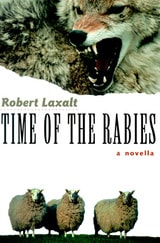
Time of the Rabies
A NovellaRobert Laxalt
University of Nevada Press, 2000
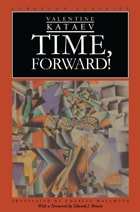
Time, Forward!
Valentin Kataev
Northwestern University Press, 1995
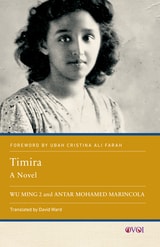
Timira
A NovelWu Ming Wu Ming 2
Rutgers University Press, 2027
Isabella Marincola lived between two cultures. The child of an Italian military officer father and a Somali mother, she was never fully part of either culture. In Somalia, she was seen as a child of the ruling colonizers, while in Italy her darker skin made her an object of both fascination and contempt. Even as she worked as an actress and model in postwar Italy, she was valued for her exotically beautiful body, not her keen mind or her captivating voice.
Titled after Isabella’s Somali name, Timira is a unique combination of novel, archival sources, and oral history. It finally gives her a chance to articulate her experiences of being a Black Italian woman in different epochs of Italian history, from Fascism to the 1990s, in all of which italianità was assumed to be exclusively white.
Cowritten by her son Antar Mohamed Marincola and a founding member of the Wu Ming writers’ collective, it is based on a series of writings and interviews Isabella gave towards the end of her long, eventful life. A compelling novel rooted in truth, Timira reflects on Italy’s colonial legacy and ingrained racism, while telling the story of a courageous woman and her struggles to assert herself in a nation unprepared to accommodate its Black citizens.
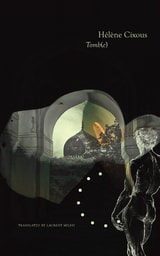
Tomb(e)
Hélène Cixous
Seagull Books, 2014
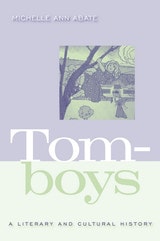
Tomboys
A Literary and Cultural HistoryMichelle Ann Abate
Temple University Press, 2008
Starting with the figure of the bold, boisterous girl in the mid-19th century and ending with the “girl power” movement of the 1990’s, Tomboys is the first full-length critical study of this gender-bending code of female conduct. Michelle Abate uncovers the origins, charts the trajectory, and traces the literary and cultural transformations that the concept of “tomboy” has undergone in the United States.
Abate focuses on literature including Louisa May Alcott's Little Women and Carson McCullers's The Member of the Wedding and films such as Peter Bogdanovich's Paper Moon and Jon Avnet's Fried Green Tomatoes. She also draws onlesser-known texts like E.D.E.N. Southworth's once wildly popular 1859 novel The Hidden Hand, Cold War lesbian pulp fiction, and New Queer Cinema from the 1990s.
Tomboys also explores the gender and sexual dynamics of tomboyism, and offers intriguing discussions of race and ethnicity's role in the construction of the enduring cultural archetype. Abate’s insightful analysis provides useful, thought-provoking connections between different literary works and eras. The result demystifies this cultural phenomenon and challenges readers to consider tomboys in a whole new light.
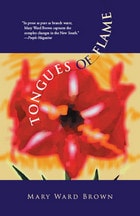
Tongues of Flame
Mary Ward Brown
University of Alabama Press, 1993
Winner of the PEN/Hemingway Foundation Award
These beautifully crafted stories depict the changing relationships between black and white southerners, the impact of the civil rights movement, and the emergence of the New South.
Mary Ward Brown is a storyteller in the tradition of such powerful 20th-century writers as William Faulkner, Harper Lee, Flannery O'Connor, and Eudora Welty-writers who have explored and dramatized the tension between the inherited social structure of the South and its contemporary dissolution. With Tongues of Flame, her first collection of short stories, Brown bares the awkward, sometimes hopeful, and often tragic suffering of people caught in changing times within a timeless setting.
Here we meet such memorable characters as a dying black woman who seeks the advice of a now-alcoholic white doctor whom she knew in better years; a young woman, jilted at the altar, driven crazy by an illuminated cross erected by the church opposite her house; and a 95-year-old woman buying a tombstone for her long-deceased husband only to discover that he had been adulterous throughout their marriage. Brown constructs her characters in a disarmingly plain style while breathing life into them with compassion and honesty as they confront the large moments of their lives.
First published by E. P. Dutton in 1986 to immediate critical acclaim, Tongues of Flame won the 1987 PEN/Ernest Hemingway Foundation Award. The judges commended Brown for "seeing life whole, without prejudice, without sentimentality, without histrionics. Her voice may be quiet-sometimes she speaks in a whisper-but her words are, nevertheless, always forceful, clear, and ultimately lasting." With this new publication of Tongues of Flame and its inclusion in the University of Alabama Press's Deep South Books series, a whole new generation of readers may once more discover Mary Ward Brown's profound stories of pain, loss, and hope.
Town College City Road
Patrick McGinty
University of Wisconsin Press, 2025
Through his struggles to pass multiple masculine initiations, both real and metaphorical, Kurt ultimately discovers that the only thing tougher than running away from rural mythology is constructing a new one.
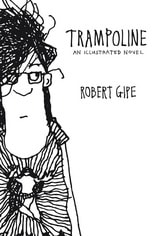
Trampoline
An Illustrated NovelRobert Gipe
Ohio University Press, 2015
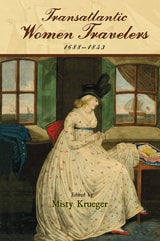
Transatlantic Women Travelers, 1688-1843
Misty Krueger
Bucknell University Press, 2021
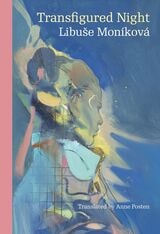
Transfigured Night
Libuše Moníková
Karolinum Press, 2023
In late 1992, three years after the Velvet Revolution and as Czechoslovakia is about to dissolve into the Czech Republic and Slovakia, choreographer and dancer Leonora Marty, who fled the Communist state decades earlier, has returned to Prague. Having wrapped up her ballet of The Makropulos Affair, the famous dancer meets old classmates, wanders the city through crowds of tourists, and visits the most obscure and unvisited museums. When she is approached by Thomas Asperger, a descendant of ethnic Germans driven from Czechoslovakia after World War II, she must confront three relationships—her relationship with the city of her youth, her homeland’s relationship with its past, and her new romance with this German admirer.
Written in German and published in 1995, by an author whose life mirrored her protagonist’s, the novel provides a cultural tour of Prague. Employing a style as influenced by the operas of Leoš Janácek as the novels of Thomas Pynchon, Transfigured Night is a masterpiece of Czech literature, showing that the culture of this nation comes in a variety of tongues.
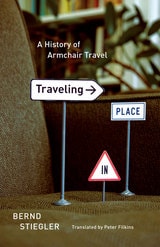
Traveling in Place
A History of Armchair TravelBernd Stiegler
University of Chicago Press, 2013
Organized into twenty-one “legs”—or short chapters—Traveling in Place begins with a consideration of Xavier de Maistre’s 1794 Voyage autour de ma chambre, an account of the forty-two-day “journey around his room” Maistre undertook as a way to entertain himself while under house arrest. Stiegler is fascinated by the notion of exploring the familiar as though it were completely new and strange. He engages writers as diverse as Roussel, Beckett, Perec, Robbe-Grillet, Cortázar, Kierkegaard, and Borges, all of whom show how the everyday can be brilliantly transformed. Like the best guidebooks, Traveling in Place is more interested in the idea of travel as a state of mind than as a physical activity, and Stiegler reflects on the different ways that traveling at home have manifested themselves in the modern era, from literature and film to the virtual possibilities of the Internet, blogs, and contemporary art.
Reminiscent of the pictorial meditations of Sebald, but possessed of the intellectual playfulness of Calvino, Traveling in Place offers an entertaining and creative Baedeker to journeying at home.

Tributary Voices
Literary and Rhetorical Exploration of the Colorado RiverPaul A. Formisano
University of Nevada Press, 2022
Through literary, rhetorical, and historical analysis of some of the Colorado River’s lesser-known stakeholders, Tributary Voices considers a more comprehensive approach to river management on the eve of the one-hundredth anniversary of the signing of the Colorado River Compact, which governs the allocation of water rights to the seven states in the region. Ranging from the early twentieth century to the present, Tributary Voices examines nature writing, women’s narratives, critiques of dam development, the Latina/o communities’ appeals for river restoration, American Indian authors’ and tribal nations’ claims of water sovereignty, and teachings about environmental stewardship and provident living. This innovative study models an interdisciplinary approach to water governance and reinvigorates our imagination in achieving a more sustainable water ethic.
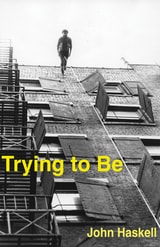
Trying to Be
A CollectionJohn Haskell
University of Alabama Press, 2025
With lyrical precision and aching intimacy, Trying to Be moves through history, memory, and the performance of ephemeral identity, as John Haskell assembles a quiet manifesto for how to think, how to live, and how to feel ourselves in our bodies.
Trying to Be is a book about presence, absence, and the intricate art of inhabiting one’s own life. John Haskell—known for his genre-defying literary voice—moves through a series of intimate, sharply observed portraits: Francis Bacon and his doomed lover; Danny Kaye and his split personality; Sophia Loren; Diego Velázquez; Ulrike Meinhof; and Yvonne Rainer’s radical reinvention of what dance can be.
But this isn’t cultural commentary as ornament. These figures mirror Haskell’s own attempts to grapple with grief, estrangement, memory, and the failures of language. The result is a book that blurs the line between criticism and confession, art history and personal inventory. Whether recalling a botched friendship, a beloved mentor, or the carefully choreographed movement in a dance workshop, Haskell searches for new ways of becoming—through art, through awareness, through stories that have the quality of song. In prose that’s quiet but unflinching, Trying to Be asks: What do we do with our bodies, our memories, and our regrets when even language feels exhausted? And what happens when, against the odds, we keep going?

Tsing
David Albahari
Northwestern University Press, 1997
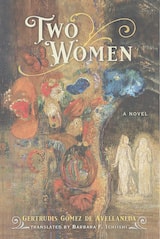
Two Women
A NovelBarbara F. Ichiishi
Bucknell University Press, 2022
This first English translation of the novel captures the lyrical romanticism of its prose and includes a scholarly introduction to the work and its author, Gertrudis Gómez de Avellaneda, a pioneering feminist and anti-slavery activist who based the character of Catalina on her own experience. Two Women is a searing indictment of the stern laws and customs governing marriage in the Hispanic world, brought to life in a spellbinding, tragic love story.
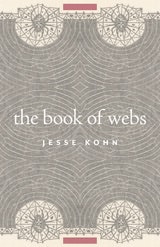
the book of webs
Jesse Kohn
University of Massachusetts Press, 2023
Honorable Mention, 2023 Big Other Readers’ Choice Award
Word spreads from one recovering self-inflicted eye surgery patient to the next of a mystical book capable of overturning the Burlingtonian empire.
Captivating and devious, the book of webs is constructed out of misremembered fragments, conflicting histories, and secrets whispered in the darkness. The insurgents tell of an enemy so powerful it owns the air, dictates reality, and has even managed to co-opt their thoughts. Their only hope is to conspire with the uprisings of their bodies: slips of the tongue, excretions, tics, bad hair days, and, most importantly, their dreams.
In this darkly comic and inventive debut novel, Jesse Kohn introduces a network of shape-shifters and misfits. A militant priestess broods over orphaned angel eggs. A post-punk band animates a messianic homunculus made of belly button lint. A failed dream journalist goes on a terrible first date to heaven. Each misadventure is a chapter in a book devised to oppose the despotic order of their enemy—the book of webs.