Results by title
4743 books match the query 'Religion' and 1168 start with t
The Culture of Ancient Egypt
John A. Wilson
University of Chicago Press, 1956
The Culture of Islam
Changing Aspects of Contemporary Muslim LifeLawrence Rosen
University of Chicago Press, 2002
Through a series of poignant tales—from the struggle by a group of friends against daily corruption to the contest over a saint's identity, from nostalgia for the departed Jews to Salman Rushdie's vision of doubt in a world of religious certainty—Rosen shows how a dazzling array of potential changes are occurring alongside deeply embedded continuity, a process he compares to a game of chess in which infinite variations of moves can be achieved while fundamental aspects of "the game" have had a remarkably enduring quality. Whether it is the potential fabrication of new forms of Islam by migrants to Europe (creating a new "Euro-Islam," as Rosen calls it), the emphasis put on individuals rather than institutions, or the heartrending problems Muslims may face when their marriages cross national boundaries, each story and each interpretation offers a window into a world of contending concepts and challenged coherence.
The Culture of Islam is both an antidote to simplified versions of Islam circulating today and a consistent story of the continuities that account for much of ordinary Muslim life. It offers, in its human stories and its insights, its own contribution, as the author says, "to the mutual understanding and forgiveness that alone will make true peace possible."
The Curse of Cain
The Violent Legacy of MonotheismRegina M. Schwartz
University of Chicago Press, 1997
"[A] provocative and timely examination of the interrelationship of monotheism and violence. . . . This is a refreshing alternative to criticism-biblical and otherwise-that so often confuses interpretation with closure; it is an invitation to an ethic of possibility, plenitude, and generosity, a welcome antidote to violence, as important for its insights into memory, identity, and place as for its criticism of monotheism's violent legacy."—Booklist
"Brilliant and provocative, this is a work demanding close attention from critics, theologians, and all those interested in the imaginative roots of common life."—Rowan Williams, Bishop of Monmouth
"A stunningly important book."—Walter Brueggemann, Theology Today
"Artfully rendered, endlessly provocative."—Lawrence Weschler, New Yorker
The Dark Gaze
Maurice Blanchot and the SacredKevin Hart
University of Chicago Press, 2004
The result is not a mere introduction to Blanchot but rather a profound reconsideration of how his work figures theologically in some of the major currents of twentieth-century thought. Hart reveals Blanchot to be a thinker devoted to the possibilities of a spiritual life; an atheist who knew both the Old and New Testaments, especially the Hebrew Bible; and a philosopher keenly interested in the relation between art and religion, the nature of mystical experience, the link between writing and the sacred, and the possibilities of leading an ethical life in the absence of God.
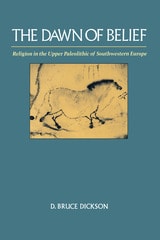
The Dawn of Belief
Religion in the Upper Paleolithic of Southwestern EuropeD. Bruce Dickson
University of Arizona Press, 1990
Based on the premises that all members of Homo sapiens sapiens share basically similar psychological processes and capabilities and that human culture is patterned, the author uses ethnographic analogy, inference from material patterns, and formal analysis to find in prehistoric imagery clues to the cosmology that lay behind them. The resulting book is an intriguing speculation on the nature of paleolithic religion, offering scholars a valuable synthesis of anthropological, archaeological, and sociological research, and general readers an accessible account of how our forebears may have regarded the unknown.
The Days Between
Blessings, Poems, and Directions of the Heart for the Jewish High Holiday SeasonMarcia Falk
Brandeis University Press, 2014

The Dead Sea Scrolls in Scholarly Perspective
A History of ResearchDevorah Dimant
SBL Press, 2016
Now in paperback!
The volume covers Qumran scholarship in separate countries: the USA, Canada, Israel, France, Germany, Spain, the Netherlands, Scandinavia, Italy, and Eastern Europe. Each essay carries a detailed bibliography for the respective country. Biographies of all the major scholars active in the field are briefly given as well. This book thereby exhaustively surveys past and present Qumran research, outlining its particular development in various circumstances and national contexts. For the first time, perspectives and information not recorded in any other publication are highlighted.
Features:

The Deaf-Mute Boy
Joseph Geraci
University of Wisconsin Press, 2006
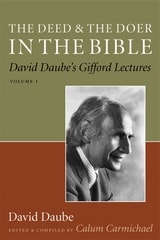
The Deed and the Doer in the Bible
David Daube's Gifford Lectures, Volume 1David Daube
Templeton Press, 2008
David Daube (1909–1999) was a world-renowned biblical law scholar. He was a fellow at All Souls College at Oxford, an emeritus professor of law at Oxford, and an emeritus professor of law at the University of California, Berkeley. Scholars have hailed his essential research on Roman law, biblical law, Hebraic Law, and ethics throughout his life and today.
Daube produced dozens of books and published over 150 articles in scholarly journals. Now, for the first time, his twenty Gifford Lectures, delivered in 1962 and 1964, will be available to the public. His first ten Gifford Lectures have been collected in The Deed and the Doer in the Bible: David Daube's Gifford Lectures, Volume 1.
The theme of Daube's Gifford Lectures is law and wisdom in the Bible. His wide-ranging deliberations reveal how complicated and profound the biblical text is. He analyzes deeds described in the Bible and considers, for example, what causes people to act in a certain way, the role of intent, why unintended deeds are sometimes punishable, and how the origin of a deed is determined. His lectures are aimed at professionals in biblical criticism, biblical history, ethics, and the history of law concerning its roots in Old Testament traditions. Daube is a recognized master in these fields, and there are substantial applications to current ethical and legal issues.
The Delight Makers
Anglo-American Metaphysical Religion and the Pursuit of HappinessCatherine L. Albanese
University of Chicago Press, 2023
The pursuit of happiness weaves disparate strands of Anglo-American religious history together. In The Delight Makers, Catherine L. Albanese unravels a theology of desire tying Jonathan Edwards to Ralph Waldo Emerson to the religiously unaffiliated today. As others emphasize redemptive suffering, this tradition stresses the “metaphysical” connection between natural beauty and spiritual fulfillment. In the earth’s abundance, these thinkers see an expansive God intent on fulfilling human desire through prosperity, health, and sexual freedom. Through careful readings of Cotton Mather, Andrew Jackson Davis, William James, Esther Hicks, and more, Albanese reveals how a theology of delight evolved alongside political overtures to natural law and individual liberty in the United States.
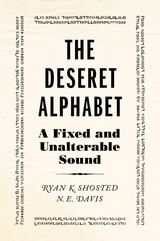
The Deseret Alphabet
A Fixed and Unalterable SoundRyan K. Shosted and N. E. Davis
University of Illinois Press, 2026
Shosted and Davis draw on a wide range of sources, including previously unpublished archival material, to trace the alphabet’s roots in Joseph Smith’s esoteric translations and its role in shaping Latter-day Saint identity. Their account brings together theology, linguistics, and culture. As they show, the Deseret Alphabet remains relevant as a living artifact of a religion wrestling with its visionary origins and the divine potential of words.
In-depth and up to date, The Deseret Alphabet traces the script’s creation, use, and legacy across Latter-day Saint history.
The Desert Fathers
Helen Waddell
University of Michigan Press, 1956
The Destiny of a King
Georges Dumézil
University of Chicago Press, 1988
The Destiny of a King examines one of the "little" epics within the Mahabharata—the legend of King Yayati, a distant ancestor of the Pandavas, the heroes of the larger epic. Dumézil compares Yayati's attributes and actions with those of the legendary Celtic king Eochaid Feidlech and also finds striking similarities in the stories surrounding the daughters of these two kings, the Indian Madhavi and the Celtic Medb. When he compares these two traditions with the "first king" legends from Iran, he finds such common themes as the apportionment of the earth and the "sin of the sovereign."
The Development of Dogma
A Systematic AccountGuy Mansini, OSB
Catholic University of America Press, 2023
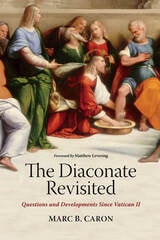
The Diaconate Revisited
Questions and Developments Since Vatican IIMarc B. Caron
Catholic University of America Press, 2026
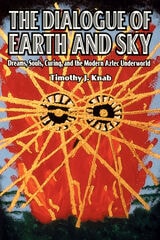
The Dialogue of Earth and Sky
Dreams, Souls, Curing, and the Modern Aztec UnderworldTimothy J. Knab
University of Arizona Press, 2004
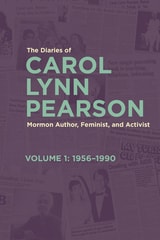
The Diaries of Carol Lynn Pearson—Mormon Author, Feminist, and Activist
Volume 1: 1956–1990Pearson, Carol Lynn
Signature Books, 2025
“I feel somehow that of all the writing I am doing, my diary is the most important.” So wrote the beloved and bestselling author, poet, and playwright Carol Lynn Pearson in her 1979 diary. Several years before, she recorded, “I feel the imperative of history. . . . Add that to my being a household word to many and I cannot escape the feeling that in many years there might be a number of people interested in these pages.” That time has now come.
Unbeknownst to almost everyone but herself, Pearson kept a near-daily diary since she was a teenager, recording her remarkable story in the context of twentieth- and twenty-first-century Mormon America. In this first of a four-volume series, Pearson chronicles her love for her church but also her troubling experiences and concerns with its patriarchy, historic doctrine of polygamy, omission of a feminine divine, and homophobia. Readers will rejoice with her as her first book of poetry, Beginnings, sells an astonishing 150,000+ copies and puts her on the map in the 1960s, empathize with her as she watches her church help kill the Equal Rights Amendment in the 1970s, and mourn with her as her mixed-orientation marriage ends and she cares for her former husband in her home as he dies of AIDS in the 1980s. The sensitive-girl-turned-strong-woman who emerges in these diaries insists that we move from patriarchy into partnership, change our destructive policies towards Queer people, and invite God the Mother back into our heavenly family.
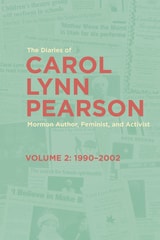
The Diaries of Carol Lynn Pearson—Mormon Author, Feminist, and Activist
Volume 2: 1990–2002Pearson, Carol Lynn
Signature Books, 2026
Of these years of her life, poet, writer, and feminist Carol Lynn Pearson says, “The plot thickens, as all good plots do. My life and your life—if we are brave enough—move into areas that we had not anticipated. We feel sometimes that we want to run back to safer ground, but life has decided otherwise and so we take those next steps. Volume two of my diaries gives us a closeup of the years 1990 to 2002, bringing us an abundance of both joy and distress.”
Throughout the 1990s, Pearson records and laments her church’s efforts to punish scholars and activists while celebrating the success of her books and one-woman play, Mother Wove the Morning. Along the way, she comforts the suffering, endures terrible personal loss, and witnesses the fall of the Twin Towers on 9/11. “Bless everyone who fights for what is right,” she writes. Few have fought harder than Carol Lynn Pearson.
The Diaries of Carol Lynn Pearson—Mormon Author, Feminist, and Activist
Volume 3: 2003–2014Pearson, Carol Lynn
Signature Books, 2026
Proposition 8, the 2008 California ballot initiative that overturned the state’s legalization of same-sex marriage, looms large in volume 3 of Carol Lynn Pearson’s diaries. The intense lobbying in favor of the measure by the Church of Jesus Christ of Latter-day Saints caused widespread protests against the church and rifts within congregations, families, and friendships that felt like they might never heal. Pearson documented it all.
When she learned through friends close to church leaders that members of the First Presidency and Quorum of Twelve Apostles were shocked by the backlash, she wondered, “How do 15 prophets, seers, and revelators not see this coming when the rest of us did?”
A lifelong feminist, Pearson’s diaries also reveal her concerns for gender equality. She chronicles her observations of Ordain Women, a movement by a group of Latter-day Saint feminists who lobbied to change the church’s all-male priesthood. At the end of this volume, Pearson takes on yet another issue: the ongoing Mormon doctrine that polygamy is practiced in the eternities. Pearson heard from thousands of women who feared that they would be forced to share their husbands in the afterlife. The pain of these women propelled her forward into her next book project, challenging the doctrine of “eternal polygamy.”
Even as she faced her own struggles, Pearson buoyed up those around her. She took phone calls, answered letters, and comforted visitors who were hurting because of the church’s policies. She was, for many, a symbol of hope.
The Diaries of Carol Lynn Pearson—Mormon Author, Feminist, and Activist
Volume 4: 2014–2024Pearson, Carol Lynn
Signature Books, 2026
This fourth and final volume of The Diaries of Carol Lynn Pearson is full of contradictions as it covers turbulent world events and intimate details in her life. Pearson remains a beacon of light and hope for many, even as she struggles with her own sorrows.
She embarks on a new project that consumes her: the Latter-day Saint doctrine that polygamy will exist in the afterlife. Pearson also continues to document contemporaneous events in the modern history of the Church of Jesus Christ of Latter-day Saints, including the church’s November 2015 policy that discriminated against LGBTQ+ members and their children. She has both a grassroots perspective as a member of a California congregation and special insight into the decisions of LDS leadership, thanks to friends who keep her informed of what’s happening at the highest levels of the church.
Through it all, Pearson mourns when she says goodbye to longtime friends who die. In July 2026, after she completed her diary project, death finally came for Carol Lynn Pearson after 86 years. Her unique voice cannot be replicated.
The Didache
A Missing Piece of the Puzzle in Early ChristianityJonathan A. Draper
SBL Press, 2015
An intriguing dilemma for those who study ancient Christian contexts and literature
This edited volume includes essays and responses from specialists in the Didache and in early church history in general.
Features:
- Strategies for understanding liturgical constructions and ritual worship found in the text
- Studies that apply generally to the overall content and background of the Didache
- Essays on the relationship between the Didache and scripture—particularly with respect to the Gospel of Matthew
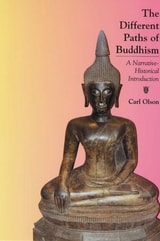
The Different Paths of Buddhism
A Narrative-Historical IntroductionCarl Olson
Rutgers University Press, 2005
For centuries, Buddhist teachers and laypeople have used stories, symbols, cultural metaphors, and anecdotes to teach and express their religious views. In this introductory textbook, Carl Olson draws on these narrative traditions to detail the development of Buddhism from the life of the historical Buddha to the present. By organizing the text according to the structure of Buddhist thought and teaching, Olson avoids imposing a Western perspective that traditional texts commonly bring to the subject.
The book offers a comprehensive introduction to the main branches of the Buddhist tradition in both the Mahayana and Theravada schools, including the Madhyamika school, the Yogacara school, Pure Land devotionalism, Tibetan Tantric Buddhism, Zen Buddhism, and village folk Buddhist traditions. Chapters explore the life and teachings of the Buddha in historical context, the early development and institutionalization of Buddhism, its geographic spread across Asia and eventually to the United States, philosophy and ethics, the relationship between monks and laity, political and ethical implications, the role of women in the Buddhist tradition, and contemporary reinterpretations of Buddhism.
Drawn from decades of classroom experience, this creative and ambitious textcombines expert scholarship and engaging stories that offer a much-needed perspective to the existing literature on the topic.
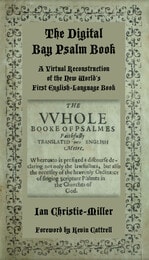
The Digital Bay Psalm Book
A Virtual Reconstruction of the New World's First English-Language BookIan Christie-Miller, with a foreword by Kevin Cattrell
University of Alabama Press, 2010
In 1638, the first printing press was imported to the Massachusetts Bay Colony and a group of local religious leaders—including, it is thought, Richard Mather, John Cotton, and Richard Eliot—set about to create “a plain and familiar translation of the psalms and words of David into English metre” for use in the colony’s church meetings. Earlier psalteries had been brought to the New World by colonists, but in Puritan thought they had strayed too far from the original Hebrew text. In 1640, The Whole Booke of Psalmes Faithfully Translated into English Metre was published in Cambridge; it was the first book published in the American Colonies. The Bay Psalm Book, as it has come to be known, consists of a substantial introduction summarizing the creators’ philosophy and intentions, followed by translations of the Psalms rendered into meter, enabling them to be sung to well-known tunes of the day. The psaltery was soon in widespread use on both sides of the Atlantic. It went through multiple printings and editions before being succeeded by newer texts in later decades.
Generations of theologians and scholars have turned to The Bay Psalm Book, considering it from a variety of perspectives. Besides its significance as a religious treatise, spiritual guide, and historical document, The Bay Psalm Book is also recognized as an important milestone in the evolution of the American musical tradition. In recent years, a new generation of scholars has returned to the book, seeing it from fresh perspectives—as a social document, for example, and as a physical artifact of early American life in the Massachusetts Bay area.
The Digital Bay Psalm Book gives scholars, researchers, and enthusiasts alike a rich and intimate experience of the book as it was known by its earliest readers.
As an electronic-only publication offered as a downloadable PDF, The Digital Bay Psalm Book takes advantage of digital technology to offer meticulously rendered photographs of the 7.25 x 4 inch book, one of several once owned by Thomas Prince, scholar and minister of Boston’s Old South Church from 1718 to 1758. In this format, users are able to zoom in to examine each individual page, the quality of the paper and printing, marginalia, notes, and other marks accrued over the centuries, yielding insights into the owner’s use and understanding of the text as well as the very life of the book itself. In addition, Christie-Miller provides four supplements that shed light on the technology and craft that went into the creation of America’s first English-language book.
The Disciplinary Revolution
Calvinism and the Rise of the State in Early Modern EuropePhilip S. Gorski
University of Chicago Press, 2003
The Disturbing Profane
Hip Hop, Blackness, and the SacredJoseph R. Winters
Duke University Press, 2025
The Diversity of Religions
A Christian PerspectiveJ. A. DiNoia, O.P.
Catholic University of America Press, 1992
The Dividing of Christendom
Christopher Dawson
Catholic University of America Press, 2026
The Divine Institutes, Books I–VII
Catholic University of America Press, 1964
The Divine Institution
White Evangelicalism's Politics of the FamilySophie Bjork-James
Rutgers University Press, 2021
Winner of the Anne Bolin & Gil Herdt Book Prize from the Human Sexuality and Anthropology Interest Group (HSAIG)
The Divine Institution provides an account of how a theology of the family came to dominate a white evangelical tradition in the post-civil rights movement United States, providing a theological corollary to Religious Right politics.
This tradition inherently enforces racial inequality in that it draws moral, religious, and political attention away from problems of racial and economic structural oppression, explaining all social problems as a failure of the individual to achieve the strong gender and sexual identities that ground the nuclear family. The consequences of this theology are both personal suffering for individuals who cannot measure up to prescribed gender and sexual roles, and political support for conservative government policies. Exposure to experiences that undermine the idea that an emphasis on the family is the solution to all social problems is causing a younger generation of white evangelicals to shift away from this narrow theological emphasis and toward a more social justice-oriented theology. The material and political effects of this shift remain to be seen.
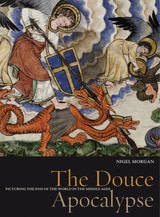
The Douce Apocalypse
Picturing the End of the World in the Middle AgesNigel Morgan
Bodleian Library Publishing, 2006
Now the manuscript—created sometime between 1250 and 1275—reaches an entirely new audience at the hands of noted scholar Nigel Morgan. The Douce Apocalypse explores the manuscript’s royal patronage, looks at its fascinating imagery, and examines its significance in light of contemporary prophecy. The commentary is accompanied by lush, full-color illustrations.
As Morgan relates, the Douce Apocalypse is especially enlightening because of its unfinished nature. A few of its images remain incomplete—and such absences give insight into the artist’s painstaking techniques of drawing, gilding, and painting. The second volume in the Treasures from the Bodleian Library series, The Douce Apocalypse will convey both the beauty of the original and the enduring fascination of its contents.
The Dreamer and the Dream
Afrofuturism and Black Religious ThoughtRoger A. Sneed
The Ohio State University Press, 2021
In The Dreamer and the Dream: Afrofuturism and Black Religious Thought, Roger A. Sneed illuminates the interplay of Black religious thought with science fiction narratives to present a bold case for Afrofuturism as an important channel for Black spirituality. In the process, he challenges the assumed primacy of the Black church as the arbiter of Black religious life. Incorporating analyses of Octavia Butler’s Parable books, Janelle Monáe’s Afrofuturistic saga, Star Trek’s Captain Benjamin Sisko, Marvel’s Black Panther, and Sun Ra and the Nation of Islam, Sneed demonstrates how Afrofuturism has contributed to Black visions of the future. He also investigates how Afrofuturism has influenced religious scholarship that looks to Black cultural production as a means of reimagining Blackness in the light of the sacred. The result is an expansive new look at the power of science fiction and Afrofuturism to center the diversity of Black spirituality.
The Drug, the Soul, and God
A Catholic Moral Perspective on AntidepressantsJohn-Mark Miravalle
University of Scranton Press, 2010
With The Drug, the Soul, and God, John-Mark Miravelle examines the stance of the Catholic Church regarding the prescription and consumption of antidepressants. After a careful investigation of Catholic moral theology and philosophy, Miravelle argues that treating depression with medication alone fails to address the underlying causes of the depression and does not facilitate the cognitive, interpersonal, and environmental changes necessary for a patient’s long-term health. In addition, he suggests that such medication may deprive sufferers of providential opportunities for personal and communal conversion and sanctification. This controversial volume will engage theologians and medical professionals alike.
The Dry Wood
Caryll Houselander
Catholic University of America Press, 2021
The Early Middle Ages
Franca Ela Consolino
SBL Press, 2020
Examine the creative, profound dialogue between medieval women and biblical traditions
The latest volume in the Bible and Women series examines the relationship between women and the Bible’s reception during the early Middle Ages (500–1100 CE) in both the Greek East and the Latin West. Essays focus on interactions between women and the Bible through biblical precepts on women and for women, biblical women as the subjects of action or objects of discussion, and writings by women that refer to the Bible as a moral authority. The women discussed in the volume range from the well-known—including the nuns Kassia in Byzantium and Hrosvita in the West; the aristocrat Dhuoda, author of a moral guide for her son; Gisela, the sister of Charlemagne and abbess of Chelles; and her niece Rotrude—to those who remain anonymous. Contributions also explore how the Old and New Testaments exercised influence on emerging Islam.
Features:
- Analysis of images of the Virgin Mary as a means of tracing the spread of her cult and feast days from East to West
- Exploration of the significance of classical culture for medieval women who composed poems for a Christian audience
- Evaluation of art as a means of establishing devotional relationships not necessarily mediated by the voices of preachers or the reading of texts .
The Earth Will Appear as the Garden of Eden
Essays on Mormon Environmental HistoryJedediah S. Rogers and Matthew C. Godfrey
University of Utah Press, 2018
Since Joseph Smith’s revelations, Mormons have interacted with nature in significant ways—whether perceiving it as a place to find God, uncorrupted spaces in which to build communities to usher in the Second Coming, wildness needing domestication and control, or a world brimming with natural resources to ensure economic well-being. The essays in this volume—written by leading scholars in both environmental history and Mormon history—explore how nature has influenced Mormon beliefs and how these beliefs inform Mormons’ encounters with nature. Introducing overarching environmental ideas, contributors examine specific aspects of nature and Mormon theology to glean new insights into the Mormon experience.
The Economics of the Mishnah
Jacob Neusner
University of Chicago Press, 1990
The Economics of the Mishnah is the first book to examine the place of economic theory generally in the Judaic system of the Mishnah. Jacob Neusner begins by surveying previous work on economics and Judaism, the best known being Werner Sombart's The Jews and Modern Capitalism. The mistaken notion that Jews have had a common economic history has outlived the demise of Sombart's argument, and it is a notion that Neusner overturns before discussing the Mishnaic economics.
Only in Aristotle, Neusner argues, do we find an equal to the Mishnah's accomplishment in engaging economics in the service of a larger systemic statement. Neusner shows that the framers of the Mishnah imagined a distributive economy functioning through the Temple and priesthood, while also legislating for the action of markets. The economics of the Mishnah, then, is to some extent a mixed economy. The dominant, distributive element in this mixed economy, Neusner contends, derives from the belief that the Temple and its designated castes on earth exercise God's claim to the ownership of the holy land. He concludes by considering the implications of the derivation of the Mishnah's economics from the interests of the undercapitalized and overextended farmer.
The Edge of Islam
Power, Personhood, and Ethnoreligious Boundaries on the Kenya CoastJanet McIntosh
Duke University Press, 2009
The Edge of Islam explores themes as wide-ranging as spirit possession, divination, healing rituals, madness, symbolic pollution, ideologies of money, linguistic code-switching, and syncretism and its alternatives. McIntosh shows how the differing versions of Islam practiced by Swahili and Giriama, and their differing understandings of personhood, have figured in the growing divisions between the two groups. Her ethnographic analysis helps to explain why Giriama view Islam, a supposedly universal religion, as belonging more deeply to certain ethnic groups than to others; why Giriama use Islam in their rituals despite the fact that so many do not consider the religion their own; and how Giriama appropriations of Islam subtly reinforce a distance between the religion and themselves. The Edge of Islam advances understanding of ethnic essentialism, religious plurality, spirit possession, local conceptions of personhood, and the many meanings of “Islam” across cultures.
The Edges of the Medieval World
Gerhard Jaritz
Central European University Press, 2009

The Education of Phillips Brooks
John F. Woolverton
University of Illinois Press, 1995
The Education of Phillips Brooks probes the formative years of one of the best-known figures of Victorian America's "Gilded Age". Rigorously researched, bringing as yet untapped archival material into play, John F. Woolverton's book is an extremely readable and fascinating look at a gifted, persuasive clergyman and public figure. The sermon Brooks delivered at his Holy Trinity Church in Philadelphia while Abraham Lincoln's body lay in state overnight in Independence Hall was published, making him nationally famous overnight. He also is known for penning the lyrics to "O Little Town of Bethlehem". Although Brooks was not a major theologian, he was nurtured in an atmosphere of serious religious thought. In the crisis era of pre-Civil War America, he sought a religious and cultural ideal in the "perfect manhood" of Jesus Christ and consequently "won a name" for himself, as his slightly envious cousin, Henry Adams, once remarked. Woolverton places Brooks in his cultural context and shows how this religious leader was shaped psychologically and by his times and how those factors helped him forge a spiritual ideal for a troubled nation.
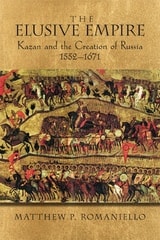
The Elusive Empire
Kazan and the Creation of Russia, 1552–1671Matthew P. Romaniello
University of Wisconsin Press, 2012
In 1552, Muscovite Russia conquered the city of Kazan on the Volga River. It was the first Orthodox Christian victory against Islam since the fall of Constantinople, a turning point that, over the next four years, would complete Moscow’s control over the river. This conquest provided a direct trade route with the Middle East and would transform Muscovy into a global power. As Matthew Romaniello shows, however, learning to manage the conquered lands and peoples would take decades.
Russia did not succeed in empire-building because of its strength, leadership, or even the weakness of its neighbors, Romaniello contends; it succeeded by managing its failures. Faced with the difficulty of assimilating culturally and religiously alien peoples across thousands of miles, the Russian state was forced to compromise in ways that, for a time, permitted local elites of diverse backgrounds to share in governance and to preserve a measure of autonomy. Conscious manipulation of political and religious language proved more vital than sheer military might. For early modern Russia, empire was still elusive—an aspiration to political, economic, and military control challenged by continuing resistance, mismanagement, and tenuous influence over vast expanses of territory.
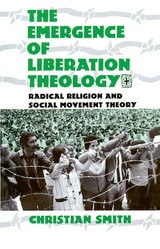
The Emergence of Liberation Theology
Radical Religion and Social Movement TheoryChristian Smith
University of Chicago Press, 1991
The Encyclopedia of Caribbean Religions
Volume 1: A - L; Volume 2: M - ZPatrick Taylor
University of Illinois Press, 2012
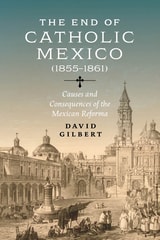
The End of Catholic Mexico
Causes and Consequences of the Mexican Reforma (1855–1861)David Gilbert
Vanderbilt University Press, 2024
Gilbert’s fresh account of this pivotal moment in Mexican history will be of interest to scholars of postindependence Mexico, Latin American religious history, nineteenth-century church history, and US historians of the antebellum republic.
The End of Sacrifice
Religious Transformations in Late AntiquityGuy G. Stroumsa
University of Chicago Press, 2009
The religious transformations that marked late antiquity represent an enigma that has challenged some of the West’s greatest thinkers. But, according to Guy Stroumsa, the oppositions between paganism and Christianity that characterize prevailing theories have endured for too long. Instead of describing this epochal change as an evolution within the Greco-Roman world from polytheism to monotheism, he argues that the cause for this shift can be found not so much around the Mediterranean as in the Near East.
The End of Sacrifice points to the role of Judaism, particularly its inventions of new religious life following the destruction of the Second Temple in 70 CE. The end of animal sacrifice gave rise to new forms of worship, with a concern for personal salvation, scriptural study, rituals like praying and fasting, and the rise of religious communities and monasticism. It is what Christianity learned from Judaism about texts, death, and, above all, sacrifice that allowed it to supersede Greco-Roman religions and, Stroumsa argues, transform religion itself.
A concise and original approach to a much-studied moment in religious history, The End of Sacrifice will be heralded by all scholars of late antiquity.
The Enigmatic Academy
Class, Bureaucracy, and Religion in American EducationChristian J. Churchill
Temple University Press, 2012
The Enigmatic Academy is a provocative look at the purpose and practice of education in America. Authors Christian Churchill and Gerald Levy use three case studies—a liberal arts college, a boarding school, and a Job Corps center—to illustrate how class, bureaucratic, and secular-religious dimensions of education prepare youth for participation in American foreign and domestic policy at all levels.
The authors describe how schools contribute to the formation of a bureaucratic character; how middle and upper class students are trained for leadership positions in corporations, government, and the military; and how the education of lower class students often serves more powerful classes and institutions.
Exploring how youth and their educators encounter the complexities of ideology and bureaucracy in school, The Enigmatic Academy deepens our understanding of the flawed redemptive relationship between education and society in the United States. Paradoxically, these three studied schools all prepare students to participate in a society whose values they oppose.
The Enlightened Gene
Biology, Buddhism, and the Convergence that Explains the WorldArri Eisen and Yungdrung Konchok
University Press of New England, 2017
The Enlightenment and Original Sin
Matthew Kadane
University of Chicago Press, 2024
What was the Enlightenment? This question has been endlessly debated. In The Enlightenment and Original Sin, historian Matthew Kadane advances the bold claim that the Enlightenment is best defined through what it set out to accomplish, which was nothing short of rethinking the meaning of human nature.
Kadane argues that this project centered around the doctrine of original sin and, ultimately, its rejection, signaling the radical notion that an inherently flawed nature can be overcome by human means. Kadane explores this and other wide-ranging themes through the story of a previously unknown figure, Pentecost Barker, an eighteenth-century purser and wine merchant. By examining Barker’s personal diary and extensive correspondence with a Unitarian minister, Kadane tracks the transformation of Barker’s consciousness from a Puritan to an Enlightenment outlook, revealing through one man’s journey the large-scale shifts in self-understanding whose philosophical reverberations have shaped debates on human nature for centuries.
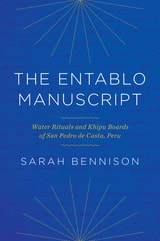
The Entablo Manuscript
Water Rituals and Khipu Boards of San Pedro de Casta, PeruSarah Bennison
University of Texas Press, 2022
A unique study of an Andean community’s water rituals and the extraordinary document describing how they should be performed
In the dry season in the Andes, water from springs, lakes, reservoirs, and melting glaciers feeds irrigation canals that have sustained communities for thousands of years. Managing and maintaining these water infrastructures is essential, and in 1921, in the village of San Pedro de Casta, Peru, local authorities recorded their ritual canal-cleaning duties in a Spanish-language document called the Entablo. It is only the second book (along with the Huarochirí Manuscript) ever seen by scholars in which an Andean community explains its customs and ritual laws in its own words.
Sarah Bennison offers a critical introduction to the Entablo, a Spanish transcription of the document, and an English translation. Among its other revelations, the Entablo delves into the use of khipu boards, devices that meld the traditional knotted strings known as khipus with a written alphabet. Only in the Entablo do we learn that there were multiple khipu boards associated with a single canal-cleaning ritual, or that there were separate khipu records for men and women. The Entablo manuscript furnishes unparalleled insights into Andean rituals, religion, and community history at a historical moment when rural highland communities were changing rapidly.
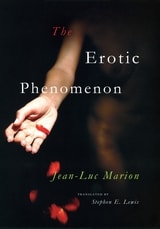
The Erotic Phenomenon
Jean-Luc Marion
University of Chicago Press, 2006
While humanists have pondered the subject of love to the point of obsessiveness, philosophers have steadfastly ignored it. One might wonder whether the discipline of philosophy even recognizes love. The word philosophy means “love of wisdom,” but the absence of love from philosophical discourse is curiously glaring. So where did the love go? In The Erotic Phenomenon, Jean-Luc Marion asks this fundamental question of philosophy, while reviving inquiry into the concept of love itself.
Marion begins his profound and personal book with a critique of Descartes’ equation of the ego’s ability to doubt with the certainty that one exists—“I think, therefore I am”—arguing that this is worse than vain. We encounter being, he says, when we first experience love: I am loved, therefore I am; and this love is the reason I care whether I exist or not. This philosophical base allows Marion to probe several manifestations of love and its variations, including carnal excitement, self-hate, lying and perversion, fidelity, the generation of children, and the love of God. Throughout, Marion stresses that all erotic phenomena, including sentimentality, pornography, and even boasts about one’s sexual conquests, stem not from the ego as popularly understood but instead from love.
A thoroughly enlightening and captivating philosophical investigation of a strangely neglected subject, The Erotic Phenomenon is certain to initiate feverish new dialogue about the philosophical meanings of that most desirable and mysterious of all concepts—love.
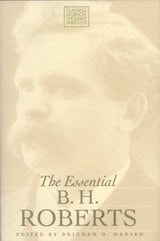
The Essential B. H. Roberts
Brigham D. Madsen
Signature Books, 2000
On one occasion Roberts defended the traditional Mormon view of the godhead—perfected men who “eat, drink … and procreate” as exalted mortals; another time he seemed less comfortable imposing limitations on a God who cannot be fixed to a single location, for whom Jesus was a mortal incarnation, and for whom the term “trinity” seemed more eloquent than the “presidency of heaven.”
His most famous and penetrating analysis focused on the Book of Mormon. In this collection Roberts discusses the mode of its translation, while stopping short of saying that God, who speaks to humans in their own language, could have authored the inconsistent grammar that appeared luminously in Joseph Smith’s seer stone. Instead he credits this to Smith’s own linguistic contribution, thereby preserving for God a fitting transcendence. Later Roberts went so far as to question the Book of Mormon’s historicity.
A final example of Roberts’s complexity: He proclaimed in public the perfect unity and harmony found at church conferences, but he privately castigated his colleagues for what he considered to be obstinance. He once asked what additional, irrational proposal “may occur to some genius” in the Quorum of the Twelve.
A paradox still, this feisty president of the church’s Seventies continues to provoke mixed and heated feelings, as expressed by a Scottish immigrant working in the First Presidency’s office who one day said to Roberts: “Aye, mon, the frankness of it. How dare you do it, mon?” But for those who are sincere and secure in their faith, Roberts can provide a delightfully rewarding journey. Consider just the following four, short excerpts from this compilation—two are originally from Roberts’s published works and two are from his personal letters:
“It is not given to mortal man always to walk upon that plane where the sunlight of God’s inspiration is playing upon him. Sometimes the servants of God speak merely from their human knowledge, influenced by passions; influenced by the interests of men, and by anger, and vexation. When they so speak, that is not likely to be the word of God. In any event it must be allowed by us that many unwise things were said in times past that did not possess the value of scripture, or anything like it; and it was not revelation.”
“What has become, in the church, of the principle that governments derive their just powers from the consent of the governed? Will it be enough to say that the consent of the governed can come later when nominations have been made by leaders? The procedure may be so, and the quorums thus ignored may silently submit, and the matter going on in a dull, gray, and sullen manner; but you will have no esprit de corps in the quorums; and young men of active minds will grow restive. Why not regard them as having some judgment, and right to have a voice in nominating those with whom they are to work?”
“So I say that when the churches turn to secular government to enforce religious doctrines and discipline, they abandon their legitimate sphere and enter one wholly repugnant to their principles. When churches thus abandon their confidence in the power of truth, they play havoc with their own authority.”
“My dear Bishop Nibley, let me commend you for the delicacy with which you can tell the poor ‘theorist’ to ‘get off the earth.’ I know not if you were born with such delicacy or have acquired it, but in either event it challenges one’s admiration. You write that ‘You (myself) are a theorist, while he (Senator-Apostle Smoot) is needed and has a place in the economy of things.’ That is decidedly good. There is but one thing more you could have suggested to my advantage; you might have indicated the particular location in oblivion where you would be willing for me to sit.”
Brigham Henry Roberts was born in England in 1857. Among his other achievements, he was president of the LDS First Quorum of Seventy and Assistant Church Historian. His numerous books include: (historical) A Comprehensive History of the Church, Joseph Smith: The Prophet-Teacher, The Life of John Taylor, Outlines of Ecclesiastical History, and (theological) A New Witness for God, the Mormon Doctrine of Deity, and the Seventy’s Course in Theology—all of which are considered authoritative, and for which Roberts earned the epithet, “Defender of the Faith.” He died in 1933.