Results by title
18284 books match the query 'United States' and 3764 start with t
The (Other) American Traditions
Nineteenth-Century Women WritersWarren, Joyce W
Rutgers University Press, 1993
The American literary canon has been the subject of debate and change for at least a decade. As women writers and writers of color are being rediscovered and acclaimed, the question of whether they are worthy of inclusion remains open.
The (Other) American Traditions brings together for the first time in one place, essays on individual writers and traditions that begin to ask the harder questions. How do we talk about these writers once we get beyond the historical issues? How is their work related to their male counterparts? How is it similar: how is it different? Are differences related to gender or race or class? How has the selection of books in the literary canon (Melville, Hawthorne, Emerson, and James) led to a definition of the American tradition that was calculated to exclude women? Do we need a new critical vocabulary to discuss these works? Should we stop talking about a tradition and begin to talk about many traditions? How did black American women writers develop strategies for speaking out when they were doubly in jeopardy of being ignored as blacks and as women? The volume offers irrefutable proof that the writers, the critics who work on their texts, all these questions, and the expansion of the canon matter very much indeed.
Contributors: Nina Baym, Deborah Carlin, Joanne Dobson, Josephine Donovan, Judith Fetterley, Frances Smith Foster, Susan K. Harris, Karla F.C. Holloway, Paul Lauter, Diane Lichtenstein, Carla L. Peterson, Carol J. Singley, Jane Tompkins, Joyce W. Warren and Sandra A. Zagarell.
The 16th Michigan Infantry in the Civil War, Revised and Updated
Kim Crawford
Michigan State University Press, 2019
The 1838 Mormon War in Missouri
Stephen C. LeSueur
University of Missouri Press, 1990
In the summer and fall of 1838, animosity between Mormons and their neighbors in western Missouri erupted into an armed conflict known as the Mormon War. The conflict continued until early November, when the outnumbered Mormons surrendered and agreed to leave the state.
In this major new interpretation of those events, LeSueur argues that while a number of prejudices and fears stimulated the opposition of Missourians to their Mormon neighbors, Mormon militancy contributed greatly to the animosity between them. Prejudice and poor judgment characterized leaders on both sides of the struggle. In addition, LeSueur views the conflict as an expression of attitudes and beliefs that have fostered a vigilante tradition in the United States. The willingness of both Missourians and Mormons to adopt extralegal measures to protect and enforce community values led to the breakdown of civil control and to open warfare in northwestern Missouri.
The 1933 Chicago World's Fair
A Century of ProgressCheryl R. Ganz
University of Illinois Press, 2012
Chicago's 1933 world's fair set a new direction for international expositions. Earlier fairs had exhibited technological advances, but Chicago's fair organizers used the very idea of progress to buoy national optimism during the Depression's darkest years. Orchestrated by business leaders and engineers, almost all former military men, the fair reflected a business-military-engineering model that envisioned a promising future through science and technology's application to everyday life. Fair organizers, together with corporate leaders, believed that progress rides on the tide of technological innovation and consumerism.
But not all those who struggled for a voice at Chicago's 1933 exposition had abandoned the traditional notions of progress that entailed social justice and equality, recognition of ethnic and gender-related accomplishments, and personal freedom and expression. The stark pronouncement of the fair's motto, "Science Finds, Industry Applies, Man Conforms," was challenged by iconoclasts such as Sally Rand, whose provocative fan dance became a persistent symbol of the fair, as well as a handful of others, including African Americans, ethnic populations and foreign nationals, groups of working women, and even well-heeled socialites. They all met obstacles but ultimately introduced personal, social definitions of "progress" and thereby influenced the ways the fair took shape.
In this engaging social and cultural history, Cheryl R. Ganz examines Chicago's second world's fair through the lenses of technology, ethnicity, and gender. The book also features eighty-six photographs--nearly half of which are full color--of key locations, exhibits, and people, as well as authentic ticket stubs, postcards, pamphlets, posters, and other items. From fan dancers to fan belts, The 1933 Chicago World's Fair: A Century of Progress offers the compelling, untold stories of fair planners and participants who showcased education, industry, and entertainment to sell optimism during the depths of the Great Depression.
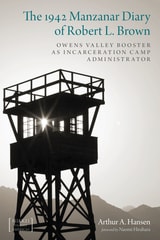
The 1942 Manzanar Diary of Robert L. Brown
Owens Valley Booster as Incarceration Camp AdministratorArthur A. Hansen
University Press of Colorado, 2026
This transcribed and edited wartime diary of Robert L. Brown—a trained journalist who served as public relations staff and assistant director at the Manzanar concentration camp—reveals the thoughts and perspective of the jailer, providing a window into the views of the local population around the presence and experience of a concentration camp for Japanese Americans in their community. In addition to the heavily footnoted diary, the book includes a prologue, introduction, and epilogue from Arthur A. Hansen, providing context for the journal as well as how Hansen came to transcribe the work with Brown’s blessing.
A departure from the typical recovered narratives from incarcerees, Brown’s diary is a historically significant primary source that provides insight into camp administration and local community relationships with Manzanar and a rich primary source for specialists in the field of Japanese American incarceration.
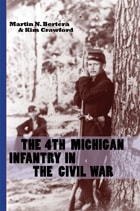
The 4th Michigan Infantry in the Civil War
Martin N. Bertera
Michigan State University Press, 2010
This fascinating narrative tells the story of a remarkable regiment at the center of Civil War history. The real-life adventure emerges from accounts of scores of soldiers who served in the 4th Michigan Infantry, gleaned from their diaries, letters, and memoirs; the reports of their officers and commanders; the stories by journalists who covered them; and the recollections of the Confederates who fought against them. The book includes tales of life in camp, portraying the Michigan soldiers as everyday people—recounting their practical jokes, illnesses, political views, personality conflicts, comradeship, and courage.
The book also tells the true story of what happened to Colonel Harrison Jeffords and the 4th Michigan when the regiment marched into John Rose's wheat field on a sweltering early July evening at Gettysburg. Beyond the myths and romanticized newspaper stories, this account presents the historical evidence of Jeffords's heroic, yet tragic, hand-to-hand struggle for his regiment's U.S. flag.

The AEF in Print
An Anthology of American Journalism in World War IChris Dubbs
University of North Texas Press, 2018
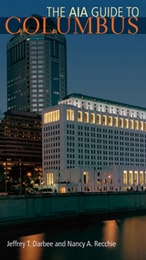
The AIA Guide to Columbus
Jeffrey T. Darbee
Ohio University Press, 2008
Columbus, the largest city in Ohio, has, since its founding in 1812, been home to many impressive architectural landmarks. The AIA Guide to Columbus, produced by the Columbus Architecture Foundation, highlights the significant buildings and neighborhoods in the Columbus metropolitan area. Skillfully blending architectural interest with historic significance, The AIA Guide to Columbus documents approximately 160 buildings and building groups and is organized geographically. Each chapter provides an opportunity to explore a special area of Columbus' built environment.
The Columbus Architecture Foundation has been affiliated with the American Institute of Architects (AIA), Columbus Chapter, for more than thirty years. Its first book project was Architecture Columbus, published in 1976. This new companion volume updates coverage of the buildings and provides a portable, accessible guide to the city's architectural history.
The AIA Guide to Columbus identifies buildings designated as historic and those that have won awards, and includes information on architectural styles, excellent photographs, maps, a glossary, and an index. The focus is on easy touring, whether the reader is walking or driving. Students, visitors, and residents with a penchant for knowing more about their city will enjoy discovering the rich heritage of Columbus' downtown, special districts, and neighborhoods.

The ALA Book of Library Grant Money
Nancy Kalikow Maxwell
American Library Association, 2014
The Abongo Abroad
Military-Sponsored Travel in Ghana, the United States, and the World, 1959-1992John V. Clune
Vanderbilt University Press, 2017
Merging newly discovered documents from Ghana's armed forces and declassified sources on American military assistance to Africa, this work argues that military-sponsored travel made individual Ghanaians' outlooks on the world more international, just as military assistance planners hoped they would, but the Ghanaian state struggled to turn that new identity into political or economic progress.
The Academic Library Administrator's Field Guide
Bryce Nelson
American Library Association, 2014
The Academic's Handbook
A. Leigh DeNeef and Craufurd D. Goodwin, eds.
Duke University Press, 2006
Faculty members, administrators, and professionals with experience at all levels of higher education offer candid, practical advice to help beginning academics understand matters including:
— The different kinds of institutions of higher learning and expectations of faculty at each.
— The advantages and disadvantages of teaching at four-year colleges instead of research universities.
— The ins and outs of the job market.
— Alternatives to tenure-track, research-oriented positions.
— Salary and benefits.
— The tenure system.
— Pedagogy in both large lecture courses and small, discussion-based seminars.
— The difficulties facing women and minorities within academia.
— Corporations, foundations, and the federal government as potential sources of research funds.
— The challenges of faculty mentoring.
— The impact of technology on contemporary teaching and learning.
— Different types of publishers and the publishing process at university presses.
— The modern research library.
— The structure of university governance.
— The role of departments within the university.
With the inclusion of eight new chapters, this edition of The Academic’s Handbook is designed to ease the transition from graduate school to a well-rounded and rewarding career.
Contributors. Judith K. Argon, Louis J. Budd, Ronald R. Butters, Norman L. Christensen, Joel Colton, Paul L. Conway, John G. Cross, Fred E. Crossland, Cathy N. Davidson, A. Leigh DeNeef, Beth A. Eastlick, Matthew W. Finkin, Jerry G. Gaff, Edie N. Goldenberg, Craufurd D. Goodwin, Stanley M. Hauerwas, Deborah L. Jakubs, L. Gregory Jones, Nellie Y. McKay, Patrick M. Murphy, Elizabeth Studley Nathans, A. Kenneth Pye, Zachary B. Robbins, Anne Firor Scott, Sudhir Shetty, Samuel Schuman, Philip Stewart, Boyd R. Strain, Emily Toth, P. Aarne Vesilind, Judith S. White, Henry M. Wilbur, Ken Wissoker
The Academic's Handbook, Fourth Edition
Revised and ExpandedLori A. Flores and Jocelyn H. Olcott, editors
Duke University Press, 2020
Contributors. Luis Alvarez, Steven Alvarez, Eladio Bobadilla, Genevieve Carpio, Marcia Chatelain, Ernesto Chávez, Miroslava Chávez-García, Nathan D. B. Connolly, Jeremy V. Cruz, Cathy N. Davidson, Sarah Deutsch, Brenda Elsey, Sylvanna M. Falcón, Michelle Falkoff, Kelly Fayard, Matthew W. Finkin, Lori A. Flores, Kathryn J. Fox, Frederico Freitas, Neil Garg, Nanibaa’ A. Garrison, Joy Gaston Gayles, Tiffany Jasmin González, Cynthia R. Greenlee, Romeo Guzmán, Lauren Hall-Lew, David Hansen, Heidi Harley, Laura M. Harrison, Sonia Hernández, Sharon P. Holland, Elizabeth Q. Hutchison, Deborah Jakubs, Bridget Turner Kelly, Karen Kelsky, Stephen Kuusisto, Magdalena Maczynska, Sheila McManus, Cary Nelson, Jocelyn H. Olcott, Rosanna Olsen, Natalia Mehlman Petrzela, Charles Piot, Bryan Pitts, Sarah Portnoy, Laura Portwood-Stacer, Yuridia Ramirez, Meghan K. Roberts, John Elder Robison, David Schultz, Lynn Stephen, James E. Sutton, Antar A. Tichavakunda, Keri Watson, Ken Wissoker, Karin Wulf
The Academy and the Award
The Coming of Age of Oscar and the Academy of Motion Picture Arts and SciencesBruce Davis
Brandeis University Press, 2026
For all the near-fanatic attention brought each year to the Academy Awards, the organization that dispenses those awards—the Academy of Motion Picture Arts and Sciences—has yet to be understood. To date, no one has ever produced a thorough account of the Academy’s birth and its awkward adolescence, and the few reports on those periods from outside the organization have always had a glancing, cursory quality. Yet the story of the Academy’s creation and development is a critical piece of Hollywood’s history.
Now that story is finally being told. Bruce Davis, executive director of the Academy for over twenty years, was given unprecedented access to its archives, and the result is a revealing and compelling story of the men and women, famous and infamous, who shaped one of the best-known organizations in the world. Davis writes about the Academy with an intimate view of its workings, its awards, and its world-famous membership. Thorough and long overdue, The Academy and the Award fills a crucial gap in Hollywood history. Available now for the first time in paperback.
The Accidental Diarist
A History of the Daily Planner in AmericaMolly A. McCarthy
University of Chicago Press, 2013
The Accidental Equalizer
How Luck Determines Pay after CollegeJessi Streib
University of Chicago Press, 2023
As a gateway to economic opportunity, a college degree is viewed by many as America’s great equalizer. And it’s true: wealthier, more connected, and seemingly better-qualified students earn exactly the same pay as their less privileged peers. Yet, the reasons why may have little to do with bootstraps or self-improvement—it might just be dumb luck. That’s what sociologist Jessi Streib proposes in The Accidental Equalizer, a conclusion she reaches after interviewing dozens of hiring agents and job-seeking graduates.
Streib finds that luck shapes the hiring process from start to finish in a way that limits class privilege in the job market. Employers hide information about how to get ahead and force students to guess which jobs pay the most and how best to obtain them. Without clear routes to success, graduates from all class backgrounds face the same odds at high pay. The Accidental Equalizer is a frank appraisal of how this “luckocracy” works and its implications for the future of higher education and the middle class. Although this system is far from eliminating American inequality, Streib shows that it may just be the best opportunity structure we have—for better and for worse.
The Accidental Network
How a Small Company Sparked a Global Broadband TransformationRouzbeh Yassini-Fard
West Virginia University Press, 2025
The Accidental Network shares the untold story of the invention of the cable modem by the small, struggling tech company LANcity in the early 1990s, illustrating how Yassini-Fard overcame a cascade of technical challenges, investment community naysayers, and unnerving business obstacles to create the cable modem technology that has changed the way billions of individuals across the globe now manage their daily lives and commerce. The cable modem delivered broadband, with speeds ranging from 10 megabits per second (Mbps) to 10 gigabits per second (Gbps)—a big leap from the dial-up speeds of 56 kilobits per second (Kbps). This platform, along with the adoption of the DOCSIS (Data Over Cable Service Interface Specification) standard, engendered the modern revolution in broadband Internet access. Shunned by venture capitalists and surviving on a shoestring budget, Yassini-Fard and his colleagues were willing to bet it all (including the deed for Yassini-Fard’s home) on the creation of the cable modem and the pursuit of global adoption.
The Accidental Network is both a valuable history of technology innovation and an engrossing account of business conducted at high speed. The book details Yassini-Fard’s journey from electrical engineer to entrepreneur in the race to secure technology partners, create a wholly new marketplace, and convince cable industry executives that a bold business awaited in transmitting data to households at a time when skepticism about the reach of personal computing was the norm.
Written from the lens of a devoted idealist and WVU alum known as “the father of the cable modem,” this book reveals how a perfect storm of forces—the rise of cable television, the onset of the personal computing era, a growing awareness of the Internet for information and commerce, and the development of the cable modem—converged to usher in the age of broadband access.
The Accokeek Creek Site
A Middle Atlantic Seaboard Culture SequenceRobert L. Stephenson, Alice L. L. Ferguson and Henry G. Ferguson
University of Michigan Press, 1963
The Accompaniment
Assembling the ContemporaryPaul Rabinow
University of Chicago Press, 2011
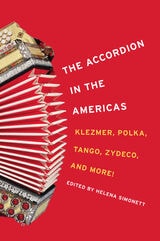
The Accordion in the Americas
Klezmer, Polka, Tango, Zydeco, and More!Edited by Helena Simonett
University of Illinois Press, 2012
This rich collection considers the accordion and its myriad forms, from the concertina, button accordion, and piano accordion familiar in European and North American music to the exotic-sounding South American bandoneon and the sanfoninha. Capturing the instrument's spread and adaptation to many different cultures in North and South America, contributors illuminate how the accordion factored into power struggles over aesthetic values between elites and working-class people who often were members of immigrant and/or marginalized ethnic communities. Specific histories and cultural contexts discussed include the accordion in Brazil, Argentine tango, accordion traditions in Colombia and the Dominican Republic, cross-border accordion culture between Mexico and Texas, Cajun and Creole identity, working-class culture near Lake Superior, the virtuoso Italian-American and Klezmer accordions, Native American dance music, and American avant-garde.
Contributors are María Susana Azzi, Egberto Bermúdez, Mark DeWitt, Joshua Horowitz, Sydney Hutchinson, Marion Jacobson, James P. Leary, Megwen Loveless, Richard March, Cathy Ragland, Helena Simonett, Jared Snyder, Janet L. Sturman, and Christine F. Zinni.
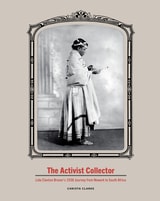
The Activist Collector
Lida Clanton Broner’s 1938 Journey from Newark to South AfricaChrista Clarke
Rutgers University Press, 2023
Published by the Newark Museum. Distributed worldwide by Rutgers University Press.
“After twenty-eight years of desire and determination, I have visited Africa, the land of my forefathers.” So wrote Lida Clanton Broner (1895–1982), an African American housekeeper and hairstylist from Newark, New Jersey, upon her return from an extraordinary nine-month journey to South Africa in 1938. This epic trip was motivated not only by Broner’s sense of ancestral heritage, but also a grassroots resolve to connect the socio-political concerns of African Americans with those of black South Africans under the segregationist policies of the time. During her travels, this woman of modest means circulated among South Africa’s Black intellectual elite, including many leaders of South Africa’s freedom struggle. Her lectures at Black schools on “race consciousness and race pride” had a decidedly political bent, even as she was presented as an “American beauty specialist.”
How did Broner—a working class mother—come to be a globally connected activist? What were her experiences as an African American woman in segregated South Africa and how did she further her work after her return? Broner’s remarkable story is the subject of this book, which draws upon a deep visual and documentary record now held in the collection of the Newark Museum of Art. This extraordinary archive includes more than one hundred and fifty objects, ranging from beadwork and pottery to mission school crafts, acquired by Broner in South Africa, along with her diary, correspondence, scrapbooks, and hundreds of photographs with handwritten notations.
The Activist WPA
Changing Stories About Writing and WritersLinda Adler-Kassner
Utah State University Press, 2008
Drawing on recent developments in framing theory and the resurgent traditions of progressive organizers, Linda Adler-Kassner calls upon composition teachers and administrators to develop strategic programs of collective action that do justice to composition’s best principles. Adler-Kassner argues that the “story” of college composition can be changed only when writing scholars bring the wonders down, to articulate a theory framework that is pragmatic and intelligible to those outside the field--and then create messages that reference that framework. In The Activist WPA, she makes a case for developing a more integrated vision of outreach, English education, and writing program administration.
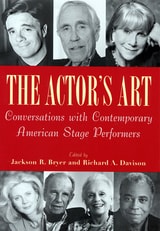
The Actor's Art
Conversations with Contemporary American Stage PerformersDavison, Richard A
Rutgers University Press, 2001
The Adaptability Paradox
Political Inclusion and Constitutional ResilienceStephen Skowronek
University of Chicago Press, 2025
Has American democracy outstripped its constitutional accommodations?
Faith in the resilience and adaptability of the US Constitution rests on a long history of finding new ways to make the system work. In The Adaptability Paradox, political scientist Stephen Skowronek examines the rearrangements that regenerated the American government in the past and brings that experience to bear on our current predicament. He shows how a constitution framed in writing some 230 years ago can run into serious difficulties directly related to its long and impressive history of adaptation.
Skowronek connects questions about the Constitution’s adaptability to the challenges of democratization. For most of American history, serial rearrangements of constitutional relationships widened the government’s purview as a national democracy without giving either nationalism or democracy free rein. Skowronek argues that the politics of adaptation shifted fundamentally with the “Rights Revolution” of the 1960s and `70s when American national democracy approached the inclusion of all its citizens on equal footing. Since then, power and authority have been reconfigured in ways that have steadily magnified conflicts over the essentials of good order. Conservatives aim to dismantle a Constitution that progressives are intent on building upon, and the consensus necessary for a constitutional democracy to function effectively has all but evaporated. No longer a socially bound framework for national action, the Constitution has become an abstract matrix of possibilities, a disembodied opportunity structure open to starkly different, mutually unacceptable futures.
Rather than being liberated by this unbound Constitution, the American people now appear entrapped by it. Is it possible that the development of American democracy has exhausted the adaptive capacities of the Constitution? A timely reminder that constitutional democracies do not survive on faith alone, The Adaptability Paradox is a sober appraisal of the unfamiliar ground on which we now tread.
The Addison Gayle Jr. Reader
Edited by Nathaniel Norment Jr.
University of Illinois Press, 2008
The Adjunct Underclass
How America’s Colleges Betrayed Their Faculty, Their Students, and Their MissionHerb Childress
University of Chicago Press, 2019
Welcome to the life of the mind in the gig economy. Over the past few decades, the job of college professor has been utterly transformed—for the worse. America’s colleges and universities were designed to serve students and create knowledge through the teaching, research, and stability that come with the longevity of tenured faculty, but higher education today is dominated by adjuncts. In 1975, only thirty percent of faculty held temporary or part-time positions. By 2011, as universities faced both a decrease in public support and ballooning administrative costs, that number topped fifty percent. Now, some surveys suggest that as many as seventy percent of American professors are working course-to-course, with few benefits, little to no security, and extremely low pay.
In The Adjunct Underclass, Herb Childress draws on his own firsthand experience and that of other adjuncts to tell the story of how higher education reached this sorry state. Pinpointing numerous forces within and beyond higher ed that have driven this shift, he shows us the damage wrought by contingency, not only on the adjunct faculty themselves, but also on students, the permanent faculty and administration, and the nation. How can we say that we value higher education when we treat educators like desperate day laborers?
Measured but passionate, rooted in facts but sure to shock, The Adjunct Underclass reveals the conflicting values, strangled resources, and competing goals that have fundamentally changed our idea of what college should be. This book is a call to arms for anyone who believes that strong colleges are vital to society.
The Adventures of a Prisoner of War, 1863–1864
By Decimus et Ultimus Barziza. Edited by R. Henderson Shuffler
University of Texas Press, 1964
This journal is the exciting personal narrative of a Texan who was a prisoner of the Union Army during the Civil War, escaped to Canada, and finally made his way back into the Confederacy through the blockade. It was written while the war was still in progress.
The journal was issued anonymously in Houston early in 1865. Its author, Decimus et Ultimus Barziza, was a colorful, competent, truly remarkable Texan—well educated, well traveled, and sophisticated as an observer. Barziza came to Texas from Virginia in 1857. He left a growing law practice at Owensville to enter Confederate service as first lieutenant of the “Robertson Five-Shooters,” an infantry company which was one of the original units of the Fourth Texas Infantry, Hood’s Brigade. After fighting in many battles, he was wounded at Gettysburg and left lying on the field. The Yankees picked him up and imprisoned him at Johnson’s Island.
A year later, as Barziza was being shipped to another prison, he escaped by diving through a window of the moving train at midnight. Making his way across Pennsylvania to New York, he took a train for Canada. There he became one of the first beneficiaries of an underground system which eventually returned him to North Carolina. Too ill from his wounds and the hardships of his escape to return to active duty, he spent the next few months writing his memoirs. They cover the period from the drive for Gettysburg to Barziza’s return to the Confederacy.
Before the original publication of this book, only two copies of The Adventures of a Prisoner of War were known to exist. R. Henderson Shuffler, then director of the Texana program of the University of Texas, felt that it was intriguing and important enough to merit editing for republication. The journal has the further attraction of describing the then little-known machinery which was set up in Canada to help Rebel soldiers who had escaped Northern prisons make their way back to the Confederacy by way of Nova Scotia and Bermuda.
Shuffler supplements the narrative with limited yet helpful documentation, providing introductory sections explaining Barziza’s background and his career as a Texas legislator and lawyer, as well as carrying the war story up to the sequence where Barziza’s account begins.
The Advice King Anthology
Chris Crofton
Vanderbilt University Press, 2022
If you are looking for traditional advice, this might not be the book for you. But if you care to find the incendiary, subversive, and hilarious alongside actual thoughts about addiction, depression, gentrification, politics, poetry, music, economic policy, living in New Nashville, and (inevitably) romance, the Advice King has much to offer.

The Advocates of Poetry
A Reader of American Poet-Critics of the Modernist EraR S Gwynn
University of Arkansas Press, 1996
The Aesthetics of Equity
Notes on Race, Space, Architecture, and MusicCraig L. Wilkins
University of Minnesota Press, 2007
Architecture is often thought to be a diary of a society, filled with symbolic representations of specific cultural moments. However, as Craig L. Wilkins observes, that diary includes far too few narratives of the diverse cultures in U.S. society. Wilkins states that the discipline of architecture has a resistance to African Americans at every level, from the startlingly small number of architecture students to the paltry number of registered architects in the United States today.
Working to understand how ideologies are formed, transmitted, and embedded in the built environment, Wilkins deconstructs how the marginalization of African Americans is authorized within the field of architecture. He then outlines how activist forms of expression shape and sustain communities, fashioning an architectural theory around the site of environmental conflict constructed by hip-hop culture.
Wilkins places his concerns in a historical context, and also offers practical solutions to address them. In doing so, he reveals new possibilities for an architecture that acknowledges its current shortcomings and replies to the needs of multicultural constituencies.
Craig L. Wilkins, a registered architect, teaches architecture and urban planning at the University of Michigan.
The Afric-American Picture Gallery
William J. Wilson's Speculative Museum of Black ArtBritt Rusert
Duke University Press, 2026
The African American Newspaper
Voice of FreedomPatrick S. Washburn
Northwestern University Press, 2006
In March of 1827 the nation's first black newspaper appeared in New York City—to counter attacks on blacks by the city's other papers. From this signal event, The African American Newspaper traces the evolution of the black newspaper—and its ultimate decline--for more than 160 years until the end of the twentieth century.
The book chronicles the growth of the black press into a powerful and effective national voice for African Americans during the period from 1910 to 1950--a period that proved critical to the formation and gathering strength of the civil rights movement that emerged so forcefully in the following decades. In particular, author Patrick S. Washburn explores how the Pittsburgh Courier and the Chicago Defender led the way as the two most influential black newspapers in U.S. history, effectively setting the stage for the civil rights movement's successes. Washburn also examines the numerous reasons for the enormous decline of black newspapers in influence and circulation in the decades immediately following World War II. His book documents as never before how the press's singular accomplishments provide a unique record of all areas of black history and a significant and shaping affect on the black experience in America.
The Afro-Latin@ Reader
History and Culture in the United StatesMiriam Jiménez Román and Juan Flores, eds.
Duke University Press, 2010
While the selections cover centuries of Afro-Latin@ history, since the arrival of Spanish-speaking Africans in North America in the mid-sixteenth-century, most of them focus on the past fifty years. The central question of how Afro-Latin@s relate to and experience U.S. and Latin American racial ideologies is engaged throughout, in first-person accounts of growing up Afro-Latin@, a classic essay by a leader of the Young Lords, and analyses of U.S. census data on race and ethnicity, as well as in pieces on gender and sexuality, major-league baseball, and religion. The contributions that Afro-Latin@s have made to U.S. culture are highlighted in essays on the illustrious Afro-Puerto Rican bibliophile Arturo Alfonso Schomburg and music and dance genres from salsa to mambo, and from boogaloo to hip hop. Taken together, these and many more selections help to bring Afro-Latin@s in the United States into critical view.
Contributors: Afro–Puerto Rican Testimonies Project, Josefina Baéz, Ejima Baker, Luis Barrios, Eduardo Bonilla-Silva, Adrian Burgos Jr., Ginetta E. B. Candelario, Adrián Castro, Jesús Colón, Marta I. Cruz-Janzen, William A. Darity Jr., Milca Esdaille, Sandra María Esteves, María Teresa Fernández (Mariposa), Carlos Flores, Juan Flores, Jack D. Forbes, David F. Garcia, Ruth Glasser, Virginia Meecham Gould, Susan D. Greenbaum, Evelio Grillo, Pablo “Yoruba” Guzmán, Gabriel Haslip-Viera, Tanya K. Hernández, Victor Hernández Cruz, Jesse Hoffnung-Garskof, Lisa Hoppenjans, Vielka Cecilia Hoy, Alan J. Hughes, María Rosario Jackson, James Jennings, Miriam Jiménez Román, Angela Jorge, David Lamb, Aida Lambert, Ana M. Lara, Evelyne Laurent-Perrault, Tato Laviera, John Logan, Antonio López, Felipe Luciano, Louis Pancho McFarland, Ryan Mann-Hamilton, Wayne Marshall, Marianela Medrano, Nancy Raquel Mirabal, Yvette Modestin, Ed Morales, Jairo Moreno, Marta Moreno Vega, Willie Perdomo, Graciela Pérez Gutiérrez, Sofia Quintero, Ted Richardson, Louis Reyes Rivera, Pedro R. Rivera , Raquel Z. Rivera, Yeidy Rivero, Mark Q. Sawyer, Piri Thomas, Silvio Torres-Saillant, Nilaja Sun, Sherezada “Chiqui” Vicioso, Peter H. Wood
The Afterlife of Reproductive Slavery
Biocapitalism and Black Feminism’s Philosophy of HistoryAlys Eve Weinbaum
Duke University Press, 2019

The Afterlife of Taste Hierarchies in Contemporary U.S. Art and Literature
Rooney, Monique
University of Iowa Press, 2026
Connecting literary studies, media theory, and cultural criticism, The Afterlife of Taste Hierarchies in Contemporary U.S. Art and Literature offers a fresh vocabulary for understanding how we evaluate art and each other in an age of digital mediation. Drawing on works and artifacts ranging from Beyoncé’s Lemonade and Andrea Long Chu’s “China Brain” to Ottessa Moshfegh’s My Year of Rest and Relaxation and the viral Bernie Sanders mittens meme, Monique Rooney traces how aspirations to refinement and gestures of condescension—once associated with high-, middle-, and lowbrow culture—continue to define aesthetic experience. This book moves between literary and popular forms, attending as closely to the meme’s dispersed creativity as to the novel’s intentional aesthetics.
The Afterlives of Specimens
Science, Mourning, and Whitman's Civil WarLindsay Tuggle
University of Iowa Press, 2017
Grounded in archival discoveries, Afterlives traces the origins of nineteenth-century America’s preservation compulsion, illuminating the influences of botanical, medical, spiritualist, and sentimental discourses on Whitman’s work. Tuggle unveils previously unrecognized connections between Whitman and the leading “medical men” of his era, such as the surgeon John H. Brinton, founding curator of the Army Medical Museum, and Silas Weir Mitchell, the neurologist who discovered phantom limb syndrome. Remains from several amputee soldiers whom Whitman nursed in the Washington hospitals became specimens in the Army Medical Museum.
Tuggle is the first scholar to analyze Whitman’s role in medically memorializing the human cadaver and its abandoned parts.
The Aftermath of War
Jean-Paul Sartre
Seagull Books, 2008
The Age and Stage of George L. Fox, 1825-1877
1825-1877Laurence Senelick
University of Iowa Press, 1999
The Age of Strict Construction
a History of the Growth of Federal Power, 1789-1861Peter Zavodnyik
Catholic University of America Press, 2007
The Agony of Heroes
Medical Care for America's Besieged Legions from Bataan to Khe SanhThomas S. Helling
Westholme Publishing, 2024
Bataan, Anzio, Bastogne, Chosin, Khe Sanh: names that define the American spirit. They are synonymous with courage, resilience, and determination against great odds. At each of these battles American soldiers and Marines weathered desperation and fear to survive, advance, and triumph. Along with these heroes of the battlefield were no less determined and courageous providers of medical care. From the heat and disease-ridden jungles of Bataan, the precarious beachhead of Anzio, the encircled town of Bastogne, the frozen fields of Chosin, and the forsaken plateau of Khe Sanh, doctors and nurses worked under intense conditions with whatever means at hand, to staunch bleeding, repair damage, and resurrect the dying. In so doing they gave a glimmer of hope for the warriors facing possible death or capitulation. Often completely cut off from vital supplies and modern technology, and under the threat of enemy fire, these medical professionals—men and women—never lost sight of their passionate commitment to the sick and wounded. As noncombatants, this took extraordinary resolve to ignore the mortal threats of explosions and gunfire to focus on the mission of relieving pain, dragging from the brink of death damaged soldiers completely dependent on their resourcefulness. Some of these brave men and women would suffer the same fate as their fighting comrades, cut down by enemy fire in the prime of life, many times in the very task of rendering the bottomless compassion that was their hallmark and sometimes their only tonic.
In The Agony of Heroes: Medical Care for America’s Besieged Legions from Bataan to Khe Sanh, distinguished surgeon Thomas S. Helling relates the inspirational and compelling stories of the doctors, nurses, corpsmen, aides, and others who braved the most frightening conditions in order to save lives. Their experiences testify to the indomitable human grit that, when asked, transforms ordinary behavior into extraordinary achievements.
The Agrarian Dispute
The Expropriation of American-Owned Rural Land in Postrevolutionary MexicoJohn J. Dwyer
Duke University Press, 2008
Dwyer weaves together elite and subaltern history and highlights the intricate relationship between domestic and international affairs. Through detailed studies of land redistribution in Baja California and Sonora, he demonstrates that peasant agency influenced the local application of Cárdenas’s agrarian reform program, his regional state-building projects, and his relations with the United States. Dwyer draws on a broad array of official, popular, and corporate sources to illuminate the motives of those who contributed to the agrarian dispute, including landless fieldworkers, indigenous groups, small landowners, multinational corporations, labor leaders, state-level officials, federal policymakers, and diplomats. Taking all of them into account, Dwyer explores the circumstances that spurred agrarista mobilization, the rationale behind Cárdenas’s rural policies, the Roosevelt administration’s reaction to the loss of American-owned land, and the diplomatic tactics employed by Mexican officials to resolve the international conflict.

The Air-Line to Seattle
Kenneth S. Lynn
University of Chicago Press, 1984
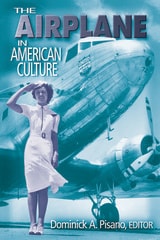
The Airplane in American Culture
Dominick A. Pisano, Editor
University of Michigan Press, 2003
Although countless books for aviation buffs have appeared since World War II, none has attempted to place the airplane in its full social, cultural, and interdisciplinary context until now. The first book of its kind, The Airplane in American Culture presents essays by distinguished contributors including historians, literary scholars, scholars of American studies, art historians, and museum professionals that explore a range of topics, including the connections between flying and race and gender; aviation's role in forming perceptions of the landscape; the airplane's significance to the culture of war; and the influence of flight on literature and art.
A must-read collection for anyone fascinated by the airplane, The Airplane in American Culture represents a dramatic new approach to writing the history of aviation, and makes an important contribution to American social and cultural history.
Dominick A. Pisano is Curator of the Aeronautics Department at the National Air and Space Museum, Smithsonian Institution.
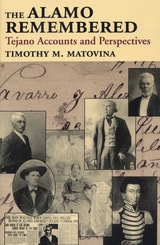
The Alamo Remembered
Tejano Accounts and PerspectivesBy Timothy M. Matovina
University of Texas Press, 1995
As Mexican soldiers fought the mostly Anglo-American colonists and volunteers at the Alamo in 1836, San Antonio's Tejano population was caught in the crossfire, both literally and symbolically. Though their origins were in Mexico, the Tejanos had put down lasting roots in Texas and did not automatically identify with the Mexican cause. Indeed, as the accounts in this new collection demonstrate, their strongest allegiance was to their fellow San Antonians, with whom they shared a common history and a common plight as war raged in their hometown.
Timothy M. Matovina here gathers all known Tejano accounts of the Battle of the Alamo. These accounts consist of first reports of the battle, including Juan N. Seguín's funeral oration at the interment ceremony of the Alamo defenders, conversations with local Tejanos, unpublished petitions and depositions, and published accounts from newspapers and other sources. This communal response to the legendary battle deepens our understanding of the formation of Mexican American consciousness and identity.
The Alaska Native Reader
History, Culture, PoliticsMaria Shaa Tláa Williams, ed.
Duke University Press, 2009
The Alaska Native Reader describes indigenous worldviews, languages, arts, and other cultural traditions as well as contemporary efforts to preserve them. Several pieces examine Alaska Natives’ experiences of and resistance to Russian and American colonialism; some of these address land claims, self-determination, and sovereignty. Some essays discuss contemporary Alaska Native literature, indigenous philosophical and spiritual tenets, and the ways that Native peoples are represented in the media. Others take up such diverse topics as the use of digital technologies to document Native cultures, planning systems that have enabled indigenous communities to survive in the Arctic for thousands of years, and a project to accurately represent Dena’ina heritage in and around Anchorage. Fourteen of the volume’s many illustrations appear in color, including work by the contemporary artists Subhankar Banerjee, Perry Eaton, Erica Lord, and Larry McNeil.
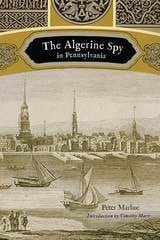
The Algerine Spy in Pennsylvania
Peter Markoe
Westholme Publishing, 2008
An Important Book in America’s Early Encounter with the Arab World
“A pungent satire on American affairs.” —Samuel Eliot Morison
In 1787, while American sailors languished in a Barbary prison, delegates debated the Constitution in Philadelphia. Despite America’s desire to respond to the crisis, without a central government, the new republic had no means to create a naval force. Enter an anonymously published book, The Algerine Spy in Pennsylvania: or, Letters Written by a Native of Algiers on the Affairs of the United States in America, which began circulating among the delegates. Consisting of a series of letters ostensibly written by an Algerian agent “Mehmet” back to his leader, the spy predicted that the former colonies would never be able to resolve their differences and be “ruined by disunion.” The book created a sensation and it helped tip the balance for those in favor of adopting the new Constitution. Following the Constitution’s final ratification in 1789, the United States created a navy and began asserting its power overseas. With its commentary about men and women, business and pleasure, and historical and religious comparisons between nations, The Algerine Spy in Pennsylvania provides both a contemporary snapshot of early American life and the political ideas of the period. Never before reprinted, and recently rated one of the five best works in the history of America’s encounter with the Arab world, this new edition is edited by historian Timothy Marr, who reconsiders the importance of this early work in the political and literary history of the United States.
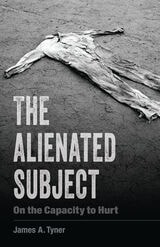
The Alienated Subject
On the Capacity to HurtJames A. Tyner
University of Minnesota Press, 2022
A timely and provocative discussion of alienation as an intersectional category of life under racial capitalism and white supremacy
From the divisiveness of the Trump era to the Covid-19 pandemic, alienation has become an all-too-familiar contemporary concept. In this groundbreaking book, James A. Tyner offers a novel framework for understanding the alienated subject, situating it within racial capitalism and white supremacy. Directly addressing current economic trends and their rhetoric of xenophobia, discrimination, and violence, The Alienated Subject exposes the universal whitewashing of alienation.
Drawing insight from a variety of sources, including Marxism, feminism, existentialism, and critical race theory, Tyner develops a critique of both the liberal subject and the alienated subject. Through an engagement with the recent pandemic and the Black Lives Matter movement, he demonstrates how the alienated subject is capable of both compassion and cruelty; it is a sadomasochist. Tyner goes on to emphasize the importance of the particular places we find the alienated subject and how the revolutionary transformation of alienation is inherently a spatial struggle. Returning to key interlocutors from Sartre to Fromm, he examines political notions of distance and the spatial practices of everyday life as well as the capitalist conditions that give rise to the alienated subject.
For Tyner, the alienated subject is not the iconic, romanticized image of Marx’s proletariat. Here he calls for an affirmation of love as a revolutionary concept, necessary for the transformation of a society marred by capitalism into an emancipated, caring society conditioned by socially just relations.

The Aliites
Race and Law in the Religions of Noble Drew AliSpencer Dew
University of Chicago Press, 2019
In The Aliites, Spencer Dew traces the history and impact of Ali’s radical fusion of law and faith. Dew uncovers the influence of Ali’s teachings, including the many movements they inspired. As Dew shows, Ali’s teachings demonstrate an implicit yet critical component of the American approach to law: that it should express our highest ideals for society, even if it is rarely perfect in practice. Examining this robustly creative yet largely overlooked lineage of African American religious thought, Dew provides a window onto religion, race, citizenship, and law in America.
The Almanac of American Politics 2014
Michael Barone, Chuck McCutcheon, Sean Trende, and Josh Kraushaar
University of Chicago Press, 2013
Like every edition since the almanac first appeared in 1972, the 2014 edition is helmed by veteran political analyst Michael Barone. Together with Chuck McCutcheon, collaborator since 2012, and two new editors, Sean Trende, senior elections analyst for RealClearPolitics, and Josh Kraushaar, managing editor at National Journal, Barone offers an unparalleled perspective on contemporary politics.
Full of maps, census data, and detailed information about the American political landscape, the 2014 Almanac of American Politics remains the most comprehensive resource for journalists, politicos, business people, and academics.
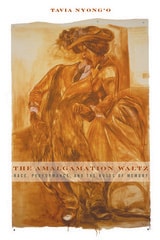
The Amalgamation Waltz
Race, Performance, and the Ruses of MemoryTavia Nyong’o
University of Minnesota Press, 2009
Does racial hybridity offer a future beyond racial difference?
At a time when the idea of a postracial society has entered public discourse, The Amalgamation Waltz investigates the practices that conjoined blackness and whiteness in the nineteenth and twentieth centuries. Scrutinizing widely diverse texts—archival, musical, visual, and theatrical—Tavia Nyong’o traces the genealogy of racial hybridity, analyzing how key events in the nineteenth century spawned a debate about interracialism that lives on today.
Deeply interested in how discussions of racial hybridity have portrayed the hybrid as the recurring hope for a distant raceless future, Nyong’o is concerned with the ways this discourse deploys the figure of the racial hybrid as an alibi for a nationalism that reinvents the racist logics it claims to have broken with. As Nyong’o demonstrates, the rise of a pervasive image of racially anomalous bodies responded to the appearance of an independent black public sphere and organized politics of black uplift. This newfound mobility was apprehended in the political imaginary as a bodily and sexual scandal, and the resultant amalgamation discourse, he argues, must be recognized as one of the earliest and most enduring national dialogues on sex and sexuality. Nyong’o tracks the emergence of the concept of the racial hybrid as an ideological modernization of the older concept of the mongrel and shows how this revision brought race-thinking in line with new understandings of sex and gender, providing a racial context for the shift toward modern heterosexuality, the discourse on which postracial metaphors so frequently rely. A timely rebuttal to our contemporary fascination with racial hybridity, The Amalgamation Waltz questions the vision of a national future without racial difference or conflict.