Results by title
28167 books match the query 'History' and 6372 start with t
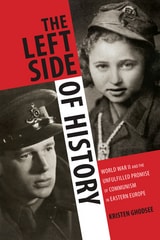
The Left Side of History
World War II and the Unfulfilled Promise of Communism in Eastern EuropeKristen Ghodsee
Duke University Press, 2015
The Legacy of Black Women in Librarianship
When They Dared to Be PowerfulEdited by Nicole A. Cooke
American Library Association, 2025
- span the entire 20th Century, stretching from rural South Carolina and Florida to urban centers like New York and Los Angeles;
- profile better known figures such as Augusta Baker and Eliza Atkins Gleason as well as many who have yet to receive their due;
- grapple with the toxic legacy of segregation in library education, universities, public libraries, schools, and other institutions, showing how these persevering Black women dared to strive and work towards more equitable futures;
- include an inspiring Afterword by Dr. Aisha Johnson-Jones, an educator and revelator of Southern intellectual history;
- will encourage LIS students and newer librarians of all backgrounds to see themselves reflected in the profession’s long and rich heritage; and
- shed light on how librarianship can become ever more diverse and community centered.

The Legacy of Christopher Columbus in the Americas
New Nations and a Transatlantic Discourse of EmpireElise Bartosik-Velez
Vanderbilt University Press, 2014
Bartosik-Velez seeks to explain the meaning of Christopher Columbus throughout the so-called New World, first in the British American colonies and the United States, as well as in Spanish America, during the eighteenth and nineteenth centuries. She argues that, during the pre- and post-revolutionary periods, New World societies commonly imagined themselves as legitimate and powerful independent political entities by comparing themselves to the classical empires of Greece and Rome. Columbus, who had been construed as a figure of empire for centuries, fit perfectly into that framework. By adopting him as a national symbol, New World nationalists appeal to Old World notions of empire.
The Legacy of Division
East and West after 1989Ferenc Laczó
Central European University Press, 2020
This volume examines the legacy of the East–West divide since the implosion of the communist regimes in Europe. The ideals of 1989 have largely been frustrated by the crises and turmoil of the past decade. The liberal consensus was first challenged as early as the mid-2000s. In Eastern Europe, grievances were directed against the prevailing narratives of transition and ever sharper ethnic-racial antipathies surfaced in opposition to a supposedly postnational and multicultural West. In Western Europe, voices regretting the European Union's supposedly careless and premature expansion eastward began to appear on both sides of the left–right and liberal–conservative divides. The possibility of convergence between Europe's two halves has been reconceived as a threat to the European project.
In a series of original essays and conversations, thirty-three contributors from the fields of European and global history, politics and culture address questions fundamental to our understanding of Europe today: How have perceptions and misperceptions between the two halves of the continent changed over the last three decades? Can one speak of a new East–West split? If so, what characterizes it and why has it reemerged? The contributions demonstrate a great variety of approaches, perspectives, emphases, and arguments in addressing the daunting dilemma of Europe's assumed East–West divide.
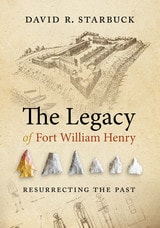
The Legacy of Fort William Henry
Resurrecting the PastDavid R. Starbuck
University Press of New England, 2014
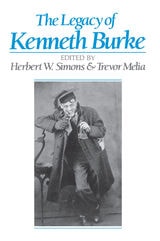
The Legacy of Kenneth Burke
Herbert W. Simons
University of Wisconsin Press, 1989
Capturing the lively modernist milieu of Kenneth Burke’s early career in Greenwich Village, where Burke arrived in 1915 fresh from high school in Pittsburgh, this book discovers him as an intellectual apprentice conversing with “the moderns.” Burke found himself in the midst of an avant-garde peopled by Malcolm Cowley, Marianne Moore, Jean Toomer, Katherine Anne Porter, William Carlos Williams, Allen Tate, Hart Crane, Alfred Stieglitz, and a host of other fascinating figures.
Burke himself, who died in 1993 at the age of 96, has been hailed as America’s most brilliant and suggestive critic and the most significant theorist of rhetoric since Cicero. Many schools of thought have claimed him as their own, but Burke has defied classification and indeed has often been considered a solitary, eccentric genius immune to intellectual fashions. But Burke’s formative work of the 1920s, when he first defined himself and his work in the context of the modernist conversation, has gone relatively unexamined.
Here we see Burke living and working with the crowd of poets, painters, and dramatists affiliated with Others magazine, Stieglitz’s “291” gallery, and Eugene O’Neill’s Provincetown Players; the leftists associated with the magazines The Masses and Seven Arts; the Dadaists; and the modernist writers working on literary journals like The Dial, where Burke in his capacity as an associate editor saw T. S. Eliot’s “The Wasteland” into print for the first time and provided other editorial services for Thomas Mann, e.e. cummings, Ezra Pound, and many other writers of note. Burke also met the iconoclasts of the older generation represented by Theodore Dreiser and H. L. Mencken, the New Humanists, and the literary nationalists who founded Contact and The New Republic. Jack Selzer shows how Burke’s own early poems, fiction, and essays emerged from and contributed to the modernist conversation in Greenwich Village. He draws on a wonderfully rich array of letters between Burke and his modernist friends and on the memoirs of his associates to create a vibrant portrait of the young Burke’s transformation from aesthete to social critic.
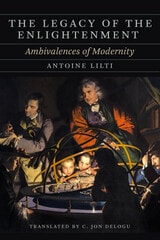
The Legacy of the Enlightenment
Ambivalences of ModernityAntoine Lilti
University of Chicago Press, 2025
The Enlightenment has come under substantial attack over the past several years, with some going so far as to recommend leaving behind its thinkers and their Eurocentric prejudices. In response, the most orthodox defenders of the Enlightenment have insisted that its values are not just foundational but indispensable and that abandoning them would mean opening the door to nihilism and relativism. For Antoine Lilti, one of the leading scholars of the French Enlightenment, both sides are wrong.
In this tactfully argued series of essays, Lilti emphasizes a non-dogmatic, non-ideological view of the Enlightenment—one that sees its legacy as a critical, attentive approach that can and should serve as its own best critic. Along the way, he engages with everyone from Rousseau and Kant to Foucault and Habermas, as well as prominent contemporary voices, such as Jonathan Israel. The result is a remarkable new reading of the Enlightenment that redraws the stakes of old debates and offers an alternative way to engage with both canonical thinkers and later scholarship that is both honest about the past and useful for the future.
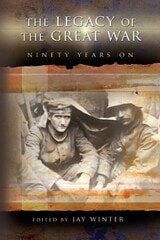
The Legacy of the Great War
Ninety Years OnEdited by Jay Winter
University of Missouri Press, 2009
In late 2007 and early 2008, world-renowned historians gathered in Kansas City for a series of public forums on World War I. Each of the five events focused on a particular topic and featured spirited dialogue between its prominent participants.
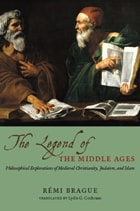
The Legend of the Middle Ages
Philosophical Explorations of Medieval Christianity, Judaism, and IslamRémi Brague
University of Chicago Press, 2009
This volume presents a penetrating interview and sixteen essays that explore key intersections of medieval religion and philosophy. With characteristic erudition and insight, RémiBrague focuses less on individual Christian, Jewish, and Muslim thinkers than on their relationships with one another. Their disparate philosophical worlds, Brague shows, were grounded in different models of revelation that engendered divergent interpretations of the ancient Greek sources they held in common. So, despite striking similarities in their solutions for the philosophical problems they all faced, intellectuals in each theological tradition often viewed the others’ ideas with skepticism, if not disdain. Brague’s portrayal of this misunderstood age brings to life not only its philosophical and theological nuances, but also lessons for our own time.
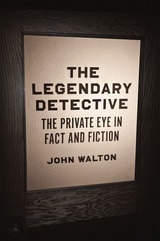
The Legendary Detective
The Private Eye in Fact and FictionJohn Walton
University of Chicago Press, 2015
“I’m in a business where people come to me with troubles. Big troubles, little troubles, but always troubles they don’t want to take to the cops.” That’s Raymond Chandler’s Philip Marlowe, succinctly setting out our image of the private eye. A no-nonsense loner, working on the margins of society, working in the darkness to shine a little light.
The reality is a little different—but no less fascinating. In The Legendary Detective, John Walton offers a sweeping history of the American private detective in reality and myth, from the earliest agencies to the hard-boiled heights of the 1930s and ’40s. Drawing on previously untapped archival accounts of actual detective work, Walton traces both the growth of major private detective agencies like Pinkerton, which became powerful bulwarks against social and labor unrest and the motley, unglamorous work of small-time operatives. He then goes on to show us how writers like Dashiell Hammett and editors of sensational pulp magazines like Black Mask embellished on actual experiences and fashioned an image of the PI as a compelling, even admirable, necessary evil, doing society’s dirty work while adhering to a self-imposed moral code. Scandals, public investigations, and regulations brought the boom years of private agencies to an end in the late 1930s, Walton explains, in the process fully cementing the shift from reality to fantasy.
Today, as the private detective has long since given way to security services and armed guards, the myth of the lone PI remains as potent as ever. No fan of crime fiction or American history will want to miss The Legendary Detective.
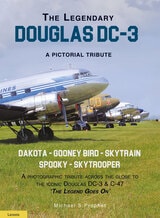
The Legendary Douglas DC-3
A Pictorial TributeMichael S. Prophet
Amsterdam University Press, 2023
Many of these revolutions related to safety; thanks to the DC-3’s reputation for reliability, air travel insurance finally became available to the general public in 1937. This is the airliner that not only made flying respectable but enabled the emerging aviation industry to end its reliance on mail subsidies and profit from passenger journeys.
DC-3 is still flying eight decades after their first debut - this book is a tribute to its brilliant design.
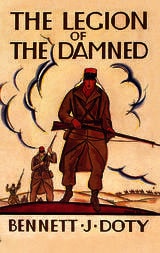
The Legion of the Damned
The Adventures of Bennett J. Doty in the French Foreign Legion as Told by HimselfBennett J. Doty
Westholme Publishing, 2020
“You see there was down South a girl I liked. And she is now married . . . not to me.” So Bennett J. Doty confessed when he sailed for France and enlisted in the French Foreign Legion in 1924. A World War I veteran and University of Virginia student, Doty first trained in Morocco and Algeria before being shipped off to the French-controlled State of Syria. There, he and his fellow “bleus,” who hailed from Belgium, Poland, Italy, Senegal, Spain, Germany, Russia, and other countries, found themselves at the spearhead of the attempt to quell the revolt against French rule in the area. The fighting, mostly against the Druze, was fierce, merciless, and unrelenting. Fought in villages and at isolated outposts, there was no quarter. Entire villages were razed, fields destroyed, and prisoners were not taken by either side. In the engagement where Doty and several other of his “copains”—“buddies”—earned the Croix de Guerre, his unit became isolated and withstood days of attacks which claimed more than half of the Legionnaires until they were finally relieved by a French colonial column. With the immediate fighting over, the Legion was put to heavy manual labor under the hot desert sun. Doty became disillusioned, and with four other soldiers, fled in an attempt to reach British-controlled Jordan. They were caught, tried, and Doty was sentenced to eight years in a French prison. When word reached the United States, diplomatic efforts ultimately gained Doty a pardon and honorable discharge from service.
Originally published in 1928, Legion of the Damned, Doty’s acclaimed account of his time in the Legion, is a remarkable memoir that requires no additional drama to allow the reader to experience the desperation, exhilaration, fear, and disgust of a colonial war. Here, Doty shows how drunken, unruly, vicious veterans would transform into capable, cool, and orderly soldiers as soon as a battle began—the élan that earned the French Foreign Legion its reputation as a legendary fighting unit.
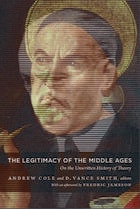
The Legitimacy of the Middle Ages
On the Unwritten History of TheoryAndrew Cole and D. Vance Smith, eds.
Duke University Press, 2010
In The Legitimacy of the Middle Ages, modernists and medievalists, as well as scholars specializing in eighteenth-, nineteenth-, and twentieth-century comparative literature, offer a new history of theory and philosophy through essays on secularization and periodization, Marx’s (medieval) theory of commodity fetishism, Heidegger’s scholasticism, and Adorno’s nominalist aesthetics. One essay illustrates the workings of medieval mysticism in the writing of Freud’s most famous patient, Daniel Paul Schreber, author of Memoirs of My Nervous Illness (1903). Another looks at Michael Hardt and Antonio Negri’s Empire, a theoretical synthesis whose conscientious medievalism was the subject of much polemic in the post-9/11 era, a time in which premodernity itself was perceived as a threat to western values. The collection concludes with an afterword by Fredric Jameson, a theorist of postmodernism who has engaged with the medieval throughout his career.
Contributors: Charles D. Blanton, Andrew Cole, Kathleen Davis, Michael Hardt, Bruce Holsinger, Fredric Jameson, Ethan Knapp, Erin Labbie, Jed Rasula, D. Vance Smith, Michael Uebel
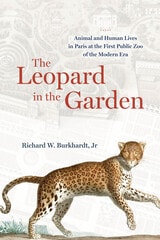
The Leopard in the Garden
Animal and Human Lives in Paris at the First Public Zoo of the Modern EraRichard W. Burkhardt, Jr.
University of Chicago Press, 2026
The Paris menagerie at the Paris Museum of Natural History has a special significance in the history of zoos. Founded in 1793–1794 at the height of the French Revolution, it was the model for the other great zoos of the nineteenth century that followed, beginning with London in 1828, Amsterdam in 1838, and Berlin in 1844.
Richard W. Burkhardt Jr. has written the definitive history of the Paris zoo and its early inhabitants, human and nonhuman. The book features narrative or thematic chapters interwoven with chapters focused on particular animals. Combining current scholarship with fresh discoveries gleaned from his immersion in the Paris Zoo’s extensive archive, Burkhardt shares historical treasures that illuminate not only the workings of the menagerie but also various dimensions of the golden age of French zoology (the years of Jean-Baptiste Lamarck, Geoffroy Saint-Hilaire, and Georges Cuvier). His history reconstructs the diverse sources of specimens, the growth of the collection over time, the efforts to make the menagerie scientifically significant, contemporary attitudes toward animals, and the lives of the animals themselves in colonial and diplomatic contexts.
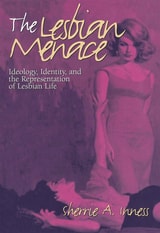
The Lesbian Menace
Ideology, Identity, and the Representation of Lesbian LifeSherrie A. Inness
University of Massachusetts Press, 1997
Electroshock. Hysterectomy. Lobotomy. These are only three of the many “cures” to which lesbians have been subjected in this century. How does a society develop such a profound aversion to a particular minority? In what ways do images in the popular media perpetuate cultural stereotypes about lesbians, and to what extent have lesbians been able to subvert and revise those images? This book addresses these and other questions by examining how lesbianism has been represented in American popular culture in the twentieth century and how conflicting ideologies have shaped lesbian experiences and identity.
In the first section, “Inventing the Lesbian,” Sherrie A. Inness explores depictions of lesbians in popular texts aimed primarily at heterosexual consumers. She moves from novels of the 1920s to books about life at women's colleges and boarding schools, to such contemporary women's magazines as Cosmopolitan, Glamour, and Vogue.
In the next section, “Forms of Resistance,” Inness probes the ways in which lesbians have refashioned texts intended for a heterosexual audience or created their own narratives. One chapter shows how lesbian readers have reinterpreted the Nancy Drew mysteries, looking at them from a distinctly “queer” perspective. Another chapter addresses the changing portrayal of lesbians in children's books over the past two decades.
The last section, “Writing in the Margins,” scrutinizes the extent to which lesbians, themselves a marginalized group, have created a society that relegates some of its own members to the outskirts. Topics include the geographic politics of lesbianism, the complex issue of "passing," and the meaning of butch identity in twentieth-century lesbian culture.
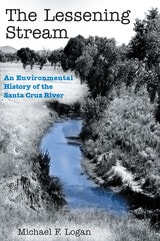
The Lessening Stream
An Environmental History of the Santa Cruz RiverMichael F. Logan
University of Arizona Press, 2002
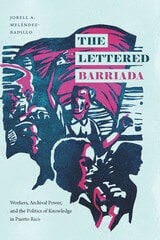
The Lettered Barriada
Workers, Archival Power, and the Politics of Knowledge in Puerto RicoJorell A. Meléndez-Badillo
Duke University Press, 2021
Duke University Press Scholars of Color First Book Award recipient
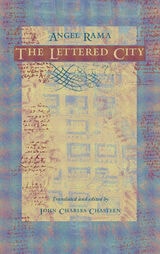
The Lettered City
Angel Rama
Duke University Press, 1996
Starting with the colonial period, Rama undertakes a historical analysis of the hegemonic influences of the written word. He explores the place of writing and urbanization in the imperial designs of the Iberian colonialists and views the city both as a rational order of signs representative of Enlightenment progress and as the site where the Old World is transformed—according to detailed written instructions—in the New. His analysis continues by recounting the social and political challenges faced by the letrados as their roles in society widened to include those of journalist, fiction writer, essayist, and political leader, and how those roles changed through the independence movements of the nineteenth century. The coming of the twentieth century, and especially the gradual emergence of a mass reading public, brought further challenges. Through a discussion of the currents and countercurrents in turn-of-the-century literary life, Rama shows how the city of letters was finally “revolutionized.”
Already crucial in setting the terms for debate concerning the complex relationships among intellectuals, national formations, and the state, this elegantly written and translated work will be read by Latin American scholars in a wide range of disciplines, and by students and scholars in the fields of anthropology, cultural geography, and postcolonial studies.
The Lettered Indian
Race, Nation, and Indigenous Education in Twentieth-Century BoliviaBrooke Larson
Duke University Press, 2024
The Lettered Knight
Knowledge and aristocratic behaviour in the twelfth and thirteenth centuriesMartin Aurell
Central European University Press, 2017
The Lettered Mountain
A Peruvian Village’s Way with WritingFrank Salomon and Mercedes Niño-Murcia
Duke University Press, 2011
The Letters of St. Patrick and Early Patrician Literature
Philip Freeman
Catholic University of America Press, 2025
The Letters of the First Duchess of Ormonde
Elizabeth Butler
Iter Press, 2022
The volume comprises more than three hundred letters written by Ormonde to her husband and family, agents and servants, and friends and clients. Spanning six decades, these letters are meticulously transcribed, edited, and annotated, and the volume includes a substantial scholarly introduction, family trees, a glossary, and other resources.

The Leverage of Labor
Managing the Cortés Haciendas in Tehuantepec, 1588–1688Lolita Gutiérrez Brockington
Duke University Press, 1989
The Lexington Six
Lesbian and Gay Resistance in 1970s AmericaJosephine Donovan
University of Massachusetts Press, 2020
Finalist for the 2021 Lambda Literary Awards
On September 23, 1970, a group of antiwar activists staged a robbery at a bank in Massachusetts, during which a police officer was killed. While the three men who participated in the robbery were soon apprehended, two women escaped and became fugitives on the FBI's Ten Most Wanted list, eventually landing in a lesbian collective in Lexington, Kentucky, during the summer of 1974. In pursuit, the FBI launched a massive dragnet. Five lesbian women and one gay man ended up in jail for refusing to cooperate with federal officials, whom they saw as invading their lives and community. Dubbed the Lexington Six, the group's resistance attracted national attention, inspiring a nationwide movement in other minority communities. Like the iconic Stonewall demonstrations, this gripping story of spirited defiance has special resonance in today's America.
Drawing on transcripts of the judicial hearings, contemporaneous newspaper accounts, hundreds of pages of FBI files released to the author under the Freedom of Information Act, and interviews with many of the participants, Josephine Donovan reconstructs this fascinating, untold story. The Lexington Six is a vital addition to LGBTQ, feminist, and radical American history.
The Liberation of Painting
Modernism and Anarchism in Avant-Guerre ParisPatricia Leighten
University of Chicago Press, 2013
Leighten examines the circle of artists—Pablo Picasso, Juan Gris, František Kupka, Maurice de Vlaminck, Kees Van Dongen, and others—for whom anarchist politics drove the idea of avant-garde art, exploring how their aesthetic choices negotiated the myriad artistic languages operating in the decade before World War I. Whether they worked on large-scale salon paintings, political cartoons, or avant-garde abstractions, these artists, she shows, were preoccupied with social criticism. Each sought an appropriate subject, medium, style, and audience based on different conceptions of how art influences society—and their choices constantly shifted as they responded to the dilemmas posed by contradictory anarchist ideas. According to anarchist theorists, art should expose the follies and iniquities of the present to the masses, but it should also be the untrammeled expression of the emancipated individual and open a path to a new social order. Revealing how these ideas generated some of modernism’s most telling contradictions among the prewar Parisian avant-garde, The Liberation of Painting restores revolutionary activism to the broader history of modern art.
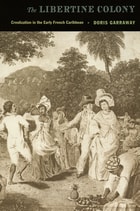
The Libertine Colony
Creolization in the Early French CaribbeanDoris Garraway
Duke University Press, 2005
Among the texts Garraway analyzes are missionary histories by Jean-Baptiste Du Tertre, Raymond Breton, and Jean-Baptiste Labat; narratives of adventure and transgression written by pirates and others outside the official civil and religious power structures; travel accounts; treatises on slavery and colonial administration in Saint-Domingue; the first colonial novel written in French; and the earliest linguistic description of the native Carib language. Garraway also analyzes legislation—including the Code noir—that codified slavery and other racialized power relations. The Libertine Colony is both a rich cultural history of creolization as revealed in Francophone colonial literature and an important contribution to theoretical arguments about how literary critics and historians should approach colonial discourse and cultural representations of slave societies.
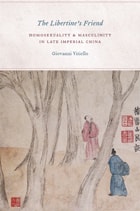
The Libertine's Friend
Homosexuality and Masculinity in Late Imperial ChinaGiovanni Vitiello
University of Chicago Press, 2011
Delving into three hundred years of Chinese literature, from the mid-sixteenth century to the mid-nineteenth, The Libertine’s Friend uncovers the complex and fascinating history of male homosexual and homosocial relations in the late imperial era. Drawing particularly on overlooked works of pornographic fiction, Giovanni Vitiello offers a frank exploration of the importance of same-sex love and eroticism to the evolution of masculinity in China.
Vitiello’s story unfolds chronologically, beginning with the earliest sources on homoeroticism in pre-imperial China and concluding with a look at developments in the twentieth century. Along the way, he identifies a number of recurring characters—for example, the libertine scholar, the chivalric hero, and the lustful monk—and sheds light on a set of key issues, including the social and legal boundaries that regulated sex between men, the rise of male prostitution, and the aesthetics of male beauty. Drawing on this trove of material, Vitiello presents a historical outline of changing notions of male homosexuality in China, revealing the integral part that same-sex desire has played in its culture.
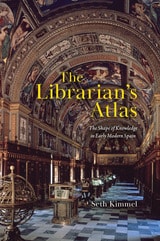
The Librarian's Atlas
The Shape of Knowledge in Early Modern SpainSeth Kimmel
University of Chicago Press, 2024
A history of early modern libraries and the imperial desire for total knowledge—now in paperback.
Medieval scholars imagined the library as a microcosm of the world, but as novel early modern ways of managing information facilitated empire in both the New and Old Worlds, the world became a projection of the library. In The Librarian’s Atlas, Seth Kimmel offers a sweeping material history of how the desire to catalog books coincided in the sixteenth and seventeenth centuries with the aspiration to control territory. Through a careful study of library culture in Spain and Morocco—close readings of catalogs, marginalia, indexes, commentaries, and maps—Kimmel reveals how the booklover’s dream of a comprehensive and well-organized library shaped an expanded sense of the world itself.
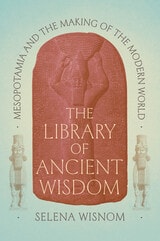
The Library of Ancient Wisdom
Mesopotamia and the Making of the Modern WorldSelena Wisnom
University of Chicago Press, 2025
The library of Ashurbanipal, Assyria’s last great king, held an astonishing collection at the forefront of knowledge in its day, from ancient traditions in religion and literature to the latest developments in magic and medicine. When the Assyrian empire fell, the library burned to the ground, and its contents, clay tablets inscribed with cuneiform writing, lay buried for thousands of years until a team of Victorian archaeologists discovered the remnants in modern-day Iraq. The clay had baked and hardened; the very fire that consumed the library had helped its texts to survive for millennia.
In The Library of Ancient Wisdom, scholar Selena Wisnom, one of only a few hundred experts able to read cuneiform script today, guides us inside this important collection and, through its contents, brings ancient Mesopotamia and its people to life. Introducing us to Ashurbanipal and his family, scribes, astrologers, physicians, and more, Wisnom explores the library’s tablets and the details they divulge about how these ancient people thought about the world. Like us, they had concerns about job security, jealous rivalries, and profound friendships, and questions about the meaning of life. Wisnom ushers us into a world where magic was commonplace, where the gods spoke to you in dreams, and where the secrets of the universe were revealed through puns—taking us to the heart of what it means to be human.
Offering a close look at a major historical landmark as well as a readable account of the world’s earliest civilizations, The Library of Ancient Wisdom lays bare the ideas, hopes, fears, and desires that survive on humble clay.
The Library of Ancient Wisdom
Mesopotamia and the Making of the Modern WorldSelena Wisnom
University of Chicago Press, 2025
A tour of an ancient library transports us to Mesopotamia, introducing us to its people, their ideas, and their humanity.
The library of Ashurbanipal, Assyria’s last great king, held an astonishing collection at the forefront of knowledge in its day, from ancient traditions in religion and literature to the latest developments in magic and medicine. When the Assyrian empire fell, the library burned to the ground, and its contents, clay tablets inscribed with cuneiform writing, lay buried for thousands of years until a team of Victorian archaeologists discovered the remnants in modern-day Iraq. The clay had baked and hardened; the very fire that consumed the library had helped its texts to survive for millennia.
In The Library of Ancient Wisdom, scholar Selena Wisnom, one of only a few hundred experts able to read cuneiform script today, guides us inside this important collection and, through its contents, brings ancient Mesopotamia and its people to life. Introducing us to Ashurbanipal and his family, scribes, astrologers, physicians, and more, Wisnom explores the library’s tablets and the details they divulge about how these ancient people thought about the world. Like us, they had concerns about job security, jealous rivalries, and profound friendships, and questions about the meaning of life. Wisnom ushers us into a world where magic was commonplace, where the gods spoke to you in dreams, and where the secrets of the universe were revealed through puns—taking us to the heart of what it means to be human.
Offering a close look at a major historical landmark as well as a readable account of the world’s earliest civilizations, The Library of Ancient Wisdom lays bare the ideas, hopes, fears, and desires that survive on humble clay.
The Licit Life of Capitalism
US Oil in Equatorial GuineaHannah Appel
Duke University Press, 2019
The Lies of the Land
Seeing Rural America for What It Is—and Isn’tSteven Conn
University of Chicago Press, 2023
It seems everyone has an opinion about rural America. Is it gripped in a tragic decline? Or is it on the cusp of a glorious revival? Is it the key to understanding America today? Steven Conn argues that we’re missing the real question: Is rural America even a thing? No, says Conn, who believes we see only what we want to see in the lands beyond the suburbs—fantasies about moral (or backward) communities, simpler (or repressive) living, and what it means to be authentically (or wrongheadedly) American. If we want to build a better future, Conn argues, we must accept that these visions don’t exist and never did.
In The Lies of the Land, Conn shows that rural America—so often characterized as in crisis or in danger of being left behind—has actually been at the center of modern American history, shaped by the same forces as everywhere else in the country: militarization, industrialization, corporatization, and suburbanization. Examining each of these forces in turn, Conn invites us to dispense with the lies and half-truths we’ve believed about rural America and to pursue better solutions to the very real challenges shared all across our nation.
The Lieutenant of Kouta
Massa Makan Diabaté
Michigan State University Press, 2017
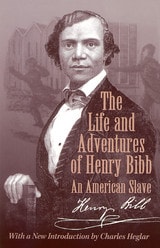
The Life and Adventures of Henry Bibb
An American SlaveHenry Bibb
University of Wisconsin Press, 2001
First published in 1849 and largely unavailable for many years, The Life and Adventures of Henry Bibb is among the most remarkable slave narratives. Born on a Kentucky plantation in 1815, Bibb first attempted to escape from bondage at the age of ten. He was recaptured and escaped several more times before he eventually settled in Detroit, Michigan, and joined the antislavery movement as a lecturer.
Bibb’s story is different in many ways from the widely read Narrative of the Life of Frederick Douglass, An American Slave and Harriet Jacobs’ Incidents in the Life of a Slave Girl. He was owned by a Native American; he is one of the few ex-slave autobiographers who had labored in the Deep South (Louisiana); and he writes about folkways of the slaves, especially how he used conjure to avoid punishment and to win the hearts of women. Most significant, he is unique in exploring the importance of marriage and family to him, recounting his several trips to free his wife and child. This new edition includes an introduction by literary scholar Charles Heglar and a selection of letters and editorials by Bibb.
The Life and Adventures of an Arkansaw Doctor
David Rattlehead
University of Arkansas Press, 1989
The Life and Afterlife of Swedish Biograph
From Commercial Circulation to Archival PracticesJan Olsson
University of Wisconsin Press, 2022
Sweden’s early film industry was dominated by Swedish Biograph (Svenska Biografteatern), home to star directors like Victor Sjöström and Mauritz Stiller. It is nostalgically remembered as the generative site of a nascent national artform, encapsulating a quintessentially Nordic aesthetic—the epicenter of Sweden’s cinematic Golden Age. In The Life and Afterlife of Swedish Biograph, veteran film scholar Jan Olsson takes a hard look at this established, romanticized narrative and offers a far more complete, complex, and nuanced story.
Nearly all of the studio’s original negatives were destroyed in an explosion in 1941, but Olsson’s comprehensive archival research shows how the company operated in a commercial, international arena, and how it was influenced not just by Nordic aesthetics or individual genius but also by foreign audiences’ expectations, technological demands, Hollywood innovations, and the gritty back-and-forth between economic pressures, government interference, and artistic desires. Olsson’s focus is wide, encompassing the studio’s production practices, business affairs, and cinematographic conventions, as well as the latter-day archival efforts that both preserved and obscured parts of Swedish Biograph’s story, helping construct the company’s rosy legacy. The result is a necessary rewrite to Swedish film historiography and a far fuller picture of a canonical film studio.

The Life and Death of Gus Reed
A Story of Race and Justice in Illinois during the Civil War and ReconstructionThomas Bahde
Ohio University Press, 2014
Gus Reed was a freed slave who traveled north as Sherman’s March was sweeping through Georgia in 1864. His journey ended in Springfield, Illinois, a city undergoing fundamental changes as its white citizens struggled to understand the political, legal, and cultural consequences of emancipation and black citizenship. Reed became known as a petty thief, appearing time and again in the records of the state’s courts and prisons. In late 1877, he burglarized the home of a well-known Springfield attorney—and brother of Abraham Lincoln’s former law partner—a crime for which he was convicted and sentenced to the Illinois State Penitentiary.
Reed died at the penitentiary in 1878, shackled to the door of his cell for days with a gag strapped in his mouth. An investigation established that two guards were responsible for the prisoner’s death, but neither they nor the prison warden suffered any penalty. The guards were dismissed, the investigation was closed, and Reed was forgotten.
Gus Reed’s story connects the political and legal cultures of white supremacy, black migration and black communities, the Midwest’s experience with the Civil War and Reconstruction, and the resurgence of nationwide opposition to African American civil rights in the late nineteenth century. These experiences shaped a nation with deep and unresolved misgivings about race, as well as distinctive and conflicting ideas about justice and how to achieve it.
The Life and Science of Harold C. Urey
Matthew Shindell
University of Chicago Press, 2019
From Urey’s orthodox religious upbringing to his death in 1981, Shindell follows the scientist through nearly a century of American history: his discovery of deuterium and heavy water earned him the Nobel Prize in 1934, his work on the Manhattan Project helped usher in the atomic age, he initiated a generation of American scientists into the world of quantum physics and chemistry, and he took on the origin of the Moon in NASA’s lunar exploration program. Despite his success, however, Urey had difficulty navigating the nuclear age. In later years he lived in the shadow of the bomb he helped create, plagued by the uncertainties unleashed by the rise of American science and unable to reconcile the consequences of scientific progress with the morality of religion.
Tracing Urey’s life through two world wars and the Cold War not only conveys the complex historical relationship between science and religion in the twentieth century, but it also illustrates how these complexities spilled over into the early days of space science. More than a life story, this book immerses readers in the trials and triumphs of an extraordinary man and his extraordinary times.

The Life and Times of A.D. Blumlein
Russell Burns
The Institution of Engineering and Technology, 2000
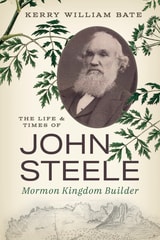
The Life and Times of John Steele
Mormon Kingdom BuilderKerry William Bate
University of Utah Press, 2025
Among the founders of Salt Lake City, Parowan, and Las Vegas, and an explorer of Zion National Park and the Grand Canyon, John Steele's legacy is etched across the American West. The Life and Times of John Steele follows the remarkable journey of this Irish-born convert to Mormonism from his birth into scarcity through his final days in Kanarraville, Utah.
A fervent believer in utopian ideals, Steele sought to build an egalitarian Kingdom of Christ in the last days, becoming a key figure in early Utah history. His multifaceted roles—missionary, city founder, militia major, justice of the peace, and self-taught doctor using folk medicine, charms, and the occult—make his story unique. This meticulously researched biography offers new insights into pivotal events such as the Mountain Meadows Massacre and the communal economics of the Church of Jesus Christ of Latter-day Saints, drawing from Steele’s extensive personal diaries and papers to bring his complex, colorful life and times to light.
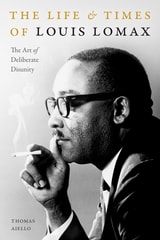
The Life and Times of Louis Lomax
The Art of Deliberate DisunityThomas Aiello
Duke University Press, 2021
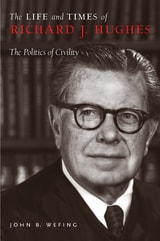
The Life and Times of Richard J. Hughes
The Politics of CivilityWefing, John B
Rutgers University Press, 2009
This biography illuminates the governor's accomplishments between 1962 and 1970, including the creation of the Hackensack Meadowlands Commission, formation of the county college system, establishment of stringent antipollution laws, design of the public defender system, and the adoption of a New Jersey sales tax, as well as his pivotal role during the Newark riots. As chief justice, Hughes faced difficult issuesùschool funding, low and moderate income housing needs, freedom of speech, and his decision in the rightto-die case involving Karen Ann Quinlan. With a career characterized by liberal activism, Hughes also contributed nationally and internationally, from serving as host of the 1964 Democratic National Convention to monitoring elections in South Vietnam.
John B. Wefing's research includes interviews with prominent politicians and leaders who worked with Hughes at various points in his career. The result is a rich story of a public servant who possessed a true ability to work with members of both political parties and played a significant role in shaping modern New Jersey.
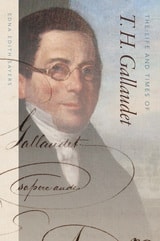
The Life and Times of T. H. Gallaudet
Edna Edith Sayers
University Press of New England, 2017
The Life and Work of Francis Willey Kelsey
Archaeology, Antiquity, and the ArtsJohn Griffiths Pedley
University of Michigan Press, 2011
President of the Archaeological Institute of America, professor at the University of Michigan from 1889 to 1927, and president of the American Philological Association, Francis Kelsey was crucially involved in the founding or growth of major educational institutions. He came to maturity in a period of great technological change in communications, transportation, and manufacturing. Kelsey took full advantage of such innovations in his ceaseless drive to promote education for all, to further the expansion of knowledge, and to champion the benefits of the study of antiquity.
A vigorous traveler around the United States, Europe, and the Mediterranean, Kelsey strongly believed in the value of personally viewing sites ancient and modern and collecting artifacts that could be used by the new museums and universities that were springing up in the United States. This collecting habit put him in touch with major financiers of the day, including Charles Freer, Andrew Carnegie, and J. P. Morgan, as he sought their help for important projects.
Drawing heavily on Kelsey's daily diaries now held at the University of Michigan's Bentley Historical Library, John Griffiths Pedley gives us a biography that records the wide-ranging activities of a gifted and energetic scholar whose achievements mirrored the creative and contributive innovations of his contemporary Americans.

The Life of Andrew Jackson
John Reid
University of Alabama Press, 2007
The frontier fighter who rose to the presidency and reshaped a nation.
Original copies of the first, 1817, edition of this work are so rare that even the Library of Congress does not have an undamaged copy. Consequently scholars and students of Jackson have had to rely on later, incomplete or bowdlerized editions. It is therefore all the more valuable to have Owsley’s critical restoration of the original edition, complete with its useful maps.
The work is a straightforward history of Jackson’s military career, begun by John Reid, Jackson’s military aide throughout the War of 1812 and the ensuing Creek War. Reid wrote the first four chapters, and after his death John Eaton completed the work from Reid’s outline, notes, and papers. Owsley, quondam professor of history at Auburn University, has carefully restored the original edition, noted variants between this and successor editions, and included helpful apparatus, including a memoir of John Reid by Helen Reid Roberts, and indexes to the whole.
This is the first paperback edition of this valuable record and includes the original four large-scale foldout maps on an accompanying CD.
The Life of Belisarius
The Last Great General of RomeLord Mahon
Westholme Publishing, 2005
The Man Who Recaptured the Lost Glory of Rome
Serving the Byzantine Emperor Justinian during the 6th century A.D., Belisarius defeated a superior Persian force that threatened to extinguish Constantinople; his small army next drove the Vandals out of the ancient Roman provinces of North Africa and forced the Visigoths to retreat from Italy, returning Rome to the Emperor for the final time. His ability to achieve victory against overwhelming odds and his fairness to both his own troops and those of his enemies became legendary. Despite his successes, Justinian recalled Belisarius and, swayed by jealous advisers, accused the general of conspiring to overthrow him. Although innocent, he was publicly humiliated and stripped of his rank. But when a massive army of barbarians moved against Constantinople and the citizenry panicked in fear, they turned to their only true hero, Belisarius. The forsaken general donned his armor, called out his trusted veterans, and repulsed the barbarian horde. But instead of showing gratitude, Justinian banished him from the city.
The Life of Blessed Bernard of Tiron
Geoffrey Grossus
Catholic University of America Press, 2009
The Life of Captain Cipriani
An Account of British Government in the West Indies, with the pamphlet The Case for West-Indian Self GovernmentC. L. R. James
Duke University Press, 2014
The Life of Charlemagne
Einhard
University of Michigan Press, 1960