Results by title
18284 books match the query 'United States' and 3764 start with t
The Work Ethic in Industrial America 1850-1920
Second EditionDaniel T. Rodgers
University of Chicago Press, 2014
Daniel T. Rodgers masterfully explores the ways in which the eclipse of small-scale workshops by mechanized production and mass consumption triggered far-reaching shifts in perceptions of labor, leisure, and personal success. He also shows how the new work culture permeated society, including literature, politics, the emerging feminist movement, and the labor movement.
A staple of courses in the history of American labor and industrial society, Rodgers’s sharp analysis is sure to find a new audience, as twenty-first-century workers face another shift brought about by technology. The Work Ethic in Industrial America 1850–1920 is a classic with critical relevance in today’s volatile economic times.
The Work Ethic in Industrial America, 1850-1920
Daniel T. Rodgers
University of Chicago Press, 1978
The World According to Hollywood, 1918–1939
Ruth Vasey
University of Wisconsin Press, 1997
Ruth Vasey shows how the Motion Picture Producers and Distributors of America (MPPDA), by implementing such strategies as the industry’s Production Code, ensured that domestic and foreign distribution took place with a minimum of censorship or consumer resistance. Drawing upon MPPDA archives, studio records, trade papers, and the records of the U.S. Department of Commerce, Vasey reveals the ways the MPPDA influenced the representation of sex, violence, religion, foreign and domestic politics, corporate capitalism, ethnic minorities, and the conduct of professional classes.
Vasey is the first scholar to document fully how the demands of the global market frequently dictated film content and created the movies’ homogenized picture of social and racial characteristics, in both urban America and the world beyond. She uncovers telling evidence of scripts and treatments that were abandoned before or during the course of production because of content that might offend foreign markets. Among the fascinating points she discusses is Hollywood’s frequent use of imaginary countries as story locales, resulting from a deliberate business policy of avoiding realistic depictions of actual countries. She argues that foreign governments perceived movies not just as articles of trade, but as potential commercial and political emissaries of the United States. Just as Hollywood had to persuade its domestic audiences that its products were morally sound, its domination of world markets depended on its ability to create a culturally and politically acceptable product.
The World Got Away
A MemoirMikel Rouse. Foreward by Kyle Gann
University of Illinois Press, 2024
One of the most innovative composers of his generation, Mikel Rouse is known for a trilogy of operas that includes Dennis Cleveland and a gift for superimposing pop vernaculars onto avant-garde music. This memoir channels Rouse’s high energy personality into an exuberant account of the precarity and pleasures of artistic creation. Raconteur and starving artist, witty observer and acclaimed musician, Rouse emerged from the legendary art world of 1980s New York to build a forty-year career defined by stage and musical successes, inexhaustible creativity, and a support network of famous faces, loyal allies, and high art hustlers. Rouse guides readers through a working artists’ hardscrabble life while illuminating the unromantic truth that a project’s reception may depend on a talented cast and crew but can depend on reliable air conditioning.
Candid and hilarious, The World Got Away is a one-of-a-kind account of a creative life fueled by talent, work, and luck.
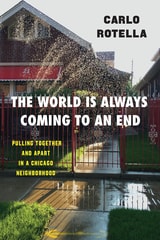
The World Is Always Coming to an End
Pulling Together and Apart in a Chicago NeighborhoodCarlo Rotella
University of Chicago Press, 2019
In the late 1960s and 1970s Carlo Rotella grew up in Chicago’s South Shore neighborhood—a place of neat bungalow blocks and desolate commercial strips, and sharp, sometimes painful social contrasts. In the decades since, the hollowing out of the middle class has left residents confronting—or avoiding—each other across an expanding gap that makes it ever harder for them to recognize each other as neighbors. Rotella tells the stories that reveal how that happened—stories of deindustrialization and street life; stories of gorgeous apartments with vistas onto Lake Michigan and of Section 8 housing vouchers held by the poor. At every turn, South Shore is a study in contrasts, shaped and reshaped over the past half-century by individual stories and larger waves of change that make it an exemplar of many American urban neighborhoods. Talking with current and former residents and looking carefully at the interactions of race and class, persistence and change, Rotella explores the tension between residents’ deep investment of feeling and resources in the physical landscape of South Shore and their hesitation to make a similar commitment to the community of neighbors living there.
Blending journalism, memoir, and archival research, The World Is Always Coming to an End uses the story of one American neighborhood to challenge our assumptions about what neighborhoods are, and to think anew about what they might be if we can bridge gaps and commit anew to the people who share them with us. Tomorrow is another ending.
The World Is Always Coming to an End
Pulling Together and Apart in a Chicago NeighborhoodCarlo Rotella
University of Chicago Press, 2019
In the late 1960s and 1970s Carlo Rotella grew up in Chicago’s South Shore neighborhood—a place of neat bungalow blocks and desolate commercial strips, and sharp, sometimes painful social contrasts. In the decades since, the hollowing out of the middle class has left residents confronting—or avoiding—each other across an expanding gap that makes it ever harder for them to recognize each other as neighbors. Rotella tells the stories that reveal how that happened—stories of deindustrialization and street life; stories of gorgeous apartments with vistas onto Lake Michigan and of Section 8 housing vouchers held by the poor. At every turn, South Shore is a study in contrasts, shaped and reshaped over the past half-century by individual stories and larger waves of change that make it an exemplar of many American urban neighborhoods. Talking with current and former residents and looking carefully at the interactions of race and class, persistence and change, Rotella explores the tension between residents’ deep investment of feeling and resources in the physical landscape of South Shore and their hesitation to make a similar commitment to the community of neighbors living there.
Blending journalism, memoir, and archival research, The World Is Always Coming to an End uses the story of one American neighborhood to challenge our assumptions about what neighborhoods are, and to think anew about what they might be if we can bridge gaps and commit anew to the people who share them with us. Tomorrow is another ending.
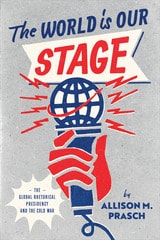
The World Is Our Stage
The Global Rhetorical Presidency and the Cold WarAllison M. Prasch
University of Chicago Press, 2023
Crowds swarm when US presidents travel abroad, though many never hear their voices. The presidential body, moving from one secured location to another, communicates as much or more to these audiences than the texts of their speeches. In The World is Our Stage, Allison M. Prasch considers how presidential appearances overseas broadcast American superiority during the Cold War. Drawing on extensive archival research, Prasch examines five foundational moments in the development of what she calls the “global rhetorical presidency:” Truman at Potsdam, Eisenhower’s “Goodwill Tours,” Kennedy in West Berlin, Nixon in the People’s Republic of China, and Reagan in Normandy. In each case, Prasch reveals how the president’s physical presence defined the boundaries of the “Free World” and elevated the United States as the central actor in Cold War geopolitics.
The World Sixties Made
Politics And Culture In Recent Americaedited by Van Gosse and Richard Moser
Temple University Press, 2003
The World Turned
Essays on Gay History, Politics, and CultureJohn D Emilio
Duke University Press, 2002
In this collection of essays, D’Emilio brings his historian’s eye to bear on these profound changes in American society, culture, and politics. He explores the career of Bayard Rustin, a civil rights leader and pacifist who was openly gay a generation before almost everyone else; the legacy of radical gay and lesbian liberation; the influence of AIDS activist and writer Larry Kramer; the scapegoating of gays and lesbians by the Christian Right; the gay-gene controversy and the debate over whether people are "born gay"; and the explosion of attention focused on queer families. He illuminates the historical roots of contemporary debates over identity politics and explains why the gay community has become, over the last decade, such a visible part of American life.
The World Wars Through the Female Gaze
Jean Gallagher
Southern Illinois University Press, 1998
For some women writers and photographers during the two world wars—Edith Wharton, Mildred Aldrich, Martha Gellhorn, Lee Miller, H.D., and Gertrude Stein—the construction of the female subject as an observer of combat became a vital concern. Their explorations of vision took place against the backdrop of a larger shift in Western culture's understanding of what "seeing" meant in common practice and philosophical discourse alike. The role of visuality in their lives was massively transformed not only by the rigid gender roles of war but by the introduction of new combat practices and technologies such as aerial surveillance, trench warfare, and civilian bombardment.
In The World Wars Through the Female Gaze, Jean Gallagher maps one portion of the historicized, gendered territory of what Nancy K. Miller calls the "gaze in representation." Expanding the notion of the gaze in critical discourse, Gallagher situates a number of visual acts within specific historic contexts to reconstruct the wartime female subject. She looks at both the female observer's physical act of seeing—and the refusal to see—for example, a battlefield, a wounded soldier, a torture victim, a national flag, a fashion model, a bombed city, or a wartime hallucination.
The book begins with two instances of wartime propaganda written by American women in France in 1915. Both Edith Wharton's Fighting France and Mildred Aldrich's A Hilltop on the Marne offer a complex and often contradictory sense of a woman writer's struggles with authority, resistance, and killing. In the process, Gallagher teases out the role of specular vision and the impossibility of "directly" seeing the war.
Gallagher then turns to literary and visual texts produced by two female journalists between 1940 and 1945. Martha Gellhorn's 1940 novel A Stricken Field exhibits a range of gendered seeing positions within and in opposition to the visual ideologies of fascism during the Nazi occupation of Czechoslovakia. Lee Miller's war correspondence and photography for Vogue show how Miller constructed herself and her predominantly female American audience as antifascist observers of war by working with and against some of the conventions of surrealist fashion photography.
Gallagher concludes by focusing on the experimental autobiographical prose of H.D. and Gertrude Stein to explore the functions of vision on two World War II "homefronts"—London during the Blitz and Vichy France.
The World beyond the Windshield
Roads and Landscapes in the United States and EuropeChristof Mauch
Ohio University Press, 2008
For better or worse, the view through a car’s windshield has redefined how we see the world around us. In some cases, such as the American parkway, the view from the road was the be-all and end-all of the highway; in others, such as the Italian autostrada, the view of a fast, efficient transportation machine celebrating either Fascism or its absence was the goal. These varied environments are neither necessary nor accidental but the outcomes of historical negotiations, and whether we abhor them or take delight in them, they have become part of the fabric of human existence.
The World beyond the Windshield: Roads and Landscapes in the United States and Europe is the first systematic, comparative look at these landscapes. By looking at examples from the United States and Europe, the chapters in this volume explore the relationship between the road and the landscape thatit traverses, cuts through, defines, despoils, and enhances. The authors analyze the Washington Beltway and the Blue Ridge Parkway, as well as iconic roads in Italy, Nazi Germany, East Germany, and Great Britain. This is a story of the transatlantic exchange of ideas about environment and technology and of the national and nationalistic appropriations of such landscaping.
The World in a City
Multiethnic Radicalism in Early Twentieth-Century Los AngelesDavid M. Struthers
University of Illinois Press, 2019
David M. Struthers draws on the anarchist concept of affinity to explore the radicalism of Los Angeles's interracial working class from 1900 to 1930. Uneven economic development created precarious employment and living conditions for laborers. The resulting worker mobility led to coalitions that, inevitably, remained short lived. As Struthers shows, affinity helps us understand how individual cooperative actions shaped and reshaped these alliances. It also reveals social practices of resistance that are often too unstructured or episodic for historians to capture. What emerges is an untold history of Los Angeles and a revolutionary movement that, through myriad successes and failures, produced powerful examples of racial cooperation.
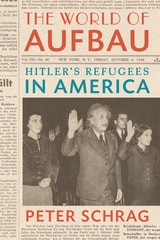
The World of Aufbau
Hitler's Refugees in AmericaPeter Schrag
University of Wisconsin Press, 2019
The book examines the columns and advertisements that chronicled the social and cultural life of that generation and maintained a detailed account of German-speaking cultures in exile. Peter Schrag is the first to present a definitive account of the influential publication that brought postwar refugees together and into the American mainstream.
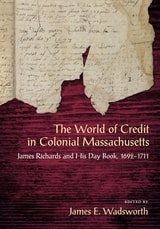
The World of Credit in Colonial Massachusetts
James Richards and His Daybook, 1692-1711James E. Wadsworth
University of Massachusetts Press, 2017
For years, James Richards, a prosperous and typical colonial farmer, tracked nearly five thousand transactions, involving more than six hundred individuals and stretching from Charlestown to Barnstable. Richards and his neighbors were bound together in a heterogeneous economy, reliant on networks of credit, barter, and sometimes cash. Richards practiced mixed husbandry farming, shipped goods by cart and by sloop, and produced and sold malt, salt, wool, and timber. The day book also reveals significant social details of Richards and his household, including his diverse trading partners, his extensive family connections, an Indian slave girl, and a well-dressed female servant. Available in both print and electronic editions, fully transcribed, annotated, and introduced by the editor, this record of economic life reinforces and challenges our understanding of colonial America.
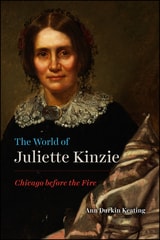
The World of Juliette Kinzie
Chicago before the FireAnn Durkin Keating
University of Chicago Press, 2019
Juliette is one of Chicago’s forgotten founders. Early Chicago is often presented as “a man’s city,” but women like Juliette worked to create an urban and urbane world, often within their own parlors. With The World of Juliette Kinzie, we finally get to experience the rise of Chicago from the view of one of its most important founding mothers.
Ann Durkin Keating, one of the foremost experts on nineteenth-century Chicago, offers a moving portrait of a trailblazing and complicated woman. Keating takes us to the corner of Cass and Michigan (now Wabash and Hubbard), Juliette’s home base. Through Juliette’s eyes, our understanding of early Chicago expands from a city of boosters and speculators to include the world that women created in and between households. We see the development of Chicago society, first inspired by cities in the East and later coming into its own midwestern ways. We also see the city become a community, as it developed its intertwined religious, social, educational, and cultural institutions. Keating draws on a wealth of sources, including hundreds of Juliette’s personal letters, allowing Juliette to tell much of her story in her own words.
Juliette’s death in 1870, just a year before the infamous fire, seemed almost prescient. She left her beloved Chicago right before the physical city as she knew it vanished in flames. But now her history lives on. The World of Juliette Kinzie offers a new perspective on Chicago’s past and is a fitting tribute to one of the first women historians in the United States.
The World of Juliette Kinzie
Chicago before the FireAnn Durkin Keating
University of Chicago Press, 2019
When Juliette Kinzie first visited Chicago in 1831, it was anything but a city. An outpost in the shadow of Fort Dearborn, it had no streets, no sidewalks, no schools, no river-spanning bridges. And with two hundred disconnected residents, it lacked any sense of community. In the decades that followed, not only did Juliette witness the city’s transition from Indian country to industrial center, but she was instrumental in its development.
Juliette is one of Chicago’s forgotten founders. Early Chicago is often presented as “a man’s city,” but women like Juliette worked to create an urban and urbane world, often within their own parlors. With The World of Juliette Kinzie, we finally get to experience the rise of Chicago from the view of one of its most important founding mothers.
Ann Durkin Keating, one of the foremost experts on nineteenth-century Chicago, offers a moving portrait of a trailblazing and complicated woman. Keating takes us to the corner of Cass and Michigan (now Wabash and Hubbard), Juliette’s home base. Through Juliette’s eyes, our understanding of early Chicago expands from a city of boosters and speculators to include the world that women created in and between households. We see the development of Chicago society, first inspired by cities in the East and later coming into its own midwestern ways. We also see the city become a community, as it developed its intertwined religious, social, educational, and cultural institutions. Keating draws on a wealth of sources, including hundreds of Juliette’s personal letters, allowing Juliette to tell much of her story in her own words.
Juliette’s death in 1870, just a year before the infamous fire, seemed almost prescient. She left her beloved Chicago right before the physical city as she knew it vanished in flames. But now her history lives on. The World of Juliette Kinzie offers a new perspective on Chicago’s past and is a fitting tribute to one of the first women historians in the United States.
The World of Mike Royko
Doug Moe
University of Wisconsin Press, 1999
This illustrated biography is the first account of the colorful life of Chicago newspaper columnist Mike Royko, Pulitzer Prize winner, best-selling author, and legendary journalist who personified Chicago in all its rough-edged charm. Drawing on exclusive photos and interviews with Royko’s family and intimates, the book chronicles Royko’s rise from a “flat-above-a-tavern” youth—raised above a bar on Chicago’s Polish northwest side—to one of the best-known names in American journalism.
Readers will get the inside scoop on Royko’s epic battles with Mayor Richard J. Daley and other politicians and his hilarious columns featuring “Slats Grobnik.” They’ll also meet a softer, largely unknown, side of Royko, through the love letters he sent to his wife-to-be from an Air Force base in Washington State.
More than 100 photos—many never before available to the public—capture the man and his times. Millions of readers—in 800 newspapers around the world—followed Royko’s work and life. In The World of Mike Royko—he lives again.
The World of W.E.B. Du Bois
A Quotation SourcebookMeyer Weinberg
University of Massachusetts Press, 2012
Meyer Weinberg created The World of W.E.B. Du Bois to provide a short journey through Du Bois's views on virtually all aspects of twentieth-century life. More than one thousand quotations from his published writings and correspondence are included, arranged into twenty topical chapters. Each quotation begins with a heading designed to summarize its main theme. A subject index provides additional access to the ideas of this complex figure.

The World of Worker
LABOR IN TWENTIETH-CENTURY AMERICAJames R. Green
University of Illinois Press, 1998
The World of the Worker illuminates workers' lives at home, on
the job, and in the voting booths. A new preface enhances this social,
cultural, and political history: an unparalleled picture of working people
during the turbulent rise and fall of the labor movement.
"A fresh and provocative look at twentieth-century American unions,
and a fine introduction to recent labor history scholarship." --
Leslie Woodcock Tentler, Washington Post Book World
"Will be welcomed by anyone with a serious interest in labor history."
-- Library Journal
"Probably the best social history of twentieth-century labor
there is." -- Kirkus Reviews
"Virtually replaces any previously existing one-volume popular history
of the labor movement." -- Ron Radosh, Democratic Left
The World of the John Birch Society
Conspiracy, Conservatism, and the Cold WarD. J. Mulloy
Vanderbilt University Press, 2014
Named One of "Six Books for Insight on a Trump Presidency" by the Washington Post
As far as members of the hugely controversial John Birch Society were concerned, the Cold War revealed in stark clarity the loyalties and disloyalties of numerous important Americans, including Dwight Eisenhower, John Kennedy, and Earl Warren. Founded in 1958 as a force for conservative political advocacy, the Society espoused the dangers of enemies foreign and domestic, including the Soviet Union, organizers of the US civil rights movement, and government officials who were deemed "soft" on communism in both the Republican and Democratic parties. Sound familiar? In The World of the John Birch Society, author D. J. Mulloy reveals the tactics of the Society in a way they've never been understood before, allowing the reader to make the connections to contemporary American politics, up to and including the Tea Party. These tactics included organized dissemination of broad-based accusations and innuendo, political brinksmanship within the Republican Party, and frequent doomsday predictions regarding world events. At the heart of the organization was Robert Welch, a charismatic writer and organizer who is revealed to have been the lifeblood of the Society's efforts.
The Society has seen its influence recede from the high-water mark of 1970s, but the organization still exists today. Throughout The World of the John Birch Society, the reader sees the very tenets and practices in play that make the contemporary Tea Party so effective on a local level. Indeed, without the John Birch Society paving the way, the Tea Party may have encountered a dramatically different political terrain on its path to power.
The World the Game Theorists Made
Paul Erickson
University of Chicago Press, 2015
The World the Game Theorists Made seeks to explain the ascendency of game theory, focusing on the poorly understood period between the publication of John von Neumann and Oscar Morgenstern’s seminal Theory of Games and Economic Behavior in 1944 and the theory’s revival in economics in the 1980s. Drawing on a diverse collection of institutional archives, personal correspondence and papers, and interviews, Paul Erickson shows how game theory offered social scientists, biologists, military strategists, and others a common, flexible language that could facilitate wide-ranging thought and debate on some of the most critical issues of the day.
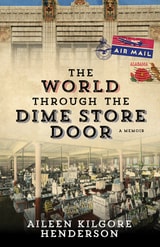
The World through the Dime Store Door
A MemoirAileen Kilgore Henderson
University of Alabama Press, 2020
A coming-of-age memoir evoking farm, mining, and small-town life in Alabama’s Tuscaloosa County as the world transitions from the Great Depression to World War II.
In the 1930s, the rural South was in the throes of the Great Depression. Farm life was monotonous and hard, but a timid yet curious teenager thought it worth recording. Aileen Kilgore Henderson kept a chronicle of her family’s daily struggles in Tuscaloosa County alongside events in the wider world she gleaned from shortwave radio and the occasional newspaper. She wrote about Howard Hughes’s round-the-world flight and her horror at the rise to power in Germany of a bizarre politician named Adolf Hitler. Henderson longed to join the vast world beyond the farm, but feared leaving the refuge of her family and beloved animals.
Yet, with her father’s encouragement, she did leave, becoming a clerk in the Kress dime store in downtown Tuscaloosa. Despite long workdays and a lengthy bus commute, she continued to record her observations and experiences in her diary, for every day at the dime store was interesting and exciting for an observant young woman who found herself considering new ideas and different points of view.
Drawing on her diary entries from the 1930s and early 1940s, Henderson recollects a time of sweeping change for Tuscaloosa and the South. The World through the Dime Store Door is a personal and engaging account of a Southern town and its environs in transition told through the eyes of a poor young woman with only a high school education but gifted with a lively mind and an openness to life.
The World, the Flesh, and the Devil
A History of Colonial St. LouisPatricia Cleary
University of Missouri Press, 2018
The Worlds between Two Rivers
Perspectives on American Indians in IowaGretchen M. Bataille
University of Iowa Press, 2000
The Worlds of William Penn
Murphy, Andrew R
Rutgers University Press, 2019
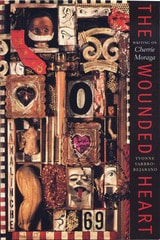
The Wounded Heart
Writing on Cherríe MoragaBy Yvonne Yarbro-Bejarano
University of Texas Press, 2001
In her work as poet, essayist, editor, dramatist, and public intellectual, Chicana lesbian writer Cherríe Moraga has been extremely influential in current debates on culture and identity as an ongoing, open-ended process. Analyzing the "in-between" spaces in Moraga's writing where race, gender, class, and sexuality intermingle, this first book-length study of Moraga's work focuses on her writing of the body and related material practices of sex, desire, and pleasure.
Yvonne Yarbro-Bejarano divides the book into three sections, which analyze Moraga's writing of the body, her dramaturgy in the context of both dominant and alternative Western theatrical traditions, and her writing of identities and racialized desire. Through close textual readings of Loving in the War Years, Giving Up the Ghost, Shadow of a Man, Heroes and Saints, The Last Generation, and Waiting in the Wings, Yarbro-Bejarano contributes to the development of a language to talk about sexuality as potentially empowering, the place of desire within politics, and the intricate workings of racialized desire.
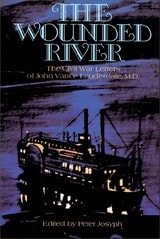
The Wounded River
The Civil War Letters of John Vance Lauderdale, M.D.Peter Josyph
Michigan State University Press, 1993
The Wounded River takes the reader back more than 130 years to reveal a marvelous, first-hand account of nineteenth-century warfare. In the process, the work cuts the legends and mythology that have come to frame and define accounts of America's bloodiest war. Of equal significance, Peter Josyph's editorial work on this superb collection of letters from the Western Americana Division of Yale University's Beinecke Rare Book and Manuscripts Library enhances and clarifies Lauderdale's experinces as a surgeon aboard the U.S. Army hospital ship D. A. January.
The reader looks on while Lauderdale, a New York civilian contract surgeon, operates on hundreds of Confederate and Union wounded. The young doctor's clear writing style and his great compassion for these unfortunate men whose bodies were ripped apart by bullets, shell fragments, and bayonets permits us to catch a disturbiing glimpse of what modern warfare does to humanity. Finally, we learn of Lauderdale's motives for volunteering, his impressions of the "hospital ship" D. A. January, Confederate morale, the Abolitionist cause, and black slavery. The Wounded River is a must read for anyone interested in the real American Civil War.
The Wounds That Bind Us
Kelley Shinn
West Virginia University Press, 2023
The improbable and powerful true story of a single mother with prosthetics for both legs who travels the globe with her young daughter in a Land Rover.
“A harrowing memoir. . . . Readers may not want to follow in [Shinn’s] footsteps, but they will never be bored with her as a companion.” —Kirkus Reviews
The Wounds That Bind Us is the improbable true story of Kelley Shinn, an orphan at birth who loses her legs at the age of sixteen to a rare bacterial pathogen. She becomes an avid off-road racer and, as a single mother, attempts to drive around the globe in a Land Rover with her three-year-old daughter in tow to bring light to the plight of land mine survivors. With unflinching honesty, exceptional lyricism, and biting humor, Shinn (“that’s two Ns and no shins”) takes readers on a wild journey—literal and emotional—filled with striking characters and landscapes, heartbreaks, and hard-won insights, ultimately arriving at a place of profound redemption.
Told with the energy and intensity of the adventure story it is, this terrifically rich and nuanced examination of a life is also a careful meditation on renewal—a remapping of the world. Guided by the narrator’s keen introspection and her ability to look resolutely at harrowing sorrows and still find hope, joy, and meaning, The Wounds That Bind Us will resonate deeply, long after the last page.
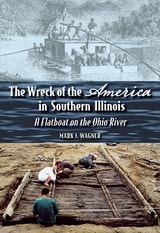
The Wreck of the "America" in Southern Illinois
A Flatboat on the Ohio RiverMark J. Wagner
Southern Illinois University Press, 2015
Winner, Illinois State Historical Society Superior Achievement, 2016
Flatboats were the most prolific type of vessel on the Ohio and Mississippi Rivers during the early 1800s. Thousands of these boats descended the two rivers each year, carrying not only valuable cargo to New Orleans but also western-bound emigrants to newly opened territories. By the late 1800s, flatboats had completely disappeared, and no intact examples were known to exist. Our knowledge of these historic vessels had been limited to illustrations, memoirs, and traveler accounts.
That changed in 2000 after local residents found a wreck on the Ohio River shoreline in Illinois. Archaeologist Mark J. Wagner and his colleagues from Southern Illinois University Carbondale investigated extensively and established that the wreck was a pre–Civil War flatboat, which they named America, after a nearby town.
In The Wreck of the America in Southern Illinois: A Flatboat on the Ohio River, Wagner provides a brief description and general history of flatboats and the various reasons they wrecked—such as poor workmanship and encounters with pirates, storms, rocks, and floating trees. Wagner describes the remains of the America, how it was constructed, the artifacts found nearby and inside—including pewter spoons, utensils with bone handles, metal buttons, and an iron felling axe—and the probable cause of its sinking. Wagner concludes with a history of the America since its discovery in 2000 and a plea that the boat be removed from the riverbank and preserved before the Ohio washes it away.
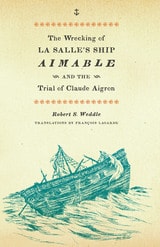
The Wrecking of La Salle's Ship Aimable and the Trial of Claude Aigron
By Robert S. Weddle
University of Texas Press, 2009
When Robert Cavelier, sieur de La Salle, landed on the Texas coast in 1685, bent on founding a French colony, his enterprise was doomed to failure. Not only was he hundreds of miles from his intended landfall—the mouth of the Mississippi—but his supply ship, Aimable, was wrecked at the mouth of Matagorda Bay, leaving the colonists with scant provisions and little protection against local Indian tribes. In anger and disgust, he struck out at the ship's captain, Claude Aigron, accusing him of wrecking the vessel purposely and maliciously.
Captain Aigron and his crew escaped the doomed colony by returning to France on the warship that had escorted the expedition on its ocean crossing. Soon after reaching France, Aigron found himself defendant in a civil suit filed by two of his officers seeking recompense for lost salary and personal effects, and then imprisoned on order of King Louis XIV while La Salle's more serious accusations were being investigated.
In this book, Robert Weddle meticulously recounts, through court documents, the known history of Aigron and the Aimable, and finds that despite La Salle's fervent accusations, the facts of the case offer no clear indictment. The court documents, deftly translated by François Lagarde, reveal Captain Aigron's successful defense and illuminate the circumstances of the wreck with Aigron's testimony. Much is also revealed about the French legal system and how the sea laws of the period were applied through the French government's L'Ordonnance de la Marine.
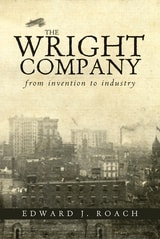
The Wright Company
From Invention to IndustryEdward J. Roach
Ohio University Press, 2014
Fresh from successful flights before royalty in Europe, and soon after thrilling hundreds of thousands of people by flying around the Statue of Liberty, in the fall of 1909 Wilbur and Orville Wright decided the time was right to begin manufacturing their airplanes for sale. Backed by Wall Street tycoons, including August Belmont, Cornelius Vanderbilt III, and Andrew Freedman, the brothers formed the Wright Company. The Wright Company trained hundreds of early aviators at its flight schools, including Roy Brown, the Canadian pilot credited with shooting down Manfred von Richtofen—the “Red Baron”—during the First World War; and Hap Arnold, the commander of the U.S. Army Air Forces during the Second World War. Pilots with the company’s exhibition department thrilled crowds at events from Winnipeg to Boston, Corpus Christi to Colorado Springs. Cal Rodgers flew a Wright Company airplane in pursuit of the $50,000 Hearst Aviation Prize in 1911.
But all was not well in Dayton, a city that hummed with industry, producing cash registers, railroad cars, and many other products. The brothers found it hard to transition from running their own bicycle business to being corporate executives responsible for other people’s money. Their dogged pursuit of enforcement of their 1906 patent—especially against Glenn Curtiss and his company—helped hold back the development of the U.S. aviation industry. When Orville Wright sold the company in 1915, more than three years after his brother’s death, he was a comfortable man—but his company had built only 120 airplanes at its Dayton factory and Wright Company products were not in the U.S. arsenal as war continued in Europe.
Edward Roach provides a fascinating window into the legendary Wright Company, its place in Dayton, its management struggles, and its effects on early U.S. aviation.

The Wright Company
From Invention to IndustryEdward J. Roach
Ohio University Press, 0
But all was not well in Dayton, a city that hummed with industry, producing cash registers, railroad cars, and many other products. The brothers found it hard to transition from running their own bicycle business to being corporate executives responsible for other people’s money. Their dogged pursuit of enforcement of their 1906 patent — especially against Glenn Curtiss and his company — helped hold back the development of the U.S. aviation industry. When Orville Wright sold the company in 1915, more than three years after his brother’s death, he was a comfortable man — but his company had built only 120 airplanes at its Dayton factory and Wright Company products were not in the U.S. arsenal as war continued in Europe.
Edward Roach provides a fascinating window into the legendary Wright Company, its place in Dayton, its management struggles, and its effects on early U.S. aviation.
The Writers
A History of American Screenwriters and Their GuildBanks, Miranda J
Rutgers University Press, 2016

The Yale Critics
Deconstruction in AmericaJonathan Arac, Wlad Godzich, and Wallace Martin, Editors
University of Minnesota Press, 1983
The Yale Critics was first published in 1983. Minnesota Archive Editions uses digital technology to make long-unavailable books once again accessible, and are published unaltered from the original University of Minnesota Press editions.
A heated debate has been raging in North America in recent years over the form and function of literature. At the center of the fray is a group of critics teaching at Yale University—Harold Bloom, Geoffrey Hartman, Paul de Man, and J. Hillis Miller—whose work can be described in relation to the deconstructive philosophy practiced by French philosopher Jacques Derrida. For over a decade the Yale Critics have aroused controversy; most often they are considered as a group, to be applauded or attacked, rather than as individuals whose ideas merit critical scrutiny. Here a new generation of scholars attempts for the first time a serious, broad assessment of the Yale group. These essays appraise the Yale Critics by exploring their roots, their individual careers, and the issues they introduce.
Wallace Martin's introduction offers a brilliant, compact account of the Yale Critics and of their relation to deconstruction and the deconstruction to two characteristically Anglo-American enterprises; Paul Bove explores the new criticism and Wlad Godzich the reception of Derrida in America. Next come essays giving individual attention to each of the critics: Michael Sprinker on Hartman, Donald Pease on Miller, Stanley Corngold on de Man, and Daniel O'Hara on Bloom. Two essays then illuminate "deconstruction in America" through a return to modern continental philosophy: Donald Marshall on Maurice Blanchot, and Rodolphe Gasche on Martin Heidegger. Finally, Jonathan Arac's afterword brings the volume together and projects a future beyond the Yale Critics.
Throughout, the contributors aim to provide a balanced view of a subject that has most often been treated polemically. While useful as an introduction, The Yale Critics also engages in a serious critical reflection on the uses of the humanities in American today.
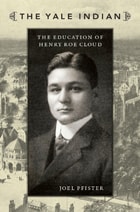
The Yale Indian
The Education of Henry Roe CloudJoel Pfister
Duke University Press, 2009
Roe Cloud’s white-collar activism was entwined with the Progressive Era formation of an Indian professional and managerial class, a Native “talented tenth,” whose members strategically used their contingent entry into arenas of white social, intellectual, and political power on behalf of Indians without such access. His Yale training provided a cross-cultural education in class-structured emotions and individuality. While at Yale, Roe Cloud was informally adopted by a white missionary couple. Through them he was schooled in upper-middle-class sentimentality and incentives. He also learned how interracial romance could jeopardize Indian acceptance into their class. Roe Cloud expanded the range of what modern Indians could aspire to and achieve.
The Yellow Journalism
The Press and America's Emergence as a World PowerDavid R. Spencer
Northwestern University Press, 2007
Most notable among Hearst's competitors was New York City's The World, owned and managed by a European Jewish immigrant named Joseph Pulitzer. The Yellow Journalism describes how these two papers and others exploited the scandal, corruption, and crime among the city's most influential citizens, and its most desperate inhabitants--a policy that made this "journalism of action" remarkably effective, not just as a commercial force, but also as an advocate for the city's poor and defenseless. Spencer shows how many of the innovations first introduced during this period--from investigative reporting to the use of color, entertainment news, and cartoons in papers--have had a lasting effect on journalism; and how media in our day reflects the Yellow Press's influence, but also its threatened irrelevance within the broader realities of contemporary society.
The Yellow Wall-Paper by Charlotte Perkins Gilman
A Dual-Text Critical EditionCharlotte Perkins Gilman
Ohio University Press, 2006
Most editions have been based on the 1892 New England Magazine publication rather than the handwritten manuscript at Radcliffe College. Publication of the unedited manuscript in 1994 sparked controversy over which of the two was definitive. Since then, scholars have discovered half a dozen parent texts for later twentieth-century printings, including William Dean Howells’s version from 1920 and the 1933 Golden Book version.
While traditional critical editions gather evidence and make an argument for adopting one text as preferable to others,“The Yellow Wall-Paper” by Charlotte Perkins Gilman: A Dual-Text Critical Edition, edited by Shawn St. Jean, offers both manuscript and magazine versions, critically edited and printed in parallel for the first time. New significance appears in such facets as the magazine’s accompanying illustrations, its lineation and paragraphing, Gilman’s choice of pronouns, and her original handwritten ending.
This critical edition of “The Yellow Wall-Paper” includes a full and nontraditional apparatus, making it easy for students and scholars to study the more than four hundred variants between the two texts. Four new essays, written especially for this volume, explore the implications of this multitext model.
The Yellowhammer War
The Civil War and Reconstruction in AlabamaEdited by Kenneth W. Noe
University of Alabama Press, 2014
During the first winter of the war, Confederate soldiers derided the men of an Alabama Confederate unit for their yellow-trimmed uniforms that allegedly resembled the plumage of the yellow-shafted flicker or “yellowhammer” (now the Northern Flicker, Colaptes auratus, and the state bird of Alabama). The soldiers’ nickname, “Yellowhammers,” came from this epithet. After the war, Alabama veterans proudly wore yellowhammer feathers in their hats or lapels when attending reunions. Celebrations throughout the state have often expanded on that pageantry and glorified the figures, events, and battles of the Civil War with sometimes dubious attention to historical fact and little awareness of those who supported, resisted, or tolerated the war off the battlefield.
Many books about Alabama’s role in the Civil War have focused serious attention on the military and political history of the war. The Yellowhammer War likewise examines the military and political history of Alabama’s Civil War contributions, but it also covers areas of study usually neglected by centennial scholars, such as race, women, the home front, and Reconstruction. From Patricia A. Hoskins’s look at Jews in Alabama during the Civil War and Jennifer Ann Newman Treviño’s examination of white women’s attitudes during secession to Harriet E. Amos Doss’s study of the reaction of Alabamians to Lincoln’s Assassination and Jason J. Battles’s essay on the Freedman’s Bureau, readers are treated to a broader canvas of topics on the Civil War and the state.
CONTRIBUTORS
Jason J. Battles / Lonnie A. Burnett / Harriet E. Amos Doss / Bertis English / Michael W. Fitzgerald / Jennifer Lynn Gross / Patricia A. Hoskins / Kenneth W. Noe / Victoria E. Ott / Terry L. Seip / Ben H. Severance / Kristopher A. Teters / Jennifer Ann Newman Treviño / Sarah Woolfolk Wiggins / Brian Steel Wills
Published in Cooperation with the Frances S. Summersell Center for the Study of the South
The Young Composers
Composition's Beginnings in Nineteenth-Century SchoolsLucille M. Schultz
Southern Illinois University Press, 1999
Lucille M. Schultz's The Young Composers: Composition's Beginnings in Nineteenth-Century Schools is the first full-length history of school-based writing instruction. Schultz demonstrates that writing instruction in nineteenth-century American schools is much more important in the overall history of writing instruction than we have previously assumed.
Drawing on primary materials that have not been considered in previous histories of writing instruction—little-known textbooks and student writing that includes prize-winning essays, journal entries, letters, and articles written for school newspapers—Schultz shows that in nineteenth-century American schools, the voices of the British rhetoricians that dominated college writing instruction were attenuated by the voice of the Swiss education reformer Johann Heinrich Pestalozzi. Partly through the influence of Pestalozzi's thought, writing instruction for children in schools became child-centered, not just a replica or imitation of writing instruction in the colleges.
It was also in these nineteenth-century American schools that personal or experience-based writing began and where the democratization of writing was institutionalized. These schools prefigured some of our contemporary composition practices: free writing, peer editing, and the use of illustrations as writing prompts. It was in these schools, in fact, where composition instruction as we know it today began, Schultz argues.
This book features a chapter on the agency of textbook iconography, which includes illustrations from nineteenth-century composition books as well as a cultural analysis of those illustrations. Schultz also includes a lengthy bibliography of nineteenth-century composition textbooks and student and school newspapers.
The Young Fed
The Banking Crises of the 1920s and the Making of a Lender of Last ResortMark Carlson
University of Chicago Press, 2025
A new history of crisis responses in the central bank’s formative years.
The long-standing description of the Federal Reserve as a “lender of last resort” refers to the central bank’s emergency liquidity provision for financial entities in periods of crisis. As Mark Carlson shows, this function was foundational to how the Fed was designed but has, at times, proven challenging to implement. The Young Fed examines the origins of the Federal Reserve’s emergency liquidity provision which, along with the setting of monetary policy, has become a critical responsibility.
Focusing on the Fed’s response to the financial crises of the 1920s, Carlson documents the formative deliberations of central bank policymakers regarding how to assist banks experiencing distress; the lessons that were learned; and how those lessons shaped subsequent policies. Carlson depicts an early Fed that experimented with a variety of approaches to crises, ranging from bold spectacles featuring cash-filled armored cars to behind-the-scenes interventions to prevent inducing panics or bank runs. The Young Fed weaves previously unpublished material from the Fed archives into a watershed work in American economic history: a deeply sourced account of how the world’s most important central bank became a lender of last resort.
The Younge Site
An Archaeological Record from MichiganEmerson F. Greenman
University of Michigan Press, 1937
The Yuma Reclamation Project
Irrigation, Indian Allotment, and Settlement Along the Lower Colorado RiverRobert Sauder
University of Nevada Press, 2009
In the arid American West, settlement was generally contingent on the availability of water to irrigate crops and maintain livestock and human residents. Early irrigation projects were usually the cooperative efforts of pioneer farmers, but by the early twentieth century they largely reflected federal intentions to create new farms out of the western public domain. The Yuma Reclamation Project, authorized in 1904, was one of the earliest federal irrigation projects initiated in the western United States and the first authorized on the Colorado River. Its story exemplifies the range of difficulties associated with settling the nation’s final frontier—the remaining irrigable lands in the arid West, including Indian lands—and illuminates some of the current issues and conflicts concerning the Colorado River. Author Robert Sauder’s detailed, meticulously researched examination of the Yuma Project illustrates the complex multiplicity of problems and challenges associated with the federal government’s attempt to facilitate homesteading in the arid West. He examines the history of settlement along the lower Colorado River from earliest times, including the farming of the local Quechan people and the impact of Spanish colonization, and he reviews the engineering problems that had to be resolved before an industrial irrigation scheme could be accomplished. The study also sheds light on myriad unanticipated environmental, economic, and social challenges that the government had to confront in bringing arid lands under irrigation, including the impact on the Native American population of the region.The Yuma Reclamation Project is an original and significant contribution to our understanding of federal reclamation endeavors in the West. It provides new and fascinating information about the history of the Yuma Valley and, as a case study of irrigation policy, it offers compelling insights into the history and consequences of water manipulation in the arid West.
Theater Enough
American Culture and the Metaphor of the World Stage, 1607–1789Jeffrey H. Richards
Duke University Press, 1991
The rhetoric, or discourse, of early American theater emerged out of the figures of speech that permeated the colonists’ lives and literary productions. Jeffrey H. Richards examines a variety of texts—histories, diaries, letters, journals, poems, sermons, political tracts, trial transcripts, orations, and plays—and looks at the writings of such authors as John Winthrop and Mercy Otis Warren. Richards places the American usage of theatrum mundi—the world depicted as a stage—in the context of classical and Renaissance traditions, but shows how the trope functions in American rhetoric as a register for religious, political, and historical attitudes.
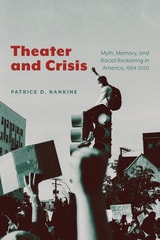
Theater and Crisis
Myth, Memory, and Racial Reckoning in America, 1964-2020Patrice D. Rankine
Lever Press, 2024
Rather than approaching the problem of racial reckoning through history, where periodization and progress are dominant narratives, Theater and Crisis argues that myth and memory allow for better theorization about recurring events from the past, their haunting, and what these apparent ghosts ask of us. Building on the study of myth as active, processual storytelling, Rankine acknowledges that it grounds and orients groups toward significant events. Theater and Crisis aligns narratives about Emmett Till, Trayvon Martin, and George Floyd, among others, with ancient, mythic figures such as Christ, Dionysus, Oedipus, and Moses. As living and verbal visitations, these stories performed on stage encode the past through their epiphanies in the present, urging audiences toward shared meaning.
Rankine traces the cyclical hauntings of race through the refiguring of mythic stories across the past 75 years in the plays of James Baldwin, Ntozake Shange, Antoinette Nwandu, and many more, and in response to flashpoints in US racial history, such as the 1955 lynching of Emmett Till, the upheavals of the 1960s and 1970s, the wars on drugs and crime, and the continued violence against and disenfranchisement of Black people into the twenty-first century. Theater and Crisis explores the appearance of myth on the American stage and showcases the ongoing response by the theatrical establishment to transform the stage into a space for racial reckoning. This timely book is essential reading for scholars of theater studies, classics, and American studies.
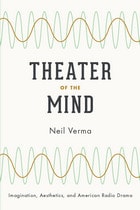
Theater of the Mind
Imagination, Aesthetics, and American Radio DramaNeil Verma
University of Chicago Press, 2012
For generations, fans and critics have characterized classic American radio drama as a “theater of the mind.” This book unpacks that characterization by recasting the radio play as an aesthetic object within its unique historical context. In Theater of the Mind, Neil Verma applies an array of critical methods to more than six thousand recordings to produce a vivid new account of radio drama from the Depression to the Cold War.
In this sweeping exploration of dramatic conventions, Verma investigates legendary dramas by the likes of Norman Corwin, Lucille Fletcher, and Wyllis Cooper on key programs ranging from The Columbia Workshop, The Mercury Theater on the Air, and Cavalcade of America to Lights Out!, Suspense, and Dragnet to reveal how these programs promoted and evolved a series of models of the imagination.
With close readings of individual sound effects and charts of broad trends among formats, Verma not only gives us a new account of the most flourishing form of genre fiction in the mid-twentieth century but also presents a powerful case for the central place of the aesthetics of sound in the history of modern experience.
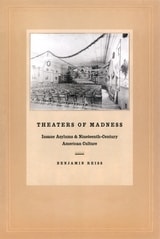
Theaters of Madness
Insane Asylums and Nineteenth-Century American CultureBenjamin Reiss
University of Chicago Press, 2008
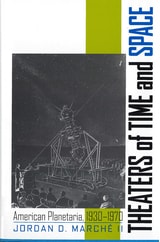
Theaters of Time and Space
American Planetaria, 1930-1970Marche, Jordan
Rutgers University Press, 2005
Every year, millions of Americans visit planetariums and are captivated by their strikingly realistic portrayal of the night sky. Today, it is indeed difficult to imagine astronomy education without these magnificent celestial theaters. But projection planetariums, first developed in Germany, have been a part of American museum pedagogy only since the early twentieth century and were not widespread until the 1960s.
In this unique social history,former planetarium director and historian of science Jordan D. Marché II offers the first complete account of the community of individuals and institutions that, during the period between 1930 and 1970, made planetariums the popular teaching aids they are today. Marché addresses issues such as the role of gender and social developments within the planetarium community, institutional patronage, and the popularization of science. He reveals how, at different times, various groups, including financial donors, amateur scientists, and government officials, viewed the planetarium as an instrument through which they could shape public understanding and perceptions of astronomy and space science.
Offering an insightful, wide-ranging look into the origins of an institution that has fascinated millions, Theaters of Timeand Space brings new perspectives to how one educational community changed the cultural complexion of science, helped shape public attitudes toward the U.S. space program, and even contributed to policy decisions regarding allocations for future space research.
Theaters of the American Revolution
Northern, Middle, Southern, Western, NavalJames Kirby Martin
Westholme Publishing, 2023
Identifying discrete geographical areas in order to better understand a conflict that moves across hundreds of thousands of square miles of land and water, such as the American Civil War and World War II, has been a valuable historical method. During this time of greater study of the war that made America, the authors of Theaters of the American Revolution take this approach for the first time. The result is a stimulating volume that will allow readers to see how the war flowed from region to region from 1775 to 1781, beginning in the Northern colonies and Canada, through the dark months in the Middle colonies, to a shift to the South and culmination at Yorktown. Simultaneously, the war raged up and down the western frontier, with the Patriots working to keep the British and their Indian allies from disrupting the main battle armies to the east. Equally important was the war at sea, where American privateers and a fledgling navy attempted to harass the British; but with the entrance of France to the conflict, the control of the sea took a much more balanced—and important— aspect. With specially commissioned maps and colorful descriptions of eighteenth century American terrain, settlements, and cities, as well as key battles, Theaters of the American Revolution provides an ideal introduction to understanding one of the most important wars in world history in its totality.
Contents
Introduction • James Kirby Martin and David L. Preston
The Northern Theater • James Kirby Martin
The Middle Theater • Edward G. Lengel and Mark Edward Lender
The Southern Theater • Jim Piecuch
The Western Theater • Mark Edward Lender
The Naval Theater • Charles Neimeyer
Theaters of the Everyday
Aesthetic Democracy on the American StageJacob Gallagher-Ross
Northwestern University Press, 2018
Offering both fresh reappraisals of canonical figures and movements and new examinations of theatrical innovators, Theaters of the Everyday reveals surprising affinities between artists often considered poles apart, such as John Cage and Lee Strasberg, and Thornton Wilder and the New York experimentalist Nature Theater of Oklahoma. Gallagher-Ross persuasively shows how these creators eschew conventional definitions of dramatic action and focus attention on smaller but no less profound dramas of perception, consciousness, and day-to-day life.
Gallagher-Ross traces some of the intellectual roots of the theater of the everyday to American transcendentalism, with its pragmatic process philosophy as well as its sense of ordinary experience as the wellspring of aesthetic awareness.