Results by title
28167 books match the query 'History' and 6372 start with t

The Media Players
Shakespeare, Middleton, Jonson, and the Idea of NewsStephen Wittek
University of Michigan Press, 2015

The Media and the Rwanda Genocide
Edited by Allan Thompson
Pluto Press, 2007
This is the first book to explore both sides of the media equation. Examining how local radio was used as a tool of hate, encouraging neighbors to turn against each other, the book also presents a critique of international media coverage. Bringing together local reporters, high-profile Western journalists, and leading media theorists, this is the only book to identify the extent of the media's accountability. It also examines deliberations by the International Criminal Tribunal for Rwanda on the role of the media in the genocide. This book is a startling record of the negative influence that the media can have. The authors put forward suggestions for the future, outlining how we can avoid censorship and propaganda and they argue for a new responsibility in media reporting.

The Medical Delivery Business
Health Reform, Childbirth, and the Economic OrderPerkins, Barbara Bridgman
Rutgers University Press, 2004
Americans at the end of the twentieth century worried that managed care had fundamentally transformed the character of medicine. In The Medical Delivery Business, Barbara Bridgman Perkins uses examples drawn from maternal and infant care to argue that the business approach in medicine is not a new development. Health care reformers throughout the century looked to industrial, corporate, and commercial enterprises as models for the institutions, specialties, and technological strategies that defined modern medicine.
In the case of perinatal care, the business model emphasized specialized over primary care, encouraged the use of surgical and technological procedures, and unnecessarily turned childbirth into an intensive care situation. Active management techniques, for example, encouraged obstetricians to accelerate labor with oxytocin to augment their productivity. Despite the achievements of the childbirth and women’s health movement in the 1970s, aggressive medical intervention has remained the birth experience for millions of American women (and their babies) every year.
The Medical Delivery Business challenges the conventional view that a dose of the market is good for medicine. While Perkins is sympathetic to the goals of progressive and feminist reformers, she questions whether their strategies will succeed in making medicine more equitable and effective. She argues that the medical care system itself needs to be fundamentally "re-formed," and the reforms must be based on democracy, caring, and social justice as well as economics.
The Medici Codex of 1518, Volume 1
Historical Introduction and CommentaryEdited by Edward E. Lowinsky
University of Chicago Press, 1968
It is invaluable for transmitting the excellent readings of the repertory of the French Royal Chapel and a number of political motets of great musical and historical interest that reflect events at the French court and are unique to this collection.
Edward E. Lowinsky presents this anthology as part of a series containing critical editions of major sources of fifteenth- and sixteenth-century music in their entirety.
The Medici Codex of 1518, Volume 2
TranscriptionEdited by Edward E. Lowinsky
University of Chicago Press, 1968
It is invaluable for transmitting the excellent readings of the repertory of the French Royal Chapel and a number of political motets of great musical and historical interest that reflect events at the French court and are unique to this collection.
Edward E. Lowinsky presents this anthology as part of a series containing critical editions of major sources of fifteenth- and sixteenth-century music in their entirety.
The Medici Codex of 1518, Volume 3
Facsimile EditionEdited by Edward E. Lowinsky
University of Chicago Press, 1968
It is invaluable for transmitting the excellent readings of the repertory of the French Royal Chapel and a number of political motets of great musical and historical interest that reflect events at the French court and are unique to this collection.
Edward E. Lowinsky presents this anthology as part of a series containing critical editions of major sources of fifteenth- and sixteenth-century music in their entirety.
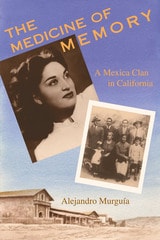
The Medicine of Memory
A Mexica Clan in CaliforniaBy Alejandro Murguía
University of Texas Press, 2002
"People who live in California deny the past," asserts Alejandro Murguía. In a state where "what matters is keeping up with the current trends, fads, or latest computer gizmo," no one has "the time, energy, or desire to reflect on what happened last week, much less what happened ten years ago, or a hundred." From this oblivion of memory, he continues, comes a false sense of history, a deluded belief that the way things are now is the way they have always been.
In this work of creative nonfiction, Murguía draws on memories—his own and his family's reaching back to the eighteenth century—to (re)construct the forgotten Chicano-indigenous history of California. He tells the story through significant moments in California history, including the birth of the mestizo in Mexico, destruction of Indian lifeways under the mission system, violence toward Mexicanos during the Gold Rush, Chicano farm life in the early twentieth century, the Chicano Movement of the 1960s, Chicano-Latino activism in San Francisco in the 1970s, and the current rebirth of Chicano-Indio culture. Rejecting the notion that history is always written by the victors, and refusing to be one of the vanquished, he declares, "This is my California history, my memories, richly subjective and atavistic."
The Medieval Art of Fear
Ravinder S. Binning
University of Chicago Press, 2026
In the medieval world, experiences of fear attained a mystical significance: monks, urban publics, and even emperors pursued horror and grief to explore the limits of fantasy, sensation, and catharsis. In this book, Ravinder S. Binning examines an expansive archive ranging from poetry and scientific treatises to artistic works in ivory and crystal to recover an aesthetic tradition centered on optical tension, spatial suspense, and tactile experience.
Moving between early monastic spaces in Egypt and major urban centers like Constantinople from the fourth through the thirteenth centuries, The Medieval Art of Fear shows how the psychosomatic experience of fear became the deliberate object of mystical practices, meditation, and other embodied techniques across the medieval world. The result is a powerful exploration of the aesthetic effects behind some of the medieval world’s most ambitious works, whose influence extends well beyond the Middle Ages.

The Medieval Castle
Romance and RealityKathryn L. Reyerson and Faye Powe, Editors
University of Minnesota Press, 1991
The Medieval Castle was first published in 1991. Minnesota Archive Editions uses digital technology to make long-unavailable books once again accessible, and are published unaltered from the original University of Minnesota Press editions.
The Medieval Constitution of Liberty
Political Foundations of Liberalism in the WestAlexander William Salter and Andrew T. Young
University of Michigan Press, 2023
Why did enduring traditions of economic and political liberty emerge in Western Europe and not elsewhere? Representative democracy, constitutionalism, and the rule of law are crucial for establishing a just and prosperous society, which we usually treat as the fruits of the Renaissance and Enlightenment, as Western European societies put the Dark Ages behind them.
In The Medieval Constitution of Liberty, Salter and Young point instead to the constitutional order that characterized the High Middle Ages. They provide a historical account of how this constitutional order evolved following the fall of the Western Roman Empire. This account runs from the settlements of militarized Germanic elites within the imperial frontiers, to the host of successor kingdoms in the sixth and seventh centuries, and through the short-lived Carolingian empire of the late eighth and ninth centuries and the so-called “feudal anarchy” that followed its demise. Given this unique historical backdrop, Salter and Young consider the resulting structures of political property rights. They argue that the historical reality approximated a constitutional ideal type, which they term polycentric sovereignty. Salter and Young provide a theoretical analysis of polycentric sovereignty, arguing that bargains between political property rights holders within that sort of constitutional order will lead to improvements in governance.

The Medieval Imagination
Jacques Le Goff
University of Chicago Press, 1988
"Le Goff is one of the most distinguished of the French medieval historians of his generation . . . he has exercised immense influence."—Maurice Keen, New York Review of Books
"The whole book turns on a fascinating blend of the brutally materialistic and the generously imaginative."—Tom Shippey, London Review of Books
"The richness, imaginativeness and sheer learning of Le Goff's work . . . demand to be experienced."—M. T. Clanchy, Times Literary Supplement
The Medieval Invention of Travel
Shayne Aaron Legassie
University of Chicago Press, 2017
Exploring this phenomenon, The Medieval Invention of Travel draws on an impressive array of sources to develop original readings of canonical figures such as Marco Polo, John Mandeville, and Petrarch, as well as a host of lesser-known travel writers. As Shayne Aaron Legassie demonstrates, the Middle Ages inherited a Greco-Roman model of heroic travel, which viewed the ideal journey as a triumph over temptation and bodily travail. Medieval travel writers revolutionized this ancient paradigm by incorporating practices of reading and writing into the ascetic regime of the heroic voyager, fashioning a bold new conception of travel that would endure into modern times. Engaging methods and insights from a range of disciplines, The Medieval Invention of Travel offers a comprehensive account of how medieval travel writers and their audiences reshaped the intellectual and material culture of Europe for centuries to come.

The Medieval Kitchen
Recipes from France and ItalyOdile Redon, Françoise Sabban, and Silvano Serventi
University of Chicago Press, 1998
"This book is a delight. It is not often that one has the privilege of working from a text this detailed and easy to use. It is living history, able to be practiced by novice and master alike, practical history which can be carried out in our own homes by those of us living in modern times."—Wanda Oram Miles, The Medieval Review
"The Medieval Kitchen, like other classic cookbooks, makes compulsive reading as well as providing a practical collection of recipes."—Heather O'Donoghue, Times Literary Supplement
The Medieval Mediterranean
Cross-Cultural ContactsMarilyn J. Chiat and Kathryn L. Reyerson, Editors
University of Minnesota Press, 1991
The Medieval Mediterranean was first published in 1991. Minnesota Archive Editions uses digital technology to make long-unavailable books once again accessible, and are published unaltered from the original University of Minnesota Press editions.
"Three faiths—Jewish, Christian, and Muslim—became the dominant religions of western civilization in the course of the Middle Ages. Within each, there is and was great cultural and ethnic diversity. The complex relationships today among Jews, Christians, and Muslims in the Mediterranean, the tensions and attempts at resolution of conflicts among these groups, have their roots in the Middle Ages."
Contributors: Oleg Grabar, The Meaning of the Dome of the Rock; Oliver Nicholson, Golden Age and the End of the World: Myths of Mediterranean Life from Lactantius to Joshua the Stylite; Ivan Havener, OSB, Two Early Anecdotes Concerning Gregory the Great from the Greek Tradition; Catherine B. Asher, The Public Baths of Medieval Spain: An Architectural Study; Jonathan M. Bloom, The Revival of Early Islamic Architecture by the Umayyads of Spain; Marvin Mills, Scenario for a Roman Provenance for the Mosque of Cordoba; Sybil H. Mintz, The Carpet Pages of the Spanish-Hebrew Farhi Bible; Ann Thorson Walton, The Three Hebrew Children in the Fiery Furnace: A Study of Christian Iconography; W. Eugene Kleinbauer, Pre-Carolingian Concepts of Architectural Planning; Clara Estow, Iberia and North Africa: A Comparative View of Religious and Sexual Discrimination in a Medieval Plural Society; Moshe Sokolow, Arabic Books in Jewish Libraries: The Evidence of Genizah Booklist; Leslie S. B. MacCoull, Coptic Alchemy and Craft Technology in Islamic Egypt: The Papyrological Evidence; Thomas S. Noonan, Technology Transfer Between Byzantium and Eastern Europe: A Case Study of the Glass Industry in Early Russia; Stephanie Cain Van D'Elden, Black and White: Contact with the Mediterranean World in Medieval German Narrative; Gerhard Weiss, The Pilgrim as Tourist: Travels to the Holy Land as Reflected in the Published Accounts of German Pilgrims Between 1450 and 1550
The Medieval Origins of the Legal Profession
Canonists, Civilians, and CourtsJames A. Brundage
University of Chicago Press, 2008
By the end of the eleventh century, Brundage argues, renewed interest in Roman law combined with the rise of canon law of the Western church to trigger a series of consolidations in the profession. New legal procedures emerged, and formal training for proctors and advocates became necessary in order to practice law in the reorganized church courts. Brundage demonstrates that many features that characterize legal advocacy today were already in place by 1250, as lawyers trained in Roman and canon law became professionals in every sense of the term. A sweeping examination of the centuries-long power struggle between local courts and the Christian church, secular rule and religious edict, The Medieval Origins of the Legal Profession will be a resource for the professional and the student alike.
The Medieval Postcolonial Jew, In and Out of Time
Miriamne Ara Krummel
University of Michigan Press, 2022
The Medieval Risk-Reward Society
Courts, Adventure, and Love in the European Middle AgesWill Hasty
The Ohio State University Press, 2016
The Medieval Risk-Reward Society: Courts, Adventure, and Love in the European Middle Ages takes a descriptive approach to the competitions in religion, politics, and poetry that are constitutive of medieval culture. Culture is considered always to be happening, and to be happening on the cultural cutting edge as competitions for rewards involving the element of chance. This study finds adventure and love—the principal concerns of medieval European romance poetry—to be cultural game changers, and thereby endeavors to make a humanist contribution to the development of a cultural game theory.
The Medieval and Ottoman Hajj Route in Jordan
An Archaeological and Historical StudyA. Petersen
Council for British Research in the Levant, 2012
The Mediterranean Incarnate
Region Formation between Sicily and Tunisia since World War IINaor Ben-Yehoyada
University of Chicago Press, 2017
The book centers on the town of Mazara del Vallo, located on the southwestern tip of Sicily some ninety nautical miles northeast of the African shore. Ben-Yehoyada intertwines the town’s recent turbulent history—which has been fraught with conflicts over fishing rights, development projects, and how the Mediterranean should figure in Italian politics at large—with deep accounts of life aboard the Naumacho, linking ethnography with historical anthropology and political-economic analysis. Through this sophisticated approach, he crafts a new viewpoint on the historical processes of transnational region formation, one offered by these moving ships as they weave together new social and political constellations.
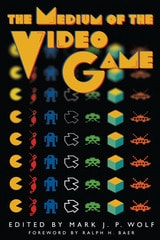
The Medium of the Video Game
Edited by Mark J. P. Wolf
University of Texas Press, 2002
Over a mere three decades, the video game became the entertainment medium of choice for millions of people, who now spend more time in the interactive virtual world of games than they do in watching movies or even television. The release of new games or game-playing equipment, such as the PlayStation 2, generates great excitement and even buying frenzies. Yet, until now, this giant on the popular culture landscape has received little in-depth study or analysis.
In this book, Mark J. P. Wolf and four other scholars conduct the first thorough investigation of the video game as an artistic medium. The book begins with an attempt to define what is meant by the term "video game" and the variety of modes of production within the medium. It moves on to a brief history of the video game, then applies the tools of film studies to look at the medium in terms of the formal aspects of space, time, narrative, and genre. The book also considers the video game as a cultural entity, object of museum curation, and repository of psychological archetypes. It closes with a list of video game research resources for further study.
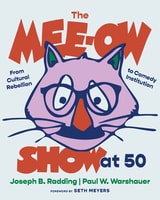
The Mee-Ow Show at 50
From Cultural Rebellion to Comedy InstitutionJoseph B. Radding and Paul W. Warshauer
Northwestern University Press, 2025
The fifty-year history of the Mee-Ow Show at Northwestern University and its influence on contemporary comedy
In the fall of 1973, two students at Northwestern University resolved to create something on stage that was wholly their own. Soon, they would be joined by a cohort of performers, musicians, and staff, and the resulting production would go on to launch the careers of scores of entertainment professionals, including some of the most well-known and awarded names in comedy today. This book is not only an account of the rebellious fifty-year history of the Mee-Ow Show, now the longest-running student sketch comedy and improv show in the country, but also its far-reaching influence. The storied group’s alumni include such household names as Craig Bierko, Ana Gasteyer, Julia Louis-Dreyfus, John Cameron Mitchell, Dermot Mulroney, Seth Meyers, and Kristen Schaal.
Based on more than a hundred new interviews with group members, presenting their words alongside never-before-published photographs and ephemera, The Mee-Ow Show at 50 provides a chronicle of the last half-century of the American undergraduate experience—and reveals how, from New York to Los Angeles, contemporary comedy can trace its roots to an upstart student production in Evanston, Illinois.

The Memoir of Ednah Shepard Thomas
Ednah Shepard Thomas
University Press of Colorado, 2017
The Memoire Justificatif of Chevalier Monberaut
Indian Diplomacy in British West Florida, 1763-1765Montault Monberaut
University of Alabama Press, 1965
A rare primary-source account of Indigenous diplomacy and imperial transition in British West Florida, 1763–1765.
Historians of the Gulf Coast have long delighted in the romance of Spanish discovery and French settlement. The period of British occupation was relatively brief, fruitless, and prosaic, if we are to believe the older authorities. Today the availability of materials which were closed to an earlier generation enables us to re-create the story of British West Florida in terms more precise, with details more personal, and with no less dramatic coloration than has long been given-with less accuracy-to the earlier epochs.
In The Memoire Justificatif of Chevalier Monberaut, the translators have undertaken the resurrection of one of those gallant Frenchmen of the ancient regime who remained behind to serve the new Anglo-Saxon masters of West Florida. The Chevalier Montault de Monberaut is not unknown to historians of the colonial scene, but he has never enjoyed a full portrayal of his contribution nor a balanced evaluation of his role. By concentrating our attention upon the man as well as his milieu, we have been able to present in greater detail than before the circumstances and procedure of Indian diplomacy on the Gulf Coast at the beginning of the British period. By placing Monberaut against the backdrop of British colonial government and its problems, we have replaced some of the romantic fallacies with historic realities. The resulting clarity adds to the picture's significance and appeal.
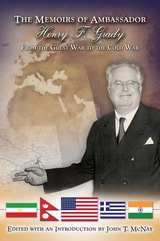
The Memoirs of Ambassador Henry F. Grady
From the Great War to the Cold WarEdited & Intro by John T. McNay
University of Missouri Press, 2009
When Henry Grady died in 1957, one obituary called him “America’s top diplomatic soldier” for a critical period of the Cold War, and over a long career he was deeply involved in events that changed our role in the world. Even so, this self-described “soft” cold warrior has been largely overlooked by historians. His memoirs, left to languish with his other papers, are now published for the first time, offering new insight into the origins and implementation of American trade and development policies—and into the tumult that was the Cold War.
A specialist in international economic policy, Grady helped create the system of reciprocal trade established under FDR during the depression. Progressing in his career through his abilities rather than through political connections, he was sent to India during World War II to spark its production for the war effort, then to Italy to help jump-start its economy once German forces were driven out. After the war, he was the first American ambassador to an independent India, then served as ambassador to Greece and Iran—where he was embroiled in the oil industry crisis that eventually led to the CIA’s overthrow of Prime Minister Mohammad Mossadegh.
Grady’s memoirs are an intriguing and informative account of early Cold War diplomacy in significant and turbulent regions of the Third World, embellished by his thoughts about the changing nature of American economic policies and his role as a representative of that system abroad. It offers new perspectives on the crisis in Iran in the early 1950s, where Grady was especially critical of Secretary of State Dean Acheson’s support for the remnants of British imperialism in Iran—and paid for his criticism with his job. Editor John McNay’s introduction and comments shed light on Grady’s thinking and his role in the policy-making process.
More than a chronicle of a wide-ranging career—one that reflects the emergence of the United States as the world’s leading economic power—Grady’s memoirs are a trenchant critique of U.S. foreign policy in the first half of the twentieth century. They provide modern readers an opportunity to reconsider the conflict between realism and idealism in foreign relations during the Cold War years.
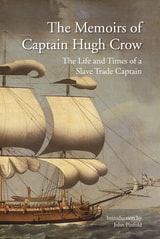
The Memoirs of Captain Hugh Crow
The Life and Times of a Slave Trade CaptainEdited by the Bodleian Library
Bodleian Library Publishing, 2007
Numerous documents attest to the horrific conditions endured by African slaves during the centuries of the Atlantic slave trade. Less well known is the perspective of those who wielded power during this dark time in human history. The Bodleian Library fills that gap here with the memoirs of a principal figure in the slave trade, Captain Hugh Crow.
The first-hand account of a man who commanded one of the last legal slave vessels to cross the Atlantic, Life and Times of a Slave Trade Captain offers a revealing if frequently troubling look into the psyche of a slave trader. His chronicle leaves nothing to the imagination, as he recounts the harsh routine of daily life on a slave vessel, where on average a fifth of the crew—let alone the human cargo—never survived the crossing. Crow portrays himself as an “enlightened” slaver, a claim he justifies through the link between his close attention to his “negroes” and his financial success, and the songs composed for him by the slaves. His account also includes commentary on the social propriety of the slave trade and notes about the conditions on West Indian and Caribbean plantations as well as on slave ships. John Pinfold’s illuminating introduction recounts the life of Hugh Crow and sets him in the rich historical context of eighteenth-century mercantilism and its battle with the abolitionist movement. An eye-opening read, Life and Times of a Slave Trade Captain reveals an often overlooked facet in the complicated history of transatlantic slavery.
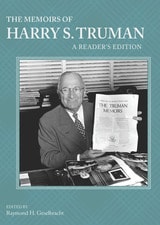
The Memoirs of Harry S. Truman
A Reader's EditionEdited by Raymond H. Geselbracht
University of Missouri Press, 2027
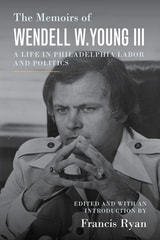
The Memoirs of Wendell W. Young III
A Life in Philadelphia Labor and PoliticsFrancis Ryan
Temple University Press, 2019
Philadelphia native Wendell W. Young III was one of the most important American labor leaders in the last half of the twentieth century. An Acme Markets clerk in the 1950s and ’60s, he was elected top officer of the Retail Clerks Union when he was twenty-four. His social justice unionism sought to advance wages while moving beyond collective bargaining to improve the conditions of the working-class majority, whether in a union or not. Young quickly gained a reputation for his independence, daring at times to publicly criticize the policies of the city’s powerful AFL-CIO leadership and tangle with the city’s political machine.
Editor Francis Ryan, whose introduction provides historical context, interviewed Young about his experiences working in the region’s retail and food industry, measuring the changes over time and the tangible impact that union membership had on workers. Young also describes the impact of Philadelphia’s deindustrialization in the 1970s and ’80s and recounts his activism for civil rights and the anti-war movements as well as on John F. Kennedy’s presidential campaign.
The Memoirs of Wendell W. YoungIII provides the most extensive labor history of late twentieth-century Philadelphia yet written.
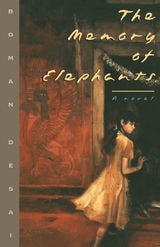
The Memory of Elephants
A NovelBoman Desai
University of Chicago Press, 2001

The Memory of Trade
Modernity's Entanglements on an Eastern Indonesian IslandPatricia Spyer
Duke University Press, 2000
Drawing on more than two years of archival and ethnographic research, Spyer examines the dynamics of contact with the Dutch and Europeans, Suharto’s postcolonial regime, and with the competing religions of Islam, Protestantism, and Catholicism in the context of the recent conversion of pagan Aruese. While arguing that Aru identity and community are defined largely in terms of absence, longing, memory, and desire, she also incorporates present-day realities—such as the ecological destruction wrought by the Aru trade in such luxury goods as pearls and shark fins—without overlooking the mystique and ritual surrounding these activities. Imprinted on the one hand by the archipelago’s long engagement with extended networks of commerce and communication and, on the other, by modernity’s characteristic repressions and displacements, Aruese make and manage their lives somewhat precariously within what they often seem to construe as a dangerously expanding—if still enticing—world. By documenting not only the particular expectations and strategies Aruese have developed in dealing with this larger world but also the price they pay for participation therein, The Memory of Trade speaks to problems commonly faced elsewhere in the frontier spaces of modern nation-states.
Balancing particularly astute analysis with classic ethnography, The Memory of Trade will appeal not only to anthropologists and historians but also to students and specialists of Southeast Asia, modernity, and globalization.
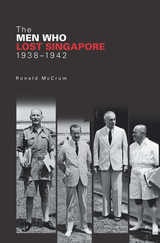
The Men Who Lost Singapore, 1938-1942
Ronald McCrum
National University of Singapore Press, 2017
In The Men Who Lost Singapore, McCrum closely examines the role and responsibilities of the colonial authorities before and during the war. He argues that the poor and occasionally hostile relations that developed between the local government and the British military hierarchy prevented the development and implementation of a strategic and unified plan of defense against the growing threat of the Japanese. Consequently, this indecisive and ineffective leadership led to significant losses and civilian casualties that could have been prevented.
The Men in My Country
Marilyn Abildskov
University of Iowa Press, 2004
The Men in My Country is the story of an American woman living and loving in Japan. Satisfied at first to observe her exotic surroundings, the woman falls in love with the place, with the light, with the curve of a river, with the smell of bonfires during obon, with blue and white porcelain dishes, with pencil boxes, and with small origami birds. Later, struggling for a deeper connection—“I wanted the country under my skin”—Abildskov meets the three men who will be part of her transformation and the one man with whom she will fall deeply in love.
A travel memoir offering an artful depiction of a very real place, The Men in My Country also covers the terrain of a complex emotional journey, tracing a geography of the heart, showing how we move to be moved, how in losing ourselves in a foreign place we can become dangerously—and gloriously—undone.
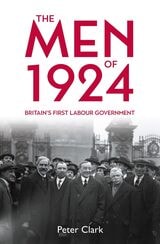
The Men of 1924
Britain’s First Labour GovernmentPeter Clark
Haus Publishing, 2023
In January of 1924, the cabinet of the first Labour government consisted of twenty white, middle-aged men, as it had for generations. But the election also represented a radical departure from government by the ruling class. Most members of the administration had left school by the age of fifteen. Five of them had started work by the time they were twelve years old. Three were working down the mines before they entered their teens. Two were illegitimate, one was abandoned at birth, and three were of Irish immigrant descent. For the first time in Britain’s history, the cabinet could truly be said to represent all of Britain’s social classes. This unheralded revolution in representation is the subject of Peter Clark’s fascinating new book, The Men of 1924. Who were these men? Clark’s vivid portrayal is full of evocative portraits of a new breed of politician, the forerunners of all those who, later in the last century and this one, overcame a system from which they had been excluded for too long.
The Men of Cajamarca
A Social and Biographical Study of the First Conquerors of PeruBy James Lockhart
University of Texas Press, 1972
In November 1532, a group of 168 Spaniards seized the Inca emperor Atahuallpa in the town of Cajamarca, in the northern Peruvian highlands. Their act, quickly taken as a symbol of the conquest of a vast empire, brought them unprecedented rewards in gold and silver; it made them celebrities, gave them first choice of positions of honor and power in the new Peru of the Spaniards, and opened up the possibility of a splendid life at home in Spain, if they so desired. Thus they became men of consequence, at the epicenter of a swift and irrevocable transformation of the Andean region. Yet before that memorable day in Cajamarca they had been quite unexceptional, a reasonable sampling of Spaniards on expeditions all over the Indies at the time of the great conquests.
The Men of Cajamarca is perhaps the fullest treatment yet published of any group of early Spaniards in America. Part I examines general types, characteristics, and processes visible in the group as representative Spanish immigrants, central to the establishment of a Spanish presence in the New World’s richest land. The intention is to contribute to a changing image of the Spanish conqueror, a man motivated more by pragmatic self-interest than by any love of adventure, capable and versatile as often as illiterate and rough. Aiming at permanence more than new landfalls, these men created the governmental units and settlement distribution of much of Spanish America and set lasting patterns for a new society.
Part II contains the men’s individual biographies, ranging from a few lines for the most obscure to many pages of analysis for the best-documented figures. The author traces the lives of the men to their beginnings in Spain and follows their careers after the episode in Cajamarca.

The Mena File
Barry Seal's Ties to Drug Lords and U.S. OfficialsMara Leveritt
Butler Center for Arkansas Studies, 2016
Inquiries into Seal’s activities, including some by congressional committees, led nowhere. Many of the police files about him were reported lost; others were almost totally redacted. Nevertheless, hundreds of records have survived regarding this backwater of the Iran-Contra saga, pointing to government complicity in Seal’s shipments of cocaine into the United States and the powerful measures taken to obscure that involvement.
In brisk and meticulously footnoted order, The Mena File guides readers from the airstrip in the mountains of rural Arkansas (where Seal based his operation) to Nicaraguan jungles and then to courtrooms across the American South, culminating in a pivotal meeting in the nation’s capital. Menace lurks throughout the tale and, just as darkly, in the evidence of how law-enforcement agents who labored to bring Seal to justice found themselves undermined—and ultimately betrayed—by elected and appointed officials.
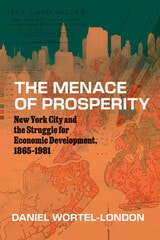
The Menace of Prosperity
New York City and the Struggle for Economic Development, 1865–1981Daniel Wortel-London
University of Chicago Press, 2025
Many local policymakers make decisions based on a deep-seated belief: what’s good for the rich is good for cities. Convinced that local finances depend on attracting wealthy firms and residents, municipal governments lavish public subsidies on their behalf. Whatever form this strategy takes—tax-exempt apartments, corporate incentives, debt-financed mega projects—its rationale remains consistent and assumed to be true. But this wasn’t always the case. Between the 1870s and the 1970s, a wide range of activists, citizens, and intellectuals in New York City connected local fiscal crises to the greed and waste of the rich. These figures saw other routes to development, possibilities rooted in alternate ideas about what was fiscally viable.
In The Menace of Prosperity, Daniel Wortel-London argues that urban economics and politics are shaped by what he terms the “fiscal imagination” of policymakers, activists, advocates, and other figures. His survey of New York City during a period of explosive growth shows how residents went beyond the limits of redistributive liberalism to imagine how their communities could become economically viable without the largesse of the wealthy. Their strategies—which included cooperatives, public housing, land-value taxation, public utilities, and more—centered the needs and capabilities of ordinary residents as the basis for local economies that were both prosperous and just.
Overturning stale axioms about economic policy, The Menace of Prosperity shows that not all growth is productive for cities. Wortel-London’s ambitious history demonstrates the range of options we’ve abandoned and hints at the economic frameworks we could still realize—and the more democratic cities that might result.
The Menace of Prosperity
New York City and the Struggle for Economic Development, 1865–1981Daniel Wortel-London
University of Chicago Press, 2025
Upends entrenched thinking about cities, demonstrating how urban economies are defined—or constrained—by the fiscal imagination of policymakers, activists, and residents.
Many local policymakers make decisions based on a deep-seated belief: what’s good for the rich is good for cities. Convinced that local finances depend on attracting wealthy firms and residents, municipal governments lavish public subsidies on their behalf. Whatever form this strategy takes—tax-exempt apartments, corporate incentives, debt-financed mega projects—its rationale remains consistent and assumed to be true. But this wasn’t always the case. Between the 1870s and the 1970s, a wide range of activists, citizens, and intellectuals in New York City connected local fiscal crises to the greed and waste of the rich. These figures saw other routes to development, possibilities rooted in alternate ideas about what was fiscally viable.
In The Menace of Prosperity, Daniel Wortel-London argues that urban economics and politics are shaped by what he terms the “fiscal imagination” of policymakers, activists, advocates, and other figures. His survey of New York City during a period of explosive growth shows how residents went beyond the limits of redistributive liberalism to imagine how their communities could become economically viable without the largesse of the wealthy. Their strategies—which included cooperatives, public housing, land-value taxation, public utilities, and more—centered the needs and capabilities of ordinary residents as the basis for local economies that were both prosperous and just.
Overturning stale axioms about economic policy, The Menace of Prosperity shows that not all growth is productive for cities. Wortel-London’s ambitious history demonstrates the range of options we’ve abandoned and hints at the economic frameworks we could still realize—and the more democratic cities that might result.
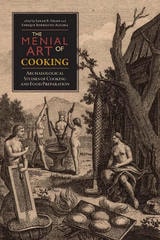
The Menial Art of Cooking
Archaeological Studies of Cooking and Food PreparationSarah R. Graff
University Press of Colorado, 2012
This book examines techniques and technologies of food preparation, the spaces where food was cooked, the relationship between cooking and changes in suprahousehold economies, the religious and symbolic aspects of cooking, the relationship between cooking and social identity, and how examining foodways provides insight into social relations of production, distribution, and consumption. Contributors use a wide variety of evidence-including archaeological data; archival research; analysis of ceramics, fauna, botany, glass artifacts, stone tools, murals, and painted ceramics; ethnographic analogy; and the distribution of artifacts across space-to identify signs of cooking and food processing left by ancient cooks.
The Menial Art of Cooking is the first archaeological volume focused on cooking and food preparation in prehistoric and historic settings around the world and will interest archaeologists, social anthropologists, sociologists, and other scholars studying cooking and food preparation or subsistence.
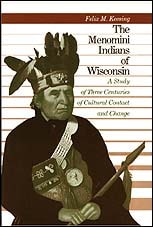
The Menomini Indians of Wisconsin
A Study of Three Centuries of Cultural Contact and ChangeFelix M. Keesing
University of Wisconsin Press, 1987
The Menomini, a peaceful people, lived by farming, hunting, fishing, and gathering wild rice. Perhaps because of their peaceful nature their name was not generally found in the white military annals, and they were largely unknown until 1892, when Walter James Hoffman published a detailed ethnographic account of them.
Felix Keesing's classic 1939 work on the Menomini is one of the most detailed, authoritative, and useful accounts of their history and culture. It superseded Hoffman's earlier work because of Keesing's modern methods of research. This work was among the first monographs on an American Indian people to employ a model of acculturation, and it is also an excellent early example of what is now called ethnohistory. It served as a model of anthropological research for decades after its publication.
Keesing's work, reprinted in this new Wisconsin edition, will continue to serve as a comprehensive introduction for the general reader, a book respected by both anthropologists and historians, and by the Menomini themselves. It is still the most important study of Menomini life up until 1939.
The Mercenary Mediterranean
Sovereignty, Religion, and Violence in the Medieval Crown of AragonHussein Fancy
University of Chicago Press, 2016
They were not the first or only Muslim soldiers to do so. Over the course of the thirteenth and fourteenth centuries, the Christian kings of Aragon recruited thousands of foreign Muslim soldiers to serve in their armies and as members of their royal courts. Based on extensive research in Arabic, Latin, and Romance sources, The Mercenary Mediterranean explores this little-known and misunderstood history. Far from marking the triumph of toleration, Hussein Fancy argues, the alliance of Christian kings and Muslim soldiers depended on and reproduced ideas of religious difference. Their shared history represents a unique opportunity to reconsider the relation of medieval religion to politics, and to demonstrate how modern assumptions about this relationship have impeded our understanding of both past and present.
The Merchant John Askin
Furs and Empire at British MichilimackinacJustin M. Carroll
Michigan State University Press, 2017
The Merchant Prince of Black Chicago
Anthony Overton and the Building of a Financial EmpireRobert E. Weems Jr.
University of Illinois Press, 2020
Robert E. Weems Jr. restores Overton to his rightful place in American business history. Dispelling stubborn myths, he traces Overton's rise from mentorship by Booker T. Washington, through early failures, to a fateful move to Chicago in 1911. There, Overton started a popular magazine aimed at African American women that helped him dramatically grow his cosmetics firm. Overton went on to become the first African American to head a major business conglomerate, only to lose significant parts of his businesses—and his public persona as ”the merchant prince of his race”—in the Depression, before rebounding once again in the early 1940s.
Revealing and panoramic, The Merchant Prince of Black Chicago weaves the fascinating life story of an African American trailblazer through the eventful history of his times.
The Merchant of Havana
The Jew in the Cuban Abolitionist ArchiveStephen Silverstein
Vanderbilt University Press, 2016
As Cuba industrialized in the nineteenth century, an epochal realignment of the social order occurred. In this period of change, two seemingly disparate, yet nevertheless intertwined, ideological forces appeared: anti-Semitism and abolitionism. As the antislavery movement became organized in Cuba, the argument grew that Jews participated in the African slave trade and in New World slavery, and that this participation gave Jews extraordinary influence in the new Cuban economy and culture. What was remarkable about this anti-Semitism was the decidedly small Jewish population on the island in this era. This form of anti-Semitism, Silverstein reveals, sprang almost exclusively from mythological beliefs.

The Merchant of Prato's Wife
Margherita Datini and Her World, 1360-1423Ann Crabb
University of Michigan Press, 2015
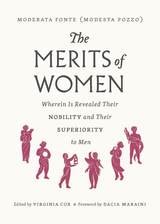
The Merits of Women
Wherein Is Revealed Their Nobility and Their Superiority to MenModerata Fonte
University of Chicago Press, 2018
Without help from their wives, men are just like unlit lamps . . .
Just think of them as an unreliable clock that tells you it’s ten o’clock when it’s in fact barely two . . .
A man without a woman is like a fly without a head . . .
These are but a small selection of the quips bandied about at this lively gathering of women. The broad topic at hand is the relative pros and cons of men, and the cases in point range from pick-up artists to locker-room talk, and from double standards to fragile masculinity.
Yet this dialogue unfolds not among ironically misandrist millenials venting at their local dive bar, but rather among sixteenth-century women—variously married, widowed, single, and betrothed—attending a respectable Venice garden party. Written in the early 1590s by Moderata Fonte, pseudonym of the Renaissance poet and writer Modesta Pozzo, this literary dialogue interrogates men and men’s treatment of women, and explores by contrast the virtues of singledom and female friendship. As the women diverge from their theme—discussing everything from astrology to the curative powers of plants and minerals—a remarkable group portrait of wisdom, wit, and erudition emerges.
A new introduction by translator Virginia Cox and foreword by Dacia Maraini situate The Merits of Women in its historical context, written as it was on the cusp of Shakespeare’s heyday, and straddling the centuries between the feminist works of Christine de Pizan and Mary Wollstonecraft. Elegantly presented for a general audience, this is a must-read for baby feminists and “nasty women” alike, not to mention the perfect subtle gift for any mansplaining friend who needs a refresher on the merits of women . . . and their superiority to men.
The Mertiyo Rathors of Merto, Rajasthan
Select Translations Bearing on the History of a Rajput Family, 1462–1660, Volumes 1–2Richard Saran and Norman P. Ziegler, translators and annotators
University of Michigan Press, 2001
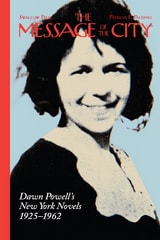
The Message of the City
Dawn Powell’s New York Novels, 1925–1962Patricia E. Palermo
Ohio University Press, 2016
Dawn Powell was a gifted satirist who moved in the same circles as Dorothy Parker, Ernest Hemingway, renowned editor Maxwell Perkins, and other midcentury New York luminaries. Her many novels are typically divided into two groups: those dealing with her native Ohio and those set in New York. “From the moment she left behind her harsh upbringing in Mount Gilead, Ohio, and arrived in Manhattan, in 1918, she dove into city life with an outlander’s anthropological zeal,” reads a recent New Yorker piece about Powell, and it is those New York novels that built her reputation for scouring wit and social observation.
In this critical biography and study of the New York novels, Patricia Palermo reminds us how Powell earned a place in the national literary establishment and East Coast social scene. Though Powell’s prolific output has been out of print for most of the past few decades, a revival is under way: the Library of America, touting her as a “rediscovered American comic genius,” released her collected novels, and in 2015 she was posthumously inducted into the New York State Writer’s Hall of Fame.
Engaging and erudite, The Message of the City fills a major gap in in the story of a long-overlooked literary great. Palermo places Powell in cultural and historical context and, drawing on her diaries, reveals the real-life inspirations for some of her most delicious satire.

The Metal Life Car
The Inventor, the Impostor, and the Business of LifesavingGeorge E. Buker
University of Alabama Press, 2008
Engineering the battlefield—one armored advance at a time.
For centuries sailing vessels crept along the coastline, ready to flee ashore in case of danger or trouble; this worked well until weather or poor sailing drove these ships against an unforgiving coast. Saviors and salvors (often the same people) struggled to rescue both humans and cargo, often with results as tragic for them as for the sailors and passengers.
Joseph Francis (b. Boston, Massachusetts, 1801) was an inventor who also had the ability to organize a business to produce his inventions and the salesmanship to sell his products. His metal lifeboats, first used in survey expeditions in Asia Minor and Central America, came into demand among the world’s merchant marine, the U.S. Navy, and the U.S. Revenue Service. His corrugated “life car” was the keystone to development of the U.S. Life-Saving Service. Francis’s metal bateaux and lifeboats played an important role in the Third Seminole War in Florida. His metal pontoon army wagons served in the trans-Mississippi campaigns against the Indians.
In Europe, he was acclaimed as a genius and sold patent rights to shipyards in Liverpool and the Woolwich Arsenal in England, Le Havre seaport in France, in the free city of Hamburg, and in the Russian Empire. But while Francis was busy in Europe, Captain Douglass Ottinger, U.S. Revenue Marine Service, claimed to be the inventor of Francis’s life car and obtained support in the U.S. Congress and the Patent Office for his claim. Francis had to battle for decades to prove his rights, and Americans remained generally unfamiliar with his devices, thereby condemning Civil War armies to inferior copies while Europe was using, and acclaiming, his inventions.

The Metal of a Thousand Uses
Mercury Mining in Arkansas, 1930-1946Terry S. Reynolds
University of Arkansas Press, 2026
In 1930, a remote corner of southwest Arkansas witnessed the discovery of cinnabar, the ore from which mercury is extracted. Upon the arrival of “the metal of a thousand uses,” a wave of hope and ambition swept through the foothills of the Ouachita Mountains as mercury mining promised economic revival for the struggling state. Despite the known dangers of the industry, Arkansans greeted the prospect of a mercury boom with unbridled enthusiasm, seeing it as a potential solution to their economic woes amid the Great Depression.
In The Metal of a Thousand Uses: Mercury Mining in Arkansas, 1930–1946, Terry S. Reynolds charts the dramatic rise and fall of the state’s mercury mining district, from the euphoria of discovery to the logistical and financial challenges of industrialization. Drawing on deep archival research, Reynolds explores the experiences of the miners and managers whose fates became bound to the companies that sought to commercialize mercury refining in the Ouachita Mountains. The result is a vivid account of a little-known chapter in American mineral-resource history.
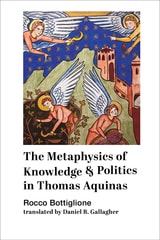
The Metaphysics of Knowledge and Politics in Thomas Aquinas
Rocco Buttiglione
St. Augustine's Press, 2020
In addition to its primary audience of philosophers, theologians, and political theorists, the book surprisingly enjoyed a wide general readership in Italy at the time of its publication. It represented an exciting attempt to harmonize medieval philosophy and the insights of personalism that had already had a deep impact on European intellectual life. Buttiglione was able to describe this attempt in a way accessible to a general readership, and in a way that confronted the political challenges Italy had been confronting for the last forty years.
Now, thirty-five years after the book’s initial publication, the conclusions Buttiglione draws from reading Thomas Aquinas’s commentary on Aristotle’s Politics––and the connections he makes between philosophy, theology, and political theory––are more relevant than ever. He argues that the traditional definition of “person” as rationalis naturae individua substantia––an individual substance or substrate (hypokeimenon) of a rational nature––“lacks that certain element that makes Augustine’s approach to personhood so appealing.” Hence Aquinas’s definition “is left wanting since it fails to elaborate on the crucial aspect of interpersonal relationship.”
The ingenuous way in which Buttiglione enlivens Thomistic political thinking with personalist philosophy helps to explain not only why free societies are more stable, tolerant, and respectful of human rights than totalitarian states, but theocratic ones as well. Only by raising the interpersonal aspects of political society to an ontological level—indeed, only by affirming and esteeming the self-transcendence of the human person as evidenced through ontological analysis—do the personal relationships that root and enliven the human person also lead to a realistic, dynamic, and convincing vision of the person’s real existence.
Buttiglione was startlingly prescient of the problems we confront at the beginning of the third millennium. This book will spark new discussions as it explains the importance of both the medieval tradition and twentieth-century personalism. The book also draws on a wide range of secondary sources unavailable to English readers that I and will have the unique ability to introduce readers to the “Italian” way of relating speculative and political philosophy in a relatively slim volume.

The Metaphysics of Sound in Wallace Stevens
Anca Rosu
University of Alabama Press, 1995
Where sound speaks louder than meaning—Stevens’s poetry as a metaphysical echo.
Wallace Stevens dedicated his poetry to challenging traditional notions about reality, truth, knowledge, and the role of language as a means of representation. Rosu demonstrates that Stevens's experimentation with sound is not only essential to his poetics but also profoundly linked to the pragmatist ideas that informed his way of thinking about language. Her readings of Stevens's poems focus on revealing the dynamic through which meaning emerges in language patterns—a dynamic she calls "images of sound."
Rosu argues that the formal aspects of poetry are deeply ingrained in cultural realities and are, in fact, generated by their context. The sound pattern pervading Stevens's poems at once addresses and violates the reader's assumptions about the functioning of language and, along with them, ideas about reality, knowledge, and subjectivity. Sound is thus the starting point of an argument concerned with Stevens's epistemology and poetics—the way his poems insist on a movement past or through a normal poetic representation of the world to gesture toward a reality that lies outside or beyond systems of representation.
The relationship between sound and meaning isolated and analyzed in The Metaphysics of Sound in Wallace Stevens is firmly situated among critical debates concerning the poet's aesthetic and philosophical convictions. Rosu claims that Stevens's poetry is not ultimately about the powerlessness of language, nor is it a deconstructive enterprise of destabilizing culturally consecrated truths; rather it achieves meaning most frequently through patterns of sound. Sound helps Stevens make a deeply philosophical point in a language unavailable to philosophers.