Results by title
18284 books match the query 'United States' and 3764 start with t
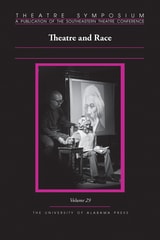
Theatre Symposium, Vol. 29
Theatre and RaceEdited by Andrew Gibb
University of Alabama Press, 2022
Essays whose composition and editing were undertaken almost entirely within the transformed cultural and professional landscape of 2020
A few weeks prior to the submission deadline for this volume of Theatre Symposium, the murder of George Floyd by officers of the Minneapolis Police Department sparked a movement for racial justice that reverberated at every level of US society. At predominantly and historically white academic institutions (including Theatre Symposium and its parent organization, the Southeastern Theatre Conference) leaders were compelled, as perhaps never before, to account for the role of systematic racism in the foundation and perpetuation of their organizations. While the present volume’s theme of “Theatre and Race” was announced in the waning days of 2019, the composition and editing of the issue’s essays were undertaken almost entirely within the transformed cultural and professional landscape of 2020. Throughout its twenty-nine years of publication, Theatre Symposium’s pages have included many excellent essays whose authors have deployed theories of race as an analytical framework, and (less often) treated BIPOC-centered art and artists as subject. The intent of the current editors in conceiving this issue was to center such subjects and theorizations, a goal that has since taken on a more widely recognized urgency.
Taken together, these twelve essays represent a wide range of scholarly responses to the theme of “theatre and race.” The fact that there is so much to say on the topic, from so many different perspectives, is a sign of how profoundly theatre practices have been—and continue to be—shaped by racial discourses and their material manifestations.
Theatre of the Real
Yeats, Beckett, and SondheimGina Masucci MacKenzie
The Ohio State University Press, 2008
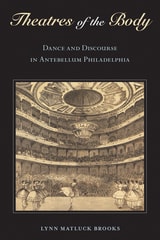
Theatres of the Body
Dance and Discourse in Antebellum PhiladelphiaLynn Matluck Brooks
Temple University Press, 2025
Reviewing print culture in the 1840s, Brooks shows how newspapers, magazines, and popular fiction provided documentation of dancing in Philadelphia as well as the responses of dance commentators, practitioners, and moralists. Theatres of the Body also considers the interplay of science with dance in the 1850s, which impacted both dance practices and reception.
Providing an expansive historiography of these significant contributions to dance in the United States, Brooks deepens our understanding of antebellum culture and history.
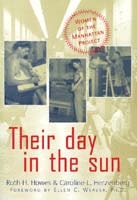
Their Day In The Sun
Ruth Howes
Temple University Press, 1999
The Manhattan Project also included women in every capacity. During World War II the manpower shortages opened the laboratory doors to women and they embraced the opportunity to demonstrate that they, too, could do "creative science." Although women participated in all aspects of the Manhattan Project, their contributions are either omitted or only mentioned briefly in most histories of the project. It is this hidden story that is presented in Their Day in the Sun through interviews, written records, and photographs of the women who were physicists, chemists, mathematicians, biologists, and technicians in the labs.
Authors Ruth H. Howes and Caroline L. Herzenberg have uncovered accounts of the scientific problems the women helped solve as well as the opportunities and discrimination they faced. Their Day in the Sun describes their abrupt recruitment for the war effort and includes anecdotes about everyday life in these clandestine improvised communities. A chapter about what happened to the women after the war and about their attitudes now, so many years later, toward the work they did on the bomb is included.

Their Day In The Sun
Women Of The Manhattan ProjectRuth H. Howes
Temple University Press, 2003
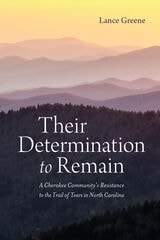
Their Determination to Remain
A Cherokee Community's Resistance to the Trail of Tears in North CarolinaLance Greene
University of Alabama Press, 2023
The remarkable story of a North Carolina Cherokee community who avoided forced removal on the Trail of Tears
During the 1838 forced Cherokee removal by the US government, a number of close-knit Cherokee communities in the Southern Appalachian Mountains refused to relinquish their homelands, towns, and way of life. Using a variety of tactics, hundreds of Cherokees avoided the encroaching US Army and remained in the region.
In his book Their Determination to Remain: A Cherokee Community’s Resistance to the Trail of Tears in North Carolina, Lance Greene explores the lives of wealthy plantation owners Betty and John Welch who lived on the southwestern edge of the Cherokee Nation. John was Cherokee and Betty was White. Although few Cherokees in the region participated in slavery, the Welches held nine African Americans in bondage.
During removal, the Welches assisted roughly 100 Cherokees hiding in the steep mountains. Afterward, they provided land for these Cherokees to rebuild a new community, Welch’s Town. Betty became a wealthy and powerful plantation mistress because her husband could no longer own land. Members of Welch’s Town experienced a transitional period in which they had no formal tribal government or clear citizenship yet felt secure enough to reestablish a townhouse, stickball fields, and dance grounds.
Greene’s innovative study uses an interdisciplinary approach, incorporating historical narrative and archaeological data, to examine how and why the Welches and members of Welch’s Town avoided expulsion and reestablished their ways of life in the midst of a growing White population who resented a continued Cherokee presence. The Welch strategy included Betty’s leadership in demonstrating outwardly their participation in modern Western lifestyles, including enslavement, as John maintained a hidden space—within the boundaries of their land—for the continuation of traditional Cherokee cultural practices. Their Determination to Remain explores the complexities of race and gender in this region of the antebellum South and the real impacts of racism on the community.
Their Sisters' Keepers
Women's Prison Reform in America, 1830-1930Estelle B. Freedman
University of Michigan Press, 1984
Them Goon Rules
Fugitive Essays on Radical Black FeminismMarquis Bey
University of Arizona Press, 2019
A series of essays that reads like a critical memoir, this work queries the function and implications of politicized Blackness, Black feminism, and queerness. Bey binds together his personal experiences with social justice work at the New York–based Audre Lorde Project, growing up in Philly, and rigorous explorations of the iconoclasm of theorists of Black studies and Black feminism. Bey’s voice recalibrates itself playfully on a dime, creating a collection that tarries in both academic and nonacademic realms.
Fashioning fugitive Blackness and feminism around a line from Lil’ Wayne’s “A Millie,” Them Goon Rules is a work of “auto-theory” that insists on radical modes of thought and being as a refrain and a hook that is unapologetic, rigorously thoughtful, and uncompromising.
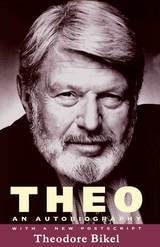
Theo
An AutobiographyTheodore Bikel
University of Wisconsin Press, 2002
An award-winning actor on screen and stage (The Defiant Ones, The African Queen, The Sound of Music, My Fair Lady, Fiddler on the Roof), an activist for civil rights and progressive causes worldwide, and a singer whose voice has won him great applause, Theodore Bikel here tells his own compelling life story. Born in Austria, raised in Palestine, educated in England, and with a stellar career in the United States and around the world, Bikel offers a personal history parallel to momentous events of the twentieth century. In an eloquent, fiercely committed voice, he writes of the Third Reich, the birth of the State of Israel, the McCarthy witch hunts of the 1950s, and the tumultuous 1960s in America. In a new postscript to this paperback edition, he looks at recent events in the Middle East and takes both sides to task for their excesses.
Theodore H. White and Journalism As Illusion
Joyce Hoffmann
University of Missouri Press, 1995
In this groundbreaking study, Joyce Hoffmann examines a critical twenty-five-year period in the work of one of the most influential journalists of the twentieth century. Theodore H. White was already a celebrated reporter when Jacqueline Kennedy summoned him for an exclusive interview in the aftermath of her husband's assassination. With her help, White would preserve what the First Lady claimed had been John F. Kennedy's vision of the New Frontier as an incarnation of that wistful, romantic kingdom--Camelot. Over the years, friends and advisers to Kennedy declared that they had never heard the president speak of Camelot. But White's article, which ran in Life magazine, created a myth that still endures in the popular consciousness.
That story was just one of many by Theodore White that had a lasting impact on the nation. As a correspondent for several of the country's most popular magazines, he covered the crucial events of the 1940s, '50s, and '60s. His best-selling book The Making of the President 1960 changed political reporting forever.
A gifted and likable man with a remarkable skill for ingratiating himself with others, White earned the confidence of key political, military, and diplomatic leaders. First in the Far East, later in Europe, and finally in Washington, D.C., he became a confidant and adviser rather than an adversary to the figures he covered for the news, following a pattern set by elite journalists. Even as he played the impartial reporter, White kept secrets in order to maintain access to his important sources, and he occasionally allowed his subjects, including John F. Kennedy and Nelson Rockefeller, to make changes in his work before publication.
Clinging to the illusion of objectivity, White--like other leading journalists in the postwar years--wrote about the world not as it was but as he believed it ought to be. Hoffmann relates the little-known episode in White's career when he intentionally obscured the truth about Chiang Kai-shek's corrupt and inept Nationalist government because he believed that undermining China's cause would be "a disservice to democracy."
No other book so thoroughly documents how a first-rank journalist can become a political insider and distort the news without losing the gloss of impartiality that is supposed to accompany the profession. Impressively researched, skillfully written, Theodore H. White and Journalism as Illusion is an unflinching look at a key figure in the history of American journalism and at the profession itself.
Theodore Roosevelt in the Field
Michael R. Canfield
University of Chicago Press, 2015
Drawing extensively on Roosevelt’s field notebooks, diaries, and letters, Canfield takes readers into the field on adventures alongside him. From Roosevelt’s early childhood observations of ants to his notes on ornithology as a teenager, Canfield shows how Roosevelt’s quest for knowledge coincided with his interest in the outdoors. We later travel to the Badlands, after the deaths of Roosevelt’s wife and mother, to understand his embrace of the rugged freedom of the ranch lifestyle and the Western wilderness. Finally, Canfield takes us to Africa and South America as we consider Roosevelt’s travels and writings after his presidency. Throughout, we see how the seemingly contradictory aspects of Roosevelt’s biography as a hunter and a naturalist are actually complementary traits of a man eager to directly understand and experience the environment around him.
As our connection to the natural world seems to be more tenuous, Theodore Roosevelt in the Field offers the chance to reinvigorate our enjoyment of nature alongside one of history’s most bold and restlessly curious figures.
Theodore Roosevelt
A Literary LifeThomas Bailey and Katherine Joslin
University Press of New England, 2018
Theodore Wendel
True Notes of American ImpressionismTheodore Wendel
The Artist Book Foundation, 2019
One of the original "Duveneck boys" who studied in Munich at the Royal Academy, Theodore Wendel followed his mentor to Florence and Venice; he later went on to Paris and ultimately joined a colony of young artists at Giverny. The scenes and subject matter in the works he completed there are among the earliest by an American artist to adopt and evolve Impressionist strategies. Upon his return to America, he spent the next decades rendering scenes of the farmland and coast north of Boston that contemporary critics acclaimed as some of the best they had seen. Yet despite his talent and the significant accolades earned during his career, in the near-century following his death the recognition of his achievements has faded. The Artist Book Foundation is delighted to have the opportunity to remedy this siutation with its forthcoming monograph on the artist, Theodore Wendel: True Notes of American Impressionism.
Laurene Buckley's years of exhaustive research inform an engaging and detailed narrative of Wendel's time in Europe and his many years capturing the essence of the farms and fishing villages along the rural coast of Massachusetts. Thanks to her efforts, the book will feature many of his best works, a number of which are in private collections. An informative introduction by William H. Gerdts provides significant artistic context for Wendel and explains the artist's deft ability to draw the viewer into a scene. Concluding the monograph, an extensive chronology, exhibition history, and bibliography complete the scholarship on this long overdue tribute to a master of American Impressionism.
Theorizing Discrimination in an Era of Contested Prejudice
Discrimination in the United StatesSamuel Roundfield Lucas
Temple University Press, 2009
Despite several decades of attention, there is still no consensus on the effects of racial or sexual discrimination in the United States. In this landmark work, the well-known sociologist Samuel Lucas shows how discrimination is not simply an action that one person performs in relation to another individual, but something far more insidious: a pervasive dynamic that permeates the environment in which we live and work.
Challenging existing literature on the subject, Lucas makes a clear distinction between prejudice and discrimination. He maintains that when an era of “condoned exploitation” ended, the era of “contested prejudice,” as he terms it, began. He argues that the great strides made in the 1950s and 1960s repudiated prejudice, but not discrimination. Drawing on critical race theory, feminist theory, and a critique of dominant perspectives in the social sciences and law, Lucas offers a new understanding of racial and sexual discrimination that can guide our actions and laws into a more just future.

Theory of Edge Diffraction in Electromagnetics
Origination and validation of the physical theory of diffractionP.Ya. Ufimtsev
The Institution of Engineering and Technology, 2009
Therapeutic Revolutions
Medicine, Psychiatry, and American Culture, 1945-1970Halliwell, Martin
Rutgers University Press, 2014
Beginning with a discussion of the profound impact of World War II and the Cold War on mental health, Halliwell moves from the influence of work, family, and growing up in the Eisenhower years to the critique of institutional practice and the search for alternative therapeutic communities during the 1960s. Blending a discussion of such influential postwar thinkers as Erich Fromm, William Menninger, Erving Goffman, Erik Erikson, and Herbert Marcuse with perceptive readings of a range of cultural text that illuminate mental health issues--among them Spellbound, Shock Corridor, Revolutionary Road, and I Never Promised You a Rose Garden--this compelling study argues that the postwar therapeutic revolutions closely interlink contrasting discourses of authority and liberation.
There Goes the Neighborhood
Rural School Consolidation at the Grass Roots in Early Twentieth-Century IowaDavid R. Reynolds
University of Iowa Press, 2002
There Has to Be a Better Way
Lessons from Former Urban TeachersMawhinney, Lynnette
Rutgers University Press, 2019
Teacher attrition has long been a significant challenge within the field of education. It is a commonly-cited statistic that almost fifty percent of beginning teachers leave the field within their first five years, to the detriment of schools, students, and their own career development. There Has to be a Better Way offers an essential voice in understanding the dynamics of teacher attrition from the perspective of the teachers themselves. Drawing upon in-depth qualitative research with former teachers from urban schools in multiple regions of the United States, Lynnette Mawhinney and Carol R. Rinke identify several themes that uncover the rarely-spoken reasons why teachers so often willingly leave the classroom. The authors go further to provide concrete recommendations for how school administrators can better support their practicing teachers, as well as how teacher educators might enhance preparation for the next generation of educators. Complete with suggested readings and discussion questions, this book serves as an indispensable resource in understanding and building an effective and productive educational workforce for our nation’s students.
There I Grew Up
Remembering Abraham Lincoln's Indiana YouthWilliam E. Bartelt
Indiana Historical Society Press, 2008
There Is No Making It Out
Stories-So-Far and the Possibilities of New StoriesRomeo García
Utah State University Press, 2025
There Was a Woman
La Llorona from Folklore to Popular CultureBy Domino Renee Perez
University of Texas Press, 2008
"How is it that there are so many lloronas?" A haunting figure of Mexican oral and literary traditions, La Llorona permeates the consciousness of her folk community. From a ghost who haunts the riverbank to a murderous mother condemned to wander the earth after killing her own children in an act of revenge or grief, the Weeping Woman has evolved within Chican@ imaginations across centuries, yet no truly comprehensive examination of her impact existed until now. Tracing La Llorona from ancient oral tradition to her appearance in contemporary material culture, There Was a Woman delves into the intriguing transformations of this provocative icon.
From La Llorona's roots in legend to the revisions of her story and her exaltation as a symbol of resistance, Domino Renee Perez illuminates her many permutations as seductress, hag, demon, or pitiful woman. Perez draws on more than two hundred artifacts to provide vivid representations of the ways in which these perceived identities are woven from abstract notions—such as morality or nationalism—and from concrete, often misunderstood concepts from advertising to television and literature. The result is a rich and intricate survey of a powerful figure who continues to be reconfigured.
There Was an Old Woman
Reflections on These Strange, Surprising, Shining YearsAndrea Carlisle
Oregon State University Press, 2023
In these personal essays, Carlisle looks for new ways to bring herself more fully to this time of life, such as daily walks with other women and connecting to the natural world that surrounds her houseboat on an Oregon river at the foot of a forest. She writes about experiences shared with many, if not most, older women: wondering at her body’s transformation, discovering new talents, caregiving, facing loss, tuning in to life patterns and drawing strength through understanding them, letting go (or not) of pieces of the past, and facing other changes large and small. Those curious about, approaching, or living in old age will find wisdom and insight in her unique perspective.
In a voice that rings with clarity, humor, humility, Carlisle shows us that Old Age is not another country where we can expect to find The Old Woman grimly waiting, but is instead an expansion of the borders in the country we’re most familiar with: ourselves.
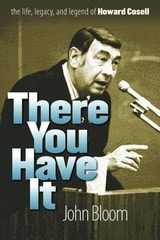
There You Have It
The Life, Legacy, and Legend of Howard CosellJohn Bloom
University of Massachusetts Press, 2010
Raised in Brooklyn in a middle-class Jewish family, Cosell carried with him a deeply ingrained sense of social justice. Yet early on he abandoned plans for a legal career to become a pioneer in sports broadcasting, first in radio and then in television. The first white TV reporter to address the former Cassius Clay by his chosen Muslim name, Cosell was also the first sportscaster to conduct locker room interviews with professional athletes, using a tape recorder purchased with his own money. At the 1968 Olympics in Mexico City, he not only defended the fisted "Black Power" salutes of American track medalists John Carlos and Tommie Smith, but he publicly excoriated Olympic Committee chairman Avery Brundage for "hypocritical," racist policies. He was also instrumental in launching ABC's Monday Night Football, a prime-time sports program that evolved into an American cultural institution.
Yet while Cosell took courageous stands on behalf of civil rights and other causes, he could be remarkably blind to the inconsistencies in his own life. In this way, John Bloom argues, he embodied contradictions that still resonate widely in American society today.
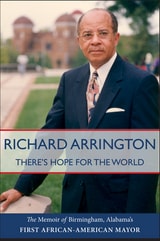
There's Hope for the World
The Memoir of Birmingham, Alabama's First African American MayorRichard Arrington
University of Alabama Press, 2008
On a sultry September morning in 1955, a young African American man, the son of share croppers, boarded a Greyhound bus in Birmingham, Alabama, to leave his home state for the first time in his life. He was headed for the University of Detroit on a teaching scholarship from MilesCollege. Richard Arrington could not have guessed then that his future as a teacher would be postponed for decades by big-city politics--and that he would serve a record-setting five terms as chief executive of Alabama’s largest city.
Under Arrington’s leadership, Birmingham rebuilt itself from a foundering, steel-driven industrial center to one of the most diversified metropolitan areas in the Southeast, with an economy fueled by health care, biomedical research, engineering, telecommunications, and banking. As mayor, Arrington’s economic legacy is impressive. When he left office, Birmingham boasted a record number of jobs and the lowest unemployment rate in its history. Additionally, Birmingham had built the strongest tax base in Alabama, expanded its city limits by 60 square miles, reduced crime to its lowest level in 25 years, and funded a $260 million school construction program. Today Birmingham is financially sound and is the only city in the Southeast with a $100 million endowment fund.
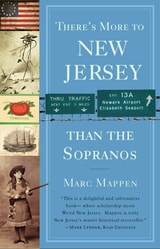
There's More to New Jersey than the Sopranos
Mappen, Marc
Rutgers University Press, 2009
Even fans of that popular show, one that held viewers captive, may be a bit disheartened to discover that the first thing that pops into minds around the world about New Jersey is a dysfunctional crime family, just an exit or two off the infamous N.J. Turnpike. But there's no need to live in fear that the only culture and history that the state is known for is, well, let's say, a bit of bada bing. Actually, the echo of the Big Bangùthe cosmic event that marked the birth of our universe some 13.7 billion years agoùwas first identified by scientists from Bell Labs in Murray Hill, New Jersey.
In this lively romp through history from the primitive past to the present day, Marc Mappen's message resonatesùThere's More to New Jersey than the Sopranos. Real tales, wise tales, tall tales abound throughout the pages of Mappen's collection, filled with zest, humor, scandal, and occasionally tragedy. Annie Oakley. Ulysses S. Grant. Benedict Arnold. Ezra Pound. Shoeless Joe Jackson. These luminaries and many others share a common bond with the state that witnessed prehistoric elephants roaming its pastures, the explosion on the USS Princeton, a Martian invasion, famous firsts like the phonograph, electric light, and movies, and, well, step aside Tony Soprano: mobster Al Capone strolling along the Atlantic City boardwalk.
Providing a lens into American history through lively prose and more than twenty-five illustrations, There's More to New Jersey than the Sopranos is as much fun as a trip to the Jersey Shore and definitely more rewarding than a night home watching televisionù simply stated, this book is one you can't refuse to read.
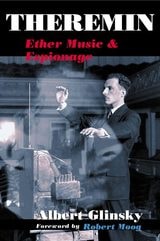
Theremin
Ether Music and EspionageAlbert Glinsky
University of Illinois Press, 2000
A creative genius and prolific inventor, Leon Theremin almost single-handedly launched the field of electronic music in 1920. The theremin--the only musical instrument that is played without being touched--created a sensation worldwide and paved the way for the modern synthesizer. But the otherworldly sound that entranced millions was only part of Theremin's epic life.
As a Soviet scientist, Theremin surrendered his life and work to the service of State espionage. On assignment in Depression-era America, he worked the engines of capitalist commerce while passing data on US industrial technology to the Soviet apparat. Following his sudden disappearance in 1938, Theremin vanished into the top-secret Soviet intelligence machine and was presumed dead for nearly thirty years. Using the same technology that spawned the theremin, he designed bugging devices and a host of other electronic wonders, including an early television and multimedia devices that anticipated performance art and virtual reality by decades.
Albert Glinsky's biography places the inventor at world events stretching from the Russian Revolution through the Cold War to perestroika. Throughout, he spins whimsy and treachery into an astonishing drama of one man's hidden loyalties, mixed motivations, and irrepressibly creative spirit.
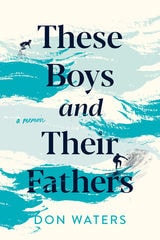
These Boys and Their Fathers
A MemoirDon Waters
University of Iowa Press, 2019
These Boys and Their Fathers touches on Waters’s early life with his single mother—and her string of dysfunctional men—and his later search for and encounters with his father, but it quickly expands into a gripping account of the life of a 1930s pulp writer, also named Don Waters, with whom Waters becomes obsessed. This wildly original book blends memoir, investigative reporting, and fiction to sort out difficult aspects of family, masculinity, and what it means to be a father.
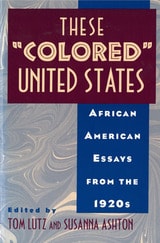
These Colored United States
African American Essays from the 1920sLutz, Tom
Rutgers University Press, 1996
"This series of essays from a crucial journal of the Harlem Renaissance epitomizes the diversity of middle-class African American intellectual culture of the 1920s, while the headnotes and introduction deftly articulate the complex social and institutional matrix from which the series emerged."––George Hutchinson, University of Tennessee, author of The Harlem Renaissance in Black and White
Originally published in The Messenger, “the most vibrant and controversial black journal in the nation” at the time, these essays represent an unexamined chapter in African American cultural history and provide a unique overview of social and cultural life during this crucial decade for race relations in the United States. While most scholarly attention on African American culture in the 1920s has focused on life in the major East Coast cities or the South, these essays are written by a highly diverse, eclectic group of African American writers from thirty different states, charged with assessing African American life in their home state. Socialists and pro-business writers, cultural nationalists and assimilationists, fiction writers, sociologists, theater critics, representatives of the New Negro group, the NAACP, and the union movement, and a series of idiosyncratic, nonaligned writers help give a full sense of the diversity of African American intellectual and cultural life in the 1920s.
Amont the essayists are Anita Scott Coleman, WIlliam H. Ferris, Alice Dunbar-Nelson, Charles S. Johnson, E. Franklin Frazier, Theophilus Lewis, Wallace Thurman, Roy Wilkins, George Schuyler, and Mamie Elaine Francis. The focus on the actual lived experience of African Americans across the nation provides copious materials for cultural study unavailable in any other collection.
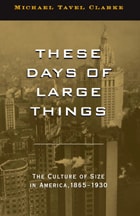
These Days of Large Things
The Culture of Size in America, 1865-1930Michael Tavel Clarke
University of Michigan Press, 2009
The United States at the turn of the twentieth century cultivated a passion for big. It witnessed the emergence of large-scale corporate capitalism; the beginnings of American imperialism on a global stage; record-level immigration; a rapid expansion of cities; and colossal events and structures like world's fairs, amusement parks, department stores, and skyscrapers. Size began to play a key role in American identity. During this period, bigness signaled American progress.
These Days of Large Things explores the centrality of size to American culture and national identity and the preoccupation with physical stature that pervaded American thought. Clarke examines the role that body size played in racial theory and the ways in which economic changes in the nation generated conflicting attitudes toward growth and bigness. Finally, Clarke investigates the relationship between stature and gender.
These Days of Large Things brings together a remarkable range of cultural material including scientific studies, photographs, novels, cartoons, architecture, and film. As a general cultural and intellectual history of the period, this work will be of interest to students and scholars in American studies, U.S. history, American literature, and gender studies.
Michael Tavel Clarke is Assistant Professor of English at the University of Calgary.
Cover photograph: "New York from Its Pinnacles," Alvin Langdon Coburn (1912). Courtesy of the George Eastman House.
"A fascinating study of the American preoccupation with physical size, this book charts new paths in the history of science, culture, and the body. A must-read for anyone puzzling over why Americans today love hulking SUVs, Mcmansions, and outsized masculine bodies."
---Lois Banner, University of Southern California
"From the Gilded Age through the Twenties, Clarke shows a nation-state obsessed with sheer size, ranging from the mammoth labor union to the 'Giant Incorporated Body' of the monopoly trust. These Days of Large Things links the towering Gibson Girl with the skyscraper, the pediatric regimen with stereotypes of the Jew. Spanning anthropology, medicine, architecture, business, and labor history, Clarke provides the full anatomy of imperial America and offers a model of cultural studies at its very best."
---Cecelia Tichi, Vanderbilt University
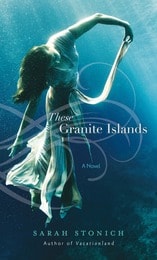
These Granite Islands
A NovelSarah Stonich
University of Minnesota Press, 2013
These Granite Islands is an arresting novel about a woman who, on her deathbed, recalls the haunting and fateful summer of 1936, a summer that forever changed her life. Sarah Stonich’s debut novel, set on the Iron Range of Minnesota, is an intimate and gripping story of a friendship, a portrait of marriage, and a meditation on the tragedy of loss.
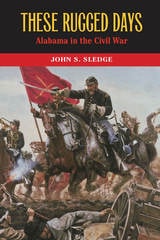
These Rugged Days
Alabama in the Civil WarJohn S. Sledge
University of Alabama Press, 2017
Alabama’s Civil War story—told with grit, grace, and truth.
In These Rugged Days: Alabama in the Civil War, John S. Sledge offers a riveting and readable account of Alabama’s Civil War saga. Focused on the conflict’s turning points within the state’s borders, Sledge recounts residents’ experiences from secession’s early days to its tumultuous collapse, when 75,000 blue-coated soldiers were on the move statewide. Sledge brings these tumultuous years to life in an impressive array of primary and secondary sources, including official records, diaries, newspapers, memoirs, correspondence, sketches, and photographs. He also highlights such colorful personalities as John Pelham, the youthful Jacksonville artillerist who was shipped home in an iron casket with a glass faceplate; Gus Askew, a nine-year-old Barbour County slave who vividly recalled the day the Yankees marched in; Augusta Jane Evans, the Mobile novelist who was given a gold pen by a daring blockade runner; and Emma Sansom, a plucky Gadsden teenager who acted as a scout and guide to Nathan Bedford Forrest.
These Rugged Days is an enthralling tale of action, courage, pride, and tragedy. The Civil War has left indelible marks on Alabama’s land, culture, economy, and people, and Sledge offers a refreshing take on the state's role in the conflict. His narrative is a dramatic account that will be enjoyed by lay readers as well as students and scholars of Alabama and the Civil War.
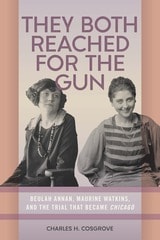
They Both Reached for the Gun
Beulah Annan, Maurine Watkins, and the Trial That Became ChicagoCharles H. Cosgrove
Southern Illinois University Press, 2024
Honorable Mention, 2025 Society of Midland Authors Award in History!
Examining the case that inspired a pop culture phenomenon
In 1924 Beulah Annan was arrested and incarcerated for killing her lover, Harry Kalsted. Six weeks later, a jury acquitted her of murder. Inspired by the sordid event, trial, and acquittal, Maurine Watkins, a reporter at the time, wrote the play Chicago, a Broadway hit that was adapted several times. Through a fresh retelling of the story of Annan and of Watkins’s play, Charles H. Cosgrove provides the first critical examination of the criminal case, and an initial exploration of the era’s social assumptions that made the message of the play so plausible in its own time. His careful historical research challenges the received portrait of Annan as a killer who got away with murder, and of Watkins as a savvy cub reporter and precocious playwright.
In They Both Reached for the Gun, Charles H. Cosgrove expertly combines inquest and police records, and interviews with Annan’s relatives, to analyze the participants, the trial, and the subsequent play. Although no one will ever know what really happened in the Kenwood apartment on Chicago’s south side one hundred years ago, Cosgrove’s interrogation shows how sensationalized Watkins’s writing was. Her reporting on the Annan case perpetuated falsehoods about Annan’s so-called “confession,” and her play gave an inaccurate portrayal of Chicago’s criminal justice system. Despite Watkins’s insistence that her drama revealed the truth about its subjects without any exaggeration, her play depicted police, prosecutors, and judges as the only “good guys” in the story, ignoring those who lied, misled, and used brutal methods to obtain forced confessions.
They Call You Back
A Lost History, A Search, A MemoirTim Z. Hernandez
University of Arizona Press, 2024
A haunting, an obsession, a calling: Tim Z. Hernandez has been searching for people his whole life. Now, in this highly anticipated memoir, he takes us along on an investigative odyssey through personal and collective history to uncover the surprising conjunctions that bind our stories together.
Hernandez’s mission to find the families of the twenty-eight Mexicans who were killed in the 1948 plane wreck at Los Gatos Canyon formed the basis for his acclaimed documentary novel All They Will Call You, which the San Francisco Chronicle dubbed “a stunning piece of investigative journalism,” and the New York Times hailed as “painstaking detective work by a writer who is the descendant of farmworkers.”
In this riveting new work, Hernandez continues his search for the plane crash victims while also turning the lens on himself and his ancestral past, revealing the tumultuous and deeply intimate experiences that have fueled his investigations—a lifelong journey haunted by memory, addiction, generational trauma, and the spirit world.
They Call You Back is the true chronicle of one man’s obsession to restore dignity to an undignified chapter in America’s past, while at the same time making a case for why we must heal our personal wounds if we are ever to heal our political ones.
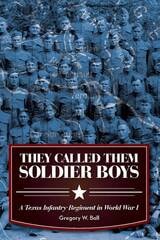
They Called Them Soldier Boys
A Texas Infantry Regiment in World War IGregory W. Ball
University of North Texas Press, 2013
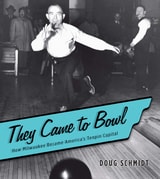
They Came to Bowl
How Milwaukee Became America’s Tenpin CapitalDoug Schmidt
Wisconsin Historical Society Press, 2007
A frozen rope. A urethane split on the drives. Chicken tracks on the telescore.* Do you know your bowling lingo? You will along with much more when you read They Came to Bowl: How Milwaukee Became America's Tenpin Capital. From the thrill of the perfect strike to the agony of a ball gone astray, anyone who has rolled a ball down the lanes will find themselves or someone they know in the people, places and stories covered in this book.
In this authoritative and lively book, Doug Schmidt traces bowling's roots from a German religious rite centuries ago to the sport that made Milwaukee famous. From the taverns and saloons that housed recreational games to the sell-out crowds and million-dollar beer sponsorships of televised tournaments, this well-illustrated book covers both sport and city, charting the changing face of bowling over the century. Packed with memorable showdowns and improbable heroes, They Came to Bowl will take you back to the changing lanes of bowling in Milwaukee — and the sport as a whole.
* frozen rope=a ball rolled with excessive speed almost straight to the pocket; urethane split=2-8-10 or 3-7-9 split caused by sharp breaking point of reactive resin balls; drives=alleys; chicken tracks=string of strikes
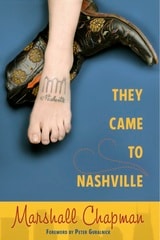
They Came to Nashville
Marshall Chapman
Vanderbilt University Press, 2010
In They Came to Nashville, Chapman records the personal stories of musicians shaping the modern history of music in Nashville, from the mouths of the musicians themselves. The trials, tribulations, and evolution of Music City are on display, as she sits down with influential figures like Kris Kristofferson, Emmylou Harris, and Miranda Lambert, and a dozen other top names, to record what brought each of them to Nashville and what inspired them to persevere. The book culminates in a hilarious and heroic attempt to find enough free time with Willie Nelson to get a proper interview. Instead, she's brought along on his raucous 2008 tour and winds up onstage in Beaumont, Texas singing "Good-Hearted Woman" with Willie.
They Came to Nashville reveals the daily struggle facing newcomers to the music business, and the promise awaiting those willing to fight for the dream.
Co-published with the Country Music Foundation Press
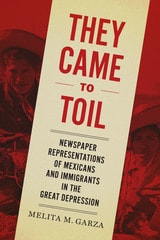
They Came to Toil
Newspaper Representations of Mexicans and Immigrants in the Great DepressionBy Melita M. Garza
University of Texas Press, 2018
As the Great Depression gripped the United States in the early 1930s, the Hoover administration sought to preserve jobs for Anglo-Americans by targeting Mexicans, including long-time residents and even US citizens, for deportation. Mexicans comprised more than 46 percent of all people deported between 1930 and 1939, despite being only 1 percent of the US population. In all, about half a million people of Mexican descent were deported to Mexico, a “homeland” many of them had never seen, or returned voluntarily in fear of deportation.
They Came to Toil investigates how the news reporting of this episode in immigration history created frames for representing Mexicans and immigrants that persist to the present. Melita M. Garza sets the story in San Antonio, a city central to the formation of Mexican American identity, and contrasts how the city’s three daily newspapers covered the forced deportations of Mexicans. She shows that the Spanish-language La Prensa not surprisingly provided the fullest and most sympathetic coverage of immigration issues, while the locally owned San Antonio Express and the Hearst chain-owned San Antonio Light varied between supporting Mexican labor and demonizing it. Garza analyzes how these media narratives, particularly in the English-language press, contributed to the racial “othering” of Mexicans and Mexican Americans. Adding an important new chapter to the history of the Long Civil Rights Movement, They Came to Toil brings needed historical context to immigration issues that dominate today’s headlines.
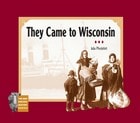
They Came to Wisconsin
Julia Pferdehirt
Wisconsin Historical Society Press, 2002
They Came to Wisconsin presents three themes of the state’s immigrant history: leaving the homeland, making the journey, and enduring the first year of settlement. Journal and diary entries and letters from European groups and oral histories from African American, Latino, Hmong, and Amish sources make this book dynamic and wholly inclusive. They Came to Wisconsin breaks fresh ground in presenting document-centered Wisconsin history to a young audience. More important, these firsthand stories add a real human dimension to history, helping students to compare the experiences of the varied groups who came to Wisconsin in the last two hundred years.
Distributed for the Wisconsin Historical Society Press.
They Came to Wisconsin
Teacher's Guide and Student MaterialsHarriet Brown
Wisconsin Historical Society Press, 2002
Distributed for the Wisconsin Historical Society Press.
They Don't Want Her There
Fighting Sexual and Racial Harassment in the American UniversityCarolyn Chalmers
University of Iowa Press, 2022
As Jew gained accolades and advanced through the ranks at Iowa, she was met with increasingly vicious attacks on her character by her white male colleagues—implying that her sexuality had opened doors for her. After years of being subjected to demoralizing sexual, racial, and ethnic discrimination, finding herself without any higher-up departmental support, and noting her professional progression beginning to suffer by the hands of hate, Jean Jew decided to fight back. Carolyn Chalmers was her lawyer.
This book tells the inside story of pioneering litigation unfolding during the eight years of a university investigation, a watershed federal trial, and a state court jury trial. In the face of a university determined to defeat them and maintain the status quo, Jew and Chalmers forged an exceptional relationship between a lawyer and a client, each at the top of their game and part of the first generation of women in their fields. They Don’t Want Her There is a brilliant, original work of legal history that is deeply personal and shows today’s professional women just how recently some of our rights have been won—and at what cost.

They Fought at Anzio
John S. D. Eisenhower
University of Missouri Press, 2025
Italy, from the toe to the Alps, was the scene of the longest, bloodiest, most frustrating, and least understood series of battles fought by the Western Allies during World War II. Now, John S. D. Eisenhower offers a new look at the Italian campaign, emphasizing the Anzio offensive—an operation pushed by Winston Churchill that fell largely to American troops to carry out. It was visualized as an amphibious landing of two Allied divisions behind German lines that would force the Wehrmacht to evacuate all of Italy. But the Germans held on and, with the arrival of reinforcements, nearly wiped out the Allied troops pinned down at Anzio Beach.
By portraying that struggle from the perspectives of both commanders and foot soldiers, this prominent military historian focuses on the experiences of the individuals who fought in the Italian campaign to reveal what the battle at Anzio was all about. But more than the account of one operation, They Fought at Anzio covers the entire Italian campaign, from the landings at Salerno to the capture of Rome.
Eisenhower brings a trained eye to reconstructing the difficult terrain of battle, approaching the Anzio campaign as a contest between opposing commands striving to anticipate and counter the opponent’s moves—not as a field exercise but as a deadly struggle for survival. He analyzes the command decisions that brought about the Anzio stalemate, interspersing his account with personal experiences of the men in the trenches, the nurses of the 56th Evacuation Hospital, and the young officers witnessing the horrors of war for the first time.
As a study in command, Eisenhower’s narrative gives new credit to generals Lucian Truscott and Fred Walker and assesses both the strengths and weaknesses of General Mark Clark, allowing us to grasp the situation as it appeared to those in command. He also offers compelling portraits of German commanders Field Marshal Albert Kesselring and General Frido von Senger und Etterlin.
It has been said that Anzio was a soldier’s battle, remembered more for blood shed than for military objectives achieved. By focusing on the experiences of the soldiers who fought there and the decisions of commanders in perilous circumstances, They Fought at Anzio offers a new appreciation of the contributions of both and a new understanding of this unheralded theater of the war.
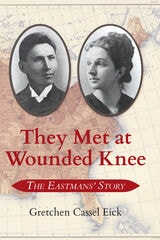
They Met at Wounded Knee
The Eastmans' StoryGretchen Cassel Eick
University of Nevada Press, 2020
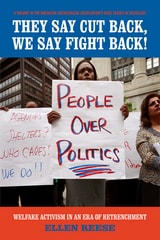
They Say Cutback, We Say Fight Back!
Welfare Activism in an Era of RetrenchmentEllen Reese
Russell Sage Foundation, 2012
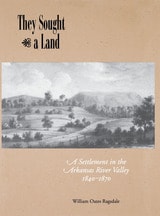
They Sought a Land
A Settlement in the Arkansas River Valley, 1840–1870William Oates Ragsdale
University of Arkansas Press, 1997
Pisgah grew and prospered, developing increasingly successful farming practices, landholding patterns, and trading strategies. But the Civil War took a heavy toll, taking workers away from farms, subjecting those left on the home front to deprivation and violence, and creating division in the community. By 1870, the people of Pisgah had dispersed into Arkansas’s larger developing society.
Absorbing to read and rich with colorful detail, They Sought a Land is an important story of the westward expansion of the United States and the settling of the American South during the nineteenth century.
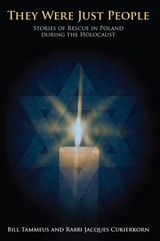
They Were Just People
Stories of Rescue in Poland During the HolocaustBill Tammeus & Rabbi Jacques Cukierkorn
University of Missouri Press, 2009
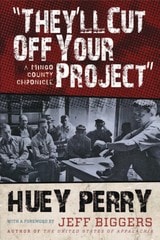
They'll Cut Off Your Project
A Mingo County ChronicleHuey Perry, with a foreword by Jeff Biggers
West Virginia University Press, 2010
In old England, if a king didn’t like you, he would cut off your head. Now, if they don’t like you, they’ll cut off your project!
As the Johnson Administration initiated its war on poverty in the 1960s, the Mingo County Economic Opportunity Commission project was established in southern West Virginia. Huey Perry, a young, local history teacher was named the director of this program and soon he began to promote self-sufficiency among low-income and vulnerable populations. As the poor of Mingo County worked together to improve conditions, the local political infrastructure felt threatened by a shift in power. Bloody Mingo County, known for its violent labor movements, corrupt government, and the infamous Hatfield-McCoy rivalry, met Perry’s revolution with opposition and resistance.
In They’ll Cut Off Your Project, Huey Perry reveals his efforts to help the poor of an Appalachian community challenge a local regime. He describes this community’s attempts to improve school programs and conditions, establish cooperative grocery stores to bypass inflated prices, and expose electoral fraud. Along the way, Perry unfolds the local authority’s hostile backlash to such change and the extreme measures that led to an eventual investigation by the FBI. They’ll Cut Off Your Project chronicles the triumphs and failures of the war on poverty, illustrating why and how a local government that purports to work for the public’s welfare cuts off a project for social reform.
Thicker Than Blood
How Racial Statistics LieTukufu Zuberi
University of Minnesota Press, 2003
A hard-hitting investigation of the racist uses of statistics—now in paperback!
Tukufu Zuberi offers a concise account of the historical connections between the development of the idea of race and the birth of social statistics. Zuberi describes how race-differentiated data are misinterpreted in the social sciences and asks searching questions about the ways racial statistics are used. He argues that statistical analysis can and must be deracialized, and that this deracialization is essential to the goal of achieving social justice for all.
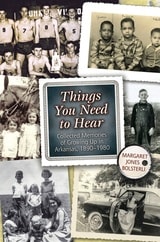
Things You Need to Hear
Collected Memories of Growing Up in Arkansas, 1890–1980Margaret Jones Bolsterli
University of Arkansas Press, 2016
Think Tanks in America
Thomas Medvetz
University of Chicago Press, 2012
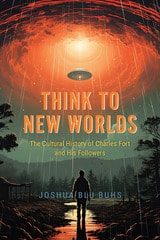
Think to New Worlds
The Cultural History of Charles Fort and His FollowersJoshua Blu Buhs
University of Chicago Press, 2024
Flying saucers. Bigfoot. Frogs raining from the sky. Such phenomena fascinated Charles Fort, the maverick writer who scanned newspapers, journals, and magazines for reports of bizarre occurrences: dogs that talked, vampires, strange visions in the sky, and paranormal activity. His books of anomalies advanced a philosophy that saw science as a small part of a larger system in which truth and falsehood continually transformed into one another. His work found a ragged following of skeptics who questioned not only science but the press, medicine, and politics. Though their worldviews varied, they shared compelling questions about genius, reality, and authority. At the center of this community was adman, writer, and enfant terrible Tiffany Thayer, who founded the Fortean Society and ran it for almost three decades, collecting and reporting on every manner of oddity and conspiracy.
In Think to New Worlds, Joshua Blu Buhs argues that the Fortean effect on modern culture is deeper than you think. Fort’s descendants provided tools to expand the imagination, explore the social order, and demonstrate how power is exercised. Science fiction writers put these ideas to work as they sought to uncover the hidden structures undergirding reality. Avant-garde modernists—including the authors William Gaddis, Henry Miller, and Ezra Pound, as well as Surrealist visual artists—were inspired by Fort’s writing about metaphysical and historical forces. And in the years following World War II, flying saucer enthusiasts convinced of alien life raised questions about who controlled the universe.
Buhs’s meticulous and entertaining book takes a respectful look at a cast of oddballs and eccentrics, plucking them from history’s margins and spotlighting their mark on American modernism. Think to New Worlds is a timely consideration of a group united not only by conspiracies and mistrust of science but by their place in an ever-expanding universe rich with unexplained occurrences and visionary possibilities.