Results by title
18284 books match the query 'United States' and 3764 start with t
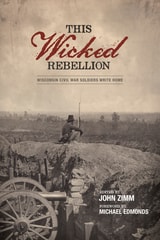
This Wicked Rebellion
Wisconsin Civil War Soldiers Write HomeJohn Zimm
Wisconsin Historical Society Press, 2012
Over one hundred and fifty years after it began, the Civil War still fascinates us—the vast armies marching to war, iconic leaders like Abraham Lincoln and Robert E. Lee, the drama of a nation divided. But the Civil War was also about individuals, the hundreds of thousands of ordinary men and boys who fought and died on either side and the families and friends left at home.
This Wicked Rebellion: Wisconsin Civil War Soldiers Write Home tells this other side of the story. Drawing from over 11,000 letters in the Wisconsin Historical Society’s Civil War collection, it gives a unique and intimate glimpse of the men and women who took part in the War for the Union. Follow Wisconsin soldiers as they sign up or get drafted, endure drill and picket duty, and get their first experiences of battle. Join them as they fight desperation and fear, encounter the brutality of slavery, and struggle with the reasons for war.
From impressions of army life and the South to the hardships of disease and battle, these letters tell the story of the war through the eyes and pens of those who fought in it. This Wicked Rebellion brings to life the heroism and heartache, mayhem and misery of the Civil War, and the powerful role Wisconsin played in it.
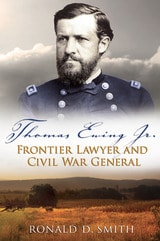
Thomas Ewing Jr.
Frontier Lawyer and Civil War GeneralRonald D. Smith
University of Missouri Press, 2008
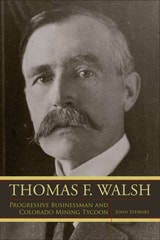
Thomas F. Walsh
Progressive Businessman and Colorado Mining TycoonJohn Stewart
University Press of Colorado, 2007
In the first complete biography of Thomas Walsh, John Stewart recounts the tycoon's life from his birth in 1850 and his beginnings as a millwright and carpenter in Ireland to his tenacious, often fruitless mining work in the Black Hills and Colorado, which finally led to his discovery of an extremely rich vein of gold ore in the Imogene Basin. Walsh's Camp Bird Mine yielded more than $20 million worth of gold and other minerals in twenty years, and the mine's 1902 sale to British investors made Walsh very wealthy.
He achieved national prominence, living with his family in mansions in Colorado and Washington, D.C., and maintaining a rapport with Presidents McKinley, Theodore Roosevelt, and Taft, as well as King Leopold II of Belgium.
Despite his fame and lavish lifestyle, Walsh is remembered as an unassuming and philanthropic man who treated his employees well. In addition to making many anonymous donations, he established the Walsh Library in Ouray and a library near his Irish birthplace, and helped establish a research fund for the study of radium and other rare western minerals at the Colorado School of Mines. Walsh gave his employees at the Camp Bird Mine top pay and lodged them in an alpine boardinghouse featuring porcelain basins, electric lighting, and excellent food.
Stewart's engaging account explores the exceptional path of this Colorado mogul in detail, bringing Walsh and his time to life.
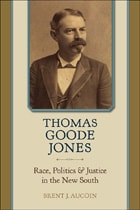
Thomas Goode Jones
Race, Politics, and Justice in the New SouthBrent J. Aucoin
University of Alabama Press, 2016
Thomas Goode Jones of Alabama is the first comprehensive biography of a key Alabama politician and federal jurist whose life and times embody the conflicts and transformations in the Deep South between the Civil War and World War I.
A man who both represented and differed from his class, Thomas Goode Jones offers contemporary readers and scholars an ideal subject of study to understand a period of southern history that still shapes American life today. Often overshadowed by the pharaonic antebellum period, the Civil War, and the luminous heights of the civil rights movement, the deceptively placid decades at the turn of the century were, in fact, a period when southerners fiercely debated the course of the South’s future. In tracing Jones’s career, Brent J. Aucoin offers vivid accounts of the great events and trends of that pivotal period: Reconstruction, the birth of the “Solid South,” the Populist Revolt, and the establishment of racial disenfranchisement and segregation.
Born in 1844, Jones served in the Confederate army and after the war identified as a conservative “Bourbon” Democrat. He served as Alabama's governor from 1890 to 1894 and as a federal judge from 1901 until his death in 1914. As a veteran, politician, and judge, Jones embodied numerous roles in the shifting political landscape of the South.
Jones was not, however, a reflexive conformist and sometimes pursued policies at odds with his party. Jones’s rhetoric and support of African American civil rights were exceptional and earned him truculent criticism from unrepentant racist factions in his party. His support was so fearless that it inspired Booker T. Washington to recommend Jones to Republican president Theodore Roosevelt as a federal judge. On the bench, Jones garnered national attention for his efforts to end peonage and lynching, and yet he also enabled the establishment of legalized segregation in Alabama, confounding attempts easily to categorize him as an odious reactionary or fearless progressive.
Thomas H. Begay and the Navajo Code Talkers
Alysa Landry
Ohio University Press, 2023

Thomas Hauser on Sports
Remembering the JourneyThomas Hauser
University of Arkansas Press, 2013
Thomas Kinkade
The Artist in the MallAlexis L. Boylan, ed.
Duke University Press, 2011
Contributors. Julia Alderson, Alexis L. Boylan , Anna Brzyski, Seth Feman, Monica Kjellman-Chapin, Micki McElya, Karal Ann Marling, David Morgan, Christopher Pearson, Andrea Wolk Rager, Jeffrey Vallance
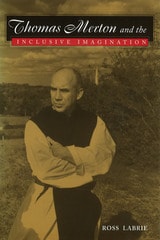
Thomas Merton and the Inclusive Imagination
Ross Labrie
University of Missouri Press, 2001
Thomas Merton (1915-1968) was a Roman Catholic priest, a Trappist monk, a social activist, and a poet. Author of the celebrated autobiography The Seven Storey Mountain, Merton has been described as the most important American religious writer of the past hundred years. One of the notable characteristics of Merton's writing, both in poetry and in prose, was his seamless intermingling of religious and Romantic elements, an intermingling that, because of his gifts as a writer and because of his enormous influence, has had the effect of making widespread a distinctive form of religious thought and expression. In Thomas Merton and the Inclusive Imagination, Ross Labrie reveals the breadth of Merton's intellectual reach by taking an original and systematic look at Merton's thought, which is generally regarded as eclectic and unsystematic.
What captured Merton's attention about Romanticism and mysticism and what held his attention virtually all his life was his consciousness of the ontological significance of unity and wholeness. Even though he was far from being a systematic thinker, Merton's writings form a coherent whole when considered from the point of view of his emphasis on unity and wholeness. Labrie skillfully examines Merton's letters, journals, and individual works to show the full expanse of his contribution. By using insights from the Romantic literary tradition and from the mystical tradition, the author is able to make sense of Merton's writings from all periods of his life. Although Labrie covers such sweeping topics as consciousness, self, being, nature, time, myth, culture, and individuation, remaining focused on Merton's specific, unique contributions in each area.
This thought-provoking work, which takes into account material from the recent full publication of Merton's journals and from his Columbia University notebooks on Romanticism, not only shows Merton's intellectual growth but provides a look at his expansive interests as well. Thomas Merton and the Inclusive Imagination will make a significant contribution to Merton studies.
Thomas Shields and the Renewal of Catholic Education
Leonardo Franchi
Catholic University of America Press, 2023

Thomas Taggart
Public Servant, Political Boss, 1856-1929James Phillip Fadely
Indiana Historical Society Press, 1997
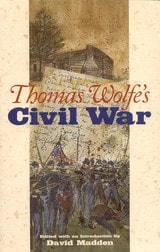
Thomas Wolfe's Civil War
Thomas Wolfe
University of Alabama Press, 2004
An anthology of Thomas Wolfe’s short stories, novel excerpts, and plays illuminating the Civil War
This collection of Thomas Wolfe’s writings demonstrates the centrality of the Civil War to Wolfe’s literary concerns and identity. From Look Homeward, Angel to The Hill Beyond and The Web and the Rock, Wolfe perpetually returned to the themes of loss, dissolution, sorrow, and romance engendered in the minds of many southerners by the Civil War and its lingering aftermath. His characters reflect time and again on Civil War heroes and dwell on ghostlike memories handed down by their mothers, fathers, and grandfathers. Wolfe and his protagonists compare their contemporary southern landscape to visions they have conjured of its appearance before and during the war, thereby merging the past with the present in an intense way. Ultimately, Wolfe’s prose style—incantatory and rhapsodic—is designed to evoke the national tragedy on an emotional level.
Selections of Wolfe’s writings in this collection include short stories ("Chickamauga," "Four Lost Men," "The Plumed Knight"), excerpts from his novels (O Lost, the restored version of Look Homeward, Angel, The Hills Beyond, and Of Time and the River) and a play, Mannerhouse, edited and introduced by David Madden. Madden, who makes the provocative claim that everything a southern writer writes derives from the Civil War experience, also highlights many issues essential to understanding Wolfe’s absorption with the Civil War.

Thoreau beyond Borders
New International Essays on America's Most Famous Nature WriterFrançois Specq
University of Massachusetts Press, 2020
Henry David Thoreau spent his life as an intellectual vagrant, jumping fences, pushing boundaries, and crossing borders. How, why, and to what end are the questions asked by contributors to this new volume of essays, whose work crosses national and disciplinary borders to think about Thoreau anew.
Deliberately invoking Thoreau's commitment to “living a border life,” a life located between the world of nature and that of the polis, these varied essays explore the writer's thinking and writing as situated not merely against, but across and beyond borders and boundaries—whether geographic, temporal, or spiritual. Arguing that literary texts are governed by mediation and dialogue, lines of force becoming lines of connection that entail complex patterns and interweavings, the contributors draw on methodologies that freely combine literary and philosophical approaches with cultural and political ones—in turn moving us beyond borders.
Contributors include the volume editors as well as Kristen Case, Danielle Follett, Rochelle Johnson, John J. Kucich, Daniel S. Malachuk, Henrik Otterberg, Sandra Harbert Petrulionis, Benjamin Pickford, David M. Robinson, Christa Holm Vogelius, and Michael C. Weisenburg.
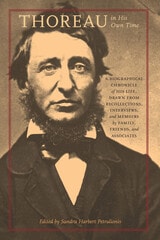
Thoreau in His Own Time
A Biographical Chronicle of His Life, Drawn from Recollections, Interviews, and Memoirs by Family, Friends, and AssociatesSandra Harbert Petrulionis
University of Iowa Press, 2012
The forty-nine recollections gathered in Thoreau in His Own Time demonstrate that it was those who knew him personally, rather than his contemporary literati, who most prized Thoreau’s message, but even those who disparaged him respected his unabashed example of an unconventional life. Included are comments by Ralph Waldo Emerson—friend, mentor, Walden landlord, and progenitor of the spin on Thoreau’s posthumous reputation; Nathaniel Hawthorne, who could not compliment Thoreau without simultaneously denigrating him; and John Weiss, whose extended commentary on Thoreau’s spirituality reflects unusual tolerance. Selections from the correspondence of Caroline Healey Dall, Maria Thoreau, Sophia Hawthorne, Sarah Alden Bradford Ripley, and Amanda Mather amplify our understanding of the ways in which nineteenth-century women viewed Thoreau. An excerpt by John Burroughs, who alternately honored and condemned Thoreau, asserts his view that Thoreau was ever searching for the unattainable.
The dozens of primary sources in this crisply edited collection illustrate the complexity of Thoreau’s iconoclastic singularity in a way that no one biographer could. Each entry is introduced by a headnote that places the selection in historical and cultural context. Petrulionis’s comprehensive introduction and her detailed chronology of personal and literary events in Thoreau’s life provide a lively and informative gateway to the entries themselves. The collaborative biography that Petrulionis creates in Thoreau in His Own Time contextualizes the strikingly divergent views held by his contemporaries and highlights the reasons behind his profound legacy.
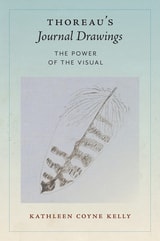
Thoreau's Journal Drawings
The Power of the VisualKathleen Coyne Kelly
University of Massachusetts Press, 2026
Examining journal drawings as an integral—and often delightful—feature of Thoreau’s work
In 1850, Henry David Thoreau began to draw in his Journal—a hedgehog’s quill, a locust’s wing, a goldenrod leaf. The sketches reflect his efforts to train his eye to observe more carefully, to look closely enough that he could see what was in front of him—with intention and attention. As Thoreau worked to combine the vivid language of a writer with the precision of a scientist, his drawings became more vital to the process. For him, writing and drawing were not separate activities; they were part of the same active, hands-on process of learning about the natural world.
Thoreau’s Journal Drawings offers a sustained examination of an understudied aspect of the Journal, emphasizing visual as well as textual analysis. It places Thoreau’s illustrated entries in the broader context of nineteenth-century scientific illustration, nature writing, and visual culture, while also offering close readings of key passages in which text and image work in tandem. The book opens up new possibilities for interpretation—both within the Journal and in the larger project of Thoreau’s thinking.
Ultimately, Thoreau’s illustrated Journal offers a case study in the complexities of representing the natural world through both language and image. His practice raises enduring questions about how we document, interpret, and mediate the more-than-human world across different forms of expression. To read the later volumes of Henry David Thoreau’s Journal without attending to his drawings is to overlook a vital dimension of his practice as both writer and observer.
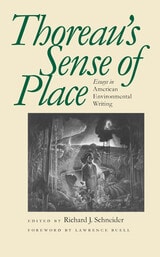
Thoreaus Sense of Place
Essays in American Environmental WritingRichard J. Schneider
University of Iowa Press, 2000
The contributors to this stimulating collection address the ways in which Thoreau and his successors attempt to cope with the basic epistemological split between perceiver and place inherent in writing about nature; related discussions involve the kinds of discourse most effective for writing about place. They focus on the impact on Thoreau and his successors of culturally constructed assumptions deriving from science, politics, race, gender, history, and literary conventions. Finally, they explore the implications surrounding a writer's appropriation or even exploitation of places and objects.
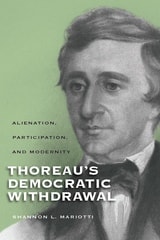
Thoreau’s Democratic Withdrawal
Alienation, Participation, and ModernityShannon L. Mariotti
University of Wisconsin Press, 2009
Separated by time, space, and context, Thoreau and Adorno share a common belief that critical inquiry is essential to democracy but threatened by modern society. While walking, huckleberrying, and picking wild apples, Thoreau tries to recover the capacities for independent perception and thought that are blunted by “Main Street,” conventional society, and the rapidly industrializing world that surrounded him. Adorno’s thoughts on particularity and the microscopic gaze he employs to work against the alienated experience of modernity help us better understand the value of Thoreau’s excursions into nature. Reading Thoreau with Adorno, we see how periodic withdrawals from public spaces are not necessarily apolitical or apathetic but can revitalize our capacity for the critical thought that truly defines democracy.
In graceful, readable prose, Mariotti reintroduces us to a celebrated American thinker, offers new insights on Adorno, and highlights the striking common ground they share. Their provocative and challenging ideas, she shows, still hold lessons on how we can be responsible citizens in a society that often discourages original, critical analysis of public issues.
Thornton Wilder and the Puritan Narrative Tradition
Lincoln Konkle
University of Missouri Press, 2005
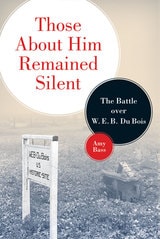
Those About Him Remained Silent
The Battle over W. E. B. Du BoisAmy Bass
University of Minnesota Press, 2012
On the eve of Martin Luther King Jr.’s 1963 March on Washington, W. E. B. Du Bois died in exile in Ghana at the age of 95, more than a half century after cofounding the NAACP. Five years after his death, residents of Great Barrington, the small Massachusetts town where Du Bois was born in 1868, proposed recognizing his legacy through the creation of a memorial park on the site of his childhood home. Supported by the local newspaper and prominent national figures including Harry Belafonte and Sydney Poitier, the effort to honor Du Bois set off an acrimonious debate that bitterly divided the town. Led by the local chapter of the Veterans of Foreign Wars, opponents compared Du Bois to Hitler, vilifying him as an anti-American traitor for his communist sympathies, his critique of American race relations, and his pan-Africanist worldview.
In Those About Him Remained Silent, Amy Bass provides the first detailed account of the battle over Du Bois and his legacy, as well as a history of Du Bois’s early life in Massachusetts. Bass locates the roots of the hostility to memorialize Du Bois in a cold war worldview that reduced complicated politics to a vehement hatred of both communism and, more broadly, anti-Americanism. The town’s reaction was intensified, she argues, by the racism encoded within cold war patriotism.
Showing the potency of prevailing, often hidden, biases, Those About Him Remained Silent is an unexpected history of how racism, patriotism, and global politics played out in a New England community divided on how—or even if—to honor the memory of its greatest citizen.
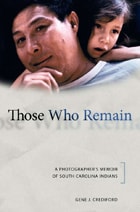
Those Who Remain
A Photographer's Memoir of South Carolina IndiansGene J. Crediford
University of Alabama Press, 2009
Through interviews and a generous photograph montage stretching over two decades, reveals the commonality and diversity among these people of Indian identity
When DeSoto (in 1540) and later Juan Pardo (in 1567) marched through what was known as the province of Cofitachequi (which covered the southern part of today’s North Carolina and most of South Carolina), the native population was estimated at well over 18,000. Most shared a common Catawba language, enabling this confederation of tribes to practice advanced political and social methods, cooperate and support each other, and meet their common enemy. The footprint of the Cofitachequi is the footprint of this book.
The contemporary Catawba, Midland, Santee, Natchez-Kusso, Varnertown, Waccamaw, Pee Dee, and Lumbee Indians of North and South Carolina, have roots in pre-contact Cofitachequi. Names have changed through the years; tribes split and blended as the forces of nature, the influx of Europeans, and the imposition of federal government authority altered their lives. For a few of these tribes, the system has worked well—or is working well now. For others, the challenge continues to try to work with and within the federal government’s system for tribal recognition—a system governing Indians but not created by them. Through interviews and a generous photograph montage stretching over two decades, Gene Crediford reveals the commonality and diversity among these people of Indian identity; their heritage, culture, frustrations with the system, joys in success of the younger generation, and hope for the future of those who come after them. This book is the story of those who remain.

Those Who Work, Those Who Don't
Poverty, Morality, and Family in Rural AmericaJennifer Sherman
University of Minnesota Press, 2009
When the rural poor prioritize issues such as the right to bear arms, and disapprove of welfare despite their economic concerns, they are often dismissed as uneducated and backward by academics and political analysts. In Those Who Work, Those Who Don't, Jennifer Sherman offers a much-needed sympathetic understanding of poor rural Americans, persuasively arguing that the growing cultural significance of moral values is a reasonable and inevitable response to economic collapse and political powerlessness.
Those Who Work, Those Who Don't is based on the intimate interviews and in-depth research Sherman conducted while spending a year living in "Golden Valley," a remote logging town in Northern California. Economically devastated by the 1990 ruling that listed the northern spotted owl as a threatened species, Golden Valley proved to be a rich case study for Sherman. She looks at how the members of the community coped with downward mobility caused by the loss of timber industry jobs and examines a wide range of reactions. She shows how substance abuse, domestic violence, and gender roles fluctuated under the town's economic strain.
Compellingly written, shot through with honesty and empathy, Those Who Work, Those Who Don't is a rare firsthand account that studies the rural poor. As incomes erode and the American dream becomes more and more inaccessible, Sherman reveals that moral values and practices become a way for the poor to gain status and maintain a sense of dignity in the face of economic ruin.
Those Without A Country
The Political Culture of Italian American SyndicalistsMichael Miller Topp
University of Minnesota Press, 2001
In the first book-length history of the Italian American syndicalist movement—the Italian Socialist Federation—Michael Miller Topp presents a new way of understanding the Progressive Era labor movement in relation to migration, transnationalism, gender, and class identity. Those without a Country demonstrates that characterizations of "old" (pre-1960s) social movements as predominantly class-based are vastly oversimplified—and contribute to current debates about the implications of identity politics for the American Left and American culture generally.
Topp traces the rise and fall of the Italian American syndicalist movement from the turn of the twentieth century to the executions of Sacco and Vanzetti in 1927. His use of Italian-language sources, combined with his attention to transnationalism and masculinity, provides new vantage points on a range of related topics, including the 1912 Lawrence, Massachusetts, textile workers’ strike, the impact of World War I on this immigrant community, and the genesis of both fascism and antifascism. Those without a Country brings forward fascinating new material to revise and refine our views of not only Progressive Era radicalism but immigration, gender, and working-class history as well.

Thousand-Mile War
World War II in Alaska and the AleutiansBrian Garfield
University of Alaska Press, 1995
The war in the Aleutians was fought in some of the worst climatic conditions on earth for men, ships, and airplanes. The sea was rough, the islands craggy and unwelcoming, but the most fearful enemy was the weather—the savage wind, fog, and rain of the Aleutian chain. The fog seemed to reach even into the minds of the military commanders on both sides, as they directed their men into situations with often had tragic results. Frustrating, befuddling, and still the subject of debate, the Aleutian campaign nevertheless marked an important turn of the war in favor of the United States.
More than half a century after the war ended, more of the fog has been lifted. In this updated edition, Garfield supplements his original account drawn from statistics, personal interviews, letters, and diaries, with more recently declassified photographs and significant additional illustrations.

Thousands of Broadways
Dreams and Nightmares of the American Small TownRobert Pinsky
University of Chicago Press, 2009
Broadway, the main street that runs through Robert Pinsky’s home town of Long Branch, New Jersey, was once like thousands of other main streets in small towns across the country. But for Pinsky, one of America’s most admired poets and its former Poet Laureate, this Broadway is the point of departure for a lively journey through the small towns of the American imagination. Thousands of Broadways explores the dreams and nightmares of such small towns—their welcoming yet suffocating, warm yet prejudicial character during their heyday, from the early nineteenth century through World War II.
The citizens of quintessential small towns know one another extensively and even intimately, but fail to recognize the geniuses and criminal minds in their midst. Bringing the works of such figures as Mark Twain, William Faulkner, Alfred Hitchcock, Thornton Wilder, Willa Cather, and Preston Sturges to bear on this paradox, as well as reflections on his own time growing up in a small town, Pinsky explores how such imperfect knowledge shields communities from the anonymity and alienation of modern life. Along the way, he also considers how small towns can be small minded—in some cases viciously judgmental and oppressively provincial. Ultimately, Pinsky examines the uneasy regard that creative talents like him often have toward the small towns that either nurtured or thwarted their artistic impulses.
Of living in a small town, Sherwood Anderson once wrote that "the sensation is one never to be forgotten. On all sides are ghosts, not of the dead, but of living people." Passionate, lyrical, and intensely moving, Thousands of Broadways is a rich exploration of this crucial theme in American literature by one of its most distinguished figures.
Threads
Gender, Labor, and Power in the Global Apparel IndustryJane L. Collins
University of Chicago Press, 2003
To dispel these misunderstandings, Jane L. Collins visited two very different apparel firms and their factories in the United States and Mexico. Moving from corporate headquarters to factory floors, her study traces the diverse ties that link First and Third World workers and managers, producers and consumers. Collins examines how the transnational economics of the apparel industry allow firms to relocate or subcontract their work anywhere in the world, making it much harder for garment workers in the United States or any other country to demand fair pay and humane working conditions.
Putting a human face on globalization, Threads shows not only how international trade affects local communities but also how workers can organize in this new environment to more effectively demand better treatment from their distant corporate employers.
Threatened Children
Rhetoric and Concern about Child-VictimsJoel Best
University of Chicago Press, 1990
Threatening Anthropology
McCarthyism and the FBI’s Surveillance of Activist AnthropologistsDavid H. Price
Duke University Press, 2004
Price draws on extensive archival research including correspondence, oral histories, published sources, court hearings, and more than 30,000 pages of fbi and government memorandums released to him under the Freedom of Information Act. He describes government monitoring of activism and leftist thought on college campuses, the surveillance of specific anthropologists, and the disturbing failure of the academic community—including the American Anthropological Association—to challenge the witch hunts. Today the “war on terror” is invoked to license the government’s renewed monitoring of academic work, and it is increasingly difficult for researchers to access government documents, as Price reveals in the appendix describing his wrangling with Freedom of Information Act requests. A disquieting chronicle of censorship and its consequences in the past, Threatening Anthropology is an impassioned cautionary tale for the present.
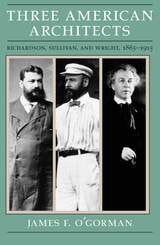
Three American Architects
Richardson, Sullivan, and Wright, 1865-1915James F. O'Gorman
University of Chicago Press, 1991
[A] brilliant analysis . . . a major contribution to our understanding of the beginnings of modern American architecture."—David Hamilton Eddy, Times Higher Education Supplement.
Three Capitals
St. Stephens, Huntsville, and Cahawba, 1818-1826William H. Brantley Jr
University of Alabama Press, 1976
"Three Capitals is an in-depth study of Alabama's first three seats of government--St. Stephens, Huntsville, and Cahawba.... The University of Alabama Press has reprinted the book in a handsome new edition with a pertinent introduction by Malcolm C. McMillan. Brantley's study is a tribute to the accomplishments of an amateur historian and contains a wealth of useful information."
--Bulletin of the History of the Early American Republic

Three Decades of Engendering History
Linda Heidenreich
University of North Texas Press, 2014
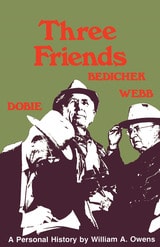
Three Friends
Roy Bedichek, J. Frank Dobie, Walter Prescott WebbBy William A. Owens
University of Texas Press, 1975
Roy Bedichek, J. Frank Dobie, and Walter Prescott Webb—a naturalist, a folklorist, and a historian—all taught at the University of Texas, lived only a few blocks apart, and saw each other almost every day. The true cement of their friendship, however, was the correspondence that makes up much of this book. They wrote not to exchange information, but to communicate ideas, to nail down the generalities of conversation, and, above all, to challenge, encourage, and stimulate one another.
William A. Owens, who knew all three personally, has tied their letters together with his own observations and with transcripts of tape interviews with the men. The result is a unique book, a combination of biography and personal history that portrays not only the three friends, but the land they loved as well.
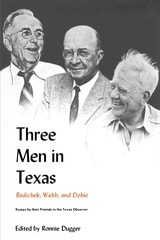
Three Men in Texas
Bedichek, Webb, and DobieEssays by their Friends in the <em>Texas Observer</em>, Edited by Ronnie Dugger
University of Texas Press, 1967
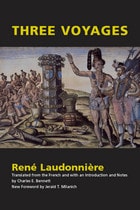
Three Voyages
Rene Laudonniere
University of Alabama Press, 2001
This translation of an eyewitness account by a major participant offers valuable information about all three attempts to establish a French colony on the south Atlantic coast of North America.
Rene Laudonniere's account of the three attempts by France to colonize what is now the United States is uniquely valuable because
he played a major role in each of the ventures—first, in 1562, as second in command during the founding of the ill-fated Charlesport, then as commander for the establishment of Fort Caroline on Florida's St. Johns River in 1564, and finally as the one to welcome French reinforcements the following year. It was also Laudonniere's destiny to witness the tragic fall of Fort Caroline to Spanish claims one month later.
Laudonniere wrote his chronicle, L'histoire Notable de la Floride, in 1565 following the fall of Fort Caroline as he recuperated in England. Much more than an account of his feelings and adventures, Laudonniere's history reveals him to be an exceedingly able and accurate geographer with a highly developed interest in anthropology.
The first English translation was published by Richard Hakluyt in 1587. Charles E. Bennett's graceful and accurate rendering in modern English was first published in 1975 by the University Press of Florida. Besides the account, thoroughly annotated and with present-day names identifying sites visited by the Frenchman, this volume includes a valuable introductory essay. The appendices to the volume are four noteworthy documents, the last of which—a guide to plants of 16th-century Florida—will be of exceptional interest to naturalists, gardeners, and students of folklore. The account itself will fascinate professional historians and anthropologists as well as general readers interested in the exciting and often moving
events of early European settlement in the New World.
Rene Laudonniere was a French adventurer and explorer of the 16th century who wrote L'histoire Notable de la Floride. Charles E. Bennett is a historian and former Florida congressman. He was coauthor of the Moss-Bennett legislation and was instrumental in the establishment of the Fort Caroline National Memorial and the Timucuan Ecological and Historical Preserve. Jerald T. Milanich is Curator in Archaeology at the Florida Museum of Natural History.
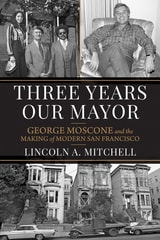
Three Years Our Mayor
George Moscone and the Making of Modern San FranciscoLincoln A. Mitchell
University of Nevada Press, 2025
Moscone was also a very colorful character who, in addition to being a successful politician, was a charming and charismatic bon vivant who was deeply embedded in the fabric and culture of San Francisco. He grew up the only son of a single mother in Cow Hollow when it was a working class, largely Italian American neighborhood, and he became the kind of politician who knew bartenders, playground attendants, small business owners, and neighborhood activists in every corner of the city. Moscone’s life and the history of San Francisco during the middle half of the twentieth century are deeply intertwined.
Through illustrating the life of Moscone, author Lincoln A. Mitchell explores how today’s San Francisco came into being. Moscone—through his work in the State Senate, victory in the very divisive 1975 mayor’s race, and brief tenure as mayor—was a key figure in the city’s evolution. The politics surrounding Moscone’s election as mayor, governance of the city, and tragic death are still relevant issues. Moscone was a groundbreaking politician whose life was cut short, but his influence on San Francisco can still be felt today.
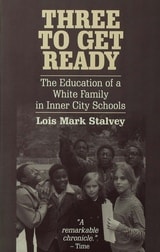
Three to Get Ready
The Education of a White Family in Inner City SchoolsLois M. Stalvey
University of Wisconsin Press, 1996

Three's a Crowd
The Dynamic of Third Parties, Ross Perot, and Republican ResurgenceRonald B. Rapoport and Walter J. Stone
University of Michigan Press, 2011
---Paul Herrnson, Director, Center for American Politics and Citizenship Professor, Department of Government and Politics, University of Maryland
"Powerfully persuasive in its exhaustive research, Three's a Crowd may surprise many by revealing the long- ignored but pivotal impact of Perot voters on every national election since 1992."
---Clay Mulford, Jones Day and General Counsel to the 1992 Perot Presidential Campaign and to the Reform Party.
"Rapaport and Stone have written an engaging and important book. They bring fresh perspectives, interesting data, and much good sense to this project. Three's a Crowd is fundamentally about political change, which will, in turn, change how scholars and pundits think of Ross Perot in particular, and third parties in general."
---John G. Geer, Professor of Political Science at Vanderbilt University and Editor of The Journal of Politics
"The definitive analysis of the Perot movement, its role in the 1994 GOP victory, and the emergence of an enduring governing majority."
---L. Sandy Maisel, Director, Goldfarb Center for Public Affairs, Colby College
Three's a Crowd begins with the simple insight that third parties are creatures of the American two-party system, and derive their support from the failures of the Democratic and Republican parties.
While third parties flash briefly in the gaps left by those failures, they nevertheless follow a familiar pattern: a sensation in one election, a disappointment in the next. Rapoport and Stone conclude that this steep arc results from one or both major parties successfully absorbing the third party's constituency. In the first election, the third party raises new issues and defines new constituencies; in the second, the major parties move in on the new territory. But in appropriating the third party's constituents, the major parties open themselves up to change. This is what the authors call the "dynamic of third parties."
The Perot campaign exemplified this effect in 1992 and 1996. Political observers of contemporary electoral politics missed the significance of Perot's independent campaign for the presidency in 1992. Rapoport and Stone, who had unfettered-and unparalleled-access to the Perot political machine, show how his run perfectly embodies the third-party dynamic. Yet until now no one has considered the aftermath of the Perot movement through that lens.
For anyone who seeks to understand the workings of our stubbornly two-party structure, this eagerly awaited and definitive analysis will shed new light on the role of third parties in the American political system.

Three-Way Street
Strategic Reciprocity in World PoliticsJoshua S. Goldstein and John R. Freeman
University of Chicago Press, 1990
The authors demonstrate that three major schools of international relations theory—all game-theoretic, psychological, and quantitative-empirical approaches—have all advocated a strategy that employs cooperative initiatives and reciprocal responses in order to elicit cooperation from other countries. Critics have questioned whether such approaches can model how countries actually behave, but Goldstein and Freeman provide a wealth of detailed empirical evidence showing the existence and effectiveness of strategic reciprocity among the three countries between 1948 and 1989. Specifically, they establish that relations among the three countries have improved in recent decades through a "two steps forward, one step back" pattern. Their innovative and remarkably accessible synthesis of leading theoretical perspectives brilliantly illuminates the nature and workings of international cooperation.
Threshold Conscripts
Rhetoric and Composition Teaching AssistantshipsWilliam J. Macauley
University Press of Colorado, 2023

Thrift
A CyclopediaDavid Blankenhorn
Templeton Press, 2008
In today's consumer-driven society, extolling the virtues of thrift might seem like a quaint relic of a bygone era. Americans have embraced the ideas of easy credit, instant gratification, and spending as a tool to combat everything from recessions to the effects of natural disasters and terrorist attacks. In David Blankenhorn's new compendium, Thrift: A Cyclopedia, he reminds readers of a time when thrift was one of America's most cherished cultural values.
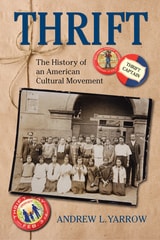
Thrift
The History of an American Cultural MovementAndrew L. Yarrow
University of Massachusetts Press, 2014
In this lively and engaging book, Andrew L. Yarrow tells the story of a national movement that promoted an amalgam of values and practices ranging from self-control, money management, and efficiency to conservation, generosity, and planning for the future—all under the rubric of “thrift.” Emerging in tandem and in tension with the first flowerings of consumer society, the thrift movement flourished during the 1910s and 1920s and then lingered on the outskirts of American culture from the Depression to the prosperous mid-twentieth century.
The movement brought together a diverse array of social actors with widely divergent agendas—the YMCA, the Boy and Girl Scouts, temperance crusaders, and others seeking to strengthen the moral fiber of urban young men and boys in particular, and to tamp down the appeal of radicalism. It also attracted credit union and other progressive activists wanting to empower the working class economically, bankers desiring to broaden their customer base, conservationists and efficiency proponents denouncing “waste,” and government leaders, school teachers, and economists who believed that encouraging saving was in the economic interests of both individuals and the nation.
A post–World War II culture that centered on spending and pleasure made the early-twentieth-century thrift messages seem outdated. Nonetheless, echoes of thrift can be found in currently popular ideas of “sustainability,” “stewardship,” and “simplicity” and in efforts to curtail public and private debt.
Thrillers, Chillers, and Killers
Radio and Film NoirFrank Krutnik
Rutgers University Press, 2025
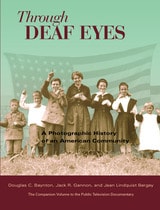
Through Deaf Eyes
A Photographic History of an American CommunityDouglas Baynton
Gallaudet University Press, 2007
In 2001, the Smithsonian Institution presented the landmark photographic exhibition History Through Deaf Eyes, representing nearly 200 years of United States deaf history. Drawing heavily on the extensive archives at Gallaudet University, the curators created an exhibition that drew more than 400,000 people viewed at the Smithsonian and in 12 cities during a five-year national tour. Its popularity prompted the production of a documentary film for national broadcast on the Public Broadcasting System. Now, the photographs, quotes, and stories from this remarkable exhibit and documentary have been assembled in a book of stunning beauty and poignant images, Through Deaf Eyes: A Photographic History of an American Community.
Featuring more than 200 full-color photographs, Through Deaf Eyes depicts the story of Deaf America and also affords readers the opportunity to learn about the nation’s broader history. The values and judgments of society have had an impact on the education, employment, and family life of deaf people, while historical eras often can be illuminated by examination through a Deaf lens. Photographs reveal the character of Deaf people in school settings, the workplace, during wartime, and using their cultural signature, American Sign Language. For both deaf and hearing readers, the Deaf community portrayed in Through Deaf Eyes offers a unique and fascinating perspective on the value of human difference.

Through Japanese Eyes
Thirty Years of Studying Aging in AmericaYohko Tsuji
Rutgers University Press, 2021
Through Japanese Eyes offers an ethnography of aging in America from a cross-cultural perspective based on a lengthy period of research. It illustrates how older Americans cope with the gap between the ideal (e.g., independence) and the real (e.g., needing assistance) of growing older, and the changes the author observed over thirty years of research.
Through Our Eyes
African American Men's Experiences of Race, Gender, and ViolenceGarfield, Gail
Rutgers University Press, 2010
Through Survivors' Eyes
From the Sixties to the Greensboro MassacreSally Avery Bermanzohn
Vanderbilt University Press, 2003
In passionate first-person accounts, Through Survivors' Eyes tells the story of six remarkable people who set out to change the world. The survivors came of age as the "protest generation," joining the social movements of the 1960s and 1970s. They marched for civil rights, against war, for textile and healthcare workers, and for black power and women's liberation. As the mass mobilizations waned in the mid-1970s, they searched for a way to continue their activism, studied Marxism, and became communists.
Nelson Johnson, who grew up on a farm in eastern North Carolina in a family proud of its African American heritage, settled in Greensboro in the 1960s and became a leader of the Black Liberation Movement and a decade later the founder of the Faith Community Church. Willena Cannon, the daughter of black sharecroppers, witnessed a KKK murder as a child and was spurred to a life of activism. Her son, Kwame Cannon, was only ten when he saw the Greensboro killings. Marty Nathan, who grew up the daughter of a Midwestern union organizer and came to the South to attend medical school, lost her husband to the Klan/Nazi gunfire. Paul Bermanzohn, the son of Jewish Holocaust survivors, was permanently injured during the shootings. Sally Avery Bermanzohn, a child of the New York suburbs who came south to join the Civil Rights Movement, watched in horror as her friends were killed and her husband was wounded.
Through Survivors' Eyes is the story of people who abandoned conventional lives to become civil rights activists and then revolutionaries. It is about blacks and whites who united against Klan/Nazi terror, and then had to overcome unbearable hardship, and persist in seeking justice. It is also a story of one divided southern community, from the protests of black college students of the late 1960s to the convening this January of a Truth and Community Reconciliation Project (on the South African model) intended to reassess the Massacre.
Through an Indian's Looking-Glass
A Cultural Biography of William Apess, PequotDrew Lopenzina
University of Massachusetts Press, 2017
The life of William Apess (1798–1839), a Pequot Indian, Methodist preacher, and widely celebrated writer, provides a lens through which to comprehend the complex dynamics of indigenous survival and resistance in the era of America's early nationhood. Apess's life intersects with multiple aspects of indigenous identity and existence in this period, including indentured servitude, slavery, service in the armed forces, syncretic engagements with Christian spirituality, and Native struggles for political and cultural autonomy. Even more, Apess offers a powerful and provocative voice for the persistence of Native presence in a time and place that was long supposed to have settled its “Indian question” in favor of extinction.
Through meticulous archival research, close readings of Apess's key works, and informed and imaginative speculation about his largely enigmatic life, Drew Lopenzina provides a vivid portrait of this singular Native American figure. This new biography will sit alongside Apess's own writing as vital reading for those interested in early America and indigeneity.
Through an Uncommon Lens
The Life and Photography of F. Holland DayPatricia J. Fanning
University of Massachusetts Press, 2008
Through the Archival Looking Glass
A Reader on Diversity and InclusionMary A. Caldera
Society of American Archivists, 2014
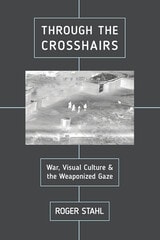
Through the Crosshairs
War, Visual Culture, and the Weaponized GazeStahl, Roger
Rutgers University Press, 2018
Through the Crosshairs traces the genealogy of this weapon’s-eye view across a wide range of genres, including news reports, military public relations images, action movies, video games, and social media posts. As he tracks how gun-camera footage has spilled from the battlefield onto the screens of everyday civilian life, Roger Stahl exposes how this raw video is carefully curated and edited to promote identification with military weaponry, rather than with the targeted victims. He reveals how the weaponized gaze is not only a powerful propagandistic frame, but also a prime site of struggle over the representation of state violence.

Through the Day, through the Night
A Flemish Belgian Boyhood and World War IIJan Vansina
University of Wisconsin Press, 2014
Within the vast literature on World War II, a much smaller body of work treats the everyday experiences of civilians, particularly in smaller countries drawn into the conflict. Recalling the war in Belgium from a child’s-eye perspective, Vansina describes pangs of hunger so great as to make him crave the bitter taste of cod-liver oil. He vividly remembers the shock of seeing severely wounded men on the grounds of a field hospital, the dangers of crossing fields and swimming in ponds strafed by planes, and his family’s interactions with occupying and escaping soldiers from both sides. After the war he recalls emerging numb from the cinema where he first saw the footage of the Nazi death camps, and he describes a new phase of unrest marked by looting, vigilante justice, and the country’s efforts at reunification.
Vansina, a historian and anthropologist best known for his insights into oral tradition and social memory, draws on his own memories and those of his siblings to reconstruct daily life in Belgium during a tumultuous era.
Best Special Interest Books, selected by the American Association of School Librarians
Best Books for General Audiences, selected by the Public Library Reviewers

Through the Door of Life
A Jewish Journey between GendersJoy Ladin
University of Wisconsin Press, 2012
Professor Jay Ladin made headlines around the world when, after years of teaching literature at Yeshiva University, he returned to the Orthodox Jewish campus as a woman—Joy Ladin. In Through the Door of Life, Joy Ladin takes readers inside her transition as she changed genders and, in the process, created a new self.
With unsparing honesty and surprising humor, Ladin wrestles with both the practical problems of gender transition and the larger moral, spiritual, and philosophical questions that arise. Ladin recounts her struggle to reconcile the pain of her experience living as the “wrong” gender with the pain of her children in losing the father they love. We eavesdrop on her lifelong conversations with the God whom she sees both as the source of her agony and as her hope for transcending it. We look over her shoulder as she learns to walk and talk as a woman after forty-plus years of walking and talking as a man. We stare with her into the mirror as she asks herself how the new self she is creating will ever become real.
Ladin’s poignant memoir takes us from the death of living as the man she knew she wasn’t, to the shattering of family and career that accompanied her transition, to the new self, relationships, and love she finds when she opens the door of life.
2012 Finalist for the National Jewish Book Award for Biography, Autobiography, or Memoir
“Given her high-profile academic position, Ladin’s transition was a major news story in Israel and even internationally. But behind the public story was a private struggle and learning experience, and Ladin pulls no punches in telling that story. She offers a peek into how daunting it was to learn, with little support from others, how to dress as a middle-aged woman, to mu on make-up, to walk and talk like a female. She provides a front-row seat for observing how one person confronted a seemingly impossible situation and how she triumphed, however shakingly, over the many adversities, both societal and psychological, that stood in the way.”—The Gay and Lesbian Review Worldwide