Results by title
3576 books match the query 'American' and 770 start with t

The Last Physician
Walker Percy and the Moral Life of MedicineCarl Elliott and John Lantos, eds.
Duke University Press, 1999
The contributors—physicians, philosophers, and literary critics—examine the relevance of Percy’s work to current dilemmas in medical education and health policy. They reflect upon the role doctors and patients play in his novels, his family legacy of depression, how his medical background influenced his writing style, and his philosophy of psychiatry. They contemplate the private ways in which Percy’s work affected their own lives and analyze the author’s tendency to contrast the medical-scientific worldview with a more spiritual one. Assessing Percy’s stature as an author and elucidating the many ways that reading and writing can combine with diagnosing and treating to offer an antidote to despair, they ask what it means to be a doctor, a writer, and a seeker of cures and truths—not just for the body but for the malaise and diseased spirituality of modern times.
This collection will appeal to lovers of literature as well as medical professionals—indeed, anyone concerned with medical ethics and the human side of doctoring.
Contributors. Robert Coles, Brock Eide, Carl Elliott, John D. Lantos, Ross McElwee, Richard Martinez, Martha Montello, David Schiedermayer, Jay Tolson, Bertram Wyatt-Brown, Laurie Zoloth-Dorfman
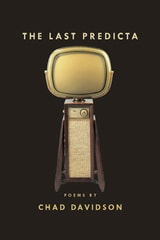
The Last Predicta
Chad Davidson
Southern Illinois University Press, 2008
The Last Predicta is Chad Davidson's searing collection of poetry dedicated to endings of all varieties. From odes to the corporate cornucopia of Target and the aggressive cheer of a Carnival cruise, to emotive examinations of Caravaggio's The Calling of St. Matthew or flies circling a putrescent bowl of forgotten fruit, Davidson weaves a lyrical web of apocalyptic scenarios and snapshots of pop culture. Throughout the volume appear cataclysms large and small, whether the finality of a minute passed or the deaths of a thousand swans at Seneca Lake in 1912. Images of King Kong, Starburst candies, and the Brady Bunch swim with mythological figures, Roman heroes, and dead animals as Davidson deftly explores the relationship between the mundane and the profound. At the center of the collection sits the Predicta television itself, "the lives blooming there in Technicolor," at once futuristic and nostalgic in its space age prophecy.
Moving in their very simplicity, these poems resonate with discoveries that belie their seemingly ordinary wellsprings. Chad Davidson's stunning collection repeatedly explores the moment of revelation and all its accompanying aftermaths. The Last Predicta leads readers to ponder all manner of predictions, endings, and everything that follows.

The Last Quiet Place on Earth
Sonnets in the Time of CoronavirusRoger Armbrust
Parkhurst Brothers, Inc., 2022
The Last Supper of Chicano Heroes
Selected Works of José Antonio BurciagaJosé Antonio Burciaga; Edited by Mimi R. Goldstein and Daniel Chacón
University of Arizona Press, 2008
Best known for his books Weedee Peepo, Drink Cultura, and Undocumented Love, Burciaga was also a poet, cartoonist, founding member of the comedy troupe Cultura Clash, and a talented muralist whose well-known work The Last Supper of Chicano Heroes became almost more famous than the man. This first and only collection of Burciaga’s work features thirty-eight illustrations and incorporates previously unpublished essays and drawings, including selections from his manuscript “The Temple Gang,” a memoir he was writing at the time of his death. In addition, Gladstein and Chacón address Burciaga’s importance to Chicano letters.
A joy to read, this rich compendium is an important contribution not only to Chicano literature but also to the preservation of the creative, spiritual, and political voice of a talented and passionate man.
The Last Unkillable Thing
Emily Pitinos
University of Iowa Press, 2021
The Laughter of Adam and Eve
Jason Sommer
Southern Illinois University Press, 2013
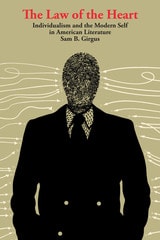
The Law of the Heart
Individualism and the Modern Self in American LiteratureBy Sam B. Girgus
University of Texas Press, 1979
The Law of the Heart is a vigorous challenge to the prevailing concept of the “antidemocratic” image of the self in the American literary and cultural tradition. Sam B. Girgus counters this interpretation and attempts to develop a new understanding of democratic individualism and liberal humanism in American literature under the rubric of literary modernism.
The image of the individual self who retreats inward, conforming to a distorted “law of the heart,” emerges from the works of such writers as Cooper and Poe and composer Charles Ives. Yet, as Girgus shows, other American writers relate the idea of the self to reality and culture in a more complex way: the self confronts and is reconciled to the paradox of history and reality.
In Girgus’ view, the tradition of pragmatic, humanistic individualism provides a foundation for a future where individual liberty is a major priority. He uses literary modernism as a bridge for relating contemporary social conditions to crises of the American self and culture as seen in the works of writers including Emerson, Howells, Whitman, Henry James, William James, Fitzgerald, Bellow, and McLuhan.
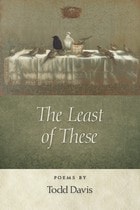
The Least of These
Todd Davis
Michigan State University Press, 2010
In his third collection of poems Todd Davis advises us that "the only corruption comes / in not loving this life enough." Over the course of this masterful and heartfelt book it becomes clear that Davis not only loves the life he's been given, but also believes that the ravishing desire of this world can offer hope, and even joy, however it might be negotiated.
Drawing upon a range of stories from the Christian, Transcendental, and Asian traditions, as well as from his own deep understanding of the natural world, Davis explores the connection between the visible and invisible worlds, or what Pierre Teilhard de Chardin called "the incandescent surface of matter plunged in God."
A direct poetic descendant of Walt Whitman, Davis invites us to sing "the songs we collect in the hymnals of our flesh- / impromptu, a cappella, our mouths flung open / in a great wide O."
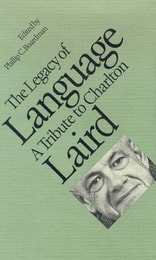
The Legacy Of Language
A Tribute To Charlton LairdPhillip C. Boardman
University of Nevada Press, 1987
In this tribute to Charlton Laird, ten scholars in the fields of language and linguistics provide ordinary readers with new insight into the workings of the English language. Laird, one of Nevada's treasured authors, was a professor of English at the University of Nevada, Reno.
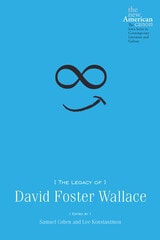
The Legacy of David Foster Wallace
Samuel Cohen and Lee Konstantinou
University of Iowa Press, 2012
Considered by many to be the greatest writer of his generation, David Foster Wallace was at the height of his creative powers when he committed suicide in 2008. In a sweeping portrait of Wallace’s writing and thought and as a measure of his importance in literary history, The Legacy of David Foster Wallace gathers cutting-edge, field-defining scholarship by critics alongside remembrances by many of his writer friends, who include some of the world’s most influential authors.
The Legacy of Kenneth Burke
Herbert W. Simons
University of Wisconsin Press, 1989
Capturing the lively modernist milieu of Kenneth Burke’s early career in Greenwich Village, where Burke arrived in 1915 fresh from high school in Pittsburgh, this book discovers him as an intellectual apprentice conversing with “the moderns.” Burke found himself in the midst of an avant-garde peopled by Malcolm Cowley, Marianne Moore, Jean Toomer, Katherine Anne Porter, William Carlos Williams, Allen Tate, Hart Crane, Alfred Stieglitz, and a host of other fascinating figures.
Burke himself, who died in 1993 at the age of 96, has been hailed as America’s most brilliant and suggestive critic and the most significant theorist of rhetoric since Cicero. Many schools of thought have claimed him as their own, but Burke has defied classification and indeed has often been considered a solitary, eccentric genius immune to intellectual fashions. But Burke’s formative work of the 1920s, when he first defined himself and his work in the context of the modernist conversation, has gone relatively unexamined.
Here we see Burke living and working with the crowd of poets, painters, and dramatists affiliated with Others magazine, Stieglitz’s “291” gallery, and Eugene O’Neill’s Provincetown Players; the leftists associated with the magazines The Masses and Seven Arts; the Dadaists; and the modernist writers working on literary journals like The Dial, where Burke in his capacity as an associate editor saw T. S. Eliot’s “The Wasteland” into print for the first time and provided other editorial services for Thomas Mann, e.e. cummings, Ezra Pound, and many other writers of note. Burke also met the iconoclasts of the older generation represented by Theodore Dreiser and H. L. Mencken, the New Humanists, and the literary nationalists who founded Contact and The New Republic. Jack Selzer shows how Burke’s own early poems, fiction, and essays emerged from and contributed to the modernist conversation in Greenwich Village. He draws on a wonderfully rich array of letters between Burke and his modernist friends and on the memoirs of his associates to create a vibrant portrait of the young Burke’s transformation from aesthete to social critic.
The Legend of Light
Bob Hicok
University of Wisconsin Press, 1995
The Legendary Detective
The Private Eye in Fact and FictionJohn Walton
University of Chicago Press, 2015
“I’m in a business where people come to me with troubles. Big troubles, little troubles, but always troubles they don’t want to take to the cops.” That’s Raymond Chandler’s Philip Marlowe, succinctly setting out our image of the private eye. A no-nonsense loner, working on the margins of society, working in the darkness to shine a little light.
The reality is a little different—but no less fascinating. In The Legendary Detective, John Walton offers a sweeping history of the American private detective in reality and myth, from the earliest agencies to the hard-boiled heights of the 1930s and ’40s. Drawing on previously untapped archival accounts of actual detective work, Walton traces both the growth of major private detective agencies like Pinkerton, which became powerful bulwarks against social and labor unrest and the motley, unglamorous work of small-time operatives. He then goes on to show us how writers like Dashiell Hammett and editors of sensational pulp magazines like Black Mask embellished on actual experiences and fashioned an image of the PI as a compelling, even admirable, necessary evil, doing society’s dirty work while adhering to a self-imposed moral code. Scandals, public investigations, and regulations brought the boom years of private agencies to an end in the late 1930s, Walton explains, in the process fully cementing the shift from reality to fantasy.
Today, as the private detective has long since given way to security services and armed guards, the myth of the lone PI remains as potent as ever. No fan of crime fiction or American history will want to miss The Legendary Detective.
The Lesser Fields
Rob Schlegel
University Press of Colorado, 2009
Published by the Center for Literary Publishing at Colorado State University
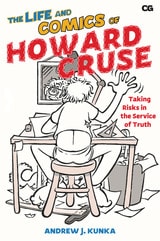
The Life and Comics of Howard Cruse
Taking Risks in the Service of TruthAndrew J. Kunka
Rutgers University Press, 2022
The Life and Comics of Howard Cruse tells the remarkable story of how a self-described “preacher’s kid” from Birmingham, Alabama, became the so-called “Godfather of Gay Comics.” This study showcases a remarkable fifty-year career that included working in the 1970s underground comics scene, becoming founding editor of the groundbreaking anthology series Gay Comix, and publishing the graphic novel Stuck Rubber Baby, partially based on his own experience of coming of age in the Civil Rights era.
Through his exploration of Cruse’s life and work, Andrew J. Kunka also chronicles the dramatic ways that gay culture changed over the course of Cruse’s lifetime, from Cold War-era homophobia to the gay liberation movement to the AIDS crisis to the legalization of gay marriage. Highlighting Cruse’s skills as a trenchant satirist and social commentator, Kunka explores how he cast a queer look at American politics, mainstream comics culture, and the gay community’s own norms.
Lavishly illustrated with a broad selection of comics from Cruse’s career, this study serves as a perfect introduction to this pioneering cartoonist, as well as an insightful read for fans who already love how his work sketched a new vision of gay life.
The Life and Letters
Irving Feldman
University of Chicago Press, 1994
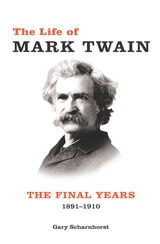
The Life of Mark Twain
The Final Years, 1891–1910Gary Scharnhorst
University of Missouri Press, 2022
In the final volume of his three-volume biography, Gary Scharnhorst chronicles the life of Samuel Langhorne Clemens from his family’s extended trip to Europe in 1891 to his death in 1910 at age 74. During these years Clemens grapples with bankruptcy, returns to the lecture circuit, and endures the loss of two daughters and his wife. It is also during this time that he writes some of his darkest, most critical works; among these include Pudd’nhead Wilson; Personal Recollections of Joan of Arc; Tom Sawyer Abroad; Tom Sawyer, Detective; Following the Equator; No. 44, the Mysterious Stranger; and portions of his Autobiography.
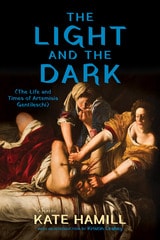
The Light and the Dark
(The Life and Times of Artemisia Gentileschi)Kate Hamill, Kristin Leahey
Northwestern University Press, 2026
A play from the inimitable Kate Hamill, based on the true story of the groundbreaking Italian painter Artemisia Gentileschi
During the seventeenth century, Italian artists strove to reshape the very image of humanity. Artemisia Gentileschi—the daughter of a painter—dreams of making her mark at a time when a woman is not thought capable of being an artist, let alone one of the greats. Just as her career begins to gain unexpected momentum, a series of devastating betrayals crack the foundation of her work—and her life. In electrifying verse and gorgeous artwork, The Light and The Dark depicts the deeply moving true story of a young woman who changed the very image of women in society . . . weaving a magnetic and empowering tapestry of ambition, rage, and resilience across the ages.
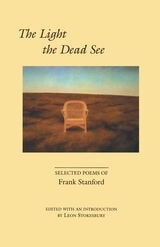
The Light the Dead See
Selected Poems of Frank StanfordFrank Stanford
University of Arkansas Press, 1991
Between 1972, when he published his first book, The Signing Knives, and 1978, when he died at the age of twenty-nine, Frank Stanford published seven volumes of poetry. Within a year of his death, two posthumous collections were published. At the time of this death, as Leon Stokesbury asserts in his introduction, “Stanford was the best poet in America under the age of thirty-five.”
The Light the Dead See collects the best work from those nine volumes and six previously unpublished poems. In the earlier poems, Stanford creates a world where he could keep childhood alive, deny time and mutability, and place a version of himself at the center of great myth and drama.
Later, the denial of time and mutability gives way to an obsessive and familiar confrontation with death. Although Stanford paid an enormous price for his growing familiarity with Death as a presence, the direct address to that presence is a source of much of the striking originality and stunning power in the poetry.
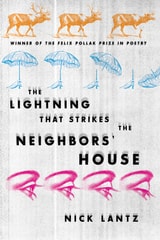
The Lightning That Strikes the Neighbors’ House
Nick Lantz
University of Wisconsin Press, 2010
Finalist, Foreword Magazine’s Poetry Book of the Year
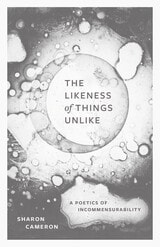
The Likeness of Things Unlike
A Poetics of IncommensurabilitySharon Cameron
University of Chicago Press, 2025
In Sharon Cameron’s essays, a magnetic constellation gathers works of Emerson, Whitman, Dickinson, Cather, and Stevens—each manifesting in its own terms “the likeness of things unlike”—to form a loose commonality in a strain of American writing in which incommensurable elements can’t be integrated and can’t be separated. The Likeness of Things Unlike is concerned with discordant elements of an aesthetic work and argues that these elements refigure the aesthetic wholes whose integrity they apparently violate. These intertwined, subversive elements are challenges to literary systems and are essentially philosophical in their rethinking of categories, and thus go beyond the aesthetic particulars that exemplify them.
Cameron is known for rigorously and brilliantly connecting artistic achievement to radical ways of thinking. Georg Lukcás describes the essayist as one who “adapts himself to the essay’s ‘smallness’ of form—the eternal smallness of the most profound work of the intellect in [the] face of life.” With The Likeness of Things Unlike Cameron powerfully demonstrates Lukács’s remarkable insight.
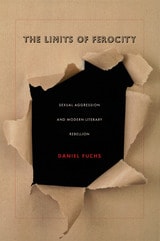
The Limits of Ferocity
Sexual Aggression and Modern Literary RebellionDaniel Fuchs
Duke University Press, 2011
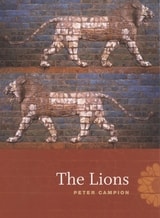
The Lions
Peter Campion
University of Chicago Press, 2009
Big Avalanche Ravine
Just the warning light on a blue crane.
Just mountains. Just the mist that skimmed
them both and bled to silver rain
lashing the condominiums.
But there it sank on me. This urge
to carve a life from the long expanse.
To hold some ground against the surge
of sheer material. It was a tense
and persistent and metallic shiver.
And it stayed, that tremor, small and stark
as the noise of the hidden river
fluming its edge against the dark.
In his second collection of poems, Peter Campion writes about the struggle of making a life in America, about the urge “to carve a space” for love and family from out of the vast sweep of modern life. Coursing between the political and personal with astonishing ease, Campion writes at one moment of his disturbing connection to the public political structure, symbolized by Robert McNamara (who makes a startling appearance in the title poem), then in the next, of a haunting reverie beneath a magnolia tree, representing his impulse to escape the culture altogether. He moves through various forms just as effortlessly, as confident in rhymed quatrains as in slender, tensed free verse. In The Lions, Campion achieves a fusion of narrative structure and lyric intensity that proves him to be one of the very best poets of his generation.
Praise for Other People
“Campion is a poet who knows that what a poet sees is nothing without a mixture of formal prowess and emotional insight.”—David Biespiel, The Oregonian
The Listening Chamber
PoemsWilliam Aberg
University of Arkansas Press, 1997
The Listening Skin
Glenis Redmond
Four Way Books, 2022
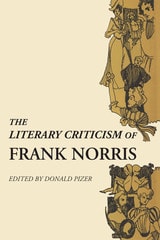
The Literary Criticism of Frank Norris
Edited by Donald Pizer
University of Texas Press, 1964
All of American author Frank Norris’s significant critical writings have been compiled in this book, including his articles for the San Francisco Wave during 1896–1897 and selections from his “Weekly Letter” column for the Chicago American in 1901. Essays from these two previously unexploited sources, comprising almost half the book, reveal certain areas of Norris’s thought which heretofore had been overlooked by scholars.
This book was compiled in order to clarify Frank Norris’s literary creed. When Donald Pizer began to read Norris’s uncollected critical articles, he observed concepts which had been unnoted or misunderstood by his critics. Crediting this to the inadequate representation of Norris’s ideas in the posthumous The Responsibilities of the Novelist (1903), Pizer recognized the need for an interpretive and complete edition of Norris’s critical writings. This volume thus fills a noticeable gap in the field of American literary criticism.
By the time of his death in 1902 Norris had a closed system of critical ideas. This core of ideas, however, is only peripherally related to the conventional concept of literary naturalism, which perhaps explains why critics have gone astray trying to find Zolaesque ideas in Norris’s criticism. Norris’s central idea, around which he built an aesthetic of the novel, was that the best novel combines an intensely primitivistic subject matter and theme with a highly sophisticated form. His paradox of sophisticated primitivism clarifies the vital link between the fiction produced in the 1890s and that written by Hemingway, Faulkner, and Steinbeck.
Norris’s essays deal with many of the literary themes which preoccupy modern critical theorists. His range of subjects includes the form and function of the novel; definitions of naturalism, realism, and romanticism; and the problem of what constitutes an American novel. His interpretation of commonplace events, his comments on prominent figures of his day, and his parodies of writers such as Bret Harte, Stephen Crane, and Rudyard Kipling are characterized by ingenuity and perception. Through these writings the personality of a man with well-defined convictions and the ability to expound them provocatively comes into sharp focus.
In a general introduction Pizer summarizes Norris’s critical position and surveys his career as literary critic. This introduction and the interpretative introductions preceding each section constitute an illuminating essay on the literary temper of the period and provide a new insight into Norris’ craft and his literary philosophy.
The Literature of the Ozarks
An AnthologyPhillip Douglas Howerton
University of Arkansas Press, 2019
The job of regional literature is twofold: to explore and confront the culture from within, and to help define that culture for outsiders. Taken together, the two centuries of Ozarks literature collected in this ambitious anthology do just that. The fiction, nonfiction, poetry, and drama presented in The Literature of the Ozarks complicate assumptions about backwoods ignorance, debunk the pastoral myth, expand on the meaning of wilderness, and position the Ozarks as a crossroads of human experience with meaningful ties to national literary movements.
Among the authors presented here are an Osage priest, an early explorer from New York, a native-born farm wife, African American writers who protested attacks on their communities, a Pulitzer Prize–winning poet, and an art history professor who created a fictional town and a postmodern parody of the region’s stereotypes.
The Literature of the Ozarks establishes a canon as nuanced and varied as the region’s writers themselves.
The Literatures of the U.S.-Mexican War
Narrative, Time, and IdentityBy Jaime Javier Rodríguez
University of Texas Press, 2010
The literary archive of the U.S.-Mexican War (1846–1848) opens to view the conflicts and relationships across one of the most contested borders in the Americas. Most studies of this literature focus on the war's nineteenth-century moment of national expansion. In The Literatures of the U.S.-Mexican War, Jaime Javier Rodríguez brings the discussion forward to our own moment by charting a new path into the legacies of a military conflict embedded in the cultural cores of both nations.
Rodríguez's groundbreaking study moves beyond the terms of Manifest Destiny to ask a fundamental question: How do the war's literary expressions shape contemporary tensions and exchanges among Anglo Americans, Mexicans, and Mexican Americans. By probing the war's traumas, anxieties, and consequences with a fresh attention to narrative, Rodríguez shows us the relevance of the U.S.-Mexican War to our own era of demographic and cultural change. Reading across dime novels, frontline battle accounts, Mexican American writings and a wide range of other popular discourse about the war, Rodríguez reveals how historical awareness itself lies at the center of contemporary cultural fears of a Mexican "invasion," and how the displacements caused by the war set key terms for the ways Mexican Americans in subsequent generations would come to understand their own identities. Further, this is also the first major comparative study that analyzes key Mexican war texts and their impact on Mexico's national identity.
The Little Field of Self
Doreen Gildroy
University of Chicago Press, 2002
The Little Magazine in Contemporary America
Edited by Ian Morris and Joanne Diaz
University of Chicago Press, 2015
In this collection, Ian Morris and Joanne Diaz gather the reflections of twenty-three prominent editors whose little magazines have flourished over the past thirty-five years. Highlighting the creativity and innovation driving this diverse and still vital medium, contributors offer insights into how their publications sometimes succeeded, sometimes reluctantly folded, but mostly how they evolved and persevered. Other topics discussed include the role of little magazines in promoting the work and concerns of minority and women writers, the place of universities in supporting and shaping little magazines, and the online and offline future of these publications.
Selected contributors
Betsy Sussler, BOMB; Lee Gutkind, Creative Nonfiction; Bruce Andrews, L=A=N=G=U=A=G=E; Dave Eggers, McSweeney’s; Keith Gessen, n+1; Don Share, Poetry; Jane Friedman, VQR; Amy Hoffman, Women’s Review of Books; and more.
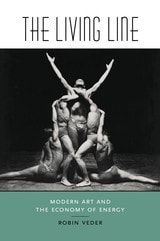
The Living Line
Modern Art and the Economy of EnergyRobin Veder
Dartmouth College Press, 2015

The Logic of Opposites
Alane Rollings
Northwestern University Press, 1998
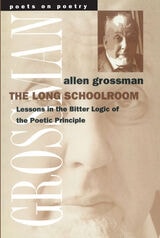
The Long Schoolroom
Lessons in the Bitter Logic of the Poetic PrincipleAllen Grossman
University of Michigan Press, 1997
The jist of what he learned--of what his "lessons" taught him--was (in the sentence of Oliver Wendell Holmes): "Where most men have died, there is the greatest interest." According to Grossman, violence arises not merely from the "barbarian" outside of the culture the poet serves, but from the inner logic of that culture; not, as he would now say, from the defeat of cultural membership but from the terms of cultural membership itself.
Grossman analyzes the "bitter logic of the poetic principle" as it is articulated in exemplary texts and figures, including Bede's Caedmon and Milton. But the heart of The Long Schoolroom is American, ranging from essays on Whitman and Lincoln to an in-depth review of the work of Hart Crane. His final essays probe the example of postmodern Jewish and Christian poetry in this country, most notably the work of Robert Lowell and Allen Ginsburg, as it searches for an understanding of "holiness" in the production and control of violence.
Allen Grossman is author of The Ether Dome and Other Poems: New and Selected, The Sighted Singer: Two Works on Poetry for Readers and Writers (with Mark Halliday), and most recently, The Philosopher's Window. He is Mellon Professor in the Humanities at The Johns Hopkins University.
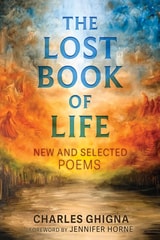
The Lost Book of Life
New and Selected PoemsCharles Ghigna, Foreword by Jennifer Horne
University of Alabama Press, 2026
A poetic journey through five decades of wonder, memory, and love, where the ordinary becomes sacred and every line leads home
Spanning five decades of poetic mastery, The Lost Book of Life: New and Selected Poems is the definitive collection from Charles Ghigna, a beloved and influential voice in contemporary Southern poetry. Drawing from fourteen previous volumes and featuring thirty-seven new poems, this landmark collection captures the full arc of Ghigna’s creative evolution, from his early meditations on nature and family to his later reflections on memory, mortality, and the enduring power of love.
With graceful shifts between free verse and traditional forms, Ghigna’s voice is both intimate and expansive—clear as spring water, alive with wit, and steeped in feeling. His poems open doorways into childhood’s bright dreaming, the quiet complexities of fatherhood, and the sacred hush of daily life. Ghigna invites readers to see the world anew, to find beauty in the familiar, and to embrace the sacred in the ordinary. For longtime admirers and new readers alike, The Lost Book of Life is a luminous testament to a life devoted to poetry. It is both compass and keepsake: a celebration of poetry’s enduring light, and a lasting gift to the literature of the American South.
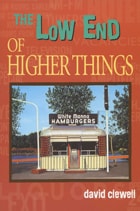
The Low End of Higher Things
David Clewell
University of Wisconsin Press, 2003
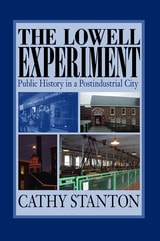
The Lowell Experiment
Public History in a Postindustrial CityCathy Stanton
University of Massachusetts Press, 2006
In the early nineteenth century, Lowell, Massachusetts, was widely studied and emulated as a model for capitalist industrial development. One of the first cities in the United States to experience the ravages of deindustrialization, it was also among the first places in the world to turn to its own industrial and ethnic history as a tool for reinventing itself in the emerging postindustrial economy. The Lowell Experiment explores how history and culture have been used to remake Lowell and how historians have played a crucial yet ambiguous role in that process.
The book focuses on Lowell National Historical Park, the flagship project of Lowell's new cultural economy. When it was created in 1978, the park broke new ground with its sweeping reinterpretations of labor, immigrant, and women's history. It served as a test site for the ideas of practitioners in the new field of public history—a field that links the work of professionally trained historians with many different kinds of projects in the public realm.
The Lowell Experiment takes an anthropological approach to public history in Lowell, showing it as a complex cultural performance shaped by local memory, the imperatives of economic redevelopment, and tourist rituals—all serving to locate the park's audiences and workers more securely within a changing and uncertain new economy characterized by growing inequalities and new exclusions.
The paradoxical dual role of Lowell's public historians as both interpreters of and contributors to that new economy raises important questions about the challenges and limitations facing academically trained scholars in contemporary American culture. As a long-standing and well-known example of “culture-led re-development,” Lowell offers an outstanding site for exploring questions of concern to those in the fields of public and urban history, urban planning, and tourism studies.
The Luck of Barry Lyndon
A Romance of the Last Century. By Fitz-Boodle.William Makepeace Thackeray
University of Michigan Press, 1999
The Thackeray Edition proudly announces two additions to its collection: Catherine and The Luck of Barry Lyndon. The Thackeray Edition is the first full-scale scholarly edition of William Makepeace Thackeray's works to appear in over seventy years, and the only one ever to be based on an examination of manuscripts and relevant printed texts. It is also a concrete attempt to put into practice a theory of scholarly editing that gives new insight into Thackeray's own compositional process.
The Luck of Barry Lyndon, serialized in Fraser's Magazine in 1844, is a wonderfully hard-edged advance upon Thackeray's previous writing: a tour de force dramatization at novelistic length of the moral vacuity of its first person narrator. The inner workings of this narrator are far more complicated than in earlier Thackeray writings, and are presented in a far more subtle, yet not humorless, manner. The mock-Bildungsroman aspect of the novel is brought about by the non-enlightenment of the title-figure, his failure to find a meaningful love-relationship, and his inability to discover a calling that identifies both a significant direction for his individual existence and, at the same time, an appropriate accommodation to his duties to society. Achieved in brilliant, accomplished style, Barry Lyndon is a significant and progressive experiment in narration for Thackeray.
The Made Thing
An Anthology of Contemporary Southern PoetryLeon Stokesbury
University of Arkansas Press, 2000
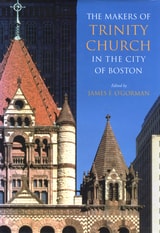
The Makers of Trinity Church in the City of Boston
James F. O'Gorman
University of Massachusetts Press, 2004
While critics often speak of the church as Richardson's creation, this collection of essays, written by leading scholars in the field, recognizes and assesses the individual contributions of the rector, Phillips Brooks; the chairman of the building committee, Robert Treat Paine; the builder, O. W. Norcross; and the decorator, John La Farge, as well as Richardson. The book includes the first study of the furnishings of the interior by the architect's office and features chapters on the stained glass designers Sarah Wyman Whitman and Margaret Redmond, as well as the architect Charles D. Maginnis, whose remodeling of the chancel in the 1930s brought the building to its full glory. These architectural collaborators are rarely given the recognition they receive here, although the absence of any one of them would have produced a very different result. Such omissions would have significantly diminished this towering landmark of America's cultural heritage.
In addition to the editor, contributors to the volume include Keith Bakker, David B. Chesebrough, Kathleen A. Curran, Erica Hirshler, Keith N. Morgan, Thomas M. Paine, Virginia Chieffo Raguin, Milda B. Richardson, Theodore E. Stebbins Jr., and Charles A. Vandersee.
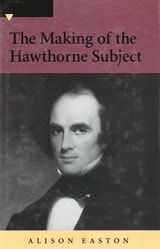
The Making of the Hawthorne Subject
Alison Easton
University of Missouri Press, 1996
This comprehensive study of Nathaniel Hawthorne's early writings analyzes the development of Hawthorne's work over the first twenty-five years of his career. Alison Easton studies that process in relation to current critical debates on subjectivity. By examining Hawthorne's novels, sketches, tales, letters, notebooks, reviews, and children's books up to the publication of The Scarlet Letter, Easton shows how Hawthorne tried to understand the complexities of the clash between desire (that which is unrecognized by the social order) and circumstance (the conditions under which one must live in society). The Hawthorne who emerges from this study proves to be a sophisticated theorist of subjectivity, whose project was central to his times.
The author contends that over the first half of his career Hawthorne explored, experimented, and negotiated his way toward a better model of the human subject than the ones that are usually seen as his cultural inheritance. This approach implies a complex, dialectic development in Hawthorne's work, arising from twenty-five years of accumulated experimentation and ongoing debate. Nearly all critics of Hawthorne have ignored this element of development, thus missing the complex evolution of the subject and the revealing intertextual play of meaning that is evident in everything Hawthorne wrote during this period. Easton's study is the first to supply a full chronology for the works written during these years, and the only one to consider in close detail the full and bewilderingly diverse range of his writing throughout this period and to find an overall pattern in the several stages of his intellectual and artistic enterprise.
Easton brings to scholars and students of nineteenth-century American literature a study of Hawthorne's work that is unique in both scope and perspective. The Making of the Hawthorne Subject offers a substantial and original contribution to the way we think about Hawthorne's work and the relationship of the human subject to the social order of mid-nineteenth-century America.
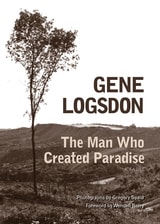
The Man Who Created Paradise
A FableGene Logsdon
Ohio University Press, 2001
Gene Logsdon’s The Man Who Created Paradise is a message of hope at a time when the very concept of earth stewardship is under attack. The fable, inspired by a true story, tells how Wally Spero looked at one of the bleakest places in America—a raw and barren strip-mined landscape—and saw in it his escape from the drudgery of his factory job. He bought an old bulldozer and used the machine to carve patiently, acre by acre, a beautiful little farm out of a seemingly worthless wasteland.
Wally’s story is a charming distillation of the themes that the late, beloved Gene Logsdon returned to again and again in his many books and hundreds of articles. Environmental restoration is the task of our time. The work of healing our land begins in our own backyards and farms, in our neighborhoods and our regions. Humans can turn the earth into a veritable paradise—if they really want to.
Noted photographer Gregory Spaid retraced the trail that Logsdon traveled when he was inspired to write The Man Who Created Paradise. His photographs evoke the same yearning for wholeness, for ties to land and community, that infuses the fable’s poetic prose.
The Man Who Is and Is Not There
The Poetry and Prose of Robert FrancisAndrew Stambuk
University of Massachusetts Press, 2011
Robert Francis (1901–1987), the author of eight volumes of poetry, an autobiography, a book of fiction, essays on poetry, and a reminiscence of Robert Frost, lived for most of his career on the outskirts of Amherst, Massachusetts, devoting himself to Yankee simplicity and self-renunciation derived from his reading of Thoreau. His preference for solitude and disinclination to write about or promote himself account for the elusiveness of his persona in his prose and poetry.
This book charts how Francis developed and elaborated this persona through distanced self-portraits in prose and through poems that both reveal and conceal the self of the poet. Folded into the study are discussions of Francis's pastoralism, his affinities with Emerson and Thoreau, his experimentation with new poetic forms, his protest against the Vietnam War and environmental despoliation, his homoeroticism, and a comparison of his poetry with that of Robert Frost. The book also explores Francis's characteristic attitude, figured as “hovering,” where his speaker is both subject and object, writing about himself while inhabiting the role of detached observer.
Complementing the emphasis on Francis's elusiveness, Andrew Stambuk offers readings of his poems attentive to aesthetic qualities that give them their particular reticence. Stambuk's sensitive evaluations underscore that Francis is a craftsman of intricate precisions whose work speaks to contemporary political and global concerns.
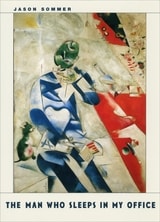
The Man Who Sleeps in My Office
Jason Sommer
University of Chicago Press, 2004
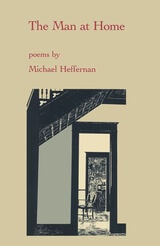
The Man at Home
PoemsMichael Heffernan
University of Arkansas Press, 1988
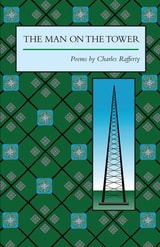
The Man on the Tower
PoemsCharles Rafferty
University of Arkansas Press, 1995

The Manageable Cold
PoemsTimothy McBride
Northwestern University Press, 2010
The Manageable Cold showcases McBride’s mastery of a wide range of forms and subjects. Whether his attention is focused on boxing, jazz, or contranyms, McBride breathes new life into the sonnet and the villanelle and handles blank verse with the utmost ease. The combination of traditional techniques and McBride’s thoroughly modern sensibility gives rise to poems that seem simultaneously utterly fresh and immemorially old, calling to mind the rigorously embodied works of Robert Frost, Howard Nemerov, and Mary Oliver. Timothy McBride is a science writer and editor. His poems have appeared in Shenandoah, Seneca Review, and Poetry Northwest, among other publications. The Manageable Cold is his first book of poetry.
The Mansions
Daniel Tobin
Four Way Books, 0
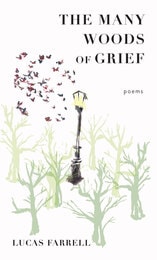
The Many Woods of Grief
PoemsLucas Farrell
University of Massachusetts Press, 2011
In this striking debut volume, Lucas Farrell offers a lyrical and illuminating field guide to the flora and fauna of “worlds just out of reach.” With the precision and detail of an Audubon sketch, he turns his naturalist's eye to the vast landscape of human emotion—all the while affirming “how real this world we live in / must be to live in.”
Journeying ever outward, from the achingly ordinary to the mysterious “land where there is no land,” the narrator of this collection, equal parts pastoralist and surrealist, explores the vivid in-betweens—between love and loss, hilarity and despair, wild and domestic, real and imagined. Hungry, expressive, and original, these poems glean light from even the darkest of fields.
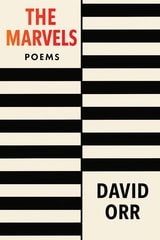
The Marvels
David Orr
Four Way Books, 2026
In his second collection, The Marvels, David Orr writes from the conviction that the available world is enough: its worn shirts, coffee cups, rainbows, buses, obsolete machines, failed plans, neighborly borders, and minor acts of courtesy. These poems are clear-eyed without being cold, comic without being merely light. They attend to ordinary things not as symbols waiting to be elevated, but as the actual substance of our shared existence.
Praised by The Washington Post for his “quirky, engaging poetry,” Orr brings formal control, wry wit, whimsy, and an exacting intelligence to the relentless dailiness of life. In “Coffee Cups,” two mugs have been scoured blank by the dishwasher: “Nothing makes them special now. / What they do is all they are.” Yet the household still reaches for them first, “hoping to save the others.” In “Decency,” a nearly useless blue shirt becomes kin to the small social gestures that certify “this shared space as shared”: a held door, a blessing after a sneeze, the habitual signs by which strangers acknowledge one another. And in the title poem, marvels are planted along a property line, where two neighbors meet to prune, argue, trade tools, and admire what grows between them.
Unillusioned but not disenchanted, The Marvels finds its force in persistence, use, courtesy, memory, and care. The poems do not look past the real for consolation. They look steadily at the world we have — its comedy, damage, repetition, and thin but durable fabrics of connection — until its sufficiency comes into view.
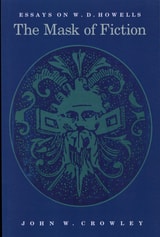
The Mask of Fiction
Essays on W. D. HowellsJohn W. Crowley
University of Massachusetts Press, 0