Results by title
4413 books match the query 'Anthropology' and 750 start with t
The Italian American Table
Food, Family, and Community in New York CitySimone Cinotto
University of Illinois Press, 2013
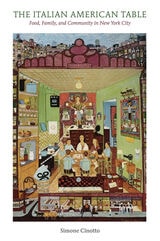
Looking at the historic Italian American community of East Harlem in the 1920s and 30s, Simone Cinotto recreates the bustling world of Italian life in New York City and demonstrates how food was at the center of the lives of immigrants and their children. From generational conflicts resolved around the family table to a vibrant food-based economy of ethnic producers, importers, and restaurateurs, food was essential to the creation of an Italian American identity. Italian American foods offered not only sustenance but also powerful narratives of community and difference, tradition and innovation as immigrants made their way through a city divided by class conflict, ethnic hostility, and racialized inequalities.
The Italian Way
Food and Social LifeDouglas Harper and Patrizia Faccioli
University of Chicago Press, 2009
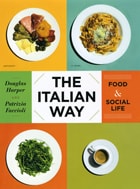
Outside of Italy, the country’s culture and its food appear to be essentially synonymous. And indeed, as The Italian Way makes clear, preparing, cooking, and eating food play a central role in the daily activities of Italians from all walks of life. In this beautifully illustrated book, Douglas Harper and Patrizia Faccioli present a fascinating and colorful look at the Italian table.
The Italian Way focuses on two dozen families in the city of Bologna, elegantly weaving together Harper’s outsider perspective with Faccioli’s intimate knowledge of the local customs. The authors interview and observe these families as they go shopping for ingredients, cook together, and argue over who has to wash the dishes. Throughout, the authors elucidate the guiding principle of the Italian table—a delicate balance between the structure of tradition and the joy of improvisation. With its bite-sized history of food in Italy, including the five-hundred-year-old story of the country’s cookbooks, and Harper’s mouth-watering photographs, The Italian Way is a rich repast—insightful, informative, and inviting.

The Jaguar and the Priest
An Ethnography of Tzeltal SoulsBy Pedro Pitarch
University of Texas Press, 2010
In contrast to western notions of the soul as the essence or most native part of a human being, the Tzeltal-speaking Indians of Chiapas, Mexico, regard the soul first and foremost as an Other. Made up of beings that personify the antithesis of their native selves—animals such as hummingbirds or jaguars, atmospheric phenomena like lightning bolts or rainbows, or spirits of European appearance such as Catholic priests or evangelical musicians—Tzeltal souls represent the maximum expression of that which is alien. And because their souls enfold that which is outside and Other, the Tzeltal contain within themselves the history of their relationship with Europeans from the beginning of the Spanish conquest to the present time. Thus, to understand the Indian self opens a window into the Tzeltal conception of culture and community, their notions of identity and alterity, and their interpretation of interethnic relations and types of historical memory.
In this pathfinding ethnography, which was originally published in Spanish in 1996 as Ch'ulel: una etnografía de las almas tzeltales and is now extensively rewritten and amplified in English, Pedro Pitarch offers a new understanding of indigenous concepts of the soul, personhood, and historical memory in highland Chiapas. Exploring numerous aspects of indigenous culture and history—medicine and shamanism, geography and cosmology, and politics and kinship among them—he engages in a radical rethinking of classic issues in Mesoamerican anthropology, such as ethnicity and alterity, community and tradition, and change and permanence.
The Jesuit and the Incas
The Extraordinary Life of Padre Blas Valera, S.J.Sabine Hyland
University of Michigan Press, 2004
This is the tale of Father Blas Valera, the child of a native Incan woman and Spanish father, caught between the ancient world of the Incas and the conquistadors of Spain. Valera, a Jesuit in sixteenth-century Peru, believed in what to his superiors was pure heresy: that the Incan culture, religion, and language were equal to their Christian counterparts.
As punishment for his beliefs he was imprisoned, beaten, and, finally, exiled to Spain, where he died at the hands of English pirates in 1597.
Four centuries later, this Incan chronicler had been all but forgotten, until an Italian anthropologist discovered some startling documents in a private Neapolitan collection. The documents claimed, among other things, that Valera's death had been faked by the Jesuits; that he had returned to Peru; and, intriguingly, while there had taught his followers that the Incas used a secret phonetic quipu-a record-keeping device of the Inca empire-to record history.
Far from settling anything, the documents created an international sensation among scholars and led to bitter disputes over how they should be assessed. Are they forgeries, authentic documents, or something in between? If genuine, they will radically reform our view of Inca culture and Valera. The author insightfully examines the evidence, showing how fact and fiction intertwine, and brings the dimly understood history of this author-priest to light.
The Jews in Palestine in the Eighteenth Century
Under the Patronage of the Istanbul committee of Officials for PalestineJacob Barnai
University of Alabama Press, 1992
Research reveals a clear connection between the legal and social status of the Jews in Palestine in the 18th century and their ties with the Diaspora. The Jews who had immigrated to Palestine in that period were mostly poor and elderly. The country was economically backward and politically unstable, which made it impossible for the immigrants to support themselves through productive work. Therefore they lived off the contributions of their brethren overseas. Taxes and fees imposed by the Ottoman rulers increased the financial desperation of the Jews in Palestine. Prohibitions against young unmarried immigrant men and women made for an unstable population largely of old men, many of whom died shortly after immigrating. Families succumbed to disease, earthquakes, and famine, but in the face of these problems, the Jewish communities in Palestine persevered.
The Journey of a Tzotzil-Maya Woman of Chiapas, Mexico
Pass Well over the EarthBy Christine Eber and “Antonia”
University of Texas Press, 2011
Most recent books about Chiapas, Mexico, focus on political conflicts and the indigenous movement for human rights at the macro level. None has explored those conflicts and struggles in-depth through an individual woman's life story. The Journey of a Tzotzil-Maya Woman of Chiapas, Mexico now offers that perspective in one woman's own words. Anthropologist Christine Eber met "Antonia" in 1986 and has followed her life's journey ever since. In this book, they recount Antonia's life story and also reflect on challenges and rewards they have experienced in working together, offering insight into the role of friendship in anthropological research, as well as into the transnational movement of solidarity with the indigenous people of Chiapas that began with the Zapatista uprising.
Antonia was born in 1962 in San Pedro Chenalhó, a Tzotzil-Maya township in highland Chiapas. Her story begins with memories of childhood and progresses to young adulthood, when Antonia began working with women in her community to form weaving cooperatives while also becoming involved in the Word of God, the progressive Catholic movement known elsewhere as Liberation Theology. In 1994, as a wife and mother of six children, she joined a support base for the Zapatista Army of National Liberation. Recounting her experiences in these three interwoven movements, Antonia offers a vivid and nuanced picture of working for social justice while trying to remain true to her people's traditions.
The Juan Pardo Expeditions
Exploration of the Carolinas and Tennessee, 1566-1568Charles Hudson. Afterword by David G. Moore, Robin A. Beck Jr., and Christopher B. Rodning
University of Alabama Press, 2005
The Keepers of Water and Earth
Mexican Rural Social Organization and IrrigationBy Kjell I. Enge and Scott Whiteford
University of Texas Press, 1989
Agrarian reforms transformed the Mexican countryside in the late twentieth century but without, in many cases, altering fundamental power relationships. This study of the Tehuacán Valley in the state of Puebla highlights different strategies to manipulate the local implementation of federal government programs. With their very differing successes in the struggle to regain and maintain control of land and water rights, these strategies raise important questions about the meaning of the phrase "locally controlled development."
Because Mexico is dependent on irrigation for 45 percent of its cash crop production, national policy has focused on developing vast government controlled and financed irrigation systems. In the Tehuacán Valley, however, the inhabitants have developed a complex irrigation system without government aid or supervision. Yet, in contrast to most parts of Mexico, water rights can be bought and sold as a commodity, leading to accumulation, stratification, and emergence of a regional elite whose power is based on ownership of land and water. The analysis provides an important contribution to the understanding of local control.
The findings of this study will be important to a wide audience involved in the study of irrigation, local agricultural systems, and the interplay between local power structures and the national government in developing countries. The book also presents unique material on gravity-fed, horizontal wells, known as qanat in the Middle East, which had been unknown in the literature on Latin America before this book.
The Kidney and the Cane
Planetary Health and Plantation Labor in NicaraguaAlex M. Nading
Duke University Press, 2025
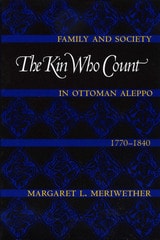
The Kin Who Count
Family and Society in Ottoman Aleppo, 1770-1840By Margaret L. Meriwether
University of Texas Press, 1999
The history of the Middle Eastern family presents as many questions as there are currently answers. Who lived together in the household? Who married whom and for how long? Who got a piece of the patrimonial pie? These are the questions that Margaret Meriwether investigates in this groundbreaking study of family life among the upper classes of the Ottoman Empire in the pre-modern and early modern period.
Meriwether recreates Aleppo family life over time from records kept by the Islamic religious courts that held jurisdiction over all matters of family law and property transactions. From this research, she asserts that the stereotype of the large, patriarchal patrilineal family rarely existed in reality. Instead, Aleppo's notables organized their families in a great diversity of ways, despite the fact that they were all members of the same social class with widely shared cultural values, acting under the same system of family law. She concludes that this had important implications for gender relations and demonstrates that it gave women more authority and greater autonomy than is usually acknowledged.
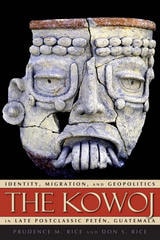
The Kowoj
Identity, Migration, and Geopolitics in Late Postclassic Petén, GuatemalaPrudence M. Rice
University Press of Colorado, 2009
Chapters in The Kowoj address the question "Who are the Kowoj?" from varied viewpoints: archaeological, archival, linguistic, ethnographic, and bioarchaeological. Using data drawn primarily from the peninsular site of Zacpetén, the authors illuminate Kowoj history, ritual components of their self-expressed identity, and their archaeological identification. These data support the Kowoj claim of migration from Mayapán in Yucatán, where they were probably affiliated with the Xiw, in opposition to the Itza. These enmities extended into Petén, culminating in civil warfare by the time of final Spanish conquest in 1697.
The first volume to consider Postclassic Petén from broadly integrative anthropological, archaeological, and historical perspectives, The Kowoj is an important addition to the literature on late Maya culture and history in the southern lowlands. It will be of particular interest to archaeologists, historians, ethnohistorians, art historians, and epigraphers.
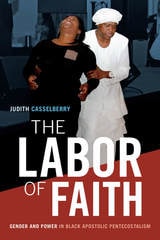
The Labor of Faith
Gender and Power in Black Apostolic PentecostalismJudith Casselberry
Duke University Press, 2017
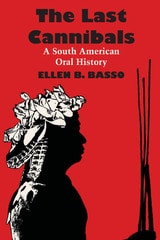
The Last Cannibals
A South American Oral HistoryBy Ellen B. Basso
University of Texas Press, 1995
An especially comprehensive study of Brazilian Amazonian Indian history, The Last Cannibals is the first attempt to understand, through indigenous discourse, the emergence of Upper Xingú society. Drawing on oral documents recorded directly from the native language, Ellen Basso transcribes and analyzes nine traditional Kalapalo stories to offer important insights into Kalapalo historical knowledge and the performance of historical narratives within their nonliterate society.
This engaging book challenges the familiar view of biography as a strictly Western literary form. Of special interest are biographies of powerful warriors whose actions led to the emergence of a more recent social order based on restrained behaviors from an earlier time when people were said to be fierce and violent.
From these stories, Basso explores how the Kalapalo remember and understand their past and what specific linguistic, psychological, and ideological materials they employ to construct their historical consciousness. Her book will be important reading in anthropology, folklore, linguistics, and South American studies.
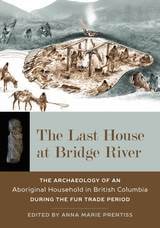
The Last House at Bridge River
The Archaeology of an Aboriginal Household in British Columbia during the Fur Trade PeriodAnna M. Prentiss
University of Utah Press, 2017
The Last House at Bridge River offers a comprehensive archaeological study of a single-house floor and roof deposit dated to approximately 1835–1858 C.E. Although the Fur Trade period of the nineteenth century was a time of significant change for aboriginal peoples in the Pacific Northwest, it is a period that is poorly understood. These studies of Housepit 54 at the Bridge River site offer new insights, revealing that ancestors of today’s St’át’imc people were actively engaged in maintaining traditional lifestyles and making the best of new opportunities for trade and intergroup interaction.
Among its major contributions, the book includes a first-ever historical ecology of the Middle Fraser Canyon that places aboriginal and Euro-Canadian history in ecological context. It demonstrates that an integrated multidisciplinary approach to archaeological research can achieve insights well beyond what is known from the ethnographic and historical records. Because the project derives from a long-term partnership between the University of Montana and the Bridge River Indian Band, it illustrates the value of collaborations between archaeologists and First Nations. Together, contributors present a Fur Trade period aboriginal society at a level of intimacy unparalleled elsewhere.
The Last Word
Women, Death, and Divination in Inner ManiC. Nadia Seremetakis
University of Chicago Press, 1991
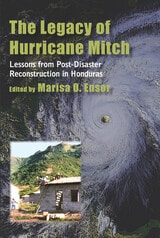
The Legacy of Hurricane Mitch
Lessons from Post-Disaster Reconstruction in HondurasMarisa O. Ensor
University of Arizona Press, 2009
As it swept across the Honduran landscape, the exceptional size, power and duration of Hurricane Mitch abruptly and brutally altered the already diminished economic, social, and environmental conditions of the population. In the aftermath of the disaster a group of seven socio-environmental scientists set out to investigate the root causes of the heightened vulnerability that characterized pre-Mitch Honduras, the impact of the catastrophe on the local society, and the subsequent recovery efforts. Edited by Marisa O. Ensor, this volume presents the findings of their investigation.
The Legacy of Hurricane Mitch offers a comprehensive analysis of the immediate and long-term consequences of Hurricane Mitch in Honduras. Based on longitudinal ethnographic fieldwork and environmental assessments, this volume illustrates the importance of adopting an approach to disaster research and practice that places “natural” trigger events within their political, cultural, and socio-economic contexts. The contributors make a compelling case against post-disaster recovery efforts that limit themselves to alleviating the symptoms, rather than confronting the root causes of the vulnerability that prefigured the disaster.
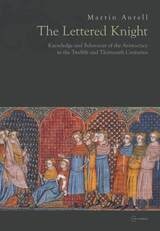
The Lettered Knight
Knowledge and aristocratic behaviour in the twelfth and thirteenth centuriesMartin Aurell
Central European University Press, 2017
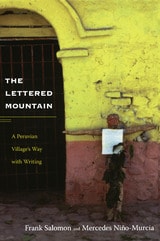
The Lettered Mountain
A Peruvian Village’s Way with WritingFrank Salomon and Mercedes Niño-Murcia
Duke University Press, 2011
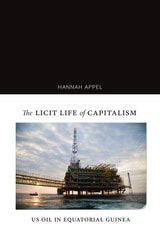
The Licit Life of Capitalism
US Oil in Equatorial GuineaHannah Appel
Duke University Press, 2019
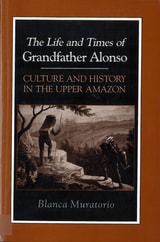
The Life and Times of Grandfather Alonso
Culture and History in the Upper AmazonMuratorio, Blanca
Rutgers University Press, 1991
In Blanca Muratorio's book, we are introduced to Rucuyaya Alonso, an elderly Quichua Indian of the Upper Ecuadorean Amazon. Alonso is a hunter, but like most Quichuas, he has done other work as well, bearing loads, panning gold, tapping rubber trees, and working for Shell Oil. He tells of his work, his hunting, his marriage, his fights, his fears, and his dreams. His story covers about a century because he incorporates the oral tradition of his father and grandfather along with his own memories. Through his life story, we learn about the social and economic life of that region.
Chapters of Alonso's life history and oral tradition alternate with chapters detailing the history of the world around him--the domination of missionaries, the white settlers' expropriation of land, the debt system workers were subjected to, the rubber boom, the world-wide crisis of the 1930s, and the booms and busts of the international oil market. Muratorio explains the larger social, economic, and ideological bases of white domination over native peoples in Amazonia. She shows how through everyday actions and thoughts, the Quichua Indians resisted attacks against their social identity, their ethnic dignity, and their symbolic systems. They were far from submissive, as they have often been portrayed.
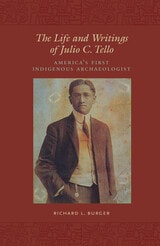
The Life and Writings of Julio C. Tello
America's First Indigenous ArchaeologistRichard L. Burger
University of Iowa Press, 2009
Tello’s vision remains unique, and his work has taken on additional interest as contemporary scholars have turned their attention to the relationship among nationalism, ethnicity, and archaeology. Unfortunately, many of his most important works were published in small journals or newspapers in Peru and have not been available even to those with a reading knowledge of Spanish. This volume thus makes available for the first time a broad sampling of Tello’s writings as well as complementary essays that relate these writings to his life and contributions.
Essays about Tello set the stage for the subsequent translations. Editor Richard Burger assesses his intellectual legacy, Richard Daggett outlines his remarkable life and career, and John Murra places him in both national and international contexts. Tello’s writings focus on such major discoveries as the Paracas mummies, the trepanation of skulls from Huarochirí, Andean iconography and cosmology, the relation between archaeology and nationhood, archaeological policy and preservation, and the role of science and museums in archaeology. Finally, the bibliography gives the most complete and accurate listing of Tello’s work ever compiled.
With its abundance of coups, wars, political dramas, class struggle, racial discrimination, looters, skulls, mummies, landslides, earthquakes, accusations, and counteraccusations, The Life and Writings of Julio C. Tello will become an indispensable reference for Andeanists.
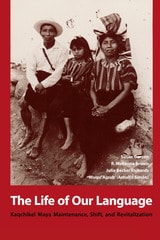
The Life of Our Language
Kaqchikel Maya Maintenance, Shift, and RevitalizationBy Susan Garzon, R. McKenna Brown, Julia Becker Richards, and Wuqu’ Ajpub’
University of Texas Press, 1998
The native Maya peoples of Mexico, Guatemala, Honduras, and Belize have been remarkably successful in maintaining their cultural identity during centuries of contact with and domination by outside groups. Yet change is occurring in all Mayan communities as contact with Spanish-speaking Ladino society increases. This book explores change and continuity in one of the most vital areas of Mayan culture—language use.
The authors look specifically at Kaqchikel, one of the most commonly spoken Mayan languages. Following an examination of language contact situations among indigenous groups in the Americas, the authors proceed to a historical overview of the use of Kaqchikel in the Guatemalan Highlands. They then present case studies of three highland communities in which the balance is shifting between Kaqchikel and Spanish. Wuqu' Ajpub', a native Kaqchikel speaker, gives a personal account of growing up negotiating between the two languages and the different world views they encode. The authors conclude with a look at the Mayan language revitalization movement and offer a scenario in which Kaqchikel and other Mayan languages can continue to thrive.
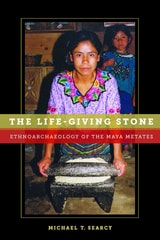
The Life-Giving Stone
Ethnoarchaeology of Maya MetatesMichael T. Searcy
University of Arizona Press, 2011
Although many archaeologists have regarded these artifacts simply as common everyday tools and therefore unremarkable, Searcy’s methodology reveals how, for the ancient Maya, the manufacture and use of grinding stones significantly impacted their physical and economic welfare. In tracing the life cycle of these tools from production to discard for the modern Maya, Searcy discovers rich customs and traditions that indicate how metates and manos have continued to sustain life—not just literally, in terms of food, but also in terms of culture. His research is based on two years of fieldwork among three Mayan groups, in which he documented behaviors associated with these tools during their procurement, production, acquisition, use, discard, and re-use.
Searcy’s investigation documents traditional practices that are rapidly being lost or dramatically modified. In few instances will it be possible in the future to observe metates and manos as central elements in household provisioning or follow their path from hand-manufacture to market distribution and to intergenerational transmission. In this careful inquiry into the cultural significance of a simple tool, Searcy’s ethnographic observations are guided both by an interest in how grinding stone traditions have persisted and how they are changing today, and by the goal of enhancing the archaeological interpretation of these stones, which were so fundamental to pre-Hispanic agriculturalists with corn-based cuisines.
The Livelihood of Kin
Making Ends Meet "The Kentucky Way"By Rhoda H. Halperin
University of Texas Press, 1990
Rural Appalachians in Kentucky call it "The Kentucky Way"—making a living by doing many kinds of paid and unpaid work and sharing their resources within extended family networks. In fact, these strategies are practiced by rural people in many parts of the world, but they have not been studied extensively in the United States. In The Livelihood of Kin, Rhoda Halperin undertakes a detailed exploration of this complex, family-oriented economy, showing how it promotes economic well-being and a sense of identity for the people who follow it.
Using actual life and work histories, Halperin shows how people make a living "in between" the cash economy of the city and the agricultural subsistence economy of the country. In regionally based, three-generation kin networks, family members work individually and jointly at many tasks: small-scale agricultural production, food processing and storage, odd jobs, selling used and new goods in marketplaces, and wage labor, much of which is temporary. People can make ends meet even in the face of job layoffs and declining crop subsidies. With these strategies people win a considerable degree of autonomy and control over their lives.
Halperin also examines how such multiple livelihood strategies define individual identity by emphasizing a person’s role in the family network over an occupation. She reveals, through psychiatric case histories, what damage can result when individuals leave the family network for wage employment in the cities, as increasing urbanization has forced many people to do.
While certainly of interest to scholars of Appalachian studies, this lively and readable study will also be important for economic anthropologists and urban and rural sociologists.
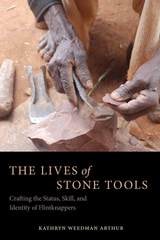
The Lives of Stone Tools
Crafting the Status, Skill, and Identity of FlintknappersKathryn Weedman Arthur
University of Arizona Press, 2018
Anthropologist Kathryn Weedman Arthur offers insights from her more than twenty years working with the Gamo. She deftly addresses historical and present-day experiences and practices, privileging the Gamo’s perspectives. Providing a rich, detailed look into the world of lithic technology, Arthur urges us to follow her into a world that recognizes Indigenous theories of material culture as valid alternatives to academic theories. In so doing, she subverts long-held Western perspectives concerning gender, skill, and lifeless status of inorganic matter.
The book offers the perspectives that, contrary to long-held Western views, stone tools are living beings with a life course, and lithic technology is a reproductive process that should ideally include both male and female participation. Only individuals of particular lineages knowledgeable in the lives of stones may work with stone technology. Knappers acquire skill and status through incremental guided instruction corresponding to their own phases of maturation. The tools’ lives parallel those of their knappers from birth (procurement), circumcision (knapping), maturation (use), seclusion (storage), and death (discardment).
Given current expectations that the Gamo’s lithic technology may disappear with the next generation, The Lives of Stone Tools is a work of vital importance and possibly one of the last contemporaneous books about a population that engages with the craft daily.

The Logic of Invention
Roy Wagner
HAU, 2018
Wagner explores what he calls “the reciprocity of perspectives” through a journey between Euro-American bodies of knowledge and his in-depth knowledge of Melanesian modes of thought. This logic grounds variants of the subject/object transformation, as Wagner works through examples such as the figure-ground reversal in Gestalt psychology, Lacan’s theory of the mirror-stage formation of the Ego, and even the self-recursive structure of the aphorism and the joke. Juxtaposing Wittgenstein’s and Leibniz’s philosophy with Melanesian social logic, Wagner explores the cosmological dimensions of the ways in which different societies develop models of self and the subject/object distinction. The result is a philosophical tour de force by one of anthropology’s greatest mavericks.
The Look of a Woman
Facial Feminization Surgery and the Aims of Trans- MedicineEric Plemons
Duke University Press, 2017
The Lost Itinerary of Frank Hamilton Cushing
Curtis M. Hinsley
University of Arizona Press, 2002
This second installment of a multivolume work on the Hemenway Expedition focuses on a report written by Cushing—at the request of the expedition's board of directors—to serve as vindication for the expedition, the worst personal and professional failure of his life. Reconstructed between 1891 and 1893 by Cushing from field notes, diaries, jottings, and memories, it provides an account of the origins and early months of the expedition. Hidden in several archives for a century, the Itinerary is assembled and presented here for the first time.
A vivid account of the first attempt at scientific excavatons in the Southwest, Cushing's Itinerary is both an exciting tale of travel through the region and an intellectual adventure story that sheds important light on the human past at Hohokam sites in Arizona's Salt River Valley, where Cushing sought to prove his hypothesis concerning the ancestral "Lost Ones" of the Zuñis. It initiates the construction of an ethnological approach to archaeology, which drew upon an unprecedented knowledge of a southwestern Pueblo tribe and use of that knowledge in the interpretation of archaeological sites.
The Lost Paradise
Andalusi Music in Urban North AfricaJonathan Glasser
University of Chicago Press, 2016
Through a historical and ethnographic account of the Andalusi music of Algiers, Tlemcen, and their Algerian and Moroccan borderlands since the end of the nineteenth century, Glasser shows how anxiety about Andalusi music’s disappearance has emerged from within the practice itself and come to be central to its ethos. The result is a sophisticated examination of musical survival and transformation that is also a meditation on temporality, labor, colonialism and nationalism, and the relationship of the living to the dead.
The Lowell Experiment
Public History in a Postindustrial CityCathy Stanton
University of Massachusetts Press, 2006
In the early nineteenth century, Lowell, Massachusetts, was widely studied and emulated as a model for capitalist industrial development. One of the first cities in the United States to experience the ravages of deindustrialization, it was also among the first places in the world to turn to its own industrial and ethnic history as a tool for reinventing itself in the emerging postindustrial economy. The Lowell Experiment explores how history and culture have been used to remake Lowell and how historians have played a crucial yet ambiguous role in that process.
The book focuses on Lowell National Historical Park, the flagship project of Lowell's new cultural economy. When it was created in 1978, the park broke new ground with its sweeping reinterpretations of labor, immigrant, and women's history. It served as a test site for the ideas of practitioners in the new field of public history—a field that links the work of professionally trained historians with many different kinds of projects in the public realm.
The Lowell Experiment takes an anthropological approach to public history in Lowell, showing it as a complex cultural performance shaped by local memory, the imperatives of economic redevelopment, and tourist rituals—all serving to locate the park's audiences and workers more securely within a changing and uncertain new economy characterized by growing inequalities and new exclusions.
The paradoxical dual role of Lowell's public historians as both interpreters of and contributors to that new economy raises important questions about the challenges and limitations facing academically trained scholars in contemporary American culture. As a long-standing and well-known example of “culture-led re-development,” Lowell offers an outstanding site for exploring questions of concern to those in the fields of public and urban history, urban planning, and tourism studies.
The Main Stalk
A Synthesis of Navajo PhilosophyJohn R. Farella
University of Arizona Press, 1984
"This is a stimulating book. Essentially, it criticizes previous discussions of Navajo religion and philosophy for greatly underestimating their complexity and sophistication. . . . What the author discovers in Navajo thought is that the key concepts are interrelated in a grand, moral, ethical, philosophic, and cosmic unity." —American Anthropologist
"Discredits dualists, both non-Indian and Indian, who see simplistic oppositions of Good and Evil in Navajo culture and philosophy. The concept of walking in beauty, as related to the proper growth of the corn plant, unifies the book, and Farella does some impressive cross-cultural linguistic analysis to derive practical and ceremonial applications of these central Navajo metaphors. . . . This is one of the better books on Indian religion." —Choice
The Make-Believe Space
Affective Geography in a Postwar PolityYael Navaro-Yashin
Duke University Press, 2012
The Making of Saints
Contesting Sacred GroundEdited by James F. Hopgood
University of Alabama Press, 2005
Celebrities and popular icons are increasingly ubiquitous figures of a 21st century postmodern world. Some, in death, blur age-old distinctions of sanctification and trespass on sacred ground long held exclusively by religious saints. An emerging continuum is transforming that sacred arena and raising a number of important issues, including the nature of the relationships between the worshipped and the worshipful and the types of institutions that sustain them.
The Making of Saints: Contesting Sacred Ground investigates a number of religious leaders, healers, folk saints, and popular icons in seeking to identify their commonalities and discover how they speak to the same inner yearnings of human beings for gods and heroes. Issues of social relations, love, emotion, charisma, power, and sanctification are addressed by the contributors. Analyses of hagiographies, biographies, media, control of space, pilgrimage, and acts of devotion provide the bases for the authors' explorations of these issues. Among the sanctified included for analysis are the folk saints El Nino Fidencio and Teresa Urrea; the charismatic rabbis Baba Sali, Baba Baruch, and Ifargan; King Chulalongkorn of Thailand; two political figures, Evita Peron and Che Guevara; and three celebrities: James Dean, Elvis Presley, and Japanese rock star HIDE.
The contributors challenge notions of what is sacred and who may be sanctified, and argue that a broadening of views is needed to accommodate and appreciate emerging contemporary realities.
The Making of a Human Bomb
An Ethnography of Palestinian ResistanceNasser Abufarha
Duke University Press, 2009
Abufarha draws on the life histories of martyrs, interviews he conducted with their families and members of the groups that sponsored their operations, and examinations of Palestinian literature, art, performance, news stories, and political commentaries. He also assesses data—about the bombers, targets, and fatalities caused—from more than two hundred martyrdom operations carried out by Palestinian groups between 2001 and 2004. Some involved the use of explosive belts or the detonation of cars; others entailed armed attacks against Israeli targets (military and civilian) undertaken with the intent of fighting until death. In addition, he scrutinized suicide attacks executed by Hamas and Islamic Jihad between 1994 and 2000. In his analysis of Palestinian political violence, Abufarha takes into account Palestinians’ understanding of the history of the conflict with Israel, the effects of containment on Palestinians’ everyday lives, the disillusionment created by the Oslo peace process, and reactions to specific forms of Israeli state violence. The Making of a Human Bomb illuminates the Palestinians’ perspective on the conflict with Israel and provides a model for ethnographers seeking to make sense of political violence.
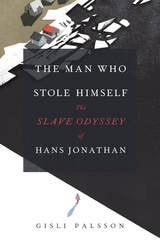
The Man Who Stole Himself
The Slave Odyssey of Hans JonathanGisli Palsson
University of Chicago Press, 2016
The island nation of Iceland is known for many things—majestic landscapes, volcanic eruptions, distinctive seafood—but racial diversity is not one of them. So the little-known story of Hans Jonathan, a free Black man who lived and raised a family in early nineteenth-century Iceland, is improbable and compelling, the stuff of novels.
In The Man Who Stole Himself, Gisli Palsson lays out the story of Hans Jonathan (also known as Hans Jónatan) in stunning detail. Born into slavery in St. Croix in 1784, Hans was taken as a slave to Denmark, where he eventually enlisted in the navy and fought on behalf of the country in the 1801 Battle of Copenhagen. After the war, he declared himself a free man, believing that he was due freedom not only because of his patriotic service, but because while slavery remained legal in the colonies, it was outlawed in Denmark itself. He thus became the subject of one of the most notorious slavery cases in European history, which he lost. Then Hans ran away—never to be heard from in Denmark again, his fate unknown for more than two hundred years. It’s now known that Hans fled to Iceland, where he became a merchant and peasant farmer, married, and raised two children. Today, he has become something of an Icelandic icon, claimed as a proud and daring ancestor both there and among his descendants in America.
The Man Who Stole Himself brilliantly intertwines Hans Jonathan’s adventurous travels with a portrait of the Danish slave trade, legal arguments over slavery, and the state of nineteenth-century race relations in the Northern Atlantic world. Throughout the book, Palsson traces themes of imperial dreams, colonialism, human rights, and globalization, which all come together in the life of a single, remarkable man. Hans literally led a life like no other. His is the story of a man who had the temerity—the courage—to steal himself.
The Man of Many Devices, Who Wandered Full Many Ways
Festschrift in Honor of János M. BakBalázs Nagy
Central European University Press, 1999
The Mana of Mass Society
William Mazzarella
University of Chicago Press, 2017
We often invoke the “magic” of mass media to describe seductive advertising or charismatic politicians. In The Mana of Mass Society, William Mazzarella asks what happens to social theory if we take that idea seriously. How would it change our understanding of publicity, propaganda, love, and power?
Mazzarella reconsiders the concept of “mana,” which served in early anthropology as a troubled bridge between “primitive” ritual and the fascination of mass media. Thinking about mana, Mazzarella shows, means rethinking some of our most fundamental questions: What powers authority? What in us responds to it? Is the mana that animates an Aboriginal ritual the same as the mana that energizes a revolutionary crowd, a consumer public, or an art encounter? At the intersection of anthropology and critical theory, The Mana of Mass Society brings recent conversations around affect, sovereignty, and emergence into creative contact with classic debates on religion, charisma, ideology, and aesthetics.
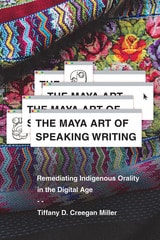
The Maya Art of Speaking Writing
Remediating Indigenous Orality in the Digital AgeTiffany D. Creegan Miller
University of Arizona Press, 2022
Based on nearly a decade of fieldwork in the Guatemalan highlands, Tiffany D. Creegan Miller discusses images that are sonic, pictorial, gestural, and alphabetic. She reveals various forms of creativity and agency that are woven through a rich media landscape in Indigenous Guatemala, as well as Maya diasporas in Mexico and the United States. Miller discusses how technologies of inscription and their mediations are shaped by human editors, translators, communities, and audiences, as well as by voices from the natural world.
These texts push back not just on linear and compartmentalized Western notions of media but also on the idea of the singular author, creator, scholar, or artist removed from their environment. The persistence of orality and the interweaving of media forms combine to offer a challenge to audiences to participate in decolonial actions through language preservation.
The Maya Art of Speaking Writing calls for centering Indigenous epistemologies by doing research in and through Indigenous languages as we engage in debates surrounding Indigenous literatures, anthropology, decoloniality, media studies, orality, and the digital humanities.
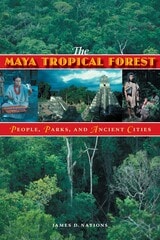
The Maya Tropical Forest
People, Parks, and Ancient CitiesBy James D. Nations
University of Texas Press, 2006
The Maya Tropical Forest, which occupies the lowlands of southern Mexico, Guatemala, and Belize, is the closest rainforest to the United States and one of the most popular tourist destinations in the Western Hemisphere. It has been home to the Maya peoples for nearly four millennia, starting around 1800 BC. Ancient cities in the rainforest such as Palenque, Yaxchilan, Tikal, and Caracol draw thousands of tourists and scholars seeking to learn more about the prehistoric Maya. Their contemporary descendants, the modern Maya, utilize the forest's natural resources in village life and international trade, while striving to protect their homeland from deforestation and environmental degradation.
Writing for both visitors and conservationists, James Nations tells the fascinating story of how ancient and modern Maya peoples have used and guarded the rich natural resources of the Maya Tropical Forest. He opens with a natural history that profiles the forest's significant animals and plants. Nations then describes the Maya peoples, biological preserves, and major archaeological sites in Mexico, Guatemala, and Belize. Drawing on more than twenty-five years of conservation work in the Maya Tropical Forest, Nations tells first-hand stories of the creation of national parks and other protected areas to safeguard the region's natural resources and archaeological heritage. He concludes with an expert assessment of the forest's future in which he calls for expanded archaeological tourism to create an ecologically sustainable economic base for the region.
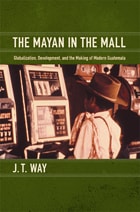
The Mayan in the Mall
Globalization, Development, and the Making of Modern GuatemalaJ. T. Way
Duke University Press, 2012
Using a wide array of historical and contemporary sources, Way explores the multiple intersections of development and individual life, focusing on the construction of social space through successive waves of land reform, urban planning, and economic policy. His explorations move from Guatemala City's poorest neighborhoods and informal economies (run predominantly by women) to a countryside still recovering from civil war and anti-Mayan genocide, and they encompass such artifacts of development as the modernist Pan-American Highway and the postmodern Grand Tikal Futura, a Mayan-themed shopping mall ringed by gated communities and shantytowns. Capitalist development, Way concludes, has dramatically reshaped the country's physical and social landscapes—engendering poverty, ethnic regionalism, and genocidal violence—and positioned Guatemala as a harbinger of globalization's future.
The Meaning of Music
Leo Samama
Amsterdam University Press, 2016
Musician Leo Samama discusses these and many other questions while shaping a vibrant picture of music's importance in human lives both past and present. What is remarkable is that music is recognised almost universally as a type of language that we can use to wordlessly communicate. We can hardly shut ourselves off from music, and considering its primal role in our lives, it comes as no surprise that few would ever want to. Able to transverse borders and appeal to the most disparate of individuals, music is both a tool and a gift, and as Samama shows, a unifying thread running throughout the cultural history of mankind.
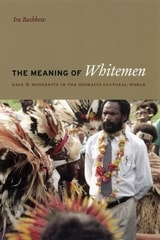
The Meaning of Whitemen
Race and Modernity in the Orokaiva Cultural WorldIra Bashkow
University of Chicago Press, 2006
While Papua New Guinea’s resident white population has been severely reduced due to postcolonial white flight, the whiteman remains a significant racial and cultural other here—not only as an archetype of power and wealth in the modern arena, but also as a foil for people’s evaluations of themselves within vernacular frames of meaning. As Ira Bashkow explains, ideas of self versus other need not always be anti-humanistic or deprecatory, but can be a creative and potentially constructive part of all cultures.
A brilliant analysis of whiteness and race in a non-Western society, The Meaning of Whitemen turns traditional ethnography to the purpose of understanding how others see us.
The Measurement of Modernism
A Study of Values in Brazil and MexicoBy Joseph A. Kahl
University of Texas Press, 1968
One of the most interesting questions that can be raised about the twentieth century world concerns the degree to which industrialization created a common culture for all peoples. Reported here are the results of an empirical investigation designed to produce instruments to measure those personal values that have been central variables in the theory of modernization of societies.
The purpose of Joseph Kahl’s research is primarily methodological: to advance the description and measurement of those value orientations used by men to organize their occupational careers. It seeks to delineate and measure a set of values that represents a “modern” view of work and life.
The working laboratory was Brazil and Mexico, two countries undergoing rapid industrialization. More than six hundred men in Brazil and more than seven hundred in Mexico responded to questionnaires. In addition, over twenty-five men in each country were asked to sit beside a tape recorder and talk freely of their worldviews. The respondents were divided between inhabitants of the cities of Rio de Janeiro and Mexico City and those who lived in provincial towns of fewer than ten thousand inhabitants. The samples included manual and nonmanual employees.
The results showed that the main variable predicting whether or not a man would tend toward modernism was his social-class position. Middle-class men were much more modern in outlook than working-class men. Residence in a metropolis rather than in a small town also increased modernism, though to a lesser extent. Differences between Brazil and Mexico (and, indeed, the United States) were found to be surprisingly small, of considerably less weight than position in the social structure in predicting value orientations.
The author addresses himself primarily to sociologists and their students who are themselves studying aspects of socio-economic development. His findings, however, cannot fail to be of interest and benefit to social scientists of various disciplines and to all who are concerned with the process of development—planners at the national and local levels, demographers, and businesspeople.
The Mediterranean Incarnate
Region Formation between Sicily and Tunisia since World War IINaor Ben-Yehoyada
University of Chicago Press, 2017
The book centers on the town of Mazara del Vallo, located on the southwestern tip of Sicily some ninety nautical miles northeast of the African shore. Ben-Yehoyada intertwines the town’s recent turbulent history—which has been fraught with conflicts over fishing rights, development projects, and how the Mediterranean should figure in Italian politics at large—with deep accounts of life aboard the Naumacho, linking ethnography with historical anthropology and political-economic analysis. Through this sophisticated approach, he crafts a new viewpoint on the historical processes of transnational region formation, one offered by these moving ships as they weave together new social and political constellations.
The Mellah Society
Jewish Community Life in Sherifian MoroccoShlomo Deshen
University of Chicago Press, 1989
Shlomo Deshen, author of several books on North African Jewish immigrants to Israel, here turns his attention to the past. Taking as his focus the tension between individualism and communal authority—symbolized by the walls of the mellahs, the Jewish quarters—he applies to traditional Moroccan Jewish society questions of concern to sociologists everywhere regarding political organization, economic activity, religion, and the family.
From such documents as private correspondence, archival photographs, and the legal commentaries of rabbis who served in the Jewish community courts, Deshen draws out details of daily life: disputes between spouses, businessmen, craftsmen, and inheritors; the ramifications of marriage contracts; and claims involving community taxes and extortions by Muslim potentates. Linking this material with recent historical and anthropological studies of the Maghreb, Deshen reconstructs a community about which little has been known and places it squarely within the context of traditional Moroccan society.
Individual chapters deal with relations between Muslims and Jews, the material conditions of Jewish life, and the nature of politics within the mellah. Deshen devotes particular attention to the nature of the Moroccan rabbinate, the sociology of the mellah synagogue, lay community leadership, and the historic role of the Sephardic heritage in Morocco after the expulsion from medieval Spain. His close study of the nature of the extended family in traditional Morocco corrects popular misconceptions.
Originally published in Israel in 1983, now translated and expanded by its author, The Mellah Society draws upon Middle Eastern and Jewish history, textual Judaic studies, and social anthropology to make an original contribution that will interest scholars of the Middle East and North Africa as well as anyone concerned with Jewish history and ethnicity.
The Memory of Trade
Modernity's Entanglements on an Eastern Indonesian IslandPatricia Spyer
Duke University Press, 2000
Drawing on more than two years of archival and ethnographic research, Spyer examines the dynamics of contact with the Dutch and Europeans, Suharto’s postcolonial regime, and with the competing religions of Islam, Protestantism, and Catholicism in the context of the recent conversion of pagan Aruese. While arguing that Aru identity and community are defined largely in terms of absence, longing, memory, and desire, she also incorporates present-day realities—such as the ecological destruction wrought by the Aru trade in such luxury goods as pearls and shark fins—without overlooking the mystique and ritual surrounding these activities. Imprinted on the one hand by the archipelago’s long engagement with extended networks of commerce and communication and, on the other, by modernity’s characteristic repressions and displacements, Aruese make and manage their lives somewhat precariously within what they often seem to construe as a dangerously expanding—if still enticing—world. By documenting not only the particular expectations and strategies Aruese have developed in dealing with this larger world but also the price they pay for participation therein, The Memory of Trade speaks to problems commonly faced elsewhere in the frontier spaces of modern nation-states.
Balancing particularly astute analysis with classic ethnography, The Memory of Trade will appeal not only to anthropologists and historians but also to students and specialists of Southeast Asia, modernity, and globalization.
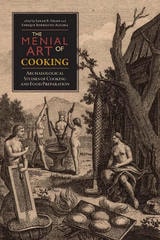
The Menial Art of Cooking
Archaeological Studies of Cooking and Food PreparationSarah R. Graff
University Press of Colorado, 2012
This book examines techniques and technologies of food preparation, the spaces where food was cooked, the relationship between cooking and changes in suprahousehold economies, the religious and symbolic aspects of cooking, the relationship between cooking and social identity, and how examining foodways provides insight into social relations of production, distribution, and consumption. Contributors use a wide variety of evidence-including archaeological data; archival research; analysis of ceramics, fauna, botany, glass artifacts, stone tools, murals, and painted ceramics; ethnographic analogy; and the distribution of artifacts across space-to identify signs of cooking and food processing left by ancient cooks.
The Menial Art of Cooking is the first archaeological volume focused on cooking and food preparation in prehistoric and historic settings around the world and will interest archaeologists, social anthropologists, sociologists, and other scholars studying cooking and food preparation or subsistence.
The Mexican Aristocracy
An Expressive Ethnography, 1910–2000By Hugo G. Nutini
University of Texas Press, 2004
The Mexican aristocracy today is simultaneously an anachronism and a testimony to the persistence of social institutions. Shut out from political power by the democratization movements of the twentieth century, stripped of the basis of its great wealth by land reforms in the 1930s, the aristocracy nonetheless maintains a strong sense of group identity through the deeply held belief that their ancestors were the architects and rulers of Mexico for nearly four hundred years.
This expressive ethnography describes the transformation of the Mexican aristocracy from the onset of the Mexican Revolution of 1910, when the aristocracy was unquestionably Mexico's highest-ranking social class, until the end of the twentieth century, when it had almost ceased to function as a superordinate social group. Drawing on extensive interviews with group members, Nutini maps out the expressive aspects of aristocratic culture in such areas as perceptions of class and race, city and country living, education and professional occupations, political participation, religion, kinship, marriage and divorce, and social ranking. His findings explain why social elites persist even when they have lost their status as ruling and political classes and also illuminate the relationship between the aristocracy and Mexico's new political and economic plutocracy.
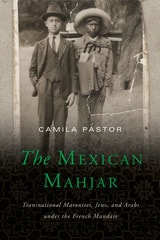
The Mexican Mahjar
Transnational Maronites, Jews, and Arabs under the French MandateBy Camila Pastor
University of Texas Press, 2017
Winner, Khayrallah Migration Studies Prize, Moise Khayrallah Center for Lebanese Diaspora Studies, 2018
Migration from the Middle East brought hundreds of thousands of people to the Americas in the late nineteenth and early twentieth centuries. By the time the Ottoman political system collapsed in 1918, over a third of the population of the Mashriq, i.e. the Levant, had made the transatlantic journey. This intense mobility was interrupted by World War I but resumed in the 1920s and continued through the late 1940s under the French Mandate. Many migrants returned to their homelands, but the rest concentrated in Brazil, Argentina, the United States, Haiti, and Mexico, building transnational lives.
The Mexican Mahjar provides the first global history of Middle Eastern migrations to Mexico. Making unprecedented use of French colonial archives and historical ethnography, Camila Pastor examines how French colonial control over Syria and Lebanon affected the migrants. Tracing issues of class, race, and gender through the decades of increased immigration to Mexico and looking at the narratives created by the Mahjaris (migrants) themselves in both their old and new homes, Pastor sheds new light on the creation of transnational networks at the intersection of Arab, French, and Mexican colonial modernisms. Revealing how migrants experienced mobility as conquest, diaspora, exile, or pilgrimage, The Mexican Mahjar tracks global history on an intimate scale.
The Mexican Urban Household
Organizing for Self-DefenseBy Henry A. Selby, Arthur D. Murphy, and Stephen A. Lorenzen
University of Texas Press, 1990
The sufferings of “ordinary” people under harsh economic conditions can eventually lead to the fall of governments. Given this fact, it becomes important to know how “ordinary” people live—what privations they suffer and what strategies they use to survive in times of economic crisis. The Mexican Urban Household provides this information for Mexico near the end of the twentieth century.
Mexico is now a predominantly urban nation, and this study is the definitive work on the strategies of self-defense of its urban households. It is based on surveys of nearly 10,000 households, conducted during twenty years of field work in five very different cities, with the help of a staff of more than twenty Mexican social scientists, engineers, architects, and social workers.
Far from being a compilation of undigested statistics, however, The Mexican Urban Household uses its rich data to vividly reveal how Mexican families use their every resource to defend themselves against a political and economic system that overwhelms and exploits them. It describes how families band together, sometimes with three generations in one small house, to minimize expenses and pool resources. It explores the limited range of available jobs, from secure but scarce bureaucratic positions to more common and less reliable jobs in blue-collar industries and the informal economy. And, most important, it traces the high cost to families, particularly to women, of the endless struggle to make ends meet.
These important findings outline the dimensions of the economic crisis for ordinary Mexicans. It will be crucial reading not only for everyone interested in the future of Mexico but also for students of development throughout the Third World.