Results by title
1566 books match the query 'Christianity' and 410 start with t
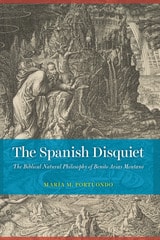
The Spanish Disquiet
The Biblical Natural Philosophy of Benito Arias MontanoMaría M. Portuondo
University of Chicago Press, 2019
Foremost among them was Benito Arias Montano—Spain’s most prominent biblical scholar and exegete of the sixteenth century. He was also a widely read member of the European intellectual community, and his motivation to reform natural philosophy shows that the Spanish Disquiet was a local manifestation of greater concerns about Aristotelian natural philosophy that were overtaking Europe on the eve of the Scientific Revolution. His approach to the study of nature framed the natural world as unfolding from a series of events described in the Book of Genesis, ultimately resulting in a new metaphysics, cosmology, physics, and even a natural history of the world. By bringing Arias Montano’s intellectual and personal biography into conversation with broader themes that inform histories of science of the era, The Spanish Disquiet ensures an appreciation of the variety and richness of Arias Montano’s thought and his influence on early modern science.
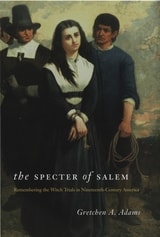
The Specter of Salem
Remembering the Witch Trials in Nineteenth-Century AmericaGretchen A. Adams
University of Chicago Press, 2008
In The Specter of Salem, Gretchen A. Adams reveals the many ways that the Salem witch trials loomed over the American collective memory from the Revolution to the Civil War and beyond. Schoolbooks in the 1790s, for example, evoked the episode to demonstrate the new nation’s progress from a disorderly and brutal past to a rational present, while critics of new religious movements in the 1830s cast them as a return to Salem-era fanaticism, and during the Civil War, southerners evoked witch burning to criticize Union tactics. Shedding new light on the many, varied American invocations of Salem, Adams ultimately illuminates the function of collective memories in the life of a nation.
“Imaginative and thoughtful. . . . Thought-provoking, informative, and convincingly presented, The Specter of Salem is an often spellbinding mix of politics, cultural history, and public historiography.”— New England Quarterly
“This well-researched book, forgoing the usual heft of scholarly studies, is not another interpretation of the Salem trials, but an important major work within the scholarly literature on the witch-hunt, linking the hysteria of the period to the evolving history of the American nation. A required acquisition for academic libraries.”—Choice, Outstanding Academic Title 2009
The Spectral Jew
Conversion and Embodiment in Medieval EuropeSteven F. Kruger
University of Minnesota Press, 2006
Looking closely at how medieval Jewish and Christian identities are distinguished from each other, yet intimately intertwined, Kruger demonstrates how Jews were often corporealized in ways that posited them as inferior to Christians—archaic and incapable of change—even as the two mutually shaped each other. But such attempts to differentiate Jews and Christians were inevitably haunted by the knowledge that Christianity had emerged out of Judaism and was, in its own self-understanding, a community of converts.
Examining the points of contact between Christian and Jewish communities, Kruger discloses the profound paradox of the Jew as different in all ways, yet capable of converting to fully Christian status. He draws from central medieval authors and texts such as Peter Damian, Guibert of Nogent, the Barcelona Disputation, and the Hebrew chronicles of the First Crusade, as well as lesser known writings such as the disputations of Ceuta, Majorca, and Tortosa and the immensely popular Dialogues of Peter Alfonsi.
By putting the conversion narrative at the center of this analysis, Kruger exposes it as a disruption of categories rather than a smooth passage and reveals the prominent role Judaism played in the medieval Christian imagination.
Steven F. Kruger is professor of English and medieval studies at Queens College and the Graduate Center, CUNY. He is author of several books and editor with Glenn Burger of Queering the Middle Ages (Minnesota, 2001).
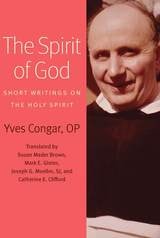
The Spirit of God
Short Writings on the Holy SpiritYves Congar
Catholic University of America Press, 2017
The Spirit of God brings together for the first time eight of Yves Congar’s previously untranslated writings on the Holy Spirit composed after Vatican II (from 1969 to 1985). Two of these selections offer general overviews of Congar’s pneumatology, a pneumatology based upon Scripture and the Tradition of the Church, but articulated in conversation with philosophers, ecumenical partners and non-believers. Other articles make clear the historical context of Vatican II’s pneumatology and the Holy Spirit’s crucial influence upon the unfolding of history and upon the moral life, the efficacy of the sacraments and, especially, upon ecclesial life.
The writings in The Spirit of God have been translated and edited by a team of scholars familiar with the work of the French Dominican theologian. An introduction situates each of the writings historically and highlights its theological significance. A bibliography lists Congar’s publications on the Holy Spirit, the major articles and books written about his pneumatology, and the major scholarly resources to which Congar made reference in the notes that accompanied these writings. An index of biblical references and of personal names is also included.
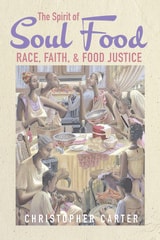
The Spirit of Soul Food
Race, Faith, and Food JusticeChristopher Carter
University of Illinois Press, 2021
Soul food has played a critical role in preserving Black history, community, and culinary genius. It is also a response to--and marker of--centuries of food injustice. Given the harm that our food production system inflicts upon Black people, what should soul food look like today?
Christopher Carter's answer to that question merges a history of Black American foodways with a Christian ethical response to food injustice. Carter reveals how racism and colonialism have long steered the development of US food policy. The very food we grow, distribute, and eat disproportionately harms Black people specifically and people of color among the global poor in general. Carter reflects on how people of color can eat in a way that reflects their cultural identities while remaining true to the principles of compassion, love, justice, and solidarity with the marginalized.
Both a timely mediation and a call to action, The Spirit of Soul Food places today's Black foodways at the crossroads of food justice and Christian practice.
The Spiritual Formation of Seminarians
Learning to Live in Intimate and Unceasing Union with GodJames Keating
Catholic University of America Press, 2025
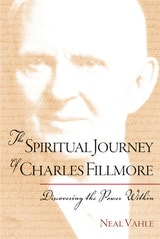
The Spiritual Journey of Charles Fillmore
Discovering the Power WithinNeal Vahle
Templeton Press, 2008
The Spiritual Journey of Charles Fillmore sheds new light on the life and work of an essential spiritual pioneer. In this landmark new biography, author Neal Vahle uses thorough new research, interviews with those who knew Fillmore, and his intimate familiarity with Fillmore's writings to introduce readers to the intriguing cofounder of the Unity movement. Beyond standard biography, Vahle's comprehensive treatment also extensively details Fillmore's era's philosophical and spiritual landscape. It gives readers an excellent overview of the metaphysical movement's evolution through time.
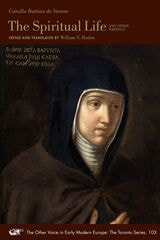
The Spiritual Life and Other Writings
Camilla Battista Da Varano
Iter Press, 2023
Camilla Battista da Varano (1458–1524) was a Franciscan nun and the author of profound spiritual writings in both prose and verse. Raised in the princely household of Camerino in north-central Italy, she put her thorough humanist education to use explaining her own spiritual experience and delivering advice to others. Varano composed ecstatic revelations, prayers, poems, hagiography, spiritual direction, and commentary on convent legislation. She drew on a wide variety of sources, including scripture and Church Fathers, plus popular literature and proverbs. Varano was an erudite woman of considerable complexity, defying many of the commonplace images we associate with religious women of the late fifteenth and early sixteenth centuries.
The Spiritualiity of Martyrdom
Servais Pinckaers
Catholic University of America Press, 2016
The Splendor of the Church in Mary
Henri de Lubac, Vatican II, and Marian RessourcementTheresa Marie Chau Nguyen
Catholic University of America Press, 2023
The Star of Bethlehem
The Legacy of the MagiMolnar, Michael R.
Rutgers University Press, 2013
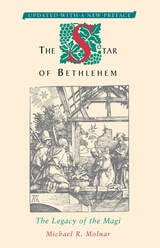
Could the $50 purchase of an ancient coin by a Rutgers astronomer have unlocked the mystery of the Christmas Star? For years, scientists have looked, with little success, to astronomical records for an explanation of the magical star that guided the Magi to Christ’s manger. Intrigued by the image he found on the latest addition to his coin collection, Michael Molnar thought there might be more to learn by looking, instead, at the teachings of ancient astrologers.
Molnar argues in his book that the Star of Bethlehem was not a star at all, but rather a regal portent centering around the planet Jupiter that was eclipsed by the moon. He bases this theory on the actual beliefs of astrologers, such as the Magi, who lived around the time of Christ. Molnar found some intriguing clues to the mystery while researching the meaning of astrological symbols he found an ancient coin, which bore the image of Aries looking back at a star. He found that Aries was a symbol of Judea at the time, and that ancient astrologers believed that a new king would be born when the moon passed in front of Jupiter. Molnar wondered, could the coin have been issued as a response to the Great Messianic Portent, the Star of Bethlehem?
To match the story of the appearance of the Christmas star, Molnar also knew the event had to happen when Jupiter was “in the east.” Using these criteria and a computer program, he was able to chart an eclipse of Jupiter in Aries on April 17, 6 B.C., a day when Jupiter was precisely “in the east,” which confirmed his theory. Moreover, he found that a Roman astrologer described the conditions of that day as fitting the birth of a “divine and immortal” person.
According to Harvard University Professor Owen Gingerich, “this is the most original and important contribution of the entire 20th century” about the Magi’s star. Using clues from astronomy, astrology, and history, Molnar has created a provocative, fascinating theory on the Christmas Star. He weaves together an intriguing scientific detective story which resolves one of the world’s greatest mysteries: The Star of Bethlehem at the birth of Christ.
The Star of Bethlehem
The Legacy of the MagiMolnar, Michael R.
Rutgers University Press, 1999
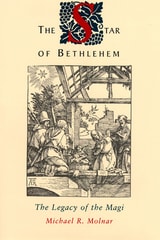
Could the $50 purchase of an ancient coin by a Rutgers astronomer have unlocked the mystery of the Christmas Star? For years, scientists have looked, with little success, to astronomical records for an explanation of the magical star that guided the Magi to Christ’s manger. Intrigued by the image he found on the latest addition to his coin collection, Michael Molnar thought there might be more to learn by looking, instead, at the teachings of ancient astrologers.
Molnar argues in his book that the Star of Bethlehem was not a star at all, but rather a regal portent centering around the planet Jupiter that was eclipsed by the moon. He bases this theory on the actual beliefs of astrologers, such as the Magi, who lived around the time of Christ. Molnar found some intriguing clues to the mystery while researching the meaning of astrological symbols he found an ancient coin, which bore the image of Aries looking back at a star. He found that Aries was a symbol of Judea at the time, and that ancient astrologers believed that a new king would be born when the moon passed in front of Jupiter. Molnar wondered, could the coin have been issued as a response to the Great Messianic Portent, the Star of Bethlehem?
To match the story of the appearance of the Christmas star, Molnar also knew the event had to happen when Jupiter was “in the east.” Using these criteria and a computer program, he was able to chart an eclipse of Jupiter in Aries on April 17, 6 B.C., a day when Jupiter was precisely “in the east,” which confirmed his theory. Moreover, he found that a Roman astrologer described the conditions of that day as fitting the birth of a “divine and immortal” person.
According to Harvard University Professor Owen Gingerich, “this is the most original and important contribution of the entire 20th century” about the Magi’s star. Using clues from astronomy, astrology, and history, Molnar has created a provocative, fascinating theory on the Christmas Star. He weaves together an intriguing scientific detective story which resolves one of the world’s greatest mysteries: The Star of Bethlehem at the birth of Christ.
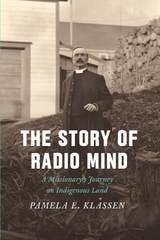
The Story of Radio Mind
A Missionary's Journey on Indigenous LandPamela E. Klassen
University of Chicago Press, 2018
Following Du Vernet’s journey westward from Toronto to Ojibwe territory and across the young nation of Canada, Pamela Klassen examines how contests over the mediation of stories—via photography, maps, printing presses, and radio—lucidly reveal the spiritual work of colonial settlement. A city builder who bargained away Indigenous land to make way for the railroad, Du Vernet knew that he lived on the territory of Ts’msyen, Nisga’a, and Haida nations who had never ceded their land to the onrush of Canadian settlers. He condemned the devastating effects on Indigenous families of the residential schools run by his church while still serving that church. Testifying to the power of radio mind with evidence from the apostle Paul and the philosopher Henri Bergson, Du Vernet found a way to explain the world that he, his church and his country made.
Expanding approaches to religion and media studies to ask how sovereignty is made through stories, Klassen shows how the spiritual invention of colonial nations takes place at the same time that Indigenous peoples—including Indigenous Christians—resist colonial dispossession through stories and spirits of their own.
The Story upon a Hill
The Puritan Myth in Contemporary American FictionChristopher Leise
University of Alabama Press, 2017
The Story upon a Hill: The Puritan Myth in Contemporary American Fiction analyzes the work of several of the most important contemporary writers in the United States as reinterpreting commonplace narratives of the country’s origins with a keen eye on the effects of inclusion and exclusion that Puritan myths promote. In 1989, Ronald Reagan recalled the words of Massachusetts Bay Colony governor John Winthrop, who imagined the colony as a “city upon a hill” for future nations to emulate. In Reagan’s speech, Winthrop’s signature rhetoric became an emblem of American idealism, and for many Americans, the Puritans’ New England was the place where the United States forged its original identity.
But what if Winthrop never gave that speech? What if he did not even write it? Historians cannot definitively answer these questions. In fact, no group that we refer to as American Puritans thought of themselves as Puritans. Rather, they were a group of dissident Christians often better defined by their disagreements than their shared beliefs.
Literary scholars interested in Anglo-American literary production from the seventeenth century through the present, historians, and readers interested in how ideas about Christianity circulate in popular culture will find fascinating the ways in which William Gaddis, Kurt Vonnegut, Thomas Pynchon, and Marilynne Robinson repurpose so-called Puritan forms of expression to forge a new narrative of New England’s Congregationalist legacy in American letters. Works by Colson Whitehead, Paul Auster, Toni Morrison, and others are also considered. The Story upon a Hill raises a provocative question: if the Puritans never existed as we understand them, what might American history look like in that context?
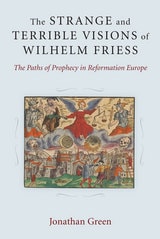
The Strange and Terrible Visions of Wilhelm Friess
The Paths of Prophecy in Reformation EuropeJonathan Green
University of Michigan Press, 2014
Dutch scholars have recognized that Frans Fraet was executed for printing a prognostication by Willem de Vriese, but this prognostication was thought to be lost. A few scholars of sixteenth-century German apocalypticism have briefly noted the prophecies of Wilhelm Friess but have not studied them in depth. The Strange and Terrible Visions of Wilhelm Friess is the first to connect de Vriese and Friess, as well as recognize the prophecy of Wilhelm Friess as an adaptation of a French version of theVademecum of Johannes de Rupescissa, making these pamphlets by far the most widespread source for Rupescissa’s apocalyptic thought in Reformation Germany. The book explains the connection between the first and second prophecies of Wilhelm Friess and discovers the Calvinist context of the second prophecy and its connection to Johann Fischart, one of the most important German writers of the time.
Jonathan Green provides a study of how textual history interacts with print history in early modern pamphlets and proposes a model of how early modern prophecies were created and transmitted. The Strange and Terrible Visions of Wilhelm Friess makes important contributions to the study of early modern German and Dutch literature, apocalypticism and confessionalization during the Reformation, and the history of printing in the sixteenth century.
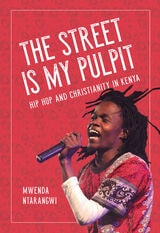
The Street Is My Pulpit
Hip Hop and Christianity in KenyaMwenda Ntarangwi
University of Illinois Press, 2016
Mwenda Ntarangwi explores the Kenyan hip hop scene through the lens of Juliani's life and career. A born-again Christian, Juliani produces work highlighting the tensions between hip hop's forceful self-expression and a pious approach to public life, even while contesting the basic presumptions of both. In The Street Is My Pulpit, Ntarangwi forges an uncommon collaboration with his subject that offers insights into Juliani's art and goals even as Ntarangwi explores his own religious experience and subjective identity as an ethnographer. What emerges is an original contribution to the scholarship on hip hop's global impact and a passionate study of the music's role in shaping new ways of being Christian in Africa.
The Struggle over Class
Socioeconomic Analysis of Ancient Christian TextsG. Anthony Keddie
SBL Press, 2021
An interdisciplinary discussion engaging classics, archaeology, religious studies, and the social sciences
The Struggle over Class brings together scholars from the fields of New Testament and early Christianity to examine Christian texts in light of the category of class. Historically rigorous and theoretically sophisticated, this collection presents a range of approaches to, and applications of, class in the study of the epistles, the gospels, Acts, apocalyptic texts, and patristic literature. Contributors Alicia J. Batten, Alan H. Cadwallader, Cavan W. Concannon, Zeba Crook, James Crossley, Lorenzo DiTommaso, Philip F. Esler, Michael Flexsenhar III, Steven J. Friesen, Caroline Johnson Hodge, G. Anthony Keddie, Jaclyn Maxwell, Christina Petterson, Jennifer Quigley, Elisabeth Schüssler Fiorenza, Daniëlle Slootjes, and Emma Wasserman challenge both scholars and students to articulate their own positions in the ongoing scholarly struggle over class as an analytical category.
The Suffering Servant in Aquinas
Isaiah 53 and Thomas's Theology of Christ's PassionDaniel R. Waldow
Catholic University of America Press, 2024
The Templeton Plan
21 Steps to Personal Success and Real HappinessJohn Marks Templeton
Templeton Press, 2011
The Territories of Science and Religion
Peter Harrison
University of Chicago Press, 2015
In The Territories of Science and Religion, Harrison dismantles what we think we know about the two categories, then puts it all back together again in a provocative, productive new way. By tracing the history of these concepts for the first time in parallel, he illuminates alternative boundaries and little-known relations between them—thereby making it possible for us to learn from their true history, and see other possible ways that scientific study and the religious life might relate to, influence, and mutually enrich each other.
A tour de force by a distinguished scholar working at the height of his powers, The Territories of Science and Religion promises to forever alter the way we think about these fundamental pillars of human life and experience.
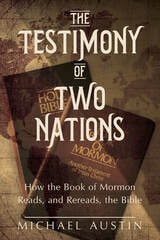
The Testimony of Two Nations
How the Book of Mormon Reads, and Rereads, the BibleMichael Austin
University of Illinois Press, 2024
Like the Hebrew Bible and the Christian Bible, the Book of Mormon uses narratives to develop ideas and present instruction. Michael Austin reveals how the Book of Mormon connects itself to narratives in the Christian Bible with many of the same tools that the New Testament used to connect itself to the Hebrew Bible to create the Christian Bible. As Austin shows, the canonical context for interpreting the Book of Mormon includes the Christian Bible, the Book of Mormon itself, and other writings and revelations that hold scriptural status in most Restoration denominations. Austin pays particular attention to how the Book of Mormon connects itself to the Christian Bible both to form a new canon and to use the canonical relationship to reframe and reinterpret biblical narratives. This canonical context provides an important and fruitful method for interpreting the Book of Mormon.
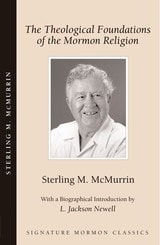
The Theological Foundations of the Mormon Religion
McMurrin
Signature Books, 2000
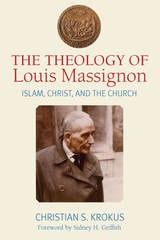
The Theology of Louis Massignon
Christian Krokus
Catholic University of America Press, 2017
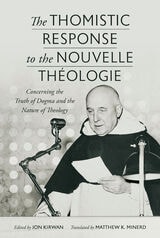
The Thomistic Response to the Nouvelle Theologie
Concerning the Truth of Dogma and the Nature of TheologyJon Kirwan
Catholic University of America Press, 2023
The Three Dynamisms of Faith
Searching for Meaning, Fulfillment, and TruthLouis Roy
Catholic University of America Press, 2017
The Three Nephites
Saints, Service, and Supernatural LegendJulie Swallow, Christopher James Blythe, Eric A. Eliason, and Jill Terry Rudy
University of Illinois Press, 2025
The Times Were Strange and Stirring
Methodist Preachers and the Crisis of EmancipationReginald F. Hildebrand
Duke University Press, 1995
Hildebrand explores the ideas and ideals of missionaries from several branches of Methodism—the African Methodist Episcopal Church, the Colored Methodist Episcopal Church, and the northern-based Methodist Episcopal Church—and the significant and highly charged battle waged between them over the challenge and meaning of freedom. He traces the various strategies and goals pursued by these competing visions and develops a typology of some of the ways in which emancipation was approached and understood.
Focusing on individual church leaders such as Lucius H. Holsey, Richard Harvey Cain, and Gilbert Haven, and with the benefit of extensive research in church archives and newspapers, Hildebrand tells the dramatic and sometimes moving story of how missionaries labored to organize their denominations in the black South, and of how they were overwhelmed at times by the struggles of freedom.
The Transformation of the Christian Right in the 1980s
Matthew C. Moen
University of Alabama Press, 2008
The Transformation of the Christian Right chronicles and analyzes the remarkable changes that have occurred in the Christian Right from its emergence in the late 1970s to the present. It documents the rapid turnover of Christian-Right organizations and explains the forces driving that kaleidoscopic change. Moen also traces the strategic shift of the movement’s leaders, away from lobbying the Congress and toward mobilizing conservative activists in the grass roots; he demonstrates the substitution of liberal language (with its emphasis on “equality, rights, and freedom”) for moralistic language (with its focus on “right and wrong”). Much has been written about the Christian Right’s impact on politics but little about how years of political activism have shaped and influenced the Christian Right. Moen addresses that neglected side of the issue.
The Treatise on Laws (Decretum DD. 1-20) with the Ordinary Gloss (Studies in Medieval and Early Modern Canon Law, Volume 2)
Catholic University of America Press, 1993
The Tribulations of Sophia
Etienne Gilson
St. Augustine's Press, 2021
The heart of the book is entitled, “Three Lectures on Thomism and its Current Situation.” During the Second Vatican Council and its immediate aftermath, the status of Thomism in Catholic intellectual circles and institutions was vigorously challenged. Once again, the problem of Thomism emerges: What is Thomism and where does it belong? Gilson’s devotion to elaborating the nature of Christian philosophy compels him to confront this question head-on. Indeed, because Gilson approaches Thomism as the veritable model for Christian philosophy he cannot ignore the attempts to suppress or supplant it.
And yet this section also contains a fourth lecture on Teilhard de Chardin, whom Gilson knew and held in high esteem. Was Teilhard's thought to become the new Christian philosophy and theology? Was it even appropriate to label his thought as proper philosophy and theology?
The second, somewhat shorter, portion of the book wrestles with the theme of dialogue that was very much in vogue in the 1960s. The central figure here is the French Marxist Roger Garaudy, internationally known for his call to dialogue with Christians. Gilson denies any possibility of such a dialogue, and certainly any usefulness in it. “I regret to say—not having myself any of the virtues of a skilled dialoguer, which are not to listen to what is being said and to take it in a sense that makes it easy to refute. It is a chimerical hope that there should be two people who proceed otherwise.” But specifically on the point of Christian and Marxist dialogue, from the massive ideological, bestial corpus of Marxism Gilson carves out its fundamental need for the world and serves it back to Garaudy, but without garnish, for among Marxists each has his own particular manner of impoverishing the concept of man.
What might be called the postscript of the book, “Wandering Amid the Ruins,” shares some of Gilson's own experiences and unease in the unsettled situation of the Catholic Church at that time. “The Council was the work of truly supernatural courage. For more than three centuries the Church was harshly blamed for not having taken the initiative to make necessary reforms in the sixteenth century.” Yet Gilson laments that perhaps the manner of enacting reform is confused and not in all cases simply intent on reversing the trends of empty churches and the vocations drought. Perhaps we have not understood the Council at all. Gilson’s kind but clear description of the turmoil in Catholic teaching and thought is for the reader essential to any understanding of the tension and transitions of this period of history.
The Trinitarian Shape of the Eucharist in Medieval Cistercian Theology
Nathaniel Peters
Catholic University of America Press, 2026
The Trinitarian Theology of Basil of Caesarea
A Synthesis of Greek Thought and Biblical TruthStephen M. Hildebrand
Catholic University of America Press, 2007
The Trinity
Eternity and TimeThomas G. Weinandy
Sapientia Press of Ave Maria University, 2022
The Truth about Conservative Christians
What They Think and What They BelieveAndrew M. Greeley and Michael Hout
University of Chicago Press, 2006
Ever since the reelection of President Bush, conservative Christians have been stereotyped in the popular media: Bible-thumping militants and anti-intellectual zealots determined to impose their convictions on such matters as evolution, school prayer, pornography, abortion, and homosexuality on the rest of us. But conservative Christians are not as fanatical or intractable as many people think, nor are they necessarily the monolithic voting block or political base that kept Bush in power.
Andrew M. Greeley and Michael Hout's eye-opening book expertly conveys the complexity, variety, and sensibilities of conservative Christians, dispelling the myths that have long shrouded them in prejudice and political bias. For starters, Greeley and Hout reveal that class and income have trumped moral issues for these Americans more often than we realize: a dramatic majority of working-class and lower-class conservative Christians backed liberals such as Jimmy Carter and Bill Clinton during their runs for president. And when it comes to abortion, most conservative Christians are not consistently pro-life in the absolute fashion usually assumed: they are still more likely to oppose the practice than other Americans, but 86 percent of them are willing to tolerate it to protect the health of the mother or when the woman has been raped, and 22 percent of them are even pro-choice.
What do conservative Christians really think about evolution, homosexuality, or even the meaning of the word of God? Answering these questions and more, The Truth about Conservative Christians will interest—and surprise—a broad range of readers, especially in this heated election year.
The Turn to Transcendence
The Role of Religion in the Twenty-First CenturyGlenn Olsen
Catholic University of America Press, 2010
The Two Wings of Catholic Thought
Essays on Fides et RatioDavid Ruel Foster
Catholic University of America Press, 2003
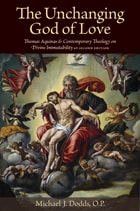
The Unchanging God of Love
Thomas Aquinas and Contemporary Theology on Divine Immutability (Second Edition)Michael J. Dodds, O.P.
Catholic University of America Press, 2008
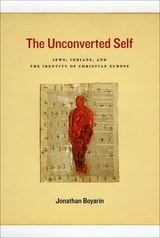
The Unconverted Self
Jews, Indians, and the Identity of Christian EuropeJonathan Boyarin
University of Chicago Press, 2009
Europe’s formative encounter with its “others” is still widely assumed to have come with its discovery of the peoples of the New World. But, as Jonathan Boyarin argues, long before 1492 Christian Europe imagined itself in distinction to the Jewish difference within. The presence and image of Jews in Europe afforded the Christian majority a foil against which it could refine and maintain its own identity. In fundamental ways this experience, along with the ongoing contest between Christianity and Islam, shaped the rhetoric, attitudes, and policies of Christian colonizers in the New World.
The Unconverted Self proposes that questions of difference inside Christian Europe not only are inseparable from the painful legacy of colonialism but also reveal Christian domination to be a fragile construct. Boyarin compares the Christian efforts aimed toward European Jews and toward indigenous peoples of the New World, bringing into focus the intersection of colonial expansion with the Inquisition and adding significant nuance to the entire question of the colonial encounter.
Revealing the crucial tension between the Jews as “others within” and the Indians as “others without,” The Unconverted Self is a major reassessment of early modern European identity.
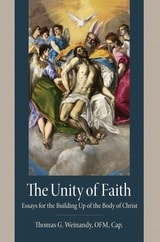
The Unity of Faith
Essays for the Building Up of the Body of ChristThomas G. Weinandy
Catholic University of America Press, 2024
The Unity of the Nations
Joseph Ratzinger
Catholic University of America Press, 2015
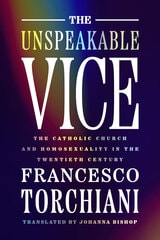
The Unspeakable Vice
The Catholic Church and Homosexuality in the Twentieth CenturyFrancesco Torchiani, Translated by Johanna Bishop
University of Wisconsin Press, 2026
As gay men and lesbian women increasingly gained recognition and acceptance in twentieth-century literature and film, and subsequently in social and political movements, the Catholic Church reacted by subtly moving away from its overt condemnation of homosexuality as an urgent moral problem and toward tacitly shunning homosexuality as an “unspeakable vice.” In this revealing history, Francesco Torchiani reconstructs the Catholic Church’s shifting attitudes toward homosexuality during this period by drawing on a vast array of internal documents and external accounts. This monograph expands the scholarship on the relationship between Catholicism and homosexuality in terms of both method and content, ultimately concluding that the Catholic Church continues to wholeheartedly condemn homosexuality despite making genuine efforts to reflect on and understand its social and cultural impact. The Unspeakable Vice therefore sheds new light on and places into historical perspective the questions the Catholic Church continues to reckon with regarding its role in contemporary society.
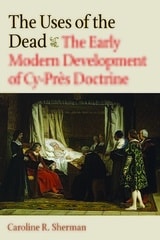
The Uses of the Dead
Caroline R. Sherman
Catholic University of America Press, 2017
Posthumous gifts, which required no sacrifice during life, were in fact broadly understood by canon lawyers and medieval donors themselves to have at best a very limited relationship to salvation. As a consequence, for much of the Middle Ages the preferred method for resolving impossible or impractical gifts was to try to reach a consensus among all of the interested parties to the gift, including the donor's heirs and the recipients, with the mediation of the local bishop.
When cy-près emerged in the seventeenth century, it cut a charitable gift o from return to the donor's estate in the event of failure. It also gave the interested parties to the gift (heirs, beneficiaries, or trustees) little authority over resolutions to problematic gifts, which were now considered primarily in relationship to the donor's intent—even as the intent was ultimately honored only in its breach. The Uses of the Dead shows how cy-près developed out of controversies over church property, particularly monastic property, and whether it might be legally turned over to fund education, poor relief, or national defense.
Renaissance humanists hoped to make better, more prudent uses of property; the Reformation sought to correct superstitious abuses of property and ultimately tended to prevent donors' heirs from recovering secularized ecclesiastical gifts; and the early modern state attempted to centralize poor relief and charitable efforts under a more rational, centralized supervision. These three factors combined to replace an older equitable ideal with a new equitable rule—one whose use has rapidly expanded in the modern era to allow assorted approximations and judicial redistributions of property.

The Vatican and the Emergence of the Modern Middle East
Agnes de Dreuzy
Catholic University of America Press, 2016
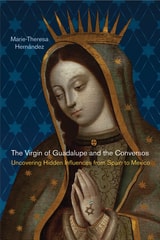
The Virgin of Guadalupe and the Conversos
Uncovering Hidden Influences from Spain to MexicoHernández, Marie-Theresa
Rutgers University Press, 2014
The terms converso and judaizante are often used for descendants of Spanish Jews (the Sephardi, or Sefarditas as they are sometimes called), who converted under duress to Christianity in the fourteenth and fifteenth centuries. There are few, if any, archival documents that prove the existence of judaizantes after the Spanish expulsion of the Jews in 1492 and the Portuguese expulsion in 1497, as it is unlikely that a secret Jew in sixteenth-century Spain would have documented his allegiance to the Law of Moses, thereby providing evidence for the Inquisition.
On a Da Vinci Code – style quest, Hernández persisted in hunting for a trove of forgotten manuscripts at the New York Public Library. These documents, once unearthed, describe the Jewish/Christian religious beliefs of an early nineteenth-century Catholic priest in Mexico City, focusing on the relationship between the Virgin of Guadalupe and Judaism. With this discovery in hand, the author traces the cult of Guadalupe backwards to its fourteenth-century Spanish origins. The trail from that point forward can then be followed to its interface with early modern conversos and their descendants at the highest levels of the Church and the monarchy in Spain and Colonial Mexico. She describes key players who were somehow immune to the dangers of the Inquisition and who were allowed the freedom to display, albeit in a camouflaged manner, vestiges of their family's Jewish identity.
By exploring the narratives produced by these individuals, Hernández reveals the existence of those conversos and judaizantes who did not return to the “covenantal bond of rabbinic law,” who did not publicly identify themselves as Jews, and who continued to exhibit in their influential writings a covert allegiance and longing for a Jewish past. This is a spellbinding and controversial story that offers a fresh perspective on the origins and history of conversos.
The Virtues
John H. Garvey
Catholic University of America Press, 2022
The Vision of the Soul
James Matthew Wilson
Catholic University of America Press, 2017
Story-telling is foundational to the forms of the fine arts, but it is no less foundational to human reason. Human life in turn constitutes a specific kind of form—a story form. The ancient conception of human life as a pilgrimage to beauty itself is one that we can fully embrace only if we see the essential correlation between reason and story and the essential convertibility of truth, goodness and beauty in beauty. By turns a study in fundamental ontology, aesthetics, and political philosophy, Wilson’s book invites its readers to a renewal of the West’s intellectual tradition.
The Visual World of the Hungarian Angevin Legendary
Béla Zsolt Szakács
Central European University Press, 2016
The Way of Humility
St. Augustine's Theology of PreachingCharles J. Kim
Catholic University of America Press, 2023
The Ways That Often Parted
Essays in Honor of Joel MarcusLori Baron
SBL Press, 2018
Focused studies on the historical interactions and formations of Judaism and Christianity
This volume of essays, from an internationally renowned group of scholars, challenges popular ways of understanding how Judaism and Christianity came to be separate religions in antiquity. Essays in the volume reject the belief that there was one parting at an early point in time and contest the argument that there was no parting until a very late date. The resulting volume presents a complex account of the numerous ways partings occurred across the ancient Mediterranean spanning the first four centuries CE.
Features:
- Case studies that explore how Jews and Christians engaged in interaction, conflict, and collaboration
- Examinations of the gospels, Paul’s letters, the book of James, as well as rabbinic and noncanonical Christian texts
- New evidence for historical reconstructions of how Christianity came on the world scene
The Winning Side
Why the Culture of Death Is DyingCharles E. Rice
St. Augustine's Press, 0