Results by title
1882 books match the query 'Criticism and interpretation' and 348 start with t
Thinking with Tolstoy and Wittgenstein
Expression, Emotion, and ArtHenry W. Pickford
Northwestern University Press, 2015
In this highly original interdisciplinary study incorporating close readings of literary texts and philosophical argumentation, Henry W. Pickford develops a theory of meaning and expression in art intended to counter the meaning skepticism most commonly associated with the theories of Jacques Derrida.
Pickford arrives at his theory by drawing on the writings of Wittgenstein to develop and modify the insights of Tolstoy’s philosophy of art. Pickford shows how Tolstoy’s encounter with Schopenhauer’s thought on the one hand provided support for his ethical views but on the other hand presented a problem, exemplified in the case of music, for his aesthetic theory, a problem that Tolstoy did not successfully resolve. Wittgenstein’s critical appreciation of Tolstoy’s thinking, however, not only recovers its viability but also constructs a formidable position within contemporary debates concerning theories of emotion, ethics, and aesthetic expression.
Thomas De Quincey
British Rhetoric's Romantic TurnLois Peters Agnew
Southern Illinois University Press, 2012
This wide-ranging volume gives proper attention to the views on rhetoric and style set forth by British literary figure Thomas De Quincey (1785–1859), whose contributions to the history of rhetoric are often overlooked. Lois Peters Agnew presents an overview of this theorist’s life and provides cultural context for his time and place, with particular emphasis on the significance of his rhetoric as both an alternative strain of rhetorical history and a previously unrealized example of rhetoric’s transformation in nineteenth-century Britain.
Agnew presents an extensive discussion of De Quincey’s ideas on rhetoric, his theory and practice of conversation, his theory of style and its role in achieving rhetoric’s dialogic potential, and his strategic use of humor and irony in such works as Confessions of an English Opium Eater. Synthesizing previous treatments of De Quincey’s rhetoric and connecting his unusual perspectives on language to the biographical details of his life, Agnew helps readers understand his intellectual development while bringing to light the cultural contexts that prompted radical changes in the ways nineteenth-century British intellectuals conceived of the role of language and the imagination in public and private discourse.
Agnew presents an alternative vision of rhetoric that departs from many common assumptions about rhetoric’s civic purpose and offers insights into the topic of rhetoric and technological change. The result is an accessible and thorough explanation of De Quincey’s complex ideas on rhetoric and the first work to fully show the reach of his ideas across multiple texts written during his lifetime.
Thomas Hirschhorn
A New Political Understanding of Art?Christina Braun
Dartmouth College Press, 2018
Thomas Holcroft’s Revolutionary Drama
Reception and AfterlivesAmy Garnai
Bucknell University Press, 2023
Thomas Mann's Artist-Heroes
Jeffrey Meyers
Northwestern University Press, 2014
Thomas Mann's World
Empire, Race, and the Jewish QuestionTodd Kontje
University of Michigan Press, 2011
Thomas Merton and the Inclusive Imagination
Ross Labrie
University of Missouri Press, 2001
Thomas Merton (1915-1968) was a Roman Catholic priest, a Trappist monk, a social activist, and a poet. Author of the celebrated autobiography The Seven Storey Mountain, Merton has been described as the most important American religious writer of the past hundred years. One of the notable characteristics of Merton's writing, both in poetry and in prose, was his seamless intermingling of religious and Romantic elements, an intermingling that, because of his gifts as a writer and because of his enormous influence, has had the effect of making widespread a distinctive form of religious thought and expression. In Thomas Merton and the Inclusive Imagination, Ross Labrie reveals the breadth of Merton's intellectual reach by taking an original and systematic look at Merton's thought, which is generally regarded as eclectic and unsystematic.
What captured Merton's attention about Romanticism and mysticism and what held his attention virtually all his life was his consciousness of the ontological significance of unity and wholeness. Even though he was far from being a systematic thinker, Merton's writings form a coherent whole when considered from the point of view of his emphasis on unity and wholeness. Labrie skillfully examines Merton's letters, journals, and individual works to show the full expanse of his contribution. By using insights from the Romantic literary tradition and from the mystical tradition, the author is able to make sense of Merton's writings from all periods of his life. Although Labrie covers such sweeping topics as consciousness, self, being, nature, time, myth, culture, and individuation, remaining focused on Merton's specific, unique contributions in each area.
This thought-provoking work, which takes into account material from the recent full publication of Merton's journals and from his Columbia University notebooks on Romanticism, not only shows Merton's intellectual growth but provides a look at his expansive interests as well. Thomas Merton and the Inclusive Imagination will make a significant contribution to Merton studies.
Thoreau beyond Borders
New International Essays on America's Most Famous Nature WriterFrançois Specq
University of Massachusetts Press, 2020
Henry David Thoreau spent his life as an intellectual vagrant, jumping fences, pushing boundaries, and crossing borders. How, why, and to what end are the questions asked by contributors to this new volume of essays, whose work crosses national and disciplinary borders to think about Thoreau anew.
Deliberately invoking Thoreau's commitment to “living a border life,” a life located between the world of nature and that of the polis, these varied essays explore the writer's thinking and writing as situated not merely against, but across and beyond borders and boundaries—whether geographic, temporal, or spiritual. Arguing that literary texts are governed by mediation and dialogue, lines of force becoming lines of connection that entail complex patterns and interweavings, the contributors draw on methodologies that freely combine literary and philosophical approaches with cultural and political ones—in turn moving us beyond borders.
Contributors include the volume editors as well as Kristen Case, Danielle Follett, Rochelle Johnson, John J. Kucich, Daniel S. Malachuk, Henrik Otterberg, Sandra Harbert Petrulionis, Benjamin Pickford, David M. Robinson, Christa Holm Vogelius, and Michael C. Weisenburg.
Thornton Wilder and the Puritan Narrative Tradition
Lincoln Konkle
University of Missouri Press, 2005

Thornton Wilder
New PerspectivesLincoln Konkle
Northwestern University Press, 2013
Three American Architects
Richardson, Sullivan, and Wright, 1865-1915James F. O'Gorman
University of Chicago Press, 1991
[A] brilliant analysis . . . a major contribution to our understanding of the beginnings of modern American architecture."—David Hamilton Eddy, Times Higher Education Supplement.
Three Modern Italian Poets
Saba, Ungaretti, MontaleJoseph Cary
University of Chicago Press, 1993
Three Sons
Franz Kafka and the Fiction of J. M. Coetzee, Philip Roth, and W. G. SebaldDaniel L. Medin
Northwestern University Press, 2010
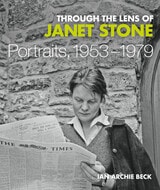
Through the Lens of Janet Stone
Portraits, 1953-1979Ian Archie Beck
Bodleian Library Publishing, 2018
Included between these pages are portraits of the composers, actors, novelists, poets, and philosophers in the Stones’ milieu—from Benjamin Britten to Siegfried Sassoon and Frances Partridge—as well as members of the Stone family. Although not a trained photographer, Janet instinctively knew to click the shutter when her subjects were off-guard and at their most informal, capturing an array of candid shots—like one of John Bayley trying on a headscarf and a young Daniel Day-Lewis dressed up as a knight.
These unique portraits offer beguiling insight into a special set of circumstances: an idyllic place and time and a group of people drawn together by two contrasting but complimentary personalities, the shy genius of Reynolds met by the outgoing style and glamour of Janet Stone.
Through the Open Door
A New Look at C.S. LewisDabney Adams Hart
University of Alabama Press, 1984
Unlocking the imagination, language, and vision that shaped C. S. Lewis's enduring legacy.
Through the Open Door: A New Look at C. S. Lewis offers a fresh and illuminating examination of one of the twentieth century's most beloved writers, scholars, and Christian thinkers. In this insightful study, Dabney Adams Hart moves beyond familiar assessments of C. S. Lewis as the creator of The Chronicles of Narnia to explore the intellectual foundations that shaped his work as a literary critic, educator, and defender of the Christian faith. Drawing on Lewis's essays, criticism, fiction, and apologetic writings, Hart reveals the central importance of imagination, language, myth, and meaning in Lewis's understanding of literature and human experience.
Rather than treating Lewis's diverse writings as separate endeavors, Hart demonstrates how they reflect a coherent and unified vision of truth, beauty, and morality. The book shows how Lewis used story and symbolism to address enduring questions about faith, reason, and the search for purpose in a modern world. Accessible to general readers while engaging for scholars, this volume provides valuable insight into the ideas that continue to make Lewis a significant figure in literary and religious studies. An important contribution to Lewis scholarship, Through the Open Door invites readers to discover anew the imagination and intellect behind one of the most influential Christian authors of the modern era.
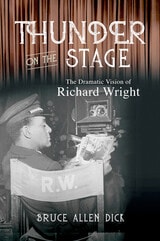
Thunder on the Stage
The Dramatic Vision of Richard WrightBruce Allen Dick
University of Illinois Press, 2024
Drawing on decades of research and interviews with Wright’s family and Wright scholars, Bruce Allen Dick uncovers the theatrical influence on Wright’s oeuvre--from his 1930s boxing journalism to his unpublished one-acts on returning Black GIs in WWII to his unproduced pageant honoring Vladimir Lenin. Wright maintained rewarding associations with playwrights, writers, and actors such as Langston Hughes, Theodore Ward, Paul Robeson, and Lillian Hellman, and took particular inspiration from French literary figures like Jean-Paul Sartre. Dick’s analysis also illuminates Wright’s direct involvement with theater and film, including the performative aspects of his travel writings; the Orson Welles-directed Native Son on Broadway; his acting debut in Native Son’s first film version; and his play “Daddy Goodness,” a satire of religious charlatans like Father Divine, in the 1930s.
Bold and original, Thunder on the Stage offers a groundbreaking reinterpretation of a major American writer.
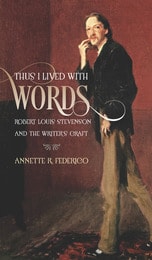
Thus I Lived with Words
Robert Louis Stevenson and the Writer's CraftAnnette R. Federico
University of Iowa Press, 2017
Stevenson belonged to a newly commercial literary world, an era of mass readership, marketing, and celebrity. He had plenty of practical advice for writers who wanted to enter the profession: study the best authors, aim for simplicity, strike a keynote, work on your style. He also held that a writer should adhere to the truth and utter only what seems sincere to his or her heart and experience of the world. Writers have messages to deliver, whether the work is a tale of Highland adventure, a collection of children’s verse, or an essay on umbrellas. Stevenson believed that an author could do no better than to find the appetite for joy, the secret place of delight that is the hidden nucleus of most people’s lives. His remarks on how to write, on style and method, and on pleasure and moral purpose contain everything in literature and life that he cared most about—adventuring, persisting, finding out who you are, and learning to embrace “the romance of destiny.”
Till One Day the Sun Shall Shine More Brightly
The Poetry and Prose of Donald RevellDerek Pollard, Editor
University of Michigan Press, 2020
Time-Spirit of Matthew Arnold
R. H. Super
University of Michigan Press, 2025
To Destroy Painting
Louis Marin
University of Chicago Press, 1994
Todd Haynes
Rob White
University of Illinois Press, 2013
Todd Solondz
Julian Murphet
University of Illinois Press, 2019
Tolkien, Philosopher of War
Graham McAleer
Catholic University of America Press, 2024
Tolstoy and His Problems
Views from the Twenty-First CenturyEdited by Inessa Medzhibovskaya
Northwestern University Press, 2019
In the broadest sense—with essays on a variety of issues that occupied Tolstoy, such as nihilism, mysticism, social theory, religion, Judaism, education, opera, and Shakespeare—the volume offers a fresh evaluation of Tolstoy's program to reform the ways we live, work, commune with nature and art, practice spirituality, exchange ideas and knowledge, become educated, and speak and think about history and social change.

Tom Slaughter (Blue)
Tom Slaughter
The Artist Book Foundation, 2019
Of Tom Slaughter, Henry Geldzahler, the first curator of twentieth-century art at The Metropolitan Museum of Art, commented: "The quality of freshness, the familiar world re-seen, from the water towers of New York City to the rural pleasures of boating, is the most immediately arresting aspect of Tom Slaughter's art... Bold bright colors swiftly laid down echo with resonances: Léger and Stuart Davis, Raoul Dufy and Roy Lichtenstein." His work, with its seemingly effortless whimsy rendered with a strong sense of line, color, and rhythm, has also been compared to Matisse.
Slaughter's Pop-inflected drawings, prints, paintings, and illustrations convey his love of life as he relentlessly explored the complexities of the urban scene or the simple pleasures of boating. The Artist Book Foundation is pleased to publish Tom Slaughter, an extensive monograph of the artist's enormous body of work that celebrates his enduring optimism, personal and artistic honesty, and charming brashness in a landscape of pure joy.
Glenn Lowry, director of the Museum of Modern Art, reveals Slaughter as a treasured friend whose artistry was fueled by endless curiosity about life's simple pleasures, a man who made his innumerable friends and acquaintances part of his personal community. Slaughter's lifelong friend, actor and writer David Marshall Grant, remembers the artist's delight when, in a high school art class, he was introduced to the mysteries of negative space and the enigmatic power it brings to an artwork. Artist, art critic, and independent curator Andy Fabo describes his friend's vibrant art as all about pleasure. Even in the most turbulent of times, he took a celebratory approach to his art, offering his viewers a sensual and visual delight. For Jon Robin Baitz, playwright and screenwriter, the "sweetness" of Slaughter's images was insistent, a compulsive scrutinizing of the visual world of small domesticities. Marthe Jocelyn, the artist's former wife and a children's book author and illustrator, reflects on the couple's acclaimed collaboration on a series of books for the very youngest readers. Jim Kempner, gallery owner, recalls Slaughter as a man of charm and enormous artistic talent who always managed to retain a childlike innocence. Artist George Negroponte remembers Slaughter as focusing on the life around him, especially his daughters, in a unique mixture of everyday images, abstracted yet conveying popular culture. And in an interview both informative and poignant, Slaughter's friends, artists Stephen Hannock,
Tom Slaughter (Red)
Tom Slaughter
The Artist Book Foundation, 2019
Of Tom Slaughter, Henry Geldzahler, the first curator of twentieth-century art at The Metropolitan Museum of Art, commented: "The quality of freshness, the familiar world re-seen, from the water towers of New York City to the rural pleasures of boating, is the most immediately arresting aspect of Tom Slaughter's art... Bold bright colors swiftly laid down echo with resonances: Léger and Stuart Davis, Raoul Dufy and Roy Lichtenstein." His work, with its seemingly effortless whimsy rendered with a strong sense of line, color, and rhythm, has also been compared to Matisse.
Slaughter's Pop-inflected drawings, prints, paintings, and illustrations convey his love of life as he relentlessly explored the complexities of the urban scene or the simple pleasures of boating. The Artist Book Foundation is pleased to publish Tom Slaughter, an extensive monograph of the artist's enormous body of work that celebrates his enduring optimism, personal and artistic honesty, and charming brashness in a landscape of pure joy.
Glenn Lowry, director of the Museum of Modern Art, reveals Slaughter as a treasured friend whose artistry was fueled by endless curiosity about life's simple pleasures, a man who made his innumerable friends and acquaintances part of his personal community. Slaughter's lifelong friend, actor and writer David Marshall Grant, remembers the artist's delight when, in a high school art class, he was introduced to the mysteries of negative space and the enigmatic power it brings to an artwork. Artist, art critic, and independent curator Andy Fabo describes his friend's vibrant art as all about pleasure. Even in the most turbulent of times, he took a celebratory approach to his art, offering his viewers a sensual and visual delight. For Jon Robin Baitz, playwright and screenwriter, the "sweetness" of Slaughter's images was insistent, a compulsive scrutinizing of the visual world of small domesticities. Marthe Jocelyn, the artist's former wife and a children's book author and illustrator, reflects on the couple's acclaimed collaboration on a series of books for the very youngest readers. Jim Kempner, gallery owner, recalls Slaughter as a man of charm and enormous artistic talent who always managed to retain a childlike innocence. Artist George Negroponte remembers Slaughter as focusing on the life around him, especially his daughters, in a unique mixture of everyday images, abstracted yet conveying popular culture. And in an interview both informative and poignant, Slaughter's friends, artists Stephen Hannock,
Toni Morrison and the Geopoetics of Place, Race, and Be/longing
Marilyn Sanders Mobley
Temple University Press, 2024
Mobley’s approach is as interdisciplinary, intersectional, nuanced, and complex as Morrison’s. She combines textual analysis with a study of Morrison’s cultural politics and narrative poetics and describes how Morrison engages with both history and the present political moment.
Informed by research in geocriticism, spatial literary studies, African American literary studies, and Black feminist studies at the intersection of poetics and cultural politics, Mobley identifies four narrative strategies that illuminate how Morrison creates such spaces in her fiction; what these spaces say about her understanding of place, race, and belonging; and how they constitute a way to read and re-read her work.
Toni Morrison
PLAYING WITH DIFFERENCELucille P. Fultz
University of Illinois Press, 2003
Tough Ain't Enough
New Perspectives on the Films of Clint EastwoodFriedman, Lester D
Rutgers University Press, 2018
Toussaint Louverture
The Story of the Only Successful Slave Revolt in History; A Play in Three ActsC. L. R. James Edited and Introduced by Christian Høgsbjerg
Duke University Press, 2013
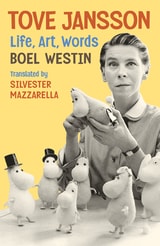
Tove Jansson
Life, Art, WordsBoel Westin
University of Minnesota Press, 2024
An in-depth, perceptive account of the unconventional life of the Moomins’ beloved creator, now available in the United States
Tove Jansson achieved fame as the creator of the Moomins, beloved by generations of readers around the world. Remarkably, the Moomins were only part of the prodigious creative output of this Finnish-Swedish writer and artist. Jansson’s work also includes short stories and five novels for adults, as well as paintings, murals, and book illustrations. In this acclaimed biography, Boel Westin relies on numerous conversations with Jansson and unprecedented access to her journals, letters, and personal archives to present an engrossing and comprehensive review of the life and world of Scandinavia’s best-loved author.
As Westin’s meticulous research makes clear, Jansson’s artistic and literary works reflected what was most important to her: the love of family and nature and the desire to pursue her art. Guided by her personal motto, “Love and work,” Jansson seized both with uncompromising joy. And while her romantic relationships with men proved unfulfilling, she found those with women—especially with her longtime partner, the artist Tuulikki Pietilä—both grounding and inspiring.
Westin weaves together the many threads of Jansson’s rich, complex life: an education interrupted to help her family; the bleak war years and her emergence as a painter; the decades of Moominmania across books, newspaper comic strips, merchandise, and adaptations; her later fictions, including her popular The Summer Book; and her time with Pietilä on the solitary island of Klovharu. Tove Jansson: Life, Art, Words offers fans and admirers around the world the most complete portrait of the writer Philip Pullman described as “a genius, a woman of profound wisdom and great artistry.”
Towards the Ethics of Form in Fiction
Narratives of Cultural RemissionLeona Toker
The Ohio State University Press, 2010
Toker is especially interested in cultural remissions such as the carnivalesque—that is, the inverting of standard cultural hierarchies or the blurring of boundaries between normally separated social groups, actors and audiences, self and other. She argues that cultural remissions have the potential not simply to provide a break from the determinacies of our quotidian existence but also to return us to that existence with some alteration of our perceptions, beliefs, and values. Toker contends that the ethical consequences of reading fiction result from features of its aesthetics, particularly what she calls, following the semiotician Louis Hjemslev, “the form of the content”—the patterns arising from the artistic deployment of narrative details. In addition to addressing the carnivalesque discourse of Bakhtin as well as the theory of oppositionality developed by de Certeau and Chambers, she puts theory into practice through detailed analyses of canonical texts by Fielding, Sterne, Austen, Hawthorne, Dickens, Conrad, Joyce, and other writers.
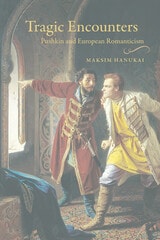
Tragic Encounters
Pushkin and European RomanticismMaksim Hanukai
University of Wisconsin Press, 2023
Many of Pushkin’s works move seamlessly between the closed world of traditional tragedy and the open world of Romantic tragic drama, and yet they follow neither the cathartic program prescribed by Aristotle nor the redemptive mythologies of the Romantics. Instead, the idiosyncratic and artistically mercurial Pushkin seized upon the newly unstable tragic mode to develop multiple, overlapping tragic visions. Providing new, innovative readings of such masterpieces as The Gypsies, Boris Godunov, The Little Tragedies, and The Bronze Horseman, Hanukai sheds light on an unexplored aspect of Pushkin’s work, while also challenging reigning theories about the fate of tragedy in the Romantic period.
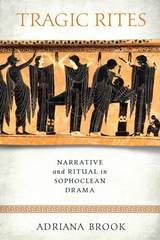
Tragic Rites
Narrative and Ritual in Sophoclean DramaAdriana E. Brook
University of Wisconsin Press, 2018
Employing both modern ritual theory and Aristotle's Poetics, Brook exposes the deep structural analogies between ritual and narrative, the parallels between mistakes in ritual and deviations from the expected in the plot, and the relationship between ritual content and dramatic closure.
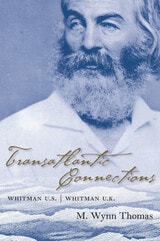
Transatlantic Connections
Whitman U.S., Whitman U.K.Thomas, M. Wynn
University of Iowa Press, 2005
The book’s contrasting sections reflect the two locations studied: the first shows Whitman in his time and place, while the second repositions him within the cultures of England and Wales from the late 19th to the late 20th century. In the opening chapter he is placed against the vivid, outrageous background of the New York of his time; the second finds evidence in his poetry of a critique of the new urban politics of the emerging city boss; the third radically redefines Whitman's relationship to his famous contemporary Longfellow. Other chapters deal with the Civil War poet, exploring the ways in which his poetic responses were in part shaped by his relationship to his soldier brother George, and his use of the meteorological discoveries of his day to fashion metaphors for imaging the different phases of the conflict.
The second section ponders the paradox that this Whitman, who was so much the product of his specific time and limited “local” culture, should come to be accepted as an international visionary. The United Kingdom is taken as offering striking instances of this phenomenon, and his transatlantic admirers are shown to have been engaged in an unconscious process of “translating” Whitman into the terms of their own culturally specific social, political, and sexual preoccupations. Some of the connections explored are those between Whitman and Edward Carpenter, the so-called English Whitman; between Whitman and perhaps his greatest English critic, D. H. Lawrence; and between Whitman and the Welsh poets Ernest Rhys, Amanwy (David Rees Griffiths), Niclas y Glais (T. E. Nicholas), Waldo Williams, Glyn Jones, Dylan Thomas, and R. S. Thomas.
This bold and original study, offering new points of entry into understanding Whitman as the product of his time and place as well as understanding the reception of Whitman in the U.K. as a process of cultural translation, should fascinate scholars of Whitman and students of comparative literature.
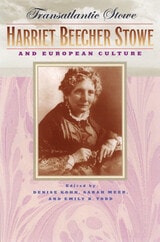
Transatlantic Stowe
Harriet Beecher Stowe and European CultureDenise Kohn
University of Iowa Press, 2006
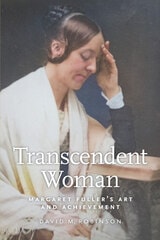
Transcendent Woman
Margaret Fuller’s Art and AchievementDavid M. Robinson
University of Massachusetts Press, 2025
Journalist, editor, critic, translator, and women’s rights advocate, Margaret Fuller was America’s first major female intellectual. Throughout much of the late-19th and 20th centuries, however, critics and scholars largely saw her as a minor figure in the transcendentalist movement with which she is associated, and her work was considered secondary to that of male figures like Emerson and Hawthorne. While her biography—including her marriage to an Italian noble and her dramatic death in a shipwreck—was often the focus, her skill as a writer was generally overlooked, and her intellectual development largely ignored.
In the early 1980s, David M. Robinson was one of the first scholars to publish an article that focused on Fuller’s mind and art. Now Transcendent Woman completes and extends this early work. Outlining the development of her philosophy, which Robinson defines as a “purpose-oriented form of thinking, tailored to the commitment and assets of each individual,” he traces Fuller’s intellectual journey, first in relation to her family and the people around her in New England and later in her travels in the midwestern United States and, more importantly, through Europe and her residency in Italy. He focuses first and foremost on what Fuller was reading (Goethe was key), what she was thinking as revealed in her letters and journals, and what she was writing, including seminal works such as Summer on the Lakes and Woman in the Nineteenth Century as well as lesser-known essays, translations, and short stories. Drawing extensively on primary sources, Robinson charts Fuller’s development and achievement as an original thinker and fearless advocate of democracy.
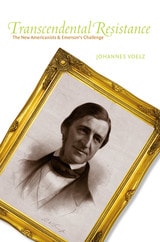
Transcendental Resistance
The New Americanists and Emerson's ChallengeJohannes Voelz
Dartmouth College Press, 2010
Transculturality and German Discourse in the Age of European Colonialism
Chunjie Zhang
Northwestern University Press, 2017
Transfiguring America
Myth, Ideology, and Mourning in Margaret Fuller's WritingJeffrey Steele
University of Missouri Press, 2001
Transfiguring America is the product of more than ten years of research and numerous published articles on Margaret Fuller, arguably America's first feminist theorist and one of the most important woman writers in the nineteenth century. Focusing on Fuller's development of a powerful language that paired cultural critique with mythmaking, Steele shows why her writing had such a vital impact on the woman's rights movement and modern conceptions of gender.
This groundbreaking study pays special attention to the ways in which Fuller's feminist consciousness and social theory emerged out of her mourning for herself and others, her dialogue with Emersonian Transcendentalism, and her eclectic reading in occult and mythical sources. Transfiguring America is the first book to provide detailed analyses of all of Fuller's major texts, including her mystical Dial essays, correspondence with Emerson, Summer on the Lakes, 1844 poetry, Woman in the Nineteenth Century, and New York Tribune essays written both in New York and Europe.
Starting from her own profound sense of loss as a marginalized woman, Fuller eventually recognized the ways in which the foundational myths of American society, buttressed by conservative religious ideologies, replicated dysfunctional images of manhood and womanhood. With Woman in the Nineteenth Century, after exploring the roots of oppression in her essays and poetry, Fuller advanced the cause of woman's rights by conceptualizing a more fluid and equitable model of gender founded upon the mythical reconfiguration of human potential. But as her horizons expanded, Fuller demanded not only political equality for women, but also emotional, intellectual, and spiritual freedom for all victims of social oppression.
By the end of her career, Steele shows, Fuller had blended personal experience and cultural critique into the imaginative reconstruction of American society. Beginning with a fervent belief in personal reform, she ended her career with the apocalyptic conviction that the dominant myths both of selfhood and national identity must be transfigured. Out of the ashes of personal turmoil and political revolution, she looked for the phoenix of a revitalized society founded upon the ideal of political justice.
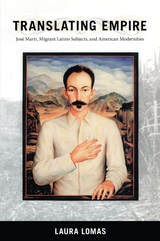
Translating Empire
Jose Marti, Migrant Latino Subjects, and American ModernitiesLaura Lomas
Duke University Press, 2008
Lomas challenges longstanding conceptions about Martí through readings of neglected texts and reinterpretations of his major essays. Against the customary view that emphasizes his strong identification with Ralph Waldo Emerson and Walt Whitman, the author demonstrates that over several years, Martí actually distanced himself from Emerson’s ideas and conveyed alarm at Whitman’s expansionist politics. She questions the association of Martí with pan-Americanism, pointing out that in the 1880s, the Cuban journalist warned against foreign geopolitical influence imposed through ostensibly friendly meetings and the promotion of hemispheric peace and “free” trade. Lomas finds Martí undermining racialized and sexualized representations of America in his interpretations of Buffalo Bill and other rituals of westward expansion, in his self-published translation of Helen Hunt Jackson’s popular romance novel Ramona, and in his comments on writing that stereotyped Latino/a Americans as inherently unfit for self-government. With Translating Empire, Lomas recasts the contemporary practice of American studies in light of Martí’s late-nineteenth-century radical decolonizing project.
Translating Modernism
Fitzgerald and HemingwayRonald Berman
University of Alabama Press, 2009
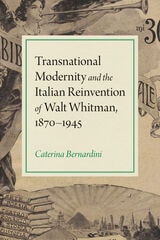
Transnational Modernity and the Italian Reinvention of Walt Whitman, 1870-1945
Caterina Bernardini
University of Iowa Press, 2021
Studying Whitman’s reception from a transnational perspective shows how many countries were simultaneously carving out a new modernity in literature and culture. In this sense, Bernardini not only shows the interconnectedness of various international agents in understanding and contributing to the spread of Whitman’s work, but, more largely, illustrates a constellation of similar pre-modernist and modernist sensibilities. This stands in contrast to the notion of sudden innovation: modernity was not easy to achieve, and it did not imply a complete refusal of tradition. Instead, a continuous and fruitful negotiation between tradition and innovation, not a sudden break with the literary past, is at the very heart of the Italian and transnational reception of Whitman. The book is grounded in archival studies and the examination of primary documents of noteworthy discovery.

Trollope and Comic Pleasure
Christopher Herbert
University of Chicago Press, 1987
The comic mode as Herbert describes it was antagonistic to the repressive moral ethos widely prevalent in Victorian England. Herbert shows how Trollope, under a mask of self-proclaimed conventionality, employed this mode in a steady, sometimes scandalous critique of the Victorian subversion of pleasure. Drawing on Trollope's unpublished notes on seventeenth-century drama and bringing to light many instances in the novels of direct borrowings from old plays, Herbert demonstrates the inventiveness and subtlety of Trollope's deployment of comic materials. Thematically organized around such subjects as Trollope's investigations of sex, his formal structures, and his principles of "realism," Herbert's study includes detailed readings of two of the nineteenth century's most ambitious exercises in comedy: The Way We Live Now and Trollope's neglected masterpiece, Ayala's Angel.
Of primary importance for readers of Trollope and students of comedy, Herbert's study will also prove valuable to those interested more generally in Victorian and modern fiction and the cultural history of the Victorian age.
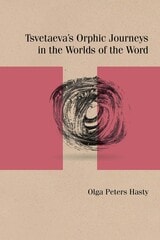
Tsvetaeva's Orphic Journeys in the Worlds of the Word
Olga Peters Hasty
Northwestern University Press, 1996
Tsvetaeva’s Orphic Journeys in the Worlds of the Word explores the rich theme of the myth of Orpheus as master narrative for poetic inspiration and creative survival in the life and work of Marina Tsvetaeva. Olga Peters Hasty establishes the basic themes of the Orphic Complex—the poet’s longing to mediate between the embodied physical world and an “elsewhere,” the poet’s inability to do so, the primacy of the voice over the visual world, the insistence on concrete imagery, the costs of the poet’s gift—and orders her arguments in the tragic shape of the Orpheus myth as it worked itself out organically in Tsvetaeva’s own life. Hasty delineates the connections between the Orpheus myth and other key mythological and literary figures in the poet’s life—including Alexander Blok, Anna Akhmatova, Alexander Pushkin, and Rainer Maria Rilke—to make an important and original critical contribution.
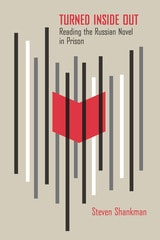
Turned Inside Out
Reading the Russian Novel in PrisonSteven Shankman
Northwestern University Press, 2017
Turned Inside Out will appeal to readers with interests in the classic novels of Russian literature, in prisons and pedagogy, or in Levinas and phenomenology. At a time when the humanities are struggling to justify the centrality of their mission in today’s colleges and universities, Steven Shankman by example makes an undeniably powerful case for the transformative power of reading great texts.
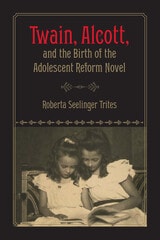
Twain, Alcott, and the Birth of the Adolescent Reform Novel
Roberta S. Trites
University of Iowa Press, 2007

Two Guns From Harlem
The Detective Fiction of Chester HimesRobert E. Skinner
University of Wisconsin Press, 1989
Two Guns from Harlem probes Himes’s early life and career for the roots of this series and for its heroes, Coffin Ed Johnson and Grave Digger Jones. Skinner discusses how Himes’s experience as a black man, combined with his unique outlook on sociology, politics, violence, sex, and race relations, resulted not only in an unusual portrait of black America but also opened the way for the creation of the
ethnic and female hard-boiled detectives who followed.