Results by title
3390 books match the query 'Fiction' and 1041 start with t
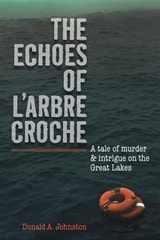
The Echoes of L'Arbre Croche
Donald A. Johnston
University of Michigan Press, 2009
The year is 1915, and Benjamin Corvet, founder of the ship-owning firm Corvet, Sherrill and Spearman, suddenly disappears, sparking events and questions that baffle even those who are close to him.
Constance Sherrill, an attractive, sheltered young woman, feels strangely responsible for what may have happened to him---her father's best friend and coworker. Alan Conrad arrives in Chicago searching for his identity and an unknown benefactor and is swept into a maelstrom of mystery and intrigue that tests his intelligence and athleticism to the fullest. Henry Spearman, the firm's junior partner, is the most eligible bachelor along Chicago's Lake Shore Drive as a result of his catapult from ships' ranks to successful owner.
When a ship sinks off the coast of Beaver Island in Michigan, the intertwining lives of these characters unlock the mystery of the disappearance of another ship twenty years earlier, in a riveting whodunit set on the stormy waters of the Great Lakes.
Donald A. Johnston was born and raised in Detroit, served in World War II as a U.S. Navy Reserve officer, and was decorated for service in the Philippines and in the invasions of Iwo Jima and Okinawa. His career includes forty years in the insurance business. An ardent sailing enthusiast, he has cruised the Great Lakes extensively and has sailed winners in class boats and in offshore competition.
Jacket photograph © Yuriz / iStockphoto.com
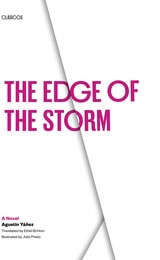
The Edge of the Storm
A NovelBy Agustín Yáñez
University of Texas Press, 1963
This tale of a repressive priest and his small Mexican village during the eighteen months preceding the Revolution of 1910 is a great novel, one that exposes the struggle between human desire and paralyzing fear—fear of humanity, fear of nature, fear of the wrath of God. Agustín Yáñez probes the actions of people caught in life’s currents, enthralling his readers with mounting dramatic tension as he shows that no power can forge saints from the human masses, that any attempt to do so, in fact, often has exactly the opposite result.
Yáñez brings to his work a deep understanding of people—his people—and he illuminates a great truth—that no one, anywhere, seems very strange when we understand the environment that has produced him or her.
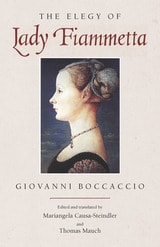
The Elegy of Lady Fiammetta
Giovanni Boccaccio
University of Chicago Press, 1990
Lady Fiammetta, the first-person narrator and protagonist, recounts how, although a married woman, she falls in love with a handsome young foreigner named Panfilo and, driven by irresistible passion, becomes his lover. Panfilo subsequently abandons Fiammetta and returns to his native land, where his elderly father is said to be dying. When he fails to keep his promise to return, Fiammetta, in what is the heart of the narrative, describes her longings, her anguish, and her despair. A host of contradictory sentiments drive her to desperation and to an unsuccessful suicide attempt. After a time, Fiammetta resumes her futile wait for Panfilo. She finally resolves to seek him out in his native land. Disguising her true intent from her husband, she secures his promise to help her in this undertaking. Addressing an exclusively female audience, Fiammetta warns them about the vicious ways of men. Her whole narrative, in fact, adds up to an indictment of men as both readers and lovers. Eliciting a remarkably wide range of responses from readers and critics, Fiammetta has been variously described as a pathetic victim of male cruelty; an irresponsible fool of a girl; a sophisticated, cunning, and wholly disingenuous female; and, finally, a genuinely modern woman. Whatever judgment we make of her, Fiammetta stands out among medieval women as an ardent and outspoken feminist.

The Emigrants
George Lamming
University of Michigan Press, 1994
This is the epic journey of a group of West Indians who emigrate to Great Britain in the 1950s in search of educational opportunities unattainable at home. Seeking to redefine themselves in the "mother country," an idealized landscape that they have been taught to revere, the emigrants settle uncomfortably in England's industrial cities. Within two years, ghettoization is firmly in place. The emigrants discover the meaning of their marginality in the British Empire in an environment that is unexpectedly hostile and strange. For some, alienation prompts a new sense of community, a new sense of identity as West Indians. For others, alienation leads to a crisis of confrontation with the law and fugitive status.
There is a wealth of information here about the genesis of the black British community and about the cultural differences between the black British and West Indian/Caribbean.

The Emperor
Makenzy Orcel
Seagull Books, 2024
After committing an irreparable crime, the narrator of The Emperor waits in his bedroom for the police to arrest him. His past reverberates inside of him like a drum: his youth spent in captivity as a zonbi, under the control of a charlatan Vodou leader, and many an alienating dawn delivering the daily newspaper through the cutthroat neighborhoods of Port-au-Prince, Haiti. He now has blood on his hands because of the woman on the bus—the only woman he had ever loved.
Part crime fiction, part fable gone awry, The Emperor invites readers to follow the narrator’s life as he moves from the Haitian countryside to the sprawling city, learning about the corruptible nature of power in his quest for freedom. Along the way, Makenzy Orcel blends the marvelous with the real by introducing readers to an unforgettable cast of characters including the Very Old Sheep, a deceitful Emperor, and the narrator’s so-called Enlightened Colleague. Written with Orcel’s distinctive verve, this novel offers readers a story set in contemporary Haiti that is rich in poetry and full of narrative intrigue.

The Emperor of Ice-Cream
Dan Gunn
Seagull Books, 2014
When she falls in love in Rome, it appears that happiness is Lucia’s for the asking, until unstoppable forces intervene—in both of her countries. With mounting tension, her tale leads through the rise of Fascism to the terrible moment in June 1940 when Mussolini declares war, and British Italians are interned. When hundreds are herded as ‘enemy aliens’ onto a ship bound for exile, among their number are two of her brothers. Determined to tell their story before it is too late, Lucia gives an account of one of the most shameful episodes in Britain’s Second World War.
Through his portrayal of Lucia’s singular vision and voice, Dan Gunn has created an unforgettable character who, while registering the buffets of history, is—just possibly—writing herself toward some overdue inner peace.
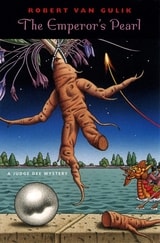
The Emperor's Pearl
A Judge Dee MysteryRobert van Gulik
University of Chicago Press, 1963
The latest puzzling mystery facing Jude Dee begins on the night of the Poo-yang dragonboat races in 699 A.D.: a drummer in the leading boat collapses, and the body of a beautiful young woman turns up in a deserted country mansion. There, Judge Dee—tribunal magistrate, inquisitor, and public avenger—steps in to investigate the murders and return order to the Tang Dynasty.
In The Emperor’s Pearl, the judge discovers that these two deaths are connected by an ancient tragedy involving a near-legendary treasure stolen from the Imperial Harem one hundred years earlier. The terrifying figure of the White Lady, a river goddess enshrined on a bloodstained altar, looms in the background of the investigation. Clues are few and elusive, but under the expert hand of Robert van Gulik, this mythic jigsaw puzzle assembles itself into a taut mystery.

The Empty Space
Geetanjali Shree
Seagull Books, 2016
The Encyclopaedia of Good Reasons
Monica Cantieni
Seagull Books, 2014
Set in the time of the crucial 1970 Swiss referendum on immigration, Monica Cantieni introduces us to a host of colorful characters who struggle to make Switzerland their home: Eli, the Spanish bricklayer; Toni, the Italian factory worker with movie star looks; Madame Jelisaweta, the Yugoslav hairdresser; and Milena, the mysterious girl in the wardrobe. This is a book with a very warm heart, and rarely has a young girl’s narrative been at once so uproariously hilarious and so deeply moving.

The End and the End
Holly Goddard Jones
University of Iowa Press, 2027
The End of Books--or Books Without End?
Reading Interactive NarrativesJ. Yellowlees Douglas
University of Michigan Press, 2001
The book examines criticism on interactive fiction from both proponents and skeptics and examines similarities and differences between print and hypertext fiction. It looks closely at critically acclaimed interactive works, including Stuart Moulthrop's Victory Garden and Michael Joyce's Afternoon: A Story that illuminate how these hypertext narratives "work." While she sees this as a still-evolving technology and medium, the author identifies possible developments for the future of storytelling from outstanding examples of Web-based fiction and CD-ROM narratives, possibilities that will enable narratives to both portray the world with greater realism an to transcend the boundaries of novels and films, character and plot alike.
Written to be accessible to a wide range of readers, this lively and accessibly-written volume will appeal to those interested in technology and cyberculture, as well as to readers familiar with literary criticism and modern fiction.
J. Yellowlees Douglas is the Director of the William and Grace Dial Center for Written and Oral Communication, University of Florida. She is the author of numerous articles and essays on the subject of hypertext and interactive literature.
The End of Free Love
Susan Steinberg
University of Alabama Press, 2003

The End of the House of Alard
Sheila Kaye-Smith
Catholic University of America Press, 2022

The End of the World
Eric S Rabkin
Southern Illinois University Press, 1983
The essays selected by the editors to explore these apocalyptic visions are: “The Remaking of Zero: Beginning at the End,” by Gary K. Wolfe; “The Lone Survivor,” by Robert Plank; “Ambiguous Apocalypse: Transcendental Versions of the End,” by Robert Galbreath; “World’s End: The Imagination of Catastrophe,” by W. Warren Wagar; “Man-Made Catastrophes,” by Brian Stableford; and “The Rebellion of Nature,” by W. Warren Wagar.
Wolfe sees in these postholocaust narratives a central attraction—“the mythic power inherent in the very conception of a remade world.” This power derives from three sources: the emergence of a new order from the ashes of the old system, and thus a kind of denial of death; the reinforcement of one set of values as opposed to another; and as something always replaces whatever was destroyed, a promise that nothing can annihilate humanity.
The End of the World Book
A NovelAlistair McCartney
University of Wisconsin Press, 2008
This is no ordinary novel. An encyclopedia of memory—from A to Z—The End of the World Book deftly intertwines fiction, memoir, and cultural history, reimagining the story of the world and one man’s life as they both hurtle toward a frightening future. Alistair McCartney’s alphabetical guide to the apocalypse layers images like a prose poem, building from Aristotle to da Vinci, hip-hop to lederhosen, plagues to zippers, while barreling from antiquity to the present.
In this profound book about mortality, McCartney composes an irreverent archive of philosophical obsessions and homoerotic fixations, demonstrating the difficulty of separating what is real from what is imagined.
Finalist, Edmund White Award for Debut Fiction, The Publishing Triangle
Finalist, PEN USA Literary Award for Fiction
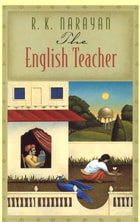
The English Teacher
R. K. Narayan
University of Chicago Press, 1980
"Mr. Narayan has repeatedly been compared with Chekhov. Ordinarily such comparisons are gratuitous and strained, but in this case there are such clear and insistent echoes that any careful reader will be aware of them. There is that sense of rightness which transcends mere structure. There is the inexplicable blending of tragedy and humor. Most of all, there is a brooding awareness of fate which makes the story seem not authored, but merely translated."—J.F. Muehl, Saturday Review
"[Narayan] does not deal in exemplary fates, and the Western novel's machinery of retribution is far too grandiose for him. . . . In Narayan's world, scores are not settled but dissolved, recycled, restated. 'Both of us will shed our forms soon and perhaps we could meet again, who knows? So goodbye for the present.' These are the concluding words for the novel A Tiger for Malgudi, but they constitute a universal epilogue one could append to most of Narayan's fiction."—Russell Davies, Times Literary Supplement
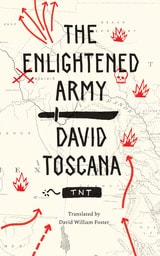
The Enlightened Army
By David Toscana; translated by David William Foster
University of Texas Press, 2019
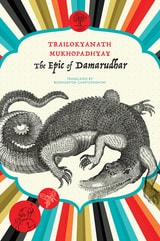
The Epic of Damarudhar
Trailokyanath Mukhopadhyay
Seagull Books, 2020
With its generic fusion of tall tales, science, myth, politics, and the absurd, the work also announces the emergence of the genre of modern fantasy in Bengal. A detailed introduction, bibliography, and extensive annotation bring to life the context for these stories, highlighting key intertexts, political nuances, and important mythological references. This volume also contains the first translation of a rare biographical piece on the author, which includes long autobiographical parts written by Trailokyanath himself. Carefully translated and thoroughly researched, this volume will introduce a trenchant Indian voice to the English-language readership.
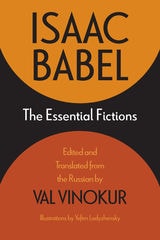
The Essential Fictions
Isaac Babel; Edited and translated from the Russian by Val Vinokur; Illustrations by Yefim Ladyzhensky
Northwestern University Press, 2018
Babel was born in 1894 into multicultural Odessa’s thriving Jewish community. Working as a journalist, he witnessed the Bolshevik Revolution and Civil War, and accompanied the Cossack horsemen of the Red Cavalry during the 1920 Polish-Soviet War, distilling these experiences into his fiction. Vinokur highlights Babel’s “horrified hopefulness” and “doleful and bespectacled Jewish comedy” in the face of the bloody conflicts that plagued his generation.
On the centenary of the revolution that toppled the Romanov tsars, Babel’s fictions continue to absorb and fascinate contemporary readers interested in eastern European and Jewish literature as well as the history and politics of the twentieth century.
The Eternal Son
Cristovão Tezza
Tagus Press, 2013

The Ethos of Romance at the Turn of the Century
By William J. Scheick
University of Texas Press, 1994
The romance genre was a popular literary form among writers and readers in the nineteenth and early twentieth centuries, but since then it has often been dismissed as juvenile, unmodern, improper, or subversive. In this study, William J. Scheick seeks to recover the place of romance in fin-de-siècle England and America; to distinguish among its subgenres of eventuary, aesthetic, and ethical romance; and to reinstate ethical romance as a major mode of artistic expression.
Scheick argues that the narrative maneuvers of ethical romance dissolve the boundary between fiction and fact. In contrast to eventuary romances, which offer easily consumed entertainment, or aesthetic romances, which urge upon readers a passive appreciation of a wondrous work of art, ethical romances potentially disorient and reorient their readers concerning some metaphysical insight hidden within the commonplace. They prompt readers to question what is real and what is true, and to ponder the wonder of life and the text of the self, there to detect what the reader might do in the art of his or her own life
The authors whose works Scheick discusses are Nathaniel Hawthorne, H. Rider Haggard, Henry James, C. J. Cutcliffe Hyne, H. G. Wells, John Kendrick Bangs, Gilbert K. Chesterton, Richard Harding Davis, Stephen Crane, Mary Austin, Jack London, Robert Louis Stevenson, Mary Cholmondeley, and Rudyard Kipling. This wide selection expands the canon to include writers and works that highly merit re-reading by a new generation.
The Eve/Hagar Paradigm in the Fiction of Quince Duncan
Dellite Martin-Ogunsola
University of Missouri Press, 2004
The Exchange and Other Stories
Yuri Trifonov
Northwestern University Press, 2002
Yury Trifonov took a turn toward the controversial, and a leap toward greatness, with the publication of the two novellas included in this collection. "The Exchange" and "The Long Goodbye" depict the complex dilemmas and compromises of Russian life after World War II. These works, along with the short stories "Games at Dusk" and "A Short Stay in the Torture Chamber," detail the moral and spiritual decline in Russia that resulted from the growing distance between the theoretical idealism of the Soviet state and the actual materialism and careerism that increasingly marked society.
The Exiles and Other Stories
By Horacio Quiroga
University of Texas Press, 1987
Tales of risk and danger, suffering, disease, horror, and death. Tales, also, of courage and dignity, hard work, and human endurance in the face of hostile nature and the frequent brutality of men. And tales flavored with piquant touches of humor and bemused irony.
These are the stories of the Uruguayan writer Horacio Quiroga, here presented in an important compilation of thirteen of his most compelling tales, sensitively selected and translated by J. David Danielson. Author of some two hundred pieces of fiction, often compared to the works of Kipling, Jack London, and Edgar Allan Poe, Quiroga set many of his stories in the territory of Misiones in northeastern Argentina, the subtropical jungle region where he spent much of his life.
Included here are stories from Los desterrados (1926) often said to be his best book, as well as others from Cuentos de amor de locura y de muerte (1917), Anaconda (1921), and El Desierto (1924). The publication of this selection marks the first appearance in English of all but two of the thirteen stories.
Quiroga here presents a wide range of characters: parents and children, servant girls and prostitutes, landowners and lumber barons, foremen and laborers, natives and immigrants, in stories pervaded by a vision of life that is elemental, incisive, and essentially tragic. The Exiles and Other Stories shows the versatility and skill that have made him a classic Spanish American writer. It complements and illumines The Decapitated Chicken and Other Stories, selected and translated by Margaret Sayers Peden, also published by the University of Texas Press.
The Exit Coach
Megan Staffel
Four Way Books, 2016
The Extinction of Menai
A NovelChuma Nwokolo
Ohio University Press, 2017
The Extremities!
Samantha Kimmey
University of Iowa Press, 2025
The Face in the Window and Other Alabama Ghostlore
Alan Brown
University of Alabama Press, 1996
True voices, real places, and unforgettable chills: Alabama’s ghost stories, gathered with scholarly care, reveal how memory, history, and belief linger—whispering from bridges, homes, cemeteries, and courthouses statewide today still.
The Face in the Window and Other Alabama Ghostlore is a landmark collection that preserves and brings to life Alabama’s rich tradition of supernatural storytelling. Rather than offering fictional retellings, this book presents ghost stories as they are told—by neighbors, families, students, and elders—rooted firmly in real places and lived experience. Alan Brown captures the voices of Alabamians across generations, revealing how belief, memory, humor, and fear continue to shape the state’s cultural landscape.
The collection is organized by geographic region, spiraling across the state so readers can explore local lore county by county and town by town. Many stories were gathered directly through fieldwork, lectures, and interviews, while others draw on previously unpublished Works Progress Administration materials from the 1930s. Dialect and storytelling style are preserved to maintain authenticity, and scholarly notes are placed at the back to keep the narratives accessible. Brown, a folklorist and former lecturer for the Alabama Humanities Foundation, brings both academic rigor and deep respect for oral tradition to the collection.
This collection will delight readers interested in folklore, Southern history, oral culture, and the supernatural. It is invaluable for scholars and students, irresistible to ghost-story enthusiasts, and especially meaningful for Alabamians eager to see their communities and traditions thoughtfully recorded and remembered.

The Faith Healer of Olive Avenue
StoriesManuel Muñoz and Cherríe Moraga
Northwestern University Press, 2025
From the divergent paths of triplet brothers to a grieving father confronting his mistreatment of his son, these stories interweave a recurring cast of neighborhood characters, many of them in search of escape or release. Lauded for its empathetic portrayals of communities often ignored, The Faith Healer of Olive Avenue won a Whiting Award and an O. Henry Award; it was shortlisted for the Frank O’Connor International Short Story Award as one of the best collections published in English worldwide. A new foreword by author and activist Cherríe Moraga gives testament to Muñoz’s status as “the cartographer of a people.”
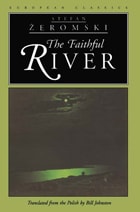
The Faithful River
Stefan Zeromski
Northwestern University Press, 1999
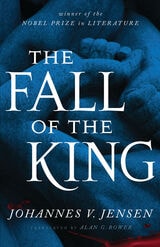
The Fall of the King
Johannes V. Jensen
University of Minnesota Press, 2011
Taking place during the first half of the sixteenth century, The Fall of the King tells the story of dreamy, slacking student Mikkel Thøgersen and the entanglements that ultimately bring him into service as a mercenary under King Christian II of Denmark. Moving from the Danish countryside to Stockholm during the execution of Swedish nobility and finally to the imprisonment of Mikkel and Christian, the narrative is a lyrical encapsulation of “the fall”—the fall of country, history, individuals, and nature.
Twice voted as the most important Danish novel of the twentieth century, The Fall of the King is both an epic depiction of real events and a complex psychological novel. Half pure narration, half prose poem, its scenes of brute realism mixed with rhapsodical passages make it a work of artistic genius.
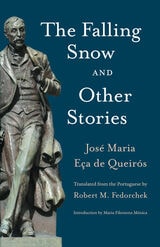
The Falling Snow and Other Stories
José Maria Eça de Queirós
Catholic University of America Press, 2022
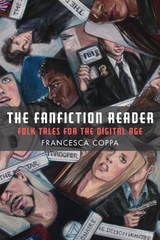
The Fanfiction Reader
Folk Tales for the Digital AgeFrancesca Coppa
University of Michigan Press, 2017
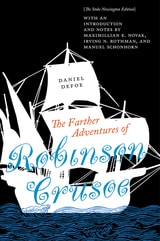
The Farther Adventures of Robinson Crusoe
The Stoke Newington EditionMaximillian E. Novak
Bucknell University Press, 2022
Published by Bucknell University Press. Distributed worldwide by Rutgers University Press.
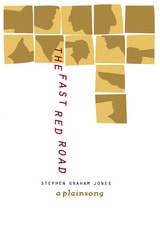
The Fast Red Road
A PlainsongStephen Graham Jones
University of Alabama Press, 2000
A road trip through myth, memory, and madness.
The Fast Red Road—A Plainsong is a novel which plunders, in a gleeful, two-fisted fashion, the myth and pop-culture surrounding the American Indian. It is a story fueled on pot fumes and blues, borrowing and distorting the rigid conventions of the traditional western. Indians, cowboys, and outlaws are as interchangeable as their outfits; men strike poses from Gunsmoke, and horses are traded for Trans-Ams. Pidgin, the half-blood protagonist, inhabits a world of illusion—of aliens, ghosts, telekinesis, and water-pistol violence—where television offers redemption, and “the Indian always gets it up the ass.”
Having escaped the porn factories of Utah, Pidgin heads for Clovis, NM to bury his father, Cline. But the body is stolen at the funeral, and Pidgin must recover it. With the aid of car thief Charlie Ward, he criscrosses a wasted New Mexico, straying through bars, junkyards, and rodeos, evading the cops, and tearing through barriers "Dukestyle." "Charlie Ward slid his thin leather belt from his jeans and held it out the window, whipping the cutlass faster, faster, his dyed black hair unbraiding in the fifty mile per hour wind, and they never stopped for gas." Along the way, Pidgin escapes a giant coyote, survives a showdown with Custer, and encounters the remnants of the Goliard Tribe—a group of radicals to which Cline belonged.
Pidgin's search allows him to reconcile the death of his father with five hundred years of colonial myth-making, and will eventually place him in a position to rewrite history. Jones tells his tale in lean, poetic prose. He paints a bleak, fever-burnt west—a land of strip-joints, strip-malls, and all you can eat beef-fed-beef stalls, where the inhabitants speak a raw, disposable lingo. His vision is dark yet frighteningly recognizable. In the tradition of Gerald Vizenor's Griever, The Fast Red Road—A Plainsong blazes a trail through the puppets and mirrors of myth, meeting the unexpected at every turn, and proving that the past—the texture of the road—can and must be changed.

The Faulkes Chronicle
David Huddle
Tupelo Press, 2015
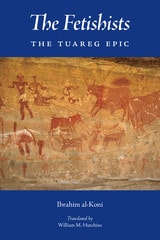
The Fetishists
By Ibrahim al-Koni, Translated by William M. Hutchins
University of Texas Press, 2018
The Fetishists, originally published in Arabic as Al Majus, is considered the masterpiece of Ibrahim al-Koni, one of the most prolific and important writers in Arabic today. In The Fetishists, Al-Koni explores what happens when a writer asks the novel to speak of and for the Sahara, when rival cultures clash, and when communities seek to build a utopia on Earth as individuals struggle between a desire for material well-being (represented by gold dust) and a need for spiritual meaning. As the story opens, Sultan Oragh of Timbuktu, who has already lost most of his power to Fetishist Bambara leaders of the forestlands, fears he will lose his only daughter, Tenere, as a human sacrifice to their god Amnay. The sultan sends Tenere to seek refuge with fellow Tuareg nomads in the plain. But even in their traditional, nomadic community, a competition rages between jihadi militant Islam; moderate Anhi Islam, which is the ancient Tuareg Law; and the cults of gold dust and of traditional African folk religions.
In this epic novel, Al-Koni blends Tuareg folklore and history with intense, fond descriptions of daily life in the desert, creating a mirror for life anywhere. Through its tragic rendering of a clash between the Tuareg and traditional African civilizations, the novel profoundly probes the contradictions of the human soul as it takes the reader on a unique spiritual adventure inside the Tuareg world.
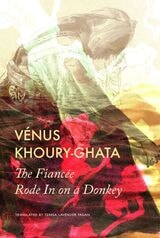
The Fiancée Rode In on a Donkey
Vénus Khoury-Ghata
Seagull Books, 2023
For two days the rabbi rides on a donkey to find the ideal fiancée. Legs and arms shaved, hands dyed with henna, a girl to be married must shine like a mirror. Every girl hopes to be the chosen one and ride off on a donkey to live in the city. The desert is the domain of men; they believe they see oases and palm trees sagging with fruit, while women see only sand on top of sand. A rapid look-around at the girls in the circle was enough for the traveling rabbi to find the right one. He chooses Yudah because of her name, a contraction of Yahuda, and because she lowered her eyes when he looked at her.
The Fiancée Rode In on a Donkey tells Yudah’s story. Instead of experiencing her dream of being chosen and riding off on a donkey to live in a palace, she finds herself in an encampment of tents swaying in the wind. She also doesn’t find the Emir, who is battling on other fronts and soon surrenders. Yudah and the rest of his followers are exiled to Ile Sainte-Marguerite, where she pursues a tireless quest for her future husband in France, seeking a man she has never seen. Will the fantastic destiny of the young girl from the desert ever be fulfilled?
In lyrical novel after novel, Vénus Khoury-Ghata chooses overlooked individuals from history and brings them back to life on the page. Hauntingly unforgettable, The Fiancée Rode In on a Donkey is yet another poetic narrative from one of the most respected French authors of our times.
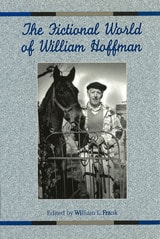
The Fictional World of William Hoffman
Edited by William L. Frank
University of Missouri Press, 2000
Over the past forty-five years, William Hoffman has written eleven novels, including the critically acclaimed Tidewater Blood, winner of the Dashiell Hammett award, and four short-fiction collections, the most recent being Doors—all of which have enjoyed a loyal and appreciative readership. His work has received numerous honors, including the Andrew Nelson Lytle Prize for the best short story published in the Sewanee Review; the Jeanne C. Goodheart Prize for fiction, awarded by Shenandoah; and the Hillsdale Prize for fiction, awarded by the Fellowship of Southern Writers. Yet a critical evaluation of his acclaimed fiction has not previously appeared.
The Fictional World of William Hoffman provides readers with the first vital and informative assessment of Hoffman's work. Including penetrating commentary and analysis from fellow writers—Fred Chappell, George Core, George Garrett, Dabney Stuart—as well as from established and emerging critics—Ron Buchanan, Martha Cook, Jeanne Nostrandt, Gordon Van Ness-this collection of essays aims to deepen the appreciation of those already familiar with Hoffman and to introduce new readers to one of the South's most influential voices.
George Core's opening essay provides an overview of Hoffman's novels to date, with sufficient examples to suggest his range, scope, imagery, and principal themes, including honor, courage, love, self-sacrifice, and the role of religion. The other essays in the collection focus in detail on his most admired work, especially the war novels, the short stories, and the philosophical novels of recent years. All eleven novels are covered briefly throughout the collection, six are treated extensively, and three essays focus on his short fiction.
There is no doubt that William Hoffman is a major contemporary writer. His considerable talent and influence have been felt by generations of readers. The Fictional World of William Hoffman helps to secure this influence for years to come. "As with all gifted and talented writers," Frank concludes, "the themes of Hoffman's fiction are what will endure."
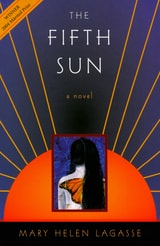
The Fifth Sun
Mary Helen Lagasse
Northwestern University Press, 2004
Winner of the 3rd Annual Miguel Mármol Prize from Curbstone Press, Mary Helen Lagasse's The Fifth Sun is an inspiring story of an immigrant who struggles valiantly for a better life for herself and her family. A young Mexican woman, Mercedes, leaves her village to work as a housemaid in New Orleans. This fast-paced novel takes us through her adventures in New Orleans, her marriage, her struggle to raise her children, her deportation, and her attempt to re-cross the river and be reunited with her children.
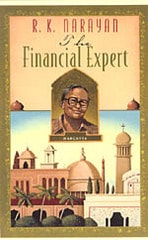
The Financial Expert
R. K. Narayan
University of Chicago Press, 1981
"The novels of R. K. Narayan are the best I have read in any language for a long time."—Amit Roy, Daily Telegraph
"The experience of reading one of his novels is . . . comparable to one's first reaction to the great Russian novels: the fresh realization of the common humanity of all peoples."—Margaret Parton, New York Herald Tribune Book Review
"The hardest of all things for a novelist to communicate is the extraordinary ordinariness of most human happiness. . . . Jane Austen, Soseki, Chekhov: a few bring it off. Narayan is one of them."—Francis King, Spectator
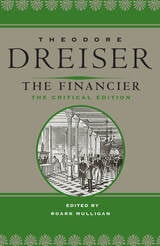
The Financier
The Critical EditionTheodore Dreiser. Edited by Roark Mulligan
University of Illinois Press, 2010
First published in 1912, Theodore Dreiser's third novel, The Financier, captures the ruthlessness and sparkle of the Gilded Age alongside the charismatic amorality of the power brokers and bankers of the mid-nineteenth century. This volume is the first modern edition of The Financier to draw on the uncorrected page proofs of the original 1912 version, which established Dreiser as a master of the American business novel. The novel was the first volume of Dreiser’s Trilogy of Desire, also known as the Cowperwood Trilogy, which includes The Titan (1914) and The Stoic (1947).
Dreiser laboriously researched the business practices and personal exploits of real-life robber baron Charles Yerkes to narrate Frank Algernon Cowperwood's early career in The Financier, which explores the unscrupulous world of finance from the Civil War through the panic incited by the 1871 Chicago fire. In 1927, the monumental novel reappeared in a radically revised version for which Dreiser, notorious for lengthy novels, agreed to cut more than two hundred and seventy pages. This revised version became the most familiar, reprinted by publishers and studied by scholars for decades.
For this new edition, Roark Mulligan meticulously reviewed earlier versions of the novel and its publication history, including the last-minute removal of paragraphs, pages, and even whole chapters from the 1912 edition, cuts based mainly on the advice of H. L. Mencken. The restored text better matches Dreiser's original vision for the work. More than three hundred additional pages not available to modern readers--including those cut from the 1927 edition and more than seventy hastily removed from the manuscript just days before publication in 1912--more effectively establish characterization and motivation. Restored passages dedicated to the internal thoughts of major and minor characters bring a softer dimension to a novel primarily celebrated for its realistic attention to the cold external world of finance.
Mulligan's historical commentary reveals new insights into Dreiser's creative practices and how his business knowledge shaped The Financier. This supplemental material considers the novel's place within the tradition of American business novels and its reflections on the scandalous business practices of the robber baron era.

The Fire Above, the Mountain Below
Reinhard Jirgl
Seagull Books, 2020
The Fire-Dwellers
Margaret Laurence
University of Chicago Press, 1993
"Stacey's state of mind is revealed in a swift-flowing stream of dialogue, reaction, reproach, and nostalgia. . . . [Laurence] is the best fiction writer in the Dominion and one of the best in the hemisphere."—Atlantic
The First Line
Jean-Marie Laclavetine
Seagull Books, 2025
A sharp, witty send-up of the literary world, set in the world of book publishing—a must-read for anyone who’s ever dreamt of (or dreaded) getting published.
Cyril Cordouan is the beleaguered editor at Fulmen, a distinguished publishing house known for its solid but not particularly popular literary titles. Every day, Cyril faces an avalanche of subpar manuscripts, struggling to find a glimmer of quality amid the piles of drivel. Rejections are a routine part of his job, but aspiring authors don’t take kindly to their works being dismissed, and one distraught writer tragically ends his life after his manuscript is declined.
Devastated, Cyril decides to create an outlet for these rejected writers. Can group therapy for the hopelessly hopeful cure Cyril’s woes? Not quite. Between vengeful widows, surprise bestsellers, and a crippling crisis of conscience, Cyril’s life is a hilarious disaster.
With sharp wit and keen insight, Laclavetine, himself an industry insider, offers a satirical look at the literary world along with thought-provoking commentary on the nature of literary ambition, rejection, and the often ridiculous realities of the publishing industry.
The Fisher King
A NovelAnthony Powell
University of Chicago Press, 2004
Ostensibly a novel about gossip on a cruise ship, The Fisher King is much more: a highly stylized narrative infused with Greek mythology, legend, and satire.
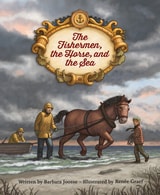
The Fishermen, the Horse, and the Sea
Barbara Joosse
Wisconsin Historical Society Press, 2021
This beautifully illustrated children’s book based on a true story recounts a dramatic rescue on Lake Michigan and introduces young readers to Lester Smith and his family, who founded Port Washington’s long-running and beloved Smith Bros. Fish Shanty. Educational materials including definitions, an illustrated map of Lake Michigan, and short biographies of the story’s featured characters supplement this engaging story for elementary-age readers.

The Fixed Period
Anthony Trollope
University of Michigan Press, 1990
Trollope’s satiric portrayal of the statisticians who calculate the savings to be realized by putting the old people away before they become an expensive catastrophic burden, and the ironic presentation of the narrator’s justification of euthanasia by appeal to Christian practice and doctrine, will delight contemporary readers. Trollope’s strong dislike of government bureaucracy is evident throughout, as is his awareness of the dangers to the world of an imagined weapon of destruction not unlike (in its effect) the atomic bomb.
In making accessible the complete text of this work with corrections from the original manuscript, Super has performed an invaluable service for Trollope scholars and enthusiasts.
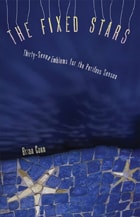
The Fixed Stars
Thirty-Seven Emblems for the Perilous SeasonBrian Conn
University of Alabama Press, 2010
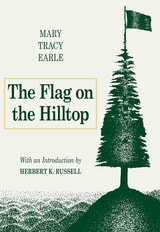
The Flag on the Hilltop
Mary Tracy Earle
Southern Illinois University Press, 1989
Early in the Civil War, two young brothers boldly flew the Union flag from a tree atop a hill between Makanda and Cobden. This was a towering act of courage in an area teeming with Copperheads.
Theodore and Al Thompson, 18 and 20 years old at the time, raised the flag in defiance of the Knights of the Golden Circle, a secessionist group that operated throughout the Midwest. Controlling its membership through terror, this secret society condemned betrayers to death by torture. The Knights, whose goals included capturing a Union prison and liberating the rebels, triggered the Civil War riot in Charleston, instigated anti-draft movements, and aided Northern deserters.
Theodore Thompson, who later owned much of Makanda, Giant City, and the land that became Southern Illinois University describes the tree as a "tall tulip poplar between 3 and 4 feet in diameter at the trunk and some 60 feet to the first limbs. This noted tree could be seen in some directions 15 or 20 miles away."