Results by title
28164 books match the query 'History' and 6372 start with t
Thailand’s Political Peasants
Power in the Modern Rural EconomyAndrew Walker
University of Wisconsin Press, 2012
When a populist movement elected Thaksin Shinawatra as prime minister of Thailand in 2001, many of the country’s urban elite dismissed the outcome as just another symptom of rural corruption, a traditional patronage system dominated by local strongmen pressuring their neighbors through political bullying and vote-buying. In Thailand’s Political Peasants, however, Andrew Walker argues that the emergence of an entirely new socioeconomic dynamic has dramatically changed the relations of Thai peasants with the state, making them a political force to be reckoned with. Whereas their ancestors focused on subsistence, this generation of middle-income peasants seeks productive relationships with sources of state power, produces cash crops, and derives additional income through non-agricultural work. In the increasingly decentralized, disaggregated country, rural villagers and farmers have themselves become entrepreneurs and agents of the state at the local level, while the state has changed from an extractor of taxes to a supplier of subsidies and a patron of development projects.
Thailand’s Political Peasants provides an original, provocative analysis that encourages an ethnographic rethinking of rural politics in rapidly developing countries. Drawing on six years of fieldwork in Ban Tiam, a rural village in northern Thailand, Walker shows how analyses of peasant politics that focus primarily on rebellion, resistance, and evasion are becoming less useful for understanding emergent forms of political society.
Thanksgiving
The Biography of an American HolidayJames W. Baker
University of New Hampshire Press, 2009
In this, the first in-depth study of the most American of holidays, James Baker sweeps away lingering myths and misconceptions to show how this celebration day was born and grew to be an essential part of our national spirit. Thanksgiving: The Biography of an American Holiday opens with an overview of the popular mythos of the holiday before discussing its possible religious and cultural precedents. This classic Yankee holiday is examined in historical and contemporary detail that embraces everything from proclamations, sermons, and local and regional traditions to family reunions, turkey dinners, and recipes. Thanksgiving's evolving face is illustrated with charming and often revealing period prints that chart our changing attitudes: the influence of Victorian sentiment in Thanksgiving's development, Progressive utilitarianism, intellectual “debunking,” patriotic wartime reclamation, and 1960s-era protest. Thanksgiving remains controversial up to the present day, as Mayflower descendants, Native Americans, and commercial exploiters compete for the American public's opinion of the holiday's contemporary significance and its future status. This is an intelligent and illuminating introduction to a beloved holiday and a fascinating cultural history of America and Americana.
Thanos Vlekas
A NovelPavlos Kalligas, Translated from the Greek by Thomas Doulis
Northwestern University Press, 2001
Thanos is a young farmer struggling to improve himself despite the derision of his mother, who considers him incapable of bearing arms for his country. She prefers instead her more "heroic" son, the brave and ambitious brigand Tassos, whose courage and resistance to authority embodying the virtues that helped Greece drive out the Turks. While Thanos works his land, his ruthless brother uses the political machinery and wealth gained from robbery and murder to replace the old Ottoman landowners and subjugate the villagers.
That Old-Time Rock & Roll
A Chronicle of an Era, 1954-63Richard Aquila
University of Illinois Press, 1989
Elvis Presley and Bill Haley. Sam Cooke and the Shirelles. The Crows and the Chords. American Bandstand and Motown. From its first rumblings in the outland alphabet soup of R&B and C&W, rock & roll music promised to change the world--and did it.
Combining social history with a treasure trove of trivia, Richard Aquila unleashes the excitement of rock's first decade and shows how the music reflected American life from the mid-1950s through the dawn of Beatlemania. His year-by-year timelines and a photo essay place the music in historical perspective by linking artists and their hits to the news stories, movies, TV shows, fads, and lifestyles. In addition, he provides a concise biographical dictionary of the performers who made the charts between 1954 and 1963, along with the label and chart position of each of their hit songs.
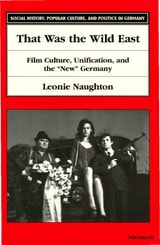
That Was the Wild East
Film Culture, Unification, and the "New" GermanyLeonie Naughton
University of Michigan Press, 2002
That Which Is Just in the Church
An Introduction to Canon Law: Volume 1Carlos José Errázuriz
St. Augustine's Press, 2021
Errázuriz presents more than the current Code of Canon Law. He instills a realistic perspective of right and law in the Church, and in so doing fills a massive gap in English scholarship. No introduction to canon law available in English rivals Errázuriz's description of justice in the Church and its relationship with communion and sacramentality.
Volume I is comprised of the first three chapters of the original, Corso fondamentale sul diritto nella Chiesa (in two volumes, Giuffrè: Milan, 2009 and 2017): "Rights, Justice and Law in the Church," "Canon Law in History," and "The Configuration of Rights and Law in the Church."
That Which Is Just in the Church
Volume 2: The Human Person in the ChurchCarlos José Errázuriz
St. Augustine's Press, 2023
Being subject to law, Errázuriz observes, does not undermine the freedom and dignity of the person. Rather, ecclesial law intends to confront the human person with his true supernatural inheritance, while preserving him in the mystery of communion within which the Church herself exists. Indeed, the human person has both natural and supernatural dignity, and likewise responsibilities that bear upon the seen and unseen realms of communion.
Prof. Errázuriz examines the practical applications of personhood and law, as well as the perspectives of the human subject that derive from his ontological status. This is further drawn across various states of life that occur within the Church and the differing juridical relations encountered. Also considered is the nature of association in the Church, and Errázuriz breaks down the concepts and particular realities pertaining to this natural tendency and the legal discipline.

That Which Roots Us
Environmental Issues in the Pacific Northwest & BeyondMarion Dresner
University of Nevada Press, 2023
A work of natural and environmental history.
That Which Roots Us is a work of natural and environmental history that explores the origins of and resolutions to some of the United States’ environmental problems. Marion Dresner discusses the roots of Euro-American environmental exploitative action, starting with the environmental consequences of having treated Pacific Northwest forests as commodities. She shares her experiences visiting sites where animal-centered ice age culture changed to human-centered culture thousands of years ago with the advent of farming. The book explores the origins of the romantic philosophical movement, which arose out of the debilitating conditions of the industrial era. Those romantic attitudes toward nature inspired the twentieth-century preservation movement and America’s progressively modern conservation attitudes.
The book is centered around environmental issues in the Pacific Northwest, contrasting utilitarian views of nature with Native American practices of respect and reciprocity. The elements that make That Which Roots Us a truly unique and important contribution to environmental literature are the author’s personal recollections and interactions with the landscape. Ultimately, Dresner offers hope for a new stewardship of the land and a focus on science literacy and direct experience in the natural world as the most grounded way of knowing the planet.
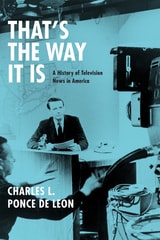
That's the Way It Is
A History of Television News in AmericaCharles L. Ponce de Leon
University of Chicago Press, 2015
The critics may be right. But, as Charles L. Ponce de Leon explains in That’s the Way It Is, TV news has always walked a fine line between hard news and fluff. The familiar story of decline fails to acknowledge real changes in the media and Americans’ news-consuming habits, while also harking back to a golden age that, on closer examination, is revealed to be not so golden after all. Ponce de Leon traces the entire history of televised news, from the household names of the late 1940s and early ’50s, like Eric Sevareid, Edward R. Murrow, and Walter Cronkite, through the rise of cable, the political power of Fox News, and the satirical punch of Colbert and Stewart. He shows us an industry forever in transition, where newsmagazines and celebrity profiles vie with political news and serious investigations. The need for ratings success—and the lighter, human interest stories that can help bring it—Ponce de Leon makes clear, has always sat uneasily alongside a real desire to report hard news.
Highlighting the contradictions and paradoxes at the heart of TV news, and telling a story rich in familiar figures and fascinating anecdotes, That’s the Way It Is will be the definitive account of how television has showed us our history as it happens.

That’s Gotta Hurt
The Injuries That Changed Sports ForeverDr. David Geier
University Press of New England, 2017
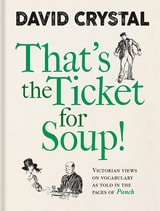
That’s the Ticket for Soup!
Victorian Views on Vocabulary as Told in the Pages of PunchDavid Crystal
Bodleian Library Publishing, 2020
The vocabulary of the past is always intriguing, especially when it is no longer used in modern English. Many of the words and phrases that were popular in Victorian England may sound foreign today, but looking to original sources and texts can yield fascinating insight, especially when we see how vocabulary was pilloried by the satirists of the day.
In That’s the Ticket for Soup!, the renowned language expert David Crystal returns to the pages of Punch magazine, England’s widely read satirical publication. Crystal has pored through the pages of Punch between its first issue in 1841 and the death of Queen Victoria in 1901 and extracted the articles and cartoons that poked fun at the jargon of the day. Here we have Victorian high and low society, with its fashionable and unfashionable slang, its class awareness on display in the vocabulary of steam engines, motor cars, and other products of the Industrial Revolution. Then, as now, people had strong feelings about the flood of new words entering English. Swearing, new street names, and the many borrowings from French provoked continual irritation and mockery, as did the Americanisms increasingly encountered in the British press. In addition to these entertaining examples, Crystal includes commentary on the context of the times and informative glossaries. This original and amusing collection reveals how many present-day feelings about words can be traced to the satire of a century ago.

The "Counterfeit" Man
The True Story of the Boorn-Colvin Murder CaseGerald W. McFarland
University of Massachusetts Press, 1993
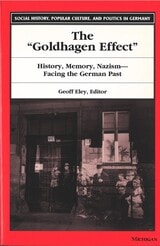
The "Goldhagen Effect"
History, Memory, Nazism--Facing the German PastGeoff Eley, Editor
University of Michigan Press, 2000
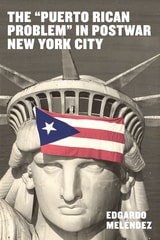
The "Puerto Rican Problem" in Postwar New York City
Edgardo Meléndez
Rutgers University Press, 2023
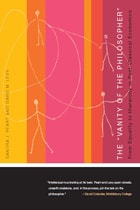
The "Vanity of the Philosopher"
From Equality to Hierarchy in Post-Classical EconomicsSandra J. Peart and David M. Levy
University of Michigan Press, 2005
Here, Peart and Levy tackle the issues of racism, eugenics, hierarchy, and egalitarianism in classical economics and take a broad view of classical economics' doctrine of human equality. Responding to perennial accusations from the left and the right that the market economy has created either inequality or too much equality, the authors trace the role of the eugenics movement in pulling economics away from the classical economist's respect for the individual toward a more racist view at the turn of the century.
The "Vanity of the Philosopher" reveals the consequences of hierarchy in social science. It shows how the "vanity of the philosopher" has led to recommendations that range from the more benign but still objectionable "looking after" paternalism, to overriding preferences, and, in the extreme, to eliminating purportedly bad preferences. The authors suggest that an approach that abstracts from difference and presumes equal competence is morally compelling.
"People in the know on intellectual history and economics await the next book from Peart and Levy with much the same enthusiasm that greets a new Harry Potter book in the wider world. This book delivers the anticipated delights big time!"
-William Easterly, Professor of Economics and Africana Studies, NYU, and non-resident Senior Fellow, Center for Global Development
"In their customary idiosyncratic manner, Sandra Peart and David Levy reexamine the way in which the views of classical economists on equality and hierarchy were shifted by contact with scholars in other disciplines, and the impact this had on attitudes towards race, immigration, and eugenics. This is an imaginative and solid work of scholarship, with an important historical message and useful lessons for scholars today."
-Stanley Engerman, John Munro Professor of Economics and Professor of History, University of Rochester
Sandra J. Peart, Professor of Economics at Baldwin-Wallace College, has published articles on utilitarianism, the methodology of J. S. Mill, and the transition to neoclassicism. This is her fourth book. David M. Levy is Professor of Economics at George Mason University and Director of the Center for Study of Public Choice. This is his third book.
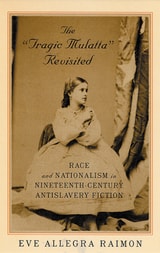
The 'Tragic Mulatta' Revisited
Race and Nationalism in Nineteenth-Century Antislavery FictionEve Allegra Raimon
Rutgers University Press, 2004
Since its inception, the United States has been intensely preoccupied with interracialism. The concept is embedded everywhere in our social and political fabric, including our sense of national identity. And yet, in both its quantitative and symbolic forms, interracialism remains an extremely elusive phenomenon, causing policy makers and census boards to wrangle over how to delineate it and, on an emblematic level, stirring intense emotions from fear to fascination.
In The “Tragic Mulatta” Revisited, Eve Allegra Raimon focuses on the mixed-race female slave in literature, arguing that this figure became a symbolic vehicle for explorations of race and nation—both of which were in crisis in the mid-nineteenth century. At this time, judicial, statutory, social, and scientific debates about the meaning of racial difference (and intermixture) coincided with disputes over frontier expansion, which were never merely about land acquisition but also literally about the “complexion” of that frontier. Embodying both northern and southern ideologies, the “amalgamated” mulatta, the author argues, can be viewed as quintessentially American, a precursor to contemporary motifs of “hybrid” and “mestizo” identities.
Where others have focused on the gendered and racially abject position of the “tragic mulatta,” Raimonreconsiders texts by such central antislavery writers as Lydia Maria Child, William Wells Brown, Harriet Beecher Stowe, and Harriet Wilson to suggest that the figure is more usefully examined as a way of understanding the volatile and shifting interface of race and national identity in the antebellum period.
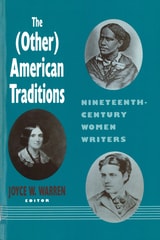
The (Other) American Traditions
Nineteenth-Century Women WritersWarren, Joyce W
Rutgers University Press, 1993
The American literary canon has been the subject of debate and change for at least a decade. As women writers and writers of color are being rediscovered and acclaimed, the question of whether they are worthy of inclusion remains open.
The (Other) American Traditions brings together for the first time in one place, essays on individual writers and traditions that begin to ask the harder questions. How do we talk about these writers once we get beyond the historical issues? How is their work related to their male counterparts? How is it similar: how is it different? Are differences related to gender or race or class? How has the selection of books in the literary canon (Melville, Hawthorne, Emerson, and James) led to a definition of the American tradition that was calculated to exclude women? Do we need a new critical vocabulary to discuss these works? Should we stop talking about a tradition and begin to talk about many traditions? How did black American women writers develop strategies for speaking out when they were doubly in jeopardy of being ignored as blacks and as women? The volume offers irrefutable proof that the writers, the critics who work on their texts, all these questions, and the expansion of the canon matter very much indeed.
Contributors: Nina Baym, Deborah Carlin, Joanne Dobson, Josephine Donovan, Judith Fetterley, Frances Smith Foster, Susan K. Harris, Karla F.C. Holloway, Paul Lauter, Diane Lichtenstein, Carla L. Peterson, Carol J. Singley, Jane Tompkins, Joyce W. Warren and Sandra A. Zagarell.
The 16th Michigan Infantry in the Civil War, Revised and Updated
Kim Crawford
Michigan State University Press, 2019
The 1838 Mormon War in Missouri
Stephen C. LeSueur
University of Missouri Press, 1990
In the summer and fall of 1838, animosity between Mormons and their neighbors in western Missouri erupted into an armed conflict known as the Mormon War. The conflict continued until early November, when the outnumbered Mormons surrendered and agreed to leave the state.
In this major new interpretation of those events, LeSueur argues that while a number of prejudices and fears stimulated the opposition of Missourians to their Mormon neighbors, Mormon militancy contributed greatly to the animosity between them. Prejudice and poor judgment characterized leaders on both sides of the struggle. In addition, LeSueur views the conflict as an expression of attitudes and beliefs that have fostered a vigilante tradition in the United States. The willingness of both Missourians and Mormons to adopt extralegal measures to protect and enforce community values led to the breakdown of civil control and to open warfare in northwestern Missouri.

The 1922 General Election Reconsidered
High Politics and the Birth of the Modern British ElectionG.H. Bennett
University of London Press, 2025
The 1922 General Election was more than just another political contest; it was the turning point that shaped the modern British electoral landscape. In The 1922 General Election Reconsidered, G.H. Bennett revisits this pivotal moment with fresh insight, drawing on newly available archival materials and digitized resources to decipher the high-stakes maneuvering and backroom negotiations that defined the campaign. Covering the dramatic collapse of the Lloyd George coalition and the intricate web of party alliances and local political machinations, this book captures the election in unprecedented detail.
Bennett studies the key players and the seismic shifts that emerged in the wake of the vote. He also looks into how informal cooperation between parties blurred political lines and how media speculation shaped public perceptions. By placing the election in both its immediate and long-term context, The 1922 General Election Reconsidered is a compelling reconsideration of an often-overlooked moment in British political history that continues to influence elections a century later.
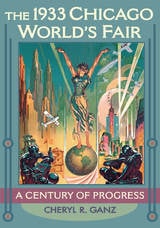
The 1933 Chicago World's Fair
A Century of ProgressCheryl R. Ganz
University of Illinois Press, 2012
Chicago's 1933 world's fair set a new direction for international expositions. Earlier fairs had exhibited technological advances, but Chicago's fair organizers used the very idea of progress to buoy national optimism during the Depression's darkest years. Orchestrated by business leaders and engineers, almost all former military men, the fair reflected a business-military-engineering model that envisioned a promising future through science and technology's application to everyday life. Fair organizers, together with corporate leaders, believed that progress rides on the tide of technological innovation and consumerism.
But not all those who struggled for a voice at Chicago's 1933 exposition had abandoned the traditional notions of progress that entailed social justice and equality, recognition of ethnic and gender-related accomplishments, and personal freedom and expression. The stark pronouncement of the fair's motto, "Science Finds, Industry Applies, Man Conforms," was challenged by iconoclasts such as Sally Rand, whose provocative fan dance became a persistent symbol of the fair, as well as a handful of others, including African Americans, ethnic populations and foreign nationals, groups of working women, and even well-heeled socialites. They all met obstacles but ultimately introduced personal, social definitions of "progress" and thereby influenced the ways the fair took shape.
In this engaging social and cultural history, Cheryl R. Ganz examines Chicago's second world's fair through the lenses of technology, ethnicity, and gender. The book also features eighty-six photographs--nearly half of which are full color--of key locations, exhibits, and people, as well as authentic ticket stubs, postcards, pamphlets, posters, and other items. From fan dancers to fan belts, The 1933 Chicago World's Fair: A Century of Progress offers the compelling, untold stories of fair planners and participants who showcased education, industry, and entertainment to sell optimism during the depths of the Great Depression.
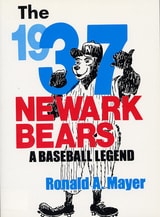
The 1937 Newark Bears
A Baseball LegendMayer, Ronald A
Rutgers University Press, 1994
The Bears' finest hour, however, came in 1937 with a team that many experts consider the greatest in the history of the minor leagues. This book captures all the thrilling moments of that memorable season--action-packed Spring training at Sebring, Florida, the day-to-day excitement of the pennant race, the vivid play-by-play action of the semifinal playoff against the Syracuse Chiefs, the final playoof against the Baltimore Orioles, and finally, the spellbinding, unforgettable Little World Series against the powerful Columbus Red Birds.
This book is packed with photos and colorful profiles of Babe Dahlgren, Atley Donald, Joe Gordon, Charley Keller, George McQuinn, manager Oscar Vitt, and the rest of the great Newark players. It's all here, in the most comprehensive and thoroughly researched book every published about the Newark Bears.
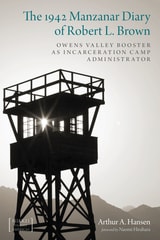
The 1942 Manzanar Diary of Robert L. Brown
Owens Valley Booster as Incarceration Camp AdministratorArthur A. Hansen
University Press of Colorado, 2026
This transcribed and edited wartime diary of Robert L. Brown—a trained journalist who served as public relations staff and assistant director at the Manzanar concentration camp—reveals the thoughts and perspective of the jailer, providing a window into the views of the local population around the presence and experience of a concentration camp for Japanese Americans in their community. In addition to the heavily footnoted diary, the book includes a prologue, introduction, and epilogue from Arthur A. Hansen, providing context for the journal as well as how Hansen came to transcribe the work with Brown’s blessing.
A departure from the typical recovered narratives from incarcerees, Brown’s diary is a historically significant primary source that provides insight into camp administration and local community relationships with Manzanar and a rich primary source for specialists in the field of Japanese American incarceration.
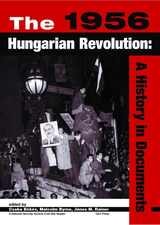
The 1956 Hungarian Revolution
A History in DocumentsThe National Security Archive Békés
Central European University Press, 2003
The 23rd Psalm
A Holocaust MemoirGeorge Lucius Salton, with Anna Salton Eisen
University of Wisconsin Press, 2004
The 4th Michigan Infantry in the Civil War
Martin N. Bertera
Michigan State University Press, 2010
This fascinating narrative tells the story of a remarkable regiment at the center of Civil War history. The real-life adventure emerges from accounts of scores of soldiers who served in the 4th Michigan Infantry, gleaned from their diaries, letters, and memoirs; the reports of their officers and commanders; the stories by journalists who covered them; and the recollections of the Confederates who fought against them. The book includes tales of life in camp, portraying the Michigan soldiers as everyday people—recounting their practical jokes, illnesses, political views, personality conflicts, comradeship, and courage.
The book also tells the true story of what happened to Colonel Harrison Jeffords and the 4th Michigan when the regiment marched into John Rose's wheat field on a sweltering early July evening at Gettysburg. Beyond the myths and romanticized newspaper stories, this account presents the historical evidence of Jeffords's heroic, yet tragic, hand-to-hand struggle for his regiment's U.S. flag.

The AEF in Print
An Anthology of American Journalism in World War IChris Dubbs
University of North Texas Press, 2018
The AIA Guide to Columbus
Jeffrey T. Darbee
Ohio University Press, 2008
Columbus, the largest city in Ohio, has, since its founding in 1812, been home to many impressive architectural landmarks. The AIA Guide to Columbus, produced by the Columbus Architecture Foundation, highlights the significant buildings and neighborhoods in the Columbus metropolitan area. Skillfully blending architectural interest with historic significance, The AIA Guide to Columbus documents approximately 160 buildings and building groups and is organized geographically. Each chapter provides an opportunity to explore a special area of Columbus' built environment.
The Columbus Architecture Foundation has been affiliated with the American Institute of Architects (AIA), Columbus Chapter, for more than thirty years. Its first book project was Architecture Columbus, published in 1976. This new companion volume updates coverage of the buildings and provides a portable, accessible guide to the city's architectural history.
The AIA Guide to Columbus identifies buildings designated as historic and those that have won awards, and includes information on architectural styles, excellent photographs, maps, a glossary, and an index. The focus is on easy touring, whether the reader is walking or driving. Students, visitors, and residents with a penchant for knowing more about their city will enjoy discovering the rich heritage of Columbus' downtown, special districts, and neighborhoods.

The ALA Guide to Researching Modern China
Yunshan Ye
American Library Association, 2014
The ANC Women’s League
Sex, Gender and PoliticsShireen Hassim
Ohio University Press, 2015
First formed in the early twentieth century, the ANC Women’s League has grown into a leading organization in the women’s movement in South Africa. The league has been at the forefront of the nation’s century-long transition from an authoritarian state to a democracy that espouses gender equality as a core constitutional value. It has, indeed, always regarded itself as the women’s movement, frequently asserting its primacy as a vanguard organization and as the only legitimate voice of the women of South Africa. But, as this deeply insightful book shows, the history of the league is a more complicated affair—it was neither the only women’s organization in the political field nor an easy ally for South African feminism.
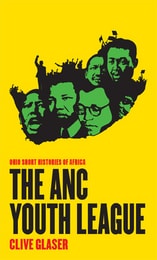
The ANC Youth League
Clive Glaser
Ohio University Press, 2012
This brilliant little book tells the story of the African National Congress (ANC) Youth League from its origins in the 1940s to the present and the controversies over Julius Malema and his influence in contemporary youth politics. Glaser analyzes the ideology and tactics of its founders, some of whom (notably Nelson Mandela and Oliver Tambo) later became iconic figures in South African history as well as inspirational figures such as A. P. Mda (father of author Zakes Mda) and Anton Lembede. It shows how the early Youth League gave birth not only to the modern ANC but also to its rival, the Pan Africanist Congress. Dormant for many years, the Youth League reemerged in the transition era under the leadership of Peter Mokaba—infused with the tradition of the militant youth politics of the 1980s. Throughout its history the Youth League has tried to “dynamize” and criticize the ANC from within, while remaining devoted to the mother body and struggling to find a balance between loyalty and rebellion.

The ANC and the Liberation Struggle
A Critical Political BiographyDale T. McKinley
Pluto Press, 1997
eloquent testimony of the continuing vitality of the South African left' Modern African Studies
The African National Congress, the ANC, negotiated a transition of government and power in South Africa in the early 1990s and gained widespread respect and legitimacy when Nelson Mandela was voted in as President in 1994.
In this controversial and radical critique of the ANC and the struggle for liberation in South Africa, Dale T. McKinley challenges conventional public perceptions of the organisation and its celebrated rise to power. McKinley offers the first detailed analysis of the ANC's leadership, tactics and strategies from the 1920s, through the years of exile, to the 1990s, focusing on its close alliance with the South African Communist Party. he reveals that the organisation, despite historical claims to the contrary, failed to stay in touch with the south African masses. The ANC made fundamental compromises to gain political power, and in so doing has ensured that the economic power-base of the ruling elites in South Africa remains essentially unaltered.
The ASEAN Miracle
A Catalyst for PeaceKishore Mahbubani and Jeffery Sng
National University of Singapore Press, 2017
In 1967, leaders from Indonesia, Malaysia, the Philippines, Singapore, and Thailand struck a landmark agreement, forming ASEAN. They had realized that political and economic cooperation would bring greater stability and prosperity to the region. Fifty years and five additional countries later, the alliance has remained one of the world’s most successful collaborations. Kishore Mahbubani and Jeffery Sng explain how this partnership has benefited the ten member countries and why it should serve as a model for other regions of the world, challenging our assumptions about international cooperation. As the world turns to Asia and the United States and China jostle for dominance, the ASEAN region will have an undeniably powerful role in shaping our global systems. Mahbubani and Sng offer an important primer for understanding this immensely successful—and woefully underappreciated—regional organization.

The Ability to Mourn
Disillusionment and the Social Origins of PsychoanalysisPeter Homans
University of Chicago Press, 1989
Psychoanalysis, Homans shows, originated as a creative response to the withering away of traditional communities and their symbols in the aftermath of the industrial revolution. The loss of these attachments played a crucial role in the lives of the founders of psychoanalysis, especially Sigmund Freud but also Karl Abraham, Carl Jung, Otto Rank, and Ernest Jones. The personal, political, and religious losses that these figures experienced, the introspection that followed, and the psychological discovery that resulted are what Homans calls "the ability to mourn."
Homans expands this historical analysis to construct a general model of psychological discovery: the loss of shared ideals and symbols can produce a deeper sense of self (psychological structure-building, or individuation) and can then lead to the creation of new forms of meaning and self-understanding. He shows how Freud, Jung, and other psychoanalysts began to extend their introspection outward, reinterpreting the meanings of Western art, history, and religion. In conclusion, Homans evaluates Freud's theory of culture and discusses the role that psychoanalysis might play in social and cultural criticism.
Throughout the book, Homans makes use of the many histories, biographies, and psychobiographies that have been written about the origins of psychoanalysis, drawing them into a comprehensive sociocultural model. Rich in insights and highly original in approach, this work will interest psychoanalysts and students of Freud, sociologists concerned with modernity and psychoanalysis, and cultural critics in the fields of religion, anthropology, political science, and social history.
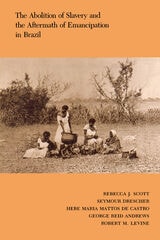
The Abolition of Slavery and the Aftermath of Emancipation in Brazil
Rebecca Scott, Seymour Drescher, Hebe Maria Mattos de Castro, George Reid Andrews, and Robert Levine
Duke University Press, 1988
The articles presented here represent a broad scope of scholarly inquiry that covers developments across a wide canvas of Brazilian history and accentuates the importance of formal abolition as a watershed in that nation’s development.
The Abongo Abroad
Military-Sponsored Travel in Ghana, the United States, and the World, 1959-1992John V. Clune
Vanderbilt University Press, 2017
Merging newly discovered documents from Ghana's armed forces and declassified sources on American military assistance to Africa, this work argues that military-sponsored travel made individual Ghanaians' outlooks on the world more international, just as military assistance planners hoped they would, but the Ghanaian state struggled to turn that new identity into political or economic progress.

The Absent Man
The Narrative Craft of Charles W. ChesnuttCharles Duncan
Ohio University Press, 1998
As the first African-American fiction writer to achieve a national reputation, Ohio native Charles W. Chesnutt (1858–1932) in many ways established the terms of the black literary tradition now exemplified by such writers as Toni Morrison, Alice Walker, and Charles Johnson.
Following the highly autobiographical nonfiction produced by Frederick Douglass, Harriet Jacobs, and other slave narrative writers, Chesnutt’s complex, multi-layered short fiction transformed the relationship between African-American writers and their readers. But despite generous praise from W. D. Howells and other important critics of his day, and from such prominent readers as William L. Andrews, Henry Louis Gates, Jr., and Eric Sundquist in ours, Chesnutt occupies a curiously ambiguous place in American literary history.
In The Absent Man, Charles Duncan demonstrates that Chesnutt’s uneasy position in the American literary tradition can be traced to his remarkable narrative subtlety. Profoundly aware of the delicacy of his situation as a black intellectual at the turn of the century, Chesnutt infused his work with an intricate, enigmatic artistic vision that defies monolithic or unambiguously political interpretation, especially with regard to issues of race and identity that preoccupied him throughout his career.
In this first book-length study of the innovative short fiction, Duncan devotes particular attention to elucidating these sophisticated narrative strategies as the grounding for Chesnutt’s inauguration of a tradition of African-American fiction.
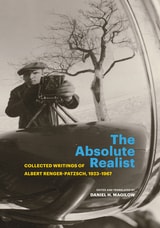
The Absolute Realist
Collected Writings of Albert Renger-Patzsch, 1923–1967Albert Renger-Patzsch
J. Paul Getty Trust, The, 2022
A towering figure in the history of photography, Albert Renger-Patzsch (1897–1966) has come to epitomize New Objectivity, the neorealist movement in modernist literature, film, and the visual arts recognized as the signature artistic style of Germany’s Weimar Republic. Today, his images are regularly exhibited and widely considered key influences on contemporary photographers. Whether they capture geometrically intricate cacti, flooded tidal landscapes, stacks of raw materials, or imposing blast furnace towers, Renger-Patzsch’s photographs embody what his peer Hugo Sieker termed “absolute realism,” an approach predicated upon the idea that photographers have one task: to exploit the camera’s unique capacity to document with uncompromising detail.
Not only a photographer, Renger-Patzsch was also an influential and lucid writer who advocated his unique brand of uncompromising realism in almost a half century’s worth of articles, essays, lectures, brochures, and unpublished manuscripts addressing photography, technology, and modernity. Drawing on his papers at the Getty Research Institute and other archives, The Absolute Realist unites in one volume this skillful photographer’s ideas about the defining visual medium of modernity.
The Abyss of Freedom/Ages of the World
Slavoj Zizek and F.W.J. von Schelling
University of Michigan Press, 1997
Zizek argues that Schelling's most profound thoughts are found in the series of three consecutive attempts he made to formulate the "ages of the world/Weltalter," the stages of the self-development of the Absolute. Of the three versions, claims Zizek, it is the second that is the most eloquent and definitive encompassing of Schelling's lyrical thought. It centers on the problem of how the Absolute (God) himself, in order to become actual, to exist effectively, has to accomplish a radically contingent move of acquiring material, bodily existence. Never before available in English, this version finally renders accessible one of the key texts of modern philosophy, a text that is widely debated in philosophical circles today.
The Abyss of Freedom is Zizek's own reading of Schelling based upon Lacanian psychoanalytic theory. It focuses on the notion that Lacan's theory--which claims that the symbolic universe emerged from presymbolic drives--is prefigured in Schelling's idea of logos as given birth to from the vortex of primordial drives, or from what "in God is not yet God." For Zizek, this connection is monumental, showing that Schelling's ideas forcefully presage the post-modern "deconstruction" of logocentrism.
Slavoj Zizek is not a philosopher who stoops to conquer objects but a radical voice who believes that philosophy is nothing if it is not embodied, nothing if it is only abstract. For him, true philosophy always speaks of something rather than nothing. Those interested in the genesis of contemporary thought and the fate of reason in our "age of anxiety" will find this coupling of texts not only philosophically relevant, but vitally important.
Slavoj Zizek is the author of The Sublime Object of Ideology, Tarrying with the Negative: Kant, Hegel and the Critique of Ideology, and most recently, The Indivisible Remainder: An Essay on Schelling and Related Matters. Currently he is a Senior Researcher at the Institute for Social Sciences, University of Ljubljana. Judith Norman is Assistant Professor of Philosophy at Trinity University in San Antonio, Texas.
The Abyss of Representation
Marxism and the Postmodern SublimeGeorge Hartley
Duke University Press, 2003
Hartley describes how modern theory from Kant through Lacan attempts to come to terms with the sublime limits of representation and how ideas developed with the Marxist tradition—such as Marx’s theory of value, Althusser’s theory of structural causality, or Zizek’s theory of ideological enjoyment—can be seen as variants of the sublime object. Representation, he argues, is ultimately a political problem. Whether that problem be a Marxist representation of global capitalism, a deconstructive representation of subaltern women, or a Chicano self-representation opposing Anglo-American images of Mexican Americans, it is only through this grappling with the negative, Hartley explains, that a Marxist theory of postmodernism can begin to address the challenges of global capitalism and resurgent imperialism.
The Academy and the Award
The Coming of Age of Oscar and the Academy of Motion Picture Arts and SciencesBruce Davis
Brandeis University Press, 2026
For all the near-fanatic attention brought each year to the Academy Awards, the organization that dispenses those awards—the Academy of Motion Picture Arts and Sciences—has yet to be understood. To date, no one has ever produced a thorough account of the Academy’s birth and its awkward adolescence, and the few reports on those periods from outside the organization have always had a glancing, cursory quality. Yet the story of the Academy’s creation and development is a critical piece of Hollywood’s history.
Now that story is finally being told. Bruce Davis, executive director of the Academy for over twenty years, was given unprecedented access to its archives, and the result is a revealing and compelling story of the men and women, famous and infamous, who shaped one of the best-known organizations in the world. Davis writes about the Academy with an intimate view of its workings, its awards, and its world-famous membership. Thorough and long overdue, The Academy and the Award fills a crucial gap in Hollywood history. Available now for the first time in paperback.
The Accidental Archives of the Royal Chicano Air Force
By Stephanie Sauer
University of Texas Press, 2016
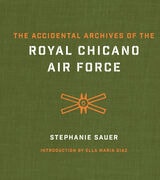
How do you write a history of a group that has been written out of history? In The Accidental Archives of the Royal Chicano Air Force, world-famous archaeologist La Stef and the clandestine Con Sapos Archaeological Collective track down the “facts” about the elusive RCAF, the Rebel Chicano Art Front that, through an understandable mix-up with the Royal Canadian Air Force, became the Royal Chicano Air Force.
La Stef and her fellow archaeologists document the plight and locura que cura of the RCAF, a group renowned for its fleet of adobe airplanes, ongoing subversive performance stance, and key role as poster makers for the United Farm Workers Union during the height of the Chicano civil rights movement. As the Con Sapos team uncovers tensions between fact and fiction in historical consciousness and public memory, they abandon didactic instruction and strive instead to offer a historiography in which various cultural paradigms already intersect seamlessly and on equal ground. That they often fail to navigate the blurred lines between “objective” Western archival sciences and Indigenous/Chicana/o cosmologies reflects the very human predicament of documenting the histories of complicated New Worlds everywhere. Uniquely blending art history, oral history, cultural studies, and anthropology, The Accidental Archives of the Royal Chicano Air Force suspends historical realities and leaps through epochs and between conversations with various historical figures, both dead and alive, to offer readers an intimate experience of RCAF history.
The Accidental Diarist
A History of the Daily Planner in AmericaMolly A. McCarthy
University of Chicago Press, 2013
The Accidental Network
How a Small Company Sparked a Global Broadband TransformationRouzbeh Yassini-Fard
West Virginia University Press, 2025
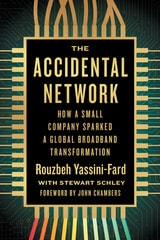
The Accidental Network shares the untold story of the invention of the cable modem by the small, struggling tech company LANcity in the early 1990s, illustrating how Yassini-Fard overcame a cascade of technical challenges, investment community naysayers, and unnerving business obstacles to create the cable modem technology that has changed the way billions of individuals across the globe now manage their daily lives and commerce. The cable modem delivered broadband, with speeds ranging from 10 megabits per second (Mbps) to 10 gigabits per second (Gbps)—a big leap from the dial-up speeds of 56 kilobits per second (Kbps). This platform, along with the adoption of the DOCSIS (Data Over Cable Service Interface Specification) standard, engendered the modern revolution in broadband Internet access. Shunned by venture capitalists and surviving on a shoestring budget, Yassini-Fard and his colleagues were willing to bet it all (including the deed for Yassini-Fard’s home) on the creation of the cable modem and the pursuit of global adoption.
The Accidental Network is both a valuable history of technology innovation and an engrossing account of business conducted at high speed. The book details Yassini-Fard’s journey from electrical engineer to entrepreneur in the race to secure technology partners, create a wholly new marketplace, and convince cable industry executives that a bold business awaited in transmitting data to households at a time when skepticism about the reach of personal computing was the norm.
Written from the lens of a devoted idealist and WVU alum known as “the father of the cable modem,” this book reveals how a perfect storm of forces—the rise of cable television, the onset of the personal computing era, a growing awareness of the Internet for information and commerce, and the development of the cable modem—converged to usher in the age of broadband access.
The Accokeek Creek Site
A Middle Atlantic Seaboard Culture SequenceRobert L. Stephenson, Alice L. L. Ferguson and Henry G. Ferguson
University of Michigan Press, 1963
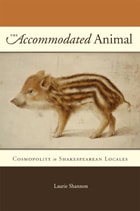
The Accommodated Animal
Cosmopolity in Shakespearean LocalesLaurie Shannon
University of Chicago Press, 2013
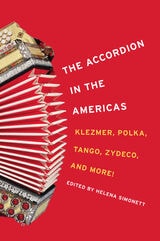
The Accordion in the Americas
Klezmer, Polka, Tango, Zydeco, and More!Edited by Helena Simonett
University of Illinois Press, 2012
This rich collection considers the accordion and its myriad forms, from the concertina, button accordion, and piano accordion familiar in European and North American music to the exotic-sounding South American bandoneon and the sanfoninha. Capturing the instrument's spread and adaptation to many different cultures in North and South America, contributors illuminate how the accordion factored into power struggles over aesthetic values between elites and working-class people who often were members of immigrant and/or marginalized ethnic communities. Specific histories and cultural contexts discussed include the accordion in Brazil, Argentine tango, accordion traditions in Colombia and the Dominican Republic, cross-border accordion culture between Mexico and Texas, Cajun and Creole identity, working-class culture near Lake Superior, the virtuoso Italian-American and Klezmer accordions, Native American dance music, and American avant-garde.
Contributors are María Susana Azzi, Egberto Bermúdez, Mark DeWitt, Joshua Horowitz, Sydney Hutchinson, Marion Jacobson, James P. Leary, Megwen Loveless, Richard March, Cathy Ragland, Helena Simonett, Jared Snyder, Janet L. Sturman, and Christine F. Zinni.

The Acoustic World of Early Modern England
Attending to the O-FactorBruce R. Smith
University of Chicago Press, 1999
In this ear-opening journey into the sound-worlds of Shakespeare's contemporaries, Bruce R. Smith explores both the physical aspects of human speech (ears, lungs, tongue) and the surrounding environment (buildings, landscape, climate), as well as social and political structures. Drawing on a staggeringly wide range of evidence, he crafts a historical phenomenology of sound, from reconstructions of the "soundscapes" of city, country, and court to detailed accounts of the acoustic properties of the Globe and Blackfriars theaters and how scripts designed for the two spaces exploited sound very differently.
Critical for anyone who wants to understand the world of early modern England, Smith's pathbreaking "ecology" of voice and listening also has much to offer musicologists and acoustic ecologists.
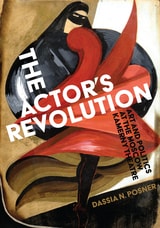
The Actor’s Revolution
Art and Politics at the Moscow Kamerny TheatreDassia N. Posner
Northwestern University Press, 2027
Reclaims the lost history of one of the twentieth century’s most innovative theaters
The Moscow Kamerny Theatre created stage worlds of movement, color, and light. Cofounded in 1914 by Alexander Tairov, a Jewish director from Ukraine, and Alisa Koonen, a Moscow-born actress from an immigrant family, the company celebrated the actor’s virtuosic inventiveness during an era when most theaters imitated daily life or prioritized the autocratic director’s vision. By the 1920s, it had become the most famous Soviet theater in the world, renowned for its actors’ acrobatic grace, its bold collaborations with avant-garde artists, and its revolutionary redefinition of what theater can be. But the accusations of Soviet disloyalty that were used to destroy the Kamerny during Stalin’s post–World War II antisemitic purge have rendered it little known outside Russia today and frequently misunderstood even there.
The Actor’s Revolution vividly reclaims this lost history by reconstructing the theater’s most illustrious premieres, analyzing them within the turbulent artistic and political context of the early Soviet era. Drawing on a decade of archival research, Dassia N. Posner restores Tairov’s legacy as one of history’s most significant directors and celebrates Koonen’s liberatory creative expressiveness as a vital alternative to Konstantin Stanislavsky’s better-known acting system. Building on rich archival sources, from unpublished memoirs to vibrant scenic and costume designs, this timely volume grapples with the entangled histories of art, politics, and erasure and celebrates the radical power of human creativity under—and in spite of—totalitarianism.
The Adaptability Paradox
Political Inclusion and Constitutional ResilienceStephen Skowronek
University of Chicago Press, 2025
Has American democracy outstripped its constitutional accommodations?
Faith in the resilience and adaptability of the US Constitution rests on a long history of finding new ways to make the system work. In The Adaptability Paradox, political scientist Stephen Skowronek examines the rearrangements that regenerated the American government in the past and brings that experience to bear on our current predicament. He shows how a constitution framed in writing some 230 years ago can run into serious difficulties directly related to its long and impressive history of adaptation.
Skowronek connects questions about the Constitution’s adaptability to the challenges of democratization. For most of American history, serial rearrangements of constitutional relationships widened the government’s purview as a national democracy without giving either nationalism or democracy free rein. Skowronek argues that the politics of adaptation shifted fundamentally with the “Rights Revolution” of the 1960s and `70s when American national democracy approached the inclusion of all its citizens on equal footing. Since then, power and authority have been reconfigured in ways that have steadily magnified conflicts over the essentials of good order. Conservatives aim to dismantle a Constitution that progressives are intent on building upon, and the consensus necessary for a constitutional democracy to function effectively has all but evaporated. No longer a socially bound framework for national action, the Constitution has become an abstract matrix of possibilities, a disembodied opportunity structure open to starkly different, mutually unacceptable futures.
Rather than being liberated by this unbound Constitution, the American people now appear entrapped by it. Is it possible that the development of American democracy has exhausted the adaptive capacities of the Constitution? A timely reminder that constitutional democracies do not survive on faith alone, The Adaptability Paradox is a sober appraisal of the unfamiliar ground on which we now tread.