Results by title
1445 books match the query 'Life Sciences' and 386 start with t
The Quarterly Review of Biology, volume 97 number 4 (December 2022)
The University of Chicago Press
University of Chicago Press Journals, 2022
The Quarterly Review of Biology, volume 98 number 1 (March 2023)
The University of Chicago Press
University of Chicago Press Journals, 2023
The Quarterly Review of Biology, volume 98 number 2 (June 2023)
The University of Chicago Press
University of Chicago Press Journals, 2023
The Quarterly Review of Biology, volume 98 number 3 (September 2023)
The University of Chicago Press
University of Chicago Press Journals, 2023
The Quarterly Review of Biology, volume 98 number 4 (December 2023)
The University of Chicago Press
University of Chicago Press Journals, 2023
The Quarterly Review of Biology, volume 99 number 1 (March 2024)
The University of Chicago Press
University of Chicago Press Journals, 2024
The Quarterly Review of Biology, volume 99 number 2 (June 2024)
The University of Chicago Press
University of Chicago Press Journals, 2024
The Quarterly Review of Biology, volume 99 number 3 (September 2024)
The University of Chicago Press
University of Chicago Press Journals, 2024
The Quarterly Review of Biology, volume 99 number 4 (December 2024)
The University of Chicago Press
University of Chicago Press Journals, 2024
The Quest for Cortisone
Thom Rooke
Michigan State University Press, 2012
In 1948, when “Mrs. G.,” hospitalized with debilitating rheumatoid arthritis, became the first person to receive a mysterious new compound—cortisone—her physicians were awestruck by her transformation from enervated to energized. After eighteen years of biochemical research, the most intensively hunted biological agent of all time had finally been isolated, identified, synthesized, and put to the test. And it worked. But the discovery of a long-sought “magic bullet” came at an unanticipated cost in the form of strange side effects. This fascinating history recounts the discovery of cortisone and pulls the curtain back on the peculiar cast of characters responsible for its advent, including two enigmatic scientists, Edward Kendall and Philip Hench, who went on to receive the Nobel Prize. The book also explores the key role the Mayo Clinic played in fostering cortisone’s development, and looks at drugs that owe their heritage to the so-called “King of Steroids.”
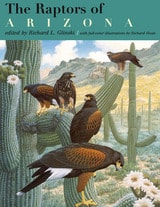
The Raptors of Arizona
Edited by Richard L. Glinski, with full-color illustrations by Richard Sloan
University of Arizona Press, 1998
Arizona's raptors are found in an unrivaled diversity of habitats, from saguaro cactus forests where tiny Elf Owls nest to the Vermilion Cliffs, where the gigantic California Condor was introduced in 1996. Yet many species live in habitats that are now jeopardized by degradation or development, making an understanding and appreciation of raptors crucial to their survival.
The Raptors of Arizona brings together the knowledge and insights of 29 raptor and wildlife authorities who provide original information and syntheses on Arizona's 42 raptor species, with an emphasis on aspects of their natural history in Arizona. A chapter on each bird includes its description, a range map, and information on its distribution, habitat, life history, and status. Additional chapters cover conservation, habitats, where and when to watch raptors, and the sport of falconry. The book is enhanced by 42 full-color illustrations by Richard Sloan, one of the premier wildlife artists in North America, whose paintings were commissioned by the Arizona Wildlife Foundation specifically for this project. Co-published with the Arizona Game and Fish Department.

The Restless Clock
A History of the Centuries-Long Argument over What Makes Living Things TickJessica Riskin
University of Chicago Press, 2016
The Restless Clock examines the history of this principle, banning agency, in the life sciences. It also tells the story of dissenters embracing the opposite idea: that agency is essential to nature. The story begins with the automata of early modern Europe, as models for the new science of living things, and traces questions of science and agency through Descartes, Leibniz, Lamarck, and Darwin, among many others. Mechanist science, Jessica Riskin shows, had an associated theology: the argument from design, which found evidence for a designer in the mechanisms of nature. Rejecting such appeals to a supernatural God, the dissenters sought to naturalize agency rather than outsourcing it to a “divine engineer.” Their model cast living things not as passive but as active, self-making machines.
The conflict between passive- and active-mechanist approaches maintains a subterranean life in current science, shaping debates in fields such as evolutionary biology, cognitive science, and artificial intelligence. This history promises not only to inform such debates, but also our sense of the possibilities for what it means to engage in science—and even what it means to be alive.
The Ribbon of Green
Change in Riparian Vegetation in the Southwestern United StatesRobert H. Webb, Stanley A. Leake, and Raymond M. Turner
University of Arizona Press, 2007
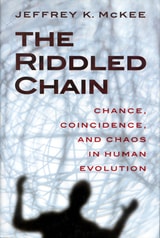
The Riddled Chain
Chance, Coincidence and Chaos in Human EvolutionMcKee, Jeffrey Kevin
Rutgers University Press, 2000
Did human evolution proceed in an inevitable fashion? Can we attribute our origins solely to natural selection, or were more mischievous forces at work?
These are the questions investigated by anthropologist Jeff McKee. He argues that if we were to wind back the clock to our split from ancestral apes, evolution would proceed differently. Ever since our ancestors first stood up on two feet, natural selection undoubtedly was an important factor in guiding human evolution. But McKee shakes the standard notion that natural selection steered early hominids toward particular environmental adaptations. The fossil remains of our ancestors reveal a different story one of an adaptable hominid with no particular direction. It becomes clear that the evolutionary road to Homo sapiens was not paved solely by natural selection; indeed, there was no road to follow. There was just a dim path cut out by prehistoric coincidences and contingencies. Had any link in the evolutionary chain of events been slightly different, then our species would not be as it is today . . . or our ancestors may not have survived at all.
With equal doses of humor and awe, McKee illustrates how the chain of evolution has been riddled by chance, coincidence, and chaos. He uses familiar examples, noting that many of us exist as individuals because of chance meetings of our parents. From the present back through prehistory, chance is at the heart of our creation is chaos. The classic example of chaos is the butterfly effect: a single butterfly, flapping its wings, causes a tiny change in the atmosphere, which in turn amplifies to affect the course of storms on another continent. McKee ties such examples of unpredictability to fossil evidence and computer simulations, revealing the natural coincidences that shaped our evolution. Although chaos exacted an evolutionary price by limiting the powers of natural selection, it also made us what we are. One can only conclude that human beings were neither inevitable nor probable.
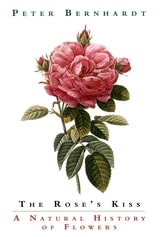
The Rose's Kiss
A Natural History of FlowersPeter Bernhardt
University of Chicago Press, 2002
In The Rose's Kiss, Peter Bernhardt presents a fascinating and wide-ranging look at the natural history of flowers—how they look, what they do, and their often hidden interactions with the surrounding environment and other living organisms upon which they depend for their survival. You'll discover why flowers are so colorful, how they evolved, and how insects exploit them for their nectar. This is a book for all flower lovers, from naturalists and gardeners to poets and botanists.
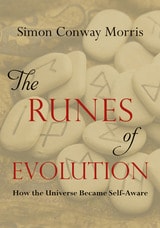
The Runes of Evolution
How the Universe became Self-AwareSimon Conway Morris
Templeton Press, 2015
A leading evolutionary biologist at the University of Cambridge, Conway Morris came into international prominence for his work on the Cambrian explosion (especially fossils of the Burgess Shale) and evolutionary convergence, which is the process whereby organisms not closely related (not monophyletic), independently evolve similar traits as a result of having to adapt to similar environments or ecological niches.
In The Runes of Evolution, he illustrates how the ubiquity of convergence hints at an underlying framework whereby many outcomes, not least brains and intelligence, are virtually guaranteed on any Earth-like planet. Conway Morris also emphasizes how much of the complexity of advanced biological systems is inherent in microbial forms.
By casting a wider net, The Runes of Evolution explores many neglected evolutionary questions. Some are remarkably general. Why, for example, are convergences such as parasitism, carnivory, and nitrogen fixation in plants concentrated in particular taxonomic hot spots? Why do certain groups have a particular propensity to evolve toward particular states?
Some questions lead to unexpected evolutionary insights: If bees sleep (as they do), do they dream? Why is that insect copulating with an orchid? Why have sponges evolved a system of fiber optics? What do mantis shrimps and submarines have in common? If dinosaurs had not gone extinct what would have happened next? Will a saber-toothed cat ever re-evolve?
Cona Morris observes: “Even amongst the mammals, let alone the entire tree of life, humans represent one minute twig of a vast (and largely fossilized) arborescence. Every living species is a linear descendant of an immense string of now-vanished ancestors, but evolution itself is the very reverse of linear. Rather it is endlessly exploratory, probing the vast spaces of biological hyperspace. Indeed this book is a celebration of how our world is (and was) populated by a riot of forms, a coruscating tapestry of life.”
The Runes of Evolution is the most definitive synthesis of evolutionary convergence to be published to date.
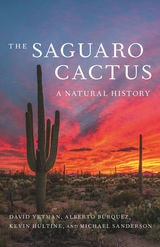
The Saguaro Cactus
A Natural HistoryDavid Yetman, Alberto Búrquez, Kevin Hultine, and Michael Sanderson, with Frank S. Crosswhite
University of Arizona Press, 2020
This book offers a complete natural history of this enduring and iconic desert plant. Gathering everything from the saguaro’s role in Sonoran Desert ecology to its adaptations to the desert climate and its sacred place in Indigenous culture, this book shares precolonial through current scientific findings.
The saguaro is charismatic and readily accessible but also decidedly different from other desert flora. The essays in this book bear witness to our ongoing fascination with the great cactus and the plant’s unusual characteristics, covering the saguaro’s: history of discovery, place in the cactus family, ecology, anatomy and physiology, genetics, and ethnobotany. The Saguaro Cactus offers testimony to the cactus’s prominence as a symbol, the perceptions it inspires, its role in human society, and its importance in desert ecology.
The Science of Sleep
What It Is, How It Works, and Why It MattersWallace B. Mendelson
University of Chicago Press, 2017
In The Science of Sleep, sleep expert Wallace B. Mendelson explains the elements of human sleep states and explores the variety of sleep disorders afflicting thousands of people worldwide. Mendelson lays out the various treatments that are available today and provides a helpful guide for one of life’s most important activities. By offering the first scientific yet accessible account of sleep science, Mendelson allows readers to assess their personal relationships with sleep and craft their own individual approaches to a comfortable and effective night’s rest.
Addressing one of the major public health issues of the day with cutting-edge research and empathetic understanding, The Science of Sleep is the definitive illustrated reference guide to sleep science.
The Science of Stress
Living Under PressureEdited by Gregory L. Fricchione, Ana Ivkovic, and Albert S. Yeung
University of Chicago Press, 2016
As Fricchione and his colleagues show, alleviating stress is a task that no one physician can alleviate for us on his own. It is not the sort of problem that a surgeon can excise with a scalpel or an internist can eradicate with antibiotics. It requires everyone’s efforts—the healthy, the sick, doctors, nurses, psychologists, clergy, community leaders, and everyone else—to pull together to address the stress-induced drivers in our community that undermine our health. Clearly and accessibly exploring the latest in modern neuroscience and immunology, the authors examine what those drivers are and how they reduce the body’s metabolic reserve, making us more vulnerable to illness. They then look at the antidote: enhanced resilience, something we can achieve by smartly adjusting how we face the significant adversities that can spring up in so many facets of our lives.
Offering innumerable insights on the personal and social causes of stress and the physiological effects they have, this book serves as an essential guide to show us how to alleviate stress and properly take care of ourselves. In doing so, it offers a crucial first step toward meeting the biggest health challenge of this century.
The Science of Sympathy
Morality, Evolution, and Victorian CivilizationRob Boddice
University of Illinois Press, 2016
The Serengeti Lion
A Study of Predator-Prey RelationsGeorge B. Schaller
University of Chicago Press, 1976
Based on three years of study in the Serengeti National Park, George B. Schaller’s The Serengeti Lion describes the vast impact of the lion and other predators on the vast herds of wildebeest, zebra, and gazelle for which the area is famous. The most comprehensive book available on the lion, this classic work includes the author’s findings on all aspects of lion behavior, including its social system, population dynamics, hunting behavior, and predation patterns.
“If you have only enough time to read one book about field biology, this is the one I recommend.”—Edward O. Wilson, Science
“This book conveys not only the fascination of its particular study of lion behavior but the drama and wonder and beauty of the intimate interdependence of all living things.”—Saturday Review
“This is an important book, not just for its valuable information on lions, but for its broad, open, and intelligent approach to problems that cut across the fields of behavior, populations, ecology, wildlife management, evolution, anthropology, and comparative biology.”—Richard G. Van Gelder, Bioscience
The Shape of Life
Genes, Development, and the Evolution of Animal FormRudolf A. Raff
University of Chicago Press, 1996
Raff uses the evolution of animal body plans to exemplify the interplay between developmental mechanisms and evolutionary patterns. Animal body plans emerged half a billion years ago. Evolution within these body plans during this span of time has resulted in the tremendous diversity of living animal forms.
Raff argues for an integrated approach to the study of the intertwined roles of development and evolution involving phylogenetic, comparative, and functional biology. This new synthesis will interest not only scientists working in these areas, but also paleontologists, zoologists, morphologists, molecular biologists, and geneticists.
The Silent Deep
The Discovery, Ecology, and Conservation of the Deep SeaTony Koslow
University of Chicago Press, 2007
The Silent Deep tells the story of the exploration and discovery of the deep sea, the ecology of its diverse environments, and the impact of humans, highlighting the importance of global stewardship in keeping this delicate ecosystem alive and well. Written by world renowned deep-sea ecologist Tony Koslow, this book is a comprehensive and authoritative overview of the state of the deep sea today, accessible to anyone interested in ocean science, the story of scientific discovery, and conservation of the earth’s most threatened ecosystems.
“Koslow deals a decisive blow to the notion that the deep sea can ever be immune from unregulated human activities. . . . The historical review of deep-sea biology is the most comprehensive I have ever read.”—Adrian Glover, Times Literary Supplement
“Deeply informed by history and rendered in straightforward, careful prose.”—Anthony Doerr, Boston Globe
“This beautifully produced book tells an urgent story with clarity and grace.”—Choice
“Stands apart from other books about life in the abyss due to Tony Koslow’s thoughtful accounts. . . . [He] succeeds in painting a picture of the deep sea as an environment with inherent and threatened value.”—Science
“Textbook depth on all aspects of deep-sea science and conservation. . . . [An] exhaustively researched and referenced volume with a historical review stretching back to Socrates.”—Mark Schrope, Nature
“An important textbook and viewpoint that is highly recommended for anyone with a professional or personal interest in deep-sea ecosystems.”—Quarterly Review of Biology
The Simian Tongue
The Long Debate about Animal LanguageGregory Radick
University of Chicago Press, 2007
The Skull, Volume 1
DevelopmentEdited by James Hanken and Brian K. Hall
University of Chicago Press, 1993
The Skull, Volume 2
Patterns of Structural and Systematic DiversityEdited by James Hanken and Brian K. Hall
University of Chicago Press, 1993
The Skull, Volume 3
Functional and Evolutionary MechanismsEdited by James Hanken and Brian K. Hall
University of Chicago Press, 1993
The Social Lives of Forests
Past, Present, and Future of Woodland ResurgenceEdited by Susanna B. Hecht, Kathleen D. Morrison, and Christine Padoch
University of Chicago Press, 2014
Focusing on the history and current use of woodlands from India to the Amazon, The Social Lives of Forests attempts to build a coherent view of forests sited at the nexus of nature, culture, and development. With chapters covering the effects of human activities on succession patterns in now-protected Costa Rican forests; the intersection of gender and knowledge in African shea nut tree markets; and even the unexpectedly rich urban woodlands of Chicago, this book explores forests as places of significant human action, with complex institutions, ecologies, and economies that have transformed these landscapes in the past and continue to shape them today. From rain forests to timber farms, the face of forests—how we define, understand, and maintain them—is changing.
The Sonoran Desert Tortoise
Natural History, Biology, and ConservationThomas R. Van Devender
University of Arizona Press, 2002
This book presents the first comprehensive summary of the natural history, biology, and conservation of the Sonoran and Sinaloan desert tortoises, reviewing the current state of knowledge of these creatures with appropriate comparisons to Mohave tortoises. It condenses a vast amount of information on population ecology, activity, and behavior based on decades of studying tortoise populations in Arizona and Sonora, Mexico, and also includes important material on the care and protection of tortoises. Thirty-two contributors address such topics as tortoise fossil records, DNA analysis, and the mystery of secretive hatchlings and juveniles. Tortoise health is discussed in chapters on the care of captives, and original data are presented on the diets of wild and captive tortoises, the nutrient content of plant foods, and blood parameters of healthy tortoises. Coverage of conservation issues includes husbandry methods for captive tortoises, an overview of protective measures, and an evaluation of threats to tortoises from introduced grass and wildfires. A final chapter on cultural knowledge presents stories and songs from indigenous peoples and explores their understanding of tortoises.
As the only comprehensive book on the desert tortoise, this volume gathers a vast amount of information for scientists, veterinarians, and resource managers while also remaining useful to general readers who keep desert tortoises as backyard pets. It will stand as an enduring reference on this endearing creature for years to come.
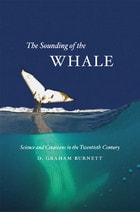
The Sounding of the Whale
Science and Cetaceans in the Twentieth CenturyD. Graham Burnett
University of Chicago Press, 2011
From the Bible’s “Canst thou raise leviathan with a hook?” to Captain Ahab’s “From Hell’s heart I stab at thee!,” from the trials of Job to the legends of Sinbad, whales have breached in the human imagination as looming figures of terror, power, confusion, and mystery.
In the twentieth century, however, our understanding of and relationship to these superlatives of creation underwent some astonishing changes, and with The Sounding of the Whale, D. Graham Burnett tells the fascinating story of the transformation of cetaceans from grotesque monsters, useful only as wallowing kegs of fat and fertilizer, to playful friends of humanity, bellwethers of environmental devastation, and, finally, totems of the counterculture in the Age of Aquarius. When Burnett opens his story, ignorance reigns: even Nature was misclassifying whales at the turn of the century, and the only biological study of the species was happening in gruesome Arctic slaughterhouses. But in the aftermath of World War I, an international effort to bring rational regulations to the whaling industry led to an explosion of global research—and regulations that, while well-meaning, were quashed, or widely flouted, by whaling nations, the first shot in a battle that continues to this day. The book closes with a look at the remarkable shift in public attitudes toward whales that began in the 1960s, as environmental concerns and new discoveries about whale behavior combined to make whales an object of sentimental concern and public adulation.
A sweeping history, grounded in nearly a decade of research, The Sounding of the Whale tells a remarkable story of how science, politics, and simple human wonder intertwined to transform the way we see these behemoths from below.
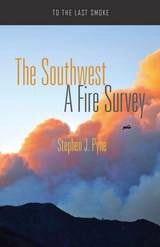
The Southwest
A Fire SurveyStephen J. Pyne
University of Arizona Press, 2016
Through a mixture of journalism, history, and literary imagination, fire expert Stephen J. Pyne provides a lively survey of what makes this region distinctive, moving us beyond the usual conversations of science and policy. Pyne explores the Southwest’s sacred mountains, including the Jemez, Mogollon, Huachucas, and Kaibab; its sky islands, among them the Chiricahuas, Mount Graham, and Tanque Verde; and its famous rims and borders. Together, the essays provide a cross-section of how landscape fire looks in the early years of the 21st century, what is being done to manage it, and how fire connects with other themes of southwestern life and culture.
The Southwest is part of the multivolume series describing the nation’s fire scene region by region. The volumes in To the Last Smoke also cover California, the Northern Rockies, the Great Plains, Florida, and several other critical fire regions. The series serves as an important punctuation point to Pyne’s 50-year career with wildland fire—both as a firefighter and a fire scholar. These unique surveys of regional pyrogeography are Pyne’s way of “keeping with it to the end,” encompassing the directive from his rookie season to stay with every fire “to the last smoke.”
The State Park Movement in America
A Critical ReviewNey C. Landrum
University of Missouri Press, 2013
The State of Nature
Ecology, Community, and American Social Thought, 1900-1950Gregg Mitman
University of Chicago Press, 1992
Reacting against the view of nature "red in tooth and claw," ecologists and behavioral biologists such as Warder Clyde Allee, Alfred Emerson, and their colleagues developed research programs they hoped would validate and promote an image of human society as essentially cooperative rather than competitive. Mitman argues that Allee's religious training and pacifist convictions shaped his pioneering studies of animal communities in a way that could be generalized to denounce the view that war is in our genes.
The Stockholm Paradigm
Climate Change and Emerging DiseaseDaniel R. Brooks, Eric P. Hoberg, and Walter A. Boeger
University of Chicago Press, 2019
As this book reveals, a new understanding of the evolution of pathogen-host systems, called the Stockholm Paradigm, explains what is happening. The planet is a minefield of pathogens with preexisting capacities to infect susceptible but unexposed hosts, needing only the opportunity for contact. Climate change has always been the major catalyst for such new opportunities, because it disrupts local ecosystem structure and allows pathogens and hosts to move. Once pathogens expand to new hosts, novel variants may emerge, each with new infection capacities. Mathematical models and real-world examples uniformly support these ideas. Emerging disease is thus one of the greatest climate change–related threats confronting humanity.
Even without deadly global catastrophes on the scale of the 1918 Spanish Influenza pandemic, emerging diseases cost humanity more than a trillion dollars per year in treatment and lost productivity. But while time is short, the danger is great, and we are largely unprepared, the Stockholm Paradigm offers hope for managing the crisis. By using the DAMA (document, assess, monitor, act) protocol, we can “anticipate to mitigate” emerging disease, buying time and saving money while we search for more effective ways to cope with this challenge.
The Story of Vermont
A Natural and Cultural History, Second EditionChristopher McGrory Klyza and Stephen C. Trombulak
University Press of New England, 2015
The Strategy of Life
Teleology and Mechanics in Nineteenth-Century German BiologyTimothy Lenoir
University of Chicago Press, 1989
Strongly influenced by Immanuel Kant, the biologists' approach combined a sophisticated teleology with mechanistic theories and sparked bitter controversies with the rival programs, mechanistic reductionism and Darwinism. Although temporarily eclipsed by these two approaches, the morphological tradition, Lenoir argues, was not vanquished in the field of scientific debate. It contributed to pathbreaking research in areas such as comparative anatomy, embryology, paleontology, and biogeography.
The Terrestrial Protected Areas of Madagascar
Their History, Description, and BiotaEdited by Steven M. Goodman, Marie Jeanne Raherilalao, and Sébastien Wohlhause
Association Vahatra, 2018
The purpose of The Terrestrial Protected Areas of Madagascar is to present a large-scale update of information available from 98 terrestrial protected areas, various analyses to understand general trends in the conservation of these sites, and a synthesis to assess the needs for future scientific programs. Beautifully illustrated throughout with color maps, graphs, and photos, these three volumes will be an important reference for students, researchers, protected area managers, conservationists, and visiting ecotourists. Volume one provides a comprehensive introduction.
The Terrestrial Protected Areas of Madagascar
Their History, Description, and Biota, Volume 2: Northern and eastern MadagascarEdited by Steven M. Goodman, Marie Jeanne Raherilalao, and Sébastien Wohlhauser
Association Vahatra, 2020
The purpose of The Terrestrial Protected Areas of Madagascar is to present a large-scale update of information available from 98 terrestrial protected areas, various analyses to understand general trends in the conservation of these sites, and a synthesis to assess the needs for future scientific programs. Beautifully illustrated throughout with color maps, graphs, and photos, these three volumes will be an important reference for students, researchers, protected area managers, conservationists, and visiting ecotourists. Volume two covers northern and eastern Madagascar.
The Terrestrial Protected Areas of Madagascar
Their History, Description, and Biota, Volume 3: Western and southwestern Madagascar - SynthesisEdited by Steven M. Goodman, Marie Jeanne Raherilalao, and Sébastien Wohlhauser
Association Vahatra, 2020
The purpose of The Terrestrial Protected Areas of Madagascar is to present a large-scale update of information available from 98 terrestrial protected areas, various analyses to understand general trends in the conservation of these sites, and a synthesis to assess the needs for future scientific programs. Beautifully illustrated throughout with color maps, graphs, and photos, these three volumes will be an important reference for students, researchers, protected area managers, conservationists, and visiting ecotourists. Volume three covers western and southwestern Madagascar, as well as provides a valuable synthesis.
The Theory of Ecology
Edited by Samuel M. Scheiner and Michael R. Willig
University of Chicago Press, 2011
Despite claims to the contrary, the science of ecology has a long history of building theories. Many ecological theories are mathematical, computational, or statistical, though, and rarely have attempts been made to organize or extrapolate these models into broader theories. The Theory of Ecology brings together some of the most respected and creative theoretical ecologists of this era to advance a comprehensive, conceptual articulation of ecological theories. The contributors cover a wide range of topics, from ecological niche theory to population dynamic theory to island biogeography theory. Collectively, the chapters ably demonstrate how theory in ecology accounts for observations about the natural world and how models provide predictive understandings. It organizes these models into constitutive domains that highlight the strengths and weaknesses of ecological understanding. This book is a milestone in ecological theory and is certain to motivate future empirical and theoretical work in one of the most exciting and active domains of the life sciences.
The Theory of Evolution
Principles, Concepts, and AssumptionsEdited by Samuel M. Scheiner and David P. Mindell
University of Chicago Press, 2019
This book gives us that framework and synthesis for the twenty-first century. The Theory of Evolution presents a series of chapters by experts seeking this integration by addressing the current state of affairs across numerous fields within evolutionary biology, ranging from biogeography to multilevel selection, speciation, and macroevolutionary theory. By presenting current syntheses of evolution’s theoretical foundations and their growth in light of new datasets and analyses, this collection will enhance future research and understanding.
The Third Lens
Metaphor and the Creation of Modern Cell BiologyAndrew S. Reynolds
University of Chicago Press, 2018
Reynolds here investigates the role of metaphors in the creation of scientific concepts, theories, and explanations, using cell theory as his primary case study. He explores the history of key metaphors that have informed the field and the experimental, philosophical, and social circumstances under which they have emerged, risen in popularity, and in some cases faded from view. How we think of cells—as chambers, organisms, or even machines—makes a difference to scientific practice. Consequently, an accurate picture of how scientific knowledge is made requires us to understand how the metaphors scientists use—and the social values that often surreptitiously accompany them—influence our understanding of the world, and, ultimately, of ourselves.
The influence of metaphor isn’t limited to how we think about cells or proteins: in some cases they can even lead to real material change in the very nature of the thing in question, as scientists use technology to alter the reality to fit the metaphor. Drawing out the implications of science’s reliance upon metaphor, The Third Lens will be of interest to anyone working in the areas of history and philosophy of science, science studies, cell and molecular biology, science education and communication, and metaphor in general.
The Three Ethologies
A Positive Vision for Rebuilding Human-Animal RelationshipsMatthew Calarco
University of Chicago Press, 2024
The Three Ethologies offers a fresh, affirmative vision for rebuilding human-animal relations. Venturing beyond the usual scholarly and activist emphasis on restricting harm, Matthew Calarco develops a new philosophy for understanding animal behavior—a practice known as ethology—through three distinct but interrelated lenses: mental ethology, which rebuilds individual subjectivity; social ethology, which rethinks our communal relations; and environmental ethology, which reconfigures our relationship to the land we co-inhabit with our animal kin. Drawing on developments in philosophy, (eco)feminist theory, critical geography, Indigenous studies, and the environmental humanities, Calarco casts an inspiring vision of how ethological living can help us to reimagine our ideas about goodness, truth, and beauty.
The Tragic Sense of Life
Ernst Haeckel and the Struggle over Evolutionary ThoughtRobert J. Richards
University of Chicago Press, 2008
Prior to the First World War, more people learned of evolutionary theory from the voluminous writings of Charles Darwin’s foremost champion in Germany, Ernst Haeckel (1834–1919), than from any other source, including the writings of Darwin himself. But, with detractors ranging from paleontologist Stephen Jay Gould to modern-day creationists and advocates of intelligent design, Haeckel is better known as a divisive figure than as a pioneering biologist. Robert J. Richards’s intellectual biography rehabilitates Haeckel, providing the most accurate measure of his science and art yet written, as well as a moving account of Haeckel’s eventful life.
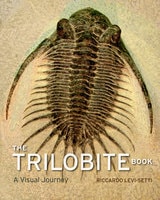
The Trilobite Book
A Visual JourneyRiccardo Levi-Setti
University of Chicago Press, 2014
Featuring specimens from Bohemia to Newfoundland, California to the Tucson Gem and Mineral Show, and Wales to the Anti-Atlas Mountains of Morocco, Levi-Setti’s magnificent book reanimates these “butterflies of the seas” in 235 astonishing full-color photographs. All original, Levi-Setti’s images serve as the jumping-off point for tales of his global quests in search of these highly sought-after fossils; for discussions of their mineralogical origins, as revealed by their color; and for unraveling the role of the now-extinct trilobites in our planetary history.
Sure to enthrall paleontologists with its scientific insights and amateur enthusiasts with its beautiful and informative images, The Trilobite Book combines the best of science, technology, aesthetics, and personal adventure. It will inspire new collectors for eras to come.
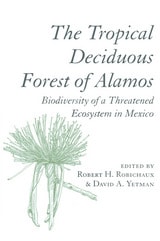
The Tropical Deciduous Forest of Alamos
Biodiversity of a Threatened Ecosystem in MexicoEdited by Robert H. Robichaux and David A. Yetman
University of Arizona Press, 2000
Only a day's drive south of the U.S.-Mexico border, a tropical deciduous forest opens up a world of exotic trees and birds that most people associate with tropical forests of more southerly latitudes. Like many such forests around the world, this diverse ecosystem is highly threatened, especially by large-scale agricultural interests that are razing it in order to plant grass for cattle.
This book introduces the tropical deciduous forest of the Alamos region of Sonora, describing its biodiversity and the current threats to its existence. The book's contributors present the most up-to-date scientific knowledge of this threatened ecosystem. They review the natural history and ecology of its flora and fauna and explore how native peoples use the forest's many resources.
Included in the book's coverage is a comprehensive plant list for the Río Cuchujaqui area that well illustrates the diversity of the forest. Other contributions examine tree species used by Mayo Indians and the numerous varieties of domesticated plants that have been developed over the centuries by the Mayos and other indigenous peoples. Also examined are the diversity and distribution of reptiles, amphibians, mammals, and birds in the region.
The Tropical Deciduous Forest of Alamos provides critical information about a globally important biome. It complements other studies of similar forests and allows a better understanding of a diverse but vanishing ecosystem.
The Truth about Language
What It Is and Where It Came FromMichael C. Corballis
University of Chicago Press, 2017
But as Michael C. Corballis shows in The Truth about Language, it’s time to reconsider those assumptions. Language, he argues, is not the product of some “big bang” 60,000 years ago, but rather the result of a typically slow process of evolution with roots in elements of grammatical language found much farther back in our evolutionary history. Language, Corballis explains, evolved as a way to share thoughts—and, crucially for human development, to connect our own “mental time travel,” our imagining of events and people that are not right in front of us, to that of other people. We share that ability with other animals, but it was the development of language that made it powerful: it led to our ability to imagine other perspectives, to imagine ourselves in the minds of others, a development that, by easing social interaction, proved to be an extraordinary evolutionary advantage.
Even as his thesis challenges such giants as Chomsky and Stephen Jay Gould, Corballis writes accessibly and wittily, filling his account with unforgettable anecdotes and fascinating historical examples. The result is a book that’s perfect both for deep engagement and as brilliant fodder for that lightest of all forms of language, cocktail party chatter.
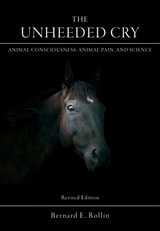
The Unheeded Cry
Animal Consciousness, Animal Pain, and ScienceBernard Rollin
University of Missouri Press, 2017
Bernard Rollin offers welcome insight into questions like this in his ground-breaking account of the difficult and controversial issues surrounding the use of animals. He demonstrates that the denial of animal consciousness and animal suffering is not an essential feature of a scientific approach, but rather a contingent, historical aberration that can and must be changed if science is to be both coherent and morally responsible. Widely hailed by advocates of animal welfare and scientists alike on its first appearance, the book now includes an epilogue by the author describing what has changed, and what hasn’t, in this use of animals in scientific research and food production.
The Vegetation of Wisconsin
An Ordination of Plant CommunitiesJohn T. Curtis
University of Wisconsin Press, 1959
The Vertebrates of Arizona
With Major Section on Arizona HabitatsEdited by Charles H. Lowe
University of Arizona Press, 1964
“An impressive volume . . . a valuable reference for professional biologists, students, and others interested in the native fauna of Arizona and its distribution there.”—Science