Results by title
22279 books match the query 'Social Science' and 4007 start with t
Thinking in the Dark
Cinema, Theory, PracticePomerance, Murray
Rutgers University Press, 2015
Thinking in the Dark introduces readers to twenty-one key theorists whose work has made a great impact on film scholarship today, including Rudolf Arnheim, Sergei Eisenstein, Michel Foucault, Siegfried Kracauer, and Judith Butler. Rather than just discussing each theorist’s ideas in the abstract, the book shows how those concepts might be applied when interpreting specific films by including an analysis of both a classic film and a contemporary one. It thus demonstrates how theory can help us better appreciate films from all eras and genres: from Hugo to Vertigo, from City Lights to Sunset Blvd., and from Young Mr. Lincoln to A.I. and Wall-E.
The volume’s contributors are all experts on their chosen theorist’s work and, furthermore, are skilled at explaining that thinker’s key ideas and terms to readers who are not yet familiar with them. Thinking in the Dark is not only a valuable resource for teachers and students of film, it’s also a fun read, one that teaches us all how to view familiar films through new eyes.
Theorists examined in this volume are: Rudolf Arnheim, Béla Balázs, Roland Barthes, André Bazin, Walter Benjamin, Judith Butler, Stanley Cavell, Michel Chion, Gilles Deleuze, Jean Douchet, Sergei Eisenstein, Jean Epstein, Michel Foucault, Siegfried Kracauer, Jacques Lacan, Vachel Lindsay, Christian Metz, Hugo Münsterberg, V. F. Perkins, Jacques Rancière, and Jean Rouch.
Thinking with Bruno Latour in Rhetoric and Composition
Edited by Paul Lynch and Nathaniel Rivers
Southern Illinois University Press, 2015
Best known for his books We Have Never Been Modern, Laboratory Life, and Science in Action, Bruno Latour has inspired scholarship across many disciplines. In the past few years, the fields of rhetoric and composition have witnessed an explosion of interest in Latour’s work. Editors Paul Lynch and Nathaniel Rivers have assembled leading and emerging scholars in order to focus the debate on what Latour means for the study of persuasion and written communication.
Essays in this volume discern, rearticulate, and occasionally critique rhetoric and composition’s growing interest in Latour. These contributions include work on topics such as agency, argument, rhetorical history, pedagogy, and technology, among others. Contributors explain key terms, identify implications of Latour’s work for rhetoric and composition, and explore how his theories might inform writing pedagogies and be used to build research methodologies.
Thinking with Bruno Latour in Rhetoric and Composition shows how Latour’s groundbreaking theories on technology, agency, and networks might be taken up, enriched, and extended to challenge scholars in rhetorical studies (both English and communications), composition, and writing studies to rethink some of the field’s most basic assumptions. It is set to become the standard introduction that will appeal not only to those scholars already interested in Latour but also those approaching Latour for the first time.
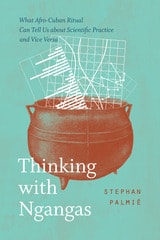
Thinking with Ngangas
What Afro-Cuban Ritual Can Tell Us about Scientific Practice and Vice VersaStephan Palmié
University of Chicago Press, 2023
Inspired by the exercises of Father Lafitau, an eighteenth-century Jesuit priest and protoethnographer who compared the lives of the Iroquois to those of the ancient Greeks, Stephan Palmié embarks on a series of unusual comparative investigations of Afro-Cuban ritual and Western science. What do organ transplants have to do with ngangas, a complex assemblage of mineral, animal, and vegetal materials, including human remains, that serve as the embodiment of the spirits of the dead? How do genomics and “ancestry projects” converge with divination and oracular systems? What does it mean that Black Cubans in the United States took advantage of Edisonian technology to project the disembodied voice of a mystical entity named ecué onto the streets of Philadelphia? Can we consider Afro-Cuban spirit possession as a form of historical knowledge production?
By writing about Afro-Cuban ritual in relation to Western scientific practice, and vice versa, Palmié hopes to challenge the rationality of Western expert practices, revealing the logic that brings together enchantment and experiment.
Thinking with Things
Toward a New Vision of ArtBy Esther Pasztory
University of Texas Press, 2005
What is "art"? Why have human societies through all time and around the globe created those objects we call works of art? Is there any way of defining art that can encompass everything from Paleolithic objects to the virtual images created by the latest computer technology? Questions such as these have preoccupied Esther Pasztory since the beginning of her scholarly career. In this authoritative volume, she distills four decades of research and reflection to propose a pathbreaking new way of understanding what art is and why human beings create it that can be applied to all cultures throughout time.
At its heart, Pasztory's thesis is simple and yet profound. She asserts that humans create things (some of which modern Western society chooses to call "art") in order to work out our ideas—that is, we literally think with things. Pasztory draws on examples from many societies to argue that the art-making impulse is primarily cognitive and only secondarily aesthetic. She demonstrates that "art" always reflects the specific social context in which it is created, and that as societies become more complex, their art becomes more rarefied.
Pasztory presents her thesis in a two-part approach. The first section of the book is an original essay entitled "Thinking with Things" that develops Pasztory's unified theory of what art is and why we create it. The second section is a collection of eight previously published essays that explore the art-making process in both Pre-Columbian and Western societies. Pasztory's work combines the insights of art history and anthropology in the light of poststructuralist ideas. Her book will be indispensable reading for everyone who creates or thinks about works of art.
Thinking, Language, and Experience
Hector-Neri Castañeda
University of Minnesota Press, 1989
Third Wave Agenda
Being Feminist, Doing FeminismLeslie Heywood
University of Minnesota Press, 1997
Discusses the challenges and pleasures of creating a new feminism.
Young feminists have grown up with a plethora of cultural choices and images-in the distance from Gloria Steinem to Courtney Love, a chasm has been traversed and an entire history made. In Third Wave Agenda, feminists born between the years 1964 and 1973 discuss the things that matter now, both in looking back at the accomplishments and failures of the past and in planning for the challenges of the future.
The women and men writing here are activists, teachers, cultural critics, artists, and journalists. They distinguish themselves from a group of young, conservative feminists, including Naomi Wolf and Katie Roiphe, who criticize second wave feminists and are regularly called on to speak for the “next generation” of feminism. In contrast, Third Wave Agenda seeks to complicate our understanding of feminism by not only embracing the second wave critique of beauty culture, sexual abuse, and power structures, but also emphasizing ways that desires and pleasures such as beauty and power can be used to enliven activist work, even while recognizing the importance of maintaining a critique of them.Combining research, theory, and social practice with an autobiographical style, these writers are hard at work creating a new feminism that draws on the submerged histories of other feminisms-black feminism, “womanism,” and working-class feminism, among others. Some topics explored in Third Wave Agenda include feminism in popular music, interracial coalitions, and tensions between individual ambitions and collective action. Contributors: Barry Baldridge, Ana Marie Cox, Ophira Edut, Tali Edut, Carol Guess, Freya Johnson, Melissa Klein, Dyann Logwood, Annalee Newitz, Jeff Niesel, Jennifer Reed, Jillian Sandel, Leigh Shoemaker, Michelle Sidler, Deborah L. Siegel, Jen Smith, Carolyn Sorisio, and Lidia Yukman.
Third World Studies
Theorizing LiberationGary Y. Okihiro
Duke University Press, 2016
Third World Studies
Theorizing LiberationGary Y. Okihiro
Duke University Press, 2024
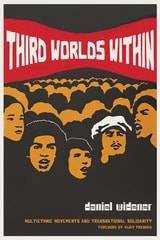
Third Worlds Within
Multiethnic Movements and Transnational SolidarityDaniel Widener
Duke University Press, 2024
Thirst for Growth
Water Agencies as Hidden Government in CaliforniaRobert Gottlieb
University of Arizona Press, 1991
Thirteen Cents
A NovelK. Sello Duiker
Ohio University Press, 2013
Thirteen Georgia Ghosts and Jeffrey
Commemorative EditionKathryn Tucker Windham
University of Alabama Press, 1987
Haunting tales from Georgia—where history lingers in every shadow.
Petrifying the Peach State, hosts of haints have beset the state of Georgia throughout its storied history. In Thirteen Georgia Ghosts and Jeffrey, best-selling folklorist Kathryn Tucker Windham, along with her trusty spectral companion Jeffrey, introduce thirteen of Georgia’s most famous ghost stories.
Windham won hearts across the nation in her regular radio broadcasts and many public appearances. The South’s most prolific raconteur of revenants, Windham, giving new meaning to the phrase “ghost-writer,” does more than tell ghost stories—she captures the true spirit of the place.
Evoking Georgia’s colonial era, “The Eternal Dinner Party” explains why the sounds of an elegant dinner soirée still waft from the grove of Savannah’s Bonaventure estate. At the onset of the Revolution, the Tattnall family abandoned Bonaventure and slipped away to England. Young Josiah Tattnall eventually returned to fight in the Revolution, restored Bonaventure, and later became Georgia’s governor. One holiday eve, when the mansion was bedecked with magnolia and holly and crowded with visitors, a fire too large to control swept through the old house. Tattnall, exhibiting his cool head and impeccable manners, ordered the massive dinner table carried out to the garden where he enjoined his holiday revelers to continue their stately meal. The melancholy strains of Tattnall’s dinner guests still echo through Bonaventure’s ancient oaks on moonlight nights.
In “The Ghost of Andersonville,” Windham takes visitors near the woebegone Confederate prisoner-of-war camp. A plaque there still recounts the tale of Swiss immigrant and Confederate captain Henry Wirz. Convicted—many thought wrongly—of war crimes, Wirz’s restless ghost still perambulates the highways of south Georgia. Writing for the Georgia Historical Commission, Miss Bessie Lewis quips in her preface to this beloved collection, “Who should be better able to tell of happenings long past than the ghosts of those who had a part in them?”
A perennial favorite, this commemorative edition restores Thirteen Georgia Ghosts and Jeffrey to the ghastly grandeur of its original 1973 edition.
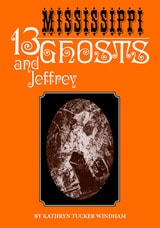
Thirteen Mississippi Ghosts and Jeffrey
Commemorative EditionKathryn Tucker Windham
University of Alabama Press, 2015
A deluxe, commemorative edition of famed southern author and folklorist Kathryn Tucker Windham’s introduction to Mississippi’s thirteen most famous haunted houses and ghostly visitations.
For as long as Mississippi has existed (and then some), flocks of phantoms have haunted the mortal inhabitants of the Magnolia State. In Thirteen Mississippi Ghosts and Jeffrey, best-selling folklorist Kathryn Tucker Windham, along with her trusty spectral companion Jeffrey, introduces thirteen of the state’s most famous ghost stories.
Although stories about Mississippi’s spirits seemingly outnumber the ghosts themselves, Windham observes that “Southern ghost tales are disappearing because people no longer sit around on the porch on summer nights and tell stories. The old folks who grew up with these stories are dying now, and the stories are dying with them.”
Fortunately for us, Windham was a writer dedicated to preserving these tales in print. The veteran author spent many years tracking down these stories and chronicling the best ones. From the ghost of Mrs. McEwen still wearing her beloved cameo pin and keeping a watchful eye over Featherston Place, her home in Holly Springs, where, she swore, she would stay forever, to the ghostly visage fixed permanently on the bedroom window pane of Catherine McGehee, who searched the horizon ardently for her unrequited love to come to her as promised at Cold Spring Plantation in Pinckneyville, Windham’s stories cover the breadth and depth of Mississippi—at times more moonlight than magnolia.
An enduring classic, this commemorative edition restores Thirteen Mississippi Ghosts and Jeffrey to the ghastly grandeur of its original 1974 edition.
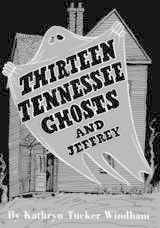
Thirteen Tennessee Ghosts and Jeffrey
Commemorative EditionKathryn Tucker Windham
University of Alabama Press, 2016
A deluxe, commemorative edition of famed southern author and folklorist Kathryn Tucker Windham’s introduction to the Volunteer State’s most enduring ghost stories.
In Thirteen Tennessee Ghosts and Jeffrey, beloved and best-selling folklorist Kathryn Tucker Windham presents a spine-tingling collection of Tennessee’s eeriest ghost tales. Accompanied by her faithful companion, Jeffrey, a friendly spirit who resided in her home, Windham traveled from the mysterious muds of Memphis to the haunted hollow’s of east Tennessee to collect the spookiest collection of Volunteer State revenants ever written.
In these perennial favorites, Windham captures the gentle folk humor of native Tennesseans as well as fascinating facts about the state’s rich history. In “The Dark Legend,” Windham recounts the story of explorer Merriwether Lewis, who met an untimely end on the Natchez Trace 1809 and whose spirit, it is said, still treads through Tennessee’s forests. Windham also visits central Tennessee’s Chapel Hill, where people who know the town say those who stand on the train tracks on dark, lonely nights can often see a disembodied light floating along the tracks. Neighbors say it’s the ghost of a headless flagman who returns to cavort with night-time guests.
High in Tennessee’s Appalachian mountains, Windham encounters Martin, the phantom fiddler of Johnson County. Legend has it that in life Martin’s musical skills so mesmerized the snakes of the Stone Mountains that they would slither from their dens to listen tamely to his fiddling. Intrepid visitors to the rocky tops of northeast Tennessee’s mountains say you can still hear Martin’s ghost fiddling in the hollows.
This handsome, new commemorative hardback edition returns Windham’s suspenseful classic to its original keepsake quality and includes a new afterword by the author’s children.
Thirteen Ways of Looking at Latino Art
Ilan Stavans, Jorge J. E. Gracia
Duke University Press, 2014
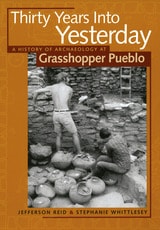
Thirty Years Into Yesterday
A History of Archaeology at Grasshopper PuebloJefferson Reid and Stephanie Whittlesey
University of Arizona Press, 2005
Like the enigmatic Mogollon culture it sought to explore and earlier University of Arizona field schools in the Forestdale Valley and at Point of Pines, Grasshopper research engendered decades of controversy that still lingers in the pages of professional journals. Jefferson Reid and Stephanie Whittlesey, players in the controversy who are intimately familiar with the field school that ended in 1992, offer a historical account of this major archaeological project and the intellectual debates it fostered.
Thirty Years Into Yesterday charts the development of the Grasshopper program under three directors and through three periods dominated by distinct archaeological paradigms: culture history, processual archaeology, and behavioral archaeology. It examines the contributions made each season, the concepts and methods each paradigm used, and the successes and failures of each. The book transcends interests of southwestern archaeologists in demonstrating how the three archaeological paradigms reinterpreted Grasshopper, illustrating larger shifts in American archaeology as a whole. Such an opportunity will not come again, as funding constraints, ethical concerns, and other issues no doubt will preclude repeating the Grasshopper experience in our lifetimes.
Ultimately, Thirty Years Into Yesterday continues the telling of the Grasshopper story that was begun in the authors’ previous books. In telling the story of the archaeologists who recovered the material residue of past Mogollon lives and the place of the Western Apache people in their interpretations, Thirty Years Into Yesterday brings the story full circle to a stunning conclusion.

Thirty-two New Takes on Taiwan Cinema
Emilie Yueh-yu Yeh, Darrell William Davis, Wenchi Lin, Editors
University of Michigan Press, 2022
A film-by-film introduction to Taiwan cinema and cultures
This Body That Inhabits Me
Rossana Rossanda
Seagull Books, 2022
Politician, translator, and journalist Rossana Rossanda was the most important female left-wing intellectual in post-war Italy. Central to the Italian Communist Party’s cultural wing during the 1950s and ’60s, she left an indelible mark on the life of the mind. The essays in this volume, however, bring together Rossanda’s reflections on the body—how it ages, how it is gendered, what it means to examine one’s own body. The product of a decades-long dialogue with the Italian women’s movement (above all with Lea Melandri, a vital feminist writer who provides an afterword to the current volume), these essays represent an honest and raw meeting between communist and feminist thought. Ranging from reflections on her own hands through to Chinese cinema, from figures such as the Russian cross-dressing soldier Nadezhda Durova to the Jacobin revolutionary Theroigne de Mericourt, here we see Rossanda’s fierce intellect and extraordinary breadth of knowledge applied to the body as a central question of human experience.
This Book Is an Action
Feminist Print Culture and Activist AestheticsEdited by Jaime Harker and Cecilia Konchar Farr
University of Illinois Press, 2016
This Book is Free and Yours to Keep
Notes from the Appalachian Prison Book ProjectConnie Banta
West Virginia University Press, 2024
This Book Is Free and Yours to Keep presents a captivating collection of letters and artwork by people in prison that highlights the crucial work done by the Appalachian Prison Book Project (APBP), a nonprofit that provides books to incarcerated people in West Virginia, Virginia, Tennessee, Kentucky, Ohio, and Maryland. Through the words of people directly impacted by the criminal punishment system, the collection provides uncommon insight into reading practices and everyday life in prisons and jails while being an inspiration for prison book projects, prison reform, and abolition.
Simultaneously communicating the vital importance of access to books and education, and conveying the power of community, the letters sent to APBP by incarcerated people spark conversations about race, poverty, and incarceration and shed light on the movement for accountability for state violence. This Book Is Free and Yours to Keep elucidates the violence and neglect perpetuated by carceral systems and offers a way forward based on solidarity and collaboration.
This Brain Had a Mouth
Lucy Gwin and the Voice of Disability NationJames M. Odato
University of Massachusetts Press, 2021
In this engrossing biography, James M. Odato provides an intimate portrait of Gwin, detailing how she forged her own path into activism. After an automobile accident left her with a brain injury, Gwin became a tireless advocate for the equal rights of people she termed "dislabled." More than just a publisher, she fought against corruption in the rehabilitation industry, organized for the group Not Dead Yet, and much more. With Gwin's story at the center, Odato introduces readers to other key disability rights activists and organizations, and supplies context on current contentious topics such as physician-assisted suicide. Gwin's impact on disability rights was monumental, and it is time her story is widely known.
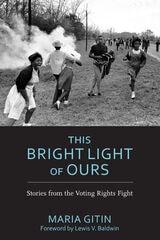
This Bright Light of Ours
Stories from the Voting Rights FightMaria Gitin
University of Alabama Press, 2014
Combining memoir with oral history, creates a vivid and searing portrait of the Freedom Summer of 1965.
This Bright Light of Ours offers a tightly focused insider’s view of the community-based activism that was the heart of the civil rights movement. A celebration of grassroots heroes, this book details through first-person accounts the contributions of ordinary people who formed the nonviolent army that won the fight for voting rights.
Combining memoir and oral history, Maria Gitin fills a vital gap in civil rights history by focusing on the neglected Freedom Summer of 1965 when hundreds of college students joined forces with local black leaders to register thousands of new black voters in the rural South. Gitin was an idealistic nineteen-year-old college freshman from a small farming community north of San Francisco who felt called to action when she saw televised images of brutal attacks on peaceful demonstrators during Bloody Sunday, in Selma, Alabama.
Atypical among white civil rights volunteers, Gitin came from a rural low-income family. She raised funds to attend an intensive orientation in Atlanta featuring now-legendary civil rights leaders. Her detailed letters include the first narrative account of this orientation and the only in-depth field report from a teenage Summer Community Organization and Political Education (SCOPE) project participant.
Gitin details the dangerous life of civil rights activists in Wilcox County, Alabama, where she was assigned. She tells of threats and arrests, but also of forming deep friendships and of falling in love. More than four decades later, Gitin returned to Wilcox County to revisit the people and places that she could never forget and to discover their views of the “outside agitators” who had come to their community. Through conversational interviews with more than fifty Wilcox County residents and former civil rights workers, she has created a channel for the voices of these unheralded heroes who formed the backbone of the civil rights movement.
This Ecstatic Nation
The American Landscape and the Aesthetics of PatriotismTerre Ryan
University of Massachusetts Press, 2011
Terre Ryan examines this phenomenon by exploring the overlapping trails of national mythology, landscape aesthetics, patriotic discourse, and public policy. Tracing her journeys around bombing grounds in Nevada, logging sites in Oregon, and energy fields in Wyoming, she argues that business and government agencies often frame commercial projects and national myths according to nineteenth-century beliefs about landscape and bounty. Advertisements and political promotional materials following this aesthetic framework perpetuate frontier-era ideas about the environment as commodity, scenery, and cultural trashlands. Transmitted through all types of media, nineteenth-century perspectives on landscape continue to inform mainstream perceptions of the environment, environmental policies, and representations of American patriotism.
Combining personal narrative with factual reportage, political and cultural critique, and historical analysis, Ryan reframes the images we see every day and places them into a larger national narrative.
This Flame Within
Iranian Revolutionaries in the United StatesManijeh Moradian
Duke University Press, 2022
This Gaming Life
Travels in Three CitiesJim Rossignol
University of Michigan Press, 2009
"In May 2000 I was fired from my job as a reporter on a finance newsletter because of an obsession with a video game.
It was the best thing that ever happened to me.”
So begins this story of personal redemption through the unlikely medium of electronic games. Quake, World of Warcraft, Eve Online, and other online games not only offered author Jim Rossignol an excellent escape from the tedium of office life. They also provided him with a diverse global community and a job—as a games journalist.
Part personal history, part travel narrative, part philosophical reflection on the meaning of play, This Gaming Life describes Rossignol’s encounters in three cities: London, Seoul, and Reykjavik. From his days as a Quake genius in London’s increasingly corporate gaming culture; to Korea, where gaming is a high-stakes televised national sport; to Iceland, the home of his ultimate obsession, the idiosyncratic and beguiling Eve Online, Rossignol introduces us to a vivid and largely undocumented world of gaming lives.
Torn between unabashed optimism about the future of games and lingering doubts about whether they are just a waste of time, This Gaming Life also raises important questions about this new and vital cultural form. Should we celebrate the “serious” educational, social, and cultural value of games, as academics and journalists are beginning to do? Or do these high-minded justifications simply perpetuate the stereotype of games as a lesser form of fun? In this beautifully written, richly detailed, and inspiring book, Rossignol brings these abstract questions to life, immersing us in a vibrant landscape of gaming experiences.
“We need more writers like Jim Rossignol, writers who are intimately familiar with gaming, conversant in the latest research surrounding games, and able to write cogently and interestingly about the experience of playing as well as the deeper significance of games.”
—Chris Baker, Wired
“This Gaming Life is a fascinating and eye-opening look into the real human impact of gaming culture. Traveling the globe and drawing anecdotes from many walks of life, Rossignol takes us beyond the media hype and into the lives of real people whose lives have been changed by gaming. The results may surprise you.”
—Raph Koster, game designer and author of A Theory of Fun for Game Design
—Joshua Davis, author of The Underdog
“This is a wonderfully literate look at gaming cultures, which you don't have to be a gamer to enjoy. The Korea section blew my mind.”
—John Seabrook, New Yorker staff writer and author of Flash of Genius and Other True Stories of Invention
digitalculturebooks is an imprint of the University of Michigan Press and the Scholarly Publishing Office of the University of Michigan Library dedicated to publishing innovative and accessible work exploring new media and their impact on society, culture, and scholarly communication. Visit the website at www.digitalculture.org.

This Giving Birth
Pregnancy and Childbirth in American Women's WritingJulie Tharp
University of Wisconsin Press, 2000
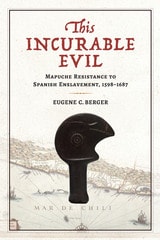
This Incurable Evil
Mapuche Resistance to Spanish Enslavement, 1598–1687Eugene C.Berger
University of Alabama Press, 2023
Documents how initial Mapuche-Spanish alliances were built and how they were destroyed by increasingly powerful slave-trading elites operating like organized crime families
The history of Spanish presence in the Americas is usually viewed as a one-sided conquest. In This Incurable Evil: Mapuche Resistance to Spanish Enslavement, 1598–1687, Eugene C. Berger provides a major corrective in the case of Chile. For example, in the south, indigenous populations were persistent in their resistance against Spanish settlement. By the end of the sixteenth century, Spanish aspirations to conquer the entire Pacific Coast were dashed at least twice by armed resistance from the Mapuche peoples. By 1600, the Mapuche had killed two Spanish governors and occupied more than a dozen Spanish towns. Chile’s colonial future was quite uncertain.
As Berger documents, for much of the seventeenth century it seemed that there could be peace along the Spanish-Mapuche frontier. Through trade, intermarriage, and even mutual distrust of Dutch and English pirates, the Mapuche and the Spanish began to construct a colonial entente. However, this growing alliance was obliterated by the “incurable evil,” an ever-expanding enslavement of Mapuches, and one which prompted a new generation of Mapuche resistance. This trade saw Mapuche rivals, neutrals, and even friends placed in irons and forced to board ships in Valdivia and Concepción or to march northward along the Andes. The Mapuche labored in the gold mines of La Serena, in urban workshops in Lima, in the silver mines of Potosí, or on the thousands of haciendas in between and would never return to their homes. With this tragic betrayal, Chile was left a more corrupt, violent, and polarized place, which would cause deep wounds for centuries.
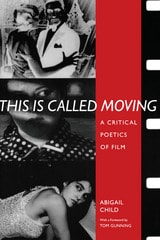
This Is Called Moving
A Critical Poetics of FilmAbigail Child, with a foreword by Tom Gunning
University of Alabama Press, 2005
A pioneering exploration of how poetry and experimental cinema intersect to reconstruct meaning across visual and linguistic forms.
As the writer, director, producer, and cinematographer of almost all her 30 films, videos, and shorts, Abigail Child has been recognized as a major and influential practitioner of experimental cinema since the early 1970s. Hallmarks of her style are the appropriation and reassembly of found footage and fragments from disparate visual sources, ranging from industrial films and documentaries to home movies, vacation photography, and snippets of old B movies.
The resulting collages and montages are cinematic narratives that have been consistently praised for their beauty and sense of wonder and delight in the purely visual. At the same time, Child's films are noted for their incisive political commentary on issues such as gender and sexuality, class, voyeurism, poverty, and the subversive nature of propaganda.
In the essays of This Is Called Moving, Child draws on her long career as a practicing poet as well as a filmmaker to explore how these two language systems inform and cross-fertilize her work. For Child, poetry and film are both potent means of representation, and by examining the parallels between them—words and frames, lines and shots, stanzas and scenes—she discovers how the two art forms re-construct and re-present social meaning, both private and collective.

This Is Not Dixie
Racist Violence in Kansas, 1861-1927Brent M.S. Campney
University of Illinois Press, 2018
This Is Our Land
Grassroots Environmentalism in the Late Twentieth CenturyFerguson, Cody
Rutgers University Press, 2015
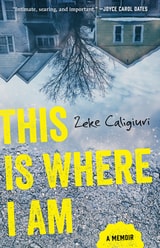
This Is Where I Am
A MemoirZeke Caligiuri
University of Minnesota Press, 2016
Prison is where Zeke Caligiuri is. Powderhorn Park in South Minneapolis, dubbed “Murderapolis” the year he turned eighteen, is where he comes from. It was the same neighborhood his father grew up in but had changed dramatically by the early 1990s. Yet in Zeke’s family, father and mother and grandmother kept things together while all around them the houses decayed and once-safe streets gave way to the crush of poverty and crime.
This Is Where I Am is Zeke Caligiuri’s clear-eyed account of how he got from there to here, how a boy who had every hope went from dreaming of freedom to losing it, along with nearly everything and everyone he loved. Tenderhearted in its reflections on his lost childhood, brutally candid in its description of a life of hanging and hustling, Zeke’s memoir recreates a world of tagging and goofing gone awry, of moving from smoking pot to unsuccessful attempts at dealing crack, of watching his father weep at the funeral of a seventeen-year-old boy, of going to jail: first strike. It is a place where, when asked what he's going to do with his life, a friend can only answer: “What the fuck are you talking about?”
This Is Where I Am is Zeke's own answer: he is going to tell his story, every sharp detail and sobering word, with the natural grace of a gifted writer and the hard-won wisdom of hindsight.
This Is a Place We Made
Disability History and Public LandEdited by Kathleen M. Brian
University of Illinois Press, 2027
Disability and place constitute one another. Disabled people make worlds through creativity, adaptability, and reciprocal care, while disability offers distinctive routes to understanding present, past, and future worlds. At the same time, places evoke memory, story, and meaning—however contested—and influence how people understand and live disability. Informed by cutting-edge theories and inventive methods, the contributors’ brief studies of particular places highlight this mutuality. Framing the essays are open-ended questions and abundant resources that invite specialist and non-specialist readers alike to join ongoing conversations.
Innovative and world-making, This Is a Place We Made models what is possible when historical practice is guided by an ethics of access, collaboration, and proximity.
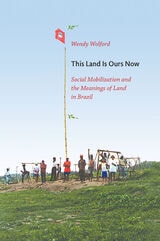
This Land Is Ours Now
Social Mobilization and the Meanings of Land in BrazilWendy Wolford
Duke University Press, 2010
Drawing on extensive ethnographic research, Wolford compares the development of the movement in Brazil’s southern state of Santa Catarina and its northeastern state of Pernambuco. As she explains, in the south, most of the movement’s members were sons and daughters of small peasant farmers; in the northeast, they were almost all former plantation workers, who related awkwardly to the movement’s agenda of accessing “land for those who work it.” The MST became an effective presence in Pernambuco only after the local sugarcane economy had collapsed. Worldwide sugarcane prices dropped throughout the 1990s, and by 1999 the MST was a prominent political organizer in the northeastern plantation region. Yet fewer than four years later, most of the region’s workers had dropped out of the movement. By delving into the northeastern workers’ motivations for joining and then leaving the MST, Wolford adds nuance and depth to accounts of a celebrated grassroots social movement, and she highlights the contingent nature of social movements and political identities more broadly.
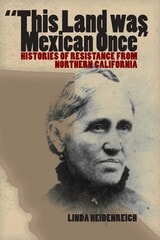
This Land Was Mexican Once
Histories of Resistance from Northern CaliforniaBy Linda Heidenreich
University of Texas Press, 2007
The territory of Napa County, California, contains more than grapevines. The deepest roots belong to Wappo-speaking peoples, a group whose history has since been buried by the stories of Spanish colonizers, Californios (today's Latinos), African Americans, Chinese immigrants, and Euro Americans. Napa's history clearly is one of co-existence; yet, its schoolbooks tell a linear story that climaxes with the arrival of Euro Americans. In "This Land was Mexican Once," Linda Heidenreich excavates Napa's subaltern voices and histories to tell a complex, textured local history with important implications for the larger American West, as well.
Heidenreich is part of a new generation of scholars who are challenging not only the old, Euro-American depiction of California, but also the linear method of historical storytelling—a method that inevitably favors the last man writing. She first maps the overlapping histories that comprise Napa's past, then examines how the current version came to dominate—or even erase—earlier events. So while history, in Heidenreich's words, may be "the stuff of nation-building," it can also be "the stuff of resistance." Chapters are interspersed with "source breaks"—raw primary sources that speak for themselves and interrupt the linear, Euro-American telling of Napa's history. Such an inclusive approach inherently acknowledges the connections Napa's peoples have to the rest of the region, for the linear history that marginalizes minorities is not unique to Napa. Latinos, for instance, have populated the American West for centuries, and are still shaping its future. In the end, "This Land was Mexican Once" is more than the story of Napa, it is a multidimensional model for reflecting a multicultural past.

This Little Kiddy Went to Market
The Corporate Capture of ChildhoodSharon Beder, Wendy Varney, and Richard Gosden
Pluto Press, 2009
This book investigates the way that corporations are strategically shaping children to be under-aged hyperconsumers as well as the submissive employees and uncritical citizens of the future.
Sharon Beder shows how marketers and advertisers are targeting ever younger children in a relentless campaign, transforming children's play into a commercial opportunity and taking advantage of childish anxieties.
Beder investigates the corporate relations and ideals that infiltrate every aspect of our lives. She presents an alarming picture of how a child's social development -- through education, health care and nutrition -- has become an ordered conveyor belt of consumerist conditioning. Focusing on education in particular, Beder explains how businesses are taking control of more and more aspects of schooling, not only for profit but to erode state schooling and promote business values. Similarly, she shows how 'difficult' children are taught from an early age that pharmaceuticals can be used to discipline them or to make them 'happy'.
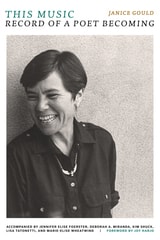
This Music
Record of a Poet BecomingJanice Gould; Edited by Jennifer Elise Foerster, Deborah A. Miranda, Kim Shuck, Lisa Tatonetti, and Marie-Elise Wheatwind; Foreword by Joy Harjo
University of Arizona Press, 2026
This Music is the final, intimate work of celebrated Koyoonk’auwi (Concow) poet and essayist Janice Gould, completed posthumously by a collective of close friends and literary scholars.
Told through lyrical prose poems and personal photographs, this memoir traces Gould’s life as a queer/Two-Spirit California Native coming of age in the late 1960s, navigating family, identity, activism, and art. With reflections on her mixed-blood heritage, her experiences in lesbian feminist circles, and her journey as a poet and musician, Gould’s voice resonates with clarity, tenderness, and fierce honesty.
The book opens with a foreword by Joy Harjo and an introduction from the editorial collective, including an essay by Gould’s spouse, Marie-Elise Wheatwind, framing the memoir as both a literary achievement and a loving tribute.
This Music is a vital contribution to Indigenous and LGBTQ+ literatures, offering readers a rare and powerful account of gender, sexuality, and Native identity in mid-century and contemporary America. As the one hundredth volume in the Sun Tracks series, this work honors Gould’s legacy while expanding the canon of poetic memoir. Ideal for readers of poetry, memoir, and Indigenous literature, this book will resonate deeply with scholars, students, and anyone drawn to stories of resilience, creativity, and the enduring power of memory.
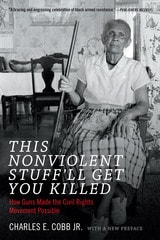
This Nonviolent Stuff'll Get You Killed
How Guns Made the Civil Rights Movement PossibleCharles E. Cobb Jr.
Duke University Press, 2015
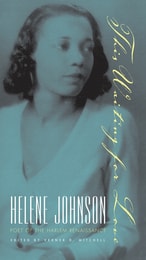
This Waiting for Love
Helene Johnson, Poet of the Harlem RenaissanceVerner D. Mitchell
University of Massachusetts Press, 2000
This volume brings together all of the known poetry and a selection of correspondence by an enormously talented but underappreciated poet of the Harlem Renaissance. Cousin of novelist Dorothy West and friend of Zora Neale Hurston, Helene Johnson (1905–1995) first gained literary prominence when James Weldon Johnson and Robert Frost selected three of her poems for prizes in a 1926 competition. During the late 1920s and early 1930s her poetry appeared in various small magazines, such as the Saturday Evening Quill, Palms, Opportunity, and Harlem. In 1933 Johnson married, and two years later her last published poem, “Let Me Sing My Song,” appeared in Challenge, the journal West had founded to revive the spirit of the Harlem Renaissance.
In his well-researched introduction, Verner D. Mitchell reconstructs Johnson's life, the details of which have long been veiled from public view, and places her in the context of a vital literary tradition. In addition to discussing her relationship with West, Hurston, and other black women writers, he explores the distinctive, at times radical, qualities of her work. Ever willing to defy the genteel conventions that governed women's writing, Johnson wrote poems on erotic themes and engaged the aesthetic, gender, and racial politics of her time.
Cheryl A. Wall's foreword also celebrates Johnson's talent, particularly the ease with which she moved among various verse forms—from the rigor of the sonnet to the improvisational creativity of free black vernacular. “An unexpected and most welcome gift,” This Waiting for Love, Wall writes, is “an enduring tribute” to “the vibrant poetry of Helene Johnson.”
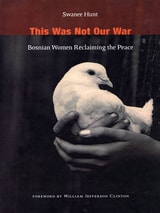
This Was Not Our War
Bosnian Women Reclaiming the PeaceSwanee Hunt
Duke University Press, 2004
This Was Not Our War shares amazing first-person accounts of twenty-six Bosnian women who are reconstructing their society following years of devastating warfare. A university student working to resettle refugees, a paramedic who founded a veterans’ aid group, a fashion designer running two nonprofit organizations, a government minister and professor who survived Auschwitz—these women are advocates, politicians, farmers, journalists, students, doctors, businesswomen, engineers, wives, and mothers. They are from all parts of Bosnia and represent the full range of ethnic traditions and mixed heritages. Their ages spread across sixty years, and their wealth ranges from expensive jewels to a few chickens. For all their differences, they have this much in common: all survived the war with enough emotional strength to work toward rebuilding their country. Swanee Hunt met these women through her diplomatic and humanitarian work in the 1990s. Over the course of seven years, she conducted multiple interviews with each one. In presenting those interviews here, Hunt provides a narrative framework that connects the women’s stories, allowing them to speak to one another.
The women describe what it was like living in a vibrant multicultural community that suddenly imploded in an onslaught of violence. They relate the chaos; the atrocities, including the rapes of many neighbors and friends; the hurried decisions whether to stay or flee; the extraordinary efforts to care for children and elderly parents and to find food and clean drinking water. Reflecting on the causes of the war, they vehemently reject the idea that age-old ethnic hatreds made the war inevitable. The women share their reactions to the Dayton Accords, the end of hostilities, and international relief efforts. While they are candid about the difficulties they face, they are committed to rebuilding Bosnia based on ideals of truth, justice, and a common humanity encompassing those of all faiths and ethnicities. Their wisdom is instructive, their courage and fortitude inspirational.
This World, Other Worlds
Sickness, Suicide, Death, and the Afterlife among the Vaqueiros de Alzada of SpainMaría Cátedra
University of Chicago Press, 1992
Applying sensitive ethnographic insight to a rich body of oral testimony, Cátedra discloses an unsuspected symbolic universe native to the Vaqueiros. Death is seen here in close, coherent relation to pain, age, and suffering; sickness and suicide, one must understand the cultural valuation of different ways of dying and the conditions under which suicides take place. To understand what it means to be a Vaqueiro is to understand how suicide can be perceived by a people as acceptable.
A groundbreaking work in European ethnography, This World, Other Worlds takes symbolic analysis to a new level. In its illumination of local conceptions of death, grace, and sainthood, the book also makes a substantial contribution to the anthropology of religion.
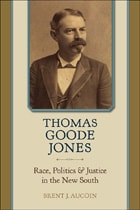
Thomas Goode Jones
Race, Politics, and Justice in the New SouthBrent J. Aucoin
University of Alabama Press, 2016
Thomas Goode Jones of Alabama is the first comprehensive biography of a key Alabama politician and federal jurist whose life and times embody the conflicts and transformations in the Deep South between the Civil War and World War I.
A man who both represented and differed from his class, Thomas Goode Jones offers contemporary readers and scholars an ideal subject of study to understand a period of southern history that still shapes American life today. Often overshadowed by the pharaonic antebellum period, the Civil War, and the luminous heights of the civil rights movement, the deceptively placid decades at the turn of the century were, in fact, a period when southerners fiercely debated the course of the South’s future. In tracing Jones’s career, Brent J. Aucoin offers vivid accounts of the great events and trends of that pivotal period: Reconstruction, the birth of the “Solid South,” the Populist Revolt, and the establishment of racial disenfranchisement and segregation.
Born in 1844, Jones served in the Confederate army and after the war identified as a conservative “Bourbon” Democrat. He served as Alabama's governor from 1890 to 1894 and as a federal judge from 1901 until his death in 1914. As a veteran, politician, and judge, Jones embodied numerous roles in the shifting political landscape of the South.
Jones was not, however, a reflexive conformist and sometimes pursued policies at odds with his party. Jones’s rhetoric and support of African American civil rights were exceptional and earned him truculent criticism from unrepentant racist factions in his party. His support was so fearless that it inspired Booker T. Washington to recommend Jones to Republican president Theodore Roosevelt as a federal judge. On the bench, Jones garnered national attention for his efforts to end peonage and lynching, and yet he also enabled the establishment of legalized segregation in Alabama, confounding attempts easily to categorize him as an odious reactionary or fearless progressive.
Thomas Kinkade
The Artist in the MallAlexis L. Boylan, ed.
Duke University Press, 2011
Contributors. Julia Alderson, Alexis L. Boylan , Anna Brzyski, Seth Feman, Monica Kjellman-Chapin, Micki McElya, Karal Ann Marling, David Morgan, Christopher Pearson, Andrea Wolk Rager, Jeffrey Vallance

Thomas Sankara
An African RevolutionaryErnest Harsch
Ohio University Press, 2014
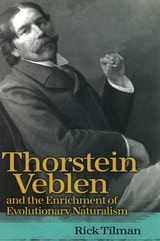
Thorstein Veblen and the Enrichment of Evolutionary Naturalism
Rick Tilman
University of Missouri Press, 2007
One of America’s most influential social critics, Thorstein Veblen authored works deeply rooted in evolutionary biology and American philosophical naturalism—both of which help explain his institutional economics and radical sociology. Now, one of today’s preeminent Veblen scholars ranges widely over the man’s writings to show how evolutionary naturalism underlies his social theory and criticism, shapes his satire, and binds his work together.
Rick Tilman’s study focuses on the intersections of social theory and social psychology, political economy and political theory, and modern philosophy and intellectual history in Veblen’s thinking. It links evolutionary naturalism for the first time to Veblen’s aesthetics, secular humanism, sociology of control, sociobiology, and sociology of knowledge, and it makes groundbreaking observations regarding the relationship of Veblen’s own life to his thinking; his place as a cultural lag theorist; and his analysis of sports, gambling, and religion.
Drawing on textual exegesis of Veblen’s work, unpublished correspondence, and selected archives, Tilman argues that only evolutionary naturalism could provide the philosophical foundations of Veblen’s thought. He also emphasizes Veblen’s role in the enhancement and embellishment of the social sciences and cultural studies, as well as his insights into the processes of change in the sociopolitical order.
Veblen’s evolutionary naturalism, with its unflattering evaluation of America’s self-selected special place in the international arena, casts doubt on today’s foreign interventions, and it also provides a much-needed antidote to the resurgence of creationist thought in American culture. Tilman shows that Veblen’s ideas are still valuable to contemporary social scientists—indeed, that his method of analysis and values are sorely needed to help us avoid wasteful consumption, predation, and the persistence of religious superstition. This work offers readers a new appreciation of Veblen and the many issues he addressed, and of Tilman’s own masterful facility in bringing them to light.

Those About Him Remained Silent
The Battle over W. E. B. Du BoisAmy Bass
University of Minnesota Press, 2012
On the eve of Martin Luther King Jr.’s 1963 March on Washington, W. E. B. Du Bois died in exile in Ghana at the age of 95, more than a half century after cofounding the NAACP. Five years after his death, residents of Great Barrington, the small Massachusetts town where Du Bois was born in 1868, proposed recognizing his legacy through the creation of a memorial park on the site of his childhood home. Supported by the local newspaper and prominent national figures including Harry Belafonte and Sydney Poitier, the effort to honor Du Bois set off an acrimonious debate that bitterly divided the town. Led by the local chapter of the Veterans of Foreign Wars, opponents compared Du Bois to Hitler, vilifying him as an anti-American traitor for his communist sympathies, his critique of American race relations, and his pan-Africanist worldview.
In Those About Him Remained Silent, Amy Bass provides the first detailed account of the battle over Du Bois and his legacy, as well as a history of Du Bois’s early life in Massachusetts. Bass locates the roots of the hostility to memorialize Du Bois in a cold war worldview that reduced complicated politics to a vehement hatred of both communism and, more broadly, anti-Americanism. The town’s reaction was intensified, she argues, by the racism encoded within cold war patriotism.
Showing the potency of prevailing, often hidden, biases, Those About Him Remained Silent is an unexpected history of how racism, patriotism, and global politics played out in a New England community divided on how—or even if—to honor the memory of its greatest citizen.
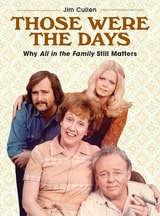
Those Were the Days
Why All in the Family Still MattersJim Cullen
Rutgers University Press, 2020
Between 1971 and 1979, All in the Family was more than just a wildly popular television sitcom that routinely drew 50 million viewers weekly. It was also a touchstone of American life, so much so that the living room chairs of the two main characters have spent the last 40 years on display at the Smithsonian. How did a show this controversial and boundary-breaking manage to become so widely beloved?
Those Were the Days is the first full-length study of this remarkable television program. Created by Norman Lear and produced by Bud Yorkin, All in the Family dared to address such taboo topics as rape, abortion, menopause, homosexuality, and racial prejudice in a way that no other sitcom had before. Through a close analysis of the sitcom’s four main characters—boorish bigot Archie Bunker, his devoted wife Edith, their feminist daughter Gloria, and her outspoken liberal husband Mike—Jim Cullen demonstrates how All in the Family was able to bridge the generation gap and appeal to a broad spectrum of American viewers in an age when a network broadcast model of television created a shared national culture.
Locating All in the Family within the larger history of American television, this book shows how it transformed the medium, not only spawning spinoffs like Maude and The Jeffersons, but also helping to inspire programs like Roseanne, Married... with Children, and The Simpsons. And it raises the question: could a show this edgy ever air on broadcast television today?
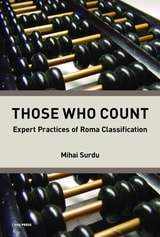
Those Who Count
Expert Practicies of Roma ClassificationMihai Surdu
Central European University Press, 2016
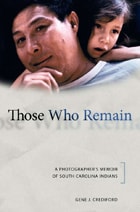
Those Who Remain
A Photographer's Memoir of South Carolina IndiansGene J. Crediford
University of Alabama Press, 2009
Through interviews and a generous photograph montage stretching over two decades, reveals the commonality and diversity among these people of Indian identity
When DeSoto (in 1540) and later Juan Pardo (in 1567) marched through what was known as the province of Cofitachequi (which covered the southern part of today’s North Carolina and most of South Carolina), the native population was estimated at well over 18,000. Most shared a common Catawba language, enabling this confederation of tribes to practice advanced political and social methods, cooperate and support each other, and meet their common enemy. The footprint of the Cofitachequi is the footprint of this book.
The contemporary Catawba, Midland, Santee, Natchez-Kusso, Varnertown, Waccamaw, Pee Dee, and Lumbee Indians of North and South Carolina, have roots in pre-contact Cofitachequi. Names have changed through the years; tribes split and blended as the forces of nature, the influx of Europeans, and the imposition of federal government authority altered their lives. For a few of these tribes, the system has worked well—or is working well now. For others, the challenge continues to try to work with and within the federal government’s system for tribal recognition—a system governing Indians but not created by them. Through interviews and a generous photograph montage stretching over two decades, Gene Crediford reveals the commonality and diversity among these people of Indian identity; their heritage, culture, frustrations with the system, joys in success of the younger generation, and hope for the future of those who come after them. This book is the story of those who remain.
Those Who Work, Those Who Don't
Poverty, Morality, and Family in Rural AmericaJennifer Sherman
University of Minnesota Press, 2009
When the rural poor prioritize issues such as the right to bear arms, and disapprove of welfare despite their economic concerns, they are often dismissed as uneducated and backward by academics and political analysts. In Those Who Work, Those Who Don't, Jennifer Sherman offers a much-needed sympathetic understanding of poor rural Americans, persuasively arguing that the growing cultural significance of moral values is a reasonable and inevitable response to economic collapse and political powerlessness.
Those Who Work, Those Who Don't is based on the intimate interviews and in-depth research Sherman conducted while spending a year living in "Golden Valley," a remote logging town in Northern California. Economically devastated by the 1990 ruling that listed the northern spotted owl as a threatened species, Golden Valley proved to be a rich case study for Sherman. She looks at how the members of the community coped with downward mobility caused by the loss of timber industry jobs and examines a wide range of reactions. She shows how substance abuse, domestic violence, and gender roles fluctuated under the town's economic strain.
Compellingly written, shot through with honesty and empathy, Those Who Work, Those Who Don't is a rare firsthand account that studies the rural poor. As incomes erode and the American dream becomes more and more inaccessible, Sherman reveals that moral values and practices become a way for the poor to gain status and maintain a sense of dignity in the face of economic ruin.