Results by title
18284 books match the query 'United States' and 3764 start with t
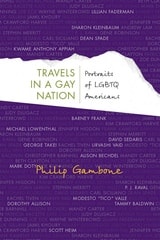
Travels in a Gay Nation
Portraits of LGBTQ AmericansPhilip Gambone
University of Wisconsin Press, 2010
In this age when contemporary gay America is still coming under attack, Gambone captures the humanity of each individual. For some, their identity as a sexual minority is crucial to their life’s work; for others, it has been less so, perhaps even irrelevant. But, whether splashy or quiet, center-stage or behind the scenes, Gambone’s subjects have managed—despite facing ignorance, fear, hatred, intolerance, injustice, violence, ridicule, or just plain indifference—to construct passionate, inspiring lives.
Outstanding Book in the High School Category, selected by the American Association of School Libraries
Best Book in Special Interest Category, selected by the Public Library Association
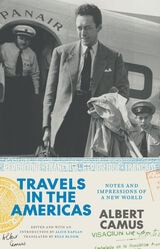
Travels in the Americas
Notes and Impressions of a New WorldAlbert Camus
University of Chicago Press, 2023
In March 1946, the young Albert Camus crossed from Le Havre to New York. Though he was virtually unknown to American audiences at the time, all that was about to change—The Stranger, his first book translated into English, would soon make him a literary star. By 1949, when he set out on a tour of South America, Camus was an international celebrity. Camus’s journals offer an intimate glimpse into his daily life during these eventful years and showcase his thinking at its most personal—a form of observational writing that the French call choses vues (things seen).
Camus’s journals from these travels record his impressions, frustrations, joys, and longings. Here are his unguarded first impressions of his surroundings and his encounters with publishers, critics, and members of the New York intelligentsia. Long unavailable in English, the journals have now been expertly retranslated by Ryan Bloom, with a new introduction by Alice Kaplan. Bloom’s translation captures the informal, sketch-like quality of Camus’s observations—by turns ironic, bitter, cutting, and melancholy—and the quick notes he must have taken after exhausting days of travel and lecturing. Bloom and Kaplan’s notes and annotations allow readers to walk beside the existentialist thinker as he experiences changes in his own life and the world around him, all in his inimitable style.
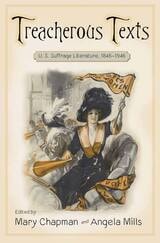
Treacherous Texts
An Anthology of U.S. Suffrage Literature, 1846-1946Chapman, Mary
Rutgers University Press, 2011
Uncovering startling affinities between popular literature and propaganda, Treacherous Texts samples a rich, decades-long tradition of suffrage literature created by writers from diverse racial, class, and regional backgrounds. Beginning with sentimental fiction and polemic, progressing through modernist and middlebrow experiments, and concluding with post-ratification memoirs and tributes, this anthology showcases lost and neglected fiction, poetry, drama, literary journalism, and autobiography; it also samples innovative print cultural forms devised for the campaign, such as valentines, banners, and cartoons. Featured writers include canonical figures as well as writers popular in their day but, until now, lost to ours.
Includes writings by:
• Sojourner Truth
• Elizabeth Cady Stanton
• Frederick Douglass
• Fanny Fern
• Harriet Beecher Stowe
• Djuna Barnes
• Charlotte Perkins Gilman
• Marianne Moore
• Sui Sin Far
• Edna St. Vincent Millay
• Gertrude Stein
And many others.
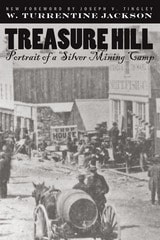
Treasure Hill
Portrait Of A Silver Mining CampW. Turrentine Jackson
University of Nevada Press, 2000

Treasure Tales of the Rockies
Perry Eberhart
Ohio University Press, 1990
Perry Eberhart gathered and researched almost 150 treasure tales and tells them with the same thoroughness, engaging style, and lively anecdotes that distinguish his other major contribution to Colorado lore and history: Guide to the Colorado Ghost Towns and Mining Camps.
Treasure Tales not only tells the original story of a lost mine or a buried treasure, but also fills in the pieces of the puzzle as they have come to light over the years. Many tales become more and more intriguing — but still remain a puzzle. In some cases the puzzle is solved, often accidentally. Eberhart also collects the fascinating tales of lost treasures found. This latest edition of Treasure Tales brings all of this information up to date.
Forty-three maps by Sandy Eberhart and forty-eight well-chosen photographs round out Treasure Tales. This is a book for both armchair excitement and for the adventurer who wants to search out what nature, time, and man's ingenuity have hidden from us — and what nature, time, and man's ingenuity also often help us find. Good luck!
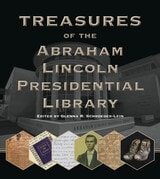
Treasures of the Abraham Lincoln Presidential Library
Edited by Glenna R. Schroeder-Lein
Southern Illinois University Press, 2014
Illinois State Historical Society Superior Achievement Award 2015
The Abraham Lincoln Presidential Library in Springfield, Illinois, houses a trove of invaluable historical resources concerning all aspects of the Prairie State’s past. Treasures of the Abraham Lincoln Presidential Library commemorates the institution’s 125-year history, as well as its contributions to scholarship and education by highlighting a selection of eighty-five treasures from among more than twelve million items in the library’s collections.
After opening with a historical overview and extensive chronology of the Library, the volume organizes the treasures by various topics, including items that illustrate various locations and materials relating to business, the mid-nineteenth century and the Civil War, World Wars I and II, the oldest items, unusual treasures, ethnicity, and art. From the Gettysburg Address, Abraham and Mary Lincoln’s letters, and Governor Dan Walker’s boots to a Deering Harvester Company catalog, WPA publications, and an Adlai Stevenson I campaign hat, each entry includes a thorough description of the item, one or more images, and a discussion of its history and how the library acquired it, if known. Other treasures include the Thomas Yates General Store daybook, Dubin Pullman car materials, Civil War newspapers, a Lincoln coffin photograph, the Mary Lincoln insanity verdict, the Directory of Sangamon County’s Colored Citizens, andLincoln’s stovepipe hat.
To highlight the academic importance of the Library, nineteen researchers share how study in the Library’s collections proved essential to their projects. Although these treasures only scrape the surface of the vast holdings of the Abraham Lincoln Presidential Library, together they epitomize the rich, varied, and sometimes quirky resources available to both serious scholars and curious tourists alike at this valuable cultural institution.
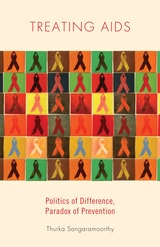
Treating AIDS
Politics of Difference, Paradox of PreventionSangaramoorthy, Thurka
Rutgers University Press, 2014
Sangaramoorthy documents in detail the work of AIDS prevention programs and their effect on the health and well-being of Haitians, a transnational community long plagued by the stigma of being stereotyped in public discourse as disease carriers. By tracing the ways in which public knowledge of AIDS prevention science circulates from sites of surveillance and regulation, to various clinics and hospitals, to the social worlds embraced by this immigrant community, she ultimately demonstrates the ways in which AIDS prevention programs help to reinforce categories of individual and collective difference, and how they continue to sustain the persistent and pernicious idea of race and ethnicity as risk factors for the disease.

Treaty Politics and the Rise of Executive Agreements
International Commitments in a System of Shared PowersGlen S. Krutz and Jeffrey S. Peake
University of Michigan Press, 2011
"Krutz and Peake's examination of the increase use of executive agreements offers a valuable lesson in how the president and Congress have responded and adjusted to the growth in the complexity of foreign relations to meet the demands of an ever-increasingly complex and interconnected international community."
---Victoria Farrar-Myers, University of Texas, Arlington
"From reading Treaty Politics and the Rise of Executive Agreements, I learned a good deal about a topic that I thought I knew well. This book will be an excellent addition to the literature on the presidency. It will be read and cited by scholars working in this field."
---Benjamin Ginsberg, Johns Hopkins University
"Glen Krutz and Jeffrey Peake's Treaty Politics and the Rise of Executive Agreements offers a provocative analysis of a neglected topic. Their theoretical and empirical challenge to the usual explanation for the growth of executive agreements, their careful analysis of the treaty process in the Senate and when that body can be decisive, and their assessment of the House of Representatives' role in the agreement process provide important new scholarship for students of the presidency, Congress, and foreign policy."
---James M. McCormick, Iowa State University
In foreign relations, U.S. presidents have exercised a growing independence through the use of executive agreements. The U.S. Constitution specifies that two-thirds of the Senate must ratify a proposed treaty but makes no provision for other forms of international agreements. In 1942 the Supreme Court affirmed the legality of executive agreements, and since World War II, they have outnumbered treaties by more than ten to one. Are presidents trampling the Constitution or seeking to streamline the diplomatic process?
Glen S. Krutz and Jeffrey S. Peake argue that the preference for executive agreements is the result of a symbiotic evolution of the executive and the legislative branches and that in order for the United States to survive in a complex, ever-changing global environment and maintain its world power status, it must fulfill international commitments swiftly and confidently. Members of Congress concur that executive agreements allow each branch to function more effectively. At the same time, the House continues to oversee particular policy areas, and presidents still submit the majority of the most significant international commitments to the Senate as treaties.
Krutz and Peake conclude that executive agreements represent a mutual adaptation of the executive and the legislature in a system of shared power.
Glen S. Krutz is Associate Director of the Carl Albert Center and Professor of Political Science at the University of Oklahoma.
Jeffrey S. Peake is Professor and Department Chair, Department of Political Science at Clemson University.

Treehab
Tales from My Natural, Wild LifeBob Smith
University of Wisconsin Press, 2016
In Treehab—named after a retreat cabin in rural Ontario—Smith muses how he has “always sought the path less traveled.” He rebuffs his diagnosis of ALS as only an unflappable stand-up comic could (“Lou Gehrig’s Disease? But I don’t even like baseball!”) and explores his complex, fulfilling experience of fatherhood, both before and after the onset of the disease.
Stories of his writing and performing life—punctuated by hilariously cutting jokes that comedians tell only to each other—are interspersed with tales of Smith’s enduring relationship with nature: boyhood sojourns in the woods of upstate New York and adult explorations of the remote Alaskan wilderness; snakes and turtles, rocks and minerals; open sky and forest canopy; God and friendship—all recurring touchstones that inspire him to fight for his survival and for the future of his two children.
Aiming his potent, unflinching wit at global warming, equal rights, sex, dogs, Thoreau, and more, Smith demonstrates here the inimitable insight that has made him a beloved voice of a generation. He reminds us that life is perplexing, beautiful, strange, and entirely worth celebrating.
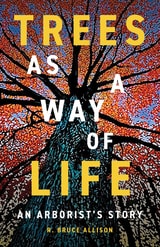
Trees as a Way of Life
An Arborist’s StoryR. Bruce Allison
Wisconsin Historical Society Press, 2027
An arborist’s lifelong journey reveals the deep connections between people and trees.
Bruce Allison has spent decades listening to trees and making sense of what they tell us. In this intimate and absorbing memoir, he deftly weaves personal stories, botanical insights, and moments of wonder and revelation into a captivating ode to trees.
Trees as a Way of Life follows Allison on his journey from seedling to sapling to maturity, as he explores a eucalyptus grove as a boy in Bonita, California; learns the tree ethic as an apprentice arborist in Baltimore, Maryland; and establishes his own tree care company in Madison, Wisconsin. After more than fifty years as a professional arborist, he tells stories of stewarding the trees at the Wisconsin State Capitol and Frank Lloyd Wright’s Taliesin, among other sites, and describes formative encounters with notable tree-loving clients, including American Girl creator Pleasant Rowland and Epic Systems founder Judith Faulkner. As he tells his own story, Allison incorporates the voices and stories of renowned naturalists like Henry David Thoreau, John Muir, Aldo Leopold, and Rachel Carson.
Allison also uses his own tree encounters as jumping-off points for deep dives into individual species, memorable moments in tree history, and tips and tricks for tree care and maintenance. As only an accomplished arborist and educator could, he provides a detailed-yet-accessible tutorial on trees, from the upper canopy of stem and crown, through the veil of bark, to the hidden underground landscape of tree roots and fungi.
In the tradition of the international bestseller The Hidden Life of Trees, this book carries readers root by root and limb by limb to a deeper understanding of the trees that feed us, protect us, shade us, and inspire us. In an engaging narrative style that blends the personal, the scientific, and the poetic, Allison’s story is an intimate love letter to trees, a master class in understanding and appreciating them, and an invitation to readers who also long to make trees a way of life.

Trees, Truffles, and Beasts
How Forests FunctionMaser, Chris
Rutgers University Press, 2008
Because today's decisions are tomorrow's consequences, every small effort makes a difference, but a broader understanding of our environmental problems is necessary to the development of sustainable ecosystem policies. In Trees, Truffles, and Beasts, Chris Maser, Andrew W. Claridge, and James M. Trappe make a compelling case that we must first understand the complexity and interdependency of species and habitats from the microscopic level to the gigantic. Comparing forests in the Pacific Northwestern United States and Southeastern mainland of Australia, the authors show how easily observable speciesùtrees and mammalsùare part of a complicated infrastructure that includes fungi, lichens, and organisms invisible to the naked eye, such as microbes.
Eminently readable, this important book shows that forests are far more complicated than most of us might think, which means simplistic policies will not save them. Understanding the biophysical intricacies of our life-support systems just might.
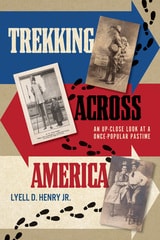
Trekking across America
An Up-Close Look at a Once-Popular PastimeLyell D. Jr. Henry
University of Iowa Press, 2024
As competitive walking faded, a new kind of spectacle walking, which had also begun in the late 1860s, came to full flower. Between 1890 and 1930, hundreds of men, women, even children and entire families were on the nation’s roads and railroad tracks trekking between widely separated points, sometimes moving in unusual ways such as on roller skates or by walking barefooted, backward, on stilts, or while rolling a hoop. To finance their attention-seeking journeys, many sold souvenir postcards. The public usually found these performers entertaining, but public officials and newspaper editors often denounced them as nuisances or frauds. Tapping vintage postcards and old newspaper articles, this is the first book to bring back to view this once-familiar feature of American life.
Trespassing
An Inquiry into the Private Ownership of LandJohn Hanson Mitchell
University Press of New England, 2015

Trial Courts as Organizations
Brian J Ostrom, Charles W Ostrom, Jr., Roger A Hanson and Matthew Kleiman
Temple University Press, 2007
Court administrators and judges have long acknowledged that culture plays an important role in the function of trial courts. Trial Courts as Organizations provides a comprehensive framework for understanding this organizational culture, along with a set of steps and tools to assess and measure the current and preferred culture.
The authors examine how courts operate, what characteristics they may display, and how they function as a unit to preserve judicial independence, strengthen organizational leadership, and influence court performance. They identify four different types of institutional cultures using a systematic analysis of alternative values on how work is done. Each culture is shown to have its own strengths and weaknesses in achieving values, such as timely case resolution, access to court services, and procedural justice. Accordingly, the authors find judges and administrators prefer a definite pattern of different cultures, called a "mosaic," to guide how their courts operate in the future.
Trial Films on Trial
Law, Justice, and Popular CultureEdited by Austin Sarat, Jessica Silbey, and Martha Merrill Umphrey
University of Alabama Press, 2019
Historically, the emergence of the trial film genre coincided with the development of motion pictures. In fact, one of the very first feature-length films, Falsely Accused!, released in 1908, was a courtroom drama. Since then, this niche genre has produced such critically acclaimed films as Twelve Angry Men, To Kill a Mockingbird, and Anatomy of a Murder. The popularity and success of these films can be attributed to the fundamental similarities of filmic narratives and trial proceedings. Both seek to construct a “reality” through storytelling and representation and in so doing persuade the audience or jury to believe what they see.
Trial Films on Trial: Law, Justice, and Popular Culture is the first book to focus exclusively on the special significance of trial films for both film and legal studies. The contributors to this volume offer a contemporary approach to the trial film genre. Despite the fact that the medium of film is one of the most pervasive means by which many citizens receive come to know the justice system, these trial films are rarely analyzed and critiqued. The chapters cover a variety of topics, such as how and why film audiences adopt the role of the jury, the narrative and visual conventions employed by directors, and the ways mid-to-late-twentieth-century trial films offered insights into the events of that period.

Trial by Treatment
Punishing Illness in an Age of Criminal Legal ReformMary Ellen Stitt
University of Chicago Press, 2025
A troubling account of the unexpected impacts of treatment-based alternatives to criminal punishment.
Every year, courts send hundreds of thousands of people to treatment-based programs as alternatives to traditional punishment. These alternatives—known as ‘diversion programs’—are widely celebrated as reforms that reduce the punishment of the mentally ill. But in Trial by Treatment, Mary Ellen Stitt shows that they have, in fact, expanded the reach of the criminal legal system and its power over the lives of the most vulnerable.
The inner workings of diversion programs are obscure, partially by design, and data on outcomes is hard to come by. Stitt draws on two years of fieldwork in criminal courtrooms and court-mandated treatment sessions, as well as an original national dataset, in-depth interviews, and experimental survey data, to document the hidden impacts of diversion. She shows that placing mental healthcare under the control of the courts has helped to legitimize the criminalization of illness, warped treatment environments, and amplified inequalities in punishment. In vivid and humanizing detail, Trial by Treatment shows how reforms that keep power and discretion in the same hands can entrench the very problems they promised to solve.
Trials and Triumphs
The Women of the American Civil WarMarilyn Mayer Culpepper
Michigan State University Press, 1991
Just as the Civil War influenced culture and government, it shaped the attitudes of a new breed of pioneering woman. As the war progressed, either by choice or by default, men turned over more and more responsibility to women on the home front. As a result, women began to break free from the "cult of domesticity" to expand career opportunities. By war's end, women on both sides of the conflict proved to themselves and to a nearly shattered nation that the appellation "weaker sex" was a misnomer.
Originally published in 1992, this revised paperback edition includes a new index.

Trials of Intimacy
Love and Loss in the Beecher-Tilton ScandalRichard Wightman Fox
University of Chicago Press, 1999
Henry Ward Beecher was pastor of Brooklyn's Plymouth Church and for many the "representative man" of mid-nineteenth century America. Elizabeth Tilton was the wife of Beecher's longtime intimate friend Theodore. His accusation of "criminal conversation" between Henry and Elizabeth confronted the American public with entirely new dilemmas about religion and intimacy, privacy and publicity, reputation and celebrity. The scandal spotlighted a series of comic and tragic loves and betrayals among these three figures, with a supporting cast that included Victoria Woodhull, Susan B. Anthony, and Elizabeth Cady Stanton.
To readers at the time, the Beecher-Tilton Scandal was an irresistible mystery. Richard Fox puts his readers into that same reverberating story, while offering it as a timeless tale of love, deception, faith, and the confounding indeterminacy of truth. Trials of Intimacy revises our conception of nineteenth-century morals and passions. And it is an American history richly resonant with present-day dramas.
Tribal Administration Handbook
A Guide for Native Nations in the United StatesRebecca M. Webster
Michigan State University Press, 2022

Tribal Policing
Asserting Sovereignty, Seeking JusticeEileen Luna-Firebaugh
University of Arizona Press, 2007
Author Eileen Luna-Firebaugh answers these and other questions in this well-documented text about tribal government and law enforcement in America. Based on extensive research with tribal police departments conducted over a period of eight years, Tribal Policing reveals the complicated role of police officials in Indian country and the innovative methods they are developing to address crime within their borders and to advance tribal sovereignty in the United States.
Tribal police departments face many challenges, such as heightened crime rates, a lack of resources (working patrol vehicles, 911 systems, access to police radios), and vast patrol areas. Luna-Firebaugh demonstrates that tribal officers see themselves as members of the tribal community and that tribal law enforcement is a complex balance of tribal position and authority within the community. Among other topics, Luna-Firebaugh analyzes the structure of tribal law enforcement and the ways it differs from mainstream policing; the role of women, tribal members, and others who comprise tribal law enforcement personnel; tribal jails and corrections; police training; and the legal, political, cultural, and historical issues that affect American Indian tribal policing.
This informative text addresses the scarcity of published material regarding tribal law enforcement and will be a welcome addition to courses in criminal justice, the administration of justice, law enforcement, and Native American studies.
Tribal Strengths and Native Education
Voices from the Reservation ClassroomTerry Huffman
University of Massachusetts Press, 2018
In 1889, Sitting Bull addressed the formal, Western-style education of his people. “When you find something good in the white man's road, pick it up,” he intoned. “When you find something that is bad . . . leave it alone. We shall master his machinery, and his inventions, his skills, his medicine, his planning, but we will retain our beauty and still be Indians.”
Sitting Bull's vision—that cultural survival and personal perseverance derive from tribal resilience—lies at the heart of Tribal Strengths and Native Education. Basing his account on the insights of six veteran American Indian educators who serve in three reservation schools on the Northern Plains, Terry Huffman explores how Native educators perceive pedagogical strengths rooted in their tribal heritage and personal ethnicity. He recounts their views on the issues facing students and shows how tribal identity can be a source of resilience in academic and personal success. Throughout, Huffman and the educators emphasize the importance of anchoring the formal education of Indian children in Native values and worldviews—in “tribal strengths.”
Tribes, Treaties, and Constitutional Tribulations
By Vine Deloria, Jr., and David E. Wilkins
University of Texas Press, 2000
"Federal Indian law . . . is a loosely related collection of past and present acts of Congress, treaties and agreements, executive orders, administrative rulings, and judicial opinions, connected only by the fact that law in some form has been applied haphazardly to American Indians over the course of several centuries. . . . Indians in their tribal relation and Indian tribes in their relation to the federal government hang suspended in a legal wonderland."
In this book, two prominent scholars of American Indian law and politics undertake a full historical examination of the relationship between Indians and the United States Constitution that explains the present state of confusion and inconsistent application in U.S. Indian law. The authors examine all sections of the Constitution that explicitly and implicitly apply to Indians and discuss how they have been interpreted and applied from the early republic up to the present. They convincingly argue that the Constitution does not provide any legal rights for American Indians and that the treaty-making process should govern relations between Indian nations and the federal government.
Tribune of the People
The Minnesota Legislature and Its LeadershipRoyce Hanson
University of Minnesota Press, 1990
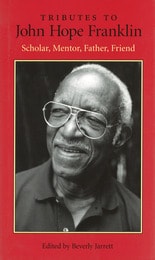
Tributes to John Hope Franklin
Scholar, Mentor, Father, FriendEdited by Beverly Jarrett
University of Missouri Press, 2003
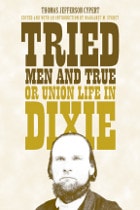
Tried Men and True, or Union Life in Dixie
Thomas J. Cypert, edited and with an introduction by Margaret M. Storey
University of Alabama Press, 2011
A gripping firsthand account of loyalty, resistance, and survival in Confederate Tennessee, this memoir reveals the untold story of Unionist courage behind enemy lines.
Tried Men and True, or Union Life in Dixie is the memoir of a Union supporter in south-central Tennessee. In it, he chronicles in vivid and emotional detail the local tensions between Unionists and Confederates during the Civil War South and offers a rare first-person account of the guerrilla war that devastated Western Tennessee.
Thomas Jefferson Cypert (1827-1918) was a staunch Union man of Wayne County, Tennessee. In 1863, he helped organize the Second Tennessee Mounted Infantry, a regiment of loyalist Southerners enlisted to combat Confederate cavalry in West Tennessee and Northern Alabama. Tried Men and True is Cypert’s memoir of his time as Captain of Company A, including his capture by Confederate cavalry and subsequent daring escape, in which he was aided by local Union sympathizers and slaves.
After the Civil War, Cypert served two terms in the Tennessee State Senate, one of them during the heated first years of Reconstruction, when Tennessee disenfranchised former rebels and attempted to establish Unionist Republican rule in the state. Cypert clearly wrote his memoir to defend Unionism, condemn secession and rebellion, and support loyalists’ claims for post-war power through an account of their wartime sacrifices. Never before published, the manuscript has been preserved in nearly perfect condition by Cypert’s descendants over the generations. This book is a remarkable and engagingly written account of resistance to the Confederacy by a group of southwestern Tennessee loyalists.
Tripping on the Color Line
Black-White Multiracial Families in a Racially Divided WorldDalmage, Heather M
Rutgers University Press, 2000
At the turn of the twentieth century W.E.B. DuBois predicted that the central problem facing the United States in the new century would be that of the “color line.” Now, at the beginning of a new century, we find many people straddling the color line. These people come from the growing number of multiracial families in America, families who search for places of comfort and familiarity in a racially polarized society whose educational system, places of worship, and neighborhoods continue to suffer a de facto segregation. This group has provoked an ever-widening debate and an upheaval in traditional racial thinking in the United States.
Through in-depth interviews with individuals from black–white multiracial families, and insightful sociological analysis, Heather M. Dalmage examines the challenges faced by people living in such families and explores how their experiences demonstrate the need for rethinking race in America. She examines the lived reality of race in the ways multiracial family members construct and describe their own identities and sense of community and politics. She shows how people whose own very lives complicate the idea of the color line must continually negotiate and contest it in order not to reproduce it. Their lack of language to describe their multiracial existence, along with their experience of coping with racial ambiguity and with institutional demands to conform to a racially divided, racist system is the central theme of Tripping on the Color Line. By connecting the stories to specific issues, such as census categories, transracial adoption, intermarriage, as well as the many social responses to violations of the color line, Dalmage raises the debate to a broad discussion on racial essentialism and social justice.
Exploring the dynamic of race as it pervades the lives of those close to the color line, Dalmage argues that the struggle for racial justice must include an understanding that race is a complex construct that is constantly shifting, and is something we do rather than something we simply are.
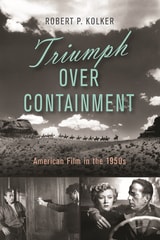
Triumph over Containment
American Film in the 1950sRobert P. Kolker
Rutgers University Press, 2022
Triumph Over Containment offers an uncompromising look at some of the era’s greatest films and directors, from household names like Alfred Hitchcock and Stanley Kubrick to lesser-known iconoclasts like Samuel Fuller and Ida Lupino. Taking in everything from The Thing from Another World (1951) to Dr. Strangelove or: How I Learned to Stop Worrying and Love the Bomb (1964), acclaimed film scholar Robert P. Kolker scours a variety of different genres to find pockets of resistance to the repressive and oppressive norms of Cold War culture. He devotes special attention to two quintessential 1950s genres—the melodrama and the science fiction film—that might seem like polar opposites, but each offered pointed responses to containment culture.
This book takes a fresh look at such directors as Nicholas Ray, John Ford, and Orson Welles, while giving readers a new appreciation for the depth and artistry of 1950s Hollywood films.
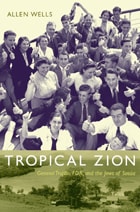
Tropical Zion
General Trujillo, FDR, and the Jews of SosúaAllen Wells
Duke University Press, 2009
Why did a dictator admit these desperate refugees when so few nations would accept those fleeing fascism? Eager to mollify international critics after his army had massacred 15,000 unarmed Haitians, Trujillo sent representatives to Évian, France, in July, 1938 for a conference on refugees from Nazism. Proposed by FDR to deflect criticism from his administration’s restrictive immigration policies, the Évian Conference proved an abject failure. The Dominican Republic was the only nation that agreed to open its doors. Obsessed with stemming the tide of Haitian migration across his nation’s border, the opportunistic Trujillo sought to “whiten” the Dominican populace, welcoming Jewish refugees who were themselves subject to racist scorn in Europe.
The Roosevelt administration sanctioned the Sosúa colony. Since the United States did not accept Jewish refugees in significant numbers, it encouraged Latin America to do so. That prodding, paired with FDR’s overriding preoccupation with fighting fascism, strengthened U.S. relations with Latin American dictatorships for decades to come. Meanwhile, as Jewish organizations worked to get Jews out of Europe, discussions about the fate of worldwide Jewry exposed fault lines between Zionists and Non-Zionists. Throughout his discussion of these broad dynamics, Wells weaves vivid narratives about the founding of Sosúa, the original settlers and their families, and the life of the unconventional beach-front colony.
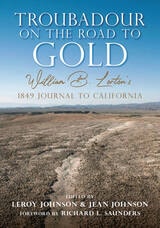
Troubadour on the Road to Gold
William B. Lorton's 1849 Journal to CaliforniaEdited by LeRoy Johnson and Jean Johnson, Foreword by Richard Saunders
University of Utah Press, 2020
Lorton’s work is revealing and entertaining. It captures glimpses of a growing Salt Lake City, the hardships of Death Valley, and the extraordinary and mundane aspects of daily life on the road to gold. With resilience and a droll sense of humor, Lorton shares accounts of life-threatening stampedes, dangerous hailstorms, mysteriously moving rocks, and slithering sidewinders. The inclusion of images, maps, and the editors’ detailed notes make this a volume that will entertain and inform.
Trouble in Censorville
The Far Right's Assault on Public Education and the Teachers Who are Fighting BackNadine M. Kalin and Rebekah Modrak
Disobedience Press, 2024
Now, for the first time, K-12 educators from across the nation give readers a teacher’s-eye view of the radical right crusade to take down public education, coordinated by well-funded, well-connected far-right political interests. Christian nationalists hell-bent on erasing the line between church and state, white supremacists opposed to a curriculum that teaches the enduring effects of anti-Black racism, political action committees, such as Moms for Liberty, calling for the banning of novels featuring LGBTQ+ people, and profiteers eager to divert taxpayer dollars into private schools are mounting a relentless attack on teachers, the students they serve, and the commitment to public education that is a cornerstone of democracy. “It’s a phenomenal, unprecedented moment that we’re in,” says a librarian, recently retired from her Texas school. “It’s surprising how many people don’t know what’s going on. I talk to reporters who have no idea. And they’re reporters.”
In Trouble in Censorville, public school teachers from states as far-flung as Florida, Texas, Kentucky, New Jersey, Tennessee, Wisconsin, and Washington describe, in their own words, being threatened, stalked, doxxed, ostracized, smeared as “pedophiles" and "Marxists," placed on leave, and fired for teaching historical truth and racial justice, supporting LGBTQ+ students and, in one case, for wearing "insufficiently" feminine attire. Their stories bring readers face-to-face with the human cost of these attacks, which range from social isolation to pent-up anger over institutional betrayal to the terrible toll on teachers’ mental and physical health.
And yet, teachers are fighting back. They’re mobilizing colleagues, parents, and community members who share their faith in the freedom to read, the freedom to think critically, the freedom to challenge small-minded provincialism. Their stories of frontline resistance, collected here, provide a battle plan for confronting censorship, rallying support, and mobilizing a grassroots defense of public schools.
Their gripping testimonials are enhanced by a timeline that situates today’s far-right war on public education in the context of American history, moving briskly from Reconstruction to the anti-left and anti-gay fearmongering of the McCarthy era to the Black Lives Matter movement to the Trump presidency.
Terrifying, infuriating, and inspiring, Trouble in Censorville sounds the alarm for a democracy on fire.
Trouble the Water
Melvin Dixon
University of Alabama Press, 1989
A haunting and poetic journey of memory, identity, and reconciliation in the heart of the Black South.
Winner of the Excellence in Minority Fiction Award
Trouble the Water moves among finely woven layers of time and place as it takes on a new and controversial theme in contemporary black writing, the search for family reconciliation. Twenty years after running away from home in Pee Dee, North Carolina, Jordan Henry believed he had found success, as a young college professor of history, a married man, and a resident of New England, whose colonial past he knew so well. When Jordan finds his career stymied by local prejudices, his world crumbles. Word of his grandmother's death reaches him, and he returns home to claim the ambiguous legacy of her farmland and face the consequences of his long absence.
Jordan's estranged father also returns to Pee Dee on a quest of his own restoring his good name in a community which blames him for Chloe Henry's death in childbirth. Chloe was Jordan's mother and his grandmother's only child. Unresolved hostility in the family and in the community breaks out, making Jordan the unsuspecting pawn in a plot of revenge against his father. Jordan may be the only one who can free his family from the past and the equally troubled present.
Trouble the Water gains resonance from its unflinching confrontation with dualities common in the Afro-American experience: reality and myth, folklore and sophistication, North and South, rural and cosmopolitan. While sacrificing none of its complexities for the sake of simplicity, it has the relentless movement of a fairy tale that reaches deep into the unconscious roots of behavior. It is intensely lyrical and dense in realism. Trouble the Water is magical in the way it reveals the Afro-American psyche and symbolizes fundamental truths about American life.
Troubled Ground
A Tale of Murder, Lynching, and Reckoning in the New SouthClaude A. Clegg III
University of Illinois Press, 2010
Troubled Pasts
News and the Collective Memory of Social UnrestJill A. Edy
Temple University Press, 2006
Troubled Times
The Boston Courthouse Bombing of 1976Kevin Galvin
Brandeis University Press, 2026
Interweaves the stories of a revolutionary and a bombing victim to explore the roots and unintended consequences of political violence.
1976. The Vietnam War had ended, but radical political groups still operated clandestinely throughout the United States. Nowhere was the threat of civil unrest greater than in Boston. Racial tensions had been building since a federal judge ordered the desegregation of the Boston Public Schools, and civic leaders were counting on the pageantry of the nation’s Bicentennial to boost both tourism and investment. In April, the Sam Melville-Jonathan Jackson Unit, prison reformers schooled in Marxism and angered by US interventions abroad, bombed the Suffolk County Courthouse, injuring twenty-two people. The site of the blast marked the spot where the lives of two men intersected: a mill town kid who’d been radicalized in Vietnam and prison, and an immigrant waiting in line because he needed to renew a cab license.
Fifty years after the bombing shook the city, Troubled Times tells the story of lives changed by political violence at a time when the American experiment is again in crisis.
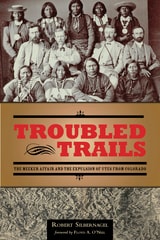
Troubled Trails
The Meeker Affair and the Expulsion of Utes from ColoradoRobert Silbernagel
University of Utah Press, 2011
When U.S. Cavalry troops rode onto the Ute Indian Reservation in northwestern Colorado on September 29, 1879, they triggered a chain of events that cost the Utes their homeland: a deadly battle at Milk Creek, the killing of all men at the Indian agency headed by Nathan Meeker, and the taking of three women and two children who were held hostage for 23 days. The Utes didn’t seek a fight with the whites, most of whom they viewed as friends. However, powerful whites in Colorado wanted the Utes expelled. The Meeker affair was an opportunity to achieve that.
In Troubled Trails, Robert Silbernagel casts new light on the story of the Meeker Affair. Using details from historical interview transcripts and newspaper articles, he reveals the personalities of the major characters—both Indian and non-Indian. He tells the story from many perspectives, including that of Indian Agent Nathan Meeker; the U.S. military; Nicaagat, a leader of the White River Utes; and Josephine Meeker, Nathan Meeker’s daughter, who was held hostage by the Utes. Silbernagel took great pains to tell a complete story, even following on horseback the trail taken by the Utes. As a result, his book paints a multifaceted picture of what took place and, most importantly, his portrayal brings the Ute side of the story into focus.
Troublemakers
John McNally
University of Iowa Press, 2000
Troublemakers is an often hilarious, sometimes frightening, occasionally off-the-wall collection of stories about men living on the edge. From the streets of Chicago's southwest side to the rural roads of Nebraska to the small towns of southern Illinois, these men tread a very fine line between right and wrong, love and hate, humor and horror.
Each story is a Pandora's box waiting to be opened: a high school boy with a new driver's license picks his brother up from jail; a UPS driver suspects his wife of having an affair but cannot find any tangible evidence of her indiscretion; an unemployed man's life begins to unravel after he discovers a dead man in a tree in his own backyard; two boys spend Halloween with an older thug; a young college teacher's patience is tested by both his annoying colleagues and the criminals who haunt his neighborhood. In story after story, McNally's troublemakers lead readers to a place no less thrilling or dangerous than the human heart itself.
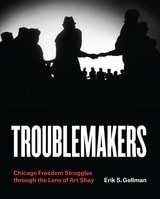
Troublemakers
Chicago Freedom Struggles through the Lens of Art ShayErik S. Gellman
University of Chicago Press, 2019
Troublemakers fuses photography and history to demonstrate how racial and economic inequality gave rise to a decades-long struggle for justice in one American city.
In dialogue with 275 of Art Shay’s photographs, Erik S. Gellman takes a new look at major developments in postwar US history: the Second Great Migration, “white flight,” and neighborhood and street conflicts, as well as shifting party politics and the growth of the carceral state. The result is a visual and written history that complicates—and even upends—the morality tales and popular memory of postwar freedom struggles.
Shay himself was a “troublemaker,” seeking to unsettle society by illuminating truths that many middle-class, white, media, political, and businesspeople pretended did not exist. Shay served as a navigator in the US Army Air Forces during World War II, then took a position as a writer for Life Magazine. But soon after his 1948 move to Chicago, he decided to become a freelance photographer. Shay wandered the city photographing whatever caught his eye—and much did. His lens captured everything from private moments of rebellion to era-defining public movements, as he sought to understand the creative and destructive energies that propelled freedom struggles in the Windy City.
Shay illuminated the pain and ecstasy that sprung up from the streets of Chicago, while Gellman reveals their collective impact on the urban fabric and on our national narrative. This collaboration offers a fresh and timely look at how social conflict can shape a city—and may even inspire us to make trouble today.
Troubling the Family
The Promise of Personhood and the Rise of MultiracialismHabiba Ibrahim
University of Minnesota Press, 2012
Troubling the Family argues that the emergence of multiracialism during the 1990s was determined by underlying and unacknowledged gender norms. Opening with a germinal moment for multiracialism—the seemingly massive and instantaneous popular appearance of Tiger Woods in 1997—Habiba Ibrahim examines how the shifting status of racial hero for both black and multiracial communities makes sense only by means of an account of masculinity.
Ibrahim looks across historical events and memoirs—beginning with the Loving v. Virginia case in 1967 when miscegenation laws were struck down—to reveal that gender was the starting point of an analytics that made categorical multiracialism, and multiracial politics, possible. Producing a genealogy of multiracialism’s gendered basis allows Ibrahim to focus on a range of stakeholders whose interests often ran against the grain of what the multiracial movement of the 1990s often privileged: the sanctity of the heteronormative family, the labor of child rearing, and more precise forms of racial tabulation—all of which, when taken together, could form the basis for creating so-called neutral personhood.
Ibrahim concludes with a consideration of Barack Obama as a representation of the resurrection of the assurance that multiracialism extended into the 2000s: a version of personhood with no memory of its own gendered legacy, and with no self-account of how it became so masculine that it can at once fill the position of political leader and the promise of the end of politics.

Trouping Through Texas
Harley Sadler and His Tent ShowUniversity of Wisconsin Press, 1982
The American tent show, which flourished for over four decades, represents a brief but important phase of theatre. Harley Sadler played a significant role in the history of the "rag opries."
True Country
Themes in the Fiction of Flannery O'ConnorCarter W. Martin
Vanderbilt University Press, 1969
True Grit
American Prints from 1900 to 1950Stephanie Schrader
J. Paul Getty Trust, The, 2019
In the first half of the twentieth century, a group of American artists influenced by the painter and teacher Robert Henri aimed to reject the pretenses of academic fine art and polite society. Embracing the democratic inclusiveness of the Progressive movement, these artists turned to making prints, which were relatively inexpensive to produce and easy to distribute. For their subject matter, the artists mined the bustling activity and stark realities of the urban centers in which they lived and worked. Their prints feature sublime towering skyscrapers and stifling city streets, jazzy dance halls and bleak tenement interiors—intimate and anonymous everyday scenes that addressed modern life in America.
True Grit examines a rich selection of prints by well-known figures like George Bellows, Edward Hopper, Joseph Pennell, and John Sloan as well as lesser-known artists such as Ida Abelman, Peggy Bacon, Miguel Covarrubias, and Mabel Dwight. Written by three scholars of printmaking and American art, the essays present nuanced discussions of gender, class, literature, and politics, contextualizing the prints in the rapidly changing milieu of the first decades of twentieth-century America.
This volume is published to accompany an exhibition on view at the J. Paul Getty Museum at the Getty Center October 15, 2019, to January 19, 2020.

True Stories of Censorship Battles in America's Libraries
Valerie Nye
American Library Association, 2012
Intellectual freedom is a core value of librarianship, but fighting to keep controversial materials on the shelves can sometimes feel like a lonely battle. And not all censorship controversies involve the public objecting to a book in the collection—libraries are venues for displays and meetings, and sometimes library staff themselves are tempted to preemptively censor a work. Those facing censorship challenges can find support and inspiration in this book, which compiles dozens of stories from library front lines. Edifying and enlightening, this collection
- Tells the stories of librarians who withstood difficult circumstances to champion intellectual freedom
- Touches on prickly issues such as age-appropriateness, some librarians' temptation to preemptively censor, sensitive cultural expressions, and criminality in the library
- Presents case studies of defenses that were unsuccessful, so librarians facing similar challenges can learn from these defeats
There are fewer situations more stressful in a librarian's professional life than being personally confronted with a demand to remove a book from the shelves or not knowing how to respond to other kinds of censorship challenges. Reading this book will help fortify and inform those in the fray.
True Stories of False Confessions
Rob Warden
Northwestern University Press, 2009
Editors Rob Warden and Steven Drizin—leaders in the field of wrongful convictions—have gathered articles about some of the most critical accounts of false confessions in the U.S. justice system from more than forty authors, including Sydney H. Schanberg, Christine Ellen Young, Alex Kotlowitz, and John Grisham. Many of the pieces originally appeared in leading magazines and newspapers, including the New York Times, The Nation, the New Yorker, and the Los Angeles Times.
By grouping the cases into categories—including brainwashing, fabrication, mental fragility, police force, and unrequited innocence—the editors demonstrate similarities between cases, thereby refuting the perception that false confessions represent individual tragedies rather than a systemic flaw in the justice system. These incidents are not isolated; they are, in fact, related, and more shocking for it. But the authors of the articles excerpted, adapted, and reprinted in this collection want more for their subjects than outrage; they want to fuel change in the practices and standards that illicit false confessions in the first place. To this end, Warden and Drizin include an illuminating introduction to each category and recommendations for policy changes that would reduce false confessions. They also include a postscript for each case, providing legal updates and additional information.
True Stories
A Century of Literary JournalismNorman Sims
Northwestern University Press, 2007
Truman and Korea
The Political Culture of the Early Cold WarPaul G. Pierpaoli, Jr.
University of Missouri Press, 1999
Detailing for the first time the story of America's homefront during the Korean War, Truman and Korea fills an important gap in the historical scholarship of the postwar era. Paul Pierpaoli analyzes the political, economic, social, and international ramifications of America's first war of Soviet containment, never losing sight of the larger context of the cold war. He focuses on how and why the Truman administration undertook a bloody, inconclusive war on the Korean peninsula while permanently placing the nation on a war footing.
Truman and Korea illuminates the importance of the Korean conflict as a critical turning point in the cold war by examining both the immediate and the long-term domestic and foreign policy effects of the conflict. Pierpaoli addresses such important topics as presidential war powers and debates concerning the Defense Production Act; the inner workings of the many war mobilization agencies; the operations and politics of nationwide price and wage controls; questions concerning cold war tax policies and fiscal and monetary policies; and the evolution of national security policy.
Pierpaoli shows that President Truman's decision to intervene in the Korean War quickly became subsumed by larger cold war concerns. By the autumn of 1950 the Korean mobilization program had become the nation's de facto cold war preparedness program, which would come to span nearly forty years and eight presidential administrations. After 1950 the cold war not only continued to significantly shape political and ideological discourse in the United States but also began to reshape aggregate economic policy. By doing so, it altered the nation's industrial and economic contours, giving birth to the concept of an institutionalized "national security state," which in turn spawned the cold war military-industrial-scientific complex.
Based upon extensive research in the papers and official presidential files of Harry S. Truman, as well as many manuscript collections and records of wartime and government agencies, Truman and Korea offers a new perspective on the Korean War era and its inextricable ties to broader cold war decision making.
Truman and Pendergast
Robert H. Ferrell
University of Missouri Press, 1999
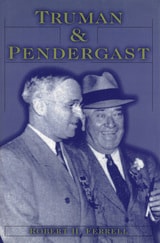
No portion of the political career of Harry S. Truman was more fraught with drama than his relationship with Thomas J. Pendergast. In one of their earliest meetings, the two men were momentarily at odds after Truman, who was then presiding judge of Jackson County, gave a $400,000 road contract to a construction company in South Dakota, and Pendergast, the boss of Kansas City, wasn't very happy about it. He had someone else in mind for the contract. Their association thus had its disagreements, but their common interest in politics was enough to establish a long-lasting relationship.
In 1934, after considering fourteen other men, Pendergast sponsored Truman for the Senate. Although Truman had often cooperated with Pendergast on patronage issues, he had never involved himself in the illegalities that would eventually destroy the Pendergast machine. In fact, Truman had no idea how deeply the Boss had engaged in corruption in his personal affairs, as well as in managing the government of Kansas City. When the Boss was sent to Leavenworth for tax evasion in 1939, Truman was astonished.
Despite Truman's honesty, his relationship with Pendergast almost caused his defeat during the Missouri senatorial primary in August 1940. The main challenger for Truman's Senate seat was the ambitious governor of Missouri, Lloyd C. Stark, who after destroying Truman's sponsor, the Pendergast machine, denounced Truman as "the Pendergast senator." Behind the governor was President Franklin D. Roosevelt, whom Stark turned against Truman. Roosevelt wanted Missouri's electoral votes in his forthcoming bid for a third term, and he believed that Stark could give them to him.
Because of the stigma of Truman's Pendergast connection, the 1940 Democratic primary was the tightest election in his entire political career. He won by fewer than eight thousand votes. In Truman and Pendergast, Robert H. Ferrell masterfully presents Truman's struggle to keep his Senate seat without the aid of Pendergast and despite Stark's enlistment of Roosevelt against him. Ferrell shows that Truman won the election in his typical fashion—going directly to the people, speaking honestly and like one of them.
Truman and the Hiroshima Cult
Robert P. Newman
Michigan State University Press, 1995
The United States dropped atomic bombs on Japan in 1945 to end World War II as quickly and with as few casualties as possible. That is the compelling and elegantly simple argument Newman puts forward in his new study of World War II's end, Truman and the Hiroshima Cult. According to Newman: (1) The U.S. Strategic Bombing Survey conclusions that Japan was ready to surrender without "the Bomb" are fraudulent; (2) America’s "unconditional surrender" doctrine did not significantly prolong the war; and (3) President Harry S. Truman’s decision to use atomic weapons on Japanese cities was not a "racist act," nor was it a calculated political maneuver to threaten Joseph Stalin’s Eastern hegemony. Simply stated, Newman argues that Truman made a sensible military decision. As commander in chief, he was concerned with ending a devastating and costly war as quickly as possible and with saving millions of lives.
Yet, Newman goes further in his discussion, seeking the reasons why so much hostility has been generated by what happened in the skies over Hiroshima and Nagasaki in early August, 1945. The source of discontent, he concludes, is a "cult" that has grown up in the United States since the 1960s. It was weaned on the disillusionment spawned by concerns about a military industrial complex, American duplicity and failure in the Vietnam War, and a mistrust of government following Watergate. The cult has a shrine, a holy day, a distinctive rhetoric of victimization, various items of scripture, and, in Japan, support from a powerful Marxist constituency. "As with other cults, it is ahistorical," Newman declares. "Its devotees elevate fugitive and unrepresentative events to cosmic status. And most of all, they believe." Newman’s analysis goes to the heart of the process by which scholars interpret historical events and raises disturbing issues about the way historians select and distort evidence about the past to suit special political agendas.

Truman and the Steel Seizure Case
The Limits of Presidential PowerMaeva Marcus
Duke University Press, 1994
Truman in the White House
The Diary of Eben A. AyersEdited & Commentaries by Robert H. Ferrell
University of Missouri Press, 1991
As assistant press secretary to President Harry S. Truman, Eben A. Ayers brought with him twenty-six years of experience as a newspaperman. He knew when he had a good story and knew how to record it. His private diary, which he kept unbeknownst to his associates, tells the inside story of the Truman White House clearly, colorfully, and with an acute sense of history.
Truman, Franco's Spain, and the Cold War
Wayne H Bowen
University of Missouri Press, 2017
President Harry S. Truman harbored an abiding disdain for Spain and its government. During his presidency (1945–1953), the State Department and the Department of Defense lobbied Truman to form an alliance with Spain to leverage that nation’s geostrategic position, despite Francisco Franco’s authoritarian dictatorship. The eventual alliance between the two countries came only after years of argument for such a shift by nearly the entire U.S. diplomatic and military establishment. This delay increased the financial cost of the 1953 defense agreements with Spain, undermined U.S. planning for the defense of Europe, and caused dysfunction over foreign policy at the height of the Cold War.