Results by title
22291 books match the query 'Social Science' and 4008 start with t
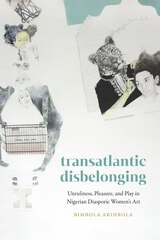
Transatlantic Disbelonging
Unruliness, Pleasure, and Play in Nigerian Diasporic Women's ArtBimbola Akinbola
Duke University Press, 2025

Transatlantic Gender Crossings
Anne Emmanuelle Berger and Éric Fassin, special issue editors
Duke University Press, 2016
As much as French feminism influenced the establishment of women’s studies in U.S. universities, so has U.S. gender and queer theory marked the French intellectual and academic landscape. For this reason, gender and sexuality studies have been bound up from the beginning with specific intractable questions of internationalization. Has internationalization contributed to an “Americanization” of the field, or has it allowed for different ways of understanding the connections between the local and the global, the center and the periphery? And how might institutionalization and internationalization affect our thinking about the political and theoretical intersections between gender and sexuality or between sex and race? Contributors from Europe and the United States consider theoretical, political, and institutional questions raised by the transatlantic exchange of feminist theories over four decades.
Contributors
Anne Emmanuelle Berger, Éric Fassin, Delphine Gardey, Clare Hemmings, Ranjana Khanna, Griselda Pollock, Tuija Pulkkinen, Elizabeth Weed

Transatlantic Scots
Edited by Celeste Ray, foreword by James Hunter
University of Alabama Press, 2005
Transatlantic Scots is a multidisciplinary collection that studies the regional organization and varied expressions of the Scottish Heritage movement in the Canadian Maritimes, the Great Lakes, New England, and the American South. From diverse perspectives, authorities in their fields consider the modeling of a Scottish identity that distances heritage celebrants from prevalent visions of whiteness. Considering both hyphenated Scots who celebrate centuries-old transmission of Scottish traditions and those for whom claiming or re-claiming a Scottish identity is recent and voluntary, this book also examines how diaspora themes and Highland imagery repeatedly surface in regional public celebrations and how traditions are continually reinvented through the accumulation of myths. The underlying theoretical message is that ethnicity and heritage survive because of the flexibility of history and tradition.
This work is a lasting contribution to the study of ethnicity and identity, the renegotiation of history and cultural memory into heritage, and the public performance and creation of tradition.
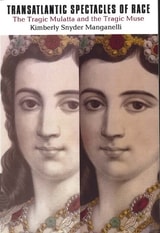
Transatlantic Spectacles of Race
The Tragic Mulatta and the Tragic MuseManganelli, Kimberly Snyder
Rutgers University Press, 2012
The tragic mulatta was a stock figure in nineteenth-century American literature, an attractive mixed-race woman who became a casualty of the color line. The tragic muse was an equally familiar figure in Victorian British culture, an exotic and alluring Jewish actress whose profession placed her alongside the “fallen woman.”
In Transatlantic Spectacles of Race, Kimberly Manganelli argues that the tragic mulatta and tragic muse, who have heretofore been read separately, must be understood as two sides of the same phenomenon. In both cases, the eroticized and racialized female body is put on public display, as a highly enticing commodity in the nineteenth-century marketplace. Tracing these figures through American, British, and French literature and culture, Manganelli constructs a host of surprising literary genealogies, from Zelica to Daniel Deronda, from Uncle Tom’s Cabin to Lady Audley’s Secret. Bringing together an impressive array of cultural texts that includes novels, melodramas, travel narratives, diaries, and illustrations, Transatlantic Spectacles of Race reveals the value of transcending literary, national, and racial boundaries.
Transatlantic Subjects
Acts of Migration and Cultures of Transnationalism between Greece and AmericaIoanna Laliotou
University of Chicago Press, 2004
According to Ioanna Laliotou, cultural institutions and practices played an important role in the formation of migrant subjectivities. Reconstructing the cultural history of migration, her book points out the relationship between subjectivity formation and cultural practices and performances, such as publishing, reading, acting, storytelling, consuming, imitating, parading, and traveling. Transatlantic Subjects then locates the development of these practices within key sites and institutions of cultural formation, such as migrant and fraternal associations, educational institutions, state agencies and nongovernmental organizations, mental institutions, coffee shops, the church, steamship companies, banks, migration services, and chambers of commerce.
Ultimately, Laliotou explores the complex and situational entanglements of migrancy, cultural nationalism, and the politics of self. Reading against the grain of hegemonic narratives of cultural and migration histories, she reveals how migrancy produced distinctive forms of sociality during the first half of the twentieth century.

Transatlantic Women
Nineteenth-Century American Women Writers and Great BritainBeth L. Lueck
University of New Hampshire Press, 2012
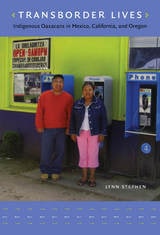
Transborder Lives
Indigenous Oaxacans in Mexico, California, and OregonLynn Stephen
Duke University Press, 2007
Stephen weaves the personal histories and narratives of indigenous transborder migrants together with explorations of the larger structures that affect their lives. Taking into account U.S. immigration policies and the demands of both commercial agriculture and the service sectors, she chronicles how migrants experience and remember low-wage work in agriculture, landscaping, and childcare and how gender relations in Oaxaca and the United States are reconfigured by migration. She looks at the ways that racial and ethnic hierarchies inherited from the colonial era—hierarchies that debase Mexico’s indigenous groups—are reproduced within heterogeneous Mexican populations in the United States. Stephen provides case studies of four grass-roots organizations in which Mixtec migrants are involved, and she considers specific uses of digital technology by transborder communities. Ultimately Stephen demonstrates that transborder migrants are reshaping notions of territory and politics by developing creative models of governance, education, and economic development as well as ways of maintaining their cultures and languages across geographic distances.
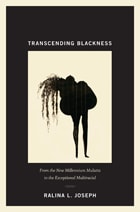
Transcending Blackness
From the New Millennium Mulatta to the Exceptional MultiracialRalina L. Joseph
Duke University Press, 2012
Analyzing emblematic representations of multiracial figures in popular culture—Jennifer Beals's character in the The L Word; the protagonist in Danny Senza's novel Caucasia; the title character in the independent film Mixing Nia; and contestants in a controversial episode of the reality show America's Next Top Model, who had to "switch ethnicities" for a photo shoot—Joseph identifies the persistence of two widespread stereotypes about mixed-race African Americans, those of "new millennium mulattas" and "exceptional multiracials." The former inscribes multiracial African Americans as tragic figures whose blackness predestines them for misfortune; the latter rewards mixed-race African Americans for successfully erasing their blackness. Addressing questions of authenticity, sexuality, and privilege, Transcending Blackness refutes the idea that race no longer matters in American society.
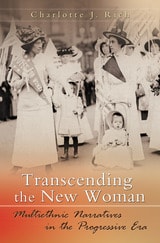
Transcending the New Woman
Multiethnic Narratives in the Progressive EraCharlotte J. Rich
University of Missouri Press, 2009
Transcommunality
From The Politics Of ConversionJohn Brown Childs
Temple University Press, 2003
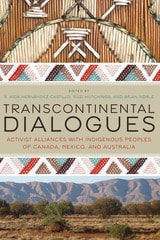
Transcontinental Dialogues
Activist Alliances with Indigenous Peoples of Canada, Mexico, and AustraliaEdited by R. Aída Hernández Castillo, Suzi Hutchings, and Brian Noble
University of Arizona Press, 2019
This volume presents a set of pieces that do not take the usual political or geographic paradigms as their starting point; instead, the particular dialogues from the margins presented in this book arise from a rejection of the geographic hierarchization of knowledge in which the Global South continues to be the space for fieldwork while the Global North is the place for its systematization and theorization. Instead, contributors in Transcontinental Dialogues delve into the interactions between anthropologists and the people they work with in Canada, Australia, and Mexico. This framework allows the contributors to explore the often unintended but sometimes devastating impacts of government policies (such as land rights legislation or justice initiatives for women) on Indigenous people’s lives.
Each chapter’s author reflects critically on their own work as activist-scholars. They offer examples of the efforts and challenges that anthropologists—Indigenous and non-Indigenous—confront when producing knowledge in alliances with Indigenous peoples. Mi’kmaq land rights, pan-Maya social movements, and Aboriginal title claims in rural and urban areas are just some of the cases that provide useful ground for reflection on and critique of challenges and opportunities for scholars, policy-makers, activists, allies, and community members.
This volume is timely and innovative for using the disparate anthropological traditions of three regions to explore how the interactions between anthropologists and Indigenous peoples in supporting Indigenous activism have the potential to transform the production of knowledge within the historical colonial traditions of anthropology.
Transcribing Class and Gender
Masculinity and Femininity in Nineteenth-Century Courts and OfficesCarole Srole
University of Michigan Press, 2012
"Drawing upon census data, trade periodicals devoted to stenography and court reporting, the writings of educational reformers, and fiction, Srole allows us to better understand the roles that gender and work played in the formation of middle-class identity. Clearly written and thoroughly researched, her book reminds us of the contradictions that both men and women faced as they navigated changes in the labor market and sought to realize a modern professional identity."
---Thomas Augst, New York University
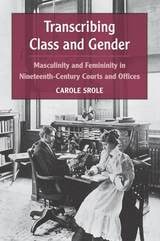
Transcribing Class and Gender explores the changing meanings of clerical work in nineteenth-century America, focusing on the discourse surrounding that work. At a time when shorthand transcription was the primary method of documenting business and legal communications and transactions, most stenographers were men, but changing technology saw the emergence of women in the once male-dominated field. Carole Srole argues that this shift placed stenographers in a unique position to construct a new image of the professional man and woman and, in doing so, to redefine middle- and working-class identities.
Many male court reporters emphasized their professionalism, portraying themselves as educated language experts as a way to elevate themselves above the growing numbers of female and working-class stenographers and typewriter operators. Meanwhile, women in the courts and offices were confronting the derogatory image of the so-called Typewriter Girl who cared more about her looks, clothing, and marriage prospects than her job. Like males in the field, women responded by fashioning a gendered professional image---one that served to combat this new version of degraded female labor while also maintaining traditional ideals of femininity.The study is unique in the way it reads and analyzes popular fiction, stenography trade magazines, the archives of professional associations, and writings by educational reformers to provide new perspectives on this history. The author challenges the common assumption that men and women clerks had separate work cultures and demonstrates how each had to balance elements of manhood and womanhood in the drive toward professionalism and the construction of a new middle-class image. Transcribing Class and Gender joins the recent scholarship that employs cultural studies approaches to class and gender without abandoning the social history valuation of workers' experiences.
Carole Srole is Professor of History at California State University, Los Angeles.
Photo: A female stenographer working for an actuary in 1897. Courtesy Metlife Archives.
Transcultural Bodies
Female Genital Cutting in Global ContextHernlund, Ylva K
Rutgers University Press, 2007
Female "circumcision" or, more precisely, female genital cutting (FGC), remains an important cultural practice in many African countries, often serving as a coming-of-age ritual. It is also a practice that has generated international dispute and continues to be at the center of debates over women's rights, the limits of cultural pluralism, the balance of power between local cultures, international human rights, and feminist activism. In our increasingly globalized world, these practices have also begun immigrating to other nations, where transnational complexities vex debates about how to resolve the issue.
Bringing together thirteen essays, Transcultural Bodies provides an ethnographically rich exploration of FGC among African diasporas in the United Kingdom, Europe, and Australia. Contributors analyze changes in ideologies of gender and sexuality in immigrant communities, the frequent marginalization of African women's voices in debates over FGC, and controversies over legislation restricting the practice in immigrant populations.
Transculturality and German Discourse in the Age of European Colonialism
Chunjie Zhang
Northwestern University Press, 2017
Transfeminist Perspectives in and beyond Transgender and Gender Studies
Finn Enke
Temple University Press, 2012
Lambda Literary Award for Best Book in Transgender Nonfiction, 2013
If feminist studies and transgender studies are so intimately connected, why are they not more deeply integrated? Offering multidisciplinary models for this assimilation, the vibrant essays in Transfeminist Perspectives in and beyond Transgender and Gender Studies suggest timely and necessary changes for institutions of higher learning.
Responding to the more visible presence of transgender persons as well as gender theories, the contributing essayists focus on how gender is practiced in academia, health care, social services, and even national border patrols. Working from the premise that transgender is both material and cultural, the contributors address such aspects of the university as administration, sports, curriculum, pedagogy, and the appropriate location for transgender studies.
Combining feminist theory, transgender studies, and activism centered on social diversity and justice, these essays examine how institutions as lived contexts shape everyday life.

Transfiguring America
Myth, Ideology, and Mourning in Margaret Fuller's WritingJeffrey Steele
University of Missouri Press, 2001
Transfiguring America is the product of more than ten years of research and numerous published articles on Margaret Fuller, arguably America's first feminist theorist and one of the most important woman writers in the nineteenth century. Focusing on Fuller's development of a powerful language that paired cultural critique with mythmaking, Steele shows why her writing had such a vital impact on the woman's rights movement and modern conceptions of gender.
This groundbreaking study pays special attention to the ways in which Fuller's feminist consciousness and social theory emerged out of her mourning for herself and others, her dialogue with Emersonian Transcendentalism, and her eclectic reading in occult and mythical sources. Transfiguring America is the first book to provide detailed analyses of all of Fuller's major texts, including her mystical Dial essays, correspondence with Emerson, Summer on the Lakes, 1844 poetry, Woman in the Nineteenth Century, and New York Tribune essays written both in New York and Europe.
Starting from her own profound sense of loss as a marginalized woman, Fuller eventually recognized the ways in which the foundational myths of American society, buttressed by conservative religious ideologies, replicated dysfunctional images of manhood and womanhood. With Woman in the Nineteenth Century, after exploring the roots of oppression in her essays and poetry, Fuller advanced the cause of woman's rights by conceptualizing a more fluid and equitable model of gender founded upon the mythical reconfiguration of human potential. But as her horizons expanded, Fuller demanded not only political equality for women, but also emotional, intellectual, and spiritual freedom for all victims of social oppression.
By the end of her career, Steele shows, Fuller had blended personal experience and cultural critique into the imaginative reconstruction of American society. Beginning with a fervent belief in personal reform, she ended her career with the apocalyptic conviction that the dominant myths both of selfhood and national identity must be transfigured. Out of the ashes of personal turmoil and political revolution, she looked for the phoenix of a revitalized society founded upon the ideal of political justice.
Transformation Now!
Toward a Post-Oppositional Politics of ChangeAnaLouise Keating
University of Illinois Press, 2013
Transformation by Fire
The Archaeology of Cremation in Cultural ContextEdited by Ian Kuijt, Colin P. Quinn, and Gabriel Cooney
University of Arizona Press, 2014
Editors Ian Kuijt, Colin P. Quinn, and Gabriel Cooney’s volume examines cremation by documenting the material signatures of cremation events and processes, as well as its transformative impact on social relations and concepts of the body. Indeed, examining why and how people chose to cremate their dead serves as an important means of understanding how people in the past dealt with death, the body, and the social world.
The contributors develop new perspectives on cremation as important mortuary practices and social transformations. Varying attitudes and beliefs on cremation and other forms of burial within the same cultural paradigm help us understand what constitutes the body and what occurs during its fiery transformation. In addition, they explore issues and interpretive perspectives in the archaeological study of cremation within and between different cultural contexts.
The global and comparative perspectives on cremation render the book a unique contribution to the literature of anthropological and mortuary archaeology.
Transformation of the Mormon Culture Region
Ethan R. Yorgason
University of Illinois Press, 2010

Transformations of Circe
THE HISTORY OF AN ENCHANTRESSJudith Yarnall
University of Illinois Press, 1994
Transformations of Sensibility
The Phenomenology of Meiji LiteratureKamei Hideo; Translated, edited, and with an introduction by Michael Bourdaghs
University of Michigan Press, 2002

Transformations of Warfare in the Contemporary World
John C. Torpey
Temple University Press, 2016
Today’s warfare has moved away from being an event between massed national populations and toward small numbers of combatants using high-tech weaponry. The editors of and contributors to the timely collection Transformations of Warfare in the Contemporary World show that this shift reflects changes in the technological, strategic, ideological, and ethical realms.
The essays in this volume discuss:
·the waning connection between citizenship and soldiering;
·the shift toward more reconstructive than destructive activities by militaries;
·the ethics of irregular or asymmetrical warfare;
·the role of novel techniques of identification in military settings;
·the stress on precision associated with targeted killings and kidnappings;
·the uses of the social sciences in contemporary warfare.
In his concluding remarks, David Jacobson explores the extent to which the contemporary transformation of warfare is a product of a shift in the character of the combatants themselves.
Contributors include: Ariel Colonomos, Roberto J. González, Travis R. Hall, Saskia Hooiveld, Rob Johnson, Colonel C. Anthony Pfaff, Ian Roxborough, and the editors

Transformations
Art and the CityEdited by Elizabeth M. Grierson
Intellect Books, 2017
Transformative Justice
Israeli Identity on TrialLeora Bilsky
University of Michigan Press, 2004
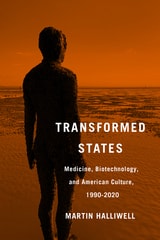
Transformed States
Medicine, Biotechnology, and American Culture, 1990–2020Martin Halliwell
Rutgers University Press, 2025
Transformed States offers a timely history of the politics, ethics, medical applications, and cultural representations of the biotechnological revolution, from the Human Genome Project to the COVID-19 pandemic. In exploring the entanglements of mental and physical health in an age of biotechnology, it views the post–Cold War 1990s as the horizon for understanding the intersection of technoscience and culture in the early twenty-first century.
The book draws on original research spanning the presidencies of George H. W. Bush and Joe Biden to show how the politics of science and technology shape the medical uses of biotechnology. Some of these technologies reveal fierce ideological conflicts in the arenas of cloning, reproduction, artificial intelligence, longevity, gender affirmation, vaccination and environmental health. Interweaving politics and culture, the book illustrates how these health issues are reflected in and challenged by literary and cinematic texts, from Oryx and Crake to Annihilation, and from Gattaca to Avatar.
By assessing the complex relationship between federal politics and the biomedical industry, Transformed States develops an ecological approach to public health that moves beyond tensions between state governance and private enterprise. To that end, Martin Halliwell analyzes thirty years that radically transformed American science, medicine, and policy, positioning biotechnology in dialogue with fears and fantasies about an emerging future in which health is ever more contested.
Along with the two earlier books, Therapeutic Revolutions (2013) and Voices of Mental Health (2017), Transformed States is the final volume of a landmark cultural and intellectual history of mental health in the United States, journeying from the combat zones of World War II to the global emergency of COVID-19.
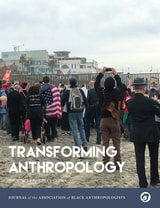
Transforming Anthropology, volume 32 number 1 (April 2024)
The University of Chicago Press
University of Chicago Press Journals, 2024
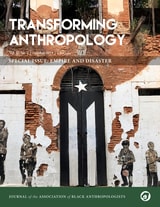
Transforming Anthropology, volume 32 number 2 (October 2024)
The University of Chicago Press
University of Chicago Press Journals, 2024
Transforming Anthropology, volume 33 number 1 (April 2025)
The University of Chicago Press
University of Chicago Press Journals, 2025
Transforming Anthropology, volume 33 number 2 (October 2025)
The University of Chicago Press
University of Chicago Press Journals, 2025
Transforming Anthropology, volume 34 number 1 (April 2026)
The University of Chicago Press
University of Chicago Press Journals, 2026
Transforming Citizenship
Democracy, Membership, and Belonging in Latino CommunitiesRaymond A. Rocco
Michigan State University Press, 2014

Transforming Contagion
Risky Contacts among Bodies, Disciplines, and NationsFahs, Breanne
Rutgers University Press, 2018
Moving from viruses, vaccines, and copycat murder to gay panics, xenophobia, and psychopaths, Transforming Contagion energetically fuses critical humanities and social science perspectives into a boundary-smashing interdisciplinary collection on contagion. The contributors provocatively suggest contagion to be as full of possibilities for revolution and resistance as it is for the descent into madness, malice, and extensive state control. The infectious practices rooted in politics, film, psychological exchanges, social movements, the classroom, and the circulation of a literary text or meme on social media compellingly reveal patterns that emerge in those attempts to re-route, quarantine, define, or even exacerbate various contagions.
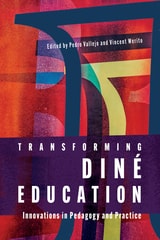
Transforming Diné Education
Innovations in Pedagogy and PracticeEdited by Pedro Vallejo and Vincent Werito
University of Arizona Press, 2022
Bringing together decades of teaching experience, contributors offer perspectives from school- and community-based programs, as well as the tribal, district, and university level. They address special education, language revitalization, wellness, self-determination and sovereignty, and university-tribal-community partnerships. These contributions foreground Diné ways of knowing both as an educational philosophy and as an active practice applied in the innovative programs the book highlights. The contributors deepen our understanding of the state of Navajo education by sharing their perspectives about effective teaching practices and the development of programs that advance educational opportunities for Navajo youth.
This work provides stories of Diné resilience, resistance, and survival. It articulates a Diné-centered pedagogy that will benefit educators and learners for generations to come. Transforming Diné Education fills a need in the larger literature of curricular and programmatic development and provides tools for academic success for all American Indian students.
Contributors
Berlinda Begay
Lorenda Belone
Michael “Mikki” Carroll
Quintina “Tina” Deschenie
Henry Fowler
Richard Fulton
Davis E. Henderson
Kelsey Dayle John
Lyla June Johnston
Tracia Keri Jojola
Tiffany S. Lee
Shawn Secatero
Michael Thompson
Pedro “Pete” Vallejo
Christine B. Vining
Vincent Werito
Duane “Chili” Yazzie
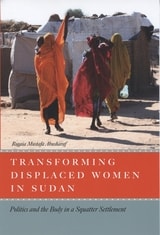
Transforming Displaced Women in Sudan
Politics and the Body in a Squatter SettlementRogaia Mustafa Abusharaf
University of Chicago Press, 2009
Over twenty years of civil war in predominantly Christian Southern Sudan has forced countless people from their homes. Transforming Displaced Women in Sudan examines the lives of women who have forged a new community in a shantytown on the outskirts of Khartoum, the largely Muslim, heavily Arabized capital in the north of the country.
Sudanese-born anthropologist Rogaia Mustafa Abusharaf delivers a rich ethnography of this squatter settlement based on personal interviews with displaced women and careful observation of the various strategies they adopt to reconstruct their lives and livelihoods. Her findings debunk the myth that these settlements are utterly abject, and instead she discovers a dynamic culture where many women play an active role in fighting for peace and social change. Abusharaf also examines the way women’s bodies are politicized by their displacement, analyzing issues such as religious conversion, marriage, and female circumcision.
An urgent dispatch from the ongoing humanitarian crisis in northeastern Africa, Transforming Displaced Women in Sudan will be essential for anyone concerned with the interrelated consequences of war, forced migration, and gender inequality.
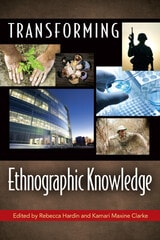
Transforming Ethnographic Knowledge
Edited by Rebecca Hardin and Kamari Maxine Clarke
University of Wisconsin Press, 2012
The ethnographic methods that anthropologists first developed to study other cultures—fieldwork, participant observation, dialogue—are now being adapted for a broad array of applications, such as business, conflict resolution and demobilization, wildlife conservation, education, and biomedicine. In Transforming Ethnographic Knowledge, anthropologists trace the changes they have seen in ethnography as a method and as an intellectual approach, and they offer examples of ethnography’s role in social change and its capacity to transform its practitioners.
Senior scholars Mary Catherine Bateson, Sidney Mintz, and J. Lorand Matory look back at how thinking ethnographically shaped both their work and their lives, and George Marcus suggests that the methods for teaching and training anthropologists need rethinking and updating. The second part of the volume features anthropologists working in sectors where ethnography is finding or claiming new relevance: Kamari Maxine Clarke looks at ethnographers’ involvement (or non-involvement) in military conflict, Csilla Kalocsai employs ethnographic tools to understand the dynamics of corporate management, Rebecca Hardin and Melissa Remis take their own anthropological training into rainforests where wildlife conservation and research meet changing subsistence practices and gendered politics of social difference, and Marcia Inhorn shows how the interests in mobility and diasporic connection that characterize a new generation of ethnographic work also apply to medical technologies, as those mediate fertility and relate to social status in the Middle East.
Transforming History
A Guide to Effective, Inclusive, and Evidence-Based TeachingMary Jo Festle
University of Wisconsin Press, 2020
Instructors will improve their own conceptual understandings of teaching and learning issues, as well as receive guidance on designing courses and implementing pedagogies consistent with what research tells us about how students learn. The book offers practical illustrations of assignments, goals, questions, grading rubrics, unit plans, and formats for peer observation that are adaptable for courses on any subject and of any size. Transforming History is a critical guide for higher and secondary education faculty—neophytes and longtime professionals alike—working to improve student learning.
Transforming Knowledge 2Nd Edition
Elizabeth Kamarck Minnich
Temple University Press, 2004
* Updated to consider recent scholarship in Gender, Multicultural, Postcolonial, Disability, Native American, and Queer Studies, among other fields of study
* Revised to include an extended analysis of the conceptual errors that legitimate domination, including the construction of kinds ("genders") of human beings
* Revised to include new materials from a variety of cultures and times, and engages with today's contemporary debates about affirmative action, postmodernism, and religion

Transforming Masculine Rule
Agriculture and Rural Development in the European UnionElisabeth Prügl
University of Michigan Press, 2011
"The premise of mainstreaming gender is to bring equality concerns into every aspect of policy-making, and this brave book offers a close look at how feminists have taken up the challenge to transform the hidden dynamics of male domination in agricultural policy in Europe. In contrast to the automatic assumption that (neo)liberal policy always works against women’s interests, Prügl demonstrates the potential for feminist ju-jitsu to take advantage of multiple levels of governance to empower women in some circumstances. Although feminists were not always successful, the story of their efforts to remake agricultural policy should encourage activists to look for points of leverage in this and other contested and changing multilevel power systems."
---Myra Marx Ferree, University of Wisconsin
"Information on policy development, conflicts about improving the status of farm women, and using rural development policies to foster gender equality is hard to access in English and extremely useful for researchers concerned with the specifics of gender equality policy in the EU."
---Alison Woodward, Institute for European Studies, Vrije Universiteit Brussel
"This book is a must-read for scholars interested in the gendered process of global restructuring. Elisabeth Prügl succeeds superbly in teasing out the power politics involved in European agricultural policy. Through the lens of a feminist-constructivist approach, she makes visible the multiple mechanisms of gendered power within the state. This very lucid narrative is a milestone in a new generation of feminist theoretical scholarship."
---Brigitte Young, University of Muenster, Germany
Taking West and East Germany as case studies, Elisabeth Prügl shows how European agricultural policy has cemented long-standing gender-based inequalities and how feminists have used liberalization as an opportunity to challenge such inequalities. Through a comparison of the EU’s rural development program known as LEADER as it played out in the Altmark region in the German East and in the Danube/Bavarian Forest region in the West, Prügl provides a close-up view of the power politics involved in government policies and programs.
In identifying mechanisms of power (refusal, co-optation, compromise, normalization, and silencing of difference), Prügl illustrates how these mechanisms operate in arguments over gender relations within the state. Her feminist-constructivist approach to global restructuring as a gendered process brings into view multiple levels of governance and the variety of gender constructions operating in different societies. Ultimately, Prügl offers a new understanding of patriarchy as diverse, contested, and in flux.
Jacket photograph: © iStockphoto.com/Wojtek Kryczka
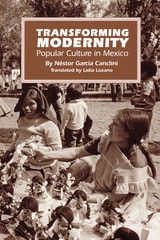
Transforming Modernity
Popular Culture in MexicoBy Néstor García Canclini
University of Texas Press, 1992
Is popular culture merely a process of creating, marketing, and consuming a final product, or is it an expression of the artist's surroundings and an attempt to alter them? Noted Argentine/Mexican anthropologist Néstor García Canclini addresses these questions and more in Transforming Modernity, a translation of Las culturas populares en el capitalismo. Based on fieldwork among the Purépecha of Michoacán, Mexico, some of the most talented artisans of the New World, the book is not so much a work of ethnography as of philosophy—a cultural critique of modernism. García Canclini delineates three interpretations of popular culture: spontaneous creation, which posits that artistic expression is the realization of beauty and knowledge; "memory for sale," which holds that original products are created for sale in the imposed capitalist system; and the tourist outlook, whereby collectibles are created to justify development and to provide insight into what capitalism has achieved.
Transforming Modernity argues strongly for popular culture as an instrument of understanding, reproducing, and transforming the social system in order to elaborate and construct class hegemony and to reflect the unequal appropriation and distribution of cultural capital. With its wide scope, this book should appeal to readers within and well beyond anthropology—those interested in cultural theory, social thought, and Mesoamerican culture.

Transforming Saints
From Spain to New SpainCharlene Villaseñor Black
Vanderbilt University Press, 2022
The chapters here examine the rise of the cults of the lactating Madonna, St. Anne, St. Librada, St. Mary Magdalene, and the Suffering Virgin. Concerned with holy figures presented as feminine archetypes—images that came under Inquisition scrutiny—as well as with cults suspected of concealing Indigenous influences, Charlene Villaseñor Black argues that these images would come to reflect the empowerment and agency of women in viceregal Mexico. Her close analysis of the imagery additionally demonstrates artists' innovative responses to Inquisition censorship and the new artistic demands occasioned by conversion.
The concerns that motivated the twenty-first century protests against Chicana artists Yolanda López in 2001 and Alma López in 2003 have a long history in the Hispanic world, in the form of anxieties about the humanization of sacred female bodies and fears of Indigenous influences infiltrating Catholicism. In this context Black also examines a number of important artists in depth, including El Greco, Murillo, Jusepe de Ribera, Pedro de Mena, Baltasar de Echave Ibía, Juan Correa, Cristóbal de Villalpando, and Miguel Cabrera.
Transforming Science and Engineering
Advancing Academic WomenAbigail J. Stewart, Janet E. Malley, and Danielle LaVaque-Manty, Editors
University of Michigan Press, 2010
"If you have thrown up your hands in despair after trying to retain women science and engineering in the academy, read this book. It offers detailed descriptions of a wide array of tried-and-true programs that have been tested out by the NSF ADVANCE program."
---Joan C. Williams, 1066 Foundation Chair & Distinguished Professor of Law Director, Center for WorkLife Law University of California
"Solid and practical, this volume details the first years of NSF funded institutional change to remake gender dynamics inside U.S. science. What works? What doesn't? And why?"
---Londa Schiebinger, John L. Hinds Professor of History of Science and Barbara D. Finberg Director, Michelle R. Clayman Institute for Gender Research at Stanford University, and author of Has Feminism Changed Science?
"This book's time has come. Transforming Science and Engineering is important, and lots of people can learn from what has happened in the ADVANCE universities."
---Lotte Bailyn, Professor of Management, Behavioral and Policy Sciences Department, Sloan School of Management, MIT; author of Breaking the Mold: Redesigning Work for Productive and Satisfying Lives; and coauthor of Beyond Work-Family Balance: Advancing Gender Equity and Workplace Performance
"This collection profiles 16 NSF ADVANCE grant successes, sandwiched between an interview with Dr. Alice Hogan and Dr. Lee Harle's summary of cost-effective practices from ADVANCE programs, giving so many 'biggest bang for the buck' examples in so few pages that it will easily justify both the cost of the book and the reading time. These accounts do not continue the too-common vague referrals to 'unhealthy environment' or 'chilly climate,' but rather expound the situations before and after the interventions, something necessary in order to transplant the programs, or even to use the programs for idea generation. Transforming Science and Engineering is a model of excellence, and will be extremely useful for those women, men, faculty, or administrators wanting to help their universities move into the 21st century and attract to their campuses qualified women and men who want opportunities to attain their full potentials."
---Donna J. Nelson, Associate Professor of Chemistry, University of Oklahoma
In 2001, the National Science Foundation's ADVANCE Institutional Transformation program began awarding five-year grants to colleges and universities to address a common problem: how to improve the work environment for women faculty in science and engineering. Drawing on the expertise of scientists, engineers, social scientists, specialists in organizational behavior, and university administrators, this collection is the first to describe the variety of innovative efforts academic institutions around the country have undertaken.
Focusing on a wide range of topics, from how to foster women's academic success in small teaching institutions, to how to use interactive theater to promote faculty reflection about departmental culture, to how a particular department created and maintained a healthy climate for women's scientific success, the contributors discuss both the theoretical and empirical aspects of the initiatives, with emphasis on the practical issues involved in creating these approaches. The resulting evidence shows that these initiatives have the desired effects. The cases represented in this collection depict the many issues women faculty in science and engineering face, and the solutions that are presented can be widely accepted at academic institutions around the United States. The essays in Transforming Science and Engineering illustrate that creating work environments that sustain and advance women scientists and engineers benefits women, men, and underrepresented minorities.
Abigail J. Stewart is Sandra Schwartz Tangri Distinguished University Professor of Psychology and Women's Studies at the University of Michigan.
Janet E. Malley is a psychologist and Associate Director of the Institute for Research on Women and Gender at the University of Michigan.
Danielle LaVaque-Manty, former Research Associate at the Institute for Research on Women and Gender at the University of Michigan, teaches composition at U-M's Sweetland Writing Center.
Cover photo: Joanne Leonard

Transforming Tradition
Folk Music Revivals ExaminedEdited by Neil V. Rosenberg: Foreword by Alan Jabbour
University of Illinois Press, 1993
Transforming Tradition examines the phenomenon of the folk song revival, those vibrant meldings of popular and folk culture that captured public awareness in the 1950s and 1960s. We remember the folk revival as forums for performers like Joan Baez and the Kingston Trio, and as incubators for unlikely radio hits like "Tom Dooley" and "Blowin' in the Wind." But it also gave rise to a bustling and influential subculture of hootenanies, coffeehouses, and blues and bluegrass appreciation, sowing a legacy that remains a vital part of American culture.
Many of the contributors to this collection performed during the revival era. Today, their expertise in folklore, ethnomusicology, and cultural history allow them to blend insider knowledge and trained analysis to offer unique perspectives.

Transforming Vòdún
Musical Change and Postcolonial Healing in Benin's Jazz and Brass Band MusicSarah Politz
University of Michigan Press, 2023
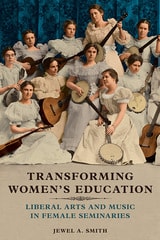
Transforming Women's Education
Liberal Arts and Music in Female SeminariesJewel A. Smith
University of Illinois Press, 2019
Transforming the Academy
Faculty Perspectives on Diversity and PedagogyWillie-LeBreton, Sarah
Rutgers University Press, 2016
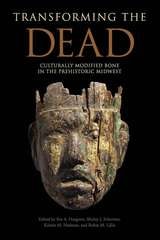
Transforming the Dead
Culturally Modified Bone in the Prehistoric MidwestEve A. Hargrave
University of Alabama Press, 2015
Revealing how the dead continued to shape the spiritual and social worlds of prehistoric North America.
Transforming the Dead is a collection of essays that examines culturally modified human bones and their roles as “cultural and ritual objects” among prehistoric Eastern Woodland cultures. Previous scholarship has explored the role of human body parts in Native American cultures as trophies of war and revered ancestors. This collection discusses new evidence that human elements were also important components of daily and ritual activities across the Eastern Woodlands. The contributors to this volume discuss each case study within the unique regional and temporal contexts of the material, rather than seeking universal answers to how these objects were used.
Most research addressing modified human bone has focused on cut marks and trauma associated with warfare, trophy taking, and burial practices. The editors and contributors of Transforming the Dead document the varied and often overlooked ways that human bone was intentionally modified through drilling, incising, cutting, and polishing for utilitarian, ornamental, spiritual, or ritual use. Examples include bracelets and gorgets to be worn, as well as musical rasps, pipe stems, masks, and protective talismans. The form and function of these objects are not unusual; their construction from the remains of “another” sets them apart.
Through a flexible but systematic analysis of the archaeological record, the contributors bring into focus how the careful selection, modification, and retention of particular bones or body parts of an individual after death offer insights into concepts of personhood, the body, life, and death among the prehistoric Native Americans in the Midwest.
Transforming the Frontier
Peace Parks and the Politics of Neoliberal Conservation in Southern AfricaBram Büscher
Duke University Press, 2013
Based on extensive research in southern Africa with the Maloti-Drakensberg Transfrontier Conservation and Development Project, Büscher explains how the successful promotion of transfrontier conservation as a "win-win" solution happens not only in spite of troubling contradictions and problems, but indeed because of them. This is what he refers to as the "politics of neoliberal conservation," which receives its strength from effectively combining strategies of consensus, antipolitics, and marketing. Drawing on long-term, multilevel ethnographic research, Büscher argues that transfrontier conservation projects are not as concerned with on-the-ground development as they are purported to be. Instead, they are reframing environmental protection and sustainable development to fit an increasingly contradictory world order.
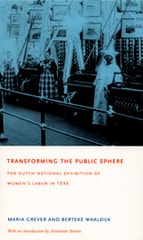
Transforming the Public Sphere
The Dutch National Exhibition of Women’s Labor in 1898Maria Grever and Berteke Waaldijk
Duke University Press, 2004
A comprehensive social history, Transforming the Public Sphere describes the planning and construction of the Exhibition of Women’s Labor and the event itself—the sights, the sounds, and the smells—as well as the role of exhibitions in late-nineteenth-century public culture. The authors discuss how the 1898 exhibition displayed the range and variety of women’s economic, intellectual, and artistic roles in Dutch culture, including their participation in such traditionally male professions as engineering, diamond-cutting, and printing and publishing. They examine how people and goods from the Dutch colonies were represented, most notably in an extensive open-air replica of a “Javanese village.” Grever and Waaldijk reveal the tensions the exhibition highlighted: between women of different economic classes; between the goal of equal rights for women and the display of imperial subjects and spoils; and between socialists and feminists, who competed fiercely with one another for working women’s support. Transforming the Public Sphere explores an event that served as the dress rehearsal for advances in women’s public participation during the twentieth century.
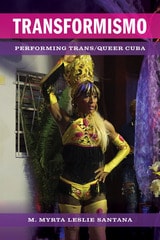
Transformismo
Performing Trans/Queer CubaM. Myrta Leslie Santana
University of Michigan Press, 2025

Transgender Care
Recom Guidelines, Practical InfoGianna Israel
Temple University Press, 2001
By empowering clients to be well-informed medical consumers and by delivering care providers from the straitjacket of inadequate diagnostic standards and stereotypes, this book sets out to transform the nature of transgender care.
In an accessible style, the authors discuss the key mental health issues, with much attention to the vexed relationship between professionals and clients. They propose a new professional role; that of "Gender Specialist."
Chapters 3, 4, and 5 provide definitive information (in the context of consulting health professionals) on hormone administration, aesthetic surgery, and genital reassignment surgery. Chapter 6 takes up the little-examined issue of HIV and AIDS among transgender people. There is also a chapter devoted to issues of transgender people of color, as well as a chapter on transgender adolescents.
The book contains a wealth of practical information and accounts of people's experiences about coming out to one's employer or to one's friends or spouse. Several essays spell out the legal rights of transgender people with regard to insurance, work, marriage, and the use of rest rooms.
The second part of the book consists of thirteen essays on a range of controversial topics. They include three personal stories of transgender life, one essay on the new academic field of Transgender Studies, two essays on legal rights, three essays on medical issues, and two essays on the origins and possible resolution of the conflicts between therapist and client. The authors have also provided useful listings of organizations, centers, and Web sites.
The book has been reviewed by a national committee of professionals and consumers, some of whose members have contributed the essays in the second part of the book.