Results by title
4531 books match the query 'Cultural & Ethnic Studies' and 804 start with t
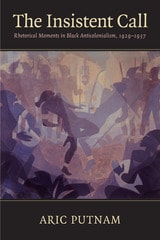
The Insistent Call
Rhetorical Moments in Black Anticolonialism, 1929-1937Aric Putnam
University of Massachusetts Press, 2012
Throughout the nineteenth century, African heritage played an important role in black America, as personal memories and cultural practices continued to shape the everyday experience of people of African descent living under the shadow of slavery. Resisting efforts to de-Africanize their values, customs, and beliefs, Black Americans invoked their African roots in public arguments about their identity and place in the “new” world. At the outset of the twentieth century many still saw Africa primarily as the source of a common cultural and spiritual past. But after the 1920s, the meaning of African heritage changed as people of African descent expressed new relationships between themselves, the United States, and the African Diaspora.
In The Insistent Call, Aric Putnam studies the rhetoric of newspapers, literature, and political pamphlets that expressed this shift. He demonstrates that as people of African descent debated the United States' occupation of Haiti, the Liberian labor crisis, and the Italian invasion of Ethiopia, they formed a new collective identity, one that understood the African Diaspora in primarily political rather than cultural terms. In addition to uncovering a neglected period in the history of Black rhetoric, Putnam shows how rhetoric that articulates the interests of a population not defined by the boundaries of a state can still motivate collective action and influence policies.

The Intimate University
Korean American Students and the Problems of SegregationNancy Abelmann
Duke University Press, 2009
Drawing on ten years of ethnographic research with Korean American students at the University of Illinois and closely following multiple generations of a single extended Korean American family in the Chicago metropolitan area, Abelmann investigates the complexity of racial politics at the American university today. Racially hyper-visible and invisible, Korean American students face particular challenges as they try to realize their college dreams against the subtle, day-to-day workings of race. They frequently encounter the accusation of racial self-segregation—a charge accentuated by the fact that many attend the same Evangelical Protestant church—even as they express the desire to distinguish themselves from their families and other Korean Americans. Abelmann concludes by examining the current state of the university, reflecting on how better to achieve the university’s liberal ideals despite its paradoxical celebration of diversity and relative silence on race.

The Invention of Order
On the Coloniality of SpaceDon Thomas Deere
Duke University Press, 2025
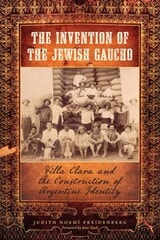
The Invention of the Jewish Gaucho
Villa Clara and the Construction of Argentine IdentityBy Judith Noemí Freidenberg
University of Texas Press, 2009
By the mid-twentieth century, Eastern European Jews had become one of Argentina's largest minorities. Some represented a wave of immigration begun two generations before; many settled in the province of Entre Ríos and founded an agricultural colony. Taking its title from the resulting hybrid of acculturation, The Invention of the Jewish Gaucho examines the lives of these settlers, who represented a merger between native cowboy identities and homeland memories.
The arrival of these immigrants in what would be the village of Villa Clara coincided with the nation's new sense of liberated nationhood. In a meticulous rendition of Villa Clara's social history, Judith Freidenberg interweaves ethnographic and historical information to understand the saga of European immigrants drawn by Argentine open-door policies in the nineteenth century and its impact on the current transformation of immigration into multicultural discourses in the twenty-first century. Using Villa Clara as a case study, Freidenberg demonstrates the broad power of political processes in the construction of ethnic, class, and national identities. The Invention of the Jewish Gaucho draws on life histories, archives, material culture, and performances of heritage to enhance our understanding of a singular population—and to transform our approach to social memory itself.
The Irish in Illinois
Mathieu W. Billings and Sean Farrell
Southern Illinois University Press, 2021
Today over a million people in Illinois claim Irish ancestry and celebrate their love for Ireland. In this concise narrative history, authors Mathieu W. Billings and Sean Farrell bring together both familiar and unheralded stories of the Irish in Illinois, highlighting the critical roles these immigrants and their descendants played in the settlement and the making of the Prairie State. Short biographies and twenty-eight photographs vividly illustrate the significance and diversity of Irish contributions to Illinois.
Billings and Farrell remind us of the countless ways Irish men and women have shaped the history and culture of the state. They fought in the French and Indian War, the American Revolution, the Civil War, and two world wars; built the state’s infrastructure and worked in its factories; taught Illinois children and served the poor. Irish political leaders helped to draw up the state’s first constitution, served in city, county, and state offices, and created a machine that dominated twentieth-century politics in Chicago and the state.
This lively history adds to our understanding of the history of the Irish in the state over the past two hundred fifty years. Illinoisans and Midwesterners celebrating their connections to Ireland will treasure this rich and important account of the state’s history.
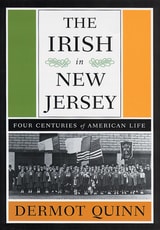
The Irish in New Jersey
Four Centuries of American Life, First Paperback EditionDermot Quinn
Rutgers University Press, 2004
In this richly illustrated history, Dermot Quinn uncovers the story of how the Irish in New Jersey maintained their cultural roots while also laying the foundations for the social, economic, political, and religious landscapes of their adopted country. Quinn chronicles the emigration of families from a conflict-torn and famine-stricken Ireland to the unfamiliar land whose unwelcoming streets often fell far short of being paved with gold.
Using case histories from Paterson, Jersey City, and Newark, Quinn examines the transition of the Irish from a rejected minority to a middle-class, secular, and suburban identity. The Irish in New Jersey will appeal to everyone with an interest in the cultural heritage of a proud and accomplished people.

The Irish in Us
Irishness, Performativity, and Popular CultureDiane Negra, ed.
Duke University Press, 2006
Examining how Irishness is performed and commodified in the contemporary transnational environment, the contributors explore topics including Van Morrison’s music, Frank McCourt’s writing, the explosion of Irish-themed merchandising, the practices of heritage seekers, the movie The Crying Game, and the significance of red hair. Whether considering the implications of Garth Brooks’s claim of Irishness and his enormous popularity in Ireland, representations of Irish masculinity in the TV series Buffy the Vampire Slayer and Angel, or Americans’ recourse to a consoling Irishness amid the racial and nationalist tensions triggered by the events of September 11, the contributors delve into complex questions of ethnicity, consumerism, and globalization. Ultimately, they call for an increased awareness of the exclusionary effects of claims of Irishness and for the cultivation of flexible, inclusive ways of affiliating with Ireland and the Irish.
Contributors. Natasha Casey, Maeve Connolly, Catherine M. Eagan, Sean Griffin, Michael Malouf, Mary McGlynn, Gerardine Meaney, Diane Negra, Lauren Onkey, Maria Pramaggiore, Stephanie Rains, Amanda Third
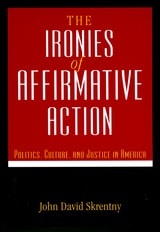
The Ironies of Affirmative Action
Politics, Culture, and Justice in AmericaJohn David Skrentny
University of Chicago Press, 1996
Analyzing both the resistance from the Right and the support from the Left, Skrentny brings to light the unique moral culture that has shaped the affirmative action debate, allowing for starkly different policies for different citizens. He also shows, through an analysis of historical documents and court rulings, the complex and intriguing political circumstances which gave rise to these controversial policies.
By exploring the mystery of how it took less than five years for a color-blind policy to give way to one that explicitly took race into account, Skrentny uncovers and explains surprising ironies: that affirmative action was largely created by white males and initially championed during the Nixon administration; that many civil rights leaders at first avoided advocacy of racial preferences; and that though originally a political taboo, almost no one resisted affirmative action.
With its focus on the historical and cultural context of policy elites, The Ironies of Affirmative Action challenges dominant views of policymaking and politics.
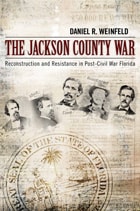
The Jackson County War
Reconstruction and Resistance in Post–Civil War FloridaDaniel R. Weinfeld
University of Alabama Press, 2023
Offers original conclusions explaining why Jackson County became the bloodiest region in Reconstruction Florida
From early 1869 through the end of 1871, citizens of Jackson County, Florida, slaughtered their neighbors by the score. The nearly three year frenzy of bloodshed became known as the Jackson County War. The killings, close to one hundred and by some estimates twice that number, brought Jackson County the notoriety of being the most violent county in Florida during the Reconstruction era. Daniel R. Weinfeld has made a thorough investigation of contemporary accounts. He adds an assessment of recently discovered information, and presents a critical evaluation of the standard secondary sources.
The Jackson County War focuses on the role of the Freedmen’s Bureau, the emergence of white “Regulators,” and the development of African American political consciousness and leadership. It follows the community’s descent after the Civil War into disorder punctuated by furious outbursts of violence until the county settled into uneasy stability seven years later. The Jackson County War emerges as an emblem of all that could and did go wrong in the uneasy years after Appomattox and that left a residue of hatred and fear that endured for generations.

The Japan of Pure Invention
Gilbert and Sullivan’s The MikadoJosephine Lee
University of Minnesota Press, 2010
The Japanese Automotive Industry
Model and Challenge for the Future?Robert E. Cole, Editor
University of Michigan Press, 1981

The Japanese in Latin America
Daniel M. Masterson with Sayaka Funada-Classen
University of Illinois Press, 2003
Latin America is home to 1.5 million persons of Japanese descent. Combining detailed scholarship with rich personal histories, Daniel M. Masterson, with the assistance of Sayaka Funada-Classen, presents the first comprehensive study of the patterns of Japanese migration on the continent as a whole.
When the United States and Canada tightened their immigration restrictions in 1907, Japanese contract laborers began to arrive at mines and plantations in Latin America. The authors examine Japanese agricultural colonies in Latin America, as well as the subsequent cultural networks that sprang up within and among them, and the changes that occurred as the Japanese moved from wage labor to ownership of farms and small businesses. They also explore recent economic crises in Brazil, Argentina, and Peru, which, combined with a strong Japanese economy, caused at least a quarter million Latin American Japanese to migrate back to Japan.
Illuminating authoritative research with extensive interviews with migrants and their families, The Japanese in Latin America tells the story of immigrants who maintained strong allegiances to their Japanese roots, even while they struggled to build lives in their new countries.
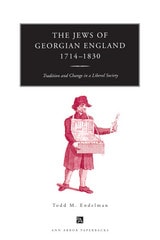
The Jews of Georgian England, 1714-1830
Tradition and Change in a Liberal SocietyTodd M. Endelman
University of Michigan Press, 1999
The Journey Before Us
First-Generation Pathways from Middle School to CollegeLaura Nichols
Rutgers University Press, 2020
The Journey into Adulthood in Uncertain Times
Robert Crosnoe
Russell Sage Foundation, 2025
Drawing on both quantitative and qualitative survey data over five decades, Crosnoe and Cavanagh find that young adults are, in fact, waiting longer to take on “real” adult roles, such as worker or parent. However, this is not out of a reluctance to grow up. Instead, increased inequality and changes in the economy have forced young people to adapt their lives in new ways. Young adults are now spending more time in school, have more trouble finding their footing in the labor force, and consequently postpone getting married and having children. They also mix and match roles in more complicated ways now than in the past—going back and forth between school and work over longer periods of time or disconnecting parenthood from their romantic relationships. While the period from late teens to mid-twenties does look different now than in the past, the change has been slow and steady rather than a dramatic shift due to social crises. The Great Recession, for example, had a more muted effect on young people’s social and economic attainment and family formation than fears of a lost generation would suggest.
Crosnoe and Cavanagh find that while the panic over young adults today may be somewhat overblown, this conclusion should not obscure some clear concerns. Young adults do struggle with their social and emotional wellbeing. They are more depressed than their counterparts in previous generations, drink less alcohol in ways that suggest less engagement with social life, and express deep distrust of social institutions and the idea of the American Dream. The authors argue that worries about the state of young adulthood today should trigger more reflection about how to support young people rather than how to fix them.
The Journey into Adulthood in Uncertain Times is a comprehensive and illuminating examination of the challenges faced by contemporary young adults.
The Journey
Stories by K. C. DasPhyllis Granoff, Translator
University of Michigan Press, 2000
The Juarez Myth In Mexico
Charles A. Weeks
University of Alabama Press, 1987
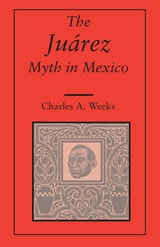
Like many capitals the city of Mexico is a place of monuments-large monuments, small, ancient monuments, and new, representational monuments, and allegorical monuments—each bearing a message from the past. Among them is the Hemiciclo. It stands in a spacious, old, beautiful park, the Alameda Central, where the young and old of the city still promenade on Sundays and holidays as people do in the plazas throughout the country and, indeed, as people do in many parts of the world. Amid green trees and a great variety of flowers and shrubs and flanked by a semicircle of twelve doric columns of white Carrara marble stands the central pedestal of the Hemiciclo supporting the statues of three figures. One statue represents a former president of the republic, Benito Juarez, who appears solemn and grim as a Roman proconsul administering justice. Juarez the Lawgiver is seated, and surrounding him are two allegorical figures, also of marble, one representing Glory, who is placing a crown on Juarez’s head, and the other, the Republic, who stands behind, resting her sword on the ground to signify the end of a gigantic struggle. The letters of the pedestal read: “Al Benemerito Benito Juarez. La Patria.” Many years have passed since 1910, when the Mexican government built and dedicated the Hemiciclo after a design by the architect Guillermo Heredia.
Like many other such monuments it is the embodiment of a myth. In life Juarez offered little to the mythologizers-he was never able to boast a military career, he often impressed people as reserved or even impassive. he stood a little over five feet; with small hands and feet and dark staring eyes, a coppery complexion that helped disguise a large scar across his face, of Zapotec Indian parentage, he was no striking figure. He did, however, lead Mexican liberals in the I 850s and 1860s in their titanic struggle against formidable opposition, both foreign and domestic, and in the years since his death his worshipers have gathered at the Hemiciclo, at his tomb, or in many other places in Mexico sacred to his memory, usually on anniversaries of his birth or death. For them Juarez is, in agreement with the golden inscription on the central pedestal of the Hemiciclo, “Benemerito de la Patria” or even “Benemerito de las Americas.”
Development of a Juarez myth has had all the classic characteristics of myths and mythmaking, especially the subjective view or image of a reality, whether it be of an historical figure, as in the case of Juarez, an event, an institution, or even a geographical region. Image or meaning ascribed to what is assumed to be a reality constitutes one of the main elements of myth and when manipulated to promote a cause assumes a reality of its own. The apotheosis of Juarez projected a subjective view or image of the historical reality. In all myths, to be sure, the assumed reality is a feature useful to an individual or a group.

The Kagero Diary
A Woman’s Autobiographical Text from Tenth-Century JapanTranslated with an Introduction and Notes by Sonja Arntzen
University of Michigan Press, 1997

The Kidney and the Cane
Planetary Health and Plantation Labor in NicaraguaAlex M. Nading
Duke University Press, 2025
The Korean-American Dream
Portraits of a Successful Immigrant CommunityJames Flanigan
University of Nevada Press, 2018
In The Korean-American Dream, respected and distinguished business journalist James Flanigan uncovers the struggles and contributions of the people who have made Los Angeles the largest Korean city outside of Seoul.
This intimate account illustrates how Korean immigrants have preserved their culture and history as well as adapted to the American culture of E Pluribus Unum, the radical promise of “out of many, one.” Flanigan shows how Los Angeles emerged as a capital of the Asia Pacific region.
At less than 2 million, Korean Americans are a relatively small group compared to new Americans from China, the Philippines, and India. But with energy and drive, they are building landmarks in New York as well as L.A., lobbying for causes in Washington, founding businesses, heading universities and hospitals, and holding public office in all parts of the U.S.
Flanigan’s compelling narrative told largely through personal interviews provides a front-row seat to the economic, business, and cultural developments of the Korean American Community. At a time of spirited debate about immigration, their energy and ambition serve as a ringing reminder of the promise of the American mosaic.

The Krobo People of Ghana to 1892
A Political and Social HistoryLouis E. Wilson
Ohio University Press, 1991
The Ku Klux Klan in 1920s Arkansas
How Protestant White Nationalism Came to Rule a StateKenneth C. Barnes
University of Arkansas Press, 2021
Winner, 2022 J.G. Ragsdale Book Award, Arkansas Historical Association
The Ku Klux Klan established a significant foothold in Arkansas in the 1920s, boasting more than 150 state chapters and tens of thousands of members at its zenith. Propelled by the prominence of state leaders such as Grand Dragon James Comer and head of Women of the KKK Robbie Gill Comer, the Klan established Little Rock as a seat of power second only to Atlanta. In The Ku Klux Klan in 1920s Arkansas, Kenneth C. Barnes traces this explosion of white nationalism and its impact on the state’s development.
Barnes shows that the Klan seemed to wield power everywhere in 1920s Arkansas. Klansmen led businesses and held elected offices and prominent roles in legal, medical, and religious institutions, while the women of the Klan supported rallies and charitable activities and planned social gatherings where cross burnings were regular occurrences. Inside their organization, Klan members bonded during picnic barbeques and parades and over shared religious traditions. Outside of it, they united to direct armed threats, merciless physical brutality, and torrents of hateful rhetoric against individuals who did not conform to their exclusionary vision.
By the mid-1920s, internal divisions, scandals, and an overzealous attempt to dominate local and state elections caused Arkansas’s Klan to fall apart nearly as quickly as it had risen. Yet as the organization dissolved and the formal trappings of its flamboyant presence receded, the attitudes the Klan embraced never fully disappeared. In documenting this history, Barnes shows how the Klan’s early success still casts a long shadow on the state to this day.
The Labor of Care
Filipina Migrants and Transnational Families in the Digital AgeValerie Francisco-Menchavez
University of Illinois Press, 2018
The Labor of Faith
Gender and Power in Black Apostolic PentecostalismJudith Casselberry
Duke University Press, 2017
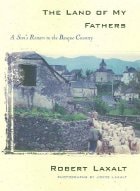
The Land of My Fathers
A Son's Return to the Basque CountryRobert Laxalt
University of Nevada Press, 2024
In 1960, renowned Nevada writer Robert Laxalt moved himself and his family to a small Basque village in the French Pyrenees. The son of Basque emigrants, Laxalt wanted to learn as much as he could about the ancient and mysterious people from which he was descended and about the country from which his parents came. Thanks to his Basque surname and a wide network of family connections, Laxalt was able to penetrate the traditional reserve of the Basques in a way that outsiders rarely can. In the process, he gained rare insight into the nature of the Basques and the isolated, beautiful mountain world where they have lived for uncounted centuries. Based on Laxalt’s personal journals of this and a later sojourn in 1965, The Land of My Fathers is a moving record of a people and their homeland. Through Laxalt’s perceptive eyes and his wife Joyce’s photographs, we observe the Basques’ market days and festivals, join their dove hunts and harvests, share their humor and history, their deep sense of nationalism, their abiding pride in their culture and their homes, and discover the profound sources of the Basques’ strength and their endurance as a people. Photography by Joyce Laxalt.

The Language of Political Incorporation
Chinese Migrants in EuropeAmy Liu
Temple University Press, 2021
In this groundbreaking study, The Language of Political Incorporation, Amy Liu focuses on Chinese migrants in Central-Eastern Europe and their varying levels of political incorporation in the local community. She examines the linguistic diversity of migrant networks, finding institutional trust and civic engagement depend not on national identity, but on the network’s linguistic diversity—namely, whether the operating language is a migrant’s mother tongue or a lingua franca.
The Language of Political Incorporation uses original survey data to assess when the Chinese engage positively with the authorities and when they become civic minded. The results are surprising. In Hungary, the Chinese community has experienced high levels of political incorporation in part because they have not been targeted by anti-immigrant rhetoric and policies. In contrast, migrants in Romania sought the assistance of the Chinese embassy to fight an effort to collect back taxes.
Liu also compares the Chinese experiences in Central-Eastern Europe with those of Muslims in the region, as well as how the Chinese are treated in Western Europe. Additionally, she considers how the local communities perceive the Chinese. The Language of Political Incorporation concludes by offering best practices for how governments can help migrants become more trusting of—and have greater involvement with—locals in their host countries. Ultimately, Liu demonstrates the importance of linguistic networks for the incorporation of immigrants.
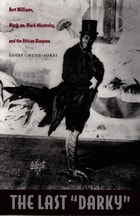
The Last "Darky"
Bert Williams, Black-on-Black Minstrelsy, and the African DiasporaLouis Chude-Sokei
Duke University Press, 2006
Chude-Sokei makes the crucial argument that Williams’s minstrelsy negotiated the place of black immigrants in the cultural hotbed of New York City and was replicated throughout the African diaspora, from the Caribbean to Africa itself. Williams was born in the Bahamas. When performing the “darky,” he was actually masquerading as an African American. This black-on-black minstrelsy thus challenged emergent racial constructions equating “black” with African American and marginalizing the many diasporic blacks in New York. It also dramatized the practice of passing for African American common among non-American blacks in an African American–dominated Harlem. Exploring the thought of figures such as Booker T. Washington, W. E. B. Du Bois, Marcus Garvey, and Claude McKay, Chude-Sokei situates black-on-black minstrelsy at the center of burgeoning modernist discourses of assimilation, separatism, race militancy, carnival, and internationalism. While these discourses were engaged with the question of representing the “Negro” in the context of white racism, through black-on-black minstrelsy they were also deployed against the growing international influence of African American culture and politics in the twentieth century.
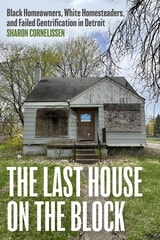
The Last House on the Block
Black Homeowners, White Homesteaders, and Failed Gentrification in DetroitSharon Cornelissen
University of Chicago Press, 2025
In the minds of many, Detroit is undergoing a renaissance thanks to gentrifying urbanites who’ve been drawn to the city with the promise of cheap housing and thriving culture. But what happens when gentrification attempts to come to one of the most depopulated neighborhoods in the country—a place where every other property in the neighborhood was a vacant lot and every third house stood empty? To find out, Sharon Cornelissen moved to the Brightmoor neighborhood of Detroit for three years and became the owner of a $7,000 house.
The Last House on the Block takes us to Brightmoor to meet Cornelissen’s fellow residents. She introduces us to the long-time residents of the neighborhood who reveal their struggles to keep a home while keeping violence, tall grass, and yes—gentrification—at bay. We also meet the eclectic white newcomers of Brightmoor and learn about their real estate bargains, urban farms, and how they became the unlikely defenders of urban desolation. Where oldtimers take pride in neatly mowed lawns and hope for a return to residential density, newcomers love the open space and aim to buy more empty lots to raise chickens and goats. It is a story of gentrification, but not at all in the usual sense: it is a case of failed gentrification. We often think about gentrification as an unstoppable force—once the first white newcomers with yoga mats enter an often brown or Black community, the coffee shops and restaurants follow. But in Brightmoor, the dreams of white newcomers met the harsh reality of decade-long decline. Nearly a decade after Cornelissen’s fieldwork began, Brightmoor is even emptier than it was when she started.
Today, depopulation remains more common than gentrification in poor communities. Cornelissen’s story offers deep insights into what it is like to live in a declining neighborhood, and through the example of Brightmoor, Cornelissen reveals why depopulation continues and helps us imagine a more inclusive and equitable city turnaround.
The Last Nostalgia
Poems, 1982–1990Joe Bolton
University of Arkansas Press, 1999

The Last Shepherd
Martin Etchart
University of Nevada Press, 2012
Matt’s journey to manhood takes place in a vividly depicted landscape populated by lively, memorable characters. This is the powerful story of a young man’s search for an identity that encompasses two cultures and one complex, scattered family.
The Latin American Subaltern Studies Reader
Ileana Rodríguez, ed.
Duke University Press, 2001
In addition to an overview by Ranajit Guha, essay topics include nineteenth-century hygiene in Latin American countries, Rigoberta Menchú after the Nobel, commentaries on Haitian and Argentinian issues, the relationship between gender and race in Bolivia, and ungovernability and tragedy in Peru. Providing a radical critique of elite culture and of liberal, bourgeois, and modern epistemologies and projects, the essays included here prove that Latin American Subaltern Studies is much more than the mere translation of subaltern studies from South Asia to Latin America.
Contributors. Marcelo Bergman, John Beverley, Robert Carr, Sara Castro-Klarén, Michael Clark, Beatriz González Stephan, Ranajit Guha, María Milagros López , Walter Mignolo, Alberto Moreiras, Abdul-Karim Mustapha, José Rabasa, Ileana Rodríguez, Josefina Saldaña-Portillo, Javier Sanjinés, C. Patricia Seed, Doris Sommer, Marcia Stephenson, Mónica Szurmuk, Gareth Williams, Marc Zimmerman
The Latina Advantage
Gender, Race, and Political SuccessBy Christina E. Bejarano
University of Texas Press, 2013
Challenging common assumptions and offering new alternatives in the debate over the current political status of women, this data-driven study indicates that minority female political candidates often have a strong advantage over male opponents when seeking political office.
During the first decade of the 21st century, racial/ethnic minority women have made significant strides in U.S. politics, comprising large portions of their respective minority delegations both in Congress and in state legislatures. This trend has been particularly evident in the growing political presence of Latinas, yet scholars have offered no clear explanations for this electoral phenomenon—until now.
In The Latina Advantage, Christina E. Bejarano draws on national public opinion datasets and a close examination of state legislative candidates in Texas and California to demonstrate the new power of the political intersection between race and gender. Underscoring the fact that racial/ethnic minority women form a greater share of minority representatives than do white women among white elected officials, Bejarano provides empirical evidence to substantiate previous theoretical predictions of the strategic advantage in the intersectionality of gender and ethnicity in Latinas. Her evidence indicates that two factors provide the basis for the advantage: increasingly qualified candidates and the softening of perceived racial threat, leading minority female candidates to encounter fewer disadvantages than their male counterparts.
Overturning the findings of classic literature that reinforce stereotypes and describe minority female political candidates as being at a compounded electoral disadvantage, Bejarano brings a crucial new perspective to dialogues about the rapidly shifting face of America’s electorate.
The Latino Question
Politics, Laboring Classes and the Next LeftRodolfo D. Torres
Pluto Press, 2018
In a radical alternative to the dominant orthodoxy in Latino political studies, Rodolfo D. Torres, Armando Ibarra, and Alfredo Carlos emphasize the importance of political economy for understanding Latino politics, culture, and social issues. Written in an accessible style, the authors draw from extensive original research and several critical traditions—including Karl Marx, Antonio Gramsci, and Michel Foucault—to make crucial links between socio-economic and culture-based approaches for understanding the politics of race and ethnicity in capitalist society. Notably, they present front-line evidence of how some Mexican communities across America are not only resisting, but also reinventing and transforming the predominant economic ideas. The Latino Question will be essential for anyone hoping to understand the changes in Latino communities in America today.

The Latinx Files
Race, Migration, and Space AliensMatthew David Goodwin
Rutgers University Press, 2021
The Latinx Guide to Graduate School
Genevieve Negrón-Gonzales and Magdalena L. Barrera
Duke University Press, 2023
The Lettered Barriada
Workers, Archival Power, and the Politics of Knowledge in Puerto RicoJorell A. Meléndez-Badillo
Duke University Press, 2021
Duke University Press Scholars of Color First Book Award recipient
The Libertine Colony
Creolization in the Early French CaribbeanDoris Garraway
Duke University Press, 2005
Among the texts Garraway analyzes are missionary histories by Jean-Baptiste Du Tertre, Raymond Breton, and Jean-Baptiste Labat; narratives of adventure and transgression written by pirates and others outside the official civil and religious power structures; travel accounts; treatises on slavery and colonial administration in Saint-Domingue; the first colonial novel written in French; and the earliest linguistic description of the native Carib language. Garraway also analyzes legislation—including the Code noir—that codified slavery and other racialized power relations. The Libertine Colony is both a rich cultural history of creolization as revealed in Francophone colonial literature and an important contribution to theoretical arguments about how literary critics and historians should approach colonial discourse and cultural representations of slave societies.

The Life and Death of Gus Reed
A Story of Race and Justice in Illinois during the Civil War and ReconstructionThomas Bahde
Ohio University Press, 2014
Gus Reed was a freed slave who traveled north as Sherman’s March was sweeping through Georgia in 1864. His journey ended in Springfield, Illinois, a city undergoing fundamental changes as its white citizens struggled to understand the political, legal, and cultural consequences of emancipation and black citizenship. Reed became known as a petty thief, appearing time and again in the records of the state’s courts and prisons. In late 1877, he burglarized the home of a well-known Springfield attorney—and brother of Abraham Lincoln’s former law partner—a crime for which he was convicted and sentenced to the Illinois State Penitentiary.
Reed died at the penitentiary in 1878, shackled to the door of his cell for days with a gag strapped in his mouth. An investigation established that two guards were responsible for the prisoner’s death, but neither they nor the prison warden suffered any penalty. The guards were dismissed, the investigation was closed, and Reed was forgotten.
Gus Reed’s story connects the political and legal cultures of white supremacy, black migration and black communities, the Midwest’s experience with the Civil War and Reconstruction, and the resurgence of nationwide opposition to African American civil rights in the late nineteenth century. These experiences shaped a nation with deep and unresolved misgivings about race, as well as distinctive and conflicting ideas about justice and how to achieve it.
The Life and Times of Louis Lomax
The Art of Deliberate DisunityThomas Aiello
Duke University Press, 2021
The Limits of Racial Domination
Plebeian Society in Colonial Mexico City, 1660–1720R. Douglas Cope
University of Wisconsin Press, 1994
In this distinguished contribution to Latin American colonial history, Douglas Cope draws upon a wide variety of sources—including Inquisition and court cases, notarial records and parish registers—to challenge the traditional view of castas (members of the caste system created by Spanish overlords) as rootless, alienated, and dominated by a desire to improve their racial status. On the contrary, the castas, Cope shows, were neither passive nor ruled by feelings of racial inferiority; indeed, they often modified or even rejected elite racial ideology. Castas also sought ways to manipulate their social "superiors" through astute use of the legal system. Cope shows that social control by the Spaniards rested less on institutions than on patron-client networks linking individual patricians and plebeians, which enabled the elite class to co-opt the more successful castas.
The book concludes with the most thorough account yet published of the Mexico City riot of 1692. This account illuminates both the shortcomings and strengths of the patron-client system. Spurred by a corn shortage and subsequent famine, a plebeian mob laid waste much of the central city. Cope demonstrates that the political situation was not substantially altered, however; the patronage system continued to control employment and plebeians were largely left to bargain and adapt, as before.
A revealing look at the economic lives of the urban poor in the colonial era, The Limits of Racial Domination examines a period in which critical social changes were occurring. The book should interest historians and ethnohistorians alike.

The Linguistic Turn in Contemporary Japanese Literary Studies
Politics, Language, TextualityEdited and with an Introduction by Michael K. Bourdaghs
University of Michigan Press, 2010

The Lion's Historian
Africa's Animal PastSandra Swart
Ohio University Press, 2025
“Until the lion has a historian of his own, the tale of the hunt will always glorify the hunter.” Sandra Swart takes up the challenge of that African proverb and, with this book, becomes the lion’s historian. As a species, humans are not alone; but our history has been written as though we were. Swart insists on a multispecies retelling of our more-than-human past as she reconstructs a shifting series of significant interspecies relationships, from quirky, idiosyncratic connections to others that triggered major changes. Embracing a radical interdisciplinarity informed by a background in history and environmental studies, Swart combines the natural sciences with the social sciences, oral history, indigenous knowledge, and archival research. She blends current thinking about animal sentience, agency, cognition, and emotion to offer a new way to understand animals’ role in our shared history. The animals in this book—baboons, cows, elephants, hippos, horses, jackals, lions, Nazi cattle, okapi, police dogs, quagga, sheep, and white ants—exemplify different facets of our shared past. With this animal-centric lens, decades of research are brought together in a collection that takes animals seriously. It is a book with claws and fangs, tearing through conventional narratives to ask, Are we prepared to move beyond the convention that “history” is the story of only our own species? The entanglements between humans and other animals have shaped our past, but they suggest something more. The possibility of our shared future pivots on a reckoning with our shared pasts. Swart shows what human-animal history can do, not only to understand our place in the world better but to make our world—however slightly—a better place.
The Literary Voices of Winnifred Eaton
Redefining Ethnicity and AuthenticityCole, Jean Lee
Rutgers University Press, 2002
Eaton attempted to disguise her Chinese heritage by writing under a hypothetically Japanese pen name. In legal documents, she usually claimed a "white" racial identity. In her fiction, Eaton portrayed Japanese, Chinese, Irish, and American characters, relying on the accepted stereotypes of the day. Jean Lee Cole shows that the many voices Eaton adopted show her deep preoccupations with "American" identity as a whole. The author attempts to reconcile all of these "voices," examining how Eaton survived in a climate hostile to minority writers in the early twentieth century, and how her seemingly anomalous works conjoin Asian American and American literary history.
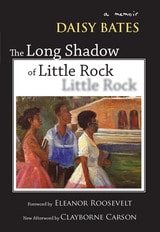
The Long Shadow of Little Rock
A MemoirDaisy Bates
University of Arkansas Press, 2007
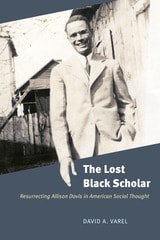
The Lost Black Scholar
Resurrecting Allison Davis in American Social ThoughtDavid A. Varel
University of Chicago Press, 2018
In The Lost Black Scholar, David A. Varel tells Davis’s compelling story, showing how a combination of institutional racism, disciplinary eclecticism, and iconoclastic thinking effectively sidelined him as an intellectual. A close look at Davis’s career sheds light not only on the racial politics of the academy but also the costs of being an innovator outside of the mainstream. Equally important, Varel argues that Davis exemplifies how black scholars led the way in advancing American social thought. Even though he was rarely acknowledged for it, Davis refuted scientific racism and laid bare the environmental roots of human difference more deftly than most of his white peers, by pushing social science in bold new directions. Varel shows how Davis effectively helped to lay the groundwork for the civil rights movement.
The Lost Gold Mine of Juan Mondragón
A Legend from New Mexico performed by Melaquías RomeroEdited by Charles L. Briggs and Julián Josué Vigil
University of Arizona Press, 1990
The Loyal West
Civil War and Reunion in Middle AmericaMatthew E. Stanley
University of Illinois Press, 2017
Matthew E. Stanley's intimate study explores the Civil War, Reconstruction, and sectional reunion in this bellwether region. Using the lives of area soldiers and officers as a lens, Stanley reveals a place and a strain of collective memory that was anti-rebel, anti-eastern, and anti-black in its attitudes--one that came to be at the forefront of the northern retreat from Reconstruction and toward white reunion. The Lower Middle West's embrace of black exclusion laws, origination of the Copperhead movement, backlash against liberalizing war measures, and rejection of Reconstruction were all pivotal to broader American politics. And the region's legacies of white supremacy--from racialized labor violence to sundown towns to lynching--found malignant expression nationwide, intersecting with how Loyal Westerners remembered the war.
A daring challenge to traditional narratives of section and commemoration, The Loyal West taps into a powerful and fascinating wellspring of Civil War identity and memory.

The Machinery of Whiteness
Studies in the Structure of RacializationAuthored by Steve Martinot
Temple University Press, 2010
In this follow up to his book, The Rule of Racialization—which considered the way class structure is formed in the U.S.—Steve Martinot now examines how the structures of racialization reside at the core of all social, cultural, and political institutions in the U.S. In The Machinery of Whiteness, Martinot examines how race and racism are produced in the United States, analyzing the politics of racialization, and the preponderance of racial segregation and racial deprivation that have kept the U.S. a white dominated society throughout its history. Martinot dedicates this work to expunging white supremacy from the earth.
The Machinery of Whiteness investigates how “whiteness” came to be as foundational to the process that then produced the modern concept of race. Martinot addresses the instrumentalization of women as a necessary step in its formation, furthering the debates regarding the relationships of race and gender. And he addresses U.S. international interventionism, the anti-immigrant movements, and white racist populism to describe the political forms that white supremacy takes.
Martinot puts these together to analyze the underlying cultural structures of racialization that have driven and conditioned the resurgence of white supremacy and white entitlement in the wake of the Civil Rights movements. This book is a call to transform the cultural structures of the U.S. to make justice and democracy, which depend on inclusion and not segregation, possible.

The Maestro, the Magistrate and the Mathematician
A NovelTendai Huchu
Ohio University Press, 2016
The Making and Unmaking of Whiteness
Birgit Brander Rasmussen, Eric Klinenberg, Irene J. Nexica, and Matt Wray, eds.
Duke University Press, 2001
With essays devoted to theories of racial domination, comparative global racisms, and transnational white identity, the geographical reach of the volume is significant and broad. Dalton Conley writes on “How I Learned to Be White.” Allan Bérubé discusses the intersection of gay identity and whiteness, and Mab Segrest describes the spiritual price white people pay for living in a system of white supremacy. Other pieces examine the utility of whiteness as a critical term for social analysis and contextualize different attempts at antiracist activism. In a razor-sharp introduction, the editors not only raise provocative questions about the intellectual, social, and political goals of those interested in the study of whiteness but assess several of the topic’s major recurrent themes: the visibility of whiteness (or the lack thereof); the “emptiness” of whiteness as a category of identification; and conceptions of whiteness as a structural privilege, a harbinger of violence, or an institutionalization of European imperialism.
Contributors. William Aal, Allan Bérubé, Birgit Brander Rasmussen, Dalton Conley, Troy Duster, Ruth Frankenberg, John Hartigan Jr., Eric Klinenberg, Eric Lott, Irene J. Nexica, Michael Omi, Jasbir Kaur Puar, Mab Segrest, Vron Ware, Howard Winant, Matt Wray