Results by title
1832 books match the query 'Essays' and 450 start with t
The Truth of Uncertainty
Beyond Ideology in Science and LiteratureEdward L. Galligan
University of Missouri Press, 1998
In the last chapter of Walden, Henry David Thoreau proclaims a simple yet profound conviction: "Any truth is better than make- believe." Edward Galligan shares this conviction. In The Truth of Uncertainty: Beyond Ideology in Science and Literature, he argues that contemporary American critics should embrace literary truths with all of their ardent uncertainties rather than cling to the make-believe certainties of ideologies.
Postmodern critics fail to ask the truth-seeker's essential question, What does the evidence prove? and instead trust the generalizations and slogans of ideologies to guide their interpretations. Attempting to be up-to-date and profound, these critics lose sight of the literature they are supposed to explore.
The Truth of Uncertainty celebrates values commonly associated with modern, not postmodern criticism, applying them to contemporary works in a series of fresh and unusual inquiries. Galligan finds important implications for criticism in work from the physical sciences that are rarely touched on by American intellectuals, such as Gerald M. Edelman's Bright Air, Brilliant Fire: On the Matter of the Mind and Roger Penrose's The Emperor's New Mind: Concerning Computers, Minds, and the Laws of Physics. Likewise, he finds illumination in the works of novelists that American critics have largely ignored—Josef Skvorecky, George V. Higgins, Mary Lee Settle, Robertson Davies.
As a consequence of dealing with these "unusual" texts, Galligan presents a refreshing interpretation of a number of important concepts: language is grounded in talk; all literary criticism is subjective and tentative because reading is a highly subjective enterprise; and, most important, the world is real and any truth is indeed better than make-believe. He moves from a rejection of criticism in the service of ideology to an affirmation of criticism in the service of truthfulness.
The ideas celebrated in The Truth of Uncertainty are timeless and valuable. Galligan returns to the text and provides a penetrating critique of the state of contemporary criticism, which has abandoned truth for ideology. The result is an eloquent salute to literature itself.
The Two Wings of Catholic Thought
Essays on Fides et RatioDavid Ruel Foster
Catholic University of America Press, 2003
The Uberfication of the University
Gary Hall
University of Minnesota Press, 2016
Even after the 2008 financial crisis, neoliberalism has been able to advance its program of privatization and deregulation. The Uberfication of the University analyzes the emergence of the sharing economy—an economy that has little to do with sharing access to good and services and everything to do with selling this access—and the companies behind it: LinkedIn, Uber, and Airbnb. In this society, we all are encouraged to become microentrepreneurs of the self, acting as if we are our own precarious freelance enterprises at a time when we are being steadily deprived of employment rights, public services, and welfare support. The book considers the contemporary university, itself subject to such entrepreneurial practices, as one polemical site for the affirmative disruption of this model.
Forerunners is a thought-in-process series of breakthrough digital works. Written between fresh ideas and finished books, Forerunners draws on scholarly work initiated in notable blogs, social media, conference plenaries, journal articles, and the synergy of academic exchange. This is gray literature publishing: where intense thinking, change, and speculation take place in scholarship.
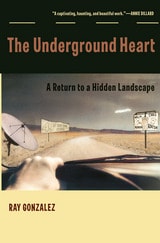
The Underground Heart
A Return to a Hidden LandscapeRay Gonzalez
University of Arizona Press, 2002
As Gonzalez drives the highways of New Mexico and west Texas, he shows us a border culture rejuvenated by tourist and trade dollars, one that will surprise readers for whom the border means only illegal immigration, NAFTA, and the drug trade. Played out against a soundtrack of the Allman Brothers and The Doors, The Underground Heart takes readers on a trip through a seemingly barren landscape that teems with life and stories. Gonzalez witnesses Minnesotans experiencing culture shock while attending a college football game in El Paso; he finds a proliferation of Pancho Villa death masks housed at different museums; he revisits Carlsbad Caverns, discovering unsuspected beauty beneath the desert's desolation; and he takes us shopping at El Mercado—where tourists can buy everything from black velvet paintings of Elvis (or Jesus, or JFK) to Mexican flag underwear.
From "nuclear tourism" in New Mexico to "heritage tourism" in the restored missions of San Antonio, Gonzalez goes behind the slogans of The Land of Enchantment and The Lone Star State to uncover a totally different Southwest. Here are tourist centers that give a distorted view of southwestern life to outsiders, who leave their dollars in museum gift shops and go home weighed down with pounds of Indian jewelry around their necks. Here border history is the story of one culture overlaid on another, re-forming itself into a whole new civilization on the banks of the Rio Grande.
The Underground Heart is a book brimming with subtle ironies and insights both quiet and complex—one which recognizes that sometimes one must go away and grow older to finally recognize home as a life-giving, spiritually sustaining place. As Gonzalez rediscovers the land of his past, he comes to understand the hyper, bilingual atmosphere of its future. And in the Southwest he describes, readers may catch a glimpse of their own hidden landscapes of home.
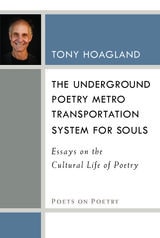
The Underground Poetry Metro Transportation System for Souls
Essays on the Cultural Life of PoetryTony Hoagland
University of Michigan Press, 2019
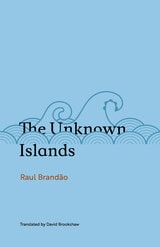
The Unknown Islands
Raul Brandão, Translated by David Brookshaw
Tagus Press, 2020
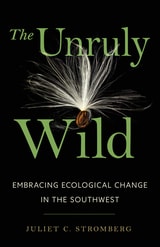
The Unruly Wild
Embracing Ecological Change in the SouthwestJuliet C. Stromberg
University of Arizona Press, 2026
Challenging the traditional invasion biology paradigm, Juliet C. Stromberg invites readers to reconsider the “alien invader” narrative and explore the beneficial roles that newly arrived plants can play in our ecosystems. Drawing from her extensive experience as a plant and restoration ecologist, Stromberg introduces a cast of plant characters that includes longtimers as well as newcomers.
Through compelling stories and scientific insights, Stromberg explains why some plants are thriving while others are in decline. Stromberg’s engaging narrative, enriched with personal anecdotes and detailed vignettes, encourages readers to pause, reflect, and deepen their relationship with the plant world. By promoting a more nuanced and respectful dialogue about our natural surroundings, this book offers valuable insights into biodiversity, climate resilience, and ecosystem restoration. This book is a call to embrace a more inclusive and adaptive approach to wild plants.
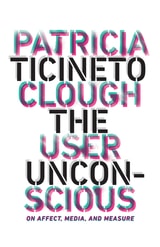
The User Unconscious
On Affect, Media, and MeasurePatricia Ticineto Clough
University of Minnesota Press, 2018
Wide-ranging essays and experimental prose forcefully demonstrate how digital media and computational technologies have redefined what it is to be human
Over the past decade, digital media has expanded exponentially, becoming an essential part of daily life. The stimulating essays and experimental compositions in The User Unconscious delve into the ways digital media and computational technologies fundamentally affect our sense of self and the world we live in, from both human and other-than-human perspectives.
Critical theorist Patricia Ticineto Clough’s provocative essays center around the motif of the “user unconscious” to advance the challenging thesis that that we are both human and other-than-human: we now live, think, and dream within multiple layers of computational networks that are constantly present, radically transforming subjectivity, sociality, and unconscious processes.
Drawing together rising strains of philosophy, critical theory, and media studies, as well as the political, social, and economic transformations that are shaping the twenty-first-century world, The User Unconscious points toward emergent crises and potentialities in both human subjectivity and sociality. Moving from affect to data, Clough forces us to see that digital media and computational technologies are not merely controlling us—they have already altered what it means to be human.
The Varieties of Atheism
Connecting Religion and Its CriticsEdited by David Newheiser
University of Chicago Press, 2022
The Varieties of Atheism reveals the diverse nonreligious experiences obscured by the combative intellectualism of Sam Harris, Richard Dawkins, and Christopher Hitchens. In fact, contributors contend that narrowly defining atheism as the belief that there is no god misunderstands religious and nonreligious persons altogether. The essays show that, just as religion exceeds doctrine, atheism also encompasses every dimension of human life: from imagination and feeling to community and ethics. Contributors offer new, expansive perspectives on atheism’s diverse history and possible futures. By recovering lines of affinity and tension between particular atheists and particular religious traditions, this book paves the way for fruitful conversation between religious and non-religious people in our secular age.
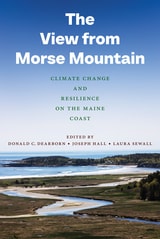
The View from Morse Mountain
Climate Change and Resilience on the Maine CoastEdited by Donald C. Dearborn, Joseph Hall, and Laura Sewall
University of Massachusetts Press, 2027
Arguing that resilient coasts emerge from collaborative, cross-disciplinary understanding rather than single-issue solutions
At the Bates-Morse Mountain Conservation Area, climate change impacts are visible to the attentive observer. High tides increasingly flood the causeway across the Sprague River Salt Marsh, large winter storms are reshaping the sand dunes at Seawall Beach, and the offshore waters of the Gulf of Maine are among the fastest-warming on the planet. Environmental change is not new there, nor is the impact of human activity, but different parts of this coastal system are changing at different rates, in different ways. Some components are potentially self-renewing, such as the barrier dune beach, while others, such as Piping Plover populations or the salt marshes, might be restored only with assistance. Unfortunately, other components may already be beyond help: the forest of pitch pines between the dunes and the marsh faces the dual threat of saltwater intrusion below ground and potential burial by migrating sands above.
In The View from Morse Mountain, contributors invite readers into this system through an array of complementary inquiries into bedrock geology, carbon capture by salt marshes, dune movement, the physiology of trees, bird migration, perceptual psychology, and the overlays of Indigenous history and colonial settlement. Fostering adaptability, particularly in coastal systems, requires just such an integrated set of examinations and perspectives. This collection of expert analyses works to encourage place-based curiosity in anyone, both those familiar with this area of Maine and people beyond, helping them recognize both loss and resilience, and to deepen their love for the places they treasure.
Contributors include the volume editors as well as Emily Chandler, Caitlin Cleaver, Isobel Curtis, J. Dykstra Eusden Jr., Brett Huggett, Bev Johnson, Dana Oster, Mike Retelle, and Robert Strong.
The Virtual Point of Freedom
Essays on Politics, Aesthetics, and ReligionLorenzo Chiesa
Northwestern University Press, 2016
The Vitality of Democracy
Gisela Stuart
Haus Publishing, 2022
In The Vitality of Democracy, British-German politician Gisela Stuart argues for the urgency of expanded participation in the democratic process and considers the risks democracy currently faces. Although democracy is rife with difficult choices, she shows that if the people do not appreciate what makes this system work, they risk losing it. While no individual holds the answers, democracy allows for power to change hands, giving opportunities for different sides to have a chance at improving government for all.
Stuart reflects on challenges to British democracy since the mid-2010s. With the United Kingdom exiting the European Union and facing an overwhelming pandemic, restrictions to civil liberties were imposed that may have been unimaginable in the past. It is time to pause and reflect on the serious challenges currently posed to democracy and to the ability of the people to take part.
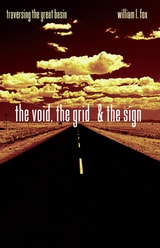
The Void, The Grid & The Sign
Traversing The Great BasinWilliam L. Fox
University of Nevada Press, 2005
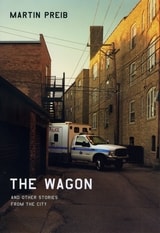
The Wagon and Other Stories from the City
Martin Preib
University of Chicago Press, 2010
Martin Preib is an officer in the Chicago Police Department—a beat cop whose first assignment as a rookie policeman was working on the wagon that picks up the dead. Inspired by Preib’s daily life on the job, The Wagon and Other Stories from the City chronicles the outer and inner lives of both a Chicago cop and the city itself.
The book follows Preib as he transports body bags, forges an unlikely connection with his female partner, trains a younger officer, and finds himself among people long forgotten—or rendered invisible—by the rest of society. Preib recounts how he navigates the tenuous labyrinths of race and class in the urban metropolis, such as a domestic disturbance call involving a gang member and his abused girlfriend or a run-in with a group of drunk yuppies. As he encounters the real and imagined geographies of Chicago, the city reveals itself to be not just a backdrop, but a central force in his narrative of life and death. Preib’s accounts, all told in his breathtaking prose, come alive in ways that readers will long remember.
The Wandering Womb
Essays in Search of HomeS. L. Wisenberg
University of Massachusetts Press, 2023
Even as a fourth-generation Jewish Texan, S. L. Wisenberg has always felt the ghost of Europe dogging her steps, making her feel uneasy in her body and in the world. At age six, she’s sure that she hears Nazis at her bedroom window and knows that after they take her away, she’ll die without her asthma meds. In her late twenties, she infiltrates sorority rush at her alma mater, curious about whether she’ll get a bid now. Later in life, she makes her first and only trip to the mikvah while healing from a breast biopsy (benign this time), prompting an exploration of misogyny, shame, and woman-fear in rabbinical tradition.
With wit, verve, blood, scars, and a solid dose of self-deprecation, Wisenberg wanders across the expanse of continents and combs through history books and family records in her search for home and meaning. Her travels take her from Selma, Alabama, where her Eastern European Jewish ancestors once settled, to Vienna, where she tours Freud’s home and figures out what women really want, and she visits Auschwitz, which—disappointingly—leaves no emotional mark.
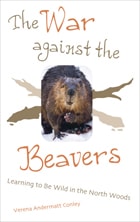
The War Against The Beavers
Learning to Be Wild in the North WoodsVerena Andermatt Conley
University of Minnesota Press, 2005
The Way Home
Essays on the Outside WestJames McVey
University of Utah Press, 2010
"A sense of place can be a complicated matter," writes James McVey in the prologue to his new collection of essays, The Way Home. Based on twenty years of living and traveling in the West, the collection includes essays on river running, backcountry skiing, fly fishing, and backpacking—all describing various attempts to engage in meaningful contact with the elements of wild nature, and to have a deep firsthand knowledge of a place. With an essayists breadth McVey engages ecology, geology, anthropology, psychology, and history as well as his own personal outdoor experiences to peer into the particulars of living in as complicated a place as the West. While the essays function within the tradition of western nature writing, they transcend regional issues insofar as they maintain a broader philosophical context that accounts for such global concerns as mass extinction and climate change.
The essays use backcountry experiences as occasions for reflection on such topics as nature and culture, conservation, and the human relation to the wild. They combine the naturalist’s commitment to landscape with the adventurer’s attention to technique and skill. The outdoor experiences function as ritualized activity, the purpose of which is to explore a specific relation with a place. As such, the essays consider certain nonrational ways of knowing the world, including a perception of aesthetics based on sensory participation with the more-than-human world. This gets to the heart of the essential connection in this work between its adventure themes and nature concerns--a connection very much concerned with issues of lifestyle and worldview. McVey describes his own journey in the West, traveling through the varying philosophical revelations wilderness presents—"a lifetime of questions"—finally landing on a conservation ethic, a feeling of home.
The Way to the Salt Marsh
A John Hay ReaderJohn Hay
Brandeis University Press, 1998
The Ways That Often Parted
Essays in Honor of Joel MarcusLori Baron
SBL Press, 2018
Focused studies on the historical interactions and formations of Judaism and Christianity
This volume of essays, from an internationally renowned group of scholars, challenges popular ways of understanding how Judaism and Christianity came to be separate religions in antiquity. Essays in the volume reject the belief that there was one parting at an early point in time and contest the argument that there was no parting until a very late date. The resulting volume presents a complex account of the numerous ways partings occurred across the ancient Mediterranean spanning the first four centuries CE.
Features:
- Case studies that explore how Jews and Christians engaged in interaction, conflict, and collaboration
- Examinations of the gospels, Paul’s letters, the book of James, as well as rabbinic and noncanonical Christian texts
- New evidence for historical reconstructions of how Christianity came on the world scene
The Weather for Poetry
Essays, Reviews, and Notes on Poetry, 1977-81Donald Hall
University of Michigan Press, 1982
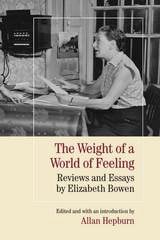
The Weight of a World of Feeling
Reviews and Essays by Elizabeth BowenElizabeth Bowen / Edited and with an introduction by Allan Hepburn
Northwestern University Press, 2017
This fascinating collection of reviews is filled with first impressions of novels, autobiographies, memoirs, illustrated books, biographies of politicians and artists, short story collections, and literary criticism. Books spark statements from Bowen about general principles of fictional technique; she articulates her understanding of the inner workings of fiction incidentally, while providing an opinion about the book at hand. In this volume, Hepburn draws together all the reviews that Bowen left uncollected in her non-fiction collections, as well as several more familiar essays that that she published in The Tatler, in order to make them accessible to a broader audience.

The White Orchard
Selected Interviews, Essays, and PoemsArthur Sze
Museum of New Mexico Press, 2025
A son of Chinese immigrants who was born and raised in New York City and on Long Island, Sze first studied science at MIT. His call to write poetry pulled him away from that academic pursuit, but the sciences would continue to influence his writing. In 2024, Sze received the National Book Foundation Science + Literature Award for The Glass Constellation: New and Collected Poems (Copper Canyon Press). Sze spent over two decades as an educator, teaching creative writing and poetry to Indigenous students from across America at Santa Fe’s Institute of American Indian Arts (IAIA). In this compilation, Sze is interviewed by his former IAIA student, award-winning Diné poet, editor, and visual artist Esther Belin.
Sze’s fluency in his parents’ native tongue, along with study at the University of California at Berkeley, allowed him to delve into Chinese poetry, both as a student and translator of classical and contemporary works. The White Orchard shows his wider connection to Asian American poetry across the United States and how he has drawn inspiration from translating Chinese poetry into English. Arthur Sze is one of our finest poets, and this collection demonstrates how literature can enrich us all.
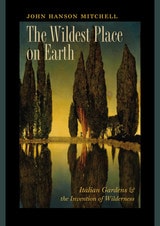
The Wildest Place on Earth
Italian Gardens and the Invention of WildernessJohn Hanson Mitchell
University Press of New England, 2015
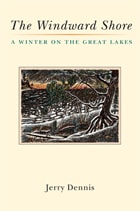
The Windward Shore
A Winter on the Great LakesJerry Dennis
University of Michigan Press, 2012
If you have been enchanted by Jerry Dennis’s earlier work on sailing the Great Lakes, canoeing, angling, and the natural wonders of water and sky—or you have not yet been lucky enough to enjoy his engaging prose—you will want to immerse yourself in his powerful and insightful new book on winter in Great Lakes country.
Grounded by a knee injury, Dennis learns to live at a slower pace while staying in houses ranging from a log cabin on Lake Superior’s Keweenaw Peninsula to a $20 million mansion on the northern shore of Lake Michigan. While walking on beaches and exploring nearby woods and villages, he muses on the nature of time, weather, waves, agates, books, words for snow and ice, our complex relationship with nature, and much more.
From the introduction: “I wanted to present a true picture of a complex region, part of my continuing project to learn at least one place on earth reasonably well, and trusted that it would appear gradually and accumulatively—and not as a conventional portrait, but as a mosaic that included the sounds and scents and textures of the place and some of the plants, animals, and its inhabitants. Bolstered by the notion that a book is a journey that author and reader walk together, I would search for promising trails and follow them as far as my reconstructed knee would allow.”
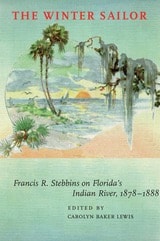
The Winter Sailor
Francis R. Stebbins on Florida's Indian River, 1878-1888Edited by Carolyn Frances Baker Lewis
University of Alabama Press, 2004
A unique guide to Florida's frontier history along Indian River.
The Winter Sailor is a historical adventure that details the yearly winter travels of Francis R. Stebbins to Florida's Indian River. Stebbins, a writer from Michigan, visited Florida in March of 1878 and became entranced by its pristine beauty. Subsequently, Stebbins and his traveling companions made annual visits to Indian River—until 1888 when tragedy struck and ended Stebbins' yearly journeys.
Being an observant traveler, Stebbins began a series of descriptive articles for his hometown newspaper that chronicled his journeys to the Indian River area. Stebbins's articles tell of his own personal experiences during his leisurely visits, which included such activities as hunting and fishing, studying the natural surroundings, and excavating Indian mounds. What Stebbins enjoyed most was sailing down the river interviewing townspeople and examining local attractions as he went. His articles also detail the lifestyle of the region, food, fashion, industry, history, environment, and changes that occurred over time. Stebbins's articles not only entertained and informed but also became a travelogue for his readers. He inspired northern travelers to go south and visit Florida, which contributed to the beginnings of large-scale tourism in the region.
The Winter Sailor combines Stebbins's 49 articles along with three by his companions, to provide an enjoyable, historical guide. Unique among 19th-century travelogues, this fascinating look into Florida's past documents a decade of change to the Indian River wilderness and becomes Stebbins's gift to the present.

The Word and the Law
Milner S. Ball
University of Chicago Press, 1993
The Word of God
Essays on Mormon ScriptureDan Vogel
Signature Books, 1990
Editor’s Introduction
by Dan Vogel
[p.vii]Belief in continuing revelation and an open canon of scripture distinguishes Mormonism from mainstream Christianity. That the church founded by Joseph Smith would proceed on grounds of continuing revelation was established at the outset. The day the church was organized, 6 April 1830, Joseph Smith dictated a revelation commanding the church to “give heed unto all his words and commandments which he shall give unto you as he receiveth them,… for his words ye shall receive, as if from mine own mouth, in all patience and faith” (LDS D&C 21:4-5; RLDS D&C 19:2). Another revelation declared that the Lord had “given him the keys of the mysteries, and the revelations which are sealed” (LDS D&C 28:7; RLDS D&C 27:12). The principle of continuing revelation insured a gradual unfolding and canonization of various doctrines.
In addition to the Bible, the official canon of the Utah-based Church of Jesus Christ of Latter-day Saints includes the Book of Mormon (first published in Palymra, New York, in 1830), the Doctrine and Covenants (issued in 1833 as A Book of Commandments [incomplete] and in 1835 in Kirtland, Ohio), and the Pearl of Great Price (first published in England in 1851 and republished with changes in Salt Lake City in 1880). This latter volume of scripture contains selections from Joseph Smith’s writings including the Book of Moses (extracted from Smith’s “inspired version” or “translation” of the Bible) and the Book of Abraham (taken from Smith’s interpretation of an ancient Egyptian papyrus). The Reorganized Church of Jesus Christ of Latter Day Saints, headquartered in Independence, [p.viii] Missouri, the second largest institution tracing its origins to Joseph Smith, publishes its own editions of the Book of Mormon and Doctrine and Covenants, as well as Smith’s revision of the Bible, but has not canonized the Book of Abraham.
All but one of the following fifteen essays chosen for inclusion in The Word of God: Essays on Mormon Scripture were written by Mormons from either the LDS or RLDS tradition. (The exception is Susan Curtis.) However, rather than being guided by institutional imperatives, each author has attempted to understand Mormon scripture on its own terms. Additionally, each essay wrestles with the problem of the human and the divine in scripture.
Because one’s belief about revelation affects how one approaches scripture, debate about scriptural interpretation often centers on the nature of revelation. The written “word of God” does not come to us direct but rather through human intermediaries. In the words of J. R. Dummelow, writing in A Commentary on The Holy Bible (New York) in 1908, “It is as sunlight through a painted window—the light must come to us coloured by the medium… It is foolish to ignore the existence of the human medium through which the light has come” (p. cxxxv). Book of Mormon prophets, for instance, repeatedly express anxiety over human limitations to convey in language their spiritual teachings. Nephi prays that “the words which I have written in weakness will be made strong” (LDS 2 Ne. 33:4; RLDS 2 Ne. 15:5), and Moroni writes, “if there are faults they are the mistakes of men; wherefore, condemn not the things of God” (Title Page); A position which does not account for the human in revelation will undoubtedly produce disillusionment or distortion.
To consider the human aspects of prophets, revelation, or scripture does not detract from religion, as some traditionalists fear. On the contrary, what cultural and environmental studies challenge are simplistic assumptions about the nature of revelation. Again, Dummelow notes, “Because of our false theory of Verbal Inspiration we are puzzled when the divine is mingled with the human. We must learn that the divine is mingled with the human” (ibid.). We must seek a definition of revelation which accounts for the spectrum of characteristics we encounter in scripture.
Even when we acknowledge the human in revelation and scripture, what exactly is its role and influence? These are not easy [p.ix] questions to answer. But the more precise our identification of human influence on scripture, the more refined our definition of revelation will become. It is hoped that this collection of essays will contribute to that process of understanding.
An awareness of revelation and scripture is an ongoing process and there are differing positions. Readers should therefore understand that neither the authors nor the editor necessarily agree with the views and conclusions reached in all of the essays that follow.
Appreciation is extended to the following authors and publications for permission to reproduce, sometimes in a different format and/or under a different title, many of the essays appearing here: to Dialogue: A Journal of Mormon Thought for essays by Kevin L. Barney, Lester E. Bush, A. Bruce Lindgren, William D. Russell, and George D. Smith; to Sunstone for essays by Anthony A. Hutchinson, Melodie Moench Charles, and Mark D. Thomas; to the John Whitmer Historical Association Journal for essays by Susan Curtis and James E. Lancaster; to Courage for the essay by Richard P. Howard; and to University Bulletin (RLDS) for the essay by Geoffrey F. Spencer. Three of the essays—”Joseph Smith’s Scriptural Cosmology,” by Dan Vogel and Brent Lee Metcalfe; and “Reducing Dissonance: The Book of Abraham as a Case Study” and “Making the Scriptures ‘Indeed One in Our Hands,'” both by Edward H. Ashment—are published here for the first time.
Throughout the essays standardized parenthetical scriptural references are provided for the most recent editions published by both the LDS and RLDS churches. Thus LDS D&C 76:1 refers to the most recent edition of the Doctrine and Covenants published by the LDS church, section 76, verse 1. RLDS 1 Ne. 2:4 refers to the Book of First Nephi, chapter 2, verse 4, in the most recent edition of the Book of Mormon published by the RLDS church. JST means the Joseph Smith translation of the King James Bible published by the RLDS church; Moses to the Book of Moses and Abr. to the Book of Abraham as found in current editions of the Pearl of Great Price (PGP) published by the LDS church.[p.1]
The Work of Friendship
In Memoriam Alan Bray, Volume 10Jody Greene , ed.
Duke University Press, 0
Contributors to the collection include some of the most prominent scholars in the field of early modern sexualities. They think expansively about Bray’s impact on their own work and, most importantly, test the applicability of his theories (that same-sex desire has a history that can be reconstructed and that the actual object of study is difficult to capture, as its expression varies radically across cultures and societies) in areas where they have not been previously employed. Two essays in this collection explore friendships or intimacies between women or between men and women—topics Bray did not pursue extensively. Others deal with locations outside Bray’s heavily English focus, including France, the Netherlands, Belgium, and Luxembourg, or apply his theories to periods beyond the Renaissance. Additionally, the issue includes a review of Bray’s The Friend, published posthumously, and an assessment of his scholarly career from his earliest writings to this final work.
Contributors. George Chauncey, Carla Freccero, Jonathan Goldberg, Jody Greene, George E. Haggerty, Jeffrey Masten, Jeffrey Merrick, Stephen Orgel, Laurie Shannon, Valerie Traub
The World Turned
Essays on Gay History, Politics, and CultureJohn D Emilio
Duke University Press, 2002
In this collection of essays, D’Emilio brings his historian’s eye to bear on these profound changes in American society, culture, and politics. He explores the career of Bayard Rustin, a civil rights leader and pacifist who was openly gay a generation before almost everyone else; the legacy of radical gay and lesbian liberation; the influence of AIDS activist and writer Larry Kramer; the scapegoating of gays and lesbians by the Christian Right; the gay-gene controversy and the debate over whether people are "born gay"; and the explosion of attention focused on queer families. He illuminates the historical roots of contemporary debates over identity politics and explains why the gay community has become, over the last decade, such a visible part of American life.
The World and the Wild
Expanding Wilderness Conservation Beyond its American RootsEdited by David Rothenberg and Marta Ulvaeus
University of Arizona Press, 2001
Foreword: Whither World Wilderness? / Vance G. Martin
Introduction: Wilderness in the Rest of the World / David Rothenberg
How Can Four Trees Make a Jungle? / Pramod Parajuli
The Unpaintable West / Zeese Papanikolas
Restoring Wilderness or Reclaiming Forests? / Sahotra Sarkar
For Indian Wilderness / Philip Cafaro and Monish Verma
In the Dust of Kilimanjaro / David Western
Why Conservation in the Tropics Is Failing / John Terborgh
"Trouble in Paradise": An Exchange / David Western and John Terborgh
Zulu History / Ian Player
Bruno Manser and the Penan / William W. Bevis
Roads Where There Have Long Been Trails / Kathleen Harrison
Volcano Dreams / Tom Vanderbilt
Recycled Rain Forest Myths / Antonio Carlos Diegues
The Park of Ten Thousand Waterfalls / Dan Imhoff
Mapping the Wild / Edward A. Whitesell
Earth Jazz / Evan Eisenberg
They Trampled on Our Taboos / Damien Arabagali
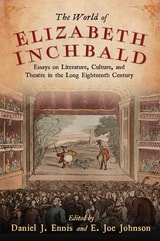
The World of Elizabeth Inchbald
Essays on Literature, Culture, and Theatre in the Long Eighteenth CenturyDaniel J. Ennis
University of Delaware Press, 2022
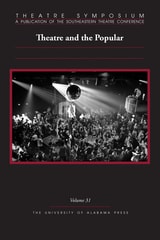
Theatre Symposium, Vol. 31
Theatre and the PopularEdited by Chase Bringardner
University of Alabama Press, 2024
A new issue of the longstanding theatre journal, documenting conversations that traverse disciplinary boundaries
The essays in the thirty-first volume of Theatre Symposium traverse disciplinary boundaries to explore what constitutes the “popular” in theater and performance in an increasingly frenetic and mediated landscape. Amid the current resurgence of populist discourse and the enduring impact of popular culture, this volume explores what is considered popular, how that determination gets made, and who makes it. The answers to these questions shape the structures and systems of performance in an interaction that is reciprocal, intricate, and multifaceted. Productions often succeed or fail based on their ability to align with what is popular—sometimes productively, sometimes clumsily, sometimes brazenly, and sometimes tragically.
In our current moment, what constitutes the popular profoundly affects the real world politically, economically, and socially. Controversies about the electoral college system hinge on the primacy of the “popular” vote. Streaming services daily update lists of their most popular content and base future decisions on opaque measures of popularity. Social media platforms broadcast popular content across the globe, triggering new products, social activism, and political revolutions.
The contributors to this volume engage with a range of contemporary and historical examples and argue with clarity and acuity the interplay of performance and the popular. Theatre and performance deeply engage with the popular at every level—from audience response to box office revenue. The variety of methodologies and sites of inquiry showcased in this volume demonstrates the breadth and depth of the popular and the importance of such work to understanding our present moment onstage and off.
CONTRIBUTORS
Mysia Anderson / Chase Bringardner / Elizabeth M. Cizmar / Chelsea Curto / Janet M. Davis / Tom Fish / Kyla Kazuschyk / Sarah McCarroll / Eleanor Owicki / Sunny Stalter-Pace / Chelsea Taylor / Chris Woodworth

Theory and Practice of American Literary Naturalism
Selected Essay and ReviewsDonald Pizer
Southern Illinois University Press, 1993
In his first book devoted exclusively to naturalism, Donald Pizer brings together thirteen essays and four reviews written over a thirty-year period that in their entirety constitute a full-scale interpretation of the basic character and historical shape of naturalism in America.
The essays fall into three groups. Some deal with the full range of American naturalism, from the 1590s to the late twentieth century, and some are confined either to the 1890s or to the twentieth century. In addition to the essays, an introduction in which Pizer recounts the development of his interest in American naturalism, reviews of recent studies of naturalism, and a selected bibliography contribute to an understanding of Pizer’s interpretation of the movement.
One of the recurrent themes in the essays is that the interpretation of American naturalism has been hindered by the common view that the movement is characterized by a commitment to Emile Zola’s deterministic beliefs and that naturalistic novels are thus inevitably crude and simplistic both in theme and method. Rather than accept this notion, Pizer insists that naturalistic novels be read closely not for their success or failure in rendering obvious deterministic beliefs but rather for what actually does occur within the dynamic play of theme and form within the work.
Adopting this method, Pizer finds that naturalistic fiction often reveals a complex and suggestive mix of older humanistic faiths and more recent doubts about human volition, and that it renders this vital thematic ambivalence in increasingly sophisticated forms as the movement matures. In addition, Pizer demonstrates that American naturalism cannot be viewed monolithically as a school with a common body of belief and value. Rather, each generation of American naturalists, as well as major figures within each generation, has responded to threads within the naturalistic impulse in strikingly distinctive ways. And it is indeed this absence of a rigid doctrinal core and the openness of the movement to individual variation that are responsible for the remarkable vitality and longevity of the movement.
Because the essays have their origin in efforts to describe the general characteristics of American naturalism rather than in a desire to cover the field fully, some authors and works are discussed several times (though from different angles) and some referred to only briefly or notat all. But the essays as a collection are "complete" in the sense that they comprise an interpretation of American naturalism both in its various phases and as a whole. Those authors whose works receive substantial discussion include Stephen Crane, Frank Norris, Theodore Dreiser, Edith Wharton, James T. Farrell, Norman Mailer, Joyce Carol Oates, and William Kennedy. Of special interest is Pizer’s essay on Ironweed, which appears here for the first time.
Theory for the World to Come
Speculative Fiction and Apocalyptic AnthropologyMatthew J. Wolf-Meyer
University of Minnesota Press, 2019
Can social theories forge new paths into an uncertain future?
The future has become increasingly difficult to imagine. We might be able to predict a few events, but imagining how looming disasters will coincide is simultaneously necessary and impossible. Drawing on speculative fiction and social theory, Theory for the World to Come is the beginning of a conversation about theories that move beyond nihilistic conceptions of the capitalism-caused Anthropocene and toward generative bodies of thought that provoke creative ways of thinking about the world ahead. Matthew J. Wolf-Meyer draws on such authors as Kim Stanley Robinson and Octavia Butler, and engages with afrofuturism, indigenous speculative fiction, and films from the 1970s and ’80s to help think differently about the future and its possibilities.
Forerunners: Ideas First
Short books of thought-in-process scholarship, where intense analysis, questioning, and speculation take the lead
Theory of Governance and Other Miscellaneous Papers, 1921-1938 (CW32)
Eric Voegelin, Edited & Intro by William Petropulos & Gilbert Weiss, & Translated by William Petropulos, Jodi Cockerill, M. J. Hanak, Ingrid Heldt, Elisabeth von Lochner, & Sue Bollans
University of Missouri Press, 2004
This first of two volumes of Voegelin's miscellaneous papers brings together crucial writings, published for the first time, from the early, formative period of this scholar's thought. The book begins with Voegelin's dissertation on sociological method, completed under the direction of Othmar Spann and Hans Kelsen at the University of Vienna in 1922. It reveals an intimate knowledge of the writings of Georg Simmel and a skillful use of insights gained from Edmund Husserl's Logical Investigations and Ideas.
The dissertation, and other smaller pieces written at this time, addresses problems that remained of great importance to Voegelin throughout his life: the relation of insight to language, the structure of the human being, and the human's spiritual center. They disclose both Voegelin's theoretical reference points during these early years, including the thought of Henri Bergson, Othmar Spann, Georg Simmel, and Edmund Husserl, as well the young scholar's remarkably independent approach to theoretical problems.
Moreover, this volume includes a work that is fundamental to an understanding of Voegelin's theoretical development: his extended study on the "theory of governance," written between 1930 and 1932. It follows the issues that confront political society to their roots in the soul and in the soul's relationship to the ground of being.
The Theory of Governance and Other Miscellaneous Papers presents a meditative-exegetic study of texts from Augustine, Descartes, and Husserl, early examples of the meditations that became central to Voegelin's later work. Other essays included in this volume such as "Theory of Law" and "Political Theory as Human Science" develop these theoretical insights and refine Voegelin's methodological tools. This volume will be of interest to all scholars of the work of Eric Voegelin and of the refoundation of political philosophy in the twentieth century in general.
There Was a River
Bruce Berger
University of Arizona Press, 1994
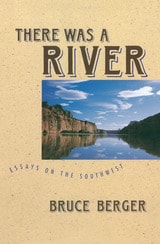
The Southwest Berger sees is an unusual, even odd, place, with inhabitants that are just as strange. In this collection of essays he introduces us to people and places that define a region and a way of life. We meet eccentric desert dwellers like Cactus Pete, who claimed to have mapped the mountains of Venus long before NASA penetrated its clouds. We chart the canals of Phoenix, which have created a Martian landscape out of an irrigation system dating back to the ancient Hohokam; stay at a "wigwam" motel in Holbrook, whose kitsch appeals even to Hopis; and dim our lights for the International Dark-Sky Association's efforts to keep night skies safe for astronomy.
Focusing on the interaction of people with the environment, Berger reveals an original vision of the Southwest that encompasses both city and wilderness. In a concluding essay centering on the sale of his mother's estate in Phoenix, he concedes that "our intention to leave the desert alone has resulted, unwittingly, in loss after loss, simply by our being here." Sometimes there are losses—a canyon, a house—but Berger attunes us to the prodigies of change.
There Will Always Be Boxing
Another Year Inside the Sweet ScienceThomas Hauser
University of Arkansas Press, 2017
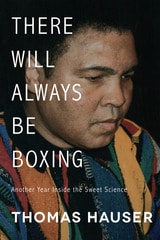
There Will Always Be Boxing continues this tradition of excellence. A poignant look at Muhammad Ali—whose life was celebrated throughout the world following his death on June 3, 2016—highlights this collection of Hauser’s work. The year’s biggest fights are, as always, put in perspective. And once again, Hauser takes readers behind the scenes, giving them a seat at the table with boxing’s biggest power brokers as he reveals the inner workings of the sport and business of boxing.
There Will Always Be Boxing is sure not to disappoint the readers, writers, and critics who look forward to Hauser’s annual collection of articles about the contemporary boxing scene. This collection shows, once again, why Hauser is one of the last real champions of boxing and one of the very best who has ever written about the sport.
These Dark Skies
Reckoning with Identity, Violence, and Power from AbroadArianne Zwartjes
University of Iowa Press, 2022
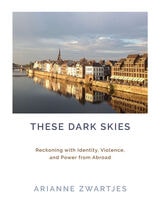
The essays investigate and meditate on a broad array of related topics, including drone strikes, tear gas, and military intervention; the sugar trade, the Dutch blackface celebration of Zwarte Piet, and constructions of whiteness in Europe and the U.S.; and visual arts of Russian avant-garde painters, an Iraqi choreographer living in Belgium, and German choreographer Pina Bausch.
This is a lyrical, timely book deeply salient to the political moment we continue to find ourselves in: a moment of incredible anti-refugee and anti-immigrant sentiment, a moment of xenophobic and misogynistic violence.
These Islands
A Letter to BritainAli M. Ansari
Haus Publishing, 2018
With These Islands, Ali M. Ansari considers the idea of Britain as a political entity. This idea of Britain considers some nationalists as suppressed minorities in need of attention, and others as bigoted throwbacks to a more divisive age. Arguing the case for Great Britain from the perspective of the political mythology of the British state—with an emphasis on culture, ideas and narrative constructions—Ansari makes the claim that Britain’s strength lies in its ability to shape the popular imagination, both at home and abroad. He concludes that an “excess of enthusiasm” may yet do untold damage to the fabric of a state and society that has been carefully constructed over the centuries and may not be easily repaired.
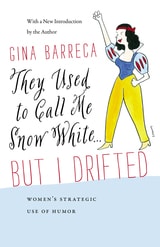
They Used to Call Me Snow White . . . But I Drifted
Women’s Strategic Use of HumorGina Barreca
University Press of New England, 2013
Thinking Aloud
Jerry Pinto
Seagull Books, 2025
In Thinking Aloud, Jerry Pinto examines the notion of Bollywood as a national cinema in a linguistically diverse India. He traces its evolution from films from the 1940s–50s like Kismet and Mother India—which contributed to national identity through its themes of sacrifice and unity—to male-centric cinematic narratives of the 1970s–80s. Writing on Bollywood, biography, translation, and teaching with candor and empathy, Pinto argues that Bollywood's simplistic, good-versus-evil narratives have deeply influenced the public’s perception of their past.
Drawing from his translations of works such as Sachin Kunalkar’s Cobalt Blue and Daya Pawar’s Baluta, Pinto stresses the importance of biographies in providing personal insights into historical events, challenging monolithic narratives, and enriching our understanding of history through diverse, often overlooked, experiences. He delves deeply into the vital role of translation in bridging cultural and linguistic divides. This book also explores Pinto’s unconventional journey as an educator. Reflecting on his reluctant start as a teacher at fourteen and his innovative methods promoting the inclusion of marginalized voices, he offers a poignant commentary on the transformative power of education.
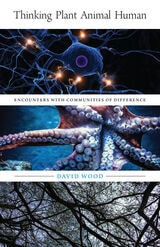
Thinking Plant Animal Human
Encounters with Communities of DifferenceDavid Wood
University of Minnesota Press, 2020
Collected essays by a leading philosopher situating the question of the animal in the broader context of a relational ontology
There is a revolution under way in our thinking about animals and, indeed, life in general, particularly in the West. The very words man, animal, and life have turned into flimsy conceptual husks—impediments to thinking about the issues in which they are embroiled. David Wood was a founding member of the early 1970s Oxford Group of philosophers promoting animal rights; he also directed Ecology Action (UK). Thinking Plant Animal Human is the first collection of this major philosopher’s influential essays on “animals,” bringing together his many discussions of nonhuman life, including the classic “Thinking with Cats.”
Exploring our connections with cats, goats, and sand crabs, Thinking Plant Animal Human introduces the idea of “kinnibalism” (the eating of mammals is eating our own kin), reflects on the idea of homo sapiens, and explores the place of animals both in art and in children’s stories. Finally, and with a special focus on trees, the book delves into remarkable contemporary efforts to rescue plants from philosophical neglect and to rethink and reevaluate their status. Repeatedly bubbling to the surface is the remarkable strangeness of other forms of life, a strangeness that extends to the human.
Wood shows that the best way of resisting simplistic classification is to attend to our manifold relationships with other living beings. It is not anthropocentric to focus on such relationships; they cast light in complex ways on the living communities of which we are part, and exploring them recoils profoundly on our understanding of ourselves.
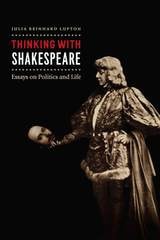
Thinking with Shakespeare
Essays on Politics and LifeJulia Reinhard Lupton
University of Chicago Press, 2011
Thinking, Language, and Experience
Hector-Neri Castañeda
University of Minnesota Press, 1989

This America We Dream of
Rodo and "Ariel" One Hundred Years onEdited by Gustavo San Roman
University of London Press, 2001
This Corner of Canaan
Essays on Texas in Honor of Randolph B. CampbellRichard B. McCaslin
University of North Texas Press, 2013
This One Will Hurt You
Paul Crenshaw
The Ohio State University Press, 2019
With eloquence, subtle humor, and an urgent poignancy, Crenshaw delivers a powerful and moving collection of nonfiction essays, tied together by place and the violence of the world in which we live.
This Vast Book of Nature
Writing the Landscape of New Hampshire’s White Mountains, 1784–1911Pavel Cenkl
University of Iowa Press, 2006
Starting with an exploration of Jeremy Belknap’s 1784 expedition to Mount Washington, which Cenkl links to the origins of tourism in the White Mountains, to the transformation of touristic and residential relationships to landscape, This Vast Book of Nature explores the ways competing visions of the landscape have transformed the White Mountains culturally and physically, through settlement, development, and—most recently—preservation, a process that continues today.
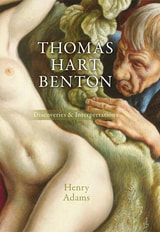
Thomas Hart Benton
Discoveries and InterpretationsHenry Adams
University of Missouri Press, 2027
Few American artists have incited more controversy than Thomas Hart Benton. Argumentative, brilliant, and enormously influential, Benton painted for nearly seventy years, inspiring acclaim and loathing among students, friends, fellow artists, and outraged critics.
Now, in a series of provocative essays, premier Benton scholar Henry Adams examines the many facets of the man as artist and the pitched battles of his long career, including the fight that raged over the subject matter of his murals, the real reasons for Benton’s feud with the radical left and his fall from grace in the New York art world, and his tumultuous, 36-year-long love-hate relationship with the student with whom he worked most closely, another iconic artist of the 20th century, Jackson Pollock. Adams ends with an account of his own twenty-five-year struggle to expose fakes of Benton’s work.
Thomistic Considerations
Themes in Aquinas, Aristotle, Augustine, Dante and EliotKevin White
Catholic University of America Press, 2026