Results by title
4127 books match the query 'Science' and 980 start with t
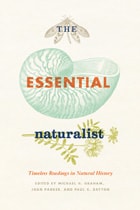
The Essential Naturalist
Timeless Readings in Natural HistoryEdited by Michael H. Graham, Joan Parker, and Paul K. Dayton
University of Chicago Press, 2011
Like nearly every area of scholarly inquiry today, the biological sciences are broken into increasingly narrow fields and subfields, its practitioners divided into ecologists, evolutionary biologists, taxonomists, paleontologists, and much more. But all these splintered pieces have their origins in the larger field of natural history—and in this era where climate change and relentless population growth are irrevocably altering the world around us, perhaps it’s time to step back and take a new, fresh look at the larger picture.
The Essential Naturalist offers exactly that: a wide-ranging, eclectic collection of writings from more than eight centuries of observations of the natural world, from Leeuwenhoek to E. O. Wilson, from von Humboldt to Rachel Carson. Featuring commentaries by practicing scientists that offer personal accounts of the importance of the long tradition of natural history writing to their current research, the volume serves simultaneously as an overview of the field’s long history and as an inspirational starting point for new explorations, for trained scientists and amateur enthusiasts alike.
The Essential Tension
Selected Studies in Scientific Tradition and ChangeThomas S. Kuhn
University of Chicago Press, 1977

The Establishment of Science in America
150 Years of the American Association for the Advancement of ScienceEdited by Sally Gregory Kohlstedt, Michael M. Sokal, and Bruce V. Lewenstein
Rutgers University Press, 1999
This comprehensive history of the American Association for the Advancement of Science (AAAS), the largest and most significant general organization of scientists in America, provides a unique window on the development of science in the United States during the past 150 years.
The Establishment of Science in America traces the evolution of the role of scientists in American society, public attitudes toward science, and the changing dimensions of the sponsorship of science and its participants. The essays by three distinguished authors connect the AAAS history to issues of continuing importance in American history, such as the integration of women and minority groups into mainstream professions and the role of expert knowledge in a democratic society.
The volume divides the history of the AAAS into three parts: Creating a Forum for Science in the Nineteenth Century; Promoting Science in a New Century: The Middle Years of the AAAS; and Shifting Science from People to Programs: AAAS in the Postwar Years.
The Ethereal Aether
A History of the Michelson-Morley-Miller Aether-drift Experiments, 1880-1930By Loyd S. Swenson, Jr.
University of Texas Press, 1972
The Ethereal Aether is a historical narrative of one of the great experiments in modern physical science. The fame of the 1887 Michelson-Morley aether-drift test on the relative motion of the earth and the luminiferous aether derives largely from the role it is popularly supposed to have played in the origins, and later in the justification, of Albert Einstein’s first theory of relativity; its importance is its own.
As a case history of the intermittent performance of an experiment in physical optics from 1880 to 1930 and of the men whose work it was, this study describes chronologically the conception, experimental design, first trials, repetitions, influence on physical theory, and eventual climax of the optical experiment. Michelson, Morley, and their colleague Miller were the prime actors in this half-century drama of confrontation between experimental and theoretical physics.
The issue concerned the relative motion of “Spaceship Earth” and the Universe, as measured against the background of a luminiferous medium supposedly filling all interstellar space. At stake, it seemed, were the phenomena of astronomical aberration, the wave theory of light, and the Newtonian concepts of absolute space and time.
James Clerk Maxwell’s suggestion for a test of his electromagnetic theory was translated by Michelson into an experimental design in 1881, redesigned and reaffirmed as a null result with Morley in 1887, thereafter modified and partially repeated by Morley and Miller, finally completed in 1926 by Miller alone, then by Michelson’s team again in the late 1920s.
Meanwhile Helmholtz, Kelvin, Rayleigh, FitzGerald, Lodge, Larmor, Lorentz, and Poincaré—most of the great names in theoretical physics at the turn of the twentieth century—had wrestled with the anomaly presented by Michelson’s experiment. As the relativity and quantum theories matured, wave-particle duality was accepted by a new generation of physicists. The aether-drift tests disproved the old and verified the new theories of light and electromagnetism. By 1930 they seemed to explain Einstein, relativity, and space-time. But in historical fact, the aether died only with its believers.
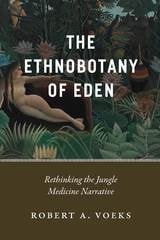
The Ethnobotany of Eden
Rethinking the Jungle Medicine NarrativeRobert A. Voeks
University of Chicago Press, 2018
By exploring the interconnected worlds of anthropology, botany, and geography, Voeks shows that well-intentioned scientists and environmentalists originally crafted the jungle narrative with the primary goal of saving the world’s tropical rainforests from destruction. It was a strategy deployed to address a pressing environmental problem, one that appeared at a propitious point in history just as the Western world was taking a more globalized view of environmental issues. And yet, although supported by science and its practitioners, the story was also underpinned by a persuasive mix of myth, sentimentality, and nostalgia for a long-lost tropical Eden. Resurrecting the fascinating history of plant prospecting in the tropics, from the colonial era to the present day, The Ethnobotany of Eden rewrites with modern science the degradation narrative we’ve built up around tropical forests, revealing the entangled origins of our fables of forest cures.

The Ethnographer's Way
A Handbook for Multidimensional Research DesignKristin Peterson and Valerie Olson
Duke University Press, 2024
The Evidence for Evolution
Alan R. Rogers
University of Chicago Press, 2011
According to polling data, most Americans doubt that evolution is a real phenomenon. And it’s no wonder that so many are skeptical: many of today’s biology courses and textbooks dwell on the mechanisms of evolution—natural selection, genetic drift, and gene flow—but say little about the evidence that evolution happens at all. How do we know that species change? Has there really been enough time for evolution to operate?
With The Evidence for Evolution, Alan R. Rogers provides an elegant, straightforward text that details the evidence for evolution. Rogers covers different levels of evolution, from within-species changes, which are much less challenging to see and believe, to much larger ones, say, from fish to amphibian, or from land mammal to whale. For each case, he supplies numerous lines of evidence to illustrate the changes, including fossils, DNA, and radioactive isotopes. His comprehensive treatment stresses recent advances in knowledge but also recounts the give and take between skeptical scientists who first asked “how can we be sure” and then marshaled scientific evidence to attain certainty. The Evidence for Evolution is a valuable addition to the literature on evolution and will be essential to introductory courses in the life sciences.
The Evolution Myth
or, The Genes Cry Out Their Urgent Song, Mister Darwin Got It WrongJirí Mejsnar
Karolinum Press, 2014
The author’s second objective is to use biology to explain why evolution cannot have taken place in the way that is most commonly assumed. Mejsnar builds his case around gene stability and on the sophisticated modern techniques for gene manipulation, the complexity of which make these modified genes inaccessible to nature. Development of life on Earth is a discontinuous, saltatory progression that results in stages following from preceding latent periods in which new forms suddenly appear and possess new types of genome. This, the author argues, is difficult to reconcile with the hypothesis of continuous biological evolution based on the natural selection of random variations.
Taking a new approach to a much-debated subject, Mejsnar distills complex information into a readable style. The result is a book that is sure to get readers talking.
The Evolution Wars
A Guide to the DebatesRuse, Michael
Rutgers University Press, 2001
The Evolution Wars draws on history, science, and philosophy to examine the development of evolutionary thought through the past two and a half centuries. It focuses on the debates that have engaged, divided, and ultimately provoked scientists to ponder the origins of organisms—including humankind—paying regard to the nineteenth-century clash over the nature of classification and debates about the fossil record, genetics, and human nature. Much attention is paid to external factors and the underlying motives of scientists.
In these pages you will meet Charles Darwin’s ebullient grandfather Erasmus, the contentious Frenchmen Georges Cuvier and Etienne Geoffroy Stain-Hillaire, new creationist Phillip Johnson, the brilliant J. B. S. Haldane, outspoken Richard Dawkins, and many other stars of the debates.
The Evolution Wars explores the ten greatest controversies surrounding evolution in world history, with emphasis on recent times, including the infamous Scopes trial of the 1920s: the search for human origins and speculation about the “missing link,” spurred by the discovery of “Lucy;” the debate surrounding the new theory of paleontology proposed by Stephen Jay Gould; and the rise of teaching “creation science” in public school as a subject on par with evolution.
Although the author takes a strong stand on the side of evolution, he also shows respect for dissenting viewpoints. Thus, the book is intellectually rewarding not only for evolutionists but also for opponents of evolution theory, especially those who want to see how one of the great ideas of Western civilization resonates through time, both within and beyond the scientific community.
The Evolution of Cetacean Societies
Uncovering the Social Complexity of Whales and DolphinsEdited by Darren P. Croft, Andrew D. Foote, Ellen C. Garland, and Stephanie L. King
University of Chicago Press, 2026
Cetaceans—whales, dolphins, and porpoises—represent an evolutionary peak with respect to their advanced cognitive capacities; flexible communication systems; and structured, multilevel societies. Indeed, the social lives of whales and dolphins have long fascinated scientists and the public alike. The Evolution of Cetacean Societies provides a comprehensive overview of the significant advancements made in studying cetacean behavior and ecology over the last twenty-five years, focusing on our growing understanding of these animals’ complex social lives.
Bringing together scientists from multiple disciplines, the volume summarizes key innovations and progress related to studying cetacean societies’ cultural and genetic basis, their complex social structures, their use of cooperation and patterns of social conflict, and their significant interactions with humans. Each chapter provides an in-depth account of the social lives of whales and dolphins, incorporating the latest cutting-edge research from genomics, communication, network analysis, and animal culture to explain how these animals form societies, maintain relationships, and share information. The final chapters focus on the existential threats facing these diverse and charismatic species, how human-cetacean interactions have shaped our perceptions, and what scientists can learn from their diverse social lives by championing researcher diversity in marine mammal science. The result is an essential and forward-looking book that both contextualizes the lessons of the past two decades and questions the challenges these enigmatic species might face in the future.
Published in 2000 by Chicago, Cetacean Societies: Field Studies of Dolphins and Whales, edited by Janet Mann, Richard C. Connor, Peter Tyack, and Hal Whitehead, inspired a generation of marine biologists. In this new volume, Darren P. Croft, Andrew D. Foote, Ellen C. Garland, and Stephanie L. King—all respected cetacean researchers—offer a worthy successor.
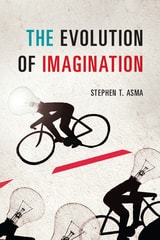
The Evolution of Imagination
Stephen T. Asma
University of Chicago Press, 2017
Guided by neuroscience, animal behavior, evolution, philosophy, and psychology, Asma burrows deep into the human psyche to look right at the enigmatic but powerful engine that is our improvisational creativity—the source, he argues, of our remarkable imaginational capacity. How is it, he asks, that a story can evoke a whole world inside of us? How are we able to rehearse a skill, a speech, or even an entire scenario simply by thinking about it? How does creativity go beyond experience and help us make something completely new? And how does our moral imagination help us sculpt a better society? As he shows, we live in a world that is only partly happening in reality. Huge swaths of our cognitive experiences are made up by “what-ifs,” “almosts,” and “maybes,” an imagined terrain that churns out one of the most overlooked but necessary resources for our flourishing: possibilities. Considering everything from how imagination works in our physical bodies to the ways we make images, from the mechanics of language and our ability to tell stories to the creative composition of self-consciousness, Asma expands our personal and day-to-day forms of imagination into a grand scale: as one of the decisive evolutionary forces that has guided human development from the Paleolithic era to today. The result is an inspiring look at the rich relationships among improvisation, imagination, and culture, and a privileged glimpse into the unique nature of our evolved minds.
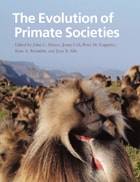
The Evolution of Primate Societies
Edited by John C. Mitani, Josep Call, Peter M. Kappeler, Ryne A. Palombit, and Joan B. Silk
University of Chicago Press, 2012
In 1987, the University of Chicago Press published Primate Societies, the standard reference in the field of primate behavior for an entire generation of students and scientists. But in the twenty-five years since its publication, new theories and research techniques for studying the Primate order have been developed, debated, and tested, forcing scientists to revise their understanding of our closest living relatives.
Intended as a sequel to Primate Societies, The Evolution of Primate Societies compiles thirty-one chapters that review the current state of knowledge regarding the behavior of nonhuman primates. Chapters are written by the leading authorities in the field and organized around four major adaptive problems primates face as they strive to grow, maintain themselves, and reproduce in the wild. The inclusion of chapters on the behavior of humans at the end of each major section represents one particularly novel aspect of the book, and it will remind readers what we can learn about ourselves through research on nonhuman primates. The final section highlights some of the innovative and cutting-edge research designed to reveal the similarities and differences between nonhuman and human primate cognition. The Evolution of Primate Societies will be every bit the landmark publication its predecessor has been.
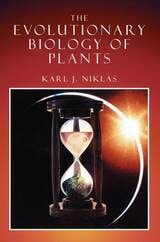
The Evolutionary Biology of Plants
Karl J. Niklas
University of Chicago Press, 1997
After presenting key evolutionary principles, Niklas recounts the saga of plant life from its origins to the radiation of the flowering plants. To investigate how living plants might have evolved, Niklas conducts a series of computer-generated "walks" on fitness "landscapes," arriving at hypothetical forms of plant life strikingly similar to those of today and the distant past. He concludes with an extended consideration of molecular biology and paleontology. An excellent overview for undergraduates, this book will also challenge graduate students and researchers.
The Evolutionary Origins of Life and Death
Pierre M. Durand
University of Chicago Press, 2021
These two processes have been studied from philosophical, theoretical, experimental, and genomic angles, but no one has yet integrated the information from these various disciplines. In this work, Durand synthesizes cellular studies of life and death looking at the origin of life and the evolutionary significance of programmed cellular death. The exciting and unexpected outcome of Durand’s analysis is the realization that life and death exhibit features of coevolution. The evolution of more complex cellular life depended on the coadaptation between traits that promote life and those that promote death. In an ironic twist, it becomes clear that, in many circumstances, programmed cell death is essential for sustaining life.

The Expendable Future
US Politics and the Protection of Biological DiversityRichard Tobin
Duke University Press, 1990
Drawing on congressional hearing and debates, previously unpublished public opinion surveys, interviews with state officials and employees of the Department of the Interior, and internal documents from this and other government agencies, Tobin provides an in-depth analysis of the policies on endangered species and the policy relationships among the different units of government involved in implementation. He examines the resources that are available for the protection of endangered species and the way in which those resources are matched to the priorities. Tobin also discusses the processes by which species are classified as endangered, how these species’ critical habitats are determined and protected, and the successes, and mostly failures, of current recovery programs.
The Experiment Must Continue
Medical Research and Ethics in East Africa, 1940–2014Melissa Graboyes
Ohio University Press, 2015
The Experiment Must Continue is a beautifully articulated ethnographic history of medical experimentation in East Africa from 1940 through 2014. In it, Melissa Graboyes combines her training in public health and in history to treat her subject with the dual sensitivities of a medical ethicist and a fine historian. She breathes life into the fascinating histories of research on human subjects, elucidating the hopes of the interventionists and the experiences of the putative beneficiaries.
Historical case studies highlight failed attempts to eliminate tropical diseases, while modern examples delve into ongoing malaria and HIV/AIDS research. Collectively, these show how East Africans have perceived research differently than researchers do and that the active participation of subjects led to the creation of a hybrid ethical form.
By writing an ethnography of the past and a history of the present, Graboyes casts medical experimentation in a new light, and makes the resounding case that we must readjust our dominant ideas of consent, participation, and exploitation. With global implications, this lively book is as relevant for scholars as it is for anyone invested in the place of medicine in society.
The Experimental Fire
Inventing English Alchemy, 1300–1700Jennifer M. Rampling
University of Chicago Press, 2020
In medieval and early modern Europe, the practice of alchemy promised extraordinary physical transformations. Who would not be amazed to see base metals turned into silver and gold, hard iron into soft water, and deadly poison into elixirs that could heal the human body? To defend such claims, alchemists turned to the past, scouring ancient books for evidence of a lost alchemical heritage and seeking to translate their secret language and obscure imagery into replicable, practical effects.
Tracing the development of alchemy in England over four hundred years, from the beginning of the fourteenth century to the end of the seventeenth, Jennifer M. Rampling illuminates the role of alchemical reading and experimental practice in the broader context of national and scientific history. Using new manuscript sources, she shows how practitioners like George Ripley, John Dee, and Edward Kelley, as well as many previously unknown alchemists, devised new practical approaches to alchemy while seeking the support of English monarchs. By reconstructing their alchemical ideas, practices, and disputes, Rampling reveals how English alchemy was continually reinvented over the space of four centuries, resulting in changes to the science itself. In so doing, The Experimental Fire bridges the intellectual history of chemistry and the wider worlds of early modern patronage, medicine, and science.
The Experimental Self
Humphry Davy and the Making of a Man of ScienceJan Golinski
University of Chicago Press, 2016
In The Experimental Self, Golinski argues that Davy’s life is best understood as a prolonged process of self-experimentation. He follows Davy from his youthful enthusiasm for physiological experiment through his self-fashioning as a man of science in a period when the path to a scientific career was not as well-trodden as it is today. What emerges is a portrait of Davy as a creative fashioner of his own identity through a lifelong series of experiments in selfhood.
The Experimental Side of Modeling
Isabelle F. Peschard
University of Minnesota Press, 2018
An innovative, multifaceted approach to scientific experiments as designed by and shaped through interaction with the modeling process
The role of scientific modeling in mediation between theories and phenomena is a critical topic within the philosophy of science, touching on issues from climate modeling to synthetic models in biology, high energy particle physics, and cognitive sciences. Offering a radically new conception of the role of data in the scientific modeling process as well as a new awareness of the problematic aspects of data, this cutting-edge volume offers a multifaceted view on experiments as designed and shaped in interaction with the modeling process.
Contributors address such issues as the construction of models in conjunction with scientific experimentation; the status of measurement and the function of experiment in the identification of relevant parameters; how the phenomena under study are reconceived when accounted for by a model; and the interplay between experimenting, modeling, and simulation when results do not mesh. Highlighting the mediating role of models and the model-dependence (as well as theory-dependence) of data measurement, this volume proposes a normative and conceptual innovation in scientific modeling—that the phenomena to be investigated and modeled must not be precisely identified at the start but specified during the course of the interactions arising between experimental and modeling activities.
Contributors: Nancy D. Cartwright, U of California, San Diego; Anthony Chemero, U of Cincinnati; Ronald N. Giere, U of Minnesota; Jenann Ismael, U of Arizona; Tarja Knuuttila, U of South Carolina; Andrea Loettgers, U of Bern, Switzerland; Deborah Mayo, Virginia Tech; Joseph Rouse, Wesleyan U; Paul Teller, U of California, Davis; Michael Weisberg, U of Pennsylvania; Eric Winsberg, U of South Florida.
The Expression of the Emotions in Man and Animals
Charles Darwin
University of Chicago Press, 1965
The Eye of the Lynx
Galileo, His Friends, and the Beginnings of Modern Natural HistoryDavid Freedberg
University of Chicago Press, 2003
Founded by Prince Federico Cesi in 1603, the Linceans took as their task nothing less than the documentation and classification of all of nature in pictorial form. In this first book-length study of the Linceans to appear in English, Freedberg focuses especially on their unprecedented use of drawings based on microscopic observation and other new techniques of visualization. Where previous thinkers had classified objects based mainly on similarities of external appearance, the Linceans instead turned increasingly to sectioning, dissection, and observation of internal structures. They applied their new research techniques to an incredible variety of subjects, from the objects in the heavens studied by their most famous (and infamous) member Galileo Galilei—whom they supported at the most critical moments of his career—to the flora and fauna of Mexico, bees, fossils, and the reproduction of plants and fungi. But by demonstrating the inadequacy of surface structures for ordering the world, the Linceans unwittingly planted the seeds for the demise of their own favorite method—visual description-as a mode of scientific classification.
Profusely illustrated and engagingly written, Eye of the Lynx uncovers a crucial episode in the development of visual representation and natural history. And perhaps as important, it offers readers a dazzling array of early modern drawings, from magnificently depicted birds and flowers to frogs in amber, monstrously misshapen citrus fruits, and more.
The Fabric of the Heavens
The Development of Astronomy and DynamicsStephen Toulmin and June Goodfield
University of Chicago Press, 1999
Praise for The Fabric of the Heavens:
"I cannot remember when I last went through a book, any book, with such all-devouring zest. What is more, even the most complex technicalities are reduced to a positively crystalline clarity: If I can understand them, anyone can. The Fabric of the Heavens is, in every sense of the word, an eye-opener."—Peter Green, The Yorkshire Post
"Not until the last chapter of the book is [the reader] allowed to think again wholly as a modern man has become accustomed, by common sense, to think. The discipline is admirably suited to the authors' task, and cunningly devised for the reader's edification—and, indeed, for his delight."—Physics Today
Praise for The Architecture of Matter:
"The Architecture of Matter is to be warmly recommended. It is that rare achievement, a lively book which at the same time takes the fullest possible advantage of scholarly knowledge."—Charles C. Gillespie, New York Times Book Review
"One is impressed by the felicity of the examples and by the lively clarity with which significant experiments and ideas are explained. . . . No other history of science is so consistently challenging."—Scientific American
Praise for The Discovery of Time:
"A subject of absorbing interest . . . is presented not as a history of science, but as a chapter in the history of ideas from the ancient Greeks to our own time."—Times Literary Supplement
The Fair Society
The Science of Human Nature and the Pursuit of Social JusticePeter Corning
University of Chicago Press, 2011
We’ve been told, again and again, that life is unfair. But what if we’re wrong simply to resign ourselves to this situation? What if we have the power—and more, the duty—to change society for the better?
We do. And our very nature inclines us to do so. That’s the provocative argument Peter Corning makes in The Fair Society. Drawing on the evidence from our evolutionary history and the emergent science of human nature, Corning shows that we have an innate sense of fairness. While these impulses can easily be subverted by greed and demagoguery, they can also be harnessed for good. Corning brings together the latest findings from the behavioral and biological sciences to help us understand how to move beyond the Madoffs and Enrons in our midst in order to lay the foundation for a new social contract—a Biosocial Contract built on a deep understanding of human nature and a commitment to fairness. He then proposes a sweeping set of economic and political reforms based on three principles of fairness—equality, equity, and reciprocity—that together could transform our society and our world.
At this crisis point for capitalism, Corning reveals that the proper response to bank bailouts and financial chicanery isn’t to get mad—it’s to get fair.
The Fate of the Mammoth
Fossils, Myth, and HistoryClaudine Cohen
University of Chicago Press, 2002
Cohen uses the mammoth and the theories that naturalists constructed around it to illuminate wider issues in the history of science, showing how changing views about a single object reveal the development of scientific methods, practices, and ideas. How are fossils discovered, reconstructed, displayed, and interpreted? What stories are told about them, by whom, and how do these stories reflect the cultures and societies in which they are told?
To find out, Cohen takes us on a grand tour of the study of mammoth remains, from England, Germany, and France to Russia and America, and from the depths of Africa to the frozen frontiers of Alaska and Siberia, where intact mammoth corpses have been discovered in the permafrost. Along the way, she shows how paleontologists draw on myth and history, as well as on scientific evidence, to explore the deep history of the earth and of life. Cohen takes her history from the sixteenth century right up to the present, when researchers are using molecular biology to retrieve mammoth DNA, calling up dreams of cloning the mammoth and one day seeing herds of woolly mammoths roaming the frozen steppes.

The Fats of Life
Essential Fatty Acids in Health and DiseaseLawrence, Glen D
Rutgers University Press, 2010
The Fats of Life delineates the importance of essential fatty acids, with a focus on distinctions between omega-3 and omega-6 fatty acid variants. The chemical and biochemical characteristics of these fatty acids and their metabolism to a vast array of potent bioactive messengers are described in the context of their potential effects on general health and impact on various diseases and neurological disorders. Glen D. Lawrence addresses in detail the capacity for polyunsaturated fatty acids to influence asthma, atherosclerosis, heart disease, inflammation, cancer, and immunity. Lawrence makes clear that our understanding of the biochemical and physiological effects of dietary fats has advanced tremendously as a result of careful research, but he also stresses that this knowledge has not easily translated into sound dietary recommendations.

The Fire Ant Wars
Nature, Science, and Public Policy in Twentieth-Century AmericaJoshua Blu Buhs
University of Chicago Press, 2004
With political intrigue, environmental tragedy, and such figures as Rachel Carson and E. O. Wilson, The Fire Ant Wars is a grippingly perceptive tale of changing social attitudes and scientific practices. Tracing the political and scientific eradication campaigns, Joshua Buhs's bracing study uses the saga as a means to consider twentieth-century American concepts of nature and environmental stewardship. In telling the story, Buhs explores how human concepts of nature evolve and how these ideas affect the natural and social worlds.
Spotlighting a particular issue to discuss larger questions of science, public perceptions, and public policy—from pre-environmental awareness to the activist years of the early environmental movement—The Fire Ant Wars will appeal to historians of science, environmentalists, and biologists alike.
The First Moderns
Profiles in the Origins of Twentieth-Century ThoughtWilliam R. Everdell
University of Chicago Press, 1997
"This exceptionally wide-ranging history is chock-a-block with anecdotes, factoids, odd juxtapositions, and useful insights. Most impressive. . . . For anyone interested in learning about late 19th- and early 20th- century imaginative thought, this engagingly written book is a good place to start."—Washington Post Book World
"The First Moderns brilliantly maps the beginning of a path at whose end loom as many diasporas as there are men."—Frederic Morton, The Los Angeles Times Book Review
"In this truly exciting study of the origins of modernist thought, poet and teacher Everdell roams freely across disciplinary lines. . . . A brilliant book that will prove useful to scholars and generalists for years to come; enthusiastically recommended."—Library Journal, starred review
"Everdell has performed a rare service for his readers. Dispelling much of the current nonsense about 'postmodernism,' this book belongs on the very short list of profound works of cultural analysis."—Booklist
"Innovative and impressive . . . [Everdell] has written a marvelous, erudite, and readable study."-Mark Bevir, Spectator
"A richly eclectic history of the dawn of a new era in painting, music, literature, mathematics, physics, genetics, neuroscience, psychiatry and philosophy."—Margaret Wertheim, New Scientist
"[Everdell] has himself recombined the parts of our era's intellectual history in new and startling ways, shedding light for which the reader of The First Moderns will be eternally grateful."—Hugh Kenner, The New York Times Book Review
"Everdell shows how the idea of "modernity" arose before the First World War by telling the stories of heroes such as T. S. Eliot, Max Planck, and Georges Serault with such a lively eye for detail, irony, and ambiance that you feel as if you're reliving those miraculous years."—Jon Spayde, Utne Reader

The Floracrats
State-Sponsored Science and the Failure of the Enlightenment in IndonesiaAndrew Goss
University of Wisconsin Press, 2011
Situated along the line that divides the rich ecologies of Asia and Australia, the Indonesian archipelago is a hotbed for scientific exploration, and scientists from around the world have made key discoveries there. But why do the names of Indonesia’s own scientists rarely appear in the annals of scientific history? In The Floracrats Andrew Goss examines the professional lives of Indonesian naturalists and biologists, to show what happens to science when a powerful state becomes its greatest, and indeed only, patron.
With only one purse to pay for research, Indonesia’s scientists followed a state agenda focused mainly on exploiting the country’s most valuable natural resources—above all its major export crops: quinine, sugar, coffee, tea, rubber, and indigo. The result was a class of botanic bureaucrats that Goss dubs the “floracrats.” Drawing on archives and oral histories, he shows how these scientists strove for the Enlightenment ideal of objective, universal, and useful knowledge, even as they betrayed that ideal by failing to share scientific knowledge with the general public. With each chapter, Goss details the phases of power and the personalities in Indonesia that have struggled with this dilemma, from the early colonial era, through independence, to the modern Indonesian state. Goss shows just how limiting dependence on an all-powerful state can be for a scientific community, no matter how idealistic its individual scientists may be.
The Flowering Plants
Flowering Rush to RushesRobert H. Mohlenbrock
Southern Illinois University Press, 2006
The second edition of Flowering Plants: Flowering Rush to Rushes offers new material, including a preface, seventeen new illustrations of the additional species now known from Illinois, a revised list of illustrations, and an appendix of the additions and changes since 1970 in the identification, classification, and location of the plants included in the first edition. This new edition of the first volume in the multi-volume series of The Illustrated Flora of Illinois—which provides a working reference for the identification and classification of these plant forms in the state—includes flowering rushes, arrowheads, pondweeds, naiads, duckweeds, cattails, bur reeds, spiderworts, and rushes.
In his introduction, Robert H. Mohlenbrock defines terms and procedures used in the identification and classification of this group of flowering plants referred to as monocotyledons—plants that produce upon germination a single cotyledon or seed-leaf and are often identified by their tall, slender, grass-like leaves. He outlines the life histories and morphologies of the representative monocots and illustrates the plants’ habits and frequencies in Illinois.
Geared to the amateur as well as the professional botanist, the volume includes a glossary of definitions and identification keys to classify the plants according to order, family, genus, and species. The identifying characteristics of each descending class are also given in detail. The morphology of each species is outlined along with data on frequency of occurrence, related soil and climate conditions, and history of past collections. Among the 125 illustrations are detailed sketches of the important features of each species and maps indicating the geographical locations of each species in Illinois.
The Food Web of a Tropical Rain Forest
Edited by Douglas P. Reagan and Robert B. Waide
University of Chicago Press, 1996
This volume helps fill the gap by presenting a comprehensive description and analysis of the animal community of the tropical rain forest at El Verde, Puerto Rico. Building on more than a decade of field research, the contributors weave the complex strands of information about the energy flow within the forest—who eats whom—into a powerful tool for understanding community dynamics known as a food web. This systematic approach to organizing the natural histories of the many species at El Verde also reveals basic patterns and processes common to all rain forests, making this book a valuable contribution for anyone concerned with studying and protecting these fragile ecosystems.

The Force of the Virtual
Deleuze, Science, and PhilosophyPeter Gaffney
University of Minnesota Press, 2010
The Forgotten Sense
Meditations on TouchPablo Maurette
University of Chicago Press, 2018
The Forgotten Sense gives touch its due, addressing it in multifarious ways through a series of six essays. Literary in feel, ambitious in conception, admirable in their range of reference and insight, these meditations address questions fundamental to the understanding of touch: What do we mean when we say that an artwork touches us? How does language affect our understanding of touch? Is the skin the deepest part of the human body? Can we philosophize about a kiss? To aid him in answering these questions, Pablo Maurette recruits an impressive roster of cultural figures from throughout history: Homer, Lucretius, Chrétien de Troyes, Melville, Sir Thomas Browne, Knausgaard, Michel Henry and many others help him unfurl the underestimated importance of the sense of touch and tactile experience.
The resulting book is essay writing at its best—exploratory, surprising, dazzling, a reading experience like no other. You will come away from it with a new appreciation of touch, and a new way of understanding our interactions with the world around us.
The Foundations of Science and the Concepts of Psychology and Psychoanalysis
Herbert Feigl and Michael Scriven, Editors
University of Minnesota Press, 1956
The Foundations of Science and the Concepts of Psychology and Psychoanalysis was first published in 1956. Minnesota Archive Editions uses digital technology to make long unavailable books once again accessible, and are published unaltered from the original University of Minnesota Press editions.
This first volume of Minnesota Studies in the Philosophy of Science presents some of the relatively more consolidated research of the Minnesota Center for Philosophy of Science. The work of the Center, which was established in 1953 through a grant from the Louis W. and Maud Hill Family Foundation, has so far been devoted largely to the philosophical, logical, and methodological problems of psychology. Some of the twelve papers in this volume are concerned with broad philosophical foundations; others consider specific problems of method or interpretation. The contributors, some of whom are represented in the authorship of more than one paper, are Herbert Feigl, director of the Center; Rudolf Carnap; B.F. Skinner; Michael Scriven; Albert Ellis; Antony Flew; L. J. Cronbach; Paul E. Meehl; R. C. Buck; and Wilfrid Sellars.
The Fragmented Forest
Island Biogeography Theory and the Preservation of Biotic DiversityLarry D. Harris
University of Chicago Press, 1984
"Harris pulls together many threads of biological thinking about islands and their effect on plant and animal survival and evolution. He weaves these threads into a model for managing forest lands in a manner that might serve both our short-term economic and social needs as well as what some people feel is our ancient charge to be steward of all parts of creation."—American Forests
Winner of the 1986 Wildlife Society Publication Award
The Freedom of Speech
Talk and Slavery in the Anglo-Caribbean WorldMiles Ogborn
University of Chicago Press, 2019
The Future of Conservation in America
A Chart for Rough WaterGary E. Machlis and Jonathan B. Jarvis
University of Chicago Press, 2018
Written by the first scientist appointed as science advisor to the director of the National Park Service and the eighteenth director of the National Park Service, this is a candid, passionate, and ultimately hopeful book. The authors describe a unified vision of conservation that binds nature protection, historical preservation, sustainability, public health, civil rights and social justice, and science into common cause—and offer real-world strategies for progress. To be read, pondered, debated, and often revisited, The Future of Conservation in America is destined to be a touchstone for the conservation movement in the decades ahead.

The GEC Research Laboratories 1919-1984
Robert Clayton
The Institution of Engineering and Technology, 1989
The Gaia Hypothesis
Science on a Pagan PlanetMichael Ruse
University of Chicago Press, 2013
The Galaxy and the Solar System
Roman Smoluchowski
University of Arizona Press, 1986

The Gardener's Guide to Prairie Plants
Neil Diboll and Hilary Cox
University of Chicago Press, 2023
The Gardener’s Guide to Prairie Plants is the one-stop compendium for all gardeners aspiring to use native prairie plants in their gardens. Neil Diboll and Hilary Cox—two renowned prairie gardeners—compile more than four decades’ worth of research to offer a wide-ranging and definitive reference for starting and maintaining prairie and meadow gardens and restorations. Alongside detailed synopses of plant life cycles, meticulous range maps, and sweeping overviews of natural history, Diboll and Cox also include photographs of 148 prairie plants in every stage of development, from seedling to seedhead. North America’s grasslands once stretched from the Blue Ridge to the Rocky Mountains, and from Texas to Manitoba, blanketing the mid-continent with ecologically important, garden-worthy, native species. This book provides all the inspiration and information necessary for eager native planters from across the country to welcome these plants back to their landscapes. The Gardener’s Guide to Prairie Plants is a must-have reference for gardeners, restorationists, and every flora fan with a passion for native plants, prairies and meadows.

The Gateway to the Pacific
Japanese Americans and the Remaking of San FranciscoMeredith Oda
University of Chicago Press, 2018
Focusing on the development of the Center, Meredith Oda shows how this multilayered story was embedded within a larger story of the changing institutions and ideas that were shaping the city. During these formative decades, Oda argues, San Francisco’s relations with and ideas about Japan were being forged within the intimate, local sites of civic and community life. This shift took many forms, including changes in city leadership, new municipal institutions, and especially transformations in the built environment. Newly friendly relations between Japan and the United States also meant that Japanese Americans found fresh, if highly constrained, job and community prospects just as the city’s African Americans struggled against rising barriers. San Francisco’s story is an inherently local one, but it also a broader story of a city collectively, if not cooperatively, reimagining its place in a global economy.
The Gene
From Genetics to PostgenomicsHans-Jörg Rheinberger and Staffan Müller-Wille
University of Chicago Press, 2018
The time could not be better, therefore, for Hans-Jörg Rheinberger and Staffan Müller-Wille's magisterial history of the concept of the gene. Though the gene has long been the central organizing theme of biology, both conceptually and as an object of study, Rheinberger and Müller-Wille conclude that we have never even had a universally accepted, stable definition of it. Rather, the concept has been in continual flux—a state that, they contend, is typical of historically important and productive scientific concepts. It is that very openness to change and manipulation, the authors argue, that made it so useful: its very mutability enabled it to be useful while the technologies and approaches used to study and theorize about it changed dramatically.
The Genealogical Science
The Search for Jewish Origins and the Politics of EpistemologyNadia Abu El-Haj
University of Chicago Press, 2012
The Genesis Quest
The Geniuses and Eccentrics on a Journey to Uncover the Origin of Life on EarthMichael Marshall
University of Chicago Press, 2020
How did life begin? Why are we here? These are some of the most profound questions we can ask.
For almost a century, a small band of eccentric scientists has struggled to answer these questions and explain one of the greatest mysteries of all: how and why life began on Earth. There are many different proposals, and each idea has attracted passionate believers who promote it with an almost religious fervor, as well as detractors who reject it with equal passion.
But the quest to unravel life’s genesis is not just a story of big ideas. It is also a compelling human story, rich in personalities, conflicts, and surprising twists and turns. Along the way, the journey takes in some of the greatest discoveries in modern biology, from evolution and cells to DNA and life’s family tree. It is also a search whose end may finally be in sight.
In The Genesis Quest, Michael Marshall shows how the quest to understand life’s beginning is also a journey to discover the true nature of life, and by extension our place in the universe.
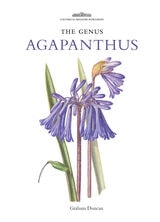
The Genus Agapanthus
Graham Duncan
Royal Botanic Gardens, Kew, 2021
Renowned for its stunning blue flowers, agapanthus—sometimes known as the blue lily or lily of the Nile—is a group of rhizomatous plants native to southern Africa. First cultivated in the Netherlands in the late seventeenth century, it rose to prominence as a conservatory plant in England during the eighteenth and nineteenth centuries after certain varieties were found to be hardy enough to withstand the colder climate of the British Isles. Graham Duncan’s The Genus Agapanthus provides both a revised classification of this plant group and a superbly illustrated celebration of their unique beauty. Featuring new watercolors from South African artist Elbe Joubert and color photographs showing the species in their spectacular and varied natural habitats, the book also highlights a selection of more than 150 of the most notable agapanthus cultivars from growers across Europe, Africa, and Oceania. The agapanthus’s natural history is spotlighted as well, with comprehensive descriptions of each species, maps of their global distribution, and information on how to successfully cultivate, propagate, and care for them. This book’s blend of science, horticulture, and art makes it essential for all varieties of plant lovers.
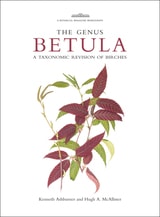
The Genus Betula
A Taxonomic Revision of BirchesKenneth Ashburner and Hugh McAllister
Royal Botanic Gardens, Kew, 2013
The Genus Betula covers all known birches found in North America, Europe, and Asia, along with keys for accurate identification. Chapters include a look at the breeding, cultivation, conservation, and morphology of all species, including several little-known species wonderful for garden and landscape use. The authors present previously unpublished data on recent molecular work and fossils, providing a cytotaxonomic and phylogeographic revision of the Betula genus. The book is accompanied by exquisite specimens of botanical art, including full-color paintings by Josephine Hague, making it a valuable tool for arboriculturists as well as professional and amateur gardeners.
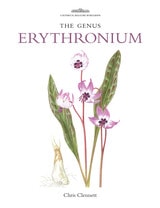
The Genus Erythronium
Chris Clennet
Royal Botanic Gardens, Kew, 2014
The Genus Erythronium details all twenty-nine currently identified species, all based on the most current research, including brand-new information on morphology and DNA. Captivating botanical illustrations and photographs fill the book and an extensive key allows easy identification of each species. Chapters covering phytogeography, morphology, cultivation, and conservation, as well as guidance on rating plants, come together to make this an essential, comprehensive volume.
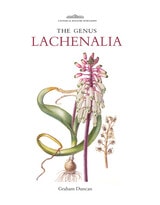
The Genus Lachenalia
Graham Duncan
Royal Botanic Gardens, Kew, 2012
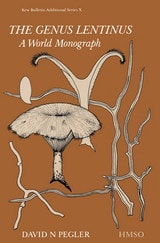
The Genus Lentinus
A World MonographDavid N. Pegler
Royal Botanic Gardens, Kew, 1983
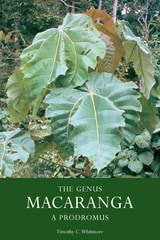
The Genus Macaranga - a Prodromus
Timothy C. Whitmore
Royal Botanic Gardens, Kew, 2008