Results by title
18284 books match the query 'United States' and 3764 start with t
The American Tintype
Floyd Rinhart, Marion Rinhart, and Robert W. Wagner
The Ohio State University Press, 2026
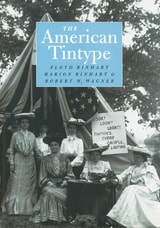
Making a tintype involved reproducing a photographic image on very thin sheets of iron instead of glass; multiple tintypes could be produced at one time from a single sheet of iron. The tintype process was faster, simpler, cheaper, and more durable than that of the daguerreotype. The characteristics of the tintype that led its critics to dismiss it as a serious art form are precisely the ones we find so appealing today. The men, women, children, and dogs in these images look as though they lived real lives. The informality of the medium encouraged its subjects to relax, so their poses are natural. We see details of hairstyles, clothing, and surroundings that are missing in the more formal daguerreotypes of the time. These wonderful tintypes provide us with a special appreciation of nineteenth-century American life that we are unlikely to encounter elsewhere.
The American Tintype is the first comprehensive history of the subject. Most of the illustrations in this book are in the Floyd and Marion Rinhart Collection at The Ohio State University and are reproduced here for the first time. The text provides an accessible history of the tintype, including an appendix that contains information about 400 American tintypists.
The American University
How It Runs, Where It Is GoingJacques Barzun
University of Chicago Press, 1992
"American higher education is fortunate to have had a scholar and intellectual of Jacques Barzun's stature give so many years of service to the daily bread-and-butter details of running a great university and then share his reflections with us in a literate, humane, and engaging book."—Charles Donovan, America

The American Voter
Angus Campbell, Philip E. Converse, Warren E. Miller, and Donald E. Stokes
University of Chicago Press, 2008
The American Voter Revisited
Michael S. Lewis-Beck, William G. Jacoby, Helmut Norpoth, and Herbert F. Weisberg
University of Michigan Press, 2008
Today we are politically polarized as never before. The presidential elections of 2000 and 2004 will be remembered as two of the most contentious political events in American history. Yet despite the recent election upheaval, The American Voter Revisited discovers that voter behavior has been remarkably consistent over the last half century. And if the authors are correct in their predictions, 2008 will show just how reliably the American voter weighs in, election after election.
The American Voter Revisited re-creates the outstanding 1960 classic The American Voter---which was based on the presidential elections of 1952 and 1956---following the same format, theory, and mode of analysis as the original. In this new volume, the authors test the ideas and methods of the original against presidential election surveys from 2000 and 2004. Surprisingly, the contemporary American voter is found to behave politically much like voters of the 1950s.
"Simply essential. For generations, serious students of American politics have kept The American Voter right on their desk. Now, everyone will keep The American Voter Revisited right next to it."
---Larry J. Sabato, Director of the University of Virginia Center for Politics and author of A More Perfect Constitution
"The American Voter Revisited is destined to be the definitive volume on American electoral behavior for decades. It is a timely book for 2008, with in-depth analyses of the 2000 and 2004 elections updating and extending the findings of the original The American Voter. It is also quite accessible, making it ideal for graduate students as well as advanced undergrads."
---Andrew E. Smith, Director of the University of New Hampshire Survey Center
"A theoretically faithful, empirically innovative, comprehensive update of the original classic."
---Sam Popkin, Professor of Political Science, University of California, San Diego
Michael S. Lewis-Beck is F. Wendell Miller Distinguished Professor of Political Science at the University of Iowa. William G. Jacoby is Professor of Political Science at Michigan State University. Helmut Norpoth is Professor of Political Science at Stony Brook University. Herbert F. Weisberg is Professor of Political Science at Ohio State University.

The American Warfare State
The Domestic Politics of Military SpendingRebecca U. Thorpe
University of Chicago Press, 2014

The American Way of Peace
An InterpretationJan S. Prybyla
University of Missouri Press, 2005
The American West
The Invention Of A MythDavid Hamilton Murdoch
University of Nevada Press, 2001
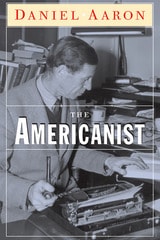
The Americanist
Daniel Aaron
University of Michigan Press, 2009
“I have read all of Daniel Aaron’s books, and admired them, but in The Americanist I believe he has composed an intellectual and social memoir for which he will be remembered. His self-portrait is marked by personal tact and admirable restraint: he is and is not its subject. The Americanist is a vision of otherness: literary and academic friends and acquaintances, here and abroad. Eloquently phrased and free of nostalgia, it catches a lost world that yet engendered much of our own.”
—Harold Bloom
“The Americanist is the absorbing intellectual autobiography of Daniel Aaron, who is the leading proponent and practitioner of American Studies. Written with grace and wit, it skillfully blends Daniel Aaron’s personal story with the history of the field he has done so much to create. This is a first-rate book by a first-rate scholar.”
—David Herbert Donald, Professor Emeritus, Harvard University
The Americanist is author and critic Daniel Aaron’s anthem to nearly a century of public and private life in America and abroad. Aaron, who is widely regarded as one of the founders of American Studies, graduated from the University of Michigan, received his Ph.D. from Harvard, and taught for over three decades each at Smith College and Harvard.
Aaron writes with unsentimental nostalgia about his childhood in Los Angeles and Chicago and his later academic career, which took him around the globe, often in the role of America’s accidental yet impartial critic. When Walt Whitman, whom Aaron frequently cites as a touchstone, wrote, “I am large, I contain multitudes,” he could have been describing Daniel Aaron—the consummate erudite and Renaissance individual whose allegiance to the truth always outweighs mere partisan loyalty.
Not only should Aaron’s book stand as a resplendent and summative work from one of the finest thinkers of the last hundred years, it also succeeds on its own as a first-rate piece of literature, on a par with the writings of any of its subjects. The Americanist is a veritable Who’s Who of twentieth-century writers Aaron interviewed, interacted with, or otherwise encountered throughout his life: Ralph Ellison, Robert Frost, Lillian Hellman, Richard Hofstadter, Alfred Kazin, Sinclair Lewis, Malcolm Muggeridge, John Crowe Ransom, Upton Sinclair, Edmund Wilson, Leonard Woolf, and W. B. Yeats, to name only a few.
Aaron’s frank and personal observations of these literary lights make for lively reading. As well, scattered throughout The Americanist are illuminating portraits of American presidents living and passed—miniature masterworks of astute political observation that offer dazzlingly fresh approaches to well-trod subjects.

The Americanization of Social Science
Intellectuals and Public Responsibility in the Postwar United StatesDavid Paul Haney
Temple University Press, 2008
A highly readable introduction to and overview of the postwar social sciences in the United States, The Americanization of Social Science explores a critical period in the evolution of American sociology’s professional identity from the late 1940s through the early 1960s. David Paul Haney contends that during this time leading sociologists encouraged a professional secession from public engagement in the name of establishing the discipline’s scientific integrity.
According to Haney, influential practitioners encouraged a willful withdrawal from public sociology by separating their professional work from public life. He argues that this separation diminished sociologists’ capacity for conveying their findings to wider publics, especially given their ambivalence towards the mass media, as witnessed by the professional estrangement that scholars like David Riesman and C. Wright Mills experienced as their writing found receptive lay audiences. He argues further that this sense of professional insularity has inhibited sociology’s participation in the national discussion about social issues to the present day.
The Americanization of the Global Village
Essays in Comparative Popular CultureRoger Rollin
University of Wisconsin Press, 1989
This collection of essays taken from a series of papers given at the Popular Culture division of the MLA convention in 1987 consists of a serious investigation of Popular Culture and in simplest terms investigates what people do and why they do it. Rolin's collection deals with the national identity of consumer countries and comes to grips with the fact that the consumption of foreign products could generate emoions of disjunction and displacement.
The Americanization of the Synagogue, 1820–1870
Leon A. Jick
Brandeis University Press, 1992
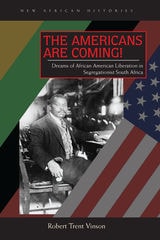
The Americans Are Coming!
Dreams of African American Liberation in Segregationist South AfricaRobert Trent Vinson
Ohio University Press, 2011
For more than half a century before World War II, black South Africans and “American Negroes”—a group that included African Americans and black West Indians—established close institutional and personal relationships that laid the necessary groundwork for the successful South African and American antiapartheid movements. Though African Americans suffered under Jim Crow racial discrimination, oppressed Africans saw African Americans as free people who had risen from slavery to success and were role models and potential liberators.
Many African Americans, regarded initially by the South African government as “honorary whites” exempt from segregation, also saw their activities in South Africa as a divinely ordained mission to establish “Africa for Africans,” liberated from European empires. The Jamaican-born Marcus Garvey’s Universal Negro Improvement Association, the largest black-led movement with two million members and supporters in forty-three countries at its height in the early 1920s, was the most anticipated source of liberation. Though these liberation prophecies went unfulfilled, black South Africans continued to view African Americans as inspirational models and as critical partners in the global antiapartheid struggle.
The Americans Are Coming! is a rare case study that places African history and American history in a global context and centers Africa in African Diaspora studies.
The Anarchist
John Smolens
Michigan State University Press, 2018
The Anarchy of Black Religion
A Mystic SongJ. Kameron Carter
Duke University Press, 2023
The Anatomy of National Fantasy
Hawthorne, Utopia, and Everyday LifeLauren Berlant
University of Chicago Press, 1991
At the core of Berlant's work is a three-part study of The Scarlet Letter, analyzing the modes and effects of national identity that characterize the narrator's representation of Puritan culture and his construction of the novel's political present tense. This analysis emerges from an introductory chapter on American citizenship in the 1850s and a following chapter on national fantasy, ranging from Hawthorne's early work "Alice Doane's Appeal" to the Statue of Liberty. In her conclusion, Berlant suggests that Hawthorne views everyday life and local political identities as alternate routes to the revitalization of the political and utopian promises of modern national life.
The Anatomy of National Fantasy
Hawthorne, Utopia, and Everyday LifeLauren Berlant
University of Chicago Press, 2026
A classic work that launched the career of one of the most influential scholars of their generation.
Lauren Berlant influenced generations of scholars in gender studies, affect theory, literary criticism, anthropology, sociology, and beyond. Her first book, The Anatomy of National Fantasy, was published in 1991, and it marked the start of an extraordinary career of groundbreaking essays, editorial collaborations, and monographs. This new edition reintroduces Berlant’s earliest work with a new foreword by Caleb Smith, who connects Berlant’s initial investigations as a scholar of nineteenth-century American literature to her more widely known interventions in how we understand the entanglements of national ideology, citizenship, affect, and everyday life.
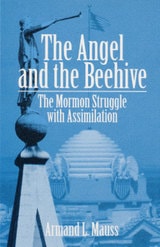
The Angel and Beehive
THE MORMON STRUGGLE WITH ASSIMILATIONArmand L. Mauss
University of Illinois Press, 1994
This retrenchment among Mormons is the main theme of Mauss's book, which analyzes the last forty years of Mormon history from a sociological perspective. At the official ecclesiastical level, Mauss finds, the retrenchment can be seen in the greatly increased centralization of bureaucratic control and in renewed emphases on obedience to modern prophets, on genealogy and vicarious temple work, and on traditional family life; retrenchment is also apparent in extensive formal religious indoctrination by full-time professionals and in increased sophistication and intensity of proselytizing.

The Angel in the Marketplace
Adwoman Jean Wade Rindlaub and the Selling of AmericaEllen Wayland-Smith
University of Chicago Press, 2020
The Angel in the Marketplace is the story of one of America’s most accomplished advertising executives. It is also the story of how advertisers like Rindlaub sold a postwar American dream of capitalism and a Christian corporate order. Rindlaub was responsible for award-winning, mega sales-generating advertisements for all things domestic, including Oneida silverware, Betty Crocker cake mix, Campbell’s soup, and Chiquita bananas. Her success largely came from embracing, rather than subverting, the cultural expectations of women. She believed her responsibility as an advertiser was not to spring women from their trap, but to make that trap more comfortable.
Rindlaub wasn’t just selling silverware and cakes; she was selling the virtues of free enterprise. By following the arc of Rindlaub’s career from the 1920s through the 1960s, we witness how a range of cultural narratives—advertising chief among them—worked powerfully to shape women’s emotional and economic behavior in support of the free market system. Alongside Rindlaub’s story, Ellen Wayland-Smith provides a riveting history of how women were repeatedly sold the idea that their role as housewives was more powerful, and more patriotic, than any outside the home. And by buying into the image of morality through an unregulated market, many of these women helped fuel backlash against economic regulation and socialization efforts throughout the twentieth century.
The Angel in the Marketplace is a nuanced portrayal of a complex woman, one who both shaped and reflected the complicated cultural, political, and religious forces defining femininity in America at mid-century. This compelling account of one of advertising’s most fervent believers is a tale of a Mad Woman we haven’t been told.
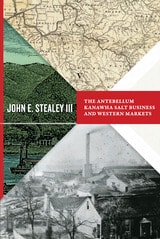
The Antebellum Kanawha Salt Business and Western Markets
John E. Stealey
West Virginia University Press, 2016
In his illuminating study, now available with a new preface by the author, John Stealey examines the legal basis of this industry, its labor practices, and its marketing and distribution patterns. Through technological innovation, salt producers harnessed coal and steam as well as men and animals, constructed a novel evaporative system, and invented drilling tools later employed in oil and natural gas exploration. Thus in many ways the salt industry was the precursor of the American extractive and chemical industries. Stealey's informative study is an important contribution to American economic, business, labor, and legal history.
The Anthropology of Labor Unions
E. Paul Durrenberger
University Press of Colorado, 2010
Union-organized workplaces consistently afford workers higher wages and better pensions, benefits, and health coverage than their nonunion counterparts. In addition, women and minorities who belong to unions are more likely to receive higher wages and benefits than their nonunion peers. Given the economic advantages of union membership, one might expect to see higher rates of organization across industries, but labor affiliation is at an all-time low. What accounts for this discrepancy?
The contributors in this volume provide a variety of perspectives on this paradox, including discussions of approaches to and findings on the histories, cultures, and practices of organized labor. They also address substantive issues such as race, class, gender, age, generation, ethnicity, health and safety concerns, corporate co-optation of unions, and the cultural context of union-management relationships.
The first to bring together anthropological case studies of labor unions, this volume will appeal to cultural anthropologists, social scientists, sociologists, and those interested in labor studies and labor movements.

The Anti-Chinese Movement in California
Elmer Clarence Sandmeyer. Foreword and supplementary bibliographies by Roger Daniels
University of Illinois Press, 1991

The Anti-Federalist
An Abridgment of The Complete Anti-FederalistEdited by Herbert J. Storing
University of Chicago Press, 1985
This one-volume edition presents the essence of the other side of that crucial dialogue. It can be read as a genuine counterpart to the Federalist Papers; as an original source companion to Storing's brilliant essay What the Anti-Federalists Were For (volume I of The Complete Anti-Federalist, available as a separate paperback); or as a guide to exploring the full range of Anti-Federalist writing. The Anti-Federalist makes a fundamental source of our political heritage accessible to everyone.

The Anti-Warrior
A MemoirMilt Felsen
University of Iowa Press, 1989
In 1937 thirty-six nervous young men dressed in ill-fitting blue suits, wearing berets, and carrying identical black valises, were given tickets for an American Export Lines ship. They were told to conduct themselves as ordinary tourists, to be "inconspicuous." They were volunteers for the Abraham Lincoln Brigade, traveling the French underground to join in the fight against Franco. Among them was Milt Felsen, a young New Yorker and radical antiwar activist on the University of Iowa campus who had decided that fascism had to be opposed. Some of these young men never made it to their destination. But Milt Felsen did, beginning a march across the Pyrenees which was only the first of his many battles and adventures.
Told with uncommon wit and verve, this memoir of war and resistance is a stirring account of Felsen's involvement in two decades of battle. Surprisingly, this is a spirited and even funny book, infused with Felsen's unbeatable personality. After the Spanish Civil War, Felsen helped form the O.S.S. in World War II. Taken prisoner of war, he escaped in his inimitable style during a 1,200-mile prisoner-of-war march and drove out of Nazi Germany in a Mercedes-Benz. He returned to the United States more convinced than ever of war's insanity and its extreme human cost.
Most of us are only spectators of the world's larger events. Milt Felsen knew the excitement and despair of being a participant. While most war books abound in details of what happened, this one also delves into why. Felsen's straightforward account is refreshingly frank and doesn't pretend to be more than it is—his own lived version of war and common truths.
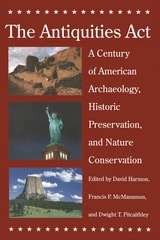
The Antiquities Act
A Century of American Archaeology, Historic Preservation, and Nature ConservationEdited by David Harmon, Frances P. McManamon, and Dwight T. Pitcaithley
University of Arizona Press, 2006
Enacted in 1906, the Antiquities Act is one of the most important pieces of conservation legislation in American history and has had a far-reaching influence on the preservation of our nation’s cultural and natural heritage. Thanks to the foresight of thirteen presidents, parks as diverse as Acadia, Grand Canyon, and Olympic National Park, along with historic and archaeological sites such as Thomas Edison’s Laboratory and the Gila Cliff Dwellings, have been preserved for posterity.
A century after its passage, this book presents a definitive assessment of the Antiquities Act and its legacy, addressing the importance and breadth of the act—as well as the controversy it has engendered. Authored by professionals intimately involved with safeguarding the nation’s archaeological, historic, and natural heritage, it describes the applications of the act and assesses its place in our country’s future. With a scope as far-reaching as the resources the act embraces, this book offers an unparalleled opportunity for today’s stewards to reflect on the act’s historic accomplishments, to remind fellow professionals and the general public of its continuing importance, and to look ahead to its continuing implementation in the twenty-first century.
The Antiquities Act invites all who love America’s natural and cultural treasures not only to learn about the act’s rich legacy but also to envision its next hundred years.

The Antiquities of Wisconsin, as Surveyed and Described
I. A. Lapham; Foreword by Robert A. Birmingham and Introduction by Robert P. Nurre
University of Wisconsin Press, 2001
First published in 1855 and long out of print, The Antiquities of Wisconsin remains invaluable as a detailed record of Wisconsin’s rich archaeological heritage of mounds and mound groups, many of which were later destroyed by farming and urban growth. Lapham was among the first scientists to produce evidence that the earthworks had been built by the ancestors of modern Native Americans, not some mythical "lost race," as was believed by many white authorities of the time. Modern researchers still use Lapham’s maps and descriptions to locate vestiges of sites that once existed, or to help reconstruct Wisconsin’s ancient cultural landscape. This edition includes a foreword by Wisconsin state archaeologist Robert A. Birmingham and an introduction by Robert P. Nurre, a Lapham scholar.
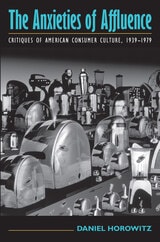
The Anxieties of Affluence
Critiques of American Consumer Culture, 1939-1979Daniel Horowitz
University of Massachusetts Press, 2004
This book charts the reactions of prominent American writers to the unprecedented prosperity of the decades following World War II. It begins with an examination of Lewis Mumford's wartime call for “democratic” consumption and concludes with an analysis of the origins of President Jimmy Carter's “malaise” speech of 1979. Between these bookends, Daniel Horowitz documents a broad range of competing views, each in its own way reflective of a deep-seated ambivalence toward consumer culture.

The Anxiety of Obsolescence
The American Novel in the Age of TelevisionKathleen Fitzpatrick
Vanderbilt University Press, 2006
It almost goes without saying that the rise in popularity of television has killed the audience for "serious" literature. This is such a given that reading Fitzpatrick's challenge to this notion can be very disconcerting, as she traces the ways in which a small cadre of writers of "serious" literature--DeLillo, Pynchon, and Franzen, for instance--have propagated this myth in order to set themselves up as the last bastions of good writing. Fitzpatrick first explores whether serious literature was ever as all-pervasive as critics of the television culture claim and then asks the obvious question: what, or who, exactly, are these guys defending good writing against?
Fitzpatrick examines the ways in which the anxiety about the supposed death of the novel is built on a myth of the novel's past ubiquity and its present displacement by television. She explores the ways in which this myth plays out in and around contemporary fiction and how it serves as a kind of unacknowledged discourse about race, class, and gender. The declaration constructs a minority status for the "white male author" who needs protecting from television's largely female and increasingly non-white audience. The novel, then, is transformed from a primary means of communication into an ancient, almost forgotten, and thus, treasured form reserved for the well-educated and well-to-do, and the men who practice it are exalted as the practitioners of an almost lost art.
Such positioning serves to further marginalize women writers and writers of color because it makes the novel, by definition, the preserve of the poor endangered white man. If the novel is only a product of a small group of white men, how can the contributions of women and writers of color be recognized? Instead, this positioning abandons women and people of color to television as a creative outlet, and in return, cedes television to them. Fitzpatrick argues that there's a level of unrecognized patronization in assuming that television serves no purpose but to provide dumb entertainment to bored women and others too stupid to understand novels. And, instead, she demonstrates the real positive effects of a televisual culture.
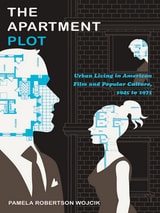
The Apartment Plot
Urban Living in American Film and Popular Culture, 1945 to 1975Pamela Robertson Wojcik
Duke University Press, 2010

The Apathy of Empire
Cambodia in American GeopoliticsJames A. Tyner
University of Minnesota Press, 2024
What America’s intervention in Cambodia during the Vietnam War reveals about Cold War–era U.S. national security strategy
The Apathy of Empire reveals just how significant Cambodia was to U.S. policy in Indochina during the Vietnam War, broadening the lens to include more than the often-cited incursion in 1970 or the illegal bombing after the Paris Peace Accords in 1973. This theoretically informed and thoroughly documented case study argues that U.S. military intervention in Cambodia revealed America’s efforts to construct a hegemonic spatial world order.
James Tyner documents the shift of America’s post-1945 focus from national defense to national security. He demonstrates that America’s expansionist policies abroad, often bolstered by military power, were not so much about occupying territory but instead constituted the construction of a new normal for the exercise of state power. During the Cold War, Vietnam became the geopolitical lodestar of this unfolding spatial order. And yet America’s grand strategy was one of contradiction: to build a sovereign state (South Vietnam) based on democratic liberalism, it was necessary to protect its boundaries—in effect, to isolate it—through both covert and overt operations in violation of Cambodia’s sovereignty. The latter was deemed necessary for the former.
Questioning reductionist geopolitical understandings of states as central or peripheral, Tyner explores this paradox to rethink the formulation of the Cambodian war as sideshow, revealing it instead as a crucial site for the formation of this new normal.
Retail e-book files for this title are screen-reader friendly.

The Apostle of Tennessee
The Indefatigable Life and Ministry of Father Aloysius OrengoJoe Pagetta
Vanderbilt University Press, 2026
When Nashville became a Catholic diocese in 1837, it was mostly an aspirational exercise. The few Catholics scattered throughout the state were ministered to only occasionally by missionary priests who traveled by horseback from Kentucky. It is believed that Hugh Rogan, who arrived in Middle Tennessee in 1780 after working as a surveyor for the Continental Army, did not see a priest for fifty years.
That all changed when the Italian-born Father Aloysius “Luigi” Orengo arrived in Nashville in 1848. He traveled all over the state, sleeping in the woods, using his saddle for a pillow, and eating cheese and crackers. He’s credited with building churches in Franklin, Columbia, Pulaski, East Nashville, Tracy City, Gallatin, Humboldt, Brownsville, Grand Junction, Covington, Jackson, and McEwen.
But as influential as he was, Father Orengo’s story remained untold—until now.
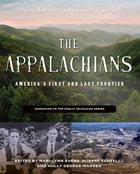
The Appalachians
America's First and Last FrontierMari-Lynn Evans
West Virginia University Press, 2013
A beautifully produced companion volume to the public television documentary The Appalachians fills the void in information about the region, offering a rich portrait of its history and its legacy in music, literature, and film. The text includes essays by some of Appalachia’s most respected scholars and journalists; excerpts from never-before-published diaries and journals; firsthand recollections from native Appalachians including Loretta Lynn, Ricky Skaggs, and Ralph Stanley; indigenous song lyrics and poetry; and oral histories from common folk whose roots run strong and deep. The book also includes more than one hundred illustrations, both archival and newly created. Here is a wondrous book celebrating a unique and valuable heritage.
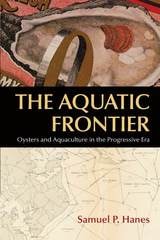
The Aquatic Frontier
Oysters and Aquaculture in the Progressive EraSamuel P. Hanes
University of Massachusetts Press, 2019
The Aquatic Frontier explores the forms this debate took between 1870 and 1920 in law enforcement, legislative advising, natural science, and oyster cartography. Samuel P. Hanes argues that the effort to centralize and privatize the industry failed due to a lack of understanding of the complex social-ecological systems in place—a common dilemma for environmental managers in this time period and for fisheries management confronting dangers from dwindling populations today.
The Arbiters of Reality
Hawthorne, Melville, and the Rise of Mass Information CulturePeter West
The Ohio State University Press, 2008
Locating Hawthorne and Melville in vivid and overlooked contexts—the Salem Murder scandal of 1830, which transformed Hawthorne's quiet city into a media-manufactured spectacle, and Melville's New York City of 1846–47, where the American Telegraph was powerfully articulating a nation at war—West portrays the romance as a reactive, deeply rhetorical literary form and a rich historical artifact.
In the early twenty-first century, it has become a postmodern cliché to place the word “reality” in scare quotes. The Arbiters of Reality suggests that attending to the construction of the real in public life is more than simply a language of critique: it must also be understood as a specific kind of romantic self-invention.
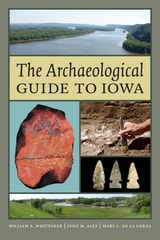
The Archaeological Guide to Iowa
William E. Whittaker, Lynn M. Alex, Mary De La Garza
University of Iowa Press, 2015
Fortunately, there are many sites open to the public where the remnants of the past are visible, either in their original location or in nearby museum exhibits. Few things are more inspiring than walking among the Malchow Mounds, packed so tightly it is hard to tell where one ends and the other begins. Strolling around downtown Des Moines is a lot more interesting when you are aware of the mounds, Indian villages, and the fort that once stood there. And, although you can’t visit the Wanampito site, you can see the splendid seventeenth-century artifacts excavated from it at Heery Woods State Park.
For people who want to experience Iowa’s archaeological heritage first hand, this one-of-a-kind guidebook shows the way to sixty-eight important sites. Many are open to visitors or can be seen from a public location; others, on private land or no longer visible on the landscape, live on through artifact displays. The guide also includes a few important sites that are not open to visitors because these places have unique stories to tell. Sites of every type, from every time period, and in every corner of the state are featured. Whether you have a few hours to indulge your curiosity or are planning a road trip across the state, this guide will take you to places where Iowa’s deep history comes to life.
The Archaeology Of The Donner Party
Donald L Hardesty
University of Nevada Press, 2005
The Archaeology of Ancient Arizona
Jefferson Reid and Stephanie Whittlesey
University of Arizona Press, 1997
This book invites us to step into a Hohokam village with its sounds of barking dogs, children's laughter, and the ever-present grinding of mano on metate to produce the daily bread. Here, too, readers will marvel at the skills of Clovis elephant hunters and touch the lives of other ancestral people known as Mogollon, Anasazi, Sinagua, and Salado. Descriptions of long-ago people are balanced with tales about the archaeologists who have devoted their lives to learning more about "those who came before." Trekking through the desert with the famed Emil Haury, readers will stumble upon Ventana Cave, his "answer to a prayer." With amateur archaeologist Richard Wetherill, they will sense the peril of crossing the flooded San Juan River on the way to Chaco Canyon. Others profiled in the book are A. V. Kidder, Andrew Ellicott Douglass, Julian Hayden, Harold S. Gladwin, and many more names synonymous with the continuing saga of southwestern archaeology.
This book is an open invitation to general readers to join in solving the great archaeological puzzles of this part of the world. Moreover, it is the only up-to-date summary of a field advancing so rapidly that much of the material is new even to professional archaeologists. Lively and fast paced, the book will appeal to anyone who finds magic in a broken bowl or pueblo wall touched by human hands hundreds of years ago. For all readers, these pages offer a sense of adventure, that "you are there" stir of excitement that comes only with making new discoveries about the distant past.
The Archaeology of Carrier Mills
10,000 Years in the Saline Valley of IllinoisRichard W. Jefferies
Southern Illinois University Press, 1987
Archaeological sites throughout southern Illinois provide a chronicle of the varying ways people have lived in that area during the past 10,000 years. This book focuses on the results of a five-year archaeological investigation in a 143-acre area known as the Carrier Mills Archaeological District. This area, rich in archaeological treasures, offers many keys to the prehistoric people of southern Illinois. Archaeologists in this study have sought to learn the ages of the various prehistoric occupations represented at the sites; to better understand the technology and social organization of these prehistoric people; to collect information about diet, health, and physical characteristics of the prehistoric inhabitants; and to investigate the remains of the 19th-century Lakeview settlement.
The Archaeology of Class War
The Colorado Coalfield Strike of 1913-1914Karin Larkin
University Press of Colorado, 2009
The Archaeology of Protestant Landscapes
Revealing the Formation of Community Identity in the US SouthKimberly Pyszka
University of Alabama Press, 2023
How religious institutions used landscapes and architecture to express their religious and social ideologies
The Archaeology of Protestant Landscapes focuses on three religious institutions in the US South in the eighteenth and nineteenth centuries: St. Paul’s Parish Church in coastal South Carolina, St. Luke’s Episcopal Church in central Alabama, and Cane Hill College in Northwest Arkansas. Drawing from archaeological surveys and excavations, artifact analysis, archival research, geophysical testing, and architectural information on religious structures, Kimberly Pyszka offers case studies of these institutions, which were located in developing communities that varied socially, politically, and economically.
Pyszka uses these case studies to demonstrate that select religious institutions used and modified natural landscape features to create cultural landscapes to express their ideology, identity, goals, and social, religious, and political power. She notes that where those structures were constructed, how they sat on the landscape, their architectural style, and their overall visual appearance were well-considered decisions made by religious leaders to benefit their organizations, communities, and, sometimes, themselves.
Pyszka also uses these case studies to highlight the social roles that religious organizations played in the development of communities. She points to landscape decisions—specifically to how the architectural design of religious structures was used, intentionally or not, to unite people, often those of differing religious backgrounds—as contributing to the creation of a common identity among people living in new and still-growing settlements, aiding in community development. This book contributes to the growing body of work within historical archaeology on churches, churchyards, and cemeteries and to the increasing awareness among archaeologists of how these sites contribute to questions of identity, consumerism, trade, and colonialism.
The Archaeology of Summer Island
Changing Settlement Systems in Northern Lake MichiganDavid S. Brose
University of Michigan Press, 1970
The Archaeology of the Sierra Blanca Region of Southeastern New Mexico
Jane Holden Kelley
University of Michigan Press, 1984

The Archeology of New Hampshire
Exploring 10,000 Years in the Granite StateDavid Starbuck
University of New Hampshire Press, 2006
Several states already boast volumes showcasing their archeological history, but not New Hampshire—until now. David R. Starbuck's volume fills that void. Going beyond standard state guides that focus primarily on prehistoric sites, Starbuck also devotes equal time to historic, industrial, and nautical sites. This approach reflects the thinking of most contemporary archeologists who conduct research at a diverse range of sites.
A veteran of thirty years of field research throughout the Granite State, Starbuck revisits some of his own sites, including excavations at the New England Glassworks in Temple, two prehistoric sites on the Merrimack River, the Joseph Hazeltine pottery workshop outside Concord, the Governor Wentworth Estate in Wolfeboro, and his own long-term survey and excavation project at Canterbury Shaker Village. At the same time, though, Starbuck includes the work of other contemporary New Hampshire archeologists, representative sites of “old-timers” whose digs preceded his arrival, and the investigations of avocational diggers.
Starbuck's introduction offers an anecdotal history of archeological research in New Hampshire through the people who shaped it. Part I discusses discoveries that predate white settlement: the Paleo-Indian Period; the Archaic Period; and the Woodland Period. Part II moves from the seventeenth century to the present. Chapters include historical archeology (forts, farms, potters, Shakers); industrial archeology (mills, factories, railroads, dams, and bridges); and nautical archeology (discoveries in the state's lakes and on the seacoast).
In addition to summarizing some of the more interesting finds, Starbuck includes stories about archeologists and the techniques they have used to glean information from the past. Overall, he provides a lively account of what it is like to practice archeology in a small but dynamic New England state.
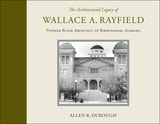
The Architectural Legacy of Wallace A. Rayfield
Pioneer Black Architect of Birmingham, AlabamaAllen R. Durough
University of Alabama Press, 2010
A priceless material legacy documenting Wallace Rayfield’s life and work on two continents.
In the early 1990s, while cleaning out the barn on his property in Bessemer, Alabama, Allen Durough discovered the remnants of the lifework of African American architect Wallace A. Rayfield, including several hundred of Rayfield’s drawings, floor plans, business advertisements, family portraits, and graphic art pieces. This book gathers that priceless material legacy into a cohesive whole, reproducing 159 illustrations that document Rayfield’s life and work on two continents.
Born in Macon, Georgia, in 1873, Rayfield apprenticed as a young man with the noted architectural firm A. B. Mullet and Company in Washington, DC, before attending Howard University, Pratt Polytechnic Institute, and ultimately graduating with a bachelor of architecture degree from Columbia University. He returned south to teach at the Tuskegee Institute and then to establish W. A. Rayfield & Co., Architects, in Birmingham, Alabama. From there he designed buildings for construction across the south (many by mail order) and even in Africa. Rayfield specialized in church architecture, and many of his designs were for black congregations within the state, most notably the Sixteenth Street Baptist Church in Birmingham. But he also designed schools, office buildings, and private homes. After falling into bankruptcy during the Great Depression, he died in obscurity.
Durough includes catalog-style descriptive entries and illustrations of Rayfield’s designs for six types of structures: residences, churches, schools, commercial buildings, fraternal buildings, and barns. These entries contain location, commissioning data, and brief structural notes, providing a useful resource for architectural historians and preservationists. A listing of the 359 known Rayfield structures detail their locations in 19 states, plan date, building type, and name. Also included is a biographical sketch of Rayfield, an overview of his publications, and a survey of his professional artwork and advertisements.

The Architecture of Frank Lloyd Wright
A Complete Catalog, Updated 3rd EditionWilliam Allin Storrer
University of Chicago Press, 2007
This updated third edition revisits each of Wright’s extant structures, tracing the architect’s development from his Prairie works, such as the Frederick Robie house in Chicago, to the last building constructed to his specifications, the magnificent Aime and Norman Lykes residence in Arizona. Renowned expert William Storrer deftly incorporates a series of key revisions and brings each structure’s history up to the present day, as some buildings have been refurbished, some moved, and others sadly abandoned or destroyed by natural disasters like Hurricane Katrina—including the James Charnley bungalow in Ocean Springs, Mississippi.
Organized chronologically, this updated third edition features full-color photographs of all extant work along with a description of each building and its history. Storrer also provides full addresses, GPS coordinates, and maps of locations throughout the United States, England, and Japan, indicating the shortest route to each building—perfect for Wright aficionados on the go.
From Fallingwater to the Guggenheim, Frank Lloyd Wright is the undisputed master of American architecture. Now fully revised, The Architecture of Frank Lloyd Wright: A Complete Catalog will be indispensable for anyone fascinated with the architect’s unique genius.

The Architecture of Madness
Insane Asylums in the United StatesCarla Yanni
University of Minnesota Press, 2007
Elaborately conceived, grandly constructed insane asylums—ranging in appearance from classical temples to Gothic castles—were once a common sight looming on the outskirts of American towns and cities. Many of these buildings were razed long ago, and those that remain stand as grim reminders of an often cruel system. For much of the nineteenth century, however, these asylums epitomized the widely held belief among doctors and social reformers that insanity was a curable disease and that environment—architecture in particular—was the most effective means of treatment.
In The Architecture of Madness, Carla Yanni tells a compelling story of therapeutic design, from America’s earliest purpose—built institutions for the insane to the asylum construction frenzy in the second half of the century. At the center of Yanni’s inquiry is Dr. Thomas Kirkbride, a Pennsylvania-born Quaker, who in the 1840s devised a novel way to house the mentally diseased that emphasized segregation by severity of illness, ease of treatment and surveillance, and ventilation. After the Civil War, American architects designed Kirkbride-plan hospitals across the country.
Before the end of the century, interest in the Kirkbride plan had begun to decline. Many of the asylums had deteriorated into human warehouses, strengthening arguments against the monolithic structures advocated by Kirkbride. At the same time, the medical profession began embracing a more neurological approach to mental disease that considered architecture as largely irrelevant to its treatment.
Generously illustrated, The Architecture of Madness is a fresh and original look at the American medical establishment’s century-long preoccupation with therapeutic architecture as a way to cure social ills.
Carla Yanni is associate professor of art history at Rutgers University and the author of Nature’s Museums: Victorian Science and the Architecture of Display.

The Argument about Things in the 1980s
Goods and Garbage in an Age of NeoliberalismTim Jelfs
West Virginia University Press, 2018
Tim Jelfs’s The Argument about Things in the 1980s considers all this and more in a broad study of the literature and culture of the “long 1980s.” It contributes to of-the-moment scholarly debate about material culture, high finance, and ecological degradation, shedding new light on the complex relationship between neoliberalism and cultural life.

The Arizona Diary of Lily Frémont, 1878–1881
Elizabeth Benton Frémont
University of Arizona Press, 1997
Here, in rich detail, her day-by-day narrative and the editor's annotations bring to life Arizona's territorial capital of Prescott more than one hundred years ago. Lily gives us firsthand accounts of the operation of territorial government; of pressure from Anglo settlers to dispossess Pima Indians from their land; and of efforts by the governor and the army to deal with Indian scares. Here also, underlying her words, are insights into the dynamics of a close-knit Victorian family, shaping the life of an intelligent, educated single woman. As unofficial secretary for her father, Lily was well placed to observe and record an almost constant stream of visitors to the governor's home and office. Observe and record, she did. Her diary is filled with unvarnished images of personalities such as the Goldwaters, General O. B. Willcox, Moses Sherman, Judge Charles Silent, and a host of lesser citizens, politicians, and army officers.
Lily's anecdotes vividly re-create the periodic personality clashes that polarized society (and one full-fledged scandal), the ever-present danger of fire, religious practices (particularly a burial service conducted in Hebrew), and attitudes toward Native Americans and Chinese. On a more personal level, the reader will find intimate accounts of John Frémont's obsession with mining promotion, his complicated business dealings with Judge Silent, and his attempts to recoup his family's sagging fortune. Here especially, Lily outlines a telling profile of her father, a man roundly castigated then and now as a carpetbagger less interested in promoting Arizona's interests than his own.
For students of western history, Lily Frémont's diary provides a wealth of fresh information on frontier politics, mining, army life, social customs, and ethnicity. For all readers, her words from a century ago offer new perspectives on the winning of the West as well as fascinating glimpses of a world that once was and is no more.
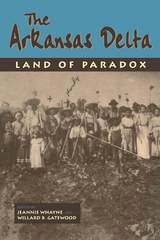
The Arkansas Delta
Land of ParadoxWilliard B. Gatewood Jr.
University of Arkansas Press, 1993
The Arkansas Post of Louisiana
Morris S. Arnold
University of Arkansas Press, 2017
Arkansas Post, the first European settlement in what would become Jefferson’s Louisiana, had an important mission as the only settlement between Natchez and the Illinois Country, a stretch of more than eight hundred miles along the Mississippi River. The Post was a stopping point for shelter and supplies for those travelling by boat or land, and it was of strategic importance as well, as it nurtured and sustained a crucial alliance with the Quapaw Indians, the only tribe that occupied the region.
The Arkansas Post of Louisiana covers the most essential aspects of the Post’s history, including the nature of the European population, their social life, the economy, the architecture, and the political and military events that reflected and shaped the Post’s mission.
Beautifully illustrated with maps, portraits, lithographs, photographs, documents, and superb examples of Quapaw hide paintings, The Arkansas Post of Louisiana is a perfect introduction to this fascinating place at the confluence of the Arkansas and Mississippi Rivers, a place that served as a multicultural gathering spot, and became a seminal part of the history of Arkansas and the nation.

The Arrival of the Fittest
Biology's Imaginary Futures, 1900–1935Jim Endersby
University of Chicago Press, 2025
In the early twentieth century communities made creative use of the new theories of heredity in circulation at the time, including the now largely forgotten mutation theory of Hugo de Vries. Science fiction writers, socialists, feminists, and utopians are among those who seized on the amazing possibilities of rapid and potentially controllable evolution. De Vries’s highly respected scientific theory only briefly captured the attention of the scientific community, but its many fans appropriated it for their own wildly imaginative ends. Writers from H.G. Wells and Edith Wharton to Charlotte Perkins Gilman, J.B.S. Haldane, and Aldous Huxley created a new kind of imaginary future, which Jim Endersby calls the biotopia. It took the ambiguous possibilities of biology—utopian and dystopian—and reimagined them in ways that still influence the public’s understanding of the life sciences. The Arrival of the Fittest recovers the fascinating, long-forgotten origins of ideas that have informed works of fiction from Brave New World to the X-Men movies, all while reflecting on the lessons—positive and negative—that this period might offer us.