Results by title
28167 books match the query 'History' and 6372 start with t

The Road to Love Canal
Managing Industrial Waste before EPABy Craig E. Colten and Peter N. Skinner
University of Texas Press, 1995
The toxic legacy of Love Canal vividly brought the crisis in industrial waste disposal to public awareness across the United States and led to the passage of the Superfund legislation in 1980. To discover why disasters like Love Canal have occurred and whether they could have been averted with knowledge available to waste managers of the time, this book examines industrial waste disposal before the formation of the Environmental Protection Agency in 1970.
Colten and Skinner build their study around three key questions. First, what was known before 1970 about the hazards of certain industrial wastes and their potential for causing public health problems? Second, what were the technical capabilities for treating or containing wastes during that time? And third, what factors other than technical knowledge guided the actions of waste managers before the enactment of explicit federal laws?
The authors find that significant information about the hazards of industrial wastes existed before 1970. Their explanations of why this knowledge did not prevent the toxic legacy now facing us will be essential reading for environmental historians and lawyers, public health personnel, and concerned citizens.
The Road to Marion Town
The Settlement of Osceola County, State of MichiganJ. August Lithen
Parkhurst Brothers, Inc., 2018
The Road to Mount Lemmon
A Father, A Family, and the Making of SummerhavenMary Ellen Barnes
University of Arizona Press, 2009
The Santa Catalina Mountains first captivated Tony Zimmerman on a 1937 hunting trip. Regard for the alpine beauty must have been in his genes—he was the son of Swiss German immigrants—and by 1940 the Tucson schoolteacher had begun taking his family to Mount Lemmon to spend the summer. Back then, the road up the mountain was a rough two-track dirt road from Oracle, and Summerhaven was nothing but a sleepy cluster of summer cabins. But Tony Zimmerman was to help change all of that.
The Road to Mount Lemmon is a beguiling memoir of the Catalina Mountains told by the daughter of one of the pioneers in the life and development of Mount Lemmon’s communities. Mary Ellen Barnes tells how her father Tony resigned from teaching in 1943 to devote his career to the development of this mountain oasis. He not only sold real estate for long time landowner Randolph Jenks, he even bought the village’s tiny two-room store, installing a sawmill to build a larger store, and built the Mount Lemmon Inn. And as she spins Tony’s personal saga, she also gives readers a glimpse of the Catalinas before Tucson became a boom town, recalling idyllic adventures in wild country and the cowboys, rangers, ranchers, and loggers who worked there.
Barnes tells Tony’s story as if sharing it with family, evoking her father’s personality on every page. The Road to Mount Lemmon is an intimate view of a mountain community over the course of nearly sixty years—a view that few people have shared but one all can appreciate.
The Road to OPEC
United States Relations with Venezuela, 1919-1976By Stephen G. Rabe
University of Texas Press, 1982
On September 10, 1960, Venezuela spearheaded the formation of the Organization of Petroleum Exporting Countries (other original members included Saudi Arabia, Iran, Iraq, and Kuwait). However, in a world abundantly supplied with oil, the United States could and did ignore Venezuelan suggestions that OPEC and the consuming nations work together to control production and to increase prices. Then, in late 1973, OPEC sent shudders throughout the world economy, and an energy crisis struck with full force. Emboldened by the power of their oil cartel, Venezuelan leaders denounced the old economic relationship with the United States, nationalized U.S. oil and steel holdings, and fashioned a foreign economic policy that differed sharply from Washington's.
The Road to OPEC is the story of the fiery debates among U.S. oil companies, the Department of State, and the Venezuelan government over oil policies—clashes that led Venezuela to establish OPEC and to nationalize U.S.-owned properties. In addition, this is the first study of twentieth-century Venezuelan-U.S. relations. Its focus on oil diplomacy is placed within the context of key U.S. policies toward Latin America and such programs as the Open Door, the Good Neighbor, and the Alliance for Progress. The author also provides insight into both the politics of the contemporary energy crisis and the growing split between raw-material producers and their industrial customers.
The Road to OPEC is based on extensive archival research, as well as the author's successful use of the Freedom of Information Act to declassify files of such agencies as the National Security Council and the CIA.

The Road to Rebellion
Class Formation and Kansas Populism, 1865-1900Scott G. McNall
University of Chicago Press, 1988
McNall rejects the traditional view that blames the failure of the Alliance on a turn to mass-based electoral politics, but rather sees the move into national politics by the Farmer's Alliance as part of a rational strategy to better wage their fight for economic justice. The Kansas populists failed, he argues, because of their inability to embrace a broad, working-class base, to provide an effective alternative vision, and ultimately to create a distinct class organization. Debates about how classes come into being, or how democracy is to be realized, cannot be settled in the abstract. McNall's recreation of this heroic struggle is a model in the analysis of class formation. At the same time, The Road to Rebellion is dynamic social history, which holds vital lessons for structuring and realizing alternative political agendas today.
The Road to Renewal
Victor Joseph Reed and Oklahoma Catholicism, 1905–1971Jeremy BONNER
Catholic University of America Press, 2008
The Road to Seneca Falls
Elizabeth Cady Stanton and the First Woman's Rights ConventionJudith Wellman
University of Illinois Press, 2004
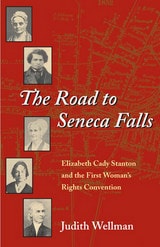
The convention succeeded by uniting powerful elements of the antislavery movement, radical Quakers, and the campaign for legal reform under a common cause. Wellman shows that these three strands converged not only in Seneca Falls, but also in the life of women's rights pioneer Elizabeth Cady Stanton. It is this convergence, she argues, that foments one of the greatest rebellions of modern times.
Rather than working heavy-handedly downward from their official "Declaration of Sentiments," Wellman works upward from richly detailed documentary evidence to construct a complex tapestry of causes that lay behind the convention, bringing the struggle to life. Her approach results in a satisfying combination of social, community, and reform history with individual and collective biographical elements.
The Road to Seneca Falls challenges all of us to reflect on what it means to be an American trying to implement the belief that "all men and women are created equal," both then and now. A fascinating story in its own right, it is also a seminal piece of scholarship for anyone interested in history, politics, or gender.
The Road to September 1939
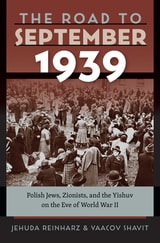
Polish Jews, Zionists, and the Yishuv on the Eve of World War IIJehuda Reinharz and Yaacov Shavit
Brandeis University Press, 2018

The Road to Spindletop
Economic Change in Texas, 1875–1901By John Stricklin Spratt; drawings by Ed Bearden
University of Texas Press, 1955
This book is an economic history of Texas at the end of the nineteenth century. In 1875, Texas was an agrarian state with limited industry. A generation later, agriculture was heavily commercialized, thousands of miles of railroads carried people and goods around the state, and urban populations increased rapidly. Even before the Spindletop gusher that irrevocably changed the state’s future, Texas had already moved far from its days as a Mexican and American frontier.
The Road to Ticonderoga
The Campaign of 1758 in the Champlain ValleyMichael G. Laramie
Westholme Publishing, 2027
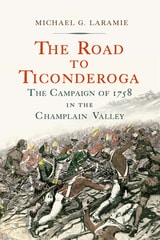
Based on journals, letters, and accounts of the participants on both sides, The Road to Ticonderoga: The Campaign of 1758 in the Champlain Valley by Michael G. Laramie recounts this unexpected tale of victory and defeat on the North American frontier. Here we learn how the unexpected death of a dynamic leader, George Howe, elder brother of Richard and William, nearly crushed “the soul of General Abercrombie’s army,” leading to misinterpreted orders and hesitation on the part of the British. At the same time, the French commander perilously underestimated the ability of his own forces while overestimating his enemy’s before his fateful and unexpected decision to make his stand at Ticonderoga. With lessons and repercussions for future warfare in North America, The Road to Ticonderoga shows how a series of small mistakes can cascade into a catastrophe under weak leadership—or be exploited by a strong one.
The Road to War in Serbia
Trauma and CatharsisNebojša Popov
Central European University Press, 2000
The Yugoslav crisis, with its armed conflict, ethnic cleansing and the reverberating ideas and mindsets, has been going on for more than ten years. The Road to War in Serbia is the first serious assessment to explore the roots of the conflict in the former Yugoslavia. Based on years of research, the authors - all eminent scholars in the field who have lived through these social conflicts - highlight key issues which have to date remained unknown or which have been previously neglected.
The issues dealt with include the institutional frameworks of ethnicity and nationalism; the input of the church, science, literature and sports; specific catalysts of the conflict and the role of the political actors, students, the ruling party and the media.
The Road to War in Serbia will be of great interest to all readers who want to understand why and how the violent option of settling disputes and conflicts on the territory of Yugoslavia is being accepted.
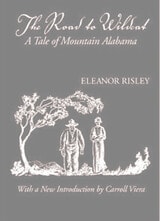
The Road to Wildcat
A Tale of Mountain AlabamaEleanor Risley
University of Alabama Press, 2004
A remarkable chronicle of southern mountain life in the early 20th century
The Road to Wildcat recounts the travels in North Alabama in the mid-1920s of Eleanor Risley (suffering from diabetes), her asthmatic husband, Pierre, their dog, John, and a Chinese wheelbarrow named Sisyphus that held their travel goods. Advised to make the walking tour for improvement of their health, the group left Fairhope in south Alabama and walked hundreds of miles in the southern Appalachians for months, sleeping out under the stars at night, or in a canvas tent or an abandoned building, cooking their fresh-caught foods over campfires, and accepting the generosity and advice of the mountain people they met, some of them moonshiners and outlaws.
During their sojourn across the rural wilderness, they enjoyed fiddlin’ dances in rickety halls, joined Sacred Harp singers, learned about the grapevine telegraph, saw the dreadful effects of inbreeding, and attended “Snake Night” at Posey Holler (a religious revival that included snake handling). Published in segments in the Atlantic Monthly in 1928 and 1929 and then reorganized into book form, the travelogue is a colorful record of the culture, customs, and dialect of the southern mountaineers of that era.
The Roar and the Silence
A History of Virginia City and the Comstock LodeRonald M. James
University of Nevada Press, 1998
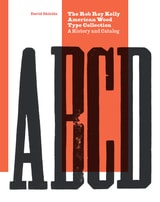
The Rob Roy Kelly American Wood Type Collection
A History and CatalogDavid Shields
University of Texas Press, 2022
2023 50 Books | 50 Covers Award, The American Institute of Graphic Arts (AIGA)
2024 Honorable Mention, Design Awards, Graphis
2024 Finalist, Typography Competition, Communication Arts Magazine
A beautifully illustrated exploration of the Rob Roy Kelly American Wood Type Collection.
The Rob Roy Kelly Wood Type Collection is a comprehensive collection of wood type manufactured and used for printing in nineteenth-century America. Comprising nearly 150 typefaces of various sizes and styles, it was amassed by noted design educator and historian Rob Roy Kelly starting in 1957 and is now held by the University of Texas. Although Kelly himself published a 1969 book on wood type and nineteenth-century typographic history, there has been little written about the creation of the wood type forms, the collection, or Kelly.
In this book, David Shields rigorously updates and expands upon Kelly’s historical information about the types, clarifying the collection’s exact composition and providing a better understanding of the stylistic development of wood type forms during the nineteenth century. Using rich materials from the period, Shields provides a stunning visual context that complements the textual history of each typeface. He also highlights the non-typographic material in the collection—such as borders, rules, ornaments, and image cuts—that have not been previously examined. Featuring over 300 color illustrations, this written history and catalog is bound to spark renewed interest in the collection and its broader typographic period.
The Rock of Arles
Richard Klein
Duke University Press, 2024
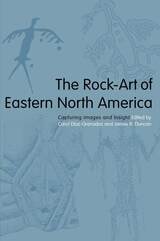
The Rock-Art of Eastern North America
Capturing Images and InsightEdited by Carol Diaz-Granados and James R. Duncan
University of Alabama Press, 2004
Showcases the wealth of new research on sacred imagery found in twelve states and four Canadian provinces
In archaeology, rock-art—any long-lasting marking made on a natural surface—is similar to material culture (pottery and tools) because it provides a record of human activity and ideology at that site. Petroglyphs, pictographs, and dendroglyphs (tree carvings) have been discovered and recorded throughout the eastern woodlands of North America on boulders, bluffs, and trees, in caves and in rock shelters. These cultural remnants scattered on the landscape can tell us much about the belief systems of the inhabitants that left them behind.
The Rock-Art of Eastern North America brings together 20 papers from recent research at sites in eastern North America, where humidity and the actions of weather, including acid rain, can be very damaging over time. Contributors to this volume range from professional archaeologists and art historians to avocational archaeologists, including a surgeon, a lawyer, two photographers, and an aerospace engineer. They present information, drawings, and photographs of sites ranging from the Seven Sacred Stones in Iowa to the Bald Friar Petroglyphs of Maryland and from the Lincoln Rise Site in Tennessee to the Nisula Site in Quebec.
Discussions of the significance of artist gender, the relationship of rock-art to mortuary caves, and the suggestive link to the peopling of the continent are particularly notable contributions. Discussions include the history, ethnography, recording methods, dating, and analysis of the subject sites and integrate these with the known archaeological data.
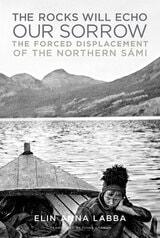
The Rocks Will Echo Our Sorrow
The Forced Displacement of the Northern SámiElin Anna Labba
University of Minnesota Press, 2023
The deep and personal story—told through history, poetry, and images—of the forced displacement of the Sámi people from their homeland in northern Norway and Sweden and its reverberations today
More than a hundred years have passed since the Sámi were forcibly displaced from their homes in northern Norway and Sweden, a hundred years since Elin Anna Labba’s ancestors and relations drove their reindeer over the strait to the mainland for the last time. The place where they lived has remained empty ever since. We carry our homes in our hearts, Labba shares, citing the Sámi poet Áillohaš. How do you bear that weight if you were forced to leave? In a remarkable blend of historical reportage, memoir, and lyrical reimagining, Labba travels to the lost homeland of her ancestors to tell of the forced removal of the Sámi in the early twentieth century and to reclaim a place in history, and in today’s world, for these Indigenous people of northern Scandinavia.
When Norway became a country independent from Sweden in 1905, the two nations came to an agreement that called for the displacement of the Northern Sámi, who spent summers on the Norwegian coast and winters in Sweden. This “dislocation,” as the authorities called it, gave rise to a new word in Sámi language, bággojohtin, forced displacement. The first of the sirdolaččat, or “the displaced,” left their homes fully believing they would soon return. Through stories, photographs, letters, and joik lyrics, Labba gathers a chorus of Sámi expression that resonates across the years, evoking the nomadic life they were required to abandon and the immense hardship and challenges they endured: children left behind with relatives, reindeer lost when they returned to familiar territory, sorrow and estrangement that linger through generations.
Starkly poetic and emotionally heart-wrenching, this dark history is told through the voices of the sirdolaččat, echoing the displacements of other Indigenous people around the world as it depicts the singular experience of the Northern Sámi. For her extraordinary work, Labba was awarded Sweden’s most important national book prize in 2020, the August Prize for Best Nonfiction.
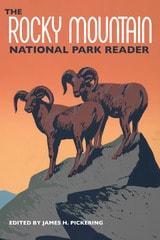
The Rocky Mountain National Park Reader
James H. Pickering
University of Utah Press, 2015
Representative both in subject and approach, the selections reach back to Arapaho and pioneer times before the park was established and move forward to span its entire first century. The voices that speak to us are distinctive: among them are Irish sportsman Windham Thomas Wyndham-Quin, the Fourth Earl of Dunraven; British travel writer Isabella Bird; mountaineer Frederick Chapin; naturalist Enos Mills; iconic ranger Jack Moomaw and his fictional counterpart, Dorr Yeager’s Bob Flame; and contemporary nature writers Anne Zwinger and SueEllen Campbell—to mention but a few. Some tell us about the past, recalling moments of personal triumph and tragedy. Other voices are quieter; some are more polemic. All capture and share a part of the national treasure that is Rocky Mountain National Park.
The first of its kind, this original collection is a rich literary and historical compendium of the best that has been written about Rocky Mountain National Park. As such it provides an indispensable introduction to the nation’s twelfth national park.
Part of the National Park Reader series, edited by Lance Newman and David Stanley
The Roma - A Minority in Europe
Historical, Political and Social PerspectivesYehuda Bauer
Central European University Press, 2007
The main issues arising from the encounter between Roma people and surrounding European society since the time of their arrival in Medieval Europe until today are discussed in this work. The history of their persecution and genocide during the Nazi era, in particular, is central to the present volume. Significantly, some authors sought to emphasize the continuing history of prejudice and persecution, which reached a peak during the Nazi era and persisted after the war. Current questions of social integration in Europe, as well as that of ethnic definition and the construction of ethnic-national identity constitute another principal pillar of the book. The complexity of issues involved, such as collective memory, myth-making and social constructionism, trigger intense debate among researchers dealing with Romani studies.
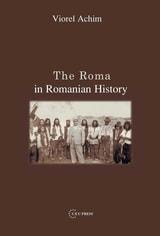
The Roma in Romanian History
Viorel Achim
Central European University Press, 2004
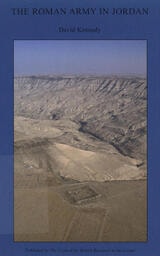
The Roman Army in Jordan
David Kennedy
Council for British Research in the Levant, 2004
The Roman Community at Table during the Principate, New and Expanded Edition
John F. Donahue
University of Michigan Press, 2017
This expanded edition of Donahue’s work includes significant new material on current trends in food studies, including the archaeology and bioarchaeology of ancient food and drink; an additional collection of inscriptions on public banquets from the Roman West; and an extensive bibliography of scholarship produced in the last ten years. It will be of interest not only to classicists and historians of the ancient world, but also to anthropologists and sociologists interested in food and social group dynamics.

The Roman Empire
Roots of ImperialismNeville Morley
Pluto Press, 2010
A millennium and a half after the end of the period of its unquestioned dominance, Rome remains a significant presence in western culture. This book explores what the empire meant to its subjects.
The idea of Rome has long outlived the physical empire that gave it form, and now holds sway over vastly more people and a far greater geographical area than the Romans ever ruled. It continues to shape our understanding of the nature of imperialism, and thus, however subtly, to influence the workings of the world. Unlike most works on Roman history, this book does not offer a simplistic narrative, with military triumph followed by decline and fall. Instead, it analyses the origins and nature of Roman imperialism, its economic, social and cultural impact on the regions it conquered, and its continuing influence in discussions and debates about modern imperialism.
The Roman Republic in Political Thought
Fergus Millar
Brandeis University Press, 2002
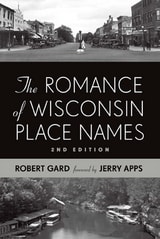
The Romance of Wisconsin Place Names
Robert E. Gard
Wisconsin Historical Society Press, 2015
Fifty years ago, educator and writer Robert E. Gard traveled across Wisconsin, learning the trivial, controversial, and landmark stories behind how cities, counties, and local places got their names. This volume records the fruits of Gard’s labors in an alphabetical listing of places from every corner of Wisconsin, and the stories behind their often-unusual names. Gard’s work provides an important snapshot of how Wisconsin residents of a bygone era came to understand the names of their towns and home places, many of which can no
longer be found on any map.
Celebrated rural historian Jerry Apps introduces this reprint of Gard’s work,
saying that in “some ways The Romance of Wisconsin Place Names is a reference book, a place where you can go to learn a little more about your home town. But in many ways it is much more than that, for it includes the stories of places throughout the state, submitted by the people who knew them. It is a book where story, people, and place all come together.”
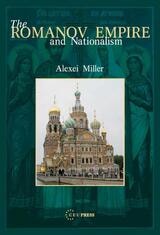
The Romanov Empire and Nationalism
Essays in the Methodology of Historical ResearchAlexei Miller
Central European University Press, 2008
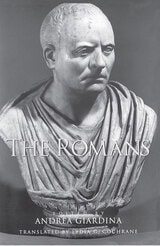
The Romans
Edited by Andrea Giardina
University of Chicago Press, 1993
Synthesizing a wealth of current research, The Romans surveys the most complex society ever to exist prior to the Industrial Age. Searching out the identity of the ancient Roman, the contributors describe an urbane figure at odds with his rustic peers, known for his warlike nature and his love of virtue, his magnanimity to foreigners and his predilection for cutting off his enemies' heads. Most important, perhaps, of the themes explored throughout this volume are those of freedom and slavery, of citizenship and humanitas.
What results from the depictions Roman society through time and across its many constituent cultures is the variety of Roman identity in all its richness and depth. These masterful essays will engage the general reader as well as the specialist in history and culture.
The Romantic Absolute
Being and Knowing in Early German Romantic Philosophy, 1795-1804Dalia Nassar
University of Chicago Press, 2013
Scholars today interpret philosophical romanticism along two competing lines: one emphasizes the romantics’ concern with epistemology, the other their concern with metaphysics. Through careful textual analysis and systematic reconstruction of the work of three major romantics—Novalis, Friedrich Schlegel, and Friedrich Schelling—Nassar shows that neither interpretation is fully satisfying. Rather, she argues, one needs to approach the absolute from both perspectives. Rescuing these philosophers from frequent misunderstanding, and even dismissal, she articulates not only a new angle on the philosophical foundations of romanticism but on the meaning and significance of the notion of the absolute itself.
The Romantic Machine
Utopian Science and Technology after NapoleonJohn Tresch
University of Chicago Press, 2012
In the years immediately following Napoleon’s defeat, French thinkers in all fields set their minds to the problem of how to recover from the long upheavals that had been set into motion by the French Revolution. Many challenged the Enlightenment’s emphasis on mechanics and questioned the rising power of machines, seeking a return to the organic unity of an earlier age and triggering the artistic and philosophical movement of romanticism. Previous scholars have viewed romanticism and industrialization in opposition, but in this groundbreaking volume John Tresch reveals how thoroughly entwined science and the arts were in early nineteenth-century France and how they worked together to unite a fractured society.
Focusing on a set of celebrated technologies, including steam engines, electromagnetic and geophysical instruments, early photography, and mass-scale printing, Tresch looks at how new conceptions of energy, instrumentality, and association fueled such diverse developments as fantastic literature, popular astronomy, grand opera, positivism, utopian socialism, and the Revolution of 1848. He shows that those who attempted to fuse organicism and mechanism in various ways, including Alexander von Humboldt and Auguste Comte, charted a road not taken that resonates today.
Essential reading for historians of science, intellectual and cultural historians of Europe, and literary and art historians, The Romantic Machine is poised to profoundly alter our understanding of the scientific and cultural landscape of the early nineteenth century.
The Romare Bearden Reader
Robert G. O'Meally, editor
Duke University Press, 2019
Contributors. Elizabeth Alexander, Romare Bearden, Mary Lee Corlett, Rachel DeLue, David C. Driskell, Brent Hayes Edwards, Ralph Ellison, Henri Ghent, Farah Jasmine Griffin, Harry Henderson, Kobena Mercer, Toni Morrison, Albert Murray, Robert G. O’Meally, Richard Powell, Richard Price, Sally Price, Myron Schwartzman, Robert Burns Stepto, Calvin Tomkins, John Edgar Wideman, August Wilson
The Roots of African Conflicts
The Causes and CostsAlfred Nhema
Ohio University Press, 2007
“Africa is no more prone to violent conflicts than other regions. Indeed, Africa’s share of the more than 180 million people who died from conflicts and atrocities in the twentieth century is relatively modest.… This is not to underestimate the immense impact of violent conflicts on Africa; it is merely to emphasize the need for more balanced debate and commentary.”
—From the introduction by Paul Tiyambe Zeleza
Violent conflicts have exacted a heavy toll on Africa’s societies, polities, and economies. This book presents African scholars’ views of why conflicts start in their continent. The causes of conflict are too often examined by scholars from the countries that run the proxy wars and sell the arms to fuel them. This volume offers theoretically sophisticated, empirically grounded, and compelling analyses of the roots of African conflicts.
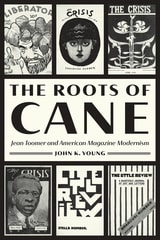
The Roots of Cane
Jean Toomer and American Magazine ModernismJohn K. Young
University of Iowa Press, 2024
Young interweaves a periodical-studies approach to modernism with book history and critical race theory, resituating Toomer’s uneasy place within Black modernism by asking how original readers would have encountered his work. The different contexts in which those audiences were engaging with Toomer’s portraits of racialized identity in the Jim Crow United States, yield often surprising results.
The Roots of Cooperation
Constructing Interstate Alliances in Ancient GreeceNicholas D. Cross
University of Michigan Press, 2026
Nicholas D. Cross’s The Roots of Cooperation reinterprets how the Greeks conceived, enacted, and displayed their alliances, offering a socially grounded understanding of interstate relations in antiquity. Following the international relations model of constructivism, Cross emphasizes the social features of Greek alliances including words used to articulate agreements, ceremonial acts they performed during the formation process, and the symbols they employed to illustrate how the alliances contributed to the creation of shared goals, ideas, and identities. The study covers the proposals for alliances, the articulation of alliance treaties, the ratification of alliances by means of religious ceremonies, the public display of the agreements in visual media, and the implications of terminated alliances. While alliances had political and military objectives, the Greeks represented them as collective and consensual achievements. Relying as much on epigraphic and numismatic evidence as on the literary record, this study recontextualizes interstate activity by analyzing how contemporaries imagined and depicted their formal interstate agreements. The Roots of Cooperation offers fresh insights that go beyond just alliances and can deepen our understanding of interstate relations, broadly speaking, in the ancient world.
The Roots of Radicalism
Tradition, the Public Sphere, and Early Nineteenth-Century Social MovementsCraig Calhoun
University of Chicago Press, 2012
The Roots of Rough Justice
Origins of American LynchingMichael J. Pfeifer
University of Illinois Press, 2014
The Rope of God
James T. Siegel
University of Michigan Press, 2000
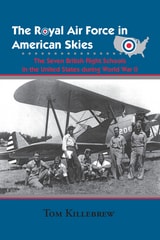
The Royal Air Force in American Skies
The Seven British Flight Schools in the United States during World War IITom Killebrew
University of North Texas Press, 2015
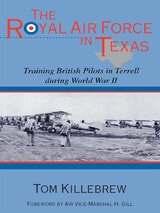
The Royal Air Force in Texas
Training British Pilots in Terrell during World War IITom Killebrew
University of North Texas Press, 2003
The Royal Baker's Daughter
Royal Baker's DaughterBarbara Goldberg
University of Wisconsin Press, 2008

The Royal Observatory, Greenwich, 1881–1939
Astronomy, Astronomers and Heritage in a Changing WorldLee T. Macdonald
University College London, 2026
The first detailed history of the Royal Observatory at Greenwich covering the period after the retirement of George Airy, seventh Astronomer Royal, in 1881.
This book charts an under-researched period in the long history of the Royal Observatory at Greenwich. It covers both the scientific and social-political history of the Royal Observatory, focusing on its significance within the history of astronomy and UK history more generally. Using a wealth of archival material—much of which was previously unpublished—Lee T. Macdonald's narrative brings the day-to-day operations of the Observatory to life and reveals how its mission in positional astronomy, combined with its cutting-edge research in photographic mapping and the study of solar eclipses, continues to expand the frontiers of astronomical research.
The Royal Remains
The People's Two Bodies and the Endgames of SovereigntyEric L. Santner
University of Chicago Press, 2011
"The king is dead. Long live the king!" In early modern Europe, the king's body was literally sovereign—and the right to rule was immediately transferrable to the next monarch in line upon the king's death. In The Royal Remains, Eric L. Santner argues that the "carnal" dimension of the structures and dynamics of sovereignty hasn't disappeared from politics. Instead, it migrated to a new location—the life of the people—where something royal continues to linger in the way we obsessively track and measure the vicissitudes of our flesh.
Santner demonstrates the ways in which democratic societies have continued many of the rituals and practices associated with kingship in displaced, distorted, and usually, unrecognizable forms. He proposes that those strange mental activities Freud first lumped under the category of the unconscious—which often manifest themselves in peculiar physical ways—are really the uncanny second life of these "royal remains," now animated in the body politic of modern neurotic subjects. Pairing Freud with Kafka, Carl Schmitt with Hugo von Hofmannsthal,and Ernst Kantorowicz with Rainer Maria Rilke, Santner generates brilliant readings of multiple texts and traditions of thought en route to reconsidering the sovereign imaginary. Ultimately, The Royal Remains locates much of modernity—from biopolitical controversies to modernist literary experiments—in this transition from subjecthood to secular citizenship.
This major new work will make a bold and original contribution to discussions of politics, psychoanalysis, and modern art and literature.

The Royal Treasuries of the Spanish Empire in America
Vol. 1: PeruJohn J. Tepaske and Herbert S. Klein, editors
Duke University Press, 1982
The Royal Treasuries of the Spanish Empire in America
Vol. 2: Upper Peru (Bolivia)John J. Tepaske and Herbert S. Klein, editors
Duke University Press, 1982
The Royal Treasuries of the Spanish Empire in America
Vol. 3: Chile and Rio de la PlataJohn J. Tepaske and Herbert S. Klein, editors
Duke University Press, 1982
The Ruin Dwellers
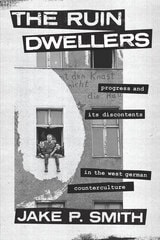
Progress and Its Discontents in the West German CountercultureJake P. Smith
University of Chicago Press, 2025
The Ruin Dwellers takes readers into the urban spaces of youth revolts during the 1970s and ’80s in West Germany and elsewhere in western and central Europe. Whereas earlier generations of leftist activists were primarily oriented toward the utopian future, participants in the youth movements of the 1970s and ’80s developed a more complex set of temporal practices that sought to scramble the borders between the past, present, and future.
Examining a rich corpus of radical texts and practices, historian Jake P. Smith shows that squatters and their leftist allies in this period engaged in social, cultural, and aesthetic experiments with modes of autonomous living. Smith brings to life the real and imagined landscapes conjured in squatted houses and street protests; in art, dress, music, graffiti, and film; and in philosophical, poetic, and political texts. In so doing, he offers an eye-opening look at anarchic world-making practices that found new ways of imagining an emancipated future through inhabiting the fractured past.
The Ruin of Souls
A Religious History of Italian Catholic Immigrants in the United States (1853-1921)Massimo Di Gioacchino
Bridwell Press, 2025
Strengthened by largely unknown archival documentation and an original historiographic methodology, the work reveals a new political dimension in the religious history of Italian immigrants in the United States and their relationship with the Catholic religious canon. By integrating the analysis of the ecclesial practices of the Italian communities into a far-reaching epistemological reflection, the work also contributes to the continuing discussion of how we study and examine the religious practices of Catholic communities in the modern era.
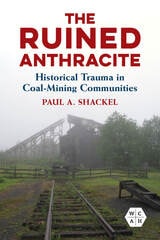
The Ruined Anthracite
Historical Trauma in Coal-Mining CommunitiesPaul A. Shackel
University of Illinois Press, 2023
Insightful and dramatic, The Ruined Anthracite combines archaeology, documentary research, and oral history to render the ongoing human cost of environmental devastation and unchecked capitalism.
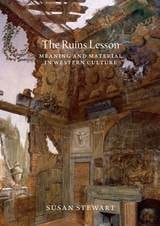
The Ruins Lesson
Meaning and Material in Western CultureSusan Stewart
University of Chicago Press, 2019
Stewart takes us on a sweeping journey through founding legends of broken covenants and original sin, the Christian appropriation of the classical past, and images of decay in early modern allegory. Stewart looks in depth at the works of Goethe, Piranesi, Blake, and Wordsworth, each of whom found in ruins a means of reinventing his art. Lively and engaging, The Ruins Lesson ultimately asks what can resist ruination—and finds in the self-transforming, ever-fleeting practices of language and thought a clue to what might truly endure.
The Ruins of Allegory
Paradise Lost and the Metamorphosis of Epic ConventionCatherine Gimelli Martin
Duke University Press, 1998
Martin shows how Paradise Lost, written at the threshold of the enormous imaginative shift that accompanied the Protestant, scientific, and political revolutions of the seventeenth century, conforms to a prophetic baroque model of allegory similar to that outlined by Walter Benjamin. As she demonstrates, Milton’s experimentation with baroque forms radically reformulates classical epic, medieval romance, and Spenserian allegory to allow for both a naturalistic, empirically responsible understanding of the universe and for an infinite and incomprehensible God. In this way, the resulting poetic world of Paradise Lost is like Milton’s God, an allegorical “ruin” in which the divine is preserved but at the price of a loss of certainty. Also, as Martin suggests, the poem affirmatively anticipates modernity by placing the chief hope of human progress in the fully self-authored subject.
Maintaining a dialogue with a critical tradition that extends from Johnson and Coleridge to the best contemporary Milton scholarship, Martin sets Paradise Lost in both the early modern and the postmodern worlds. Ruins of Allegory will greatly interest all Milton scholars, as well as students of literary criticism and early modern studies.
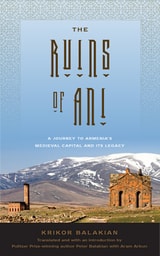
The Ruins of Ani
A Journey to Armenia's Medieval Capital and its LegacyKrikor Balakian
Rutgers University Press, 2019
From the tenth to the thirteenth centuries, the city of Ani was the jewel of the Armenian kingdom, renowned far and wide for its magnificent buildings. Known as the city of 1001 churches, Ani was a center for artistic innovation, and its architecture is a potential missing link between Byzantine and Gothic styles. By the fifteenth century, Ani was virtually abandoned, its stunning buildings left to crumble. Yet its ruins have remained a symbol of cultural accomplishment that looms large in the Armenian imagination.
The Ruins of Ani is a unique combination of history, art criticism, and travel memoir that takes readers on a thousand-year journey in search of past splendors. Today, Ani is a popular tourist site in Turkey, but the city has been falsified in its presentation by the Turkish government in order to erase Armenian history in the wake of the Armenian Genocide. This timely publication also raises questions about the preservation of major historic monuments in the face of post atrocity campaigns of cultural erasure.
Originally written by young priest Krikor Balakian in 1910, just a few years before the Armenian genocide, this book offers a powerful and poignant counterpart to Balakian’s acclaimed genocide memoir Armenian Golgotha. This new translation by the author’s great-nephew, Pulitzer Prize-winning poet Peter Balakian, eloquently renders the book’s vivid descriptions and lyrical prose into English. Including a new introduction that explores Ani’s continued relevance in the twenty-first century, The Ruins of Ani will give readers a new appreciation for this lost city’s status as a pinnacle of both Armenian civilization and human achievement.