Results by title
3745 books match the query 'Europe' and 973 start with t
The Jewish Middle Ages
Carol Bakhos
SBL Press, 2023
For many, the Middle Ages in general evokes a sense of the sinister and brings to mind a world of fear, superstition, and religious fanaticism. For Jews it was a period marked by persecutions, pogroms, and expulsions. Yet at the same time, the Middle Ages was also a time of lively cultural exchange and heightened creativity for Jews. In The Jewish Middle Ages, contributors explore the ways in which the stories of biblical women, including, Eve, Sarah, Hagar, Rebekah, Zipporah, Ruth, Esther, and Judith, make their way into the rich tapestry of medieval Jewish literature, mystical texts, and art, particularly in works emanating from Ashkenazic circles. Contributors include Carol Bakhos, Judith R. Baskin, Elisheva Baumgarten, Dagmar Börner-Klein, Constanza Cordoni, Rachel Elior, Meret Gutmann-Grün, Robert A. Harris, Yuval Katz-Wilfing, Sheila Tuller Keiter, Katrin Kogman-Appel, Gerhard Langer, Aurora Salvatierra Ossorio, and Felicia Waldman. These essays give us a glimpse into the role women played and the authority they assumed in medieval Jewish culture beyond the rabbinic centers of Palestine and Babylonia.
The Jews in Mussolini's Italy
From Equality to PersecutionMichele Sarfatti; Translated by John and Anne C. Tedeschi
University of Wisconsin Press, 2006
The Jews in Polish Culture
Aleksander Hertz
Northwestern University Press, 1988
The Jews of Europe in the Modern Era
A Socio-Historical OutlineVictor Karady
Central European University Press, 2003
The Jews of Poland Between Two World Wars
Edited by Yisrael Gutman
Brandeis University Press, 1991
The Journal of Modern History, volume 92 number 1 (March 2020)
The University of Chicago Press
University of Chicago Press Journals, 2020
The Journal of Modern History, volume 92 number 2 (June 2020)
The University of Chicago Press
University of Chicago Press Journals, 2020
The Journal of Modern History, volume 92 number 3 (September 2020)
The University of Chicago Press
University of Chicago Press Journals, 2020
The Journal of Modern History, volume 92 number 4 (December 2020)
The University of Chicago Press
University of Chicago Press Journals, 2020
The Journal of Modern History, volume 93 number 1 (March 2021)
The University of Chicago Press
University of Chicago Press Journals, 2021
The Journal of Modern History, volume 93 number 2 (June 2021)
The University of Chicago Press
University of Chicago Press Journals, 2021
The Journal of Modern History, volume 93 number 3 (September 2021)
The University of Chicago Press
University of Chicago Press Journals, 2021
The Journal of Modern History, volume 93 number 4 (December 2021)
The University of Chicago Press
University of Chicago Press Journals, 2021
The Journal of Modern History, volume 94 number 1 (March 2022)
The University of Chicago Press
University of Chicago Press Journals, 2022
The Journal of Modern History, volume 94 number 2 (June 2022)
The University of Chicago Press
University of Chicago Press Journals, 2022
The Journal of Modern History, volume 94 number 3 (September 2022)
The University of Chicago Press
University of Chicago Press Journals, 2022
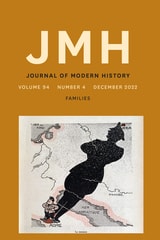
The Journal of Modern History, volume 94 number 4 (December 2022)
The University of Chicago Press
University of Chicago Press Journals, 2022
The Journal of Modern History, volume 95 number 1 (March 2023)
The University of Chicago Press
University of Chicago Press Journals, 2023
The Journal of Modern History, volume 95 number 2 (June 2023)
The University of Chicago Press
University of Chicago Press Journals, 2023
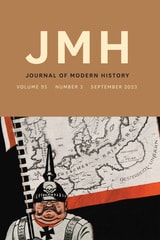
The Journal of Modern History, volume 95 number 3 (September 2023)
The University of Chicago Press
University of Chicago Press Journals, 2023
The Journal of Modern History, volume 95 number 4 (December 2023)
The University of Chicago Press
University of Chicago Press Journals, 2023
The Journal of Modern History, volume 96 number 1 (March 2024)
The University of Chicago Press
University of Chicago Press Journals, 2024
The Journal of Modern History, volume 96 number 2 (June 2024)
The University of Chicago Press
University of Chicago Press Journals, 2024
The Journal of Modern History, volume 96 number 3 (September 2024)
The University of Chicago Press
University of Chicago Press Journals, 2024
The Journal of Modern History, volume 96 number 4 (December 2024)
The University of Chicago Press
University of Chicago Press Journals, 2024
The Journal of Modern History, volume 97 number 1 (March 2025)
The University of Chicago Press
University of Chicago Press Journals, 2025
The Journal of Modern History, volume 97 number 2 (June 2025)
The University of Chicago Press
University of Chicago Press Journals, 2025
The Journal of Modern History, volume 97 number 3 (September 2025)
The University of Chicago Press
University of Chicago Press Journals, 2025
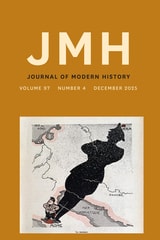
The Journal of Modern History, volume 97 number 4 (December 2025)
The University of Chicago Press
University of Chicago Press Journals, 2025
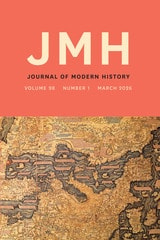
The Journal of Modern History, volume 98 number 1 (March 2026)
The University of Chicago Press
University of Chicago Press Journals, 2026
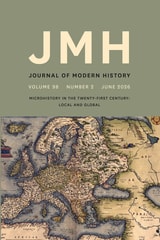
The Journal of Modern History, volume 98 number 2 (June 2026)
The University of Chicago Press
University of Chicago Press Journals, 2026
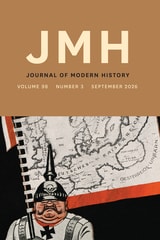
The Journal of Modern History, volume 98 number 3 (September 2026)
The University of Chicago Press
University of Chicago Press Journals, 2026
The Judgment of the Nations
Christopher Dawson
Catholic University of America Press, 2011
The Key of Green
Passion and Perception in Renaissance CultureBruce R. Smith
University of Chicago Press, 2008
Contending that color is a matter of both sensation and emotion, Bruce R. Smith examines Renaissance material culture—including tapestries, clothing, and stonework, among others—as well as music, theater, philosophy, and nature through the lens of sense perception and aesthetic pleasure. At the same time, Smith offers a highly sophisticated meditation on the nature of consciousness, perception, and emotion that will resonate with students and scholars of the early modern period and beyond. Like the key to a map, The Key of Green provides a guide for looking, listening, reading, and thinking that restores the aesthetic considerations to criticism that have been missing for too long.
The Key to The Name of the Rose
Including Translations of All Non-English PassagesAdele J. Haft, Jane G. White, and Robert J. White
University of Michigan Press, 1999
The Kindness of Strangers
The Abandonment of Children in Western Europe from Late Antiquity to the RenaissanceJohn Boswell
University of Chicago Press, 1998
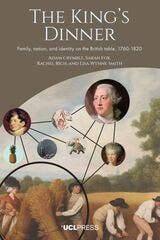
The King’s Dinner
Family, Nation, and Identity on the British table, 1760–1820Adam Crymble, Sarah Fox, Rachel Rich, and Lisa Smith
University College London, 2026
Expanding previous notions of the monarchy and Britishness, this volume examines British identity in the late eighteenth century through the lens of the kitchen.
Drawing on a large dataset of two royal household kitchen ledgers, this book studies the role and influence of food in understanding British identity in the late eighteenth century. Analyzing trade routes, migration, agricultural changes, recipes, and flavors, it argues that Britishness was more complex and multicultural than previously recognized. By situating national identity at the dinner table, the authors show how Britishness was an embodied identity that combined regional, national, and global elements. Combining digital humanities and data science approaches with social and cultural history, The King's Dinner also proposes a new way of understanding the monarchy's position within rather than above the cultural habitus of their subjects.
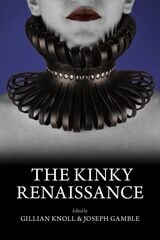
The Kinky Renaissance
Edited by Gillian Knoll and Joseph Gamble
Arizona Center for Medieval and Renaissance Studies, 2024
The Kinky Renaissance is a groundbreaking collection of essays that explore kink as a theoretical analytic, a historical formation, and an aesthetic mode. The essays in this work expand the sexual archive and its lexicon by introducing new vocabularies to familiar sexual scenes in early modern literature and culture and by bringing lesser-known scenes to bear on the study of sexuality in the period. Providing a capacious theory of sexuality and historical precedents for contemporary kinky practices, The Kinky Renaissance explores the erotic potential of early modern literature and pauses over various kinks nestled between and beside them. The collection boldly argues for a broader concept of a kinky Renaissance—one which reorients the terms of both the history of sexuality and queer theory more broadly.
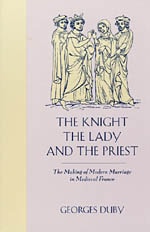
The Knight, the Lady and the Priest
The Making of Modern Marriage in Medieval FranceGeorges Duby
University of Chicago Press, 1993
"It is typical of Duby's modest spirit and his book-long concern with the ancient status of beleaguered wives that he ends his study with a plea: 'We must not forget the women. Much has already been said about them. But how much do we really know?' Not everything, certainly, but far more than we did before the author began these charmingly erudite investigations."—Ken Turan, Time
"It is refreshing to find a historian who is always conscious that we simply do not know what or how people thought 1000 years ago. . . . Duby explains the complicated machinations of the medieval churchman and the paterfamilias in a scholarly but lively style."—Sarah Lawson, New Statesman
"Duby has written an extraordinarily rich book—a panoramic view of medieval marriage and the relations between men and women, full of arresting insights and human detail. . . . It is the work of a master historian at the peak of his powers on a subject of central relevance, compulsive and essential reading."—P. Stafford, British History
Georges Duby (1919-1996) was a member of the Académie française and for many years held the distinguished chair in medieval history at the Collège de France. His books include The Three Orders; The Age of Cathedrals; The Knight, the Lady, and the Priest; Love and Marriage in the Middle Ages; and History Continues, all published by the University of Chicago Press.
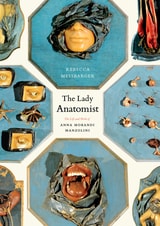
The Lady Anatomist
The Life and Work of Anna Morandi ManzoliniRebecca Messbarger
University of Chicago Press, 2010
Anna Morandi Manzolini (1714-74), a woman artist and scientist, surmounted meager origins and limited formal education to become one of the most acclaimed anatomical sculptors of the Enlightenment. The Lady Anatomist tells the story of her arresting life and times, in light of the intertwined histories of science, gender, and art that complicated her rise to fame in the eighteenth century.
Examining the details of Morandi’s remarkable life, Rebecca Messbarger traces her intellectual trajectory from provincial artist to internationally renowned anatomical wax modeler for the University of Bologna’s famous medical school. Placing Morandi’s work within its cultural and historical context, as well as in line with the Italian tradition of anatomical studies and design, Messbarger uncovers the messages contained within Morandi’s wax inscriptions, part complex theories of the body and part poetry. Widely appealing to those with an interest in the tangled histories of art and the body, and including lavish, full-color reproductions of Morandi’s work, The Lady Anatomist is a sophisticated biography of a true visionary.
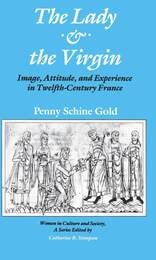
The Lady and the Virgin
Image, Attitude, and Experience in Twelfth-Century FrancePenny Schine Gold
University of Chicago Press, 1985
Vividly recreating the rich texture of medieval life, Gold effectively and eloquently goes beyond a simple equation of social context and representation. In the process. she challenges equally simple judgments of historical periods as being either "good" or "bad" for women.
"[The Lady and the Virgin] presents its findings in a form that should attract students as well as their instructors. The careful and controlled use of so many different kinds of sources . . . offers us a valuable medieval case study in the inner-relationship between the segments of society and its ethos or value system."—Joel T. Rosenthal, The History Teacher
"Something of a tour de force in an interdisciplinary approach to history."—Jo Ann McNamara, Speculum
"[A] well-written, extremely well-researched book. . . . The Lady and the Virgin is useful, readable, and well informed."—R. Howard Bloch, Modern Philology
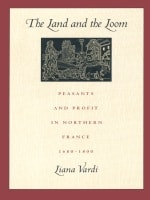
The Land and the Loom
Peasants and Profit in Northern France, 1680–1800Liana Vardi
Duke University Press, 1993
Drawing on evidence culled from parish registers, notarial records, and judicial archives, Liana Vardi outlines the development of the linen weaving trade in Montigny and details the local peasants' participation. The peasants that emerge from her study are not the figures of tradition, driven solely by symbolic attachment to the land and unreasonably devoted to village solidarities. Instead they reveal remarkable flexibility and diversity, not only improving farming methods and raising yields during the eighteenth century, but also using land to finance investments in industry and to develop local business, far-flung commercial networks and complex credit mechanisms. The eighteenth-century French countryside appears as a region and time of capitalist experimentation, cut short by pre-Revolutionary and Revolutionary crises.
Meticulously documented, broadly interpretive, and beautifully written, this fascinating book will permenantly alter conventional perceptions of peasant life and rural industry and, ultimately, the way ordinary people are seen in seemingly distant times and places.
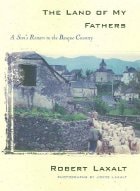
The Land of My Fathers
A Son's Return to the Basque CountryRobert Laxalt
University of Nevada Press, 2024
In 1960, renowned Nevada writer Robert Laxalt moved himself and his family to a small Basque village in the French Pyrenees. The son of Basque emigrants, Laxalt wanted to learn as much as he could about the ancient and mysterious people from which he was descended and about the country from which his parents came. Thanks to his Basque surname and a wide network of family connections, Laxalt was able to penetrate the traditional reserve of the Basques in a way that outsiders rarely can. In the process, he gained rare insight into the nature of the Basques and the isolated, beautiful mountain world where they have lived for uncounted centuries. Based on Laxalt’s personal journals of this and a later sojourn in 1965, The Land of My Fathers is a moving record of a people and their homeland. Through Laxalt’s perceptive eyes and his wife Joyce’s photographs, we observe the Basques’ market days and festivals, join their dove hunts and harvests, share their humor and history, their deep sense of nationalism, their abiding pride in their culture and their homes, and discover the profound sources of the Basques’ strength and their endurance as a people. Photography by Joyce Laxalt.

The Language of Political Incorporation
Chinese Migrants in EuropeAmy Liu
Temple University Press, 2021
In this groundbreaking study, The Language of Political Incorporation, Amy Liu focuses on Chinese migrants in Central-Eastern Europe and their varying levels of political incorporation in the local community. She examines the linguistic diversity of migrant networks, finding institutional trust and civic engagement depend not on national identity, but on the network’s linguistic diversity—namely, whether the operating language is a migrant’s mother tongue or a lingua franca.
The Language of Political Incorporation uses original survey data to assess when the Chinese engage positively with the authorities and when they become civic minded. The results are surprising. In Hungary, the Chinese community has experienced high levels of political incorporation in part because they have not been targeted by anti-immigrant rhetoric and policies. In contrast, migrants in Romania sought the assistance of the Chinese embassy to fight an effort to collect back taxes.
Liu also compares the Chinese experiences in Central-Eastern Europe with those of Muslims in the region, as well as how the Chinese are treated in Western Europe. Additionally, she considers how the local communities perceive the Chinese. The Language of Political Incorporation concludes by offering best practices for how governments can help migrants become more trusting of—and have greater involvement with—locals in their host countries. Ultimately, Liu demonstrates the importance of linguistic networks for the incorporation of immigrants.
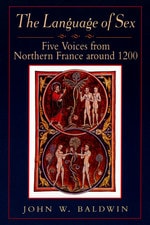
The Language of Sex
Five Voices from Northern France around 1200John W. Baldwin
University of Chicago Press, 1994
John Baldwin introduces five representative voices from the turn of the twelfth century in northern France: Pierre the Chanter speaks for the theological doctrine of Augustine; the Prose Salernitan Questions, for the medical theories of Galen; Andre the Chaplain, for the Ovidian literature of the schools; Jean Renart, for the contemporary romances; and Jean Bodel, for the emerging voices of the fabliaux. Baldwin juxtaposes their views on a range of essential subjects, including social position, the sexual body, desire and act, and procreation. The result is a fascinating dialogue of how they agreed or disagreed with, ignored, imitated, or responded to each other at a critical moment in the development of European ideas about sexual desire, fulfillment, morality, and gender.
These spokesmen allow us into the discussion of sexuality inside the church and schools of the clergy, in high and popular culture of the leity. This heterogeneous discussion also offers a startling glimpse into the construction of gender specific to this moment, when men and women enjoyed equal status in sexual matters, if nowhere else.
Taken together, these voices extend their reach, encompass their subject, and point to a center where social reality lies. By articulating reality at its varied depths, this study takes its place alongside groundbreaking works by James Brundage, John Boswell, and Leah Otis in extending our understanding of sexuality and sexual behavior in the Middle Ages.
"Superb work. . . . These five kinds of discourse are not often treated together in scholarly writing, let alone compared and contrasted so well."—Edward Collins Vacek, Theological Studies
"[Baldwin] has made the five voices speak to us in a language that is at one and the same time familiar and alien in its resonance and accents. This is a truly exceptional book, interdisciplinary in the real sense of the word, which is surely destined to become a landmark in medieval studies."—Keith Busby, Bryn Mawr Reviews
"[Baldwin's] attempt to 'listen' to these distant voices and translate their language of sex into our own raises challenging methodological questions that will be of great interest to historians and literary scholars alike."—John P. Dalton, Comitatus
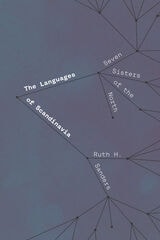
The Languages of Scandinavia
Seven Sisters of the NorthRuth H. Sanders
University of Chicago Press, 2017
While the two linguistic families that comprise Scandinavia’s languages ultimately have differing origins, the Seven Sisters have coexisted side by side for millennia. As Sanders reveals, a crisscrossing of names, territories, and even to some extent language genetics—intimate language contact—has created a body of shared culture, experience, and linguistic influences that is illuminated when the story of these seven languages is told as one. Exploring everything from the famed whalebone Lewis Chessmen of Norse origin to the interactions between the Black Death and the Norwegian language, The Languages of Scandinavia offers profound insight into languages with a cultural impact deep-rooted and far-reaching, from the Icelandic sagas to Swedish writer Stieg Larsson’s internationally popular Millennium trilogy. Sanders’s book is both an accessible work of linguistic scholarship and a fascinating intellectual history of language.
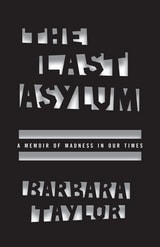
The Last Asylum
A Memoir of Madness in Our TimesBarbara Taylor
University of Chicago Press, 2015
The Last Asylum is Taylor’s breathtakingly blunt and brave account of those years. In it, Taylor draws not only on her experience as a historian, but also, more importantly, on her own lived history at Friern— once known as the Colney Hatch Lunatic Asylum and today the site of a luxury apartment complex. Taylor was admitted to Friern in July 1988, not long before England’s asylum system began to undergo dramatic change: in a development that was mirrored in America, the 1990s saw the old asylums shuttered, their patients left to plot courses through a perpetually overcrowded and underfunded system of community care. But Taylor contends that the emptying of the asylums also marked a bigger loss, a loss of community. She credits her own recovery to the help of a steadfast psychoanalyst and a loyal circle of friends— from Magda, Taylor’s manic-depressive roommate, to Fiona, who shares tips for navigating the system and stories of her boyfriend, the “Spaceman,” and his regular journeys to Saturn. The forging of that network of support and trust was crucial to Taylor’s recovery, offering a respite from the “stranded, homeless feelings” she and others found in the outside world.
A vivid picture of mental health treatment at a moment of epochal change, The Last Asylum is also a moving meditation on Taylor’s own experience, as well as that of millions of others who struggle with mental illness.
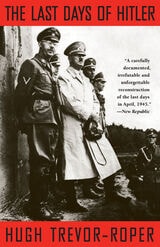
The Last Days of Hitler
Hugh Trevor-Roper
University of Chicago Press, 1992
"From exhaustive research [Trevor-Roper] has put together a carefully documented, irrefutable, and unforgettable reconstruction of the last days in April, 1945."—New Republic
"A book sound in its scholarship, brilliant in its presentation, a delight for historians and laymen alike."—A. J. P. Taylor, New Statesman

The Last Empire
Thirty Years of Portuguese DecolonizationAntónio Costa Pinto
Intellect Books, 2003
This book is the result of a conference organised by the Contemporary Portuguese Political History Research Centre (CPHRC) and the University of Dundee that took place during September 2000. The purpose of this conference, and the resulting book, was to bring together various experts in the field to analyse and debate the process of Portuguese decolonisation, which was then 25 years old, and the effects of this on the Portuguese themselves. For over one century, the Portuguese state had defined its foreign policy on the basis of its vast empire &endash; this was the root of its 'Atlanticist' vision. The outbreak of war of liberation in its African territories, which were prompted by the new international support for self determination in colonised territories, was a serious threat that undermined the very foundations of the Portuguese state. This book examines the nature of this threat, how the Portuguese state initially attempted to overcome it by force, and how new pressures within Portuguese society were given space to emerge as a consequence of the colonial wars.
This is the first book that takes a multidisciplinary look at both the causes and the consequences of Portuguese decolonisation &endash; and is the only one that places the loss of Portugal's Eastern Empire in the context of the loss of its African Empire. Furthermore, it is the only English language book that relates the process of Portuguese decolonisation with the search for a new Portuguese vision of its place in the world.
This book is intended for anyone who is interested in regime change, decolonisation, political revolutions and the growth and development of the European Union. It will also be useful for those who are interested in contemporary developments in civil society and state ideologies. Given that a large part of the book is dedicated to the process of change in the various countries of the former Portuguese Empire, it will also be of interest to students of Africa. It will be useful to those who study decolonisation processes within the other former European Empires, as it provides comparative detail. The book will be most useful to academic researchers and students of comparative politics and area studies.
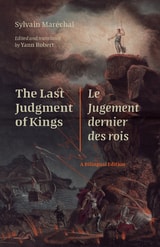
The Last Judgment of Kings / Le Jugement dernier des rois
A Bilingual EditionYann Robert
Bucknell University Press, 2025
Joué pour la première fois le lendemain de l’exécution de Marie-Antoinette, Le Jugement dernier des rois met en scène le procès burlesque des autres rois et reines d’Europe : exhibés et enchaînés tels des animaux, contraints de se battre pour un tonneau de biscuits, et finalement anéantis par l’éruption spectaculaire d’un volcan. Tel est le contexte scandaleux—tragédie et farce à la fois—de la pièce la plus célèbre de la Révolution française, bien connue de tous les spécialistes de cette période. Jusqu’à maintenant, pourtant, il n’existait ni édition critique ni traduction anglaise de cet ouvrage historique. Notre édition bilingue fait revivre la pièce de Maréchal et la replace au centre des plus grands débats chez les historiens de la Révolution, traitant de justice, religion, commémoration, comédie, et propagande. Provocateur, facile à lire, et concis—parfaitement adapté aux étudiants d’un cours de français ou d’histoire—Le Jugement dernier des rois propose ainsi une introduction idéale à la période révolutionnaire et à ses principales controverses.
Published by Bucknell University Press. Distributed worldwide by Rutgers University Press.