Results by title
43 books match the query 'Anthropocene'

A Pragmatism of Beginnings
Governing Crises in the AnthropocenePol Bargués
University of Michigan Press, 2027
As climate change, pandemics, disasters, migrations, and conflicts increasingly overlap, crises are becoming more complex and difficult to address. The Anthropocene is an era characterized by uncertainty and contestation, in which traditional approaches to crisis management are no longer working. This book examines the ideas that have emerged to help societies move forward, including resilience, navigation, adaptation, precaution, and slow peacebuilding. While these approaches promise hope and progress, A Pragmatism of Beginnings critically highlights their limitations, showing how they often focus on coping with crises in ways that merely preserve and reproduce a decaying status quo.
Drawing on philosophical pragmatism, the book places these imaginaries that drive crisis management today in dialogue with the work of the classical pragmatists William James, John Dewey, and Jane Addams, as well as contemporary philosophers Bruno Latour, Graham Harman, and Elizabeth Grosz, to assess both their promises and their limitations. Across a series of case studies covering disaster response, peacebuilding, global health, climate governance, migration management, and the Women, Peace and Security agenda, the book shows how contemporary crisis governance often seeks to preserve the status quo by managing risks and avoiding breakdown rather than pursue transformative change. A Pragmatism of Beginnings argues that responding to today’s crises requires more; it also demands the courage and imagination to seize new beginnings.
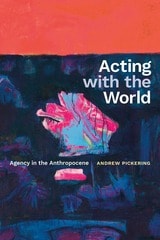
Acting with the World
Agency in the AnthropoceneAndrew Pickering
Duke University Press, 2025
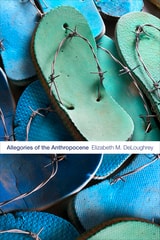
Allegories of the Anthropocene
Elizabeth M. DeLoughrey
Duke University Press, 2019
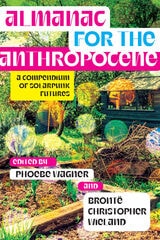
Almanac for the Anthropocene
A Compendium of Solarpunk FuturesPhoebe Wagner
West Virginia University Press, 2022
Original voices from across the solarpunk movement, which positions ingenuity, generativity, and community as ways to resist hopelessness in response to the climate crisis.
Almanac for the Anthropocene collects original voices from across the solarpunk movement, which positions ingenuity, generativity, and community as beacons of resistance to the hopelessness often inspired by the climate crisis. To point toward practical implementation of the movement’s ideas, it gathers usable blueprints that bring together theory and practice. The result is a collection of interviews, recipes, exercises, DIY instructions, and more—all of it amounting to a call to create hope through action.
Inspired by a commitment to the idea that there can be no environmental justice without decolonial and racial justice, Almanac for the Anthropocene unites in a single volume both academic and practical responses to environmental crisis.
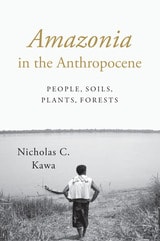
Amazonia in the Anthropocene
People, Soils, Plants, ForestsBy Nicholas C. Kawa
University of Texas Press, 2016
Widespread human alteration of the planet has led many scholars to claim that we have entered a new epoch in geological time: the Anthropocene, an age dominated by humanity. This ethnography is the first to directly engage the Anthropocene, tackling its problems and paradoxes from the vantage point of the world’s largest tropical rainforest.
Drawing from extensive ethnographic research, Nicholas Kawa examines how pre-Columbian Amerindians and contemporary rural Amazonians have shaped their environment, describing in vivid detail their use and management of the region’s soils, plants, and forests. At the same time, he highlights the ways in which the Amazonian environment resists human manipulation and control—a vital reminder in this time of perceived human dominance. Written in engaging, accessible prose, Amazonia in the Anthropocene offers an innovative contribution to debates about humanity’s place on the planet, encouraging deeper ecocentric thinking and a more inclusive vision of ecology for the future.
Anthropos and the Material
Penny Harvey, Christian Krohn-Hansen, and Knut Nustad, editors
Duke University Press, 2019
Archives of the Anthropocene
Visual Grammars of Deep TimeYuriko Furuhata
Duke University Press, 2026
At Home in the Anthropocene
Amy D. Propen
The Ohio State University Press, 2022
By employing the tenets of posthumanism, compassionate conservation, and entangled empathy—and making them accessible through storytelling and narrative—Propen offers new perspectives about how to more compassionately and productively understand ideas about home, connectivity, and coexistence across a range of places and ecosystems. Uniquely conceptualized to include narrative related to the Anthropause, as well as travel and nature writing amidst COVID-19, At Home in the Anthropocene engages with questions about home and belonging in generative ways that attempt to open up possibilities for sustainable futures in which we may productively coexist with our more-than-human kin.
Break Up the Anthropocene
Steve Mentz
University of Minnesota Press, 2019
Takes the singular eco-catastrophic “Age of Man” and redefines this epoch
We live in a new world: the Anthropocene. The Age of Man is defined in many ways, and most dramatically through climate change, mass extinction, and human marks in the geological record. Ideas of the Anthropocene spill out from the geophysical sciences into the humanities, social sciences, the arts, and mainstream debates—but it’s hard to know what the new coinage really means. Break Up the Anthropocene argues that this age should subvert imperial masculinity and industrial conquest by opening up the plural possibilities of Anthropocene debates of resilience, adaptation, and the struggle for environmental justice.
Forerunners: Ideas First
Short books of thought-in-process scholarship, where intense analysis, questioning, and speculation take the lead
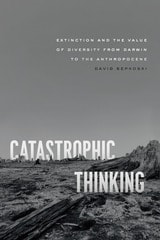
Catastrophic Thinking
Extinction and the Value of Diversity from Darwin to the AnthropoceneDavid Sepkoski
University of Chicago Press, 2020
We live in an age in which we are repeatedly reminded—by scientists, by the media, by popular culture—of the looming threat of mass extinction. We’re told that human activity is currently producing a sixth mass extinction, perhaps of even greater magnitude than the five previous geological catastrophes that drastically altered life on Earth. Indeed, there is a very real concern that the human species may itself be poised to go the way of the dinosaurs, victims of the most recent mass extinction some 65 million years ago.
How we interpret the causes and consequences of extinction and their ensuing moral imperatives is deeply embedded in the cultural values of any given historical moment. And, as David Sepkoski reveals, the history of scientific ideas about extinction over the past two hundred years—as both a past and a current process—is implicated in major changes in the way Western society has approached biological and cultural diversity. It seems self-evident to most of us that diverse ecosystems and societies are intrinsically valuable, but the current fascination with diversity is a relatively recent phenomenon. In fact, the way we value diversity depends crucially on our sense that it is precarious—that it is something actively threatened, and that its loss could have profound consequences. In Catastrophic Thinking, Sepkoski uncovers how and why we learned to value diversity as a precious resource at the same time as we learned to think catastrophically about extinction.
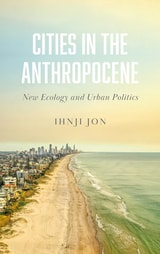
Cities in the Anthropocene
New Ecology and Urban PoliticsIhnji Jon
Pluto Press, 2021
Climate change is real, and extreme weather events are its physical manifestations. These extreme events affect how we live and work in cities, and subsequently the way we design, plan, and govern them. Taking action ‘for the environment’ is not only a moral imperative; instead, it is activated by our everyday experience in the city.
Based on the author’s site visits and interviews in Darwin (Australia), Tulsa (Oklahoma), Cleveland (Ohio), and Cape Town (South Africa), this book tells the story of how cities can lead a transformative pro-environment politics.
National governments often fail to make binding agreements that bring about radical actions for the environment. This book shows how cities, as local sites of mobilizing a collective, political agenda, can be frontiers for activating the kind of environmental politics that appreciates the role of ‘nature’ in the everyday functioning of our urban life.
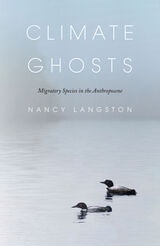
Climate Ghosts
Migratory Species in the AnthropoceneNancy Langston
Brandeis University Press, 2021
Environmental historian Nancy Langston explores three “ghost species” in the Great Lakes watershed—woodland caribou, common loons, and lake sturgeon. Ghost species are those that have not gone completely extinct, although they may be extirpated from a particular area. Their traces are still present, whether in DNA, in small fragmented populations, in lone individuals roaming a desolate landscape in search of a mate. We can still restore them if we make the hard choices necessary for them to survive. In this meticulously researched book, Langston delves into how climate change and human impact affected these now ghost species. Climate Ghosts covers one of the key issues of our time.
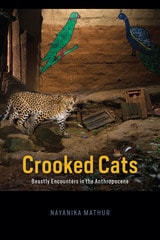
Crooked Cats
Beastly Encounters in the AnthropoceneNayanika Mathur
University of Chicago Press, 2021
There are many theories on why and how a big cat comes to prey on humans, with the ecological collapse emerging as a central explanatory factor. Yet, uncertainty over the precise cause of crookedness persists. Crooked Cats explores in vivid detail the many lived complexities that arise from this absence of certain knowledge to offer startling new insights into both the governance of nonhuman animals and their intimate entanglements with humans. Through creative ethnographic storytelling, Crooked Cats illuminates the Anthropocene in three critical ways: as method, as a way of reframing human-nonhuman relations on the planet, and as a political tool indicating the urgency of academic engagement. Weaving together “beastly tales” spun from encounters with big cats, Mathur deepens our understanding of the causes, consequences, and conceptualization of the climate crisis.

ESC
Sonic Adventure in the AnthropoceneJacob Smith
University of Michigan Press, 2019
ESC takes as its point of departure the CBS Radio adventure series Escape (1947–54). The postwar years saw both a decline in popularity for American radio drama, and the dawn of the Anthropocene era, with human beings emerging as the primary force affecting the earth’s systems.
Jacob Smith considers Escape’s adventure stories from an ecocritical perspective, analyzing the geographic, sociopolitical, and ecological details of the stories to reveal how they are steeped in social and environmental history.
The work of contemporary sound artists and field recordists underscores the relevance of sound in these narratives and demonstrates audio’s potential as a key medium for scholarship. ESC features recordings by some of the most prominent sound artists working in this area, including Daniel Blinkhorn, Peter Cusak, David Dunn, JLIAT, Christina Kubisch, Francisco López, Sally Ann McIntyre, Chris Watson, and Jana Winderen.
ESC makes the urgency of our critical ecological moment audible in a new way. The audio essays articulate what it means to live in an Anthropocene era and posit alternative ways of conceptualizing our historical moment. ESC sharpens our ability to listen and respond to our world with greater ecological awareness.
All publication resources for ESC, including the introductory essay, audio materials, and backmatter, are available on Fulcrum. The audio materials are also available on Apple Podcasts.
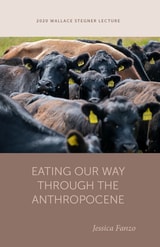
Eating Our Way through the Anthropocene
Jessica Fanzo
University of Utah Press, 2022
Originally delivered as the Stegner Lecture at the 2020 annual symposium of the Wallace Stegner Center for Land, Resources and the Environment, this book explores how, in the context of the broad global trends of population growth, climate crisis, and inequitable food availability, food systems need to be re-oriented to ensure they can produce enough food to nourish the world. Fanzo discusses moving toward on-farm sustainable food production practices, decreasing food loss and waste, addressing poverty by creating jobs and decent livelihoods, and providing safe, affordable, and healthy diets for everyone. At the same time, food systems must decrease the pressure on biodiversity loss, conserve land and water resources, minimize air and water pollution, and lower greenhouse gas emissions.
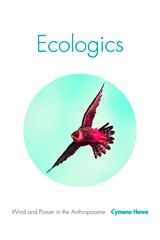
Ecologics
Wind and Power in the AnthropoceneCymene Howe
Duke University Press, 2019
In her volume, Ecologics, Howe narrates how an antidote to the Anthropocene became both failure and success. Tracking the development of what would have been Latin America's largest wind park, Howe documents indigenous people's resistance to the project and the political and corporate climate that derailed its renewable energy potential. Using feminist and more-than-human theories, Howe demonstrates how the dynamics of energy and environment cannot be captured without understanding how human aspirations for energy articulate with nonhuman beings, technomaterial objects, and the geophysical forces that are at the heart of wind and power.
Ecologies of a Storied Planet in the Anthropocene
Serpil Oppermann
West Virginia University Press, 2023
Ecologies of a Storied Planet in the Anthropocene is a tour de force. With transdisciplinarity and theoretical lucidity, it rethinks the Anthropocene from a material ecocritical perspective, envisioning innovative modes of knowledge for deeper understandings of Anthropocene ecologies. Focusing on nonhuman agencies, Serpil Oppermann shows in fascinating detail how to better imagine an ecological future on our storied planet that has suffered enormously from an anthropocentric mindset.
Endlings
Fables for the AnthropoceneLydia Pyne
University of Minnesota Press, 2022
Amid the historical decimation of species around the globe, a new way into the language of loss
An endling is the last known individual of a species; when that individual dies, the species becomes extinct. These “last individuals” are poignant characters in the stories that humans tell themselves about today’s Anthropocene. In this evocative work, Lydia Pyne explores how discussion about endlings—how we tell their histories—draws on deep traditions of storytelling across a variety of narrative types that go well beyond the science of these species’ biology or their evolutionary history.
Endlings provides a useful and thoughtful discussion of species concepts: how species start and how (and why) they end, what it means to be a “charismatic” species, the effects of rewilding, and what makes species extinction different in this era. From Benjamin the thylacine to Celia the ibex to Lonesome George the Galápagos tortoise, endlings, Pyne shows, have the power to shape how we think about grief, mourning, and loss amid the world’s sixth mass extinction.
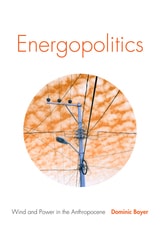
Energopolitics
Wind and Power in the AnthropoceneDominic Boyer
Duke University Press, 2019
In his volume, Energopolitics, Boyer examines the politics of wind power and how it is shaped by myriad factors, from the legacies of settler colonialism and indigenous resistance to state bureaucracy and corporate investment. Drawing on interviews with activists, campesinos, engineers, bureaucrats, politicians, and bankers, Boyer outlines the fundamental impact of energy and fuel on political power. Boyer also demonstrates how large conceptual frameworks cannot adequately explain the fraught and uniquely complicated conditions on the isthmus, illustrating the need to resist narratives of anthropocenic universalism and to attend to local particularities.
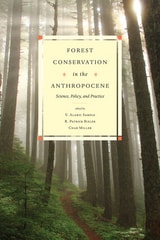
Forest Conservation in the Anthropocene
Science, Policy, and PracticeV. Alaric Sample
University Press of Colorado, 2016
Forest Conservation in the Anthropocene provides thought-provoking insight into the ongoing environmental crises that climate change is generating and raises critical questions about how public and private land managers in North America will adapt to the climatological disruptions that are already transforming the ecological structures of these forests.
In this pathbreaking anthology, a team of leading environmental researchers probes the central dilemmas that ecologists, forest land managers, state and federal agencies, and grassroots organizations are confronting—and will continue to confront—in the coming century. Each chapter examines strategies that are currently being tested across the country as scientists, citizen-scientists, policy makers, academics, and activists work to grasp their options and opportunities for a future that will be shaped by ongoing environmental upheaval.
Successful adaptation to the challenges of climate change requires a transdisciplinary perspective. Forest Conservation in the Anthropocene provides a compelling set of arguments and case studies that underscores the need for innovative policies and energetic actions.
Contributors: Craig D. Allen, Mark Anderson, Susan Beecher, R. Travis Belote, Timothy J. Brown, Anne A. Carlson, Tim Caro, Grace K. Charles, Dave Cleaves, Dena J. Clink, Ayesha Dinshaw, R. Kasten Dumroese, Jonas Epstein, Alexander M. Evans, Todd Gartner, Jessica E. Halofsky, Nels Johnson, Linda A. Joyce, Paige Lewis, Laura Falk McCarthy, Heather McGray, Constance I. Millar, James Mulligan, Chadwick Dearing, David L. Peterson, Will Price, Janine M. Rice, Jason Riggio, Tania Schoennagel, Mark L. Shaffer, Curt Stager, Scott L. Stephens, Thomas W. Swetnam, Gary M. Tabor, Christopher Topik, Monica G. Turner, Thomas T. Veblen, Alexandra M. Weill, Anthony L. Westerling, Carolyn Whitesell, Mary I. Williams
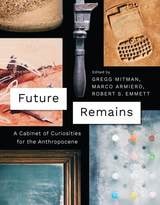
Future Remains
A Cabinet of Curiosities for the AnthropoceneEdited by Gregg Mitman, Marco Armiero, Robert S. Emmett
University of Chicago Press, 2018
Future Remains is a thoughtful and creative meditation on these questions. The fifteen objects gathered in this book resemble more the tarots of a fortuneteller than the archaeological finds of an expedition—they speak of planetary futures. Marco Armiero, Robert S. Emmett, and Gregg Mitman have assembled a cabinet of curiosities for the Anthropocene, bringing together a mix of lively essays, creatively chosen objects, and stunning photographs by acclaimed photographer Tim Flach. The result is a book that interrogates the origins, implications, and potential dangers of the Anthropocene and makes us wonder anew about what exactly human history is made of.
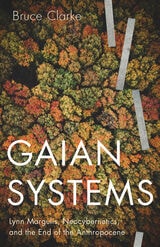
Gaian Systems
Lynn Margulis, Neocybernetics, and the End of the AnthropoceneBruce Clarke
University of Minnesota Press, 2020
A groundbreaking look at Gaia theory’s intersections with neocybernetic systems theory
Often seen as an outlier in science, Gaia has run a long and varied course since its formulation in the 1970s by atmospheric chemist James Lovelock and microbiologist Lynn Margulis. Gaian Systems is a pioneering exploration of the dynamic and complex evolution of Gaia’s many variants, with special attention to Margulis’s foundational role in these developments.
Bruce Clarke assesses the different dialects of systems theory brought to bear on Gaia discourse. Focusing in particular on Margulis’s work—including multiple pieces of her unpublished Gaia correspondence—he shows how her research and that of Lovelock was concurrent and conceptually parallel with the new discourse of self-referential systems that emerged within neocybernetic systems theory. The recent Gaia writings of Donna Haraway, Isabelle Stengers, and Bruno Latour contest its cybernetic status. Clarke engages Latour on the issue of Gaia’s systems description and extends his own systems-theoretical synthesis under what he terms “metabiotic Gaia.” This study illuminates current issues in neighboring theoretical conversations—from biopolitics and the immunitary paradigm to NASA astrobiology and the Anthropocene. Along the way, he points to science fiction as a vehicle of Gaian thought.
Delving into many issues not previously treated in accounts of Gaia, Gaian Systems describes the history of a theory that has the potential to help us survive an environmental crisis of our own making.
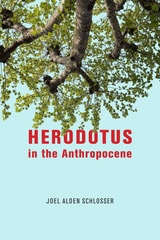
Herodotus in the Anthropocene
Joel Alden Schlosser
University of Chicago Press, 2020
Schlosser shows that the Histories, which chronicle the interactions among the Greek city-states and their neighbors that culminated in the Persian Wars, illuminate a telling paradox: at those times when humans appear capable of exerting more influence than ever before, they must also assert collective agency to avoid their own downfall. Here, success depends on nomoi, or the culture, customs, and laws that organize human communities and make them adaptable through cooperation. Nomoi arise through sustained contact between humans and their surroundings and function best when practiced willingly and with the support of strong commitments to the equality of all participants. Thus, nomoi are the very substance of political agency and, ultimately, the key to freedom and ecological survival because they guide communities to work together to respond to challenges. An ingenious contribution to political theory, political philosophy, and ecology, Herodotus in the Anthropocene reminds us that the best perspective on the present can often be gained through the lens of the past.
History 4° Celsius
Search for a Method in the Age of the AnthropoceneIan Baucom
Duke University Press, 2020
How Do We Think About Population in the Anthropocene?
Edited by Alison Bashford, Duncan Kelly, and David Nally
Prickly Paradigm Press, 2026
How do we think about population in the Anthropocene?
The “Great Acceleration” describes a set of interrelated human-driven transformations of Earth’s systems, including the eightfold population growth since 1800. Yet ideas about population in the epoch many call the Anthropocene sit uncomfortably in contemporary discussions.
How Do We Think About Population in the Anthropocene? brings together the world’s key thinkers in Anthropocene studies from a wide range of disciplines, including geology, geography, demography, history, political theory, and more. How do we think about population in the Anthropocene, or should we even think in terms of population at all? The twelve short essays in this pamphlet offer responses that reimagine how we think about economy, environment, consumption, reproduction, and extinction.
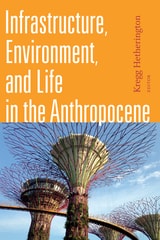
Infrastructure, Environment, and Life in the Anthropocene
Kregg Hetherington, editor
Duke University Press, 2019
Contributors. Nikhil Anand, Andrea Ballestero, Bruce Braun, Ashley Carse, Gastón R. Gordillo, Kregg Hetherington, Casper Bruun Jensen, Joseph Masco, Shaylih Muehlmann, Natasha Myers, Stephanie Wakefield, Austin Zeiderman
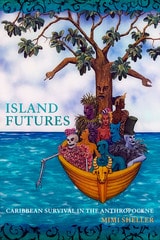
Island Futures
Caribbean Survival in the AnthropoceneMimi Sheller
Duke University Press, 2020
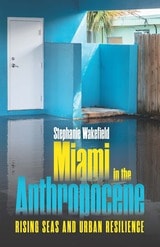
Miami in the Anthropocene
Rising Seas and Urban ResilienceStephanie Wakefield
University of Minnesota Press, 2025
Reimagining adaptation amidst climate change–driven mutations of urban space and life
Between its susceptibility to flooding and an ever-expanding real estate market powered by global surges of people and capital, Miami is an epicenter of the urban Anthropocene and a living laboratory for adaptation to sea level rise. Miami in the Anthropocene explores the social, environmental, and technical transformations involved in climate adaptation infrastructure and imaginaries in a global city seen as climate change ground zero.
Using Miami as a compelling microcosm for understanding the complex interplay between urbanization and environmental upheaval in the twenty-first century, Stephanie Wakefield shows how “aqua-urban futures” are being imagined for the city, from governmental scenario exercises for severe weather events to proposals to transform the city’s metropolitan area into an archipelago of islands connected by bridges. She examines the shifts reweaving the fabric of urban life and presents designs that imagine dramatic new ways of living with water.
Grounded in the dynamic landscape of Miami but reaching far beyond its shores, Miami in the Anthropocene delves into the broader debates shaping urban thought and practice in the Anthropocene. Focusing on postresilience urban designs, Wakefield illuminates the path toward a future where cities embrace opportunities for evolution rather than merely for survival.

Minimal Ethics for the Anthropocene
Joanna Zylinska
Michigan Publishing Services, 2014
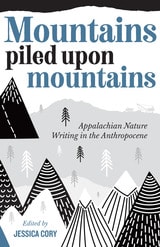
Mountains Piled upon Mountains
Appalachian Nature Writing in the AnthropoceneJessica Cory
West Virginia University Press, 2019
Mountains Piled upon Mountains features nearly fifty writers from across Appalachia sharing their place-based fiction, literary nonfiction, and poetry. Moving beyond the tradition of transcendental nature writing, much of the work collected here engages current issues facing the region and the planet (such as hydraulic fracturing, water contamination, mountaintop removal, and deforestation), and provides readers with insights on the human-nature relationship in an era of rapid environmental change.
This book includes a mix of new and recent creative work by established and emerging authors. The contributors write about experiences from northern Georgia to upstate New York, invite parallels between a watershed in West Virginia and one in North Carolina, and often emphasize connections between Appalachia and more distant locations. In the pages of Mountains Piled upon Mountains are celebration, mourning, confusion, loneliness, admiration, and other emotions and experiences rooted in place but transcending Appalachia’s boundaries.
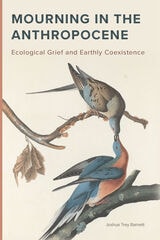
Mourning in the Anthropocene
Ecological Grief and Earthly CoexistenceJoshua Trey Barnett
Michigan State University Press, 2022
Narrative in the Anthropocene
Erin James
The Ohio State University Press, 2022
Planet Work
Rethinking Labor and Leisure in the AnthropoceneRyan Hediger
Bucknell University Press, 2023
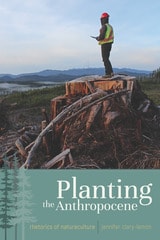
Planting the Anthropocene
Rhetorics of NaturecultureJennifer Clary-Lemon
Utah State University Press, 2019
Using the results of interviews with seasonal Canadian tree planters, Jennifer Clary-Lemon interrogates the complex and messy imbrication of nature-culture through the inadequate terminology used to describe the actual circumstances of the planters’ work and lives—and offers alternative ways to conceptualize them. Although silvicultural workers do engage with the limiting rhetoric of efficiency and humanism, they also make rhetorical choices that break down the nature-culture divide and orient them on a continuum that blurs the boundaries between the given and the constructed, the human and nonhuman. Tree-planting work is approached as a site of a deep-seated materiality—a continued re-creation of the land’s “disturbance”—rather than a simplistic form of doing good that further separates humans from landscapes.
Jennifer Clary-Lemon’s view of nature and the Anthropocene through the lens of material rhetorical studies is thoroughly original and will be of great interest to students and scholars of rhetoric and composition, especially those focused on the environment.

Rivers on the Move
Waterways in Human Life from the Ice Age to the AnthropoceneBathesheba Demuth, Mark H. Healey, Giacomo Parrinello, and Laurence C. Smith, editors
Duke University Press, 2027
Rubber Boots Methods for the Anthropocene
Doing Fieldwork in Multispecies WorldsAstrid Oberborbeck Andersen
University of Minnesota Press, 2023
A methodological follow-up to Arts of Living on a Damaged Planet
The environmental and climatic crises of our time are fundamentally multispecies crises. And the Anthropocene, a time of “human-made” disruptions on a planetary scale, is a disruption of the fabric of life as a whole. The contributors to Rubber Boots Methods for the Anthropocene argue that understanding the multispecies nature of these disruptions requires multispecies methods.
Answering methodological challenges posed by the Anthropocene, Rubber Boots Methods for the Anthropocene retools the empirical study of the socioecological chaos of the contemporary moment across the arts, human science, and natural science. Based on critical landscape history, multispecies curiosity, and collaboration across disciplines and knowledge systems, the volume presents thirteen transdisciplinary accounts of practical methodological experimentation, highlighting diverse settings ranging from the High Arctic to the deserts of southern Africa and from the pampas of Argentina to the coral reefs of the Western Pacific, always insisting on the importance of firsthand, “rubber boots” immersion in the field.
The methodological companion to Arts of Living on a Damaged Planet: Ghosts and Monsters of the Anthropocene (Minnesota, 2017), this collection puts forth empirical studies of the multispecies messiness of contemporary life that investigate some of the critical questions of our time.
Contributors: Filippo Bertoni, Museum für Naturkunde, Berlin; Harshavardhan Bhat, U of Westminster; Nathalia Brichet, U of Copenhagen; Janne Flora, Aarhus U, Denmark; Natalie Forssman, U of British Columbia; Peter Funch, Aarhus U; Kirsten Hastrup, U of Copenhagen; Colin Hoag, Smith College; Joseph Klein, U of California, Santa Cruz; Andrew S. Mathews, U of California, Santa Cruz; Daniel Münster, U of Oslo; Ursula Münster, U of Oslo; Jon Rasmus Nyquist, U of Oslo; Katy Overstreet, U of Copenhagen; Pierre du Plessis, U of Oslo; Meredith Root-Bernstein; Heather Anne Swanson, Aarhus U; Anna Lowenhaupt Tsing, U of California,
Santa Cruz; Stine Vestbo.
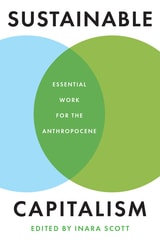
Sustainable Capitalism
Essential Work for the AnthropoceneEdited by Inara Scott
University of Utah Press, 2024
Sustainable Capitalism takes on the challenge of sustainability from a uniquely interdisciplinary and diverse perspective, offering both theory and tools for action. Topics range from an analysis of the foundations and definition of capitalism to the specific regulatory mechanisms that may be necessary to rein in its current, unsustainable trajectory. Readers will find nuanced and important analyses of options and potential outcomes that are not available in any other work. This book is essential reading for anyone concerned about the path we are on and how we might improve the lives of people around the globe.
https://www.sustainablecapitalismbook.com/

The Next Social Contract
Animals, the Anthropocene, and BiopoliticsWayne Gabardi
Temple University Press, 2017
In his provocative book The Next Social Contract, Wayne Gabardi rigorously considers the fate of animals in the twenty-first century. He claims that if we are to address the challenges raised by the Anthropocene—the period where nonhuman beings tend to be mere extras, often subsumed under the umbrella notion of “nature”—we need to radically rethink our basic ethical outlook and develop a new, “more-than-human” social contract.
Gabardi’s wide-ranging and multidisciplinary analysis focuses on four principal battlegrounds of animal biopolitics in the twenty first century: the extinction of wild animals, the crisis of oceanic animals, industrialized farm animals and the future of industrial agribusiness, and the situation of contact-zone animals moving into human-occupied habitats.
In his recasting of the social contract, Gabardi envisions a culture shift in human-animal relations toward posthumanism that features the ethical and political prioritization of animal life so it is on par with that of human well-being.
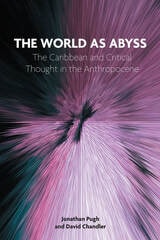
The World as Abyss
The Caribbean and Critical Thought in the AnthropoceneJonathan Pugh and David Chandler
University of Westminster Press, 2023
This book is about a distinctive ‘abyssal’ approach to the crisis of modernity. In this framing, influenced by contemporary critical Black studies, another understanding of the world of modernity is foregrounded – a world violently forged through the projects of Indigenous dispossession, chattel slavery and colonial world-making. Modern and colonial world-making violently forged the ‘human’ by dividing those with ontological security from those without, and by carving out the ‘world’ in a fixed grid of space and time, delineating a linear temporality of ‘progress’ and ‘development’. The distinctiveness of abyssal thought is that it inverts the stakes of critique and brings indeterminacy into the heart of ontological assumptions of a world of entities, essences, and universal determination. This is an approach that does not focus upon tropes of rescue and salvation but upon the generative power of negation. In doing so, it highlights how Caribbean experiences and writings have been drawn upon to provide an important and distinct perspective for critical thought.
"How is it that ontology has come to be seen as the antidote for modernity? While Foucault denigrated ontology as a mistaken and parochial exercise, contemporary social theory holds out the promise that new modes of planetary knowledge will save us from our own excesses. Drawing together long traditions in Caribbean scholarship with Afro-pessimist thought, Pugh and Chandler illustrate how the search for more emancipatory ontologies - relational ontologies, indigenous ontologies, non-human ontologies, etc. – not only misunderstands the problem of modernity but (more importantly) works to veil the negative force that marks both the limit and cause of all such knowledge practices: what they term the abyss. To engage in abyssal thought – as they lay out – is to inhabit a site of refusal: a determination not to be drawn into the lure of ontological ‘correction’ and to recognise that the practice of world making cannot not bear the imprint of colonial violence. Articulated in passionate declarative prose, these authors powerfully illuminate the trap of the emancipatory instinct and the promise of a deconstructive ethic." — Mitch Rose, Senior Lecturer in Human Geography, Aberystwyth University, UK
“A much-needed intellectual effort in the non-reductionist and non-essentialising style of Pugh and Chandler's previous book. The World as Abyss gives Caribbean thought and culture the place they deserve within critical theory and materialist studies.” — Mónica Fernández Jiménez, Valladolid University, Spain
“For some time now scholars have questioned the overly general assumptions about the ‘anthropos’ of the Anthropocene, but much work needs to be done to flesh out what a decolonized Anthropocene might be. Pugh and Chandler’s The World as Abyss provides an original, intriguing and compelling counterpoint to bland Anthropocene humanism (and posthumanism). This timely work explores the poetics of the Caribbean and provides a way to think about the Anthropocene and the future beyond the managerialism of the present. This book is essential reading for those working in the environmental humanities or Anthropocene studies.” — Claire Colebrook, Professor, Penn State University, USA
“This book names an apocalypse that began long ago. Pugh and Chandler patiently follow the journey of thought as it travels from the Middle Passage to the Caribbean. This brings them face-to-face with the horror of anti-Black violence, not as just another resource to strip-mine, but as an unavoidable abyss that confines all thought. Its reminder: that we have still not yet begun to think a truly Black world.” — Andrew Culp, Professor, California Institute of the Arts, USA
"With the force of a manifesto, the intensity of a polemic, and the nuance of a treatise, thisbook sets out to disavow the disavowal of Colonial violence in the making of thecontemporary world and thought. Learning from Caribbean thinkers, writers, and poets, itsets to work unworking, desedimenting and deconstructing, the violent ontologicalfoundations by which anti-Black worlds maintain and reproduce their innocence andignorance. Replaying and reiterating, extending and multiplying, gestures of refusal –refusals of subjection, of History, of Geography, of meaning, of Being – there is the refusalof the World as it is and of the World as it could be. The World as Abyss artfully combines acritique of the historical forces which make and unmake the contemporary moment withthe suspension of horizons, of ends, of grounds. What emerges in the wake is anintensification of the generative capacity of this refusal; voids, arrhythmia, counter-times,displacements, dislocations, the abyssal. First as threat and then as promise" — PaulHarrison, Associate Professor of Human Geography, Durham University, UK
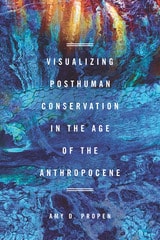
Visualizing Posthuman Conservation in the Age of the Anthropocene
Amy D. Propen
The Ohio State University Press, 2018
Through case studies in which visual technologies and science play a prominent role in arguments to protect threatened marine species—from photographs showing the impact of ocean plastics on vulnerable sea birds, to debates about seismic testing and its impact on marine species, to maps created from GPS tracking projects—Propen advances a notion of posthuman environmental conservation that decenters the human enough to consider ideas about the material world from the vantage point of the nonhuman animal. In so bringing together work in environmental humanities, animal studies, human geography, and visual-material rhetoric, Propen further shows how interdisciplinary ways of knowing can further shape and illuminate our various lived and embodied experiences.
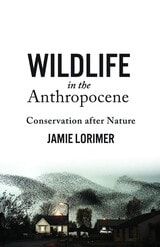
Wildlife in the Anthropocene
Conservation after NatureJamie Lorimer
University of Minnesota Press, 2015
Elephants rarely breed in captivity and are not considered domesticated, yet they interact with people regularly and adapt to various environments. Too social and sagacious to be objects, too strange to be human, too captive to truly be wild, but too wild to be domesticated—where do elephants fall in our understanding of nature?
In Wildlife in the Anthropocene, Jamie Lorimer argues that the idea of nature as a pure and timeless place characterized by the absence of humans has come to an end. But life goes on. Wildlife inhabits everywhere and is on the move; Lorimer proposes the concept of wildlife as a replacement for nature. Offering a thorough appraisal of the Anthropocene—an era in which human actions affect and influence all life and all systems on our planet— Lorimer unpacks its implications for changing definitions of nature and the politics of wildlife conservation. Wildlife in the Anthropocene examines rewilding, the impacts of wildlife films, human relationships with charismatic species, and urban wildlife. Analyzing scientific papers, policy documents, and popular media, as well as a decade of fieldwork, Lorimer explores the new interconnections between science, politics, and neoliberal capitalism that the Anthropocene demands of wildlife conservation.
Imagining conservation in a world where humans are geological actors entangled within and responsible for powerful, unstable, and unpredictable planetary forces, this work nurtures a future environmentalism that is more hopeful and democratic.
Wind and Power in the Anthropocene
Dominic Boyer and Cymene Howe
Duke University Press, 2019
In his volume, Energopolitics, Boyer examines the politics of wind power and how it is shaped by myriad factors, from the legacies of settler colonialism and indigenous resistance to state bureaucracy and corporate investment. Drawing on interviews with activists, campesinos, engineers, bureaucrats, politicians, and bankers, Boyer outlines the fundamental impact of energy and fuel on political power. Boyer also demonstrates how large conceptual frameworks cannot adequately explain the fraught and uniquely complicated conditions on the Isthmus, illustrating the need to resist narratives of Anthropocenic universalism and to attend to local particularities.
In her volume, Ecologics, Howe narrates how an antidote to the Anthropocene became both failure and success. Tracking the development of what would have been Latin America's largest wind park, Howe documents indigenous people's resistance to the project and the political and corporate climate that derailed its renewable energy potential. Using feminist and more-than-human theories, Howe demonstrates how the dynamics of energy and environment cannot be captured without understanding how human aspirations for energy articulate with nonhuman beings, technomaterial objects, and the geophysical forces that are at the heart of wind and power.