Results by title
4917 books match the query 'Philosophy' and 1267 start with t

The Grit of the Real
Toward a Semiotics Against GeontopowerElizabeth A. Povinelli
Duke University Press, 2027
The Ground Between
Anthropologists Engage PhilosophyVeena Das, Michael Jackson, Arthur Kleinman, and Bhrigupati Singh, eds.
Duke University Press, 2014
Contributors. João Biehl, Steven C. Caton, Vincent Crapanzano, Veena Das, Didier Fassin, Michael M. J. Fischer, Ghassan Hage, Clara Han, Michael Jackson, Arthur Kleinman, Michael Puett, Bhrigupati Singh
The Growth of the Liberal Soul
David Walsh
University of Missouri Press, 1997
In The Growth of the Liberal Soul, David Walsh confronts a core difficulty of the liberal democratic tradition in explaining and justifying itself. Acknowledging the incompleteness of liberal order as a theoretical explication of its underlying beliefs, Walsh analyzes contemporary debates about the foundations of liberal democratic politics. The widespread abandonment of the search for foundations by John Rawls, Richard Rorty, Michael Oakeshott, and the deconstructionists has been interpreted as signifying the absence of any sustaining inner resources. The result has been the confusion of contemporary liberal democratic self-understanding, which cannot make sense of its own extraordinary historical success nor apparently prevent the evident unraveling of its own moral code. It is this state of crisis from which Walsh's study takes its point of departure.
Unique in combining contemporary political relevance with historical depth, The Growth of the Liberal Soul brings together two approaches that are often treated separately. Walsh elaborates on the existential core of the liberal political tradition by way of an investigation of the historical sources and the raging contemporary debates.
While many scholars have been content to call attention to the dependence of liberal politics on transcendent faith, Walsh studies the progress of experiential reality by which that connection is concretely effected in life. The Growth of the Liberal Soul will be of interest to all readers, especially those interested in the relationship between religion and politics.
The Guide of the Perplexed, Volume 2
Moses Maimonides
University of Chicago Press, 1963
This monument of rabbinical exegesis written at the end of the twelfth century has exerted an immense and continuing influence upon Jewish thought. Its aim is to liberate people from the tormenting perplexities arising from their understanding of the Bible according only to its literal meaning. This edition contains extensive introductions by Shlomo Pines and Leo Strauss, a leading authority on Maimonides.
The Guide of the Perplexed
Complete in One VolumeMoses Maimonides
University of Chicago Press, 1963
The twelfth-century Judeo-Arabic text The Guide of the Perplexed is a monument of rabbinical exegesis and one of the most important works in the history of Jewish thought. Written by Moses ben Maimon,commonly known as Maimonides, the Guide aims to liberate people from the perplexities that arise from an understanding of the Bible based only on its literal meaning.
Shlomo Pines’s translation has served students and scholars for decades, and it is presented here, with Leo Strauss’s influential introduction, in one volume for the first time.
The Habit of Lying
Sacrificial Studies in Literature, Philosophy, and Fashion TheoryJohn Vignaux Smyth
Duke University Press, 2002
With recourse to Rene Girard, Paul de Man, Theodor Adorno, Leo Strauss, and other theoreticians not usually considered together, Smyth arrives at some surprising conclusions about the connections between lying, mimesis, sacrifice, sadomasochism, and the sacred, among other central subjects. Arguing that the relation between lying and truthtelling has been characterized in the West by sharply sacrificial features, he begins with a critique of the philosophies of lying espoused by Kant and Sissela Bok, then concludes that the problem of truth and lies leads to the further problem of the relation between law and arbitrariness as well as to the relation between rationality and unanimity. Constructively criticizing the work of such philosophers as Bertrand Russell, Ludwig Wittgenstein, Richard Rorty, and Nelson Goodman, Smyth shows how these problems occur comparably in fiction theory and how Paul de Man’s definition of fiction as arbitrariness finds confirmation in analytic philosophy. Through the novels of Defoe, Stendhal, and Beckett—with topics ranging from Defoe’s treatment of lies, fiction, and obscenity to Beckett’s treatment of the anus and the sacred—Smyth demonstrates how these texts generalize the issues of mendacity, concealment, and sacrificial arbitrariness in Girard’s sense to almost every aspect of experience, fiction theory, and cultural life. The final section of the book, taking its cue from Shakespeare, elaborates a sacrificial view of the history of fashion and dress concealment.
The Head Beneath the Altar
Hindu Mythology and the Critique of SacrificeBrian Collins
Michigan State University Press, 2014
The Healing Body
Creative Responses to Illness, Aging, and AfflictionDrew Leder
Northwestern University Press, 2024
As we grapple with the impacts of an aging population, the millions who struggle with chronic pain and illness, and the unknown number of COVID survivors dealing with long-term impairment, our individual and collective trust in our bodies is shaken. How to adapt? And how to live well, even when medical cure is unavailable? In The Healing Body: Creative Responses to Illness, Aging, and Affliction, philosopher and medical doctor Drew Leder shows how the phenomenology of lived embodiment makes available a variety of existential healing responses to bodily breakdown. Leder also turns to socially marginalized groups—people who have been incarcerated and those deemed “elderly”—to explore how individuals creatively cope with societal as well as physical challenges.
This book forwards current phenomenological research on the body, pain and suffering, disability, and aging. It deeply engages with the legacies of continental philosophy while also drawing insights from the traditions of Hinduism, Buddhism, and Taoism. The Healing Body is a uniquely creative and refreshingly innovative contribution to contemporary philosophy, demonstrating the importance of the philosophical method to the wider culture.
The Heart Is a Little to the Left
Essays on Public MoralityWilliam Sloane Coffin
Dartmouth College Press, 2011
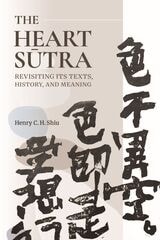
The Heart Sutra
Revisiting Its Texts, History, and MeaningHenry C.H. Shiu
Hong Kong University Press, 2025
A nuanced reconsideration of the Heart Sutra, one of the most celebrated and widely chanted texts in Mahayana Buddhism.
In The Heart Sutra: Revisiting Its Texts, History, and Meaning, Henry C. H. Shiu investigates the historical origins of the Heart Sutra, a significant Buddhist scripture. He compares the Sanskrit texts with their Chinese and Tibetan translations to analyse whether the Heart Sutra might be a Chinese apocryphon, through detailed linguistic examination. To achieve this goal, Shiu thoroughly examines the primary sources from which the scripture was extracted. He emphasises the necessity of reading the Heart Sutra in the larger context of the Perfection of Wisdom literature, which contains the essence of Mahayana Buddhist teaching. In this monograph, Shiu successfully transcends the boundaries between the Chinese, Indian, and Tibetan Buddhist traditions and provides a revisionist interpretation of the Heart Sutra.
The Heart of Buddhist Philosophy
Nolan Pliny Jacobson
Southern Illinois University Press, 1988
In arriving at the heart of Buddhist philosophy, Nolan Pliny Jacobson attempts to eliminate some of the confusion in the West (and perhaps in the East as well) concerning the Buddhist view of what is concrete and ultimately real in the world.
Jacobson presents Nāgārjuna, the Plato of the Buddhist tradition, as the major exemplar of the Buddhist expression of life. In his comparison of Buddhism and Western theology, Jacobson demonstrates that some efforts in Western religious thought approach the Buddhist empirical stance.
The Heart of Librarianship
Attentive, Positive, and Purposeful ChangeMichael Stephens
American Library Association, 2016
The Heart
An Analysis of Human and Divine AffectationDietrich von Hildebrand
St. Augustine's Press, 2007
This new edition of The Heart (out of print for nearly 30 years) is the flagship volume in a series of Dietrich von Hildebrand’s works to be published by St. Augustine’s Press in collaboration with the Dietrich von Hildebrand Legacy Project. Founded in 2004, the Legacy Project exists in the first place to translate the many German writings of von Hildebrand into English.
While many revere von Hildebrand as a religious author, few realize that he was a philosopher of great stature and importance. Those who knew von Hildebrand as philosopher held him in the highest esteem. Louis Bouyer, for example, once said that “von Hildebrand was the most important Catholic philosopher in Europe between the two world wars.” Joseph Cardinal Ratzinger expressed even greater esteem when he said: “I am personally convinced that, when, at some time in the future, the intellectual history of the Catholic Church in the twentieth century is written, the name of Dietrich von Hildebrand will be most prominent among the figures of our time.”
The Heart is an accessible yet important philosophical contribution to the understanding of the human person. In this work von Hildebrand is concerned with rehabilitating the affective life of the human person. He thinks that for too long philosophers have held it in suspicion and thought of it as embedded in the body and hence as being much inferior to intellect and will. In reality, he argues, the heart, the center of affectivity, has many different levels, including an eminently personal level; at this level affectivity is just as important a form of personal life as intellect and will. Von Hildebrand develops the idea that properly personal affectivity, far than tending away from an objective relation to being, is in fact one major way in which we transcend ourselves and give being its due. Von Hildebrand also developed the important idea that the heart “in many respects is more the real self of the person than his intellect or will.”
At the same time, the author shows full realism about the possible deformities of affective life; he offers rich analyses of what he calls affective atrophy and affective hypertrophy. The second half of The Heart offers a remarkable analysis of the affectivity of the God-Man.
The Heavens Declare
Natural Theology and the Legacy of Karl BarthRodney Holder
Templeton Press, 2012
In The Heavens Declare, author Rodney Holder re-examines Barth’s natural theology argument and then explores how it has been critiqued and responded to by others, starting with Dietrich Bonhoeffer and Wolfhart Pannenberg. Holder then considers the contributions of two notable British participants in the science-religion dialogue, Thomas Torrance and Alister McGrath, who, despite their repudiation of natural theology in the traditional sense, also provide many positive lessons. The book concludes by defending an overall position which takes into account the ideas of the aforementioned theologians as well as others who are currently engaged positively in natural theology, such as John Polkinghorne and Richard Swinburne.
Holder’s new study is sure to be of interest to theologians, philosophers of religion, and all scholars interested in the science-religion dialogue, especially those interested in natural theology as an enterprise in itself.
The Hebrew Bible and Philosophy of Religion
Jaco Gericke
SBL Press, 2012
The Heidegger Case
On Philosophy and Politicsedited by Tom Rockmore and Joseph Margolis
Temple University Press, 1992
The Heresies of Jan Patocka
Phenomenology, History, and PoliticsJames Dodd
Northwestern University Press, 2023
Foregrounding the turbulent political and intellectual scene in Czechoslovakia following the Prague Spring in 1968, James Dodd explores the unity of philosophy, history, and politics in Jan Patočka’s life and legacy. Dodd presents Patočka as an essential philosopher of modern concepts—such as freedom, subjectivity, and history—and also as an interpreter of prominent thinkers such as Husserl and Heidegger.
Dodd outlines the phenomenology that Patočka, as a late pupil of Husserl and Heidegger, crafted in response to the classical model before turning to his philosophy of history, which was oriented around the problem of Europe and the care for the soul. Finally, Dodd examines Patočka’s role as a dissident intellectual and one of the principal voices of the Charter 77 human rights movement until his death in March 1977. By situating Patočka’s thought in relation to classical phenomenology and to the political and historical conditions of Central Europe, Dodd illuminates the enduring impact of this key thinker of the twentieth century.
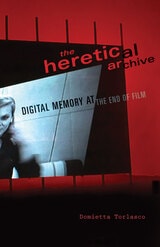
The Heretical Archive
Digital Memory at the End of FilmDomietta Torlasco
University of Minnesota Press, 2013
The Heretical Archive examines the relationship between memory and creation in contemporary artworks that use digital technology while appropriating film materials. Domietta Torlasco argues that these digital films and multimedia installations radically transform our memory of cinema and our understanding of the archive. Indeed, such works define a notion of archiving not as the passive preservation of audiovisual signs but as an intervention and the creative rearticulation of cinema’s perceptual and political textures.
Connecting psychoanalysis, phenomenology, and feminist theory in innovative ways, Torlasco analyzes cutting-edge digital works that engage with the past of European cinema and visual culture, including video installations by Monica Bonvicini (Destroy She Said) and Pierre Huyghe (The Ellipsis), Agnès Varda’s film The Gleaners and I, Marco Poloni’s multimedia installation The Desert Room, and Chris Marker’s CD-ROM Immemory.
Torlasco’s central claim is that if the archives of psychoanalysis and cinema have long privileged the lineage that runs from Oedipus to Freud, the archives of the digital age—what she calls the “heretical archive”—can help us imagine an unruly, porous, multifaceted legacy, one in which marginal figures return to speak of lost life as much as of life that demands to be lived.
The Hermeneutics of Original Argument
Demonstration, Dialectic, RhetoricP. Christopher Smith
Northwestern University Press, 1998
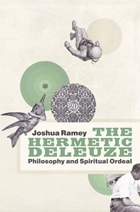
The Hermetic Deleuze
Philosophy and Spiritual OrdealJoshua Ramey
Duke University Press, 2012
Identifying key hermetic moments in Deleuze's thought, including his theories of art, subjectivity, and immanence, Ramey argues that the philosopher's work represents a kind of contemporary hermeticism, a consistent experiment in unifying thought and affect, percept and concept, and mind and nature in order to engender new relations between knowledge, power, and desire. By uncovering and clarifying the hermetic strand in Deleuze's work, Ramey offers both a new interpretation of Deleuze, particularly his insistence that the development of thought demands a spiritual ordeal, and a framework for retrieving the pre-Kantian paradigm of philosophy as spiritual practice.
The Historicity of Experience
Modernity, the Avant-Garde, and the EventKrysztof Ziarek
Northwestern University Press, 2001
The four poets Ziarek considers—Gertrude Stein, Velimir Khlebnikov, Miron Biaoszewski, and Susan Howe—demonstrate the broad reach of and variety of forms taken by the avant-garde revision of experience and aesthetics. Moreover, this quartet illustrates how the main operative concepts and strategies of the avant-garde underpinned the practices of canonical writers. A profound philosophical meditation on language, modernity, and the everyday, The Historicity of Experience offers a fundamental reconceptualization of the avant-garde in relation to experience.
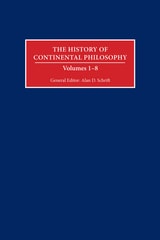
The History of Continental Philosophy
Edited by Alan D. Schrift
University of Chicago Press, 2010
From Kant to Kierkegaard, from Hegel to Heidegger, continental philosophers have indelibly shaped the trajectory of Western thought since the eighteenth century. Although much has been written about these monumental thinkers, students and scholars lack a definitive guide to the entire scope of the continental tradition. The most comprehensive reference work to date, this eight-volume History of Continental Philosophy will both encapsulate the subject and reorient our understanding of it. Beginning with an overview of Kant’s philosophy and its initial reception, the History traces the evolution of continental philosophy through major figures as well as movements such as existentialism, phenomenology, hermeneutics, and poststructuralism. The final volume outlines the current state of the field, bringing the work of both historical and modern thinkers to bear on such contemporary topics as feminism, globalization, and the environment. Throughout, the volumes examine important philosophical figures and developments in their historical, political, and cultural contexts.
The first reference of its kind, A History of Continental Philosophy has been written and edited by internationally recognized experts with a commitment to explaining complex thinkers, texts, and movements in rigorous yet jargon-free essays suitable for both undergraduates and seasoned specialists. These volumes also elucidate ongoing debates about the nature of continental and analytic philosophy, surveying the distinctive, sometimes overlapping characteristics and approaches of each tradition. Featuring helpful overviews of major topics and plotting road maps to their underlying contexts, A History of Continental Philosophy is destined to be the resource of first and last resort for students and scholars alike.

The History of Democracy
A Marxist InterpretationBrian S. Roper
Pluto Press, 2012
Brian Roper refreshes our understanding of democracy using a Marxist theoretical framework. He traces the history of democracy from ancient Athens to the emergence of liberal representative and socialist participatory democracy in Europe and North America, through to the global spread of democracy during the past century.
Roper argues that democracy cannot be understood separately from underlying processes of exploitation and class struggle. He offers an engaging Marxist critique of representative democracy, and raises the possibility of alternative democratic forms. The History of Democracy will be of interest to students and scholars of history and politics and all those concerned about the past, present and future of democracy.
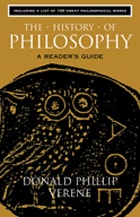
The History of Philosophy
A Reader's GuideDonald Phillip Verene
Northwestern University Press, 2008
With the aim of guiding readers along, in Hegel’s words, “the long process of education towards genuine philosophy,” this introduction emphasizes the importance of striking up a conversation with the past. Only by looking to past masters and their works, it holds, can old memories and prior thought be brought fully to bear on the present. This living past invigorates contemporary practice, enriching today’s study and discoveries.
In this book, groundbreaking philosopher and author Donald Verene addresses two themes: why should one study the historically “great” texts and, if such a study is necessary, how can one undertake it? Acting out against the rejection of the idea that there is a philosophical canon, he centers his argument on the “tetralogy” of Plato, Aristotle, Kant, and Hegel. From his opening look at the rhetorical tradition, he brings those core ideals forward to classical Roman and medieval philosophers and then on into Renaissance and modern philosophy, including contemporary thinkers such as Derrida and Foucault. This vital chronological outline is supplemented by Verene’s contextualizing commentary. In ensuing sections, he offers guidance on reading philosophical works with “intellectual empathy,” suggests 100 essential works to establish a canon, illustrates the role of philosophers in history and society, and examines the nature of history itself. Ultimately, Verene concludes that history may be essential to philosophy, but philosophy is more than just its history.
The History of the Devil
Vilém Flusser
University of Minnesota Press, 2014
In 1939, a young Vilém Flusser faced the Nazi invasion of his hometown of Prague. He escaped with his wife to Brazil, taking with him only two books: a small Jewish prayer book and Goethe’s Faust. Twenty-six years later, in 1965, Flusser would publish The History of the Devil, and it is the essence of those two books that haunts his own. From that time his life as a philosopher was born. While Flusser would later garner attention in Europe and elsewhere as a thinker of media culture, The History of the Devil is considered by many to be his first significant work, containing nascent forms of the main themes that would come to preoccupy him over the following decades.
In The History of the Devil, Flusser frames the human situation from a pseudo-religious point of view. The phenomenal world, or “reality” in a general sense, is identified as the “Devil,” and that which transcends phenomena, or the philosophers’ and theologians’ “reality,” is identified as “God.” Referencing Wittgenstein’s Tractatus Logico-Philosophicus in its structure, Flusser provocatively leads the reader through an existential exploration of nothingness as the bedrock of reality, where “phenomenon” and “transcendence,” “Devil” and “God” become fused and confused. So radically confused, in fact, that Flusser suggests we abandon the quotation marks from the terms “Devil” and “God.” At this moment of abysmal confusion, we must make the existential decisions that give direction to our lives.
The History of the Devil
Vilém Flusser
University of Minnesota Press, 2027
A fascinating exploration into the early work of the celebrated philosopher of media culture and technology, Vilém Flusser
In 1939, a young Vilém Flusser faced the Nazi invasion of his hometown of Prague. He escaped with his wife to Brazil, taking with him only two books: a small Jewish prayer book and Goethe’s Faust. Twenty-six years later, in 1965, Flusser would publish The History of the Devil, and it is the essence of those two books that haunts his own. From that time his life as a philosopher was born. While Flusser would later garner attention in Europe and elsewhere as a thinker of media culture, The History of the Devil is considered by many to be his first significant work, containing nascent forms of the main themes that would come to preoccupy him over the following decades.
In The History of the Devil, Flusser frames the human situation from a pseudo-religious point of view. The phenomenal world, or “reality” in a general sense, is identified as the “Devil,” and that which transcends phenomena, or the philosophers’ and theologians’ “reality,” is identified as “God.” Referencing Wittgenstein’s Tractatus Logico-Philosophicus in its structure, Flusser provocatively leads the reader through an existential exploration of nothingness as the bedrock of reality, where “phenomenon” and “transcendence,” “Devil” and “God” become fused and confused. So radically confused, in fact, that Flusser suggests we abandon the quotation marks from the terms “Devil” and “God.” At this moment of abysmal confusion, and of the downfall of all values, we must make the existential decisions that give direction to our lives.

The History of the Race Idea (CW3)
From Ray to CarusEric Voegelin, Edited & Intro by by Klaus Vondung, & Translated by Ruth Hein
University of Missouri Press, 0
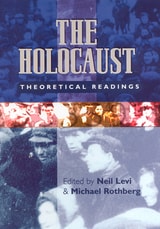
The Holocaust
Theoretical ReadingsLevi, Neil
Rutgers University Press, 2003
This agenda-setting reader brings together both classic and new writings to demonstrate how concerns arising from the Nazi genocide shaped contemporary literary and cultural theory. Wide in its thematic scope, it covers such vital questions as:
- Authenticity and experience
- Memory and trauma
- Historiography and the philosophy of history
- Fascism and Nazi anti-Semitism
- Representation and identity formation
- Race, gender, and genocide
- Implications of the Holocaust for theories of the unconscious, ethics, politics, and aesthetics
The readings, which are fully contextualized by a general introduction, section introductions, and bibliographical notes, represent the work of many influential writers and theorists, including Theodor Adorno, Giorgio Agamben, Hannah Arendt, Jean Baudrillard, Zygmunt Bauman, Walter Benjamin, Cathy Caruth, Jacques Derrida, Shoshana Felman, Saul Friedlander, Paul Gilroy, Lawrence Langer, Emmanuel Levinas, Primo Levi, Jean-François Lyotard, Hayden White, and James E. Young. This multidisciplinary anthology will be welcomed by students and scholars of the Holocaust.
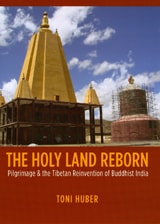
The Holy Land Reborn
Pilgrimage and the Tibetan Reinvention of Buddhist IndiaToni Huber
University of Chicago Press, 2008
Focusing on the Tibetan creation and recreation of India as a destination, a landscape, and a kind of other, in both real and idealized terms, Huber explores how Tibetans have used the idea of India as a religious territory and a sacred geography in the development of their own religion and society. In a timely closing chapter, Huber also takes up the meaning of India for the Tibetans who live in exile in their Buddhist holy land.
A major contribution to the study of Buddhism, The Holy Land Reborn describes changes in Tibetan constructs of India over the centuries, ultimately challenging largely static views of the sacred geography of Buddhism in India.
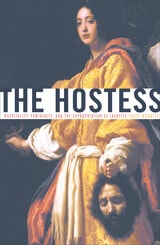
The Hostess
Hospitality, Femininity, and the Expropriation of IdentityTracy McNulty
University of Minnesota Press, 2006
The meaning of hospitality in Western thought—from the Bible to Derrida
The evolution of the idea of hospitality can be traced alongside the development of Western civilization. Etymologically, the host is the “master,” but this identity is established through expropriation and loss—the best host is the one who gives the most, ultimately relinquishing what defines him as master.
In The Hostess, Tracy McNulty asks, What are the implications for personhood of sharing a person—a wife or daughter—as an act of hospitality? In many traditions, the hostess is viewed not as a subject but as the master’s property. A foreign presence that both sustains and undercuts him, the hostess embodies the interplay of self and other within the host’s own identity.
Here McNulty combines critical readings of the Bible and Pierre Klossowski’s trilogy The Laws of Hospitality with analyses of exogamous marital exchange, theological works from the Talmud to Aquinas, the writings of Kant and Nietzsche, and the theory of femininity in the work of Freud and Lacan. Ultimately, she contends, hospitality involves the boundary between the proper and the improper, affecting the subject as well as interpersonal relations.
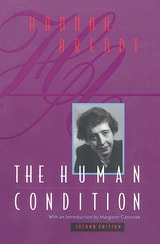
The Human Condition
Second EditionHannah Arendt
University of Chicago Press, 1998
Hannah Arendt (1906-1975) was one of the leading social theorists in the United States. Her Lectures on Kant's Political Philosophy and Love and Saint Augustine are also published by the University of Chicago Press.
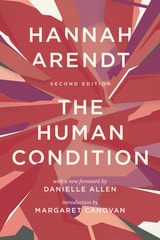
The Human Condition
Second EditionHannah Arendt
University of Chicago Press, 2018
The twenty-first century has seen a resurgence of interest in the political thinker Hannah Arendt, “the theorist of beginnings,” whose work probes the logics underlying unexpected transformations—from totalitarianism to revolution.
A work of striking originality, The Human Condition is in many respects more relevant now than when it first appeared in 1958. In her study of the state of modern humanity, Hannah Arendt considers humankind from the perspective of the actions of which it is capable. The problems Arendt identified then—diminishing human agency and political freedom, the paradox that as human powers increase through technological and humanistic inquiry, we are less equipped to control the consequences of our actions—continue to confront us today. This new edition, published to coincide with the sixtieth anniversary of its original publication, contains Margaret Canovan’s 1998 introduction and a new foreword by Danielle Allen.
A classic in political and social theory, The Human Condition is a work that has proved both timeless and perpetually timely.
The Human Person
Steven J. Jensen
Catholic University of America Press, 2018
The Human Place in the Cosmos
Max Scheler; Translated from the German by Manfred S. Frings, Introduction by Eugene Kely
Northwestern University Press, 2009
The Human Voice
Giorgio Agamben
Seagull Books, 2025
An inquiry into the origins of language and articulation, exploring how the transformation of the human voice shaped history, politics, and thought.
What does it mean to have a voice—and how does it shape what it means to be human? In The Human Voice, Giorgio Agamben embarks on a profound exploration of how the human voice transforms from mere sound into meaningful articulation, setting humans apart from the animal world. Tracing this transformation through ancient grammar and the history of writing, he unpacks the intricate relationship between voice and language, and the living being and the speaking subject.
Through a meticulous philosophical inquiry, Agamben reconstructs the mechanisms by which articulation turns expression into knowledge, revealing how the voice is the way we define humanity. This study reaches beyond linguistics, touching on politics and history, as it interrogates the enduring question of what—and who—is considered fully human.
The Humanities in the Age of Technology
Ciriaco Morón Arroyo
Catholic University of America Press, 2002

The Humble Approach, Anniversary Edition
Scientists Discover GodJohn Marks Templeton
Templeton Press, 2027
For generations the discoveries of science tended to challenge the very existence of God. Templeton makes a striking argument for just the opposite point of view. He goes to the writings of many of the world's leading scientific thinkers—as diverse in background as Albert Einstein and Teilhard de Chardin—and discovers them in awe of the universe, perceiving the hand of Divine mystery at work.
The Humble Approach teaches that man can discover and comprehend only a few of the infinite aspects of God's nature, never enough to form a comprehensive theology. The humble approach may be a science still in its infancy, but it seeks to develop a way of knowing God appropriate to His greatness and our littleness.
The anniversary edition of this groundbreaking book features a new preface by His Holiness the Dalai Lama and a new introduction from Heather Dill, the director of the Templeton Prize. It also includes an updated list of the past winners of the Templeton Prize.
The Hungry Soul
Eating and the Perfecting of Our NatureLeon R. Kass M.D.
University of Chicago Press, 1999
"Kass is a distinguished and graceful writer. . . . It is astonishing to discover how different is our world from that of the animals, even in that which most evidently betrays that we too are animals—our need and desire for food."—Roger Scruton, Times Literary Supplement
"Yum."—Miss Manners

The I in Team
Sports Fandom and the Reproduction of IdentityErin C. Tarver
University of Chicago Press, 2017
Why in the world, Tarver asks, would anyone care about how well a total stranger can throw a ball, or hit one with a bat, or toss one through a hoop? Because such activities and the massive public events that surround them form some of the most meaningful ritual identity practices we have today. They are a primary way we—as individuals and a collective—decide both who we are who we are not. And as such, they are also one of the key ways that various social structures—such as race and gender hierarchies—are sustained, lending a dark side to the joys of being a sports fan. Drawing on everything from philosophy to sociology to sports history, she offers a profound exploration of the significance of sports in contemporary life, showing us just how high the stakes of the game are.

The Idea of Democratic Capitalism
A Primer to Micheal Novak's Political, Economic, and Social ThoughtRobert Felice
Catholic University of America Press, 2026
The Idea of Hegel's "Science of Logic"
Stanley Rosen
University of Chicago Press, 2013
Rosen’s overarching question is how, if at all, rationalism can overcome the split between monism and dualism. Monism—which claims a singular essence for all things—ultimately leads to nihilism, while dualism, which claims multiple, irreducible essences, leads to what Rosen calls “the endless chatter of the history of philosophy.” The Science of Logic, he argues, is the fundamental text to offer a new conception of rationalism that might overcome this philosophical split. Leading readers through Hegel’s book from beginning to end, Rosen’s argument culminates in a masterful chapter on the Idea in Hegel. By fully appreciating the Science of Logic and situating it properly within Hegel’s oeuvre, Rosen in turn provides new tools for wrangling with the conceptual puzzles that have brought so many other philosophers to disaster.
The Idea of Persia
A Philosophical EnquiryRamin Jahanbegloo
Gingko, 2026
This book explores the idea of Persia as a means of investigating the soul of the fascinating nation.
In 1721, the French philosopher Montesquieu posed the question “Comment peut-on être persan?” ("How can one be Persian?") in the title to his famous Persian Letters. After centuries of invasion, murder, destruction, authoritarian rule, decay of political theory, and increasing dissolution in Iran’s politics, this volume is an investigation into what the answer to that question might be today.
The Idea of Persia explores the notion of what it is to be Persian, but not as it has been constituted in the past with reference to the political experience of antiquity, nor as an affirmation of the secular-rational project of modernity. Rather, the book examines the question of what it is to be Persian against the backdrop of centuries in which a common, plural subjectivity of Persian-ness has been continually delayed by those who, with or without ideologies, believed in politics only as a means of ruling or of being ruled without laws or citizenship.
The historical battle for social and political freedoms is still underway in Iran. As the nation wrestles with the possibility of an extended period of political, social, and cultural decline, it is a timely moment to return to the perspective embodied in the enlightened thinking of figures such as the writer and three times prime minister of Iran Mohammed Ali Foroughi (1877–1942) and his vision of a country possessing rational and moral capabilities, and to a possible renaissance of social and political institutions.
The idea of Persia as it is presented here sees hope in the future as the means by which Iranians may liberate themselves from the duality of heroes and saints and remake their political mentality while staying true to an age-old idea of Persia and to freedom as an essential virtue.
The Idea of World
Public Intellect and Use of LifePaolo Virno
Seagull Books, 2022
A short vade mecum for unrepentant materialism, The Idea of World collects three essays by Italian philosopher Paulo Virno that are intricately wrapped around one another. The first essay, “Mundanity,” tries to clarify what the term “world,” as referred to as the perceptual and historical context of our existence, means—both with and against Kant and Wittgenstein. How should we understand expressions such as “worldly people,” “the course of the world,” or “getting by in this world”? The second, “Virtuosity and Revolution,” is a minor political treatise. Virno puts forward a set of concepts capable of confronting the magnetic storm that has knocked out the compasses that every reflection on the public sphere has relied on since the seventeenth century. The third, “The Use of Life”, is the shorthand delineation of a research program on the notion of use. What exactly are we doing when we use a hammer, a time span, or an ironic sentence? And, above all, what does the use of the self—of one’s own life, which lies at the basis of all uses—amount to in human existence?
Presenting his ideas in three distinct vignettes, Virno examines how the philosophy of language, anthropology, and political theory are inextricably linked.
The Image in Dispute
Art and Cinema in the Age of PhotographyEdited by Dudley Andrew
University of Texas Press, 1997
Photography, cinema, and video have irrevocably changed the ways in which we view and interpret images. Indeed, the mechanical reproduction of images was a central preoccupation of twentieth-century philosopher Walter Benjamin, who recognized that film would become a vehicle not only for the entertainment of the masses but also for consumerism and even communism and fascism.
In this volume, experts in film studies and art history take up the debate, begun by Benjamin, about the power and scope of the image in a secular age. Part I aims to bring Benjamin's concerns to life in essays that evoke specific aspects and moments of the visual culture he would have known. Part II focuses on precise instances of friction within the traditional arts brought on by this century's changes in the value and mission of images. Part III goes straight to the image technologies themselves—photography, cinema, and video—to isolate distinctive features of the visual cultures they help constitute.
As we advance into the postmodern era, in which images play an ever more central role in conveying perceptions and information, this anthology provides a crucial context for understanding the apparently irreversible shift from words to images that characterized the modernist period. It will be important reading for everyone in cultural studies, film and media studies, and art history.
The Immemorial
The Subject and Its DoublesAndrea Cavalletti
Seagull Books, 2025
Vienna, 1825. News of a sickly, listless boy is making the rounds. In broad daylight, he falls into deep sleep and his personality changes dramatically. While sleeping, he reads, writes, plays cards, challenges his doctors with amusement, and accomplishes the most astonishing of exercises with his eyes closed. A new subject has appeared, a second “I” has now supplanted the first.
Andrea Cavalletti carefully registers the disquieting appearances of this second “I” in the literature and psychology of the past two centuries. In a context dominated by amnesia and somnambulism, hallucinations and wakeful dreams, the bourgeois subject, whose identity seemed so stable, turns out to be inhabited by masks that elude every grasp, at the mercy of a doubling that can no longer be recomposed. Personalities multiply and do battle, as even life and death exchange roles. And, ultimately, the identity of the Western subject reveals itself as a shade-like, constitutively double figure, that only lives in its weakness and forgetting, in its losses and distractions.
The Impact of Aristotelianism on Modern Philosophy
Riccardo Pozzo
Catholic University of America Press, 2019
The Imperative of Responsibility
In Search of an Ethics for the Technological AgeHans Jonas
University of Chicago Press, 1984
Hans Jonas here rethinks the foundations of ethics in light of the awesome transformations wrought by modern technology: the threat of nuclear war, ecological ravage, genetic engineering, and the like. Though informed by a deep reverence for human life, Jonas's ethics is grounded not in religion but in metaphysics, in a secular doctrine that makes explicit man's duties toward himself, his posterity, and the environment. Jonas offers an assessment of practical goals under present circumstances, ending with a critique of modern utopianism.
The Imperial Style of Inquiry in Twentieth-Century China
The Emergence of New ApproachesDonald J. Munro
University of Michigan Press, 1996
The Importance of Nietzsche
Erich Heller
University of Chicago Press, 1988
Nietzsche prided himself on having broken with all traditional ways of thinking and feeling, and once even claimed that he would someday be recognized for having ushered in a new millennium. While acknowledging Nietzsche's radicalism, Heller also insists on the continuity of the story in which he does indeed occupy a central place. By considering Nietzsche in relation to Goethe, Rilke, Wittgenstein, Yeats, and others, Heller shows the philosopher's ambivalence toward the tradition he inherited as well as his profound effect on the thought and sensibility of those who followed him. It is hardly an exaggeration to say, as Heller does in his first essay, that Nietzsche is to many modern writers and thinkers—including Mann, Musil, Kafka, Freud, Heidegger, Jaspers, Gide, and Sartre—what St. Thomas Aquinas was to Dante: the categorical interpreter of a world, which they contemplate imaginatively and theoretically without ever much upsetting its Nietzschean structure.
Thus it is Nietzsche's thought, so pervasively present in the themes of modernity, that gives coherence and unity to Heller's essays. What emerges from them is that, despite his iconoclastic declarations and unorthodox philosophical practices, Nietzsche deals with the human spirit's persistent concerns. His questions remain urgent, and even the answers, in all their contradictoriness, possess the commanding force of his inquiry. An example is the incompatibility of the famous extremes, the teaching of the Übermensch and the Eternal Recurrence of All Things. These cancel each other out and yet grow from the same intellectual and spiritual roots, as is shown lucidly and cogently by one of Heller's most forceful essays, "Nietzsche's Terrors: Time and the Inarticulate." In fathoming the depth of this contradiction, Heller at the same time reveals the importance of Nietzsche for those who seek to understand the wellsprings of the epoch's disquiet, turmoil, and creativity.
The Impossible Nude
François Jullien
University of Chicago Press, 2007
The undraped human form is ubiquitous in Western art and even appears in the art of India and Japan. Only in China, François Jullien argues, is the nude completely absent. In this enthralling extended essay, he explores the different conceptions of the human body that underlie this provocative disparity.
Contrasting nakedness (which implies a diminished state) with nudity (which represents a complete presence), Jullien explores the traditional European vision of the nude as a fixed point of fusion where form joins truth. He then shows that the absence of the nude in Chinese art evinces an understanding of the human body as changeable and transitory. Viewed in light of each other, these differing concepts allow for a new way of thinking about form, the ideal, and beauty, enabling us to delve deeper into the relationship between art and the ideas that lie at its roots. Beautifully illustrated and gracefully translated into English for the first time, The Impossible Nude will fascinate anyone interested in art history, Chinese art, or aesthetics.