Results by title
8812 books match the query 'Political Science' and 1911 start with t

The Defoliation of America
Agent Orange Chemicals, Citizens, and ProtestsAmy M. Hay
University of Alabama Press, 2022
Examines the domestic and international use of phenoxy herbicides by the United States in the mid-twentieth century.
In The Defoliation of America: Agent Orange Chemicals, Citizens, and Protests, Amy M. Hay profiles the attitudes, understandings, and motivations of grassroots activists who rose to fight the use of phenoxy herbicides, or Agent Orange chemicals as they are commonly known, in various aspects of American life during the post-WWII era. Hay focuses her analysis on citizen responses to illuminate how regulatory policies were understood, challenged, and negotiated, contributing to a growing body of research on chemical regulatory policies, risk society, and hazardous chemicals. This volume uncovers new understandings about the authority of the state and its obligation to society, the role of scientific authority and expertise, and the protests made by various groups of citizens.
First introduced in 1946, phenoxy herbicides mimic hormones in broadleaf plants, causing them to “grow to death” while grass, grains, and other monocots remain unaffected. By the 1950s, millions of pounds of these chemicals were produced annually for use in brush control, weed eradication, forest management, and other agricultural applications. Pockets of skepticism and resistance began to appear by the late 1950s, and the trend intensified after 1962 when Rachel Carson’s Silent Spring directed mainstream attention to the harm modern chemicals were causing in the natural world. It wasn’t until the Vietnam War, however, when nearly 19 million gallons of Agent Orange and related herbicides were sprayed to clear the canopy and destroy crops in Southeast Asia, that the long-term damage associated with this group of chemicals began to attract widespread attention and alarm.
Using a wide array of sources and an interdisciplinary approach, Hay contributes to the robust fields of chemical toxicity, regulation, environmental management, and public health. This study of the scientists, health and environmental activists, and veterans who fought US chemical regulatory policies and practices reveals the mechanisms, obligations, and constraints of state and scientific authority in mid-twentieth-century America. Hay also shows how these disparate and mostly forgotten citizen groups challenged the political consensus and contested government and industry narratives of chemical safety.
The Demise of Yugoslavia
A Political MemoirStipe Mesic
Central European University Press, 2004

The Democracy Owners' Manual
A Practical Guide to Changing the WorldShultz, Jim
Rutgers University Press, 2002
For citizens seeking to take an active role in the affairs of their community—whether improving local schools, forcing clean-up of a polluted river, or weighing in on the debate over economic globalization — the challenge of activism can be daunting. Civic activists need to understand both the issues involved and how to take effective public action, often against enormous odds. The Democracy Owners’ Manual is a unique, hands-on guide for people who want to change public policy at the local, state, or national level. A combination of policy and advocacy basics, the book offers a clear presentation of the issues and debates activists are likely to encounter as well as a lucid, example-rich guide to effective strategies and actions.
Newcomers to advocacy work will find Jim Shultz’s book an invaluable treasure chest of ideas and stimulating stories to help them tackle the issues they care about. Veterans of public advocacy and activism will find the book to be a valuable source for fresh ideas and an indispensable tool for teaching and training others in the art of social activism. The book also uniquely lends itself for university courses in political science, public administration, social work, public health, environmental studies, and other disciplines that touch on public policy and political change.
The Democratic Constitution
Experimentalism and InterpretationBrian E. Butler
University of Chicago Press, 2017
Butler offers an alternative democratic conception of constitutional law, “democratic experimentalism,” and applies it in a thorough reconstruction of Supreme Court cases across the centuries, such as Brown v. Board of Education, Citizens United v. Federal Election Commission, Lucas v. South Carolina Coastal Council, and Lochner v. New York. In contrast to the traditional tools and conceptions of legal analysis that see the law as a formally unique and separate type of practice, democratic experimentalism combines democratic aims and experimental practice. Butler also suggests other directions jurisprudential roles could take: for example, adjudication could be performed by primary stakeholders with better information. Ultimately, Butler argues persuasively for a move away from the current absolute centrality of courts toward a system of justice that emphasizes local rule and democratic choice.
The Democrats
From Jefferson to ClintonRobert Allen Rutland, Foreword by Jimmy Carter
University of Missouri Press, 1995
Interlacing humor into his ongoing narrative, Robert Allen Rutland provides in The Democrats a readable, balanced account of how the Democratic party was founded, evolved, nearly died, and came back in the twentieth century, flourishing as a political melting pot despite numerous setbacks. This updated version of Rutland's much-heralded The Democrats: From Jefferson to Carter provides new insight into the long hiatus in the Democrats' presence in the White House between Carter and Clinton. In additon to analyzing Carter's successes and failures as president, Rutland also examines the forces that went into the Democratic defeats and Republican victories in 1980, 1984, and 1988, concluding with the election of another Jeffersonian Democrat, William Jefferson Clinton. The book ends with an examination of the dramatic results of the 1994 congressional elections that began to alert President Clinton to the challenge he would face in winning reelection in 1996.

The Deoliwallahs
The True Story of the 1962 Chinese Indian InternmentJoy Ma
Rutgers University Press, 2026
The Deoliwallahs sheds light on a lesser-known chapter of Indian history—the internment of Chinese Indians following the 1962 Sino-Indian War. During the war, around 3,000 Indians of Chinese descent were detained in a camp in Deoli, Rajasthan, under suspicion of espionage. Many of these individuals had deep roots in India, with families that had lived there for generations. The book recounts their harrowing experiences, including abrupt arrests, harsh conditions in the camp, and the emotional toll of being ostracized by their own country.
Alternating between historical context and the personal stories of survivors, authors Joy Ma and Dilip D'Souza weave together a compelling and emotional account of a nearly forgotten community of people interned against their will. The book draws parallels with other instances of internment, such as the Japanese American experience during World War II, highlighting the universal themes of identity, citizenship, and the consequences of fear-driven policies.
A documentary, Voices of Deoli (2025), directed by Lulu Men with author Joy Ma serving as executive producer, along with Michael Cheng and Neela D’Souza, also shares the stories of survivors and, like the book, serves as a powerful reminder of the fragility of rights and the impact of prejudice.
The Deportation Regime
Sovereignty, Space, and the Freedom of MovementNicholas De Genova and Nathalie Peutz, eds.
Duke University Press, 2010
Whether investigating the power that individual and corporate sponsors have over the fate of foreign laborers in Bahrain, the implications of Germany’s temporary suspension of deportation orders for pregnant and ill migrants, or the significance of the detention camp, the contributors reveal how deportation reflects and reproduces notions about public health, racial purity, and class privilege. They also provide insight into how deportation and deportability are experienced by individuals, including Arabs, South Asians, and Muslims in the United States. One contributor looks at asylum claims in light of an unusual anti-deportation campaign mounted by Algerian refugees in Montreal; others analyze the European Union as an entity specifically dedicated to governing mobility inside and across its official borders. The Deportation Regime addresses urgent issues related to human rights, international migration, and the extensive security measures implemented by nation-states since September 11, 2001.
Contributors: Rutvica Andrijasevic, Aashti Bhartia, Heide Castañeda , Galina Cornelisse , Susan Bibler Coutin, Nicholas De Genova, Andrew M. Gardner, Josiah Heyman, Serhat Karakayali, Sunaina Marr Maira, Guillermina Gina Nuñez, Peter Nyers, Nathalie Peutz, Enrica Rigo, Victor Talavera, William Walters, Hans-Rudolf Wicker, Sarah S. Willen

The Derecognition of States
Gëzim Visoka
University of Michigan Press, 2024
Gëzim Visoka argues that state derecognition is a highly controversial and unstable practice that has less to do with the unfulfillment of the conditions of statehood by the claimant than with the advancement of the self-interest of the former base state and derecognizing state. The derecognition of states is not a rule; rather, it is an exception in international diplomacy, driven by political expediency and is incompatible with original rationales for granting recognition. Yet, the derecognition of states is far more important than previously recognized in shaping the reversal dynamics of secession and state creation and in influencing regional peace, geopolitical rivalries, and the international order. By analyzing the withdrawal of recognition, the book offers a window into the reversal politics of unbecoming a sovereign state and how the arbitrary beginning and the end of diplomatic relations between states take place.

The Deregulatory Moment?
A Comparative Perspective on Changing Campaign Finance LawsRobert G. Boatright, editor
University of Michigan Press, 2015

The Derrida-Habermas Reader
Edited by Lasse Thomassen
University of Chicago Press, 2006
Jacques Derrida and Jürgen Habermas have long represented opposite camps in contemporary thought. Derrida, who pioneered the intellectual style of inquiry known as deconstruction, ushered in the postmodern age with his dramatic critique of reason; Habermas, on the other hand, has consistently argued in defense of reason, modernity, and the legacy of the Enlightenment. Their many differences led to a long-standing, if scattered, dialogue, evidence of which has been available in only bits and pieces. But now, for the first time, TheDerrida-Habermas Reader brings these pieces together, along with a collection of essays documenting the intellectual relationship between two of the twentieth century’s preeminent thinkers.
Taken together, Derrida and Habermas’s writings—combined here with contributions by other prominent philosophers and social theorists—tell the story of the two thinkers’ provocative engagement with each other’s ideas. Beyond exploring the conflict between Derrida’s deconstruction and Habermas’s communicative rationality, they show how the Derrida-Habermas encounter changed over the years, becoming more theoretically productive without ever collapsing into mutual rejection or simple compromise.
Lasse Thomassen has divided the essays—including works on philosophy and literature, ethics, politics, and international law—into four parts that cover the full range of thought in which Derrida and Habermas engaged. The last of these sections fittingly includes the thinkers’ jointly signed work on European solidarity and the Iraq War, highlighting the hopes they held in common despite their differences. The wide breadth of this book, along with Thomassen’s lucid introductions to each section, makes The Derrida-Habermas Reader an ideal starting point for anyone interested in one of the most dynamic intellectual debates of our time.
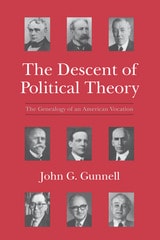
The Descent of Political Theory
The Genealogy of an American VocationJohn G. Gunnell
University of Chicago Press, 1993
Gunnell reconstructs the evolution of the field by locating it within the broader development of political science and American social science in general. During the behavioral revolution that swept political science in the 1950s, the relationship between political theory and political science changed dramatically, relegating theory to the margins of an increasingly empirical discipline. Gunnell demonstrates that the estrangement of political theory is rooted in a much older quarrel: the authority of knowledge versus political theory is rooted in a much older quarrel: the authority of knowledge versus political authority, academic versus public discourse. By disclosing the origin of this dispute, he opens the way for a clearer understanding of the basis and purpose of political theory.
As critical as it is revelatory, this thoughtful book should be read by any one interested in the history of political theory or science—or in the relationship of social science to political practice in the United States.
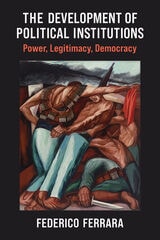
The Development of Political Institutions
Power, Legitimacy, DemocracyFederico Ferrara
University of Michigan Press, 2022
While the literature on “new institutionalism” explains the stability of institutional arrangements within countries and the divergence of paths of institutional development between countries, Federico Ferrara takes a “historical institutionalist” approach to theorize dynamic processes of institutional reproduction, institutional decay, and institutional change in explaining the development of political institutions. Ferrara synthesizes “power-based” or “power-distributional” explanations and “ideas-based” “legitimation explanations.” He specifies the psychological “microfoundations” of processes of institutional development, drawing heavily from the findings of experimental psychology to ensure that the explanation is grounded in clear and realistic assumptions regarding human motivation, cognition, and behavior. Aside from being of interest to scholars and graduate students in political science and other social-scientific disciplines whose research concentrates on the genesis of political institutions, their evolution over time, and their impact on the stability of political order and the quality of governance, the book will be required reading in graduate courses and seminars in comparative politics where the study of institutions and their development ranks among the subfield’s most important subjects.

The Devil's Fruit
Farmworkers, Health, and Environmental JusticeDvera I. Saxton
Rutgers University Press, 2021
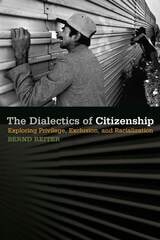
The Dialectics of Citizenship
Exploring Privilege, Exclusion, and RacializationBernd Reiter
Michigan State University Press, 2013

The Dictator Next Door
The Good Neighbor Policy and the Trujillo Regime in the Dominican Republic, 1930-1945Eric Paul Roorda
Duke University Press, 1998
Although Trujillo’s dictatorship was enabled by prior U.S. occupation of the Dominican Republic, the brutality of his regime and the reliance on violence and vanity to sustain his rule was an untenable offense to many in the U.S. diplomatic community, as well as to certain legislators, journalists, and bankers. Many U.S. military officers and congressmen, however—impressed by the civil order and extensive infrastructure the dictator established—comprised an increasingly powerful Dominican lobby. What emerges is a picture of Trujillo at the center of a crowded stage of international actors and a U.S. government that, despite events such as Trujillo’s 1937 massacre of 12,000 Haitians, was determined to foster alliances with any government that would oppose its enemies as the world moved toward war.
Using previously untapped records, privately held papers, and unpublished photographs, Roorda demonstrates how caution, confusion, and conflicting goals marked U.S. relations with Trujillo and set the tone for the ambivalent Cold War relations that prevailed until Trujillo’s assassination in 1961. The Dictator Next Door will interest Latin Americanists, historians, political scientists, and specialists in international relations and diplomacy.
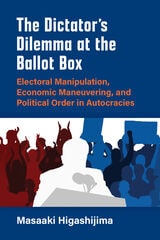
The Dictator's Dilemma at the Ballot Box
Electoral Manipulation, Economic Maneuvering, and Political Order in AutocraciesMasaaki Higashijima
University of Michigan Press, 2022
Contrary to our stereotypical views, dictators often introduce elections in which they refrain from employing blatant electoral fraud. Why do electoral reforms happen in autocracies? Do these elections destabilize autocratic rule? The Dictator’s Dilemma at the Ballot Box argues that strong autocrats who can garner popular support become less dependent on coercive electioneering strategies. When autocrats fail to design elections properly, elections backfire in the form of coups, protests, and the opposition’s stunning election victories. The book’s theoretical implications are tested on a battery of cross-national analyses with newly collected data on autocratic elections and in-depth comparative case studies of the two Central Asian republics of Kazakhstan and Kyrgyzstan.
The Dictatorship Syndrome
Alaa Al Aswany
Haus Publishing, 2019
What is the nature of dictatorship? How does it take hold? In what conditions and circumstances is it permitted to thrive? And how do dictators retain power, even when reviled and mocked by those they govern? In this deeply considered and at times provocative short work, Alaa Al Aswany shows us that – as with any disease – to understand the syndrome of dictatorship we must first consider the circumstances of its emergence, along with the symptoms and complications it causes in both the people and the dictator.

The Difference Women Make
The Policy Impact of Women in CongressMichele L. Swers
University of Chicago Press, 2002
Swers combines quantitative analyses of bills with interviews with legislators and their staff to compare legislative activity on women's issues by male and female members of the House of Representatives during the 103rd (1993-94) and 104th (1995-96) Congresses. Tracking representatives' commitment to women's issues throughout the legislative process, from the introduction of bills through committee consideration to final floor votes, Swers examines how the prevailing political context and members' positions within Congress affect whether and how aggressively they pursue women's issues.
Anyone studying congressional behavior, the role of women, or the representation of social identities in Congress will benefit from Swers's balanced and nuanced analysis.
The Diffusion of War
A Study of Opportunity and WillingnessRandolph M. Siverson and Harvey Starr
University of Michigan Press, 1991

The Digital Factory
The Human Labor of AutomationMoritz Altenried
University of Chicago Press, 2022
The workers of today’s digital factory include those in Amazon warehouses, delivery drivers, Chinese gaming workers, Filipino content moderators, and rural American search engine optimizers. Repetitive yet stressful, boring yet often emotionally demanding, these jobs require little formal qualification, but can demand a large degree of skills and knowledge. This work is often hidden behind the supposed magic of algorithms and thought to be automated, but it is in fact highly dependent on human labor.
The workers of today’s digital factory are not as far removed from a typical auto assembly line as we might think. Moritz Altenried takes us inside today’s digital factories, showing that they take very different forms, including gig economy platforms, video games, and Amazon warehouses. As Altenried shows, these digital factories often share surprising similarities with factories from the industrial age. As globalized capitalism and digital technology continue to transform labor around the world, Altenried offers a timely and poignant exploration of how these changes are restructuring the social division of labor and its geographies as well as the stratifications and lines of struggle.

The Digital Factory
The Human Labor of AutomationMoritz Altenried
University of Chicago Press, 2022
This is an auto-narrated audiobook edition of this book.
The Digital Factory reveals the hidden human labor that supports today’s digital capitalism.
The workers of today’s digital factory include those in Amazon warehouses, delivery drivers, Chinese gaming workers, Filipino content moderators, and rural American search engine optimizers. Repetitive yet stressful, boring yet often emotionally demanding, these jobs require little formal qualification, but can demand a large degree of skills and knowledge. This work is often hidden behind the supposed magic of algorithms and thought to be automated, but it is in fact highly dependent on human labor.
The workers of today’s digital factory are not as far removed from a typical auto assembly line as we might think. Moritz Altenried takes us inside today’s digital factories, showing that they take very different forms, including gig economy platforms, video games, and Amazon warehouses. As Altenried shows, these digital factories often share surprising similarities with factories from the industrial age. As globalized capitalism and digital technology continue to transform labor around the world, Altenried offers a timely and poignant exploration of how these changes are restructuring the social division of labor and its geographies as well as the stratifications and lines of struggle.

The Digital Party
Political Organisation and Online DemocracyPaolo Gerbaudo
Pluto Press, 2018
These new political formations tap into the potential of social media to gain consensus, and use online participatory platforms to include the rank-and-file. Paolo Gerbaudo looks at the restructuring of political parties and campaigns in the time of Facebook, Twitter, Instagram, and big data. Drawing on interviews with key political leaders and digital organizers, he argues that the digital party is very different from the class-based “mass party” of the industrial era, and offers promising new solutions to social polarization and the failures of liberal democracy today.
The Dilemma of Compliance
Political Parties and Post-Election DisputesSvitlana Chernykh
University of Michigan Press, 2024
To answer these questions, this book draws on an original dataset of post-election responses encompassing over 300 political parties, which participated in 270 elections held in twenty-two countries of Eastern Europe and the former Soviet Union over a period of more than two decades. In doing so, it offers a new theoretical framework for studying electoral compliance in comparative perspective and advances research on democratic transition, democracy promotion, post-election protests, and party politics.

The Dilemma of Dominic Ongwen
From Child Soldier to the International Criminal CourtKjell Anderson
Rutgers University Press, 2027
Dominic Ongwen was abducted by Joseph Kony's Lord's Resistance Army while walking to school at the age of nine. He later rose through its ranks committing, and ultimately being convicted by the International Criminal Court (ICC) of, many of the same crimes of which he was once a victim. The Dilemma of Dominic Ongwen tells this extraordinary story through the voices of those who knew him best: family members, fighters, commanders, “wives,” victims, and trial participants. Their testimonies, gathered in Uganda and The Hague, form the backbone of a narrative that interlaces survivor accounts with legal analysis and vivid excerpts from the ICC trial. The book offers a rare, human-centered lens on international justice, illuminating the dilemmas of prosecuting a former child soldier for mass atrocities. It provides indispensable insights for scholars of international criminal law, transitional justice, political violence, trauma, and human rights.

The Dilemma of Federal Mental Health Policy
Radical Reform or Incremental Change?Grob, Gerald N
Rutgers University Press, 2006
For nearly two centuries Americans have grappled with the question of how to serve individuals with severe disorders. During the second half of the twentieth century, mental health policy advocates reacted against institutional care, claiming that community care and treatment would improve the lives of people with mental disorders. Once the exclusive province of state governments, the federal government moved into this policy arena after World War II. Policies ranged from those focused on mental disorders, to those that focused more broadly on health and social welfare.
In this book, Gerald N. Grob and Howard H. Goldman trace how an ever-changing coalition of mental health experts, patients' rights activists, and politicians envisioned this community-based system of psychiatric services. The authors show how policies shifted emphasis from radical reform to incremental change. Many have benefited from this shift, but many are left without the care they require.

The Dilemmas of Dissidence in East-Central Europe
Citizen Intellectuals and Philosopher KingsBarbara J. Falk
Central European University Press, 2003
The Diplomacy of Involvement
American Economic Expansion across the Pacific, 1784-1900David M. Pletcher
University of Missouri Press, 2001
Like its predecessor, this important new work is focused on the connection between trade and investment on the one hand and U.S. foreign policy on the other. David Pletcher describes the trade of the United States with the Far East, the islands of the Pacific, and the northwest coast of North America from 1784 (the year of the first American trading expedition to China) to 1844 (the year of the first trade treaty with China, followed immediately by the U.S. acquisition of Oregon and California). He then traces the growth of trade and investment in Alaska, Hawaii, and the South Pacific from 1844 to 1890 and proceeds to do the same for China, Japan, and Korea. In the ensuing chapters, Pletcher covers the 1890s, including the annexation of Hawaii, the Sino-Japanese War, the acquisition of the Philippines, and the Open Door policy in China.
He concludes that the American expansion across the Pacific and into the Far East was not a deliberate, consistent drive for economic hegemony but a halting, experimental, improvised movement, carried out against determined opposition and indifference and dotted with setbacks and failures. Providing his own judgments about the wisdom and effectiveness of America's new endeavors, Pletcher summarizes the problems and handicaps involved, demonstrating that errors of the twentieth century were at least partly the result of poor preparation in the 1880s and 1890s.
Touching on every place where Americans undertook significant economic activity, The Diplomacy of Involvement will be an important aid for seasoned scholars, as well as an excellent introduction for the novice.

The Disability Rights Movement
From Charity to ConfrontationDoris Fleischer
Temple University Press, 2011
In this updated edition, Doris Zames Fleischer and Frieda Zames expand their encyclopedic history of the struggle for disability rights in the United States, to include the past ten years of disability rights activism.The book includes a new chapter on the evolving impact of the Americans with Disabilities Act, the continuing struggle for cross-disability civil and human rights, and the changing perceptions of disability.
The authors provide a probing analysis of such topics as deinstitutionalization, housing, health care, assisted suicide, employment, education, new technologies, disabled veterans, and disability culture.
Based on interviews with over one hundred activists, The Disability Rights Movement tells a complex and compelling story of an ongoing movement that seeks to create an equitable and diverse society, inclusive of people with disabilities.
The Disappearing South?
Studies in Regional Change and ContinuityRobert P. Steed
University of Alabama Press, 1990
There is widespread agreement that the South has changed dramatically since the end of World War II—the essays in The Disappearing South address the ongoing debate
There is widespread agreement that the South has changed dramatically since the end of World War II. Social, demographic, economic, and political changes have altered significantly the region long considered the nation’s most distinctive. There is less agreement, however, about the extent to which the forces of nationalization have eroded the major elements of Southern distinctiveness. Although this volume does not purport to settle the debate on Southern political change, it does present a variety of recent evidence that helps put this important debate into perspective. In the process it helps clarify the contemporary politics of the South for readers ranging from the scholar to the more casual observer.
The essays in The Disappearing South address the ongoing debate. Contributors, in addition to the editors, include E. Lee Bernick, Earl Black, Merle Black, Lewis Bowman, Edward G. Carmines, Patrick Cotter, Thomas Eamon, Douglas G. Feig, John C. Green, James L. Guth, William E. Hulbary, Anne E. Kelley, Lyman A. Kellstedt, David M. Olson, John Shelton Reed, Harold Stanley, James G. Stovall, John Theilmann, Stephen H. Wainscott, and Allen Wilhite.

The Discourse of Domination
From the Frankfurt School to PostmodernismBen Agger
Northwestern University Press, 1992

The Discovery and Conquest of Peru
Pedro de Cieza de León
Duke University Press, 1998
Alexandra Parma Cook and Noble David Cook present this recently discovered third book of a four-part chronicle that provides the most thorough and definitive record of the birth of modern Andean America. It describes with unparalleled detail the exploration of the Pacific coast of South America led by Francisco Pizarro and Diego de Almagro, the imprisonment and death of the Inca Atahualpa, the Indian resistance, and the ultimate Spanish domination.
Students and scholars of Latin American history and conquest narratives will welcome the publication of this volume.

The Discovery of Freedom in Ancient Greece
Revised and Updated EditionKurt Raaflaub
University of Chicago Press, 2003
To find out, Raaflaub analyses ancient Greek texts from Homer to Thucydides in their social and political contexts. Archaic Greece, he concludes, had little use for the idea of political freedom; the concept arose instead during the great confrontation between Greeks and Persians in the early fifth century BCE. Raaflaub then examines the relationship of freedom with other concepts, such as equality, citizenship, and law, and pursues subsequent uses of the idea—often, paradoxically, as a tool of domination, propaganda, and ideology.
Raaflaub's book thus illuminates both the history of ancient Greek society and the evolution of one of humankind's most important values, and will be of great interest to anyone who wants to understand the conceptual fabric that still shapes our world views.
The Disenfranchisement of Ex-Felons
Elizabeth A. Hull, foreword by Representative John Conyers, Jr.
Temple University Press, 2006
The Disenfranchisement of Ex-Felons provides a comprehensive overview of the history, nature, and far-reaching sociological and political consequences of denying ex-felons the right to vote. Readers learn state practices in Florida and Ohio during the 2000 and 2004 presidential elections; arguments that have been used in court houses, legislatures, and the press to justify such practices; and attempts to reverse legislation through state and federal governments. In a timely appendix to the 2004 election, Elizabeth Hull makes her case that the battle for civil rights will not be won unless ex-felons, who have fulfilled their obligations to society, are restored the same rights afforded all other American citizens.
The Dismantling of the Good Neighbor Policy
By Bryce Wood
University of Texas Press, 1985
The Good Neighbor Policy was unique: a great power obligated itself not to use force in its dealings with twenty smaller powers and not to interfere in their domestic politics. It was a policy that lasted, with some perturbations, for twenty years: instituted by President Roosevelt in 1933 and carried out effectively from 1933 to 1943 by word and action, maintained during the Second World War largely as a result of British concern for continuance of Argentine beef exports, codified in the Charter of the Organization of American States in 1948, and reasserted by Truman and Acheson in 1950–51, it was covertly repudiated in Guatemala in 1954 by Eisenhower and the Dulles brothers, and not so secretly by Kennedy in the disastrous Bay of Pigs invasion of 1961. Openly shattered in the Dominican Republic by Johnson in 1965, it has since been completely abandoned in favor of the usual relationships between large and small powers.
Working with documents from the Public Records Office in London and the National Archives, with recently released materials from the U.S. Department of State, and with secondary sources, Bryce Wood describes the temptations laid before the leaders of one powerful state by its occasionally recalcitrant neighbors, and the ways of reacting that were found. Having told half the story in his The Making of the Good Neighbor Policy, Wood now concludes it in the present volume. One of the chief casualties is shown to be the Organization of American States, which since 1954 has found itself badly crippled in its work to promote harmony and continued cooperation among the member states.

The Disordered Police State
German Cameralism as Science and PracticeAndre Wakefield
University of Chicago Press, 2009
Probing the relationship between German political economy and everyday fiscal administration, The Disordered Police State focuses on the cameral sciences—a peculiarly German body of knowledge designed to train state officials—and in so doing offers a new vision of science and practice during the seventeenth and eighteenth-centuries. Andre Wakefield shows that the cameral sciences were at once natural, technological, and economic disciplines, but, more important, they also were strategic sciences, designed to procure patronage for their authors and good publicity for the German principalities in which they lived and worked. Cameralism, then, was the public face of the prince's most secret affairs; as such, it was an essentially dishonest enterprise.
In an entertaining series of case studies on mining, textiles, forestry, and universities, Wakefield portrays cameralists in their own gritty terms. The result is a revolutionary new understanding about how the sciences created and maintained an image of the well-ordered police state in early modern Germany. In raising doubts about the status of these German sciences of the state, Wakefield ultimately questions many of our accepted narratives about science, culture, and society in early modern Europe.
The Dispossessed
Karl Marx’s Debates on Wood Theft and the Right of the PoorDaniel Bensaïd
University of Minnesota Press, 2021
Excavating Marx’s early writings to rethink the rights of the poor and the idea of the commons in an era of unprecedented privatization
The politics of dispossession are everywhere. Troubling developments in intellectual property, genomics, and biotechnology are undermining established concepts of property, while land appropriation and ecological crises reconfigure basic institutions of ownership. In The Dispossessed, Daniel Bensaïd examines Karl Marx’s early writings to establish a new framework for addressing the rights of the poor, the idea of the commons, and private property as a social institution.
In his series of articles from 1842–43 about Rhineland parliamentary debates over the privatization of public lands and criminalization of poverty under the rubric of the “theft of wood,” Marx identified broader anxieties about customary law, property rights, and capitalist efforts to privatize the commons. Bensaïd studies these writings to interrogate how dispossession continues to function today as a key modality of power. Brilliantly tacking between past and present, The Dispossessed discloses continuity and rupture in our relationships to property and, through that, to one another.
In addition to Bensaïd’s prescient work of political philosophy, The Dispossessed includes new translations of Marx’s original “theft of wood” articles and an introductory essay by Robert Nichols that lucidly contextualizes the essays.

The Distinction of Peace
A Social Analysis of PeacebuildingCatherine Goetze
University of Michigan Press, 2017
Goetze describes how the peacebuilding field came into being, how it defines who belongs to it and who does not, and what kind of group culture it has generated. Using an innovative methodology, she investigates the motivations of individuals who become peacebuilders, their professional trajectories and networks, and the “good peacebuilder” as an ideal. For many, working in peacebuilding in various ways—as an aid worker on the ground, as a lawyer at the United Nations, or as an academic in a think tank—has become not merely a livelihood, but also a form of participation in world politics. As a field, peacebuilding has developed techniques for incorporating and training new members, yet its internal politics also create the conditions of exclusion that often result in practical failures of the peacebuilding enterprise.
By providing a critical account of the social mechanisms that make up the peacebuilding field, Goetze offers deep insights into the workings of Western domination and global inequalities.

The Distributional Aspects of Social Security and Social Security Reform
Edited by Martin Feldstein and Jeffrey B. Liebman
University of Chicago Press, 2002
As this volume suggests, the distributional consequences of these proposals are substantially different and may disproportionately affect those groups who depend on social security to avoid poverty in old age. Together, these studies persuasively show that appropriately designed investment-based social security reforms can effectively reduce the long-term burden of an aging society on future taxpayers, increase the expected future income of retirees, and mitigate poverty rates among the elderly.

The Divided World
Human Rights and Its ViolenceRandall Williams
University of Minnesota Press, 2010

The Doctor Who Would Be King
Guillaume Lachenal
Duke University Press, 2022
The Documentary History of the Ratification of the Constitution Volume 26
Ratification of the Constitution by the States, Rhode Island, No. 3John P. Kaminski
Wisconsin Historical Society Press, 2013
Pulitzer Prize-winning historian Michael Kammen has noted that The Documentary History of the Ratification of the Constitution series "will be of enduring value centuries hence" and described it as "one of the most interesting documentary publications we have ever had." The American Bar Association Journal has stated, "Each new volume now fills another vital part of the mosaic of national history."
The Documentary History of the Ratification of the Constitution, Volume 11
Ratification of the Constitution by the States, Maryland, No. 1John P. Kaminski
Wisconsin Historical Society Press, 2015
The Documentary History of the Ratification of the Constitution, Volume 12
Ratification of the Constitution by the States, Maryland, No. 1John P. Kaminski
Wisconsin Historical Society Press, 2015
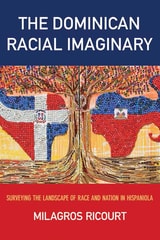
The Dominican Racial Imaginary
Surveying the Landscape of Race and Nation in HispaniolaRicourt, Milagros
Rutgers University Press, 2016
This book begins with a simple question: why do so many Dominicans deny the African components of their DNA, culture, and history?

The Drama of Humanity and Other Miscellaneous Papers, 1939-1985 (CW33)
Eric Voegelin, Edited & Intro by William Petropulos & Gilbert Weiss
University of Missouri Press, 2004
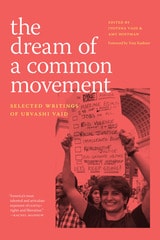
The Dream of a Common Movement
Selected Writings of Urvashi VaidUrvashi Vaid. Edited by Jyotsna Vaid and Amy Hoffman
Duke University Press, 2025

The Du Boisian Challenge
Rethinking Sociological MethodologyJosé Itzigsohn, Ricarda Hammer, and Michael Rodríguez-Muñiz, editors
Duke University Press, 2027
The Du Boisian Challenge
Rethinking Sociological MethodologyJosé Itzigsohn, Ricarda Hammer, and Michael Rodríguez-Muñiz, editors
Duke University Press, 2027
The Du Boisian Challenge
Rethinking Sociological MethodologyJosé Itzigsohn, Ricarda Hammer, and Michael Rodríguez-Muñiz, editors
Duke University Press, 2027
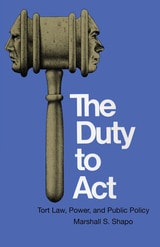
The Duty to Act
Tort Law, Power, and Public PolicyBy Marshall S. Shapo
University of Texas Press, 1977
A woman terrified by the threats of a jilted suitor is denied police protection. A workman collapses on the job and the employer is slow to help him. A bully in a bar begins to carry out threats of serious injury to a customer, after the bartender’s lackadaisical response. Springing from varied areas of human activity, such cases occupy an important area of the legal battleground called modern tort law. They also provide the basis for a fascinating legal analysis by Marshall S. Shapo.
Tort law is an important social mediator of events surrounding personal injuries. It impinges on many other areas of the law—those dealing with crime, constitutional protections against government officials and agencies, and property rights. Since litigated tort cases often involve brutal treatment or accidents inflicting severe physical harm, this area of the law generates much emotion and complex legal doctrine.
Shapo cuts through the emotion and the complexity to present a view of these problems that is both legally sound and intuitively appealing. His emphasis is on power relationships between private citizens and other individuals, as well as between private persons and governments and officials. He undertakes to define power in a meaningful way as it relates to many tort issues faced by ordinary citizens, and to make this definition precise by constant reference to concrete cases. His particular focus is on an age-old problem in tort law: the question of when a person has a duty to aid another in peril.
In analyzing a large number of cases in this category, Shapo develops an analysis that blends considerations of economic efficiency and humanitarian concern. Recognizing that economic considerations are significant in judicial analysis of these cases, he emphasizes elements that go beyond a simple concern with efficiency, especially the ability of one person to control another’s actions or exposure to risk.
These considerations of power and corresponding dependence provide the basis for Shapo’s study of the duties of both private citizens and governments to prevent injury to others. Calling on a broad range of legal precedents, he also refers to social science research dealing with the behavior of bystanders when fellow citizens are under attack.
Beyond his application of a power-based analysis to litigation traditionally based in tort doctrine, Shapo offers some speculative suggestions on the possible applicability of his views to several controversial areas of welfare law: medical care, municipal services, and educational standards.
This book was written with a view to readership by interested citizens as well as legal scholars, judges, and practicing attorneys.