Results by title
1677 books match the query 'Archaeology' and 16 start with u
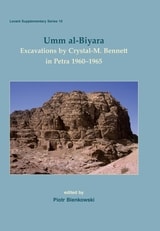
Umm al-Biyara
Excavations by Crystal-M. Bennett in Petra 1960-1965P. Bienkwoski
Council for British Research in the Levant, 2011
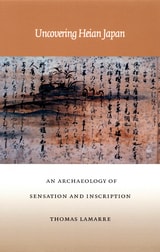
Uncovering Heian Japan
An Archaeology of Sensation and InscriptionThomas LaMarre
Duke University Press, 2000
Combining a pathbreaking visual analysis of the calligraphy with which this poetry was transcribed, a more traditional textual analysis, and a review of the politics of the period, LaMarre presents a dramatically new view of Heian poetry and culture. He challenges the assumption of a cohesive “national imagination,” seeing instead an early Japan that is ethnically diverse, territorially porous, and indifferent to linguistic boundaries. Working through the problems posed by institutionalized notions of nationalism, nativism, and modernism, LaMarre rethinks the theories of scholars such as Suzuki Hideo, Yoshimoto Takaaki, and Komatsu Shigemi, in conjunction with theorists such as Derrida, Karatani, Foucault, and Deleuze. Contesting the notion that speech is central to the formation of community, Uncovering Heian Japan focuses instead on the potential centrality of the more figural operations of poetic practice.
Specialists in Japanese history and culture as well as scholars working in other areas of cultural criticism will find that this book enriches their understanding of an early Japan that has exerted so much influence on later concepts of what it means to be Japanese.
Under the Canopy
The Archaelogy of Tropical Rain ForestsMercader, Julio
Rutgers University Press, 2002
Did our ancestors live in tropical forests? Although we see the rainforest as a bountiful environment teeming with life forms, most anthropologists and archaeologists have long viewed these areas as too harsh for human occupation during the pre-agricultural stages of hominid development.
Under the Canopy turns conventional wisdom on its head by providing a well-documented, geographically diverse overview of Stone Age sites in the wet tropics. New research indicates that, as humanity and its precursors increased their geographical and ecological ranges, rainforests were settled at a much earlier period than had previously been thought.
Featuring the work of leading scholars from Australia, Brazil, Canada, Colombia, France, Malaysia, Panama, Spain, and the United States, Under the Canopy creates a new niche in paleolithic studies: the archaeology of tropical rainforests. This book provides the first synthesis of archaeological research in early foraging sites across the rainforest zone, and indicates that tropical forests could harbor important clues to human evolution, origins of modern behavior, cultural diversity, and human impact on tropical ecosystems.
Unseen Art
Making, Vision, and Power in Ancient MesoamericaClaudia Brittenham
University of Texas Press, 2023
In Unseen Art, Claudia Brittenham unravels one of the most puzzling phenomena in Mesoamerican art history: why many of the objects that we view in museums today were once so difficult to see. She examines the importance that ancient Mesoamerican people assigned to the process of making and enlivening the things we now call art, as well as Mesoamerican understandings of sight as an especially godlike and elite power, in order to trace a gradual evolution in the uses of secrecy and concealment, from a communal practice that fostered social memory to a tool of imperial power.
Addressing some of the most charismatic of all Mesoamerican sculptures, such as Olmec buried offerings, Maya lintels, and carvings on the undersides of Aztec sculptures, Brittenham shows that the creation of unseen art has important implications both for understanding status in ancient Mesoamerica and for analyzing art in the present. Spanning nearly three thousand years of the Indigenous art of Mexico, Guatemala, Honduras, and Belize, Unseen Art connects the dots between vision, power, and inequality, providing a critical perspective on our own way of looking.
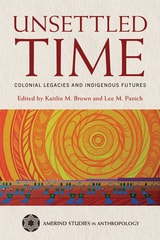
Unsettled Time
Colonial Legacies and Indigenous FuturesEdited by Kaitlin M. Brown and Lee M. Panich
University of Arizona Press, 2027
Time is at the core of how we think about colonialism in North America, with many seeing the first footfalls of newly arrived Europeans as indelibly marking the end of one era and the beginning of another. However, this understanding of time often serves to perpetuate outdated narratives about Indigenous people, normalizing colonial domination.
This volume unsettles conventional understandings of time in the study of Indigenous-colonial interactions in North America, acknowledging both the enduring nature of colonial legacies and the radical possibilities of Indigenous futures. The contributors largely approach this goal from the perspective of archaeology, with a particular concern for how we can effectively employ archaeological and related historical methods in collaboration with tribal nations and other descendant communities. The chapters engage with broader interdisciplinary questions about time, periodization, and temporality to build more nuanced and responsive understandings of Native-lived colonialism.
Contributors
Nathan Acebo
Kaitlin M. Brown
Wade Campbell
Emily Clark
Ruben Cu:k Ba’ak
Jacob Holland-Lulewicz
Nicholas V. Kessler
Nicholas C. Laluk
Koji Lau-Ozawa
Heather Law Pezzarossi
Lindsay Martel Montgomery
Lee M. Panich
Michelle M. Pigott
Robert W. Preucel
Christopher B. Rodning
Sarah Simeonoff
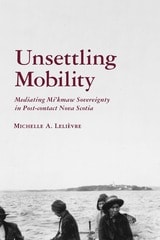
Unsettling Mobility
Mediating Mi’kmaw Sovereignty in Post-contact Nova ScotiaMichelle A. Lelièvre
University of Arizona Press, 2017
Since contact, attempts by institutions such as the British Crown and the Catholic Church to assimilate indigenous peoples have served to mark those people as “Other” than the settler majority. In Unsettling Mobility, Michelle A. Lelièvre examines how mobility has complicated, disrupted, and—at times—served this contradiction at the core of the settler colonial project.
Drawing on archaeological, ethnographic, and archival fieldwork conducted with the Pictou Landing First Nation—one of thirteen Mi’kmaw communities in Nova Scotia—Lelièvre argues that, for the British Crown and the Catholic Church, mobility has been required not only for the settlement of the colony but also for the management and conversion of the Mi’kmaq. For the Mi’kmaq, their continued mobility has served as a demonstration of sovereignty over their ancestral lands and waters despite the encroachment of European settlers.
Unsettling Mobility demonstrates the need for an anthropological theory of mobility that considers not only how people move from one place to another but also the values associated with such movements, and the sensual perceptions experienced by moving subjects. Unsettling Mobility argues that anthropologists, indigenous scholars, and policy makers must imagine settlement beyond sedentism. Rather, both mobile and sedentary practices, the narratives associated with those practices, and the embodied experiences of them contribute to how people make places—in other words, to how they settle.
Unsettling Mobility arrives at a moment when indigenous peoples in North America are increasingly using movement as a form of protest in ways that not only assert their political subjectivity but also remake the nature of that subjectivity.
Untaming the Frontier in Anthropology, Archaeology, and History
Edited by Bradley J. Parker and Lars Rodseth
University of Arizona Press, 2005
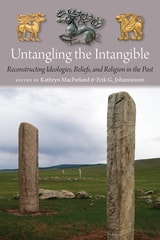
Untangling the Intangible
Reconstructing Ideologies, Beliefs, and Religion in the PastKathryn MacFarland
University Press of Colorado, 2026
In Untangling the Intangible a diverse group of authors focuses on new and rigorous ways to approach religion, beliefs, and ideology in archaeology. Reconstructing the human experience from archaeologically recovered materials is a complex task that can only benefit by making use of all available avenues of inquiry. To that end, the authors of this volume model inclusive discussions that recognize the inherent overlap, intersectionality, and co-constitutive relationship among the widely considered “intangibles” of culture: ideas, beliefs, ideology, and religion. The material and tangible aspects of these related elements inform human behavior and should not be treated independently because they constitute different and equal parts of a cognitive mosaic that forms the basis of the human experience.
The chapters encompass an array of research topics, geographical settings (Crete, Eurasia, the eastern Mediterranean, Madagascar, Mexico, and Mongolia), and temporal periods and highlight how practices associated with religious and ideological beliefs have shaped human societies across space and time. By focusing on multiple scales of inquiry and novel ways of accessing the material expressions of cultural phenomena and addressing underrepresented themes, this book challenges existing approaches and perspectives on the topic and directs future researchers to grapple with these elements as integral to researching the past.
Emphasizing a more comprehensive study of religious and ideological aspects of material culture, Untangling the Intangible highlights the potential for a more holistic understanding of the past and for approaching the very aspects that make us human through archaeology.
Publication of this book has been aided by a grant from the von Bothmer Publication Fund of the Archaeological Institute of America.
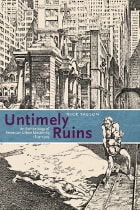
Untimely Ruins
An Archaeology of American Urban Modernity, 1819-1919Nick Yablon
University of Chicago Press, 2009
American ruins have become increasingly prominent, whether in discussions of “urban blight” and home foreclosures, in commemorations of 9/11, or in postapocalyptic movies. In this highly original book, Nick Yablon argues that the association between American cities and ruins dates back to a much earlier period in the nation’s history. Recovering numerous scenes of urban desolation—from failed banks, abandoned towns, and dilapidated tenements to the crumbling skyscrapers and bridges envisioned in science fiction and cartoons—Untimely Ruins challenges the myth that ruins were absent or insignificant objects in nineteenth-century America.
The first book to document an American cult of the ruin, Untimely Ruins traces its deviations as well as derivations from European conventions. Unlike classical and Gothic ruins, which decayed gracefully over centuries and inspired philosophical meditations about the fate of civilizations, America’s ruins were often “untimely,” appearing unpredictably and disappearing before they could accrue an aura of age. As modern ruins of steel and iron, they stimulated critical reflections about contemporary cities, and the unfamiliar kinds of experience they enabled. Unearthing evocative sources everywhere from the archives of amateur photographers to the contents of time-capsules, Untimely Ruins exposes crucial debates about the economic, technological, and cultural transformations known as urban modernity. The result is a fascinating cultural history that uncovers fresh perspectives on the American city.
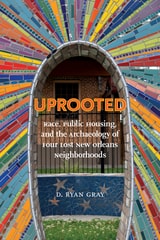
Uprooted
Race, Public Housing, and the Archaeology of Four Lost New Orleans NeighborhoodsD. Ryan Gray
University of Alabama Press, 2020
The archaeology of four New Orleans neighborhoods that were replaced by public housing projects
Uprooted: Race, Public Housing, and the Archaeology of Four Lost New Orleans Neighborhoods uses archaeological research on four neighborhoods that were razed during the construction of public housing in World War II–era New Orleans. Although each of these neighborhoods was identified as a “slum” historically, the material record challenges the simplicity of this designation. D. Ryan Gray provides evidence of the inventiveness of former residents who were marginalized by class, color, or gender and whose everyday strategies of survival, subsistence, and spirituality challenged the city’s developing racial and social hierarchies.
These neighborhoods initially appear to have been quite distinct, ranging from the working-class Irish Channel, to the relatively affluent Creole of Color–dominated Lafitte area, to the former location of Storyville, the city’s experiment in semilegal prostitution. Archaeological and historical investigations suggest that race was the crucial factor in the areas’ selection for clearance. Each neighborhood manifested a particular perceived racial disorder, where race intersected with ethnicity, class, or gender in ways that defied the norms of Jim Crow segregation.
Gray’s research makes use of both primary documents—including census records, city directories, and even the brothel advertising guides called “Blue Books”—and archaeological data to examine what this entailed at a variety of scales, reconstructing narratives of the households and communities affected by clearance. Public housing, both in New Orleans and elsewhere, imposed a new kind of control on urban life that had the effect of making cities both more segregated and less equal. The story of the neighborhoods that were destroyed provides a reminder that their erasure was not an inevitable outcome, and that a more equitable and just city is still possible today. A critical examination of the rise of public housing helps inform the ongoing debates over its demise, especially in light of the changing face of post-Katrina New Orleans.
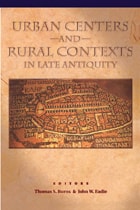
Urban Centers and Rural Contexts in Late Antiquity
Thomas S. Burns
Michigan State University Press, 2001
While ancient literature and the physical remains of cities attest to the power that urban values held over the lives of their inhabitants, the rural areas in which the majority of imperial citizens lived have not been well served by the historical record. Only recently have archeological excavations and integrated field surveys sufficiently enhanced our knowledge of the rural contexts to demonstrate the continuing interdependence of urban centers and rural communities in Late Antiquity. These new data call into question the conventional view that this interdependence progressively declined as a result of governmental crises, invasions, economic dislocation, and the success of Christianization.
The essays in this volume require us to abandon the search for a single model of urban and rural change; to reevaluate the cities and towns of the Empire as centers of habitation, rather than archeological museums; and to reconsider the evidence of continuous and pervasive cultural change across the countryside. Deploying a wide range of material as well as literary evidence, the authors provide access not only into the world of élites, but also to the scarcely known lives of those without a voice in the literature, those men and women who worked in the shops, labored in the fields, and humbled themselves before their gods. They bring us closer to the complexity of life in late ancient communities and, in consequence, closer to both urban and rural citizens.
Urbanism and Empire in Roman Sicily
By Laura Pfuntner
University of Texas Press, 2019
Sicily has been the fulcrum of the Mediterranean throughout history. The island’s central geographical position and its status as ancient Rome’s first overseas province make it key to understanding the development of the Roman Empire. Yet Sicily’s crucial role in the empire has been largely overlooked by scholars of classical antiquity, apart from a small number of specialists in its archaeology and material culture.
Urbanism and Empire in Roman Sicily offers the first comprehensive English-language overview of the history and archaeology of Roman Sicily since R. J. A. Wilson’s Sicily under the Roman Empire (1990). Laura Pfuntner traces the development of cities and settlement networks in Sicily in order to understand the island’s political, economic, social, and cultural role in Rome’s evolving Mediterranean hegemony. She identifies and examines three main processes traceable in the archaeological record of settlement in Roman Sicily: urban disintegration, urban adaptation, and the development of alternatives to urban settlement. By expanding the scope of research on Roman Sicily beyond the bounds of the island itself, through comparative analysis of the settlement landscapes of Greece and southern Italy, and by utilizing exciting evidence from recent excavations and surveys, Pfuntner establishes a new empirical foundation for research on Roman Sicily and demonstrates the necessity of including Sicily in broader historical and archaeological studies of the Roman Empire.
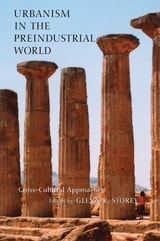
Urbanism in the Preindustrial World
Cross-Cultural ApproachesEdited by Glenn R. Storey
University of Alabama Press, 2006
This work employs a subset of preindustrial cities on many continents to answer questions archaeologists grapple with concerning the populating and growth of cities before industrialization. It further explores how scholars differently conceive and execute their research on the population of cities. The subject cities are in Greece, Mesoamerica, the Andes, Italy, Egypt, Africa, United States, Denmark, and China. This broad sample provides a useful framework for answers to such questions as “Why did people agglomerate into cities?” and “What population size and what age of endurance constitute a city?”
The study covers more than population magnitude and population makeup, the two major frameworks of urban demography. The contributors combine their archaeological and historical expertise to reveal commonalities, as well as theoretical extrapolations and methodological approaches, at work here and outside the sample.
Urbanism in the Preindustrial World is a unique study revealing the variety of factors involved in the coalescing and dispersal of populations in preindustrial times.
Use-Wear Analysis of Flaked Stone Tools
Patrick C. Vaughan
University of Arizona Press, 1985
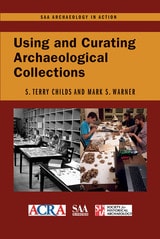
Using and Curating Archaeological Collections
S. Terry Childs
University Press of Colorado, 2019
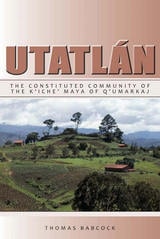
Utatlán
The Constituted Community of the K'iche' Maya of Q'umarkajThomas F. Babcock
University Press of Colorado, 2012
Most information available on Utatlán focuses on the ceremonial center and ignores the city of the commoners. Using the archaeological data, Utatlán attempts to determine the boundaries of the community and to characterize subdivisions within it. Evidence of indigenous nonelite houses, rich burials, and grave goods unlike those found in contemporary sites reveals information about the supporting residence zone. In addition, Babcock applies the concept of "constituted community," interpreting the archaeological data from a prehistoric context, and proposes a theoretical framework for interpreting prehistoric sites with respect to urbanism and political complexity.
Utatlán: The Constituted Community of the K'iche' Maya of Q'umarkaj will be of interest to students and scholars of Mesoamerican anthropology, archaeology, and ethnohistory.