Results by title
153 books match the query 'Cities and towns' and 12 start with u
Under Construction
Technologies of Development in Urban EthiopiaDaniel Mains
Duke University Press, 2019
Untimely Ruins
An Archaeology of American Urban Modernity, 1819-1919Nick Yablon
University of Chicago Press, 2009
American ruins have become increasingly prominent, whether in discussions of “urban blight” and home foreclosures, in commemorations of 9/11, or in postapocalyptic movies. In this highly original book, Nick Yablon argues that the association between American cities and ruins dates back to a much earlier period in the nation’s history. Recovering numerous scenes of urban desolation—from failed banks, abandoned towns, and dilapidated tenements to the crumbling skyscrapers and bridges envisioned in science fiction and cartoons—Untimely Ruins challenges the myth that ruins were absent or insignificant objects in nineteenth-century America.
The first book to document an American cult of the ruin, Untimely Ruins traces its deviations as well as derivations from European conventions. Unlike classical and Gothic ruins, which decayed gracefully over centuries and inspired philosophical meditations about the fate of civilizations, America’s ruins were often “untimely,” appearing unpredictably and disappearing before they could accrue an aura of age. As modern ruins of steel and iron, they stimulated critical reflections about contemporary cities, and the unfamiliar kinds of experience they enabled. Unearthing evocative sources everywhere from the archives of amateur photographers to the contents of time-capsules, Untimely Ruins exposes crucial debates about the economic, technological, and cultural transformations known as urban modernity. The result is a fascinating cultural history that uncovers fresh perspectives on the American city.
Up Against The Sprawl
Public Policy And The Making Of Southern CaliforniaJennifer Wolch
University of Minnesota Press, 2004
Los Angeles's experience in managing urban growth and change
America's first truly twenty-first-century metropolis, Los Angeles is often depicted as diverse, fragmented, polarized, and ungovernable, a city without a unifying geographic center or civic culture. The sprawling evolution of the city and its infamous problems—traffic, pollution, growing inequality—are usually attributed to a Wild West version of capitalism—the triumph of an unregulated free market over comprehensive urban planning. But market choices and lack of planning did not set the terrain of Southern California: Los Angeles has been profoundly shaped by a wide range of local, state, and federal public policies and programs.
Up Against the Sprawl details how governmental policies and public agencies have dictated many aspects of the region’s growth: infrastructure, transportation, housing, immigration, finances, civic and regional administration, the environment. The authors also argue that since public policy set the landscape, it can help forge the future. They explore countermovements by progressive activists to use innovative policies—from smart growth initiatives to the actions of living wage advocates—for greater social, economic, and environmental justice. This book is a major contribution to our understanding of past and present urban processes and policy, and highlights practical lessons for urban and regional policy makers and activists in Los Angeles and beyond.Contributors: Carolyn B. Aldana, California State U, San Bernadino; Carol S. Armstrong; Michael Dear, U of Southern California; Gary Dymski, U of California Riverside; Steven P. Erie, USC; Gregory Freeman; William Fulton; Elizabeth Gearin, USC; Genevieve Giuliano, USC; Pascale Joassart-Marcelli, U of Massachusetts, Boston; Enrico A. Marcelli; Myra A. Marks, Loyola Marymount U; Juliet Musso, USC; Stephanie Pincetl, USC; Laura Pulido; Christine M. Ryan; John P. Wilson.
Urban Centers and Rural Contexts in Late Antiquity
Thomas S. Burns
Michigan State University Press, 2001
While ancient literature and the physical remains of cities attest to the power that urban values held over the lives of their inhabitants, the rural areas in which the majority of imperial citizens lived have not been well served by the historical record. Only recently have archeological excavations and integrated field surveys sufficiently enhanced our knowledge of the rural contexts to demonstrate the continuing interdependence of urban centers and rural communities in Late Antiquity. These new data call into question the conventional view that this interdependence progressively declined as a result of governmental crises, invasions, economic dislocation, and the success of Christianization.
The essays in this volume require us to abandon the search for a single model of urban and rural change; to reevaluate the cities and towns of the Empire as centers of habitation, rather than archeological museums; and to reconsider the evidence of continuous and pervasive cultural change across the countryside. Deploying a wide range of material as well as literary evidence, the authors provide access not only into the world of élites, but also to the scarcely known lives of those without a voice in the literature, those men and women who worked in the shops, labored in the fields, and humbled themselves before their gods. They bring us closer to the complexity of life in late ancient communities and, in consequence, closer to both urban and rural citizens.
Urban Encounters
Helen Liggett
University of Minnesota Press, 2003
In words and photographs, reimagining the city as lived space
In contrast to Walter Benjamin, Henri Lefebvre, and other European thinkers engaged with the concept of the urban, American intellectuals tend to envision the modern city as a dystopia, their perception of urban life influenced by negative stereotypes and fictional depictions in popular culture. In Urban Encounters, Helen Liggett challenges this fatalism by approaching the city as a vibrant, lived space. Combining a sophisticated critique of the urban with striking, street-level images, Liggett reclaims the human experience of the city.
Liggett’s “encounters” with the urban are sequences of images and text that combine the joy of observing with the pleasure of making connections. For Liggett, this entails recognizing both beauty and danger. Alternately complementing and complicating her text, Liggett’s photographs capture the small details—the gestures, glances, and reflections—that together compose the urban experience. As a whole, Urban Encounters reimagines the city as a site of profound engagement with life.
Urban Imaginaries
Locating the Modern CityAlev Cinar
University of Minnesota Press, 2007
For millennia, the city stood out against the landscape, walled and compact. This concept of the city was long accepted as adequate for characterizing the urban experience. However, the nature of the city, both real and imagined, has always been more permeable than this model reveals.
The essays in Urban Imaginaries respond to this condition by focusing on how social and physical space is conceived as both indefinite and singular. They emphasize the ways this space is shared and thus made into urban culture. Urban Imaginaries offers case studies on cities in Brazil, Israel, Turkey, Lebanon, and India, as well as in the United States and France, and in doing so blends social, cultural, and political approaches to better understand the contemporary urban experience.
Contributors: Margaret Cohen, Stanford U; Camilla Fojas, De Paul U; Beatriz Jaguaribe, Federal U of Rio de Janeiro; Anthony D. King, SUNY Binghamton; Mark LeVine, U of California, Irvine; Srirupa Roy, U of Massachusetts, Amherst; Seteney Shami, Social Science Research Council; AbdouMaliq Simone, New School U; Maha Yahya; Deniz Yükseker, Koç U, Istanbul.
Alev Çinar is associate professor of political science and public administration at Bilkent University, Turkey. Thomas Bender is university professor of the humanities and history at New York University.
Urban Inequality
Evidence From Four CitiesAlice O'Connor
Russell Sage Foundation, 2001
Urban Latin America
The Political Condition from Above and BelowBy Alejandro Portes and John Walton
University of Texas Press, 1976
Much research on the city in developing societies has focused mainly on one of three areas—planning, demography, or economics—and has emphasized either power elites or the masses, but not both. The published literature on Latin America has reflected these interests and has so far failed to provide a comprehensive view of Latin American urbanization. Urban Latin America is an attempt to integrate research on Latin American social organization within a single theoretical framework: development as fundamentally a political problem. Alejandro Portes and John Walton have included material on both elites and marginal populations and on the three major areas of research in order to formulate and address some of the key questions about the structure of urban politics in Latin America.
Following an introduction that delineates the scope of Latin American urban studies, Portes discusses the Latin American city as a creation of European colonialism. He goes on to examine political behavior among the poor, with central reference to system support and countersystem potential. Walton provides material for a comparative study of four cities: Monterrey and Guadalajara in Mexico and Medellín and Cali in Colombia. He also summarizes a large number of urban elite studies and develops a theoretical interpretation of their collective results, based on class structure and vertical integration. Material in each chapter is cross-referenced to other chapters, and the authors have used a common methodological approach in synthesizing and interpreting the research literature. In the final chapter they generalize current findings, elaborating on the interface between elite and mass politics in the urban situation. They make some observations on approaching changes and pinpoint possible research strategies for the future.
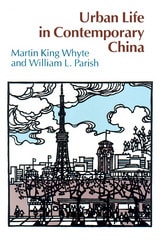
Urban Life in Contemporary China
Martin King Whyte and William L. Parish
University of Chicago Press, 1984
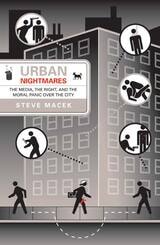
Urban Nightmares
The Media, The Right, And The Moral Panic Over The CitySteve Macek
University of Minnesota Press, 2006
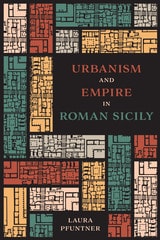
Urbanism and Empire in Roman Sicily
By Laura Pfuntner
University of Texas Press, 2019
Sicily has been the fulcrum of the Mediterranean throughout history. The island’s central geographical position and its status as ancient Rome’s first overseas province make it key to understanding the development of the Roman Empire. Yet Sicily’s crucial role in the empire has been largely overlooked by scholars of classical antiquity, apart from a small number of specialists in its archaeology and material culture.
Urbanism and Empire in Roman Sicily offers the first comprehensive English-language overview of the history and archaeology of Roman Sicily since R. J. A. Wilson’s Sicily under the Roman Empire (1990). Laura Pfuntner traces the development of cities and settlement networks in Sicily in order to understand the island’s political, economic, social, and cultural role in Rome’s evolving Mediterranean hegemony. She identifies and examines three main processes traceable in the archaeological record of settlement in Roman Sicily: urban disintegration, urban adaptation, and the development of alternatives to urban settlement. By expanding the scope of research on Roman Sicily beyond the bounds of the island itself, through comparative analysis of the settlement landscapes of Greece and southern Italy, and by utilizing exciting evidence from recent excavations and surveys, Pfuntner establishes a new empirical foundation for research on Roman Sicily and demonstrates the necessity of including Sicily in broader historical and archaeological studies of the Roman Empire.
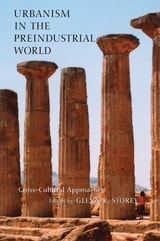
Urbanism in the Preindustrial World
Cross-Cultural ApproachesEdited by Glenn R. Storey
University of Alabama Press, 2006
This work employs a subset of preindustrial cities on many continents to answer questions archaeologists grapple with concerning the populating and growth of cities before industrialization. It further explores how scholars differently conceive and execute their research on the population of cities. The subject cities are in Greece, Mesoamerica, the Andes, Italy, Egypt, Africa, United States, Denmark, and China. This broad sample provides a useful framework for answers to such questions as “Why did people agglomerate into cities?” and “What population size and what age of endurance constitute a city?”
The study covers more than population magnitude and population makeup, the two major frameworks of urban demography. The contributors combine their archaeological and historical expertise to reveal commonalities, as well as theoretical extrapolations and methodological approaches, at work here and outside the sample.
Urbanism in the Preindustrial World is a unique study revealing the variety of factors involved in the coalescing and dispersal of populations in preindustrial times.