744 books match the query 'Culture' and 9 start with u
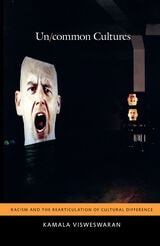
cover of Un/common Cultures: Racism and the Rearticulation of Cultural Difference

Un/common Cultures

Racism and the Rearticulation of Cultural Difference

Kamala Visweswaran

Duke University Press, 2010

In Un/common Cultures, Kamala Visweswaran develops an incisive critique of the idea of culture at the heart of anthropology, describing how it lends itself to culturalist assumptions. She holds that the new culturalism—the idea that cultural differences are definitive, and thus divisive—produces a view of “uncommon cultures” defined by relations of conflict rather than forms of collaboration. The essays in Un/common Cultures straddle the line between an analysis of how racism works to form the idea of “uncommon cultures” and a reaffirmation of the possibilities of “common cultures,” those that enact new forms of solidarity in seeking common cause. Such “cultures in common” or “cultures of the common” also produce new intellectual formations that demand different analytic frames for understanding their emergence. By tracking the emergence and circulation of the culture concept in American anthropology and Indian and French sociology, Visweswaran offers an alternative to strictly disciplinary histories. She uses critical race theory to locate the intersection between ethnic/diaspora studies and area studies as a generative site for addressing the formation of culturalist discourses. In so doing, she interprets the work of social scientists and intellectuals such as Elsie Clews Parsons, Alice Fletcher, Franz Boas, Louis Dumont, Claude Lévi-Strauss, Clifford Geertz, W. E. B. Du Bois, and B. R. Ambedkar.
[more]
cover of Uncommon Sense: Understanding Nature's Truths Across Time and Culture

Uncommon Sense

Understanding Nature's Truths Across Time and Culture

Anthony Aveni

University Press of Colorado, 2006

The divide between teaching “intelligent design” and evolution in U.S. schools has brought to the public eye a struggle that archaeoastronomer Anthony Aveni argues is as old as culture itself. All societies seek to understand the natural world, but their search is shaped by culturally distinct views and experiences. In Uncommon Sense, Aveni explores the common and conflicting ways that ancient and contemporary societies have searched for the literal truth about the natural world’s mysteries, from dinosaur bones to the Star of Bethlehem. Aveni demonstrates that a society’s approach to making sense of the natural world can serve as a working definition of its culture, so strongly does it resonate with fundamental values and assumptions.

In ten fascinating essays, Aveni examines topics that have absorbed scientists, religious figures, and ordinary citizens over the centuries. He traces the tug of war between astronomy and astrology, reveals the underpinnings of our notions of cartography and the representation of space and time, and much more.

Readers interested in science, history, and world cultures will revel in this celebration of different cultures’ common and uncommon questions and conclusions about the natural world.
[more]
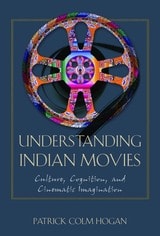
cover of Understanding Indian Movies: Culture, Cognition, and Cinematic Imagination

Understanding Indian Movies

Culture, Cognition, and Cinematic Imagination

By Patrick Colm Hogan

University of Texas Press, 2008

Indian movies are among the most popular in the world. However, despite increased availability and study, these films remain misunderstood and underappreciated in much of the English-speaking world, in part for cultural reasons.

In this book, Patrick Colm Hogan sets out through close analysis and explication of culturally particular information about Indian history, Hindu metaphysics, Islamic spirituality, Sanskrit aesthetics, and other Indian traditions to provide necessary cultural contexts for understanding Indian films. Hogan analyzes eleven important films, using them as the focus to explore the topics of plot, theme, emotion, sound, and visual style in Indian cinema. These films draw on a wide range of South Asian cultural traditions and are representative of the greater whole of Indian cinema. By learning to interpret these examples with the tools Hogan provides, the reader will be able to take these skills and apply them to other Indian films.

But this study is not simply culturalist. Hogan also takes up key principles from cognitive neuroscience to illustrate that all cultures share perceptual, cognitive, and emotional elements that, when properly interpreted, can help to bridge gaps between seemingly disparate societies. Hogan locates the specificity of Indian culture in relation to human universals, and illustrates this cultural-cognitive synthesis through his detailed interpretations of these films. This book will help both scholars and general readers to better understand and appreciate Indian cinema.
[more]
cover of Universalism without Uniformity: Explorations in Mind and Culture

Universalism without Uniformity

Explorations in Mind and Culture

Edited by Julia L. Cassaniti and Usha Menon

University of Chicago Press, 2017

One of the major questions of cultural psychology is how to take diversity seriously while acknowledging our shared humanity. This collection, edited by Julia L. Cassaniti and Usha Menon, brings together leading scholars in the field to reconsider that question and explore the complex mechanisms that connect culture and the human mind.
 
The contributors to Universalism without Uniformity offer tools for bridging silos that have historically separated anthropology’s attention to culture and psychology’s interest in universal mental processes. Throughout, they seek to answer intricate yet fundamental questions about why we are motivated to find meaning in everything around us and, in turn, how we constitute the cultural worlds we inhabit through our intentional involvement in them. Laying bare entrenched disciplinary blind spots, this book offers a trove of insights on issues such as morality, emotional functioning, and conceptions of the self across cultures. Filled with impeccable empirical research coupled with broadly applicable theoretical reflections on taking psychological diversity seriously, Universalism without Uniformity breaks new ground in the study of mind and culture. 

[more]
cover of Unsettled: The Culture of Mobility and the Working Poor in Early Modern England

Unsettled

The Culture of Mobility and the Working Poor in Early Modern England

Patricia Fumerton

University of Chicago Press, 2006

Migrants made up a growing class of workers in late sixteenth- and seventeenth- century England. In fact, by 1650, half of England’s rural population consisted of homeless and itinerant laborers. Unsettled is an ambitious attempt to reconstruct the everyday lives of these dispossessed people. Patricia Fumerton offers an expansive portrait of unsettledness in early modern England that includes the homeless and housed alike.

            Fumerton begins by building on recent studies of vagrancy, poverty, and servants, placing all in the light of a new domestic economy of mobility. She then looks at representations of the vagrant in a variety of pamphlets and literature of the period. Since seamen were a particularly large and prominent class of mobile wage-laborers in the seventeenth century, Fumerton turns to seamen generally and to an individual poor seaman as a case study of the unsettled subject: Edward Barlow (b. 1642) provides a rare opportunity to see how the laboring poor fashioned themselves, for he authored a journal of over 225,000 words and 147 pages of drawings. Barlow’s journal, studied extensively here for the first time, vividly charts what he himself termed his “unsettled mind” and the perpetual anxieties of England’s working and wayfaring poor. Ultimately, Fumerton explores representations of seamen as unsettled in the broadside ballads of Barlow’s time.
[more]
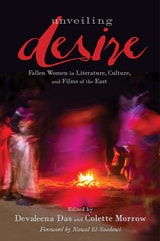
cover of Unveiling Desire: Fallen Women in Literature, Culture, and Films of the East

Unveiling Desire

Fallen Women in Literature, Culture, and Films of the East

Das, Devaleena

Rutgers University Press, 2018

In Unveiling Desire, Devaleena Das and Colette Morrow show that the duality of the fallen/saved woman is as prevalent in Eastern culture as it is in the West, specifically in literature and films. Using examples from the Middle to Far East, including Iran, India, Pakistan, Bangladesh, Thailand, Japan, and China, this anthology challenges the fascination with Eastern women as passive, abject, or sexually exotic, but also resists the temptation to then focus on the veil, geisha, sati, or Muslim women’s oppression without exploring Eastern women’s sexuality beyond these contexts. The chapters cover instead mind/body sexual politics, patriarchal cultural constructs, the anatomy of sex and power in relation to myth and culture, denigration of female anatomy, and gender performativity. From Persepolis to Bollywood, and from fairy tales to crime fiction, the contributors to Unveiling Desire show how the struggle for women’s liberation is truly global.  
[more]
cover of Urban Appetites: Food and Culture in Nineteenth-Century New York

Urban Appetites

Food and Culture in Nineteenth-Century New York

Cindy R. Lobel

University of Chicago Press, 2014

Glossy magazines write about them, celebrities give their names to them, and you’d better believe there’s an app (or ten) committed to finding you the right one. They are New York City restaurants and food shops. And their journey to international notoriety is a captivating one. The now-booming food capital was once a small seaport city, home to a mere six municipal food markets that were stocked by farmers, fishermen, and hunters who lived in the area. By 1890, however, the city’s population had grown to more than one million, and residents could dine in thousands of restaurants with a greater abundance and variety of options than any other place in the United States.

Historians, sociologists, and foodies alike will devour the story of the origins of New York City’s food industry in Urban Appetites. Cindy R. Lobel focuses on the rise of New York as both a metropolis and a food capital, opening a new window onto the intersection of the cultural, social, political, and economic transformations of the nineteenth century. She offers wonderfully detailed accounts of public markets and private food shops; basement restaurants and immigrant diners serving favorites from the old country; cake and coffee shops; and high-end, French-inspired eating houses made for being seen in society as much as for dining.  But as the food and the population became increasingly cosmopolitan, corruption, contamination, and undeniably inequitable conditions escalated. Urban Appetites serves up a complete picture of the evolution of the city, its politics, and its foodways.
[more]
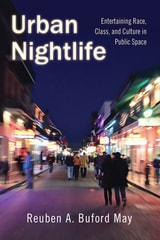
cover of Urban Nightlife: Entertaining Race, Class, and Culture in Public Space

Urban Nightlife

Entertaining Race, Class, and Culture in Public Space

May, Reuben A. Buford

Rutgers University Press, 2014

Sociologists have long been curious about the ways in which city dwellers negotiate urban public space. How do they manage myriad interactions in the shared spaces of the city? In Urban Nightlife, sociologist Reuben May undertakes a nuanced examination of urban nightlife, drawing on ethnographic data gathered in a Deep South college town to explore the question of how nighttime revelers negotiate urban public spaces as they go about meeting, socializing, and entertaining themselves. 

 
May’s work reveals how diverse partiers define these spaces, in particular the ongoing social conflict on the streets, in bars and nightclubs, and in the various public spaces of downtown. To explore this conflict, May develops the concept of “integrated segregation”—the idea that diverse groups are physically close to one another yet rarely have meaningful interactions—rather, they are socially bound to those of similar race, class, and cultural backgrounds. May’s in-depth research leads him to conclude that social tension is stubbornly persistent in part because many participants fail to make the connection between contemporary relations among different groups and the historical and institutional forces that perpetuate those very tensions; structural racism remains obscured by a superficial appearance of racial harmony.
 
 
Through May’s observations, Urban Nightlife clarifies the complexities of race, class, and culture in contemporary America, illustrating the direct influence of local government and nightclub management decision-making on interpersonal interaction among groups. 

Watch a video with Reuben A. Buford May:

Watch video now. (http://www.youtube.com/watch?v=VCs1xExStPw).

[more]
cover of Urban Underworlds: A Geography of Twentieth-Century American Literature and Culture

Urban Underworlds

A Geography of Twentieth-Century American Literature and Culture

Heise, Thomas

Rutgers University Press, 2010

Urban Underworlds is an exploration of city spaces, pathologized identities, lurid fears, and American literature. Surveying the 1890s to the 1990s, Thomas Heise chronicles how and why marginalized populations immigrant Americans in the Lower East Side, gays and lesbians in Greenwich Village and downtown Los Angeles, the black underclass in Harlem and Chicago, and the new urban poor dispersed across American cities have been selectively targeted as "urban underworlds" and their neighborhoods characterized as miasmas of disease and moral ruin.

The quarantining of minority cultures helped to promote white, middle-class privilege. Following a diverse array of literary figures who differ with the assessment of the underworld as the space of the monstrous Other, Heise contends that it is a place where besieged and neglected communities are actively trying to take possession of their own neighborhoods.
[more]