Results by title
1832 books match the query 'Essays' and 26 start with u
UNCLOS at 40
Essays in Honour of Ambassador Tommy KohEdited by Nilufer Oral and Tara Davenport
National University of Singapore Press, 2024
To commemorate forty years since the 1982 UN Convention on the Law of the Sea (UNCLOS) and in honor of one of the main architects of UNCLOS, Singapore's Ambassador Tommy Koh, UNCLOS at 40 brings together law of the sea judges, scholars, and practitioners to explore a wide range of issues. It explains the reasons for the continuing endurance of UNCLOS as the foundation for the governance of the oceans and looks ahead to new challenges.
UP
A Scientist's Guide to the Magic Above UsLucy Rogers
Michigan State University Press, 2027
Engineer and bubble scientist Lucy Rogers invites us to explore the wonders of the air, sky, and space; understand the science; and appreciate the insights this offers about life on Earth. The sky is a world of endless wonder. From the intricate dance of clouds and the vibrant hues of the aurora borealis to the marvel of effortless soaring birds and the silent majesty of the stars, it is a living storybook. Join Rogers on a marvelous adventure through a kite market in India, creep through the Borneo jungle to witness millions of bats pour out of a cave at dusk, venture to Tornado Alley to chase the raw power of storms, and journey to Mexico to stand in awe of a total solar eclipse. Up is for anyone who has ever looked up at the sky in awe and needs to know the science behind its never-ending phenomena.
Unauthorized Voices
Essays on Poets and Poetry, 1987-2009Marilyn Hacker
University of Michigan Press, 2010
Praise for Marilyn Hacker:
"How piercing the duet we're offered between Marilyn Hacker and the reality principle. Reality saying, it’s impossible, something's always sacrificed: you can't be so merry and so raw; so learned and earthy; so gut-wrenching, so danceable at once. Can you? To which, steadily, the voice of Marilyn Hacker: Yes. Evidently; Evidently so."
---Eve Kosofsky Sedgwick, author of Epistemology of the Closet and Touching Feeling
"Hacker is one of our best singers---by turns elegiac and fierce, sweet and witty. With each new collection her voice grows richer, more resonant, sorrowing and lovely."
---Julia Alvarez, author of In the Time of the Butterflies and How the García Girls Lost Their Accents
"Marilyn Hacker joins a marvelous facility with poetic forms to a shockingly intense sensuality. Not unlike Baudelaire, you might say, and indeed like him, she shares a taste for excess, drink, Paris, women, crowds. 'Enivrez-vous!' Baudelaire ordered his readers, and Marilyn Hacker has taken his advice seriously."
---Edmund White, author of Hotel de Dream, City Boy, and Le Flâneur
"Everything is thrilling and true, fast and witty, deep and wise; her vitality is the pulse of life itself."
---Derek Mahon, author of Harbour Lights and An Autumn Wind
A volume in the Poets on Poetry series, which collects critical works by contemporary poets, gathering together the articles, interviews, and book reviews by which they have articulated the poetics of a new generation.
For over twenty years, award-winning poet, translator, and editor Marilyn Hacker has been writing incisive criticism and reviews of contemporary poetry, with particular attention to the work of feminist poets, poets of color, and any poets whose work she judged worthy of more attention from the American (and sometimes British) reading public.
Unauthorized Voices is Hacker’s first collection of critical prose, bringing together her essays on American, British, Irish, and French poets. It includes pieces on Adrienne Rich, Hayden Carruth, Elizabeth Bishop, Tony Harrison, Marilyn Nelson, and June Jordan; on French and Francophone poets including Vénus Khoury-Ghata and Guy Goffette; on poetry and politics; and on the contemporary sonnet, all affirming Hacker as a lively, unabashedly opinionated American critical voice.
Marilyn Hacker is the author of twelve books of poems, most recently Names and Essays on Departure, and of ten collections of poetry translated from the French, including Marie Étienne's King of a Hundred Horsemen, recipient of the 2009 PEN Award for Poetry in Translation. She has been the recipient of the Lenore Marshall Poetry Prize, two Lambda Literary Awards, and the National Book Award for her own poetry and is a Chancellor of the Academy of American Poets.
Uncommon Sense
Economic Insights, from Marriage to TerrorismGary S. Becker and Richard A. Posner
University of Chicago Press, 2009
On December 5, 2004, the still-developing blogosphere took one of its biggest steps toward mainstream credibility, as Nobel Prize–winning economist Gary S. Becker and renowned jurist and legal scholar Richard A. Posner announced the formation of the Becker-Posner Blog.
In no time, the blog had established a wide readership and reputation as a reliable source of lively, thought-provoking commentary on current events, its pithy and profound weekly essays highlighting the value of economic reasoning when applied to unexpected topics. Uncommon Sense gathers the most important and innovative entries from the blog, arranged by topic, along with updates and even reconsiderations when subsequent events have shed new light on a question. Whether it’s Posner making the economic case for the legalization of gay marriage, Becker arguing in favor of the sale of human organs for transplant, or even the pair of scholars vigorously disagreeing about the utility of collective punishment, the writing is always clear, the interplay energetic, and the resulting discussion deeply informed and intellectually substantial.
To have a single thinker of the stature of a Becker or Posner addressing questions of this nature would make for fascinating reading; to have both, writing and responding to each other, is an exceptionally rare treat. With Uncommon Sense, they invite the adventurous reader to join them on a whirlwind intellectual journey. All they ask is that you leave your preconceptions behind.
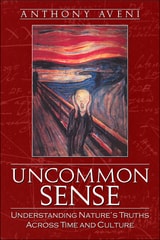
Uncommon Sense
Understanding Nature's Truths Across Time and CultureAnthony Aveni
University Press of Colorado, 2006
In ten fascinating essays, Aveni examines topics that have absorbed scientists, religious figures, and ordinary citizens over the centuries. He traces the tug of war between astronomy and astrology, reveals the underpinnings of our notions of cartography and the representation of space and time, and much more.
Readers interested in science, history, and world cultures will revel in this celebration of different cultures’ common and uncommon questions and conclusions about the natural world.
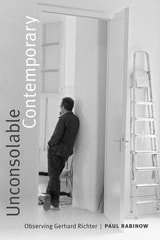
Unconsolable Contemporary
Observing Gerhard RichterPaul Rabinow
Duke University Press, 2017
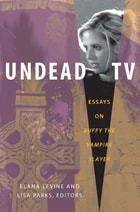
Undead TV
Essays on Buffy the Vampire SlayerElana Levine and Lisa Parks, eds.
Duke University Press, 2007
In Undead TV, media studies scholars tackle the Buffy phenomenon and its many afterlives in popular culture, the television industry, the Internet, and academic criticism. Contributors engage with critical issues such as stardom, gender identity, spectatorship, fandom, and intertextuality. Collectively, they reveal how a vampire television series set in a sunny California suburb managed to provide some of the most biting social commentaries on the air while exposing the darker side of American life. By offering detailed engagements with Sarah Michelle Gellar’s celebrity image, science-fiction fanzines, international and “youth” audiences, Buffy tie-in books, and Angel’s body, Undead TV shows how this prime-time drama became a prominent marker of industrial, social, and cultural change.
Contributors. Ian Calcutt, Cynthia Fuchs, Amelie Hastie, Annette Hill, Mary Celeste Kearney, Elana Levine, Allison McCracken, Jason Middleton, Susan Murray, Lisa Parks

Under Review
Further Writings on Writers, 1946-1990Anthony Powell
University of Chicago Press, 1994
"Powell is one of the great novelists of our time, much more interested in other people than in his own views and ideas. The result is that his extraordinary richness of act and detail also embodies a far more arresting and penetrating quantity of critical judgements on books, authors, fashions, developments, than are to be found in the theoretical pronouncement of modern academic criticism."—John Bayley, The Sunday Times
"These delightful reviews could be said to amount to a latter-day Brief Lives."—David Plante, Times Literary Supplement
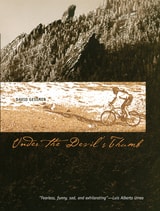
Under the Devil's Thumb
David Gessner
University of Arizona Press, 1999
In the West Gessner began to rewrite his life. Under the Devil's Thumb is a story of rugged determination and sweat, as well as humor, adventure and hope. In and around his new hometown of Boulder, Colorado, Gessner hiked hard and ran alongside flooded creeks. He found that the West was a place of stories—stories that grow out of the ground, flow out of the dirt, work their way through one's limbs, and drive people to push their physical limits. Hiking up scree slopes toward the Devil's Thumb, a massive outcrop of orange rock that attracts climbers, hikers, and contemplaters, Gessner reflects on the illness he has so recently survived. He pushes his physical limits, hoping to outrun death, to outrun dread. He finds momentary transcendence in the joys and self-inflicted pain of mountain biking. "Nothing but the hardest ride has the power to flush out worry, mind clutter, and dread." In tranquil moments he seeks a chance to recover an animal self that is strong and powerful enough to conquer mountains, but also still and quiet enough to see things human beings ignore.
In the mountain West, Gessner finds what Wallace Stegner called "the geography of hope." He finds within himself an interior landscape that is healthy and strong. Combining memoir, nature writing, and travel writing, Under the Devil's Thumb is one man's journey deep into a place of healing.
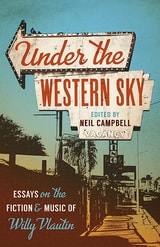
Under the Western Sky
Essays on the Fiction and Music of Willy VlautinNeil Campbell
University of Nevada Press, 2018
Brutally honest, raw, gritty, down to earth, compassionate and affecting, Willy Vlautin’s writing evokes a power in not only theme, but in methodology. Vlautin’s novels, The Motel Life, Northline, Lean on Pete and The Free (2006-2014) chart the dispossessed lives of young people struggling to survive in difficult economic times and in regions of the U.S. West and Pacific Northwest traditionally viewed as affluent and abundant. Yet as his work shows, are actually highly stratified and deprived.
Likewise, Vlauntin’s songs, penned as lead singer of the Americana band Richmond Fontaine chart a related territory of blue-collar landscapes of the American West and Northwest with a strong emphasis on narrative and affective soundscapes evocative of the similar worlds defined in his novels.
Featuring an interview with Vlautin himself, this edited collection aims to develop the first serious, critical consideration of the important novels and songs of Willy Vlautin by exploring relations between region, music, and writing through the lens of critical regionality and other interdisciplinary, cultural, and theoretical methodologies. In so doing, it will situate his work within its regional frame of the American New West, and particularly the city of Reno, Nevada and the Pacific Northwest, whilst showing how he addresses wider cultural and global issues such as economic change, immigration shifts, gender inequality, and the loss of traditional mythic identities.
The essays take different positions in relation to considerations of both novels and music, looking for links and relations across genres, always mindful of their specificity. Under the Western Sky shows how although apparently rooted in place, Vlautin’s work traces diverse lines of contemporary cultural enquiry, engaging in an effective and troubling examination of regional haunting.

Underneath the Palm Trees
EssaysEva Recinos
Northwestern University Press, 2027
A raw and captivating exploration of what it means to live in the in-betweens of the American dream
Arts and culture writer Eva Recinos came of age in the towering city of Los Angeles, fed the story of the American dream. A daughter of immigrants, Recinos grew up facing the dichotomy of that dream: experiencing what it was like to live in South Central LA right next door to one of the wealthiest private universities in America—which Recinos herself would eventually attend. Navigating depression, anxiety, grief, sexuality, and the pressures of being a first-generation daughter and student, Underneath the Palm Trees examines the dissonant effects of straddling two disparate worlds. Recinos’s is an emerging and powerful Latinx voice that uses this engaging collection of essays to capture America’s idiosyncrasies, the complexities of girlhood, and how we find ourselves in art.
Understanding Scientific Prose
Edited by Jack Selzer
University of Wisconsin Press, 1993
Examining science as a rhetorical enterprise, this book seizes upon one scientific essay—"The Spandrels of San Marco and the Panglossian Paradigm: A Critique of the Adaptationist Programme"—and probes it from many angles. Written by prominent evolutionary theorists Stephen Jay Gould and Richard C. Lewontin and first published in the Proceedings of the Royal Society of London in 1979, the "Spandrels" article is both serious science and vivid prose. Applying methods inspired by Louis Althusser, Michel Foucault, Jacques Derrida, Ferdinand de Saussure, and others, the contributors employ a range of interpretive strategies. Stephen Jay Gould adds his own comments, and the full text of the essay "Spandrels" is reproduced as an appendix. Applying methods inspired by Louis Althusser, Michel Foucault, Jacques Derrida, Ferdinand de Saussure, and others, the contributors employ a range of interpretive strategies. Stephen Jay Gould adds his own comments, and the full text of the essay "Spandrels" is reproduced as an appendix.
Undocuments
John-Michael Rivera
University of Arizona Press, 2021
How do you document the undocumented? UNDOCUMENTS both poses and attempts to answer this complex question by remixing the forms and styles of the first encyclopedia of the New World, the Florentine Codex, in order to tell a modern story of Greater Mexico. Employing a broad range of writing genres and scholarly approaches, UNDOCUMENTS catalogs, recovers, and erases documents and images by and about peoples of Greater Mexico from roughly the first colonial moment. This brave and bracing volume organizes and documents ancient New World Mexican peoples from the Florentine Codex (1592) to our current technology-heavy age, wherein modern lawmakers and powerful global figures desire to classify, deport, and erase immigrants and their experiences.
While grappling with anxiety and the physical and mental health consequences of the way the United States treats immigrant bodies, John-Michael Rivera documents and scrutinizes what it means to seek opportunities in America. With a focus on the poetics of Latinx documentality itself, this book is concerned with the complicated and at times contradictory ways peoples of Greater Mexico have been documented and undocumented within systems of colonial knowledges, and how these peoples have been rendered as specters of the bureaucratic state. Rivera takes us through the painful, anxiety-ridden, and complex nature of what it means to be documented or undocumented, and the cruelty married to each of these states of being.
Universalism and Particularism at Sodom and Gomorrah
Essays in Memory of Ron PirsonDiana Lipton
SBL Press, 2012

Unnatural Selection
A Memoir of Adoption and WildernessAndrea Ross
CavanKerry Press, 2021
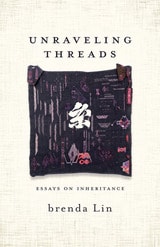
Unraveling Threads
Essays on Inheritancebrenda Lin
The Ohio State University Press, 2026
“Tactile memory feels like it is the easiest to lose,” brenda Lin writes in Unraveling Threads. But in these exquisite essays, she demonstrates just how the tactile bolsters personal, familial, and cultural memory. From the remnant of a baby’s umbilical cord to the antique hand-embroidered baby carriers her mother collects, Lin shows us how the tactile and handmade connect parents and children, homeland and diaspora, and give texture to caregiving’s many forms. As Lin writes, the radical for thread forms the basis of Chinese characters for women’s work, for practice through repetition, for inheritance. Threads form the mesh in the stent that keeps her father’s heart working. And yuan, the red thread of fate, is the first word she translated for her future husband. When Lin returns to Taiwan after decades away, this time with her young family, the threads of creativity and caretaking become the warp and weft of the continual process of homecoming. These essays on motherhood, language, art, and diaspora will resonate with anyone who has experienced the process of returning to, or building, a home.
Unsettling Obligations
Essays on Reason, Reality and the Ethics of BeliefAllen W. Wood
CSLI, 2002

Unwritten Rule
How to Fix the British ConstitutionStephen Green, Thomas Legg, and Martin Donnelly
Haus Publishing, 2021
Not since Ireland broke away from the United Kingdom has the British state been so fragile. Northern Ireland now operates under trading rules that are legally separate from the rest of the nation. In Wales, support for independence is running at a historical high, and Scotland is more conscious than ever of its individual identity and has aspirations for a European future. With public trust and confidence in government at record lows, the United Kingdom faces a crisis that can only be repaired by a new constitutional settlement. Unwritten Rule calls for a radical realignment, embracing a federal approach that would accommodate devolution as the best way of bringing about a successful and diverse national life, increasing democratic control over local and national decision-making, and modernizing national political structures.
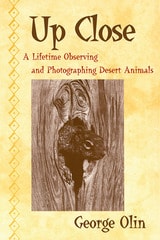
Up Close
A Lifetime Observing and Photographing Desert AnimalsGeorge Olin
University of Arizona Press, 2000
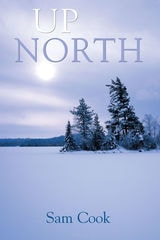
Up North
Sam Cook
University of Minnesota Press, 2003
Memorable descriptions of the Northern seasons—now in paperback!
In this unforgettable collection of essays, Sam Cook portrays the enchanting North Country as a state of mind as much as a geographical area. Up North captures the mystic moods, seasonal subtleties, and colorful characters that fill the region from the Minnesota canoe country to the vast expanse of the Northwest Territories.
Organized by time of year, Up North describes every season’s pleasures—sled dog racing in winter, hooking a northern pike on the first spring fishing trip, building a summer campfire, watching the aurora borealis in fall. Up North is an invitation to explore canoe country through Sam Cook’s eyes and your own.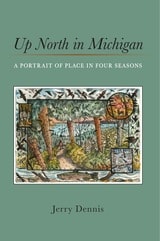
Up North in Michigan
A Portrait of Place in Four SeasonsJerry Dennis
University of Michigan Press, 2021
And yet the essence of this region, known to many as simply “Up North,” has proved remarkably perennial. Millions of acres of state and national forests and other public lands remain intact. Small towns peppered across the rural countryside have changed little over the decades, pushing back the machinery of progress with the help of dedicated land conservancies, conservation organizations, and other advocacy groups.
Up North in Michigan, the new collection from celebrated nature writer Jerry Dennis, captures its author’s lifelong journey to better know this place he calls home by exploring it in every season, in every kind of weather, on foot, on bicycle, in canoes and cars. The essays in this book are more than an homage to a particular region, its people, and its natural wonders. They are a reflection on the Up North that can only be experienced through your feet and fingertips, through your ears, mouth, and nose—the Up North that makes its way into your bones as surely as sand makes its way into wood grain.
The paperback contains a new chapter by Jerry Dennis that has been written since the publication of the hardcover.
Up South in the Ozarks
Dispatches from the MarginsBrooks Blevins
University of Arkansas Press, 2022
Historian Brooks Blevins has spent his life studying and writing about the people of his native regions—the South and the Ozarks. He has been in the vanguard of a new and vibrant Ozarks Studies movement that has worked to refract the stories of Ozarkers through a more realistic and less exotic lens. In Up South in the Ozarks: Dispatches from the Margins, Blevins introduces us with humor and fairness to mostly unseen lives of the past and present: southern gospel singing schools and ballad collectors, migratory cotton pickers and backroad country storekeepers, fireworks peddlers and impoverished diarists.
Part historical and part journalistic, Blevins’s essays combine the scholarly sensibilities of a respected historian with the insights of someone raised in rural hill country. His stories of marginalized characters often defy stereotype. They entertain as much as they educate. And most of them originate in the same place Blevins does: up south in the Ozarks.
Up on the River
People and Wildlife of the Upper MississippiMadson, John
University of Iowa Press, 1985
@font-face { font-family: "Times";}@font-face { font-family: "Verdana";}@font-face { font-family: "Palatino";}p.MsoNormal, li.MsoNormal, div.MsoNormal { margin: 0in 0in 0.0001pt; font-size: 12pt; font-family: "Times New Roman"; }div.Section1 { page: Section1; }
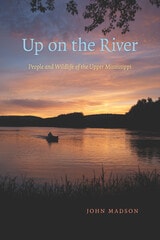
Up on the River is John Madson’s loving and often hilarious tribute to the people, animal life, and places of the Upper Mississippi. Madson’s Upper Mississippi is the part “between the saints,” from St. Louis to St. Paul, where for thirty years he explored the bright waters of the upper reaches of the mighty river itself as well as the tangled multitude of sloughs, cuts, and side channels that wander through its wooded islands and floodplain forests.
“Some of my best time on the River has been in the company of game wardens, biologists, commercial fishermen, clammers, trappers, hunters, and a smelly, mud-smeared coterie of river rats in general, and my views of the River are far more likely to reflect theirs than those of the transportation industry,” Madson writes of his thirty-year acquaintance with the Mississippi. Traveling mainly by canoe and johnboat, he tells of encounters between archetypal commercial fishermen and archetypal game wardens over hot fish chowder, fishing for crappies in the tops of submerged trees and for walleyes amid gale force winds, nesting and migrating herons and ducks and eagles, the histories of river logging and pearling and button making, and towboats and barges and the lives of the “ramstugenous” people who move freight on the river.
Learning about the Upper Mississippi via the wry tutelage of John Madson, who discovered that “whenever I am out on a river some of its freeness rubs off on me,” readers of this classic book will also come under the spell of this freeness.

Uses of the Folk, Volume 2002
Karl Hagstrom Miller and Ellen Noonan, eds.
Duke University Press, 0
The essays explore a variety of incarnations of "the folk," from the contested meanings of folk dance in creating a national culture in twentieth-century Haiti and Nicaragua, to the ways that the London Museum’s collection of artifacts challenged early-twentieth-century British notions of gender, labor, and citizenship, to the production of urban folklore in New York City. The Uses of the Folk identifies folk culture of the past and present as an important site of ongoing struggle—one affecting all scholars who draw on folk or vernacular culture in their work.
Contributors. Adina Back, Jordanna Bailkin, Regina Bendix, Katherine Borland, Sally Charnow, Peggy P. Hargis, Georgina Hickey, John Howard, Shafali Lal, R. J. Lambrose, Ronald Radano, Kate Ramsey, Gerald Shenk, David Takacs, David Waldstreicher, Daniel Walkowitz, Steve Zeitlin

Utopian Horizons
Ideology, Politics, LiteratureZsolt Cziganyik
Central European University Press, 2017
Utter, Earth
Advice on Living in a More-than-Human WorldIsaac Yuen
West Virginia University Press, 2024
Honorable Mention, Alanna Bondar Prize, 2026, Association for Literature, Environment, and Culture in Canada (ALECC)
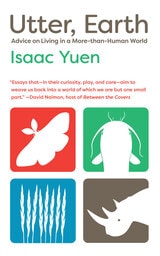
Part nature guide, part self-help column, and all love letter to the more-than-human world, Utter, Earth is an exercise in wonder. For animal lovers and readers of Brian Doyle, Aimee Nezhukumatathil, and Amy Leach.
A light, literary take on an animal book for grown-ups, a tongue-in-cheek self-help column with lessons drawn from nature, a sort of hitchhiker’s guide to the more-than-human world—Isaac Yuen’s Utter, Earth is a celebration, through wordplay and earthplay, of our planet’s riotous wonders.
In a time of dirges and elegies for the natural world, Utter, Earth features odes to sloths, tributes to trilobites, and ringing endorsements for lichen. For animal lovers and readers of Brian Doyle, Aimee Nezhukumatathil, and Amy Leach, each essay of this one-of-a-kind collection combines joyous language, whimsical tangents, and scientific findings to remind us of and reconnect us with those to whom we are inextricably bound. Highlighting life that once was, still is, and all that we stand to lose, this living and lively mini encyclopedia (complete with glossary) shines the spotlight on the motley, fantastical, and astonishing denizens with whom we share this planet.