Results by title
28164 books match the query 'History' and 339 start with u
U.S. Army War College
Military Education In A DemocracyJudith Hicks Stiehm
Temple University Press, 2002
U.S. Coast Survey vs. Naval Hydrographic Office
A 19th-Century Rivalry in Science and PoliticsThomas G. Manning
University of Alabama Press, 1988
U.S. Foreign Policy and Peru
By Daniel A. Sharp
University of Texas Press, 1972
This book presents the first authoritative and comprehensive account of the development of the Peruvian revolution of 1968. The study resulted from a team experiment in applied political science, economics, and sociology that maintained effective communications between Peru and the United States at many levels during the difficult years following the revolution. Each chapter is the result of continuous interaction between a leading authority and the major sectors of both societies. History is here presented in its diplomatic, social, economic, and cultural context.
The Peruvian and U.S. governments helped to define the subjects of greatest interest to their respective countries, and a systematic effort was made to find the leading authorities on each issue. Since one purpose of this volume is to affect policy by identifying new alternative policies, the papers included here were prepared specifically to be of value to policy makers.
This book was produced by a citizens’ constituency on U.S. foreign policy under the auspices of the Adlai Stevenson Institute of International Affairs, the Chicago Council on Foreign Relations, and the Johnson Foundation.

U.S. Foreign Policy in the Middle East
The Role of Lobbies and Special Interest GroupsJanice J. Terry
Pluto Press, 2005
Israel is America's key ally in the Middle East, and helps maintain U.S. dominance in the region. This book shows how pro-Israeli lobbyists and domestic interest groups have been hugely successful in creating government and financial support for Israel. By contrast, Arab-American groups and Arab governments have had less success putting forward their agencies.
Janice J. Terry shows how special interest groups work, and why certain lobbying techniques are more effective than others. She sets this within the wider cultural context, showing how the U.S. media -- and the general public -- view the Middle East.
To explain how lobbies work, Terry draws on case studies including the Sinai accords and Camp David under Presidents Ford and Carter, the Conflict between Green and Turkish lobbies over Cyprus, and the major campaign against the Arab boycott.
Making use of primary sources, and unpublished material from various presidential libraries, this is a fascinating exposé of the role that lobby groups really play in determining U.S. foreign policy in the Middle East. It will be of interest to students of American politics and Middle East studies.
U.S. Women's History
Untangling the Threads of SisterhoodBrown, Leslie
Rutgers University Press, 2017
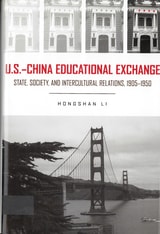
U.S.- China Educational Exchange
State, Society, and Intercultural Relations, 1905-1950Li, Hongshan
Rutgers University Press, 2007
U.S.-China relations became increasingly important and complex in the twentieth century. While economic, political, and military interactions all grew over time, the most dramatic expansion took place in educational exchange, turning it into the strongest tie between the two nations. By the end of the 1940s, tens of thousands of Chinese and American students and scholars had crisscrossed the Pacific, leaving indelible marks on both societies. Although all exchange programs were terminated during the cold war, the two nations reemerged as top partners within a decade after the reestablishment of diplomatic relations.
Approaching U.S.-China relations from a unique and usually overlooked perspective, Hongshan Li reveals that both the drastic expansion and complete termination of educational ties between the two nations in the first half of the twentieth century were largely the results of direct and deep intervention from the American and Chinese governments. Benefiting from government support and collaboration, educational exchange succeeded in diffusing knowledge and improving mutual understanding between the two peoples across the divide of civilizations. However, the visible hand of government also proved to be most destructive to the development of healthy intercultural relations when educational interactions were treated merely as an instrument for crisis management.

UNDER THE FLAG OF THE NATION
DIARIES AND LETTERS OF OWEN JOHNSTON HOPKINS, A YANKEE VOLUNTEER IN THE CIVIL WAROwen Johnston Hopkins
The Ohio State University Press, 1998
Owen Hopkins was a young man brought to maturity by the agony of war, but in spite of the horror of battle and the tedium of life in camp, he maintained a lively sense of humor and a constant devotion to the ideals for which he fought. The Civil War in these pages is a savage, vindictive conflict fought with canister, "minnie balls," grapeshot, the Enfield rifle, and the bayonet. Only seventeen when he enlisted in 1861, Hopkins was a foot soldier and a witness to the action that took place on the field of battle.
A vital part of Hopkins's life in the army was his correspondence with Julia Allison, who lived in his hometown of Bellefontaine. They began writing each other in 1863, and their friendship deepened into love. Each was a fervent patriot, and their shared devotion to their country was a significant fact of their relationship. They were married in 1865.
An epilogue tells what happened to Hopkins after June of 1865: his career, his family, and his death in 1902. Originally published in1961, this work is now available for the first time in paperback.

UNITED STATES EUROPEAN RIGHT
1945-1955DEBORAH KISATSKY
The Ohio State University Press, 2005
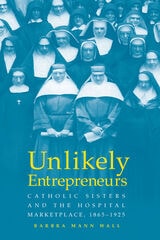
UNLIKELY ENTREPRENEURS
Catholic Sisters & the Hospital Marketplace, 1865–1925Barbra Mann Wall
The Ohio State University Press, 2005
In Unlikely Entrepreneurs, Barbra Mann Wall looks at the development of religious hospitals in the late nineteenth and early twentieth centuries and the entrepreneurial influence Catholic sisters held in this process. When immigrant nuns came to the United States in the late nineteenth century, they encountered a market economy that structured the way they developed their hospitals. Sisters enthusiastically engaged in the market as entrepreneurs, but they used a set of tools and understanding that were counter to the market. Their entrepreneurship was not to expand earnings but rather to advance Catholic spirituality.
Wall places the development of Catholic hospital systems (located in Illinois, Indiana, Minnesota, Texas, and Utah) owned and operated by Catholic sisters within the larger social, economic, and medical history of the time. In the modern health care climate, with the influences of corporations, federal laws, spiraling costs, managed care, and medical practices that rely less on human judgments and more on technological innovations, the “modern” hospital reflects a dim memory of the past. This book will inform future debates on who will provide health care as the sisters depart, how costs will be met, who will receive care, and who will be denied access to health services.
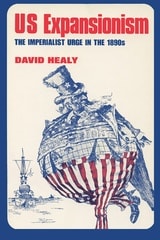
US Expansionism
The Imperialist Urge in the 1890sDavid Healy
University of Wisconsin Press, 1976
Americans, in viewing the globe in 1897, saw a world of empires that were dynamic and fast-growing. Western powers such as Germany, France, and particularly Great Britain were making colonial imperialism fashionable, and the United States, eager to flex its muscles as an emerging world power, was swept along with the European tide. One year later, the United States had truly established itself as a contender in the global game, victorious in a war with Spain and committed to imperialism.
In US Expansionism, David Healy examines this brief but important chapter in American history. Analyzing the various intellectual, cultural, and economic forces that engendered and shaped America’s imperialist drive, Healy also illustrates the key personalities involved, including the soon-to-be president, Theodore Roosevelt. A final section of the book examines the anti-imperialist opposition inspired by the new policy, and the ensuing debates about the proper role of American power.
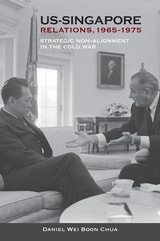
US-Singapore Relations, 1965-1975
Strategic Non-alignment in the Cold WarDaniel Wei Boon Chua
National University of Singapore Press, 2017
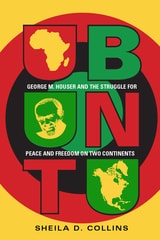
Ubuntu
George M. Houser and the Struggle for Peace and Freedom on Two ContinentsSheila D. Collins
Ohio University Press, 2020
This remarkable biography features a white American pacifist minister whose tireless work for justice and human rights helped reshape Black civil rights in the U.S. and Africa.
George M. Houser (1916–2015) was one of the most important civil rights and antiwar activists of the twentieth century. A conscientious objector during World War II, in 1942 Houser cofounded and led the Congress of Racial Equality (CORE), whose embrace of nonviolent protest strategies and tactics characterized the modern American Civil Rights Movement. Beginning in the 1950s, Houser played a critical role in pan-Africanist anticolonial movements, and his more than thirty-year dedication to the cause of human rights and self-determination helped prepare the ground for the toppling of the South African apartheid regime.
Throughout his life, Houser shunned publicity, preferring to let his actions speak his faith. Sheila Collins’s well-researched biography recounts the events that informed Houser’s life of activism—from his childhood experiences as the son of missionaries in the Philippines to his early grounding in the Social Gospel and the teachings of Mohandas Gandhi. In light of the corruption the U.S. and the world face today, Houser’s story of faith and decisive action for human rights and social justice is one for our time.

Uganda Now
Between Decay and DevelopmentHölger Bernt Hansen
Ohio University Press, 1988
Can the revolutionary government of Yoweri Museveni’s National Resistance Movement put Uganda back on the road from decay to development?
These informed assessments put the present situation in context. The contributors assembled as Museveni’s guerrillas were launching their final bid for power. They have finalized their contributions in the light of the Museveni government’s initial period of power.
Contributions by Ugandan academics and politicians interlock with those by scholars from across the world who have a concern for Uganda. Historians examine the period of colonialism. There are political studies of the quarter century since independence. There are detailed analyses of the economic realities for the Ugandan government in the period of international debt. The central role of education in national development is given due prominence.
Ali A. Mazrui ends the book by asking ‘Is Africa Decaying?’ The editors have put the consideration of the case of Uganda’s recent history within the context of Africa’s development crisis. Uganda has presented in an aggravated form the crisis common to many other African countries: infrastructural breakdown, mounting foreign debt, military regimes and waves of refugees.
Ugly Freedoms
Elisabeth R. Anker
Duke University Press, 2022
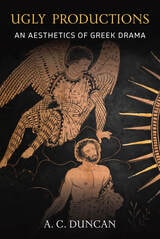
Ugly Productions
An Aesthetics of Greek DramaA. C. Duncan
University of Michigan Press, 2025
Through studies of the figures of Xerxes, Electra, Philoctetes, Ajax, Heracles, and other tragic figures, Ugly Productions offers detailed analyses of the various ways ugliness was produced in performance with each chapter serving as an in-depth guide for studying the aesthetics of these works. Duncan confronts the historical neglect of ugliness in critical discourses, calling for a revaluation of negative aesthetics and renewed interest in the uglier aspects of these canonical works of theater.

Ugly Stories of the Peruvian Agrarian Reform
Enrique Mayer
Duke University Press, 2009
Mayer interviewed ex-landlords, land expropriators, politicians, government bureaucrats, intellectuals, peasant leaders, activists, ranchers, members of farming families, and others. Weaving their impassioned recollections with his own commentary, he offers a series of dramatic narratives, each one centered around a specific instance of land expropriation, collective enterprise, and disillusion. Although the reform began with high hopes, it was quickly complicated by difficulties including corruption, rural and urban unrest, fights over land, and delays in modernization. As he provides insight into how important historical events are remembered, Mayer re-evaluates Peru’s military government (1969–79), its audacious agrarian reform program, and what that reform meant to Peruvians from all walks of life.
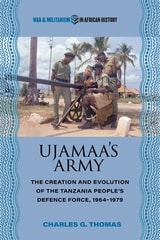
Ujamaa’s Army
The Creation and Evolution of the Tanzania People's Defence Force, 1964–1979Charles G. Thomas
Ohio University Press, 2024
The immediate postcolonial moment brought both promise and peril for the states of Africa and their security. The process of decolonization generated instability, and the emergent Cold War caught up the still-fragile independent states in a global ideological struggle between superpowers. While the political story of these states has been written in detail, the story of their militaries has been largely inaccessible, leaving only sketches of the coups, mutinies, and overall failures of security that outside observers could chronicle.
Ujamaa’s Army traces the evolution of the Tanzania People’s Defence Force from its inception in 1964 following the broader East African uprisings to its fully realized form on the eve of Tanzania’s 1978 conflict with Uganda. The book gathers primary interviews with key military actors within Tanzania and interweaves their narratives with archival sources to produce a detailed history of the culmination of President Julius Nyerere’s ideological project and the military leadership’s vision of a professional and effective force for guarding the nation and supporting liberation struggles across Southern Africa.
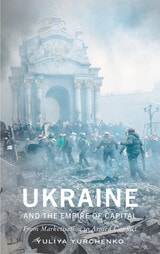
Ukraine and the Empire of Capital
From Marketisation to Armed ConflictYuliya Yurchenko
Pluto Press, 2017
Providing distinctive and unexplored reflections on the origins of the conflict, Yurchenko unpacks the four central myths that underlie Ukraine's post-Soviet reality: the myth of transition, the myth of democracy, the myth of two Ukraines, and the myth of 'the other'. In doing so, she sheds light on the current intensification of class rivalries in Ukraine, the kleptocracy, resource wars and analyses existing and potential dangers of the rightwing shift in Ukraine's polity, stressing a historic opportunity for change.
Critiquing the concept of Ukraine as ‘transition space’, she provides a sweeping analysis which includes the wider neoliberal restructuring of global political economy since the 1970s, with particular focus on Ukraine's relations with the US, the EU and Russia. This is a book for those wanting to understand the current conflict as a dangerous product of neoliberalism, of the empire of capital.
Ukraine as a Migration Nexus
Perspectives on Historical and Current Population MovementsOleksii Chebotarov
Central European University Press, 2025
Ukraine in the Crosshairs of Geopolitical Power Play
Edited by Peter W. Schulze and Winfried Veit
Campus Verlag, 2020
Peace in Ukraine seemed possible following Volodymyr Zelensky’s 2019 election. The new president reopened conversations with both the European Union and separatist authorities, bringing an end to the Donbass conflict in sight. Such an achievement promised revitalized talks between Europe and Russia, and so the nearly forgotten conflict returned to global prominence. Ukraine in the Crosshairs of Geopolitical Power Play analyzes why European and Russian objectives in Ukraine place daunting limits of any potential compromise.
Ukraine's Patronal Democracy and the Russian Invasion
The Russia-Ukraine War, Volume OneBálint Madlovics
Central European University Press, 2023
The Russian invasion of Ukraine in 2022 jeopardizes the country's independence and its chances for Western-style development. However, the heroic attitude of the Ukrainian people, combined with a solidifying national identity, makes the domestic foundations for a western turn stronger than ever. After the invasion, building strong foundations of liberal democracy will be a top priority. In addition to alleviating immediate problems, the country must also address its post-communist legacy and address the constraints of patronalism.
The authors of this edited volume, leading Ukrainian scholars supplemented by colleagues from Hungary, examine the chances of an anti-patronal transformation after the war. The book provides an overview of the development of Ukraine's political-economic system: color revolutions in 2004 and 2014 brought democratic transformation, but no change in the patronage system The result was patronal regime cycles instead of the emergence of a Western-type liberal democracy in the country. Building on the conceptual framework of the editors' The Anatomy of Post-Communist Regimes (CEU Press, 2020), the 12 chapters examine the impact of the war on patronal democracy, the relational economy, clientelist society, and the international environment in which Ukraine operates.
This collection is complemented by the book entitled Russia. Imperial Endeavor and Geopolitical Consequences.
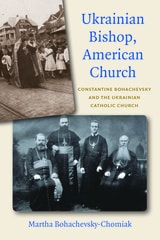
Ukrainian Bishop, American Church
Martha Bohachevsky-Chomiak
Catholic University of America Press, 2018

Ukrainian Otherlands
Diaspora, Homeland, and Folk Imagination in the Twentieth CenturyNatalia Khanenko-Friesen
University of Wisconsin Press, 2015
Ukrainian Otherlands is an innovative exploration of modern ethnic identity, focused on diaspora/homeland understandings of each other in Ukraine and in Ukrainian ethnic communities around the globe. Exploring a rich array of folk songs, poetry and stories, trans-Atlantic correspondence, family histories, and rituals of homecoming and hosting that developed in the Ukrainian diaspora and Ukraine during the twentieth century, Natalia Khanenko-Friesen asserts that many important aspects of modern ethnic identity form, develop, and reveal themselves not only through the diaspora's continued yearning for the homeland, but also in a homeland's deeply felt connection to its diaspora. Yet, she finds each group imagines the "otherland" and ethnic identity differently, leading to misunderstandings between Ukrainians and their ethnic-Ukrainian "brothers and sisters" abroad.
An innovative exploration of the persistence of vernacular culture in the modern world, Ukrainian Otherlands, amply informed by theory and fieldwork, will appeal to those interested in folklore, ethnic and diaspora studies, modernity, migration, folk psychology, history, and cultural anthropology.
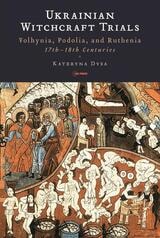
Ukrainian Witchcraft Trials
Volhynia, Podolia, and Ruthenia, 17th–18th CenturiesKateryna Dysa
Central European University Press, 2020
Drawing on quantitative data drawn from a range of trials Kateryna Dysa first describes the ideological background of the tribunals based on works written by priests and theologians that reflect attitudes toward the devil and witches. The main focus of her work, however, is the process leading to witchcraft accusations. From the stories of participants of the trials she shows what led people to enunciate first suspicions then accusations of witchcraft. Finally, she presents a microhistory from one Volhynian village, comparing attitudes toward two “female crimes” in the Ukrainian courts.
The study is based on archival research including witch trials transcripts. Dysa approaches the trials as indications of belief and practice, attempting to understand the actors involved rather than dismiss or condemn them. She takes care to situate early modern Ukrainian witchcraft and its accompanying trials in a broader European context, with comparisons to some African cases as well.
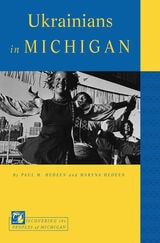
Ukrainians in Michigan
Paul M. Hedeen
Michigan State University Press, 2023
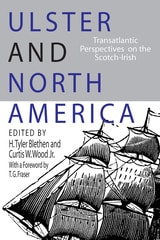
Ulster and North America
Transatlantic Perspectives on the Scotch IrishH. Tyler Blethen
University of Alabama Press, 2001
The 11 essays in this volume, originally presented at meetings of the Ulster-American Heritage Symposium by scholars from Scotland, Ireland, Canada, and the United States, explore the nature of Scotch-Irish culture by examining values, traditions, demographics, and language. The essays also investigate the process of migration, which transmitted that culture to the New World, and the subsequent assimilation of Celtic ways into American culture.
The themes presented are wide-ranging and complex. First is the dynamic nature of Ulster society in the 17th and 18th centuries and the rapid changes occurring there, especially those affecting Presbyterianism and community cohesiveness. Also examined is the experience of migration, asking such questions as who migrated and when, what their expectations were, and how closely colonial reality matched those expectations. A third theme is the development of economic strategies and community-building both in Ulster and North America, making important contributions to the "new rural history" and explaining the success of the Scotch-Irish on the American frontier. Finally, the volume addresses ethnic identity and cultural diffusion, advancing the ongoing debate initiated by Forrest McDonald and Grady McWhiney and elaborated on by David Hackett Fischer. Ulster and North America illustrates the value of transatlantic dialog and of comparative studies for the understanding of ethnicity and migration history.
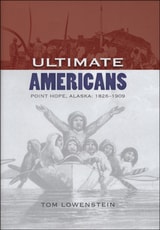
Ultimate Americans
Point Hope Alaska: 1826-1909Tom Lowenstein
University of Alaska Press, 2008

Ulysses S. Grant
A Photographic HistoryJames Bultema, with a Foreword by Frank J. Willilams
Southern Illinois University Press, 2022
As Grant battled relentlessly down the Tennessee River and across Tennessee, defending Shiloh, he was followed by an enterprising group of studio photographers hoping to profit from the public’s demand for images of the rising general from the West. They never stopped because Grant never stopped. Thus far, 307 distinct photographs have been found of Ulysses S. Grant, revealing him to be the most photographed American of the nineteenth century.
Readers of Ulysses S. Grant: A Photographic History travel alongside Grant through the Civil War and his two terms as president, on his unusual two-year journey around the world, and to his final days on Mount McGregor. The sheer volume of exposure shows the toll of duty, war, and command. From every angle, this collection captures Grant’s regard for soldier and family, his disregard of uniform, and his disheveled appearance that reflected his resilience. The reader will look into the eyes of a man who saw the worst and labored for the best.
This curated volume opens the largest collection of Grant photos to the public for the first time. Excerpts from Grant’s personal writings divulge his candid thoughts about the people he posed with and the situations he faced around the time the photographs were taken. An extraordinary addition to Grant scholarship, Ulysses S. Grant: A Photographic History will be the photographic reference work on Grant for decades to come as the simple man from Ohio continues to astonish the world.
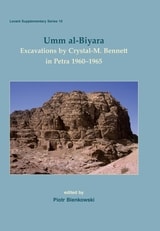
Umm al-Biyara
Excavations by Crystal-M. Bennett in Petra 1960-1965P. Bienkwoski
Council for British Research in the Levant, 2011

Un-American Womanhood
Antiradicalism, Antifeminism, and the First Red ScareKim Nielsen
The Ohio State University Press, 2001
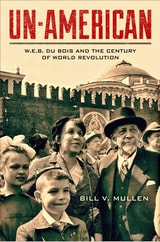
Un-American
W.E.B. Du Bois and the Century of World RevolutionBill V Mullen
Temple University Press, 2015
Un-American is Bill Mullen’s revisionist account of renowned author and activist W.E.B. Du Bois’s political thought toward the end of his life, a period largely dismissed and neglected by scholars. He describes Du Bois’s support for what the Communist International called “world revolution” as the primary objective of this aged radical’s activism. Du Bois was a champion of the world’s laboring millions and critic of the Cold War, a man dedicated to animating global political revolution.
Mullen argues that Du Bois believed that the Cold War stalemate could create the conditions in which the world powers could achieve not only peace but workers’ democracy. Un-American shows Du Bois to be deeply engaged in international networks and personal relationships with revolutionaries in India, China, and Africa. Mullen explores how thinkers like Karl Marx, Jawaharlal Nehru, Mohandas Gandhi, and C.L.R. James helped him develop a theory of world revolution at a stage in his life when most commentators regard him as marginalized. This original political biography also challenges assessments of Du Bois as an American “race man.”
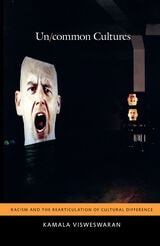
Un/common Cultures
Racism and the Rearticulation of Cultural DifferenceKamala Visweswaran
Duke University Press, 2010
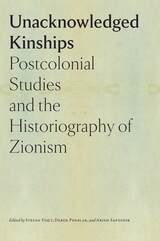
Unacknowledged Kinships
Postcolonial Studies and the Historiography of ZionismEdited by Stefan Vogt, Derek Penslar, and Arieh Saposnik
Brandeis University Press, 2023
There is an “unacknowledged kinship” between studies of Zionism and post-colonial studies, a kinship that deserves to be both discovered and acknowledged. Unacknowledged Kinships strives to facilitate a conversation between the historiography of Zionism and postcolonial studies by identifying and exploring possible linkages and affiliations between their subjects as well as the limits of such connections. The contributors to this volume discuss central theoretical concepts developed within the field of postcolonial studies, and they use these concepts to analyze crucial aspects of the history of Zionism while contextualizing Zionist thought, politics, and culture within colonial and postcolonial histories. This book also argues that postcolonial studies could gain from looking at the history of Zionism as an example of not only colonial domination but also the seemingly contradictory processes of national liberation and self-empowerment.
Unacknowledged Kinships is the first work to systematically investigate the potential for a dialogue between postcolonial studies and Zionist historiography. It is also unique in suggesting that postcolonial concepts can be applied to the history of European Zionism just as comprehensively as to the history of Zionism in Palestine and Israel or Arab countries. Most importantly, the book is an overture for a dialogue between postcolonial studies and the historiography of Zionism.

Unaffordable
American Healthcare from Johnson to TrumpJonathan Engel
University of Wisconsin Press, 2018
Unaffordable covers, in a conversational style punctuated by apt examples, topics ranging from health insurance, pharmaceutical pricing, and physician training to health maintenance organizations and hospital networks. Along the way, Engel introduces approaches that other nations have taken in organizing and paying for healthcare and offers insights on ethical quandaries around end-of-life decisions, neonatal care, life-sustaining treatments, and the limits of our ability to define death. While describing the political origins of many of the federal and state laws that govern our healthcare system today, he never loses sight of the impact that healthcare delivery has on our wallets and on the balance sheets of hospitals, doctors' offices, government agencies, and private companies.
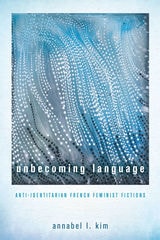
Unbecoming Language
Anti-Identitarian French Feminist FictionsAnnabel L. Kim
The Ohio State University Press, 2018
Kim’s close readings ultimately enliven the current conversation in French studies by serving as a provocation to return to reading literary texts deeply and closely, without subordinating literature to a pre-existing ideological framework—to let literature speak, to let it theorize. Tracking the influence of these writers on each other, Kim provides a new, original French feminist poetics and demonstrates that Sarraute, Wittig, and Garréta’s work allows for a hollowing out of difference from within, allowing writers and readers to unbecome—to break free of identity and exist as subjectivities without subjecthood. In looking at these writers together, Kim provides a defense of literature as liberatory— capable of effecting personal and political change—and gives readers an experience of literature’s revolutionary possibilities.
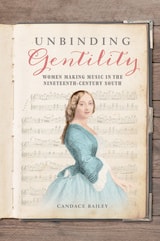
Unbinding Gentility
Women Making Music in the Nineteenth-Century SouthCandace Bailey
University of Illinois Press, 2021
Hearing southern women in the pauses of history
Southern women of all classes, races, and walks of life practiced music during and after the Civil War. Candace L. Bailey examines the history of southern women through the lens of these musical pursuits, uncovering the ways that music's transmission, education, circulation, and repertory help us understand its meaning in the women's culture of the time. Bailey pays particular attention to the space between music as an ideal accomplishment—part of how people expected women to perform gentility—and a real practice—what women actually did. At the same time, her ethnographic reading of binder’s volumes, letters and diaries, and a wealth of other archival material informs new and vital interpretations of women’s place in southern culture.
A fascinating collective portrait of women's artistic and personal lives, Unbinding Gentility challenges entrenched assumptions about nineteenth century music and the experiences of the southern women who made it.

Uncanny Creatures
Doll Thinking in Modern German CultureChristophe Koné
University of Michigan Press, 2024
Uncanny Creatures then explores how this unusual interest in human-like figures continues a long tradition of thought devoted to conceptualizing “things,” from Immanuel Kant’s theory of the thing-in-itself to Martin Heidegger’s lecture on the thing, and Eduard Mörike or Rainer Maria Rilke’s thing-poems. Because dolls occupy a liminal space—not quite things and more than mere objects—they appear as uncanny creatures which have held a fascination for writers, thinkers, and artists alike. Uncanny Creatures moves past the Freudian discourse of fetishism to propose a new reading of doll artifacts in German culture centered on their ability to evoke a feeling of uncertainty and unsettlement in the viewer.
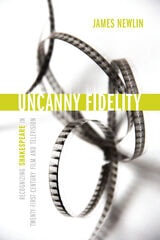
Uncanny Fidelity
Recognizing Shakespeare in Twenty-First-Century Film and TelevisionJames Newlin
University of Alabama Press, 2024
How the study of Shakespeare’s legacy, specifically in film and television, can radically challenge what we consider to be authentically Shakespearean
In the field of adaptation studies today, the idea of reading an adapted text as “faithful” or “unfaithful” to its original source strikes many scholars as too simplistic, too conservative, and too moralizing. In Uncanny Fidelity: Recognizing Shakespeare in Twenty-First Century Film and Television, James Newlin challenges these critical orthodoxies. Instead, recognizing how a film or television series closely recalls Shakespeare’s drama encourages an interrogation of what we consider to be “Shakespeare” in the first place.
Drawing upon Sigmund Freud’s model of the uncanny—the sudden sensation of peculiar, discomforting familiarity—this book focuses on films and television series that were not marketed as adaptations of Shakespeare. Yet these works unexpectedly invoke lost, even troubling aspects of Shakespeare’s original playtexts, their performance history, or their reception. Broadening the scope of fidelity readings beyond familiar concerns like plot and language, Newlin demonstrates how the study of Shakespeare’s afterlife can clarify both the historical context of his drama and its relevance for the current political moment. Engaging contemporary debates in literary and psychoanalytic theory, this book features provocative close readings of The Tempest, Othello, and The Winter’s Tale alongside recent films and television series, from art-house movies such as The Master and Manchester by the Sea to the cult favorites Brigsby Bear and Vice Principals. These works conjure widely overlooked qualities of Shakespeare’s drama by recalling the casting practices or the generic contexts of the early modern stage or by making a meaningful intervention in the plays’ critical reception. Closely examining these surprisingly faithful adaptations of Shakespeare’s drama helps us to articulate the original experience of the early modern stage and better consider its resonance in the present.
This book will benefit students and scholars of Shakespeare on film and psychoanalytic theory. Yet Uncanny Fidelity will also be of interest to scholars of performance history, source studies, and early modern discourses of race and gender—as well as anyone interested in the unexpected connections between canonical literature and contemporary culture. By examining adaptation as an instance of uncanny return, Newlin demonstrates how the study of Shakespeare’s afterlife can radically challenge what we consider to be authentically Shakespearean.
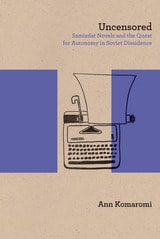
Uncensored
Samizdat Novels and the Quest for Autonomy in Soviet DissidenceAnn Komaromi
Northwestern University Press, 2015
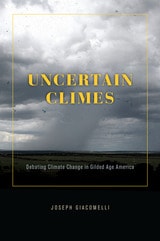
Uncertain Climes
Debating Climate Change in Gilded Age AmericaJoseph Giacomelli
University of Chicago Press, 2023
Even people who still refuse to accept the reality of human-induced climate change would have to agree that the topic has become inescapable in the United States in recent decades. But as Joseph Giacomelli shows in Uncertain Climes, this is actually nothing new: as far back as Gilded Age America, climate uncertainty has infused major debates on economic growth and national development.
In this ambitious examination of late-nineteenth-century understandings of climate, Giacomelli draws on the work of scientists, foresters, surveyors, and settlers to demonstrate how central the subject was to the emergence of American modernity. Amid constant concerns about volatile weather patterns and the use of natural resources, nineteenth-century Americans developed a multilayered discourse on climate and what it might mean for the nation’s future. Although climate science was still in its nascent stages during the Gilded Age, fears and hopes about climate change animated the overarching political struggles of the time, including expansion into the American West. Giacomelli makes clear that uncertainty was the common theme linking concerns about human-induced climate change with cultural worries about the sustainability of capitalist expansionism in an era remarkably similar to the United States’ unsettled present.
Uncertain Climes
Debating Climate Change in Gilded Age AmericaJoseph Giacomelli
University of Chicago Press, 2023
Uncertain Climes looks to the late nineteenth century to reveal how climate anxiety was a crucial element in the emergence of American modernity.
Even people who still refuse to accept the reality of human-induced climate change would have to agree that the topic has become inescapable in the United States in recent decades. But as Joseph Giacomelli shows in Uncertain Climes, this is actually nothing new: as far back as Gilded Age America, climate uncertainty has infused major debates on economic growth and national development.
In this ambitious examination of late-nineteenth-century understandings of climate, Giacomelli draws on the work of scientists, foresters, surveyors, and settlers to demonstrate how central the subject was to the emergence of American modernity. Amid constant concerns about volatile weather patterns and the use of natural resources, nineteenth-century Americans developed a multilayered discourse on climate and what it might mean for the nation’s future. Although climate science was still in its nascent stages during the Gilded Age, fears and hopes about climate change animated the overarching political struggles of the time, including expansion into the American West. Giacomelli makes clear that uncertainty was the common theme linking concerns about human-induced climate change with cultural worries about the sustainability of capitalist expansionism in an era remarkably similar to the United States’ unsettled present.

Uncertain Dimensions
Western Overseas Empires in the Twentieth CenturyRaymond F. Betts
University of Minnesota Press, 1985
Uncertain Dimensions was first published in 1985. Minnesota Archive Editions uses digital technology to make long-unavailable books once again accessible, and are published unaltered from the original University of Minnesota Press editions.
World War I battered the Western imperial systems and destroyed one, that of Germany, but it did not sound the death knell of an empire. The "scramble" for overseas territory ha reached a virtual conclusion shortly before the war; afterwards, the main business of empire was to ensure a pax colonia: the often contradictory goals of a stable government and economic development. It is with the years between world wars—the brief age of administrative empire — that Raymond Betts is chiefly concerned in this book. An unsettled time, when individuals coped with empire of uncertain dimensions, the interwar years nonetheless left a material legacy—railroads, motor roads, public buildings — and an ideological one—the voices of protest that led to independence after World War II.
Preeminently a cultural history of the era rather than a political narrative, Uncertain Dimensions centers upon the regions we now call the Third World—Subsaharan Africa and Southeast Asia—and the major colonial powers, Great Britain and France. Betts has structured this book as a group of closely linked interpretive essays, each devoted to a specific aspect of the late colonial experience: World War I and the postwar mandates, colonial administration, the European economic imperative and "technology transfer," urbanization, anti-imperial protest, and decolonization. Throughout, he draws upon the work of novelists, poets, and theoreticians—Aime Cesaire, Claude McKay, Leopold Sedar Senghor, Frantz Fanon, and many others—and recognizes the deep irony at the heart of modern imperialism: that contact between Western and Third worlds was mostly confined to two minorities, the alien European and the socially uprooted African or Asian.
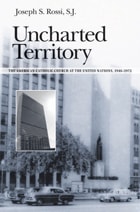
Uncharted Territory
The American Catholic Church at the United Nations, 1946-1972Joseph S. Rossi S.J.
Catholic University of America Press, 2006
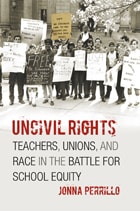
Uncivil Rights
Teachers, Unions, and Race in the Battle for School EquityJonna Perrillo
University of Chicago Press, 2012

Uncle Tom's Cabin and the Reading Revolution
Hochman Barbara
University of Massachusetts Press, 2011
Uncomfortable Television
Hunter Hargraves
Duke University Press, 2023
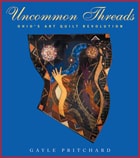
Uncommon Threads
Ohio's Art Quilt RevolutionGayle A. Pritchard
Ohio University Press, 2006
Against the backdrop of America’s counterculture and civil rights movements, author Gayle A. Pritchard’s compelling narrative threads its way through the emergence of the art quilt, from artists working in isolation to the explosive “big bang” of the first Quilt National and its inevitable reverberations. Pritchard provides a fascinating and personal glimpse into the private world of these unique artists through in-depth interviews, rare photographs, and abundant quilt illustrations.
As Uncommon Threads demonstrates, the art quilt movement could not have occurred without Ohio’s unparalleled contribution. Quilt lovers around theworld will relish discovering this tale of the uncommon energy, vision, creativity, and devotion to self-expression that truly made a quilt revolution.

Uncommon Vernacular
The Early Houses of Jefferson County, West Virginia, 1735-1835John C. Allen, Jr.
West Virginia University Press, 2011
Allen’s refreshing perspective illuminates the vibrant vernacular architecture of Jefferson County, connecting the housing of this area to the rich history of the Shenandoah Valley. Varying features of house siting, plan types, construction techniques, building materials, outbuildings, and exterior and interior detailing illustrate the blending of German, Scots-Irish, English, and African cultures into a distinct, regional style.
Uncommon Women
Gender and Representation in Nineteenth-Century U.S. Women's WritingLaura Laffrado
The Ohio State University Press, 2009
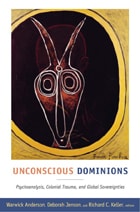
Unconscious Dominions
Psychoanalysis, Colonial Trauma, and Global SovereigntiesWarwick Anderson, Deborah Jenson, and Richard C. Keller, eds.
Duke University Press, 2011
Our understandings of culture, citizenship, and self have a history that is colonial and psychoanalytic, but, until now, this intersection has scarcely been explored, much less examined in comparative perspective. Taking on that project, Unconscious Dominions assembles essays based on research in Australia, Brazil, France, Haiti, and Indonesia, as well as India, North Africa, and West Africa. Even as they reveal the modern psychoanalytic subject as constitutively colonial, they shed new light on how that subject went global: how people around the world came to recognize the hybrid configuration of unconscious, ego, and superego in themselves and others.
Contributors
Warwick Anderson
Alice Bullard
John Cash
Joy Damousi
Didier Fassin
Christiane Hartnack
Deborah Jenson
Richard C. Keller
Ranjana Khanna
Mariano Plotkin
Hans Pols