Results by title
2817 books match the query 'Nature' and 26 start with u
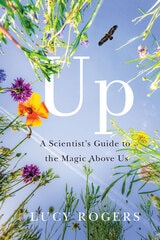
UP
A Scientist's Guide to the Magic Above UsLucy Rogers
Michigan State University Press, 2027
Engineer and bubble scientist Lucy Rogers invites us to explore the wonders of the air, sky, and space; understand the science; and appreciate the insights this offers about life on Earth. The sky is a world of endless wonder. From the intricate dance of clouds and the vibrant hues of the aurora borealis to the marvel of effortless soaring birds and the silent majesty of the stars, it is a living storybook. Join Rogers on a marvelous adventure through a kite market in India, creep through the Borneo jungle to witness millions of bats pour out of a cave at dusk, venture to Tornado Alley to chase the raw power of storms, and journey to Mexico to stand in awe of a total solar eclipse. Up is for anyone who has ever looked up at the sky in awe and needs to know the science behind its never-ending phenomena.

Under RAPs
Toward Grassroots Ecological Democracy in the Great Lakes BasinJohn H. Hartig and Michael A. Zarull, Editors
University of Michigan Press, 1992
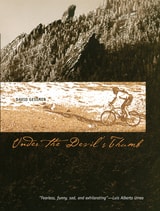
Under the Devil's Thumb
David Gessner
University of Arizona Press, 1999
In the West Gessner began to rewrite his life. Under the Devil's Thumb is a story of rugged determination and sweat, as well as humor, adventure and hope. In and around his new hometown of Boulder, Colorado, Gessner hiked hard and ran alongside flooded creeks. He found that the West was a place of stories—stories that grow out of the ground, flow out of the dirt, work their way through one's limbs, and drive people to push their physical limits. Hiking up scree slopes toward the Devil's Thumb, a massive outcrop of orange rock that attracts climbers, hikers, and contemplaters, Gessner reflects on the illness he has so recently survived. He pushes his physical limits, hoping to outrun death, to outrun dread. He finds momentary transcendence in the joys and self-inflicted pain of mountain biking. "Nothing but the hardest ride has the power to flush out worry, mind clutter, and dread." In tranquil moments he seeks a chance to recover an animal self that is strong and powerful enough to conquer mountains, but also still and quiet enough to see things human beings ignore.
In the mountain West, Gessner finds what Wallace Stegner called "the geography of hope." He finds within himself an interior landscape that is healthy and strong. Combining memoir, nature writing, and travel writing, Under the Devil's Thumb is one man's journey deep into a place of healing.
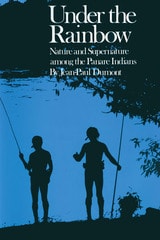
Under the Rainbow
Nature and Supernature among the Panare IndiansBy Jean-Paul Dumont
University of Texas Press, 1976
This ethnographic study of the Panare Indians of Venezuela is the first extensive look at a tribe of this region of the Amazonia. It is an important book not only because it delves into the myth-filled Panare culture, but also because the author has used a modified version of the structural analysis of Claude Lévi-Strauss in examining the Panare.
Lévi-Strauss applied his method of structural analysis to the mythology of many societies in Amazonia, but never to any single society. Jean-Paul Dumont has filled that gap and has shown how the approach works in practice when applied to the intensive study of a single, small-scale culture. His book significantly expands the discussion of the strengths and weaknesses of the method.
The work deals specifically with the implicit mythology of the Panare and is concerned with the symbolic activities manifested in the daily behavior of this group. The analysis of the symbolism, explains Dumont, allows for the discovery of the conceptual system through which the Panare conceive of themselves.
The study is organized into two parts: a presentation of the data and an analysis. The presentation includes a geographical and historical account of the Panare and a general ethnological profile. The analysis is organized into the conceptual categories of inhabited space, time, astrosexuality, hearing, and taste. A concluding chapter summarizes the analysis.
Under the Rainbow will be of interest and of value not only to anthropologists but also to linguists, philosophers, psychologists, and others interested in the general intellectual movement represented by French structuralism. The fieldwork for Under the Rainbow was conducted in Venezuelan Guiana from September 1967 to July 1969.
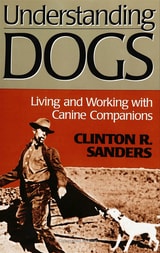
Understanding Dogs
Clinton R. Sanders
Temple University Press, 1999
In Understanding Dogs, sociologist and faithful dog companion Clinton R. Sanders explores the day-to-day experiences of living and working with domestic dogs. Based on a decade of research in veterinary offices and hospitals, dog guide training schools, and obediences classes -- and colored with his personal experiences and observations at and outside home with his own canine companions -- Sanders's book examines how everyday dog owners come to know their animal companions as thinking, emotional, and responsive individuals.
Linking animal companionship with social as well as personal identity, Understanding Dogs uses detailed ethnographic data in viewing human and animal efforts to understand, manipulate, care for, and interact with each other. From nineteenth-century disapproval of what was seen as irresponsibly indulgent pet ownership among the poor to Bill Clinton's caring and fun-loving image and populist connection to the "common person" as achieved through his labrador companion Buddy, Sanders looks at how dogs serve not only as social facilitators but also as adornments to social identity. He also reveals how, while we often strive to teach and shape our dogs' behavior, dogs often teach us to appreciate with more awareness a nourishing meal, physical warmth, a walk in the woods, and the simple joys of the immediate moment.
Sanders devotes chapters to the specialized work of guide dog trainers; the problems and joys experienced by guide dog owners; the day-to-day work of veterinarians dealing with the healing, death, and euthanizing of their animal patients; and the everyday interactions, assumptions, and approaches of people who choose, for various reasons and in various ways, to spend their lives in the company of dogs.
Understanding Dogs will interest those who live and work with animals as well as those studying the sociology of human-animal interactions.

Understanding Peasant Agriculture
An Integrated Land-Use Model for the PunjabJoseph H. Astroth Jr.
University of Chicago Press, 1989
Understories
The Political Life of Forests in Northern New MexicoJake Kosek
Duke University Press, 2006
Kosek traces the histories of forest extraction and labor exploitation in northern New Mexico, where Hispano residents have forged passionate attachments to place. He describes how their sentiments of dispossession emerged through land tenure systems and federal management programs that remade forest landscapes as exclusionary sites of national and racial purity. Fusing fine-grained ethnography with insights gleaned from cultural studies and science studies, Kosek shows how the nationally beloved Smokey the Bear became a symbol of white racist colonialism for many Hispanos in the region, while Los Alamos National Laboratory, at once revered and reviled, remade regional ecologies and economies. Understories offers an innovative vision of environmental politics, one that challenges scholars as well as activists to radically rework their understandings of relations between nature, justice, and identity.
Underwater Eden
Saving the Last Coral Wilderness on EarthEdited by Gregory S. Stone and David Obura
University of Chicago Press, 2012
Unearthing Conflict
Corporate Mining, Activism, and Expertise in PeruFabiana Li
Duke University Press, 2015
Unfracked
The Struggle to Ban Fracking in New YorkRichard Buttny
University of Massachusetts Press, 2024
Since fracking emerged as a way of extracting natural gas, through intense deep drilling and the use of millions of gallons of water and chemicals to fracture shale, it has been controversial. It is perceived in different ways by different people—by some as an opportunity for increased resources and possibly jobs and other income; by others as a public health and environmental threat; and for many, an unknown. Richard Buttny, a scholar who works on rhetoric and discursive practices, read a story in his local paper in New York about hydrofracking coming to his area and had to research what it was, and what it could mean for his community. Soon he joined neighbors in fighting to have the practice banned state-wide. At the same time, he turned his scholarly eye to the messaging from both sides of the fight, using first-person accounts, interviews, and media coverage.
The activists fighting fracking won. New York is now the only state in the US with sizable deposits of natural gas that has banned hydraulic fracturing, or fracking. Unfracked explains the competing rhetoric and discourses on fracking among New York-based advocates, experts, the grassroots, and political officials. Buttny examines how these positions evolved over time and how eventually the state arrived at a decision to ban this extractive technology. His accessible approach provides both a historical recounting of the key events of this seven-year conflict, along with four in-depth case studies: a grassroots citizen group, a public hearing with medical physicians, a key intergovernmental hearing, and a formal debate among experts. The result is a look at a very recent, important historical moment and a useful examination of environmental activist and fossil fuel advocate rhetoric around an issue that continues to cause debate nationwide.
Unguessed Kinships
Naturalism and the Geography of Hope in Cormac McCarthySteven Frye
University of Alabama Press, 2023
Literary naturalism at play in one of America’s most visionary novelists: Cormac McCarthy
It took six novels and nearly thirty years for Cormac McCarthy to find commercial success with the National Book Award–winning All the Pretty Horses, followed by major prizes, more best sellers, and Hollywood adaptations of his work. Those successes, though, have obscured McCarthy’s commitment to an older form of literary expression: naturalism.
It is hardly a secret that McCarthy’s work tends to darker themes: violence, brutality, the cruel indifference of nature, themes which would not be out of place in the writing of Jack London or Stephen Crane. But literary naturalism is more than the oversimplified Darwinism that many think of. Nature may be red in tooth and claw, and humans are part of nature, but the humanity depicted in naturalist literature is capable of love, selflessness, and spirituality, as well.
In Unguessed Kinships, Steven Frye illuminates all these dimensions of McCarthy’s work. In his novels and plays, McCarthy engages both explicitly and obliquely with the project of manifest destiny, in the western drama Blood Meridian, the Tennessee Valley Authority-era Tennessee novels, and the atomic frontier of Alamogordo in Cities of the Plain. McCarthy’s concerns are deeply religious and philosophical, drawing on ancient Greek philosophy, Gnosticism, and Nietzsche, among other sources. Frye argues for McCarthy not merely as a naturalist writer but as a naturalist in the most expansive sense. Unguessed Kinships includes biographical and historical context in each chapter, widening the appeal of the text to not just naturalists or McCarthy scholars but anyone studying the literature of the South or the West.
Unleashing Rights
Law, Meaning, and the Animal Rights MovementHelena Silverstein
University of Michigan Press, 1996
Unnatural Ecopoetics
Unlikely Spaces in Contemporary PoetrySarah Nolan
University of Nevada Press, 2017
By approaching environments in a new way, Nolan closes this gap and recognizes how contemporary poets employ self-reflexive commentary and formal experimentation in order to create new natural/cultural environments on the page. She proposes a radical new direction for ecopoetics and deploys it in relation to four major American poets. Working from literal to textual spaces through the contemporary poetry of A.R. Ammons’s Garbage, Lyn Hejinian’s My Life, Susan Howe’s The Midnight, and Kenneth Goldsmith’s Seven American Deaths and Disasters, the book presents applications of unnatural ecopoetics in poetic environments, ones that do not engage with traditional ideas of nature and would otherwise remain outside the scope of ecocritical and ecopoetic studies.
Nolan proposes a new practical approach for reading poetic language. Ecocriticism is a very fluid and evolving discipline, and Nolan’s pioneering new book pushes the boundaries of second-wave ecopoetics—the fundamental issue being what is nature/natural, and how does poetic language, particularly self-conscious contemporary poetic agency, contribute to and complicate that question.
Unnatural Landscapes
Tracking Invasive SpeciesCeiridwen Terrill; Foreword by Gary Paul Nabhan
University of Arizona Press, 2007
Although widely publicized threats—such as pollution, land development, changes in the atmospheric condition, fire, and drought—are frequently credited with posing the greatest danger to indigenous animals and plants, invasive species are quickly becoming a far more insidious peril to the survival of native wildlife. A result of both accident and human intervention, the frequency with which exotic species are being introduced into nonnative environments is increasing at an alarming rate.
In Unnatural Landscapes, Ceiridwen Terrill combines lucid science writing with first-person tales of adventure to provide a compelling introduction to invasion ecology and restoration management. Traveling aboard her trusty kyak, The Grebe, Terrill brings readers on a firsthand tour of various “islands” in the Southwest and Mexico—both actual islands and self-contained habitat communities. From the islands of Anaho, Santa Cruz, and Anacapa to Isla Tiburón in the Sea of Cortez, Mexicali irrigation canals, and Pyramid Lake, Terrill takes an in-depth look at the damage that invasive species cause.
Drawing on field observations, research, and interviews with scientists, resource managers, and local residents, this book provides readers with the background and knowledge they need to understand and to begin combating what is quickly becoming the most important environmental crisis facing the fragile ecosystems of the Southwest.
For more information on invasive species visit the Author's Web site.
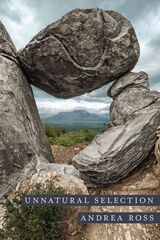
Unnatural Selection
A Memoir of Adoption and WildernessAndrea Ross
CavanKerry Press, 2021
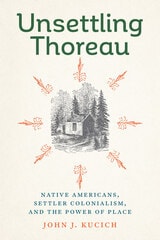
Unsettling Thoreau
Native Americans, Settler Colonialism, and the Power of PlaceJohn J. Kucich
University of Massachusetts Press, 2024
A CHOICE 2025 Outstanding Academic Title
Finalist for the 2025 New England Society Book Awards
Henry David Thoreau’s life-long fascination with Native Americans is widely known and a recurring topic of interest, and it is also a source of modern debate. This is a figure who both had a deep interest in Native American history and culture and was seen by many of his contemporaries, including Ralph Waldo Emerson and Nathaniel Hawthorne, as “more like an Indian” than his white neighbors. At the same time, Thoreau did little to protest the systematic dispossession of Indigenous people across the country in his lifetime. John J. Kucich charges into this contradiction, considering how Thoreau could demonstrate deep respect for Native American beliefs on one hand and remain largely silent about their genocide, actively happening throughout his life, on the other. Thoreau’s long study of Native peoples, as reflected in so much of his writing, allowed him to glimpse an Indigenous worldview, but it never fully freed him from the blind spots of settler colonialism.
Drawing on Indigenous studies and critiques of settler colonialism, as well as new materialist approaches that illustrate Thoreau’s radical reimagining of the relationship between humans and the natural world, Unsettling Thoreau explores the stakes of Thoreau’s effort to live mindfully and ethically in place when living alongside, or replacing marginalized peoples. By examining the whole scope of his writings, including the unpublished Indian Notebooks, and placing them alongside Native writers and communities in and beyond New England, this book gauges Thoreau’s effort to use Indigenous knowledge to reimagine a settler colonial world, without removing him from its trappings.
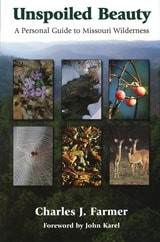
Unspoiled Beauty
A Personal Guide to Missouri WildernessCharles J. Farmer
University of Missouri Press, 1999
Tucked within Missouri's borders are eight Congressionally designated Wilderness areas. These magnificent forests, scattered across the southern portion of the state, combine a wide variety of unique ecosystems. In Unspoiled Beauty, Charles Farmer captures the essence of the Missouri Wilderness experience, allowing even those who have never set foot in the wilderness to enjoy its wonders and appreciate its importance.
Farmer begins by describing the wilderness region prior to the Congressional Wilderness designation, providing an overview of the numerous battles that were waged to reclaim the state's wilderness and to assure its preservation. Featured are key players who were instrumental in the acquisition and preservation of Missouri wilderness.
Farmer devotes a chapter to each of the eight Wilderness areas, accompanied by numerous engaging photographs, many in color. He provides a brief history of each and shares his own fascinating personal experiences of camping, hiking, backpacking, hunting, and fishing within each. He discusses trails, fauna, flora, and other colorful details along the way. His adventures take place during different seasons of the year; he is sometimes alone, sometimes in company. Through his eyes, each area is brought vividly to life.
"Wilderness Tips" and a guide with rules for the novice camper, hiker, backpacker, hunter, and fisherman enhance the book's usefulness. The final chapter lists the areas in Missouri that qualify for Wilderness designation in the New Forest Plan. Unspoiled Beauty may well play a part in saving Missouri's remaining wilderness candidates. It will also help other states that are preparing campaigns to save their own wilderness areas.
Wilderness advocates, hikers and backpackers, fishermen and hunters, anyone who appreciates the great outdoors will enjoy this important new book.
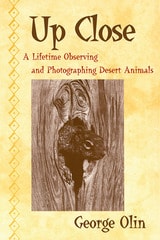
Up Close
A Lifetime Observing and Photographing Desert AnimalsGeorge Olin
University of Arizona Press, 2000
Up North
Sam Cook
University of Minnesota Press, 2003
Memorable descriptions of the Northern seasons—now in paperback!
In this unforgettable collection of essays, Sam Cook portrays the enchanting North Country as a state of mind as much as a geographical area. Up North captures the mystic moods, seasonal subtleties, and colorful characters that fill the region from the Minnesota canoe country to the vast expanse of the Northwest Territories.
Organized by time of year, Up North describes every season’s pleasures—sled dog racing in winter, hooking a northern pike on the first spring fishing trip, building a summer campfire, watching the aurora borealis in fall. Up North is an invitation to explore canoe country through Sam Cook’s eyes and your own.
Up North in Michigan
A Portrait of Place in Four SeasonsJerry Dennis
University of Michigan Press, 2021
And yet the essence of this region, known to many as simply “Up North,” has proved remarkably perennial. Millions of acres of state and national forests and other public lands remain intact. Small towns peppered across the rural countryside have changed little over the decades, pushing back the machinery of progress with the help of dedicated land conservancies, conservation organizations, and other advocacy groups.
Up North in Michigan, the new collection from celebrated nature writer Jerry Dennis, captures its author’s lifelong journey to better know this place he calls home by exploring it in every season, in every kind of weather, on foot, on bicycle, in canoes and cars. The essays in this book are more than an homage to a particular region, its people, and its natural wonders. They are a reflection on the Up North that can only be experienced through your feet and fingertips, through your ears, mouth, and nose—the Up North that makes its way into your bones as surely as sand makes its way into wood grain.
The paperback contains a new chapter by Jerry Dennis that has been written since the publication of the hardcover.
Up on the River
People and Wildlife of the Upper MississippiMadson, John
University of Iowa Press, 1985
@font-face { font-family: "Times";}@font-face { font-family: "Verdana";}@font-face { font-family: "Palatino";}p.MsoNormal, li.MsoNormal, div.MsoNormal { margin: 0in 0in 0.0001pt; font-size: 12pt; font-family: "Times New Roman"; }div.Section1 { page: Section1; }
Up on the River is John Madson’s loving and often hilarious tribute to the people, animal life, and places of the Upper Mississippi. Madson’s Upper Mississippi is the part “between the saints,” from St. Louis to St. Paul, where for thirty years he explored the bright waters of the upper reaches of the mighty river itself as well as the tangled multitude of sloughs, cuts, and side channels that wander through its wooded islands and floodplain forests.
“Some of my best time on the River has been in the company of game wardens, biologists, commercial fishermen, clammers, trappers, hunters, and a smelly, mud-smeared coterie of river rats in general, and my views of the River are far more likely to reflect theirs than those of the transportation industry,” Madson writes of his thirty-year acquaintance with the Mississippi. Traveling mainly by canoe and johnboat, he tells of encounters between archetypal commercial fishermen and archetypal game wardens over hot fish chowder, fishing for crappies in the tops of submerged trees and for walleyes amid gale force winds, nesting and migrating herons and ducks and eagles, the histories of river logging and pearling and button making, and towboats and barges and the lives of the “ramstugenous” people who move freight on the river.
Learning about the Upper Mississippi via the wry tutelage of John Madson, who discovered that “whenever I am out on a river some of its freeness rubs off on me,” readers of this classic book will also come under the spell of this freeness.

Urban Wildlife Habitats
A Landscape PerspectiveLowell W. Adams
University of Minnesota Press, 1994
Urban Wildlife Habitats was first published in 1994. Minnesota Archive Editions uses digital technology to make long-unavailable books once again accessible, and are published unaltered from the original University of Minnesota Press editions.
In cities, towns, and villages, between buildings and parking lots, streets and sidewalks, and polluted streams and rivers, there is ever less space for the "natural," the plants and animals that once were at home across North America. In this first book-length study of the subject, Lowell W. Adams reviews the impact of urban and suburban growth on natural plant and animal communities and reveals how, with appropriate landscape planning and urban development, cities and towns can be made more accommodating for a wide diversity of species, including our own.
Soils and ground surface, air, water, and noise pollution, space and demographics are among the urban characteristics Adams considers in relation to wildlife. He describes changes in the composition and structure of vegetation, as native species are replaced by exotic ones, and shows how, with spreading urbanization of natural habitats, the diversity of species of plants and animals almost always declines, although the density of a few species increases. Adams contends, however, that it is possible for a wide variety of species to coexist in the metropolitan environment, and he cites a growing interest in the practice of "natural landscaping," which emphasizes the use of native species and considers the structure, pattern, and species composition of vegetation as it relates to wildlife needs. Urban habitats vary from small city parks in densely built downtowns to suburbs with large yards and considerable open space. Adams discusses the opportunities these areas—along with school yards, hospital grounds, cemeteries, individual residences, and vacant lots—provide for judicious wildlife management and for the salutary interaction of people with nature.Lowell W. Adams is vice president of the National Institute for Urban Wildlife in Columbia, Maryland.

Utah Mollusk Identification Guide
Eric J. Wagner
University of Utah Press, 2022
The Utah Mollusk Identification Guide offers the latest information for identifying aquatic and terrestrial snails, slugs, clams, and mussels within the state of Utah, providing comparative tables, taxonomic keys, and more than 230 images, including many type specimen images published for the first time. Amateur naturalists and biologists alike will benefit from detailed information regarding size, type, specimen location, junior synonyms (including taxonomy notes), and original descriptions for each of the 139 species. Clarifying notes from the author help to differentiate similar species.
In contrast to older guides, this book includes data on the external and internal anatomy of mollusks and updated taxonomic names. Family descriptions and miscellaneous data on ecology, life history, and genetics offer readers a wide lens to understand Utah’s mollusks. Data based on historical articles, museum records, personal observations, and collections point to the wide distribution of mollusks found in Utah. Although the focus is on Utah mollusks, the data, images, references, and taxonomy details within the guide will be of interest to many outside the state.

Utah Wildflowers
A Field Guide to Northern and Central Mountains and ValleysRichard Shaw
Utah State University Press, 1999
A visual guide to the wildflowers that inhabit the mountains and valleys of northern and central Utah every spring and summer. A must for the hiker, biker, or lover of the outdoors. Includes over 100 full-color photographs.
Utah's Air Quality Issues
Problems and SolutionsEdited by Hal Crimmel
University of Utah Press, 2019
Utah’s Air Quality Issues: Problems and Solutions is the first book to tackle the subject. Written by scholars in a variety of fields, including chemical engineering, economics, atmospheric science, health care, law, parks and recreation and public policy, the book provides a one-stop resource on the causes, impacts, and possible solutions to the state’s air quality dilemma. This volume is a must read for anyone wanting to understand Utah’s air pollution problem and what can be done about it.
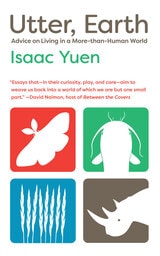
Utter, Earth
Advice on Living in a More-than-Human WorldIsaac Yuen
West Virginia University Press, 2024
Honorable Mention, Alanna Bondar Prize, 2026, Association for Literature, Environment, and Culture in Canada (ALECC)
Part nature guide, part self-help column, and all love letter to the more-than-human world, Utter, Earth is an exercise in wonder. For animal lovers and readers of Brian Doyle, Aimee Nezhukumatathil, and Amy Leach.
A light, literary take on an animal book for grown-ups, a tongue-in-cheek self-help column with lessons drawn from nature, a sort of hitchhiker’s guide to the more-than-human world—Isaac Yuen’s Utter, Earth is a celebration, through wordplay and earthplay, of our planet’s riotous wonders.
In a time of dirges and elegies for the natural world, Utter, Earth features odes to sloths, tributes to trilobites, and ringing endorsements for lichen. For animal lovers and readers of Brian Doyle, Aimee Nezhukumatathil, and Amy Leach, each essay of this one-of-a-kind collection combines joyous language, whimsical tangents, and scientific findings to remind us of and reconnect us with those to whom we are inextricably bound. Highlighting life that once was, still is, and all that we stand to lose, this living and lively mini encyclopedia (complete with glossary) shines the spotlight on the motley, fantastical, and astonishing denizens with whom we share this planet.