Results by title

13 books match the query 'Mali'

cover of Adventures in Africa

Adventures in Africa

Gianni Celati

University of Chicago Press, 2000

"In the life of a tourist who travels a bit far, I think that at a certain point, a question necessarily arises: 'But what have I come here for?' A question that sets in motion a great cinema of justification to oneself, so that one doesn't have to seriously say to oneself: 'I'm here doing nothing.'"
In 1997 the celebrated Italian novelist and essayist Gianni Celati accompanied his friend, filmmaker Jean Talon, on a journey to West Africa which took them from Mali to Senegal and Mauritania. The two had been hoping to research a documentary about Dogon priests, but frustrated by red tape, their voyage became instead a touristic adventure. The vulnerable, prickly, insightful Celati kept notebooks of the journey, now translated by Adria Bernardi as Adventures in Africa. Celati is the privileged traveler, overwhelmed by customs he doesn't understand, always at the mercy of others who are trying to sell him something he doesn't want to buy, and aware of himself as the Tourist who is always a little disoriented and at the center of the continual misadventures that are at the heart of travel.
Celati's book is both a travelogue in the European tradition and a trenchant meditation on what it means to be a tourist. Celati learns to surrender to the chaos of West Africa and in the process produces a work of touching and comic descriptions, in the lucid and ironic prose that is his hallmark. Hailed as one of the best travelogues on Africa ever written and awarded the first Zerilli-Marimó prize, Adventures in Africa is a modest yet profound account of the utter discombobulation of travel.

[more]
cover of Amkoullel, the Fula Boy

Amkoullel, the Fula Boy

Amadou Hampâté Bâ

Duke University Press, 2021
Born in 1900 in French West Africa, Malian writer Amadou Hampâté Bâ was one of the towering figures in the literature of twentieth-century Francophone Africa. In Amkoullel, the Fula Boy, Bâ tells in striking detail the story of his youth, which was set against the aftermath of war between the Fula and Toucouleur peoples and the installation of French colonialism. A master storyteller, Bâ recounts pivotal moments of his life, and the lives of his powerful and large family, from his first encounter with the white commandant through the torturous imprisonment of his stepfather and to his forced attendance at French school. He also charts a larger story of life prior to and at the height of French colonialism: interethnic conflicts, the clash between colonial schools and Islamic education, and the central role indigenous African intermediaries and interpreters played in the functioning of the colonial administration. Engrossing and novelistic, Amkoullel, the Fula Boy is an unparalleled rendering of an individual and society under transition as they face the upheavals of colonialism.
[more]
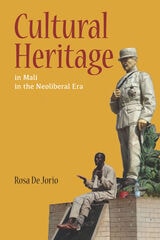
cover of Cultural Heritage in Mali in the Neoliberal Era

Cultural Heritage in Mali in the Neoliberal Era

Rosa De Jorio

University of Illinois Press, 2016
Up to 2012, Mali was a poster child of African democracy, despite multiple signs of growing dissatisfaction with the democratic experiment. Then disaster struck, bringing many of the nation's unresolved contradictions to international attention. A military coup carved off the country's south. A revolt by a coalition of Tuareg and extremist Islamist forces shook the north. The events, so violent and unexpected, forced experts to reassess Mali's democratic institutions and the neoliberal economic reforms enacted in conjunction with the move toward democracy. Rosa De Jorio's detailed study of cultural heritage and its transformations provides a key to understanding the impasse that confronts Malian democracy. As she shows, postcolonial Mali privileged its cultural heritage to display itself on the regional and international scene. The neoliberal reforms both intensified and altered this trend. Profiling heritage sites ranging from statues of colonial leaders to women's museums to historic Timbuktu, De Jorio portrays how various actors have deployed and contested notions of heritage. These actors include not just Malian administrators and politicians but UNESCO, and non-state NGOs. She also delves into the intricacies of heritage politics from the perspective of Malian actors and groups, as producers and receivers--but always highly informed and critically engaged--of international, national and local cultural initiatives.
[more]
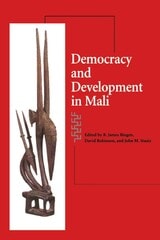
cover of Democracy and Development in Mali

Democracy and Development in Mali

R. James Bingen

Michigan State University Press, 2000

Mali, a country rich with history and culture, but one of the poorest in the world, emerged in the 1990s as one of Africa's most vibrant democracies. Strengthened by bold political and economic reforms at home, Mali has emerged as a leader in African peace keeping efforts. How has such a transition taken place? How have these changes built on Mali's rich heritage? These are the questions that the contributors to this volume have addressed.

During the past twenty-five years, the scholarly research and applied development work of Michigan State University faculty and students in Mali represents the most significant combined, long-term, and continuing contribution of any group of university faculty in the United States or Europe to the study of Malian society, economy, and politics. The applied nature of much of this work has resulted in a significant number of working papers, reports, and conference presentations. This volume represents a coherent and connected set of essays from one American university with a widely known and highly respected role in African development. While the essays identify and review Mali's unique historical and contemporary path to democracy and development, they also contribute to the advancement of theoretical knowledge about African development.
[more]
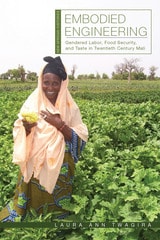
cover of Embodied Engineering: Gendered Labor, Food Security, and Taste in Twentieth-Century Mali

Embodied Engineering

Gendered Labor, Food Security, and Taste in Twentieth-Century Mali

Laura Ann Twagira

Ohio University Press, 2021

Foregrounding African women’s ingenuity and labor, this pioneering case study shows how women in rural Mali have used technology to ensure food security through the colonial period, environmental crises, and postcolonial rule. By advocating for an understanding of rural Malian women as engineers, Laura Ann Twagira rejects the persistent image of African women as subjects without technological knowledge or access and instead reveals a hidden history about gender, development, and improvisation. In so doing, she also significantly expands the scope of African science and technology studies. Using the Office du Niger agricultural project as a case study, Twagira argues that women used modest technologies (such as a mortar and pestle or metal pots) and organized female labor to create, maintain, and reengineer a complex and highly adaptive food production system. While women often incorporated labor-saving technologies into their work routines, they did not view their own physical labor as the problem it is so often framed to be in development narratives. Rather, women’s embodied techniques and knowledge were central to their ability to transform a development project centered on export production into an environmental resource that addressed local taste and consumption needs.
[more]
cover of Embodying Relation: Art Photography in Mali

Embodying Relation

Art Photography in Mali

Allison Moore

Duke University Press, 2020
In Embodying Relation Allison Moore examines the tensions between the local and the global in the art photography movement in Bamako, Mali, which blossomed in the 1990s after Malian photographers Seydou Keïta and Malick Sidibé became internationally famous and the Bamako Photography Biennale was founded. Moore traces the trajectory of Malian photography from the 1880s—when photography first arrived as an apparatus of French colonialism—to the first African studio practitioners of the 1930s and the establishment in 1994 of the Bamako Biennale, Africa's most important continent-wide photographic exhibition. In her detailed discussion of Bamakois artistic aesthetics and institutions, Moore examines the post-fame careers of Keïta and Sidibé, the biennale's structure, the rise of women photographers, cultural preservation through photography, and how Mali's shift to democracy in the early 1990s enabled Bamako's art scene to flourish. Moore shows how Malian photographers' focus on cultural exchange, affective connections with different publics, and merging of traditional cultural precepts with modern notions of art embody Caribbean philosopher and poet Édouard Glissant's notion of “relation” in ways that spark new artistic forms, practices, and communities.
[more]
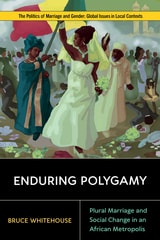
cover of Enduring Polygamy: Plural Marriage and Social Change in an African Metropolis

Enduring Polygamy

Plural Marriage and Social Change in an African Metropolis

Bruce Whitehouse

Rutgers University Press, 2023

Why hasn’t polygamous marriage died out in African cities, as experts once expected it would? Enduring Polygamy considers this question in one of Africa’s fastest-growing cities: Bamako, the capital of Mali, where one in four wives is in a polygamous marriage. Using polygamy as a lens through which to survey sweeping changes in urban life, it offers ethnographic and demographic insights into the customs, gender norms and hierarchies, kinship structures, and laws affecting marriage, and situates polygamy within structures of inequality that shape marital options, especially for young Malian women. Through an approach of cultural relativism, the book offers an open-minded but unflinching perspective on a contested form of marriage. Without shying away from questions of patriarchy and women’s oppression, it presents polygamy from the everyday vantage points of Bamako residents themselves, allowing readers to make informed judgments about it and to appreciate the full spectrum of human cultural diversity.
[more]
cover of Genii of the River Niger

Genii of the River Niger

Jean-Marie Gibbal

University of Chicago Press, 1993

The river Niger, a source of life and danger for the people in impoverished eastern Mali, is also the origin of elaborate mythology. From his travels through Mali and down the Niger in a dugout canoe, Jean-Marie Gibbal has created a personal documentary of the cultures of the region. The result is at once an ethnography of cultures in crisis and a poetic evocation of the environment and people he encountered.

Gibbal portrays the river as the dominant, cohesive force among people in the face of social and environmental strife. He focuses on the Ghimbala healing cult, which centers on the river, and how the cult structures social relations in the region. Gibbal vividly recreations the Ghimbala rites, nocturnal ceremonies of spirit possession and seance which animate the water spirits, or genii, that inhabit the river. The genii, he finds, provide the strength of social identity in a world where famine and competing versions of Islam threaten to overpower traditional culture.

In its original French publication, The Genii of the River Niger was honored with an Alexandra David-Neel literary prize in 1989. Its powerful lyricism, combined with fascinating ethnographic depth, will delight general readers and specialists alike and will stir debates among specialists in African studies, the anthropology of religion, and literature.

[more]
cover of In Griot Time

In Griot Time

Banning Eyre

Temple University Press, 2000

"Djelimady Tounkara has powerful hands. His muscled fingers and palms seem almost brutish to the eye, but when he grasps the neck of the guitar and brushes the nail of his right index finger across the strings, the sound lifts effortlessly, like dust in a wind. In Bamako, Mali, where musicians struggle, Djelimady is a big man, and all of his family's good fortunes flow from those hands."

Djelimady Tounkara is only one of the memorable people you will meet in this dramatic narrative of life among the griot musicians of Mali. Born into families where music and the tradition of griot story-telling is a heritage and a privilege, Djelimady and his fellow griots -- both men and women -- live their lives at the intersection of ancient traditions and the modern entertainment industry. During the seven months he spent living and studying with Djelimady, Banning Eyre immersed himself in a world that will fascinate you as it did him.

Eyre creates a range of unforgettable portraits. Some of the people who stride through his pages are internationally known, musicians like Salif Keita, Oumou Sangare, and Grammy winner Ali Farka Toure. But the lesser-known characters are equally fascinating: Adama Kouyate, Djelimady's dynamic wife; Moussa Kouyate, the Tounkara family's own griot; Yayi Kanoute, the flamboyant jelimuso (female griot) who failed to take America by storm; Foutanga Babani Sissoko, the mysterious millionaire who rebuilt an entire town and whose patronage is much sought after by the griots of Bamako.

But the picture Eyre draws is not just a series of portraits. Out of their interactions comes a perceptive panorama of life in Mali in the late twentieth century. The narrative gives us a street-level view of the transformation of musical taste and social customs, the impact of technology and the pressures of poverty, at a crucial time in Mali's history. In individual after individual, family after family, we see the subtle conflicts of heritage and change. Even the complications of democracy -- with democracy, mango vendors think they can charge anything they want, Djelimady points out -- are woven into an unforgettable saga of one man, his family, his profession, and the world of Malian music.
[more]
cover of In Search of Tunga: Prosperity, Almighty God, and Lives in Motion in a Malian Provincial Town

In Search of Tunga

Prosperity, Almighty God, and Lives in Motion in a Malian Provincial Town

André Chappatte

University of Michigan Press, 2022

This volume on Muslim life focuses on young male migrants of rural origin who move to build better lives in Bougouni, a provincial town in southwest Mali. Describing themselves as “simply Muslims” and “adventurers,” these migrants aim to be both prosperous and good Muslims. Drawing upon seventeen months of fieldwork, author André Chappatte explores their sense of prosperity and piety as they embark on tunga (adventure), a customary search for money and more in a tradition that dates back to the colonial period.

In the context of the current global war on terrorism, most studies of Muslim life have focused on the politics of piety of reformist movements, their leaders, and members. By contrast, In Search of “Tunga” takes a perspective from below. It opens piety up to “simply Muslims,” although the religious elites have always claimed authority and legitimacy over piety. Is piety an exclusive field of experiences for those who claim to strive for it? What does piety involve for the majority of Muslims, the non-elite and unaffiliated Muslims? This volume “democratizes” piety by documenting its practice as going beyond sharply defined religious affiliations and Islamic scholarship, and by showing it is both alive and normative, existential and prescriptive. As opposed to studies that build on the classic historical connections between the Maghreb and the Sahel, the southbound migration from the Sahel documented in this book stresses the overlooked historical connections between the southern shores of the Sahara and the lands south of those shores. It demonstrates how the Malian savanna, this former buffer-zone between ancient Mande kingdoms and thereafter remote areas of French Sudan, is increasingly becoming central in today’s Sahel contexts of desiccation and insecurity.
[more]
cover of Native Sons: West African Veterans and France in the Twentieth Century

Native Sons

West African Veterans and France in the Twentieth Century

Gregory Mann

Duke University Press, 2006

For much of the twentieth century, France recruited colonial subjects from sub-Saharan Africa to serve in its military, sending West African soldiers to fight its battles in Europe, Southeast Asia, and North Africa. In this exemplary contribution to the “new imperial history,” Gregory Mann argues that this shared military experience between France and Africa was fundamental not only to their colonial relationship but also to the reconfiguration of that relationship in the postcolonial era. Mann explains that in the early twenty-first century, among Africans in France and Africa, and particularly in Mali—where Mann conducted his research—the belief that France has not adequately recognized and compensated the African veterans of its wars is widely held and frequently invoked. It continues to animate the political relationship between France and Africa, especially debates about African immigration to France.

Focusing on the period between World War I and 1968, Mann draws on archival research and extensive interviews with surviving Malian veterans of French wars to explore the experiences of the African soldiers. He describes the effects their long absences and infrequent homecomings had on these men and their communities, he considers the veterans’ status within contemporary Malian society, and he examines their efforts to claim recognition and pensions from France. Mann contends that Mali is as much a postslavery society as it is a postcolonial one, and that specific ideas about reciprocity, mutual obligation, and uneven exchange that had developed during the era of slavery remain influential today, informing Malians’ conviction that France owes them a “blood debt” for the military service of African soldiers in French wars.
[more]
cover of States of Marriage: Gender, Justice, and Rights in Colonial Mali

States of Marriage

Gender, Justice, and Rights in Colonial Mali

Emily S. Burrill

Ohio University Press, 2015
States of Marriage shows how throughout the colonial period in French Sudan (present-day Mali) the institution of marriage played a central role in how the empire defined its colonial subjects as gendered persons with certain attendant rights and privileges. The book is a modern history of the ideological debates surrounding the meaning of marriage, as well as the associated legal and sociopolitical practices in colonial and postcolonial Mali. It is also the first to use declassified court records regarding colonialist attempts to classify and categorize traditional marriage conventions in the southern region of the country. In French Sudan, as elsewhere in colonial Africa, the first stage of marriage reform consisted of efforts to codify African marriages, bridewealth transfers, and divorce proceedings in public records, rendering these social arrangements “legible” to the colonial administration. Once this essential legibility was achieved, other, more forceful interventions to control and reframe marriage became possible. This second stage of marriage reform can be traced through transformations in and by the colonial court system, African engagements with state-making processes, and formations of “gender justice.” The latter refers to gender-based notions of justice and legal rights, typically as defined by governing and administrative bodies as well as by socioxadpolitical communities. Gender justice went through a period of favoring the rights of women, to a period of favoring patriarchs, to a period of emphasizing the power of the individual—but all within the context of a paternalistic and restrictive colonial state.
[more]
cover of The Lieutenant of Kouta

The Lieutenant of Kouta

Massa Makan Diabaté

Michigan State University Press, 2017

The Lieutenant of Kouta is the first novel in Massa Makan Diabaté’s award-winning trilogy. Featuring an introduction by leading Diabaté scholar Cheick M. Chérif Keïta and Shane Auerbach, it tells the story, part tragicomic and part hagiographic, of an African lieutenant in the French Army who returns as a decorated hero from the battlefields of Europe to Kouta, a fictionalized version of the author’s own birthplace, the Malian town of Kita. Upon his return, Siriman Keita finds it difficult to adjust to village life as he navigates traditional customs in his attempts to create his place in the predominantly Muslim Kouta. The novel offers a rich and nuanced representation of Mali on the brink of independence; it is a tapestry of traditional Mandinka society and the French colonial apparatus, illustrating the dynamic interplay between the two. This text is, ultimately, a story of one man’s transformation coinciding with that of his country.
 
[more]