Results by title
4917 books match the query 'Philosophy' and 49 start with u
Ugly Freedoms
Elisabeth R. Anker
Duke University Press, 2022

Unbecoming Cinema
Unsettling Encounters with Ethical Event FilmsDavid H. Fleming
Intellect Books, 2017
A PDF version of this book is available for free in open access via the OAPEN Library platform, www.oapen.org It has been made available under a Creative Commons Attribution 4.0 International Public License and is part of Knowledge Unlatched.
Unbecoming Language
Anti-Identitarian French Feminist FictionsAnnabel L. Kim
The Ohio State University Press, 2018
Kim’s close readings ultimately enliven the current conversation in French studies by serving as a provocation to return to reading literary texts deeply and closely, without subordinating literature to a pre-existing ideological framework—to let literature speak, to let it theorize. Tracking the influence of these writers on each other, Kim provides a new, original French feminist poetics and demonstrates that Sarraute, Wittig, and Garréta’s work allows for a hollowing out of difference from within, allowing writers and readers to unbecome—to break free of identity and exist as subjectivities without subjecthood. In looking at these writers together, Kim provides a defense of literature as liberatory— capable of effecting personal and political change—and gives readers an experience of literature’s revolutionary possibilities.
Unbecoming Language
Anti-Identitarian French Feminist FictionsAnnabel L. Kim
The Ohio State University Press, 2018
Kim’s close readings ultimately enliven the current conversation in French studies by serving as a provocation to return to reading literary texts deeply and closely, without subordinating literature to a pre-existing ideological framework—to let literature speak, to let it theorize. Tracking the influence of these writers on each other, Kim provides a new, original French feminist poetics and demonstrates that Sarraute, Wittig, and Garréta’s work allows for a hollowing out of difference from within, allowing writers and readers to unbecome—to break free of identity and exist as subjectivities without subjecthood. In looking at these writers together, Kim provides a defense of literature as liberatory— capable of effecting personal and political change—and gives readers an experience of literature’s revolutionary possibilities.
Unbecoming Persons
The Rise and Demise of the Modern Moral SelfLadelle McWhorter
University of Chicago Press, 2025
In the face of ecological crisis, economic injustice, and political violence, the moral demands of being a good person are almost too much to bear. In Unbecoming Persons, Ladelle McWhorter argues that this strain is by design. Our ideas about personhood, she shows, emerged to sustain centuries of colonialism, slavery, and environmental destruction. We must look elsewhere to find our way out.
This history raises a hard question: Should we be persons at all, or might we live a good life without the constraints of individualism or the illusion of autonomy? In seeking an answer, McWhorter pushes back on the notion of our own personhood—our obsession with identity, self-improvement, and salvation—in search of a better way to live together in this world. Although she finds no easy answers, McWhorter ultimately proposes a new ethics that rejects both self-interest and self-sacrifice and embraces perpetual dependence, community, and the Earth
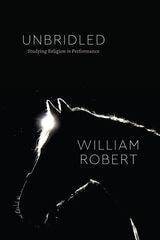
Unbridled
Studying Religion in PerformanceWilliam Robert
University of Chicago Press, 2022
In Unbridled, William Robert uses Equus, Peter Shaffer’s enigmatic play about a boy passionately devoted to horses, to think differently about religion. For several years, Robert has used Equus to introduce students to the study of religion, provoking them to conceive of religion in unfamiliar, even uncomfortable ways. In Unbridled, he is inviting readers to do the same.
A play like Equus tangles together text, performance, practice, embodiment, and reception. Studying a play involves us in playing different roles, as ourselves and others, and those roles, as well as the imaginative work they require, are critical to the study of religion. By approaching Equus with the reader, turning the play around and upside-down, Unbridled transforms standard approaches to the study of religion, engaging with themes including ritual, sacrifice, worship, power, desire, violence, and sexuality, as well as thinkers including Judith Butler, Sigmund Freud, Karl Marx, Friedrich Nietzsche, and Jonathan Z. Smith. As Unbridled shows, the way themes and theories play out in Equus challenges us to reimagine the study of religion through open questions, contrasting perspectives, and alternative modes of interpretation and appreciation.
Unburied Bodies
Subversive Corpses and the Authority of the DeadJames R. Martel
Amherst College Press, 2018
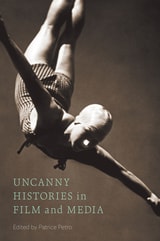
Uncanny Histories in Film and Media
Patrice Petro
Rutgers University Press, 2022
Uncanny Rest
For AntiphilosophyAlberto Moreiras
Duke University Press, 2022

Uncertainties Of Knowledge
Immanuel Wallerstein
Temple University Press, 2004
Unchopping a Tree
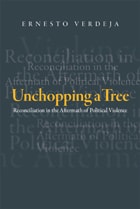
Reconciliation in the Aftermath of Political ViolenceErnesto Verdeja
Temple University Press, 2009
Employing a normative theory of reconciliation that differs from prevailing approaches, Verdeja outlines a concept that emphasizes the importance of shared notions of moral respect and tolerance among adversaries in transitional societies. Drawing heavily from cases such as reconciliation efforts in Latin America and Africa—and interviews with people involved in such efforts—Verdeja debates how best to envision reconciliation while remaining realistic about the very significant practical obstacles such efforts face
Unchopping a Tree addresses the core concept of respect across four different social levels—political, institutional, civil society, and interpersonal—to explain the promise and challenges to securing reconciliation and broader social regeneration.
Uncivil Unions
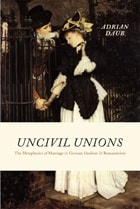
The Metaphysics of Marriage in German Idealism and RomanticismAdrian Daub
University of Chicago Press, 2012
“What a strange invention marriage is!” wrote Kierkegaard. “Is it the expression of that inexplicable erotic sentiment, that concordant elective affinity of souls, or is it a duty or a partnership . . . or is it a little of all that?”
Like Kierkegaard a few decades later, many of Germany’s most influential thinkers at the turn of the eighteenth century wondered about the nature of marriage but rejected the easy answers provided by biology and theology. In Uncivil Unions, Adrian Daub presents a truly interdisciplinary look at the story of a generation of philosophers, poets, and intellectuals who turned away from theology, reason, common sense, and empirical observation to provide a purely metaphysical justification of marriage.
Through close readings of philosophers like Fichte and Schlegel, and novelists like Sophie Mereau and Jean Paul, Daub charts the development of this new concept of marriage with an insightful blend of philosophy, cultural studies, and theory. The author delves deeply into the lives and work of the romantic and idealist poets and thinkers whose beliefs about marriage continue to shape ideas about gender, marriage, and sex to the present day.
Uncommon Sense
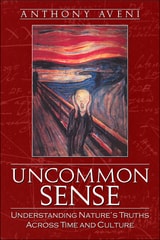
Understanding Nature's Truths Across Time and CultureAnthony Aveni
University Press of Colorado, 2006
In ten fascinating essays, Aveni examines topics that have absorbed scientists, religious figures, and ordinary citizens over the centuries. He traces the tug of war between astronomy and astrology, reveals the underpinnings of our notions of cartography and the representation of space and time, and much more.
Readers interested in science, history, and world cultures will revel in this celebration of different cultures’ common and uncommon questions and conclusions about the natural world.
Uncountable
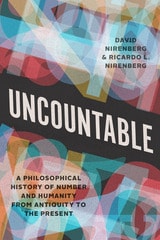
A Philosophical History of Number and Humanity from Antiquity to the PresentDavid Nirenberg and Ricardo L. Nirenberg
University of Chicago Press, 2021
Our knowledge of mathematics has structured much of what we think we know about ourselves as individuals and communities, shaping our psychologies, sociologies, and economies. In pursuit of a more predictable and more controllable cosmos, we have extended mathematical insights and methods to more and more aspects of the world. Today those powers are greater than ever, as computation is applied to virtually every aspect of human activity. Yet, in the process, are we losing sight of the human? When we apply mathematics so broadly, what do we gain and what do we lose, and at what risk to humanity?
These are the questions that David and Ricardo L. Nirenberg ask in Uncountable, a provocative account of how numerical relations became the cornerstone of human claims to knowledge, truth, and certainty. There is a limit to these number-based claims, they argue, which they set out to explore. The Nirenbergs, father and son, bring together their backgrounds in math, history, literature, religion, and philosophy, interweaving scientific experiments with readings of poems, setting crises in mathematics alongside world wars, and putting medieval Muslim and Buddhist philosophers in conversation with Einstein, Schrödinger, and other giants of modern physics. The result is a powerful lesson in what counts as knowledge and its deepest implications for how we live our lives.
Uncovering the Constitution's Moral Design
Paul R. DeHart
University of Missouri Press, 2007
In critiquing previous attempts at describing and evaluating the Constitution’s normative framework, DeHart demonstrates that the Constitution’s moral framework corresponds largely to classical moral theory. Using the method of Inference to the Best Explanation to ascertain our Constitution’s moral meaning, he challenges the logical coherency of modern moral philosophy, normative positivism, and other theories that the Constitution has been argued to embody, offering instead an innovative methodology that can be applied to uncovering the normative framework of other constitutions as well.
Undead Labor
Capitalism's Zombie WorkerDavid Bering-Porter
University of Minnesota Press, 2026
How the zombie represents capitalism’s fantasy of limitless labor
Much more than just an enduring figure of horror entertainment, the zombie is a uniquely modern symbol representing capitalism’s most brutal demands on human life. Examining the push to extract surplus value from human bodies in ways that exceed their natural limits, David Bering-Porter shows how this notion of the undead is both integral to and symptomatic of capitalism’s endless cycle of growth and consumption.
Bering-Porter demonstrates how the zombie has long been deeply intertwined with issues of race and exploitation, from its origins in the slave plantations of colonial Haiti to its traces in the continuing evolution of artificial intelligence systems, serving as capitalism’s ideal worker: one that never rests, never stops, and never dies. Featuring close readings of Marx alongside films such as I Walked with a Zombie, The Blob, and Night of the Living Dead, the book traces the concept of undead labor as it manifests across various historical epochs, providing insight into the manifold ways that capitalism has sought to transform living beings into instruments of limitless production.
As he weaves together critical race studies with an analysis of popular culture and media, Bering-Porter interrogates racialized capitalism and its fantasy of labor beyond all limits. By highlighting how the zombie is borne of the same ideology that has given rise to contemporary burnout culture and environmental collapse, Undead Labor uncovers the capitalist system’s relentless death drive with the hope that it finally may be put to rest.
Retail e-book files for this title are screen-reader friendly.
Under Discussion
The Encyclopedic MuseumDonatien Grau
J. Paul Getty Trust, The, 2021
Over the last two decades, the encyclopedic museum has been criticized and praised, constantly discussed, and often in the news. Encyclopedic museums are a phenomenon of Europe and the United States, and their locations and mostly Eurocentric collections have in more recent years drawn attention to what many see as bias. Debates on provenance in general, cultural origins, and restitutions of African heritage have exerted pressure on encyclopedic museums, and indeed on all manner of museums. Is there still a place for an institution dedicated to gathering, preserving, and showcasing all the world’s cultures?
Donatien Grau’s conversations with international arts officials, museum leaders, artists, architects, and journalists go beyond the history of the encyclopedic format and the last decades’ issues that have burdened existing institutions. Are encyclopedic museums still relevant? What can they contribute when the Internet now seems to offer the greater encyclopedia? How important is it for us to have in-person access to objects from all over the world that can directly articulate something to us about humanity? The fresh ideas and nuances of new voices on the core principles important to museums in Dakar, Abu Dhabi, and Mumbai complement some of the world’s arts leaders from European and American institutions—resulting in some revealing and unexpected answers. Every interviewee offers differing views, making for exciting, stimulating reading.
Includes interviews with George Abungu, National Museums of Kenya; Kwame Anthony Appiah, New York University; Homi K. Bhabha, Harvard University; Hamady Bocoum, Musée des Civilisationes Noires, Dakar; Irina Bokova, UNESCO; Partha Chatterjee, Columbia University; Thomas Campbell, Fine Arts Museum of San Francisco; James Cuno, J. Paul Getty Trust; Philippe de Montebello, New York University; Bachir Souleymane Diagne, Columbia University; Kaywin Feldman, National Gallery of Art; Marc Fumaroli, Collège de France; Massimiliano Gioni, New Museum; Michael Govan, Los Angeles County Museum of Art; Camille Henrot, artist; Max Hollein, Metropolitan Museum of Art; Henri Loyrette, Musée du Louvre; Jean Nouvel, architect; Zaki Nusseibeh, United Arab Emirates; Mikhail Piotrovsky, State Hermitage Museum; Grayson Perry, artist; Krzysztof Pomian, École des Hautes Études en Sciences Sociales; Mari Carmen Ramírez, Museum of Fine Arts, Houston; Fiammetta Rocco, The Economist; Sabyasachi Mukherjee, CSMVS Mumbai; Bénédicte Savoy; Collège de France; Kavita Singh, Jawaharlal Nehru University, New Delhi; Amit Sood, Google Arts & Culture.
Understanding Buddhism
Nolan Pliny Jacobson
Southern Illinois University Press, 1986
Jacobson presents Buddhism unencumbered by Western categories and concepts, free from the cognitive bias, from the concept-oriented, definition-minded preoccupations inherited from the ancient Greeks. It is an interpretation of the central ideas that have characterized all forms of Buddhism for 25 centuries.
Understanding Our Being
Introduction to Speculative Philosophy in the Perennial TraditionJohn W. Carlson
Catholic University of America Press, 2008
Understanding the Language of Science
By Steven Darian
University of Texas Press, 2003
2004 — A Choice Outstanding Academic Book
From astronomy to zoology, the practice of science proceeds from scientific ways of thinking. These patterns of thought, such as defining and classifying, hypothesizing and experimenting, form the building blocks of all scientific endeavor. Understanding how they work is therefore an essential foundation for everyone involved in scientific study or teaching, from elementary school students to classroom teachers and professional scientists.
In this book, Steven Darian examines the language of science in order to analyze the patterns of thinking that underlie scientific endeavor. He draws examples from university science textbooks in a variety of disciplines, since these offer a common, even canonical, language for scientific expression. Darian identifies and focuses in depth on nine patterns—defining, classifying, using figurative language, determining cause and effect, hypothesizing, experimenting, visualizing, quantifying, and comparing—and shows how they interact in practice. He also traces how these thought modes developed historically from Pythagoras through Newton.
Unearthing Collections
Archives, Time and EthicsEdited by Magdalena Buchczyk, Martín Fonck, Tomás J. Usón, and Tina Palaic
University College London, 2025
Featuring insights from a range of scholars and collection practitioners, Unearthing Collections reconsiders the ethics of collections and archives through the lens of temporality. The volume explores the concept of “unearthing,” meaning the extractive process of uncovering the unknown, and advocates for processes of “re-earthing” to foster new ethical approaches among archivists and museum professionals in preserving and engaging with remnants of the past. It examines a diverse selection of case studies—from film and photography to medical history, geology, and contemporary art—to demonstrate how ethical challenges intersect across different types of collections and archives.
Unending Conversations
New Writings by and about Kenneth BurkeEdited by Greig Henderson and David Cratis Williams
Southern Illinois University Press, 2001
Previously unpublished writings by and about Kenneth Burke plus essays by such Burkean luminaries as Wayne C. Booth, William H. Rueckert, Robert Wess, Thomas Carmichael, and Michael Feehan make the publication of Unending Conversations a significant event in the field of Burke studies and in the wider field of literary criticism and theory.
Editors Greig Henderson and David Cratis Williams have divided their material into three parts: “Dialectics of Expression, Communication, and Transcendence,” “Criticism, Symbolicity, and Tropology,” and “Transcendence and the Theological Motive.”
In the first part, Williams’s textual introduction and Rueckert’s essay analyze the genesis and composition of Burke’s A Symbolic of Motives and Poetics, Dramatistically Considered. Henderson opens part two by showing how these two essays’ concerns with literary form hearken back to Burke’s first book of criticism, Counter-Statement.
Thomas Carmichael discusses Burke’s relationship to thinkers such as Paul de Man, Jacques Derrida, Stanley Fish, Fredric Jameson, Jean-François Lyotard, and Richard Rorty. Wess analyzes the relation between Burke’s dramatistic pentad of act, agent, scene, agency, and purpose and his four master tropes—metaphor, metonymy, synecdoche, and irony.
In the third part, Booth mines his unpublished correspondence with Burke to demonstrate that Burke is a coy theologian. Michael Feehan discusses Burke’s revelation in a 1983 interview that rather than rebounding from a naive kind of Marxism in Permanence and Change, he was rebounding from what he had “learned as a Christian Scientist.”
Unfinished System Of Nonknowledge
Georges Bataille
University of Minnesota Press, 2004
Unfinished
The Anthropology of BecomingJoão Biehl and Peter Locke, editors
Duke University Press, 2017
Contributors. Lucas Bessire, João Biehl, Naisargi N. Dave, Elizabeth A. Davis, Michael M. J. Fischer, Angela Garcia, Peter Locke, Adriana Petryna, Bridget Purcell, Laurence Ralph, Lilia M. Schwarcz
Unforeseen History
Emmanuel Levinas
University of Illinois Press, 1994
Unforeseen History covers the years 1929-92, providing a wide overview of Levinas's work-–especially his views on aesthetics and Judaism--offering examples of his precise thinking at work in small essays, long essays, and interviews.
The earliest essays in Unforeseen History discuss phenomenology, a subject Levinas introduced to a great many French thinkers, including Jean-Paul Sartre. In his prescient 1934 essay "Some Thoughts on the Philosophy of Hitlerism," moreover, he confronted a philosophy that had yet to manifest itself fully in cataclysm.
Unitary Caring Science
Philosophy and Praxis of NursingJean Watson
University Press of Colorado, 2018
Watson writes for the Caritas Conscious Nurse™ or the Caritas Conscious Scholar/Practitioner/Educator on the journey toward the deeper caring-healing dimensions of life. Unitary Caring Science offers a personal-professional path of authenticity, bringing universals of Love, Energy, Spirit, Infinity of Purpose, and Meaning back into nurses lives and their life’s work. Unitary Caring Science serves as a continuing, evolving message to the next generation of nurse scholars and healing-health practitioners committed to a praxis informed by mature disciplinary consciousness.
Individual customers will also receive a secure link to select copyrighted teaching videos and meditations on www.watsoncaringscience.org.

Universal Abandon
The Politics of PostmodernismAndrew Ross, Editor
University of Minnesota Press, 1989
Universal Abandon was first published in 1989. Minnesota Archive Editions uses digital technology to make long-unavailable books once again accessible, and are published unaltered from the original University of Minnesota Press editions.
In recent years, the debate about postmodernism has become a full-blown, global discussion about the nature and future of society: it has challenged and redefined the cultural and sexual politics of the last two decades, and is increasingly shaping tomorrow's agenda. Postmodernist culture is a medium in which we all live, no matter how unevenly its effects are felt across the jagged spectrum of color, gender, class, sexual, orientation, region, and nationality. But it is also a culture that proclaims its abandonment of the universalist foundations of Enlightenment thought in the West. At a time when interests can no longer be universalized, the question arises: Whose interests are served by this "universal abandon"?
Universal Abandon is the first volume in a new series entitled Cultural Politics, edited by the Social Text collective. This collection tackles a wider range of cultural and political issues than are usually addressed in the debates about postmodernism—color, ethnicity, and neocolonialism; feminism and sexual difference; popular culture and the question of everyday life—as well as some political and philosophical matters that have long been central to the Western tradition. Together, the contributors provide no consensus about the politics of postmodernism; they insist, rather, that "universal abandon?" remain a question and not an answer.
The contributors: Anders Stephanson, Chantal Mouffe, Stanley Aronowitz, Ernesto Laclau, Nancy Fraser, Linda Nicholson, Meaghan Morris, Paul Smith, Laura Kipnis, Lawrence Grossberg, Abigail Solomon-Godeau, George Yudice, Jacqueline Rose, and Hal Foster.
Andrew Ross teaches English at Princeton University and is the author of The Failure of Modernism.
Universal Emancipation
Race beyond BadiouElisabeth Paquette
University of Minnesota Press, 2020
A vital and timely contribution to the growing scholarship on the political thought of Alain Badiou
Is inattention to questions of race more than just incidental to Alain Badiou’s philosophical system? Universal Emancipation reveals a crucial weakness in the approach to (in)difference in political life of this increasingly influential French thinker. With white nationalist movements on the rise, the tensions between commitments to universal principles and attention to difference and identity are even more pressing.
Elisabeth Paquette’s powerful critical analysis demonstrates that Badiou’s theory of emancipation fails to account for racial and racialized subjects, thus attenuating its utility in thinking about freedom and justice. The crux of the argument relies on a distinction he makes between culture and politics, whereby freedom only pertains to the political and not the cultural. The implications of this distinction become evident when she turns to two examples within Badiou’s theory: the Négritude movement and the Haitian Revolution. According to Badiou’s 2017 book Black, while Négritude is an important cultural movement, it cannot be considered a political movement because Négritude writers and artists were too focused on particularities such as racial identity. Paquette argues that Badiou’s discussion of Négritude mirrors that of Jean-Paul Sartre in his 1948 essay “Black Orpheus” that has been critiqued by leading critical race theorists. Second, prominent Badiou scholar Nick Nesbitt claims that the Haitian Revolution could only be considered political if its adherents had shifted their focus away from race. However, Paquette argues that not only was race a central feature of this revolution but also that the revolution ought to be understood as a political emancipation movement.
Paquette also moves beyond Badiou, drawing on the groundbreaking work of Sylvia Wynter to offer an alternative framework for emancipation. She juxtaposes Badiou’s use of universality as indifference to difference with Wynter’s pluri-conceptual theory of emancipation, emphasizing solidarity over indifference. Paquette then develops her view of a pluri-conceptual theory of emancipation, wherein particular identities, such as race, need not be subtracted from a theory of emancipation.
Universal Logic
Ross Brady
CSLI, 2001

Universals
Studies in Indian Logic and LinguisticsFrits Staal
University of Chicago Press, 1988
Frits Staal is concerned with four basic questions: Are there universals of logic that transcend culture and time? Are there universals of language and linguistics? What is the nature of Indian logic? And what is the nature of Indian linguistics? By addressing these questions, Staal demonstrates that, contrary to the general assumption among Western philosophers, the classical philosophers of India were rationalists, attentive to arguments. They were in this respect unlike contemporary Western thinkers inspired by existentialism or hermeneutics, and like the ancient Chinese, Greeks, and many medieval European schoolmen, only—as Staal says—more so. Universals establishes that Asia's contributions are not only compatible with what has been produced in the West, but a necessary ingredient and an essential component of any future human science.
Universes without Us
Posthuman Cosmologies in American LiteratureMatthew A. Taylor
University of Minnesota Press, 2013
During the nineteenth and early twentieth centuries, a wide variety of American writers proposed the existence of energies connecting human beings to cosmic processes. From varying points of view—scientific, philosophical, religious, and literary—they suggested that such energies would eventually result in the perfection of individual and collective bodies, assuming that assimilation into larger networks of being meant the expansion of humanity’s powers and potentialities—a belief that continues to inform much posthumanist theory today.
Universes without Us explores a lesser-known countertradition in American literature. As Matthew A. Taylor’s incisive readings reveal, the heterodox cosmologies of Edgar Allan Poe, Henry Adams, Charles Chesnutt, and Zora Neale Hurston reject the anthropocentric fantasy that sees the universe as a kind of reservoir of self-realization. For these authors, the world can be made neither “other” nor “mirror.” Instead, humans are enmeshed with “alien” processes that are both constitutive and destructive of “us.” By envisioning universes no longer our own, these cosmologies picture a form of interconnectedness that denies any human ability to master it.
Universes without Us demonstrates how the questions, possibilities, and dangers raised by the posthuman appeared nearly two centuries ago. Taylor finds in these works an untimely engagement with posthumanism, particularly in their imagining of universes in which humans are only one category of heterogeneous thing in a vast array of species, objects, and forces. He shows how posthumanist theory can illuminate American literary texts and how those texts might, in turn, prompt a reassessment of posthumanist theory. By understanding the posthuman as a materialist cosmology rather than a technological innovation, Taylor extends the range of thinkers who can be included in contemporary conversations about the posthuman.
Unmodern Philosophy and Modern Philosophy
John Dewey, Edited by Phillip Deen, Foreword by Larry A. Hickman
Southern Illinois University Press, 2012
800x600Normal0falsefalsefalseEN-USX-NONEX-NONEMicrosoftInternetExplorer4
In 1947 America’s premier philosopher, educator, and public intellectual John Dewey purportedly lost his last manuscript on modern philosophy in the back of a taxicab. Now, sixty-five years later, Dewey’s fresh and unpretentious take on the history and theory of knowledge is finally available. Editor Phillip Deen has taken on the task of editing Dewey’s unfinished work, carefully compiling the fragments and multiple drafts of each chapter that he discovered in the folders of the Dewey Papers at the Special Collections Research Center at Southern Illinois University Carbondale. He has used Dewey’s last known outline for the manuscript, aiming to create a finished product that faithfully represents Dewey’s original intent. An introduction and editor’s notes by Deen and a foreword by Larry A. Hickman, director of the Center for Dewey Studies, frame this previously lost work.
In Unmodern Philosophy and Modern Philosophy, Dewey argues that modern philosophy is anything but; instead, it retains the baggage of outdated and misguided philosophical traditions and dualisms carried forward from Greek and medieval traditions. Drawing on cultural anthropology, Dewey moves past the philosophical themes of the past, instead proposing a functional model of humanity as emotional, inquiring, purposive organisms embedded in a natural and cultural environment.
Dewey begins by tracing the problematic history of philosophy, demonstrating how, from the time of the Greeks to the Empiricists and Rationalists, the subject has been mired in the search for immutable absolutes outside human experience and has relied on dualisms between mind and body, theory and practice, and the material and the ideal, ultimately dividing humanity from nature. The result, he posits, is the epistemological problem of how it is possible to have knowledge at all. In the second half of the volume, Dewey roots philosophy in the conflicting beliefs and cultural tensions of the human condition, maintaining that these issues are much more pertinent to philosophy and knowledge than the sharp dichotomies of the past and abstract questions of the body and mind. Ultimately, Dewey argues that the mind is not separate from the world, criticizes the denigration of practice in the name of theory, addresses the dualism between matter and ideals, and questions why the human and the natural were ever separated in philosophy. The result is a deeper understanding of the relationship among the scientific, the moral, and the aesthetic.
More than just historically significant in its rediscovery, Unmodern Philosophy and Modern Philosophy provides an intriguing critique of the history of modern thought and a positive account of John Dewey’s naturalized theory of knowing. This volume marks a significant contribution to the history of American thought and finally resolves one of the mysteries of pragmatic philosophy.
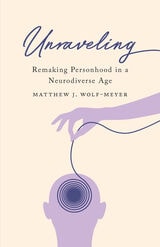
Unraveling
Remaking Personhood in a Neurodiverse AgeMatthew J. Wolf-Meyer
University of Minnesota Press, 2020
Developing a cybernetic model of subjectivity and personhood that honors disability experiences to reconceptualize the category of the human
Twentieth-century neuroscience fixed the brain as the basis of consciousness, the self, identity, individuality, even life itself, obscuring the fundamental relationships between bodies and the worlds that they inhabit. In Unraveling, Matthew J. Wolf-Meyer draws on narratives of family and individual experiences with neurological disorders, paired with texts by neuroscientists and psychiatrists, to decenter the brain and expose the ableist biases in the dominant thinking about personhood.
Unraveling articulates a novel cybernetic theory of subjectivity in which the nervous system is connected to the world it inhabits rather than being walled off inside the body, moving beyond neuroscientific, symbolic, and materialist approaches to the self to focus instead on such concepts as animation, modularity, and facilitation. It does so through close readings of memoirs by individuals who lost their hearing or developed trauma-induced aphasia, as well as family members of people diagnosed as autistic—texts that rethink modes of subjectivity through experiences with communication, caregiving, and the demands of everyday life.
Arguing for a radical antinormative bioethics, Unraveling shifts the discourse on neurological disorders from such value-laden concepts as “quality of life” to develop an inclusive model of personhood that honors disability experiences and reconceptualizes the category of the human in all of its social, technological, and environmental contexts.
Unreasonable Doubt
Circumstantial Evidence and an Ordinary Murder in New HavenNorma Thompson
University of Missouri Press, 2006
Unruly Complexity
Ecology, Interpretation, EngagementPeter J. Taylor
University of Chicago Press, 2005
For each realm Taylor shows that unruly complexity-situations that lack definite boundaries, where what goes on "outside" continually restructures what is "inside," and where diverse processes come together to produce change-should not be suppressed by partitioning complexity into well-bounded systems that can be studied or managed from an outside vantage point. Using case studies from Australia, North America, and Africa, he encourages readers to be troubled by conventional boundaries-especially between science and the interpretation of science-and to reflect more self-consciously on the conceptual and practical choices researchers make.
Unruly Practices
Power, Discorse, and Gender in Contemporary Social TheoryFraser, Nancy
University of Minnesota Press, 1989
University of California, Berkeley
Unruly Practices brings together a series of widely discussed essays in feminism and social theory. Read together, they constitute a sustained critical encounter with leading European and American approaches to social theory. In addition, Nancy Fraser develops a new and original socialist-feminist critical theory that overcomes many of the limitations of current alternatives. First, in a series of critical essays, she deploys philosophical and literary techniques to sort the wheat from the chaff in the work of Michel Foucault, the French deconstructionists, Richard Rorty, and Jurgen Habermas. Then, in a group of constructive essays, she incorporates their respective strengths in a new critical theory of late-capitalist political culture.
Fraser breaks new ground methodologically by integrating the previously divergent insights of poststructuralism, critical social theory, feminist theory, and pragmatism. Thematically, she deals with varied forms of dominance and subordination in modern, industrial, late-capitalist societies - especially gender dominance and subordination; state-bureaucratic forms of organization; the institutional politics of knowledge and expertise; and the structure and function of social-welfare programs. In the last section of the book, these themes are integrated in an original theory of “the politics of need interpretation.” This concept becomes the linchpin of he socialist-feminist critical theory proposed in the last chapter.
Unruly Women
200 Years of Philosophers, Romantics, and RevolutionariesKristin Gjesdal
University of Chicago Press, 0
A vivid account of the powerful ideas and remarkable lives of eleven women philosophers across two centuries.
When you think of modern philosophers, who comes to mind? Likely, they are popular figures such as Kant, Hegel, Marx, and Nietzsche. But what if the history of philosophy we know is missing some of its most vital voices?
As Kristin Gjesdal shows us in Unruly Women, there is an abundance of important thinkers who were famous in their time, helped shape philosophy as we know it, and yet have been pushed into oblivion. She introduces eleven iconic women philosophers, from Germaine de Staël in Paris during the French Revolution to Angela Davis during the Black freedom movement in the US, whose ideas challenged and revolutionized the intellectual orthodoxies of their time. Moving across centuries, traditions, and political contexts, Unruly Women illustrates how the work of these philosophers engaged with questions that remain urgent now: What does freedom imply? How are power and inequality produced and sustained? What roles do gender, race, and class play in shaping our lives? And who gets to define what counts as knowledge, reason, and philosophy?
More than just an act of historical recovery, this book places these forgotten thinkers in conversation with one another, revealing a new history of philosophy—one shaped not only by abstract systems and canonical texts, but also by struggles over justice, emancipation, and political change. The result is a vibrant and accessible account of philosophy as something lived, contested, and deeply connected to the world around us—with unruly ideas that still matter today.
Unsettling Obligations
Essays on Reason, Reality and the Ethics of BeliefAllen W. Wood
CSLI, 2002
Unsettling Queer Anthropology
Foundations, Reorientations, and DeparturesMargot Weiss, editor
Duke University Press, 2024
Contributors. Jafari Sinclair Allen, Tom Boellstorff, Erin L. Durban, Elijah Adiv Edelman, Lyndon K. Gill, K. Marshall Green, Brian A. Horton, Nikki Lane, Martin F. Manalansan IV, Shaka McGlotten, Scott L. Morgensen, Kwame Otu, Juno Salazar Parreñas, Lucinda Ramberg, Sima Shakhsari, Savannah Shange, Anne Spice, Margot Weiss, Ara Wilson
Unsimple Truths
Science, Complexity, and PolicySandra D. Mitchell
University of Chicago Press, 2009
The world is complex, but acknowledging its complexity requires an appreciation for the many roles context plays in shaping natural phenomena. In Unsimple Truths, Sandra Mitchell argues that the long-standing scientific and philosophical deference to reductive explanations founded on simple universal laws, linear causal models, and predict-and-act strategies fails to accommodate the kinds of knowledge that many contemporary sciences are providing about the world. She advocates, instead, for a new understanding that represents the rich, variegated, interdependent fabric of many levels and kinds of explanation that are integrated with one another to ground effective prediction and action.
Mitchell draws from diverse fields including psychiatry, social insect biology, and studies of climate change to defend “integrative pluralism”—a theory of scientific practices that makes sense of how many natural and social sciences represent the multi-level, multi-component, dynamic structures they study. She explains how we must, in light of the now-acknowledged complexity and contingency of biological and social systems, revise how we conceptualize the world, how we investigate the world, and how we act in the world. Ultimately Unsimple Truths argues that the very idea of what should count as legitimate science itself should change.
Untaming the Frontier in Anthropology, Archaeology, and History
Edited by Bradley J. Parker and Lars Rodseth
University of Arizona Press, 2005
Unthinking Mastery
Dehumanism and Decolonial EntanglementsJulietta Singh
Duke University Press, 2018
Unthought
The Power of the Cognitive NonconsciousN. Katherine Hayles
University of Chicago Press, 2017
Marshalling fresh insights from neuroscience, cognitive science, cognitive biology, and literature, Hayles expands our understanding of cognition and demonstrates that it involves more than consciousness alone. Cognition, as Hayles defines it, is applicable not only to nonconscious processes in humans but to all forms of life, including unicellular organisms and plants. Startlingly, she also shows that cognition operates in the sophisticated information-processing abilities of technical systems: when humans and cognitive technical systems interact, they form “cognitive assemblages”—as found in urban traffic control, drones, and the trading algorithms of finance capital, for instance—and these assemblages are transforming life on earth. The result is what Hayles calls a “planetary cognitive ecology,” which includes both human and technical actors and which poses urgent questions to humanists and social scientists alike.
At a time when scientific and technological advances are bringing far-reaching aspects of cognition into the public eye, Unthought reflects deeply on our contemporary situation and moves us toward a more sustainable and flourishing environment for all beings.
Untying Things Together
Philosophy, Literature, and a Life in TheoryEric L. Santner
University of Chicago Press, 2022
In 1905, Freud published his Three Essays on the Theory of Sexuality, the book that established the core psychoanalytic thesis that sexuality is central to formations of the unconscious. With this book, Eric L. Santner inverts Freud’s title to take up the sexuality of theory—or, more exactly, the modes of enjoyment to be found in the kinds of critical thinking that, since the 1960s, have laid claim to that ancient word, “theory.” Santner unfolds his argument by tracking his own relationship with this tradition and the ways his intellectual and spiritual development has been informed by it.
Untying Things Together is both an intellectual history of major theoretical paradigms and a call for their reexamination and renewal. Revisiting many of the topics he has addressed in previous work, Santner proposes a new way of conceptualizing the eros of thinking, attuned to how our minds and bodies individually and collectively incorporate or “encyst” on a void at the heart of things. Rather than proposing a “return to theory,” Santner’s book simply employs theory as a way of further “(un)tying together” the resources of philosophy, art and literature, theology, psychoanalysis, political thought, and more.
Unwatchable
Baer, Nicholas
Rutgers University Press, 2019
With over 50 original essays by leading scholars, artists, critics, and curators, this is the first book to trace the “unwatchable” across our contemporary media environment, in which viewers encounter difficult content on various screens and platforms. Appealing to a broad academic and general readership, the volume offers multidisciplinary approaches to the vast array of troubling images that circulate in global visual culture.
Uproarious
How Feminists and Other Subversive Comics Speak TruthCynthia Willett
University of Minnesota Press, 2019
Humor is often dismissed as cruel ridicule or harmless fun. But what if laughter is a vital force to channel rage against patriarchy, Islamophobia, or mass incarceration? To create moments of empathy and dialogue between Black Lives Matter and the police? These and other such questions are at the heart of this powerful reassessment of humor. Placing theorists in conversation with comedians, Uproarious offers a full-frontal approach to the very foundation of comedy and its profound political impact.
Here Cynthia Willett and Julie Willett address the four major theories of humor—superiority, relief, incongruity, and social play—through the lens of feminist and game-changing comics such as Wanda Sykes, Margaret Cho, Hannah Gadsby, Hari Kondabolu, and Tig Notaro. They take a radical and holistic approach to the understanding of humor, particularly of humor deployed by those from groups long relegated to the margins, and propose a powerful new understanding of humor as a force that can engender politically progressive social movements. Drawing on a range of cross-disciplinary sources, from philosophies and histories of humor to the psychology and physiology of laughter to animal studies, Uproarious offers a richer understanding of the political and cathartic potential of humor.
A major new contribution to a wider dialogue on comedy, Uproarious grounds for us explorations of outsider humor and our golden age of feminist comics—showing that when women, prisoners, even animals, laugh back, comedy along with belly laughs forge new identities and alter the political climate.
Upstream/Downstream
Issues in Environmental EthicsDonald Scherer
Temple University Press, 1993
Utility and Rights
R.G. Frey, Editor
University of Minnesota Press, 1984
Utility and Rights was first published in 1984. Minnesota Archive Editions uses digital technology to make long-unavailable books once again accessible, and are published unaltered from the original University of Minnesota Press editions.
At issue in the clash between utilitarianism and the theory of rights is a fundamental question about the theoretical underpinnings of moral and political philosophy. Is this structure to be utility-based—grounded in the general welfare—or is it to be based on individual moral and political rights, as critics of utilitarianism increasingly insist? The argument centers, in part, upon the fact that utilitarianism, with its emphasis upon outcomes and total utility in the world, seems to employ a value theory that offers no protection to persons and their vital interests.
The essays in this volume grapple with the main issues in this controversy. They share a common concern with the nature of rights and the ways in which various moral theories can accommodate them; some measure the degree to which utilitarianism can or cannot be modified to include rights. Eight of the eleven essays were written expressly for this book; all of the authors are deeply engaged in the debate over utility and rights, and their essays build upon and extend current thinking on the subject. R. G. Frey's lucid introduction will make the book appropriate for advanced students as well as for scholars in moral, political, and legal theory.
"One ubiquitous criticism of utilitarianism is that it cannot make sense of moral rights at all. This collection is the first that explicitly addresses these issues, and it marks a major step in the debate."–Dale Jamieson, University of Colorado
R. G. Frey is senior lecturer in philosophy at the University of Liverpool. He is the author of Interests and Rights and Rights, Killing, and Suffering.

Utopian Horizons
Ideology, Politics, LiteratureZsolt Cziganyik
Central European University Press, 2017