Results by title
8812 books match the query 'Political Science' and 138 start with u
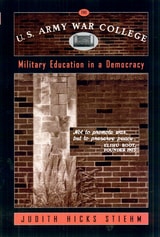
U.S. Army War College
Military Education In A DemocracyJudith Hicks Stiehm
Temple University Press, 2002
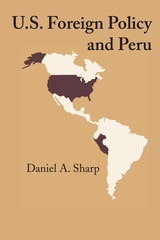
U.S. Foreign Policy and Peru
By Daniel A. Sharp
University of Texas Press, 1972
This book presents the first authoritative and comprehensive account of the development of the Peruvian revolution of 1968. The study resulted from a team experiment in applied political science, economics, and sociology that maintained effective communications between Peru and the United States at many levels during the difficult years following the revolution. Each chapter is the result of continuous interaction between a leading authority and the major sectors of both societies. History is here presented in its diplomatic, social, economic, and cultural context.
The Peruvian and U.S. governments helped to define the subjects of greatest interest to their respective countries, and a systematic effort was made to find the leading authorities on each issue. Since one purpose of this volume is to affect policy by identifying new alternative policies, the papers included here were prepared specifically to be of value to policy makers.
This book was produced by a citizens’ constituency on U.S. foreign policy under the auspices of the Adlai Stevenson Institute of International Affairs, the Chicago Council on Foreign Relations, and the Johnson Foundation.

U.S. Foreign Policy in the Middle East
The Role of Lobbies and Special Interest GroupsJanice J. Terry
Pluto Press, 2005
Israel is America's key ally in the Middle East, and helps maintain U.S. dominance in the region. This book shows how pro-Israeli lobbyists and domestic interest groups have been hugely successful in creating government and financial support for Israel. By contrast, Arab-American groups and Arab governments have had less success putting forward their agencies.
Janice J. Terry shows how special interest groups work, and why certain lobbying techniques are more effective than others. She sets this within the wider cultural context, showing how the U.S. media -- and the general public -- view the Middle East.
To explain how lobbies work, Terry draws on case studies including the Sinai accords and Camp David under Presidents Ford and Carter, the Conflict between Green and Turkish lobbies over Cyprus, and the major campaign against the Arab boycott.
Making use of primary sources, and unpublished material from various presidential libraries, this is a fascinating exposé of the role that lobby groups really play in determining U.S. foreign policy in the Middle East. It will be of interest to students of American politics and Middle East studies.
U.S. SENATE EXCEPTIONALISM
Edited by Bruce I. Oppenheimer
The Ohio State University Press, 2002
Contributors:
- Alan I. Abramowitz
- John R. Alford
- David T. Canon
- Joseph Cooper
- Lawrence C. Dodd
- Robert S. Erikson
- C. Lawrence Evans
- Richard Fenno Jr.
- Gerald Gamm
- John R. Hibbing
- Kim Fridkin Kahn
- Patrick J. Kenney
- Frances D. Lee
- Burdett Loomis
- Bruce I. Oppenheimer
- David W. Rohde
- Elizabeth Rybicki
- Wendy J. Schiller
- Patrick J. Sellers
- Barbara Sinclair
- Steven Smith
- Charles Stewart III
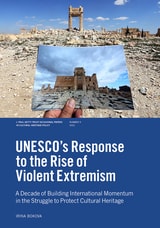
UNESCO’S Response to the Rise of Violent Extremism
A Decade of Building International Momentum in the Struggle to Protect Cultural HeritageIrina Bokova
J. Paul Getty Trust, The, 2021
The fifth issue of this series, written by Irina Bokova, former director-general of UNESCO, focuses on the value that UNESCO can bring to the fight to protect cultural heritage. During her two terms at UNESCO, Bokova worked to promote international peace and cooperation by raising awareness of the value of cultural heritage and partnering with local communities to rebuild and revitalize their damaged heritage—and themselves. One of Bokova’s most successful campaigns, #Unite4Heritage, has created a global social network of people who are sharing stories, knowledge, and personal experiences about their heritage in an effort to challenge the hate-filled narratives put forward by extremists and keep threatened cultures alive and vital.
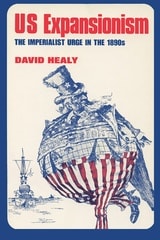
US Expansionism
The Imperialist Urge in the 1890sDavid Healy
University of Wisconsin Press, 1976
Americans, in viewing the globe in 1897, saw a world of empires that were dynamic and fast-growing. Western powers such as Germany, France, and particularly Great Britain were making colonial imperialism fashionable, and the United States, eager to flex its muscles as an emerging world power, was swept along with the European tide. One year later, the United States had truly established itself as a contender in the global game, victorious in a war with Spain and committed to imperialism.
In US Expansionism, David Healy examines this brief but important chapter in American history. Analyzing the various intellectual, cultural, and economic forces that engendered and shaped America’s imperialist drive, Healy also illustrates the key personalities involved, including the soon-to-be president, Theodore Roosevelt. A final section of the book examines the anti-imperialist opposition inspired by the new policy, and the ensuing debates about the proper role of American power.
UW Struggle
When a State Attacks Its UniversityChuck Rybak
University of Minnesota Press, 2017
A Wisconsin story that serves as a national warning
UW Struggle provides an on-the-ground view of the smoldering attack on public higher education in Wisconsin. Chuck Rybak, who works in the University of Wisconsin System, provides important glimpses into the personal lives of those affected, the dismantling of tenure protections, the diminishment of shared governance, and how faculty remain the scapegoat for all of the university’s problems. This is a chronicle of failed leadership and what actions, if any, can protect this vital American institution.
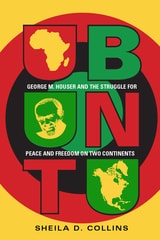
Ubuntu
George M. Houser and the Struggle for Peace and Freedom on Two ContinentsSheila D. Collins
Ohio University Press, 2020
This remarkable biography features a white American pacifist minister whose tireless work for justice and human rights helped reshape Black civil rights in the U.S. and Africa.
George M. Houser (1916–2015) was one of the most important civil rights and antiwar activists of the twentieth century. A conscientious objector during World War II, in 1942 Houser cofounded and led the Congress of Racial Equality (CORE), whose embrace of nonviolent protest strategies and tactics characterized the modern American Civil Rights Movement. Beginning in the 1950s, Houser played a critical role in pan-Africanist anticolonial movements, and his more than thirty-year dedication to the cause of human rights and self-determination helped prepare the ground for the toppling of the South African apartheid regime.
Throughout his life, Houser shunned publicity, preferring to let his actions speak his faith. Sheila Collins’s well-researched biography recounts the events that informed Houser’s life of activism—from his childhood experiences as the son of missionaries in the Philippines to his early grounding in the Social Gospel and the teachings of Mohandas Gandhi. In light of the corruption the U.S. and the world face today, Houser’s story of faith and decisive action for human rights and social justice is one for our time.

Uganda Now
Between Decay and DevelopmentHölger Bernt Hansen
Ohio University Press, 1988
Can the revolutionary government of Yoweri Museveni’s National Resistance Movement put Uganda back on the road from decay to development?
These informed assessments put the present situation in context. The contributors assembled as Museveni’s guerrillas were launching their final bid for power. They have finalized their contributions in the light of the Museveni government’s initial period of power.
Contributions by Ugandan academics and politicians interlock with those by scholars from across the world who have a concern for Uganda. Historians examine the period of colonialism. There are political studies of the quarter century since independence. There are detailed analyses of the economic realities for the Ugandan government in the period of international debt. The central role of education in national development is given due prominence.
Ali A. Mazrui ends the book by asking ‘Is Africa Decaying?’ The editors have put the consideration of the case of Uganda’s recent history within the context of Africa’s development crisis. Uganda has presented in an aggravated form the crisis common to many other African countries: infrastructural breakdown, mounting foreign debt, military regimes and waves of refugees.
Ugly Freedoms
Elisabeth R. Anker
Duke University Press, 2022
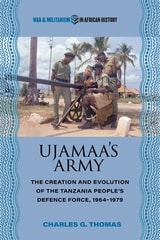
Ujamaa’s Army
The Creation and Evolution of the Tanzania People's Defence Force, 1964–1979Charles G. Thomas
Ohio University Press, 2024
The immediate postcolonial moment brought both promise and peril for the states of Africa and their security. The process of decolonization generated instability, and the emergent Cold War caught up the still-fragile independent states in a global ideological struggle between superpowers. While the political story of these states has been written in detail, the story of their militaries has been largely inaccessible, leaving only sketches of the coups, mutinies, and overall failures of security that outside observers could chronicle.
Ujamaa’s Army traces the evolution of the Tanzania People’s Defence Force from its inception in 1964 following the broader East African uprisings to its fully realized form on the eve of Tanzania’s 1978 conflict with Uganda. The book gathers primary interviews with key military actors within Tanzania and interweaves their narratives with archival sources to produce a detailed history of the culmination of President Julius Nyerere’s ideological project and the military leadership’s vision of a professional and effective force for guarding the nation and supporting liberation struggles across Southern Africa.
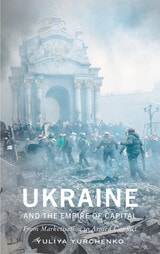
Ukraine and the Empire of Capital
From Marketisation to Armed ConflictYuliya Yurchenko
Pluto Press, 2017
Providing distinctive and unexplored reflections on the origins of the conflict, Yurchenko unpacks the four central myths that underlie Ukraine's post-Soviet reality: the myth of transition, the myth of democracy, the myth of two Ukraines, and the myth of 'the other'. In doing so, she sheds light on the current intensification of class rivalries in Ukraine, the kleptocracy, resource wars and analyses existing and potential dangers of the rightwing shift in Ukraine's polity, stressing a historic opportunity for change.
Critiquing the concept of Ukraine as ‘transition space’, she provides a sweeping analysis which includes the wider neoliberal restructuring of global political economy since the 1970s, with particular focus on Ukraine's relations with the US, the EU and Russia. This is a book for those wanting to understand the current conflict as a dangerous product of neoliberalism, of the empire of capital.
Ukraine in the Crosshairs of Geopolitical Power Play
Edited by Peter W. Schulze and Winfried Veit
Campus Verlag, 2020
Peace in Ukraine seemed possible following Volodymyr Zelensky’s 2019 election. The new president reopened conversations with both the European Union and separatist authorities, bringing an end to the Donbass conflict in sight. Such an achievement promised revitalized talks between Europe and Russia, and so the nearly forgotten conflict returned to global prominence. Ukraine in the Crosshairs of Geopolitical Power Play analyzes why European and Russian objectives in Ukraine place daunting limits of any potential compromise.
Ukraine's Patronal Democracy and the Russian Invasion
The Russia-Ukraine War, Volume OneBálint Madlovics
Central European University Press, 2023
The Russian invasion of Ukraine in 2022 jeopardizes the country's independence and its chances for Western-style development. However, the heroic attitude of the Ukrainian people, combined with a solidifying national identity, makes the domestic foundations for a western turn stronger than ever. After the invasion, building strong foundations of liberal democracy will be a top priority. In addition to alleviating immediate problems, the country must also address its post-communist legacy and address the constraints of patronalism.
The authors of this edited volume, leading Ukrainian scholars supplemented by colleagues from Hungary, examine the chances of an anti-patronal transformation after the war. The book provides an overview of the development of Ukraine's political-economic system: color revolutions in 2004 and 2014 brought democratic transformation, but no change in the patronage system The result was patronal regime cycles instead of the emergence of a Western-type liberal democracy in the country. Building on the conceptual framework of the editors' The Anatomy of Post-Communist Regimes (CEU Press, 2020), the 12 chapters examine the impact of the war on patronal democracy, the relational economy, clientelist society, and the international environment in which Ukraine operates.
This collection is complemented by the book entitled Russia. Imperial Endeavor and Geopolitical Consequences.

Unaffordable
American Healthcare from Johnson to TrumpJonathan Engel
University of Wisconsin Press, 2018
Unaffordable covers, in a conversational style punctuated by apt examples, topics ranging from health insurance, pharmaceutical pricing, and physician training to health maintenance organizations and hospital networks. Along the way, Engel introduces approaches that other nations have taken in organizing and paying for healthcare and offers insights on ethical quandaries around end-of-life decisions, neonatal care, life-sustaining treatments, and the limits of our ability to define death. While describing the political origins of many of the federal and state laws that govern our healthcare system today, he never loses sight of the impact that healthcare delivery has on our wallets and on the balance sheets of hospitals, doctors' offices, government agencies, and private companies.

Unbeatable
The Brutally Honest Case for Free MarketsBryan Caplan
University of Chicago Press, 2027
From economist and New York Times bestselling author Bryan Caplan, a provocative and powerful argument for ending the age of big government and embracing free markets as the best tool to foster prosperity for all.
“Markets do the good things that sound bad; governments do the bad things that sound good.” So begins the audacious argument from New York Times bestselling author Bryan Caplan in his essential treatise on modern economies, Unbeatable. Caplan’s case is not merely ideological: he shows compellingly that markets—by lowering prices, giving consumers what they want, and weighing risks—deliver the raw materials for human prosperity that history tells us are unbeatable by other means. Their more popular alternative, governments, focus on addressing crowd-pleasing complaints, incurring high costs and delivering dubious benefits. With this historical foundation, Caplan makes the case for unabashed support of free markets and fervent opposition to government intervention.
Unbeatable imagines a world where markets are allowed in all the places where we think we don’t want them—schools, immigration, social care, and housing policy—and sketches the positive social and economic transformations that would follow from privatization. These include the miracle effects of giving people money instead of Medicare and Social Security; the ability of open borders to solve demographic and labor problems; and the universal benefits of less regulation. In prose that is uncoded and uncommonly honest, Caplan explains how our aversion to markets emerged from our shared wish to avoid wrestling with tradeoffs—the social desirability bias that leads us to favor bad things that sound good over good things that sound bad. Markets, it turns out, can save us from those disappointments, especially compared to the alternatives. Unlike many free-market economists, Caplan freely concedes the ugly downsides of the policies he favors—but argues that the policies should be evaluated on their overall performance rather than their emotional appeal.
Unbeatable is the maximalist, politically unbeholden case for markets as tools for human flourishing. For readers with open hearts, it offers nothing short of an antidote to our economic discontents.

Unbordering Migration Studies in the Caribbean and Latin America
Patsy Lewis
Rutgers University Press, 2026
Unbordering Migration Studies in the Caribbean and Latin America brings together scholars and artists across regions, generations, disciplines, and modes of expression to decenter the US-Mexico border as both a site and a concept. Calling for renewed attention to the spaces, identities, and conflicts that remain understudied and excluded from our hemispheric knowledge of forced movement, the volume reveals a wider diversity of migratory realities and considers race, ethnicity, and class beyond the hegemonic formations that eclipse non-US histories. Through multidisciplinary and geographically expansive essays that draw from history, social anthropology, environmental studies, feminist studies, and lived experience, the volume examines diverse migratory flows from Chile and Argentina in the South to Georgia and New York in the North. Individually and collectively, the essays remap migratory movements other than through the most studied South-to-North trajectories and remove the US and US-based racial formations from the center of analysis. By tracking East-West flows, intraregional mobilities, and changing conceptions of racial identity, Unbordering Migration Studies in the Caribbean and Latin America complicates the concepts of forced mobility and border crossing by highlighting alternative liminalities in sites of transit, destination, and return. Demanding engagement with the submerged histories of racism and the production of ethnoracial categories beyond the Black/white binary, the collection brings into focus identities, sites, and forces that have not yet occupied the foreground of global migration study.

Unbroken Ties
The State, Interest Associations, and Corporatism in Post-Soviet UkrainePaul Kubicek
University of Michigan Press, 2000
Since the collapse of communism in Eastern Europe and the former Soviet Union, there has been a spate of books--optimistic at first--highlighting the transitions to democracy in these countries and the leading role of "civil society" in pushing forward political and economic reform. This study explains why this transition did not take place as anticipated. In essence, organized labor in Ukraine is weak and has been co-opted by the state; in the meantime, leading groups of industrialists and agricultural collectives have strong political influence and shape policies in accordance with their interests. This is very similar to the situation in Russia.
In contrast to works that implicitly assume a pluralist model of development for state-society relations, Unbroken Ties employs corporatism as the basic organizing structure for the study of state-interest group relations in post-Soviet Ukraine. Finding that much of the Soviet "residue" still functions in Ukraine, it argues that a form of state corporatism, which envisions a major role for the state in structuring and controlling interest associations, captures much of the post-Soviet Ukrainian reality. Old groups persist and prosper due to a variety of ties with state elites, whereas new and independent groups find themselves marginalized.
This book will appeal to political scientists, economists, and sociologists studying the transformation of post-communist societies, as well as those interested in the broader, more comparative aspects of democratization and economic reform.
Paul Kubicek is Kenneth Boulding Post-Doctoral Fellow, University of Colorado, Boulder.
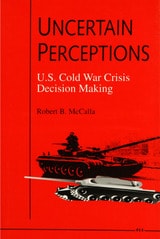
Uncertain Perceptions
U.S. Cold War Crisis Decision MakingRobert B. McCalla
University of Michigan Press, 1992
Uncharitable
How Restraints on Nonprofits Undermine Their PotentialDan Pallotta
University Press of New England, 2010
Uncharitable
How Restraints on Nonprofits Undermine Their PotentialDan Pallotta
Brandeis University Press, 2022
Uncharitable goes where no other book on the nonprofit sector has dared to tread. Where other texts suggest ways to optimize performance inside the existing charity paradigm, Uncharitable suggests that the paradigm itself is the problem and calls into question our fundamental canons about charity. Dan Pallotta argues that society’s nonprofit ethic creates an inequality that denies the nonprofit sector critical tools and permissions that the for-profit sector is allowed to use without restraint. These double standards place the nonprofit sector at an extreme disadvantage. While the for-profit sector is permitted to use all the tools of capitalism, the nonprofit sector is prohibited from using any of them. Capitalism is blamed for creating inequities in our society, but charity is prohibited from using the tools of capitalism to rectify them—and ironically, this is all done in the name of charity. This irrational system, Pallotta explains, has its roots in four-hundred-year-old Puritan ethics that banished self-interest from the realm of charity. The ideology is policed today by watchdog agencies and the use of so-called efficiency measures, which Pallotta argues are flawed, unjust, and should be abandoned. By declaring our independence from these obsolete ideas, Pallotta theorizes, we can dramatically accelerate progress on the most urgent social issues of our time. Uncharitable is an important, provocative, timely, and accessible book—a manifesto about equal economic rights for charity. This edition has a new, updated introduction by the author.
Unchopping a Tree
Reconciliation in the Aftermath of Political ViolenceErnesto Verdeja
Temple University Press, 2009
Employing a normative theory of reconciliation that differs from prevailing approaches, Verdeja outlines a concept that emphasizes the importance of shared notions of moral respect and tolerance among adversaries in transitional societies. Drawing heavily from cases such as reconciliation efforts in Latin America and Africa—and interviews with people involved in such efforts—Verdeja debates how best to envision reconciliation while remaining realistic about the very significant practical obstacles such efforts face
Unchopping a Tree addresses the core concept of respect across four different social levels—political, institutional, civil society, and interpersonal—to explain the promise and challenges to securing reconciliation and broader social regeneration.
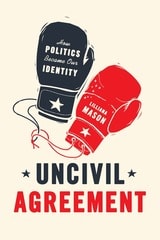
Uncivil Agreement
How Politics Became Our IdentityLilliana Mason
University of Chicago Press, 2018
Political polarization in America is at an all-time high, and the conflict has moved beyond disagreements about matters of policy. For the first time in more than twenty years, research has shown that members of both parties hold strongly unfavorable views of their opponents. This is polarization rooted in social identity, and it is growing. The campaign and election of Donald Trump laid bare this fact of the American electorate, its successful rhetoric of “us versus them” tapping into a powerful current of anger and resentment.
With Uncivil Agreement, Lilliana Mason looks at the growing social gulf across racial, religious, and cultural lines, which have recently come to divide neatly between the two major political parties. She argues that group identifications have changed the way we think and feel about ourselves and our opponents. Even when Democrats and Republicans can agree on policy outcomes, they tend to view one other with distrust and to work for party victory over all else. Although the polarizing effects of social divisions have simplified our electoral choices and increased political engagement, they have not been a force that is, on balance, helpful for American democracy. Bringing together theory from political science and social psychology, Uncivil Agreement clearly describes this increasingly “social” type of polarization in American politics and will add much to our understanding of contemporary politics.
Uncovering the Constitution's Moral Design
Paul R. DeHart
University of Missouri Press, 2007
In critiquing previous attempts at describing and evaluating the Constitution’s normative framework, DeHart demonstrates that the Constitution’s moral framework corresponds largely to classical moral theory. Using the method of Inference to the Best Explanation to ascertain our Constitution’s moral meaning, he challenges the logical coherency of modern moral philosophy, normative positivism, and other theories that the Constitution has been argued to embody, offering instead an innovative methodology that can be applied to uncovering the normative framework of other constitutions as well.
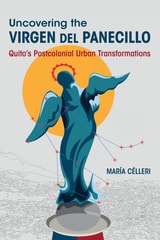
Uncovering the Virgen del Panecillo
Quito’s Postcolonial Urban TransformationsMaría Célleri
University of Illinois Press, 2026
María Célleri examines the eighty-year effort to complete Quito’s soaring monument to the Virgin Mary. Focusing on the negotiations behind the project, Célleri uncovers the links between the government and Church—links that became stronger during moments of political and economic transition. Célleri also investigates how the city’s residents and activists, and artists like filmmakers, graffiti artists, and photographers, interact with the monument. Throughout, she looks at questions like the Virgen del Panecillo’s service to Ecuador as a form of cultural capital, the Virgen’s symbolic meanings to different groups, and the often-hidden connections between colonialism, Catholicism, and artistic production.
Original and multifaceted, Uncovering the Virgen del Panecillo provides readers with a rigorous decolonial analysis of an iconic monument and its history.
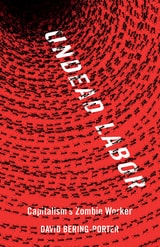
Undead Labor
Capitalism's Zombie WorkerDavid Bering-Porter
University of Minnesota Press, 2026
How the zombie represents capitalism’s fantasy of limitless labor
Much more than just an enduring figure of horror entertainment, the zombie is a uniquely modern symbol representing capitalism’s most brutal demands on human life. Examining the push to extract surplus value from human bodies in ways that exceed their natural limits, David Bering-Porter shows how this notion of the undead is both integral to and symptomatic of capitalism’s endless cycle of growth and consumption.
Bering-Porter demonstrates how the zombie has long been deeply intertwined with issues of race and exploitation, from its origins in the slave plantations of colonial Haiti to its traces in the continuing evolution of artificial intelligence systems, serving as capitalism’s ideal worker: one that never rests, never stops, and never dies. Featuring close readings of Marx alongside films such as I Walked with a Zombie, The Blob, and Night of the Living Dead, the book traces the concept of undead labor as it manifests across various historical epochs, providing insight into the manifold ways that capitalism has sought to transform living beings into instruments of limitless production.
As he weaves together critical race studies with an analysis of popular culture and media, Bering-Porter interrogates racialized capitalism and its fantasy of labor beyond all limits. By highlighting how the zombie is borne of the same ideology that has given rise to contemporary burnout culture and environmental collapse, Undead Labor uncovers the capitalist system’s relentless death drive with the hope that it finally may be put to rest.
Retail e-book files for this title are screen-reader friendly.

Under Fire
The Nra and the Battle for Gun ControlOsha Gray Davidson
University of Iowa Press, 1998
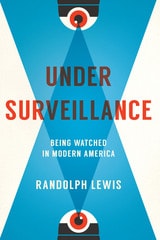
Under Surveillance
Being Watched in Modern AmericaBy Randolph Lewis
University of Texas Press, 2017
Never before has so much been known about so many. CCTV cameras, TSA scanners, NSA databases, big data marketers, predator drones, “stop and frisk” tactics, Facebook algorithms, hidden spyware, and even old-fashioned nosy neighbors—surveillance has become so ubiquitous that we take its presence for granted. While many types of surveillance are pitched as ways to make us safer, almost no one has examined the unintended consequences of living under constant scrutiny and how it changes the way we think and feel about the world. In Under Surveillance, Randolph Lewis offers a highly original look at the emotional, ethical, and aesthetic challenges of living with surveillance in America since 9/11.
Taking a broad and humanistic approach, Lewis explores the growth of surveillance in surprising places, such as childhood and nature. He traces the rise of businesses designed to provide surveillance and security, including those that cater to the Bible Belt’s houses of worship. And he peers into the dark side of playful surveillance, such as eBay’s online guide to “Fun with Surveillance Gadgets.” A worried but ultimately genial guide to this landscape, Lewis helps us see the hidden costs of living in a “control society” in which surveillance is deemed essential to governance and business alike. Written accessibly for a general audience, Under Surveillance prompts us to think deeply about what Lewis calls “the soft tissue damage” inflicted by the culture of surveillance.
Under a Bad Sun
Police, Politics, and Corruption in AustraliaPaul Bleakley
Michigan State University Press, 2021
Under the Cover of Chaos
Trump and the Battle for the American RightLawrence Grossberg
Pluto Press, 2018
Lawrence Grossberg shows that the truth is bigger and more frightening. Locating Trumpism in the long struggle among traditional conservatism, the new right and the reactionary right, he suggests that the chaos is far more significant and strategic ... and dangerous. Taking the arguments of the reactionary right seriously, he projects a possible, nightmarish future: a cultural nationalism governed by a popular corporatocracy.
He lays bare how contemporary political struggles are being shaped by a changing national landscape of moods and feelings, marked by a growing absolutism of judgement and belief, and new forms of anxiety, alienation and narcissism.s—and lays out a possible nightmare future: a vision of a political system controlled by corporate interests, built on a deliberate dismantling of modern politics.
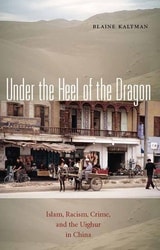
Under the Heel of the Dragon
Islam, Racism, Crime, and the Uighur in ChinaBlaine Kaltman
Ohio University Press, 2007
The Turkic Muslims known as the Uighur have long faced social and economic disadvantages in China because of their minority status. Under the Heel of the Dragon: Islam, Racism, Crime, and the Uighur in China offers a unique insight into current conflicts resulting from the rise of Islamic fundamentalism and the Chinese government’s oppression of religious minorities, issues that have heightened the degree of polarization between the Uighur and the dominant Chinese ethnic group, the Han.
Author Blaine Kaltman’s study is based on in-depth interviews that he conducted in Chinese without the aid of an interpreter or the knowledge of the Chinese government. These riveting conversations expose the thoughts of a wide socioeconomic spectrum of Han and Uighur, revealing their mutual prejudices. The Uighur believe that the Han discriminate against them in almost every aspect of their lives, and this perception of racism motivates Uighur prejudice against the Han.
Kaltman reports that criminal activity by Uighur is directed against their perceived oppressors, the Han Chinese. Uighur also resist Han authority by flouting the laws—such as tax and licensing regulations or prohibitions on the use or sale of hashish—that they consider to be imposed on them by an alien regime. Under the Heel of the Dragon offers a unique insight into a misunderstood world and a detailed explanation of the cultural perceptions that drive these misconceptions.

Under the Radar
Tracking Western Radio Listeners in the Soviet UnionR. Eugene Parta
Central European University Press, 2022
Western democracy is currently under attack by a resurgent Russia, weaponizing new technologies and social media. How to respond? During the Cold War, the West fought off similar Soviet propaganda assaults with shortwave radio broadcasts. Founded in 1949, the US-funded Radio Free Europe/Radio Liberty broadcast uncensored information to the Soviet republics in their own languages. About one-third of Soviet urban adults listened to Western radio. The broadcasts played a key role in ending the Cold War and eroding the communist empire.
R. Eugene Parta was for many years the director of Soviet Area Audience Research at RFE/RL, charged among others with gathering listener feedback. In this book he relates a remarkable Cold War operation to assess the impact of Western radio broadcasts on Soviet listeners by using a novel survey research approach. Given the impossibility of interviewing Soviet citizens in their own country, it pioneered audacious interview methods in order to fly under the radar and talk to Soviets traveling abroad, ultimately creating a database of 51,000 interviews which offered unparalleled insights into the media habits and mindset of the Soviet public. By recounting how the “impossible” mission was carried out, Under the Radar also shows how the lessons of the past can help counter the threat from a once and current adversary.
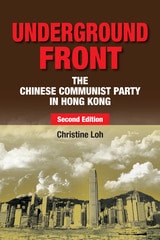
Underground Front
The Chinese Communist Party in Hong Kong, Second EditionChristine Loh
Hong Kong University Press, 2019
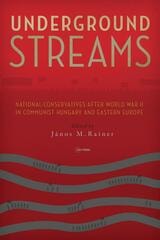
Underground Streams
National-Conservatives after World War II in Communist Hungary and Eastern EuropeJános M. Rainer
Central European University Press, 2023
The authors of this edited volume address the hidden attraction that existed between the extremes of left and right, and of internationalism and nationalism under the decades of communist dictatorship in Eastern Europe. One might suppose that under the suppressive regimes based on leftist ideology and internationalism their right-wing opponents would have been defeated and ultimately removed. These essays, on the other hand, recount the itinerary of survival and revival of "right-wing" thought and activities under communist dictatorship. Resistance and accommodation are explored in the various phases from the Stalinist era to the demise of the Soviet Bloc, with the continuity provided by tacit or concealed right-wing discourses receiving particular consideration. The Eastern European right, both in its conservative and fascist version, centered on nationalism, a legitimizing factor that increased with the downfall of the regimes, and the authors thus accord nationalism special attention.
Two documentary sources for these essays that stand out are files of the security services and the exceptionally rich Oral History Archive compiled by the 1956 Institute in Budapest, Hungary.
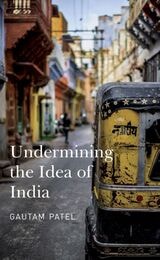
Undermining the Idea of India
Gautam Patel
Seagull Books, 2022
“India is improbable. By any measure of logic or reason, it should not be. Not in this form. And yet it is.”
With this provocation, Justice Gautam Patel of the Bombay High Court sketches the exoskeleton of this improbability—the “Constitutional” idea of India. Justice Patel argues that the devolution of power is necessary for the survival of any liberal democracy, maintaining the idea that “the right to choose one’s own government is the right to dissent.” Decrying the portrayal of politics as sport, Patel elucidates the strategies and tactics used by “nimble” governments to enforce a culture of “broad-spectrum illiberalism.” A champion of transparency in the judiciary, Patel argues that the Internet and the judiciary must serve as beacons in this age of precarity. A timely text that comes at a juncture where liberal democracies across the world are facing existential threats, Undermining the Idea of India is a searing manifesto for our troubled times.

Understanding ALBA
Progress, Problems, and Prospects of Alternative Regionalism in Latin America and the CaribbeanEdited by Asa K. Cusack
University of London Press, 2018
Understanding Al Qaeda
Changing War and Global PoliticsMohammad-Mahmoud Ould Mohamedou
Pluto Press, 2011
This book controversially argues that Al Qaeda has clear aims, and that the only way to defeat it is to engage with its arguments in a serious way.
Since the publication of the first edition in 2006, Mohamedou has brought the text right up-to-date. Starting with Al Qaeda's creation almost twenty years ago, and sketching its global mutation, Mohamedou explains that there is a cogent strategy to Al Qaeda's actions. He shows that the 'war on terror' is failing, only serving to recruit more terrorists to Al Qaeda's cause. He also puts forward a case for how the international community can best respond.
Arguing that it is dangerous to dismiss Al Qaeda as illogical and irrational, this incisive and original book is important for policy-makers and ideal for undergraduates in international relations, Middle East studies and peace/conflict studies.
Understanding Capitalism
Critical Analysis From Karl Marx to Amartya SenDouglas Dowd
Pluto Press, 2002
Major economists and economic schools of thought are discussed in a chapter-by-chapter guide that covers Marx, Veblen, Gramsci, post-Keynesian theory, US institutionalists, Sweezy and the Monopoly Capital school, and recent Nobel Prize winner Amartya Sen. Contributors include Michael Lebowitz, Carl Boggs, Michael Keaney, Frederic Lee, John Bellamy Foster and Robin Hahnel, with an introduction by the editor, Douglas Dowd.
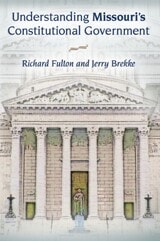
Understanding Missouri's Constitutional Government
Richard Fulton and Jerry Brekke
University of Missouri Press, 2010
Understanding Missouri’s Constitutional Government presents a case study in the foundations of state governments. The book provides a sweeping look at the constitutional foundations of the processes of Missouri government. Authors Richard Fulton and Jerry Brekke place Missouri within the context of our larger federal system while using the state’s constitution as a touchstone for the discussion of each element of state government.
Understanding Missouri’s Constitutional Government has a dual framework specifically designed to enhance the reader’s learning experience. First, the essential elements of government outlined in the constitution are introduced, and then analysis and interpretation of each of the document’s articles is covered. This organization permits readers to build an understanding of a particular element—for example, the legislature—by learning its fundamental organization, processes, and purposes in a straightforward manner. After gaining that primary perspective, the reader can use the formal analysis in the second section to explore interpretations of each article. Not only helpful to the general reader, this two-part structure makes the text especially useful in courses on American government, state and local governments, and particularly Missouri government and constitution.
In short, Understanding Missouri’s Constitutional Government is an approachable, valuable exposition on Missouri government as reflected in the day-to-day operations outlined in the Missouri constitution. It fills a significant gap in the literature on the interpretation, use, and operation of state constitutions. Since Missouri law dictates that all levels of education should teach government and constitution at the national and state levels, this book will be an indispensable resource for educators while serving as a valuable reference for journalists and public officials in the state.
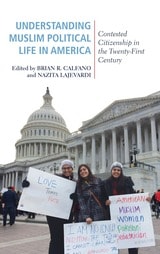
Understanding Muslim Political Life in America
Contested Citizenship in the Twenty-First CenturyBrian R. Calfano
Temple University Press, 2019
“Muslim Americans are at a political crossroads,” write editors Brian Calfano and Nazita Lajevardi. Whereas Muslims are now widely incorporated in American public life, there are increasing social and political pressures that disenfranchise them or prevent them from realizing the American Dream. Understanding Muslim Political Life in America brings clarity to the social, religious, and political dynamics that this diverse religious community faces.
In this timely volume, leading scholars cover a variety of topics assessing the Muslim American experience in the post-9/11 and pre-Trump era, including law enforcement; identity labels used in Muslim surveys; the role of gender relations; recognition; and how discrimination, tolerance, and politics impact American Muslims.
Understanding Muslim Political Life in America offers an update and reappraisal of what we know about Muslims in American political life. The editors and contributors also consider future directions and important methodological questions for research in Muslim American scholarship.
Contributors include Matt A. Barreto, Alejandro Beutel, Tony Carey, Youssef Chouhoud, Karam Dana, Oz Dincer, Rachel Gillum, Kerem Ozan Kalkan, Anwar Manje, Valerie Martinez-Ebers, Dani McLaughlan, Melissa R. Michelson, Yusuf Sarfati, Ahmet Tekelioglu, Marianne Marar Yacobian, and the editors.
Understanding Populism
Between Myth and RealityEdited by Petra Guasti and Mattia Zulianello
Karolinum Press, 2026
A concise and analytically rigorous guide to one of the most contested concepts in contemporary politics.
Understanding Populism is driven by a clear objective: to advance understanding of populism by systematically dismantling the myths that continue to dominate public discourse and, at times, academic debate. The book approaches populism as a coherent yet flexible set of ideas that can be analyzed through careful conceptual clarification and comparison.
The book opens with an unconventional introduction structured as a dialogue that directly addresses common misunderstandings and establishes the volume’s analytical orientation. The core of the book consists of 101 short chapters organized into six thematic sections, each devoted to critically examining a central myth about populism. Each section concludes with a synthetic reflection highlighting key insights.
Understanding Torture
Law, Violence, and Political IdentityJohn T. Parry
University of Michigan Press, 2010
"John Parry's Understanding Torture is an important contribution to our understanding of how torture fits within the practices and beliefs of the modern state. His juxtaposition of the often indeterminate nature of the law of torture with the very specific state practices of torture is both startling and revealing."
---Paul W. Kahn is Robert W. Winner Professor of Law and the Humanities at Yale Law School and author of Sacred Violence
"Parry is effective in building, deploying, and supporting his argument . . . that the law does not provide effective protections against torture, but also that the law is in itself constitutive of a political order in which torture is employed to create---and to destroy or re-create---political identities.”
---Margaret Satterthwaite, Faculty Director of the Center for Human Rights and Global Justice and Associate Professor of Clinical Law, NYU School of Law
"A beautifully crafted, convincingly argued book that does not shy away from addressing the legal and ethical complexities of torture in the modern world. In a field that all too often produces simple or superficial responses to what has become an increasingly challenging issue, Understanding Torture stands out as a sophisticated and intellectually responsible work."
---Ruth Miller, Associate Professor of History, University of Massachusetts, Boston
Creating a separate category for an intentionally narrow set of practices labeled and banned as torture, Parry argues, serves to normalize and legitimate the remaining practices that are "not torture." Consequently, we must question the hope that law can play an important role in regulating state violence.

Understanding Tribal Sovereignty
Federal Indian Law and Self-GovernanceDonald L. Fixico
University of Arizona Press, 2026
What does tribal sovereignty really mean—and why does it matter today?
Accessibly written for the nonspecialist, acclaimed historian Donald L. Fixico unpacks the complex history and legal foundations of tribal sovereignty in the United States. From traditional Native governance to landmark treaties, federal laws, and court cases, Fixico guides readers through the evolution of tribal self-rule and its modern expressions—from tribal constitutions to license plates and casinos. Designed for students, educators, tribal members, and professionals alike, this book offers a clear, compelling introduction to one of the most important—and often misunderstood—concepts in American Indian affairs.
This book is a go-to source for understanding the federal Indian laws, treaties, and court cases simplified to explain tribal sovereignty.
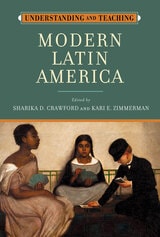
Understanding and Teaching Modern Latin America
Edited by Sharika D. Crawford and Kari E. Zimmerman
University of Wisconsin Press, 2026
Understanding and Teaching the Cold War
Edited by Matthew Masur
University of Wisconsin Press, 2016
Teaching the Cold War is both necessary and challenging. Understanding and Teaching the Cold War is designed to help collegiate and high school teachers navigate the complexity of the topic, integrate up-to-date research and concepts into their classes, and use strategies and tools that make this important history meaningful to students.
The volume opens with Matthew Masur’s overview of models for approaching the subject, whether in survey courses or seminars. Two prominent historians, Carole Fink and Warren Cohen, offer accounts of their experience as longtime scholars and teachers of the Cold War from European and Asian perspectives. Sixteen essays dig into themes including the origins and end of the conflict, nuclear weapons, diplomacy, propaganda, fear, popular culture, and civil rights, as well as the Cold War in Eastern Europe, Western Europe, East Asia, Africa, Latin America, and the nonaligned nations. A final section provides practical advice for using relevant, accessible primary sources to implement the teaching ideas suggested in this book.
Understanding the Age of Transitional Justice
Crimes, Courts, Commissions, and ChroniclingAdler, Nanci
Rutgers University Press, 2018
Understanding the Arizona Constitution
Toni McClory
University of Arizona Press, 2010
Since the book’s first publication, significant constitutional changes have occurred, some even altering the very structure of state government itself. There have been dramatic veto battles, protracted budget wars, and other interbranch conflicts that have generated landmark constitutional rulings from the state courts. The new edition of this handy reference addresses many of the latest issues, including legislative term limits, Arizona’s new redistricting system, educational issues, like the controversial school voucher program, and the influence of special-interest money in the legislature. A total of 63 propositions have reached the ballot, spawning heated controversies over same-sex marriage, immigration, and other hot-button social issues.
This book is the definitive guide to Arizona government and serves as a solid introductory text for classes on the Arizona Constitution. Extensive endnotes make it a useful reference for professionals within the government. Finally, it serves as a tool for any engaged citizen looking for information about online government resources, administrative rules, and voter rights. Comprehensive and clearly written, this book belongs on every Arizonan’s bookshelf.
Understanding the Arizona Constitution
Toni McClory
University of Arizona Press, 2001
An authoritative guide to Arizona government— written in plain language!
How do laws make their way through the state legislature?
What are the specific powers of the governor?
How do the courts make public policy?
Can citizens change the constitution?A leading lawyer and college educator who was an assistant attorney general through six governors, Toni McClory has written a definitive guide to Arizona government that is as comprehensive as it is easy to understand. It provides a thorough explanation of the state's constitution and shows the impact that its unique features have had on the everyday operation of the state's political system.Thoroughly up to date and clearly written, this book belongs on every Arizonan's shelf. Much of the information it contains is based on original research compiled by the author from primary sources and draws on her direct experience with government processes, officials, and events.• For concerned citizens, it offers topics of special interest to voters—including facts about initiatives and referenda and a chapter on local government—and contains references to online government resources.
• For lawyers and business people, it makes available a brief yet sophisticated synopsis of state government along with a wealth of citations and supporting detail.
• For students and teachers, it offers an exceptionally readable introductory text that relies heavily on primary sources and features "pro and con" passages-examining both sides of important issues-that are designed to stimulate critical thinking.From administrative rules to water law, Understanding the Arizona Constitution is your complete guide to the inner workings of the state. It is an essential reference for today's citizens and tomorrow's leaders.
Understanding the Somalia Conflagration
Identity, Political Islam and PeacebuildingAfyare Abdi Elmi
Pluto Press, 2010
Somalia has been devastated by a US-backed Ethiopian invasion and years of civil war, and it has long been without a central government. Against this background of violence, Somali academic Afyare Abdi Elmi, attempts to explain the multiple dimensions of the conflict and find a peace-building consensus.
Somalia is a failed state and a Muslim state. This combination means the West assumes that it will become a breeding ground for extremism. The country regularly hits the headlines as a piracy hotspot. This combination of internal division and outside interference makes for an intensely hostile landscape. Elmi shows that only by addressing the problem of the statelessness in the country can the long process of peace begin. He highlights clan identities, Islam and other countries in the region as the key elements in any peace-building effort.
This unique account from an author who truly understands Somalia should be required reading for students and academics of international relations and peace / conflict studies.
Undisciplined Cuba
Tracing Continuities of Resistance and Archipelagic GeographiesChristina M. García
Rutgers University Press, 2027
Undisciplined Cuba brings scholars of diverse disciplines and moves through multiple temporalities and geographies, allowing Cuba to emerge as a negotiated reality. Rather than rehearse narratives of exceptionalism and Cold War relationships that have detached the nation from its Antillean neighbors, this edited volume understands Cuba as deeply embedded in the Caribbean archipelago. Its chapters encompass feminist activism, public health, cinema for social justice, marine geopoetics, racial geographies, and literary corporealities. Drawing from an archipelagic framework and a decolonial practice of undisciplining, the anthology counters the tendency to treat landscapes, and cultural and political manifestations as artifacts of a national identity or evidence of a discrete geopolitical entity. Instead, Undisciplined Cuba attends to processes, to dynamic relations and continuities of resistance that defy periodization and institutional representation. The book offers a granular view of Cuba and an approach to Caribbean studies that imagines networks in excess of traditional categories of thought.