Results by title
4743 books match the query 'Religion' and 48 start with u
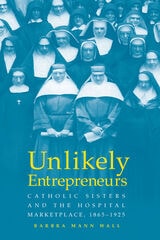
UNLIKELY ENTREPRENEURS
Catholic Sisters & the Hospital Marketplace, 1865–1925Barbra Mann Wall
The Ohio State University Press, 2005
In Unlikely Entrepreneurs, Barbra Mann Wall looks at the development of religious hospitals in the late nineteenth and early twentieth centuries and the entrepreneurial influence Catholic sisters held in this process. When immigrant nuns came to the United States in the late nineteenth century, they encountered a market economy that structured the way they developed their hospitals. Sisters enthusiastically engaged in the market as entrepreneurs, but they used a set of tools and understanding that were counter to the market. Their entrepreneurship was not to expand earnings but rather to advance Catholic spirituality.
Wall places the development of Catholic hospital systems (located in Illinois, Indiana, Minnesota, Texas, and Utah) owned and operated by Catholic sisters within the larger social, economic, and medical history of the time. In the modern health care climate, with the influences of corporations, federal laws, spiraling costs, managed care, and medical practices that rely less on human judgments and more on technological innovations, the “modern” hospital reflects a dim memory of the past. This book will inform future debates on who will provide health care as the sisters depart, how costs will be met, who will receive care, and who will be denied access to health services.
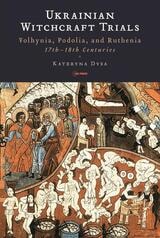
Ukrainian Witchcraft Trials
Volhynia, Podolia, and Ruthenia, 17th–18th CenturiesKateryna Dysa
Central European University Press, 2020
Drawing on quantitative data drawn from a range of trials Kateryna Dysa first describes the ideological background of the tribunals based on works written by priests and theologians that reflect attitudes toward the devil and witches. The main focus of her work, however, is the process leading to witchcraft accusations. From the stories of participants of the trials she shows what led people to enunciate first suspicions then accusations of witchcraft. Finally, she presents a microhistory from one Volhynian village, comparing attitudes toward two “female crimes” in the Ukrainian courts.
The study is based on archival research including witch trials transcripts. Dysa approaches the trials as indications of belief and practice, attempting to understand the actors involved rather than dismiss or condemn them. She takes care to situate early modern Ukrainian witchcraft and its accompanying trials in a broader European context, with comparisons to some African cases as well.
Unbridled
Studying Religion in PerformanceWilliam Robert
University of Chicago Press, 2022
In Unbridled, William Robert uses Equus, Peter Shaffer’s enigmatic play about a boy passionately devoted to horses, to think differently about religion. For several years, Robert has used Equus to introduce students to the study of religion, provoking them to conceive of religion in unfamiliar, even uncomfortable ways. In Unbridled, he is inviting readers to do the same.
A play like Equus tangles together text, performance, practice, embodiment, and reception. Studying a play involves us in playing different roles, as ourselves and others, and those roles, as well as the imaginative work they require, are critical to the study of religion. By approaching Equus with the reader, turning the play around and upside-down, Unbridled transforms standard approaches to the study of religion, engaging with themes including ritual, sacrifice, worship, power, desire, violence, and sexuality, as well as thinkers including Judith Butler, Sigmund Freud, Karl Marx, Friedrich Nietzsche, and Jonathan Z. Smith. As Unbridled shows, the way themes and theories play out in Equus challenges us to reimagine the study of religion through open questions, contrasting perspectives, and alternative modes of interpretation and appreciation.
Uncharted Territory
The American Catholic Church at the United Nations, 1946-1972Joseph S. Rossi S.J.
Catholic University of America Press, 2006
Unconventional Sisterhood
Feminist Catholic Nuns in the PhilippinesHeather L. Claussen
University of Michigan Press, 2001
This work represents an important addition to scholarship on Philippine feminism. It is one of few ethnographies that focuses on female monasticism--of particular cultural importance in the Christian Philippines, where nuns enjoy relatively high social status and freedom from many of the traditional constraints delineating Filipina lives. It is noteworthy as well for its focus on metropolitan Manila--a socially complex, dynamic, diverse, and understudied environment.
Heather L. Claussen is an anthropologist currently living in Santa Cruz, California.

Unconventional Sisterhood
Feminist Catholic Nuns in the PhilippinesHeather L. Claussen
University of Michigan Press, 0
Uncovering Ancient Footprints
Armenian Inscriptions and the Pilgrimage Routes of the SinaiMichael E. Stone
SBL Press, 2017
Explore pilgrimage routes, epigraphy, and the history of writing with an expert guide
From the late 1970s through 1982, Michael E. Stone conducted a number of expeditions to the Sinai peninsula, searching for ancient inscriptions. In this book Stone describes his search, crowned by the discovery of the most ancient Armenian inscriptions known. Here Stone describes not only the inscriptions discovered along his journeys but also the Sinai, its past and present, its human inhabitants, its flora and fauna, and its history. Though once common, well-informed travel books to the Middle East with a broad academic interest and a specific focus have become rare. Stone’s diary of his expeditions in the Sinai fill this gap with vivid descriptions, poetry, and illustrations.
Features
- An account of five expeditions into the Sinai
- Thirteen poems written by Stone
- Twenty-six figures and five maps
Under the Heel of the Dragon
Islam, Racism, Crime, and the Uighur in ChinaBlaine Kaltman
Ohio University Press, 2007
The Turkic Muslims known as the Uighur have long faced social and economic disadvantages in China because of their minority status. Under the Heel of the Dragon: Islam, Racism, Crime, and the Uighur in China offers a unique insight into current conflicts resulting from the rise of Islamic fundamentalism and the Chinese government’s oppression of religious minorities, issues that have heightened the degree of polarization between the Uighur and the dominant Chinese ethnic group, the Han.
Author Blaine Kaltman’s study is based on in-depth interviews that he conducted in Chinese without the aid of an interpreter or the knowledge of the Chinese government. These riveting conversations expose the thoughts of a wide socioeconomic spectrum of Han and Uighur, revealing their mutual prejudices. The Uighur believe that the Han discriminate against them in almost every aspect of their lives, and this perception of racism motivates Uighur prejudice against the Han.
Kaltman reports that criminal activity by Uighur is directed against their perceived oppressors, the Han Chinese. Uighur also resist Han authority by flouting the laws—such as tax and licensing regulations or prohibitions on the use or sale of hashish—that they consider to be imposed on them by an alien regime. Under the Heel of the Dragon offers a unique insight into a misunderstood world and a detailed explanation of the cultural perceptions that drive these misconceptions.
Understanding Buddhism
Nolan Pliny Jacobson
Southern Illinois University Press, 1986
Jacobson presents Buddhism unencumbered by Western categories and concepts, free from the cognitive bias, from the concept-oriented, definition-minded preoccupations inherited from the ancient Greeks. It is an interpretation of the central ideas that have characterized all forms of Buddhism for 25 centuries.
Understanding Covenants and Communities
Jews and Latter-Day Saints in DialogueMark Diamond
Central Conference of American Rabbis, 2020
Understanding Language
A Guide for Beginning Students of Greek and LatinDonald Fairbairn
Catholic University of America Press, 2011
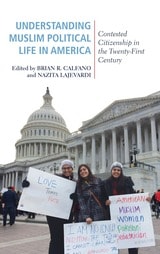
Understanding Muslim Political Life in America
Contested Citizenship in the Twenty-First CenturyBrian R. Calfano
Temple University Press, 2019
“Muslim Americans are at a political crossroads,” write editors Brian Calfano and Nazita Lajevardi. Whereas Muslims are now widely incorporated in American public life, there are increasing social and political pressures that disenfranchise them or prevent them from realizing the American Dream. Understanding Muslim Political Life in America brings clarity to the social, religious, and political dynamics that this diverse religious community faces.
In this timely volume, leading scholars cover a variety of topics assessing the Muslim American experience in the post-9/11 and pre-Trump era, including law enforcement; identity labels used in Muslim surveys; the role of gender relations; recognition; and how discrimination, tolerance, and politics impact American Muslims.
Understanding Muslim Political Life in America offers an update and reappraisal of what we know about Muslims in American political life. The editors and contributors also consider future directions and important methodological questions for research in Muslim American scholarship.
Contributors include Matt A. Barreto, Alejandro Beutel, Tony Carey, Youssef Chouhoud, Karam Dana, Oz Dincer, Rachel Gillum, Kerem Ozan Kalkan, Anwar Manje, Valerie Martinez-Ebers, Dani McLaughlan, Melissa R. Michelson, Yusuf Sarfati, Ahmet Tekelioglu, Marianne Marar Yacobian, and the editors.
Understanding Wisdom
Sources & Science Spiritual PrinciplesWarren, Jr. Brown
Templeton Press, 2000
Understanding and Teaching Religion in US History
Edited by Karen J. Johnson and Jonathan M. Yeager
University of Wisconsin Press, 2024
This book offers a breadth of voices and approaches to teaching this crucial part of US history. Religion can be a delicate topic, especially in public education, and many students and teachers bring strongly held views and identities to their understanding of the past. The editors and contributors aim to help the reader see religion in fresh ways, to present sources and perspectives that may be unfamiliar, and to suggest practical interventions in the classroom that teachers can use immediately.
Understanding the Diaconate
Historical, Theological, and Sociological FoundationsW. Shawn McKnight
Catholic University of America Press, 2018
Understanding the Religious Priesthood
History, Controversy, TheologyChristian, OSB Raab
Catholic University of America Press, 2020
Underworld Work
Black Atlantic Religion Making in Jim Crow New OrleansAhmad Greene-Hayes
University of Chicago Press, 2025
When Zora Neale Hurston traveled to New Orleans, she encountered a religious underworld, a beautiful anarchy of spiritual life. In Underworld Work, Ahmad Greene-Hayes follows Hurston on a journey through the rich tapestry of Black religious expression from emancipation through Jim Crow. He looks within and beyond the church to recover the diverse leadership of migrants, healers, dissidents, and queer people who transformed their marginalized homes, bars, and street corners into sacred space.
Greene-Hayes shows how, while enclosed within an anti-black world, these outcasts embraced Africana esotericisms—ancestral veneration, faith healing, spiritualized sex work, and more—to conjure a connection to freer worlds past and yet to come. In recovering these spiritual innovations, Underworld Work celebrates the resilience and creativity of Africana religions.
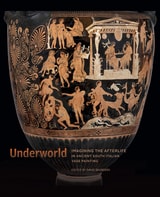
Underworld
Imagining the Afterlife in Ancient South Italian Vase PaintingDavid Saunders
J. Paul Getty Trust, The, 2022
What happens to us when we die? What might the afterlife look like? For the ancient Greeks, the dead lived on, overseen by Hades in the Underworld. We read of famous sinners, such as Sisyphus, forever rolling his rock, and the fierce guard dog Kerberos, who was captured by Herakles. For mere mortals, ritual and religion offered possibilities for ensuring a happy existence in the beyond, and some of the richest evidence for beliefs about death comes from southern Italy, where the local Italic peoples engaged with Greek beliefs. Monumental funerary vases that accompanied the deceased were decorated with consolatory scenes from myth, and around forty preserve elaborate depictions of Hades’s domain.
For the first time in over four decades, these compelling vase paintings are brought together in one volume, with detailed commentaries and ample illustrations. The catalogue is accompanied by a series of essays by leading experts in the field, which provides a framework for understanding these intriguing scenes and their contexts. Topics include attitudes toward the afterlife in Greek ritual and myth, inscriptions on leaves of gold that provided guidance for the deceased, funerary practices and religious beliefs in Apulia, and the importance accorded to Orpheus and Dionysos. Drawing from a variety of textual and archaeological sources, this volume is an essential source for anyone interested in religion and belief in the ancient Mediterranean.
Uneasy in Babylon
Southern Baptist Conservatives and American CultureBarry Hankins
University of Alabama Press, 2002
The definitive account of how conservative Southern Baptists came to dominate the nation's largest Protestant denomination
In 1979 a group of conservative members of the Southern Baptists Convention (SBC) initiated a campaign to reshape the denomination’s seminaries and organizations by installing new conservative leaders who made belief in the inerrancy of the Bible a condition of service. They succeeded. This book is a definitive account of that takeover.
Barry Hankins argues that the conservatives sought control of the SBC not or not only to secure the denomination's orthodoxy but to mobilize Southern Baptists for a war against secular culture. The best explanation of the beliefs and behavior of Southern Baptist conservatives, Hankins concludes, lies in their adoption of the culture war model of American society. Believing that "American culture has turned hostile to traditional forms of faith,” they sought to deploy the Southern Baptist Convention in a "full-scale culture war" against secularism in the United States. Hankins traces the roots of this movement to the ideas of such post-WWII northern evangelicals as Carl F. H. Henry and Francis Schaeffer. Henry and Schaeffer viewed America's secular culture as hostile to Christianity and called on evangelicals to develop a robust Christian opposition to secular culture. As the nation’s largest Protestant denomination, SBC positions on divisive cultural issues like abortion have remade the American political landscape, most notably in the reversal of Roe v. Wade.
Hankins also argues, however, that Southern Baptist conservatives sought more than orthodox adherence to Biblical inerrancy. They also sought an identity that was authentically Baptist and Southern. Hankin’s excellent and prescient work will fascinate readers interested in contemporary American religion, culture, and public policy, as well as in the American South.
Unequal Partners
In Search of Transnational Catholic SisterhoodCasey Ritchie Clevenger
University of Chicago Press, 2020
Taking us from Belgium and the United States to the Democratic Republic of the Congo, sociologist Casey Clevenger offers rare insight into how the sisters of this order work across national boundaries, shedding light on the complex relationships among individuals, social groups, and formal organizations. Throughout, Clevenger skillfully weaves the sisters’ own voices into her narrative, helping us understand how the order has remained whole over time. A thoughtful analysis of the ties that bind—and divide—the sisters, Unequal Partners is a rich look at transnationalism’s ongoing impact on Catholicism.
Unexpected Grace
Stories of Faith, Science, and AltruismBill Kramer
Templeton Press, 2007
In Unexpected Grace Bill Kramer offers a rare look into the human side of the world of scientific research. He goes behind the scenes of four scientific investigations on diverse aspects of the study of unlimited love and offers uplifting portraits of human beings struggling to understand and improve the complex issues facing them. He explores the dynamics between the researchers, the subjects they study, and the participants in the studies, and eloquently tells their personal stories. The stories touch on vastly different social and human issues, but all are connected by love.
The third study, from Case Western Reserve University in Cleveland, focused on the benefits of religion on mental and physical health, which led its researcher to a greater understanding of forgiveness, humility, and grace. The final powerful story is about a physiology of love study conducted in Iowa City. Here, a functional MRI is the vehicle for measuring empathy and brings the researcher to wonder, "Is there a point at which empathy shuts down and we turn away?" Ultimately she comes to recognize that past experiences influences our ability to respond emphatically.
Unfinished Gestures
Devadasis, Memory, and Modernity in South IndiaDavesh Soneji
University of Chicago Press, 2011
Unfit For Marriage
Impotent Spouses On Trial In The Basque Region Of Spain, 1650-1750Edward J. Behrend-Martinez
University of Nevada Press, 2014
The Catholic Church of early modern Europe intended the sacrament of matrimony to represent a lifelong commitment, and it allowed few grounds for the dissolution of an unhappy marriage. One was nonconsummation owing to the sexual impotency of one of the partners. Even then, an annulment was granted only after a church court had conducted a lengthy investigation of the case, soliciting testimony from numerous witnesses as well as from the aggrieved couple, and had subjected the allegedly impotent spouse (and sometimes both spouses) to an intimate physical examination.
Edward J. Behrend-Martinez has studied the transcripts of eighty-three impotency trials conducted by the ecclesiastical court of Calahorra (La Rioja), a Spanish diocese with urban and rural parishes, both Basque and Castilian. From these records, he draws a detailed, fascinating portrait of private life and public sexuality in early modern Europe. These trials were far more than a salacious inquiry into the intimate details of other people’s lives. The church valued marital sex as a cornerstone of stable society, intended not only for procreation but also for maintaining domestic harmony. Every couple’s sex life, however private in practice or intention, was a matter of public and ecclesiastical concern. Unfit for Marriage offers vivid accounts of marital sex and the role that property, gender, and personal preference played in marriage in early modern Europe. It is essential reading for anyone interested in social history, sexuality, gender studies, canon law, legal history, and the history of divorce in western Europe.
Unfolding
A High Holy Day CompanionRabbi Karyn D. Kedar
Central Conference of American Rabbis, 2025
Unfolding: A High Holy Day Companion invites readers into a contemplative spiritual exploration of the holiest months of the Jewish year. With a poet’s heart and a seeker’s soul, Rabbi Karyn D. Kedar leads us on an introspective journey through sacred moments, from the solemnity of Tishah B’Av to the self-reflection of Yom Kippur. With each chapter, the reader is invited to linger on themes of beauty, memory, repentance, and forgiveness. Woven with Biblical, Rabbinic, and liturgical texts, Unfolding is a journey into the inner landscape where our deepest questions reside. Whether you follow the calendar’s rhythm or allow passages to find you serendipitously, these pages are a spiritual companion, offering meditations on a voyage of self-reflection, purpose, meaning, and love.
Featured on Kirkus Reviews' Best Indie Books of 2025.
Unitarianism in the Antebellum South
The Other Invisible InstitutionJohn Allen Macaulay
University of Alabama Press, 2001
Unity and Diversity in the Gospels and Paul
Essays in Honor of Frank J. MateraChristopher W. Skinner
SBL Press, 2012
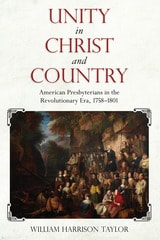
Unity in Christ and Country
American Presbyterians in the Revolutionary Era, 1758–1801William Harrison Taylor
University of Alabama Press, 2017
In Unity in Christ and Country: American Presbyterians in the Revolutionary Era, 1758–1801, William Harrison Taylor investigates the American Presbyterian Church’s pursuit of Christian unity and demonstrates how, through this effort, the church helped to shape the issues that gripped the American imagination, including evangelism, the conflict with Great Britain, slavery, nationalism, and sectionalism. When the colonial Presbyterian Church reunited in 1758, a nearly twenty-year schism was brought to an end. To aid in reconciling the factions, church leaders called for Presbyterians to work more closely with other Christian denominations. Their ultimate goal was to heal divisions, not just within their own faith but also within colonial North America as a whole.
Taylor contends that a self-imposed interdenominational transformation began in the American Presbyterian Church upon its reunion in 1758. However, this process was altered by the church’s experience during the American Revolution, which resulted in goals of Christian unity that had both spiritual and national objectives. Nonetheless, by the end of the century, even as the leaders in the Presbyterian Church strove for unity in Christ and country, fissures began to develop in the church that would one day divide it and further the sectional rift that would lead to the Civil War.
Taylor engages a variety of sources, including the published and unpublished works of both the Synods of New York and Philadelphia and the General Assembly of the Presbyterian Church in the United States, as well as numerous published and unpublished Presbyterian sermons, lectures, hymnals, poetry, and letters. Scholars of religious history, particularly those interested in the Reformed tradition, and specifically Presbyterianism, should find Unity in Christ and Country useful as a way to consider the importance of the theology’s intellectual and pragmatic implications for members of the faith.
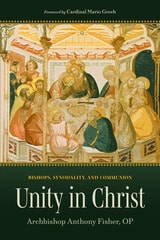
Unity in Christ
Bishops, Synodality, and CommunionArchbishop Anthony Fisher, OP
Catholic University of America Press, 2023
Universalism and Particularism at Sodom and Gomorrah
Essays in Memory of Ron PirsonDiana Lipton
SBL Press, 2012
Unknowing and the Everyday
Sufism and Knowledge in IranSeema Golestaneh
Duke University Press, 2023
Unlocking Divine Action
Michael J. Dodds
Catholic University of America Press, 2012
Unquiet Americans
U.S. Catholics, Moral Truth, and the Preservation of Civil LibertiesGerard V. Bradley
St. Augustine's Press, 2013
Before the Second Vatican Council, America’s Catholics operated largely as a coherent voting bloc, usually in connection with the Democratic Party. Their episcopal leaders generally spoke for Catholics in political matters; at least, where America’s bishops asserted themselves in public affairs there was little audible dissent from the faithful.
More than occasionally, the immigrant Church’s eagerness to demonstrate its patriotic bona fides furthered its tendency to speak with one voice about national matters, and in line with the broader societal consensus. And, notwithstanding the considerable conflict which Catholics encountered, and generated, in American political life, there was before the Council broad agreement in American culture about the centrality of Biblical morality to the success of Americans’ experiment with republican government.
In other words: before the Council, American Catholics’ relationship to the political common good was mediated, somewhat uncritical, and insulated from conflict (both within and without the Church) over such fundamental matters as protection of innocent life, marriage and family life, and (to a lesser extent) religious liberty.
This has all changed since the mid-1960s. For the first time in the Church’s pilgrimage on these shores, controversial questions about the basic moral requirements of the political common good are front and center for America’s Catholics. These questions require Catholics to confront matters which heretofore they either took for granted, read off from the background culture, or which they left to the bishops to handle. But the Council Fathers rightly recognized that Jesus calls upon a formed and informed laity to act as leaven in the public realm, to bring Gospel values to the temporal sphere. In this book of essays touching upon Catholic social doctrine, the truth about human equality and political liberty, and religious faith as it bears upon public life and the public engagement of lay Catholics, Gerard Bradley supplies indispensable aid to those seeking to answer Jesus’ call.
Unreconciled
From Racial Reconciliation to Racial Justice in Christian EvangelicalismAndrea Smith
Duke University Press, 2019
Unruly Ideas
A History of Kitawala in CongoNicole Eggers
Ohio University Press, 2023
Unruly Souls
The Digital Activism of Muslim and Christian FeministsKristin M. Peterson
Rutgers University Press, 2022

Unsecular Media
MAKING NEWS OF RELIGION IN AMERICAMark Silk
University of Illinois Press, 1995
Mark Silk's book is the first to offer a comprehensive description and analysis of how American news media cover religion.
Unsettling Obligations
Essays on Reason, Reality and the Ethics of BeliefAllen W. Wood
CSLI, 2002
Unsettling Scripture
Iroquois and the Book of MormonThomas W Murphy
University of Utah Press, 2025
In Unsettling Scripture: Iroquois and the Book of Mormon, anthropologist Thomas W Murphy delves into the visions of Seneca prophet Handsome Lake, the epic narratives of the Iroquois Confederacy, and the origin story of the Book of Mormon, revealing surprising parallels between Indigenous and Mormon traditions.
Through ethnohistorical research and decolonizing methodologies, Murphy reexamines how both communities understand their origins, faith, and prophecy. From Handsome Lake’s revelations to Joseph Smith’s seer stone, from ancient sibling rivalries to the Great Peace, this book unsettles traditional narratives while opening new conversations on scripture, identity, and cultural exchange. Drawing from living Indigenous voices, Unsettling Scripture challenges readers to rethink sacred texts and the histories they tell.
Untangling the Intangible
Reconstructing Ideologies, Beliefs, and Religion in the PastKathryn MacFarland
University Press of Colorado, 2026
In Untangling the Intangible a diverse group of authors focuses on new and rigorous ways to approach religion, beliefs, and ideology in archaeology. Reconstructing the human experience from archaeologically recovered materials is a complex task that can only benefit by making use of all available avenues of inquiry. To that end, the authors of this volume model inclusive discussions that recognize the inherent overlap, intersectionality, and co-constitutive relationship among the widely considered “intangibles” of culture: ideas, beliefs, ideology, and religion. The material and tangible aspects of these related elements inform human behavior and should not be treated independently because they constitute different and equal parts of a cognitive mosaic that forms the basis of the human experience.
The chapters encompass an array of research topics, geographical settings (Crete, Eurasia, the eastern Mediterranean, Madagascar, Mexico, and Mongolia), and temporal periods and highlight how practices associated with religious and ideological beliefs have shaped human societies across space and time. By focusing on multiple scales of inquiry and novel ways of accessing the material expressions of cultural phenomena and addressing underrepresented themes, this book challenges existing approaches and perspectives on the topic and directs future researchers to grapple with these elements as integral to researching the past.
Emphasizing a more comprehensive study of religious and ideological aspects of material culture, Untangling the Intangible highlights the potential for a more holistic understanding of the past and for approaching the very aspects that make us human through archaeology.
Publication of this book has been aided by a grant from the von Bothmer Publication Fund of the Archaeological Institute of America.
Untold Tales from the Book of Revelation
Sex and Gender, Empire, and EcologyStephen D. Moore
SBL Press, 2014
An interlinked collection of essays representing the best of Stephen D. Moore’s groundbreaking scholarship
This collection of previously published essays is a companion to The Bible in Theory: Critical and Postcritical Essays (2010). Chapters engage postcolonial studies, cultural studies, deconstruction, autobiographical criticism, masculinity studies, queer theory, affect theory, and animality studies—methods Moore believes present unprecedented challenges to the monochrome model of Revelation scholarship based on traditional historical-critical methods.
Features:
- Nine essays on biblical literary criticism including two co-written with Jennifer A. Glancy and Catherine Keller
- Contextual introductions for each essay
- Annotated bibliographies
Untold Tales of the Hasidim
Crisis and Discontent in the History of HasidismDavid Assaf
Brandeis University Press, 2011
Unveiling Traditions
Postcolonial Islam in a Polycentric WorldAnouar Majid
Duke University Press, 2000
Majid moves beyond Edward Said’s unmasking of orientalism in the West to examine the intellectual assumptions that have prevented a more nuanced understanding of Islam’s legacies. In addition to questioning the pervasive logic that assumes the “naturalness” of European social and political organizations, he argues that it is capitalism that has intensified cultural misunderstanding and created global tensions. Besides examining the resiliency of orientalism, the author critically examines the ideologies of nationalism and colonialist categories that have redefined the identity of Muslims (especially Arabs and Africans) in the modern age and totally remapped their cultural geographies. Majid is aware of the need for Muslims to rethink their own assumptions. Addressing the crisis in Arab-Muslim thought caused by a desire to simultaneously “catch up” with the West and also preserve Muslim cultural authenticity, he challenges Arab and Muslim intellectuals to imagine a post-capitalist, post-Eurocentric future. Critical of Islamic patriarchal practices and capitalist hegemony, Majid contends that Muslim feminists have come closest to theorizing a notion of emancipation that rescues Islam from patriarchal domination and resists Eurocentric prejudices.
Majid’s timely appeal for a progressive, multicultural dialogue that would pave the way to a polycentric world will interest students and scholars of postcolonial, cultural, Islamic, and Marxist studies.
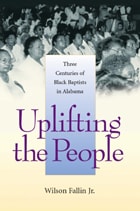
Uplifting the People
Three Centuries of Black Baptists in AlabamaWilson Fallin Jr.
University of Alabama Press, 2007
Three centuries of faith, leadership, and community building in Alabama's Black Baptist tradition.
Uplifting the People is a history of the Alabama Missionary Baptist State Convention—its origins, churches, associations, conventions, and leaders. Fallin demonstrates that a distinctive Afro-Baptist faith emerged as slaves in Alabama combined the African religious emphasis on spirit possession, soul-travel, and rebirth with the evangelical faith of Baptists. The denomination emphasizes a conversion experience that brings salvation, spiritual freedom, love, joy, and patience, and also stresses liberation from slavery and oppression and highlights the exodus experience. In examining the social and theological development of the Afro-Baptist faith over the course of three centuries, Uplifting the People demonstrates how black Baptists in Alabama used faith to cope with hostility and repression.
Fallin reveals that black Baptist churches were far more than places of worship. They functioned as self-help institutions within black communities and served as gathering places for social clubs, benevolent organizations, and political meetings. Church leaders did more than conduct services; they protested segregation and disfranchisement, founded and operated schools, and provided community leaders for the civil rights movement of the mid-20th century.
Through black churches, members built banking systems, insurance companies, and welfare structures. Since the gains of the civil rights era, black Baptists have worked to maintain the accomplishments of that struggle, church leaders continue to speak for social justice and the rights of the poor, and churches now house day care and Head Start programs. Uplifting the People also explores the role of women, the relations between black and white Baptists, and class formation within the black church.
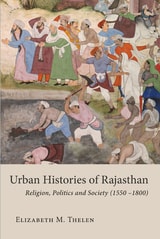
Urban Histories of Rajasthan
Religion, Politics and Society (1550–1800)Elizabeth M. Thelen
Gingko, 2022
Diverse peoples intermingled in the streets and markets of premodern Indian cities. This book considers how these diverse residents lived together and negotiated their differences. Which differences mattered, when and to whom? How did state actions and policies affect urban society and the lives of various communities? How and why did conflict occur in urban spaces? Through these questions, this book explores the histories of urban communities in the three cities of Ajmer, Nagaur, and Pushkar in Rajasthan, between the sixteenth and eighteenth centuries. The focus of this study is on everyday life, contextualizing religious practices and conflicts by considering patterns of patronage and broader conflict patterns within society. The book examines various archival documents, from family and institutional records to state registers, and uses these documents to demonstrate the complex and sometimes contradictory ways religion intersected with politics, economics, and society. The author shows how many patronage patterns and processes persisted in altered forms, and how the robustness of these structures contributed to the resilience of urban spaces and society in precolonial Rajasthan.
Useful to the Church and Kingdom
The Journals of James H. Martineau, Pioneer and Patriarch, 1850-1918, Volume: 1Noel A. Carmack
Signature Books, 2023
These journals document his exploration of virgin lands in southern Utah, his laying out of townsites and farmland in Cache Valley, his participation in canal building and water projects in Arizona, and his near-death experiences while surveying rough, mountainous areas. His work for the Union Pacific Railroad through Weber Canyon and across the Salt Lake Promontory and Humboldt Desert in 1868 is one of the very few complete records of its kind.
Useful to the Church and Kingdom
The Journals of James H. Martineau, Pioneer and Patriarch, 1850-1918, Volume: 2Noel A. Carmack
Signature Books, 2023
These journals document his exploration of virgin lands in southern Utah, his laying out of townsites and farmland in Cache Valley, his participation in canal building and water projects in Arizona, and his near-death experiences while surveying rough, mountainous areas. His work for the Union Pacific Railroad through Weber Canyon and across the Salt Lake Promontory and Humboldt Desert in 1868 is one of the very few complete records of its kind.
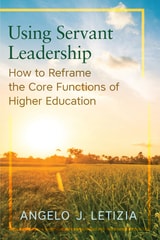
Using Servant Leadership
How to Reframe the Core Functions of Higher EducationLetizia, Angelo J.
Rutgers University Press, 2018
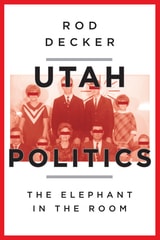
Utah Politics
The Elephant in the RoomRod Decker
Signature Books, 2019
Some themes reoccur: governors become popular by fighting federal oversight— signaling a lingering distrust that Washington could alter the Mormon way of life—and liberals use the court system to circumvent conservative legislatures who see public morality as a defining feature of government. Through this lens, issues both deceptively innocuous and deeply complex underscore Utah’s dance with religious freedom and civil liberty.