Results by title
4127 books match the query 'Science' and 49 start with u
U.S. Coast Survey vs. Naval Hydrographic Office
A 19th-Century Rivalry in Science and PoliticsThomas G. Manning
University of Alabama Press, 1988
UP
A Scientist's Guide to the Magic Above UsLucy Rogers
Michigan State University Press, 2027
Engineer and bubble scientist Lucy Rogers invites us to explore the wonders of the air, sky, and space; understand the science; and appreciate the insights this offers about life on Earth. The sky is a world of endless wonder. From the intricate dance of clouds and the vibrant hues of the aurora borealis to the marvel of effortless soaring birds and the silent majesty of the stars, it is a living storybook. Join Rogers on a marvelous adventure through a kite market in India, creep through the Borneo jungle to witness millions of bats pour out of a cave at dusk, venture to Tornado Alley to chase the raw power of storms, and journey to Mexico to stand in awe of a total solar eclipse. Up is for anyone who has ever looked up at the sky in awe and needs to know the science behind its never-ending phenomena.
Uncertain Climes
Debating Climate Change in Gilded Age AmericaJoseph Giacomelli
University of Chicago Press, 2023
Even people who still refuse to accept the reality of human-induced climate change would have to agree that the topic has become inescapable in the United States in recent decades. But as Joseph Giacomelli shows in Uncertain Climes, this is actually nothing new: as far back as Gilded Age America, climate uncertainty has infused major debates on economic growth and national development.
In this ambitious examination of late-nineteenth-century understandings of climate, Giacomelli draws on the work of scientists, foresters, surveyors, and settlers to demonstrate how central the subject was to the emergence of American modernity. Amid constant concerns about volatile weather patterns and the use of natural resources, nineteenth-century Americans developed a multilayered discourse on climate and what it might mean for the nation’s future. Although climate science was still in its nascent stages during the Gilded Age, fears and hopes about climate change animated the overarching political struggles of the time, including expansion into the American West. Giacomelli makes clear that uncertainty was the common theme linking concerns about human-induced climate change with cultural worries about the sustainability of capitalist expansionism in an era remarkably similar to the United States’ unsettled present.
Uncertain Climes
Debating Climate Change in Gilded Age AmericaJoseph Giacomelli
University of Chicago Press, 2023
Uncertain Climes looks to the late nineteenth century to reveal how climate anxiety was a crucial element in the emergence of American modernity.
Even people who still refuse to accept the reality of human-induced climate change would have to agree that the topic has become inescapable in the United States in recent decades. But as Joseph Giacomelli shows in Uncertain Climes, this is actually nothing new: as far back as Gilded Age America, climate uncertainty has infused major debates on economic growth and national development.
In this ambitious examination of late-nineteenth-century understandings of climate, Giacomelli draws on the work of scientists, foresters, surveyors, and settlers to demonstrate how central the subject was to the emergence of American modernity. Amid constant concerns about volatile weather patterns and the use of natural resources, nineteenth-century Americans developed a multilayered discourse on climate and what it might mean for the nation’s future. Although climate science was still in its nascent stages during the Gilded Age, fears and hopes about climate change animated the overarching political struggles of the time, including expansion into the American West. Giacomelli makes clear that uncertainty was the common theme linking concerns about human-induced climate change with cultural worries about the sustainability of capitalist expansionism in an era remarkably similar to the United States’ unsettled present.

Uncertainty Quantification of Electromagnetic Devices, Circuits, and Systems
Sourajeet Roy
The Institution of Engineering and Technology, 2022
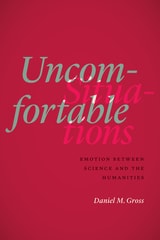
Uncomfortable Situations
Emotion between Science and the HumanitiesDaniel M. Gross
University of Chicago Press, 2017
Science and the humanities typically offer two different paradigms for thinking about emotion—the first rooted in brain and biology, the second in a social world. With rhetoric as a field guide, Uncomfortable Situations establishes common ground between these two paradigms, focusing on a theory of situated emotion. Daniel M. Gross anchors the argument in Charles Darwin, whose work on emotion has been misunderstood across the disciplines as it has been shoehorned into the perceived science-humanities divide. Then Gross turns to sentimental literature as the single best domain for studying emotional situations. There’s lost composure (Sterne), bearing up (Equiano), environmental hostility (Radcliffe), and feeling mixed (Austen). Rounding out the book, an epilogue written with ecological neuroscientist Stephanie Preston provides a different kind of cross-disciplinary collaboration. Uncomfortable Situations is a conciliatory work across science and the humanities—a groundbreaking model for future studies.
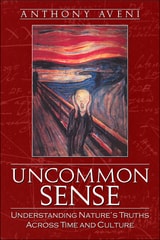
Uncommon Sense
Understanding Nature's Truths Across Time and CultureAnthony Aveni
University Press of Colorado, 2006
In ten fascinating essays, Aveni examines topics that have absorbed scientists, religious figures, and ordinary citizens over the centuries. He traces the tug of war between astronomy and astrology, reveals the underpinnings of our notions of cartography and the representation of space and time, and much more.
Readers interested in science, history, and world cultures will revel in this celebration of different cultures’ common and uncommon questions and conclusions about the natural world.

Undead Science
Science Studies and the Afterlife of Cold FusionSimon, Bart
Rutgers University Press, 2002
Undead Science examines the story of cold fusion, one of the most publicized scientific controversies of the late twentieth century. In 1989 two Utah-based “discoverers” claimed to have developed an electrochemical process that produced more energy than was required to initiate the process. Finding no other explanation, the researchers described their findings as some kind of nuclear reaction. If they were correct, an important new energy source would have been found. Objections surfaced quickly, and in the year that followed, hundreds of scientists worldwide attempted to reproduce these results. Most, though not all, failed, and the controversy became increasingly antagonistic. By 1990, general scientific opinion favored the skeptics and experimental work went into a steep decline. Nevertheless, many scientists continue to do research in what Bart Simon calls this “undead science.”
Simon argues that in spite of widespread skepticism in the scientific community, there has been a continued effort to make sense of the controversial phenomenon. Researchers in well-respected laboratories continue to produce new and rigorous work. In this manner, cold fusion research continues to exist long after the controversy has subsided, even though the existence of cold fusion is circumscribed by the widespread belief that the phenomenon is not real.
The survival of cold fusion signals the need for a more complex understanding of the social dynamics of scientific knowledge making, the boundaries between experts, intermediaries, and the lay public, and the conceptualization of failure in the history of science and technology.
Under Cover of Science
American Legal-Economic Theory and the Quest for ObjectivityJames R. Hackney Jr.
Duke University Press, 2007
Hackney demonstrates how legal-economic thought has been affected by the prevailing philosophical ideas about objectivity, which have in turn evolved in response to groundbreaking scientific discoveries. Thus Hackney’s narrative is a history not only of law and economics but also of select strands of philosophy and science. He traces forward from the seventeenth-century the interaction of legal thinking and economic analysis with ideas about the attainability of certitude. The principal legal-economic theories Hackney examines are those that emerged from classical legal thought, legal realism, law and neoclassical economics, and critical legal studies. He links these theories respectively to formalism, pragmatism, the analytic turn, and neopragmatism/postmodernism, and he explains how each of these schools of philosophical thought was influenced by specific scientific discoveries: Newtonian physics, Darwin’s theory of evolution, Einstein’s theories of relativity, and quantum mechanics. Under Cover of Science challenges claims that the contemporary law and economics movement is an objective endeavor by historicizing ideas about certitude and empiricism and their relation to legal-economic thought.
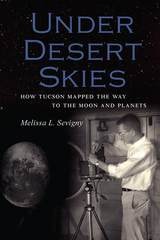
Under Desert Skies
How Tucson Mapped the Way to the Moon and PlanetsMelissa L. Sevigny
University of Arizona Press, 2016
An upstart planetary laboratory in Tucson would play a vital role in the nation’s grand new venture, and in doing so, it would help create the field of planetary science. Founded by Gerard P. Kuiper in 1960, the Lunar and Planetary Laboratory (LPL) at the University of Arizona broke free from traditional astronomical techniques to embrace a wide range of disciplines necessary to the study of planets, including geology, atmospheric sciences, and the elegant emerging technology of spacecraft. Brash, optimistic young students crafted a unique sense of camaraderie in the fledgling institution. Driven by curiosity and imagination, LPL scientists lived through—and, indeed, made happen—the shattering transition in which Earth’s nearest neighbors became more than simple points of light in the sky.
Under Desert Skies tells the story of how a small corner of Arizona became Earth’s ambassador to space. From early efforts to reach the Moon to the first glimpses of Mars’s bleak horizons and Titan’s swirling atmosphere to the latest ambitious plans to touch an asteroid, LPL’s history encompasses humanity’s unfolding knowledge about our place in the universe.
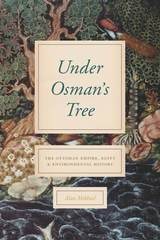
Under Osman's Tree
The Ottoman Empire, Egypt, and Environmental HistoryAlan Mikhail
University of Chicago Press, 2017
The early modern Middle East was the world’s most crucial zone of connection and interaction. Accordingly, the Ottoman Empire’s many varied environments affected and were affected by global trade, climate, and disease. From down in the mud of Egypt’s canals to up in the treetops of Anatolia, Alan Mikhail tackles major aspects of the Middle East’s environmental history: natural resource management, climate, human and animal labor, energy, water control, disease, and politics. He also points to some of the ways in which the region’s dominant religious tradition, Islam, has understood and related to the natural world. Marrying environmental and Ottoman history, Under Osman’s Tree offers a bold new interpretation of the past five hundred years of Middle Eastern history.

Under RAPs
Toward Grassroots Ecological Democracy in the Great Lakes BasinJohn H. Hartig and Michael A. Zarull, Editors
University of Michigan Press, 1992
Under the Canopy
The Archaelogy of Tropical Rain ForestsMercader, Julio
Rutgers University Press, 2002
Did our ancestors live in tropical forests? Although we see the rainforest as a bountiful environment teeming with life forms, most anthropologists and archaeologists have long viewed these areas as too harsh for human occupation during the pre-agricultural stages of hominid development.
Under the Canopy turns conventional wisdom on its head by providing a well-documented, geographically diverse overview of Stone Age sites in the wet tropics. New research indicates that, as humanity and its precursors increased their geographical and ecological ranges, rainforests were settled at a much earlier period than had previously been thought.
Featuring the work of leading scholars from Australia, Brazil, Canada, Colombia, France, Malaysia, Panama, Spain, and the United States, Under the Canopy creates a new niche in paleolithic studies: the archaeology of tropical rainforests. This book provides the first synthesis of archaeological research in early foraging sites across the rainforest zone, and indicates that tropical forests could harbor important clues to human evolution, origins of modern behavior, cultural diversity, and human impact on tropical ecosystems.
Understanding Crime and Place
A Methods HandbookEdited by Elizabeth R. Groff and Cory P. Haberman
Temple University Press, 2023
Place has become both a major field of criminological study as well as an important area for policy development. Capturing state of the art crime and place research methods and analysis, Understanding Crime and Place is a comprehensive Handbook focused on the specific skills researchers need.
The editors and contributors are scholars who have been fundamental in introducing or developing a particular method for crime and place research. Understanding Crime and Place is organized around the scientific process, introducing major crime and place theories and concepts, discussions of data and data collection, core spatial data concepts, as well as statistical and computational techniques for analyzing spatial data and place-based evaluation. The lessons in the book are supplemented by additional instructions, examples, problems, and datasets available for download.
Conducting place-based research is an emerging field that requires a wide range of cutting-edge methods and analysis techniques that are only beginning to be widely taught in criminology. Understanding Crime and Place bridges that gap, formalizes the discipline, and promotes an even greater use of place-based research.
Contributors: Martin A. Andresen, Matthew P J Ashby, Eric Beauregard, Wim Bernasco, Daniel Birks, Hervé Borrion, Kate Bowers, Anthony A. Braga, Tom Brenneman, David Buil-Gil, Meagan Cahill, Stefano Caneppele, Julien Chopin, Jeffrey E. Clutter, Toby Davies, Hashem Dehghanniri, Jillian Shafer Desmond, Beidi Dong, John E. Eck, Miriam Esteve, Timothy C. Hart, Georgia Hassall, David N. Hatten, Julie Hibdon, James Hunter, Shane D. Johnson, Samuel Langton, YongJei Lee, Ned Levine, Brian Lockwood, Dominique Lord, Nick Malleson, Dennis Mares, David Mazeika, Lorraine Mazerolle, Asier Moneva, Andrew Newton, Bradley J. O’Guinn, Ajima Olaghere, Graham C. Ousey, Ken Pease, Eric L. Piza, Jerry Ratcliffe, Caterina G. Roman, Stijn Ruiter, Reka Solymosi, Evan T. Sorg, Wouter Steenbeek, Hannah Steinman, Ralph B. Taylor, Marie Skubak Tillyer, Lisa Tompson, Brandon Turchan, David Weisburd, Brandon C. Welsh, Clair White, Douglas J. Wiebe, Pamela Wilcox, David B. Wilson, Alese Wooditch, Kathryn Wuschke, Sue-Ming Yang, and the editors.
Understanding Scientific Prose
Edited by Jack Selzer
University of Wisconsin Press, 1993
Examining science as a rhetorical enterprise, this book seizes upon one scientific essay—"The Spandrels of San Marco and the Panglossian Paradigm: A Critique of the Adaptationist Programme"—and probes it from many angles. Written by prominent evolutionary theorists Stephen Jay Gould and Richard C. Lewontin and first published in the Proceedings of the Royal Society of London in 1979, the "Spandrels" article is both serious science and vivid prose. Applying methods inspired by Louis Althusser, Michel Foucault, Jacques Derrida, Ferdinand de Saussure, and others, the contributors employ a range of interpretive strategies. Stephen Jay Gould adds his own comments, and the full text of the essay "Spandrels" is reproduced as an appendix. Applying methods inspired by Louis Althusser, Michel Foucault, Jacques Derrida, Ferdinand de Saussure, and others, the contributors employ a range of interpretive strategies. Stephen Jay Gould adds his own comments, and the full text of the essay "Spandrels" is reproduced as an appendix.
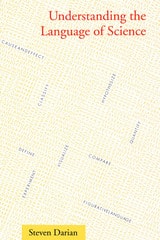
Understanding the Language of Science
By Steven Darian
University of Texas Press, 2003
2004 — A Choice Outstanding Academic Book
From astronomy to zoology, the practice of science proceeds from scientific ways of thinking. These patterns of thought, such as defining and classifying, hypothesizing and experimenting, form the building blocks of all scientific endeavor. Understanding how they work is therefore an essential foundation for everyone involved in scientific study or teaching, from elementary school students to classroom teachers and professional scientists.
In this book, Steven Darian examines the language of science in order to analyze the patterns of thinking that underlie scientific endeavor. He draws examples from university science textbooks in a variety of disciplines, since these offer a common, even canonical, language for scientific expression. Darian identifies and focuses in depth on nine patterns—defining, classifying, using figurative language, determining cause and effect, hypothesizing, experimenting, visualizing, quantifying, and comparing—and shows how they interact in practice. He also traces how these thought modes developed historically from Pythagoras through Newton.
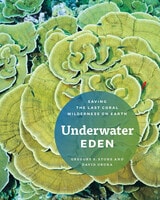
Underwater Eden
Saving the Last Coral Wilderness on EarthEdited by Gregory S. Stone and David Obura
University of Chicago Press, 2012
Undoing Monogamy
The Politics of Science and the Possibilities of BiologyAngela Willey
Duke University Press, 2016
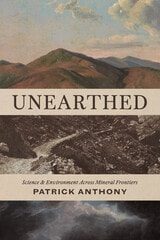
Unearthed
Science and Environment Across Mineral FrontiersPatrick Anthony
University of Chicago Press, 2026
Unearthed depicts a pivotal moment during the nineteenth century: As European and settler schemes to govern ever larger territories intensified, the earth and atmospheric sciences were also becoming more global in scope, assembling models of the planet while making use of militarized or highly industrialized systems. These efforts were informed by the physique du monde, or global physics, of Alexander von Humboldt (1769–1859), a program of vast data collection that spanned four hemispheres that aimed to determine general, scientific laws about the planet and its environments.
Using Humboldt’s itineraries as a frame, Unearthed traces an information order that linked far-flung industrial sites and frontier stations, from Prussian provinces to the Spanish and Russian empires. Humboldt intersected with Saxon miners, Mexican cartographers, and Siberian surveyors, among other itinerant Germans who mobilized the labor and resources of widespread mining operations for global surveys of earth and air. Interweaving the histories of capital and climate, Patrick Anthony takes readers from mines to mountains to show how the sciences of Humboldt’s circuits both measured and made modern natures. These sciences of the mineral frontier, he argues, ultimately laid the groundwork for carbon-intensive economics and a logic of unending extraction. Wide-ranging and ambitious, Unearthed will interest scholars working in the history of science, global history, and the environmental humanities.
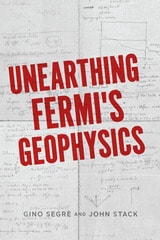
Unearthing Fermi's Geophysics
Gino C. Segrè and John D. Stack
University of Chicago Press, 2022
Nobel Prize–winning physicist Enrico Fermi (1901–54) is known for his work on experimental particle and nuclear physics, quantum theory, and statistical mechanics, and for his particular ability to condense complicated problems into approximations for understanding and testing theory in a variety of scientific disciplines. Six of his graduate students went on to win their own Nobel Prizes.
Unearthing Fermi’s Geophysics opens a window onto two underrepresented facets of this extraordinary thinker: Fermi’s teaching and his contribution to the field of geophysics. Drawing on Fermi’s handwritten calculations and notes, many of which are reproduced here in photographic facsimile, physicists Gino Segrè and John Stack have reconstructed a coursebook of Fermi’s insights into the physics of a range of geological and atmospheric phenomena. From gravity on Earth to thermodynamics in the atmosphere, the physics of raindrops, the Coriolis effect in hurricanes, tidal physics, earthquakes and seismic waves, Earth’s magnetism, atmospheric electricity, and much more, Unearthing Fermi’s Geophysics reveals the hidden workings of the world above, around, and below us—and of the mind of a great scientist who was able to bring those physical workings to light.
Unearthing the Nation
Modern Geology and Nationalism in Republican ChinaGrace Yen Shen
University of Chicago Press, 2014
The first major history of modern Chinese geology, Unearthing the Nation introduces the key figures in the rise of the field, as well as several key organizations, such as the Geological Society of China, and explains how they helped bring Chinese geology onto the world stage.
Uneasy Careers and Intimate Lives
Women in Science, 1789-1979Edited by Pnina Abir-Am and Dorinda Outram
Rutgers University Press, 1987
An international group of historians of science discuss a wide range of European and American women scientists--from early nineteenth-century English botanists to Marie Curie to the twentieth-century theoretical biologist, Dorothy Wrinch.
Unexpected Grace
Stories of Faith, Science, and AltruismBill Kramer
Templeton Press, 2007
In Unexpected Grace Bill Kramer offers a rare look into the human side of the world of scientific research. He goes behind the scenes of four scientific investigations on diverse aspects of the study of unlimited love and offers uplifting portraits of human beings struggling to understand and improve the complex issues facing them. He explores the dynamics between the researchers, the subjects they study, and the participants in the studies, and eloquently tells their personal stories. The stories touch on vastly different social and human issues, but all are connected by love.
The third study, from Case Western Reserve University in Cleveland, focused on the benefits of religion on mental and physical health, which led its researcher to a greater understanding of forgiveness, humility, and grace. The final powerful story is about a physiology of love study conducted in Iowa City. Here, a functional MRI is the vehicle for measuring empathy and brings the researcher to wonder, "Is there a point at which empathy shuts down and we turn away?" Ultimately she comes to recognize that past experiences influences our ability to respond emphatically.
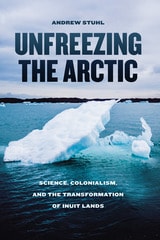
Unfreezing the Arctic
Science, Colonialism, and the Transformation of Inuit LandsAndrew Stuhl
University of Chicago Press, 2016
In Unfreezing the Arctic, Andrew Stuhl brings a fresh perspective to this defining challenge of our time. With a compelling narrative voice, Stuhl weaves together a wealth of distinct episodes into a transnational history of the North American Arctic, proving that a richer understanding of its social and environmental transformation can come only from studying the region’s past. Drawing on historical records and extensive ethnographic fieldwork, as well as time spent living in the Northwest Territories, he closely examines the long-running interplay of scientific exploration, colonial control, the testimony and experiences of Inuit residents, and multinational investments in natural resources. A rich and timely portrait, Unfreezing the Arctic offers a comprehensive look at scientific activity across the long twentieth century. It will be welcomed by anyone interested in political, economic, environmental, and social histories of transboundary regions the world over.
The author intends to donate all royalties from this book to the Alaska Youth for Environmental Action (AYEA) and East Three School's On the Land Program.
Unistrut Space-Frame System
A Report on E.R.I Project 1975Paul H. Coy and Leo M. Legatski
University of Michigan Press, 1955
Universities and Climate Action
Tristan McCowan
University College London, 2025
As the climate crisis intensifies, universities stand at a crossroads—both as contributors to ecological challenges and as agents of change. Universities and Climate Action presents a novel framework for understanding how higher education institutions can engage meaningfully with climate issues across teaching, research, governance, and community outreach. Tristan McCowan investigates the tensions between academia’s historical complicity in environmental exploitation and its immense potential in driving sustainable transformation.
This work offers a holistic perspective on how universities influence climate change at local and global levels, underscoring both the barriers to action and the pathways to meaningful change. With examples from institutions worldwide, McCowan demonstrates how universities can embed climate responsibility into curricula, shift research priorities, and foster climate-conscious campus operations. By synthesizing diverse approaches and offering practical principles for reform, Universities and Climate Action is a vital blueprint for academics and university leaders seeking to reorient higher education toward a just and sustainable future.
Universities in the Age of Corporate Science
The UC Berkeley-Novartis ControversyAlan P. Rudy, Dawn Coppin, Jason Konefal, Bradley T. Shaw, Toby Ten Eyck, Craig Harris and Lawrence Busch
Temple University Press, 2007
University of Chicago Graduate Problems in Physics with Solutions
Jeremiah A. Cronin, David F. Greenberg, and Valentine L. Telegdi
University of Chicago Press, 1979
Many distinguished members of the Department of Physics and the Enrico Fermi Institute at the University of Chicago have served on the candidacy examination committees and have, therefore, contributed to the preparation of problems which have been selected for inclusion in this volume. Among these are Morrell H. Cohen, Enrico Fermi, Murray Gell-Mann, Roger Hildebrand, Robert S. Mulliken, John Simpson, and Edward Teller.
Unleaded
How Changing Our Gasoline Changed EverythingCarrie Nielsen
Rutgers University Press, 2021
Unleaded tells the story of how crusading scientists and activists convinced the U.S. government to ban lead additives in gasoline. It also reveals how, for nearly fifty years, scientific experts paid by the oil and mining industries abused their authority to convince the public that leaded gasoline was perfectly harmless.
Combining environmental history, sociology, and neuroscience, Carrie Nielsen explores how lead exposure affects the developing brains of children and is linked to social problems including academic failure, teen pregnancies, and violent crime. She also shows how, even after the nationwide outrage over Flint’s polluted water, many poor and minority communities and communities of color across the United States still have dangerously high lead levels. Unleaded vividly depicts the importance of sound science and strong environmental regulations to protect our nation’s most vulnerable populations.

Unlimited Love
Altruism, Compassion, and ServiceStephen G. Post
Templeton Press, 2003
What if we could prove that love heals mental illness and is vital to successful therapeutic outcomes in all areas of health care? What if we could prove that people who live more for others than for self have greater psychological well-being?
Unmaking Botany
Science and Vernacular Knowledge in the Colonial PhilippinesKathleen Cruz Gutierrez
Duke University Press, 2025
Unmanning
How Humans, Machines and Media Perform Drone WarfareKatherine Fehr Chandler
Rutgers University Press, 2020
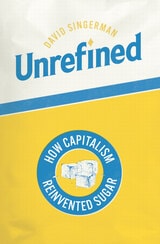
Unrefined
How Capitalism Reinvented SugarDavid Singerman
University of Chicago Press, 2025
Sugar is everywhere in the western diet, blamed for epidemics of obesity, diabetes, and other modern maladies. Our addiction to sweetness has a long and unsavory history. Over the past five hundred years, sugar has shaped empires, made fortunes for a few, and brought misery for millions of workers both enslaved and free. How did sugar become a defining modern food and an essential global commodity?
In Unrefined, David Singerman recasts our thinking about this crucial substance in the history of capitalism. Before the nineteenth century, sugar’s value depended on natural qualities: its color, its taste, where it was grown, and who had made it. But beginning around 1850, a combination of plantation owners, industrialists, and scientists set out to redefine sugar itself. Deploying the tools and rhetoric of science, they transformed not just how sugar was produced or traded but even how people thought about it. By changing sugar into a pure chemical object, these forces stripped power from workers and enabled—and obscured—new kinds of fraud, corruption, and monopoly.
Taking us to unexplored spaces in the world of sugar, from laboratories and docks to refineries and the halls of Congress, Singerman illuminates dark intersections of the histories of corruption, science, and capitalism.
Unruly Complexity
Ecology, Interpretation, EngagementPeter J. Taylor
University of Chicago Press, 2005
For each realm Taylor shows that unruly complexity-situations that lack definite boundaries, where what goes on "outside" continually restructures what is "inside," and where diverse processes come together to produce change-should not be suppressed by partitioning complexity into well-bounded systems that can be studied or managed from an outside vantage point. Using case studies from Australia, North America, and Africa, he encourages readers to be troubled by conventional boundaries-especially between science and the interpretation of science-and to reflect more self-consciously on the conceptual and practical choices researchers make.
Unruly Spirits
The Science of Psychic Phenomena in Modern FranceM. Brady Brower
University of Illinois Press, 2010
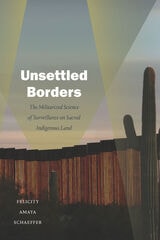
Unsettled Borders
The Militarized Science of Surveillance on Sacred Indigenous LandFelicity Amaya Schaeffer
Duke University Press, 2022
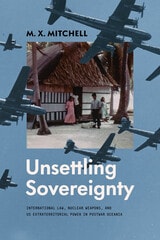
Unsettling Sovereignty
International Law, Nuclear Weapons, and US Extraterritorial Power in Postwar OceaniaM. X. Mitchell
University of Chicago Press, 2026
Marshall Islanders and their ancestral lands and waters played important roles in reshaping the United States’ offshore power, state sovereignty, and the international politics of decolonization.
In the years following World War II, the United States conducted sixty-seven devastating nuclear blasts in the Marshall Islands—yet the archipelago was never a US territory. Working through the United Nations, US diplomats engineered a new, one-of-a-kind extraterritorial status, called strategic trusteeship, to control the Native lands, waters, and peoples of the Marshall, Caroline, and Northern Mariana Islands. Strategic trusteeship permitted the US to militarize a vast expanse of Western Oceania. This novel and racialized legal form of international dependency was integral to US nuclear weapons detonations and damage in the region.
In Unsettling Sovereignty, M. X. Mitchell recounts this untold legal history, exploring how nuclear weapons changed claims and practices of sovereignty from the 1940s to the present. US nuclear blasting in the Marshall Islands troubled conventional renderings of state sovereignty under international law. The explosions, disastrous for Marshallese communities and their ancestral atolls, also caused hazardous nuclear fallout, which spread around the globe. Islanders and their allies turned to law, using legal wrangling over blasting and fallout to raise new questions about the location, time, and subjects of state violence in a period of decolonization; the intersections between race, Indigeneity, and wide-scale technogenic harm; and the pitfalls and unfulfilled promises of international law. Mitchell shows that the Marshallese people and their lands and waters were, and remain, central to redefining sovereignty in an era of boundless pollution and climate change.
Unsimple Truths
Science, Complexity, and PolicySandra D. Mitchell
University of Chicago Press, 2009
The world is complex, but acknowledging its complexity requires an appreciation for the many roles context plays in shaping natural phenomena. In Unsimple Truths, Sandra Mitchell argues that the long-standing scientific and philosophical deference to reductive explanations founded on simple universal laws, linear causal models, and predict-and-act strategies fails to accommodate the kinds of knowledge that many contemporary sciences are providing about the world. She advocates, instead, for a new understanding that represents the rich, variegated, interdependent fabric of many levels and kinds of explanation that are integrated with one another to ground effective prediction and action.
Mitchell draws from diverse fields including psychiatry, social insect biology, and studies of climate change to defend “integrative pluralism”—a theory of scientific practices that makes sense of how many natural and social sciences represent the multi-level, multi-component, dynamic structures they study. She explains how we must, in light of the now-acknowledged complexity and contingency of biological and social systems, revise how we conceptualize the world, how we investigate the world, and how we act in the world. Ultimately Unsimple Truths argues that the very idea of what should count as legitimate science itself should change.
Untangling Ecological Complexity
The Macroscopic PerspectiveBrian A. Maurer
University of Chicago Press, 1998
Maurer begins by reviewing the strengths and limitations of reductionist experimental approaches. Although these studies have produced much valuable data, their small scale restricts the kinds of inferences that can be drawn from them. Maurer then demonstrates how statistical methods can be used to identify processes (such as dispersal or nonrandom extinction) that operate across broad geographic scales, yet which also have profound impacts on local ecosystems. This macroscopic perspective, Maurer suggests, provides a powerful tool for untangling ecological complexity.
Unthought
The Power of the Cognitive NonconsciousN. Katherine Hayles
University of Chicago Press, 2017
Marshalling fresh insights from neuroscience, cognitive science, cognitive biology, and literature, Hayles expands our understanding of cognition and demonstrates that it involves more than consciousness alone. Cognition, as Hayles defines it, is applicable not only to nonconscious processes in humans but to all forms of life, including unicellular organisms and plants. Startlingly, she also shows that cognition operates in the sophisticated information-processing abilities of technical systems: when humans and cognitive technical systems interact, they form “cognitive assemblages”—as found in urban traffic control, drones, and the trading algorithms of finance capital, for instance—and these assemblages are transforming life on earth. The result is what Hayles calls a “planetary cognitive ecology,” which includes both human and technical actors and which poses urgent questions to humanists and social scientists alike.
At a time when scientific and technological advances are bringing far-reaching aspects of cognition into the public eye, Unthought reflects deeply on our contemporary situation and moves us toward a more sustainable and flourishing environment for all beings.
Up from Nothing
The Michigan State University Cyclotron LaboratorySam M. Austin
Michigan State University Press, 2016
The cyclotron laboratory at MSU has been known for years as the best university nuclear physics laboratory in the United States, and perhaps in the world. But very few, even in its hometown of East Lansing, know how it achieved that status or why it prospered when laboratories at many other famous universities faded.
In this book Austin, a nuclear physicist who has been at the laboratory since the beginning of its ascent, gives us a remarkable story. It begins with an exceptional individual, Henry Blosser, who founded the laboratory, built a cyclotron accelerator of uniquely high precision, and recruited a team of nuclear physicists that used it to establish the laboratory’s reputation. Its credibility led to a sequence of accelerators, each operating in a different sub?eld while continuing a tradition of forefront science, and to a laboratory culture that fostered the courage and foresight to compete for the FRIB in the face of daunting odds.
Upheaval from the Abyss
Ocean Floor Mapping and the Earth Science RevolutionLawrence, David M.
Rutgers University Press, 2002
The deep oceans are the last great frontier remaining on Earth. Humans have conquered the vast wilderness of the terrestrial surface, from the searing deserts and dark forests of the tropics to the icy polar regions. Today, anyone with enough ambition and money can travel upriver into the heart of the Borneo jungle, climb Mount Everest, or spend the night at the South Pole. But the oceans beyond the continental shelves remain forbidding, beyond the reach of science, adventurism, and commerce.
Not long ago, scientists viewed the ocean floor as a vast, featureless plain, an ancient repository of detritus eroded from the surface of an unchanging Earth. Light never reached the seemingly lifeless depths. The ocean basins were only of marginal scholarly interest. This all changed with the Herculean quest to discover what lay on the world's ocean floor—a quest that inspired the continental drift-plate tectonics revolution and overturned prevailing scientific notions of how the Earth’s surface was created, rearranged, and destroyed.
Upheaval from the Abyss spans a 130-year period, beginning with the early, backbreaking efforts to map the depths during the age of sail; continuing with improvements in research methods spurred by maritime disaster and war; and culminating in the publication of the first map of the world’s ocean floor in 1977. The author brings this tale to life by weaving through it the personalities of the scientists-explorers who struggled to see the face of the deep, and reveals not only the facts of how the ocean floor was mapped, but also the human dimensions of what the scientists experienced and felt while in the process.
Uranus
Jay T. Bergstralh
University of Arizona Press, 1991
Urban Archipelago
An Environmental History of the Boston Harbor IslandsPavla Šimková
University of Massachusetts Press, 2021
In this book, Pavla Šimková reinterprets the Boston Harbor Islands as an urban archipelago, arguing that they have been an integral part of Boston since colonial days, transformed by the city's changing values and catering to its current needs. Drawing on archival sources, historic maps and photographs, and diaries from island residents, this absorbing study attests that the harbor islands' story is central to understanding the ways in which Boston has both shaped and been shaped by its environment over time.

Urban Regimes and Strategies
Building Europe's Central Executive District in BrusselsAlex G. Papadopoulos
University of Chicago Press, 1996
In Brussels, Belgium—since 1957 home to the European Union—such change is taking place. Observing the change, Alexis G. Papadopoulos explores a new geographical concept, the Central Executive District. This urban form is significantly different from the Central Business District, its conventional counterpart. Drawing on game and rational choice theories, spatial analysis, and land economics, the author analyzes how the landscape of the city's center has evolved over the last three decades under the influence of successive coalitions of local and foreign elites. He describes how foreign diplomats, international corporate executives, and real-estate developers cooperate with one another to carry out major urban projects in the face of resistance from local neighborhood groups, conservationists, and political factions.
This study makes a substantial contribution to geography and urban studies both for its implications about the future of world cities like New York, London, and Paris and for its original application of the notion of cooperative regimes.
Us and Them
The Science of IdentityDavid Berreby
University of Chicago Press, 2008
In this award-winning book, David Berreby describes how twenty-first-century science is addressing these age-old questions. Ably linking neuroscience, social psychology, anthropology, and other fields, Us and Them investigates humanity’s “tribal mind” and how this alters our thoughts, affects our health, and is manipulated for good and ill. From the medical effects of stress to the rhetoric of politics, our perceptions of group identity affect every part of our lives. Science, Berreby argues, shows how this part of human nature is both unexpectedly important and surprisingly misunderstood.
Humans need our tribal sense—it tells us who we are, how we should behave, and links us to others as well as the past and future. Some condemn this instinct, while others celebrate it. Berreby offers in Us and Them a third alternative: how we can accept and understand our inescapable tribal mind.
“[A] brave book. . . . Berreby’s quest is to understand what he sees as a fundamental human urge to classify and identify with ‘human kinds.’”—Henry Gee, Scientific American
Useful Optics
Walter T. Welford
University of Chicago Press, 1991
Welford offers a succinct review of principles basic to the construction and use of optics in physics. His lucid explanations and clear illustrations will particularly help those whose interests lie in other areas but who nevertheless must understand enough about optics to create the experimental apparatus necessary to their research. Consistently emphasizing applications and practical points of design, Welford covers a host of topics: mirrors and prisms, optical materials, aberration, the limits of image formation and resolution, illumination for image-forming systems, laser beams, interference and interferometry, detectors and light sources, holography, and more. The final chapter deals with putting together an experimental optics system.
Many areas of the physical sciences and engineering increasingly demand an appreciation of optics. Welford's Useful Optics will prove indispensable to any researcher trying to develop and use effective optical apparatus.
Walter T. Welford (1916-1990) was professor of physics at Imperial College of Science, Technology and Medicine from 1951 until his death. He was a Fellow of the Royal Society and of the Optical Society of America.

Utah Wildflowers
A Field Guide to Northern and Central Mountains and ValleysRichard Shaw
Utah State University Press, 1999
A visual guide to the wildflowers that inhabit the mountains and valleys of northern and central Utah every spring and summer. A must for the hiker, biker, or lover of the outdoors. Includes over 100 full-color photographs.
Utopia's Garden
French Natural History from Old Regime to RevolutionE. C. Spary
University of Chicago Press, 2000
E. C. Spary traces the scientific, administrative, and political strategies that enabled the foundation of the Muséum, arguing that agriculture and animal breeding rank alongside classification and collections in explaining why natural history was important for French rulers. But the Muséum's success was also a consequence of its employees' Revolutionary rhetoric: by displaying the natural order, they suggested, the institution could assist in fashioning a self-educating, self-policing Republican people. Natural history was presented as an indispensable source of national prosperity and individual virtue.
Spary's fascinating account opens a new chapter in the history of France, science, and the Enlightenment.