Results by title
22277 books match the query 'Social Science' and 356 start with u
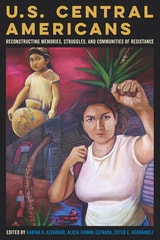
U.S. Central Americans
Reconstructing Memories, Struggles, and Communities of ResistanceEdited by Karina O. Alvarado, Alicia Ivonne Estrada, and Ester E. Hernández
University of Arizona Press, 2017
In summer 2014, a surge of unaccompanied child migrants from Central America to the United States gained mainstream visibility—yet migration from Central America has been happening for decades. U.S. Central Americans explores the shared yet distinctive experiences, histories, and cultures of 1.5-and second-generation Central Americans in the United States.
While much has been written about U.S. and Central American military, economic, and political relations, this is the first book to articulate the rich and dynamic cultures, stories, and historical memories of Central American communities in the United States. Contributors to this anthology—often writing from their own experiences as members of this community—articulate U.S. Central Americans’ unique identities as they also explore the contradictions found within this multivocal group.
Working from within Guatemalan, Salvadoran, and Maya communities, contributors to this critical study engage histories and transnational memories of Central Americans in public and intimate spaces through ethnographic, in-depth, semistructured, qualitative interviews, as well as literary and cultural analysis. The volume’s generational, spatial, urban, indigenous, women’s, migrant, and public and cultural memory foci contribute to the development of U.S. Central American thought, theory, and methods. Woven throughout the analysis, migrants’ own oral histories offer witness to the struggles of displacement, travel, navigation, and settlement of new terrain. This timely work addresses demographic changes both at universities and in cities throughout the United States.
U.S. Central Americans draws connections to fields of study such as history, political science, anthropology, ethnic studies, sociology, cultural studies, and literature, as well as diaspora and border studies. The volume is also accessible in size, scope, and language to educators and community and service workers wanting to know about their U.S. Central American families, neighbors, friends, students, employees, and clients.
Contributors:
Leisy Abrego
Karina O. Alvarado
Maritza E. Cárdenas
Alicia Ivonne Estrada
Ester E. Hernández
Floridalma Boj Lopez
Steven Osuna
Yajaira Padilla
Ana Patricia Rodríguez
U.S. Latinos and Criminal Injustice
Lupe S. Salinas
Michigan State University Press, 2015
U.S. Orientalisms
Race, Nation, and Gender in Literature, 1790-1890Malini Johar Schueller
University of Michigan Press, 2001
This book begins with an examination of the literature of the "Barbary" Orient generated by the U.S. Algerian conflict in the late eighteenth century in the works of such writers as Royall Tyler, Susanna Rowson, and Washington Irving. It then moves on to the Near East Orientalist literature of the nineteenth century in light of Egyptology, theories of race, and the growth of missionary fervor in writers such as John DeForest, Maria Susanna Cummins, Herman Melville, Edgar Allan Poe, and Harriet Prescott Spofford. Finally, Schueller considers the Indic Orientalism of the period in the context of Indology, British colonialism, and the push for Asian trade in the United States, focusing particularly on Emerson and Whitman. U.S. Orientalisms demonstrates how these writers strove to create an Orientalism premised on the idea of civilization and empire moving West, from Asia, through Europe, and culminating in the New World.
Schueller draws on the work of Michel Foucault, Edward Said, Homi Bhabha, Rey Chow, and Judith Butler and compellingly demonstrates how a raced, compensatory "Orientalist" discourse of empire was both contested and evoked in the literary works of a wide variety of writers. The book will be of interest to readers in American history, postcolonial studies, gender studies, and literary theory.
Malini Johar Schueller is Associate Professor, Department of English, University of Florida. She is the author of The Politics of Voice: Liberalism and Social Criticism from Franklin to Kingston.
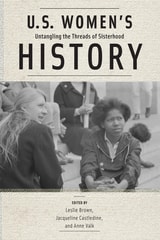
U.S. Women's History
Untangling the Threads of SisterhoodBrown, Leslie
Rutgers University Press, 2017
U.S.- China Educational Exchange
State, Society, and Intercultural Relations, 1905-1950Li, Hongshan
Rutgers University Press, 2007
U.S.-China relations became increasingly important and complex in the twentieth century. While economic, political, and military interactions all grew over time, the most dramatic expansion took place in educational exchange, turning it into the strongest tie between the two nations. By the end of the 1940s, tens of thousands of Chinese and American students and scholars had crisscrossed the Pacific, leaving indelible marks on both societies. Although all exchange programs were terminated during the cold war, the two nations reemerged as top partners within a decade after the reestablishment of diplomatic relations.
Approaching U.S.-China relations from a unique and usually overlooked perspective, Hongshan Li reveals that both the drastic expansion and complete termination of educational ties between the two nations in the first half of the twentieth century were largely the results of direct and deep intervention from the American and Chinese governments. Benefiting from government support and collaboration, educational exchange succeeded in diffusing knowledge and improving mutual understanding between the two peoples across the divide of civilizations. However, the visible hand of government also proved to be most destructive to the development of healthy intercultural relations when educational interactions were treated merely as an instrument for crisis management.
Ugly Differences
Queer Female Sexuality in the UndergroundYetta Howard
University of Illinois Press, 2018
Ugly Stories of the Peruvian Agrarian Reform
Enrique Mayer
Duke University Press, 2009
Mayer interviewed ex-landlords, land expropriators, politicians, government bureaucrats, intellectuals, peasant leaders, activists, ranchers, members of farming families, and others. Weaving their impassioned recollections with his own commentary, he offers a series of dramatic narratives, each one centered around a specific instance of land expropriation, collective enterprise, and disillusion. Although the reform began with high hopes, it was quickly complicated by difficulties including corruption, rural and urban unrest, fights over land, and delays in modernization. As he provides insight into how important historical events are remembered, Mayer re-evaluates Peru’s military government (1969–79), its audacious agrarian reform program, and what that reform meant to Peruvians from all walks of life.
Ugly White People
Writing Whiteness in Contemporary AmericaStephanie Li
University of Minnesota Press, 2023
Whiteness revealed: an analysis of the destructive complacency of white self-consciousness
White Americans are confronting their whiteness more than ever before, with political and social shifts ushering in a newfound racial awareness. And with white people increasingly seeing themselves as distinctly racialized (not simply as American or human), white writers are exposing a self-awareness of white racialized behavior—from staunch antiracism to virulent forms of xenophobic nationalism. Ugly White People explores representations of whiteness from twenty-first-century white American authors, revealing white recognition of the ugly forms whiteness can take.
Stephanie Li argues that much of the twenty-first century has been defined by this rising consciousness of whiteness because of the imminent shift to a “majority minority” population and the growing diversification of America’s political, social, and cultural institutions. The result is literature that more directly grapples with whiteness as its own construct rather than a wrongly assumed norm. Li contextualizes a series of literary novels as collectively influenced by changes in racial and political attitudes. Turning to works by Dave Eggers, Sarah Smarsh, J. D. Vance, Claire Messud, Ben Lerner, and others, she traces the responses to white consciousness that breed shared manifestations of ugliness. The tension between acknowledging whiteness as an identity built on domination and the failure to remedy inequalities that have proliferated from this founding injustice is often the source of the ugly whiteness portrayed through these narratives.
The questions posed in Ugly White People about the nature and future of whiteness are vital to understanding contemporary race relations in America. From the election of Trump and the rise of white nationalism to Karen memes and the war against critical race theory to the pervasive pattern of behavior among largely liberal-leaning whites, Li elucidates truths about whiteness that challenge any hope of national unity and, most devastatingly, the basic humanity of others.
Retail e-book files for this title are screen-reader friendly.
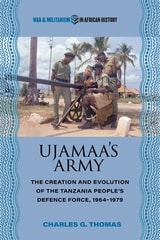
Ujamaa’s Army
The Creation and Evolution of the Tanzania People's Defence Force, 1964–1979Charles G. Thomas
Ohio University Press, 2024
The immediate postcolonial moment brought both promise and peril for the states of Africa and their security. The process of decolonization generated instability, and the emergent Cold War caught up the still-fragile independent states in a global ideological struggle between superpowers. While the political story of these states has been written in detail, the story of their militaries has been largely inaccessible, leaving only sketches of the coups, mutinies, and overall failures of security that outside observers could chronicle.
Ujamaa’s Army traces the evolution of the Tanzania People’s Defence Force from its inception in 1964 following the broader East African uprisings to its fully realized form on the eve of Tanzania’s 1978 conflict with Uganda. The book gathers primary interviews with key military actors within Tanzania and interweaves their narratives with archival sources to produce a detailed history of the culmination of President Julius Nyerere’s ideological project and the military leadership’s vision of a professional and effective force for guarding the nation and supporting liberation struggles across Southern Africa.
Ukraine as a Migration Nexus
Perspectives on Historical and Current Population MovementsOleksii Chebotarov
Central European University Press, 2025
Ukraine's Patronal Democracy and the Russian Invasion
The Russia-Ukraine War, Volume OneBálint Madlovics
Central European University Press, 2023
The Russian invasion of Ukraine in 2022 jeopardizes the country's independence and its chances for Western-style development. However, the heroic attitude of the Ukrainian people, combined with a solidifying national identity, makes the domestic foundations for a western turn stronger than ever. After the invasion, building strong foundations of liberal democracy will be a top priority. In addition to alleviating immediate problems, the country must also address its post-communist legacy and address the constraints of patronalism.
The authors of this edited volume, leading Ukrainian scholars supplemented by colleagues from Hungary, examine the chances of an anti-patronal transformation after the war. The book provides an overview of the development of Ukraine's political-economic system: color revolutions in 2004 and 2014 brought democratic transformation, but no change in the patronage system The result was patronal regime cycles instead of the emergence of a Western-type liberal democracy in the country. Building on the conceptual framework of the editors' The Anatomy of Post-Communist Regimes (CEU Press, 2020), the 12 chapters examine the impact of the war on patronal democracy, the relational economy, clientelist society, and the international environment in which Ukraine operates.
This collection is complemented by the book entitled Russia. Imperial Endeavor and Geopolitical Consequences.
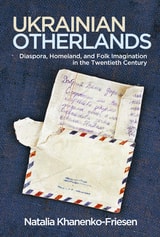
Ukrainian Otherlands
Diaspora, Homeland, and Folk Imagination in the Twentieth CenturyNatalia Khanenko-Friesen
University of Wisconsin Press, 2015
Ukrainian Otherlands is an innovative exploration of modern ethnic identity, focused on diaspora/homeland understandings of each other in Ukraine and in Ukrainian ethnic communities around the globe. Exploring a rich array of folk songs, poetry and stories, trans-Atlantic correspondence, family histories, and rituals of homecoming and hosting that developed in the Ukrainian diaspora and Ukraine during the twentieth century, Natalia Khanenko-Friesen asserts that many important aspects of modern ethnic identity form, develop, and reveal themselves not only through the diaspora's continued yearning for the homeland, but also in a homeland's deeply felt connection to its diaspora. Yet, she finds each group imagines the "otherland" and ethnic identity differently, leading to misunderstandings between Ukrainians and their ethnic-Ukrainian "brothers and sisters" abroad.
An innovative exploration of the persistence of vernacular culture in the modern world, Ukrainian Otherlands, amply informed by theory and fieldwork, will appeal to those interested in folklore, ethnic and diaspora studies, modernity, migration, folk psychology, history, and cultural anthropology.
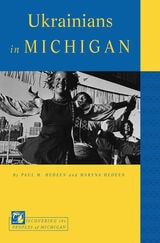
Ukrainians in Michigan
Paul M. Hedeen
Michigan State University Press, 2023
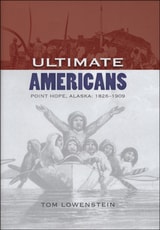
Ultimate Americans
Point Hope Alaska: 1826-1909Tom Lowenstein
University of Alaska Press, 2008

Umm al-Biyara
Excavations by Crystal-M. Bennett in Petra 1960-1965P. Bienkwoski
Council for British Research in the Levant, 2011
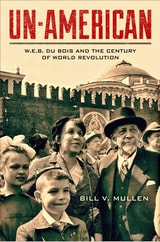
Un-American
W.E.B. Du Bois and the Century of World RevolutionBill V Mullen
Temple University Press, 2015
Un-American is Bill Mullen’s revisionist account of renowned author and activist W.E.B. Du Bois’s political thought toward the end of his life, a period largely dismissed and neglected by scholars. He describes Du Bois’s support for what the Communist International called “world revolution” as the primary objective of this aged radical’s activism. Du Bois was a champion of the world’s laboring millions and critic of the Cold War, a man dedicated to animating global political revolution.
Mullen argues that Du Bois believed that the Cold War stalemate could create the conditions in which the world powers could achieve not only peace but workers’ democracy. Un-American shows Du Bois to be deeply engaged in international networks and personal relationships with revolutionaries in India, China, and Africa. Mullen explores how thinkers like Karl Marx, Jawaharlal Nehru, Mohandas Gandhi, and C.L.R. James helped him develop a theory of world revolution at a stage in his life when most commentators regard him as marginalized. This original political biography also challenges assessments of Du Bois as an American “race man.”
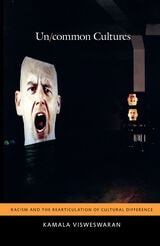
Un/common Cultures
Racism and the Rearticulation of Cultural DifferenceKamala Visweswaran
Duke University Press, 2010

Unbecoming Cinema
Unsettling Encounters with Ethical Event FilmsDavid H. Fleming
Intellect Books, 2017
A PDF version of this book is available for free in open access via the OAPEN Library platform, www.oapen.org It has been made available under a Creative Commons Attribution 4.0 International Public License and is part of Knowledge Unlatched.
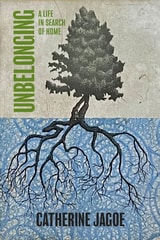
Unbelonging
A Life in Search of HomeCatherine Jagoe
University of Wisconsin Press, 2026
“Where are you from?” For Catherine Jagoe, a set of complicated assumptions often lies behind this seemingly banal question. While partly an immigrant narrative, Jagoe’s memoir in essays is not so much—or not only—about moving to the US and putting down roots but rather more about feeling perpetually in-between and never quite “home.” Throughout, Jagoe wrestles with what identity and fidelity mean for a woman with three nationalities, a job as a translator who frequently lives in a fourth country, a history of depression, and chronically divided allegiances. Together, these essays paint a deeply personal yet incredibly relatable portrait of what it means to be an American—and an immigrant—in the twenty-first century.
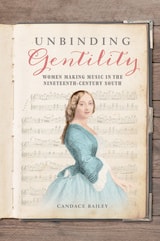
Unbinding Gentility
Women Making Music in the Nineteenth-Century SouthCandace Bailey
University of Illinois Press, 2021
Hearing southern women in the pauses of history
Southern women of all classes, races, and walks of life practiced music during and after the Civil War. Candace L. Bailey examines the history of southern women through the lens of these musical pursuits, uncovering the ways that music's transmission, education, circulation, and repertory help us understand its meaning in the women's culture of the time. Bailey pays particular attention to the space between music as an ideal accomplishment—part of how people expected women to perform gentility—and a real practice—what women actually did. At the same time, her ethnographic reading of binder’s volumes, letters and diaries, and a wealth of other archival material informs new and vital interpretations of women’s place in southern culture.
A fascinating collective portrait of women's artistic and personal lives, Unbinding Gentility challenges entrenched assumptions about nineteenth century music and the experiences of the southern women who made it.
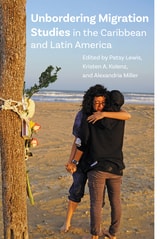
Unbordering Migration Studies in the Caribbean and Latin America
Patsy Lewis
Rutgers University Press, 2026
Unbordering Migration Studies in the Caribbean and Latin America brings together scholars and artists across regions, generations, disciplines, and modes of expression to decenter the US-Mexico border as both a site and a concept. Calling for renewed attention to the spaces, identities, and conflicts that remain understudied and excluded from our hemispheric knowledge of forced movement, the volume reveals a wider diversity of migratory realities and considers race, ethnicity, and class beyond the hegemonic formations that eclipse non-US histories. Through multidisciplinary and geographically expansive essays that draw from history, social anthropology, environmental studies, feminist studies, and lived experience, the volume examines diverse migratory flows from Chile and Argentina in the South to Georgia and New York in the North. Individually and collectively, the essays remap migratory movements other than through the most studied South-to-North trajectories and remove the US and US-based racial formations from the center of analysis. By tracking East-West flows, intraregional mobilities, and changing conceptions of racial identity, Unbordering Migration Studies in the Caribbean and Latin America complicates the concepts of forced mobility and border crossing by highlighting alternative liminalities in sites of transit, destination, and return. Demanding engagement with the submerged histories of racism and the production of ethnoracial categories beyond the Black/white binary, the collection brings into focus identities, sites, and forces that have not yet occupied the foreground of global migration study.
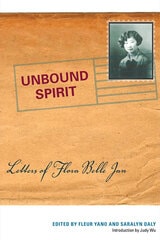
Unbound Spirit
Letters of Flora Belle JanFlora Belle Jan. Edited by Fleur Yano and Saralyn Daly. Introduction by Judy Wu.
University of Illinois Press, 2008
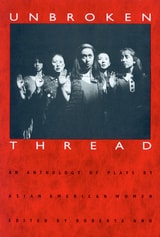
Unbroken Thread
An Anthology of Plays by Asian American WomenRoberta Uno
University of Massachusetts Press, 1993
This book contains plays by Genny Lim (Paper Angels), Wakako Yamauchi (The MusicLessons), Momoko Iko (Gold Watch),Velina Hasu Houston (Tea), Jeannie Barroga (Walls), and Elizabeth Wong (Letters to a Student Revolutionary). The volume includes an extended introduction, a profile of each playwright, and an appendix. The six plays of this anthology represent some of the best dramatic literature written by Asian American women since the 1970s. Each is a groundbreaking work and addresses in its own way the experiences of Asians in America. All six playwrights are American-born daughters of Asian immigrants, and their voices span the genres of naturalism, impressionism, ritual drama, postmodern collage, and media-influenced episodic drama.
Unburied Bodies
Subversive Corpses and the Authority of the DeadJames R. Martel
Amherst College Press, 2018
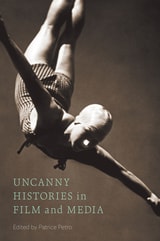
Uncanny Histories in Film and Media
Patrice Petro
Rutgers University Press, 2022
Uncanny Subjects
Aging in Contemporary NarrativeAmelia DeFalco
The Ohio State University Press, 2009
In the United States anti-aging is a multibillion-dollar industry, and efforts to combat signs of aging have never been stronger, or more lucrative. Although there are many sociological studies of aging and culture, there are few studies that examine the ways cultural texts construct multiple narratives of aging that intersect and sometimes conflict with existing social theories of aging. In Uncanny Subjects, Amelia DeFalco incorporates methodologies and theories derived from the humanities in her investigation into contemporary representations of aging.
Both aging and narrative are a function of time, of change, of one event happening after another. Subjects understand their lives through narrative trajectories—not necessarily as they are living moment to moment, but in the sort of reflection that many argue becomes more prevalent with age. As a result, narrative fiction provides compelling representations of the strange—indeed uncanny—familiarity of the aging self.
DeFalco examines a range of contemporary fiction and film by authors and directors such as John Banville, John Cassavetes, and Alice Munro. As these texts suggest, old age involves a growing awareness of the otherness within, an awareness that reveals identity as multiple, shifting, and contradictory—in short, uncanny. Drawing together theories of the uncanny with research on aging and temporality, DeFalco argues that aging is a category of difference integral to a contemporary understanding of identity and alterity.
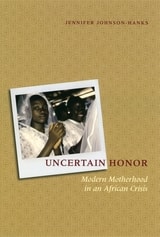
Uncertain Honor
Modern Motherhood in an African CrisisJennifer Johnson-Hanks
University of Chicago Press, 2005
Combining insights from demography and cultural anthropology, Johnson-Hanks argues that Beti women delay motherhood as part of a broader attempt to assert a modern form of honor only recently made possible by formal education, Catholicism, and economic change. Through itinerant school careers and manipulations of marriage, educated Beti women now manage their status as mothers in order to coordinate major life events in the face of social and economic uncertainty.
Carefully researched and clearly written, Uncertain Honor offers an intimate look at the lives of African women trying to reconcile motherhood with new professional roles in a context of dramatic social change.
Uncertain Times
Anthropological Approaches to Labor in a Neoliberal WorldE. Paul Durrenberger
University Press of Colorado, 2017
In this first-ever collection of labor anthropology from around the world, the contributors to Uncertain Times assert that traditional labor unions have been co-opted by neoliberal policies of corporate capital and have become service organizations rather than drivers of social movements. The current structure of labor unions facilitates corporations’ need for a stable labor force while reducing their power to prevent outsourcing, subcontracting, and other methods of undercutting worker security and union power. Through case studies from Switzerland, Israel, Argentina, Mexico, the United States, Greece, Sweden,Turkey, Brazil and Spain, the authors demonstrate that this process of neutering unions has been uneven across time and space. They also show that the potential exists for renewed union power based on more vociferous and creative collective action. These firsthand accounts—from activist anthropologists in the trenches as union members and staff, as well as academics analyzing policy, law, worker organizing, and community impact—illustrate the many approaches that workers around the world are taking to reclaim their rights in this ever-shifting labor landscape.
Uncertain Times is the first book to use this crucial comparative, ethnographic approach for understanding the new rules of the global labor struggle and the power workers have to change those rules. The volume will be of great interest to students and scholars of anthropology, sociology of work, and labor studies; labor union leadership; and others interested in developing innovative methods for organizing working people, fomenting class consciousness, and expanding social movements.
Contributors: Alpkan Birelma, Emma Braden, Maria Eugenia de la O, Christopher Kelley, Staffan Löfving, Gadi Nissim, Darcy Pan, Steven Payne, Alicia Reigada, Julia Soul, Manos Spyridakis, Christian Zlolniski

Uncertainties Of Knowledge
Immanuel Wallerstein
Temple University Press, 2004
Unchanged Trebles
What Boy Choirs Teach Us About Motherhood and MasculinityRebekah Peeples
Rutgers University Press, 2026
In Unchanged Trebles, Rebekah Peeples charts an unexpected, thought-provoking, and deeply personal journey into the peculiar world of contemporary boy choirs, where boys learn to do something together that they’re often embarrassed to do alone: sing in their soprano voices. Considering her experience as the unlikely mother of a boy soprano alongside dozens of interviews with current directors and former choristers, she argues that some of the tools for creating a more gender-inclusive future can be found in an ancient tradition that has long recognized gender fluidity within the pre-pubescent male body. With humor, insight, and the voice of a gifted storyteller, Unchanged Trebles explores a cultural tradition in which singing and expressing emotion are encouraged for boys, showing them a more expansive form of masculinity as they transition from boyhood to manhood.
Uncharitable
How Restraints on Nonprofits Undermine Their PotentialDan Pallotta
University Press of New England, 2010
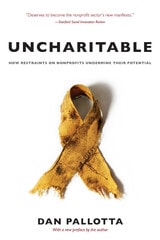
Uncharitable
How Restraints on Nonprofits Undermine Their PotentialDan Pallotta
Brandeis University Press, 2022
Uncharitable goes where no other book on the nonprofit sector has dared to tread. Where other texts suggest ways to optimize performance inside the existing charity paradigm, Uncharitable suggests that the paradigm itself is the problem and calls into question our fundamental canons about charity. Dan Pallotta argues that society’s nonprofit ethic creates an inequality that denies the nonprofit sector critical tools and permissions that the for-profit sector is allowed to use without restraint. These double standards place the nonprofit sector at an extreme disadvantage. While the for-profit sector is permitted to use all the tools of capitalism, the nonprofit sector is prohibited from using any of them. Capitalism is blamed for creating inequities in our society, but charity is prohibited from using the tools of capitalism to rectify them—and ironically, this is all done in the name of charity. This irrational system, Pallotta explains, has its roots in four-hundred-year-old Puritan ethics that banished self-interest from the realm of charity. The ideology is policed today by watchdog agencies and the use of so-called efficiency measures, which Pallotta argues are flawed, unjust, and should be abandoned. By declaring our independence from these obsolete ideas, Pallotta theorizes, we can dramatically accelerate progress on the most urgent social issues of our time. Uncharitable is an important, provocative, timely, and accessible book—a manifesto about equal economic rights for charity. This edition has a new, updated introduction by the author.
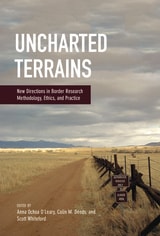
Uncharted Terrains
New Directions in Border Research Methodology, Ethics, and PracticeEdited by Anna Ochoa O’Leary, Colin M. Deeds, and Scott Whiteford
University of Arizona Press, 2013
Each chapter raises methodological and ethical questions relevant to conducting research in transnational contexts, which can frequently be unpredictable or even volatile. The volume addresses the central question of how can scholars work with vulnerable migrant populations along the perilous US–Mexico border and maintain ethical and methodological standards, while also providing useful knowledge to stakeholders? Not only may immigrants be afraid to provide information that could be incriminating, but researchers may also be reluctant to allow their findings to become the basis of harsher law enforcement, unjustly penalize the subjects of their research, and inhibit the formulation of humane and effective immigration policy based on scholarly research.
All of these concerns, which are perfectly legitimate from the social scientists’ point of view, can put researchers into conflict with legal authorities. Contributors acknowledge their quandaries and explain how they have dealt with them. They use specific topics—reproductive health issues and sexually transmitted diseases among immigrant women, a study of undocumented business owners, and the administration of the Mexican Household Survey in Phoenix, among others—to outline research methodology that will be useful for generations of border researchers.
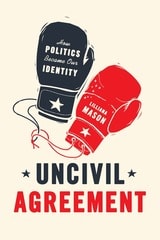
Uncivil Agreement
How Politics Became Our IdentityLilliana Mason
University of Chicago Press, 2018
Political polarization in America is at an all-time high, and the conflict has moved beyond disagreements about matters of policy. For the first time in more than twenty years, research has shown that members of both parties hold strongly unfavorable views of their opponents. This is polarization rooted in social identity, and it is growing. The campaign and election of Donald Trump laid bare this fact of the American electorate, its successful rhetoric of “us versus them” tapping into a powerful current of anger and resentment.
With Uncivil Agreement, Lilliana Mason looks at the growing social gulf across racial, religious, and cultural lines, which have recently come to divide neatly between the two major political parties. She argues that group identifications have changed the way we think and feel about ourselves and our opponents. Even when Democrats and Republicans can agree on policy outcomes, they tend to view one other with distrust and to work for party victory over all else. Although the polarizing effects of social divisions have simplified our electoral choices and increased political engagement, they have not been a force that is, on balance, helpful for American democracy. Bringing together theory from political science and social psychology, Uncivil Agreement clearly describes this increasingly “social” type of polarization in American politics and will add much to our understanding of contemporary politics.
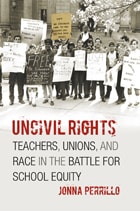
Uncivil Rights
Teachers, Unions, and Race in the Battle for School EquityJonna Perrillo
University of Chicago Press, 2012
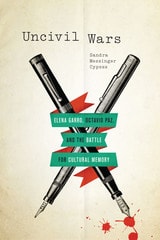
Uncivil Wars
Elena Garro, Octavio Paz, and the Battle for Cultural MemoryBy Sandra Messinger Cypess
University of Texas Press, 2012
The first English-language book to place the works of Elena Garro (1916–1998) and Octavio Paz (1914–1998) in dialogue with each other, Uncivil Wars evokes the lives of two celebrated literary figures who wrote about many of the same experiences and contributed to the formation of Mexican national identity but were judged quite differently, primarily because of gender.
While Paz’s privileged, prize-winning legacy has endured worldwide, Garro’s literary gifts garnered no international prizes and received less attention in Latin American literary circles. Restoring a dual perspective on these two dynamic writers and their world, Uncivil Wars chronicles a collective memory of wars that shaped Mexico, and in turn shaped Garro and Paz, from the Conquest period to the Mexican Revolution; the Spanish Civil War, which the couple witnessed while traveling abroad; and the student massacre at Tlatelolco Plaza in 1968, which brought about social and political changes and further tensions in the battle of the sexes. The cultural contexts of machismo and ethnicity provide an equally rich ground for Sandra Cypess’s exploration of the tandem between the writers’ personal lives and their literary production. Uncivil Wars illuminates the complexities of Mexican society as seen through a tense marriage of two talented, often oppositional writers. The result is an alternative interpretation of the myths and realities that have shaped Mexican identity, and its literary soul, well into the twenty-first century.
Uncivil Youth
Race, Activism, and Affirmative GovernmentalitySoo Ah Kwon
Duke University Press, 2013
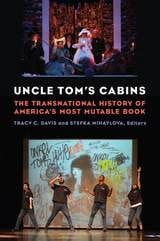
Uncle Tom's Cabins
The Transnational History of America's Most Mutable BookTracy C. Davis and Stefka Mihaylova, Editors
University of Michigan Press, 2018
Throughout these encounters, Stowe’s story of American slavery serves as a paradigm for understanding oppression, selectively and strategically refracting the African American slave onto other iconic victims and freedom fighters. The book brings together performance historians, literary critics, and media theorists to demonstrate how the myriad cultural and political effects of Stowe’s enduring story has transformed it into a global metanarrative with national, regional, and local specificity.
Unclenching Our Fists
Abusive Men on the Journey to NonviolenceSara Elinoff Acker
Vanderbilt University Press, 2013
Surrounding this material are chapters that provide context about the disputes among researchers about whether batterer intervention programs work (only a small number of batterers renounce their abuse) and chapters that address the reactions of partners to these stories. "When the Man You Love is Abusive" is designed to caution women not to be manipulated by accounts of change and to outline the stages men need to pass through in the long process of becoming accountable. "The Last Word: Voices of Survivors" ends the book with a focus group discussion in which former abuse victims and advocates respond candidly to the men's stories.
Uncommon Goods
Global Dimensions of the ReadymadeJaimey Hamilton Faris
Intellect Books, 2013
Since Marcel Duchamp created his “readymades” a century ago—most famously christening a urinal as a fountain— the practice of incorporating commodity objects into art has become ever more pervasive. Uncommon Goods traces one particularly important aspect of that progression: the shift in artistic concern toward the hidden ethical dimensions of global commerce. Jaimey Hamilton Faris discusses the work of, among many others, Ai Weiwei, Cory Arcangel, Thomas Hirschhorn, and Santiago Sierra, reading their artistic explorations as overlapping with debates about how common goods hold us and our world in common. The use of readymade now registers concerns about international migrant labor, outsourced manufacturing, access to natural resources, intellectual copyright, and the commoditization of virtual space.
In each chapter, Hamilton Faris introduces artists who exemplify the focus of readymade aesthetics on aspects of global commodity culture, including consumption, marketing, bureaucracy, labor, and community. She explores how materially intensive, “uncommon” aesthetic situations can offer moments to meditate on the kinds of objects, experiences, and values we ostensibly share in the age of globalization. The resulting volume will be an important contribution to scholarship on readymade art as well as to the study of materiality, embodiment, and globalization.
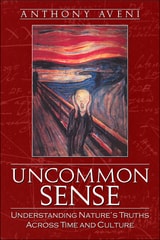
Uncommon Sense
Understanding Nature's Truths Across Time and CultureAnthony Aveni
University Press of Colorado, 2006
In ten fascinating essays, Aveni examines topics that have absorbed scientists, religious figures, and ordinary citizens over the centuries. He traces the tug of war between astronomy and astrology, reveals the underpinnings of our notions of cartography and the representation of space and time, and much more.
Readers interested in science, history, and world cultures will revel in this celebration of different cultures’ common and uncommon questions and conclusions about the natural world.
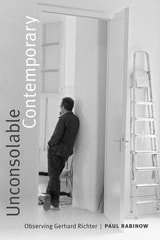
Unconsolable Contemporary
Observing Gerhard RichterPaul Rabinow
Duke University Press, 2017
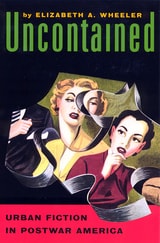
Uncontained
Urban Fiction in Postwar AmericaWheeler, Elizabeth A.
Rutgers University Press, 2001
In the postwar era, American urban fiction is dominated by the imagery of containment. Across the fictional landscape, the city is divided into segregated zones, marked by the threat of inevitable violence, and set off from the safety of equally contained suburbs. Mean and dangerous, the city can only be navigated by a solitary expert, alienated and male. In Uncontained, Elizabeth A. Wheeler offers a critique of this familiar story-evident in the noir. narratives of James M. Cain and in work by Ellison, Roth, Salinger, Percy, Capote, and others —and challenges its link to the postwar city.
Discussing film, short stories, and novels from a cross-section of American cities, Wheeler integrates these stories of containment into a shared pattern and reads them across a broad spectrum of famous and forgotten works by men and women of various ethnic and literary traditions to reveal a larger vision of postwar America. Knowing that containment is never the entire story, that diversity or trauma always shows itself, she shows how the uncontained has shaped the historical moment. Aware that liberating counterstories do get told, she places them in dialogue with those of the alienated man, the war veteran, Beat hipster, noir detective, and ironic suburbanite — in historical context — and revives the idea of urban space as a place of openness, thereby challenging a literary containment of racial difference, gender, and sexuality. By reading Paule Marshall in tandem with Philip Roth, Wheeler explores the relationships between adjacent neighborhoods and reconnects separate literary and geographic areas. By bringing Ann Bannon's lesbian pulp fiction, Hubert Selby's cult novels, or the work of John Okada, Hisaye Yamamoto, Chester Himes, Gwendolyn Brooks's, Jo Sinclair, and many others to bear on more canonical texts, she offers a more complete understanding of this period of American fiction — one that points toward a city that is open and inclusive.
Uncontained suggests that while decline, division, and decay form a major part of the story of mid-century urban America, the postwar city also represents much of what is best about American life. Rather than reproducing the containment of culture, Wheeler places together the wildly disparate to show how we move beyond containment.
Uncontained
Urban Fiction in Postwar AmericaWheeler, Elizabeth A.
Rutgers University Press, 2001
In the postwar era, American urban fiction is dominated by the imagery of containment. Across the fictional landscape, the city is divided into segregated zones, marked by the threat of inevitable violence, and set off from the safety of equally contained suburbs. Mean and dangerous, the city can only be navigated by a solitary expert, alienated and male. In Uncontained, Elizabeth A. Wheeler offers a critique of this familiar story-evident in the noir. narratives of James M. Cain and in work by Ellison, Roth, Salinger, Percy, Capote, and others —and challenges its link to the postwar city.
Discussing film, short stories, and novels from a cross-section of American cities, Wheeler integrates these stories of containment into a shared pattern and reads them across a broad spectrum of famous and forgotten works by men and women of various ethnic and literary traditions to reveal a larger vision of postwar America. Knowing that containment is never the entire story, that diversity or trauma always shows itself, she shows how the uncontained has shaped the historical moment. Aware that liberating counterstories do get told, she places them in dialogue with those of the alienated man, the war veteran, Beat hipster, noir detective, and ironic suburbanite — in historical context — and revives the idea of urban space as a place of openness, thereby challenging a literary containment of racial difference, gender, and sexuality. By reading Paule Marshall in tandem with Philip Roth, Wheeler explores the relationships between adjacent neighborhoods and reconnects separate literary and geographic areas. By bringing Ann Bannon's lesbian pulp fiction, Hubert Selby's cult novels, or the work of John Okada, Hisaye Yamamoto, Chester Himes, Gwendolyn Brooks's, Jo Sinclair, and many others to bear on more canonical texts, she offers a more complete understanding of this period of American fiction — one that points toward a city that is open and inclusive.
Uncontained suggests that while decline, division, and decay form a major part of the story of mid-century urban America, the postwar city also represents much of what is best about American life. Rather than reproducing the containment of culture, Wheeler places together the wildly disparate to show how we move beyond containment.
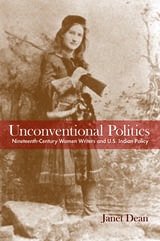
Unconventional Politics
Nineteenth-Century Women Writers and U.S. Indian PolicyJanet Dean
University of Massachusetts Press, 2016
Dean argues that in protesting U.S. Indian policy through popular genres, Wakefield, Sigourney, Callahan, and Eddleman also critiqued cultural protocols and stretched the contours of accepted modes of feminine discourse. Their acts of improvisation and reinvention tell a new story about the development of American women's writing and political expression.
Unconventional Sisterhood
Feminist Catholic Nuns in the PhilippinesHeather L. Claussen
University of Michigan Press, 2001
This work represents an important addition to scholarship on Philippine feminism. It is one of few ethnographies that focuses on female monasticism--of particular cultural importance in the Christian Philippines, where nuns enjoy relatively high social status and freedom from many of the traditional constraints delineating Filipina lives. It is noteworthy as well for its focus on metropolitan Manila--a socially complex, dynamic, diverse, and understudied environment.
Heather L. Claussen is an anthropologist currently living in Santa Cruz, California.

Unconventional Sisterhood
Feminist Catholic Nuns in the PhilippinesHeather L. Claussen
University of Michigan Press, 0
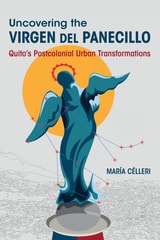
Uncovering the Virgen del Panecillo
Quito’s Postcolonial Urban TransformationsMaría Célleri
University of Illinois Press, 2026
María Célleri examines the eighty-year effort to complete Quito’s soaring monument to the Virgin Mary. Focusing on the negotiations behind the project, Célleri uncovers the links between the government and Church—links that became stronger during moments of political and economic transition. Célleri also investigates how the city’s residents and activists, and artists like filmmakers, graffiti artists, and photographers, interact with the monument. Throughout, she looks at questions like the Virgen del Panecillo’s service to Ecuador as a form of cultural capital, the Virgen’s symbolic meanings to different groups, and the often-hidden connections between colonialism, Catholicism, and artistic production.
Original and multifaceted, Uncovering the Virgen del Panecillo provides readers with a rigorous decolonial analysis of an iconic monument and its history.
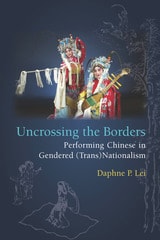
Uncrossing the Borders
Performing Chinese in Gendered (Trans)NationalismDaphne P. Lei
University of Michigan Press, 2019
Over many centuries, women on the Chinese stage committed suicide in beautiful and pathetic ways just before crossing the border for an interracial marriage. Uncrossing the Borders asks why this theatrical trope has remained so powerful and attractive. The book analyzes how national, cultural, and ethnic borders are inevitably gendered and incite violence against women in the name of the nation. The book surveys two millennia of historical, literary, dramatic texts, and sociopolitical references to reveal that this type of drama was especially popular when China was under foreign rule, such as in the Yuan (Mongol) and Qing (Manchu) dynasties, and when Chinese male literati felt desperate about their economic and political future, due to the dysfunctional imperial examination system. Daphne P. Lei covers border-crossing Chinese drama in major theatrical genres such as zaju and chuanqi, regional drama such as jingju (Beijing opera) and yueju (Cantonese opera), and modernized operatic and musical forms of such stories today.