Results by title
1861 books match the query 'Social life and customs' and 20 start with u
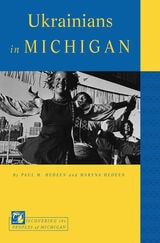
Ukrainians in Michigan
Paul M. Hedeen
Michigan State University Press, 2023
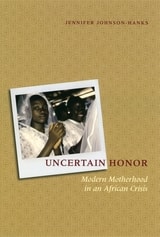
Uncertain Honor
Modern Motherhood in an African CrisisJennifer Johnson-Hanks
University of Chicago Press, 2005
Combining insights from demography and cultural anthropology, Johnson-Hanks argues that Beti women delay motherhood as part of a broader attempt to assert a modern form of honor only recently made possible by formal education, Catholicism, and economic change. Through itinerant school careers and manipulations of marriage, educated Beti women now manage their status as mothers in order to coordinate major life events in the face of social and economic uncertainty.
Carefully researched and clearly written, Uncertain Honor offers an intimate look at the lives of African women trying to reconcile motherhood with new professional roles in a context of dramatic social change.
Unchanged Trebles
What Boy Choirs Teach Us About Motherhood and MasculinityRebekah Peeples
Rutgers University Press, 2026
In Unchanged Trebles, Rebekah Peeples charts an unexpected, thought-provoking, and deeply personal journey into the peculiar world of contemporary boy choirs, where boys learn to do something together that they’re often embarrassed to do alone: sing in their soprano voices. Considering her experience as the unlikely mother of a boy soprano alongside dozens of interviews with current directors and former choristers, she argues that some of the tools for creating a more gender-inclusive future can be found in an ancient tradition that has long recognized gender fluidity within the pre-pubescent male body. With humor, insight, and the voice of a gifted storyteller, Unchanged Trebles explores a cultural tradition in which singing and expressing emotion are encouraged for boys, showing them a more expansive form of masculinity as they transition from boyhood to manhood.
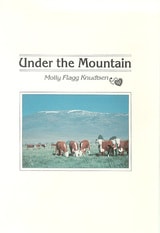
Under The Mountain
Molly Flagg Knudtsen
University of Nevada Press, 1982
This collection of vignettes about life in Central Nevada is much more than a historical document. According to author Molly Knudtsen, “These are the stories neighbors and families tell, where fact grows just a little larger than life. This is the stuff of legend.” The book focuses on a time when splendorous houses decorated the windswept valleys of Central Nevada; where fearless, stouthearted men and women braved the elements to survive and seek their fortune; and when people who loved the land clung to it and gave it a character all its own. These tales capture the spirit and folklore of early-day Central Nevada and illustrate the effect on its present-day inhabitants. Molly Knudtsen shares the experience of riding horseback through some of the great archaeological finds of the valley. She divulges the secret of converting flour, yeast, and potato water into a perfect loaf of bread. And through colorful anecdotes, she passes along the legendary accounts of Colonel Dave Buel.
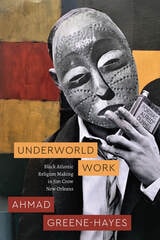
Underworld Work
Black Atlantic Religion Making in Jim Crow New OrleansAhmad Greene-Hayes
University of Chicago Press, 2025
When Zora Neale Hurston traveled to New Orleans, she encountered a religious underworld, a beautiful anarchy of spiritual life. In Underworld Work, Ahmad Greene-Hayes follows Hurston on a journey through the rich tapestry of Black religious expression from emancipation through Jim Crow. He looks within and beyond the church to recover the diverse leadership of migrants, healers, dissidents, and queer people who transformed their marginalized homes, bars, and street corners into sacred space.
Greene-Hayes shows how, while enclosed within an anti-black world, these outcasts embraced Africana esotericisms—ancestral veneration, faith healing, spiritualized sex work, and more—to conjure a connection to freer worlds past and yet to come. In recovering these spiritual innovations, Underworld Work celebrates the resilience and creativity of Africana religions.

Undressed Toronto
From the Swimming Hole to Sunnyside, How a City Learned to Love the Beach, 1850–1935Dale Barbour
University of Manitoba Press, 2021
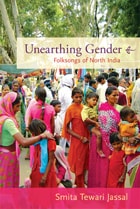
Unearthing Gender
Folksongs of North IndiaSmita Tewari Jassal
Duke University Press, 2012
The significance of these folksongs, Jassal argues, lies in their suggesting and hinting at themes, rather than directly addressing them: women sing what they often cannot talk about. Women’s lives, their feelings, their relationships, and their social and familial bonds are persuasively presented in song. For the ethnographer, the songs offer an entry into the everyday cultures of marginalized groups of women who have rarely been the focus of systematic analytical inquiry.
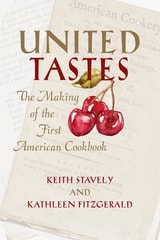
United Tastes
The Making of the First American CookbookKeith Stavely
University of Massachusetts Press, 2017
Winner of the 2017 Bruce Fraser Award from the Association for the Study of Connecticut History
The Library of Congress has designated American Cookery (1796) by Amelia Simmons one of the eighty-eight “Books That Shaped America.” Its recognition as “the first American cookbook” has attracted an enthusiastic modern audience of historians, food journalists, and general readers, yet until now American Cookery has not received the sustained scholarly attention it deserves. Keith Stavely and Kathleen Fitzgerald's United Tastes fills this gap by providing a detailed examination of the social circumstances and culinary tradition that produced this American classic.
Situating American Cookery within the post-Revolutionary effort to develop a distinct national identity, Stavely and Fitzgerald demonstrate the book's significance in cultural as well as culinary terms. Ultimately the separation between these categories dissolves as the authors show that the formation of “taste,” in matters of food as well as other material expressions, was essential to building a consensus on what it was to be American. United Tastes explores multiple histories—of food, cookbooks, printing, material and literary culture, and region—to illuminate the meaning and affirm the importance of America's first cookbook.
Unknowing and the Everyday
Sufism and Knowledge in IranSeema Golestaneh
Duke University Press, 2023
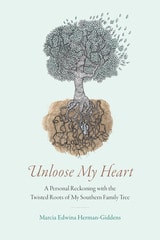
Unloose My Heart
A Personal Reckoning with the Twisted Roots of My Southern Family TreeMarcia Edwina Herman-Giddens
University of Alabama Press, 2023
A deeply personal memoir that unearths a family history of racism, slaveholding, and trauma as well as love and sparks of delight.
Marcia Herman’s family moved to Birmingham in 1946, when she was five years old, and settled in the steel-making city dense with smog and a rigid apartheid system. Marcia, a shy only child, struggled to fit in and understand this world, shadowed as it was by her mother’s proud antebellum heritage. In 1966, weary of Alabama’s toxic culture, Marcia and her young family left Birmingham and built a life in North Carolina.
Later in life, Herman-Giddens resumed a search to find out what she did not know about her family history. Unloose My Heart interweaves the story of her youth and coming of age in Birmingham during the Civil Rights Movement together with this quest to understand exactly who and what her maternal ancestors were and her obligations as a white woman within a broader sense of American family.
More than a memoir set against the backdrop of Jim Crow and the civil rights struggle, this is the work of a woman of conscience writing in the twenty-first century. Haunted by the past, Unloose My Heart is a journey of exploration and discovery, full of angst, sorrow, and yearning. Unearthing her forebears’ centuries-long embrace of plantation slavery, Herman-Giddens dug deeply to parse the arrogance and cruelty necessary to be a slaveholder and the trauma and fear that ripple out in its wake. All this forced her to scrutinize the impact of this legacy in her life, as well as her debt to the enslaved people who suffered and were exploited at her ancestors’ hands. But she also discovers lost connections, new cousins and friends, unexpected joys, and, eventually, a measure of peace in the process. With heartbreak, moments of grace, and an enduring sense of love, Unloose My Heart shines a light in the darkness and provides a model for a heartfelt reckoning with American history.
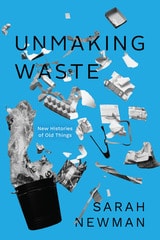
Unmaking Waste
New Histories of Old ThingsSarah Newman
University of Chicago Press, 2023
Garbage is often assumed to be an inevitable part and problem of human existence. But when did people actually come to think of things as “trash”—as becoming worthless over time or through use, as having an end?
Unmaking Waste tackles these questions through a long-term, cross-cultural approach. Drawing on archaeological finds, historical documents, and ethnographic observations to examine Europe, the United States, and Central America from prehistory to the present, Sarah Newman traces how different ideas about waste took shape in different times and places. Newman examines what people consider to be “waste” and how they interact with it, as well as what happens when different perceptions of trash come into conflict. Conceptions of waste have shaped forms of reuse and renewal in ancient Mesoamerica, early modern ideas of civility and forced religious conversion in New Spain, and even the modern discipline of archaeology. Newman argues that centuries of assumptions imposed on other places, times, and peoples need to be rethought. This book is not only a broad reconsideration of waste; it is also a call for new forms of archaeology that do not take garbage for granted. Unmaking Waste reveals that waste is not—and never has been—an obvious or universal concept.
Unmasking Class, Gender, and Sexuality in Nicaraguan Festival
Katherine Borland
University of Arizona Press, 2006
The first extended study in English of Nicaraguan festival arts, Unmasking Class, Gender, and Sexuality in Nicaraguan Festival is an ethnographically and historically grounded inquiry into three festival enactments during the Somoza, Sandinista, and Neoliberal periods: the carnivalesque torovenado masquerades, the transvestite Negras marimba dances, and the wagon pilgrimage to Popoyuapa. Through a series of interlinked essays, Katherine Borland shows that these enactments constitute a people’s theater, articulating a range of perspectives on the homegrown and the global; on class, race, and ethnicity; on gender and sexuality; and on religious sensibilities.
Borland’s book is a case study of how the oppositional power of popular culture resides in the process of cultural negotiation itself as communities deploy cherished traditions to assert their difference from the nation and the world. It addresses both the gendered dimensions of a particular festival masquerade and the ways in which sexuality is managed in traditional festival transvestism. It demonstrates how performativity and theatricality interact to negotiate certain crucial realities in a festival complex. By showing how one locale negotiates, incorporates, and resists globally circulating ideas, identities, and material objects, it makes a major contribution to studies of ritual and festival in Latin America.
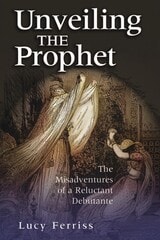
Unveiling the Prophet
The Misadventures of a Reluctant DebutanteLucy Ferriss
University of Missouri Press, 2005
Up South in the Ozarks
Dispatches from the MarginsBrooks Blevins
University of Arkansas Press, 2022
Historian Brooks Blevins has spent his life studying and writing about the people of his native regions—the South and the Ozarks. He has been in the vanguard of a new and vibrant Ozarks Studies movement that has worked to refract the stories of Ozarkers through a more realistic and less exotic lens. In Up South in the Ozarks: Dispatches from the Margins, Blevins introduces us with humor and fairness to mostly unseen lives of the past and present: southern gospel singing schools and ballad collectors, migratory cotton pickers and backroad country storekeepers, fireworks peddlers and impoverished diarists.
Part historical and part journalistic, Blevins’s essays combine the scholarly sensibilities of a respected historian with the insights of someone raised in rural hill country. His stories of marginalized characters often defy stereotype. They entertain as much as they educate. And most of them originate in the same place Blevins does: up south in the Ozarks.
Up in the Rocky Mountains
Writing the Swedish Immigrant ExperienceJennifer Eastman Attebery
University of Minnesota Press, 2007
Before the turn of the twentieth century, many Swedish men emigrated to the American Rockies as itinerant laborers, drawn by the region’s developing industries. Single Swedish women ventured west, too, and whole families migrated, settling into farm communities. By 1920, one-fifth of all Swedish immigrants were living in the West.
In Up in the Rocky Mountains, Jennifer Eastman Attebery offers a new perspective on Swedish immigrants’ experiences in Idaho, Montana, Utah, Wyoming, Colorado, and New Mexico from 1880 to 1917 by interpreting their letters home. Considering more than three hundred letters, Attebery analyzes their storytelling, repetitive language, traditional phrasing, and metaphoric images. Recognizing the letters’ power as a folk form, Attebery sees in them the writers’ relationships back in Sweden as well as their encounters with religious and labor movements, regionalism, and nationalism in their new country.
By defining personal letters as a vernacular genre, Attebery provides a model for discerning immigrants’ shared culture in correspondence collections. By studying their words, she brings to life small Swedish communities throughout the Rocky Mountain region.
Jennifer Eastman Attebery is professor of English and director of American studies at Idaho State University.
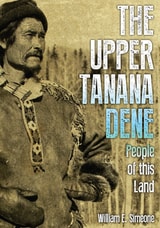
Upper Tanana Dene
People of This Landby William E. Simeone
University of Alaska Press, 2022
As young Dene migrate to towns and cities far from their homeland on the upper Tanana River of east central Alaska, they may never learn what it was like living from the land. In these interviews elders express concern that young Dene are becoming ignorant of the traditions that made their ancestors disciplined and strong enough to withstand the rigors of life on the land. The old life was taxing and made demands on the body and soul, and the struggle to achieve security placed a premium on knowledge, endurance, and constant effort. Modern conveniences have made life easier, but elders believe their knowledge is still vital to the survival of future generations.
With text in both Dene and English, The Upper Tanana Dene is a link to Dene experiences, lives, and understanding of the world and is meant for those interested in Dene heritage, as well as students and scholars of cultural and ethnic studies and history.
Urban Nightlife
Entertaining Race, Class, and Culture in Public SpaceMay, Reuben A. Buford
Rutgers University Press, 2014
Watch video now. (http://www.youtube.com/watch?v=VCs1xExStPw).

Us Against Them
Ethnocentric Foundations of American OpinionDonald R. Kinder and Cindy D. Kam
University of Chicago Press, 2009
Ethnocentrism—our tendency to partition the human world into in-groups and out-groups—pervades societies around the world. Surprisingly, though, few scholars have explored its role in political life. Donald Kinder and Cindy Kam fill this gap with Us Against Them, their definitive explanation of how ethnocentrism shapes American public opinion.
Arguing that humans are broadly predisposed to ethnocentrism, Kinder and Kam explore its impact on our attitudes toward an array of issues, including the war on terror, humanitarian assistance, immigration, the sanctity of marriage, and the reform of social programs. The authors ground their study in previous theories from a wide range of disciplines, establishing a new framework for understanding what ethnocentrism is and how it becomes politically consequential. They also marshal a vast trove of survey evidence to identify the conditions under which ethnocentrism shapes public opinion. While ethnocentrism is widespread in the United States, the authors demonstrate that its political relevance depends on circumstance. Exploring the implications of these findings for political knowledge, cosmopolitanism, and societies outside the United States, Kinder and Kam add a new dimension to our understanding of how democracy functions.
Usable Pasts
Traditions and Group Expressions in North AmericaTad Tuleja
Utah State University Press, 1997
Ute Indians of Utah, Colorado, and New Mexico
Virginia McConnell Simmons
University Press of Colorado, 2000