1927 books match the query 'Technology & Engineering' and 25 start with u

cover of U.S. Engineering in a Global Economy

U.S. Engineering in a Global Economy

Edited by Richard B. Freeman and Hal Salzman

University of Chicago Press, 2018

Since the late 1950s, the engineering job market in the United States has been fraught with fears of a shortage of engineering skill and talent. U.S. Engineering in a Global Economy brings clarity to issues of supply and demand in this important market. Following a general overview of engineering-labor market trends, the volume examines the educational pathways of undergraduate engineers and their entry into the labor market, the impact of engineers working in firms on productivity and innovation, and different dimensions of the changing engineering labor market, from licensing to changes in demand and guest worker programs.

The volume provides insights on engineering education, practice, and careers that can inform educational institutions, funding agencies, and policy makers about the challenges facing the United States in developing its engineering workforce in the global economy.
[more]
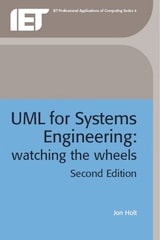
cover of UML for Systems Engineering: Watching the wheels

UML for Systems Engineering

Watching the wheels

Jon Holt

The Institution of Engineering and Technology, 2004
Up until a few years ago there were many different modelling languages available to software developers. However, this vast array of choice only served to hinder communication and as a result the Unified Modelling Language (UML) was born. Although the UML has its roots firmly in the software world, the benefits of adopting a standard visual notation have been recognised in many other fields, not least of which is the field of systems engineering. This book concentrates on systems-based applications, rather than the traditional software applications that are more usually associated with the UML. Now fully updated to reflect the changes to UML for its version 2.0 release, this new edition has been substantially re-written and includes new material on systems architectures and life cycle management.
[more]
cover of Ultra-Wideband Surveillance Radar

Ultra-Wideband Surveillance Radar

Mark E. Davis

The Institution of Engineering and Technology, 2021

Ultra-Wideband Surveillance Radar is an emerging technology for detecting and characterizing targets and cultural features for military and geosciences applications. To characterize objects near and under severe clutter, it is necessary to have fine range and cross range resolution. The resultant wide bandwidth classifies the systems as ultra-wideband, requiring special treatment in system technology and frequency allocation.
[more]
cover of Ultracapacitor Applications

Ultracapacitor Applications

John M. Miller

The Institution of Engineering and Technology, 2011

Energy storage and in particular electrical storage of energy has become a very talked about topics in circles, ranging from lay person in regard to hybrid and battery electric vehicles, to professional and certainly by legislators and energy policy makers in government. But even to professional the distinction between physical and chemical forms of electric energy storage are unclear and at times poorly understood, if at all. This book takes a critical look at physical storage of electricity in the devices known collectively as electrochemical capacitors and particularly as ultracapacitors. In its 12 chapters, this text covers ultracapacitors and advances battery topics with emphasis on clear understanding of fundamental principles, models and applications. The reader will appreciates the case studies ranging from commercial to industrial to automotive applications of not only ultracapacitors but these power device components in combination with energy dense battery technologies.
[more]
cover of Ultrawideband Radar Measurements: Analysis and processing

Ultrawideband Radar Measurements

Analysis and processing

L.Y. Astanin

The Institution of Engineering and Technology, 1997
Interest in the applications of ultrawideband (UWB) radar systems is increasing rapidly all over the world. This is evident from the number of monographs recently published on the subject and from the many papers presented at international conferences on the general problems involved in UWB radar and on its promising new applications. Conventional (classical) methods seem to have exhausted their potential and studies in the field are undergoing a profound change. This book presents some of the novel approaches to radar system analysis now being investigated.
[more]
cover of Uncertainty Quantification of Electromagnetic Devices, Circuits, and Systems

Uncertainty Quantification of Electromagnetic Devices, Circuits, and Systems

Sourajeet Roy

The Institution of Engineering and Technology, 2022

Uncertainty Quantification of Electromagnetic Devices, Circuits, and Systems describes the advances made over the last decade in the topic of uncertainty quantification (UQ) and stochastic analysis. The primary goal of the book is to educate and inform electronics engineers about the most recent numerical techniques, mathematical theories, and computational methods to perform UQ for electromagnetic devices, circuits, and systems.
[more]
cover of Undead Science: Science Studies and the Afterlife of Cold Fusion

Undead Science

Science Studies and the Afterlife of Cold Fusion

Simon, Bart

Rutgers University Press, 2002

Undead Science examines the story of cold fusion, one of the most publicized scientific controversies of the late twentieth century. In 1989 two Utah-based “discoverers” claimed to have developed an electrochemical process that produced more energy than was required to initiate the process. Finding no other explanation, the researchers described their findings as some kind of nuclear reaction. If they were correct, an important new energy source would have been found. Objections surfaced quickly, and in the year that followed, hundreds of scientists worldwide attempted to reproduce these results. Most, though not all, failed, and the controversy became increasingly antagonistic. By 1990, general scientific opinion favored the skeptics and experimental work went into a steep decline. Nevertheless, many scientists continue to do research in what Bart Simon calls this “undead science.”

Simon argues that in spite of widespread skepticism in the scientific community, there has been a continued effort to make sense of the controversial phenomenon. Researchers in well-respected laboratories continue to produce new and rigorous work. In this manner, cold fusion research continues to exist long after the controversy has subsided, even though the existence of cold fusion is circumscribed by the widespread belief that the phenomenon is not real.

The survival of cold fusion signals the need for a more complex understanding of the social dynamics of scientific knowledge making, the boundaries between experts, intermediaries, and the lay public, and the conceptualization of failure in the history of science and technology.

[more]
cover of Underground Leviathan: Corporate Sovereignty and Mining in the Americas

Underground Leviathan

Corporate Sovereignty and Mining in the Americas

Israel G. Solares

University of Nevada Press, 2024

Underground Leviathan explores the emergence, dynamics, and lasting impacts of a mining firm, the United States Company. Through its exercise of sovereign power across the borders of North America in the early twentieth century, the transnational US Company shaped the business, environmental, political, and scientific landscape. Between its initial incorporation in Maine in 1906 and its final demise in the 1980s, the mining company held properties in Utah, Colorado, California, Nevada, Alaska, Mexico, and Canada. The firm was a prototypical management-ruled corporation, which strategically planned and manipulated the technological, production, economic, urban, environmental, political, and cultural activities wherever it operated, all while shaping social actors internationally, including managers, engineers, workers, neighbors, and farmers.

Author Israel G. Solares examines how the twentieth century multinational firm established and articulated multinational corporate sovereignty in ways that reflect other multinational titans, like the East Asian Trade companies, and presages the digital giants and space corporations of the twenty-first century. Bridging the domineering practices used during the colonization of Southern Asia with the futuristic colonies on the Moon, Underground Leviathan documents the cost of a corporation’s unyielding desire to consume the secrets at the center of the Earth.
[more]
cover of Understandable Electric Circuits

Understandable Electric Circuits

Meizhong Wang

The Institution of Engineering and Technology, 2010

There are many 'Electric Circuits' books on the market but this unique Understandable Electric Circuits book provides an understandable and effective introduction to the fundamentals of DC/AC circuits. It covers current, voltage, power, resistors, capacitors, inductors, impedance, admittance, dependent/independent sources, the basic circuit laws/rules (Ohm's law, KVL/KCL, voltage/current divider rules), series/parallel and wye/ delta circuits, methods of DC/AC analysis (branch current and mesh/node analysis), the network theorems (superposition, Thevenin's/Norton's theorems, maximum power transfer, Millman's and substitution theorems), transient analysis, RLC circuits and resonance, mutual inductance, transformers, and more.
[more]
cover of Understandable Electric Circuits: Key concepts

Understandable Electric Circuits

Key concepts

Meizhong Wang

The Institution of Engineering and Technology, 2019

In this digital age, as the role of electronic circuits becomes ever broader and more complex, a thorough understanding of the key concepts of circuits is a great advantage. This book offers a thorough reference guide to the theory, elements and design of basic electric circuits, providing a solid foundation for those who plan to move into the field of electronics engineering, and essential information for anyone who uses electric circuitry in their profession or research. The book is designed to be accessible to newcomers to the field while also providing a useful review for more advanced readers. It has been extensively revised and expanded for this new edition to provide a clear source of information on this complex topic. Materials are presented visually with less text and more outlines so that readers can quickly get to the heart of each topic, making studying and reviewing more effective.
[more]
cover of Understandable Electronic Devices: Key concepts and circuit design

Understandable Electronic Devices

Key concepts and circuit design

Meizhong Wang

The Institution of Engineering and Technology, 2022

An electronic device is a physical component of an electronic circuit or system, which is used to affect electrons and their associated fields in accordance with the function of that system. Such systems have a very broad range of applications, the main ones being, Industrial automation and motion control, information processing, telecommunication, and signal processing.
[more]
cover of Understandable Mathematics for Electrical Circuits, Electronics, and Computing Applications: Key concepts

Understandable Mathematics for Electrical Circuits, Electronics, and Computing Applications

Key concepts

Meizhong Wang

The Institution of Engineering and Technology, 2026
Electric circuits and electronics are vital to the functioning of modern technologies that we use every day, and the rise of computer technology has led to many different applications, for example artificial intelligence, robots, quantum computing, machine learning, and the internet of things (IoT).
[more]
cover of Understanding Radar Systems

Understanding Radar Systems

Simon Kingsley

The Institution of Engineering and Technology, 1999
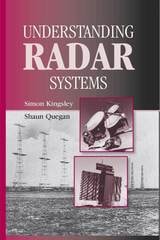
What is radar? What systems are currently in use? How do they work? Understanding Radar Systems provides engineers and scientists with answers to these critical questions, focusing on actual radar systems in use today. It's the perfect resource for those just entering the field or a quick refresher for experienced practitioners. The book leads readers through the specialized language and calculations that comprise the complex world of modern radar engineering as seen in dozens of state-of-the-art radar systems. The authors stress practical concepts that apply to all radar, keeping math to a minimum. Most of the book is based on real radar systems rather than theoretical studies. The result is a valuable, easy-to-use guide that makes the difficult parts of the field easier and helps readers do performance calculations quickly and easily.
[more]
cover of Understanding Telecommunications Business

Understanding Telecommunications Business

Andy Valdar

The Institution of Engineering and Technology, 2015
We all enjoy the benefits of the 'information age' but we may not be aware of the range of technologies and infrastructure that underpins the Internet and the services that it supports. There are many companies involved in the business of providing and operating such resources. This book attempts to explain the complex interplay between the companies, how their businesses operate, and how they seek to make a profit.
[more]
cover of Understanding Telecommunications Networks

Understanding Telecommunications Networks

Andy Valdar

The Institution of Engineering and Technology, 2006
This book explains how telecommunications networks work. It uses straightforward language supported by copious block-schematic diagrams so that non-engineers and engineers alike can learn about the principles of fixed and mobile telecommunications networks carrying voice and data. The book covers all aspects of today's networks, including how they are planned, formed and operated, plus next generation networks and how they will be implemented.
[more]
cover of Understanding Telecommunications Networks

Understanding Telecommunications Networks

Andy Valdar

The Institution of Engineering and Technology, 2017
A telecommunications network is an electronic system of links, nodes and the controls that govern their operations to allow voice and data transfer among users and devices. Examples of telecommunications networks are the telephone networks, computer networks and the Internet. Understanding Telecommunications Networks provides a comprehensive explanation of how various systems and technologies link together to construct fixed and mobile telecommunications networks and provide services. It uses straightforward language supported by block-schematic diagrams so that non-engineers and engineers alike can learn about the principles.
[more]
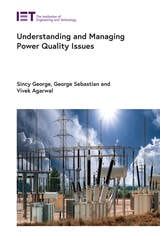
cover of Understanding and Managing Power Quality Issues

Understanding and Managing Power Quality Issues

Sincy George

The Institution of Engineering and Technology, 2026

The increasing complexity of today's power systems, and the growing numbers of power electronic devices that are being introduced, adds to the risk of power quality problems caused by harmonics. Non-linear loads into power systems, non-sinusoidal and distorted current waveforms, and voltage distortion have become more common, and these phenomena can lead to power losses and damage to equipment.
[more]
cover of Uninterruptible Power Supplies

Uninterruptible Power Supplies

John Platts

The Institution of Engineering and Technology, 1992
Valuable data, essential services and production process plants are typical assets that can be lost or seriously disturbed by power supply breaks or contamination. An uninterruptible power supply (UPS) can avoid potentially catastrophic havoc caused by electricity supply line disturbances. Behind this protection, however, is the need for a sound UPS design based on a thorough specification to achieve reliable and consistent functioning.
[more]
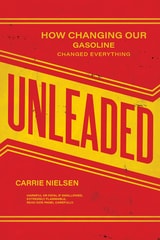
cover of Unleaded: How Changing Our Gasoline Changed Everything

Unleaded

How Changing Our Gasoline Changed Everything

Carrie Nielsen

Rutgers University Press, 2021

When leaded gasoline was first developed in the 1920s, medical experts were quick to warn of the public health catastrophes it would cause. Yet government regulators did not heed their advice, and for more than half a century, nearly all cars used leaded gasoline, which contributed to a nationwide epidemic of lead poisoning. By the 1970s, 99.8% of American children had significantly elevated levels of lead in their blood.
 
Unleaded tells the story of how crusading scientists and activists convinced the U.S. government to ban lead additives in gasoline. It also reveals how, for nearly fifty years, scientific experts paid by the oil and mining industries abused their authority to convince the public that leaded gasoline was perfectly harmless. 
 
Combining environmental history, sociology, and neuroscience, Carrie Nielsen explores how lead exposure affects the developing brains of children and is linked to social problems including academic failure, teen pregnancies, and violent crime. She also shows how, even after the nationwide outrage over Flint’s polluted water, many poor and minority communities and communities of color across the United States still have dangerously high lead levels. Unleaded vividly depicts the importance of sound science and strong environmental regulations to protect our nation’s most vulnerable populations.
[more]
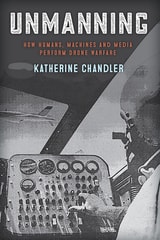
cover of Unmanning: How Humans, Machines and Media Perform Drone Warfare

Unmanning

How Humans, Machines and Media Perform Drone Warfare

Katherine Fehr Chandler

Rutgers University Press, 2020

Unmanning studies the conditions that create unmanned platforms in the United States through a genealogy of experimental, pilotless planes flown between 1936 and 1992. Characteristics often attributed to the drone—including machine-like control, enmity and remoteness—are achieved by displacements between humans and machines that shape a mediated theater of war. Rather than primarily treating the drone as a result of the war on terror, this book examines contemporary targeted killing through a series of failed experiments to develop unmanned flight in the twentieth century. The human, machine and media parts of drone aircraft are organized to make an ostensibly not human framework for war that disavows its political underpinnings as technological advance. These experiments are tied to histories of global control, cybernetics, racism and colonialism. Drone crashes and failures call attention to the significance of human action in making technopolitics that comes to be opposed to “man” and the paradoxes at their basis.
 
[more]
cover of Upgrading Urban Power Grids

Upgrading Urban Power Grids

Juan M. Gers

The Institution of Engineering and Technology, 2024
Today, more than half the global population lives in cities, and two thirds are expected to do so by 2050. Cities need technologies to reduce greenhouse gas emissions from energy, transport and heating, which requires distributed renewable electricity, from rooftop solar, small wind and other sources, in order to cleanly generate enough electricity to meet cities' needs. However, most urban electricity grids were not designed to manage distributed energy generation and the benefits of smart grids. Distribution systems therefore need to be strengthened and updated with the new technology offered by the hardware and software available, in order to maintain power quality and meet the requirements of reliability requested by regulatory bodies.
[more]
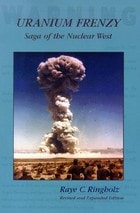
cover of Uranium Frenzy: Saga of the Nuclear West

Uranium Frenzy

Saga of the Nuclear West

Raye C. Ringholz

Utah State University Press, 2002

Now expanded to include the story of nuclear testing and its consequences, Uranium Frenzy has become the classic account of the uranium rush that gripped the Colorado Plateau region in the 1950s. Instigated by the U.S. government's need for uranium to fuel its growing atomic weapons program, stimulated by Charlie Steen's lucrative Mi Vida strike in 1952, manned by rookie prospectors from all walks of life, and driven to a fever pitch by penny stock promotions, the boom created a colorful era in the Four Corners region and Salt Lake City (where the stock frenzy was centered) but ultimately went bust. The thrill of those exciting times and the good fortune of some of the miners were countered by the darker aspects of uranium and its uses. Miners were not well informed regarding the dangers of radioactive decay products. Neither the government nor anyone else expended much effort educating them or protecting their health and safety. The effects of exposure to radiation in poorly ventilated mines appeared over time.

The uranium boom is only part of the larger story of atomic weapons testing and its impact in the western United States. Nuclear explosions at the Nevada Test Site not only spurred uranium mining, they also had a disastrous impact on many Americans: downwinders in the eastward path of radiation clouds, military observers and guinea pigs in exposed positions, and Navajo and other uranium mill workers all became victims, as deaths from cancer and other radiation-caused diseases reached much higher than normal rates among them. Tons of radioactive waste left by mines, mills, and the nuclear industry and how to dispose of them are other nagging legacies of the nuclear era. Recent decades have brought multiple attempts by victims to obtain compensation from the federal government and other legal battles over disposal of nuclear waste. When courts refused to grant relief to downwinders and others, Congress eventually interceded and legislated compensation for a limited number of victims able to meet strict criteria, but did not adequately fund the program. Recently, Congress attempted to fix this shortfall, but in the meantime many downwinders and others holding compensation IOUs had died. Congressional and other efforts to dispose of waste have lately focused on Nevada and Utah, two states all too familiar with nuclear issues and reluctant to take on further radioactive burdens.
[more]
cover of Urban Traffic Analysis and Control: The key challenges in the era of ITS

Urban Traffic Analysis and Control

The key challenges in the era of ITS

Roberta Di Pace

The Institution of Engineering and Technology, 2025
Urban Traffic Analysis and Control: The key challenges in the era of ITS explores urban traffic control strategies. It provides a comprehensive overview of traffic management methods, focusing on both static and dynamic applications. The book addresses issues related to transportation planning, or simpler cases where real-time adaptive control is not necessary, as well as traffic control applications based on real-time monitoring and dynamic models or data-driven methods for flow prediction.
[more]
cover of User-Centric Privacy and Security in Biometrics

User-Centric Privacy and Security in Biometrics

Claus Vielhauer

The Institution of Engineering and Technology, 2018

The interplay of privacy, security and user-determination is an important consideration in the roll-out of biometric technologies. It brings into play requirements such as privacy of biometric data in systems, communication and databases, soft biometric profiling, biometric recognition of persons across distributed systems and in nomadic scenarios, and the convergence between user convenience, usability and authentication reliability.
[more]
cover of Utility-scale Wind Turbines and Wind Farms

Utility-scale Wind Turbines and Wind Farms

Ahmad Vasel-Be-Hagh

The Institution of Engineering and Technology, 2021

Wind power is a pillar of low emission energy systems. Designing more efficient wind turbines and farms, and increasing reliability and flexibility, is an area of intense research and development. In order to overcome the intermittent character of wind power, both the individual turbines and the wind farm as a whole must be considered.
[more]