Results by title
28164 books match the query 'History' and 339 start with u
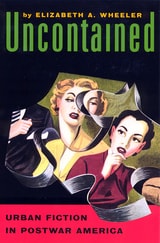
Uncontained
Urban Fiction in Postwar AmericaWheeler, Elizabeth A.
Rutgers University Press, 2001
In the postwar era, American urban fiction is dominated by the imagery of containment. Across the fictional landscape, the city is divided into segregated zones, marked by the threat of inevitable violence, and set off from the safety of equally contained suburbs. Mean and dangerous, the city can only be navigated by a solitary expert, alienated and male. In Uncontained, Elizabeth A. Wheeler offers a critique of this familiar story-evident in the noir. narratives of James M. Cain and in work by Ellison, Roth, Salinger, Percy, Capote, and others —and challenges its link to the postwar city.
Discussing film, short stories, and novels from a cross-section of American cities, Wheeler integrates these stories of containment into a shared pattern and reads them across a broad spectrum of famous and forgotten works by men and women of various ethnic and literary traditions to reveal a larger vision of postwar America. Knowing that containment is never the entire story, that diversity or trauma always shows itself, she shows how the uncontained has shaped the historical moment. Aware that liberating counterstories do get told, she places them in dialogue with those of the alienated man, the war veteran, Beat hipster, noir detective, and ironic suburbanite — in historical context — and revives the idea of urban space as a place of openness, thereby challenging a literary containment of racial difference, gender, and sexuality. By reading Paule Marshall in tandem with Philip Roth, Wheeler explores the relationships between adjacent neighborhoods and reconnects separate literary and geographic areas. By bringing Ann Bannon's lesbian pulp fiction, Hubert Selby's cult novels, or the work of John Okada, Hisaye Yamamoto, Chester Himes, Gwendolyn Brooks's, Jo Sinclair, and many others to bear on more canonical texts, she offers a more complete understanding of this period of American fiction — one that points toward a city that is open and inclusive.
Uncontained suggests that while decline, division, and decay form a major part of the story of mid-century urban America, the postwar city also represents much of what is best about American life. Rather than reproducing the containment of culture, Wheeler places together the wildly disparate to show how we move beyond containment.
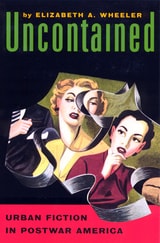
Uncontained
Urban Fiction in Postwar AmericaWheeler, Elizabeth A.
Rutgers University Press, 2001
In the postwar era, American urban fiction is dominated by the imagery of containment. Across the fictional landscape, the city is divided into segregated zones, marked by the threat of inevitable violence, and set off from the safety of equally contained suburbs. Mean and dangerous, the city can only be navigated by a solitary expert, alienated and male. In Uncontained, Elizabeth A. Wheeler offers a critique of this familiar story-evident in the noir. narratives of James M. Cain and in work by Ellison, Roth, Salinger, Percy, Capote, and others —and challenges its link to the postwar city.
Discussing film, short stories, and novels from a cross-section of American cities, Wheeler integrates these stories of containment into a shared pattern and reads them across a broad spectrum of famous and forgotten works by men and women of various ethnic and literary traditions to reveal a larger vision of postwar America. Knowing that containment is never the entire story, that diversity or trauma always shows itself, she shows how the uncontained has shaped the historical moment. Aware that liberating counterstories do get told, she places them in dialogue with those of the alienated man, the war veteran, Beat hipster, noir detective, and ironic suburbanite — in historical context — and revives the idea of urban space as a place of openness, thereby challenging a literary containment of racial difference, gender, and sexuality. By reading Paule Marshall in tandem with Philip Roth, Wheeler explores the relationships between adjacent neighborhoods and reconnects separate literary and geographic areas. By bringing Ann Bannon's lesbian pulp fiction, Hubert Selby's cult novels, or the work of John Okada, Hisaye Yamamoto, Chester Himes, Gwendolyn Brooks's, Jo Sinclair, and many others to bear on more canonical texts, she offers a more complete understanding of this period of American fiction — one that points toward a city that is open and inclusive.
Uncontained suggests that while decline, division, and decay form a major part of the story of mid-century urban America, the postwar city also represents much of what is best about American life. Rather than reproducing the containment of culture, Wheeler places together the wildly disparate to show how we move beyond containment.
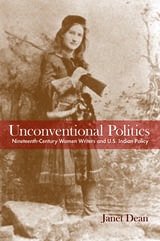
Unconventional Politics
Nineteenth-Century Women Writers and U.S. Indian PolicyJanet Dean
University of Massachusetts Press, 2016
Dean argues that in protesting U.S. Indian policy through popular genres, Wakefield, Sigourney, Callahan, and Eddleman also critiqued cultural protocols and stretched the contours of accepted modes of feminine discourse. Their acts of improvisation and reinvention tell a new story about the development of American women's writing and political expression.
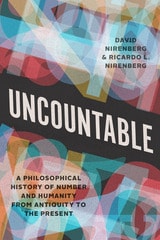
Uncountable
A Philosophical History of Number and Humanity from Antiquity to the PresentDavid Nirenberg and Ricardo L. Nirenberg
University of Chicago Press, 2021
Our knowledge of mathematics has structured much of what we think we know about ourselves as individuals and communities, shaping our psychologies, sociologies, and economies. In pursuit of a more predictable and more controllable cosmos, we have extended mathematical insights and methods to more and more aspects of the world. Today those powers are greater than ever, as computation is applied to virtually every aspect of human activity. Yet, in the process, are we losing sight of the human? When we apply mathematics so broadly, what do we gain and what do we lose, and at what risk to humanity?
These are the questions that David and Ricardo L. Nirenberg ask in Uncountable, a provocative account of how numerical relations became the cornerstone of human claims to knowledge, truth, and certainty. There is a limit to these number-based claims, they argue, which they set out to explore. The Nirenbergs, father and son, bring together their backgrounds in math, history, literature, religion, and philosophy, interweaving scientific experiments with readings of poems, setting crises in mathematics alongside world wars, and putting medieval Muslim and Buddhist philosophers in conversation with Einstein, Schrödinger, and other giants of modern physics. The result is a powerful lesson in what counts as knowledge and its deepest implications for how we live our lives.
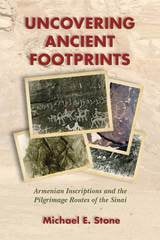
Uncovering Ancient Footprints
Armenian Inscriptions and the Pilgrimage Routes of the SinaiMichael E. Stone
SBL Press, 2017
Explore pilgrimage routes, epigraphy, and the history of writing with an expert guide
From the late 1970s through 1982, Michael E. Stone conducted a number of expeditions to the Sinai peninsula, searching for ancient inscriptions. In this book Stone describes his search, crowned by the discovery of the most ancient Armenian inscriptions known. Here Stone describes not only the inscriptions discovered along his journeys but also the Sinai, its past and present, its human inhabitants, its flora and fauna, and its history. Though once common, well-informed travel books to the Middle East with a broad academic interest and a specific focus have become rare. Stone’s diary of his expeditions in the Sinai fill this gap with vivid descriptions, poetry, and illustrations.
Features
- An account of five expeditions into the Sinai
- Thirteen poems written by Stone
- Twenty-six figures and five maps
Uncovering Nevada's Past
A Primary Source History of the Silver StateJohn B. Reid
University of Nevada Press, 2004

Uncovering Our History
American Library Association, 2004
Uncrossing the Borders
Performing Chinese in Gendered (Trans)NationalismDaphne P. Lei
University of Michigan Press, 2019
Over many centuries, women on the Chinese stage committed suicide in beautiful and pathetic ways just before crossing the border for an interracial marriage. Uncrossing the Borders asks why this theatrical trope has remained so powerful and attractive. The book analyzes how national, cultural, and ethnic borders are inevitably gendered and incite violence against women in the name of the nation. The book surveys two millennia of historical, literary, dramatic texts, and sociopolitical references to reveal that this type of drama was especially popular when China was under foreign rule, such as in the Yuan (Mongol) and Qing (Manchu) dynasties, and when Chinese male literati felt desperate about their economic and political future, due to the dysfunctional imperial examination system. Daphne P. Lei covers border-crossing Chinese drama in major theatrical genres such as zaju and chuanqi, regional drama such as jingju (Beijing opera) and yueju (Cantonese opera), and modernized operatic and musical forms of such stories today.
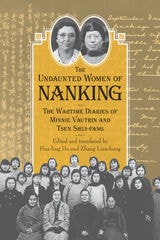
Undaunted Women of Nanking
The Wartime Diaries of Minnie Vautrin and Tsen Shui-fangEdited and Translated by Hua-ling Hu and Zhang Lian-hong
Southern Illinois University Press, 2010
One of the Chinese American Librarians Association’s Ten Best Books of 2010
During the infamous “Rape of Nanking,” a brutal military occupation of Nanking, China, that began on December 13, 1937, it is estimated that Japanese soldiers killed between 200,000 and 300,000 Chinese and raped between 20,000 and 80,000 women. To shelter civilian refugees, a group of Westerners established a Nanking Safety Zone. Among these humanitarians was Minnie Vautrin, an American missionary and acting president of Ginling College. She and Tsen Shui-fang, her Chinese assistant and a trained nurse, turned the college into a refugee camp, which protected more than 10,000 women and children during the height of the ordeal. The Undaunted Women of Nanking juxtaposes day-by-day the exhausted and terrified women’s wartime diaries, providing vital eyewitness accounts of the Rape of Nanking and a unique focus on the Ginling refugee camp and the sufferings of women and children. Vautrin's diary reveals the humanity and courage of a female missionary in a time of terror. Tsen Shui-fang’s diary, never before published in English and translated here for the first time, is the only known daily account by a Chinese national written during the crisis and not retrospectively. As such, it records a unique perspective: that of a woman grappling with feelings of anger, sorrow, and compassion as she witnesses the atrocities being committed in her war-torn country.
Editors Hua-ling Hu and Zhang Lian-hong have added many informative annotations to the diary entries from sources including the proceedings of the Tokyo War Crimes Trial of 1946, Vautrin’s correspondence, John Rabe’s diary, and other historical documents. Also included are biographical sketches of the two women, a note on the diaries, and information about the aftermath of the tragedy, as well as maps and photos—some of which appear in print in this book for the first time.

Undead Science
Science Studies and the Afterlife of Cold FusionSimon, Bart
Rutgers University Press, 2002
Undead Science examines the story of cold fusion, one of the most publicized scientific controversies of the late twentieth century. In 1989 two Utah-based “discoverers” claimed to have developed an electrochemical process that produced more energy than was required to initiate the process. Finding no other explanation, the researchers described their findings as some kind of nuclear reaction. If they were correct, an important new energy source would have been found. Objections surfaced quickly, and in the year that followed, hundreds of scientists worldwide attempted to reproduce these results. Most, though not all, failed, and the controversy became increasingly antagonistic. By 1990, general scientific opinion favored the skeptics and experimental work went into a steep decline. Nevertheless, many scientists continue to do research in what Bart Simon calls this “undead science.”
Simon argues that in spite of widespread skepticism in the scientific community, there has been a continued effort to make sense of the controversial phenomenon. Researchers in well-respected laboratories continue to produce new and rigorous work. In this manner, cold fusion research continues to exist long after the controversy has subsided, even though the existence of cold fusion is circumscribed by the widespread belief that the phenomenon is not real.
The survival of cold fusion signals the need for a more complex understanding of the social dynamics of scientific knowledge making, the boundaries between experts, intermediaries, and the lay public, and the conceptualization of failure in the history of science and technology.

Under Briggflatts
A History of Poetry in Great Britain, 1960-1988Donald Davie
University of Chicago Press, 1989
Under Briggflatts is organized in three large chapters, one devoted to each decade. In the 1960s, Davie pays particular attention to the work of Austin Clarke, Hugh MacDiarmid, Norman McCaig, Keith Douglas, Edwin Muir, Basil Bunting (the gurus whose prose writings helped catalyze the traumatic events of 1968), Elaine Feinstein, Sylvia Townsend Warner, Philip Larkin, Charles Tomlinson, Thomas Kinsella, and Ted Hughes. The second chapter follows these figures into the new decade and explores the work of (among others) Thom Gunn, C. H. Sisson, R. S. Thomas, John Betjeman, and such themes as women's poetry, translation, poetic theory, and the later impact of T. S. Eliot and of Edward Thomas. Perhaps the most controversial chapter is the third, in which David—without abandoning the poets already introduced—assesses Geoffrey Hill, Tony Harrison, and Seamus Heaney, and looks too at the recovery of Ivor Gurney's poems, at Ted Hughes as Laureate, the posthumous work of Sylvia Townsend Warner, the burgeoning Hardy industry, and the critical writings of Kenneth Cox.
Under Construction
Technologies of Development in Urban EthiopiaDaniel Mains
Duke University Press, 2019
Under Desert Skies
How Tucson Mapped the Way to the Moon and PlanetsMelissa L. Sevigny
University of Arizona Press, 2016
An upstart planetary laboratory in Tucson would play a vital role in the nation’s grand new venture, and in doing so, it would help create the field of planetary science. Founded by Gerard P. Kuiper in 1960, the Lunar and Planetary Laboratory (LPL) at the University of Arizona broke free from traditional astronomical techniques to embrace a wide range of disciplines necessary to the study of planets, including geology, atmospheric sciences, and the elegant emerging technology of spacecraft. Brash, optimistic young students crafted a unique sense of camaraderie in the fledgling institution. Driven by curiosity and imagination, LPL scientists lived through—and, indeed, made happen—the shattering transition in which Earth’s nearest neighbors became more than simple points of light in the sky.
Under Desert Skies tells the story of how a small corner of Arizona became Earth’s ambassador to space. From early efforts to reach the Moon to the first glimpses of Mars’s bleak horizons and Titan’s swirling atmosphere to the latest ambitious plans to touch an asteroid, LPL’s history encompasses humanity’s unfolding knowledge about our place in the universe.
Under Eastern Eyes
A Comparative History of East European Travel Writing on EuropeAlex Drace-Francis
Central European University Press, 2008
Under Osman's Tree
The Ottoman Empire, Egypt, and Environmental HistoryAlan Mikhail
University of Chicago Press, 2017
The early modern Middle East was the world’s most crucial zone of connection and interaction. Accordingly, the Ottoman Empire’s many varied environments affected and were affected by global trade, climate, and disease. From down in the mud of Egypt’s canals to up in the treetops of Anatolia, Alan Mikhail tackles major aspects of the Middle East’s environmental history: natural resource management, climate, human and animal labor, energy, water control, disease, and politics. He also points to some of the ways in which the region’s dominant religious tradition, Islam, has understood and related to the natural world. Marrying environmental and Ottoman history, Under Osman’s Tree offers a bold new interpretation of the past five hundred years of Middle Eastern history.
Under Quarantine
Immigrants and Disease at Israel’s GateRhona Seidelman
Rutgers University Press, 2020
Under The Mountain
Molly Flagg Knudtsen
University of Nevada Press, 1982
This collection of vignettes about life in Central Nevada is much more than a historical document. According to author Molly Knudtsen, “These are the stories neighbors and families tell, where fact grows just a little larger than life. This is the stuff of legend.” The book focuses on a time when splendorous houses decorated the windswept valleys of Central Nevada; where fearless, stouthearted men and women braved the elements to survive and seek their fortune; and when people who loved the land clung to it and gave it a character all its own. These tales capture the spirit and folklore of early-day Central Nevada and illustrate the effect on its present-day inhabitants. Molly Knudtsen shares the experience of riding horseback through some of the great archaeological finds of the valley. She divulges the secret of converting flour, yeast, and potato water into a perfect loaf of bread. And through colorful anecdotes, she passes along the legendary accounts of Colonel Dave Buel.
Under a Bad Sun
Police, Politics, and Corruption in AustraliaPaul Bleakley
Michigan State University Press, 2021
Under the Campus, the Land
Anishinaabe Futuring, Colonial Non-Memory, and the Origin of the University of MichiganAndrew Herscher
University of Michigan Press, 2025
Under the Campus, the Land narrates the University of Michigan’s place in both Anishinaabe and settler history, tracing the university’s participation in the colonization of Anishinaabe homelands, Anishinaabe efforts to claim their right to an education, and the university’s history of disavowing, marginalizing, and minimizing its responsibilities and obligations to Anishinaabe people. Continuing the public conversations of the same name on U-M’s campus in 2023, Under the Campus, the Land provides a new perspective on the relationship between universities and settler colonialism in the US. Members of the U-M community, scholars of Midwest history, and those interested in Indigenous studies will find this book compelling.
Under the Cover of Chaos
Trump and the Battle for the American RightLawrence Grossberg
Pluto Press, 2018
Lawrence Grossberg shows that the truth is bigger and more frightening. Locating Trumpism in the long struggle among traditional conservatism, the new right and the reactionary right, he suggests that the chaos is far more significant and strategic ... and dangerous. Taking the arguments of the reactionary right seriously, he projects a possible, nightmarish future: a cultural nationalism governed by a popular corporatocracy.
He lays bare how contemporary political struggles are being shaped by a changing national landscape of moods and feelings, marked by a growing absolutism of judgement and belief, and new forms of anxiety, alienation and narcissism.s—and lays out a possible nightmare future: a vision of a political system controlled by corporate interests, built on a deliberate dismantling of modern politics.
Under the Kapok Tree
Identity and Difference in Beng ThoughtAlma Gottlieb
University of Chicago Press, 1996
explores ideology and social practices among the Beng people of Côte
d'Ivoire. Employing symbolic and postmodern perspectives, she highlights
the dynamically paired notions of identity and difference, symbolized by
the kapok tree planted at the center of every Beng village.
"This book merits a number of readings. . . . An experiment in
ethnography that future projects might well emulate." —Clarke K. Speed,
American Anthropologist
"[An] evocative, rich ethnography. . . . Gottlieb does anthropology a
real service." —Misty L. Bastian, American Ethnologist
"Richly detailed. . . . This book offers a nuanced descriptive analysis
which commands authority." —Elizabeth Tonkin, Man
"Exemplary. . . . Gottlieb's observations on identity and difference are
not confined to rituals or other special occasions; rather she shows
that these principles emerge with equal force during daily social life."
—Monni Adams, Journal of African Religion
"[An] excellent study." —John McCall, Journal of Folklore
Research
Under the Radar
Cancer and the Cold WarLeopold, Ellen
Rutgers University Press, 2008
In Under the Radar, Ellen Leopold shows how nearly every aspect of our understanding and discussion of cancer bears the imprint of its Cold War entanglement. The current biases toward individual rather than corporate responsibility for rising incidence rates, research that promotes treatment rather than prevention, and therapies that can be patented and marketed all reflect a largely hidden history shaped by the Cold War. Even the language we use to describe the disease, such as the guiding metaphor for treatment, "fight fire with fire," can be traced back to the middle of the twentieth century.
Writing in a lucid style, Leopold documents the military, governmental, industrial, and medical views of radiation and atomic energy to examine the postwar response to cancer through the prism of the Cold War. She explores the role of radiation in cancer therapies today, using case studies and mammogram screening, in particular, to highlight the surprising parallels. Taking into account a wide array of disciplines, this book challenges our understanding of cancer and how we approach its treatment.
- Examines the postwar response to cancer through the prism of the Cold War
- Goes beyond medical science to look at the influence of Cold War policies on the way we think about cancer today
- Links the experience of postwar cancer patients with the broader evolution of what have become cancer industries
- Traces the history of human-made radiation as a state-sponsored environmental toxin
Under the Radar
Tracking Western Radio Listeners in the Soviet UnionR. Eugene Parta
Central European University Press, 2022
Western democracy is currently under attack by a resurgent Russia, weaponizing new technologies and social media. How to respond? During the Cold War, the West fought off similar Soviet propaganda assaults with shortwave radio broadcasts. Founded in 1949, the US-funded Radio Free Europe/Radio Liberty broadcast uncensored information to the Soviet republics in their own languages. About one-third of Soviet urban adults listened to Western radio. The broadcasts played a key role in ending the Cold War and eroding the communist empire.
R. Eugene Parta was for many years the director of Soviet Area Audience Research at RFE/RL, charged among others with gathering listener feedback. In this book he relates a remarkable Cold War operation to assess the impact of Western radio broadcasts on Soviet listeners by using a novel survey research approach. Given the impossibility of interviewing Soviet citizens in their own country, it pioneered audacious interview methods in order to fly under the radar and talk to Soviets traveling abroad, ultimately creating a database of 51,000 interviews which offered unparalleled insights into the media habits and mindset of the Soviet public. By recounting how the “impossible” mission was carried out, Under the Radar also shows how the lessons of the past can help counter the threat from a once and current adversary.
Under the Rug
The (Not So) Hidden History of Men and Their HairpiecesWendy A. Woloson
University of Chicago Press, 0
False hair can reveal honest truths—about the past, gender, identity, and the stories men tell about themselves.
History has seen its share of famous toupees. John Wayne’s. Frank Sinatra’s. Humphrey Bogart’s. Hairpieces can reveal a wearer’s inner motivations, reinforce gender norms, cause embarrassment, and even provoke disgust. Although false, they can create real meaning.
In Wendy A. Woloson’s hands, the toupee helps us see how men have understood themselves and fashioned their identities over time. Starting in the late eighteenth century, when men stopped wearing white powdered wigs, and moving to the 1920s, when toupees could be easily mass-produced, Woloson tells the story of the “Toupee Age.” She investigates why balding was considered such a problem in the first place, how hair became entangled with anxieties about aging, and the ways that looking old posed a threat to manhood. She details the bear’s grease pomades, brush-on dyes, elixirs, false whiskers, and hairpieces that were created to meet shifting notions of masculinity and style. Under the Rug also introduces readers to the people who styled and traded hair, made wigs, and hawked baldness cures. Drawing on business records, advertisements, graphic images, and a host of other primary sources, Woloson incisively explains how such trades seeded fears about thinning hair and sold men solutions. This vanity project continues today, as hair transplants, medications to stimulate hair growth, and Toupee TikTok encourage people to reinvent the way they’re seen—by others and themselves.

Under the Shadow of Napoleon
The US Army’s Doctrine, Education, and Theory of Victory from 1814 to 1941. Second EditionMichael A. Bonura
University of North Texas Press, 2026

Undercover Reporting
The Truth About DeceptionBrooke Kroeger, Foreword by Pete Hamill
Northwestern University Press, 2012
In her provocative book, Brooke Kroeger argues for a reconsideration of the place of oft-maligned journalistic practices. While it may seem paradoxical, much of the valuable journalism in the past century and a half has emerged from undercover investigations that employed subterfuge or deception to expose wrong. Kroeger asserts that undercover work is not a separate world, but rather it embodies a central discipline of good reporting—the ability to extract significant information or to create indelible, real-time descriptions of hard-to-penetrate institutions or social situations that deserve the public’s attention. Together with a companion website that gathers some of the best investigative work of the past century, Undercover Reporting serves as a rallying call for an endangered aspect of the journalistic endeavor.
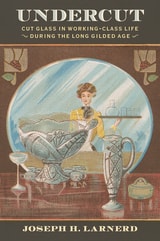
Undercut
Cut Glass in Working-Class Life During the Long Gilded AgeJoseph Larnerd
University of Delaware Press, 0
How did workers experience cut glass during its cultural heyday? Rather than privilege the stories of factory owners or wealthy consumers, Undercut: Cut Glass in Working-Class Life During the Long Gilded Age refracts the medium’s history through the labors required to make and maintain these dazzling artifacts as well as popular representations of this work, from demonstrations at world's fairs to images of domestic workers with finished pieces in their charge. Cut glass and the many manifestations of public interest in its labors offered working people, too, occasions for self-reflection and, perhaps, self-realization. Foregrounding their lives, Undercut offers a multifaceted social art history of a once-popular genre of decorative art that cuts across class, gender, and race.

Underdogs
Social Deviance and Queer TheoryHeather Love
University of Chicago Press, 2021
The sociology of “social deviants” flourished in the United States at midcentury, studying the lives of outsiders such as homosexuals, Jews, disabled people, drug addicts, and political radicals. But in the following decades, many of these downcast figures would become the architects of new social movements, activists in revolt against institutions, the state, and social constraint. As queer theory gained prominence as a subfield of the humanities in the late 1980s, it seemed to inherit these radical, activist impulses—challenging not only gender and sexual norms, but also the nature of society itself.
With Underdogs, Heather Love shows that queer theorists inherited as much from sociologists as they did from activists. Through theoretical and archival work, Love traces the connection between midcentury studies of deviance and the antinormative, antiessentialist field of queer theory. While sociologists saw deviance as an inevitable fact of social life, queer theorists embraced it as a rallying cry. A robust interdisciplinary history of the field, Underdogs stages a reencounter with the practices and communities that underwrite radical queer thought.
Underglobalization
Beijing's Media Urbanism and the Chimera of LegitimacyJoshua Neves
Duke University Press, 2020
Underground Front
The Chinese Communist Party in Hong Kong, Second EditionChristine Loh
Hong Kong University Press, 2019
Underground Leviathan
Corporate Sovereignty and Mining in the AmericasIsrael G. Solares
University of Nevada Press, 2024
Author Israel G. Solares examines how the twentieth century multinational firm established and articulated multinational corporate sovereignty in ways that reflect other multinational titans, like the East Asian Trade companies, and presages the digital giants and space corporations of the twenty-first century. Bridging the domineering practices used during the colonization of Southern Asia with the futuristic colonies on the Moon, Underground Leviathan documents the cost of a corporation’s unyielding desire to consume the secrets at the center of the Earth.
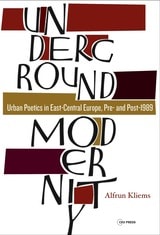
Underground Modernity
Urban Poetics in East-Central Europe, Pre- and Post-1989Alfrun Kliems
Central European University Press, 2021
The literary scholar Alfrun Kliems explores the aesthetic strategies of Eastern European underground literature, art, film and music in the decades before and after the fall of communism, ranging from the ‘father’ of Prague Underground, Egon Bondy, to the neo-Dada Club of Polish Losers in Berlin.
The works she considers are "underground" in the sense that they were produced illegally, or were received as subversive after the regimes had fallen. Her study challenges common notions of ‘Underground’ as an umbrella term for nonconformism. Rather, it depicts it as a sociopoetic reflection of modernity, intimately linked to urban settings, with tropes and aesthetic procedures related to Surrealism, Dadaism, Expressionism, and, above all, pop and counterculture.
The author discusses these commonalities and distinctions in Czech, Polish, Slovak, Ukrainian, Russian, and German authors, musicians, and filmmakers. She identifies intertextual relations across languages and generations, and situates her findings in a transatlantic context (including the Beat Generation, Susan Sontag, Neil Young) and the historical framework of Romanticism and modernity (including Baudelaire and Brecht).
Despite this wide brief, the book never loses sight of its core message: Underground is no arbitrary expression of discontent, but rather the result of a fundamental conflict at the socio-philosophical roots of modernity.
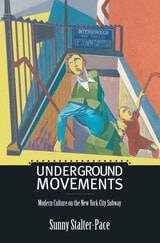
Underground Movements
Modern Culture on the New York City SubwaySunny Stalter-Pace
University of Massachusetts Press, 2013
Writers and artists took up questions that originated in the sphere of urban planning to explore how underground movement changed the ways people understand the city. Modern poets envisioned the subway as a space of literary innovation; playwrights and fiction writers used it to gauge the consequences of migration and immigration; and essayists found that it underscored the fragile relationship between urban development and memory. Even today, the symbolic associations forged by these early texts continue to influence understanding of the cultural significance of the subway and the city it connects.
Underground Streams
National-Conservatives after World War II in Communist Hungary and Eastern EuropeJános M. Rainer
Central European University Press, 2023
The authors of this edited volume address the hidden attraction that existed between the extremes of left and right, and of internationalism and nationalism under the decades of communist dictatorship in Eastern Europe. One might suppose that under the suppressive regimes based on leftist ideology and internationalism their right-wing opponents would have been defeated and ultimately removed. These essays, on the other hand, recount the itinerary of survival and revival of "right-wing" thought and activities under communist dictatorship. Resistance and accommodation are explored in the various phases from the Stalinist era to the demise of the Soviet Bloc, with the continuity provided by tacit or concealed right-wing discourses receiving particular consideration. The Eastern European right, both in its conservative and fascist version, centered on nationalism, a legitimizing factor that increased with the downfall of the regimes, and the authors thus accord nationalism special attention.
Two documentary sources for these essays that stand out are files of the security services and the exceptionally rich Oral History Archive compiled by the 1956 Institute in Budapest, Hungary.

Underground Symphony
The Plastic PeopleFrantišek Stárek and Martin Valenta
Karolinum Press, 2026
First-hand insight into the Czechoslovak underground music scene and the numerous obstacles placed in its way by communist-era security services.
Underground Symphony: The Plastic People traces the history of the rock band The Plastic People of the Universe against the backdrop of political developments in communist Czechoslovakia. It begins with the band’s formation in the 1960s, when psychedelic rock was first introduced to Czechoslovakia, through the emergence of the first concepts of cultural opposition and politically oriented dissent, particularly Charter 77, ending with a detailed account of the band’s breakup in the second half of the 1980s.
The authors rely on primary sources, many of which have not been published; for example, the Plastic People’s chronicles, extensive interviews with band members and friends, and contemporary writings by individual participants (in samizdat publications, private correspondence, diaries, etc.). They also “mine” archival sources from the State Security (Archive of Security Services, National Archives, etc.). The result is an insightful study of the legendary underground band and its era.
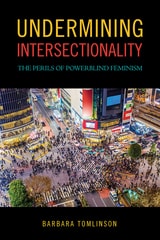
Undermining Intersectionality
The Perils of Powerblind FeminismBarbara Tomlinson
Temple University Press, 2019
In this provocative book, esteemed scholar Barbara Tomlinson asserts that intersectionality—the idea that categories such as gender, race, and class create overlapping systemsof oppression—is consistently misinterpreted in feminist argument. Despite becoming a central theme in feminist scholarship and activism, Tomlinson believes dominant feminism has failed to fully understand the concept.
Undermining Intersectionality reveals that this apparent paradox is the result of the disturbing racial politics underlying more than two decades of widely-cited critiques of intersectionality produced by prominent white feminist scholars who have been insufficiently attentive to racial dynamics. As such, feminist critiques of intersectionality repeatedly reinforce racial hierarchies, undermining academic feminism’s supposed commitment to social justice. Tomlinson offers a persuasive analysis of the rhetorics and conventions of argument used in these critiques to demonstrate their systematic reliance on “powerblind” discursive practices.
Undermining Intersectionality concludes by presenting suggestions about concrete steps feminist researchers, readers, authors, and editors can take to promote more productive and principled engagements with intersectional thinking.
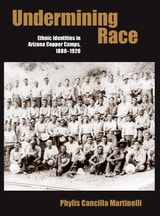
Undermining Race
Ethnic Identities in Arizona Copper Camps, 1880–1920Phylis Cancilla Martinelli
University of Arizona Press, 2009
Phylis Martinelli argues that the case of Italians in Arizona provides insight into “in between” racial and ethnic categories, demonstrating that the categorizing of Italians varied from camp to camp depending on local conditions—such as management practices in structuring labor markets and workers’ housing, and the choices made by immigrants in forging communities of language and mutual support. Italians—even light-skinned northern Italians—were not considered completely “white” in Arizona at this historical moment, yet neither were they consistently racialized as non-white, and tactics used to control them ranged from micro to macro level violence.
To make her argument, Martinelli looks closely at two “white camps” in Globe and Bisbee and at the Mexican camp of Clifton-Morenci. Comparing and contrasting the placement of Italians in these three camps shows how the usual binary system of race relations became complicated, which in turn affected the existing race-based labor hierarchy, especially during strikes. The book provides additional case studies to argue that the biracial stratification system in the United States was in fact triracial at times. According to Martinelli, this system determined the nature of the associations among laborers as well as the way Americans came to construct “whiteness.”

Understanding Capitalism
Critical Analysis From Karl Marx to Amartya SenDouglas Dowd
Pluto Press, 2002
Major economists and economic schools of thought are discussed in a chapter-by-chapter guide that covers Marx, Veblen, Gramsci, post-Keynesian theory, US institutionalists, Sweezy and the Monopoly Capital school, and recent Nobel Prize winner Amartya Sen. Contributors include Michael Lebowitz, Carl Boggs, Michael Keaney, Frederic Lee, John Bellamy Foster and Robin Hahnel, with an introduction by the editor, Douglas Dowd.

Understanding Economic Recovery in the 1930s
Endogenous Propagation in the Great DepressionFrank G. Steindl
University of Michigan Press, 2003
Providing strong evidence for the role of the quantity of money in the revitalization, the author ultimately concludes that the seemingly robust monetary explanation of the recovery is deficient, as is any that relies principally on aggregate demand impulses. An accurate understanding of this phenomenon must account for the inherent tendency of the economy to revert to its long-run high employment trend.
Frank G. Steindl is Regents Professor of Economics and Ardmore Professor of Business Administration, Oklahoma State University.
Understanding Europe (The Works of Christopher Dawson)
Christopher Dawson
Catholic University of America Press, 2009
Understanding Missouri's Constitutional Government
Richard Fulton and Jerry Brekke
University of Missouri Press, 2010
Understanding Missouri’s Constitutional Government presents a case study in the foundations of state governments. The book provides a sweeping look at the constitutional foundations of the processes of Missouri government. Authors Richard Fulton and Jerry Brekke place Missouri within the context of our larger federal system while using the state’s constitution as a touchstone for the discussion of each element of state government.
Understanding Missouri’s Constitutional Government has a dual framework specifically designed to enhance the reader’s learning experience. First, the essential elements of government outlined in the constitution are introduced, and then analysis and interpretation of each of the document’s articles is covered. This organization permits readers to build an understanding of a particular element—for example, the legislature—by learning its fundamental organization, processes, and purposes in a straightforward manner. After gaining that primary perspective, the reader can use the formal analysis in the second section to explore interpretations of each article. Not only helpful to the general reader, this two-part structure makes the text especially useful in courses on American government, state and local governments, and particularly Missouri government and constitution.
In short, Understanding Missouri’s Constitutional Government is an approachable, valuable exposition on Missouri government as reflected in the day-to-day operations outlined in the Missouri constitution. It fills a significant gap in the literature on the interpretation, use, and operation of state constitutions. Since Missouri law dictates that all levels of education should teach government and constitution at the national and state levels, this book will be an indispensable resource for educators while serving as a valuable reference for journalists and public officials in the state.
Understanding Scientific Prose
Edited by Jack Selzer
University of Wisconsin Press, 1993
Examining science as a rhetorical enterprise, this book seizes upon one scientific essay—"The Spandrels of San Marco and the Panglossian Paradigm: A Critique of the Adaptationist Programme"—and probes it from many angles. Written by prominent evolutionary theorists Stephen Jay Gould and Richard C. Lewontin and first published in the Proceedings of the Royal Society of London in 1979, the "Spandrels" article is both serious science and vivid prose. Applying methods inspired by Louis Althusser, Michel Foucault, Jacques Derrida, Ferdinand de Saussure, and others, the contributors employ a range of interpretive strategies. Stephen Jay Gould adds his own comments, and the full text of the essay "Spandrels" is reproduced as an appendix. Applying methods inspired by Louis Althusser, Michel Foucault, Jacques Derrida, Ferdinand de Saussure, and others, the contributors employ a range of interpretive strategies. Stephen Jay Gould adds his own comments, and the full text of the essay "Spandrels" is reproduced as an appendix.

Understanding Tribal Sovereignty
Federal Indian Law and Self-GovernanceDonald L. Fixico
University of Arizona Press, 2026
What does tribal sovereignty really mean—and why does it matter today?
Accessibly written for the nonspecialist, acclaimed historian Donald L. Fixico unpacks the complex history and legal foundations of tribal sovereignty in the United States. From traditional Native governance to landmark treaties, federal laws, and court cases, Fixico guides readers through the evolution of tribal self-rule and its modern expressions—from tribal constitutions to license plates and casinos. Designed for students, educators, tribal members, and professionals alike, this book offers a clear, compelling introduction to one of the most important—and often misunderstood—concepts in American Indian affairs.
This book is a go-to source for understanding the federal Indian laws, treaties, and court cases simplified to explain tribal sovereignty.
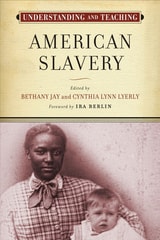
Understanding and Teaching American Slavery
Edited by Bethany Jay and Cynthia Lynn Lyerly, Foreword by Ira Berlin
University of Wisconsin Press, 2016
Opening with Ira Berlin’s reflections on ten elements that are essential to include in any course on this topic, Understanding and Teaching American Slavery offers practical advice for teaching specific content, utilizing sources, and getting students to think critically. Contributors address, among other topics, slavery and the nation’s founders, the diverse experiences of the enslaved, slavery’s role in the Civil War, and the relationship between slavery and the northern economy. Other chapters offer ideas for teaching through slave narratives, runaway ads, spirituals, films, and material culture. Taken together, the essays in the volume help instructors tackle problems, discover opportunities, and guide students in grappling with the ugliest truths of America’s past.
Understanding and Teaching Contemporary US History since Reagan
Kimber M. Quinney Amy L. Sayward
University of Wisconsin Press, 2022
The volume addresses a wide swath of topics, from social movements around identity and representation to the Supreme Court, law enforcement, migration, climate change, and international relations. Emphasizing critical thinking and primary-source analysis, it will aid teachers in creating an invigorating and democratizing classroom experience. Intended for use in both secondary and postsecondary classrooms, the book’s structure allows for a variety of applications and invites a broad audience.
Understanding and Teaching Modern Latin America
Edited by Sharika D. Crawford and Kari E. Zimmerman
University of Wisconsin Press, 2026

Understanding and Teaching Native American History
Edited by Kristofer Ray and Brady DeSanti
University of Wisconsin Press, 2023
Despite the availability of new scholarship, many teachers struggle with contextualizing Indigenous history and experience. Native peoples frequently find themselves relegated to historical descriptions, merely a foil to the European settlers who are the protagonists in the dominant North American narrative. This book offers a way forward, an alternative framing of the story that highlights the ongoing integral role of Native peoples via broad coverage in a variety of topics including the historical, political, and cultural.
With its scope and clarity of vision, suggestions for navigating sensitive topics, and a multitude of innovative approaches authored by contributors from multidisciplinary backgrounds, Understanding and Teaching Native American History will also find use in methods and other graduate courses. Nearly a decade in the conception and making, this is a groundbreaking source for both beginning and veteran instructors.

Understanding and Teaching Religion in US History
Edited by Karen J. Johnson and Jonathan M. Yeager
University of Wisconsin Press, 2024
This book offers a breadth of voices and approaches to teaching this crucial part of US history. Religion can be a delicate topic, especially in public education, and many students and teachers bring strongly held views and identities to their understanding of the past. The editors and contributors aim to help the reader see religion in fresh ways, to present sources and perspectives that may be unfamiliar, and to suggest practical interventions in the classroom that teachers can use immediately.
Understanding and Teaching U.S. Lesbian, Gay, Bisexual, and Transgender History
Edited by Leila J. Rupp and Susan K. Freeman
University of Wisconsin Press, 2017
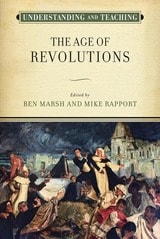
Understanding and Teaching the Age of Revolutions
Edited by Ben Marsh and Mike Rapport
University of Wisconsin Press, 2017
The volume includes chapters on sources and methods for stimulating student debate and learning, including Tom Paine's Common Sense, the Haitian Declaration of Independence, and other key documents; role-playing games; visual arts and culture; and music, including opera and popular songs. Other chapters delve into specific themes, including revolution and riot, revolutionary terror, enlightenment, gender, slavery, nationalism, environment and climate, and the roles of politically excluded groups. Collectively, the contributions ensure a broad Atlantic scope, discussing the revolutions in Britain's North American colonies, Haiti, and Latin America, and European revolutions including France, Belgium, and the Netherlands.