Results by title
22279 books match the query 'Social Science' and 356 start with u
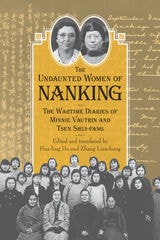
Undaunted Women of Nanking
The Wartime Diaries of Minnie Vautrin and Tsen Shui-fangEdited and Translated by Hua-ling Hu and Zhang Lian-hong
Southern Illinois University Press, 2010
One of the Chinese American Librarians Association’s Ten Best Books of 2010
During the infamous “Rape of Nanking,” a brutal military occupation of Nanking, China, that began on December 13, 1937, it is estimated that Japanese soldiers killed between 200,000 and 300,000 Chinese and raped between 20,000 and 80,000 women. To shelter civilian refugees, a group of Westerners established a Nanking Safety Zone. Among these humanitarians was Minnie Vautrin, an American missionary and acting president of Ginling College. She and Tsen Shui-fang, her Chinese assistant and a trained nurse, turned the college into a refugee camp, which protected more than 10,000 women and children during the height of the ordeal. The Undaunted Women of Nanking juxtaposes day-by-day the exhausted and terrified women’s wartime diaries, providing vital eyewitness accounts of the Rape of Nanking and a unique focus on the Ginling refugee camp and the sufferings of women and children. Vautrin's diary reveals the humanity and courage of a female missionary in a time of terror. Tsen Shui-fang’s diary, never before published in English and translated here for the first time, is the only known daily account by a Chinese national written during the crisis and not retrospectively. As such, it records a unique perspective: that of a woman grappling with feelings of anger, sorrow, and compassion as she witnesses the atrocities being committed in her war-torn country.
Editors Hua-ling Hu and Zhang Lian-hong have added many informative annotations to the diary entries from sources including the proceedings of the Tokyo War Crimes Trial of 1946, Vautrin’s correspondence, John Rabe’s diary, and other historical documents. Also included are biographical sketches of the two women, a note on the diaries, and information about the aftermath of the tragedy, as well as maps and photos—some of which appear in print in this book for the first time.

Undead Ends
Stories of ApocalypseS. Trimble
Rutgers University Press, 2019
Undead Labor
Capitalism's Zombie WorkerDavid Bering-Porter
University of Minnesota Press, 2026
How the zombie represents capitalism’s fantasy of limitless labor
Much more than just an enduring figure of horror entertainment, the zombie is a uniquely modern symbol representing capitalism’s most brutal demands on human life. Examining the push to extract surplus value from human bodies in ways that exceed their natural limits, David Bering-Porter shows how this notion of the undead is both integral to and symptomatic of capitalism’s endless cycle of growth and consumption.
Bering-Porter demonstrates how the zombie has long been deeply intertwined with issues of race and exploitation, from its origins in the slave plantations of colonial Haiti to its traces in the continuing evolution of artificial intelligence systems, serving as capitalism’s ideal worker: one that never rests, never stops, and never dies. Featuring close readings of Marx alongside films such as I Walked with a Zombie, The Blob, and Night of the Living Dead, the book traces the concept of undead labor as it manifests across various historical epochs, providing insight into the manifold ways that capitalism has sought to transform living beings into instruments of limitless production.
As he weaves together critical race studies with an analysis of popular culture and media, Bering-Porter interrogates racialized capitalism and its fantasy of labor beyond all limits. By highlighting how the zombie is borne of the same ideology that has given rise to contemporary burnout culture and environmental collapse, Undead Labor uncovers the capitalist system’s relentless death drive with the hope that it finally may be put to rest.
Retail e-book files for this title are screen-reader friendly.

Under Construction
Making Homeland Security at the Local LevelKerry B. Fosher
University of Chicago Press, 2008
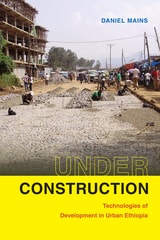
Under Construction
Technologies of Development in Urban EthiopiaDaniel Mains
Duke University Press, 2019
Under Pressure
A Song by David Bowie and QueenMax Brzezinski
Duke University Press, 2025
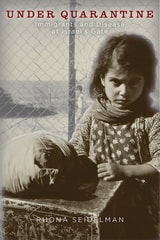
Under Quarantine
Immigrants and Disease at Israel’s GateRhona Seidelman
Rutgers University Press, 2020
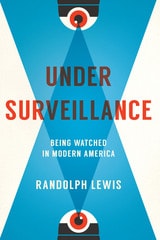
Under Surveillance
Being Watched in Modern AmericaBy Randolph Lewis
University of Texas Press, 2017
Never before has so much been known about so many. CCTV cameras, TSA scanners, NSA databases, big data marketers, predator drones, “stop and frisk” tactics, Facebook algorithms, hidden spyware, and even old-fashioned nosy neighbors—surveillance has become so ubiquitous that we take its presence for granted. While many types of surveillance are pitched as ways to make us safer, almost no one has examined the unintended consequences of living under constant scrutiny and how it changes the way we think and feel about the world. In Under Surveillance, Randolph Lewis offers a highly original look at the emotional, ethical, and aesthetic challenges of living with surveillance in America since 9/11.
Taking a broad and humanistic approach, Lewis explores the growth of surveillance in surprising places, such as childhood and nature. He traces the rise of businesses designed to provide surveillance and security, including those that cater to the Bible Belt’s houses of worship. And he peers into the dark side of playful surveillance, such as eBay’s online guide to “Fun with Surveillance Gadgets.” A worried but ultimately genial guide to this landscape, Lewis helps us see the hidden costs of living in a “control society” in which surveillance is deemed essential to governance and business alike. Written accessibly for a general audience, Under Surveillance prompts us to think deeply about what Lewis calls “the soft tissue damage” inflicted by the culture of surveillance.
Under a Bad Sign
Criminal Self-Representation in African American Popular CultureJonathan Munby
University of Chicago Press, 2011
What accounts for the persistence of the figure of the black criminal in popular culture created by African Americans? Unearthing the overlooked history of art that has often seemed at odds with the politics of civil rights and racial advancement, Under a Bad Sign explores the rationale behind this tradition of criminal self-representation from the Harlem Renaissance to contemporary gangsta culture.
In this lively exploration, Jonathan Munby takes a uniquely broad view, laying bare the way the criminal appears within and moves among literary, musical, and visual arts. Munby traces the legacy of badness in Rudolph Fisher and Chester Himes’s detective fiction and in Claude McKay, Julian Mayfield, and Donald Goines’s urban experience writing. Ranging from Peetie Wheatstraw’s gangster blues to gangsta rap, he also examines criminals in popular songs. Turning to the screen, the underworld films of Oscar Micheaux and Ralph Cooper, the 1970s blaxploitation cycle, and the 1990s hood movie come under his microscope as well. Ultimately, Munby concludes that this tradition has been a misunderstood aspect of African American civic life and that, rather than undermining black culture, it forms a rich and enduring response to being outcast in America.
Under a Bad Sun
Police, Politics, and Corruption in AustraliaPaul Bleakley
Michigan State University Press, 2021
Under a Black Star
The Maroon Impulse in New OrleansAmari Johnson
University of Minnesota Press, 2025
Uncovering the spirit of freedom and self-determination in New Orleans
In Under a Black Star, Amari Johnson explores what he defines as the “maroon impulse” among the BlackStar Community in the Algiers neighborhood of New Orleans. This community sought autonomy for Black people facing systemic marginalization through denied employment, insufficient education, and a housing crisis following Hurricane Katrina, establishing initiatives such as Kamali Academy, a homeschool collective, and BlackStar Books and Caffé, a bookstore and gathering place. Instead of appealing to the city, they built the community they desired by employing legacies of marronage: disengagement, flight, and reengagement.
An active participant in the physical and ideological development of these autonomous spaces, Johnson provides nuanced insights into the community’s work toward liberation and self-determination. Demonstrating that marronage is a cultural tradition throughout the African Diaspora, he focuses on the transtemporal maroon process to show how it is central to the pursuit of autonomy, community, and freedom.
From the swamps of southeastern Louisiana, across urban obstacles, and into BlackStar’s creative spaces, Johnson’s path leads him to ask: How did the New Orleans community mobilize the tradition of marronage to create autonomous spaces amid gentrification? What forms might the maroon impulse take in the twenty-first century? This dynamic ethnographic memoir ultimately illuminates marronage as a potent form of liberatory potential, offering strategies for similar communities across the country and around the world.
Under the Campus, the Land
Anishinaabe Futuring, Colonial Non-Memory, and the Origin of the University of MichiganAndrew Herscher
University of Michigan Press, 2025
Under the Campus, the Land narrates the University of Michigan’s place in both Anishinaabe and settler history, tracing the university’s participation in the colonization of Anishinaabe homelands, Anishinaabe efforts to claim their right to an education, and the university’s history of disavowing, marginalizing, and minimizing its responsibilities and obligations to Anishinaabe people. Continuing the public conversations of the same name on U-M’s campus in 2023, Under the Campus, the Land provides a new perspective on the relationship between universities and settler colonialism in the US. Members of the U-M community, scholars of Midwest history, and those interested in Indigenous studies will find this book compelling.

Under the Canopy
The Archaelogy of Tropical Rain ForestsMercader, Julio
Rutgers University Press, 2002
Did our ancestors live in tropical forests? Although we see the rainforest as a bountiful environment teeming with life forms, most anthropologists and archaeologists have long viewed these areas as too harsh for human occupation during the pre-agricultural stages of hominid development.
Under the Canopy turns conventional wisdom on its head by providing a well-documented, geographically diverse overview of Stone Age sites in the wet tropics. New research indicates that, as humanity and its precursors increased their geographical and ecological ranges, rainforests were settled at a much earlier period than had previously been thought.
Featuring the work of leading scholars from Australia, Brazil, Canada, Colombia, France, Malaysia, Panama, Spain, and the United States, Under the Canopy creates a new niche in paleolithic studies: the archaeology of tropical rainforests. This book provides the first synthesis of archaeological research in early foraging sites across the rainforest zone, and indicates that tropical forests could harbor important clues to human evolution, origins of modern behavior, cultural diversity, and human impact on tropical ecosystems.

Under the Counter
Britain's Trade in Hardcore Pornographic 8mm FilmsOliver Carter
Intellect Books, 2022
Prior to 2000, it was a criminal offense to sell hardcore pornography in Britain. Despite this, there was a thriving alternative economy producing and distributing such material “under the counter” of Soho’s bookshops and via mail-order. British entrepreneurs circumvented obscenity laws to satisfy the demand for uncensored adult films and profit from their enterprise, with corrupt members of the Metropolitan Police’s Obscene Publications Squad permitting them to trade.
By the late 1960s, Britain had developed an international reputation for producing “rollers,” short hardcore films distributed on 8mm, which were smuggled out of Britain for sale in Western Europe. Following an exposé by Britain’s tabloid press, a crackdown on police corruption, and several high-profile obscenity trials, the trade was all but decimated, with pornography smuggled in from Europe dominating the market.
Drawing on extensive archival research, including the use of legal records, police files, media reportage, and interviews with those who were involved in the business, Under the Counter tells the story of Britain’s trade in 8mm hardcore pornographic films and its regulation.
Under the Heel of the Dragon
Islam, Racism, Crime, and the Uighur in ChinaBlaine Kaltman
Ohio University Press, 2007
The Turkic Muslims known as the Uighur have long faced social and economic disadvantages in China because of their minority status. Under the Heel of the Dragon: Islam, Racism, Crime, and the Uighur in China offers a unique insight into current conflicts resulting from the rise of Islamic fundamentalism and the Chinese government’s oppression of religious minorities, issues that have heightened the degree of polarization between the Uighur and the dominant Chinese ethnic group, the Han.
Author Blaine Kaltman’s study is based on in-depth interviews that he conducted in Chinese without the aid of an interpreter or the knowledge of the Chinese government. These riveting conversations expose the thoughts of a wide socioeconomic spectrum of Han and Uighur, revealing their mutual prejudices. The Uighur believe that the Han discriminate against them in almost every aspect of their lives, and this perception of racism motivates Uighur prejudice against the Han.
Kaltman reports that criminal activity by Uighur is directed against their perceived oppressors, the Han Chinese. Uighur also resist Han authority by flouting the laws—such as tax and licensing regulations or prohibitions on the use or sale of hashish—that they consider to be imposed on them by an alien regime. Under the Heel of the Dragon offers a unique insight into a misunderstood world and a detailed explanation of the cultural perceptions that drive these misconceptions.
Under the Kapok Tree
Identity and Difference in Beng ThoughtAlma Gottlieb
University of Chicago Press, 1996
explores ideology and social practices among the Beng people of Côte
d'Ivoire. Employing symbolic and postmodern perspectives, she highlights
the dynamically paired notions of identity and difference, symbolized by
the kapok tree planted at the center of every Beng village.
"This book merits a number of readings. . . . An experiment in
ethnography that future projects might well emulate." —Clarke K. Speed,
American Anthropologist
"[An] evocative, rich ethnography. . . . Gottlieb does anthropology a
real service." —Misty L. Bastian, American Ethnologist
"Richly detailed. . . . This book offers a nuanced descriptive analysis
which commands authority." —Elizabeth Tonkin, Man
"Exemplary. . . . Gottlieb's observations on identity and difference are
not confined to rituals or other special occasions; rather she shows
that these principles emerge with equal force during daily social life."
—Monni Adams, Journal of African Religion
"[An] excellent study." —John McCall, Journal of Folklore
Research
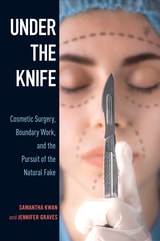
Under the Knife
Cosmetic Surgery, Boundary Work, and the Pursuit of the Natural FakeSamantha Kwan and Jennifer Graves
Temple University Press, 2020
Samantha Kwan and Jennifer Graves reveal how women negotiate their “unnatural”—but hopefully (in their view) natural-looking—surgically-altered bodies. Based on in-depth interviews with forty-six women who underwent cosmetic surgery to enhance their appearance, the authors investigate motivations for surgery as well as women’s thoughts about looking natural after the procedures. Under the Knife dissects the psychological and physical strategies these women use to manage the expectations, challenges, and disappointments of cosmetic surgery while also addressing issues of agency and empowerment. It shows how different cultural intersections can produce varied goals and values around body improvement.
Under the Knife highlights the role of deep-seated yet contradictory gendered meanings about women’s bodies, passing, and boundary work. The authors also consider traditional notions of femininity and normalcy that trouble women’s struggle to preserve an authentic moral self.

Under the Radar
Tracking Western Radio Listeners in the Soviet UnionR. Eugene Parta
Central European University Press, 2022
Western democracy is currently under attack by a resurgent Russia, weaponizing new technologies and social media. How to respond? During the Cold War, the West fought off similar Soviet propaganda assaults with shortwave radio broadcasts. Founded in 1949, the US-funded Radio Free Europe/Radio Liberty broadcast uncensored information to the Soviet republics in their own languages. About one-third of Soviet urban adults listened to Western radio. The broadcasts played a key role in ending the Cold War and eroding the communist empire.
R. Eugene Parta was for many years the director of Soviet Area Audience Research at RFE/RL, charged among others with gathering listener feedback. In this book he relates a remarkable Cold War operation to assess the impact of Western radio broadcasts on Soviet listeners by using a novel survey research approach. Given the impossibility of interviewing Soviet citizens in their own country, it pioneered audacious interview methods in order to fly under the radar and talk to Soviets traveling abroad, ultimately creating a database of 51,000 interviews which offered unparalleled insights into the media habits and mindset of the Soviet public. By recounting how the “impossible” mission was carried out, Under the Radar also shows how the lessons of the past can help counter the threat from a once and current adversary.
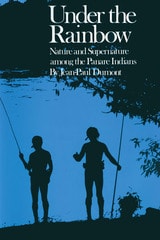
Under the Rainbow
Nature and Supernature among the Panare IndiansBy Jean-Paul Dumont
University of Texas Press, 1976
This ethnographic study of the Panare Indians of Venezuela is the first extensive look at a tribe of this region of the Amazonia. It is an important book not only because it delves into the myth-filled Panare culture, but also because the author has used a modified version of the structural analysis of Claude Lévi-Strauss in examining the Panare.
Lévi-Strauss applied his method of structural analysis to the mythology of many societies in Amazonia, but never to any single society. Jean-Paul Dumont has filled that gap and has shown how the approach works in practice when applied to the intensive study of a single, small-scale culture. His book significantly expands the discussion of the strengths and weaknesses of the method.
The work deals specifically with the implicit mythology of the Panare and is concerned with the symbolic activities manifested in the daily behavior of this group. The analysis of the symbolism, explains Dumont, allows for the discovery of the conceptual system through which the Panare conceive of themselves.
The study is organized into two parts: a presentation of the data and an analysis. The presentation includes a geographical and historical account of the Panare and a general ethnological profile. The analysis is organized into the conceptual categories of inhabited space, time, astrosexuality, hearing, and taste. A concluding chapter summarizes the analysis.
Under the Rainbow will be of interest and of value not only to anthropologists but also to linguists, philosophers, psychologists, and others interested in the general intellectual movement represented by French structuralism. The fieldwork for Under the Rainbow was conducted in Venezuelan Guiana from September 1967 to July 1969.
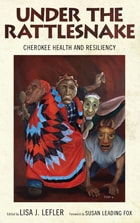
Under the Rattlesnake
Cherokee Health and ResiliencyEdited by Lisa J. Lefler, with a foreword by Susan Leading Fox
University of Alabama Press, 2009
For the Cherokee, health is more than the absence of disease; it includes a fully confident sense of a smooth life, peaceful existence, unhurried pace, and easy flow of time. The natural state of the world is to be neutral, balanced, with a similarly gently flowing pattern. States of imbalance, tension, or agitation are indicative of physical, mental, emotional, or spiritual illness and whether caused intentionally through omission or commission, or by outside actions or influences, the result affects and endangers the collective Cherokee.
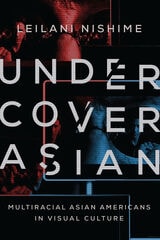
Undercover Asian
Multiracial Asian Americans in Visual CultureLeiLani Nishime
University of Illinois Press, 2014

Undercover Reporting
The Truth About DeceptionBrooke Kroeger, Foreword by Pete Hamill
Northwestern University Press, 2012
In her provocative book, Brooke Kroeger argues for a reconsideration of the place of oft-maligned journalistic practices. While it may seem paradoxical, much of the valuable journalism in the past century and a half has emerged from undercover investigations that employed subterfuge or deception to expose wrong. Kroeger asserts that undercover work is not a separate world, but rather it embodies a central discipline of good reporting—the ability to extract significant information or to create indelible, real-time descriptions of hard-to-penetrate institutions or social situations that deserve the public’s attention. Together with a companion website that gathers some of the best investigative work of the past century, Undercover Reporting serves as a rallying call for an endangered aspect of the journalistic endeavor.
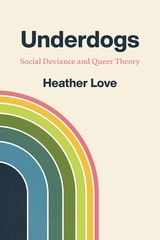
Underdogs
Social Deviance and Queer TheoryHeather Love
University of Chicago Press, 2021
The sociology of “social deviants” flourished in the United States at midcentury, studying the lives of outsiders such as homosexuals, Jews, disabled people, drug addicts, and political radicals. But in the following decades, many of these downcast figures would become the architects of new social movements, activists in revolt against institutions, the state, and social constraint. As queer theory gained prominence as a subfield of the humanities in the late 1980s, it seemed to inherit these radical, activist impulses—challenging not only gender and sexual norms, but also the nature of society itself.
With Underdogs, Heather Love shows that queer theorists inherited as much from sociologists as they did from activists. Through theoretical and archival work, Love traces the connection between midcentury studies of deviance and the antinormative, antiessentialist field of queer theory. While sociologists saw deviance as an inevitable fact of social life, queer theorists embraced it as a rallying cry. A robust interdisciplinary history of the field, Underdogs stages a reencounter with the practices and communities that underwrite radical queer thought.
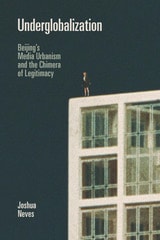
Underglobalization
Beijing's Media Urbanism and the Chimera of LegitimacyJoshua Neves
Duke University Press, 2020
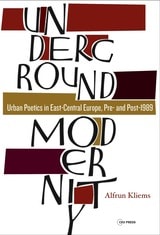
Underground Modernity
Urban Poetics in East-Central Europe, Pre- and Post-1989Alfrun Kliems
Central European University Press, 2021
The literary scholar Alfrun Kliems explores the aesthetic strategies of Eastern European underground literature, art, film and music in the decades before and after the fall of communism, ranging from the ‘father’ of Prague Underground, Egon Bondy, to the neo-Dada Club of Polish Losers in Berlin.
The works she considers are "underground" in the sense that they were produced illegally, or were received as subversive after the regimes had fallen. Her study challenges common notions of ‘Underground’ as an umbrella term for nonconformism. Rather, it depicts it as a sociopoetic reflection of modernity, intimately linked to urban settings, with tropes and aesthetic procedures related to Surrealism, Dadaism, Expressionism, and, above all, pop and counterculture.
The author discusses these commonalities and distinctions in Czech, Polish, Slovak, Ukrainian, Russian, and German authors, musicians, and filmmakers. She identifies intertextual relations across languages and generations, and situates her findings in a transatlantic context (including the Beat Generation, Susan Sontag, Neil Young) and the historical framework of Romanticism and modernity (including Baudelaire and Brecht).
Despite this wide brief, the book never loses sight of its core message: Underground is no arbitrary expression of discontent, but rather the result of a fundamental conflict at the socio-philosophical roots of modernity.
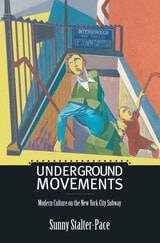
Underground Movements
Modern Culture on the New York City SubwaySunny Stalter-Pace
University of Massachusetts Press, 2013
Writers and artists took up questions that originated in the sphere of urban planning to explore how underground movement changed the ways people understand the city. Modern poets envisioned the subway as a space of literary innovation; playwrights and fiction writers used it to gauge the consequences of migration and immigration; and essayists found that it underscored the fragile relationship between urban development and memory. Even today, the symbolic associations forged by these early texts continue to influence understanding of the cultural significance of the subway and the city it connects.
Undermining Intersectionality
The Perils of Powerblind FeminismBarbara Tomlinson
Temple University Press, 2019
In this provocative book, esteemed scholar Barbara Tomlinson asserts that intersectionality—the idea that categories such as gender, race, and class create overlapping systemsof oppression—is consistently misinterpreted in feminist argument. Despite becoming a central theme in feminist scholarship and activism, Tomlinson believes dominant feminism has failed to fully understand the concept.
Undermining Intersectionality reveals that this apparent paradox is the result of the disturbing racial politics underlying more than two decades of widely-cited critiques of intersectionality produced by prominent white feminist scholars who have been insufficiently attentive to racial dynamics. As such, feminist critiques of intersectionality repeatedly reinforce racial hierarchies, undermining academic feminism’s supposed commitment to social justice. Tomlinson offers a persuasive analysis of the rhetorics and conventions of argument used in these critiques to demonstrate their systematic reliance on “powerblind” discursive practices.
Undermining Intersectionality concludes by presenting suggestions about concrete steps feminist researchers, readers, authors, and editors can take to promote more productive and principled engagements with intersectional thinking.
Understanding Assisted Suicide
Nine Issues to ConsiderJohn B. Mitchell
University of Michigan Press, 2007
Assisted suicide remains one of the most emotionally charged and controversial topics—and the issue isn’t going away any time soon. As the baby boomer generation ages, many of us will watch as our parents—and ourselves—grow older, and wonder at the decisions that lie ahead.
Understanding Assisted Suicide provides both a fresh take on this important topic and the framework for intelligent participation in the discussion. Uniquely, the author frames the issue using his own experience watching both his parents die, which led him to ask fundamental questions about death, dying, religion, and the role of medicine and technology in alleviating human suffering.
In concerns about assisted suicide, each person’s “big picture” has largely been created out of picking and choosing from nine separate snapshot albums.
Understanding this offers a perspective for quickly determining the sources of another’s opinion on assisted suicide, as well as the issues they are not considering. Most importantly, Understanding Assisted Suicide offers a clear, easy-to-traverse landscape over which those who are sincerely looking for their own answers can navigate. The “nine-issue structure” allows both careful exploration of separate issues and a view of the full spectrum of ideas involved.

Understanding China through Digital Anthropology
Edited by Daniel Miller and Xinyuan Wang
University College London, 2026
A reconsideration of the meaning of “digital” in light of China's distinct technological trajectory.
Understanding China through Digital Anthropology questions our understanding of digital technologies by demonstrating fundamental differences in the meaning of both technology and the digital between China and the West. This follows from a longstanding historical divergence in the meaning of and attitude towards the relationship between technology and humanity. The book includes coverage of a considerable body of scholarship on digital anthropology previously only published in Chinese.

Understanding Contemporary Ireland
Edited by Brendan Bartley and Rob Kitchin
Pluto Press, 2006
The "Celtic Tiger" phenomenon has made Ireland the focus of much attention in recent years. Other countries have openly declared that they want to follow the Irish economic and social model. Yet there is no book that gives a comprehensive, spatially-informed analysis of the Irish experience. This book fills that gap.
Divided into four parts—planning and development, the economy, the political landscape, and population and social issues—the chapters provide an explanation of a particular aspect of Ireland and Irish life accompanied by illustrative material. In particular, the authors reveal how the transformations that have occurred are uneven and unequal in their effects across the country and highlight the challenges now facing Irish society and policy-makers.
Understanding Crime and Place
A Methods HandbookEdited by Elizabeth R. Groff and Cory P. Haberman
Temple University Press, 2023
Place has become both a major field of criminological study as well as an important area for policy development. Capturing state of the art crime and place research methods and analysis, Understanding Crime and Place is a comprehensive Handbook focused on the specific skills researchers need.
The editors and contributors are scholars who have been fundamental in introducing or developing a particular method for crime and place research. Understanding Crime and Place is organized around the scientific process, introducing major crime and place theories and concepts, discussions of data and data collection, core spatial data concepts, as well as statistical and computational techniques for analyzing spatial data and place-based evaluation. The lessons in the book are supplemented by additional instructions, examples, problems, and datasets available for download.
Conducting place-based research is an emerging field that requires a wide range of cutting-edge methods and analysis techniques that are only beginning to be widely taught in criminology. Understanding Crime and Place bridges that gap, formalizes the discipline, and promotes an even greater use of place-based research.
Contributors: Martin A. Andresen, Matthew P J Ashby, Eric Beauregard, Wim Bernasco, Daniel Birks, Hervé Borrion, Kate Bowers, Anthony A. Braga, Tom Brenneman, David Buil-Gil, Meagan Cahill, Stefano Caneppele, Julien Chopin, Jeffrey E. Clutter, Toby Davies, Hashem Dehghanniri, Jillian Shafer Desmond, Beidi Dong, John E. Eck, Miriam Esteve, Timothy C. Hart, Georgia Hassall, David N. Hatten, Julie Hibdon, James Hunter, Shane D. Johnson, Samuel Langton, YongJei Lee, Ned Levine, Brian Lockwood, Dominique Lord, Nick Malleson, Dennis Mares, David Mazeika, Lorraine Mazerolle, Asier Moneva, Andrew Newton, Bradley J. O’Guinn, Ajima Olaghere, Graham C. Ousey, Ken Pease, Eric L. Piza, Jerry Ratcliffe, Caterina G. Roman, Stijn Ruiter, Reka Solymosi, Evan T. Sorg, Wouter Steenbeek, Hannah Steinman, Ralph B. Taylor, Marie Skubak Tillyer, Lisa Tompson, Brandon Turchan, David Weisburd, Brandon C. Welsh, Clair White, Douglas J. Wiebe, Pamela Wilcox, David B. Wilson, Alese Wooditch, Kathryn Wuschke, Sue-Ming Yang, and the editors.
Understanding Culture
A Handbook for Students in the HumanitiesBabette Hellemans
Amsterdam University Press, 2017
Using examples from the several scholarly traditions in the practice of studying culture, the book is a key introduction to the area. It identifies the history of interpreting culture as a meeting point between the long-standing historical investigation of 'humanism' and 'postmodernism' and is a comprehensive resource for those who wish to further their engagement with culture as both a historical and contemporary phenomenon.
Understanding Kubrick's 2001
A Space Odyssey: Representation and InterpretationEdited by James Fenwick
Intellect Books, 2018
Understanding Mainland Puerto Rican Pov
Susan Baker
Temple University Press, 2002
Understanding Misunderstandings
A Practical Guide to More Successful Human InteractionBy Robert L. Young
University of Texas Press, 1999
Have you ever meant one thing, but said another? Reacted angrily when no offense was intended? Wished that the earth would open up and swallow you? Understanding Misunderstandings will help you get out and stay out of these difficulties.
Robert L. Young explains why many common types of misunderstandings arise and how they can be avoided or corrected. In the first part of the book, he breaks the process of misunderstanding down into stages, showing how it can occur when we misspeak, mishear, misinterpret, or react in inappropriate ways. In the second part, he expertly analyzes the kinds of misunderstandings that can arise from differences in culture, social class, race and ethnicity, and gender. Real-life examples illustrate many of the problems and solutions he describes.
Because misunderstanding can destroy friendships and marriages, wreck careers, and lead to clashes between whole segments of society, understanding and diffusing it is of the utmost importance. This reader-friendly book provides the practical guidance to do just that. Educators, business people, psychologists, parents—in fact, everyone who interacts with other people—will benefit from it.
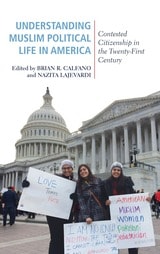
Understanding Muslim Political Life in America
Contested Citizenship in the Twenty-First CenturyBrian R. Calfano
Temple University Press, 2019
“Muslim Americans are at a political crossroads,” write editors Brian Calfano and Nazita Lajevardi. Whereas Muslims are now widely incorporated in American public life, there are increasing social and political pressures that disenfranchise them or prevent them from realizing the American Dream. Understanding Muslim Political Life in America brings clarity to the social, religious, and political dynamics that this diverse religious community faces.
In this timely volume, leading scholars cover a variety of topics assessing the Muslim American experience in the post-9/11 and pre-Trump era, including law enforcement; identity labels used in Muslim surveys; the role of gender relations; recognition; and how discrimination, tolerance, and politics impact American Muslims.
Understanding Muslim Political Life in America offers an update and reappraisal of what we know about Muslims in American political life. The editors and contributors also consider future directions and important methodological questions for research in Muslim American scholarship.
Contributors include Matt A. Barreto, Alejandro Beutel, Tony Carey, Youssef Chouhoud, Karam Dana, Oz Dincer, Rachel Gillum, Kerem Ozan Kalkan, Anwar Manje, Valerie Martinez-Ebers, Dani McLaughlan, Melissa R. Michelson, Yusuf Sarfati, Ahmet Tekelioglu, Marianne Marar Yacobian, and the editors.

Understanding Tribal Sovereignty
Federal Indian Law and Self-GovernanceDonald L. Fixico
University of Arizona Press, 2026
What does tribal sovereignty really mean—and why does it matter today?
Accessibly written for the nonspecialist, acclaimed historian Donald L. Fixico unpacks the complex history and legal foundations of tribal sovereignty in the United States. From traditional Native governance to landmark treaties, federal laws, and court cases, Fixico guides readers through the evolution of tribal self-rule and its modern expressions—from tribal constitutions to license plates and casinos. Designed for students, educators, tribal members, and professionals alike, this book offers a clear, compelling introduction to one of the most important—and often misunderstood—concepts in American Indian affairs.
This book is a go-to source for understanding the federal Indian laws, treaties, and court cases simplified to explain tribal sovereignty.
Understanding Video Activism on Social Media
Jens Eder, Britta Hartmann, and Chris Tedjasukmana
Intellect Books, 2025
What political power do social media videos have? In what ways do they exert influence, shape public discourse, and change political life? How can participants in this field assert themselves against commercial interests, anti-democratic agitation, and authoritarian propaganda? These questions are being debated intensely as social media increasingly dominates global information flows, and videos increasingly dominate social media.
The forms, practices, and opportunities of activism depend on a media environment that is changing rapidly and profoundly in terms of its technological basis, ownership, legal regulations, and governmental control. This makes the act of understanding video activism even more relevant at a time when the internet is undergoing fundamental disruptions.
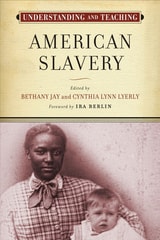
Understanding and Teaching American Slavery
Edited by Bethany Jay and Cynthia Lynn Lyerly, Foreword by Ira Berlin
University of Wisconsin Press, 2016
Opening with Ira Berlin’s reflections on ten elements that are essential to include in any course on this topic, Understanding and Teaching American Slavery offers practical advice for teaching specific content, utilizing sources, and getting students to think critically. Contributors address, among other topics, slavery and the nation’s founders, the diverse experiences of the enslaved, slavery’s role in the Civil War, and the relationship between slavery and the northern economy. Other chapters offer ideas for teaching through slave narratives, runaway ads, spirituals, films, and material culture. Taken together, the essays in the volume help instructors tackle problems, discover opportunities, and guide students in grappling with the ugliest truths of America’s past.
Understanding and Teaching Modern Latin America
Edited by Sharika D. Crawford and Kari E. Zimmerman
University of Wisconsin Press, 2026

Understanding and Teaching Native American History
Edited by Kristofer Ray and Brady DeSanti
University of Wisconsin Press, 2023
Despite the availability of new scholarship, many teachers struggle with contextualizing Indigenous history and experience. Native peoples frequently find themselves relegated to historical descriptions, merely a foil to the European settlers who are the protagonists in the dominant North American narrative. This book offers a way forward, an alternative framing of the story that highlights the ongoing integral role of Native peoples via broad coverage in a variety of topics including the historical, political, and cultural.
With its scope and clarity of vision, suggestions for navigating sensitive topics, and a multitude of innovative approaches authored by contributors from multidisciplinary backgrounds, Understanding and Teaching Native American History will also find use in methods and other graduate courses. Nearly a decade in the conception and making, this is a groundbreaking source for both beginning and veteran instructors.
Understanding and Teaching U.S. Lesbian, Gay, Bisexual, and Transgender History
Edited by Leila J. Rupp and Susan K. Freeman
University of Wisconsin Press, 2017
Understanding and Teaching the Civil Rights Movement
Hasan Kwame Jeffries
University of Wisconsin Press, 2019
Books in the popular Harvey Goldberg Series provide high school and introductory college-level instructors with ample resources and strategies for better engaging students in critical, thought-provoking topics. By allowing for the implementation of a more nuanced curriculum, this is history instruction at its best. Understanding and Teaching the Civil Rights Movement will transform how the United States civil rights movement is taught.
Understanding and Teaching the Modern Middle East
Edited by Omnia El Shakry
University of Wisconsin Press, 2020
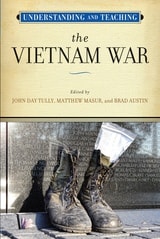
Understanding and Teaching the Vietnam War
Edited by John Day Tully, Matthew Masur, and Brad Austin
University of Wisconsin Press, 2013
Honorable Mention, Franklin Buchanan Prize for Curricular Materials, Association for Asian Studies and the Committee for Teaching about Asia
Understanding the Age of Transitional Justice
Crimes, Courts, Commissions, and ChroniclingAdler, Nanci
Rutgers University Press, 2018
Undertaking Discourse Analysis for Social Research
Kevin C. Dunn and Iver B. Neumann
University of Michigan Press, 2016

Undertale
Can a Game Give Hope?Anastasia Salter
University of Chicago Press, 2025
A powerful exploration of the importance and social complexity of the indie gaming sensation
On the surface, the 2015 game Undertale didn’t seem like much, supported by fan funding and with minimalist retro graphics. But despite its pixelated monsters and dated role-playing mechanics, Undertale invited fans and players to rethink their very relationship with gaming and game characters. Players encountered an extraordinary range of possible play experiences, with paths through the game’s unassuming world leading to both empathy and extreme violence, offering room for reflection and growth. Players could befriend (sometimes queer) monsters or kill them, for instance, appealing to each monster’s unique personality to negotiate survival and find community.
Contextualizing this game’s success in the wake of the Gamergate online harassment campaign and meditating on questions of violence and authenticity, writer and game scholar Anastasia Salter offers a profound exploration of this game sensation and a personal story of hope at a time when Salter was otherwise “done” with games. Undertale’s unique structure helped make it synonymous with “indie” games, built outside of the studio as a passion project and inspiring similar passion among its many fans even a decade later. But Undertale’s story also speaks to an auteur dream: What game developer Toby Fox and his collaborators accomplished on a small budget, with relatively simple tools, has left people replaying, arguing, and creating in its wake.
As we enter a cultural moment where intense interest is shifting towards flashy creativity, powered by generative artificial intelligence, Undertale reminds fans and newcomers of the power of thoughtful and intentional human design.
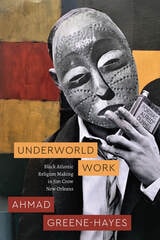
Underworld Work
Black Atlantic Religion Making in Jim Crow New OrleansAhmad Greene-Hayes
University of Chicago Press, 2025
When Zora Neale Hurston traveled to New Orleans, she encountered a religious underworld, a beautiful anarchy of spiritual life. In Underworld Work, Ahmad Greene-Hayes follows Hurston on a journey through the rich tapestry of Black religious expression from emancipation through Jim Crow. He looks within and beyond the church to recover the diverse leadership of migrants, healers, dissidents, and queer people who transformed their marginalized homes, bars, and street corners into sacred space.
Greene-Hayes shows how, while enclosed within an anti-black world, these outcasts embraced Africana esotericisms—ancestral veneration, faith healing, spiritualized sex work, and more—to conjure a connection to freer worlds past and yet to come. In recovering these spiritual innovations, Underworld Work celebrates the resilience and creativity of Africana religions.
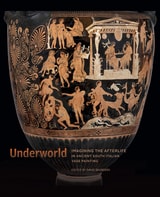
Underworld
Imagining the Afterlife in Ancient South Italian Vase PaintingDavid Saunders
J. Paul Getty Trust, The, 2022
What happens to us when we die? What might the afterlife look like? For the ancient Greeks, the dead lived on, overseen by Hades in the Underworld. We read of famous sinners, such as Sisyphus, forever rolling his rock, and the fierce guard dog Kerberos, who was captured by Herakles. For mere mortals, ritual and religion offered possibilities for ensuring a happy existence in the beyond, and some of the richest evidence for beliefs about death comes from southern Italy, where the local Italic peoples engaged with Greek beliefs. Monumental funerary vases that accompanied the deceased were decorated with consolatory scenes from myth, and around forty preserve elaborate depictions of Hades’s domain.
For the first time in over four decades, these compelling vase paintings are brought together in one volume, with detailed commentaries and ample illustrations. The catalogue is accompanied by a series of essays by leading experts in the field, which provides a framework for understanding these intriguing scenes and their contexts. Topics include attitudes toward the afterlife in Greek ritual and myth, inscriptions on leaves of gold that provided guidance for the deceased, funerary practices and religious beliefs in Apulia, and the importance accorded to Orpheus and Dionysos. Drawing from a variety of textual and archaeological sources, this volume is an essential source for anyone interested in religion and belief in the ancient Mediterranean.